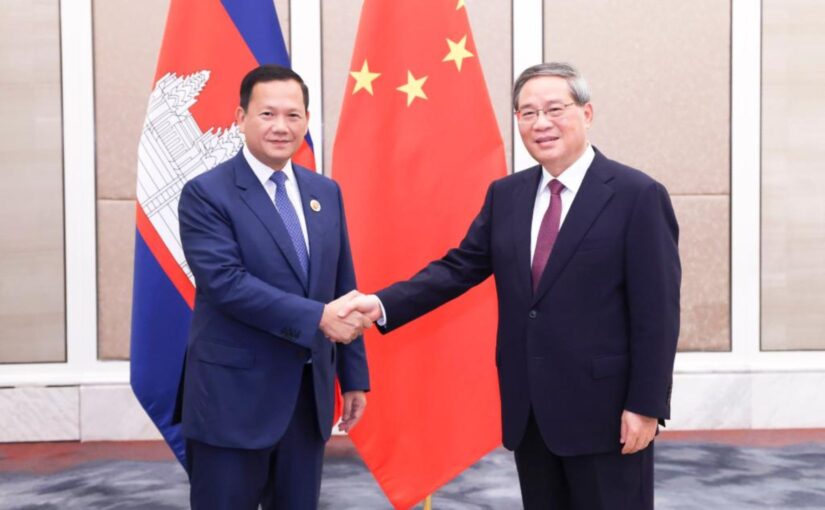
Chinese Premier meets Malaysian, Vietnamese, Cambodian and Kuwaiti counterparts

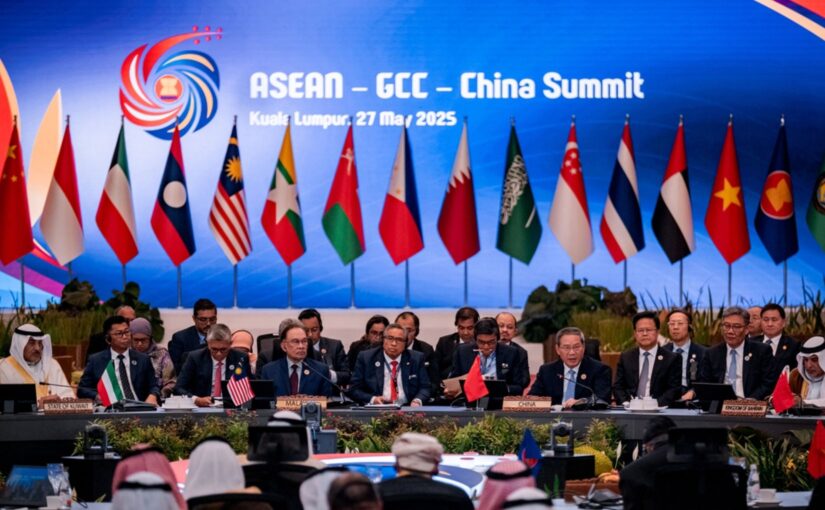
During his visit to Malaysia to participate in the first ASEAN (the Association of South East Asian Nations)-GCC (the Gulf Cooperation Council)-China Summit, May 26-28, held in the capital Kuala Lumpur, Chinese Premier Li Qiang also met on the sidelines with his host, Prime Minister Anwar Ibrahim, as well as with his counterparts from Vietnam and Cambodia and the Crown Prince of Kuwait.

Meeting with Anwar Ibrahim, Li said that China is ready to work with Malaysia to deepen exchanges and collaboration across various fields, and jointly usher in a new “Golden 50 Years” for bilateral ties guided by the principles of mutual respect and trust, equality and mutual benefit for win-win outcomes.

Recalling that Chinese President Xi Jinping paid a state visit to Malaysia last month, Li said that both sides agreed to build a high-level strategic China-Malaysia community with a shared future and mapped out the strategic direction for the development of bilateral relations. China is willing to work with Malaysia to implement the important outcomes of this historic visit. He urged the two sides to continue expanding trade and investment cooperation with a focus on cutting-edge areas, including the digital economy, the green economy and artificial intelligence, promote the integrated development of industrial and supply chains and value chains, and steadily advance major projects such as the “Two Countries, Twin Parks” and the East Coast Rail Link, so as to strengthen the economic growth engine of the China-Malaysia community with a shared future.

Noting that Malaysia is both the rotating chair of ASEAN and the host of the trilateral summit, Li said that China is ready to work closely with Malaysia to take the event as an opportunity to push for closer economic cooperation among the three sides, build a model of global cooperation and development, jointly safeguard free trade and the multilateral trading system and address global challenges together, so as to contribute greater stability, certainty and positive energy to a turbulent world.

Meeting with Vietnamese Prime Minister Pham Minh Chinh, Li said that not long ago, General Secretary of the Communist Party of China Central Committee and Chinese President Xi Jinping paid a successful state visit to Vietnam, where the two sides agreed to accelerate the building of a China-Vietnam community with a shared future that carries strategic significance. China stands ready to work with Vietnam to implement the outcomes of the visit, maintain high-level exchanges, deepen mutual political trust and enhance mutually beneficial cooperation in various fields.

For his part, Pham Minh Chinh noted that Xi paid a successful state visit to Vietnam last month. He said Vietnam will join hands with China to actively implement the important consensus reached by the top leaders of the two parties and the two countries, intensify high-level exchanges and deepen mutually beneficial cooperation in various fields. The Vietnamese side congratulates on the success of the first ASEAN-China-GCC Summit, he said, voicing his country’s willingness to work with China to pursue more practical achievements in tripartite cooperation.

Meeting Cambodian Prime Minister Hun Manet, Li said that Chinese President Xi Jinping has lately paid a historic visit to Cambodia, during which both sides jointly announced the building of an all-weather China-Cambodia community with a shared future in the new era.

 China-Cambodia relations have once again taken the lead in building a community with a shared future for humanity, and the ironclad friendship between the two countries has been further deepened, he added.

China stands ready to work with Cambodia to follow through on the outcomes of Xi’s visit, strengthen high-level exchanges, deepen political mutual trust, make good use of the China-Cambodia Intergovernmental Coordination Committee, and steadily advance practical cooperation across various fields. Encouraging more Chinese enterprises to invest in Cambodia, China is willing to strengthen cooperation with Cambodia in such areas as infrastructure, digital economy, advanced manufacturing and clean energy. China is willing to work with Cambodia and other countries in the region to strengthen solidarity and cooperation, jointly oppose unilateralism and power politics, safeguard international fairness and justice, uphold the multilateral trading system and maintain the stable and smooth flow of industrial and supply chains, so as to inject more positive energy into world peace, stability, prosperity and development.

Hun Manet said the Cambodian side stands ready to work with China to follow through on the outcomes of Xi’s visit, maintain high-level exchanges, give full play to the role of various dialogue mechanisms, boost practical cooperation, enhance cultural and people-to-people exchanges, and jointly combat cross-border crimes.

Noting that Cambodia supports the three global initiatives proposed by Xi, Hun Manet said that Cambodia looks forward to working with China to further strengthen multilateral coordination, uphold multilateralism, oppose protectionism, maintain regional security and stability, and promote global common development.

Continue reading Chinese Premier meets Malaysian, Vietnamese, Cambodian and Kuwaiti counterparts
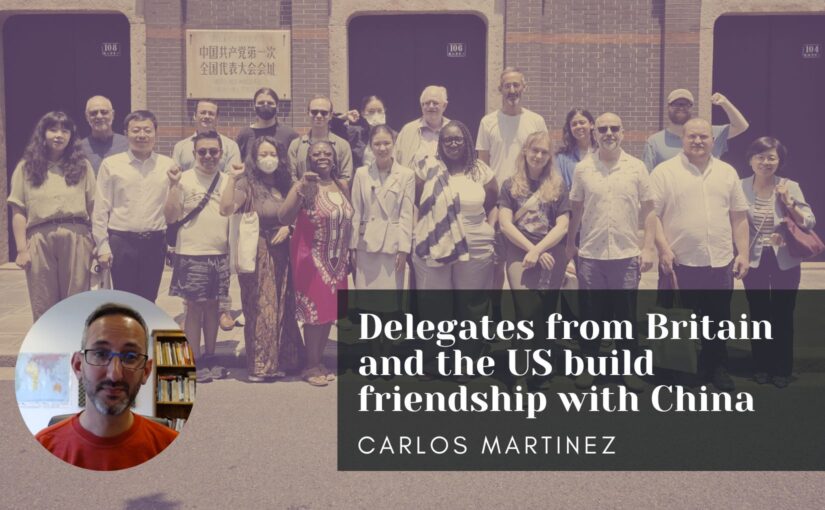
Delegates from Britain and the US build friendship with China

The second Friends of Socialist China delegation to the People’s Republic of China took place from 26 May to 5 June 2025.

Invited by the China NGO Network for International Exchanges (CNIE), which works under the direction of the International Department of the Central Committee of the Communist Party of China (IDCPC), 15 comrades (nine from Britain and six from the United States) visited Xi’an and Yan’an (Shaanxi province), Dunhuang and Jiayuguan (Gansu province) and Shanghai. The delegates attended the 4th Dialogue on Exchanges and Mutual Learning among Civilisations, as well as participating in discussions and visiting a range of historic revolutionary sites, museums, famous scenic spots, cooperatives, as well as demonstrations of cutting edge technology.

Celebrating revolutionary heritage

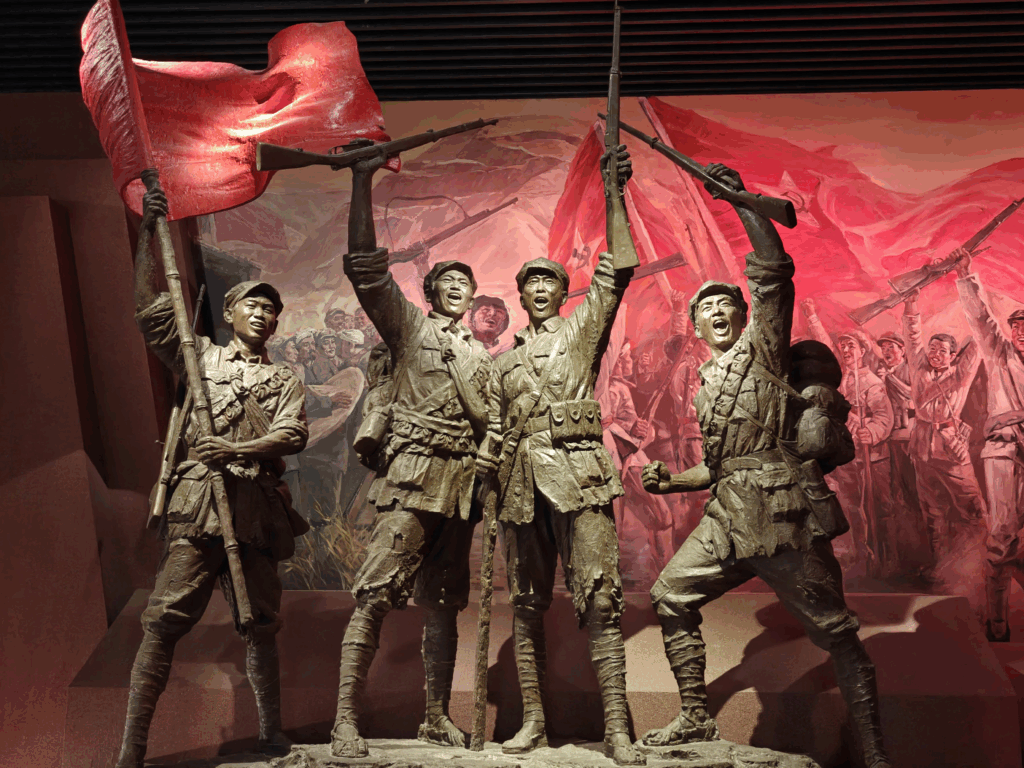
On 28 May, the delegation travelled by train from Xi’an to Yan’an, the quintessential ‘Red Tourism’ destination that was the centre of the Chinese Revolution between 1936 and 1948 – where the leadership and army were based, where the largest and most important pre-liberation revolutionary base area was set up, where much of the theoretical work of the revolution was done, and where Mao Zedong Thought was officially adopted by the party. Classic works of Mao Zedong such as On Practice, On Contradiction, On Protracted War, and On New Democracy were written there, based on extensive study and discussion, and synthesising the lessons of the movement’s experience up to that point with the existing theory of Marxism-Leninism.

We visited the caves where Mao, Zhou Enlai, Zhu De, Liu Shaoqi and others lived and worked for over a decade, and where legendary foreign friends such as Edgar Snow, Norman Bethune, Anna Louise Strong and Agnes Smedley visited. We also visited the building where the 7th National Congress of the CPC was held, from 23 April to 11 June 1945 – a crucial event setting out the strategy for the final phase of the struggle against Japanese occupation and for the pursuit of New Democracy.

We toured the beautiful Yan’an Revolutionary Memorial Hall, first opened in 1951, displaying 1,300 revolutionary cultural relics and telling the whole story of China’s struggle for liberation. The last agenda item for the day was an inspiring lecture and discussion with a representative of the Shaanxi Provincial Committee of the CPC.

Several days later, in Shanghai’s former French Concession, we were taken on a guided tour of the Site of the First National Congress of the CPC. The museum at the site includes powerful exhibits telling the story of why and how the CPC was established. Incidentally, last year’s delegation visited the Red Boat in Jiaxing, Zhejiang province, where the First Congress moved to in order to avoid the attention of the French Concession police.

Red Tourism is hugely popular in China. Important sites connected with the history of the Chinese Revolution are extremely well preserved and managed, and they attract large volumes of visitors from around the country. This type of tourism plays an important role promoting an understanding of China’s revolutionary history and connecting younger people in particular to the generations that made extraordinary sacrifices in order that China could stand up, assert its sovereignty, build socialism and become a force for good in the world. This feeds in to a widespread confidence and belief in socialism, which unites the Chinese people and forms a line of defence against the imperialist powers’ pernicious anti-communist propaganda.

Promoting civilisational exchange

On 30 May, our delegation attended the opening session of the Fourth Dialogue on Exchanges and Mutual Learning Among Civilisations, in Dunhuang, Gansu province. Moderated by Liu Jianchao, Minister of the International Department of the CPC Central Committee (IDCPC), the session featured a keynote speech by Vice President Han Zheng, plus addresses from Dithapelo Keorapetse (Speaker of the National Assembly of the Republic of Botswana), Ji Bingxuan (Vice Chairman of the Standing Committee of the 13th National People’s Congress), Sommad Pholsena (Vice President of the National Assembly of the Lao People’s Democratic Republic), Hu Changsheng (Secretary of the CPC Gansu Provincial Committee) and Bidya Devi Bhandari (former President of Nepal).

Continue reading Delegates from Britain and the US build friendship with China

ASEAN, GCC and China forge the new golden triangle of South-South Cooperation

Following his visit to Indonesia, Chinese Premier Li Qiang visited Malaysia for the first ASEAN (the Association of Southeast Asian Nations)-GCC (the Gulf Cooperation Council)-China Summit, held in the capital Kuala Lumpur, May 26-28.

This meeting, bringing together three key economic centres in the Global South, is being seen as a landmark development in international geopolitics and geoeconomics.

A commentary published by the Xinhua News Agency on the eve of the gathering described it as a new inter-regional cooperation model in Asia that will boost Global South unity:

“As leaders of the Association of Southeast Asian Nations (ASEAN) prepare for their 46th summit, an inaugural ASEAN-GCC (the Gulf Cooperation Council)-China Summit is also on the agenda, with expectations to expand inter-regional cooperation in Asia and shore up the common development of Global South countries.

“The gatherings, bringing together leaders of the three sides that have their unique strengths, will innovate cooperation models, boost growth momentum for Asia and beyond, and set a good example for Global South countries to unite and consolidate their collective development rights.

“The new endeavour is of special significance at a time when the world is haunted by the menace of protectionism and unilateralism, and international institutions are confronted with the challenge of fragmentation.

“ASEAN countries are beaming with economic vitality and development potential, while the GCC is a bloc rich in energy resources and investment capital. China, the world’s second-largest economy, also has much to offer in creating new cooperation opportunities through its vast consumer market and complete industrial system.

“China, the region’s economic powerhouse and an ardent promoter of cooperation, enjoys strong ties with both ASEAN and GCC countries.

“Trade, people-to-people exchanges, cooperation in energy, connectivity projects, finance and investment, innovation and green development have all witnessed steadfast growth among the three sides.

“As neighbours, China and ASEAN had by 2024 been each other’s largest trading partner for five consecutive years. Bilateral trade value soared from less than 8 billion US dollars in 1991 to nearly 1 trillion dollars in 2024.

“In  the latest development, China and 10 ASEAN countries have fully completed negotiations on the Version 3.0 China-ASEAN Free Trade Area, a milestone in bilateral trade cooperation that will inject greater momentum and stability into the world economy.

“With the GCC, China established contact upon the bloc’s inception in 1981. Forty-plus years on, the two sides have written together a splendid chapter of solidarity, mutual assistance and win-win cooperation.

“In 2024, trade between China and GCC countries reached over 288 billion dollars. Cooperation in investment, energy and green transformation is on the rise, thanks to the growing mutual trust and the high degree of complementarity in their respective economies.

“As the trilateral model of ASEAN-GCC-China cooperation continues to take shape, more growth momentum can be expected. Moreover, the three sides can coordinate better on regional and international affairs.

“With expanded and strengthened cooperation, the new model, together with mechanisms like the BRICS, can help create more solidarity and common prosperity for Global South countries.”

Xinhua also published a guest column by Julia Roknifard, a senior lecturer at the School of Law and Governance at Malaysia’s Taylor’s University, entitled “ASEAN-GCC-China cooperation a new ‘golden triangle’ in global affairs”.

According to Roknifard, “A remarkable mechanism of multilateral cooperation is emerging as the Association of Southeast Asian Nations (ASEAN), China and the Gulf Cooperation Council (GCC) are to hold an inaugural joint summit.

“The three parties now have more incentive than ever to coordinate in the current geopolitical climate, as some major countries are pursuing confrontation and protectionism, making the list of divergent interests only growing longer.

“China has already had a transformative impact on ASEAN and the broader Middle East economically, including the GCC states, through major infrastructure, trade and development efforts – particularly the Belt and Road Initiative and the Global Development Initiative. But the relationship runs deeper, with growing cooperation in technology, industrial development, tourism, cultural exchange and longstanding people-to-people ties.”

She adds: “China’s diplomatic and stabilising role on crucial issues has also boosted its standing in the region. Its calls for a peaceful and just resolution to the Palestinian conflict resonate with many in ASEAN, while its success in bringing together key Middle East powers, especially Iran and Saudi Arabia, has further elevated its profile and generated goodwill across the region.

“Despite efforts to draw ASEAN and the GCC members into bloc confrontation, the West is unable to pressure these countries as it previously could with its military and economic power, signaling a steady erosion of the leverage it once had. Amid ongoing conflicts and shifting economic realities, countries are increasingly prioritising partnerships that best serve their development goals, rather than accepting policies that hinder their progress.

“Bringing together all three parties creates a new platform for cooperation. Barring interference from outside parties, this emerging ‘Golden Triangle’ of resources, manufacturing, and consumers is poised to drive the global economy forward. It could also accelerate the spread of cutting-edge technologies pioneered by China – particularly in renewable energy vehicles and artificial intelligence tools like DeepSeek, which is developed at a fraction of the cost of Western counterparts.”

By way of contrast she notes: “As major European economies are close to recession and de-industrialisation, and the United States itself has lost its edge in shipbuilding tonnage and continues to lapse in other sectors, China continues to move forward as it is able to recognize this simple fact that ASEAN, the GCC and other regional groupings across Africa and Latin America are looking forward to a new era of peace and stable international relations.”

Addressing the summit, Premier Li Qiang said: “China, ASEAN and GCC countries have a long history of friendly interactions, with exchanges and cooperation between us spanning thousands of years from the ancient Silk Road to the Belt and Road Initiative. Today, against a volatile international landscape and sluggish global growth, the establishment of the ASEAN-China-GCC Summit creates a platform for exchanges and a mechanism for cooperation. It is a groundbreaking initiative in regional economic cooperation that has carried forward the legacy of history, and more importantly, answered the call of the times.

“Together, China, ASEAN and the GCC account for roughly a quarter of the world’s population and economic output. Our markets, if fully connected, will generate even greater space for development and more substantial economies of scale… China is ready to, on the basis of mutual respect and equality, work with ASEAN and the GCC to strengthen the alignment of development strategies, increase macro policy coordination, and deepen collaboration on industrial specialisation. We should make efforts to turn our respective strengths into collective strengths and help each other tackle development challenges.

“Countries of the three sides have diverse civilisations. At the same time, we all belong to the same Asian family and share the same Asian values of peace, cooperation, openness and inclusiveness. We should deepen people-to-people exchanges to further consolidate the foundation for mutual trust. We should effectively manage differences in the spirit of mutual understanding, advance win-win cooperation through the exchange of ideas, and explore a new way for promoting the inclusiveness and common progress of different civilisations. China actively supports [Malaysian] Prime Minister Anwar’s initiative on Islam-Confucianism dialogue.

“We should enhance synergy and connectivity in infrastructure, market rules and payment systems, actively consider establishing a regional business council, deepen economic integration, and make development more resilient and efficient. While expanding cooperation in traditional areas such as energy and agriculture, we also need to step up cooperation in emerging areas such as AI, the digital economy, and green and low-carbon development to foster and cultivate new growth drivers.

“At the global level, we should always stand on the right side of history and add more positive energy to world peace and development. We should pursue equal, mutually beneficial, open, inclusive, practical and efficient cooperation, and, through our example, encourage the international community to uphold multilateralism and free trade and reject unilateralism and protectionism. China will work with ASEAN and GCC countries to step up communication and coordination in multilateral mechanisms including the United Nations, vigorously defend the common interests of developing countries, categorically oppose hegemonism and power politics, and make global governance more just and equitable.”

Continue reading ASEAN, GCC and China forge the new golden triangle of South-South Cooperation

China and Indonesia invoke the Bandung Spirit

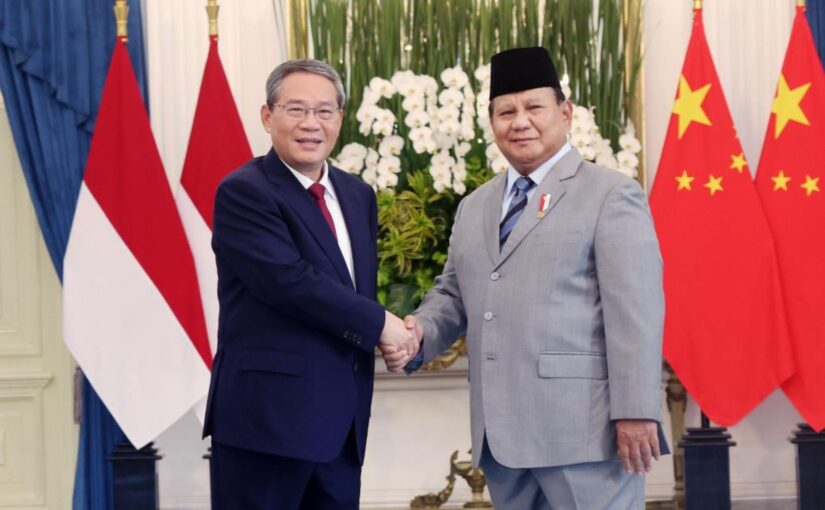
Chinese Premier Li Qiang paid an official visit to Indonesia from May 24 to 26 at the invitation of Indonesian President Prabowo Subianto.  Following this, Li attended the ASEAN (the Association of Southeast Asian Nations)-GCC (the Gulf Cooperation Council)-China Summit in Kuala Lumpur from May 26 to 28 at the invitation of Prime Minister Anwar Ibrahim of Malaysia, ASEAN’s rotating chair.

Announcing the visits at a May 22 Beijing press conference, Foreign Ministry spokesperson Mao Ning said that last year, the heads of state of China and Indonesia reached important consensus on building a China-Indonesia community with a shared future with regional and global influence, elevating bilateral relations to a new level. She said China hopes to carry forward the traditional friendship with Indonesia, deepen solidarity and cooperation, continuously consolidate cooperation in the “five pillars” of politics, economy, people-to-people and cultural exchanges, maritime affairs and security, adding that it is hoped that the two countries, along their respective modernisation paths, will constantly enrich the connotation of the China-Indonesia community with a shared future, and make greater contributions to peace, stability, development and prosperity in the region and beyond.

On May 25, the Xinhua News Agency reported that during Premier Li’s visit, the two countries highlighted the contemporary value of the Bandung Spirit and pledged for closer bilateral cooperation as well as better strategic coordination. “China stands ready to work with Indonesia and other developing countries to jointly uphold the Five Principles of Peaceful Coexistence and the Bandung Spirit,” Li said in talks with President Prabowo Subianto.

Xinhua noted: “In April 1955, a landmark conference in Indonesia’s city of Bandung gathered 29 Asian and African nations under the flag of solidarity, friendship and cooperation, marking the awakening of the part of the world known now as the Global South.”

Li added that today unilateralism and protectionism are on the rise, and acts of bullying are increasing, stressing that against this backdrop, the contemporary value of the Bandung Spirit has become more prominent.

He said that China stands ready to work with Indonesia and other developing countries to jointly uphold the Five Principles of Peaceful Coexistence and the Bandung Spirit, and implement the three major global initiatives proposed by President Xi Jinping.

He called for steadfastly upholding multilateralism and free trade, promoting an equal and orderly multipolar world and a universally beneficial and inclusive economic globalisation, resolutely safeguarding common interests, and jointly advancing peace, stability and development in the region and the world at large.

Noting that 2025 marks the 75th anniversary of diplomatic relations between the two countries and the 70th anniversary of the Bandung Conference, President Prabowo said that Indonesia will take this opportunity to deepen the comprehensive strategic partnership with China and jointly promote peace and development in Asia and the world.

He said Indonesia is ready to expand cooperation with China in agriculture, finance, infrastructure, green economy, AI and education, and upgrade industrial collaboration. Prabowo also expressed the hope that more Chinese enterprises will invest and do business in Indonesia.

Continue reading China and Indonesia invoke the Bandung Spirit

China blasts yet another US veto of Gaza ceasefire resolution

On June 4, the United States once again vetoed a United Nations Security Council (UNSCC) resolution on the humanitarian situation in Gaza and calling for a ceasefire. All other 14 members of the Council, including France and Britain, voted in favour of the resolution, which had been jointly prepared by the E10, the 10 rotating, non-permanent UNSC members.

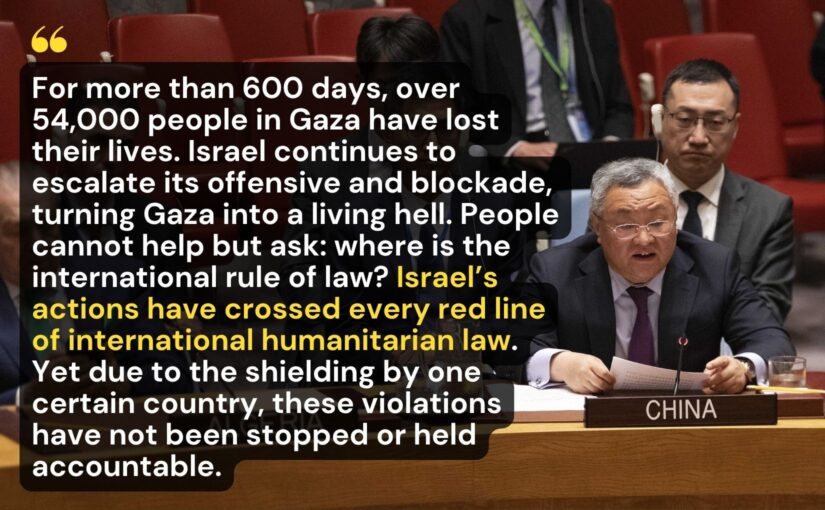
Following the US veto, Chinese Ambassador to the UN Fu Cong stated: “China is deeply disappointed by the result of today’s vote. The draft resolution on the humanitarian situation in Gaza, tabled by the E10 of the Security Council, clearly calls for an immediate and permanent ceasefire in Gaza and the lifting of the blockade on humanitarian supplies. These are the most pressing demands of the people in Gaza, who are struggling amid death and despair, and they reflect the overwhelming voice of the international community. The United States has once again abused its veto power, extinguishing the glimmer of hope for the people in Gaza and ruthlessly continuing to leave over two million people in darkness.”

He continued:

  • People cannot help but ask: where is fairness and justice? For more than 600 days, over 54,000 people in Gaza have lost their lives. Israel continues to escalate its offensive and blockade, turning Gaza into a living hell. Innocent civilians are killed in the conflict every day, while a large portion of the population is on the brink of famine. The United Nations has clearly pointed out that the aid delivery mechanism promoted by the US and Israel violates the principles of impartiality, independence, and neutrality. Recently, there have been repeated incidents of civilian casualties near distribution sites, and this mechanism has even become a death trap.
  • People cannot help but ask: where is the international rule of law? Since the outbreak of the conflict, we have witnessed the weaponisation of humanitarian aid, the targeting of civilian infrastructure, such as schools and hospitals, and the ruthless killing of journalists and humanitarian workers. Israel’s actions have crossed every red line of international humanitarian law and seriously violated Security Council and General Assembly resolutions, as well as the provisional measures ordered by the ICJ [International Court of Justice]. Yet due to the shielding by one certain country, these violations have not been stopped or held accountable.
  • People cannot help but ask: where is the authority of the Security Council? Today’s vote result once again exposes that the root cause of the Council’s inability to quell the conflict in Gaza is the repeated obstruction by the US, who has vetoed the Council’s request for a ceasefire multiple times. And because of its shielding of Israel, several resolutions adopted by the Council have not been effectively implemented. Claims that Security Council actions would interfere with diplomatic efforts are completely untenable.

Earlier, in remarks at a Security Council briefing on the situation, held on May 28, during the drafting of the resolution, Fu Cong said that:

“Since May 16, Israel has continued to intensify its military offensive in Gaza, which has completely destroyed large densely populated areas and caused the deaths of more than 1,000 Gazans in the past two weeks alone.”

He continued:

  • The question has been repeatedly asked: When will this conflict end? Over the past 600 days, northern, central, and southern Gaza have been ravaged by war, claiming the lives of more than 54,000 people. The population of Gaza has been forcefully displaced time and again.
  • The question has been repeatedly asked: Are there no limits to the means of this conflict? Even wars have rules. Compliance with international humanitarian law is an undeniable obligation of all parties. In Gaza, however, we have witnessed the red lines of international law and the bottom line of human morality being repeatedly violated and breached. Humanitarian assistance has been weaponised, with two million people plunged into extreme hunger as a result of the prolonged blockade. Schools, hospitals, refugee camps, and UN facilities have been targeted. Journalists and humanitarian workers have been mercilessly killed. Securing humanitarian assistance is an obligation of the occupying power under international law.
  • The question has been repeatedly asked: Will the Palestinian people be forced to lose their homes once again? Gaza is in ruins with living conditions severely jeopardised. Recently, there have been repeated calls from the Israeli side for completely destroying and taking over all of Gaza. The Israeli army has already controlled more than 70% of Gaza. At the same time, continued expansion of settlements in the West Bank and intensified settler violence gravely squeezed the space for the Palestinian people to survive. Changing the demographic and territorial composition of Gaza, as well as settlement activities, are in violation of the Security Council resolutions and international law. The annexation of Gaza and the West Bank will completely take away the prospects for peace in the Middle East.

He added: “Gaza and the West Bank are inalienable parts of the State of Palestine. The international community must firmly oppose any attempt to annex the territories of Gaza or the West Bank and oppose the forced displacement of the population of Gaza. The United States, as a country with significant influence over the party involved, should act in a fair and responsible manner and take effective and forceful actions.”

The following articles were originally published on the website of the Chinese Mission to the United Nations.

Explanation of Vote by Ambassador Fu Cong on the UN Security Council Draft Resolution on the Humanitarian Situation in Gaza

June 4 (China UN Mission) — President,

At the outset, let me congratulate Guyana on assuming the Presidency of the Security Council this month, and Greece on successfully completing its Presidency of the Council last month. 

Continue reading China blasts yet another US veto of Gaza ceasefire resolution

CPC strengthens ties with Afghanistan, Uruguay, Nepal, Cuba and other countries

We previously reported on the May visit to China by Afghanistan’s Acting Foreign Minister Mawlawi Amir Khan Muttaqi, during which he met his Chinese counterpart Wang Yi as well as joining an informal trilateral meeting in which Pakistan Foreign Minister (and also Deputy Prime Minister) Mohammad Ishaq Dar also participated.

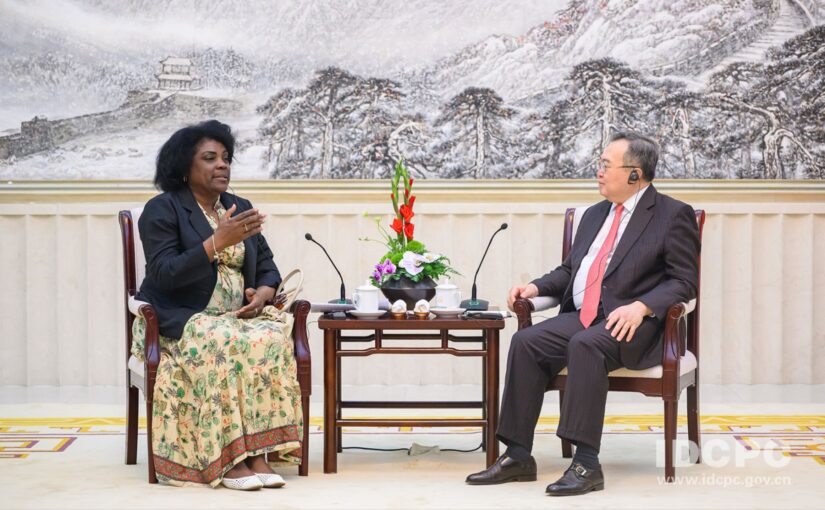
Following these meetings, the website of the International Department of the Communist Party of China (CPC) Central Committee (IDCPC) reported that, on May 23, IDCPC Minister Liu Jianchao, also met with Muttaqi.

Liu said, China and Afghanistan have similar historical experiences, and the Chinese people have a natural friendly feeling towards the Afghan people. China respects the development path independently chosen by the Afghan people and adheres to the principle of non-interference in Afghanistan’s internal affairs. China is willing to work with Afghanistan to take the 70th anniversary of the establishment of diplomatic relations between the two countries as an opportunity to strengthen political dialogue on the basis of equality and mutual respect, exchange and learn from each other’s experiences in state governance and administration, enhance mutual understanding and trust, continue to firmly support each other on issues concerning each other’s core interests and major concerns, and promote cooperation in all fields.

Muttaqi said that he is confident about the future of Afghanistan-China relations. Afghanistan and China have a thousand-year history of friendly exchanges and share similar historical experiences, understanding and sympathising with each other. Afghanistan will not allow any force to use its territory to engage in activities that harm China’s interests and is willing to strengthen cooperation with China in economy, trade, investment, infrastructure connectivity, security and other fields to further promote the development of bilateral relations. The CPC is committed to serving the people and has led the Chinese people to score great achievements in economic and social development, especially in poverty alleviation. This sets an example for us. Afghanistan is willing to strengthen exchanges with the CPC and learn from China’s successful experience.

Some other recent highlights in the work of the IDCPC include:

  • On May 28, Liu Jianchao met with a delegation of the Broad Front of Uruguay led by its President Fernando Pereira Kosec.

Liu said, not long ago, the Fourth Ministerial Meeting of the China-CELAC [Community of Latin American and Caribbean States] Forum was successfully held. President Xi Jinping announced the launch of five programs, namely Solidarity Program, Development Program, Civilisation Program, Peace Program and People-to-People Connectivity Program, charting the course for the future development of China-Latin America relations. Uruguay will hold the rotating presidency of CELAC next year. China is willing to strengthen unity and coordination with Uruguay and other Latin American and Caribbean countries to jointly address global challenges.  Since the establishment of relations between the CPC and the Broad Front, he added, the two Parties have maintained friendly exchanges. Under the new circumstances, the CPC is willing to strengthen political dialogue with the Broad Front, deepen exchanges and mutual learning in areas such as poverty alleviation and party building, and promote practical cooperation in various fields.

Pereira said, the Broad Front of Uruguay values the long-term friendly relations with the CPC and is willing to further strengthen exchanges between the two Parties, expand cooperation in areas such as cadre training, learn from China’s experience in poverty alleviation, long-term planning and party building, promote cooperation in economy, trade and other fields, and further enhance the connection between the two countries in politics, economy, society and culture, and carry forward the traditional friendship between the two countries.

Continue reading CPC strengthens ties with Afghanistan, Uruguay, Nepal, Cuba and other countries

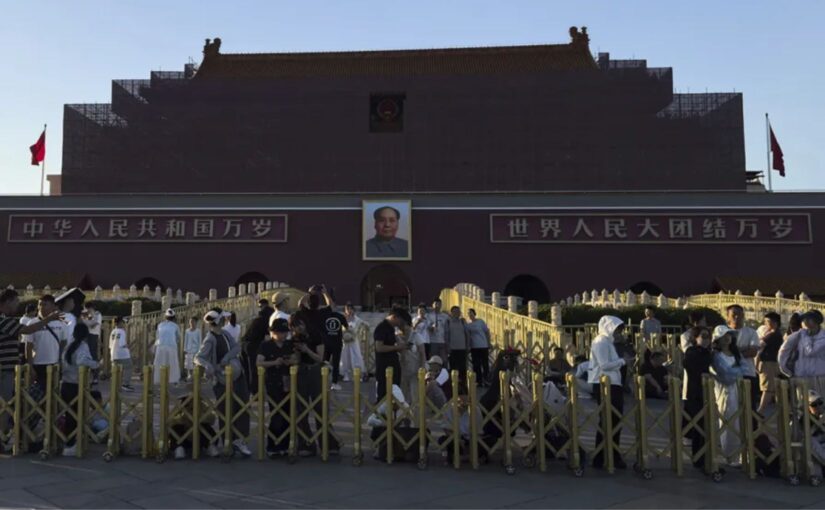
Tiananmen Square, 1989: The truth comes out, eventually

In the following article for the Morning Star, Dan Ross challenges the mainstream Western narrative of the 1989 Tiananmen Square events. Rather than being a “massacre of thousands of unarmed students”, as is typically presented, Dan argues that what occurred was a complex confrontation between the Chinese military and radicalised protesters, many of whom were armed.

Dan draws on contemporaneous coverage from The Washington Post and Wall Street Journal and other eyewitness sources to show that China’s authorities, after two months of Beijing being brought practically to a standstill, and with lengthy negotiations not bearing fruit, decided to peacefully disperse the protests. “Unarmed soldiers entered the square to begin the dispersal”, whereupon “they were set upon by groups of co-ordinated and armed protesters that remained, as was openly reported on at the time. Many dozens of soldiers are known to have been killed, as grisly images of lynched and burned soldiers from the events attest”.

The violence can accurately be described as clashes between armed protesters and soldiers, not a massacre of unarmed civilians on the Square.

The Western propaganda machine lost no time in spinning the story as a vicious attack by an authoritarian state on freedom-loving unarmed protestors. Dan writes:

It should come as no surprise that this co-ordinated propaganda campaign took place concurrently with the fall of socialism across central and eastern Europe and the Soviet Union. The US, then as now, remains committed to undermining and destroying Chinese socialism, and has relied heavily upon thinly veiled, CIA-sponsored bodies like Radio Free Asia, National Endowment for Democracy, and the fanatical anti-communist and fantasist Adrian Zenz, with the sole objective of bringing about the fall and disintegration of China, much as happened to the former USSR and Yugoslavia.

Ultimately, the article calls on readers to question the mainstream narrative of the “Tiananmen Massacre”, pointing out that it is just another piece of crass anti-China and anti-communist propaganda.

“As columns of tanks and tens of thousands of soldiers approached Tiananmen, many troops were set on by angry mobs… dozens of soldiers were pulled from trucks, severely beaten and left for dead.

“At an intersection west of the square, the body of a young soldier, who had been beaten to death, was stripped naked and hung from the side of a bus.  Another soldier’s corpse was strung at an intersection east of the square.”

“Radicalised protesters, some now armed with guns, and vehicles commandeered in clashes with the military.”

“Other scenes show soldiers’ corpses and demonstrators stripping automatic rifles off unresisting soldiers.”

These accounts are taken, not from the official version of the Chinese government, but from the Washington Post and Wall Street Journal in the immediate aftermath of the events of June 4 1989.

As the US, its allies, and cheerleaders in the media step up their campaign of anti-communist and Sinophobic rhetoric in the growing cold war against China, we can expect to hear an altogether different — if more familiar — narrative about the “massacre” of thousands of innocent students in a “brutal authoritarian crackdown” this week.

The “events” in fact began two months earlier in April, when students gathered — somewhat ironically — to mourn and commemorate the passing of a senior Communist Party leader, Hu Yaobang, later joined by workers — again ironically — concerned by the inflationary effects of market-liberalising economic reforms.

Beijing’s iconic central square, and much of the city, was all but paralysed for weeks. Following lengthy but failed attempts at a negotiated settlement between the government and student leaders (presenting disparate and undefined demands) and no end in sight to the paralysis of the capital, the authorities eventually ordered the peaceful dispersal of the crowds from the square, that was largely was achieved by June 3.

Individual accounts of army snipers and soldiers gunning down fleeing students have been discredited both by a far greater number of eyewitnesses contradicting it, including US journalists (such as the Washington Post’s Jay Matthews), and television footage of an orderly dispersal. Spanish television network TVE had a camera crew on the square covering events, and reported no evidence of a massacre.

No doubt the image of the infamous “tank man” has sprung to your mind; it is well worth watching the footage to the end: the outcome might surprise you!

When soldiers — unarmed — originally entered the square to begin the dispersal, they were set upon by groups of co-ordinated and armed protesters that remained, as was openly reported on at the time. Many dozens of soldiers are known to have been killed, as grisly images of lynched and burned soldiers from the events attest.

Much of the subsequent violence occurred following the dispersal, between June 4-5, and took place elsewhere across the city, rather than on the square itself. The violence can accurately be described as clashes between armed protesters and soldiers, not a massacre of unarmed civilians on the Square.

Continue reading Tiananmen Square, 1989: The truth comes out, eventually

China and Africa should continuously strengthen the power of the Global South

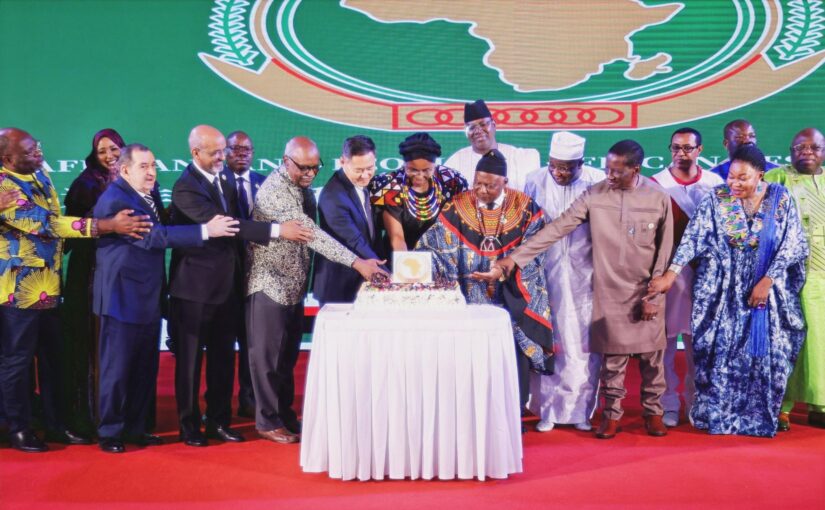
We previously reported the May 26 celebration of Africa Day in Beijing, in which Chinese Foreign Minister Wang Yi was joined by diplomats from more than 50 African countries along with representatives from the African Union (AU).

Subsequently, the website of the Chinese Foreign Ministry has now made available the full text of Wang Yi’s speech on this occasion.

Wang Yi noted that the theme of the commemoration of Africa Day this year is “China-Africa Solidarity for a Shared Future” and shared his thoughts on three keywords in this regard, namely friendship, cooperation, and solidarity.

He said:

  • We must cherish the traditional China-Africa friendship and strengthen our confidence in solidarity and cooperation.  Over the years, the Chinese and African peoples have supported each other in the struggle for independence and liberation and in the endeavour to defend national sovereignty and have helped each other in exploring development paths and achieving national rejuvenation. From China’s assistance in building the Tanzania-Zambia (TAZARA) Railway to the joint construction of Africa’s largest hydropower station, from our African brothers “carrying” China into the United Nations, to China taking the lead in supporting the African Union’s joining in the G20, and from dispatching medical teams to Africa shortly after the founding of the People’s Republic of China to the China-Africa united fight against COVID-19, China and Africa have forged a deep friendship marked by a shared future and close bonds. Entering the new era, President Xi Jinping visited Africa five times, put forward the principles of China’s Africa policy – sincerity, real results, amity and good faith, and pursuing the greater good and shared interests… leading China-Africa relations to their best in history. China never interferes in Africa’s internal affairs, never imposes its own will on others, never attaches any political conditions to its assistance to Africa and never seeks political gains in its investment and financing in Africa.
  • We should deepen practical cooperation and build a consensus for common development. Over the past 25 years, bilateral trade has increased 27-fold, China’s investment stock in Africa has grown more than 80 times, and we have helped build and upgrade nearly 100,000 kilometres of roads and over 10,000 kilometres of railways in Africa. In the past three years alone, Chinese enterprises have created over 1.1 million jobs in Africa. In half a month, the Coordinators’ Meeting on the Implementation of the Follow-up Actions of the FOCAC [Forum on China-Africa Cooperation] Ministerial Conference will be held in Changsha, Hunan. We should take this meeting as an opportunity to add more momentum and strength to the implementation of the common understandings reached by the leaders of both sides, [and] set a benchmark for high-quality Belt and Road cooperation.
  • We need to discern the direction of the profound changes unseen in a century and continuously strengthen the power of the Global South. This year marks the 80th anniversary of the victory of the World Anti-Fascist War and the founding of the United Nations. However, the world is not yet a tranquil place. Recently, the United States, disregarding international law and international trade rules, first abruptly cut aid to many countries, including those in Africa, and then indiscriminately imposed tariffs worldwide. Such unilateral bullying moves, which ignore the fundamental principles of international relations, would plunge the world back into the law of the jungle. History has shown time and again that in the face of injustice and power politics, compromise and concessions lead nowhere. Only by standing firm on our just position and fighting back resolutely can we safeguard our legitimate rights and interests. As the largest developing country and the continent with the highest concentration of developing countries in the world, China and Africa are both key members of the Global South. The more turbulent the international situation becomes, the more imperative it is for us to stand firmly together, strengthen solidarity and cooperation, [and] jointly oppose power politics.

Meanwhile, on June 6, at a routine Foreign Ministry press conference in Beijing, spokesperson Lin Jian announced that Wang Yi would attend the above-mentioned Ministerial Meeting of Coordinators on the Implementation of the Follow-up Actions of the Forum on China-Africa Cooperation (FOCAC) in Changsha, capital city of central China’s Hunan Province, from June 10 to 12, alongside representatives from the 54 African members of FOCAC. Wang will also attend the opening ceremony of the Fourth China-Africa Economic and Trade Expo, also to be held in Changsha.

Lin said that China will enhance coordination with African countries with a focus on implementing the six proposals and 10 partnership initiatives put forward by President Xi for jointly advancing modernisation, so that people in China and Africa will benefit more from the outcomes of the FOCAC summit.

Continue reading China and Africa should continuously strengthen the power of the Global South

Hegseth demands Indo-Pacific allies escalate military spending, prepare for war on China

In this article for Struggle La Lucha, Gary Wilson critiques US Defence Secretary Pete Hegseth’s speech at the recent Shangri-La Dialogue, in which Hegseth urged the US’s regional allies to ramp up military spending in preparation for possible war with China.

Hegseth claimed in his speech that Beijing is preparing to wage war in order to reunite Taiwan Province with the mainland, declaring that “the threat China poses is real, and it could be imminent”. Gary writes:

Hegseth and the Trump administration are attempting to recast China’s efforts to maintain national sovereignty as “aggression,” while portraying US military escalation in China’s immediate periphery as defensive. It’s a textbook example of how imperialism inverts reality.

The article notes that Washington in recent years has been persistently undermining the One China policy, through arms sales, military training, naval patrols, intelligence sharing, and diplomatic efforts that treat Taiwan as an independent state. “All of this raises the stakes deliberately. The US is trying to provoke a response from China, just as it did with Russia over NATO’s expansion to Ukraine. In essence, what Hegseth is demanding is a US military takeover of China’s Taiwan — disguised as ‘defending democracy.'”

The article situates these moves within a broader trend: the US’s global war strategy, including support for war in Ukraine and Israel’s assault on Gaza, all components of the US-led response to the crisis of capitalism. As China’s technological and economic rise challenges US hegemony, Gary warns the US is increasingly willing to risk catastrophic war — including nuclear confrontation — to maintain its dominance.

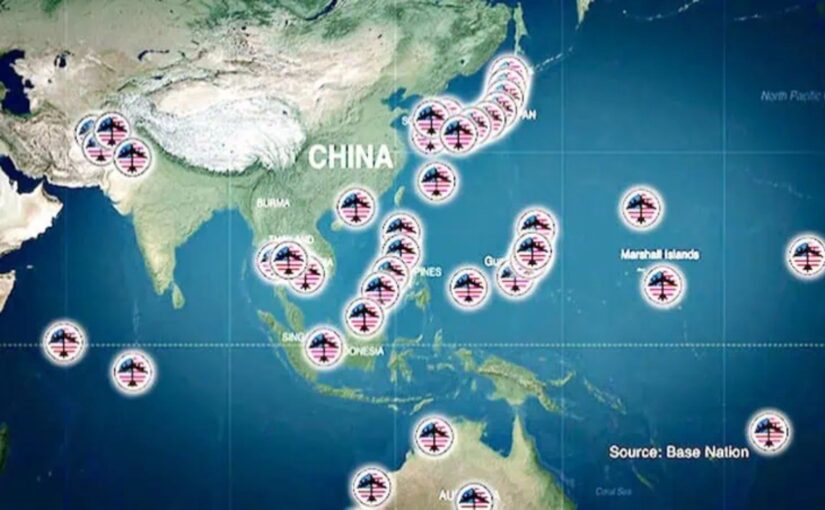
Listing the numerous ways in which the US is escalating its longstanding campaign of encirclement and containment of China, the article concludes:

The Trump administration is determined to strangle China’s rise — by war if necessary. This is not a defensive strategy. It is a conscious plan to preserve U.S. global supremacy, even if it risks nuclear war.

At the annual Shangri-La Dialogue in Singapore on May 31, U.S. Defense Secretary Pete Hegseth delivered an ultimatum to Washington’s Indo-Pacific allies: Escalate your military spending and prepare for imminent war with China.

Framing China as the aggressor, Hegseth accused Beijing of seeking “hegemony in Asia” and warned that a Chinese move on Taiwan would bring “devastating consequences for the Indo-Pacific and the world.” “There’s no reason to sugarcoat it,” he declared. “The threat China poses is real. And it could be imminent.”

Please note that Taiwan is internationally recognized as part of the People’s Republic of China. Under the One China policy, the United States officially acknowledges this. Since the 1970s, the U.S. has agreed not to recognize Taiwan as a separate state. 

So when U.S. Defense Secretary Pete Hegseth speaks of preparing for war over Taiwan, what he’s really advocating is: a U.S. military intervention to take away a province of China.

This is akin to China threatening war if the U.S. deployed troops to Long Island, N.Y. or Isle Royale in Lake Superior on Canada’s border. 

Hegseth and the Trump administration are attempting to recast China’s efforts to maintain national sovereignty as “aggression,” while portraying U.S. military escalation in China’s immediate periphery as defensive. It’s a textbook example of how imperialism inverts reality.

Furthermore, the U.S. has systematically undermined the One China framework by increasing arms sales to Taiwan, sending high-level officials to visit the island’s capital, Taipei, stationing American troops and conducting joint military training there, and encouraging Taiwanese political figures who flirt with formal declarations of independence.

In addition to arms sales and military visits, the U.S. has steadily undermined the One China policy through a range of provocative actions. These include expanding intelligence sharing and joint military planning with Taiwan, increasing naval and air patrols near the island, and passing legislation to deepen official ties. The U.S. has also promoted Taiwan’s participation in international organizations, supported the development of its domestic arms industry, and formalized trade agreements that treat Taiwan as a separate entity. Collectively, these moves aim to transform Taiwan into a U.S. military and economic outpost, escalating tensions with China and pushing the region closer to open conflict.

All of this raises the stakes deliberately. The U.S. is trying to provoke a response from China, just as it did with Russia over NATO’s expansion to Ukraine. In essence, what Hegseth is demanding is a U.S. military takeover of China’s Taiwan — disguised as “defending democracy.”

Continue reading Hegseth demands Indo-Pacific allies escalate military spending, prepare for war on China

Dialogue with Fudan University’s China Institute: Is China really socialist?

The second Friends of Socialist China delegation to China took place from 26 May to 5 June 2025. The delegation, composed of 15 comrades from Britain and the US, visited Xi’an and Yan’an (Shaanxi), Dunhuang and Jiayuguan (Gansu) and Shanghai, visiting important historical sites, learning about China’s development, attending the 4th Dialogue on Exchanges and Mutual Learning among Civilisations, and engaging meeting with a range of organisations.

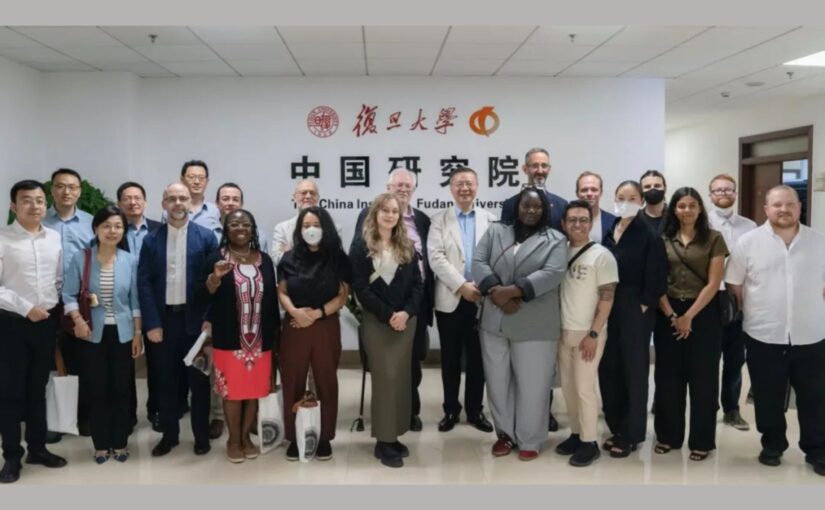
On Monday 3 June, the delegation participated in a dialogue with the China Institute of Shanghai’s Fudan University, consisting of a panel discussion featuring Professor Zhang Weiwei, Professor Wu Xinwen, and Friends of Socialist China co-editors Carlos Martinez and Keith Bennett, followed by a wide-ranging discussion with the audience.

We reproduce below a report of the event from the China Institute WeChat channel, which has been machine-translated. The full video can be found on the China Academy website, and is embedded below. We will also be publishing a delegation report in due course.

On the afternoon of June 3, Carlos Martinez, co-editor of the Friends of Socialist China website, and Keith Bennett, vice chairman of the British 48 Group Club, led a delegation of Friends of Socialist China to visit the China Institute of Fudan University. Professor Zhang Weiwei, director of the National High-end Think Tank Council and dean of the China Institute of Fudan University, and Professor Wu Xinwen, vice dean, had in-depth dialogues and interactive exchanges with Mr. Martinez, Mr. Bennett and other members of the delegation on Chinese socialism and its global significance.

In his speech, Professor Zhang Weiwei welcomed the Friends of Socialist China delegation and briefly introduced China’s exploration of socialism along the way and its impact on the outside world.

Continue reading Dialogue with Fudan University’s China Institute: Is China really socialist?

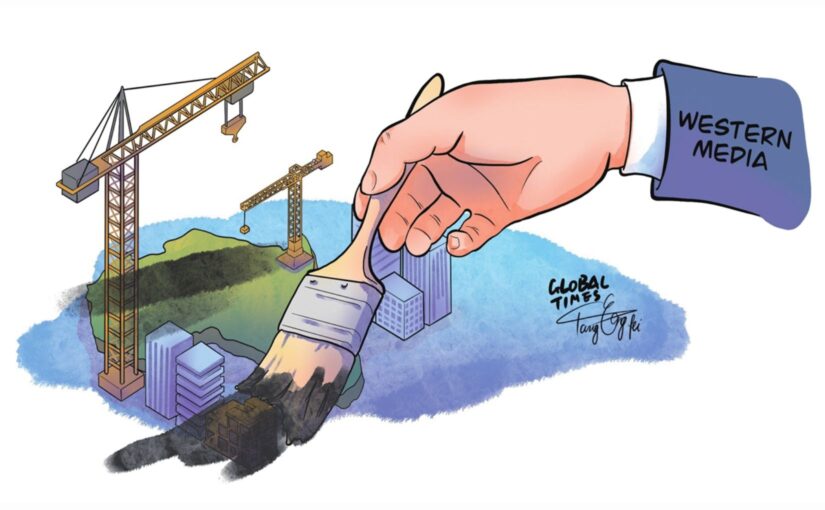
What’s wrong with Western claims of China’s “debt burden” on poor nations

The explainer article below, originally published on Xinhua News Agency, challenges Western allegations that China is imposing a “debt trap” on developing countries through loans tied to the Belt and Road Initiative (BRI). The article specifically addresses the recent analysis from Australian foreign policy thinktank the Lowy Institute claiming that the poorest 75 countries in the world are due to pay record high debt repayments to China this year.

The authors write: “A closer look at the debt structure and facts will prove that those allegations cannot hold water.” They note that the lion’s share of developing world debt is in fact owed to Western lending institutions. World Bank data indicates that, for Sub-Saharan Africa, bilateral debt with China accounts for 11 percent of the total. Furthermore, debt to Chinese entities typically incurs far lower interest rates, and is associated with longer maturities and greater repayment flexibility. Unlike loans from Western multilateral lending institutions, China’s loans come without punishing conditions of “reform” – that is, privatisation and liberalisation measures.

“In the 46 countries that participated in the G20 Debt Service Suspension Initiative, Chinese creditors accounted for 30 percent of all claims and contributed 63 percent of debt service suspensions… China’s debt reduction has already doubled the average reduction scale of the G7 countries.”

The article also highlights that China’s loans are typically focused on infrastructure, telecommunications and green energy, and are thus helping the poorest countries to generate wealth, improve living standards, and break out of underdevelopment.

The article concludes that the “debt trap” narrative is simply a rhetorical strategy by Western powers to undermine China’s growing mutually-beneficial relationships with the countries of the Global South.

A recent report published by an Australian think tank claimed that many developing countries were on the hook for record high debt repayments to China in 2025, as bills come due from the lending under the Belt and Road Initiative (BRI).

Once again, China became an easy target to blame. In recent years, Western think tanks and media outlets have kept hyping up the so-called Chinese “debt trap.” However, a closer look at the debt structure and facts will prove that those allegations cannot hold water.

Who is the biggest lender?

The think tank report blamed China as the major source of debt pressure for developing countries, warning that “now, and for the rest of this decade, China will be more debt collector than banker to the developing world.”

In fact, for many developing countries, a majority of debts are owed to Western donors and multilateral institutions, while Chinese entities’ loans account for only a minority.

For example, in the Sub-Saharan Africa region, 66 percent of public and publicly guaranteed debt is held by private bondholders and multilateral creditors, while bilateral debt with China accounts for 11 percent, as the International Debt Report 2023 released by the World Bank (WB) Group has shown.

As for Sri Lanka, its debt to Chinese entities accounts for only 10.8 percent of its total external debt, while private creditors taking the lion’s share of 53.6 percent, multilateral creditors — 20.6 percent, according to data released by the country’s Central Bank and the Ministry of Finance, Economic Stabilization & National Policy as of March 2023.

Spokesperson for Pakistan’s Foreign Ministry Mumtaz Baloch has previously slammed a New York Times article’s accusations that “Chinese loans led to Pakistan’s economic crisis,” retorting that the China-Pakistan Economic Corridor (CPEC) has made positive and transparent contributions to Pakistan’s national development.

The total public debt involved in the CPEC project is only a small part of Pakistan’s total debt, Baloch said, noting that the public trade debt from China has low interest rates and long maturities.

Contrary to portrayals by Western think tanks and media of China as an unforgiving lender, China has actively contributed to global debt relief efforts over the years.

In the 46 countries that participated in the G20 Debt Service Suspension Initiative, Chinese creditors accounted for 30 percent of all claims and contributed 63 percent of debt service suspensions.

Since 2016, China, as a bilateral creditor, has been responsible for roughly 16 percent of global debt relief, surpassing the United States and the WB, said professor Ding Yibing, dean of School of Economics, Jilin University, adding that China’s debt reduction has already doubled the average reduction scale of the G7 countries.

Amid the growing concerns of a debt default, China has always adhered to the principle of equality in bilateral relations and proactively participates in just and fair negotiations with different nations, said Song Wei, a professor at the School of International Relations and Diplomacy, Beijing Foreign Studies University.

China’s contribution to debt relief exemplifies the international obligations expected for a responsible major country, Song said.

Continue reading What’s wrong with Western claims of China’s “debt burden” on poor nations

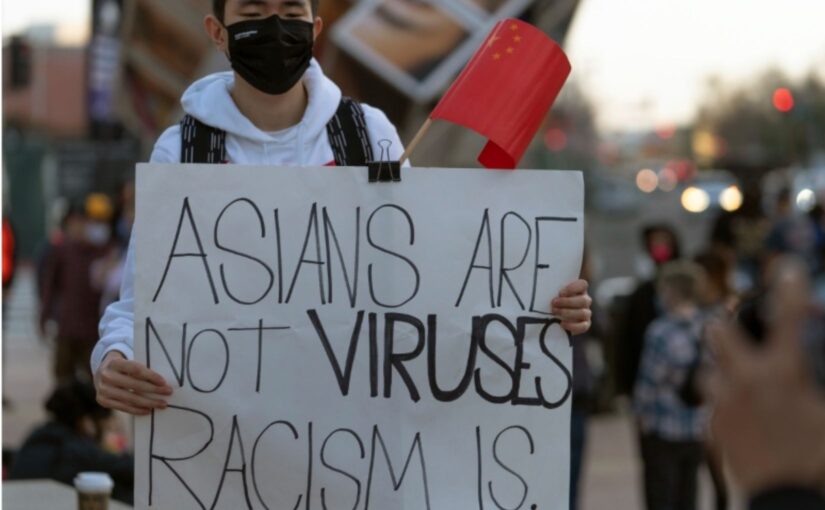
US imperialism’s New Cold War against China fosters anti-Asian racism at home

The article below by Duncan McFarland and Liu Xuegang argues that US foreign policy – particularly its increasingly hostile stance toward China – has direct and harmful consequences for Chinese and Asian communities in the US.

The authors trace a long history of anti-Asian sentiment linked to US imperialist strategy, from the Chinese Exclusion Act of 1882 to the McCarthyite Cold War propaganda of the 1940s and 50s. In recent years, tensions have escalated sharply under both Republican and Democratic administrations. Trump’s team has declared China a top strategic threat, launched a tariff war, and escalated the state’s attack on Chinese scientists, researchers and students in the US.

The article concludes that US imperialism fosters division and racism at home as it pursues global dominance. It calls for resistance to the New Cold War and urges solidarity with global movements for peace and cooperation.

The international working class does not want war. It is imperative to oppose Cold War 2.0, work for peace, and support initiatives, especially in the Global South and China, for cooperation on global issues such as climate change, pandemics, war, and poverty.

U.S. imperialism divides the world into hostile camps; this is the wrong approach. The people of the world want peace, prosperity, and cooperation. The U.S. policy of hegemony abroad promotes racism at home; the struggle for justice and freedom at home is also a struggle for peace abroad.

This article originally appeared in People’s World. The authors are members of the Asia-Pacific Subcommittee, Peace and Solidarity Commission, CPUSA.

U.S. foreign policy can have a great impact on people’s daily lives here at home, and U.S. policy toward China is a prime example. When the U.S. conducts a hostile, anti-China foreign policy, there is increased racism and repression in the Asian and Chinese American communities in the U.S.

On the other hand, when relations with China are good, such as during World War II or the 1980s, mainstream media depicted Chinese Americans as friendly, patriotic, and the “model minority.”

As U.S. imperialism’s new Cold War against China heats up, familiar patterns are repeating themselves under new conditions.

Historical background

The Central Pacific Railroad employed large numbers of Chinese immigrants to build the western half of the Transcontinental Railway, completed in 1869. However, no Chinese workers were invited to the golden spike ceremony at the completion of the project. Especially with the overthrow of Reconstruction, racist attitudes prevailed, and the Chinese Exclusion Act was signed in 1882. This blocked Chinese workers from entering the U.S.; it was the first anti-immigration legislation targeting a specific ethnic group or country of origin.

In 1913, the novel The Insidious Fu Manchu was a hit and became a cultural icon full of racist stereotypes about the ever-lurking, insidious Dr. Fu. But during the 1930s, the U.S. and China became important allies in the Pacific War against Japanese imperialism and aggression.

Continue reading US imperialism’s New Cold War against China fosters anti-Asian racism at home

Socialist China’s role in combating imperialist domination

The following article, written by Betsey Piette for Workers World, highlights socialist China’s growing role in challenging US-led imperialist domination and argues that defending China is essential to the global struggle against capitalism.

Betsey stresses the need to foster internationalist consciousness among workers and young activists, linking domestic struggles with global anti-imperialist movements. She critiques the propaganda that falsely equates China and the US as being equivalent capitalist ‘superpowers’, arguing that this narrative obscures the exploitative and chaotic nature of US capitalism while ignoring China’s remarkable achievements under socialism.

Betsey observes that, despite the US’s escalating campaign of military encirclement and economic warfare, China’s economy continues to expand, living standards continue to improve, and its international cooperation continues to deepen, including with the US’s “traditional allies”.

Betsey asserts that China’s planned economy and state-led development – which have resulted not only in vastly increased living standards for the Chinese people but also in China becoming a science and technology powerhouse – offer an inspiring alternative model to capitalist neoliberalism.

The article concludes by calling for systematic defence of China’s socialist system against US threats of war, warning that economic aggression may escalate into military conflict. China’s is a revolution in motion that must be defended by the global working class.

Despite decades of wars and occupations of countries abroad, the U.S. faces a global challenge it is unable to contain. This challenge is multifaceted, but three things stand out:

One is the relentless resistance of the people of Palestine and West Asia in elevating their struggle for a free Palestine. 

A second is the challenge from socialist China’s resistance to U.S. capitalist domination of the global economy.

The third is a growing awareness among young people that they have no future under capitalism, with its unchecked environmental catastrophes and its ready acceptance of fascist politicians. 

A key challenge for the party and the movements we are part of is how to encourage young activists and workers to develop a more global outlook when it comes to capitalism and imperialism and to see why socialism offers the solution.

Demands are important

“From the river to the sea, Palestine will be free” is the most popular demand for Palestine and one that gets the most pushback from the Zionists. This demand doesn’t just raise opposition to the ongoing genocide in Gaza — it supports the future goal for Palestinians. Demands are important.

As we oppose the threat of imperialist war against China, we need to raise awareness about transformation and resulting gains made by socialism in China.

Imperialist propaganda puts an equal sign between the U.S. and China as “superpowers” — as if they are both capitalist countries. Corporate media pundits and politicians promote the lies that “China is repressive, that their economy is failing, that there is widespread unemployment, no opportunities for young people, etc.” It’s like they are looking in a mirror where what is reflected back are the conditions in the U.S., not China.

Continue reading Socialist China’s role in combating imperialist domination