Xi Jinping meets the leaders of Zimbabwe, Slovakia, Congo, Serbia and Indonesia

Chinese President Xi Jinping held a series of meetings on September 4 with national leaders who had come to Beijing to attend the commemoration of the 80th anniversary of the victory of the Chinese People’s War of Resistance Against Japanese Aggression and the World Anti-Fascist War.

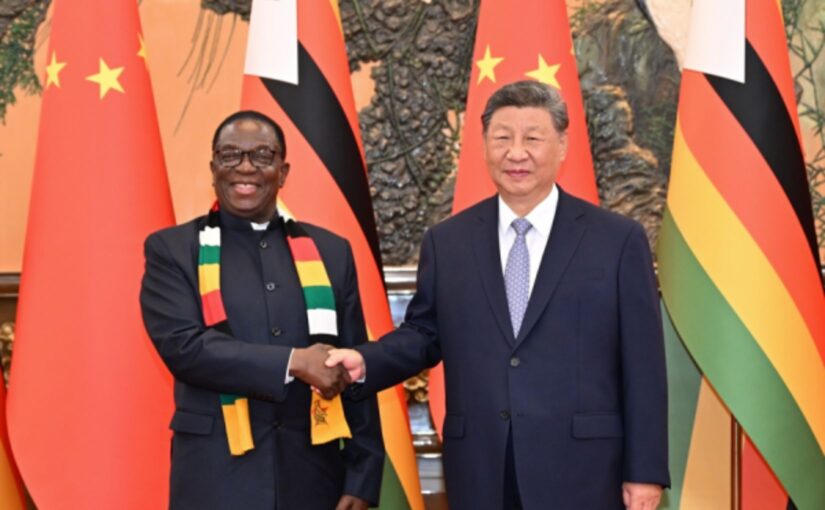
In the morning Xi Jinping met with Zimbabwean President Emmerson Mnangagwa. The two heads of state announced the elevation of bilateral relations to a China-Zimbabwe all-weather community with a shared future.

President Xi noted that this year marks the 45th anniversary of the establishment of diplomatic relations between China and Zimbabwe, and the two countries’ “five-star ironclad” friendship has steadily deepened, setting an example for solidarity and coordination between China and Africa, and for the Global South. China will continue to firmly support Zimbabwe in independently pursuing a development path suited to its conditions, oppose external interference and illegal sanctions, and safeguard the shared interests of both countries and the broader Global South.

President Xi emphasised that the two sides should seize the opportunity presented by the elevation of bilateral relations to develop innovative approaches to cooperation and broaden cooperation in infrastructure, mining, investment, trade, and so on, thereby raising the quality and upgrading the substance of cooperation between the two countries. China stands ready to work with Zimbabwe to advance the implementation of the outcomes of the Beijing Summit of the Forum on China-Africa Cooperation (FOCAC) and support Zimbabwe’s economic and social development.

President Mnangagwa said that he is delighted to attend the historic commemoration of the 80th anniversary of the victory of the Chinese People’s War of Resistance Against Japanese Aggression. The international community must never forget China’s important contribution to the victory of the World Anti-Fascist War and must uphold a correct historical perspective on WWII. After 45 years of development, Zimbabwe-China relations have become increasingly mature and resilient. Zimbabwe looks forward to jointly building an all-weather community with a shared future with China and will unwaveringly adhere to the one-China principle, deepen mutually beneficial cooperation in all fields, and work for greater development of the bilateral relationship, bringing greater benefits to the people of the two countries.

At noon Xi met with Slovak Prime Minister Robert Fico.

The Chinese President noted that both China and Slovakia had made tremendous national sacrifices and significant historical contributions to the victory of the World Anti-Fascist War. At a time when the world is undergoing profound changes unseen in a century, the international community needs solidarity and cooperation more than ever. Both sides should uphold the vision of a community with a shared future for humanity, practice true multilateralism, work for the reform and improvement of the global governance system and make greater contributions to world peace and development.

President Xi emphasised that China highly appreciates Slovakia’s commitment to friendly relations with China and is ready to work with Slovakia to maintain close high-level exchanges, firmly support each other’s chosen development path, strengthen experience sharing on governance, and continuously deepen mutual political trust. President Xi expressed his hope for Slovakia to continue playing a positive role in promoting the sound and steady development of China-EU relations.

Prime Minister Fico said that China made significant contributions to the victory of the World Anti-Fascist War and to upholding world peace. The successful commemoration of the 80th anniversary of the victory of the Chinese People’s War of Resistance Against Japanese Aggression sends a strong message to the world that justice will prevail, peace will prevail, and the people will prevail, and this is truly impressive. He said it is an honour to be invited to China to witness this grand event in person.

Slovakia was the only member state of NATO and the EU to be represented at the commemoration at head of government level, although Hungary and Bulgaria also sent senior representatives.

In the afternoon, Xi met with President of the Republic of the Congo Denis Sassou Nguesso. The two heads of state announced the elevation of the bilateral relationship to a high-level community with a shared future between China and the Republic of the Congo.

President Xi noted that the relationship between China and the Republic of the Congo exemplifies China-Africa friendship. The Republic of the Congo is the first country to reach an early harvest arrangement with China under the agreement on economic partnership for shared development and will soon benefit from China’s zero-tariff treatment, opening a new chapter in bilateral trade and investment cooperation.

President Xi noted that since assuming the role of African co-chair of the Forum on China-Africa Cooperation (FOCAC), the Republic of the Congo has been working actively together with China to promote the implementation of the outcomes of the Beijing Summit and has achieved commendable results. China stands ready to work with African countries to effectively carry out the ten partnership actions and foster new growth drivers in green industries, e-commerce and digital payments, science and technology, and artificial intelligence, taking China-Africa cooperation to even greater heights. In the current international environment of transformation and turbulence, China and Africa, as important members of the Global South, must shoulder the historic responsibility of upholding international fairness and justice, safeguarding world peace, and promoting common development, and work hand in hand to build a community with a shared future for humanity.

Continue reading Xi Jinping meets the leaders of Zimbabwe, Slovakia, Congo, Serbia and Indonesia
Venezuela unveils monument to Chinese people’s victory

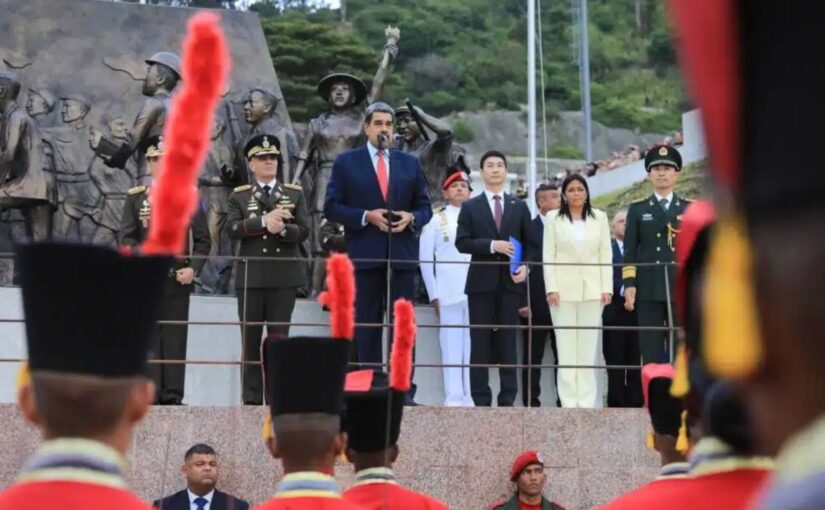
Venezuela honoured the 80th anniversary of the Chinese people’s victory in the War to Resist Japanese Aggression and the World Anti-Fascist War on September 3, with President Nicolás Maduro being joined by Chinese Ambassador Lan Hu to inaugurate a monument in the capital Caracas. They were also accompanied by senior members of the Venezuelan government, including Vice President Delcy Rodríguez and Defence Minister Vladimir Padrino.

President Maduro stated: “From Caracas, we gift the Chinese people and President Xi Jinping this monument, which will be a permanent testament to the brave victory of resistance against the erstwhile Japanese empire.”

He compared this achievement to the victory of the Soviet Red Army against Nazi Germany, emphasising that “the Chinese people’s army brought the Japanese empire to its knees and defeated it.”

Maduro further reaffirmed the ties of cooperation between Venezuela and China in a context of international solidarity: “The victory of China is the victory of the Bolivarians. It is the victory of Venezuela.”

He also highlighted that currently, in addition to being an economic power, “China is the leading military power on planet earth. A sister power, a friendly power, a power without an imperialist, colonialist, or slave-owning vision.”

Ambassador Lan Hu expressed his gratitude to President Maduro and the Venezuelan people during the inauguration:

“In the name of the government and people of China, I would like to thank President Nicolás Maduro Moros and the government and people of Venezuela for the construction of this commemorative monument, for this great global victory,” he said.

He described it as a reflection of the friendship between the two nations, adding that the sculpture also represents recognition of both the Chinese and global anti-fascist cause, along with the firm determination of both countries to resist any aggression or military invasion,

The following article were first published by Orinoco Tribune and Global Times. That in Orinoco Tribune was originally published in Spanish by Telesur.

Venezuela Commemorates 80 Years of China’s Victory in the War of Resistance Against Japan

September 4 (Orinoco Tribune) – Venezuela celebrated the 80th anniversary of the victory of China in the War of Resistance against Japanese Aggression, a part of World War II in Asia. Venezuelan President Nicolás Maduro presided over an official event held in Caracas on Wednesday, September 3, to commemorate the event. He was accompanied by China’s ambassador to Venezuela, Lan Hu, and high-level members of the Venezuelan government, such as Vice President Delcy Rodríguez and Defense Minister Vladimir Padrino.

During the ceremony, a commemorative monument was inaugurated to honor China’s liberation from Japanese rule in 1945, a milestone of global significance. “From Caracas, we gift the Chinese people and President Xi Jinping this monument, which will be a permanent testament to the brave victory of resistance against the erstwhile Japanese empire,” stated the Venezuelan president.

President Maduro highlighted the historical significance of the people of China. “Today, 80 years later, we commemorate that victory that happened due to the unity of all of China,” he said. “The people saved their culture, their history, and recovered more than half of their territory that they lost in this criminal, colonial, savage war of the then Japanese empire.”

Continue reading Venezuela unveils monument to Chinese people’s victory

China-Vietnam relations of comrades and brothers underlined in three high-level meetings

The special relations of comrades as well as brothers between China and Vietnam, as Vietnamese communist leader Ho Chi Minh once described it in a poem, were highlighted by three recent overlapping top level exchanges between the two socialist neighbours.

From August 31-September 2, Zhao Leji, Member of the Standing Committee of the Political Bureau of the Communist Party of China (CPC) Central Committee and Chairman of the Standing Committee of the National People’s Congress (NPC), visited Vietnam at the invitation of the Communist Party of Vietnam (CPV) Central Committee and Chairman of the National Assembly of Vietnam Tran Thanh Man, leading a party and state delegation to events marking the 80th anniversary of the August Revolution and the National Day of the Socialist Republic of Vietnam.

When meeting with General Secretary of the CPV Central Committee To Lam, Zhao Leji conveyed General Secretary Xi Jinping’s cordial greetings and extended warm congratulations on the historic achievements made in the cause of the CPV and the country over the past 80 years. Zhao Leji stated that under the new circumstances, China is ready to work with Vietnam to fully implement the important common understandings reached between the top leaders of the two Parties and  jointly advance the socialist modernisation endeavours in their respective countries, and accelerate the building of a China-Vietnam community with a shared future that carries strategic significance.

To Lam asked Zhao Leji to convey his sincere greetings to General Secretary Xi Jinping and expressed his gratitude for the tremendous assistance provided by China during various periods of Vietnam’s revolution and development. He said that under the leadership of the CPC Central Committee with Comrade Xi Jinping at its core, China has achieved remarkable accomplishments in development and has become a main driving force of global economic growth.

When meeting with Vietnamese President Luong Cuong, Zhao Leji conveyed President Xi Jinping’s best wishes to him, noting that China and Vietnam should respond to external uncertainties with the strengths of the socialist system, uphold and strengthen the leadership of the Communist Party, firmly support each other’s reform and development endeavours, leverage the exemplary role of mutually beneficial and win-win cooperation between China and Vietnam, jointly resist the countercurrents of unilateralism and protectionism, and defend international fairness and justice as well as the common interests of developing countries.

Zhao Leji attended the ceremony held at the Ba Dinh Square in Hanoi marking the 80th anniversary of the August Revolution and the National Day of the Socialist Republic of Vietnam, and watched the military parade, mass pageantry and grand cultural performances. The Guard of Honour of the Chinese People’s Liberation Army was invited to participate in the military parade. The full text of General Secretary To Lam’s speech on the occasion may be read here.

Zhao Leji also paid respects at the Ho Chi Minh Mausoleum and visited Ho Chi Minh’s Stilt House.

Around 400 military personnel from the armed forces of China, Russia, Laos, and Cambodia took part in the military parade. Receiving them on August 29, Deputy Minister of National Defence Sen. Lt. Gen. Hoang Xuan Chien extended a warm welcome and expressed gratitude to the foreign troops for their participation. He commended their determination and training efforts, noting their swift integration into rehearsals alongside the Vietnamese forces. Since their arrival, the delegations had received warm attention from both local leaders and the public, he noted.

From August 31-September 1, Vietnamese Prime Minister Pham Minh Chinh visited Tianjin to attend the meetings of the Shanghai Cooperation Organisation (SCO).

Continue reading China-Vietnam relations of comrades and brothers underlined in three high-level meetings

China and Cuba build on the friendship established by Chairman Mao and Fidel Castro

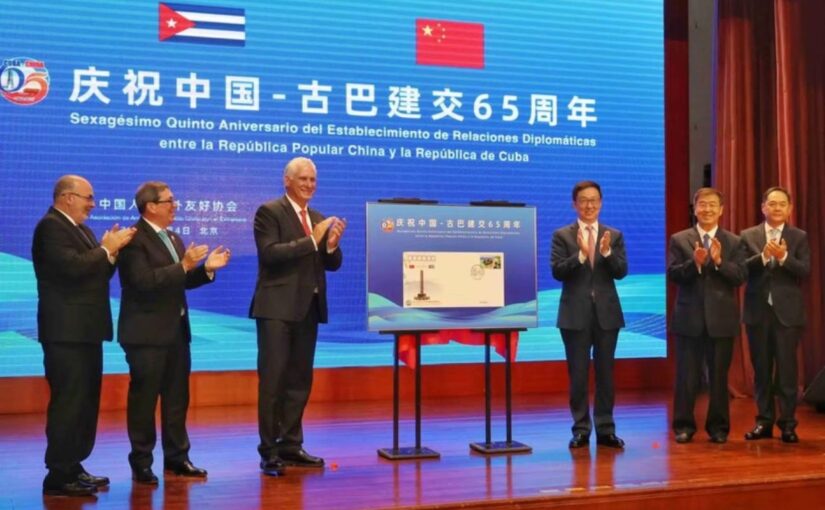
On the morning of September 4,  General Secretary of the Central Committee of the Communist Party of China (CPC) and President Xi Jinping met at the Great Hall of the People in Beijing with First Secretary of the Central Committee of the Cuban Communist Party (PCC) and President of the Republic of Cuba Miguel Díaz-Canel Bermúdez who was in China for the commemoration of the 80th anniversary of the victory of the Chinese People’s War of Resistance Against Japanese Aggression and the World Anti-Fascist War.

President Xi pointed out that in recent years the building of a China-Cuba community with a shared future has deepened with tangible outcomes, which has become a vivid symbol of the ironclad friendship between the two parties and the two countries. This year marks the 65th anniversary of the establishment of diplomatic relations between China and Cuba. Both sides should take this opportunity to bring China-Cuba relations to a higher level and bring more benefits to the two peoples.

President Díaz-Canel noted that the commemorative events marking the 80th anniversary of the victory of the Chinese People’s War of Resistance Against Japanese Aggression had a solemn and lively atmosphere and are of great historic significance. China’s important contributions to the victory of the World Anti-Fascist War will never be forgotten. Cuba was the first country in Latin America to build a bilateral community with a shared future with China. The relations between the two Parties and two countries are close, and the friendship is rock-solid.

The two sides released the Joint Statement between the People’s Republic of China and the Republic of Cuba on Accelerating the Construction of the China-Cuba Community with a Shared Future and signed multiple bilateral cooperation documents in such fields as Belt and Road cooperation, practical cooperation, the Global Security Initiative, sub-national agricultural cooperation, and artificial intelligence.

According to the joint statement: “The two Heads of State highly value the traditional friendship between the Republic of Cuba and the People’s Republic of China… and the fruitful results achieved in the development of relations and cooperation in various fields in the 65 years since the establishment of diplomatic relations. Cuba and China are good friends, good comrades and good brothers. The friendship between Cuba and China was forged by the historical leaders of the two countries, represented by Mao Zedong and Fidel Castro Ruz.”

It notes that, “The Heads of State emphasise that the relationship between Cuba and China is at its most favourable historical point. They reaffirm their strong political commitment to advancing bilateral relations by accelerating the development of a Cuba-China Community of Shared Future. The two leaders engaged in a comprehensive exchange of views on party and country relations, reaching significant consensus. They agree to continue strengthening strategic communication, increasing high-level exchanges, deepening both bilateral and multilateral political cooperation, and promoting collaboration at all levels and in all areas. They also commit to further enhancing the special friendly relations between China and Cuba in the New Era and to speeding up the establishment of the Cuba-China Community of Shared Future.”

The Cuban side highly values the outstanding theoretical and practical contributions of Xi Jinping Thought on Socialism with Chinese Characteristics for the New Era and hopes that the Chinese people will continue to make new and greater achievements in building socialism under the firm leadership of Comrade Xi Jinping and the CPC.

The Chinese side highly values and firmly supports the fact that, under the leadership of the PCC, the Cuban people persevere on the path of socialism and continuously explore a development model in accordance with their own national conditions, overcoming all difficulties. The Chinese side reaffirms its willingness to deepen friendship, strengthen solidarity and expand cooperation in all fields with the Cuban side.

The Chinese side reaffirms its firm support for the Cuban people in their struggle to defend their national sovereignty against the economic, commercial and financial blockade imposed by the United States. The unjust and illegal blockade of the United States harms the right to life of the Cuban people and constitutes the main obstacle to Cuba’s development. The Chinese side once again calls on the United States to remove Cuba from the arbitrary “list of state sponsors of terrorism.”

Both sides agree to continue strengthening the special ties between the CPC and the PCC, as the cornerstone of relations between the two countries.

Both sides agree to deepen cooperation in science, technology and innovation in the fields of cybersecurity, nanotechnology, life sciences, biomedicine, food production and agrotechnology, brain sciences, biodiversity, climate change, energy and environment, digital transformation, robotics and automation.

Continue reading China and Cuba build on the friendship established by Chairman Mao and Fidel Castro

London film retrospective pays tribute to Anna May Wong

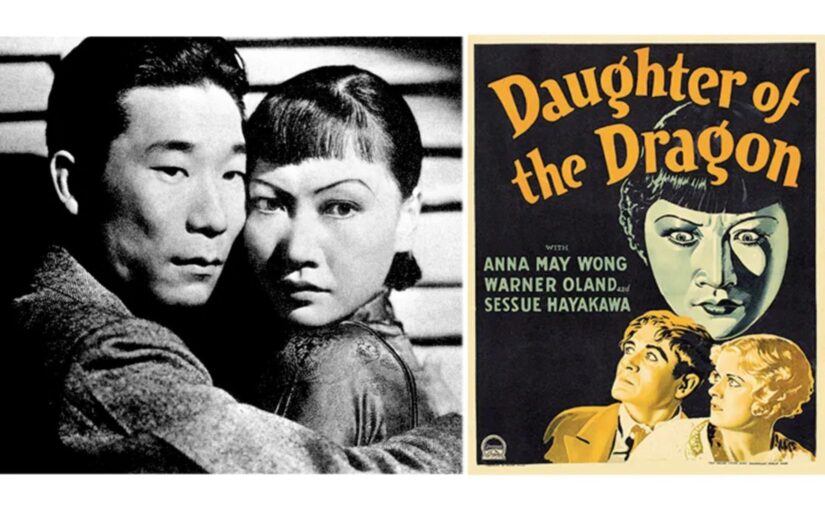
In the following article, which originally appeared in the Morning Star, David Horsley reviews a season of Anna May Wong’s films, currently showing at the British Film Institute (BFI) on London’s Southbank until October 8, and pays a well-deserved tribute to the pioneering Chinese-American actor and filmmaker.

David writes: “Some films dealing with the war in China either used the usual racist stereotypes or actors in ‘yellow face’ when depicting Chinese people. But one film, Lady From Chungking is an anti-imperialist classic without said stereotypes.

“Anna May Wong (real name Wong Liu Tsong) portrays the lady of the film’s title. She is not only a member of the resistance in an area occupied by the Japanese but is in fact the group’s leader. She wisely directs their efforts to resist and plays a major personal role, sacrificing her life for the cause of freedom.

“Her final defiant words before a firing squad says after her death, that many more will follow in her place, leading to peace and a China free from the invaders.”

She excoriated the racist and sexist stereotyping that she faced in her professional life: “How should we be, with a civilisation that’s so many times older than that of the West. We have our own virtues. We have our rigid code of behaviour, of honour. Why do they never show these on the screen? Why should we always scheme, rob, kill?”

Further information, including synopses of all the films, and details of showings may be found on the BFI website.

David Horsley is also the author of a booklet on the life of Claudia Jones, the African-American communist and great friend of China.

During WWII, Hollywood film makers produced dozens of films based on that conflict. Many were worthy attempts to support the war effort against Hitler and a few are anti-fascist classics, like the outstanding None Shall Escape the Judgement made in 1944  which envisages a court in Warsaw trying a Nazi for his part in the Holocaust. This was years before the actual Nuremberg Trial.

Most films dealt with the war in Europe, with very few on the war in China where the Japanese invaders slaughtered over 20 million men, women and children.

Some films dealing with the war in China either used the usual racist stereotypes or actors in “yellow face” when depicting Chinese people. But one film, Lady From Chungking is an anti-imperialist classic without said stereotypes.

Continue reading London film retrospective pays tribute to Anna May Wong

Xi meets Lao president

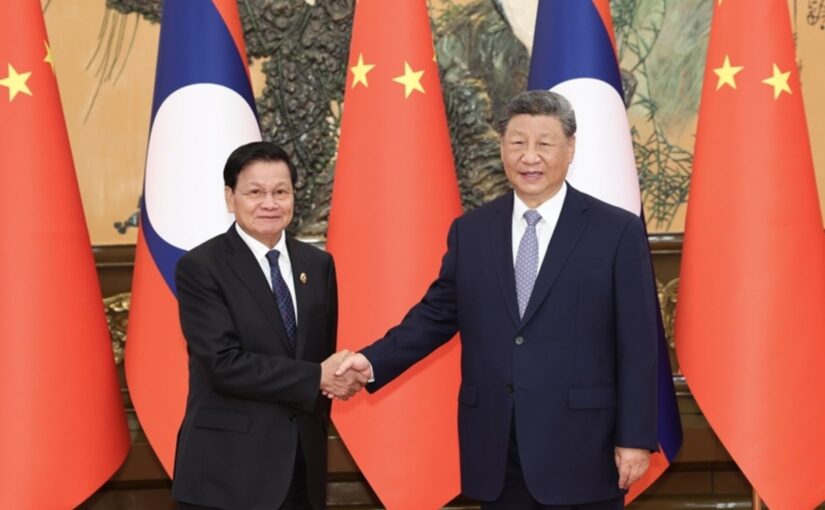
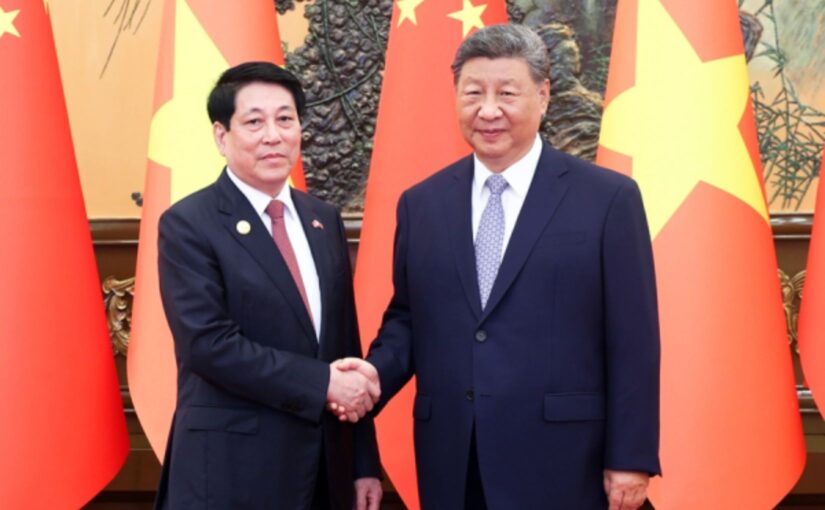
On September 4, Xi Jinping, General Secretary of the Communist Party of China (CPC) Central Committee and Chinese President, met with Thongloun Sisoulith, General Secretary of the Lao People’s Revolutionary Party (LPRP) Central Committee and Lao President, in Beijing.

Thongloun was in China for the Shanghai Cooperation Organisation (SCO) Summit, where his country was admitted as a SCO Partner, and for the commemorations marking the 80th anniversary of the victory in the Chinese People’s War of Resistance against Japanese Aggression and the World Anti-Fascist War, as well as for a working visit.

Xi stressed that given the complex and profound changes in the international and regional landscape, the two sides need to view and approach China-Laos relations from a long-term and strategic perspective and firmly support each other on issues concerning their respective core interests and major concerns. They need to focus on the operation of the China-Laos Railway and development along the route to upgrade key projects, Xi said, adding that they should also deepen cooperation in defence, law enforcement and security, and other fields.

Thongloun said that the Laos-China relationship is now at its best in history, and Laos is ready to continue working with China to implement the new five-year action plan on building a Laos-China community with a shared future.

Between his participation in the SCO meetings, August 31-September 1, and the commemoration of the war victory, September 3, Thongloun visited Hanoi to participate in the grand ceremony marking the 80th anniversary of the August Revolution (August 19, 1945 – 2025) and the National Day of the Socialist Republic of Viet Nam (September 2, 1945 – 2025), which was held at the historic Ba Dinh Square in the Vietnamese capital on the morning of September 2.

The Vietnamese newspaper Nhân Dân reported that To Lam, General Secretary of the Communist Party of Vietnam, welcomed the visit of the Lao leader describing it as a testament to the rare, loyal, and special solidarity between the two parties and nations. He noted that the participation of Lao People’s Army soldiers in the National Day parade was a great encouragement to Viet Nam.

The Vietnamese party leader stressed that every victory in Vietnam’s revolutionary cause has been closely tied to the heartfelt support of the Lao party, state, and people. He affirmed that Vietnam deeply treasures this valuable assistance, from the years of resistance in the past to the cause of national construction and defence at present, and that Vietnam will do its utmost, together with Laos, to preserve and further strengthen their special relationship.

For his part, the Lao leader offered congratulations to Vietnam, noting that the success of the August Revolution and the establishment of the Democratic Republic of Vietnam in 1945 greatly inspired Laos’s national liberation and energised revolutionary and peace movements among the oppressed peoples worldwide.

Reporting the grand ceremony, Nhân Dân, noted that international guests included:

  • Thongloun Sisoulith, General Secretary of the Lao People’s Revolutionary Party and President of Laos
  • Samdech Techo Hun Sen, President of the Cambodian People’s Party and President of the Senate of Cambodia
  • Miguel Díaz-Canel Bermúdez, First Secretary of the Communist Party of Cuba and President of Cuba
  •  Zhao Leji, member of the Standing Committee of the Political Bureau of the Communist Party of China Central Committee and Chairman of the Standing Committee of the National People’s Congress
  • Igor Sergeenko, Speaker of the House of Representatives of Belarus;
  • And Vladimir Vladimirovich Yakushev, Secretary of the General Council of the United Russia Party and First Vice Chairman of the Federation Council of the Russian Federal Assembly.
  • Also present were leaders of political parties including the General Secretary of the United Left Movement Party of the Dominican Republic and the General Secretary of the Communist Party of Britain.

And in a related development, Cuban President and First Secretary of the Central Committee of the Communist Party of Cuba, Miguel Díaz-Canel Bermúdez paid a state visit to Laos, September 6-7, following his own visits to Vietnam and China.

The Lao News Agency KPL reported that President Thongloun warmly welcomed the Cuban delegation and highly valued the visit, noting that it marked the third time Comrade Miguel Díaz-Canel Bermúdez had visited the Lao PDR. The two leaders expressed satisfaction that relations between the parties, states, and peoples of Laos and Cuba have continued to strengthen as strategic partners bound by common ideals.

On behalf of the Lao party, government, and people, Comrade Thongloun expressed sincere gratitude for the invaluable support extended by Cuba during the Lao people’s national liberation struggle and throughout the subsequent period of national development. He also invited Comrade Miguel Díaz-Canel Bermúdez to participate in the celebration of the 50th anniversary of the establishment of the Lao PDR at the end of 2025.

Miguel Díaz-Canel Bermúdez reaffirmed Cuba’s commitment to further expanding the traditional friendship and cooperation established by President Kaysone Phomvihane and President Fidel Castro and thanked the Lao PDR for its continued encouragement and support for Cuba in overcoming challenges.

The following article was originally published on the website of China’s State Council Information Office.

Xi Jinping, general secretary of the Communist Party of China Central Committee and Chinese president, met with Thongloun Sisoulith, general secretary of the Lao People’s Revolutionary Party Central Committee and Lao president, in Beijing on Thursday.

Thongloun is in China for the Shanghai Cooperation Organization Summit 2025, commemorations marking the 80th anniversary of the victory in the Chinese People’s War of Resistance against Japanese Aggression and the World Anti-Fascist War, and a working visit.

Xi stressed that given the complex and profound changes in the international and regional landscape, the two sides need to view and approach China-Laos relations from a long-term and strategic perspective, and firmly support each other on issues concerning their respective core interests and major concerns.

China is ready to deepen exchanges with Laos on experience in party and state governance, Xi said.

The two sides need to focus on the operation of the China-Laos Railway and development along the route to upgrade key projects, Xi said, adding that they should also deepen cooperation in defense, law enforcement and security, and other fields.

Thongloun said that the Laos-China relationship is now at its best in history, and Laos is ready to continue working with China to implement the new five-year action plan on building a Laos-China community with a shared future.

Laos fully supports the Global Governance Initiative proposed by General Secretary Xi Jinping and stands ready to strengthen coordination and cooperation with China on the international stage, Thongloun said.

China, Russia and Mongolia strengthen three-way friendship in Beijing

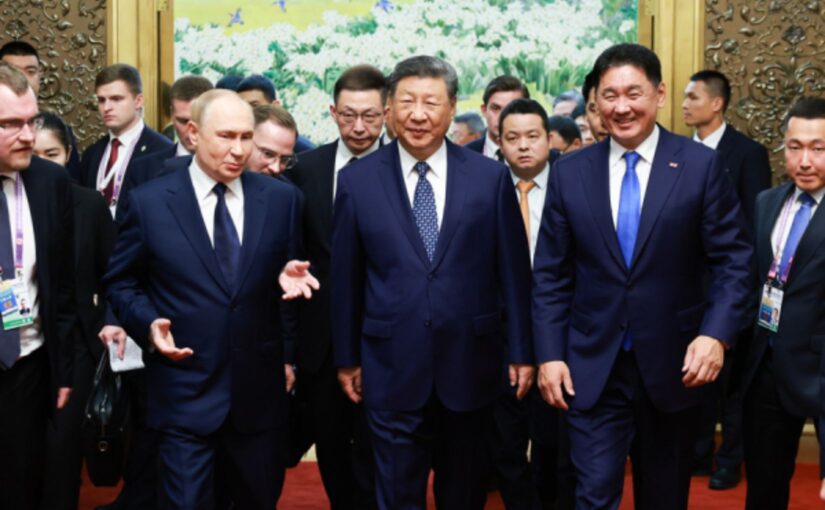
Chinese President Xi Jinping held important meetings with Russian President Vladimir Putin and Mongolian President Khurelsukh Ukhnaa on the morning of September 2. Both men were in China to attend the meetings of the Shanghai Cooperation Organisation (SCO) along with the commemoration of the 80th anniversary of the Chinese people’s victory in the war to resist Japanese aggression and the world anti-fascist war.

President Xi Jinping noted that the China-Russia relationship, having stood the test of changes in the world, has become a prime example of relations between two major countries featuring everlasting good-neighbourliness and friendship, comprehensive strategic coordination, and mutual benefit, cooperation and win-win. Staying committed to their abiding aspirations and maintaining resolve, the two sides have produced fruitful outcomes in their cooperation across the board. The Chinese side will work with the Russian side to maintain close high-level exchanges, support each other’s development and rejuvenation, coordinate positions on matters pertaining to each other’s core interests and major concerns in a timely manner, and achieve greater progress in China-Russia relations. The two sides should guide their cooperation through large and especially more flagship projects and promote convergence of interests at a deeper level.

Xi Jinping observed that the Chinese and Russian presidents attending the commemorations of the victory of the World Anti-Fascist War held in each other’s countries fully demonstrates the sense of responsibility of major countries as the key victorious nations of World War II and permanent members of the United Nations Security Council and speaks to their firm determination to safeguard the fruits of the victory in World War II and uphold a correct historical perspective on the War. Both China and Russia emphasise sovereign equality, international rule of law, and multilateralism. The two sides should continue to step up coordination and cooperation at the UN, the SCO, the BRICS, the G20 and other multilateral platforms, and join hands in building a community with a shared future for humanity.

President Putin noted that guided by President Xi and himself, the bilateral relationship has been highly strategic and reached a historic high. President Xi paid a state visit to Russia and attended the celebrations marking the 80th anniversary of the victory of the Soviet Union’s Great Patriotic War last May. President Putin said that he will attend the commemoration of the 80th anniversary of the victory of the Chinese People’s War of Resistance Against Japanese Aggression tomorrow. By doing so, the two countries underscore to the world that they helped each other and fought side by side in the World Anti-Fascist War and played critical roles in its victory in both main European and Eastern theatres, and they are firmly committed to jointly upholding the truth of history and safeguarding the fruits of the victory in World War II. The solidarity and cooperation between Russia and China in the World Anti-Fascist War has laid a solid foundation for the development of their relations in the new era.

The Russian President’s website further quoted him as saying: “Our ancestors, fathers and grandfathers paid an enormous price for peace and freedom. We do not forget this – we remember. It is the foundation, the bedrock of our achievements today and in the future.”

In his meeting with Mongolian President Khurelsukh Ukhnaa, President Xi noted that China and Mongolia, as friendly neighbours connected by mountains and rivers, are enjoying ever deepening exchanges and cooperation across various fields, with multiple key projects making positive progress. The two sides should be guided by the vision of building a China-Mongolia community with a shared future, consolidate strategic mutual trust, deepen development integration, and bring the two peoples closer, so as to inject sustained momentum into their comprehensive strategic partnership. He stressed that no matter how the international landscape may evolve, China will remain a trustworthy and reliable partner for Mongolia

President Khurelsukh said that it is a priority of Mongolia’s foreign policy to maintain permanent good-neighbourly friendship and pursue sustainable, mutually beneficial cooperation with China. Mongolia highly commends China’s commitment to the principle of amity, sincerity, mutual benefit and inclusiveness in pursuing its neighbourhood diplomacy. The Global Governance Initiative (GGI) proposed by President Xi Jinping advocates for a UN-centred international governance system that ensures equal participation of all developing countries. Mongolia warmly applauds this initiative and is ready to work with China to provide mutual support and pursue close cooperation on the global stage to safeguard the common interests of developing countries.

Continue reading China, Russia and Mongolia strengthen three-way friendship in Beijing

Xi Jinping meets leaders from Uzbekistan, Pakistan, Turkmenistan, Iran, Malaysia and Tajikistan

On September 2, Chinese President Xi Jinping met in Beijing with the leaders of a number of friendly countries who were visiting China to attend the summit meetings of the Shanghai Cooperation Organisation (SCO) and to participate in the commemoration of the 80th anniversary of victory in the Chinese People’s War of Resistance Against Japanese Aggression and the World Anti-Fascist War.

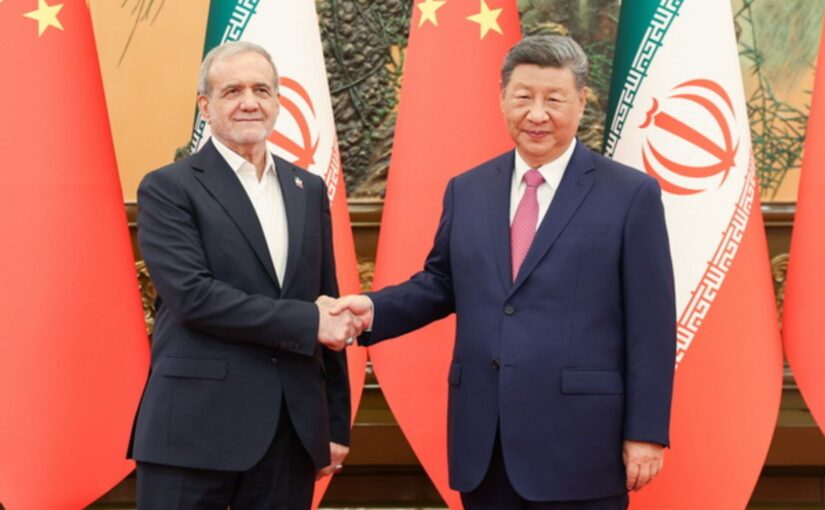
Meeting with Uzbek President Shavkat Mirziyoyev in the morning, President Xi pointed out that China and Uzbekistan are friendly neighbors and all-weather comprehensive strategic partners for a new era. China supports Uzbekistan in safeguarding its sovereignty, security and development interests, and stands ready to work together to accelerate the alignment of development strategies, steadily advance the construction of the China-Kyrgyzstan-Uzbekistan railway project, step up cooperation in such areas as joint scientific research, green energy, medical and health care, emergency management, artificial intelligence and poverty reduction, and expand exchanges on culture, education, tourism and at the sub-national level. President Xi emphasised that amid complex and volatile changes in the current international situation, a solid and stronger SCO will help countries safeguard their shared interests and boost their respective development.

President Mirziyoyev noted that China made significant contributions to the victory of the World Anti-Fascist War, and hosting the commemoration of the 80th anniversary of the victory of the Chinese People’s War of Resistance highlights China’s courage and resolve to uphold lasting world peace. Uzbekistan attaches great importance to its relations with China and is grateful for China’s long-term and valuable support for its economic and social development and the improvement of people’s livelihood. Uzbekistan congratulates China on hosting a successful SCO Tianjin Summit and believes that China’s productive presidency has effectively elevated the international influence of the Organisation. Uzbekistan fully supports the Global Governance Initiative (GGI) proposed by President Xi Jinping, as it addresses the needs of global governance and demonstrates profound strategic vision. Uzbekistan will work with China to implement this initiative and promote a more just and equitable international order. 

In his meeting with Pakistani Prime Minister Shehbaz Sharif, President Xi noted that China and Pakistan share a resilient bond, a brotherly bond, and also a bond built on trust and common values – an ironclad friendship that was forged through historical twists and turns and has grown ever stronger over time. As the once-in-a-century transformations are unfolding faster across the world, a robust China-Pakistan relationship is vital for regional peace and development. President Xi stressed that China supports Pakistan in maintaining unity, focusing on development, and enhancing national strength. China is ready to work with Pakistan to build the China-Pakistan Economic Corridor 2.0 and upgrade the China-Pakistan Free Trade Agreement, and step up cooperation in industries, agriculture, and mining, with the aim of boosting Pakistan’s home-grown capacity for development.

Prime Minister Shehbaz congratulated China on the 80th anniversary of the victory of the Chinese People’s War of Resistance Against Japanese Aggression and noted that the Communist Party of China’s pivotal role in the global struggle against fascism changed the course of history of both China and the world. The ironclad Pakistan-China friendship has taken root in the hearts of the over 200 million Pakistani people, and every generation will remember China’s selfless support. No force can shake this unbreakable bond. Under President Xi’s great leadership, China has achieved remarkable economic and social progress, lifted the Chinese people out of poverty, and improved the people’s well-being. At the same time, China also shares opportunities with fellow developing countries through Belt and Road cooperation, earning global acclaim and winning people’s hearts and minds. The Global Governance Initiative proposed by President Xi is of great significance for global peace, development, and stability. Pakistan fully supports and will actively promote this initiative.

Continue reading Xi Jinping meets leaders from Uzbekistan, Pakistan, Turkmenistan, Iran, Malaysia and Tajikistan

Kim Jong Un’s first China visit in six years draws world attention

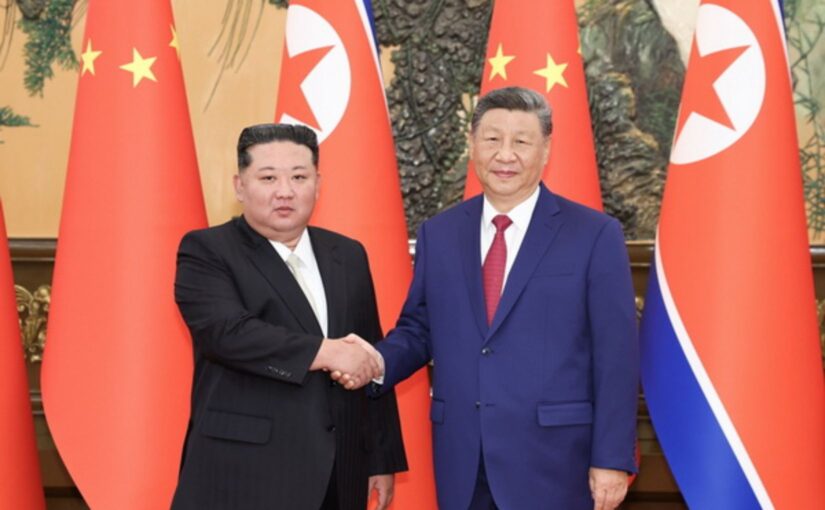
The top leader of the Democratic People’s Republic of Korea (DPRK), Kim Jong Un visited Beijing, September 2-4, to participate in the commemoration of the 80th anniversary of the victory in the Chinese People’s War of Resistance Against Japanese Aggression and the World Anti-Fascist War. His first visit to China in six years drew extraordinary global attention, not least due to the high levels of protocol and hospitality extended by the Chinese side. Kim Jong Un joined Russian President Vladimir Putin in flanking Chinese President Xi Jinping on the rostrum of Tienanmen Square, denoting their status as the chief guests among 26 heads of state and government, as well as senior representatives of dozens of nations and international organisations. It was also the first occasion for Kim Jong Un to participate in this type of multilateral gathering of world leaders and the first time for a DPRK leader to review a military parade in China since founding President Kim Il Sung participated in the 1959 tenth anniversary celebrations of the founding of the People’s Republic.

Arriving in the afternoon of September 2, Kim Jong Un was greeted at Beijing Railway Station by Cai Qi, member of the Standing Committee of the Political Bureau of the Central Committee of the Communist Party of China (CPC) and member of the Secretariat and Director of the General Office of the CPC Central Committee, Wang Yi, member of the Political Bureau of the CPC Central Committee and Foreign Minister, Yin Yong, Mayor of Beijing, and other senior officials.

On the evening of September 4, General Secretary of the Central Committee of the Communist Party of China (CPC) and President Xi Jinping held talks at the Great Hall of the People in Beijing with General Secretary of the Workers’ Party of Korea (WPK) and President of the State Affairs of the Democratic People’s Republic of Korea (DPRK) Kim Jong Un.

Xi Jinping noted that China and the DPRK are good neighbours, good friends and good comrades who have shared weal and woe and helped each other in time of need. The friendship between China and the DPRK has a long history. Both countries are socialist countries led by communist parties, having common ideals, convictions and aspirations.

Xi Jinping extended congratulations on the (October 10) 80th anniversary of the founding of the WPK and stressed that China is going all out to build a great modern socialist country in all respects and pursue national rejuvenation through a Chinese path to modernisation, while the DPRK has kept making new progress in developing socialism. The CPC and the Chinese government attach great importance to the traditional friendship between China and the DPRK, and stand ready to maintain, consolidate and develop China-DPRK relations. No matter how the international landscape may evolve, this position will stay unchanged. China will continue to support the DPRK in pursuing a development path suited to its national conditions and opening new grounds in advancing the DPRK’s socialist cause. China will work with the DPRK to step up high-level exchanges and strategic communication, strengthen exchanges of experience in governance of Party and state affairs, deepen mutual understanding and friendship, promote closer interactions at all levels, and advance practical cooperation across the board.

Continue reading Kim Jong Un’s first China visit in six years draws world attention

Special friendship with Cambodia reflected in high-level visits

The special friendship between China and Cambodia has again been reaffirmed with two overlapping visits by Cambodia’s top leaders.

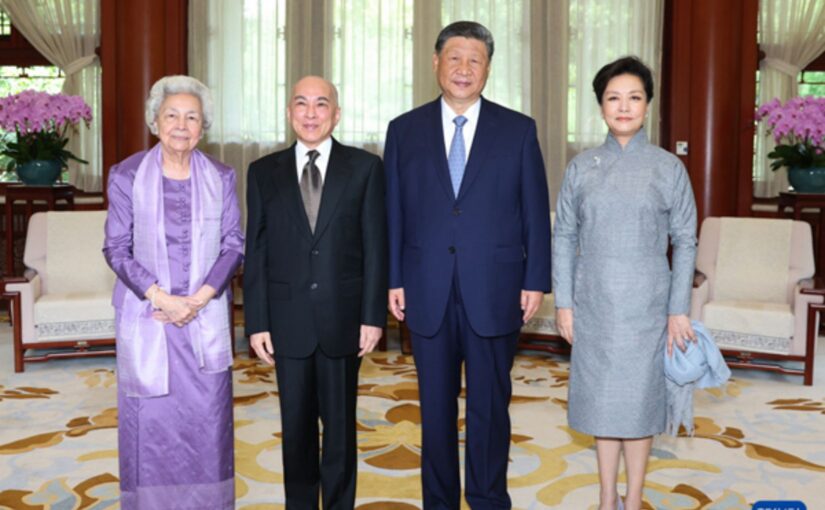
On August 23, Cambodian King Norodom Sihamoni and Queen Mother Norodom Monineath Sihanouk arrived in Beijing to attend the commemoration of the 80th anniversary of victory in the Chinese People’s War of Resistance Against Japanese Aggression and the World Anti-Fascist War, far ahead of others.

President Xi Jinping and his wife Peng Liyuan met with the King and the Queen Mother at Zhongnanhai, where the senior Chinese leadership live and work, on August 26.

President Xi Jinping expressed his warm welcome to King Norodom Sihamoni and Queen Mother Norodom Monineath Sihanouk for visiting China again and welcomed King Norodom Sihamoni’s attendance at the Commemoration of the 80th Anniversary of the Victory of the Chinese People’s War of Resistance Against Japanese Aggression and the World Anti-Fascist War. President Xi noted that during his state visit to Cambodia in April this year, he was accorded a warm and friendly reception by the King and the Cambodian people, of which he still has fond memories. The China-Cambodia relations have withstood the test of the shifting international landscape, and the two countries have forged an ironclad friendship featuring mutual assistance in trying times.

King Norodom Sihamoni and Queen Mother Norodom Monineath Sihanouk expressed their great pleasure to visit China again and attend upon invitation the Commemoration of the 80th Anniversary of the Victory of the Chinese People’s War of Resistance Against Japanese Aggression and the World Anti-Fascist War. The Chinese people made significant contributions to safeguarding world peace, which should always be remembered. Cambodia always views its relations with China from a strategic perspective and is ready to carry forward the long-standing friendly relations between the two countries and work with China to build an all-weather Cambodia-China community with a shared future in the new era.

Meanwhile, on August 30, President Xi Jinping met in Tianjin with Cambodian Prime Minister Hun Manet, who was in China for the Shanghai Cooperation Organisation (SCO) Summit.

President Xi underscored that the China-Cambodia friendship, having stood the test of time, is rock-solid and the shared asset of the two peoples. Amidst an ever-changing international landscape, China and Cambodia, as ironclad friends, should keep the big picture in mind, adopt a long-term perspective, and steadfastly follow the path of friendship opened by the older generation of Chinese and Cambodian leaders. The two sides should maintain unwavering solidarity, enable each other’s success, promote the well-being of their people, and contribute to peace, stability, and prosperity of the region.

Prime Minister Hun Manet noted that this year marks the 80th anniversary of the victory of the Chinese People’s War of Resistance Against Japanese Aggression and the World Anti-Fascist War. The Chinese people forged peace with courage and unity, which is truly admirable. The traditional friendship between Cambodia and China has grown ever stronger over time. Cambodia appreciates China’s long-standing, valuable support and assistance. President Xi’s historic state visit to Cambodia last April yielded fruitful outcomes. Cambodia looks forward to working with China to implement the important consensus reached during the visit, deepen the ironclad friendship between the two countries, lend each other support on issues involving their core interests and major concerns, expand cooperation in trade, investment and infrastructure, combat online gambling and telecom fraud, and further advance the two countries’ all-weather community with a shared future.

The following articles were originally published on the website of the Chinese Foreign Ministry.

Continue reading Special friendship with Cambodia reflected in high-level visits

Xi Jinping meets leaders from Armenia, Belarus, Maldives, Azerbaijan, Kyrgyzstan, India and Türkiye

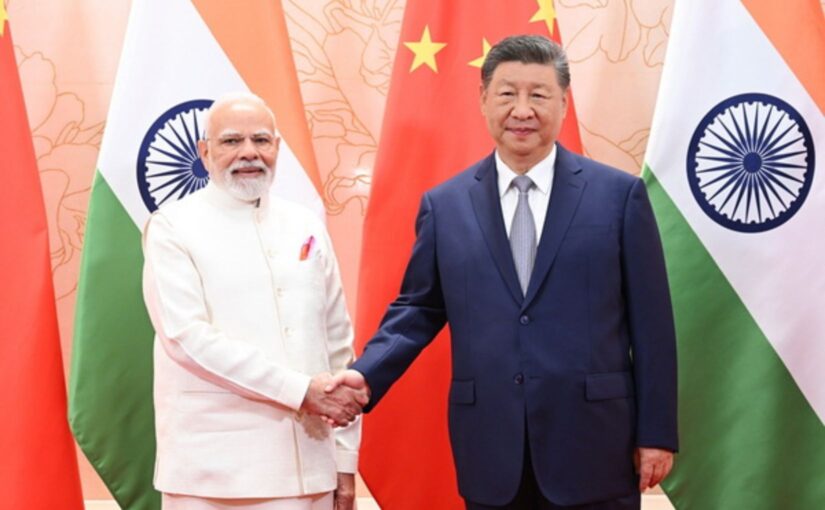
Chinese President Xi Jinping had a full day of bilateral meetings in Tianjin on August 31, with his counterparts who had come to attend the meetings of the Shanghai Cooperation Organisation (SCO) and in many instances to also attend the commemoration of the 80th anniversary of victory in the Chinese People’s War of Resistance Against Japanese Aggression and the World Anti-Fascist War days later.

In the morning, meeting with Armenian Prime Minister Nikol Pashinyan, Xi underscored that China and Armenia enjoy a time-honoured friendship, which has grown ever stronger over time. Since the establishment of diplomatic relations 33 years ago, the two countries have respected and trusted each other, and benefited and learned from each other, leading to the sustained, sound, and steady development of bilateral relations. China supports Armenia in joining the Shanghai Cooperation Organisation and stands ready to work with Armenia to practice true multilateralism and build a community with a shared future for humanity.

Prime Minister Pashinyan noted that under the leadership of President Xi, China has made remarkable development achievements. Armenia hopes to learn from China’s experience to boost its own economic and social development.

The two sides issued the Joint Statement Between the People’s Republic of China and the Republic of Armenia on Establishing the Strategic Partnership and signed multiple bilateral cooperation documents in such areas as market regulation, metrology, and media.

Meeting with Belarusian President Aleksandr Lukashenko, President Xi Jinping pointed out that the peoples of China and Belarus, fighting side by side in the past, made important contributions to defeating militarism and fascism, and forged a profound friendship. At present, century-defining transformation is accelerating across the world, and humanity once again stands at a crossroads. China is willing to work with the Belarusian side to shoulder the responsibilities of the times, practice true multilateralism, and jointly advance peace, development, and win-win cooperation in the world.

President Lukashenko noted that every time he came to China, he would always be deeply impressed by the country’s vibrant development and progress. Under the strong leadership of President Xi Jinping, China is committed to pursuing a path of development that suits its national conditions. Having achieved great success in development, China now faces an even brighter prospect, and no force can stop China’s development and revitalisation. In international and regional affairs, China keeps a just position, upholds multilateralism, and defends fairness and justice. Belarus is an all-weather partner to China and a friend that can always be relied upon. Belarus is ready to work with China to increase exchanges on governance experience, deepen practical cooperation across the board, and bring bilateral relations to new heights.

Continue reading Xi Jinping meets leaders from Armenia, Belarus, Maldives, Azerbaijan, Kyrgyzstan, India and Türkiye

Scottish people’s contributions to China’s war of resistance remembered

As part of its commemoration of the 80th anniversary of the Chinese people’s victory in the war to resist Japanese aggression and the world anti-fascist war, China has remembered Scottish people who stood alongside them in those difficult years.

In an article entitled, “We will never forget the Scottish heroes who made contributions and sacrifices for the victory of the Chinese People’s War of Resistance Against Japanese Aggression and the World Anti-Fascist War”, published on its website on August 28, China’s Consulate-General in the Scottish capital Edinburgh writes:

“The Chinese people will never forget that during the Chinese People’s War of Resistance Against Japanese Aggression and the World Anti-Fascist War – a struggle that determined the future and destiny of humanity – a great number of Scots made contributions and sacrifices for the victory of this war. They were Scottish warriors, but also heroes of the world. Among them were the great internationalist fighter Dr. Norman Bethune, heir to a Scottish family of doctors, whom Chairman Mao Zedong praised as ‘a man of noble character, a man of pure spirit, a man of moral integrity, a man free from vulgar interests, a man who was of benefit to the people,’ and who is still deeply remembered by hundreds of millions of Chinese people; Eric Liddell, the Scottish Olympic champion who traveled to China to support the Eighth Route Army’s resistance against Japanese Aggression and who passed away in a Japanese prisoner-of-war camp; the valiant Scottish soldiers who fought side by side with the Chinese Expeditionary Force on the Burmese battlefield; and countless unnamed Scottish heroes who suffered inhumane atrocities in Japanese POW camps in the Far East.”

According to the Consulate-General: “The British survivors from the Japanese Far East prisoner-of-war camps were all required not to talk about their ordeals in captivity. As a result, the world knows little of their stories. Even after their passing away, their families continue to search for traces of their experiences in the camps – an awakening agony that we should be aware of, a conviction that justice will ultimately triumph over evil, and a historical truth that must never be concealed.”

The article does not elaborate but this doubtless relates to the way in which US and British imperialism sought to prevent the punishment of Japanese war criminals or to  demilitarise the country, within the context of the Cold War, where yesterday’s enemy soon became a frontline, if subordinate, ally against the Soviet Union and the forward march of communism in Asia, specifically against the Chinese revolution and the wars of liberation in Korea, Vietnam, Laos and Cambodia.

The article concludes: “We pay tribute to the Scottish heroes who made contributions and sacrifices for human progress and for the victory of the Chinese People’s War of Resistance Against Japanese Aggression and the World Anti-Fascist War, and we extend our deepest condolences to the families of Scots who suffered in the Japanese POW camps in the Far East during World War II.”

On September 9, the Xinhua News Agency devoted a feature article to the legacy of Eric Liddell:

“To most Scots, the name ‘Eric Liddell’ needs no introduction. Known as the ‘Flying Scotsman,’ his story has become part of national legend. Yet few realise that the Olympic champion who once stunned the world later spent much of his life in China, where he taught and preached, but finally died in a Japanese internment camp.”

Xinhua correspondents Zheng Bofei and Jin Jing write: “At the 1924 Paris Olympics, Eric Liddell captured gold in the men’s 400 metres in 47.6 seconds, setting a new Olympic and world record. Upon returning to Edinburgh, Liddell was honoured as a hero by schools, churches and sports clubs across Scotland… A century later, he remains one of Scotland’s most admired sports figures, topping the public vote when inducted into the Scottish Sports Hall of Fame in 2002.”

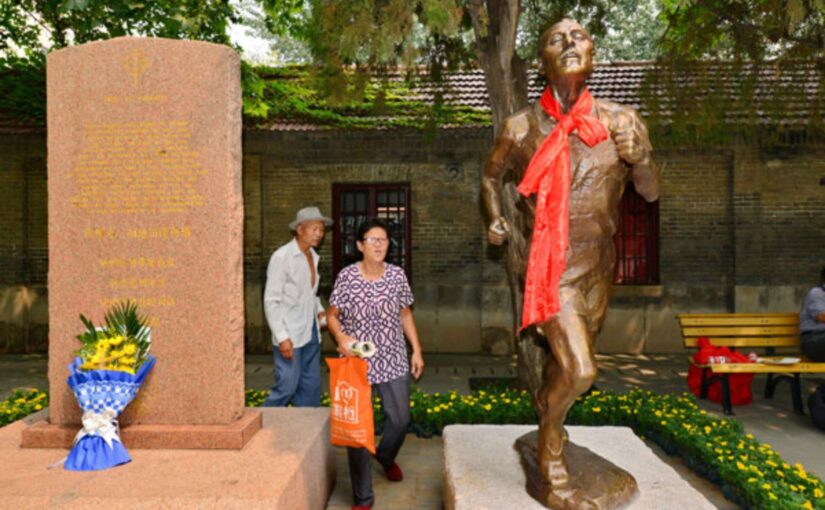
But after the Paris Olympics, the devout Christian made a choice that again surprised many: he returned to Tianjin, the northern Chinese city of his birth. Born in 1902 to Scottish missionary parents, he had spent his early years in China before returning to Britain.

In Tianjin, he taught at an Anglo-Chinese college and left a visible legacy in sports by helping to design and promote the Minyuan Stadium. Modeled after London’s Stamford Bridge (home of Chelsea Football Club), the stadium became one of Asia’s most advanced sporting venues at the time, hosting international competitions and serving as a training ground where Liddell himself won several medals.

Continue reading Scottish people’s contributions to China’s war of resistance remembered

Entrevista: Como China está construyendo el socialismo

We are pleased to republish below the Spanish translation of Freedom Road Socialist Organization Central Committee member Sydney Loving’s interview in FightBack News, in which she reflects on her experiences of the 2025 Friends of Socialist China delegation.

Nos complace republicar a continuación la traducción al español de la entrevista concedida por Sydney Loving, miembro del Comité Central de la Organización Socialista Freedom Road, a ¡Lucha y Resiste!, en la que reflexiona sobre sus experiencias con la delegación de Friends of Socialist China de 2025.

Noticiero ¡Lucha y Resiste! se sentó con Sydney Loving, participante de la delegación de Amigos de China Socialista, que recientemente regresó de una visita de diez días a cinco ciudades en China. De bases revolucionarios a ciudades de alta tecnología y desarrollo verde, la delegación presenció de primera mano el poder del socialismo a levantar las vidas de la gente. Loving es miembro del Comité Central de la Organización Socialista Camino de la Libertad.

¡Lucha y Resiste!: ¿Cómo llegaste a China? ¿Cuál fue el propósito del viaje?

Sydney Loving: La delegación fue organizada por Amigos de China Socialista, un proyecto político dedicado a fortalecer la comprensión y apoyo para China según la solidaridad y la verdad. Yo representé la Organización Socialista Camino de la Libertad, y la delegación incluyó la gente de la Alianza Negra por la Paz, Mundo de Obreros, Internacional Progresista, Partido Comunista de Britania Liga de Comunistas Jóvenes, la Alianza de Liberación Negra, Libros Iskra, y otros.

Fuimos invitados por la Red China de ONG de Intercambios Internacionales, y durante 10 días visitamos Xi’an, Yan’an, Dunhuang, Jiayuguan y Shanghái.

Durante nuestro viaje a una variedad de lugares, tuvimos la oportunidad de descubrir cómo China está construyendo el socialismo, los avances increíbles que han hecho en 76 años de construcción socialista, y tuvimos diálogos maravillosos sobre cómo podemos rebatir mejor las narrativas negativas y las mentiras estilo Guerra Fría con las que estamos bombardeadas dentro del oeste. Al final, lo que encontramos fue un país encabezado por un partido político con una visión de futuro, con una meta que crea un mejor futuro para todos.

¡Lucha y Resiste!: ¿Cómo describirías el camino de desarrollo de China?

Loving: Para entender verdaderamente lo extraordinario que es el desarrollo de China, hay que entender la historia y cómo fue la vida anterior para la mayoría de la gente. Antes de la revolución en 1949, China fue totalmente devastada por el imperialismo y la ocupación extranjera, feudalismo brutal, las hambrunas provocadas por el hombre, el caudillismo y más. La expectativa de vida en las áreas rurales era tan baja como 24 años. En Xi’an fuimos a unos sitios históricos antiguos, y los generales de terracota y las estatuas de mujeres nobles estaban rollizos – porque la hambruna masiva era una característica de la sociedad por siglos. Entonces, el socialismo tenía que superar todo esto.

Fuimos para Yan’an, que fue verdaderamente la cuna de la revolución de 1935 y 1947. El Ejército Rojo se reagrupó allá después de la Marcha Larga, y el PCCh [Partido Comunista de China] tuvo el 7mo Congreso Nacional, (16 largos años después del 6to Congreso, porque estaban luchando contra el imperialismo japonés y el KMT) en el cual el Pensamiento Mao Zedong fue cristalizado y adoptado. Ellos pelearon contra el dogmatismo y tomaron la decisión de ser el partido de las masas de la gente China. Cuando construyeron las estructuras políticas y eligieron representantes al Congreso, tenían un sistema de platos hondos y frijoles para las personas que no podían leer para votar por sus candidatos.

Ahora, 76 después, vimos un país que es la economía más grande del mundo medido por Paridad de Poder Adquisitivo. Incluso en las ciudades más pequeñas son tecnológicamente avanzadas y cada día más verde, la expectativa de vida es de más de 78 años, y claro donde más de 800 millones de personas han salido de la pobreza extrema – y no solo estamos hablando en términos de cantidades de dólares. Estamos hablando de alimentación, ropa, vivienda, electricidad y agua, atención médica y educación garantizadas.

El capitalismo no es capaz de cumplir esa clase de proyecto. Lo lograron con el planeo central y la movilización en masa. Cada ciudad que visitamos mostró cómo el Partido Comunista está guiando el desarrollo que prioriza a la gente primero.

¡Lucha y Resiste!: ¿Cuáles diferencias notaste en la vida cotidiana?

Loving: Se siente sinceramente diferente a las ciudades en los EE. UU., incluso nuestras ciudades más grandes. Las calles están limpias, caminables, y bien ordenadas a pesar de lo pobladas que están. Hasta el punto de que las madres y sus hijos simplemente caminaban tras cada intersección, con confianza de que los carros tenían que pararse. Muchos vehículos y cosas son diseñados con consideración a las necesidades de los viejos, los niños y los obreros. Aun en uno de los hoteles, los trabajadores se reunían en la plaza para hacer baile/ejercicio por las mañanas. Fue verdaderamente tranquilo pero animado, con parques y jardines en todas partes, y muchas actividades gratuitas y acceso a la cultura y a sitios históricos.

En Xi’an y Dunhuang en particular vimos como miles de años de civilización están siendo preservados como parte de la identidad viva de la gente. Y ya que el turismo interno es tan importante, los museos y sitios estaban llenos de niños, ancianos y familias. Para mí, me quedó claro que mantener el pueblo como dueño de su historia y su cultura es parte fundamental del espíritu revolucionario.

Y no como las ciudades de los EE. UU., no vimos casi ninguna falta de vivienda. En diez días, viajando por cinco ciudades, solo vi a una persona pidiendo limosna en la calle con un código QR en el fondo de una olla. Compáralo con San Francisco o Nueva York, donde hay barrios enteros de campamentos.

Además de eso, la tecnología fue increíble. Desde pequeños robots que toman el elevador para entregar comida a tu cuarto de hotel a los aeropuertos donde solo te paras frente a una cámara y te muestra toda la información de tu puerta de embarque y vuelo. Nuestros anfitriones nos avisaron contra tomar el tren bala porque nosotros los occidentales somos muy lentos con tanto equipaje y seguro íbamos a llegar tarde, pero el tren normal también fue genial.

¡Lucha y Resiste!: Fuiste al noroeste, una región bastante pobre de China. ¿Qué fue lo que más notaste?

Loving: Si, fuimos a la provincia de Gansu, en el borde del desierto de Gobi, una de las partes más empobrecidas de China. Pero realmente nos impresionó lo que están haciendo allí.

En Jiayuguan, visitamos JISCO, una empresa siderúrgica estatal alrededor de la cual los obreros construyeron la ciudad entera en los años 1950s. Hoy tiene una cobertura verde de 42%, con estanques y parques — y recuerda que esto es el desierto Gobi. Es un testamento del nivel de desarrollo de las fuerzas productivas que ahora JISCO incluso tiene una granja lechera y una vinatera con la bodega de vino techada más grande de Asia (sí, probamos el vino — delicioso). También recorrimos la planta de poder solar de sal fundido de Dunhuang, que puede almacenar energía por la noche y un centro de control con IA para una red eléctrica inteligente que ayuda a reducir la producción de carbón en toda la providencia. Le preguntamos a un trabajador allí cuál es la diferencia tecnológica entre cómo funciona su red eléctrica y la de EE. UU., y modestamente nos dijo: “Bueno, nuestra red nunca se cae”. Desafortunadamente, eso me hizo reír – siendo de Texas.

Hay un gran énfasis en la modernización ecológica. Realmente están transformando el desierto en un lugar habitable y sostenible. Es un testamento de cómo van juntos el alivio de la pobreza y el ambientalismo bajo el socialismo.

China también está demostrando que la tecnología no es inherentemente anti-humana. En Shanghái fuimos a una fábrica de robótica en donde demostraron los avances en la cirugía e industria, y una fábrica de Lenovo donde mostraron cómo colaboran con el sistema escolar para llevar tecnología avanzada a escuelas rurales. La diferencia está en quién controla la tecnología, bajo qué sistema y para qué propósito.

Para China, un desarrollo que deja gente atrás simplemente significa un fracaso. Por eso se enfocan en equilibrar el desarrollo de las regiones, impulsando el occidente y el noroeste en lugar de permitir que la riqueza se concentre solo en las costas. Así, tras el éxito de los masivos proyectos de aliviar de la pobreza – que ni la ONU puede negar – la siguiente fase es la “prosperidad común”.

¡Lucha y Resiste!: ¿Cuál fue el papel del Partido Comunista en la vida cotidiana?

Loving: El Partido Comunista estuvo en todas partes. Digo acaban de celebrar haber alcanzado 100 millones de miembros. Aldeas, hospitales, escuelas y fábricas tienen ramas del Partido. En Jiayuguan pasamos por uno de los “Centros del Partido,” donde nuestros guías nos dijeron que las personas pueden ir a hacer preguntas o pedir ayuda de los cadres, hasta el cuidado de los niños.

Continue reading Entrevista: Como China está construyendo el socialismo

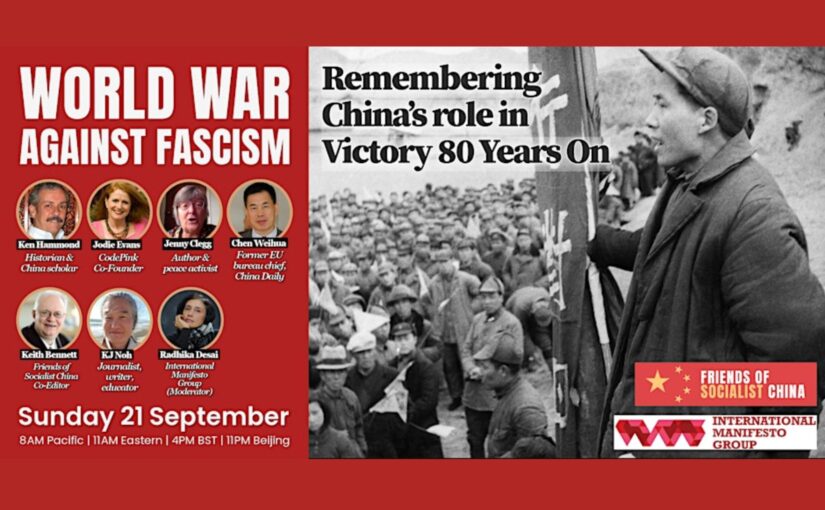
Webinar: World War Against Fascism – Remembering China’s role in victory 80 years on

📆 Sunday 21 September 2025, 4pm Britain, 11am US Eastern, 8am US Pacific

The old adage that history is written by the victors does not seem to apply to the real victors of the Second World War, the Soviets and the Chinese on the Eastern and Pacific fronts respectively.

This webinar will mark the 80th anniversary of Japan’s surrender – marked in China with spectacular celebrations attended by an array of heads of state and government – focussing in particular on the contributions of the Chinese and other Asian forces which are forgotten in the largely Eurocentric narrative of the Second World War.

We will uncover some crucial but little-known aspects of the war: for example, that China was the first country to wage war against fascist occupation; that in the course of 14 years of war (1931-45) China suffered over 35 million casualties; and that without the contribution of Chinese, Korean, Mongolian and largely Communist-led resistance forces across the region, the Japanese imperial armies would have had free rein to deploy their forces against the Soviet Union and the Western Allies.

This webinar is the companion to our commemoration of VE or Victory in Europe Day, ‘The Fight Against Fascism Then and Now: 80 Years after the defeat of Nazism’. Just as that webinar discussed the re-emergence of fascist forces in the West, so in this one, we assess the renewed threats to China and other Asian countries emanating from the US, Japan and the rest of the capitalist world.

Speakers

  • Ken Hammond (Historian and China scholar)
  • Chen Weihua (Former EU bureau chief of China Daily)
  • Jodie Evans (Co-founder of Code Pink)
  • Jenny Clegg (Author and peace activist)
  • Keith Bennett (Co-editor of Friends of Socialist China)
  • KJ Noh (Journalist, writer and educator)
  • Radhika Desai (International Manifesto Group), Moderator.

Organisers

This webinar is organised jointly by the International Manifesto Group and Friends of Socialist China.

Xi Jinping: At all times, our work must be for the people and we must do our best to improve the well-being of all the people

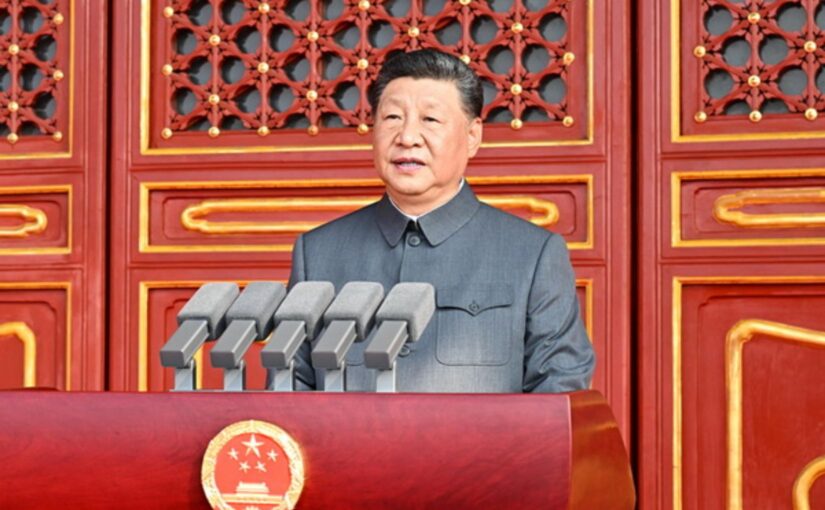
Chinese President Xi Jinping addressed the commemoration of the 80th anniversary of the victory of the Chinese People’s War of Resistance Against Japanese Aggression and the World Anti-Fascist War, held on September 3 in Beijing’s Tienanmen Square, just prior to the commencement of the military parade.

Xi described it as “an occasion for us to remember history, honour fallen heroes, cherish peace, and create a better future” and paid “high tribute to our veteran soldiers and comrades, patriots, and officers who fought in the War of Resistance Against Japanese Aggression, and to the Chinese nationals from home and abroad who made important contributions to our victory. I express my sincere thanks to foreign governments and friends that supported and assisted the Chinese people in resisting aggression. I also extend a warm welcome to our guests from around the world who are with us today.”

He added: “The Chinese People’s War of Resistance Against Japanese Aggression was a great war fought with tenacity and valour. Under the banner of the national united front against Japanese aggression established at the initiative of the Communist Party of China, the Chinese people stood up to fight the formidable enemy with an iron will, formed a great wall with flesh and blood to defend the nation, and ultimately achieved the first complete victory in resisting foreign aggression in modern times… The Chinese nation is a great nation that is never intimidated by any bullies and always values independence and forges ahead. In the past, when faced with critical struggles between good and evil, light and darkness, progress and reaction, the Chinese people rallied together to defy the enemy. They fought for the survival of the country, for the rejuvenation of the Chinese nation, and for justice for the whole of humanity. Today, humanity again has to choose between peace and war, dialogue and confrontation, win-win cooperation and zero-sum game. The Chinese people firmly stand on the right side of history and the progress of human civilisation. We will remain committed to the path of peaceful development and join hands with all peoples around the world in building a community with a shared future for humanity.”

Towards the conclusion of his remarks he stated: “On the new journey in the new era, the Chinese people of all ethnic groups should, under the strong leadership of the Communist Party of China, follow Marxism-Leninism, Mao Zedong Thought, Deng Xiaoping Theory, the Theory of Three Represents and the Scientific Outlook on Development, and fully implement the Thought on Socialism with Chinese Characteristics for the New Era.”

Shortly afterwards, Xi hosted a lunch in the Great Hall of the People for visiting foreign heads of state and government, other prominent politicians, and the relatives of international friends and comrades who had supported the Chinese people during the war, among others.

He noted: “Eighty years ago, the Chinese people thoroughly defeated the Japanese militarist aggressors after fighting a bitter and heroic war of resistance for 14 years. This marked the complete victory of the World Anti-Fascist War. It was a historic turning point for the Chinese nation emerging from the grave crises in modern times to embark on the journey toward great rejuvenation; it was also a major turning point in the course of world history.

“The Chinese people won the great victory through their united efforts with the anti-fascist allied forces and the people around the world. The Chinese government and people will never forget the foreign governments and international friends who supported and assisted the Chinese people in resisting aggression.”

He said the purpose of the commemoration was to “remember history, honour fallen heroes, cherish peace, and create a better future,” adding:

“Might may rule the moment but right prevails forever. Justice, light and progress will inevitably triumph over evil, darkness, and regression. At all times, we must advocate the common values of humanity, resolutely defend international fairness and justice, and ensure righteousness prevails and brightness shines in our world.

“The people are the creators of history, and the pursuit of a better life is a shared aspiration of all nations. At all times, our hearts must be with the people, our work must be for the people, and we must do our best to improve the well-being of all the people.”

We reprint the full texts of both speeches below as originally published on the website of the Chinese Foreign Ministry.

Continue reading Xi Jinping: At all times, our work must be for the people and we must do our best to improve the well-being of all the people

Xi Jinping meets UN Secretary General and leaders from Egypt, Myanmar and Kazakhstan

With the largest ever gathering of the quarter century old Shanghai Cooperation Organisation (SCO) in Tianjin (August 31-September 1) and the commemoration of the 80th anniversary of the victory in the Chinese People’s War of Resistance Against Japanese Aggression and the World Anti-Fascist War in Beijing (September 3), China’s high-level diplomacy has recently experienced a particularly busy period.

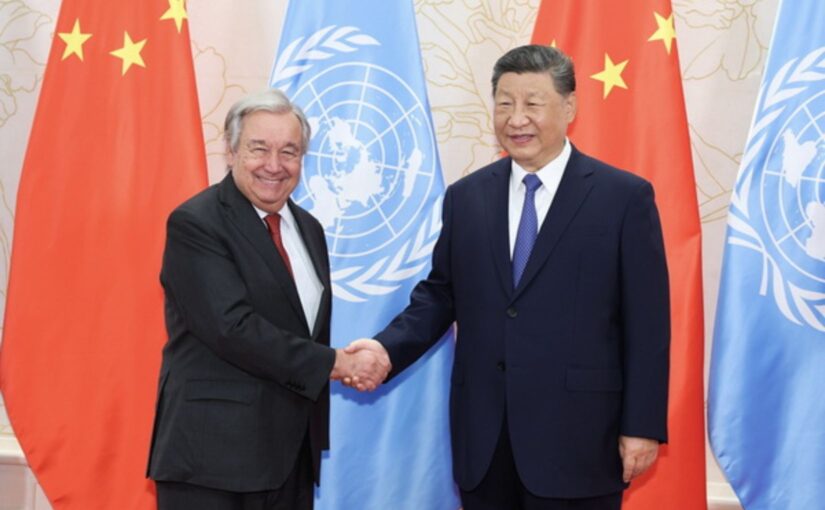
President Xi Jinping began a round of bilateral meetings in Tianjin on August 30, the eve of the SCO Summit, meeting with United Nations Secretary General António Guterres, Egyptian Prime Minister Mostafa Madbouly and Myanmar’s Acting President Min Aung Hlaing in the afternoon and with Kazakhstan President Kassym-Jomart Tokayev in the evening.

Meeting with António Guterres, President Xi noted that the founding of the United Nations was the most important decision made by the international community at the end of the Second World War. This year marks the 80th anniversary of the victory of the World Anti-Fascist War and the founding of the United Nations. History teaches that multilateralism, solidarity and cooperation are the right way to address global challenges.

Guterres expressed his gratitude for China’s strong and solid support to the UN. He noted that at a time when multilateralism, international law and the authority of the United Nations are being challenged, and the international governance architecture is in urgent need of reform, it is all the more important to recall the founding mission and values that led to the creation of the UN 80 years ago. China has made significant contributions to safeguarding international law and ensuring international rule of law and has been a cornerstone of multilateralism. The UN will strengthen cooperation with China to uphold the purposes and principles of the UN Charter, defend the basic norms of international relations, advance a multipolar world, enhance the representation of developing countries, and enable the UN to play a greater role in international affairs.

Meeting with Egyptian Prime Minister Mostafa Madbouly, President Xi noted that Egypt was the first Arab and African country to establish diplomatic relations with the People’s Republic of China. Next year marks the 70th anniversary of China-Egypt diplomatic ties. The two sides should take it as an opportunity to steer the bilateral relationship toward the goal of building a China-Egypt community with a shared future in the new era, add new impetus to China-Arab and China-Africa relations, and make greater contributions to upholding world peace and stability and promoting global development and prosperity. The two countries should be good friends that closely collaborate in multilateral affairs, shoulder historical and major-country responsibilities as important members of the Global South, safeguard the victorious outcomes of World War II, jointly oppose unilateralism and bullying practices, and defend the international system with the United Nations at its core and the international order underpinned by international law.

Prime Minister Madbouly said China is a true partner and friend of Egypt, and the two sides have always trusted and supported each other. Egypt places high importance on its relations with China and is firmly committed to the one-China principle. Egypt stands ready to take next year’s 70th anniversary of diplomatic ties with China as an opportunity to increase high-level exchanges, expand trade and investment, and deepen cooperation in such areas as new energy, electric vehicles, finance and seawater desalination, in a bid to achieve greater progress in bilateral relations.

Meeting with Myanmar’s Acting President Min Aung Hlaing, President Xi noted that Myanmar was part of the Eastern battlefield of the World Anti-Fascist War and it is an important dialogue partner of the SCO. The China-Myanmar pauk-phaw (brotherly) friendship, rooted in the hearts of the two peoples, is as strong and relevant as ever. The two sides should seize the opportunity of the 75th anniversary of their diplomatic relations to deepen strategic cooperation, accelerate the building of their community with a shared future, and bring greater benefits to people in both countries.

The two sides should advance key projects of the China-Myanmar Economic Corridor and promote economic and trade cooperation. Joint efforts should be made to combat cross-border crimes, maintain peace and tranquility in the China-Myanmar border region, and ensure the safety and security of Chinese personnel, institutions, and projects in Myanmar.

Acting President Min Aung Hlaing said that Myanmar and China share a deep pauk-phaw friendship and a common pursuit of peace and stability, and both countries made significant contributions to the victory of the World Anti-Fascist War. China has always been a good neighbour and a good friend to Myanmar, providing long-term assistance to Myanmar’s economic and social development, supporting its post-disaster rehabilitation efforts, and playing a constructive role in facilitating peace and stability in northern Myanmar.

Continue reading Xi Jinping meets UN Secretary General and leaders from Egypt, Myanmar and Kazakhstan

Largest ever gathering of SCO family held in Tianjin

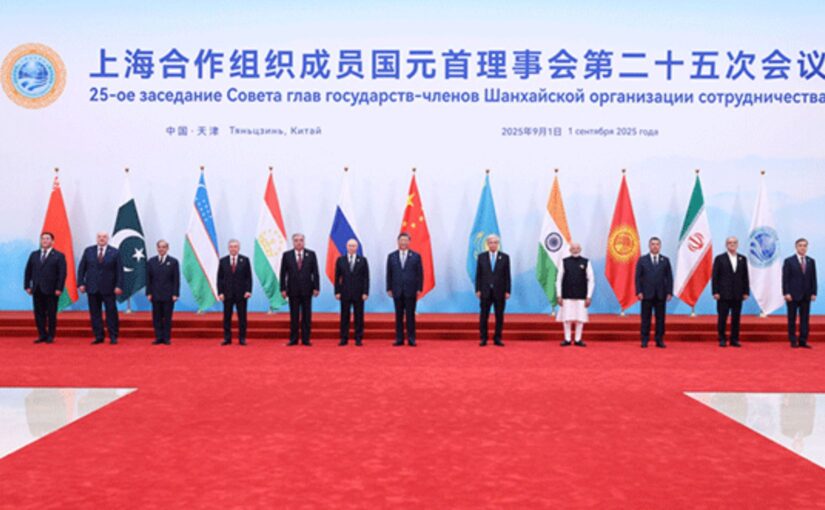
On August 31-September 1, immediately prior to China’s grand celebration of the 80th anniversary of victory in the Chinese People’s War of Resistance Against Japanese Aggression and the World Anti-Fascist War, the north China coastal city of Tianjin, near to Beijing, hosted the 25th Meeting of the Council of Heads of State of the Shanghai Cooperation Organisation (SCO) followed by the Shanghai Cooperation Organisation Plus meeting.

These were the biggest gatherings to date in the SCO’s quarter century history, drawing more than 20 heads of state or government, along with the heads of 10 international organisations, including the Secretary-General of the United Nations.

As we previously reported, at the latter meeting, President Xi Jinping proposed the Global Governance Initiative (GGI), which aims at establishing “a more just and equitable global governance system and advancing toward a community with a shared future for humanity.”

Presiding over the SCO Summit, President Xi delivered an important statement entitled, “Staying True to SCO Founding Mission and Ushering in a Better Future.”

He said that the SCO has established itself as a model for a new type of international relations. The organisation was the first to set up a military confidence-building mechanism in its member states’ border areas and the first to take multilateral actions against the three forces of terrorism, separatism and extremism, thereby maintaining peace and tranquility in the region. The SCO was the first to launch Belt and Road cooperation, providing a robust driving force for development and prosperity and further improving the multidimensional connectivity network across the region. The SCO was the first to conclude a treaty on long-term good-neighbourliness, friendship and cooperation, and proclaim the member states’ commitment to forge lasting friendship and refrain from hostilities, bringing the hearts of the peoples closer to each other. The SCO was the first to put forth a vision of global governance featuring extensive consultation and joint contribution for shared benefit as an effort to practice true multilateralism, thus becoming a proactive force for world peace and development.

President Xi emphasised that the SCO has grown into the world’s largest regional organisation, and its international influence and appeal are increasing day by day. Looking ahead, the member states should carry forward the Shanghai Spirit, forge ahead with solid steps, and better tap into the potential of the SCO in the following five ways:

  • Seeking common ground while putting aside differences. SCO member states should respect their differences, maintain strategic communication, build up consensus, and strengthen solidarity and collaboration.
  • Pursuing mutual benefit and win-win results. SCO member states need to better align their development strategies and promote the high-quality implementation of the Belt and Road Initiative, improve trade and investment facilitation, enhance cooperation in such areas as energy, infrastructure, green industry, the digital economy, scientific and technological innovation, and artificial intelligence, so as to march toward modernisation hand in hand by bringing out the best in one another and working together for a shared future.
  • Championing openness and inclusiveness. SCO member states need to enhance mutual understanding and friendship through people-to-people exchanges, firmly support one another in economic cooperation, and jointly cultivate a garden of civilisations in which all cultures flourish in prosperity and harmony through mutual enlightenment.
  • Upholding fairness and justice. SCO member states must promote a correct historical perspective on World War II, oppose the Cold War mentality, bloc confrontation and bullying practices, safeguard the UN-centred international system, support the multilateral trading system with the WTO at its core, and make the global governance system more just and equitable.
  • Striving for real results and high efficiency. SCO member states should continuously promote the reform of the Organisation, increase resources input and enhance capacity building to improve its institutional structure and make its decision-making more scientific and its actions more efficient, and provide stronger underpinnings for security and economic cooperation among them.

The leaders of the member states signed and issued the Tianjin Declaration of the Council of Heads of State of the Shanghai Cooperation Organisation, approved the SCO Development Strategy to 2035, released a statement on the victory of World War II and the 80th anniversary of the founding of the United Nations, a statement on supporting the multilateral trading system, and adopted 24 outcome documents covering enhanced cooperation in security, economy, people-to-people ties, and organisational development.

Continue reading Largest ever gathering of SCO family held in Tianjin

BRICS countries seek common stand on ‘tariff wars’

On the evening of September 8, 2025, (Beijing Time) Chinese President Xi Jinping attended a Virtual Summit of the ten full members of the BRICS cooperation mechanism and delivered a speech entitled “Forging Ahead in Solidarity and Cooperation.”

The summit was convened and chaired by Brazilian President Luiz Inácio Lula da Silva, whose country holds the current rotating Chair of BRICS. Lula’s initiative was largely triggered by the economic, political and psychological warfare currently being waged by the US Trump administration against many BRICS members, including Brazil, South Africa, India, Russia and China.  Besides Presidents Xi and Lula, it was also attended by Russian President Vladimir Putin, South African President Cyril Ramaphosa, Egyptian President Abdel Fattah El-Sisi, Iranian President Masoud Pezeshkian, Indonesian President Prabowo Subianto, Crown Prince of Abu Dhabi Khaled bin Mohamed representing the United Arab Emirates (UAE), and the representatives of India and Ethiopia. India was represented by Foreign Minister Subrahmanyam Jaishankar, with the absence of Prime Minister Narendra Modi being widely interpreted as indicating his continued vacillation between the interests of the Global South and those of the imperialist camp headed by the United States.

In his speech, President Xi noted that transformation unseen in a century is accelerating across the world. Hegemonism, unilateralism, and protectionism are getting more and more rampant. BRICS countries, standing at the forefront of the Global South, should act on the BRICS Spirit of openness, inclusiveness and win-win cooperation, jointly defend multilateralism and the multilateral trading system, advance greater BRICS cooperation, and build a community with a shared future for humanity.

To this end, President Xi made three proposals:

  • Upholding multilateralism to defend international fairness and justice. Multilateralism is the shared aspiration of the people and the overarching trend of our time. It provides an important underpinning for world peace and development. The Global Governance Initiative that President Xi recently proposed is aimed at galvanising joint global action for a more just and equitable system. Active efforts should be made to promote greater democracy in international relations and increase the representation and voice of Global South countries.
  • Upholding openness and win-win cooperation to safeguard the international economic and trade order. BRICS countries should promote a universally beneficial and inclusive economic globalisation, place development at the heart of the international agenda, and ensure that Global South countries participate in international cooperation as equals and share in the fruits of development.
  • Upholding solidarity and cooperation to foster synergy for common development. BRICS countries account for nearly half of the world’s population, around 30 percent of global economic output, and one-fifth of global trade. The more closely they work together, the more resilient, resourceful and effective they are in addressing external risks and challenges.

Other participating leaders said that unilateralist and bullying acts are disrupting the international order, international law and international rules are under threat, and trade is being used as a tool to interfere in other countries’ internal affairs, which severely jeopardises world peace and development. BRICS countries need to strengthen solidarity and collaboration, jointly respond to crises and challenges, safeguard multilateralism, uphold the international system of free and open trade, and protect the common interests of the Global South.

The Bloomberg financial news service further reported  Lula as stating that, “Tariff blackmail is being normalised as an instrument to seize markets and interfere in domestic affairs… Our countries have become victims of unjustified and illegal trade practices.”

Calling for unity, he added: “It is up to BRICS to show that cooperation overcomes any form of rivalry. We have the necessary legitimacy to lead the renewal of the multilateral trading system on modern, flexible foundations geared to our development needs.”

South African President Ramaphosa said developing nations are facing “great hardships and danger” and that South Africa has already experienced negative economic effects from the trade upheaval. He called on BRICS to “play a critical role in strengthening the multilateral system.”

The following articles were originally published on the website of the Chinese Foreign Ministry.

Continue reading BRICS countries seek common stand on ‘tariff wars’

Shoulder to shoulder: British people’s solidarity with the Chinese People’s War of Resistance Against Japanese Aggression

During his recent visit to China for the commemoration of the 80th anniversary of the Chinese people’s victory in the war of resistance against Japanese aggression and the world anti-fascist war, our co-editor Keith Bennett participated in an international symposium organised by the Institute of Party History and Literature of the Communist Party of China (CPC) Central Committee, the Chinese Academy of Social Sciences and the People’s Liberation Army (PLA) Academy of Military Science, on September 2, and the Chinese Modernisation Forum (2025), organised by the School of Marxism, the Institute of Chinese Communist Party History and Party Building, and the Institute of Xi Jinping Thought on Socialism with Chinese Characteristics for a New Era, all of Tsinghua University, on September 4.

We print below the text of the paper presented by Keith, which outlines the solidarity extended by people in Britain to the Chinese people’s heroic resistance, from internationalists like George Hogg who made the journey to China, to the China Campaign Committee which organised and agitated the length and breadth of the country, to the singular contribution of the South Wales miners.

During his state visit to the United Kingdom in 2015, the 70th anniversary year of victory in the global anti-fascist war, in a speech in Buckingham Palace, President Xi Jinping recalled how our two countries had once stood together as allies and fought shoulder to shoulder.

Saying that the Chinese people would never forget this help during their hard time, he mentioned one individual in particular.

George Hogg died of tetanus aged just 30 on 22 July 1945 after devoting the last nearly eight years of his tragically short life to the Chinese people and their struggle for liberation, initially as a journalist and finally as headmaster of the Shandan Bailie School, caring for children orphaned by Japan’s brutal war of aggression.

He is perhaps best remembered for leading his pupils on a month-long 1,100 kilometre (700 miles) journey, most of it on foot and over snow covered mountain paths, to the relative safety of Gansu.

Long acclaimed as a national hero in China, Hogg remained almost entirely unknown in his native country for decades.

This began to be partially rectified with the 2008 publication of James MacManus’s biography, ‘Ocean Devil’.

The same year saw the release of the perhaps overly fictionalised feature film, ‘The Children of Huang Shi’, also called ‘Children of the Silk Road’ or ‘Escape from Huang Shi’, starring Jonathan Rhys Meyers as Hogg and Chow Yun-fat as the legendary Chinese communist Chen Hansheng.

George Hogg came to China as a young idealist. Although from a privileged background, he had a strong family background in pacifism, specifically in the Fellowship of Reconciliation, and rooted in non-conformist Christianity. However, he not only served China. His world outlook was transformed by China, as is well expressed in the title of his book, ‘I see a new China’.

In his 1954 book, ‘The People have Strength’, his mentor, the New Zealand internationalist Rewi Alley wrote: 

“The sixty-odd peasant and refugee kids who carried him out to his grave in what has now become a playing field in a school training new technicians for a new China, will not forget the day. For them it meant the passing of a comrade who was very close to them. It is not given to everyone to live with heroic disciplined revolutionary armies. George had had inspiration from his tour, as correspondent, with the Eighth Route Army and then he came at my bidding, to work with Gung Ho [the Chinese Industrial Cooperatives], where there was little glory, many problems and a simple grave at the end of the trail.

“As he fought with tetanus in his last days of the summer of 1945, he asked to have the ‘Communist Manifesto’ read to him. I read it and he said, ‘That makes sense.’”

Whilst there were also other British friends who made their contribution to China’s struggle against Japanese militarism in China itself, such as Michael Lindsay, later 2nd Baron Lindsay of Birker, whose expertise in radio engineering was much appreciated and personally commended by Mao Zedong, and the Friends Ambulance Unit, organised by the Quakers and composed of conscientious objectors, roughly 200 of whom, with the British contingent being the largest group, served in China, including by providing medical supplies to the Shandan Bailie School, this was obviously an option that was open to relatively few.

But the solidarity of people in Britain with China’s war of national salvation, as a vital, and the first, front of the world peoples’ struggle against fascism was by no means confined to those who made that journey.

By far the most important and effective organisation in this regard was the China Campaign Committee (CCC), which was founded in late August or early September 1937, that is scarcely two months after the July 7 Lugou ‘Marco Polo’ Bridge Incident that heralded Japan’s full-scale invasion and the start of China’s nationwide resistance.

Seven days later, on July 14, the Daily Worker, the newspaper of the Communist Party of Great Britain (CPGB), described this as a “plain case of aggression” in its editorial, adding: “The Chinese people must be backed up.”

In an August 20 resolution passed by its Executive Committee, the CPGB stated: “The cause of peace throughout the world depends to a considerable extent upon the success of the heroic Chinese people… Unless peace forces can be rallied the Japanese attack on Central China will be followed by a German fascist outbreak in Central Europe… The defence of China is the defence of peace.”

Although it operated on an unprecedented scale and with unprecedented breadth of support, the China Campaign Committee did not emerge from a void or a vacuum.

Jenny Clegg, writing for the Society for Anglo-Chinese Understanding (SACU), noted that the “roots of this activism are to be found in Chartist opposition to the first Opium War” and refers to the ‘Hands off China’ Campaign (1925-27) and the ‘Friends of the Chinese People’ (1927-37), founded by the British Section of the League Against Imperialism.

Her father, Arthur Clegg, who served as the CCC’s National Organiser practically from the campaign’s inception, in his memoir, ‘Aid China – 1937-1949’, published in 1989, traces the roots of such solidarity back even further:

“Movements like the China Campaign Committee have long been part of the democratic tradition in Great Britain. They date back to the English Revolution [of the 1640s] when the Levellers took a stand for Irish independence and the end of English interference in Ireland.”

Arthur Clegg details the extraordinary range of forces mobilised by the CCC. They included church and missionary societies, businesses, some of the leading intellectual and cultural figures of the time, members of the House of Lords, the Chinese community, people with a specialised interest in China and Chinese culture, and many others.

On one occasion he even personally received a financial donation from a Colonel Younghusband. Only years later did he realise that it was the same Younghusband who had led the 1905 British invasion aimed at separating Xizang (Tibet) from the rest of China. He writes: “The only explanation I can find was that he was trying to make amends for his past efforts to weaken China.”

Support was forthcoming from many members of the Labour and Liberal parties and even from the occasional Conservative MP. However, Clegg is at pains to point out:

“Our greatest and most consistent supporter was the Communist Party, both directly and indirectly, for in those days it had influence far beyond its small but increasing membership. It was the first party to take a position defending China, the first to issue a pamphlet for China, the first to organise a Hyde Park meeting, where on August 23 [1937], J.R. Campbell demanded a Japanese withdrawal. Its branches and members loyally supported our meetings, distributed our handbills, posted our posters and saw in this a reinforcement for, rather than any rivalry with, the similar work they were doing for Spain. We all knew the issue of Spain and the issue of China were one and the same, the issue of preventing a world war.”

A clear example of how such direct and indirect support worked in practice is provided by the South Wales miners.

Continue reading Shoulder to shoulder: British people’s solidarity with the Chinese People’s War of Resistance Against Japanese Aggression

Taking inspiration from Chinese socialism: British delegates report back from China

The following is a report back from the recent Friends of Socialist China delegation, written by Callum Norris and Twm Draper of the Young Communist League of Britain.

Callum and Twm note that delegates explored revolutionary history in Yan’an, where Mao and other leaders developed the core ideas of Mao Zedong Thought, and in Shanghai, at the site of the CPC’s first congress. These visits highlighted China’s transformation from one of the world’s poorest countries in 1949 into a modern socialist state that has eliminated extreme poverty.

At the Fourth Dialogue on Exchanges and Mutual Learning Among Civilisations in Dunhuang, speakers from over 60 countries celebrated China’s role fostering cooperation and infrastructure development in the Global South. Concrete examples from Botswana, Laos, Nepal, and Egypt countered Western claims of “debt traps.”

The authors note China’s strong cultural preservation, accessible public spaces, and vibrant use of history, contrasting this with commodified cultural access in the West. They also commend China’s commitment to green development, evidenced by the Dunhuang Salt Tower solar plant and the extensive system of parks and green belts.

Discussions at Fudan University reflected growing confidence in the concept of Chinese socialism as a model with global relevance. Delegates also observed how technology is applied for social benefit, from AI-driven renewable energy management to robotics in industry.

Callum and Twm conclude that Chinese socialism offers valuable lessons in poverty eradication, ecological development, and international solidarity; and that British leftists should “take inspiration from Chinese socialism … but build socialism based on the conditions in Britain”.

Introduction

We were fortunate to be part of Friends of Socialist China’s delegation, including delegates from Britain and the US, involved in a range of organisations including the Young Communist League/Communist Party of Britain, Progressive International, Freedom Road Socialist Organization, Workers World Party, Black Liberation Alliance and Qiao Collective. We were hosted by the China NGO Network for International Exchanges (CNIE).

We visited a number of cities in Shaanxi and Gansu provinces, as well as Shanghai.

The themes of the trip were building people to people relations between China and the rest of the world, and China’s construction of n ecological civilisation.

History

In 1949, when the Communist Party of China (CPC) declared the establishment of the People’s Republic of China (PRC), it was one of the poorest countries in the world. Average life expectancy was below 35. Illiteracy was rife and disease was common. Imperialist aggression contributed to all this, as the world’s colonial powers sought to carve up China for their own interests, culminating in the Japanese invasion , which claimed the lives of tens of millions of people.

The delegates were able to witness this history first hand and see the success of 76 years of Chinese Socialism, with visits to important revolutionary and historical sites across the country. This began in Yan’an where, more than 90 years ago, the communist forces concluded the Long March, when tens of thousands of party members marched the length of China in a strategic retreat from the encroaching Nationalist Party (Kuomintang (KMT)). They arrived in Yan’an with greatly depleted numbers and held the 7th National Congress, more than a decade later in 1945, during which the party adopted a number of important resolutions, including an endorsement of the guerrilla warfare strategy which  contributed decisively to victories in the War of Resistance Against Japanese Aggression and the ensuing Revolutionary Civil War.

Continue reading Taking inspiration from Chinese socialism: British delegates report back from China