Interview: China’s successes are based on socialism

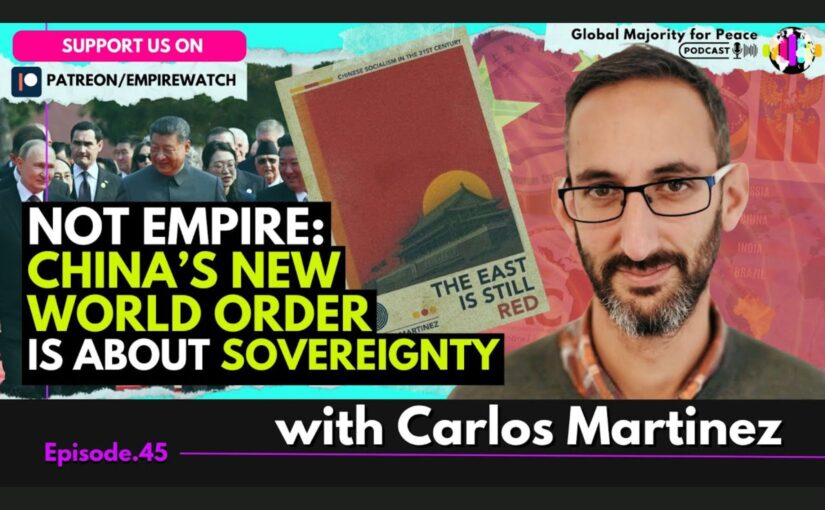
On the Global Majority for Peace podcast, Ileana Chan talks with Friends of Socialist China co-editor Carlos Martinez about why so much of the Western left doesn’t support China; what the differences are between Socialism with Chinese Characteristics and capitalism; the nature of the Shanghai Cooperation Organisation and the aims of the multipolar project; whether China’s engagement with the world can be considered “imperialist”; the nature of China’s relationship with the Democratic Republic of Congo; the state of the semiconductor wars; and China’s remarkable progress in green energy.

The first half hour of the interview is embedded below. Readers are also welcome to access the full 53-minute video, which is currently unlisted.

The Silk Road Tango: Can the elephant and dragon share one stage?

In the following article, Mayukh Biswas argues that India and China, in spite of ongoing tensions, have deep historical, cultural, and economic ties that position them as key actors in reshaping the global order, with much to gain from friendship and cooperation.

The article opens by noting Indian Prime Minister Narendra Modi’s embrace of Trump and the US’s long-term strategy to leverage India against China. The US side disrupted this process recently by imposing punitive tariffs on Indian imports, thereby exposing the limits of US–India alignment.

Globally, Mayukh situates India–China relations within wider shifts: Brazil’s leftward turn under Lula, Africa’s escalating resistance to neo-colonialism, and growing anger around the world at Western sanctions and militarism. BRICS and the other institutions of an emerging multipolarity offer a counterweight to US hegemony.

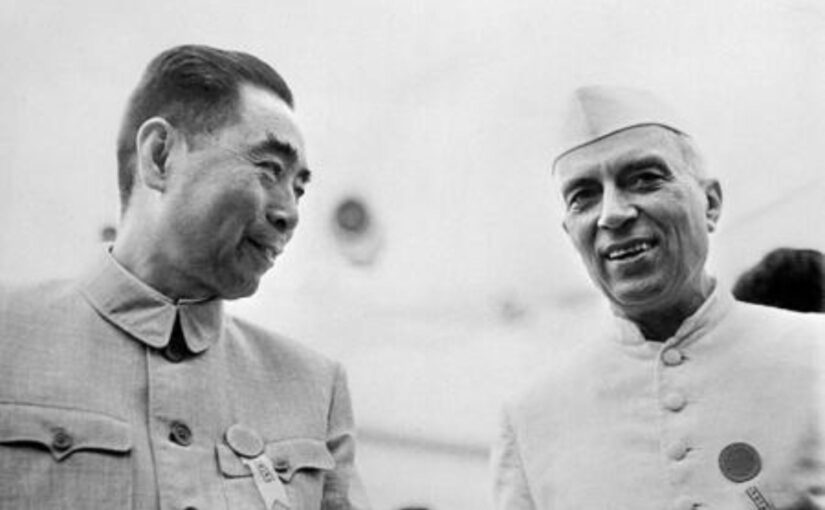
Tracing two millennia of exchange, the author highlights how Buddhism, science, mathematics, art, and trade linked India and China peacefully. From the Bandung Conference and Panchsheela to today’s BRICS, cooperation between the two countries has also made an important contribution to the construction of the Global South.

Yet political contradictions remain. The BJP’s ideological base fuels anti-China rhetoric, while Western powers exploit tensions through forums like the Quad, seeking to draw India into the US-led strategy of China containment. Despite this, India and China share overlapping interests: strengthening the Global South, addressing climate change, and resisting Western dominance.

Mayukh concludes that the “elephant and dragon” should choose the path of greater cooperation, helping to guide a more multipolar and peaceful global future.

Colonial “divide and rule” only breeds conflict. Long before Europe’s rise, India and China traded and exchanged culture. In the 21st century, this cooperation is vital for global peace.

Mayukh Biswas is former All India General Secretary of the Students’ Federation of India, current Communist Party of India (Marxist) West Bengal state committee member, and a researcher in International Relations at Jadavpur University.

The Modi government had left no stone unturned in praising Trump – from “Namaste Trump” to “Howdy Modi.” Not long ago, far-right Hindutva groups celebrated Trump’s birthday and even performed rituals for his victory. But despite all the theatrics, Trump has imposed a 50% tariff on Indian goods, the highest in Asia. This import duty, applied as “punishment” for buying cheap oil from Russia, will severely impact India’s leather, textiles, IT, and agriculture sectors, risking millions of jobs. 

The Rashtriya Swayamsevak Sangh (RSS), which is the ideological lodestar of the ruling BJP, had supported Trump’s anti-Muslim policies, seeing his divisive moves align with their communal agenda; they thought Trump was their ‘long-lost brother.’ Now, Modi is in a deep dilemma. Meanwhile, despite their cold relations, China has made its stance clear. Chinese Ambassador Zhu Feihong tweeted in support of New Delhi: “Give the bully an inch, he will take a mile.” He highlighted how the U.S. weaponizes tariffs, violating UN and WTO rules to suppress other nations, destabilizing the world. 

Continue reading The Silk Road Tango: Can the elephant and dragon share one stage?

The “Far East” was never far – a Chinese journalist reflects on the potential for cultural exchange and people’s friendship

We are pleased to publish the below contributed article by Gao Wencheng, a London-based journalist with the Xinhua News Agency, which takes the 80th anniversary of the victory over Japanese militarism as a starting point to highlight the prospects and opportunities of enhanced cultural exchange and people-to-people friendship between Britain and China.

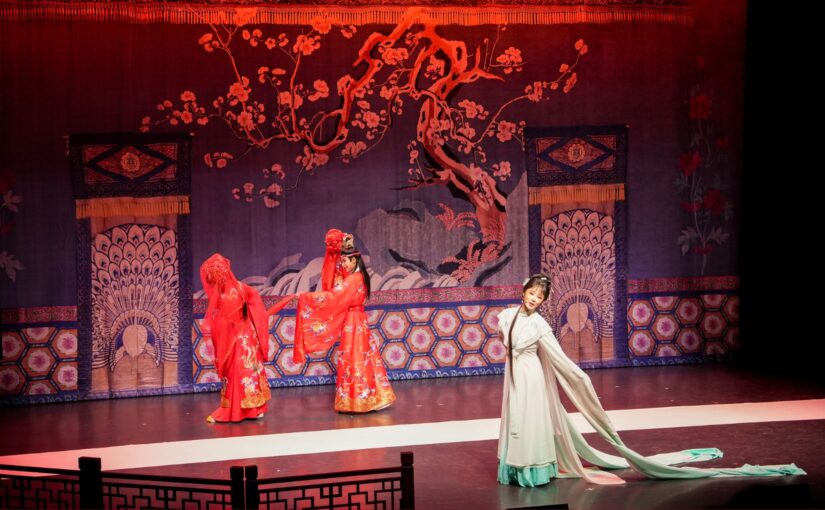
He writes that, “Living in London, I am constantly struck by how near China feels” and notes that: “Only a week after World War II commemorations, London’s Shaw Theatre hosted performances of traditional Chinese Yue Opera.” An August 22 Xinhua report further notes:

“As early as 2016, the Xiaobaihua troupe staged in London a cross-cultural production that brought together characters from Shakespeare’s Coriolanus and Chinese great playwright Tang Xianzu’s The Peony Pavilion. Written around the same time, Coriolanus is a Roman tragedy, while The Peony Pavilion tells of a young woman’s tragic love and resurrection.”

He concludes:

The war against fascism was won through the collective effort of many peoples; no single nation could have achieved victory alone. This truth holds greater significance today than ever before. The ties forged between different nations in the flames of war remind us that peace and justice know no borders.

On August 15, Britain marked the 80th anniversary of VJ (Victory over Japan) Day and the end of the Second World War, with an unusually high-profile tribute. Many iconic sites, from Buckingham Palace to the Palace of Westminster, were illuminated with a “V” for “Victory,” a symbol that has long been more associated with Britain’s participation in the European theatre of World War II.

In this country, the fall of Berlin in May 1945 has always loomed larger in public memory than the surrender of Japan three months later.

But this year felt different. Perhaps it was because it’s a round-number anniversary. Or perhaps it was because of King Charles III’s unusually pointed words, which stressed that those who fought and died in the Pacific and Far East “shall never be forgotten.” At noon, the country even paused for two minutes of silence marking VJ Day.

Continue reading The “Far East” was never far – a Chinese journalist reflects on the potential for cultural exchange and people’s friendship

China proposes Global Governance Initiative

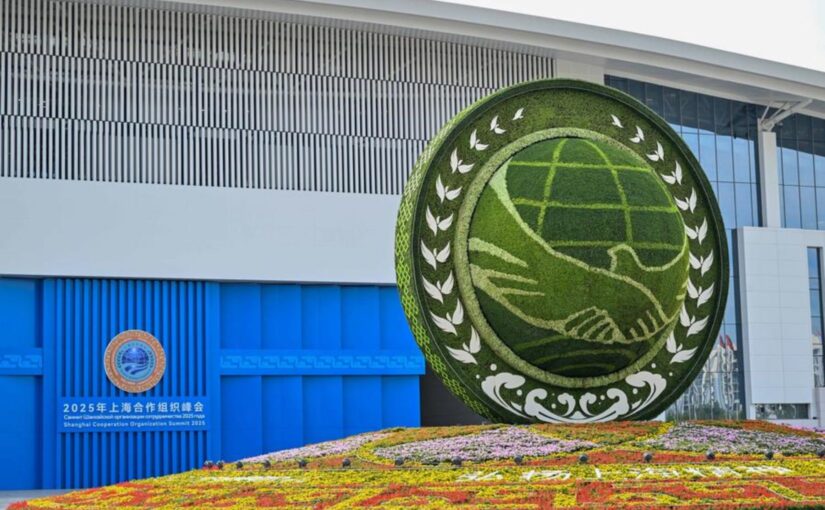
On Monday 1 September at the Shanghai Cooperation Organisation Plus meeting in Tianjin, President Xi Jinping proposed the Global Governance Initiative (GGI), which aims at establishing “a more just and equitable global governance system and advancing toward a community with a shared future for humanity”.

He set out five guiding principles for the GGI:

  • Adhere to sovereign equality: all countries, regardless of size, strength or wealth, have their sovereignty and dignity respected; have the right to independently choose their social system and development path; and have the right to participate in, make decisions in and benefit from the global governance process as equals.
  • Abide by international rule of law: The purposes and principles of the UN Charter are universally recognised as the basic norms of international relations. International law and rules must be applied equally and uniformly, without double standards.
  • Practise multilateralism: Global affairs should be decided by all, the governance system built by all, and the fruits of governance shared by all.
  • Commit to a people-centred approach: The people of all nations are the fundamental actors in global governance, and their well-being is its ultimate benefit.
  • Focus on results: Effective global governance is essentially one that resolves real problems.

The proposal makes clear that the GGI is not about overturning the UN-based system or trying to create a parallel international order. Rather, it aims to improve the existing international system and make it more effective in addressing global challenges. In his speech announcing the initiative, Xi Jinping observed that “while the historical trends of peace, development, cooperation and mutual benefit remain unchanged, Cold War mentality, hegemonism and protectionism continue to haunt the world”, and noted that new threats and challenges to peace and development are emerging.

The GGI concept paper notes some important deficiencies in global governance that need to be urgently addressed:

  • First, serious underrepresentation of the Global South. “The collective rise of emerging markets and developing countries necessitates boosting the representation of the Global South and redressing historical injustice.”
  • Second, erosion of the UN’s authority, particularly due to unilateral measures and violations of international law taken by some countries.
  • Third, the need for greater effectiveness. Urgent issues such as climate change, the digital divide, AI regulation and cyberspace need to be effectively managed within a global framework.

The concept paper insists:

We must stand firmly on the right side of history, and join hands with all progressive forces in the world to build a community with a shared future for humanity and make relentless efforts for mankind’s noble cause of peace and development.

The GGI is the fourth major initiative proposed by China, following the Global Development Initiative (GDI), the Global Security Initiative (GSI) and the Global Civilisation Initiative (GCI), which collectively aim to foster global development, peace, friendship, understanding and cooperation. Xinhua reports that Russia, Cuba, Pakistan, Nicaragua, Nepal and Venezuela – as well as UN Secretary-General Antonio Guterres – have already stated their support for the initiative.

Continue reading China proposes Global Governance Initiative

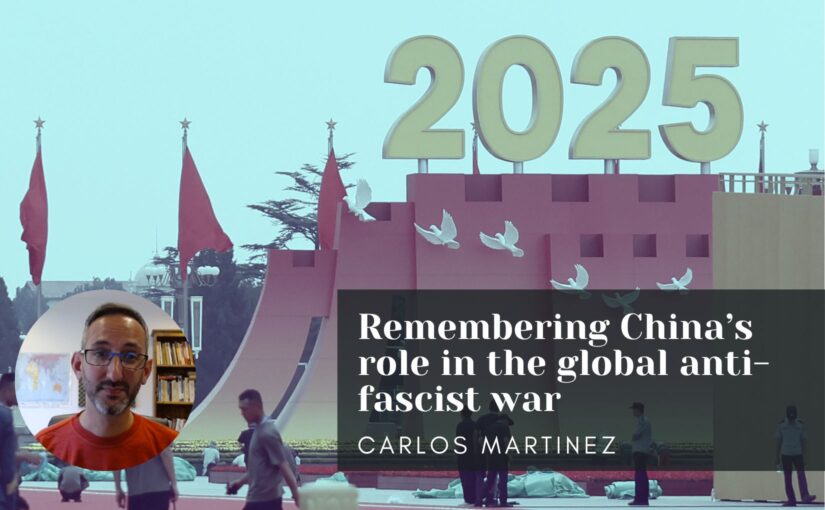
Remembering China’s role in the global anti-fascist war

The following article by Carlos Martinez, a condensed version of which appeared in Beijing Review on 3 September, highlights the often-overlooked role of China in the global victory against fascism during World War II. While mainstream accounts foreground the US and Britain, Carlos stresses that China was the first nation to wage war against fascist occupation and sustained the longest campaign, suffering 35 million casualties and massive displacement.

Japanese aggression began with the invasion of northeast China in 1931. For six years, Chiang Kai-shek’s Kuomintang (KMT) prioritised suppressing the Communists over resisting Japan. Resistance in the northeast was led by the Communist Party of China (CPC), supported by the Soviet Union and joined by Korean fighters (including Kim Il Sung). Mounting student protests and patriotic pressure culminated in the 1936 Xi’an Incident, forcing Chiang into an United Front with the CPC, enabling a coordinated national resistance after Japan’s full-scale invasion in 1937.

The CPC’s people’s war strategy mobilised peasants and established base areas for guerrilla operations, and landmark battles such as Pingxingguan and the Hundred Regiments Campaign broke Japan’s aura of invincibility. Despite being subjected to some of history’s most horrific war crimes, including the Nanjing Massacre, Chinese forces tied down over a million Japanese troops—two-thirds of Japan’s military strength—crippling Tokyo’s expansionist plans and bolstering Allied success in both Europe and the Pacific.

The war had a decisive role in ending China’s century of humiliation, re-establishing its status as a major power, and laying the foundations for the founding of the People’s Republic in 1949. Globally, China’s resistance not only contributed to fascism’s defeat but also inspired anti-colonial struggles across Asia. Carlos concludes:

The courage, sacrifice, daring and strategic brilliance demonstrated by the Chinese people in the War of Resistance Against Japanese Aggression form an indelible chapter in the history of the struggle for a world free from fascism, militarism, colonialism and imperialism.

The second of September 2025 marks the 80th anniversary of the signing of the Japanese Instrument of Surrender, bringing an end to World War 2.

China’s role in the war, and indeed the very existence of the Pacific Theatre, has to a significant degree been written out of history. In his book China’s War with Japan: 1937 – 1945, British historian Rana Mitter writes that, “for decades, our understanding of [World War 2] has failed to give a proper account of the role of China. If China was considered at all, it was as a minor player, a bit-part actor in a war where the United States, Soviet Union and Britain played much more significant roles” (Rana Mitter, 2014. China’s War with Japan: 1937 – 1945; the Struggle for Survival. Penguin Books, p5).

However, China was the first country to wage war against fascist occupation, and the Chinese People’s War of Resistance Against Japanese Aggression was of decisive importance to the overall global victory over fascism. In the course of 14 years of war (1931-45), China suffered over 35 million casualties, and around 20 percent of its people were made refugees.

The war started in 1931

Following its emergence as a capitalist country in the second half of the 19th century, Japan had been steadily expanding its colonial ambitions in relation to China, Korea and the Russian Far East. Taiwan, the Penghu Islands and the Liaodong Peninsula were ceded by China to Japan in 1895 under the terms of the Treaty of Shimonoseki, at the conclusion of the First Sino-Japanese War.

Continue reading Remembering China’s role in the global anti-fascist war

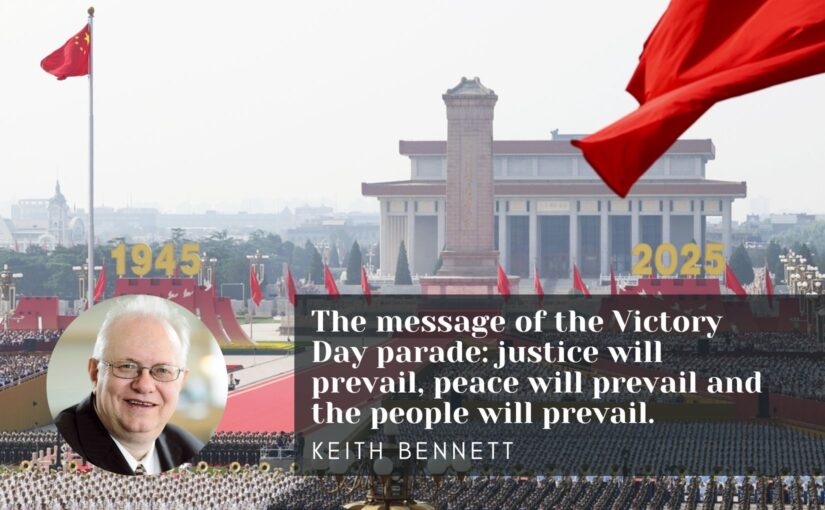
The message of the Victory Day parade: justice will prevail, peace will prevail and the people will prevail

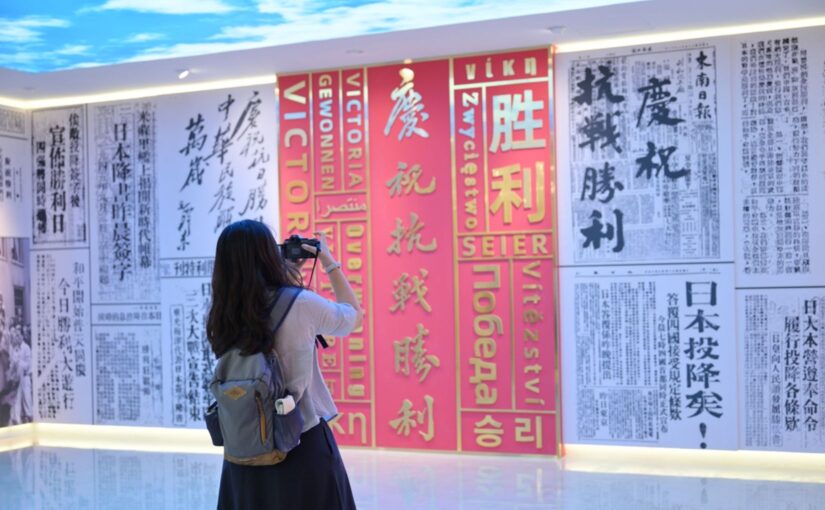
In the following report, our co-editor Keith Bennett reflects on witnessing the grand parade in Beijing marking the 80th anniversary of China’s victory in the War of Resistance Against Japanese Aggression and the Global Anti-Fascist War.

Keith notes that the parade impressively showcased advanced military technology—ranging from hypersonic missiles and drones to nuclear-capable systems—demonstrating China’s defensive strength. Yet, the article stresses, China’s military power is not for domination but to safeguard the Chinese people and contribute to world peace.

President Xi’s address summed up the principal lesson of China’s victory: that justice will prevail, peace will prevail and the people will prevail. Keith observes:

That this vision enjoys ever greater support was shown by the presence of more than two dozen heads of state and government, along with numerous other dignitaries, the majority of them from the Global South, or Global Majority. This underlined, as did the largest ever gathering of the Shanghai Cooperation Organisation just two days previously, that the days when a handful of colonialist, imperialist or hegemonist powers could dominate world affairs have gone forever. If some countries choose to stay away from or seek to undermine this inexorable multipolar dynamic it will only precipitate their decline.

The article was also published by China Today and Morning Star, and is quoted extensively in China Daily.

To be able to witness the grand military parade marking the 80th anniversary of the victory of the Chinese People’s War of Resistance Against Japanese Aggression and the World Anti-Fascist War was an unforgettable experience.

As President Xi pointed out, this was the first complete victory won by the Chinese people in their struggle against foreign aggression and also made a major contribution to the triumph of the people of the world against fascism.

China had promised to show the world the advances in its defensive capabilities. And with an array of new equipment displayed for the first time, including nuclear-capable intercontinental ballistic missiles; a land, sea and air nuclear triad; all-weather hypersonic missiles; reconnaissance and strike drones; unmanned ship-based helicopters; advanced electronic counter-measure equipment; cyberspace warfare equipment; unmanned aerial vehicles; hypersonic anti-ship missiles; long range artillery and new generation tanks, among others, it certainly didn’t disappoint on that front.

But that was not all that left a lasting impression. Unlike some other countries, China’s military might is not there to dominate others, not to bully, oppress, occupy or exploit, but solely to provide a secure basis, a great wall of iron and steel, for the Chinese people to live a peaceful and happy life and to help secure, preserve and defend world peace.

In stark contrast to those who grotesquely speak of other countries being “on the menu”, President Xi again pledged his country to peaceful development. Only when nations across the world treat each other as equals and mutually support one another, he pointed out, can the root cause of war be eliminated, and can we prevent historical tragedies from recurring, by building a community of shared future for humanity.

The lesson of the great victory, he pointed out, was that justice will prevail, peace will prevail and the people will prevail.

That this vision enjoys ever greater support was shown by the presence of more than two dozen heads of state and government, along with numerous other dignitaries, the majority of them from the Global South, or Global Majority. This underlined, as did the largest ever gathering of the Shanghai Cooperation Organisation just two days previously, that the days when a handful of colonialist, imperialist or hegemonist powers could dominate world affairs have gone forever. If some countries choose to stay away from or seek to undermine this inexorable multipolar dynamic it will only precipitate their decline.

The western media may express consternation, whether real or feigned, at the foregrounding of Russian President Vladimir Putin and DPRK leader Kim Jong Un among the honoured foreign guests. They choose to overlook the undeniable fact that it was the peoples of China and the Soviet Union who made the greatest national sacrifice to rid the world of fascist barbarism and save human civilisation. And they equally choose to overlook that Kim Jong Un’s own grandfather fought shoulder-to-shoulder with his Chinese comrades-in-arms against the Japanese aggressors in northeast China. All this found poignant expression as the three leaders greeted war veterans together at the start of the ceremony.

Many other things touched me today. The culmination featuring the release of 80,000 doves and 80,000 multicoloured balloons, reminding us that everything China does is for the sake of peace.

The pride, passion and patriotism with which service men and women and civilians alike joined in singing the national anthem and the Ode to the Motherland.

As you would expect for an event of this scale, organisation was meticulous and logistics were complex but flawless. Security was, of course, necessarily tight. But unlike in any capitalist country none of the security personnel carried arms. And whilst they were there to assist people as much as anything else, they were by far outnumbered by the kind, self-confident and enthusiastic young women and men volunteers one encountered every few steps, on hand to offer whatever help anyone might need. Every one of them a credit to socialist China and a guarantee of its bright future. Every one of them able to realise their dreams thanks to the heroes and martyrs who laid down their lives 80 years ago.

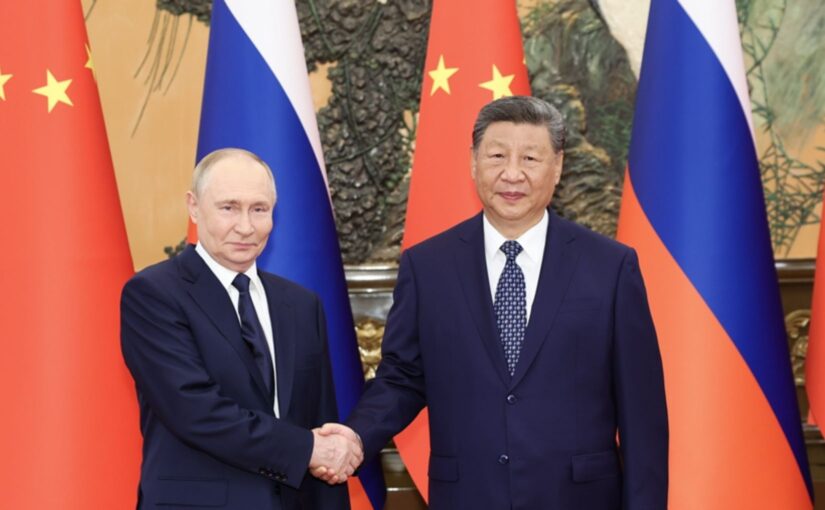
Putin: Russia and China are united in our vision of building a just, multipolar world order, with a focus on the nations of the Global Majority

We are pleased to republish below the full text of Russian President Vladimir Putin’s interview with Xinhua News Agency, conducted on the eve of his visit to China to attend the Shanghai Cooperation Organisation (SCO) Tianjin Summit and the commemorations in Beijing for the 80th anniversary of China’s victory in the War of Resistance against Japanese Aggression.

The interview touches on a wide range of important issues, including Russia-China relations, the global balance of power, the significance of the SCO, and the lessons to be learned from the Second World War.

On the issue of the Global Anti-Fascist War, Putin notes:

The peoples of the Soviet Union and China bore the brunt of the fighting and suffered the heaviest losses. It was our citizens who endured the greatest hardships in the struggle against the invaders and played a decisive role in defeating Nazism and militarism. Through those severe trials, the finest traditions of friendship and mutual assistance were forged and strengthened – traditions that today form a solid foundation for Russian–Chinese relations.

I would remind you that even before the full-scale outbreak of the Second World War, in the 1930s, when Japan treacherously launched a war of aggression against China, the Soviet Union extended a helping hand to the Chinese people. Thousands of our career officers served as military advisers, assisting in strengthening the Chinese army and providing guidance in combat operations. Soviet pilots also fought bravely alongside their Chinese brothers-in-arms.

He adds:

The historical record leaves no doubt as to the scale and ferocity of those battles. We remember the great significance of the famous Hundred Regiments Offensive, when Chinese Communist forces liberated a territory with a population of five million from Japanese occupation. We also recall the unparalleled feats of Soviet troops and commanders in their clashes with Japan at Lake Khasan and the Khalkhin Gol River. In the summer of 1939, our legendary commander Georgy Zhukov won his first major victory in the Mongolian steppes, which in effect foreshadowed the later defeat of the Berlin–Tokyo–Rome Axis. In 1945, the Manchurian Strategic Offensive Operation played a decisive role in liberating northeast China, dramatically altering the situation in the Far East and making the capitulation of militarist Japan inevitable.

And, correctly remembering the crucial role played by China in the defeat of fascism and militarism and the birth of the modern international order, he states:

In Russia, we will never forget that China’s heroic resistance was one of the crucial factors that prevented Japan from stabbing the Soviet Union in the back during the darkest months of 1941–1942. This enabled the Red Army to concentrate its efforts on crushing Nazism and liberating Europe. Close cooperation between our two countries was also an important element in forming the anti-Hitler coalition, strengthening China as a great power, and in the constructive discussions that shaped the post-war settlement and helped to reinvigorate the anti-colonial movement.

Putin observes that, in the West, there are ceaseless attempts to rewrite the history of the Second World War, to downplay the role of the Soviet Union and China in the victory over fascism, and to whitewash the crimes of fascism and militarism. “Historical truth is being distorted and suppressed to suit their current political agendas. Japanese militarism is being revived under the pretext of imaginary Russian or Chinese threats, while in Europe, including Germany, steps are being taken towards the re-militarisation of the continent, with little regard for historical parallels.”

Continue reading Putin: Russia and China are united in our vision of building a just, multipolar world order, with a focus on the nations of the Global Majority

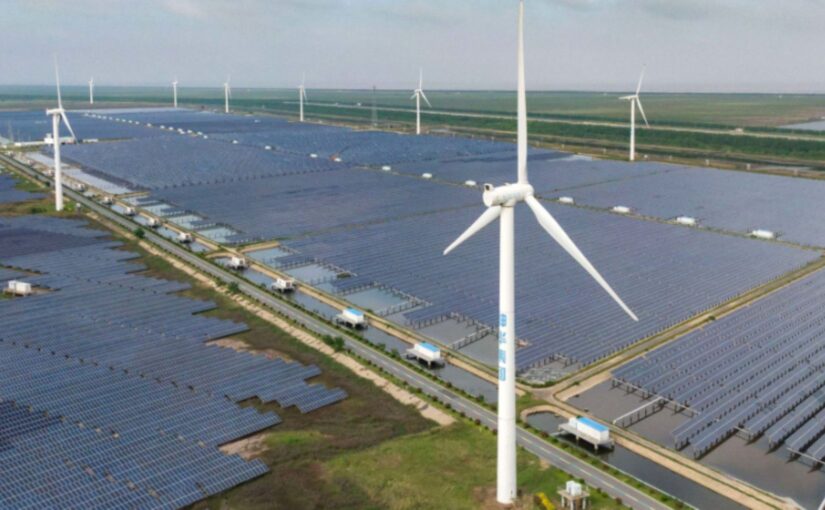
What is behind China’s successful leadership in tackling the climate crisis?

Ganesh Tailor, writing in People’s Voice, newspaper of the Communist Party of Canada, argues that China’s success in tackling the climate crisis stems from its socialist system and long-term planning:

China’s Five-Year Plans allow for the massive, state-led mobilisation of resources with long-term sustainable goals in mind. These initiatives, necessary for the common good, have led to the PRC’s rise as the world leader in solar panel production and installation and its dominance in wind and hydroelectric projects, along with rapid expansions in electric vehicles and high-speed rail.

Ganesh observes that Chinese innovations around sustainable development are having a global impact, particularly in the Global South:

Through the Belt-and-Road Initiative, Global South countries have received loans to build green infrastructure and develop their sovereign economies without having to concede to structural adjustment or austerity programs, as infamously required by the IMF and World Bank. Instead, China has worked with Pakistan and Zambia to build solar farms, Ethiopia and South Africa to build wind turbines, and Laos and Ecuador to build hydroelectric dams – to name only a few. These projects enable partner countries to diversify their energy sources, especially away from fossil fuels, and strengthen their sovereignty through economic growth and stability.

While the US imposes a criminal blockade on Cuba, “China has donated solar farms, along with at least 70 tons of power generator parts and accessories to aid in Cuba’s energy grid’s robustness. China has additionally provided significant financing for solar infrastructure, with projections for solar powering two-thirds of present-day Cuban demand by 2028.” The article continues:

A stabilized power grid directly translates to a better quality of life for everyday Cubans. Solar farms reduce the frequency and duration of blackouts and free up foreign currency, otherwise spent on oil, to be spent on crucial resources like food and medicine imports. Partnership with the PRC in energy diversification away from imperialist-led fossil fuel hegemony bolsters Cuba’s ability to serve its people and continue defending its hard-fought revolution.

Ganesh concludes that capitalism cannot resolve the climate crisis, as profit-driven systems inherently obstruct real solutions. China’s achievements demonstrate that socialism offers the only viable path to a collective, internationalist, and sustainable future.

We are living through the prime existential threat facing life on this planet. The climate crisis is an undeniable reality born from the inherent contradictions of capitalism. The profit motive and its ecological impacts in development are increasingly borne by the planet and its peoples. We are continually told of supposed “solutions” that are, in reality, nothing more than greenwashing and toothless accords meant to at best manage decline, and at worst open new carbon markets.

Despite the ruthless propaganda emanating from the worst offenders in Washington and Ottawa, the People’s Republic of China, under the leadership of the Communist Party, is demonstrating the superiority of centralized and long-term economic planning to tackle this global challenge.

Continue reading What is behind China’s successful leadership in tackling the climate crisis?

From Spain to China: remembering shared sacrifices in the World Anti-Fascist War

September 3rd marks the 80th anniversary of the victory in the Chinese People’s War of Resistance Against Japanese Aggression. In the following article, originally published in Global Times on 14 August, Spanish geopolitical analyst H. Gomez notes that the history of international solidarity in the World Anti-Fascist War “did not begin in 1939, nor did it end with the fall of the Nazi Germany”.

He highlights the Spanish Civil War of 1936 as an early front in this global fight:

In 1936, when the Spanish Civil War erupted, a little-known but powerful gesture of internationalism took place. Among the first foreign volunteers to arrive in Spain was Xie Weijin, a Chinese Marxist and journalist who had studied in France and was deeply moved by the Republican cause. As bombs fell over Madrid and Barcelona, Xie risked his life to stand with the Spanish people in their resistance against interventions by fascist forces. He was soon followed by other Chinese volunteers who formed part of the International Brigades – multi-national units made up of workers, students and intellectuals from over 50 countries.

At the same time, China itself was resisting Japanese invasion. The horrors of Nanjing and the bombings of Chongqing became symbols of global anti-fascist resolve, and China too received international solidarity: Canadian doctor Norman Bethune, American aviators of the Flying Tigers, Soviet advisors, and volunteers from across Asia and beyond came to China’s assistance. Indeed, 20 medical doctors serving in the International Brigades went from Spain to China to help defend against Japanese aggression.

These acts of transnational support, Gomez stresses, were not about profit or geopolitics but about a shared moral cause. China has preserved this history through monuments, museums, and remembrance of comrades-in-arms. Yet, he warns, historical revisionism and amnesia in parts of the world threaten to distort or erase these sacrifices, particularly China’s role in the Allied victory.

The author writes that commemorating the war is not only remembrance but a moral imperative. In today’s world—facing pandemics, climate change, and geopolitical tensions—the same spirit of solidarity is urgently needed. China, he concludes, upholds this legacy through peace, cooperation, and its vision of a shared future for humanity:

As China commemorates the victory in the Chinese People’s War of Resistance Against Japanese Aggression and the World Anti-Fascist War, it does so not in isolation but as part of a global family that once stood together in resistance, and must now stand together in rebuilding global trust and cooperation. This is not only a tribute to the past – it is a blueprint for the future.

Commenting on Gomez’s article, Jim Jump, Chair of Britain’s International Brigade Memorial Trust, remarked:

Global Times is to be congratulated for recognising the links between the Spanish Civil War and China’s resistance to Japanese militarism in the long Anti-Fascist War of the 1930s and 40s.

The fight against Franco, Hitler and Mussolini in Spain and against Japanese aggression in China was seen by many people in Britain and around the world as one and the same struggle.

The International Brigade Memorial Trust salutes the memory of all those who sent aid to the people of Spain and China and of the volunteers in the International Brigades who went from Spain to China to continue the epic struggle against fascism.

As China and the world prepare to mark the 80th anniversary of the victory in the Chinese People’s War of Resistance Against Japanese Aggression on September 3, it is a fitting moment to revisit the long arc of international solidarity in the World Anti-Fascist War, a history that did not begin in 1939, nor did it end with the fall of the Nazi Germany. 

Continue reading From Spain to China: remembering shared sacrifices in the World Anti-Fascist War

Xi Jinping’s Governance of China illuminating the path ahead

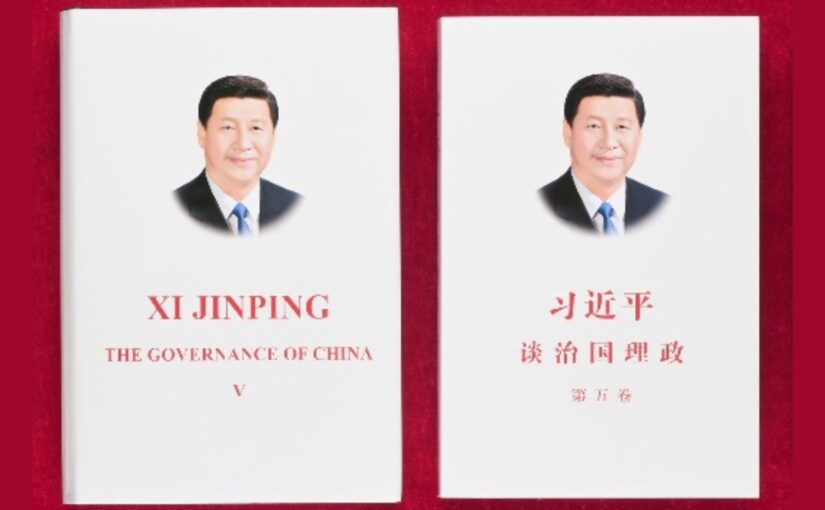
In the following article, which was originally published by China Today, our co-editor Keith Bennett welcomes the publication of the English language edition of the fifth volume of Xi Jinping’s ‘Governance of China’, noting:

“Through the writings and speeches of President Xi one can gain a better understanding of China – where it is going and how it approaches the great issues facing humanity. This is related to the fact that, under Xi’s leadership, China is returning to the centre of the global stage. But it does so, not as an aspiring new hegemon, and not following the old path of colonialism and hegemonism, which have caused, and continue to cause, so much bloodshed and suffering, but rather from a new and visionary paradigm.”

Keith briefly outlines the lineage of Xi Jinping Thought on Diplomacy, through the internationalist rallying cry of Marx and Engels in the Communist Manifesto, Lenin’s elevation of the oppressed peoples to stand alongside the working class in the world revolutionary process, and Zhou Enlai’s elaboration of the Five Principles of Peaceful Coexistence, through to today’s collective rise of the Global South, with Socialist China in the vanguard.

Xi Jinping’s concept of a community of shared future for humanity can be embraced and welcomed by the great majority of humanity.

Like many people around the world, be they China scholars, friends of China or students of Marxism, I have been looking forward to the publication of the fifth volume of Xi Jinping: The Governance of China and was very pleased to hear that it is now available. 

The eagerness and interest with which this latest volume has been awaited and will be received reflects a number of things. Through the writings and speeches of President Xi Jinping one can gain a better understanding of China – where it is going and how it approaches the great issues facing humanity. This is related to the fact that, under Xi’s leadership, China is returning to the center of the global stage. But it does so, not as an aspiring new hegemon, and not following the old path of colonialism and hegemonism, which have caused, and continue to cause, so much bloodshed and suffering, but rather from a new and visionary paradigm. 

Xi’s grand vision of a community with a shared future for humanity is welcomed by a majority of the world’s nations, particularly the Global South family, who have suffered for centuries under the iron heel of the Global North. Xi’s vision is welcomed precisely because it accords with the interests and needs of the people of every country. 

As far back as 1848, German philosophers and revolutionary socialists Karl Marx (1818-1883) and Friedrich Engels (1820-1895), co-authors of The Communist Manifesto, wrote that, “In the national struggles of the proletarians of the different countries, they [the communists] point out and bring to the front the common interests of the entire proletariat, independently of all nationality.” 

As the foremost proponent of Marxism for the 21st century, Xi has inherited, applied and developed this principle elaborated by Marx and Engels.  

Historically, this development has passed through a number of distinct phases. Taking into account the fact that imperialism had completed the colonial division of the world, and that the modern national liberation movement was coming into being as the most powerful ally of the working class on a world scale, Vladimir Lenin (1870-1924) – founder of the Russian Communist Party – updated the slogan of “workers of the world unite” to also embrace the oppressed peoples. At the same time, faced with the fact that the Soviet Union was likely to remain the world’s sole socialist country, at least for a time, he advanced the concept of peaceful coexistence as an important component of the foreign policy to be pursued by a socialist state. Later, Zhou Enlai (1898-1976), then Chinese premier, in turn, faced with the fact that states with different social systems would continue to exist for a long historical period, raised peaceful coexistence from a policy to the level of theory, encapsulated and summed up in his famous Five Principles of Peaceful Coexistence.  

Xi Jinping Thought on Diplomacy inherits and builds on this entire legacy. If, 70-plus years ago, the Five Principles of Peaceful Coexistence gave the socialist countries, and the newly independent countries just embarking on the road of building a new society, freedom to breathe and room to maneuver, today we face a qualitatively different situation.  

As a key component of the changes unseen in a century, we now see the collective rise of the great mass of developing countries, which today we generally refer to as the Global South, with socialist China as the vanguard, an indispensable nation steadily advancing to the center of the world stage. 

This therefore places the question of what kind of world should we build and how should we build it, not simply as a task on the agenda but rather as a task taken up for solution, and so this is precisely a key question to which Xi Jinping Thought addresses itself. 

Around the time I first visited China, back in 1981, and prior to that, practically the first sight that people encountered as they entered the mainland from Hong Kong was the huge banner reading, “Long live the great unity of the peoples of the world!” 

And just as Marx and Engels wrote about the “common interests of the entire proletariat, independently of all nationality,” for his part, Confucius (551 BC- 479 BC) famously advocated the great harmony of all under heaven. 

It is by embodying these precepts of both scientific socialism and fine traditional Chinese culture and civilization, and proceeding from the theory of “adapting the basic tenets of Marxism to China’s realities and to its traditional culture”, that Xi has defined the strategic goal, the task taken up for solution, as the building of a community with a shared future for humanity.  

Of course, some might say that this is just a phrase. And in the mouths of many politicians around the world that would most likely be the case. But in Xi’s case it represents the summation and acme of a whole body of continually developing theories and practices. In particular, it is the cumulative product of a whole series of initiatives, starting with the Belt and Road Initiative (BRI), and proceeding through a series of global initiatives on development, security and civilization. Together, these represent the building blocks of global peace, common prosperity, mutual respect and harmony, which, in turn, are the prerequisites for a sustainable community of shared future. 

Xi is also clear that this cannot be realized solely through relations among states but rather must also embrace people-to-people diplomacy. In fact, he has gone so far as to stress that relations between peoples are the foundation and bedrock of good state-to-state relations. In this he inherits and builds on Mao Zedong’s conclusion that, “The people, and the people alone, are the motive force in the making of world history.” That is why Xi gives so much attention to people-to-people diplomacy, meeting people on his travels, keeping in contact with old friends even after decades, writing personal letters, and never forgetting China’s old friends and their family members and descendants. 

Today, humanity has long since passed the point where its fundamental problems can be contained or resolved within national borders. Not all progressive people in the West realize it yet, but the issue is no longer whether one is for or against globalization, but whether to continue to go down the road of a globalization where the rich continue to get richer and the poor continue to get poorer on a global scale, as practiced by the ruling circles in advanced capitalist countries, or whether to pursue an equitable and inclusive globalization as championed by China. Likewise, the existential threats facing humanity, whether they be from the looming threat of climate catastrophe, the danger of nuclear war or of zoonotic pandemics, all show that a community with a shared future for humanity is a worthy goal, one that can be embraced and welcomed by the great majority of humanity. But even more fundamentally, it is increasingly becoming the very prerequisite for the continuation of human civilization and indeed survival, and most likely for the survival of many other forms of life on earth as well. 

No country, no matter how rich or powerful, can solve the problems facing humanity and Mother Earth on their own, let alone with a “beggar my neighbor” attitude. Rather, it’s the case that we sink or swim together. Xi’s concept of a community with a shared future is the shoreline that humanity has to swim towards. The Governance of China is like a lodestar or lighthouse illuminating the way to a distant shore. That is why I am sure that this latest volume will be eagerly awaited, read, studied and discussed by people on every continent.