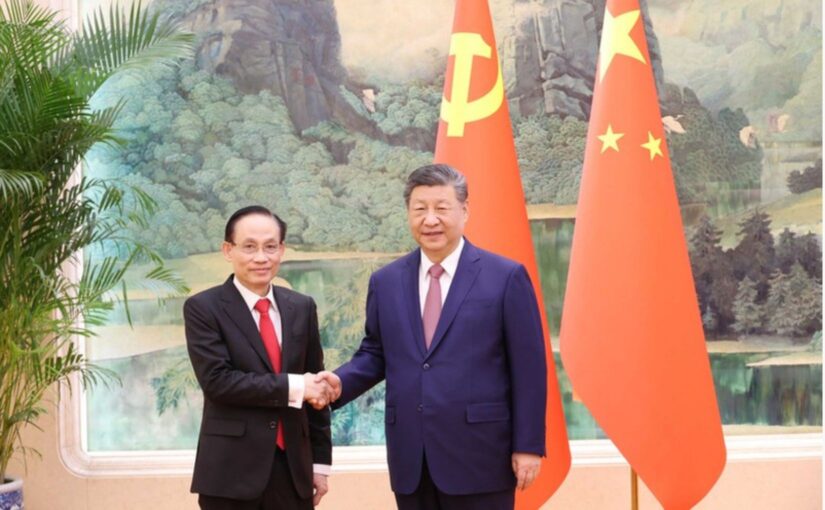
China and Vietnam exchange special envoys

Following the successful conclusion of its 14th National Congress, the Communist Party of Vietnam (CPV) has intensified its strategic coordination with its Chinese counterpart with an exchange of special envoys between the two parties.

First, Liu Haixing, Minister of the International Department of the Communist Party of China (CPC) Central Committee (IDCPC), visited Vietnam as the Special Envoy of General Secretary Xi Jinping.

Liu met with To Lam, General Secretary of the CPV Central Committee, in Hanoi on January 30.

According to the website of the IDCPC, Liu delivered a congratulatory letter from General Secretary Xi Jinping to To Lam and conveyed Xi’s sincere greetings and best wishes to him. Liu said, China warmly congratulates Vietnam on the successful convening of the 14th National Congress of the CPV and Comrade To Lam on his re-election as General Secretary of the CPV. China is willing to work with Vietnam to earnestly implement the important consensus reached by the general secretaries of the two Parties, adhere to the six overarching goals of “stronger political mutual trust, more substantive security cooperation, deeper practical cooperation, more solid popular foundation, closer coordination and collaboration on multilateral affairs, and better management and resolution of differences”, firmly safeguard the security of governance, intensify high-level exchanges, enhance political mutual trust, expand common interests, jointly uphold international justice, and promote the continuous development of the China-Vietnam community with a shared future.

The Vietnam News Agency (VNA) added that, welcoming the special envoy, General Secretary Lam emphasised that the visit carries profound political significance, reflecting the high priority, deep respect, and sincere friendship of the Chinese party, state, and people towards their Vietnamese counterparts, as well as the long-standing solidarity and close bonds between the two Communist Parties.

He appreciated the very positive outcomes of the phone talks with General Secretary and President Xi immediately after the CPV’s 14th National Congress, which created a favourable starting point for relations between the two Parties and countries in the new term and Vietnam’s new development era.

Sharing with the special envoy the important outcomes of the 14th National Party Congress, the party chief underscored that its success marked a turning point and a particularly important milestone determining Vietnam’s future development in the new era. The congress not only reviewed the past five years and summed up 40 years of renewal, set goals and tasks for the next five years, but also shaped strategic mindset, vision, and long-term development orientations toward the mid-21st century. Vietnam will continue to play an active and responsible role in maintaining peace, stability, and development in the region and the world, he stressed.

On the same day, Liu Haixing held the first meeting of the mechanism for meetings between the Minister of the IDCPC and the Secretary of the Party Committee of Vietnam’s Ministry of Foreign Affairs with Le Hoai Trung, Member of the Political Bureau of the CPV, Secretary of the Party Committee of the Ministry of Foreign Affairs, and Minister of Foreign Affairs of Vietnam.

The IDCPC reported Liu as saying that the two sides should walk hand in hand on the path of socialist modernisation and jointly create a brighter future for China and Vietnam, contributing positive energy to regional peace, stability, development and prosperity.

For his part, Le Hoai Trung thanked Special Envoy Liu Haixing for coming to Vietnam to extend congratulations. He said, Vietnam and China are like-minded partners on the socialist path. Vietnam always regards its relations with China as an objective requirement, strategic choice and top priority of its foreign policy. The development of bilateral relations is of great strategic significance to the socialist cause of the two countries. Under the new circumstances, Vietnam is willing to work with China to strengthen high-level exchanges between the two parties, deepen exchanges and mutual learning of experience in state governance and administration, expand exchanges and cooperation in various fields, and jointly build a Vietnam-China community with a shared future that carries strategic significance.

Continue reading China and Vietnam exchange special envoys
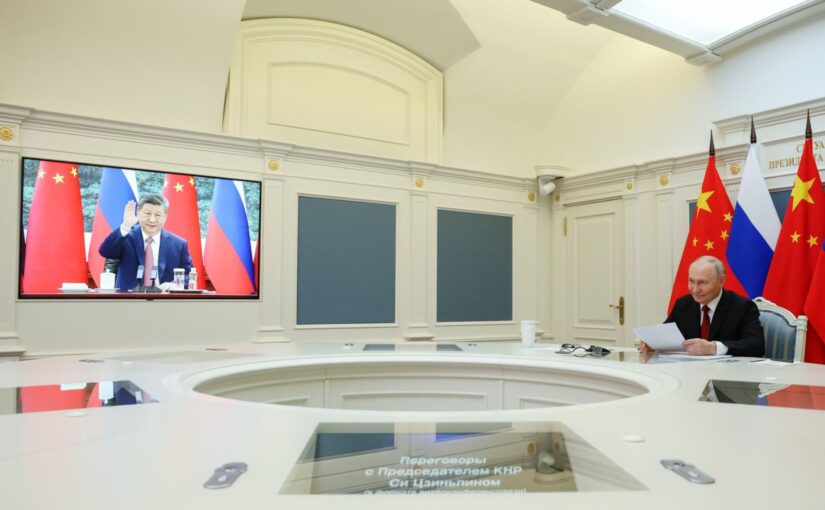
Xi Jinping holds same day conversations with Presidents Putin and Trump

In an unusual diplomatic coincidence, Chinese President Xi Jinping held separate conversations with Russian President Vladimir Putin and US President Donald Trump on February 4.

Xi Jinping first met with President Putin by videoconference.

The readout published by the Chinese Foreign Ministry said that President Xi extended sincere Spring Festival greetings to President Putin and the Russian people, and noted that today is the Beginning of Spring, one of the solar terms in the Chinese lunar calendar. It means the return of spring and signals a new start. He added that that over the past year, we met twice and steered China-Russia relations into a new stage of development. The two countries solemnly commemorated the 80th anniversary of the victory of the World Anti-Fascist War, demonstrating a firm resolve to defend the victorious outcomes of WWII and international fairness and justice. The Shanghai Cooperation Organisation (SCO) Tianjin Summit and the 24th meeting of the Council of Heads of Government of Member States were successfully held in China and Russia respectively. The two sides have increased multilateral coordination and stayed committed to building a more just and equitable global governance system.

President Xi noted that the first few weeks of the year have witnessed increasing turbulence around the world. As responsible major countries and permanent members of the UN Security Council, China and Russia are duty-bound to pool global efforts to firmly uphold fairness and justice, firmly defend the victorious outcomes of WWII, firmly safeguard the UN-centred international system and the basic norms of international law, and jointly maintain global strategic stability.

President Putin said that over the past year, Russia and China jointly commemorated the 80th anniversary of the victory of WWII, firmly safeguarded world peace secured with great sacrifice by the people of both countries and defended historical truth. Cooperation between the two countries in areas such as trade, energy, science and technology, and agriculture has deepened and achieved tangible results. People-to-people exchanges have grown closer, the China-Russia Years of Culture concluded successfully, and mutual visa exemption has facilitated travel between the two peoples. Looking ahead to the new year, Russia has full confidence in the bilateral relationship.

For its part, the website of the President of Russia released the text of the opening remarks of both leaders.

President Putin said: “I would like to personally wish Happy New Year 2026 to you and through you to the entire friendly Chinese nation. Please also accept my greetings on the Spring Festival, which will signal the beginning of the Year of the Fire Horse. As far as we know, this horse stands out by its strength, energy and determination to move ahead. This is also what makes the relations between our two countries so special.”

He added: “I believe that we properly celebrated the 80th anniversary of victory in World War II in Moscow in May and in Beijing in September. The fact that we did this together has demonstrated to the world our solidarity and Russia and China’s readiness to uphold historical truth and carefully preserve the memory of the heroism of our countries’ people, who sacrificed tens of millions of lives to restore peace on the planet.”

Xi Jinping said, among other things: “I would like to thank you for sending Comrade (Sergei) Shoigu to Beijing recently for consultations with Comrade Wang Yi on international and regional issues in preparation for our meeting. He has briefed me on the content of their discussions.” [See below.]

The Russian Presidency also released a commentary on the conversation by Presidential Aide Yury Ushakov.

He also noted that: “Consultations were held on February 1 in Beijing between Secretary of the Russian Security Council Sergei Shoigu and Director of the Office of the Central Commission for Foreign Affairs of the Communist Party of China Central Committee, Minister of Foreign Affairs of China Wang Yi. The heads of state discussed the information received following these consultations,” and added:

“I would like to emphasise that Xi Jinping was the principal guest in Moscow at the Victory Day Parade on May 9, while Vladimir Putin was the principal guest at the commemorative events in Beijing on September 3. Both Russia and China intend to continue upholding historical truth and preserving the memory of the heroism of our fathers and grandfathers in those harsh years.”

Continue reading Xi Jinping holds same day conversations with Presidents Putin and Trump

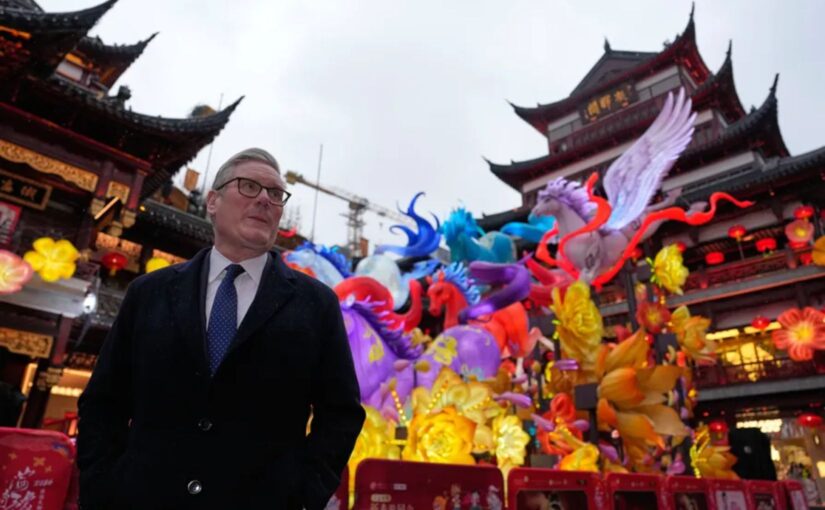
Keir Starmer’s small-stick diplomacy

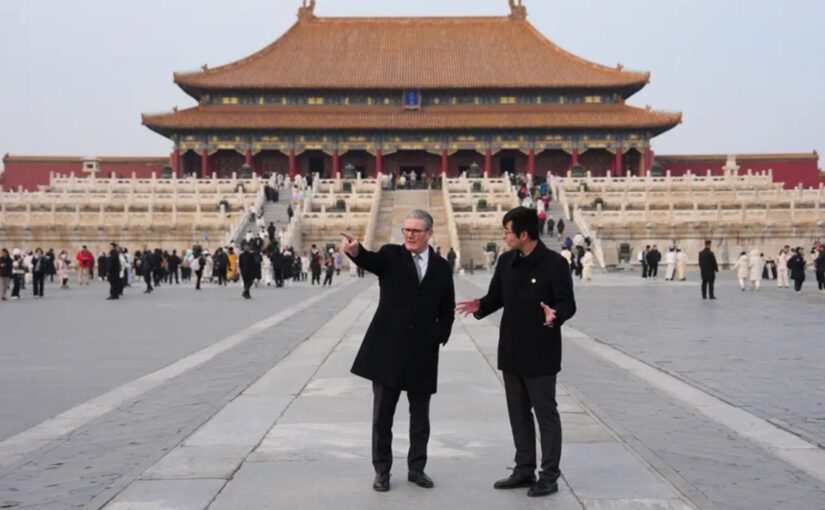
In the article below, published in the Morning Star on 4 February, Andrew Murray argues that Keir Starmer’s visit to China marks a rare moment of realism in British foreign policy after years of hopelessly counterproductive hostility shaped by the demands of Washington. Starmer’s pragmatism reflects an overdue recognition that rebuilding relations with China is in Britain’s material interest.

Andrew dismisses the loud and oft-repeated fears about Chinese spying and influence as hypocritical, noting Britain’s own intelligence operations and aggressive military posture in the Asia-Pacific alongside the US and its allies.

China is not parking aircraft carriers off our coast, nor entering into an Aukus-like bloc to help encircle Britain and drag it into an escalating arms race. Nor even did it hold the Isle of Wight as a colony for a century. And the considerable place it has secured in our markets was achieved without recourse to gunboats. Imagine!

The article underlines the importance of engagement in terms of the British government’s much-vaunted growth agenda: China has grown at roughly 7.5 per cent annually over the last decade, while Britain has stagnated at around 1.2 per cent.

Starmer’s willingness to proceed with the visit despite pressure from Donald Trump is praised, though Andrew notes Britain’s continued aggression in East Asia: “Britain continues to indulge in various military provocations in the Far East directed at China, alongside the US, Japan and Australia, all in service of the imperial vanity project ‘global Britain’”.

Ultimately, no major British constituency benefits from confrontation with China. The British government appears to be slowing getting to grips with this fact.

One cheer for Keir Starmer. The hapless Prime Minister has finally found a problem bequeathed by the Tories that he is addressing with some sense of purpose.

His visit to Beijing is the moment when the monkey at No 10, furiously pounding at the typewriter of governance for the last 19 months has finally produced, if not Shakespeare, at least a line or two of coherent prose.

Continue reading Keir Starmer’s small-stick diplomacy

Breaking the ice: Starmer’s pragmatic turn to China

In the following article, which was originally published by the Morning Star, Keith Bennett notes that the recent China visit by British Prime Minister Keir Starmer marked the end of a long diplomatic hiatus and produced tangible, if limited, economic results.

It had been nearly eight years since a British prime minister, Theresa May, had set foot in China. In contrast, French President Emmanuel Macron had made three visits, the most recent in last December, and the leader of Germany has also visited multiple times, with a further visit scheduled for this month.

Moreover, while travelling in the first month of the year, Starmer was already the third European head of government to visit China, being preceded by those of Ireland and Finland, and the second from the Anglophone “Five Eyes” intelligence-sharing alliance, being also preceded by his Canadian counterpart. Starmer was thus beating an already well-trodden path.

Among the results of Starmer’s visit were a Chinese pledge to unilaterally grant short-stay visa free entry to UK passport holders – a facility already enjoyed by the citizens of some 50 other countries, a halving of tariffs on whisky, and a decision by Chinese company Chery Commercial Vehicles (CCV) to open its European headquarters in Liverpool.

However, the visit predictably attracted opposition from reactionary quarters at home and abroad.

Asked what he thought of Starmer trying to forge closer business ties with China, US President Donald Trump, who himself plans to visit China in April, said: “Well, it’s very dangerous for them to do that.”

Negative reaction also came from Conservative Party leader Kemi Badenoch, the Liberal Democrats, Reform UK and the right-wing press. Keith opines that: “To face all this down may require not simply common sense and pragmatism but degrees of political skill and courage that the Prime Minister has yet to show signs of possessing.”

For his part, Chinese Premier Li Qiang said that China and Britain should continue to carry forward the “ice-breaking spirit” and tighten their bonds of cooperation. In so doing, he invoked China’s continued respect for the July 1953 “Icebreaker Mission” — the first business delegation of its kind from any Western nation following the founding of New China — that led to the formation of the 48 Group of British Traders with China, with its core values, inspired by premier Zhou Enlai, of equality and mutual benefit.

A version of the article was also published by China Today.

Continue reading Breaking the ice: Starmer’s pragmatic turn to China

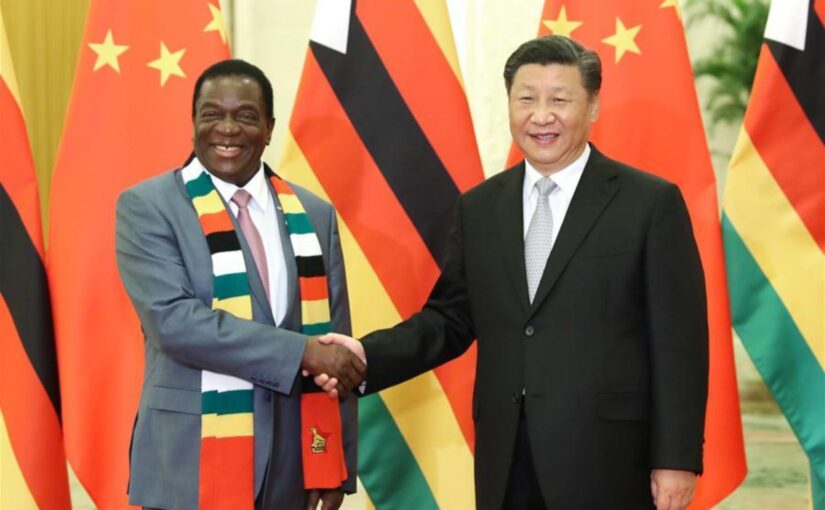
From Zimbabwe to Algeria: China-Africa solidarity, a living tradition

2026 marks the 70th anniversary of diplomatic relations between China and African nations as well as being the China-Africa Year of People-to-People Exchanges. In  the history of relations between China and Africa, Zimbabwe in the south of the continent and Algeria in the north may both be considered to hold a special place, in that both countries’ protracted and heroic armed struggles for national liberation against settler colonial rule were strongly supported by China from their inception and the three countries have continued to advance hand-in-hand as a community of shared future.

On June 28, Chinese President Xi Jinping replied to a letter he received from a group of veterans of Zimbabwe’s national liberation war.

In his letter, Xi noted that in their youth, the veterans devoted themselves to the great cause of national liberation, left their homelands, and forged with China a profound friendship and comradeship in the struggle. To this day, they remain deeply committed to China-Zimbabwe and China-Africa friendship, which is deeply moving.

Stressing that 2026 marks the 70th anniversary of diplomatic relations between China and African nations as well as the China-Africa Year of People-to-People Exchanges, Xi wrote that over the past 70 years, China has always been a good comrade and partner in Africa’s quest for national liberation, development and rejuvenation and against imperialism and colonialism. He also expressed the hope that the veterans will inspire more African youth to devote themselves to the cause of China-Zimbabwe and China-Africa friendship.

The veterans recently wrote to Xi, expressing gratitude for China’s valuable support for Zimbabwe’s national liberation, admiration for his leadership of the Communist Party of China and the Chinese people in achieving remarkable accomplishments in the new era, and for forging a Chinese path to modernisation that offers valuable insights for other developing countries. They expressed pride in the all-weather Zimbabwe-China community with a shared future, pledging to dedicate themselves to carrying forward the friendship between the two countries.

A commentary carried by the Xinhua News Agency recalled that China has firmly supported Africa’s struggle against imperialism and colonialism and the continent’s cause of national liberation. During Zimbabwe’s national liberation struggle in the 1960s and 1970s, many fighters received training in China or from Chinese instructors in Africa, creating enduring stories in the history of the two countries’ relations.

Ahead of his state visit to Zimbabwe in 2015, Xi published a signed article in Zimbabwean media, recalling the profound and time-tested friendship between the two countries.

“During the national liberation struggle in Zimbabwe, the Chinese people steadfastly stood behind the Zimbabwean people as comrades in arms. I was touched to learn that many Zimbabwean freedom fighters who received training from the Chinese side both in China and at Nachingwea camp in Tanzania can still sing songs such as the ‘Three Rules of Discipline and the Eight Points for Attention’,” Xi wrote.

Continue reading From Zimbabwe to Algeria: China-Africa solidarity, a living tradition

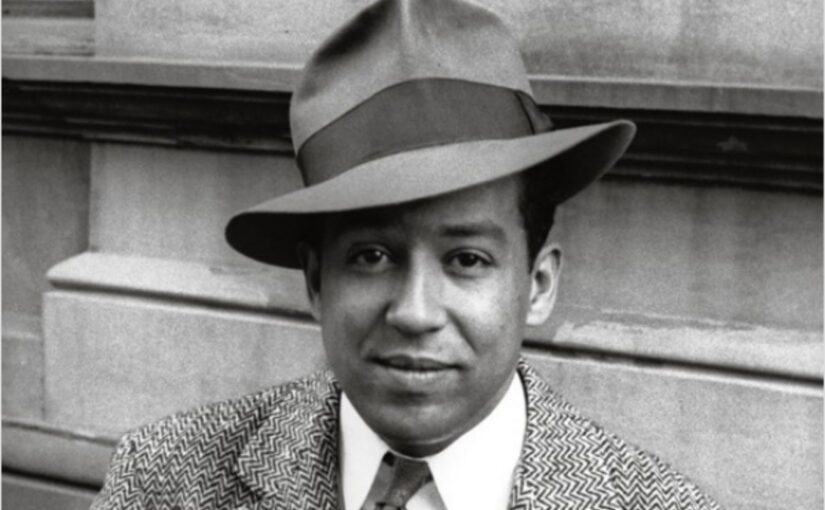
Roar, China! Langston Hughes in Shanghai

February is celebrated as Black History Month in a number of countries, including the United States and Canada, and February 1st 2026 was the 125th anniversary of the birth of Langston Hughes, the great African-American jazz poet, social activist, novelist, playwright, and columnist, who is widely considered to have been the key leader of the Harlem Renaissance in the 1930s.

Marking these anniversaries, the Historic Shanghai website, noting that the city “has a fascinating, hidden history of Black American poets, activists, and musicians” carried an article on the three months that Hughes spent there in the summer of 1933, during which he met with Soong Ching Ling, the widow of China’s first president Dr. Sun Yat-sen and later the Honorary President of the People’s Republic of China, as well as with the great revolutionary writer Lu Xun.

The article notes: “With barbed wire and guards separating the International Settlement and French Concession from the Chinese sections of Shanghai, and with American race laws (i.e. segregation) often applied in the International Settlement, the parallels between segregated Shanghai and segregated America were all too stark… As a Black American, Langston Hughes was not permitted to enter the Cathay Hotel or the Foreign YMCA, which he called the Whites’ YMCA.”

However, this was also “the era of Shanghai jazz, when Black Americans who had limited performing opportunities at home took their talent to the world, and Shanghai, said Hughes, ‘seemed to have a weakness for American Negro performers.’ There was the ‘sparkling’ Nora Holt at the Little Club, the radio singer Midge Williams, and Valaida Snow, who Louis Armstrong called the ‘second greatest trumpeter’ – after himself, of course!”

Continue reading Roar, China! Langston Hughes in Shanghai

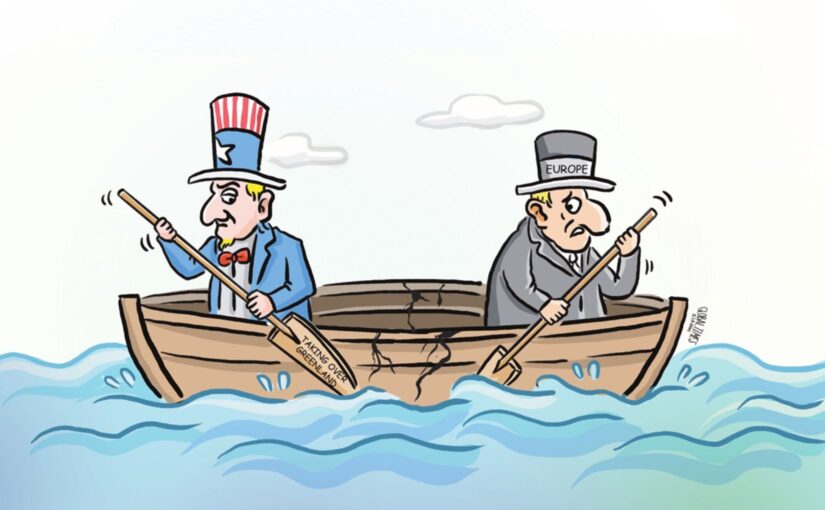
The sun has risen in the east – George Galloway’s message to Europe

The following is an interview with George Galloway, former member of the British parliament and leader of the Workers’ Party of Britain, published by the Chinese newspaper Global Times on January 25, focused on the present position and prospects of Europe in geopolitics.

Asked first about the reported ‘framework of a deal’ supposedly reached by NATO and US President Trump in the margins of the World Economic Forum in Davos, Switzerland, regarding the Danish colony of Greenland, which Trump is threatening to annex, George replies:

“We’ll have to wait and see what deal emerges, whether it will be acceptable to the people of Greenland, and whether it will be acceptable to the people of Denmark. But none of that, even if there is a deal, can wipe out the sheer thuggery – really mafia-style gangsterism – of the current US administration’s conduct over this matter in the last few months.

“The world has never seen a situation where an ally can be so openly aggressive, belligerent and threatening toward a country like Denmark, which has been an unquestioning supporter of everything the US has ever asked of it. It was the very first country in the whole world to recognise the NATO annexation of Kosovo, when Kosovo was torn from its motherland in Serbia.”

In his view, relations between Europe and the US “are comprehensively ruined, and that’s why European leaders who have been lecturing, badgering, and pressuring China for years are all making hasty reservations – not for a slow boat to China, but a quick one. That’s why Canadian Prime Minister Mark Carney was there. That’s why French President Emmanuel Macron was there. That’s why British Prime Minister Keir Starmer is coming.”

In this new situation, Europe “should make peace and amity with China and with Russia, make new arrangements with the rising powers in the world.”  However, “their current political leadership almost certainly will not do that, because, if I can quote Shakespeare in Macbeth – they are steeped in blood so far that it is difficult to know whether to go on or to go back.”

[“I am in blood / Stepped in so far, that, should I wade no more, / Returning were as tedious as go o’er” – William Shakespeare, Macbeth, Act III, Scene IV]

Referring to Canadian Prime Minister Mark Carney’s Davos speech, where he said that “the so-called rules-based order is not just fading; it was always a lie. He said the rest of us knew that it was a lie, but we went along with it because it benefited us to do so,” George adds:

“This is a remarkable admission. I’m not sure whether there has been a more remarkable admission in modern history than this. Some clear-sighted politicians and observers have been saying it all along, for which they were insulted, marginalised or even punished, but this view is now being openly acknowledged by a member of NATO, and by the prime minister of a Five Eyes country.”

Continue reading The sun has risen in the east – George Galloway’s message to Europe