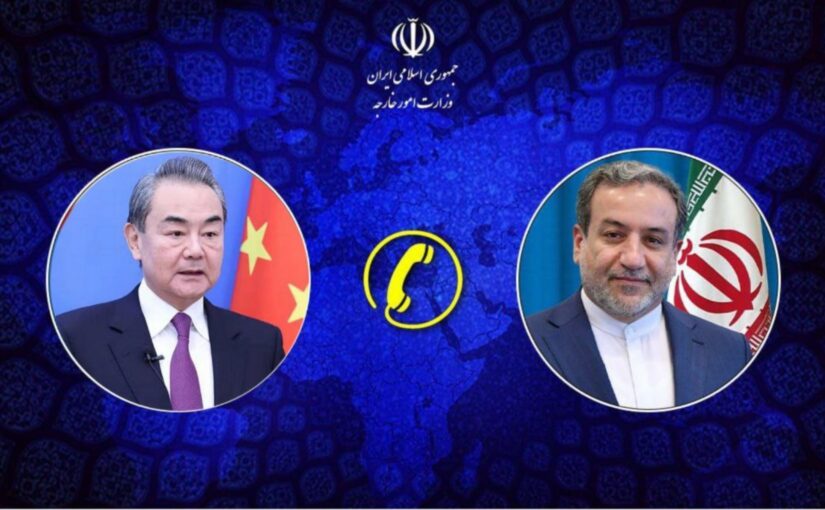
China is continuing its active work for peace and for an end to the US-Israeli war of aggression against Iran.
Between March 24-27, Chinese Foreign Minister Wang Yi held telephone discussions with five of his counterparts in this regard.
On March 24, he spoke again with Iranian Foreign Minister Seyed Abbas Araghchi, following their call on March 2.
Araghchi briefed Wang on the latest developments in the regional situation. Thanking China for providing emergency humanitarian assistance, he said the Iranian people are more united in resisting foreign aggression and safeguarding the country’s sovereignty and independence.
Iran is committed to achieving a comprehensive end to the war, rather than merely a temporary ceasefire, Araghchi said. The Strait of Hormuz is open to all and ships can pass safely, but countries at war with Iran are not under consideration, he said.
He expressed the hope that measures taken by all parties would help de-escalate the situation rather than intensify the conflict, expecting China to continue playing a positive role in promoting peace and ending the war.
The following day, Wang spoke again with Egyptian Foreign Minister Badr Abdelatty following their call on March 12.
Wang said that both China and Egypt are responsible countries. They both oppose military operations without authorizstion from the UN Security Council, oppose attacks on civilians and civilian facilities, and do not approve of affecting the Gulf countries.
The situation in the Middle East is changing rapidly, Wang said, citing that both the United States and Iran are signalling their readiness to negotiate. A glimmer of hope for peace has emerged, he added.
Stressing that as long as there is dialogue, there is hope for peace, Wang said that the actions of the Security Council should help ease the situation and promote dialogue and help prevent the expansion of the war instead of giving a pass to the use of force.
Noting that China supports Egypt in continuing to play a mediating role in promoting the resumption of peace talks and the cessation of the war, Wang said that China is also willing to continue to make constructive efforts for this purpose.
The same day, Wang also had a call with Turkish Foreign Minister Hakan Fida and said that China supports countries in the Middle East in maintaining calm and addressing disputes and differences through dialogue.
The right and wrong of the conflict in the Middle East are clear, and the international community should adopt an objective and impartial position. China supports countries in the region in remaining calm and responding rationally to the current situation from a long-term perspective based on fundamental interests. China also supports Türkiye in playing a constructive role in promoting the resumption of negotiations.
For his part, Fidan said that Türkiye and China are highly consistent in their positions regarding the current situation in the Middle East, and both countries oppose launching military attacks without authorisation from the UN Security Council and oppose further escalation of the conflict.
China has always been committed to maintaining regional and world peace, and it is believed that China will continue to play an important role, he added.
The next day Wang Yi spoke with Canadian Foreign Minister Anita Anand and said that both the United States and Iran have the willingness to resume negotiations, and the international community should encourage both sides to return to the negotiating table and seek effective ways for a political settlement. China and Canada can jointly play a constructive role in this regard, he added.
Wang elaborated on China’s principled position, saying that the Iranian nuclear issue should be resolved through dialogue and should not be a reason for the use of force. The abuse of force will only lead to grave repercussions, and the spillover of the war will threaten regional security and stability.
The two sides also exchanged views on China-Canada relations and agreed that they should implement the outcomes of Prime Minister Mark Carney’s visit to China with a positive and pragmatic attitude, resume dialogues at various levels, expand mutually beneficial cooperation, and push for the stable and healthy development of the China-Canada new strategic partnership.
On March 27, Wang Yi held another phone conversation with Pakistani Deputy Prime Minister and Foreign Minister Mohammad Ishaq Dar following their call of March 10 and said that initiating peace talks is no easy task, but only through negotiations can more casualties and losses be avoided, which would also help prevent the expansion of the conflict and restore normal navigation in the Strait of Hormuz.
For his part, Dar expressed gratitude to China for supporting Pakistan’s mediation efforts and emphasised that a ceasefire, ending the conflict, and restoring peace were the shared aspiration of all parties involved. Pakistan and China share the same goals and positions on the issue, said Dar, who expressed hope that the two countries would work together to play a constructive role in persuading the parties to end the conflict.
Wang expressed appreciation for Pakistan’s unremitting efforts to de-escalate the situation and reaffirmed China’s support for Pakistan’s continued role as a mediator.
China stands ready to strengthen strategic communication and coordination with Pakistan, make joint efforts to promote peace and end the conflict, and work together to advance regional peace and stability, he added.
They also exchanged views on the border conflict between Pakistan and Afghanistan and other issues.
The following articles were originally published by the Xinhua News Agency.
Chinese FM urges peace talks in phone call with Iranian FM
BEIJING, March 24 (Xinhua) — Chinese Foreign Minister Wang Yi said on Tuesday that all hotspot issues should be resolved through dialogue and negotiation, rather than through the use of force.
Wang, also a member of the Political Bureau of the Communist Party of China Central Committee, made the urge in a phone conversation with Iranian Foreign Minister Seyed Abbas Araghchi at the latter’s request.
Araghchi briefed Wang on the latest developments in the regional situation. Thanking China for providing emergency humanitarian assistance, he said the Iranian people are more united in resisting foreign aggression and safeguarding the country’s sovereignty and independence.
Iran is committed to achieving a comprehensive end to the war, rather than merely a temporary ceasefire, Araghchi said. The Strait of Hormuz is open to all and ships can pass safely, but countries at war with Iran are not under consideration, he said.
He expressed the hope that measures taken by all parties would help de-escalate the situation rather than intensify the conflict, expecting China to continue playing a positive role in promoting peace and ending the war.
For his part, Wang reiterated China’s principled position, saying that dialogue is always better than continued fighting. This serves the interests of Iran and its people, and also reflects the common aspiration of the international community, he said.
Wang called on all parties to the conflict to seize every opportunity and window for peace, and start peace talks as soon as possible.
China will continue to uphold an objective and impartial stance, oppose violations of other countries’ sovereignty, actively promote peace and ceasefire, and work for regional peace and stability, Wang said.
Chinese FM calls on world to promote dialogue among parties to Mideast conflict
BEIJING, March 25 (Xinhua) — Chinese Foreign Minister Wang Yi on Wednesday called on the international community to actively promote dialogue among the parties involved in the conflict in the Middle East.
Wang, also a member of the Political Bureau of the Communist Party of China Central Committee, made the remarks in a phone conversation with Egyptian Foreign Minister Badr Abdelatty at the latter’s request.
Abdelatty briefed Wang on his views on the development of the regional situation. Expressing that the Egyptian side is deeply concerned about the current situation, he said that if energy and power facilities are attacked and paralyzed, it will lead to chaos throughout the region.
To cool down the situation, the Egyptian side is communicating with all parties and actively promoting negotiations, he said.
Noting that Egypt and China are comprehensive strategic partners, Abdelatty said that Egypt is willing to maintain close coordination with China and jointly enhance diplomatic efforts to prevent the region and the world from falling into turmoil.
For his part, Wang said that both China and Egypt are responsible countries. They both oppose military operations without authorization from the UN Security Council, oppose attacks on civilians and civilian facilities, and do not approve of affecting the Gulf countries, Wang said.
The situation in the Middle East is changing rapidly, Wang said, citing that both the United States and Iran are signalling their readiness to negotiate. A glimmer of hope for peace has emerged, he said.
If this war continues, it will only bring more casualties and unnecessary losses, leading to further spillover of the situation, Wang said.
Stressing that as long as there is dialogue, there is hope for peace, Wang said that the actions of the Security Council should help ease the situation and promote dialogue, and help prevent the expansion of the war instead of giving a pass to the use of force.
Noting that China supports Egypt in continuing to play a mediating role in promoting the resumption of peace talks and the cessation of the war, Wang said that China is also willing to continue to make constructive efforts for this purpose.
Chinese FM urges Mideast countries to maintain calm, address disputes through dialogue
BEIJING, March 25 (Xinhua) — Chinese Foreign Minister Wang Yi on Wednesday said China supports countries in the Middle East in maintaining calm and addressing disputes and differences through dialogue.
Wang, also a member of the Political Bureau of the Communist Party of China Central Committee, made the appeal in a phone conversation with Turkish Foreign Minister Hakan Fidan at the latter’s request.
The right and wrong of the conflict in the Middle East are clear, and the international community should adopt an objective and impartial position, Wang said.
Noting that the conflict is now rapidly spilling over and spreading across the region, Wang said the top priority is to actively promote peace talks, seize opportunities for peace, and work toward de-escalation.
China supports countries in the region in remaining calm, and responding rationally to the current situation from a long-term perspective based on fundamental interests, Wang said.
China also supports Türkiye in playing a constructive role in promoting the resumption of negotiations, Wang added.
For his part, Fidan said that Türkiye and China are highly consistent in their positions regarding the current situation in the Middle East, and both countries oppose launching military attacks without authorization from the UN Security Council and oppose further escalation of the conflict.
China has always been committed to maintaining regional and world peace, and it is believed that China will continue to play an important role, he said.
Türkiye is willing to make joint efforts with China to promote a ceasefire and bring the world back to the right track of peaceful development, he added.
The two sides also exchanged views on other regional issues.
U.S., Iran should be encouraged to return to negotiating table for political settlement: Chinese FM
BEIJING, March 26 (Xinhua) — Chinese Foreign Minister Wang Yi said on Thursday that both the United States and Iran have the willingness to resume negotiations, and the international community should encourage both sides to return to the negotiating table and seek effective ways for a political settlement.
China and Canada can jointly play a constructive role in this regard, said Wang, also a member of the Political Bureau of the Communist Party of China Central Committee, in a phone conversation with Canadian Foreign Minister Anita Anand at the latter’s request.
Anand briefed Wang on Canada’s position regarding the situation in the Middle East, noting that Canada is committed to protecting civilians in the conflict, promoting de-escalation of the situation, preventing the spillover of the conflict, and reducing its impact on the global economy as well as industrial and supply chains.
The Iranian nuclear issue bears on the international nuclear non-proliferation regime, and ensuring the safe passage through the Strait of Hormuz is in the common interests of all parties, Anand said.
Canada stands ready to work with China to push for a ceasefire and promote regional peace and stability, she added.
Wang elaborated on China’s principled position, saying that the Iranian nuclear issue should be resolved through dialogue and should not be a reason for the use of force.
The abuse of force will only lead to grave repercussions, and the spillover of the war will threaten regional security and stability, he said.
The two sides also exchanged views on China-Canada relations and agreed that they should implement the outcomes of Prime Minister Mark Carney’s visit to China with a positive and pragmatic attitude, resume dialogues at various levels, expand mutually beneficial cooperation, and push for the stable and healthy development of the China-Canada new strategic partnership.
Chinese FM calls for negotiation to avoid further casualties, losses in Middle East
BEIJING, March 27 (Xinhua) — Chinese Foreign Minister Wang Yi on Friday said that initiating peace talks is no easy task, but only through negotiations can more casualties and losses be avoided, which would also help prevent the expansion of the conflict and restore normal navigation in the Strait of Hormuz.
Wang, also a member of the Political Bureau of the Communist Party of China Central Committee, made the remarks in a phone conversation with Pakistani Deputy Prime Minister and Foreign Minister Mohammad Ishaq Dar at the latter’s request.
During the call, Dar briefed Wang on the latest developments regarding the situation in Iran and shared Pakistan’s perspective.
He expressed gratitude to China for supporting Pakistan’s mediation efforts and emphasized that a ceasefire, ending the conflict, and restoring peace were shared aspiration of all parties involved.
He noted that the current moment is crucial for restarting peace talks and urged the international community to encourage both the United States and Iran to return to the negotiating table and find effective solutions for peace.
Pakistan and China share the same goals and positions on the issue, said Dar, who expressed hope that the two countries would work together to play a constructive role in persuading the parties to end the conflict.
Wang reiterated China’s principled stance, affirming that China and Pakistan are strategic partners of mutual support and trust, and that both countries hold an objective and just position on the conflict, with broadly aligned views.
He expressed appreciation for Pakistan’s unremitting efforts to de-escalate the situation and reaffirmed China’s support for Pakistan’s continued role as a mediator.
China stands ready to strengthen strategic communication and coordination with Pakistan, make joint efforts to promote peace and end the conflict, and work together to advance regional peace and stability, Wang said.
The two sides agreed to jointly promote a ceasefire, the end of the conflict, and the resumption of peace talks, as well as to ensure the safety of non-military targets and maritime routes, and to support the United Nations in playing a leading role.
They also exchanged views on border conflicts between Pakistan and Afghanistan and other issues.