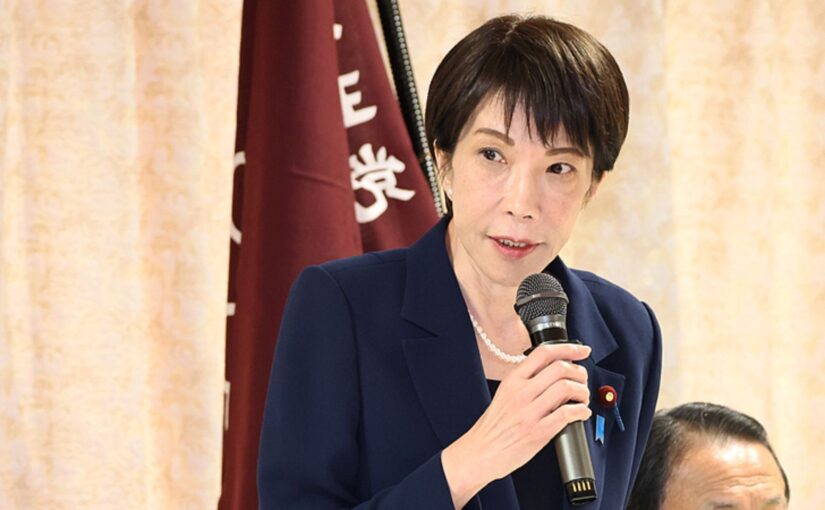
Japan’s House of Representatives (the lower house of parliament) was formally dissolved on January 24 at the outset of the ordinary parliamentary session, with a general election now set for February 8.
With the official campaign beginning on January 27, the 16-day contest will be the shortest in Japan’s post-World War II history. With more than two years left in the current lower house term, Prime Minister Sanae Takaichi justified her decision to call a snap election by arguing she has yet to receive public backing for her premiership that began in October and for the new ruling coalition of her Liberal Democratic Party (LDP) and the Japan Innovation Party formed the same month. Her ruling coalition currently holds only a slim majority in the House of Representatives and remains a minority in the upper House of Councillors.
Meanwhile, the Centrist Reform Alliance, which was formally launched on January 22, has become Japan’s main opposition party with 165 lower house lawmakers. This new alliance between the Constitutional Democratic Party of Japan and the Komeito party aims to defeat the right-wing ruling bloc in the upcoming contest.
Komeito is generally considered to be the political wing of the Buddhist Soka Gakkai sect. It has tended to maintain a pro-peace orientation and to favour positive relations with China and other neighbouring countries, but has also generally provided governmental support to the LDP. It finally broke this arrangement and joined the ranks of the opposition in October last year in response to Takaichi’s extreme right and militarist policies.
Opposition parties, including the new Centrist Reform Alliance, the Democratic Party for the People, the Japanese Communist Party, and the Social Democratic Party, all criticised the decision to dissolve parliament and call a snap election.
Tomoko Tamura, chair of the Japanese Communist Party, pointed out that rising prices have pushed people’s livelihoods into difficulty. She criticised Takaichi for avoiding open and fair debates before the public and instead choosing to dissolve the lower house, which will delay urgently needed budgetary measures.
The Xinhua News Agency reported that at a joint press conference called to introduce their new alliance, Constitutional Democratic Party leader and former Prime Minister Yoshihiko Noda and Komeito leader Tetsuo Saito said that their goal was to expand “centrist” political forces and prevent Japanese politics from tilting too far to the right. Saito said that consolidating centrist forces is essential for Japan’s survival and development as a peaceful nation in the international community.
Earlier in January, a series of moves by Takaichi, including erroneous remarks on Taiwan and a sharp increase in defence spending, continued to spark concern and criticism across the country, with opposition parties criticising her for steering the country toward a “war state.”
Leaders of the Social Democratic Party of Japan and the Japanese Communist Party held talks, during which they characterised the Takaichi administration as “the most dangerous Liberal Democratic Party government since World War II.”
Tomoko Tamura of the Communist Party said Takaichi’s remarks on Taiwan were extremely dangerous, had triggered serious developments in Japan-China relations and exposed the administration’s lack of effective diplomatic capability.
Mizuho Fukushima, leader of the Social Democratic Party, said the Takaichi administration has acted recklessly and shown disregard for Japan’s constitution. Both Fukushima and Tamura agreed that Takaichi must retract her Taiwan remarks.
Regarding Japan’s defence budget, which has repeatedly hit record highs, Tamura said the abnormal hike in military spending has squeezed budgets related to people’s livelihoods, and that the dangers of the Takaichi administration should be truthfully exposed to the public.
Fukushima criticised the Japan Innovation Party, the Liberal Democratic Party’s new coalition partner, for advocating cuts to medical spending, warning that such moves would increase the burden on individuals.
Similarly, the city assemblies of Hiroshima and Nagasaki, the two cities that were the victims of US atomic bombing in August 1945, have adopted statements urging the Japanese government to adhere to the country’s Three Non-Nuclear Principles.
The Hiroshima City Assembly unanimously adopted a statement pointing out that the ruling party’s attempt to revise the non-nuclear principles has caused concern and strongly urging the Japanese government to take the feelings of people in the atomic-bombed cities seriously and to uphold the Three Non-Nuclear Principles.
The Nagasaki City Assembly passed its statement by a majority vote, noting that successive Japanese governments have regarded the Three Non-Nuclear Principles as a national policy. It said the ruling party’s intended revision of the principles while amending the country’s security documents is totally unacceptable.
The Three Non-Nuclear Principles, not possessing, not producing and not allowing the introduction of nuclear weapons into Japanese territory, were first declared by then Japanese Prime Minister Eisaku Sato in 1967 and formally adopted by the parliament in 1971, establishing them as Japan’s basic nuclear policy.
Japan’s drive to heightened militarism is also meeting push back from popular organisations in the region.
Lila Pilipina, an organisation fighting for justice for Philippine wartime sexual slavery victims of the Japanese troops, urged Japan’s Foreign Minister Toshimitsu Motegi to advance peace and justice during his visit to the country.
In a statement, Lila Pilipina coordinator Sharon Cabusao-Silva said Japan has yet to officially admit responsibility for atrocities committed during World War II, including the sexual enslavement of Filipina women. “But even as Japan still refuses to officially acknowledge its role in wartime crimes, it is now dragging the Philippines into the possibility of open military conflict.”
“We refuse to be part of the US-Japan war agenda and will oppose any attempt to drag the country into an open conflict,” Silva said, citing what she called recent warmongering rhetoric by Japanese leaders echoing US positions in the region.
“If Japan wants to project itself as a junior leader in a US proxy strategy in the region, it should not drag other countries into its game.”
She added that more than 1,000 Filipina women were forced to serve as sex slaves during Japan’s occupation of the Philippines from December 1941 to August 1945. There are only a few surviving victims, most of them sickly and poor in their 90s.
Xinhua News Agency has also run a number of recent ‘op ed’ commentaries, highlighting the historical and contemporary threat posed by Japanese militarism.
Xin Peng, a commentator on international affairs, wrote that: “Japan continues to turn a blind eye to the incontrovertible evidence of the sufferings it inflicted during World War II, using the term ‘end of the war’ instead of ‘being defeated’ to soft-peddle its past atrocities. The Japanese war of aggression against China and other Asian neighbours has been outrageously misrepresented as the ‘liberation of Asia.’ Yet historical records show that the Japanese military committed over 100 massacres in China, Malaysia, Indonesia, and other places, murdering millions of innocent lives. The horrendous Nanjing Massacre, a dark chapter in Chinese history, was euphemised in Japan as the ‘Nanjing incident.’ The notorious Unit 731, which brutally conducted live human experiments on Chinese and people from the Soviet Union and the Korean Peninsula, was whitewashed as a ‘public health research unit.’”
Xin added: “Japan often portrays itself as an ‘atomic bomb victim,’ but consistently avoids addressing the harm it caused to neighbouring countries during its aggression. The horrific crimes Japanese militarists committed across Asia can never be erased: Women and girls were brutally forced into sexual slavery as ‘comfort women’; hundreds of thousands of Southeast Asians were forced into slave labour, many of whom died from overwork in building the ‘death railway’ between Thailand and Myanmar (formerly Burma); and prisoners of war from Allied nations endured systemic torture and execution by the Japanese military, resulting in a mortality rate of 27 percent.”
In an article, entitled, ‘Japan’s dangerous return to militarism, and why we must remember its past’, Zhang Yuebin and Xu Shijia, who are Research Fellow and Assistant Research Fellow at the Institute of World History, Chinese Academy of Social Sciences, write:
“The rise of modern Japanese militarism can be traced to 1192, when Minamoto Yoritomo became Seii Taishogun and established a shogunate, a form of military autocracy that lasted for nearly 700 years. The samurai-dominated government, built on the belief in the primacy of armed force, ingrained a persistent mindset among Japan’s elites that aggressive expansion was a legitimate solution to national crises.”
They go on to argue that: “Economically, Japan’s industrial revolution was fuelled by the ruthless exploitation of its own people and the aggressive plunder of other countries. Its invasion of the Korean Peninsula and China not only laid the foundation for Japan’s industrial revolution but also spurred its development. This model of capitalism, built on aggression and plunder, formed the socioeconomic foundation of Japanese militarism…
“Under this militaristic system, Japan annexed Ryukyu, invaded Taiwan of China and the Korean Peninsula, launched war on China in 1894, provoked the Russo-Japanese War, and profited massively from WWI to emerge as a so-called ‘world power.’ Japan’s path to modernisation was, from the outset, a path of aggressive expansion and colonialism… After WWI, this militarism evolved into its most extreme form: fascism. Civilian and military fascists agitated for ‘national transformation’ and the ‘Showa Restoration’ to seize state power and establish a powerful regime dedicated to overseas expansion and building of a global empire…
“The fusion of domestic totalitarian control, foreign military aggression, and alignment with the European fascist powers created a short, frenzied phase of Japanese fascism. Its unchecked expansion ultimately provoked a united and fierce response from the world anti-fascist alliance, leading inexorably to its defeat. On August 15, 1945, Japanese militarism was compelled to announce unconditional surrender.
“Japan’s wars of aggression inflicted catastrophic loss of life and destruction, bringing profound suffering to the peoples of Asia. The death toll across East Asia (excluding Japan) is estimated to have surpassed 19 million. Japan itself endured heavy losses: over 2 million soldiers and 800,000 civilians died.
“According to a survey by Japan’s Post-War Rehabilitation Agency, 119 cities were destroyed by air raids, 2.4 million homes burned, and 8.8 million people displaced. In the war’s final phase, conscripted soldiers died in droves from disease, malnutrition, and starvation, or in suicidal ‘special attacks’ and sinking ships.
“Japan’s wars of aggression were also marked by systematic atrocities that constitute one of the darkest chapters of modern history, leaving indelible trauma across the region. In China, the Nanjing Massacre, the relentless bombing of Chongqing, widespread ‘mass graves,’ and the grotesque human experiments of Unit 731 represent crimes of unspeakable barbarity. In Southeast Asia, the Bataan Death March, the construction of the Thailand-Burma ‘Death Railway,’ and the massacres in Manila and Singapore laid bare the brutal essence of Japanese militarism.”
In a further commentary, stressing the need to maintain high vigilance against resurgence of Japanese militarism, the same authors note that:
“After its defeat and surrender in World War II, Japan promulgated a ‘Pacifist Constitution’ aimed at eradicating militarism under the guidance of the Allied Powers. Regrettably, as the global political landscape evolved, militarist remnants managed to survive and gradually regain strength. With the emergence of the US-Soviet rivalry, Japan became a frontline outpost in the Cold War between the two superpowers and began to rearm…
“Meanwhile, a large number of militarist figures who had been purged after the war began to re-enter public life and even return to the political sphere. In October 1950, 10,000 war criminals, former military personnel, right-wing extremists, Special Higher Police officers and gendarmes were released from restrictions. By the end of 1951, out of the more than 210,000 individuals purged in the immediate post-war period, 201,507 had their restrictions lifted.”
They warn that: “As surviving witnesses of the war grow old and pass away, education about wartime history has become increasingly important. However, Japan’s education system has long downplayed the country’s wartime aggression, depriving the younger generation of the opportunity to understand the full picture of history. In recent years, Japanese right-wing forces have been quietly attempting to infiltrate militaristic ideologies into primary and secondary schools to pave the way for their policies of military buildup and expansion.”
The following articles were originally published by the Xinhua News Agency.
Japan’s lower house formally dissolved for Feb. 8 election
TOKYO, Jan. 23 (Xinhua) — Japan’s House of Representatives was formally dissolved on Friday at the outset of the ordinary parliamentary session, with a general election set for Feb. 8.
The official campaign will start next Tuesday, creating a mere 16-day campaign period, the shortest in Japan’s postwar history.
Japanese Prime Minister Sanae Takaichi announced her decision on Monday to dissolve the 465-seat lower house for a snap election, aiming to capitalize on her cabinet’s current high approval ratings.
With more than two years left in the current lower house term, Takaichi has justified her decision to call a snap election by arguing she has yet to receive public backing for her premiership that began in October and the new ruling coalition of her Liberal Democratic Party and the Japan Innovation Party formed the same month.
Takaichi’s decision has been criticized for leaving voters little time to assess competing policy proposals. Opposition parties have also slammed Takaichi’s plan, saying she is putting political considerations ahead of parliament’s enactment of an initial budget for fiscal 2026 starting in April, despite her pledge to prioritize policy implementation.
This will be the first general election for Takaichi as prime minister. Her ruling coalition currently holds only a slim majority in the powerful House of Representatives and remains a minority in the House of Councillors.
Meanwhile, the Centrist Reform Alliance, formally launched on Thursday, has become Japan’s main opposition party with 165 lower house lawmakers. The new alliance between the Constitutional Democratic Party of Japan and the Komeito party aims to defeat the conservative ruling bloc in the upcoming contest.
Japan’s opposition parties criticize PM Takaichi’s lower house dissolution
TOKYO, Jan. 24 (Xinhua) — Leaders of multiple Japanese opposition parties slammed Prime Minister Sanae Takaichi’s dissolution of the lower house on Friday as lacking “justification.”
Japan’s House of Representatives was formally dissolved on Friday, marking the first dissolution at the start of a regular parliamentary session in 60 years.
Friday marked the opening day of Japan’s ordinary Diet session, during which a key task is to deliberate and approve an initial budget for fiscal 2026 starting April. The dissolution could significantly delay the budget review process.
Yoshihiko Noda, co-leader of the new main opposition party Centrist Reform Alliance, said he feels “no justification” for the dissolution, given Japan is currently facing a mountain of pressing issues, Kyodo News reported.
Yuichiro Tamaki, head of the Democratic Party for the People, said it was “extremely regrettable that this has become a dissolution that puts the economy second,” the report said.
Tomoko Tamura, chair of the Japanese Communist Party, pointed out that rising prices have pushed people’s livelihoods into difficulty. She criticized Takaichi for avoiding open and fair debates before the public and instead choosing to dissolve the lower house.
Mizuho Fukushima, leader of Japan’s Social Democratic Party, said that those who dissolve the House of Representatives solely for personal interests and act unilaterally will also govern politics in a self-serving and arbitrary manner.
According to TBS Television, following the dissolution of the lower house, the Japanese government convened an extraordinary cabinet meeting and decided to issue the official notice for the House of Representatives election on Jan. 27, with voting scheduled for Feb. 8.
Explainer: Can Japan’s new centrist opposition party counter Takaichi-led ruling camp?
TOKYO, Jan. 17 (Xinhua) — Leaders of Japan’s main opposition Constitutional Democratic Party of Japan (CDPJ) and Komeito on Friday formally named their jointly established new party the Centrist Reform Alliance.
It marks the first major political response to Prime Minister Sanae Takaichi’s sudden indication of her intention to dissolve the House of Representatives and call a snap election.
Why did the two parties choose to team up at this moment? Can the new party counter Japan’s conservative ruling bloc, and what policies is it likely to promote?
WHY TEAM UP NOW?
CDPJ leader and former prime minister Yoshihiko Noda and Komeito leader Tetsuo Saito announced their decision to form a new centrist party on Thursday.
At a joint news conference following their talks, the two leaders told reporters that their goal was to expand “centrist” political forces and prevent Japanese politics from tilting too far to the right.
Saito said that consolidating centrist forces is essential for Japan’s survival and development as a peaceful nation in the international community.
For years, Japan’s opposition parties have been criticized by Japanese media as fragmented and disunited. That dynamic shifted rapidly on Wednesday — the same day Takaichi formally informed ruling coalition officials of her intention to dissolve the lower house — when the CDPJ and Komeito announced plans to cooperate, reaching an agreement to form the new centrist party the following day.
The move came as the two parties sought to present a united front against the conservative ruling camp led by Takaichi in the expected lower house election, as both parties were concerned about the right-leaning stance of the Takaichi administration.
The CDPJ has traditionally taken relatively moderate positions, particularly on the revision of the constitution, diplomacy and security policy. Komeito has long been uneasy with hardline conservative policies and has been openly critical of Takaichi’s far-right ideology.
Komeito terminated its coalition with the ruling Liberal Democratic Party (LDP) after Takaichi was elected president of the LDP in October last year, and the party has also grown deeply uneasy about the security policies introduced since Takaichi took office.
CAN THE ALLIANCE CHECK RULING CAMP?
The CDPJ and Komeito envision retaining their respective party structures after the new party is launched.
A total of 172 lower house lawmakers currently belonging to the CDPJ and Komeito are expected to be the first to join the new party, while lawmakers in the upper house and local governments would remain in their original parties.
The new party is also recruiting additional candidates. Noda said on a television program on Thursday that he hopes to field around 200 candidates, including newcomers.
According to official data, the LDP holds 199 seats of the 465 seats in the House of Representatives, while its coalition ally, the Japan Innovation Party, holds 34. The CDPJ controls 148 seats, while Komeito holds 24.
Kyodo News has noted that Komeito has the ability to mobilize roughly 10,000 to 20,000 votes in single-seat constituencies nationwide — support that previously went to LDP candidates. As Komeito redirects that support to the CDPJ, election outcomes could be significantly altered.
Itsunori Onodera, chairman of the LDP research commission on the tax system, was quoted by the Asahi Shimbun as saying that Komeito’s backing had been decisive for the LDP in many competitive districts in the past election. Without it, he warned, the ruling party will inevitably take a hit.
WHAT POLICIES WILL THE NEW PARTY ADVOCATE?
The Centrist Reform Alliance is scheduled to unveil its key policy items on Jan. 19, according to Kyodo News. Ahead of that, Japanese media outlets have inferred its policy direction from past positions of the CDPJ and Komeito.
On political reform, both parties have long criticized the LDP’s handling of political funding scandals. Takaichi herself was accused last December of accepting a political donation that exceeded the legal maximum, fueling public anger.
It is expected that tighter oversight of political finances will feature prominently in the new party’s agenda.
On diplomacy and security, the Takaichi administration has pushed to revise key national security documents, ease restrictions on arms exports and raise defense spending.
Both opposition parties have criticized these moves. They tend to favor easing regional tensions, taking a cautious stance on revision of the constitution, and avoiding radical shifts in security policy.
On economic and fiscal policy, concerns center on sustainability. Japan’s parliament last December enacted an 18.3 trillion yen (about 116 billion U.S. dollars) supplementary budget for the 2025 fiscal year, much of it funded through government bond issuance, raising concerns over Japan’s fiscal health.
Takaichi’s plans to meet a defense-spending target of 2 percent of GDP may also involve tax hikes, which both parties oppose. Japanese media predicted that the new party would include key policies such as tax cuts to ease livelihood pressure.
Japan opposition parties criticize Takaichi for steering country toward “war state”
TOKYO, Jan. 8 (Xinhua) — A series of moves by Japanese Prime Minister Sanae Takaichi, including erroneous remarks on Taiwan and a sharp increase in defense spending, have continued to spark concern and criticism across Japan. Opposition parties have recently criticized Takaichi for steering the country toward a “war state.”
Leaders of the Social Democratic Party of Japan and the Japanese Communist Party held talks recently, during which they characterized the Takaichi administration as “the most dangerous Liberal Democratic Party government since World War II,” the Shakai Shimpo reported Tuesday.
Tomoko Tamura, head of the Japanese Communist Party, said Takaichi’s remarks on Taiwan were extremely dangerous, which had triggered serious developments in Japan-China relations and exposed the administration’s lack of effective diplomatic capability.
Mizuho Fukushima, leader of Japan’s Social Democratic Party, said the Takaichi administration has acted recklessly and shown disregard for Japan’s Constitution. Both Fukushima and Tamura agreed that Takaichi must retract her Taiwan remarks.
Regarding Japan’s defense budget, which has repeatedly hit record highs, Tamura said the abnormal hike in military spending has squeezed budgets related to people’s livelihoods, and that the dangers of the Takaichi administration should be truthfully exposed to the public.
Fukushima criticized the Japan Innovation Party, the ruling Liberal Democratic Party’s coalition partner, for advocating cuts to medical spending, warning that such moves would increase the burden on individuals.
Meanwhile, Kyodo News reported on Monday that Yoshihiko Noda, head of the main opposition Constitutional Democratic Party of Japan and a former prime minister, said at the party’s headquarters that many statements made by the Takaichi administration lacked careful consideration and were unsettling. He said his party would firmly “stand up to” the Takaichi administration.
Hiroshima, Nagasaki urge Japanese gov’t to uphold non-nuclear principles
TOKYO, Jan. 10 (Xinhua) — The city assemblies of Hiroshima and Nagasaki have adopted statements urging the Japanese government to adhere to the country’s Three Non-Nuclear Principles, Kyodo News reported.
The Hiroshima City Assembly unanimously adopted its statement on Friday, pointing out that the ruling party’s attempt to revise the non-nuclear principles has caused concern, and strongly urging the Japanese government to take the feelings of people in the atomic-bombed cities seriously and to uphold the Three Non-Nuclear Principles, the report said.
The Nagasaki City Assembly passed its statement on Thursday by a majority vote, noting that successive Japanese governments have regarded the Three Non-Nuclear Principles as a national policy. It said the ruling party’s intended revision of the principles while amending the country’s security documents is totally unacceptable.
On Aug. 6 and 9, 1945, in an effort to force Japan, which had launched a war of aggression, to surrender as soon as possible, the U.S. military dropped atomic bombs on Hiroshima and Nagasaki, respectively. The Three Non-Nuclear Principles, not possessing, not producing and not allowing the introduction of nuclear weapons into Japanese territory, were first declared by then Japanese Prime Minister Eisaku Sato in 1967 and formally adopted by the parliament in 1971, establishing them as Japan’s basic nuclear policy. The National Security Strategy, one of the three documents approved by the Cabinet in 2022, states, “The basic policy of adhering to the Three Non-Nuclear Principles will remain unchanged in the future.”
Japanese media have previously reported that Prime Minister Sanae Takaichi is considering reviewing the third of The Three Non-Nuclear Principles, which prohibits nuclear weapons from entering Japan’s territory, when updating related documents.
Philippine women group urges Japan envoy to pursue peace, justice ahead of visit to Manila
MANILA, Jan. 14 (Xinhua) — Lila Pilipina, an organization fighting for justice for Philippine wartime sexual slavery victims of the Japanese troops during World War II, on Wednesday urged Japan’s Foreign Minister Toshimitsu Motegi to advance peace and justice during his upcoming visit to the Philippines.
In a statement issued on the eve of Motegi’s visit to Manila, Lila Pilipina coordinator Sharon Cabusao-Silva said Japan has yet to officially admit responsibility for atrocities committed during World War II, including the sexual enslavement of Filipino women.
“But even as Japan still refuses to officially acknowledge its role in wartime crimes, it is now dragging the Philippines into the possibility of open military conflict,” said Silva.
“We refuse to be part of the U.S.-Japan war agenda and will oppose any attempt to drag the country into an open conflict,” Silva said, citing what she called recent “warmongering” rhetoric by Japanese leaders echoing U.S. positions in the region.
“If Japan wants to project itself as a junior leader in a U.S. proxy strategy in the region, it should not drag other countries into its game,” Silva said.
Lila Pilipina reiterated that Japan has never issued a sincere public apology to victims of the occupation, their families, and thousands of Filipino women who were killed, abused, or whose families suffered torture and death at the hands of the Japanese Imperial Army during World War II.
Lila Pilipina said more than 1,000 Filipino women were forced to serve as sex slaves during Japan’s occupation of the Philippines from December 1941 to August 1945. There are only a few surviving women victims, most of them sickly and poor in their 90s.
Column: What is Japan hiding under its masks?
January 16 (Xinhua) – by Xin Ping
Noh masks, worn by stage actors in classical Japanese dance-drama, are spooky static faces — their expressions seem to shift with the actors’ movements and under different lighting. In recent weeks, amid diplomatic tensions with Beijing, Japan itself has been donning similarly deceptive masks — weaving distorted narratives to confuse and mislead the international community. To expose the disinformation, one must be clear-eyed about what’s hiding under Japan’s masks.
HISTORICAL REFLECTION OR REVISIONISM?
Japan continues to turn a blind eye to the incontrovertible evidence of the sufferings it inflicted during World War II, using the term “end of the war” instead of “being defeated” to soft-peddle its past atrocities. The Japanese war of aggression against China and other Asian neighbors has been outrageously misrepresented as the “liberation of Asia.” Yet historical records show that the Japanese military committed over 100 massacres in China, Malaysia, Indonesia, and other places, murdering millions of innocent lives. The horrendous Nanjing Massacre, a dark chapter in Chinese history, was euphemized in Japan as the “Nanjing incident.” The notorious Unit 731, which brutally conducted live human experiments on Chinese and people from the Soviet Union and the Korean Peninsula, was whitewashed as a “public health research unit.”
Eighty years after World War II, Japan has yet to fully confront its war crimes. While the reckoning with militarism remains incomplete, the world is now witnessing growing signs of its possible revival: Japanese prime ministers and senior officials kept visiting and paying tribute to the Yasukuni Shrine, where class-A war criminals are honored; middle school history textbooks in Japan have been deliberately distorted to obscure the fact that militarism was the driving force behind Japan’s aggressive wars, using such phrases as “advance into China” instead of “aggression against China” to dilute and even erase the truth of wartime brutality.
WAR VICTIM OR WARMONGER?
Though the Japanese Constitution enshrines pacifism and establishes an exclusively defense-oriented policy, the alarming trend of military buildup in Japan has raised global concerns. Over the years, Japan has revamped its security and defense policies, eased restrictions on arms export, and even sought to revise its three non-nuclear principles. All signs point to a troubling fact that Japan’s far-right forces are trying every means to dismantle the pacifist Constitution, and going further down the path of reviving Japanese militarism.
Japan often portrays itself as an “atomic bomb victim,” but consistently avoids addressing the harm it caused to neighboring countries during its aggression. The horrific crimes Japanese militarists committed across Asia can never be erased: Women and girls were brutally forced into sexual slavery as “comfort women”; hundreds of thousands of Southeast Asians were forced into slave labor, many of whom died from overwork in building the “death railway” between Thailand and Myanmar (formerly Burma); and prisoners of war from Allied nations endured systemic torture and execution by the Japanese military, resulting in a mortality rate of 27 percent.
PEACE LOVER OR PEACE BREAKER?
To project a peace-loving image after the war, Japan has portrayed itself as a major contributor to the UN funding and presented to the UN a Japanese peace bell, which it said “embodies the peace aspiration not only of the Japanese but of all humanity.” But the truth is Japan has kept raising its defense budget for 14 consecutive years, with a surge of around 60 percent in the past five years alone. Recently, a senior official from the Japanese Prime Minister’s Office even claimed that “Japan should possess nuclear weapons.” There is every reason to question: Is Japan trying to “remilitarize” itself and revive the dangerous militarism?
A few weeks ago, after deliberately sending fighter jets into China’s exercise and training zones for close-range reconnaissance, Japan falsely accused China of “radar illumination” — a blatant attempt to shift blame onto China. The inconsistent statements from the Japanese side on whether they received prior notice of China’s drill are yet another piece of evidence that it is intentionally creating a crisis and misleading the world with media hypes. Japanese Prime Minister Sanae Takaichi has repeatedly said Japan is willing to have ‘dialogue’ with China, yet Tokyo’s actions show little of the sincerity, mutual respect or equality that such dialogue demands.
Performers in Noh plays often wear masks to depict the characters’ emotions and personalities. With the use of masks, a demon is sometimes presented on the stage in the disguise of a saint. The recent dangerous and provocative remarks and actions from the Japanese side should alert all in Asia and the wider world. The alarm has been sounded. The tragedies of history must not repeat. It is for this very reason that China gave a forceful response to Takaichi’s erroneous remarks on Taiwan, which constitute a blatant interference in China’s internal affairs and a direct challenge to China’s core interests. For too long, Japan’s actions have not matched its rhetoric. Now is the time for the world to see through Japan’s masks and expose its hidden agenda.
Column: Japan’s dangerous return to militarism, and why we must remember its past
January 10 (Xinhua) – by Zhang Yuebin and Xu Shijia
In recent years, Japan has been steadily rebuilding its military power and rewriting the rules that long restrained it. This shift hit a worrying new note when Japanese Prime Minister Sanae Takaichi implied Japan could intervene militarily in the Taiwan Strait. To understand why this is so alarming, it is necessary to revisit how Japanese militarism once took root, how it justified itself, and the devastating costs it imposed on Asia and the wider world.
Throughout East Asian history, Japanese militarism has been an unusual existence. Shaped by a particular historical and cultural trajectory, and reinforced by Japan’s relative geographical isolation, it grew into an ideology that once fueled an empire spanning much of East Asia.
THE ROOTS OF MILITARY SUPREMACY
The rise of modern Japanese militarism can be traced to 1192, when Minamoto Yoritomo became Seii Taishogun and established a shogunate, a form of military autocracy that lasted for nearly 700 years. The samurai-dominated government, built on the belief in the primacy of armed force, ingrained a persistent mindset among Japan’s elites that aggressive expansion was a legitimate solution to national crises.
For instance, Yoshida Shoin argued that losses to Western powers should be compensated by seizing territories in Northeast China and the Korean Peninsula, an ideology that deeply shaped the Meiji Restoration leaders.
A MILITARIST STATE BEYOND CIVILIAN CONTROL
Under Japan’s modern imperial system, the military was granted extraordinary institutional powers, operating independently through key mechanisms:
Direct Access to the Emperor: the military headquarters (i.e. pre-war Japanese military institutions and leadership) possessed the “right of direct audience with the Emperor to submit memorials,” allowing them to bypass the cabinet and report directly to the Emperor.
The Service Minister Requirement: The Army and Navy Ministers were required to be active-duty officers. By nominating or withholding candidates, the military headquarters could manipulate the cabinet.
Wartime Command Autonomy: the 1893 “Regulations on the Wartime General Headquarters” stipulated that all members of the headquarters should be active-duty officers, thereby completely excluding civilian officials.
In essence, the military could interfere in the affairs of the civilian government, but the government had no authority over military matters. Consequently, the military headquarters were elevated above both the government and the Diet, securing its supremacy in the state apparatus.
LEARNING THE WRONG LESSONS
Japan’s militarism was further reinforced by its selective adoption of Western ideas. Prussia became a particular model. The Iwakura Mission studied Germany’s military and political systems, noting that “the founding and development of Germany bear striking similarities to Japan. Studying this country’s politics and social customs will yield far greater benefits than learning from Britain and France.”
Their meeting with Otto von Bismarck, who espoused a worldview that “the strong bully the weak, and the large intimidate the small,” solidified a belief in “might makes right” as a universal truth.
This ideology, disseminated throughout society, gradually gave rise to a militaristic system. Economically, Japan’s industrial revolution was fueled by the ruthless exploitation of its own people and the aggressive plunder of other countries. Its invasion of the Korean Peninsula and China not only laid the foundation for Japan’s industrial revolution but also spurred its development. This model of capitalism, built on aggression and plunder, formed the socioeconomic foundation of Japanese militarism.
Educationally, the Japanese government promulgated the “Great Principles of Education” in 1879 and the “Imperial Rescript on Education” in 1890. Centered on loyalty to the Emperor and state Shinto, these documents inculcated the ideology of emperor worship, the concept of a “military state,” and the belief in a “divine nation.” Militarist education thus became a core pillar of the system.
Under this militaristic system, Japan annexed Ryukyu, invaded Taiwan of China and the Korean Peninsula, launched war on China in 1894, provoked the Russo-Japanese War, and profited massively from WWI to emerge as a so-called “world power.” Japan’s path to modernization was, from the outset, a path of aggressive expansion and colonialism.
THE DESCENT INTO FASCISM
After WWI, this militarism evolved into its most extreme form: fascism. Civilian and military fascists agitated for “national transformation” and the “Showa Restoration” to seize state power and establish a powerful regime dedicated to overseas expansion and building of a global empire.
The February 26 Incident in 1936 was an internal conflict between the Kodo faction and the Tosei faction within the military, which led to the establishment of a fascist system from top to bottom, known as the “state of enhanced national defense.”
Under the direct orchestration of the military, Japan embarked on a rapid and aggressive sequence: it provoked the Lugou Bridge Incident in July 1937, enacted the National Mobilization Law in April 1938, signed the Tripartite Pact with Germany and Italy in September 1940, established the Imperial Rule Assistance Association — a fascist organization — in October 1940, and finally launched the Pacific War in December 1941.
The fusion of domestic totalitarian control, foreign military aggression, and alignment with the European fascist powers created a short, frenzied phase of Japanese fascism. Its unchecked expansion ultimately provoked a united and fierce response from the world anti-fascist alliance, leading inexorably to its defeat. On August 15, 1945, Japanese militarism was compelled to announce unconditional surrender.
A LEGACY OF HORROR
Japan’s wars of aggression inflicted catastrophic loss of life and destruction, bringing profound suffering to the peoples of Asia. The death toll across East Asia (excluding Japan) is estimated to have surpassed 19 million. Japan itself endured heavy losses: over 2 million soldiers and 800,000 civilians died.
According to a survey by Japan’s Post-War Rehabilitation Agency, 119 cities were destroyed by air raids, 2.4 million homes burned, and 8.8 million people displaced. In the war’s final phase, conscripted soldiers died in droves from disease, malnutrition, and starvation, or in suicidal “special attacks” and sinking ships.
Japan’s wars of aggression were also marked by systematic atrocities that constitute one of the darkest chapters of modern history, leaving indelible trauma across the region. In China, the Nanjing Massacre, the relentless bombing of Chongqing, widespread “mass graves,” and the grotesque human experiments of Unit 731 represent crimes of unspeakable barbarity. In Southeast Asia, the Bataan Death March, the construction of the Thailand-Burma “Death Railway,” and the massacres in Manila and Singapore laid bare the brutal essence of Japanese militarism.
During the railway’s construction, the Japanese military conscripted 61,000 Allied prisoners of war (POW) and 200,000 Southeast Asian laborers, subjecting them to merciless conditions. The resulting mortality rate reached 20 percent among the POWs and a staggering 50 percent among laborers, averaging over 250 deaths per kilometer of track laid.
Column: Maintaining high vigilance against resurgence of Japanese militarism
January 9 (Xinhua) – by Zhang Yuebin and Xu Shijia
Throughout its existence, Japanese militarism has always been an ideology that sabotages peace and order, undermines civilizational progress, and violates human morality and conscience. It has been a malignant tumor not only for East Asia but also for Japan itself.
THE INCOMPLETE POST-WAR RECKONING OF JAPANESE MILITARISM
After its defeat and surrender in World War II, Japan promulgated a “Pacifist Constitution” aimed at eradicating militarism under the guidance of the Allied Powers. Regrettably, as the global political landscape evolved, militarist remnants managed to survive and gradually regain strength.
With the emergence of the U.S.-Soviet rivalry, Japan became a frontline outpost in the Cold War between the two superpowers and began to rearm. In 1950, Japan established the National Police Reserve, a paramilitary force. In 1952, it was renamed the National Security Force. In 1954, it was reorganized into the Ground Self-Defense Force. Meanwhile, the Coastal Safety Force was reorganized as the Maritime Self-Defense Force. Together with the newly established Air Self-Defense Force, they formed a complete tri-service framework of Japan’s self-defense system.
Meanwhile, a large number of militarist figures who had been purged after the war began to reenter public life and even return to the political sphere. In October 1950, 10,000 war criminals, former military personnel, right-wing extremists, Special Higher Police officers and gendarmes were released from restrictions. By the end of 1951, out of the more than 210,000 individuals purged in the immediate post-war period, 201,507 had their restrictions lifted.
Against this backdrop, in Japan’s 1952 general election, among over 1,200 candidates, as many as 329 were newly rehabilitated right-wing and militarist figures, including the notorious former army colonel Tsuji Masanobu, who was elected to the House of Representatives. A consequential moment for post-war history occurred when Kishi Nobusuke — a Class-A war crimes suspect — was elected Prime Minister of Japan in 1957.
After taking power, Kishi promoted a series of policies that ran counter to the tide of history, precipitating a sharp turn to the right of Japan’s political orientation — a reflection of militarist remnants’ refusal to accept defeat and their audacious attempts to stage a comeback. Following Kishi’s forced resignation amid widespread domestic opposition, militarist remnants chose to lie low, biding their time. In the 1960s and 1970s, Japan seized favorable opportunities and achieved rapid economic growth. This economic boom spurred a social trend of seeking “success factors” from Japan’s historical experience, fostering an uncritical reverence of Japan’s historical and cultural traditions, and ultimately fueling the erroneous tendency to “reassess” its modern wars of aggression and expansion. Japan’s rapid economic development thus became a catalyst for militarist resurgence.
THE RESURGENCE OF MILITARISM IN CONTEMPORARY JAPAN
The resurgence of Japanese militarism is mainly manifested in the following three aspects.
Firstly, reshaping perceptions of Japan’s militaristic history. Based on the so-called “liberal historical view” and “revisionist historical view”, right-wing forces have defamed the hard-earned “new historical perspective” established after the war as “masochistic” and “anti-Japan.” They have denied Japan’s war crimes and tried to whitewash its history of aggression.
As surviving witnesses of the war grow old and pass away, education about wartime history has become increasingly important. However, Japan’s education system has long downplayed the country’s wartime aggression, depriving the younger generation of the opportunity to understand the full picture of history. In recent years, Japanese right-wing forces have been quietly attempting to infiltrate militaristic ideologies into primary and secondary schools to pave the way for their policies of military buildup and expansion.
These actions contravene the guiding principles of Japan’s post-war Pacifist Constitution, mislead young people’s understanding of history and war, and erode the mutual trust between Japan and its neighboring countries. Some right-wing scholars have distorted history through their so-called “research” and “restoration” of historical facts, openly promoting the erroneous views prevalent during the war. For example, many right-wing scholars refer to Japan’s war of aggression as the “Greater East Asia War” and revive deceptive slogans such as “a war of self-defense” and “a war of liberation”. Furthermore, the forced recruitment of “comfort women” by the Japanese military constitutes an inhumane crime committed by Japan during the war, yet right-wing scholars persisted on the false claim that these women participated voluntarily.
Secondly, seeking to break free from constraints to expand military capabilities. In recent years, Japanese right-wing politicians and the media have clamored for lifting the constraints of the post-war Pacifist Constitution, seeking to redefine military buildup as Japan’s core national goal. The Japanese government has gradually reduced the effectiveness of the Pacifist Constitution by revising judicial interpretations. Despite economic downturns, it has kept increasing military spending substantially and expanded its armaments. It has abandoned the long-standing principle of being “exclusively defense-oriented” and pursued the capability for “preemptive strikes.” Some politicians have even meddled in the Taiwan question, challenging the red line of China-Japan relations and the post-war international order.
Japan’s maneuvers in the nuclear field are also alarming. Under the guise of developing civilian nuclear energy, it has maintained the technology and potential to manufacture nuclear weapons, while continuously seeking opportunities to breach the “Three Non-Nuclear Principles” of not possessing, not producing, and not permitting the introduction of nuclear weapons. During Shinzo Abe’s tenure as the Prime Minister, the Japanese government pushed for reinterpreting the constitution and lifting restrictions on the exercise of collective self-defense. In January 2007, under Abe’s strong push, Japan’s Defense Agency was upgraded to full ministry status. In April 2014, the Abe administration replaced the decades-old Three Principles on Arms Exports with the new Three Principles on Transfer of Defense Equipment and Technology, moving from an in-principle ban to permission of the export of weapons and related technologies. In September 2015, Japan’s parliament passed the so-called “Security Legislation,” which granted the Japanese military greater flexibility in conducting military activities overseas.
Thirdly, threatening with war to reshape the East Asian order in line with its own interests and needs. In recent years, Japan has repeatedly meddled in the Taiwan Strait. During a parliamentary debate on November 7, 2025, Sanae Takaichi openly claimed that “a Taiwan contingency constitutes a survival-threatening situation for Japan,” implying potential military intervention in the Taiwan Strait. This constitutes a brazen interference in China’s internal affairs.
Takaichi, who visited Yasukuni Shrine many times, embodies the hardline right-wing stance in Japan that rejects the Murayama Statement and seeks to whitewash Japan’s history of aggression. Amid volatile international circumstances, the right-wing conservative forces she represents have exploited the growing rightward political climate since the 2000s to gradually hollow out the public foundations of democracy and pacifism, while steadily expanding the influence of militaristic discourse.
It is imperative to maintain high vigilance against Japanese militarism, especially regarding the Taiwan question. The year 2025 marks the 80th anniversary of the victory of the Chinese People’s War of Resistance Against Japanese Aggression and the World Anti-Fascist War. Looking back at history, the war crimes committed by Japanese militarism can never be erased, and the historical facts of its aggression must never be distorted. Any tolerance toward the provocative words and deeds of Japanese right-wing forces will only lead to the resurrection of the specter of militarism, once again putting the people of Asia in danger.
It is the responsibility and obligation of all countries to safeguard the victorious fruits of World War II, uphold the post-war international order, and ensure enduring global peace and stability. To that end, nations must work together to prevent any attempt to revive militarism.