China and Indonesia invoke the Bandung Spirit

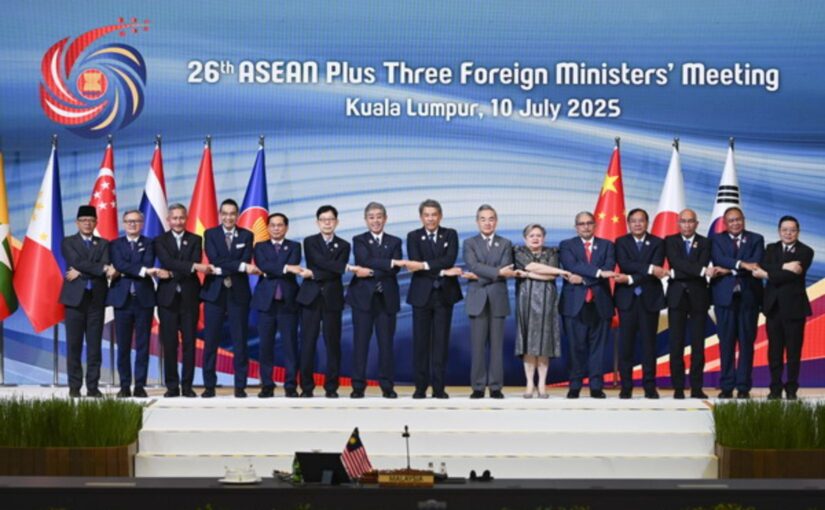
Chinese Premier Li Qiang paid an official visit to Indonesia from May 24 to 26 at the invitation of Indonesian President Prabowo Subianto.  Following this, Li attended the ASEAN (the Association of Southeast Asian Nations)-GCC (the Gulf Cooperation Council)-China Summit in Kuala Lumpur from May 26 to 28 at the invitation of Prime Minister Anwar Ibrahim of Malaysia, ASEAN’s rotating chair.

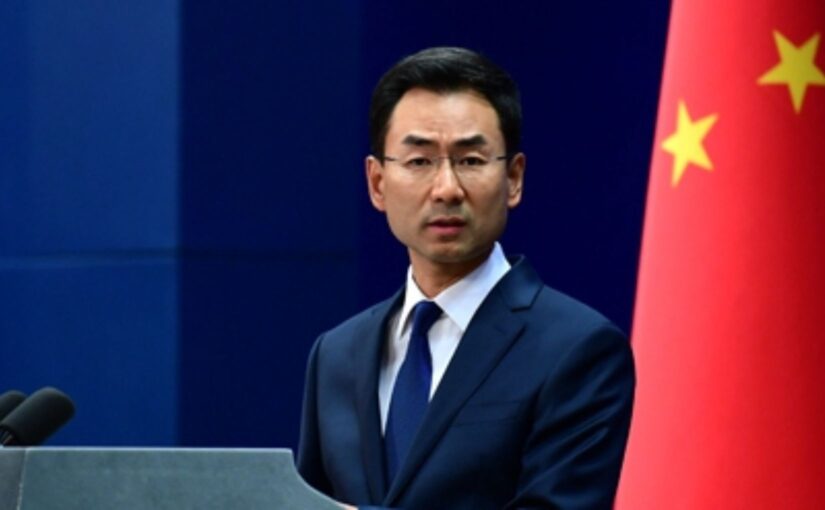
Announcing the visits at a May 22 Beijing press conference, Foreign Ministry spokesperson Mao Ning said that last year, the heads of state of China and Indonesia reached important consensus on building a China-Indonesia community with a shared future with regional and global influence, elevating bilateral relations to a new level. She said China hopes to carry forward the traditional friendship with Indonesia, deepen solidarity and cooperation, continuously consolidate cooperation in the “five pillars” of politics, economy, people-to-people and cultural exchanges, maritime affairs and security, adding that it is hoped that the two countries, along their respective modernisation paths, will constantly enrich the connotation of the China-Indonesia community with a shared future, and make greater contributions to peace, stability, development and prosperity in the region and beyond.

On May 25, the Xinhua News Agency reported that during Premier Li’s visit, the two countries highlighted the contemporary value of the Bandung Spirit and pledged for closer bilateral cooperation as well as better strategic coordination. “China stands ready to work with Indonesia and other developing countries to jointly uphold the Five Principles of Peaceful Coexistence and the Bandung Spirit,” Li said in talks with President Prabowo Subianto.

Xinhua noted: “In April 1955, a landmark conference in Indonesia’s city of Bandung gathered 29 Asian and African nations under the flag of solidarity, friendship and cooperation, marking the awakening of the part of the world known now as the Global South.”

Li added that today unilateralism and protectionism are on the rise, and acts of bullying are increasing, stressing that against this backdrop, the contemporary value of the Bandung Spirit has become more prominent.

He said that China stands ready to work with Indonesia and other developing countries to jointly uphold the Five Principles of Peaceful Coexistence and the Bandung Spirit, and implement the three major global initiatives proposed by President Xi Jinping.

He called for steadfastly upholding multilateralism and free trade, promoting an equal and orderly multipolar world and a universally beneficial and inclusive economic globalisation, resolutely safeguarding common interests, and jointly advancing peace, stability and development in the region and the world at large.

Noting that 2025 marks the 75th anniversary of diplomatic relations between the two countries and the 70th anniversary of the Bandung Conference, President Prabowo said that Indonesia will take this opportunity to deepen the comprehensive strategic partnership with China and jointly promote peace and development in Asia and the world.

He said Indonesia is ready to expand cooperation with China in agriculture, finance, infrastructure, green economy, AI and education, and upgrade industrial collaboration. Prabowo also expressed the hope that more Chinese enterprises will invest and do business in Indonesia.

Continue reading China and Indonesia invoke the Bandung Spirit

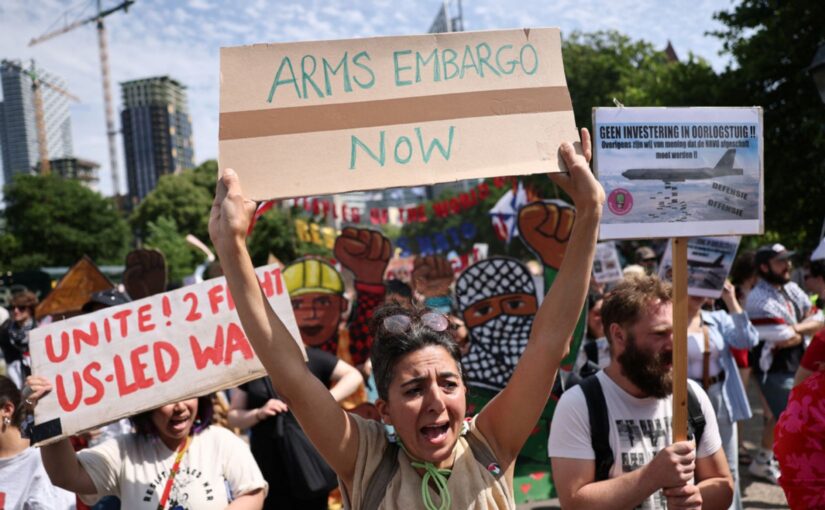
China blasts yet another US veto of Gaza ceasefire resolution

On June 4, the United States once again vetoed a United Nations Security Council (UNSCC) resolution on the humanitarian situation in Gaza and calling for a ceasefire. All other 14 members of the Council, including France and Britain, voted in favour of the resolution, which had been jointly prepared by the E10, the 10 rotating, non-permanent UNSC members.

Following the US veto, Chinese Ambassador to the UN Fu Cong stated: “China is deeply disappointed by the result of today’s vote. The draft resolution on the humanitarian situation in Gaza, tabled by the E10 of the Security Council, clearly calls for an immediate and permanent ceasefire in Gaza and the lifting of the blockade on humanitarian supplies. These are the most pressing demands of the people in Gaza, who are struggling amid death and despair, and they reflect the overwhelming voice of the international community. The United States has once again abused its veto power, extinguishing the glimmer of hope for the people in Gaza and ruthlessly continuing to leave over two million people in darkness.”

He continued:

  • People cannot help but ask: where is fairness and justice? For more than 600 days, over 54,000 people in Gaza have lost their lives. Israel continues to escalate its offensive and blockade, turning Gaza into a living hell. Innocent civilians are killed in the conflict every day, while a large portion of the population is on the brink of famine. The United Nations has clearly pointed out that the aid delivery mechanism promoted by the US and Israel violates the principles of impartiality, independence, and neutrality. Recently, there have been repeated incidents of civilian casualties near distribution sites, and this mechanism has even become a death trap.
  • People cannot help but ask: where is the international rule of law? Since the outbreak of the conflict, we have witnessed the weaponisation of humanitarian aid, the targeting of civilian infrastructure, such as schools and hospitals, and the ruthless killing of journalists and humanitarian workers. Israel’s actions have crossed every red line of international humanitarian law and seriously violated Security Council and General Assembly resolutions, as well as the provisional measures ordered by the ICJ [International Court of Justice]. Yet due to the shielding by one certain country, these violations have not been stopped or held accountable.
  • People cannot help but ask: where is the authority of the Security Council? Today’s vote result once again exposes that the root cause of the Council’s inability to quell the conflict in Gaza is the repeated obstruction by the US, who has vetoed the Council’s request for a ceasefire multiple times. And because of its shielding of Israel, several resolutions adopted by the Council have not been effectively implemented. Claims that Security Council actions would interfere with diplomatic efforts are completely untenable.

Earlier, in remarks at a Security Council briefing on the situation, held on May 28, during the drafting of the resolution, Fu Cong said that:

“Since May 16, Israel has continued to intensify its military offensive in Gaza, which has completely destroyed large densely populated areas and caused the deaths of more than 1,000 Gazans in the past two weeks alone.”

He continued:

  • The question has been repeatedly asked: When will this conflict end? Over the past 600 days, northern, central, and southern Gaza have been ravaged by war, claiming the lives of more than 54,000 people. The population of Gaza has been forcefully displaced time and again.
  • The question has been repeatedly asked: Are there no limits to the means of this conflict? Even wars have rules. Compliance with international humanitarian law is an undeniable obligation of all parties. In Gaza, however, we have witnessed the red lines of international law and the bottom line of human morality being repeatedly violated and breached. Humanitarian assistance has been weaponised, with two million people plunged into extreme hunger as a result of the prolonged blockade. Schools, hospitals, refugee camps, and UN facilities have been targeted. Journalists and humanitarian workers have been mercilessly killed. Securing humanitarian assistance is an obligation of the occupying power under international law.
  • The question has been repeatedly asked: Will the Palestinian people be forced to lose their homes once again? Gaza is in ruins with living conditions severely jeopardised. Recently, there have been repeated calls from the Israeli side for completely destroying and taking over all of Gaza. The Israeli army has already controlled more than 70% of Gaza. At the same time, continued expansion of settlements in the West Bank and intensified settler violence gravely squeezed the space for the Palestinian people to survive. Changing the demographic and territorial composition of Gaza, as well as settlement activities, are in violation of the Security Council resolutions and international law. The annexation of Gaza and the West Bank will completely take away the prospects for peace in the Middle East.

He added: “Gaza and the West Bank are inalienable parts of the State of Palestine. The international community must firmly oppose any attempt to annex the territories of Gaza or the West Bank and oppose the forced displacement of the population of Gaza. The United States, as a country with significant influence over the party involved, should act in a fair and responsible manner and take effective and forceful actions.”

The following articles were originally published on the website of the Chinese Mission to the United Nations.

Explanation of Vote by Ambassador Fu Cong on the UN Security Council Draft Resolution on the Humanitarian Situation in Gaza

June 4 (China UN Mission) — President,

At the outset, let me congratulate Guyana on assuming the Presidency of the Security Council this month, and Greece on successfully completing its Presidency of the Council last month. 

Continue reading China blasts yet another US veto of Gaza ceasefire resolution

CPC strengthens ties with Afghanistan, Uruguay, Nepal, Cuba and other countries

We previously reported on the May visit to China by Afghanistan’s Acting Foreign Minister Mawlawi Amir Khan Muttaqi, during which he met his Chinese counterpart Wang Yi as well as joining an informal trilateral meeting in which Pakistan Foreign Minister (and also Deputy Prime Minister) Mohammad Ishaq Dar also participated.

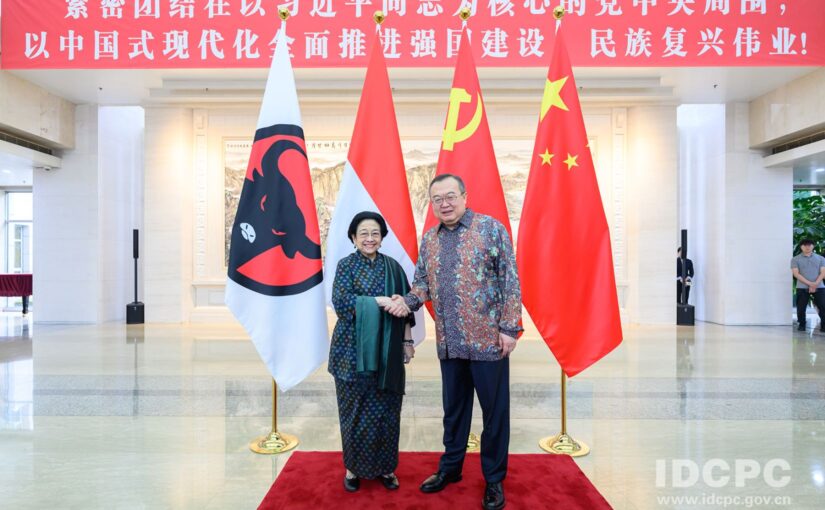
Following these meetings, the website of the International Department of the Communist Party of China (CPC) Central Committee (IDCPC) reported that, on May 23, IDCPC Minister Liu Jianchao, also met with Muttaqi.

Liu said, China and Afghanistan have similar historical experiences, and the Chinese people have a natural friendly feeling towards the Afghan people. China respects the development path independently chosen by the Afghan people and adheres to the principle of non-interference in Afghanistan’s internal affairs. China is willing to work with Afghanistan to take the 70th anniversary of the establishment of diplomatic relations between the two countries as an opportunity to strengthen political dialogue on the basis of equality and mutual respect, exchange and learn from each other’s experiences in state governance and administration, enhance mutual understanding and trust, continue to firmly support each other on issues concerning each other’s core interests and major concerns, and promote cooperation in all fields.

Muttaqi said that he is confident about the future of Afghanistan-China relations. Afghanistan and China have a thousand-year history of friendly exchanges and share similar historical experiences, understanding and sympathising with each other. Afghanistan will not allow any force to use its territory to engage in activities that harm China’s interests and is willing to strengthen cooperation with China in economy, trade, investment, infrastructure connectivity, security and other fields to further promote the development of bilateral relations. The CPC is committed to serving the people and has led the Chinese people to score great achievements in economic and social development, especially in poverty alleviation. This sets an example for us. Afghanistan is willing to strengthen exchanges with the CPC and learn from China’s successful experience.

Some other recent highlights in the work of the IDCPC include:

  • On May 28, Liu Jianchao met with a delegation of the Broad Front of Uruguay led by its President Fernando Pereira Kosec.

Liu said, not long ago, the Fourth Ministerial Meeting of the China-CELAC [Community of Latin American and Caribbean States] Forum was successfully held. President Xi Jinping announced the launch of five programs, namely Solidarity Program, Development Program, Civilisation Program, Peace Program and People-to-People Connectivity Program, charting the course for the future development of China-Latin America relations. Uruguay will hold the rotating presidency of CELAC next year. China is willing to strengthen unity and coordination with Uruguay and other Latin American and Caribbean countries to jointly address global challenges.  Since the establishment of relations between the CPC and the Broad Front, he added, the two Parties have maintained friendly exchanges. Under the new circumstances, the CPC is willing to strengthen political dialogue with the Broad Front, deepen exchanges and mutual learning in areas such as poverty alleviation and party building, and promote practical cooperation in various fields.

Pereira said, the Broad Front of Uruguay values the long-term friendly relations with the CPC and is willing to further strengthen exchanges between the two Parties, expand cooperation in areas such as cadre training, learn from China’s experience in poverty alleviation, long-term planning and party building, promote cooperation in economy, trade and other fields, and further enhance the connection between the two countries in politics, economy, society and culture, and carry forward the traditional friendship between the two countries.

Continue reading CPC strengthens ties with Afghanistan, Uruguay, Nepal, Cuba and other countries

Tiananmen Square, 1989: The truth comes out, eventually

In the following article for the Morning Star, Dan Ross challenges the mainstream Western narrative of the 1989 Tiananmen Square events. Rather than being a “massacre of thousands of unarmed students”, as is typically presented, Dan argues that what occurred was a complex confrontation between the Chinese military and radicalised protesters, many of whom were armed.

Dan draws on contemporaneous coverage from The Washington Post and Wall Street Journal and other eyewitness sources to show that China’s authorities, after two months of Beijing being brought practically to a standstill, and with lengthy negotiations not bearing fruit, decided to peacefully disperse the protests. “Unarmed soldiers entered the square to begin the dispersal”, whereupon “they were set upon by groups of co-ordinated and armed protesters that remained, as was openly reported on at the time. Many dozens of soldiers are known to have been killed, as grisly images of lynched and burned soldiers from the events attest”.

The violence can accurately be described as clashes between armed protesters and soldiers, not a massacre of unarmed civilians on the Square.

The Western propaganda machine lost no time in spinning the story as a vicious attack by an authoritarian state on freedom-loving unarmed protestors. Dan writes:

It should come as no surprise that this co-ordinated propaganda campaign took place concurrently with the fall of socialism across central and eastern Europe and the Soviet Union. The US, then as now, remains committed to undermining and destroying Chinese socialism, and has relied heavily upon thinly veiled, CIA-sponsored bodies like Radio Free Asia, National Endowment for Democracy, and the fanatical anti-communist and fantasist Adrian Zenz, with the sole objective of bringing about the fall and disintegration of China, much as happened to the former USSR and Yugoslavia.

Ultimately, the article calls on readers to question the mainstream narrative of the “Tiananmen Massacre”, pointing out that it is just another piece of crass anti-China and anti-communist propaganda.

“As columns of tanks and tens of thousands of soldiers approached Tiananmen, many troops were set on by angry mobs… dozens of soldiers were pulled from trucks, severely beaten and left for dead.

“At an intersection west of the square, the body of a young soldier, who had been beaten to death, was stripped naked and hung from the side of a bus.  Another soldier’s corpse was strung at an intersection east of the square.”

“Radicalised protesters, some now armed with guns, and vehicles commandeered in clashes with the military.”

“Other scenes show soldiers’ corpses and demonstrators stripping automatic rifles off unresisting soldiers.”

These accounts are taken, not from the official version of the Chinese government, but from the Washington Post and Wall Street Journal in the immediate aftermath of the events of June 4 1989.

As the US, its allies, and cheerleaders in the media step up their campaign of anti-communist and Sinophobic rhetoric in the growing cold war against China, we can expect to hear an altogether different — if more familiar — narrative about the “massacre” of thousands of innocent students in a “brutal authoritarian crackdown” this week.

The “events” in fact began two months earlier in April, when students gathered — somewhat ironically — to mourn and commemorate the passing of a senior Communist Party leader, Hu Yaobang, later joined by workers — again ironically — concerned by the inflationary effects of market-liberalising economic reforms.

Beijing’s iconic central square, and much of the city, was all but paralysed for weeks. Following lengthy but failed attempts at a negotiated settlement between the government and student leaders (presenting disparate and undefined demands) and no end in sight to the paralysis of the capital, the authorities eventually ordered the peaceful dispersal of the crowds from the square, that was largely was achieved by June 3.

Individual accounts of army snipers and soldiers gunning down fleeing students have been discredited both by a far greater number of eyewitnesses contradicting it, including US journalists (such as the Washington Post’s Jay Matthews), and television footage of an orderly dispersal. Spanish television network TVE had a camera crew on the square covering events, and reported no evidence of a massacre.

No doubt the image of the infamous “tank man” has sprung to your mind; it is well worth watching the footage to the end: the outcome might surprise you!

When soldiers — unarmed — originally entered the square to begin the dispersal, they were set upon by groups of co-ordinated and armed protesters that remained, as was openly reported on at the time. Many dozens of soldiers are known to have been killed, as grisly images of lynched and burned soldiers from the events attest.

Much of the subsequent violence occurred following the dispersal, between June 4-5, and took place elsewhere across the city, rather than on the square itself. The violence can accurately be described as clashes between armed protesters and soldiers, not a massacre of unarmed civilians on the Square.

Continue reading Tiananmen Square, 1989: The truth comes out, eventually

China and Africa should continuously strengthen the power of the Global South

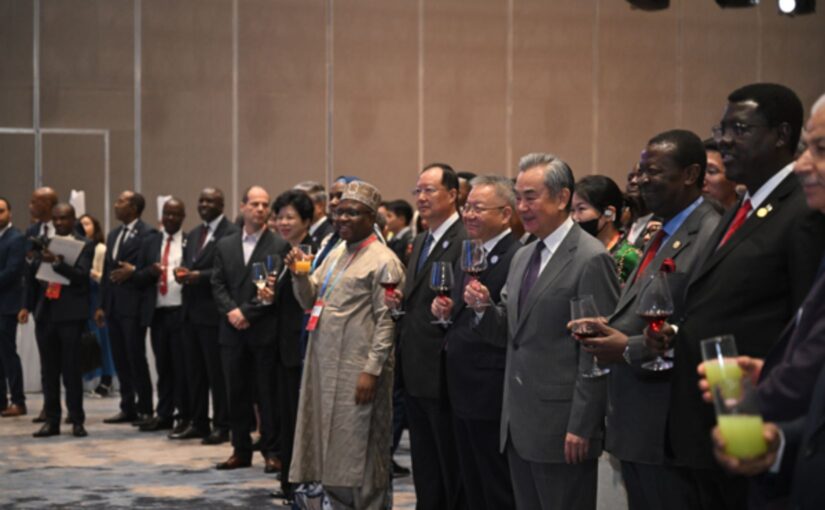
We previously reported the May 26 celebration of Africa Day in Beijing, in which Chinese Foreign Minister Wang Yi was joined by diplomats from more than 50 African countries along with representatives from the African Union (AU).

Subsequently, the website of the Chinese Foreign Ministry has now made available the full text of Wang Yi’s speech on this occasion.

Wang Yi noted that the theme of the commemoration of Africa Day this year is “China-Africa Solidarity for a Shared Future” and shared his thoughts on three keywords in this regard, namely friendship, cooperation, and solidarity.

He said:

  • We must cherish the traditional China-Africa friendship and strengthen our confidence in solidarity and cooperation.  Over the years, the Chinese and African peoples have supported each other in the struggle for independence and liberation and in the endeavour to defend national sovereignty and have helped each other in exploring development paths and achieving national rejuvenation. From China’s assistance in building the Tanzania-Zambia (TAZARA) Railway to the joint construction of Africa’s largest hydropower station, from our African brothers “carrying” China into the United Nations, to China taking the lead in supporting the African Union’s joining in the G20, and from dispatching medical teams to Africa shortly after the founding of the People’s Republic of China to the China-Africa united fight against COVID-19, China and Africa have forged a deep friendship marked by a shared future and close bonds. Entering the new era, President Xi Jinping visited Africa five times, put forward the principles of China’s Africa policy – sincerity, real results, amity and good faith, and pursuing the greater good and shared interests… leading China-Africa relations to their best in history. China never interferes in Africa’s internal affairs, never imposes its own will on others, never attaches any political conditions to its assistance to Africa and never seeks political gains in its investment and financing in Africa.
  • We should deepen practical cooperation and build a consensus for common development. Over the past 25 years, bilateral trade has increased 27-fold, China’s investment stock in Africa has grown more than 80 times, and we have helped build and upgrade nearly 100,000 kilometres of roads and over 10,000 kilometres of railways in Africa. In the past three years alone, Chinese enterprises have created over 1.1 million jobs in Africa. In half a month, the Coordinators’ Meeting on the Implementation of the Follow-up Actions of the FOCAC [Forum on China-Africa Cooperation] Ministerial Conference will be held in Changsha, Hunan. We should take this meeting as an opportunity to add more momentum and strength to the implementation of the common understandings reached by the leaders of both sides, [and] set a benchmark for high-quality Belt and Road cooperation.
  • We need to discern the direction of the profound changes unseen in a century and continuously strengthen the power of the Global South. This year marks the 80th anniversary of the victory of the World Anti-Fascist War and the founding of the United Nations. However, the world is not yet a tranquil place. Recently, the United States, disregarding international law and international trade rules, first abruptly cut aid to many countries, including those in Africa, and then indiscriminately imposed tariffs worldwide. Such unilateral bullying moves, which ignore the fundamental principles of international relations, would plunge the world back into the law of the jungle. History has shown time and again that in the face of injustice and power politics, compromise and concessions lead nowhere. Only by standing firm on our just position and fighting back resolutely can we safeguard our legitimate rights and interests. As the largest developing country and the continent with the highest concentration of developing countries in the world, China and Africa are both key members of the Global South. The more turbulent the international situation becomes, the more imperative it is for us to stand firmly together, strengthen solidarity and cooperation, [and] jointly oppose power politics.

Meanwhile, on June 6, at a routine Foreign Ministry press conference in Beijing, spokesperson Lin Jian announced that Wang Yi would attend the above-mentioned Ministerial Meeting of Coordinators on the Implementation of the Follow-up Actions of the Forum on China-Africa Cooperation (FOCAC) in Changsha, capital city of central China’s Hunan Province, from June 10 to 12, alongside representatives from the 54 African members of FOCAC. Wang will also attend the opening ceremony of the Fourth China-Africa Economic and Trade Expo, also to be held in Changsha.

Lin said that China will enhance coordination with African countries with a focus on implementing the six proposals and 10 partnership initiatives put forward by President Xi for jointly advancing modernisation, so that people in China and Africa will benefit more from the outcomes of the FOCAC summit.

Continue reading China and Africa should continuously strengthen the power of the Global South

Hegseth demands Indo-Pacific allies escalate military spending, prepare for war on China

In this article for Struggle La Lucha, Gary Wilson critiques US Defence Secretary Pete Hegseth’s speech at the recent Shangri-La Dialogue, in which Hegseth urged the US’s regional allies to ramp up military spending in preparation for possible war with China.

Hegseth claimed in his speech that Beijing is preparing to wage war in order to reunite Taiwan Province with the mainland, declaring that “the threat China poses is real, and it could be imminent”. Gary writes:

Hegseth and the Trump administration are attempting to recast China’s efforts to maintain national sovereignty as “aggression,” while portraying US military escalation in China’s immediate periphery as defensive. It’s a textbook example of how imperialism inverts reality.

The article notes that Washington in recent years has been persistently undermining the One China policy, through arms sales, military training, naval patrols, intelligence sharing, and diplomatic efforts that treat Taiwan as an independent state. “All of this raises the stakes deliberately. The US is trying to provoke a response from China, just as it did with Russia over NATO’s expansion to Ukraine. In essence, what Hegseth is demanding is a US military takeover of China’s Taiwan — disguised as ‘defending democracy.'”

The article situates these moves within a broader trend: the US’s global war strategy, including support for war in Ukraine and Israel’s assault on Gaza, all components of the US-led response to the crisis of capitalism. As China’s technological and economic rise challenges US hegemony, Gary warns the US is increasingly willing to risk catastrophic war — including nuclear confrontation — to maintain its dominance.

Listing the numerous ways in which the US is escalating its longstanding campaign of encirclement and containment of China, the article concludes:

The Trump administration is determined to strangle China’s rise — by war if necessary. This is not a defensive strategy. It is a conscious plan to preserve U.S. global supremacy, even if it risks nuclear war.

At the annual Shangri-La Dialogue in Singapore on May 31, U.S. Defense Secretary Pete Hegseth delivered an ultimatum to Washington’s Indo-Pacific allies: Escalate your military spending and prepare for imminent war with China.

Framing China as the aggressor, Hegseth accused Beijing of seeking “hegemony in Asia” and warned that a Chinese move on Taiwan would bring “devastating consequences for the Indo-Pacific and the world.” “There’s no reason to sugarcoat it,” he declared. “The threat China poses is real. And it could be imminent.”

Please note that Taiwan is internationally recognized as part of the People’s Republic of China. Under the One China policy, the United States officially acknowledges this. Since the 1970s, the U.S. has agreed not to recognize Taiwan as a separate state. 

So when U.S. Defense Secretary Pete Hegseth speaks of preparing for war over Taiwan, what he’s really advocating is: a U.S. military intervention to take away a province of China.

This is akin to China threatening war if the U.S. deployed troops to Long Island, N.Y. or Isle Royale in Lake Superior on Canada’s border. 

Hegseth and the Trump administration are attempting to recast China’s efforts to maintain national sovereignty as “aggression,” while portraying U.S. military escalation in China’s immediate periphery as defensive. It’s a textbook example of how imperialism inverts reality.

Furthermore, the U.S. has systematically undermined the One China framework by increasing arms sales to Taiwan, sending high-level officials to visit the island’s capital, Taipei, stationing American troops and conducting joint military training there, and encouraging Taiwanese political figures who flirt with formal declarations of independence.

In addition to arms sales and military visits, the U.S. has steadily undermined the One China policy through a range of provocative actions. These include expanding intelligence sharing and joint military planning with Taiwan, increasing naval and air patrols near the island, and passing legislation to deepen official ties. The U.S. has also promoted Taiwan’s participation in international organizations, supported the development of its domestic arms industry, and formalized trade agreements that treat Taiwan as a separate entity. Collectively, these moves aim to transform Taiwan into a U.S. military and economic outpost, escalating tensions with China and pushing the region closer to open conflict.

All of this raises the stakes deliberately. The U.S. is trying to provoke a response from China, just as it did with Russia over NATO’s expansion to Ukraine. In essence, what Hegseth is demanding is a U.S. military takeover of China’s Taiwan — disguised as “defending democracy.”

Continue reading Hegseth demands Indo-Pacific allies escalate military spending, prepare for war on China

Dialogue with Fudan University’s China Institute: Is China really socialist?

The second Friends of Socialist China delegation to China took place from 26 May to 5 June 2025. The delegation, composed of 15 comrades from Britain and the US, visited Xi’an and Yan’an (Shaanxi), Dunhuang and Jiayuguan (Gansu) and Shanghai, visiting important historical sites, learning about China’s development, attending the 4th Dialogue on Exchanges and Mutual Learning among Civilisations, and engaging meeting with a range of organisations.

On Monday 3 June, the delegation participated in a dialogue with the China Institute of Shanghai’s Fudan University, consisting of a panel discussion featuring Professor Zhang Weiwei, Professor Wu Xinwen, and Friends of Socialist China co-editors Carlos Martinez and Keith Bennett, followed by a wide-ranging discussion with the audience.

We reproduce below a report of the event from the China Institute WeChat channel, which has been machine-translated. The full video can be found on the China Academy website, and is embedded below. We will also be publishing a delegation report in due course.

On the afternoon of June 3, Carlos Martinez, co-editor of the Friends of Socialist China website, and Keith Bennett, vice chairman of the British 48 Group Club, led a delegation of Friends of Socialist China to visit the China Institute of Fudan University. Professor Zhang Weiwei, director of the National High-end Think Tank Council and dean of the China Institute of Fudan University, and Professor Wu Xinwen, vice dean, had in-depth dialogues and interactive exchanges with Mr. Martinez, Mr. Bennett and other members of the delegation on Chinese socialism and its global significance.

In his speech, Professor Zhang Weiwei welcomed the Friends of Socialist China delegation and briefly introduced China’s exploration of socialism along the way and its impact on the outside world.

Continue reading Dialogue with Fudan University’s China Institute: Is China really socialist?

What’s wrong with Western claims of China’s “debt burden” on poor nations

The explainer article below, originally published on Xinhua News Agency, challenges Western allegations that China is imposing a “debt trap” on developing countries through loans tied to the Belt and Road Initiative (BRI). The article specifically addresses the recent analysis from Australian foreign policy thinktank the Lowy Institute claiming that the poorest 75 countries in the world are due to pay record high debt repayments to China this year.

The authors write: “A closer look at the debt structure and facts will prove that those allegations cannot hold water.” They note that the lion’s share of developing world debt is in fact owed to Western lending institutions. World Bank data indicates that, for Sub-Saharan Africa, bilateral debt with China accounts for 11 percent of the total. Furthermore, debt to Chinese entities typically incurs far lower interest rates, and is associated with longer maturities and greater repayment flexibility. Unlike loans from Western multilateral lending institutions, China’s loans come without punishing conditions of “reform” – that is, privatisation and liberalisation measures.

“In the 46 countries that participated in the G20 Debt Service Suspension Initiative, Chinese creditors accounted for 30 percent of all claims and contributed 63 percent of debt service suspensions… China’s debt reduction has already doubled the average reduction scale of the G7 countries.”

The article also highlights that China’s loans are typically focused on infrastructure, telecommunications and green energy, and are thus helping the poorest countries to generate wealth, improve living standards, and break out of underdevelopment.

The article concludes that the “debt trap” narrative is simply a rhetorical strategy by Western powers to undermine China’s growing mutually-beneficial relationships with the countries of the Global South.

A recent report published by an Australian think tank claimed that many developing countries were on the hook for record high debt repayments to China in 2025, as bills come due from the lending under the Belt and Road Initiative (BRI).

Once again, China became an easy target to blame. In recent years, Western think tanks and media outlets have kept hyping up the so-called Chinese “debt trap.” However, a closer look at the debt structure and facts will prove that those allegations cannot hold water.

Who is the biggest lender?

The think tank report blamed China as the major source of debt pressure for developing countries, warning that “now, and for the rest of this decade, China will be more debt collector than banker to the developing world.”

In fact, for many developing countries, a majority of debts are owed to Western donors and multilateral institutions, while Chinese entities’ loans account for only a minority.

For example, in the Sub-Saharan Africa region, 66 percent of public and publicly guaranteed debt is held by private bondholders and multilateral creditors, while bilateral debt with China accounts for 11 percent, as the International Debt Report 2023 released by the World Bank (WB) Group has shown.

As for Sri Lanka, its debt to Chinese entities accounts for only 10.8 percent of its total external debt, while private creditors taking the lion’s share of 53.6 percent, multilateral creditors — 20.6 percent, according to data released by the country’s Central Bank and the Ministry of Finance, Economic Stabilization & National Policy as of March 2023.

Spokesperson for Pakistan’s Foreign Ministry Mumtaz Baloch has previously slammed a New York Times article’s accusations that “Chinese loans led to Pakistan’s economic crisis,” retorting that the China-Pakistan Economic Corridor (CPEC) has made positive and transparent contributions to Pakistan’s national development.

The total public debt involved in the CPEC project is only a small part of Pakistan’s total debt, Baloch said, noting that the public trade debt from China has low interest rates and long maturities.

Contrary to portrayals by Western think tanks and media of China as an unforgiving lender, China has actively contributed to global debt relief efforts over the years.

In the 46 countries that participated in the G20 Debt Service Suspension Initiative, Chinese creditors accounted for 30 percent of all claims and contributed 63 percent of debt service suspensions.

Since 2016, China, as a bilateral creditor, has been responsible for roughly 16 percent of global debt relief, surpassing the United States and the WB, said professor Ding Yibing, dean of School of Economics, Jilin University, adding that China’s debt reduction has already doubled the average reduction scale of the G7 countries.

Amid the growing concerns of a debt default, China has always adhered to the principle of equality in bilateral relations and proactively participates in just and fair negotiations with different nations, said Song Wei, a professor at the School of International Relations and Diplomacy, Beijing Foreign Studies University.

China’s contribution to debt relief exemplifies the international obligations expected for a responsible major country, Song said.

Continue reading What’s wrong with Western claims of China’s “debt burden” on poor nations

US imperialism’s New Cold War against China fosters anti-Asian racism at home

The article below by Duncan McFarland and Liu Xuegang argues that US foreign policy – particularly its increasingly hostile stance toward China – has direct and harmful consequences for Chinese and Asian communities in the US.

The authors trace a long history of anti-Asian sentiment linked to US imperialist strategy, from the Chinese Exclusion Act of 1882 to the McCarthyite Cold War propaganda of the 1940s and 50s. In recent years, tensions have escalated sharply under both Republican and Democratic administrations. Trump’s team has declared China a top strategic threat, launched a tariff war, and escalated the state’s attack on Chinese scientists, researchers and students in the US.

The article concludes that US imperialism fosters division and racism at home as it pursues global dominance. It calls for resistance to the New Cold War and urges solidarity with global movements for peace and cooperation.

The international working class does not want war. It is imperative to oppose Cold War 2.0, work for peace, and support initiatives, especially in the Global South and China, for cooperation on global issues such as climate change, pandemics, war, and poverty.

U.S. imperialism divides the world into hostile camps; this is the wrong approach. The people of the world want peace, prosperity, and cooperation. The U.S. policy of hegemony abroad promotes racism at home; the struggle for justice and freedom at home is also a struggle for peace abroad.

This article originally appeared in People’s World. The authors are members of the Asia-Pacific Subcommittee, Peace and Solidarity Commission, CPUSA.

U.S. foreign policy can have a great impact on people’s daily lives here at home, and U.S. policy toward China is a prime example. When the U.S. conducts a hostile, anti-China foreign policy, there is increased racism and repression in the Asian and Chinese American communities in the U.S.

On the other hand, when relations with China are good, such as during World War II or the 1980s, mainstream media depicted Chinese Americans as friendly, patriotic, and the “model minority.”

As U.S. imperialism’s new Cold War against China heats up, familiar patterns are repeating themselves under new conditions.

Historical background

The Central Pacific Railroad employed large numbers of Chinese immigrants to build the western half of the Transcontinental Railway, completed in 1869. However, no Chinese workers were invited to the golden spike ceremony at the completion of the project. Especially with the overthrow of Reconstruction, racist attitudes prevailed, and the Chinese Exclusion Act was signed in 1882. This blocked Chinese workers from entering the U.S.; it was the first anti-immigration legislation targeting a specific ethnic group or country of origin.

In 1913, the novel The Insidious Fu Manchu was a hit and became a cultural icon full of racist stereotypes about the ever-lurking, insidious Dr. Fu. But during the 1930s, the U.S. and China became important allies in the Pacific War against Japanese imperialism and aggression.

Continue reading US imperialism’s New Cold War against China fosters anti-Asian racism at home

Socialist China’s role in combating imperialist domination

The following article, written by Betsey Piette for Workers World, highlights socialist China’s growing role in challenging US-led imperialist domination and argues that defending China is essential to the global struggle against capitalism.

Betsey stresses the need to foster internationalist consciousness among workers and young activists, linking domestic struggles with global anti-imperialist movements. She critiques the propaganda that falsely equates China and the US as being equivalent capitalist ‘superpowers’, arguing that this narrative obscures the exploitative and chaotic nature of US capitalism while ignoring China’s remarkable achievements under socialism.

Betsey observes that, despite the US’s escalating campaign of military encirclement and economic warfare, China’s economy continues to expand, living standards continue to improve, and its international cooperation continues to deepen, including with the US’s “traditional allies”.

Betsey asserts that China’s planned economy and state-led development – which have resulted not only in vastly increased living standards for the Chinese people but also in China becoming a science and technology powerhouse – offer an inspiring alternative model to capitalist neoliberalism.

The article concludes by calling for systematic defence of China’s socialist system against US threats of war, warning that economic aggression may escalate into military conflict. China’s is a revolution in motion that must be defended by the global working class.

Despite decades of wars and occupations of countries abroad, the U.S. faces a global challenge it is unable to contain. This challenge is multifaceted, but three things stand out:

One is the relentless resistance of the people of Palestine and West Asia in elevating their struggle for a free Palestine. 

A second is the challenge from socialist China’s resistance to U.S. capitalist domination of the global economy.

The third is a growing awareness among young people that they have no future under capitalism, with its unchecked environmental catastrophes and its ready acceptance of fascist politicians. 

A key challenge for the party and the movements we are part of is how to encourage young activists and workers to develop a more global outlook when it comes to capitalism and imperialism and to see why socialism offers the solution.

Demands are important

“From the river to the sea, Palestine will be free” is the most popular demand for Palestine and one that gets the most pushback from the Zionists. This demand doesn’t just raise opposition to the ongoing genocide in Gaza — it supports the future goal for Palestinians. Demands are important.

As we oppose the threat of imperialist war against China, we need to raise awareness about transformation and resulting gains made by socialism in China.

Imperialist propaganda puts an equal sign between the U.S. and China as “superpowers” — as if they are both capitalist countries. Corporate media pundits and politicians promote the lies that “China is repressive, that their economy is failing, that there is widespread unemployment, no opportunities for young people, etc.” It’s like they are looking in a mirror where what is reflected back are the conditions in the U.S., not China.

Continue reading Socialist China’s role in combating imperialist domination

Remarks marking the 26th anniversary of the NATO bombing of Yugoslavia

Several hundred people packed the Bishop Nikolaj Community Centre in West London on the evening of Saturday May 24 for a remembrance and discussion event marking 26 years since NATO’s war of aggression against Serbia and the former Yugoslavia, organised by the Round Table of Serbian organisations and community groups in the United Kingdom. Among those present were Serbian Ambassador Goran Aleksić, diplomats from the Belarus Embassy and journalists from the Xinhua News Agency and China Daily.

The meeting was preceded by a memorial service in the adjacent Serbian Orthodox Church of Saint Sava, where prayers offered included those for the three Chinese journalists killed when US-led NATO bombed the Chinese Embassy in Belgrade.

A panel discussion, chaired by retired academic Michael Stenton, featured Misha Gavrilović and Marko Gasić, co-chairs of the British-Serbian Alliance for Peace; Dr. Kate Hudson, Vice-President of the Campaign for Nuclear Disarmament (CND) and author of ‘Breaking the South Slav Dream’; and Laurie Mayer, former BBC and Sky News presenter and broadcast journalist. And, following a break for refreshments and networking, there were contributions from veteran peace activist Carol Turner, who co-founded and led the Committee for Peace in the Balkans with the late Alice Mahon MP in 1994; and Keith Bennett, co-editor of Friends of Socialist China.

The evening was closed with a brief recital from Zorka Maksimovic.

Speakers pointed out that, contrary to the propaganda advanced in Britain, there had been no threat of a Greater Serbia but rather of a Greater NATO. The real meaning of NATO expansion was exposed, namely military aggression beyond its borders. The war against Yugoslavia was neither humanitarian nor legal. Rather, it was what the Nuremburg trials established as the supreme international crime – a war of aggression. The war was characterised by numerous atrocities – the bombing of passenger trains, refugee convoys, factories, hospitals, the TV station and the Chinese Embassy. Depleted Uranium was used, condemning future generations and the environment to its lethal effects.

The wounds of the conflict have not healed. Serbian sovereignty is still being transgressed, for example on the question of Kosovo. Moreover, the war had opened Pandora’s Box – that the Western powers could attack whomever they wanted. This was soon seen in Iraq and is still ongoing – in NATO’s proxy war in Ukraine and Israel’s war against the Palestinian people. In Laurie Mayer’s words, the war against Yugoslavia represented raw imperialism run amuck.

The following is Keith’s message delivered at the meeting on behalf of Friends of Socialist China.

Your Excellency

Ladies and Gentlemen

Dear Friends

On behalf of Friends of Socialist China, I’d like to express our thanks to the organisers of this eventfor inviting us to join them in marking the solemn occasion of the 26th Anniversary of the NATO bombing of the Federal Republic of Yugoslavia.

With war raging in Europe and the Middle East, it is appropriate that we remember and mark this anniversary of the first time that full-scale war returned to our continent since the defeat of fascism in 1945.

This is also the 80th anniversary year of that victory. The peoples of both Serbia and China played heroic and indispensable parts in the defeat of fascism. They pinned down hundreds of thousands, indeed millions, of axis troops and liberated their countries, principally on the basis of self-reliance.

The enduring friendship between China and Serbia has its root in this common struggle on the eastern and western fronts. The 1969 Yugoslav film, The Bridge, vividly depicted those days. It was one of the first foreign films to be shown in China at the start of reform and opening up. Both the film, and through it the song Bella Ciao, became favourites of a generation of Chinese people, including President Xi Jinping.

Dear Friends

As you know, on May 7, 1999, in one of the gross violations of international law that characterised this war of aggression, US-led NATO brazenly bombed the Chinese Embassy in Belgrade. Three journalists, including a newly married couple, from the Xinhua News Agency and the Guangming Daily, were killed and many more people were injured. The husband of the third journalist was blinded.

The indestructible friendship between China and Serbia, which we might call China’s best friend in Europe, is the most fitting tribute to their memory, demonstrating as it does that their sacrifice was not in vain.

As President Xi said during his June 2016 state visit to Serbia, having paid tribute to the martyrs, “The Serbian people, with an indomitable spirit, have revived time and again in history… which the Chinese people admire very much.”

In today’s complicated and tense international situation, the friendship between China and Serbia is an important factor for peace and stability. As friends of China, it is completely natural and appropriate that we think of Serbia, too, as a brotherly and friendly country. And the Serbian diaspora and community here as our brothers and sisters.

This evening, we make new friends and renew old friendships with people with whom we campaigned and marched shoulder to shoulder back in 1999.

Let’s continue to work together for peace and justice.

Thank you once again.

From containment to confrontation, from cold to hot: the US drive to war on China

In the following article, Friends of Socialist China co-editor Carlos Martinez argues that the US-led New Cold War against China is failing. Despite extensive efforts to contain China’s rise – through tariffs, sanctions, and attempts at economic decoupling – China continues to grow economically and technologically. It now leads globally in multiple areas including renewable energy, electric vehicles, and advanced manufacturing. Its global reach is expanding, as evidenced by its central role in BRICS, the Belt and Road Initiative, and its status as the top trading partner for three-quarters of the world’s countries.

The West’s tariffs and sanctions have clearly backfired, invigorating China’s domestic industries rather than weakening them.

However, Carlos warns that the failure of “cold” methods could well provoke a shift toward direct military confrontation. The article identifies Taiwan as the most likely flashpoint, with the US escalating arms sales to the island and increasing its military deployments in the region. In the last two decades, successive US administrations, Democratic and Republican alike, have undermined the One China policy and fanned separatist sentiment, in defiance of international law.

Military preparations, including AUKUS, the rearmament of Japan, and new US bases in the Philippines, reflect a growing bipartisan consensus in Washington in favour of war planning.

This all adds up to accelerating preparations for war with China – a war with the objective of dismantling Chinese socialism, establishing a comprador regime (or set of regimes), privatising China’s economy, rolling back the extraordinary advances of the Chinese working class and peasantry, and replacing common prosperity with common destitution. Needless to say, this would be disastrous not just for the Chinese people but for the entire global working class.

Carlos calls for resolute opposition to this dangerous escalation.

The New Cold War is not working

The US-led ‘cold’ war against China is manifestly failing in its objectives of suppressing China’s rise and weakening its global influence.

China’s economy continues to grow steadily. In purchasing power parity (PPP) terms, it is by now the largest in the world. Its mobilisation of extraordinary resources to break out of underdevelopment and become a science and technology superpower appears to be paying substantial dividends, with the country establishing a clear lead globally in renewable energy, electric vehicles, telecommunications, advanced manufacturing, infrastructure construction and more. It is by far the global leader in poverty alleviation and sustainable development. Sanctions on semiconductor exports have not slowed down China’s progress in computing, and indeed have had an enzymatic effect on its domestic chip industry. The spectacular success of DeepSeek’s open-source R1 large language model indicates that the US can no longer take its leadership in the digital realm for granted.

Meanwhile, the West’s attempts to ‘decouple’ from China have yielded precious little fruit. While a handful of imperialist countries have promised to remove Huawei from their network infrastructure, and while sanctions on Chinese electric vehicles mean that consumers in the West have to pay obscene sums for inferior quality cars, China’s integration and mutually-beneficial cooperation with the world has continued to expand. China is the largest trading partner of approximately two-thirds of the world’s countries. Over 150 states are signed up to the Belt and Road Initiative. China lies at the core of BRICS and the Shanghai Cooperation Organisation.

Trump’s tariffs were meant to coerce China into accepting the US’s trade terms and to force other countries to unambiguously join Washington’s economic and geopolitical ‘camp’, thereby alienating China. Nothing of the sort has taken place. Even the normally supine European Union has denounced the tariffs and signalled its intention to expand trade with China.

In summary, the Project for a New American Century is not going well. Zbigniew Brzezinski famously wrote in his The Grand Chessboard: American Primacy and its Geostrategic Imperatives (1997) that “the most dangerous scenario would be a grand coalition of China, Russia, and perhaps Iran, an ‘anti-hegemonic’ coalition united not by ideology but by complementary grievances.” Precisely such an anti-hegemonic coalition exists, and is uniting the countries of Asia, Africa, Latin America, the Caribbean and the Pacific in a project of building a multipolar future, thereby posing an existential challenge to the so-called ‘rules-based international order’ based on the principles of unilateralism, war, destabilisation, coercion and unequal exchange.

Continue reading From containment to confrontation, from cold to hot: the US drive to war on China

Tongogara Memorial Talk: African liberation and China

On Saturday May 17, 2025, the Free Mumia Abu Jamal Campaign UK, which campaigns in solidarity with the African-American freedom fighter and revolutionary who has been imprisoned since 1981, the majority of that time on ‘death row’, held a meeting and social event in memory of Comrade Tongogara (born Danny Morrell), who passed away on May 11, 2023, after a lifetime of work in the anti-racist, anti-imperialist and Marxist-Leninist movements. The UK campaign in support of Mumia was launched on Tongogara’s initiative.

The meeting was held in Vida’s ‘My Social’, a community space in Brixton, south London, especially but not exclusively for seniors. It is named after Vida Walsh, a pioneering African-Caribbean community and social activist in the Brixton area in particular. In the 1970s, Vida set up and ran an informal ‘tea and chat club’ for pensioners in Brixton. Despite the support of Age Concern Lambeth and the local residents’ association, resources were limited. Because of this, members congregated in each other’s homes, enabling pensioners to meet on a regular basis to chat and to maintain contacts within the community. This was particularly important for those older residents who, for whatever reason, were unable to rely on familial support structures for advice or assistance. To have a dedicated community space for this work was Vida’s dream and mission.

The campaign invited Friends of Socialist China co-editor Keith Bennett, who was a friend and comrade of Tongogara since the 1970s, to give a talk on the theme of African liberation and China, combining as it does two key aspects of Tongogara’s life and work.

Keith’s talk sought to weave together Tongogara’s own world outlook and political path with China’s historical support to the African revolution in the 1960s and 1970s in particular, citing examples especially from Zimbabwe, Eritrea, Congo, Guinea Bissau, Niger and South Africa.

The talk was followed by a lively ‘Q&A’ and discussion, focused especially on events around Angola’s independence in November 1975 and on present-day relations between China and Africa.

The meeting also heard a heartfelt tribute to Tongogara from Cecil Gutzmore, veteran Pan-African community activist and historian, and a stalwart of the campaign, which was read on his behalf by Wilf Dixon, as well as a brief report from that day’s Palestine solidarity demonstration in central London, which was attended by an estimated 600,000 people.

The formal proceedings were followed by a social with music and delicious home-prepared food.

The following is the main body of Keith’s speech.

It is an honour for me to be invited by the Free Mumia Abu Jamal Campaign UK to give this first Tongogara Memorial Talk, just over two years since he joined the ancestors. I hope it will be the first of many and that this will in some small way help to keep his memory alive in the way he would surely have wanted – enabling others to be inspired by his life and work, to learn from his example and to carry on the cause to which he devoted the great majority of his years.

Let me take this opportunity, on behalf of Friends of Socialist China, to congratulate the Free Mumia Campaign for all the steadfast and unflinching work you have done over years, work in which Tongogara was at the heart, to ensure that this unyielding revolutionary and internationalist is not forgotten in the hell hole of the US prison system.

As Mumia himself has said: “Know this: throughout it all. I have never felt alone. To the eye, I was alone in solitary confinement, on death row, but the eye cannot really see all that is, for behind brick and steel, I felt our love, sometimes like a wave, sometimes like a whisper, but always there, ever present.”

Why should I be giving this talk today? Perhaps it’s for the organisers rather than me to say. But I’m the co-editor of Friends of Socialist China, a platform established four years ago to support the People’s Republic of China and promote understanding of Chinese socialism and the Chinese revolution.

The Chinese revolution and its impact on the world has fascinated me since my early teens. And that’s essentially how I came to know Tongogara. Anyone who knew him, would appreciate that for Tongogara, the Chinese revolution and the teachings of Mao Zedong were central to his outlook on life – a veritable political compass, alongside his unshakeable commitment to the liberation of African people worldwide. At home and abroad, to borrow Marcus Garvey’s expression.

I can’t remember exactly when I first met him, but we certainly knew each other by the summer of 1976, just before my 18th birthday. Danny Morrell, as he was then known, was at that time a member of a small communist organisation, which was going to start producing a factory newspaper for the engineering factory in north London where he and a couple of other comrades had taken jobs.

Obviously, it would have marked the end of their employment, and hence of the political project in which they were engaged, had they openly distributed the paper themselves. That was my job and the night before I stayed at Danny’s bedsit to be there for the early morning shift.

That night we talked – obviously – and that’s when I started to really get to know him. I was touched by the loving photos of family back in Jamaica, which held pride of place alongside the posters produced by the Youth Forces for National Liberation (YFNL), a vibrant Marxist-Leninist organisation in Jamaica at that time.  One of them commemorated the Morant Bay Rebellion of 1865.

Continue reading Tongogara Memorial Talk: African liberation and China

Africa Day celebrated in Beijing

On Monday 26 May, Chinese Foreign Minister Wang Yi held a meeting with African diplomats in Beijing to celebrate Africa Day. He was joined by ambassadors or chargés d’affaires from more than 50 African countries, as well as representatives of the African Union.

In his speech, Wang Yi said that China and Africa are good brothers who fight side by side and share a common future; that China’s relations with Africa are now at their best in history; that China will unswervingly prioritise strengthening solidarity and cooperation with African countries; that China will strive to deliver more tangible benefits to the African people; and that China will remain the most sincere friend and the most reliable partner of African countries.

Noting that Xi Jinping has made five visits to Africa since becoming president, Wang pointed out that, over the years, “the Chinese and African peoples have supported each other in the struggle for independence and liberation and in the endeavour to defend national sovereignty, and have helped each other in exploring development paths and achieving national rejuvenation, forging a deep friendship marked by a shared future and close bonds, and writing many cherished stories of friendship that continue to be told”.

We republish below a report from the Ministry of Foreign Affairs website. The report concludes simply:

Long live Africa Day! Long live Africa-China friendship!

On May 26, 2025, Member of the Political Bureau of the CPC Central Committee and Foreign Minister Wang Yi had a group meeting with diplomatic envoys of African countries to China in Beijing and jointly celebrated Africa Day. Ambassadors or Chargés d’affaires of more than 50 African countries to China, as well as representatives of the African Union to China, among others, were present.

Wang Yi, on behalf of the Chinese government, extended festival greetings to the African diplomatic envoys, saying that China and Africa are good brothers who fight side by side and share a common future. Over the years, the Chinese and African peoples have supported each other in the struggle for independence and liberation and in the endeavor to defend national sovereignty, and have helped each other in exploring development paths and achieving national rejuvenation, forging a deep friendship marked by a shared future and close bonds, and writing many cherished stories of friendship that continue to be told. Since entering the new era, President Xi Jinping has visited Africa five times and put forward the principle of sincerity, real results, amity and good faith for China’s Africa policy, and the principle of pursuing the greater good and shared interests, as well as the spirit of China-Africa friendship and cooperation, elevating China’s bilateral relations with all African countries to the level of strategic relations. The overall positioning of China-Africa relations has also been upgraded to an all-weather China-Africa community with a shared future for the new era, and China’s relations with Africa are now at their best in history. Looking back, the key to the enduring strength and continued vitality of China-Africa friendship lies in the commitment to treating each other as equals, pursuing mutual benefit and win-win results, and upholding fairness and justice. Looking ahead, China will unswervingly prioritize strengthening solidarity and cooperation with African countries in its diplomacy, continue to support each other on issues related to core interests and major concerns, strive to deliver more tangible benefits to the African people, and remain the most sincere friend and the most reliable partner of African countries.

Wang Yi said that this year marks the 25th anniversary of the launch of the Forum on China-Africa Cooperation (FOCAC). China-Africa relations have achieved leapfrog development, and China-Africa cooperation continues to advance to higher levels, greater depth, and wider fields. In September last year, President Xi Jinping put forward that China and Africa should jointly advance modernization characterized by six features and the ten partnership actions at the Beijing Summit of the FOCAC, outlining a new blueprint for and injecting fresh impetus into the high-quality development of China-Africa cooperation. China-Africa cooperation has enormous potential and broad prospects. China is ready to take the upcoming Coordinators’ Meeting on the Implementation of the Follow-up Actions of the Ministerial Conference of FOCAC as an opportunity to add more momentum and strength to the implementation of the common understandings reached by the leaders of both sides, set a benchmark for high-quality Belt and Road cooperation, build a model for delivering on the Global Development Initiative, continuously enhance the sense of gain, happiness, and security of the African people, and accelerate the advancement of modernization shared by China and Africa.

Wang Yi stated that at present, the countercurrents of Cold War mentality, hegemonism, and bullying practices are surging, with multiple risks and challenges overlapping, and the deficits in peace, development, security, and governance are increasingly widening. China and Africa are respectively the largest developing country and the continent with the highest concentration of developing countries in the world. The more turbulent the international situation is, the more China and Africa need to strengthen solidarity and cooperation, jointly oppose power politics, advocate for multilateralism, uphold the international system with the United Nations (UN) at its core, and promote the liberalization and facilitation of trade and investment. The Communist Party of China maintains a global vision and is dedicated to human progress and world harmony. It will remain true to the original aspiration and founding mission, and will, as always, firmly support the just positions of African countries, take concrete steps to redress historical injustices suffered by Africa, and steadfastly support Africa in playing a greater role on the international stage.

African diplomatic envoys renewed friendship and planned for future cooperation centering on the theme of ”China-Africa Solidarity for a Shared Future”. They noted that the brotherly ties between Africa and China have withstood the test of changing international dynamics. Similar historical experiences, shared values, and joint pursuit of development have tightly united the African and Chinese peoples. The African side expressed heartfelt appreciation to China for its longstanding, selfless assistance in Africa’s efforts to redress historical injustices, defend national dignity, and seek independent development. Particularly, since the establishment of FOCAC, the fruitful and pragmatic cooperation between China and Africa has made significant contributions to improving the well-being of the African people, played a leading role in promoting international cooperation with Africa, and set a model for international relations. African countries are greatly encouraged by the series of global initiatives and key Africa-related policies including the ten partnership actions put forth by President Xi Jinping. African countries are full of confidence in Africa-China cooperation and are willing to work together to advance the building of an all-weather China-Africa community with a shared future for the new era. The African side reaffirmed its firm commitment to the one-China principle and expressed resolute support for all efforts made by China to safeguard its sovereignty and achieve national reunification, while firmly opposing interference in China’s internal affairs. Africa is ready to jointly uphold the purposes and principles of the UN Charter and safeguard the common interests of Global South countries. Long live Africa Day! Long live Africa-China friendship!

Xi extends condolences over death of former Vietnamese President Tran Duc Luong

Veteran Vietnamese revolutionary leader Tran Duc Luong, who served as State President from August 1997 to November 2007, passed away in Hanoi on May 20 at the age of 88.

Chinese President Xi Jinping extended condolences to General Secretary of the Communist Party of Vietnam (CPV) Central Committee To Lam and Vietnamese President Luong Cuong, hailing Comrade Tran Duc Luong as an outstanding party and state leader of Vietnam who made important contributions to the country’s development and its cause of Doi Moi (reform). He added that, as an old friend of the Chinese people, he made unremitting efforts to promote the development of relations between the two parties and the two countries.

The Vietnamese newspaper Nhân Dân featured extensive coverage, including a special communique, brief biography,  and details of condolence messages sent by leaders of Laos, China, Cambodia, Cuba and Russia.

The following article was originally published by the Xinhua News Agency.

BEIJING, May 24 (Xinhua) — Chinese President Xi Jinping on Saturday extended condolences to General Secretary of the Communist Party of Vietnam (CPV) Central Committee To Lam and Vietnamese President Luong Cuong over the death of former Vietnamese President Tran Duc Luong.

In his message, Xi, also general secretary of the Communist Party of China (CPC) Central Committee, expressed profound condolences and extended sincere sympathies to Tran Duc Luong’s family on behalf of the CPC, the Chinese government and the Chinese people.

Xi hailed Comrade Tran Duc Luong as an outstanding party and state leader of Vietnam who made important contributions to the country’s development and its cause of Doi Moi (reform).

As an old friend of the Chinese people, Comrade Tran Duc Luong made unremitting efforts to promote the development of relations between the two parties and the two countries, Xi said.

Xi expressed his belief that under the strong leadership of the CPV Central Committee headed by Comrade To Lam, the party, government and people of Vietnam will surely turn their grief into strength and continue to achieve new accomplishments in the cause of socialist construction. 

Wang Yi meets with foreign ministers of Pakistan and Afghanistan

Pakistan Foreign Minister Mohammad Ishaq Dar and Afghanistan’s Acting Foreign Minister Mawlawi Amir Khan Muttaqi both visited China recently.

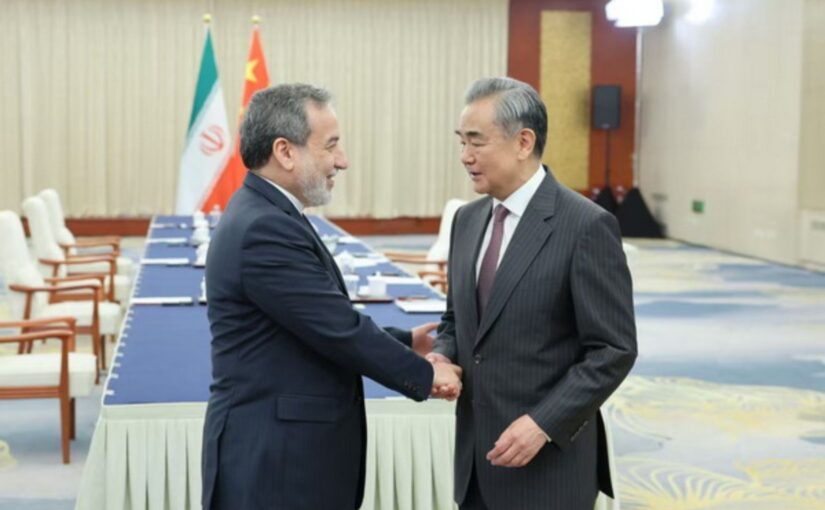
On May 20, Chinese Foreign Minister Wang Yi met with Dar, who also serves as his country’s Deputy Prime Minister.

Wang Yi said that as ironclad friends, China will, as always, firmly support Pakistan in safeguarding its national sovereignty and territorial integrity, exploring a development path suited to its national conditions, resolutely combating terrorism, and playing a greater role in international and regional affairs. Both sides should work together to create an upgraded version of the China-Pakistan Economic Corridor (CPEC) and promote cooperation in industry, agriculture, energy and minerals, human resource development, counter-terrorism and security, and other fields.

Mohammad Ishaq Dar said that Pakistan admires China’s new development achievements, especially in innovation and scientific and technological progress, and looks forward to strengthening all-round cooperation with China. He expressed the hope for continuous and strong support from China in overcoming current difficulties and promoting national development, security and stability.

Dar also briefed on the latest situation following the ceasefire reached between Pakistan and India, as well as Pakistan’s considerations in that regard. He thanked China for upholding justice and making unremitting efforts and significant contributions to promoting a ceasefire for peace, saying that Pakistan will resolutely safeguard its national sovereignty and territorial integrity, and is willing to maintain dialogue with India to ease the situation.

Wang Yi stated that China welcomes and supports Pakistan and India in properly handling their differences through dialogue, achieving a comprehensive and lasting ceasefire, and seeking fundamental solutions to the issues between them.

The next day, Wang Yi met with Acting Foreign Minister of Afghanistan Mawlawi Amir Khan Muttaqi.

Wang Yi welcomed Muttaqi’s visit to China on the occasion of the 70th anniversary of the establishment of diplomatic relations between the two countries. He stated that China and Afghanistan are traditionally friendly neighbours, and both sides have always understood and supported each other and continuously advanced bilateral relations. China respects Afghanistan’s independence, sovereignty and territorial integrity, the independent choices made by the Afghan people, as well as Afghanistan’s religious beliefs and ethnic culture. China has supported the Afghan people’s just struggle against aggression, never interfered in Afghanistan’s internal affairs, never sought selfish interests by instigating conflicts in Afghanistan, and never pursued so-called spheres of influence in Afghanistan. Since the establishment of the current Afghan government, China was the first to exchange new ambassadors with the country, demonstrating China’s friendship with the Afghan people. China will, as always, support the Afghan government in exercising governance in a moderate and prudent way, focusing on development, firmly combating terrorism, and pursuing good-neighbourliness and friendship, to achieve lasting peace and stability at an early date. China is ready to work with Afghanistan to expand cooperation in areas such as economy and trade, agriculture, energy and minerals, poverty reduction, disaster prevention and mitigation, talent cultivation, medical care and health, law enforcement, and security.

Continue reading Wang Yi meets with foreign ministers of Pakistan and Afghanistan

Ho Chi Minh’s vital contributions to the global socialist and anti-imperialist struggle

Marking the 135th anniversary of the birth of the country’s revolutionary leader Ho Chi Minh, May 19, 2025, the Vietnamese press has carried numerous articles reflecting the worldwide respect felt by progressive people for their national hero.

In one such article, a Vietnam News Agency (VNA) correspondent in Beijing, interviewed Professor Pan Jin’e, a senior fellow at the Academy of Marxism under the Chinese Academy of Social Sciences.

Pan described Ho Chi Minh as the founder of the Democratic Republic of Vietnam, a great revolutionary, a brilliant strategist, and a moral exemplar. She also highlighted his role as a leader of anti-colonial movements across Asia, Africa, and Latin America in the 20th century, as well as his significant place in the history of the international communist movement.

She noted that President Ho Chi Minh remained steadfast in his internationalist ideals. He joined the French Communist Party, actively collaborated with leaders of other socialist countries, and maintained close ties with the Chinese revolution. Alongside leaders such as Mao Zedong and Zhou Enlai, he helped build the traditional friendship between Vietnam and China – a relationship that remains cherished by both parties and peoples.

As a representative of the Communist International, Ho Chi Minh supported revolutionary movements worldwide, particularly in China, Laos, and Cambodia, playing an active role in anti-colonial struggles and proletarian revolutions.

Another article carried by Nhân Dân noted that: “With the friendship of ‘the proletariat in all four directions are brothers’, Ho Chi Minh harshly criticised some comrades in the Communist International for incorrectly assessing the colonial issue and confidently affirmed that the proletarian revolution was completely capable of breaking out first in the colonial countries, thereby creating conditions for workers and labourers in the mother countries to carry out the revolution to liberate the class and liberate society.”

The following article was originally published by Nhân Dân.

President Ho Chi Minh made significant contributions to Viet Nam and the international community, according to Professor Pan Jin’e, a senior fellow at the Academy of Marxism under the Chinese Academy of Social Sciences.

In an interview with a Viet Nam News Agency (VNA) correspondent in Beijing on the occasion of the 135th birth anniversary of the late Vietnamese leader (May 19, 1890–2025), Pan described Ho Chi Minh as the founder of the Democratic Republic of Viet Nam, a great revolutionary, a brilliant strategist, and a moral exemplar. She also highlighted his role as a leader of anti-colonial movements across Asia, Africa, and Latin America in the 20th century, including his significance in the history of the international communist movement.

She emphasised that his contributions were reflected not only in Viet Nam’s national liberation and national building efforts but also in their profound impact on global struggles against colonialism and the international socialist movement.

Ho Chi Minh led the independence movement, founded the Communist Party of Viet Nam, and waged resistance wars against colonial and imperial forces, devoting his entire life to national reunification. He also guided the country’s socialist development in politics, economy and culture, spearheaded land reform, poverty alleviation, and national unity policies.

President Ho Chi Minh remained steadfast in his internationalist ideals. He joined the French Communist Party, actively collaborated with leaders of other socialist countries, and maintained close ties with the Chinese revolution. Alongside leaders such as Mao Zedong and Zhou Enlai, he helped build the traditional friendship between Viet Nam and China—a relationship that remains cherished by both Parties and peoples.

As a representative of the Communist International, Ho Chi Minh supported revolutionary movements worldwide, particularly in China, Laos, and Cambodia, playing an active role in anti-colonial struggles and proletarian revolutions.

According to the Chinese scholar, whether during Viet Nam’s socialist revolutionary era or its ongoing doi moi (renewal) cause, Ho Chi Minh’s status as a national hero and spiritual leader has never diminished. In 2019, the United Nations Educational, Scientific and Cultural Organisation (UNESCO) honoured him as a “Hero of National Liberation and a Great Man of Culture,” acknowledging his historic contributions to humanity.

Reflecting on the spirit of unity embodied in Ho Chi Minh’s Thought, Pan underscored that under his leadership and that of the Communist Party of Viet Nam, the country achieved the historic victory of national reunification on April 30, 1975. This triumph is a powerful testament to his famous teachings: “Unity, unity, great unity. Success, success, great success!” National unity, she noted, remains the most vital force behind Viet Nam’s revolutionary success.

The Chinese scholar expressed her belief that the Vietnamese people will always remember President Ho Chi Minh’s final wishes, continue to uphold national solidarity, and write new chapters in the nation’s proud history. They will strive to build an independent, free, happy, prosperous, and civilised Viet Nam by 2050, fulfilling the late leader’s long-cherished dream of seeing Viet Nam stand shoulder to shoulder with the great powers of the five continents, she continued.

Liu Jianchao meets with a delegation of the Congress of Deputies of Spain

On May 12, Minister Liu Jianchao of the International Department of the Communist Party of China (CPC) Central Committee (IDCPC), met in Beijing with a delegation of the Congress of Deputies of Spain led by Juan Carlos Ruiz Boix, Chairman of its Foreign Affairs Committee.

Liu said that China is ready to work with Spain to implement the important consensus reached by President Xi Jinping and Prime Minister Pedro Sanchez, well implement the Action Plan for Strengthening the Comprehensive Strategic Partnership, enhance the alignment of development strategies, promote practical cooperation in various fields, and facilitate exchanges in culture, sports and other areas to achieve greater progress in bilateral relations. The CPC is willing to enhance political dialogue with Spanish political parties, increase mutual understanding and trust, and further consolidate the foundation for the development of China-Spain relations.

Ruiz said that Prime Minister Pedro Sanchez has visited China many times, and the most recent visit was very successful, reaching important consensus with Chinese leaders. Spain is willing to deepen cooperation with China in areas such as renewable energy, artificial intelligence, people-to-people and cultural exchanges, and tourism, and jointly address global challenges such as climate change. China has achieved great accomplishments in poverty alleviation and epidemic response and plays an important role in resolving global hot issues. Both Spain and China are committed to developing the economy and ensuring that all people share the fruits of development. There are many similar positions between the two sides. “We appreciate the major initiatives put forward by President Xi Jinping, such as the Global Civilisation Initiative.” Spanish political parties are willing to engage in candid and in-depth dialogue with the CPC to promote exchanges and cooperation in various fields between the two countries. The current international situation is turbulent, both Spain and China are committed to peaceful development and should join hands to keep the world away from war.

According to the IDCPC website, the delegation included members of the Congress of Deputies of Spain from the Spanish Socialist Workers’ Party, Sumar, Republican Left of Catalonia, Together for Catalonia, Basque Solidarity and others.

Sumar is an electoral alliance of left and progressive parties. It presently has 24 members of whom the most significant are the Communist Party of Spain (PCE) and United Left (IU – Izquierda Unida.) Of the 135 seats in the Catalan Parliament, Republican Left presently holds 20 and supports the government of the Socialists’ Party of Catalonia. Together for Catalonia holds 35 seats and is the main opposition party. Both parties support Catalan independence. Basque Solidarity (EA – Eusko Alkartasuna), founded in 1986, is one of three member parties of EH Bildu (Euskal Herria Bildu – Basque Country Unite), which groups the pro-independence left. One significant point about this delegation is that it is likely the first time that the IDCPC notes exchanges with pro-independence parties from Catalonia and the Basque Country.

The following article was originally published on the website of the IDCPC.

Beijing, May 12 (IDCPC) — Liu Jianchao, Minister of the International Department of the CPC Central Committee, met here today with a delegation of the Congress of Deputies of Spain led by Juan Carlos Ruiz Boix, Chairman of the Foreign Affairs Committee of the Congress of Deputies of Spain. 

Continue reading Liu Jianchao meets with a delegation of the Congress of Deputies of Spain

China and Russia will always remember the just feats of the two peoples in maintaining world peace

During President Xi Jinping’s May 7-10 state visit to Russia, during which he participated in the celebrations of the 80th anniversary of the Soviet Union’s victory over Nazi Germany in the Great Patriotic War, besides concluding with his Russian counterpart Vladimir Putin the Joint Declaration on Further Strengthening Cooperation to Uphold the Authority of International Law and that on Global Strategic Stability, the two heads of state also signed a Joint Statement of the People’s Republic of China and the Russian Federation on Further Deepening the China-Russia Comprehensive Strategic Partnership of Coordination in the New Era on the Occasion of Commemorating the 80th Anniversary of the Victory of the Chinese People’s War of Resistance Against Japanese Aggression, the Soviet Union’s Great Patriotic War and the Founding of the United Nations.

This 8,500-word statement not only details a wide range of issues connected to these anniversaries and surveys the broad spectrum of bilateral relations between China and Russia. It also sets out the two countries’ identity of views on a great number of contemporary regional and global issues. As with the other joint statements, it goes into granular detail, demonstrating the unprecedentedly high level not only of agreement but of active and practical coordination between Beijing and Moscow. It is therefore not hyperbole to observe that these documents are of considerable historical significance, contributing to and demonstrating President Xi’s oft stated observation that the world is currently experiencing changes unseen in a century. Therefore anyone with a serious interest in international relations should study them closely.

The statement begins by noting that, “This year marks the 80th anniversary of the victory of the Chinese People’s War of Resistance Against Japanese Aggression, the World Anti-Fascist War, and the Soviet Union’s Great Patriotic War. The Second World War was an unprecedented catastrophe in human history. China and the Soviet Union, as the main battlefields in Asia and Europe respectively, stood at the forefront of resisting the attacks of Japanese militarism and Nazi Germany and its vassal states, and were the two backbone forces in the fight against militarism and fascism. The Chinese and Soviet peoples suffered great hardships brought by foreign aggression and the baptism of extremely harsh wars. They fought shoulder to shoulder in arduous struggles, gave each other selfless assistance, made great sacrifices, and achieved great victories, making great historical contributions to defending human dignity and rebuilding world peace.”

In today’s world, China and Russia shoulder the common responsibility and mission of maintaining a correct view of World War II history. China and Russia will always remember the just feats of the two peoples in maintaining world peace, cherish the memory of the tens of millions of heroes and innocent civilians who sacrificed their lives for the freedom and independence of future generations, and pay high tribute to the old soldiers and heroic rear-line workers who made combat exploits during the war years. Both sides will continue to attach importance to educating the younger generation to take the predecessors as role models, adhere to the indelible spirit of patriotism, cultivate the responsibility for the motherland and the people, and promote the fearless spirit of sacrifice for the realisation of national peace and prosperity.

Among many areas of bilateral relations, it states that: “The two sides reiterated that the close relationship between the Chinese and Russian militaries is of special significance, which will help the two countries to more effectively defend their sovereignty and national interests and effectively respond to traditional and non-traditional threats and challenges. The two sides will continue to strengthen military and military-technical cooperation to benefit the people of China and Russia and safeguard global and regional security. The two sides will further deepen military mutual trust and cooperation, expand the scale and scope of joint military exercises, regularly organise joint maritime and air patrols, strengthen exchanges and cooperation under bilateral and multilateral frameworks, and promote China-Russia military cooperation to a higher level.”

Other highlights of the statement include:

Continue reading China and Russia will always remember the just feats of the two peoples in maintaining world peace

China condemns Israeli war crimes and expresses solidarity with the Palestinian people

China has twice recently used the platform of the United Nations to condemn Israeli war crimes, draw attention to the role played by the United States and to express solidarity with the struggle of the Palestinian people and with their national aspirations.

Speaking at a Nakba commemoration on May 15, Ambassador Geng Shuang said that: “Seventy-seven years ago, more than half of the Palestinian people were expelled or fled from their homes during the Arab-Israeli war, and they have since embarked on the arduous journey of striving for their legitimate rights and interests. Today, 77 years later, the historical injustice suffered by the Palestinian people has not only remained unaddressed but has even worsened. 

“The war in Gaza has lasted for 19 months, claiming the lives of more than 53,000 Gazans and leaving the once beautiful cities and towns in ruins. Israel’s escalating siege on Gaza has led to an unprecedented humanitarian catastrophe for two million people who face the threat of forced relocation. The continued expansion of settlements in the West Bank and the intensifying settler violence have relentlessly squeezed the space for the Palestinian people and eroded the basis of the two-State solution.”

He added that, “On the question of Palestine, China, upholding fairness and justice, remains steadfast in its support for the just cause of the Palestinian people to restore their legitimate national rights, for the early establishment of the fully sovereign and independent State of Palestine based on the 1967 borders with East Jerusalem as its capital, and for the early admission of the State of Palestine as a full member of the UN,” adding that China would continue to work tirelessly for, “a comprehensive, just, and lasting solution to the question of Palestine at an early date, so that the Nakba day will forever remain in the past.”

Two days previously, on May 13, Ambassador Fu Cong addressed a UN Security Council Briefing on the Humanitarian Situation in Gaza and said:

“Gaza has become a living hell. Israel’s continuous bombing and raids are causing civilian casualties every day. On May 7 alone, there were more than 100 lives lost. Over the two-month-plus blockade, Gaza’s survival supplies were depleted. Hunger and disease are spreading rapidly. According to the IPC [Integrated Food Security Phase Classification] report, the population in Gaza are suffering from severe food shortages, with nearly half a million people in a state of catastrophic hunger.

Continue reading China condemns Israeli war crimes and expresses solidarity with the Palestinian people