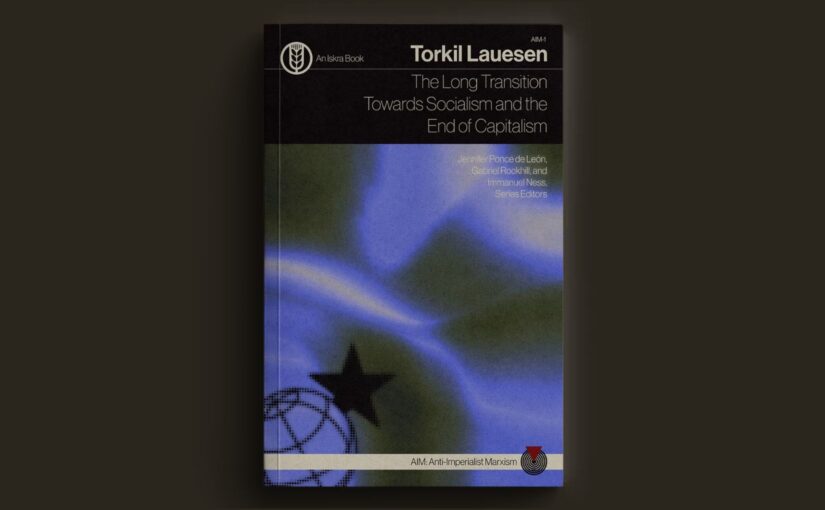
The following text by Carlos Martinez, written for the May-June 2025 issue of Communist Review, reviews The Long Transition Towards Socialism and the End of Capitalism, by Danish revolutionary intellectual Torkil Lauesen.
The review highlights and explores a number of key themes from the book, including the assessment of the history of the global working class movement within a framework of historical materialism; the possibility that humanity has reached a turning point and that capitalism has run out of ways to sustain itself; and the indispensability of constructing a global united front composed of the socialist countries, the national liberation movements, the anti-imperialist forces of the Global South, and the progressive forces in the advanced capitalist countries.
The review notes: “One of the most significant aspects of The Long Transition is its serious attempt to understand and explain contemporary China, and in particular to assess the results – and perhaps necessity – of the Reform and Opening Up process introduced in 1978, gradually introducing market mechanisms to the economy, allowing private ownership of capital, encouraging investment from abroad, and integrating China into the global economy.”
Lauesen’s investigations of Socialism with Chinese Characteristics lead him to the conclusion that “the importance of socialist-oriented development in China can hardly be overestimated. It can tip the global balance of power decisively in favour of a socialist world order.”
As Carlos states in his review, The Long Transition Towards Socialism and the End of Capitalism is a richly rewarding and important read. It can be purchased or downloaded from Iskra Books.
Long transition
The latest book from Danish revolutionary intellectual Torkil Lauesen, The Long Transition Towards Socialism and the End of Capitalism, is highly ambitious in its scope, providing an assessment of the first two centuries of humanity’s attempts to build socialism, and outlining some of the necessary or possible next steps on that journey.
Lauesen describes in some detail the history thus far of the “long transition” from capitalism to socialism – starting with the first rumblings of proletarian revolt in mid-19th century Europe, then moving on to the Paris Commune, the rise and fall of the German workers’ movement, the October Revolution, the early attempts at socialist construction in the Soviet Union, the eastward shift of the revolutionary centre of gravity in the post-WW2 era, and the ongoing socialist project in the People’s Republic of China.
These milestones are contextualised within a long-running, dialectical struggle between two social systems. While all except the last are by now studied as history rather than as contemporary politics, and while many failed to achieve their stated aims, they all form links in an ongoing chain: the long transition to socialism. Lauesen writes that “the struggle and suffering of millions of communists and socialists for the past two hundred years have not been in vain, but are contributions to this long process of creating a better world.” (p2)
Such a sentiment – heartening to those of us that have lived through a low ebb of the communist tide – echoes the powerful words of Korean revolutionary Kim San in Helen Foster Snow’s remarkable Song of Ariran:
Nearly all the friends and comrades of my youth are dead, hundreds of them… Their warm revolutionary blood flowed proudly into the soil of Korea, Manchuria, Siberia, Japan, China. They failed in the immediate thing, but history keeps a fine accounting. A man’s name and his brief dream may be buried with his bones, but nothing that he has ever done or failed to do is lost in the final balance of forces.[1]
In such a framework, the retreats suffered by our movement should be considered as part of an inevitable ebb and flow of a complex trajectory that could take hundreds of years but which nonetheless has an inexorable historical materialist tide. As Deng Xiaoping observed in 1992, commenting on the collapse of the Soviet Union: “Feudal society replaced slave society, capitalism supplanted feudalism, and, after a long time, socialism will necessarily supersede capitalism. This is an irreversible general trend of historical development, but the road has many twists and turns… Some countries have suffered major setbacks, and socialism appears to have been weakened. But the people have been tempered by the setbacks and have drawn lessons from them, and that will make socialism develop in a healthier direction.”[2]
The transition process is complicated by the fact that capitalism and socialism do not exist independently of one another, but rather constitute a unity of opposites, one constantly acting on and transforming the other. Lauesen writes for example that “the way capitalism works today is a product of the Russian Revolution and Soviet industrialisation, the anti-colonial uprisings in the Third World, the 1968 uprising, and the current Chinese development of socialism.” This view is shared with the late Egyptian Marxist Samir Amin, who wrote that “the long transition of world capitalism to world socialism is defined by the internal conflict of all the societies in the system between the trends and forces of the reproduction of capitalist relations and the (anti-systemic) trends and forces, whose logic has other aspirations – those, precisely, that can be defined as socialism”.[3]
Capitalism is running out of road
Marx and Engels thought that capitalism’s contradictions and its tendency towards crisis would condemn it to a relatively brief existence. Lauesen cites Engels in 1847, writing that the bourgeoisie “will at most win a few years of troubled enjoyment, only to then be immediately overthrown… You shall be allowed to rule for a short time… but do not forget that ‘the hangman stands at the door’”. (p54)
A hundred and seventy-eight years hence, it has to be admitted that capitalism has shown itself to be remarkably adaptive, “finding new escape routes from its problems” (p22) in the form of new technologies, colonial and imperial expansion, war, repression, cultural hegemony, and the provision of “bread and circuses” to a privileged layer of the working class.
However, while problems can be swept under the carpet, they can’t remain there permanently. Neoliberal globalisation gave the US an additional four decades of hegemony starting in the 1970s, but Lauesen considers that capitalism is running out of options for mitigating its contradictions.
I do not believe that capitalism will survive this century. Capitalism reached its zenith around 2000. It is still dominant, but is in decline, reflected in the turn from neoliberal economic globalisation towards military defence of a US hegemony that is no longer economically based. The decline of US hegemony and the rise of China as a driver for a more multipolar world system can lead to a geopolitical balance, in which social movements and nations in the global South can move in the direction of socialism. (p10)
China’s emergence is central to Lauesen’s analysis. While the US-led capitalist world system is in decline, China – led by a Communist Party and following a hybrid economic model with public ownership and planning at its core – is increasing in strength, prosperity and influence. China is “the leading industrial producer and the biggest actor in the world market”, as well as being “the driving force behind the effort to establish a multipolar world-system.” (p10)
Furthermore, China’s rise is not reliant on hegemonism. As President Xi Jinping has pointedly remarked: China will “neither tread the old path of colonisation and plunder, nor the crooked path taken by some countries to seek hegemony once they grow strong.”[4] Because the capitalist class in China is not the ruling class, it is not able to define the country’s foreign policy. Li Zhongjin and David Kotz have pointed out, any drive towards hegemonism by China’s capitalists is restrained by a CPC government which “has no need to aim for imperial domination to achieve its economic aims”, and “the Chinese capitalist class lacks the power to compel the CPC to seek imperial domination.”[5]
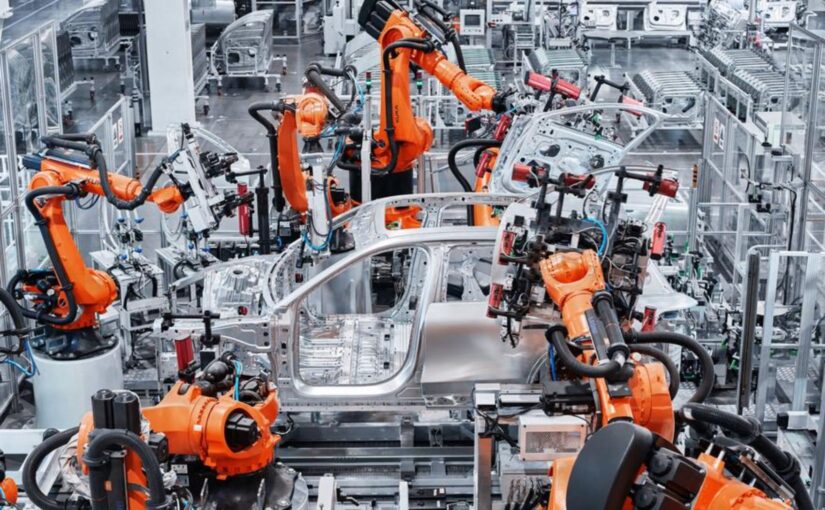
Lauesen considers that the failure of the forces of global socialism to win a final victory over capitalism is rooted primarily in the fact that capitalism has still found ways to expand; it has still until very recently retained the edge in terms of driving human progress forward. This is changing. As Deng Xiaoping commented in 1984, “the superiority of the socialist system is demonstrated, in the final analysis, by faster and greater development of those forces than under the capitalist system”.[6] The extraordinary success of DeepSeek’s R1 model; China’s leading role in renewable energy and green transport; its charting of new territory in telecommunications, advanced industry, space exploration, medical science and more all indicate that humanity is reaching a turning point.
Understanding China
One of the most significant aspects of The Long Transition is its serious attempt to understand and explain contemporary China, and in particular to assess the results – and perhaps necessity – of the Reform and Opening Up process introduced in 1978, gradually introducing market mechanisms to the economy, allowing private ownership of capital, encouraging investment from abroad, and integrating China into the global economy.
Lauesen’s writing betrays a certain ambivalence on this topic, and it’s not difficult to imagine that, given his long adherence to a variant of Cultural Revolution-era Maoism, it has been no easy task coming to terms with Deng Xiaoping Theory. And yet, Lauesen’s methodology adheres to Mao Zedong’s observation that “the only yardstick of truth is the revolutionary practice of millions of people”.[7] As such, he recognises that China’s extraordinary rise constitutes “an epochal change in the world-system. China was able, for the first time in two hundred years, to break the polarising dynamic of capitalism between the West and the rest of the world.” (p256)
Lauesen also recognises that this success would likely not have been possible without the introduction of market reforms and integration into the global economy from the late 1970s onwards. Marx writes that “the development of the productive forces of social labour is capital’s historic mission and justification”.[8] China’s leadership recognised that capital could still perform that historic mission in a socialist country, under the leadership and guidance of the Communist Party. Lauesen views this as necessary, in a context where “actually existing socialism” in both Soviet and Chinese flavours had been as yet unable “to break the power of the global capitalist market, which blocked the road to the development of socialism”. (p221)
In a capitalist-dominated world, without a sufficiently developed economic base, China had to become part of the world economy. It had to build up its productive forces under conditions which would almost certainly be a threat to the hard-won political preconditions, since capitalist norms and values would penetrate society… It could not continue the development of its productive forces without investments and trading with capitalist countries. It needed to begin the transfer of technology from the imperial countries. (p226)
Interestingly, Lauesen considers that the concept of ‘Socialism with Chinese Characteristics’ is not a post-Mao development; that China’s economic reform was not a manifestation of Mao Zedong and his supporters losing the two-line struggle with so-called capitalist roaders. Rather, Mao himself “was part of this new strategy, shifting the course from port to starboard to avoid sailing too close to the wind of the looming storm of global capitalism”. (p221)
In this analysis, the Third Industrial Revolution – the rise of electronics, telecommunications, automation and computers, combined with the massive expansion of globalised production chains enabled by containerisation – gave a new lease of life to capitalism and affected the balance of power in the global class struggle. “Revolutions erupted in Cuba, Algeria, Vietnam, Angola, Mozambique, Guinea-Bissau, Namibia, Zimbabwe, Nicaragua, and so on, but despite their socialist aspirations, they hardly left the ground concerning the construction of socialism. Therefore, it was not only the Cultural Revolution that lost its steam through the 1970s, it was revolutionary movements all over the world. This indicates that there was a deeper transformation occurring in world capitalism, which was reflected in global class struggles.” (p218)
China needed to rapidly develop its productive forces – “not only to eradicate poverty in China itself, but also because it is necessary to possess the most developed technology to break the dominance of capitalism, and thus promote a global transformation towards socialism” (p272). And this dynamic is first detected not in Deng’s speech at the third plenary session of the 11th Central Committee of the Communist Party of China in December 1978, but in Richard Nixon’s meeting with Mao in Beijing in February 1972, and China’s acquisition of various industrial facilities from the West in the following years.
Bringing the story up to the present, Lauesen states that “a socialist-oriented China will be of great importance for a transition towards global socialism”, in particular because it “will create possibilities for anti-capitalist struggles within the remaining capitalist world system”. As such, “the importance of socialist-oriented development in China can hardly be overestimated. It can tip the global balance of power decisively in favour of a socialist world order” (p276). This is consistent with the great Italian Marxist philosopher Domenico Losurdo: “Thanks to the prodigious economic and technological development of China, defined as the most important event of the last five hundred years, the Columbian era has come to an end”.[9]
Global united front
The capitalist system is increasingly becoming a hindrance to human progress, and a threat to human survival, but a socialist future is not, of course, guaranteed. It was 110 years ago that the heroic Polish-German revolutionary and theoretician Rosa Luxemburg popularised the idea that humanity faced a stark choice: between socialism and barbarism. But now as then, barbarism is still on the table, and in this era of existential threats to humanity – climate change, pandemics, antimicrobial resistance, nuclear warfare, the dangers posed by unrestrained and unscrupulous use of artificial intelligence – its possible dimensions are all too visible.
Objective factors increasingly favour the global movement for socialism, but the subjective factors have to be mobilised as well. Lauesen writes: “Capitalism can collapse in a brutal, chaotic endgame of wars and natural disasters. To avoid this is our task; and to accomplish that task, we must fulfil the transition to socialism. To do this, we need to learn from the past and mobilise, organise, and develop a strategy for future struggles.” (p2)
In Lauesen’s view, the left in the Global North will not be the driving force in the transition toward global socialism. But this doesn’t mean that the left should simply maintain a humdrum existence fighting for better pay and conditions. “It is not enough to wait for the proletariat of the Global South to create a revolutionary situation in our part of the world”. (p359)
Rather, Marxists in the West must urgently adopt an internationalist perspective and help construct a global united front composed of the socialist countries, the national liberation movements, the anti-imperialist forces of the Global South, and the progressive forces in the advanced capitalist countries. After all, “if reforms in the Global North are not accompanied by the deconstruction of imperialism, then they are not a step forward — they are parasitic”. (p353)
Lauesen urges his readers to make a permanent break with social chauvinism; to make a permanent break with the arrogant Western Marxism described by Losurdo, which rejects the leadership and the lessons of actually existing socialism; to support the Global South’s struggle against imperialism; to support those countries and movements developing socialism; to oppose wars; and to “make sure that the North is no safe ‘hinterland’ for imperialism, which means struggle against right-wing national chauvinism, racism, and imperialist political and military intervention”. (p359)
The appeal from the Baku Congress of the Peoples of the East, held 125 years ago, urges the Western working classes: “You cannot free yourselves without helping us in our struggle for liberation. The wealth of our countries is, in the hands of the capitalists, a means of enslaving you.”[10] Lauesen calls on us to take up this challenge anew.
In a relatively long book, dealing with difficult and controversial topics, there is inevitably no lack of things to disagree with. Nonetheless, The Long Transition Towards Socialism and the End of Capitalism is a richly rewarding and important read.
[1] Chang Chi-rak and Nym Wales. Song of Ariran: A Korean Communist in the Chinese Revolution. San Francisco: Ramparts Press, 1972, p216
[2] Deng Xiaoping 1992, Excerpts From Talks Given In Wuchang, Shenzhen, Zhuhai and Shanghai, Marxist Internet Archive. https://www.marxists.org/reference/archive/deng-xiaoping/1992/179.htm
[3] Samir Amin. Global History: A View from the South. Cape Town, South Africa : Dakar, Senegal : Bangalore, India: Pambazuka Press, 2011, p185
[4] Xi Jinping 2023, Full text of Xi Jinping’s keynote address at the CPC in Dialogue with World Political Parties High-level Meeting, Xinhua. https://english.news.cn/20230316/46287ba021164317ab578b18b447a0af/c.html
[5] Li Zhongjin and David Kotz 2020, Is China Imperialist? Economy, State, and Insertion in the Global System, American Economic Association. https://www.aeaweb.org/conference/2021/preliminary/paper/e4D3fNd3
[6] Deng Xiaoping 1984, Building a Socialism With a Specifically Chinese Character, Marxist Internet Archive. https://www.marxists.org/reference/archive/deng-xiaoping/1984/36.htm
[7] Mao Zedong 1940 On New Democracy, Marxist Internet Archive. https://www.marxists.org/reference/archive/mao/selected-works/volume-2/mswv2_26.htm
[8] Karl Marx. Capital: A Critique of Political Economy. V. 3: Penguin Classics. London, 1981, p368
[9] Domenico Losurdo. Western Marxism: How It Was Born, How It Died, How It Can Be Reborn (ed. Gabriel Rockhill). Monthly Review Press, 2024, p227
[10] Baku Congress of the Peoples of the East: Appeal from the Congress (1920), Marxist Internet Archive. https://www.marxists.org/history/international/comintern/baku/to-workers.htm