UN Resolution in Gaza is binding – China challenges US at Security Council

The United Nations Security Council (UNSC) finally adopted a resolution demanding a ceasefire in Gaza, initially for the remainder of the Muslim holy month of Ramadan, on March 25. 

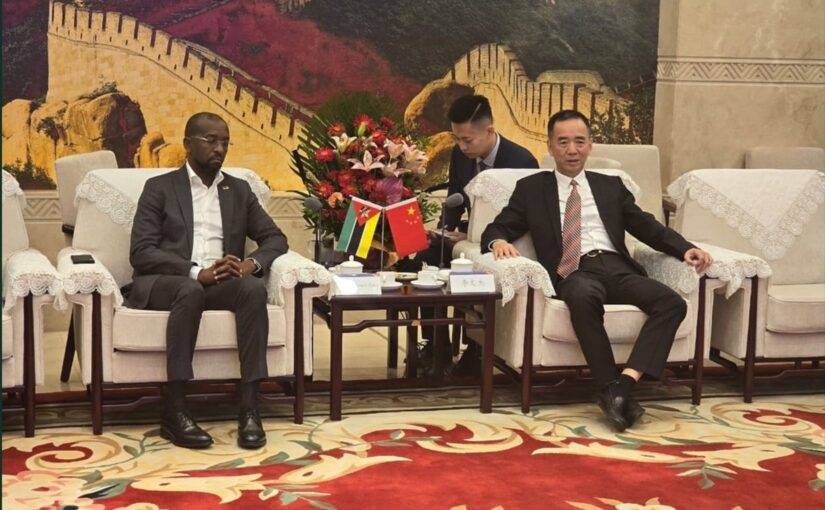
The resolution, which was drafted and proposed by Mozambique, along with the other nine rotating, non-permanent members of the UNSC, was passed with 14 votes in favour. Faced with massive international condemnation and repudiation, the United States, which has repeatedly shielded Israel through the use of its veto power, abstained on this occasion, thereby allowing the resolution to pass. 

Speaking after the vote, China’s UN Ambassador Zhang Jun stated:

“Last Friday, the Security Council voted on the other draft resolution proposed by the United States on the situation in Gaza. China together with Algeria and Russia voted against it. A comparison of the two drafts shows the differences. The current draft is unequivocal and correct in its direction, demanding an immediate ceasefire, while the previous one has been evasive and ambiguous. The current draft demands an unconditional ceasefire, while the previous one has set preconditions for a ceasefire. The current draft reflects the general expectations of the international community and enjoys the collective support of the Arab states, while the previous one has been jointly rejected by the Arab states. The differences between the two drafts boil down to nothing but whether there should be an immediate and unconditional ceasefire and whether the collective punishment of the people in Gaza should be allowed to continue. On this issue, China, like most members of the international community, has been very clear from the very outset. Whether we voted against it last Friday, or in favour of it today, our vote has been based on our consistent position.”

Zhang continued:

“After repeated vetoes of Council actions, the United States finally decided to stop obstructing the Council’s demand for an immediate ceasefire. However, the US still tried to find all kinds of excuses to make accusations against China. The eyes of the international community are discerning. The accusations by the US are untenable. On the contrary, it’s because of China and other countries concerned upholding principles and justice, that we forced the US to realise that it cannot, and is unable to continue to obstruct the efforts of the Council to take the decisive step in the right direction. In the end, justice prevails.”

Predictably, Israel, shielded by the US and other imperialist powers, has ignored the resolution and continued with its genocidal war of aggression, whilst the United States has speciously claimed that the resolution is non-binding. Anticipating this, Zhang declared:

“Nearly six months after the outbreak of the Gaza conflict, over 32,000 innocent civilians have lost their lives. For the lives that have already perished, the Council resolution today comes too late. But for the millions of people in Gaza who remain mired in an unprecedented humanitarian catastrophe, this resolution, if fully and effectively implemented, could still bring long-awaited hope. Security Council resolutions are binding. We call on the parties concerned to fulfil their obligations under the United Nations Charter and to take due action as required by the resolution. We expect the state with significant influence to play a positive role on the party concerned, including by using all necessary and effective means at their disposal to support the implementation of the resolution.

“To this end, all harm against civilians must cease immediately, and the offensive against Gaza must be stopped at once. A ceasefire during the month of Ramadan is only the first step that must serve as a basis leading to a permanent sustainable ceasefire and the early return of the people of Gaza who are forced to flee their homes.”

And stressing the urgent need to get humanitarian relief supplies to the Palestinian people in Gaza, he added: “We categorically reject Israel’s recent vicious campaign of attacks against UNRWA [The United Nations Relief and Works Agency for Palestine Refugees in the Near East] and the United Nations system as a whole.”

He pointedly concluded: “The Security Council must continue to follow closely the situation in Gaza and get ready for further actions when necessary to ensure the timely and full implementation of the resolution.”

The following articles were originally published on the website of the Permanent Mission of the People’s Republic of China to the UN and by the Palestine Chronicle.

Explanation of Vote by Ambassador Zhang Jun on the UN Security Council Resolution on the Gaza Ceasefire

Mr. President,

China voted in favor of the draft resolution that has just been put to the vote. We thank Algeria, Mozambique, and other elected Council members for their efforts.

Last Friday, the Security Council voted on the other draft resolution proposed by the United States on the situation in Gaza. China together with Algeria and Russia voted against it. A comparison of the two drafts shows the differences. The current draft is unequivocal and correct in its direction, demanding an immediate ceasefire, while the previous one has been evasive and ambiguous. The current draft demands an unconditional ceasefire, while the previous one has set preconditions for a ceasefire. The current draft reflects the general expectations of the international community and enjoys the collective support of the Arab states, while the previous one has been jointly rejected by the Arab states. The differences between the two drafts boil down to nothing but whether there should be an immediate and unconditional ceasefire and whether the collective punishment of the people in Gaza should be allowed to continue. On this issue, China, like most members of the international community, has been very clear from the very outset. Whether we voted against it last Friday, or in favor of it today, our vote has been based on our consistent position and proposition.

After repeated vetoes of Council actions, the United States finally decided to stop obstructing the Council’s demand for an immediate ceasefire. However, the US still tried to find all kinds of excuses to make accusations against China. The eyes of the international community are discerning. The accusations by the US are untenable. On the contrary, it’s because of China and other countries concerned upholding principles and justice, that we forced the US to realize that it cannot, and is unable to continue to obstruct the efforts of the Council to take the decisive step in the right direction. In the end, justice prevails.

Continue reading UN Resolution in Gaza is binding – China challenges US at Security Council

Cyberattack allegations: smoke and mirrors instead of truth

In the following brief article for the Morning Star, Carlos Martinez scrutinises the British government’s recent claim that China is engaged in “malicious” cyber activities directed against the UK.

While these allegations are being led by fanatically anti-China Tory MPs such as Iain Duncan Smith, the article notes that Starmer’s Labour Party has also been quick to jump on the bandwagon, with shadow foreign secretary David Lammy promising that a Labour government would put a stop to Chinese cyberattacks by “working with Nato allies to develop new measures designed to protect our democratic values, institutions and open societies”. Carlos comments: “Lammy perhaps missed the irony of lauding Nato’s ‘democratic values’ on the 25th anniversary of that organisation’s criminal bombing campaign against Yugoslavia.”

The slanders about Chinese cyberattacks “contribute to anti-China hysteria, thereby building public support for Britain’s role in a reckless US-led new cold war.” Carlos concludes:

There is no benefit to the British working class of joining in with the new cold war. China does not pose a threat to us. China’s proposal is for mutual respect and non-interference; an economic relationship based on mutual benefit; and for close co-operation on the central issues of our era: climate change, pandemics, peace and development. This is a vision worthy of our support.

On Monday March 25 2024, in an obviously co-ordinated move, the US, UK, New Zealand and Australia accused the Chinese government of backing cyberattacks in order to gather data and undermine Western democracy. On top of their unproven allegations, these countries announced the introduction of new sanctions against China.

Claiming that China was engaged in “malicious” cyber campaigns against MPs, and that it was responsible for a cyberattack on the UK Electoral Commission between August 2021 and October 2022, Deputy PM Oliver Dowden announced: “The UK will not tolerate malicious cyber activity. It is an absolute priority for the UK government to protect our democratic system and values.”

The accusations were led by members of the viscerally anti-China Inter-Parliamentary Alliance on China (IPAC), the ostensible purpose of which is to “counter the threats posed by the Chinese Communist Party to democratic principles.”

IPAC lists its funding sources as the Open Society Foundations, the National Endowment for Democracy and the Taiwan Foundation for Democracy, which should give readers some idea as to its ideological orientation.

Its most prominent British member is Tory MP Iain Duncan Smith, a notoriously fanatical China hawk, who talks often about the “terrible genocide in Xinjiang,” while simultaneously defending Israel’s actual genocide in Gaza. In short, he is an utter reactionary, albeit not a terribly bright one — his rambling utterances bring to mind Marx’s quip about the “British Parliament, which no one will reproach with being excessively endowed with genius.”

His Majesty’s Loyal Opposition was eager to show the ruling class that its foreign policy is every bit as absurd as that of the Tories. Writing in the Mirror on Monday, shadow foreign secretary David Lammy stated: “The wave of cyber-attacks against British politicians and the hack of 40 million voters’ data is chilling. One country, China, is responsible.”

He promised that, if elected, “Labour will work with Nato allies to develop new measures designed to protect our democratic values, institutions and open societies.”

Lammy perhaps missed the irony of lauding Nato’s “democratic values” on the 25th anniversary of that organisation’s criminal bombing campaign against Yugoslavia.

Needless to say, the government singularly failed to back up its accusations with meaningful evidence. Chinese Foreign Ministry spokesperson Lin Jian commented quite reasonably that “there should be comprehensive and objective evidence, rather than slandering other countries without any factual support.”

He added: “China firmly opposes and combats all kinds of cyberattacks, and is committed to working with all countries, on the basis of mutual respect, equality and mutual benefit, to strengthen co-operation and jointly deal with the threats of cybersecurity through channels such as bilateral dialogue or judicial assistance.”

He further affirmed that “the evidence provided by the British side was inadequate and relevant conclusions lack professionalism,” and noted that the US, Britain and their allies themselves have a long history of cyberattacks and espionage against China.

He called on the US and Britain to “stop politicising cybersecurity issues, stop smearing China and imposing unilateral sanctions on China, and stop cyberattacks against China.”

A statement issued by the Chinese embassy in London branded Britain’s accusations “completely unfounded and malicious slander,” adding that “China has always adhered to the principle of non-interference in each other’s internal affairs.”

The embassy statement observed drily that: “whether the British government is good or bad, the British people will come to a conclusion sooner or later.”

Of course, the key purpose of these latest slanders is to contribute to anti-China hysteria, thereby building public support for Britain’s role in a reckless US-led new cold war.

An editorial in the Global Times pointed out that Britain’s shift away from a “golden era” of relations with China towards a position of hostility coincides with an increased economic and political dependence on the US in the aftermath of Brexit.

“It seems that the only way for Britain to secure its position in the ‘co-pilot’ seat is by closely aligning with the US and causing trouble for China.” Issuing slanders against China is simply an example of “deliberately stoking fear to advance their political agendas and achieve their political goals.”

An additional incentive for Britain in painting China as a security threat is to promote protectionism, for example in relation to Chinese-made electric vehicles — which are well known to be both cheaper and better than their European and North American counterparts, and could help meet Britain’s stated environmental objectives.

There is no benefit to the British working class of joining in with the new cold war. China does not pose a threat to us. China’s proposal is for mutual respect and non-interference; an economic relationship based on mutual benefit; and for close co-operation on the central issues of our era: climate change, pandemics, peace and development.

This is a vision worthy of our support.

ALBA party calls for calm to stop UK-China cold war becoming a hot war

Alba, the Scottish nationalist party founded by former First Minister Alex Salmond, has condemned the latest cold war moves by the British government against China.

In a March 26 statement the party’s General Secretary Chris McElney said that the sort of Cold War mentality on display by Westminster ends in hot wars. He called on the Scottish government to reject this approach, adding: “The real danger is from those who wish to divide the world into armed camps and who wish to shut Scotland out from the international community.”

Scotland had benefitted from a positive relationship with China in areas including education, trade, investment and tourism.

The below is reprinted from the Alba website.

Reacting to the UK Government statement on China, Alba Party General Secretary Chris McEleny said:

“As Alex Salmond has previously warned, this is the sort of Cold War mentality on display by Westminster which ends in hot wars. The Scottish Government should reject this viewpoint, defend valuable cultural exchanges and oppose any attempts by the UK Government to close them down or reduce the number of Chinese students who have the ability to be educated in Scotland. We have nothing to fear from talking and exchanging culture. The real danger is from those who wish to divide the world into armed camps and who wish to shut Scotland out from the international community.

“Scotland’s educational links with China have long presented opportunities to increase trade and secure Chinese investment in industry and infrastructure.

“These links also promote Scotland as a destination of choice for Chinese tourists – something which pre-pandemic delivered 172,000 visits to Scotland from China bringing £142M into the Scottish economy.

“Westminster’s feud with China undermines and will deeply damage over a century of Sino-Scottish educational relations”

Dr Rose Dugdale – fighter for Irish freedom, student of Chairman Mao

A huge crowd gathered at Dublin’s Glasnevin Cemetery on March 27th 2024 to bid farewell to Dr. Rose Dugdale, a fighter for Irish freedom for more than half a century, who passed away on March 18 at the age of 82.

Rose was born into immense wealth and privilege in England but gave it all up to devote her life to the working and oppressed people of the world and to the liberation of Ireland and the fight for a socialist republic in particular.

Former Sinn Féin president Gerry Adams joined some 10 Sinn Féin TDs (members of the Dublin parliament), a TD from People Before Profit, veterans of the Republican struggle, including Jim Monaghan, her partner of many decades, and her close friend and comrade Marion Coyle, as well as her son  Ruairí, and many others, at the non-religious ceremony.

Former Sinn Féin Assembly member and MEP Martina Anderson presided over the service and said that her friend had a “pivotal role” in the republican movement.

“I stand here with a sore yet proud heart, reminded of the remarkable journey I and so many others shared together with Rose in the depths of the Irish republican struggle.

“Through her, intellectually, politically and personally, I learned invaluable lessons, as did many others, about resilience, dedication, speaking up, speaking out and the power of conviction.

“Rose’s path from a privileged upbringing to the heart of the republican struggle was marked by her insatiable and unwavering commitment to economic equality, social justice and human rights.”

She added: “Rose’s legacy will forever be intertwined with the tapestry of Ireland’s fight for freedom.”

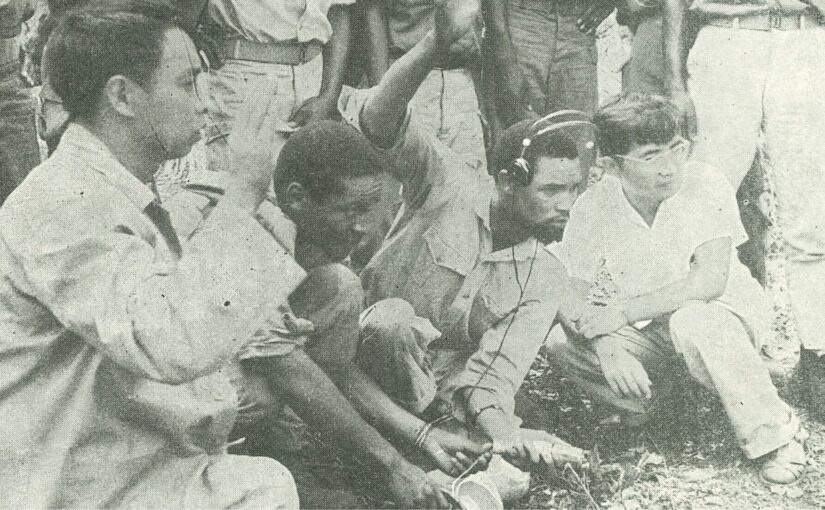
Rose’s partner, Jim Monaghan, one of the ‘Colombia Three’ Irish republicans who were jailed in the South American country after having spent time in the liberated areas then administered by the FARC liberation movement, spoke from his wheelchair, remembering Rose as “a force of nature.”

“Rose was a highly educated woman in politics, philosophy and economics [the subjects she had studied at Oxford University]. We both had a great interest in socialist politics and she taught me a lot.”

Jim was appointed as the head of Sinn Féin’s Education Department and Rose became his Deputy.

He described his partner as “an all-rounder in revolution, politics and education; a woman of many talents, she was well known as an IRA volunteer, but she was also a noted academic and gifted teacher, who taught economics, politics and philosophy.”

He referred to how Rose’s political awakening had been triggered not least by what she learned of the oppression and exploitation of Africa through her work as an economist and continued:

“She also taught English classes when she was in Limerick Prison. The women that were there, some of them couldn’t read, couldn’t write.

 “She helped them through and she helped them read their letters and helped them write letters.”

Continue reading Dr Rose Dugdale – fighter for Irish freedom, student of Chairman Mao

One year on from establishment of diplomatic relations, China-Honduras ties go from strength to strength

China gave considerable publicity to the first anniversary of its establishment of diplomatic relations with the Central American nation of Honduras, which fell on March 26. The prominence given to this occasion reflects the strong growth in bilateral friendship in such a short time and the high degree of common understanding reached between socialist China and the progressive government of Honduras.

Marking the occasion, Chinese President Xi Jinping and Honduran President Xiomara Castro exchanged congratulations.

Xi pointed out that the establishment of diplomatic ties had opened a new chapter in their bilateral relations. He noted that during Castro’s successful state visit to China last June, they held talks and reached important consensus, setting the direction for the development of bilateral relations. Over the past year, the two sides have upheld the principles of mutual respect, equality, mutual benefit, and common development, ensuring that bilateral relations started to grow from a high level, he added.

Xi said he attaches great importance to the development of China-Honduras relations and is willing to work with Castro to take the first anniversary of bilateral ties as an opportunity to consolidate mutual support, expand all-round cooperation, and jointly write a better future.

Castro said that China, with a multi-millennial civilisation and a major role to play in the historical process underway, is a role model for the world and an important partner of Honduras.

The past year saw China’s dedication to innovative development, its participation in efforts to find solutions to global problems and strenuous assistance with worldwide poverty reduction efforts, she added.

Honduras firmly sticks to the one-China principle and is willing to develop ties with China that feature independence and mutual respect, she said, expressing her wish that the two peoples will enjoy a long-lasting friendship.

Xi’s sentiments were echoed by spokesperson Lin Jian at the Chinese Foreign Ministry’s regular press conference the same day.

Lin noted that the two sides have firmly supported each other on issues concerning their core interests since the establishment of diplomatic ties, and conducted fruitful cooperation in economy and trade, agriculture, science and technology, education, tourism and other fields.

China, he continued, attaches great importance to its relations with Honduras and will work with Honduras to implement the important consensus reached by the two heads of state, further consolidate political mutual trust and deepen bilateral cooperation.

In an interview with the Xinhua News Agency, Fredis Cerrato, Honduras’ minister of economic development, said that China is a strategic partner for Honduras with investments becoming concrete and bilateral negotiations for a free trade agreement (FTA) going well. The relationship is being consolidated in “giant steps” in different areas, and he believed that the FTA being negotiated, would allow more Honduran agricultural products to be exported to China and generate numerous jobs through investments from Chinese business.

Honduras attended the China International Import Expo (CIIE), held in Shanghai in November last year, for the first time. Accorded the status of the Guest Country of Honour, its signature agricultural and marine products were well received by visitors.

Meanwhile, China’s textile supplier Texhong and consumer product manufacturer Sunda International Group have both announced investments in Honduras, which are estimated to generate more than 10,000 direct and indirect jobs.

These investments, together with Honduras’ agricultural exports to China, are expected to help the Central American country fulfil its economic and commercial development goals.

Such cooperation is going to lift the added values of agro products, generate jobs, raise foreign exchange income, and improve social welfare for the country, Cerrato said.

The minister believed that exchanges and cooperation would promote the transfer of technology and knowledge so that young people can receive training. “With China’s growth and progress, we have no doubt that it is a strategic and fundamental partner for the development of our country.”

In another report, rounding up people-to-people exchanges, Xinhua quoted Honduran artist, Hermes Estrada as saying that, in his eyes, Honduras and China are “friends and brothers.” He believes that there are striking resemblances between the Chinese civilisation and the Mayan civilisation of Honduras, not least in emphasising respect for nature and advocating harmonious coexistence between humanity and nature.

And on the night of March 26, Changsha, the capital of central China’s Hunan Province, staged an elaborate light show to celebrate the first anniversary of the establishment of diplomatic relations. The iconic buildings along the Xiangjiang River in Changsha were illuminated in a spectacle that mirrored the colours of the Honduran flag.

The show was also held to celebrate the recent signature of a letter of intent to begin an official sister city relationship between Changsha and San Pedro Sula, Honduras’ largest commercial and economic hub known for its textiles, sugar, brewing, clothing and tobacco industries.

The following articles were originally published by the Xinhua News Agency.

Xi, Honduran president exchange congratulations on 1st anniversary of ties

BEIJING, March 26 (Xinhua) — Chinese President Xi Jinping and Honduran President Xiomara Castro exchanged congratulations on Tuesday over the first anniversary of the two countries’ diplomatic relations.

Xi pointed out that in March last year, China and Honduras established diplomatic ties, opening a new chapter in their bilateral relations.

He noted that during Castro’s successful state visit to China last June, they held talks and reached important consensus, setting the direction for the development of bilateral relations.

Over the past year, the two sides have upheld the principles of mutual respect, equality, mutual benefit, and common development, ensuring that bilateral relations started to grow from a high level, he said.

Xi said he highly appreciates Honduras’s firm adherence to the one-China principle, stressing that facts have proved that the establishment of the China-Honduras diplomatic relations is a correct political decision made in compliance with the historical trend and serves the fundamental interests of the two nations.

Xi said he attaches great importance to the development of China-Honduras relations and is willing to work with Castro to take the first anniversary of bilateral ties as an opportunity to consolidate mutual support, expand all-round cooperation, and jointly write a better future for China-Honduras relations.

Castro said that China, with a multi-millennial civilization and a major role to play in the historical process, is a role model for the world and an important partner of Honduras.

The past year saw China’s dedication to innovative development, its participation in efforts to find solutions to global problems and strenuous assistance with worldwide poverty reduction efforts, she said.

Honduras firmly sticks to the one-China principle and is willing to develop ties with China that feature independence and mutual respect, she said, expressing her wish that the two peoples will enjoy a long-lasting friendship. 

Continue reading One year on from establishment of diplomatic relations, China-Honduras ties go from strength to strength

Further consolidation of comradely relations between China and Vietnam

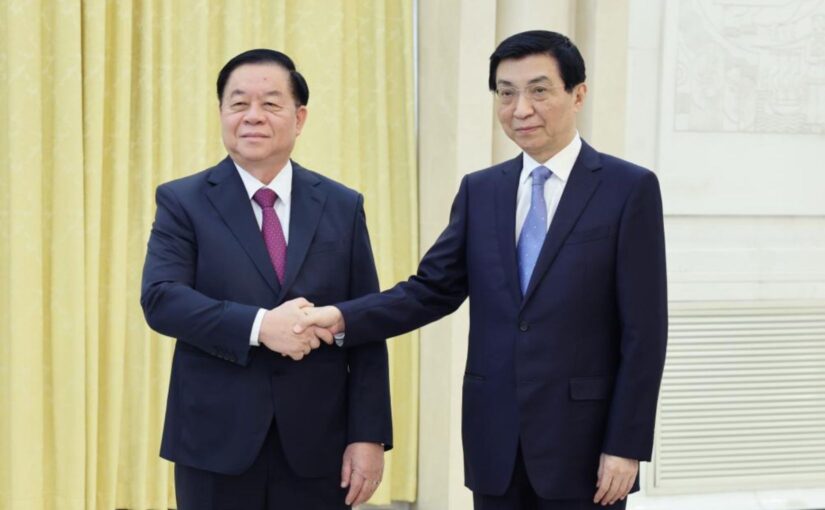
In a further consolidation of the comradely relations between China and its socialist neighbour, Vietnam, following his annual meeting with his Chinese counterpart, Minister Liu Jianchao of the Communist Party of China’s International Department (IDCPC), held in Jilin, north-east China on March 18, Le Hoai Trung, Secretary of the Secretariat of the Communist Party of Vietnam (CPV) Central Committee and Chairman of the CPV Central Committee’s Commission for External Relations, continued his working visit with high-level meetings in Beijing.

On March 22, he met separately with Cai Qi, a member of the Standing Committee of the Political Bureau of the CPC Central Committee as well as of the Secretariat of the CPC Central Committee, and Wang Yi, Member of the Political Bureau of the CPC Central Committee and Director of the Office of the Central Commission for Foreign Affairs, who is also Foreign Minister.

Cai said that China stands ready to work with Vietnam to implement the important results of President Xi Jinping’s visit to Vietnam in December 2023, maintain high-level exchanges, and strengthen mutual learning in state governance theories and experience.

China is also ready to work with Vietnam to promote the synergy between the Belt and Road Initiative and the Two Corridors and One Economic Circle strategy, consolidate the friendship between the two peoples, strengthen international and regional coordination and cooperation, and boost the modernisation of the two countries, he added.

He affirmed that China supports Vietnam in playing a bigger role in the region and on the international stage, raising the voice of developing countries in addressing international issues.

Le Hoai Trung said that Vietnam will adhere to the consensus reached by the two leaders, commit firmly to building a strategically significant Vietnam-China community with a shared future, and push forward exchanges and cooperation between the two parties and two countries to continuously achieve important results.

He expressed to the Chinese leaders that the two sides should continue increasing high-level meetings and exchanges, especially among the top leaders; and step-up exchanges between departments of their Party Central Committees and local Party committees, while also boosting coordination in economy, trade, and transport connectivity, and coordinating efforts to reinforce a solid social foundation for the bilateral ties.

Wang Yi said that China is ready to intensify high-level exchanges with Vietnam, deepen exchanges and mutual learning on theories and experiences of party and state governance, effectively advance exchanges and cooperation in various fields, and jointly advance the building of a China-Vietnam community with a shared future.

Underlining the cooperative relationship between the two socialist countries, the Vietnamese newspaper Nhân Dân also reported that on the same day, border guards stationed in Vietnam’s northern province of Ha Giang coordinated with their counterparts in China’s Yunnan province to hold a joint patrol along the two provinces’ shared border, aimingto detect violations of border regulations, resolve any and protect security and safety.

The following articles were originally published by the Xinhua News Agency, the website of the Chinese Foreign Ministry and Nhân Dân.

Senior CPC official meets CPV delegation

BEIJING, March 22 (Xinhua) — Senior Communist Party of China (CPC) official Cai Qi met with a delegation led by Le Hoai Trung, secretary of the Secretariat of the Communist Party of Vietnam (CPV) Central Committee and chairman of the CPV Central Committee’s Commission for External Relations, in Beijing on Friday.

Cai, a member of the Standing Committee of the Political Bureau of the CPC Central Committee and a member of the Secretariat of the CPC Central Committee, said that General Secretary of the CPC Central Committee and Chinese President Xi Jinping paid a state visit to Vietnam in December last year and, together with General Secretary of the CPV Central Committee Nguyen Phu Trong, announced the construction of a strategically significant China-Vietnam community with a shared future — an epoch-making milestone in the history of bilateral relations.

Continue reading Further consolidation of comradely relations between China and Vietnam

Britain issues malicious and groundless accusations about Chinese cyberattacks

On Monday 25 March 2024, in an obviously coordinated move, the US, UK, New Zealand and Australia expressed concerns over Chinese cyber-hacking, which they claim is being leveraged by the PRC government to gather data and undermine Western democracy. On top of their unproven allegations, these countries announced the introduction of new unilateral sanctions against China.

In Britain, the charges were led by members of the viscerally anti-China Inter-Parliamentary Alliance on China (IPAC), the ostensible purpose of which is to “counter the threats posed by the Chinese Communist Party to democratic principles”. IPAC lists its funding sources as the Open Society Foundations, the National Endowment for Democracy and the Taiwan Foundation for Democracy, which should give readers some idea as to its ideological orientation.

Unfortunately the two major British political parties are equally enthusiastic about waging a propaganda war against China. Writing in the Mirror of 25 March 2024, shadow foreign secretary David Lammy stated: “The wave of cyber-attacks against British politicians and the hack of 40 million voters’ data is chilling. One country, China, is responsible.” He promised that, if elected, “Labour will work with NATO allies to develop new measures designed to protect our democratic values, institutions and open societies.”

Chinese Foreign Ministry spokesperson Lin Jian responded that “China firmly opposes and combats all kinds of cyberattacks, and is committed to working with all countries, on the basis of mutual respect, equality and mutual benefit, to strengthen cooperation and jointly deal with the threats of cybersecurity through channels such as bilateral dialogue or judicial assistance.”

He further affirmed that “the evidence provided by the British side was inadequate and relevant conclusions lack professionalism”, and noted that the US, Britain and their allies have a long history of cyberattacks and espionage against China. He called on the US and Britain to “stop politicising cybersecurity issues, stop smearing China and imposing unilateral sanctions on China, and stop cyberattacks against China.”

A statement issued by the Chinese Embassy in the UK noted that “China has always adhered to the principle of non-interference in each other’s internal affairs”, adding drily that “whether the British government is good or bad, the British people will come to a conclusion sooner or later.”

An editorial in the Global Times pointed out that Britain’s shift away from a ‘golden era’ of relations with China towards a position of hostility coincides with a post-Brexit economic decline and corresponding increased dependence on the US. “It seems that the only way for Britain to secure its position in the ‘co-pilot’ seat is by closely aligning with the US and causing trouble for China.” Issuing slanders against China is simply an example of “deliberately stoking fear to advance their political agendas and achieve their political goals.”

A further Global Times report points to another incentive for Britain in painting China as a security threat: it paves the way for protectionism, for example in relation to Chinese-made electric vehicles and telecommunications infrastructure.

The Chinese Embassy statement and the two Global Times reports are reproduced below.

The Chinese Embassy in the UK issues statement to strongly condemn the UK side’s groundless accusation

On 25 March, the UK government made the groundless accusation that China had carried out cyberattacks against the UK, and announced sanctions on two Chinese individuals and one Chinese entity. In response to this, the Chinese Embassy in the UK issued a statement, strongly condemning the UK’s sinister action. The statement reads as follows:

The UK’s claim that China was responsible for malicious cyber campaigns targeting the UK is completely unfounded and constitutes malicious slander. We firmly oppose and strongly condemn this and have made a serious démarche to the UK side.

China is a major victim of cyberattacks. We have firmly fought and stopped all kinds of malicious cyber activities in accordance with the law, and have never encouraged, supported or condoned cyberattacks. The UK’s hype-up of the so-called “Chinese cyber attacks” without basis and the announcement of sanctions is outright political manipulation and malicious slander.

China has always adhered to the principle of non-interference in each other’s internal affairs. We have no interest or need to meddle in the UK’s internal affairs. Whether the British government is good or bad, the British people will come to a conclusion sooner or later.

The UK falsely accused China of attempting to interfere with UK democracy. This is nothing more than a publicity stunt. This is also a typical example of a thief crying “catch thief”.

China has always stood against illegal unilateral sanctions and will make a justified and necessary response to this.

We strongly urge the UK to immediately stop spreading false information about China, stop such self-staged, anti-China farces, and refrain from going further down the wrong path that leads only to failure.

Continue reading Britain issues malicious and groundless accusations about Chinese cyberattacks

Britain, China, and the struggle for peace

What follows is the text of a speech given by Kevan Nelson, International Secretary of the Communist Party of Britain (CPB), at a public meeting in Leeds on 13 March 2024 on the theme of The Struggle for Peace: Understanding China’s Position in 21st Century Geopolitics. The meeting was organised by the Morning Star Readers and Supporters Group in Yorkshire, and was also addressed by Friends of Socialist China co-editor Carlos Martinez.

Kevan starts with an overview of the British media’s portrayal of China – overwhelmingly negative and fearmongering – and goes on to explain the CPB’s position on China, which is based on a Marxist-Leninist analysis of the country’s history, politics and economy. He observes that “our Party has always been committed to the defence of countries building socialism”, and affirms the party’s firm opposition to the propaganda war and the escalating US-led New Cold War. Kevan explains that the CPB’s position is based on the pursuit of peace and cooperation, and that it wholeheartedly supports the efforts of campaigns and platforms such as Friends of Socialist China, the Stop the War Coalition, the Campaign for Nuclear Disarmament, and No Cold War.

While “income inequality remains a major concern” in China (one that is being actively addressed), Kevan argues that “the processes of capital accumulation are politically subordinated to state power aligned to socialist goals” and that “a mass communist party and the potential for popular mobilisation remains the basis of this state power”.

Kevan notes the importance of Chinese trade and investment to the British economy, and the potential for mutually beneficial cooperation between the two countries. However, “the New Cold War threatens to undermine all these mutual benefits – particularly tens of thousands of jobs in the affected sectors – something trade unionists should consider when facing externally orchestrated calls for a boycott of China.”

The speech concludes with a call for developing deeper people-to-people relations between Britain and China, and building friendship and solidarity around shared interests of peace, progress and socialism.

Thanks for the invitation to speak at this important meeting which is an antidote to the relentless barrage of anti-China propaganda we are being subjected to in this period of the New Cold War against China.

Anyone reading the British press – the magnificent Morning Star excepted – is left in little doubt: China is our enemy.

The FT reported that ‘Biden vows to fight if China invades Taiwan’ – the same paper three days later ran a headline ‘China poses greatest threat, warns Blinken’.

The Guardian informs us that ‘China offers cash and spiritual rewards to citizens for national security tip offs’ (the spiritual reward being a mere certificate, not a weekend in heaven!).

The Economist (by far the worst offender) warns that ‘Chinese money is pouring into Britain’s universities. Critics say it comes at the cost of free speech’.

The Daily Mail claimed that the ‘NHS is dangerously reliant on China with 1 in 6 medical items coming from Beijing’, and a final example from the Daily Mirror: ‘I survived a labour detention camp where prisoners had organs harvested’ – this from a Falun Gong sect member who defected to Britain 15 years ago and did not witness anything of the sort.

At a Friends of Socialist China webinar last year – co-sponsored by the Morning Star – about the propaganda warfare being waged against China by the US and its allies, Danny Haiphong dismissed this relentless propaganda as ‘an imperialist and racist set of fabrications wielded in the interests of US unipolar hegemony’. The examples of this are endless and explain why many in the West increasingly perceive China as a hostile power.

The Communist Party of Britain’s attitude to China

In terms of the Communist Party’s attitude to China, our Party has always been committed to the defence of countries building socialism.

That is no less the case with China today than with the Russian Revolution in its early years, the Chinese Revolution in 1949 and the Cuban Revolution in 1959.

Looking back at Party statements, it is remarkable at how little has changed since the early days of China leaving the orbit of capitalism and imperialism.

In his report to the 21st National Congress of the Communist Party, November 1949 (75 years ago), Harry Pollitt said:

‘In the Far East, American imperialism is building up Japan… as well as maintaining puppet governments in South Korea and the Philippines, and Chiang Kai-shek in Formosa (today known as Taiwan). It has threatened New China with disruption and is fomenting counter-revolution wherever it can find agents in China. Under cover of warning the People’s Armies that any advance beyond the frontiers of China will be met by force, American imperialism is encouraging war preparations in Tibet, which is an old province of China. At the same time, the British Government has heavily reinforced Hong Kong, and may at any moment launch provocative action’.

Today the Uyghurs of Xinjiang may have replaced the Dalai Lama and Tibet as the main focus of destabilisation and propaganda, but the playbook of imperialism remains the same.

Continue reading Britain, China, and the struggle for peace

Zhang Jun: The US resolution on Gaza dodges the most essential issue – a ceasefire

A resolution presented by the United States to the UN Security Council, which failed to clearly mandate a ceasefire in the Gaza conflict – while disingenuously and dishonestly claiming the contrary – was vetoed by China and Russia on March 22. Algeria also voted against and Guyana abstained. 

The Financial Times reported: “Moscow’s and Beijing’s decision to veto the resolution on Friday exposed how the US’s diplomatic travails extend to the UN, where it traditionally uses its Security Council veto rights to protect Israel…The US language contrasted with calls by countries such as Russia and China for an immediate ceasefire.”

US Ambassador to the UN, Linda Thomas-Greenfield, who has vetoed three resolutions calling for an immediate ceasefire, most recently on February 20, pathetically claimed that China and Russia were “being petty” and “simply did not want to vote for a resolution that was penned by the United States, because it (sic) would rather see us fail than to see this Council succeed.”

Following the vote, China’s UN Ambassador Zhang Jun presented an explanation, stating:

“More than 160 days have passed since the outbreak of the Gaza conflict. In the face of a human tragedy in which more than 32,000 innocent civilians have lost their lives and millions are suffering from famine, the most urgent action to be taken by the Council is to promote an immediate, unconditional, and sustained ceasefire.”

However:

“The United States has always evaded and dodged the most essential issue, that is, a ceasefire. The final text remains ambiguous and does not call for an immediate ceasefire. Nor does it even provide an answer to the question of realising a ceasefire in the short term. This is a clear deviation from the consensus of the Council members and falls far short of the expectations of the international community. An immediate ceasefire is a fundamental prerequisite for saving lives, expanding humanitarian access, and preventing greater conflicts. The US draft, on the contrary, sets up preconditions for a ceasefire, which is no different from giving a green light to continued killings, and thus unacceptable. 

“The draft is also very unbalanced in many other aspects, in particular, with regard to Israel’s recent and repeated declarations of plans for a military offensive on Rafah. The draft does not clearly and unequivocally state its opposition, which would send an utterly wrong signal and lead to severe consequences. 

“Any action taken by the Security Council should stand the test of history and the scrutiny of morality and conscience. With a view to safeguarding fairness and justice, the purposes and principles of the UN Charter, and the dignity of the Council, and also based on the concerns and strong opposition from the Arab states regarding this draft resolution, China together with Algeria and Russia have voted against the draft resolution…

“China rejects the accusations by the US and the UK against China’s voting position. Those are groundless accusations. If the US was serious about a ceasefire, it wouldn’t have vetoed time and again multiple Council resolutions and wouldn’t have taken such a detour and played a game of words while being ambiguous and evasive on critical issues. If the US is serious about a ceasefire, then please vote in favour of the other draft resolution clearly calling for a ceasefire, so that a ceasefire can be finally and immediately achieved, the Palestinians’ sufferings ended, and hostages released at an early date. For the US at the current stage, what is most important is not words, but actions.”

A circular email from Britain’s Stop the War Coalition in the immediate aftermath of the vote highlighted the positions of China and Russia and continued:

“The resolution merely ‘urged’ against the invasion of Rafah, and the document set preconditions for a ceasefire which, according to its detractors, would lead to the ‘destruction, devastation or expulsion’ of Palestinians in Gaza.

“The US resolution was clearly a calculated political move from Joe Biden in view of November’s presidential election. The lives of Palestinians mean nothing to him or those in charge of western governments. If they did, this call for a ceasefire would have happened in October.

“It is sickening that as the UN debates, Israel continues its genocide unabated and a human-made famine takes hold of Gaza. We must continue to demand a comprehensive, immediate and permanent ceasefire and an end to all arms sales to Israel.”

The following is the full text of the statement by Ambassador Zhang Jun. It was originally published on the website of China’s mission to the United Nations.

Mr. President, 

China voted against the draft resolution that has just been put to the vote. And I would like to explain China’s voting position and relevant considerations as follows.

More than 160 days have passed since the outbreak of the Gaza conflict. In the face of a human tragedy in which more than 32,000 innocent civilians have lost their lives and millions are suffering from famine, the most urgent action to be taken by the Council is to promote an immediate, unconditional, and sustained ceasefire. This is the universal call of the international community, the decision taken by the emergency special session of the General Assembly a few months ago, and the solemn appeal by the Secretary-General of the UN to the Council while invoking Article 99 of the Charter. The Council has dragged its feet and wasted too much time in this regard. 

We all recall that the US introduced its own draft resolution after vetoing on February 20 the overwhelming consensus among Council members on an immediate ceasefire. Over the past month, the draft has undergone several iterations and contains elements that respond to the concerns of the international community. But it has always evaded and dodged the most essential issue, that is, a ceasefire. The final text remains ambiguous and does not call for an immediate ceasefire. Nor does it even provide an answer to the question of realizing a ceasefire in the short term. This is a clear deviation from the consensus of the Council members and falls far short of the expectations of the international community. An immediate ceasefire is a fundamental prerequisite for saving lives, expanding humanitarian access, and preventing greater conflicts. The US draft, on the contrary, sets up preconditions for a ceasefire, which is no different from giving a green light to continued killings, and thus unacceptable. 

The draft is also very unbalanced in many other aspects, in particular, with regard to Israel’s recent and repeated declarations of plan for a military offensive on Rafah, the draft does not clearly and unequivocally state its opposition, which would send an utterly wrong signal and lead to severe consequences. 

Any action taken by the Security Council should stand the test of history and the scrutiny of morality and conscience. With a view to safeguarding fairness and justice, the purposes and principles of the UN Charter, and the dignity of the Council, and also based on the concerns and strong opposition from the Arab states regarding this draft resolution, China together with Algeria and Russia have voted against the draft resolution. 

Mr. President, 

Members of the Council have now before them another draft resolution that was the result of collective consultations among elected members of the Council. This draft is clear on the issue of a ceasefire, in line with the correct direction of the Council’s action, and of great relevance. China supports this draft. We hope that the members of the Council will reach agreement on this basis as soon as possible and send a clear signal calling for an immediate ceasefire and an end to the fighting. 

Like other members, China has from the outset called for the immediate release of all hostages, a repeated demand in Security Council Resolutions 2712 and 2720. We welcome the mediation efforts by Egypt, Qatar, and others to this end. And we hope that all detainees will be released at an early date. 

China rejects the accusations by the US and the UK against China’s voting position. Those are groundless accusations. If the US was serious about a ceasefire, it wouldn’t have vetoed time and again multiple Council resolutions, and wouldn’t have taken such a detour and played a game of words while being ambiguous and evasive on critical issues. If the US is serious about a ceasefire, then please vote in favor of the other draft resolution clearly calling for a ceasefire, so that a ceasefire can be finally and immediately achieved, the Palestinians’ sufferings ended, and hostages released at an early date. For the US at the current stage, what is most important is not words, but actions. 

China will continue to work with Council members and the international community to play a responsible and constructive role in order to achieve a ceasefire and put an end to the fighting, alleviate the suffering, implement the two-State solution, and promote a comprehensive, just, and lasting solution to the question of Palestine. 

Thank you, Mr. President.

Le Hoai Trung: Vietnam regards developing relations with China as the top priority of its foreign policy

The heads of the international departments of the communist parties of China and Vietnam held an important meeting on March 18, in Jilin, north-east China, to further consolidate and develop the new stage in China-Vietnam friendly relations initiated with the respective visits of General Secretary Nguyen Phu Trong and General Secretary Xi Jinping in 2022 and 2023.

Meeting his Vietnamese counterpart, Le Hoai Trung, Member of the Secretariat of the Central Committee of the Communist Party of Vietnam (CPV) and Head of the Commission for External Relations of the CPV Central Committee, Liu Jianchao, Minister of the International Department of the CPC Central Committee (IDCPC), said that General Secretary Xi Jinping successfully paid a state visit to Vietnam last December, during which he and General Secretary Nguyen Phu Trong established a new positioning of relations between the two parties and the two countries, and made strategic plans for China-Vietnam relations at the new historical juncture, which have become an epoch-making milestone in the history of China-Vietnam relations. This year is the start for both sides to fully implement the results of General Secretary Xi Jinping’s visit to Vietnam and promote the construction of a China-Vietnam community with a shared future.

Liu added that as the world is currently in a new period of turbulence and change, China and Vietnam are facing both important development opportunities and many severe challenges. Both sides should grasp the distinctive characteristics of China-Vietnam relations, highlight the political nature of exchanges and cooperation between the two parties, and give full play to mechanisms such as the high-level meeting between the two parties. Both sides should focus on the future and destiny of socialism, promote the upgrading of theoretical discussions and strengthen cadre training cooperation.

Centring around the common concept of putting people first, both sides need to deepen exchanges and cooperation between publicity departments, media outlets, trade union, youth, women, and other mass organisations. Besides, Liu called on both sides to keep pace with the development of the international landscape, well implement the political consensus of the leaders of the two parties and the two countries on maritime issues, strengthen coordination and cooperation in multilateral political party activities in the world and the region, and make the international order and global governance system more just and equitable. The Chinese side, Liu said, speaks highly of Vietnam’s achievements made since the 13th National Congress of the Communist Party of Vietnam and is happy to see Vietnam increasingly playing an important and positive role in the international community.

Le Hoai Trung said, the Vietnamese side has been paying close attention to and is sincerely happy for the great development achievements of brotherly China. He believed that under the strong leadership of the CPC Central Committee with Comrade Xi Jinping at its core, China will continue to make new development achievements and new contributions to regional and international development. Vietnam regards developing relations with China as the top priority of its foreign policy. It firmly adheres to the one-China principle, supports China’s great cause of national reunification, and rejects external forces’ intervention in China’s internal affairs under the pretext of the question of Taiwan, and issues of Xinjiang, Xizang [Tibet], and Hong Kong, etc. It actively supports the concept of a community with a shared future for humanity and the Global Development Initiative, the Global Security Initiative and the Global Civilisation Initiative proposed by the Chinese side, and is ready to work together to promote their implementation.

The Vietnam News Agency (VNA) further reported that they agreed to maintain frequent high-level exchanges and meetings, further promote the effectiveness of party-to-party relations in setting strategic orientations for the countries’ ties, and to step up exchanges and cooperation between the two governments, parliaments, and fatherland front organisations. They agreed to strengthen ties in defence and security as well as between the two countries’ localities, foster people-to-people interaction, and increase communications regarding the traditional friendship between the two parties, countries, and peoples.

The following articles were originally published on the website of the IDCPC and by the Vietnamese newspaper Nhân Dân

Liu Jianchao Meets with Le Hoai Trung, Member of the Secretariat of the CPV Central Committee and Head of the Commission for External Relations of the CPV Central Committee

Jilin, March 18th—Liu Jianchao, Minister of the International Department of the CPC Central Committee (IDCPC), held here today a meeting between the foreign departments of the two Parties with Le Hoai Trung, Member of the Secretariat of the Central Committee of the Communist Party of Vietnam (CPV) and Head of the Commission for External Relations of the CPV Central Committee. 

Liu said, General Secretary Xi Jinping successfully paid a state visit to Vietnam last December, during which he and General Secretary Nguyen Phu Trong announced the establishment of a China-Vietnam community with a shared future that carries strategic significance. They established a new positioning of relations between the two Parties and the two countries, and made strategic plans for China-Vietnam relations at the new historical juncture, which have become an epoch-making milestone in the history of China-Vietnam relations. This year is the start for both sides to fully implement the results of General Secretary Xi Jinping’s visit to Vietnam and promote the construction of a China-Vietnam community with a shared future. As the departments responsible for the external affairs of the two Parties, the IDCPC and the Commission for External Relations of the CPV Central Committee must play a role in overall coordination, follow-up, supervision, and service, to help all departments and localities of the two sides implement the important consensus of the top leaders of the two Parties. 

Continue reading Le Hoai Trung: Vietnam regards developing relations with China as the top priority of its foreign policy

Sinophobia unmasked: the racism pandemic

In this article for the Morning Star, published to coincide with the UN International Day for the Elimination of Racial Discrimination, Fiona Sim links the rise in sinophobia in the West with the unfolding New Cold War being waged against China. Understanding this context is crucial in order to tackle the issue of anti-Chinese racism in anything more than a superficial way: “The dilution of sinophobic racism into atomised incidents of discrimination and criminality — which, in the liberal discourse, can be resolved through unconscious bias training and the checking of privileges — comes at the cost of obfuscating the geopolitical origins of sinophobia.”

Fiona observes that “turning China into the Yellow Peril stops the masses from seeing China’s rise as an objective good for the world and enables the West to justify maintaining its imperialist hegemony.” And on both sides of the Atlantic, the issue is not limited to the right-wing: “Whether it’s far-right ideologues like Laurence Fox harping on about Biden taking ‘Chinese money’ or Labour Party MPs stoking fears of Chinese spies and Chinese-made CCTV cameras threatening national security, the spectre of sinophobia continues to haunt British politics.”

Fiona concludes that it’s imperative to “challenge the new cold war on China and look past the political theatre to pick apart the logics of anti-Chinese sentiment”, and furthermore to “push back against how China is constructed as the perpetual villain in the public consciousness.” This means challenging the anti-China propaganda that is being used to prop up the US-led imperialist system and which in the process is fuelling racism against East Asian communities in the West.

It is often said that when we name something, we give it power. This week we marked the UN’s International Day for the Elimination of Racial Discrimination — now is the time to to name sinophobia as one of the most insidious scourges of our time.

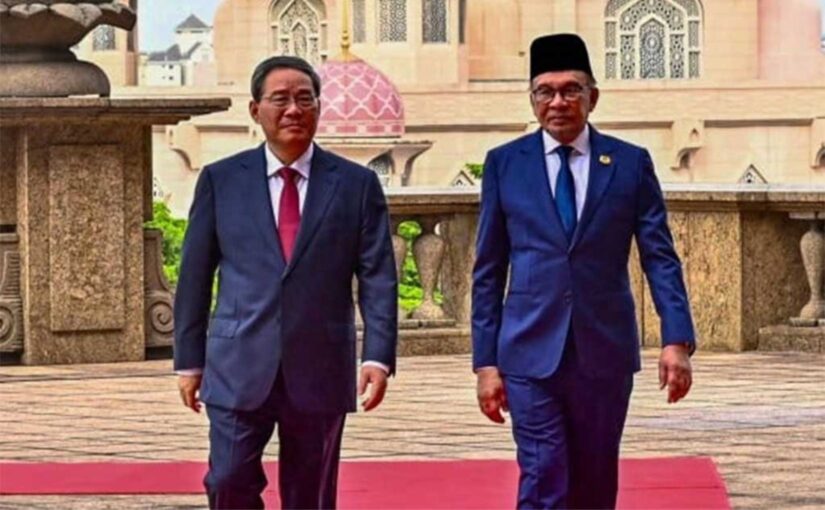
It has seeped into the mainstream media, stories of Chinese spies and Chinese subterfuge becoming as natural as the daily weather forecast. China’s rise as a global economic powerhouse and a challenge to Western capitalist hegemony has triggered a “new cold war.” With it has come the rise in sinophobia on a worldwide scale which even the Malaysian Prime Minister Anwar Ibrahim has pointed out.

Especially in the early days of the Covid-19 pandemic, sinophobia manifested as accusations of China manufacturing the virus as a bioweapon and the dehumanisation of Chinese people globally as harbingers of disease. It was around the same time that the number of reported hate crimes against Asian communities skyrocketed.

The phrase Stop Asian Hate became a powerful rallying cry to raise awareness of the wave of violence against East and South-east Asian communities.

The slogan makes sense in the US context where Asian Americans bring visuals of East and South-east Asian communities, but not so applicable to the British one — where Asian usually refers to South Asian communities, and “Chinese” has been used as a catch-all for anyone of East Asian descent.

In both contexts, Stop Asian Hate was a convenient way to obscure the sinophobic roots — that East and South-east Asians were targeted because they were assumed to be Chinese or affiliated with China, not simply because they were Asian.

It could be argued that the impact of the Stop Asian Hate movement is the greater visibility of the issues faced by East and South-east Asian communities. The proliferation of hate crimes in the US, for example, quickly rose to the attention of Congress.

The Biden administration signed the Covid-19 Hate Crimes Act into power, targeted at tackling so-called anti-Asian hate. Yet, since the signing of this Bill, the US has only ramped up its discrimination against the Chinese-US diaspora and Chinese immigrants. In 2022, 1,764 Chinese scholars were denied visas to the US because of the Chinese universities they attended — a presidential directive from the Trump era that Biden has retained.

In 33 states, Bills have been passed to restrict Chinese nationals from buying agricultural land or property. In fact, a new poll showed that a third of Asian US and Pacific Islanders have experienced racial abuse in 2023.

Now, the US’s move to ban TikTok and the pressure on Britain to do the same, citing national security concerns from China, has only rekindled the anti-China hysteria. Much like the framing of China as responsible for Covid-19 resulted in the scapegoating of East and South-east Asians, it seems inevitable that this will only heighten the hostile environment against all those perceived as Chinese. China the country and the Chinese people are not mutually exclusive, nor should the distinction between the two be discouraged.

The limitations of framing racism as an interpersonal issue are clear. Politicians telling people not to commit sinophobic hate crimes is ludicrous when they, in the next breath, pass policies that incite fear of China and all things Chinese.

The dilution of sinophobic racism into atomised incidents of discrimination and criminality — which, in the liberal discourse, can be resolved through unconscious bias training and the checking of privileges — comes at the cost of obfuscating the geopolitical origins of sinophobia.

In reality sinophobia and imperialism are intertwined. From the years of the Opium War to the era of the Chinese Exclusion Act, sinophobia has been the weapon of choice to instil a fear of the Yellow Peril during times of political instability and uncertainty.

The Yellow Peril has provided an easy target for the masses to direct their frustrations toward an identifiable group and away from the failures of government. In the modern age, turning China into the Yellow Peril stops the masses from seeing China’s rise as an objective good for the world and enables the West to justify maintaining its imperialist hegemony.

Both the left and right are culpable of feeding into the moral panic about the Chinese. Whether it’s far-right ideologues like Laurence Fox harping on about Biden taking “Chinese money” or Labour Party MPs stoking fears of Chinese spies and Chinese-made CCTV cameras threatening national security, the spectre of sinophobia continues to haunt British politics.

The attacks on China correlate with the rise in attacks on people of East and South-east Asian descent. One only has to look to the 20th century’s epidemic of Chinese pogroms in south-east Asia for an example of how imperialism-fuelled sinophobia can have the most devastating and in some cases lethal consequences.

Thus, the most effective way of combating sinophobia is analysing it within the geopolitical scope of imperialist hegemony. One must challenge the new cold war on China and look past the political theatre to pick apart the logics of anti-Chinese sentiment, fighting against narratives that seek to cause fissures in the relationship between China and the rest of the global South.

The defeat of sinophobia requires interrogating centres of Western knowledge production and pushing back against how China is constructed as the perpetual villain in the public consciousness.

China, Angola upgrade ties to comprehensive strategic cooperative partnership

Angolan President João Manuel Gonçalves Lourenço paid a state visit to China from 14-17 March at the invitation of his Chinese counterpart, Xi Jinping.

Meeting President Xi on March 15, the two heads of state announced the elevation of bilateral ties to a comprehensive strategic cooperative partnership.

Noting that China and Angola jointly celebrated the 40th anniversary of the establishment of diplomatic relations last year, Xi said relations between the two countries have stood the test of international vicissitudes and benefitted the two peoples.

China-Angola cooperation is South-South cooperation and cooperation between developing countries, which is about mutual help between good friends, reciprocity and win-win cooperation.

In a world that is undergoing both transformation and upheaval, the two sides should continue their traditional friendship, strengthen solidarity and cooperation, firmly support each other, and achieve common development, Xi noted.

China supports Angola in safeguarding its national sovereignty, security, and development interests, exploring a modernisation path suited to its national conditions, and realising national development and revitalisation.

He stressed that cooperation between China and Angola enjoys a sound foundation, large-scale and high complementarity, endowing huge potential and bright prospects for mutually beneficial cooperation. The two sides should advance high-quality Belt and Road cooperation, synergise their development strategies, and improve the quality and effectiveness of their pragmatic cooperation.

China is ready to work with the Angolan side to implement key infrastructure projects, support competent Chinese enterprises to carry out various forms of cooperation in Angola, and help the country advance agricultural modernisation, industrialisation and economic diversification.

China will continue to send medical teams to Angola and implement other projects, provide scholarships to Angolan students, and enhance people-to-people exchanges and friendship.

Noting that at present, the collective rise of developing countries is unstoppable, Xi said the Global South must not be absent from global governance, or development and prosperity.

“China is a reliable friend and sincere partner for African countries in their efforts to safeguard independence and promote development and revitalisation.”

 China stands ready to strengthen multilateral coordination with Angola and other African countries to safeguard the common interests of developing countries, jointly advocate an equal and orderly multipolar world and an inclusive economic globalisation that benefits all and promote the building of a community with a shared future for humanity, he added.

Saying that he felt at home when he came to China, President Lourenço said that China was the first country to provide valuable support, both when Angola was reeling from its civil war and when it was struggling with the COVID-19 pandemic, and expressed his heartfelt gratitude.

“China’s support and cooperation have greatly promoted Angola’s infrastructure construction and economic and social development, setting a good example of mutually beneficial cooperation.”

After the talks, the two heads of state jointly witnessed the signing of a number of bilateral cooperation documents regarding the Belt and Road cooperation plan, economy and trade, agriculture, green development and other fields.

The two sides also issued a joint statement on the establishment of a comprehensive strategic cooperative partnership between the People’s Republic of China and the Republic of Angola.

Reflecting the high degree of political unity and close friendship and mutual understanding between the two countries, the statement is broken into sections that deal with working together to build a community with a shared future for humanity, deepening high quality Belt and Road Cooperation, and implementing the three global initiatives on development, security and civilisation.

It notes that: “The two heads of state believe that since the establishment of diplomatic relations between China and Angola in 1983, the friendship between the two countries has withstood the test of time and has endured for the benefit of the two peoples.

“In order to further consolidate political mutual trust and deepen and expand practical cooperation in various fields, the two heads of state decided to upgrade their bilateral relations to a comprehensive strategic cooperative partnership.”

On the question of building a community with a shared future for humanity, the two sides are willing to work together and to build an open, inclusive, clean and beautiful world featuring lasting peace, universal security and common prosperity.

They agreed that in view of a series of major issues and challenges facing the world today, all parties should advocate an equal and orderly multipolar world and economic globalisation that benefits all.

China reiterates its firm support for the Angolan people to independently choose a development path suited to their national conditions and for Angola to safeguard its national independence, sovereignty, security and interests. The Angolan side reaffirmed its firm adherence to the one-China principle, recognised that the Government of the People’s Republic of China is the sole legitimate government representing the whole of China, that Taiwan is an inalienable part of China’s territory, and firmly supports all China’s efforts to achieve national reunification and the principle of non-interference in internal affairs.

The two sides unanimously agreed that all countries, big or small, are equal, no matter what stage of development they are in, and that hegemonism and power politics should be resolutely opposed.

They reaffirmed their support for the authority of the United Nations and agreed on the need to reform the UN and its subsidiary bodies, especially the Security Council, to make them more responsive to the current situation, to expand the participation of developing countries, and to expand Africa’s representation and voice in the Security Council. 

The two sides agreed that climate change is a common challenge facing all humanity and requires the joint efforts of the international community to address it. Developed countries bear a historical responsibility for climate change and should take the lead in undertaking the obligation to reduce emissions substantially, and earnestly fulfil their commitments to provide financial, technological and capacity-building support to developing countries.

On Belt and Road cooperation, the two sides will establish a strategic partnership for green development, strengthen cooperation in environmental protection, climate change response, green economy, risk emergency mechanism construction, etc., expand mutually beneficial cooperation in renewable energy such as photovoltaic and wind energy, electric vehicles and other related industries, and promote energy transition and ensure energy security.

China encourages its enterprises to participate in investment projects that support the upgrading of the Angolan industrial chain and enhance the country’s capacity for independent development.

On the Global Development Initiative, China welcomes Angola’s formal entry into the Group of Friends of the Global Development Initiative (GDI) and the two sides will promote practical cooperation in various fields under the framework of the GDI.

The two sides agreed to establish an investment cooperation working group mechanism to promote cooperation in the fields of digital economy, green development and blue economy.

Reflecting the increasing international moves by developing countries to promote dedollarisation, China and Angola agreed to encourage more use of local currencies in trade and investment and to facilitate enterprises of the two countries in reducing exchange costs. The two sides will also create a favourable policy environment for promoting local currency settlement.

On the Global Security Inititiative (GSI), Angola appreciates China’s positive role in promoting a political settlement of the Ukraine crisis and the Palestinian issue. China appreciates President Lourenço’s active efforts to promote peace talks on international and regional hotspot issues such as the Democratic Republic of the Congo (DRC) issue. 

And regarding the Global Civilisation Initiative (GCI), the two sides will strengthen cooperation in the field of health. China will continue to support the development of Angola’s public health system and continue to send medical teams to Angola. Angola thanked China for its continuous support to Angola in the field of health, especially during the pandemic.

In conclusion the statement says that: “The two sides agreed that the complete success of President Lourenço’s visit to China marks a new stage of development in China-Angola relations and is of great significance to promoting the building of a China-Angola community with a shared future. President Lourenço expressed his heartfelt thanks to President Xi Jinping and the Chinese government and people for the warm and friendly reception they accorded during the visit, and invited President Xi Jinping to visit Angola at his convenience.”

Also on March 15, Chinese Premier Li Qiang met with President Lourenço and called for deepened political mutual trust and mutually beneficial cooperation between their two countries.

Noting that China and Angola enjoy a profound traditional friendship and are good brothers and partners who trust each other, Li said that in recent years, under the strategic guidance of the two countries’ presidents, the two sides have adhered to the principles of sincerity, friendship, equality and mutual benefit, achieved fruitful results in cooperation in various fields, and continuously upgraded the level of strategic partnership.

Lourenço said that since the establishment of diplomatic ties 41 years ago, bilateral relations have been strengthened, with huge potential for cooperation. Angola appreciates China’s precious support when his country was in the most difficult period, helping Angola to achieve rapid economic and social development, and to cope with the COVID-19 pandemic. 

The same day, Chairman of the Standing Committee of the National People’s Congress (NPC) Zhao Leji also met with President Lourenço.

Zhao Leji said, China and Angola are good brothers and good partners with sincerity, real results, amity and good faith. Exchanges and cooperation between legislative bodies are important channels to enhance mutual understanding and trust between the two peoples. The NPC of China is willing to work with the National Assembly of Angola to strengthen exchanges between high-level legislative officials, special committees, bilateral friendship groups, and parliamentarians to provide legal guarantee for mutually beneficial cooperation between the two countries.

In a background article to the visit, Xinhua News Agency surveyed a number of key cooperation projects between the two countries. It reported that: “Located 18 km south of Luanda, Angola’s capital, the ‘new city,’ Kilamba stands prominently on the horizon. More than a decade after its completion, this monumental public welfare project, executed by Chinese firms, comprises 700 buildings and 20,000 housing units, providing contemporary living conditions for its 120,000 inhabitants.”

It added that, in 2010, Xi visited Angola, when the two countries announced the establishment of a strategic partnership. Xi personally inspected the project, spending half a day there, inspiring builders from China and Angola, it noted, adding: “Rising from once barren land, the new city is a testament to the accelerated cooperation between the two nations.”

Drummond Mafuta, president of the Board of Directors of Edicoes Novembro, one of Angola’s largest media groups, commented that when the Angolan civil war ended and the country needed reconstruction, China was the first to extend a helping hand. Friendship with China “is and will always be marked in the history of Angola’s reconstruction.”

Tiago Quissua Armando, a scholar at Angola’s Venancio de Moura Diplomacy Institute, saw the outcomes of the leaders’ talks as addressing vital issues for Angola, such as economic diversification, industrial investment and agricultural modernisation.

“President Lourenço’s visit also includes a trip to Shandong, a Chinese province with significant experience in the agricultural sector. Angola can benefit from this experience to enhance its local industry,” he noted.

Last year, Shandong province signed a friendly cooperation agreement with Bengo Province of Angola, committing to strengthen cooperation in agriculture, economy, trade and vocational education.

Xinhua also reported that the inauguration ceremony of the Chinese-donated Integrated Centre for Technological Training took place in Huambo City, Angola, on January 12. The 20,000-square-meter centre has 30 laboratories and six workshops covering robotics, mechanical processing, computer science and automotive repair. In its first phase, it plans to train 2,400 people annually.

Secretary of State for Labour and Social Security of Angola Pedro Filipe said that in recent years, vocational training and talent cultivation have become critical areas of cooperation between Angola and China.

In a separate interview with Xinhua, Rui Miguens de Oliveira, Angola’s minister of industry and commerce, speaking of Angola’s industrialisation process, expressed gratitude for China’s strong support in the post-war rebuilding and construction of new infrastructure.

The minister emphasised that the participation and presence of Chinese companies and financial resources were fundamental for the initial recovery of destroyed infrastructure, such as bridges, roads, energy transmission lines and water supply systems. “All of these are infrastructures necessary for general economic and social development, but particularly essential for our industry,” he said.

Since China and Angola established diplomatic relations 41 years ago, Angola has emerged as China’s second-largest trading partner in Africa, with bilateral trade reaching 23 billion US dollars in 2023. Chinese companies have rebuilt or constructed anew 2,800 km of railways, 20,000 km of roads, over 100,000 social housing units, more than 100 schools, and more than 50 hospitals in the southern African nation.

Reporting on the visit, the Reuters news agency noted that, last December, China and Angola signed an investment protection agreement, while Angolan firms from December 25 2023 have had tariff-free access to China’s massive consumer market across 98% of goods under a separate agreement.

Chinese firms have invested close to $12 billion in Angola since it joined China’s Belt and Road Initiative in 2014, data from the American Enterprise Institute think tank shows.

The South China Morning Post reported that, “Dominik Kopinski, an associate professor in the Institute of Economics at the University of Wroclaw and senior adviser at the Polish Economic Institute, said  Lourenço’s visit to China was part of Angola’s efforts to diversify and cultivate links with a wide range of partners.

“‘Those who thought the recent recalibration of Angola’s foreign policy meant ditching China and embracing the West will feel disappointed,’ Kopinski said.

“Lourenço’s four-day state visit included talks with executives of major Chinese companies, including China Gezhouba Group Corporation, which is building the Caculo Cabaca hydroelectric plant in Angola’s Cuanza Norte province, and Hebei Huatong Cable Group, which is building an aluminium production factory in Angola.

“In a meeting with Chinese Premier Li Qiang, Lourenço sought financing for a refinery in the port city of Lobito, a petrochemical plant and a military air force base.

“‘When we were in urgent need of large financial resources for national reconstruction, China was the only country in the world that truly came to our aid to rebuild the main infrastructure and build new [projects] that were equally important for the economic and social development of Angola,” he said.

The following articles were originally published by the Xinhua News Agency, People’s Daily, and on the website of the Chinese Foreign Ministry. The Joint Statement between China and Angola was published in Chinese by People’s Daily. It has been machine translated and lightly edited by us.

Chinese, Angolan presidents hold talks, elevating bilateral ties to comprehensive strategic cooperative partnership

BEIJING, March 15 (Xinhua) — Chinese President Xi Jinping held talks with President of the Republic of Angola Joao Lourenco, who is on a state visit to China, in Beijing on Friday.

The two heads of state announced the elevation of bilateral ties to a comprehensive strategic cooperative partnership.

Noting that China and Angola jointly celebrated the 40th anniversary of the establishment of diplomatic relations last year, Xi said relations between the two countries have stood the test of international vicissitudes and benefitted the two peoples.

China-Angola cooperation is South-South cooperation and cooperation between developing countries, which is about mutual help between good friends, reciprocity and win-win cooperation, Xi said.

In a world that is undergoing both transformation and upheaval, the two sides should continue their traditional friendship, strengthen solidarity and cooperation, firmly support each other, and achieve common development, Xi noted.

China supports Angola in safeguarding its national sovereignty, security and development interests, exploring a modernization path suited to its national conditions, and realizing national development and revitalization, he said.

China is also willing to strengthen exchanges of governance experience with Angola, upgrade bilateral strategic relations, and jointly promote the modernization process of each country, Xi noted.

He stressed that cooperation between China and Angola enjoys a sound foundation, large scale and high complementarity, endowing huge potential and bright prospects for mutually beneficial cooperation. The two sides should advance high-quality Belt and Road cooperation, synergize their development strategies, and improve the quality and effectiveness of their pragmatic cooperation.

China is ready to work with the Angolan side to implement key infrastructure projects, support competent Chinese enterprises to carry out various forms of cooperation in Angola, and help the country advance agricultural modernization, industrialization and economic diversification, Xi said.

Continue reading China, Angola upgrade ties to comprehensive strategic cooperative partnership

Friends of Socialist China participates in Karl Marx commemoration

Friends of Socialist China joined hundreds of comrades at the grave of Karl Marx in north London’s Highgate Cemetery on Sunday March 17 to mark the 141st anniversary of the death of the founder of scientific socialism.

In 2018, marking the 200th anniversary of his birth, Chinese leader Xi Jinping said that Marx is the “teacher of revolution for the proletariat and working people all over the world, the main founder of Marxism, creator of Marxist parties, a pathfinder for international communism and the greatest thinker of modern times.”

With noble ideals and no fear of difficulty or adversity, throughout his life, Marx devoted himself to perseveringly striving for the liberation of humanity, scaling the peak of thought in his pursuit of truth, and the unremitting fight to overturn the old world and establish a new one, Xi added.

This year’s Highgate commemoration, the largest for many years, was jointly organised by the Communist Party of Britain (CPB) and the Marx Memorial Library (MML) and chaired by Mary Davis, Secretary of the Library and Executive Committee (EC) member of the CPB.

It heard orations from Lord (John) Hendy KC, a prominent labour movement lawyer on behalf of the MML, and from Alex Gordon, Chair of the Library, President of the railworkers’ union RMT and CPB EC member.

In his address, Alex noted that: “What Marx could not foresee, because no socialist planned economy arose in his lifetime, is that the world capitalist economy in 2024 would depend for its economic growth, technological and scientific innovation, and new developments in world trade on the rise of the economies of the global South, and the leading role of socialist China.”

Alex’s full speech may be read here. And Lord Hendy’s may be read here.

Following the speeches, floral tributes were paid by the CPB and MML, the Embassy of socialist Vietnam, the communist parties of Kenya, Cyprus, Spain, Malaya, India (Marxist), Iraq, Iran, Sudan, and Greece, the Communist Front (Italy), Friends of Socialist China, the Young Communist League, the UK branch of the Student Federation of India, the Morning Star, the London District of the CPB, and a delegation of Chinese students in the UK.

Representatives of the Cuban Embassy and the Irish party Sinn Féin also attended the ceremony, which closed with the singing of the Internationale. The Friends of Socialist China comrades accompanied Booker Ngesa Omole (National Vice-Chairperson and National Organising Secretary of the Communist Party of Kenya), who addressed our event Africa, China and the Rise of the Global South the previous evening.

Hamas, China representatives Meet in Qatar – Haniyeh praises Beijing’s position on Gaza war

According to a statement on the website of the Chinese Foreign Ministry, on March 17, its envoy, Ambassador Wang Kejian met with Ismail Haniyeh, Politburo Chairman of the Islamic Resistance Movement Hamas, during Wang’s visit to Qatar, where they exchanged views on the Gaza conflict and other issues.

The Palestine Chronicle further reports that:

“According to a statement released by Hamas, Haniyeh ‘emphasised the necessity of quickly stopping the (Israeli) aggression and massacres (in Gaza), the withdrawal of the occupation army, the return of the displaced, providing shelter and (the) reconstruction (of the Strip).’

“Haniyeh also reportedly ‘praised the role that China plays in the Security Council, the United Nations, the International Court of Justice, and in sending humanitarian aid to the Gaza Strip.’

“For his part, Beijing’s envoy ‘affirmed the close and historical relationship between the Palestinian and Chinese peoples and China’s firm positions towards the Palestinian cause and its support for the just demands of the Palestinian people for freedom, independence, and the establishment of a state.’

“Wang Kejian also ‘emphasised the necessity of stopping this war and ending the killing that the Palestinians are subjected to and providing for their humanitarian needs.’”

The Jerusalem Post further reported that: “[Wang] Keijan visited Israel and the Palestinian Authority last week, meeting with diplomats and discussing the war in Gaza… Additionally, according to Hamas, [Wang] Keijan stressed to Haniyeh that ‘the Hamas movement is part of the Palestinian national fabric and China is keen on relations with it.’”

The following article was originally published by the Palestine Chronicle.

A Chinese foreign ministry envoy met with Ismail Haniyeh, head of the political bureau of the Palestinian Resistance movement Hamas, Beijing’s foreign ministry confirmed in a statement on Tuesday. 

In the brief statement, the Chinese ministry said that Chinese Ambassador Wang Kejian met Haniyeh in Doha, Qatar, on Sunday, and that the two “exchanged views on the Gaza conflict and other issues”.

According to a statement released by Hamas, Haniyeh “emphasized the necessity of quickly stopping the (Israeli) aggression and massacres (in Gaza), the withdrawal of the occupation army, the return of the displaced, providing shelter and (the) reconstruction (of the Strip).”

Haniyeh also reportedly “praised the role that China plays in the Security Council, the United Nations, the International Court of Justice, and in sending humanitarian aid to the Gaza Strip.”

For his part, Beijing’s envoy “affirmed the close and historical relationship between the Palestinian and Chinese peoples and China’s firm positions towards the Palestinian cause and its support for the just demands of the Palestinian people for freedom, independence, and the establishment of a state.”

Wang Kejian also “emphasized the necessity of stopping this war and ending the killing that the Palestinians are subjected to and providing for their humanitarian needs.”

This is reportedly the first such meeting between Hamas and China since the beginning of the Israeli war on Gaza, following the military operation carried out on October 7 by Hamas and other Palestinian Resistance groups in southern Israel. 

Right to Armed Struggle

Unlike Washington, which gave total backing to Israel to continue with its war on Gaza, thus refusing international calls for ceasefire, the Chinese position called for the respect of international law. 

Beijing’s position went further by openly supporting the Palestinian people’s right to the use of armed struggle to achieve national liberation. 

Addressing the International Court of Justice on February 22, the Chinese representative said the Palestinians’ use of armed struggle to gain independence from foreign and colonial rule is “legitimate” and “well-founded” in international law.

“In pursuit of the right to self-determination, Palestinian people’s use of force to resist foreign oppression and complete the establishment of an independent state is (an) inalienable right well founded in international law,” Ma Xinmin told the International Court of Justice in The Hague.

Citing resolutions by the UN General Assembly, Beijing’s envoy to the top world court said that people struggling for self-determination could use “all available means, including armed struggle.”

“The struggle waged by peoples for their liberation, right to self-determination, including armed struggle against colonialism, occupation, aggression, domination against foreign forces should not be considered terror acts,” Ma stated in his address to the ICJ, citing international conventions.

Gaza Genocide

Currently on trial before the International Court of Justice for genocide against Palestinians, Israel has been waging a devastating war on Gaza since October 7. 

According to Gaza’s Ministry of Health, 31,819 Palestinians have been killed, and 73,934 wounded in Israel’s ongoing genocide in Gaza starting on October 7.

Moreover, at least 7,000 people are unaccounted for, presumed dead under the rubble of their homes throughout the Strip.

Palestinian and international organizations say that the majority of those killed and wounded are women and children.

The Israeli aggression has also resulted in the forceful displacement of nearly two million people from all over the Gaza Strip, with the vast majority of the displaced forced into the densely crowded southern city of Rafah near the border with Egypt – in what has become Palestine’s largest mass exodus since the 1948 Nakba. 

Israel says that 1,200 soldiers and civilians were killed during the Al-Aqsa Flood Operation on October 7. Israeli media published reports suggesting that many Israelis were killed on that day by ‘friendly fire.’

A rising China and a rising Africa? This is doubly frightening to the imperialist powers

What follows below is the text of a speech given by Fiona Sim on behalf of the Black Liberation Alliance at the recent Friends of Socialist China event Africa, China and the Rise of the Global South, held at the Marx Memorial Library on 16 March 2024.

Fiona describes the blossoming relationship between Africa and China – which even extends to South Africa and China collaborating to build a research base on the moon – and contrasts it with the “playbook of neo-colonial extraction and political puppeteering” that the West has used to exploit Africa for centuries. The China-Africa partnership is inspiring fear and loathing in the West, representing as it does a challenge to the global hegemony of the US and its allies:

“A rising China and a rising Africa? This is doubly frightening to the imperialist powers. It is the precursor to the fall of western hegemony altogether.”

The West’s response has been to ramp up its propaganda war against China and to try to drive a wedge between China and Africa – most obviously by denouncing Chinese “imperialism” and slandering its investments as “debt traps”. But the reality is that “China’s loans to African countries have some of the lowest interest rates, no political strings attached, mass debt relief programmes, and the massive infrastructure projects they fund and build result in positive net growth.” Chinese loans and investment are paving a road out of poverty and underdevelopment.

Fiona concludes by calling for solidarity with China and Africa in their struggle against imperialism, for countering the lies and distortions of the Western media, and for resolutely opposing the New Cold War.

It is my great honour to be included in this panel alongside our esteemed comrade from the Communist Party of Kenya and all these powerful organisers and activists. There is nothing more powerful than being united in struggle with comrades who are not only from across the diaspora but from around the globe. 

It is a reminder of the importance of internationalist, anti-imperialist solidarity that transcends borders and bureaucracy. Our struggles are connected by the chains of imperialist domination and sown from the seeds of destruction left by colonial conquest. But our joint history stretches back centuries further. 

While Europe was in its so-called Dark Ages, Africa, Asia and the Islamic world were experiencing their Golden Ages. The renowned Chinese Muslim naval navigator Zheng He led peaceful expeditions along the ancient Silk Road, with voyages as far as East Africa, where the seas connecting the two continents would go on to establish trade routes and friendly relations for years to come.

Now, centuries later, with the Silk-Road-inspired Belt and Road initiative, we are seeing the rebirth of Africa-China relations and establishment of South-South cooperation at an unprecedented scale. The relationship between Africa and China could not be stronger. Kenya is China’s number one trade partner in East Africa. South Africa and China are collaborating to build a research base on the moon. After the uprisings in the Sahel, the coup governments formed were quick to affirm their relations with China, which reiterated its policy of non-intervention and non-interference in African politics. Burkina Faso’s President Traore declared that he considered China an important trade partner early on, and Niger’s interim President General Tchiani has reportedly met with the Central and North African representative for BRICS in the last few weeks.

It is no wonder that the countries of the West – where whole civilisations have been built on the foundations of plunder and pillaging of the global South – see this as a threat. The West has seen that Africa has taken great interest in the rise of China especially in the last decade and it is running scared. Scared that its playbook of neo-colonial extraction and political puppeteering is no longer going to work on its former colonies. 

Let us be clear. The West only sees China as a threat to its hegemony because it cannot conceive a country that less than a century ago was one of the poorest in the world is now a global powerhouse whose economy rivals the US. Since the 1990s, China has been the only country whose GDP has grown exponentially, increasing on average by 9 percent a year. In 2023, China’s GDP increased by 5.2 percent – the highest among the major powers, with the US in second place at 1 percent. 

Continue reading A rising China and a rising Africa? This is doubly frightening to the imperialist powers

US targets TikTok in escalating economic war against China

The following article by Gary Wilson addresses the US government’s latest attempt to ban TikTok, the hugely popular social media app owned by Chinese company ByteDance.

Gary points out that “there isn’t even a sliver of evidence” for politicians’ claims that TikTok poses a national security threat or that ByteDance is working with the Chinese military. Meanwhile, Facebook’s well-documented history of working with the Pentagon provides ample proof of the US government’s hypocrisy.

The true reason for the attack on TikTok is that “the US government, under both the Trump and Biden administrations, has been escalating its economic war against China by imposing sanctions and restrictions on Chinese tech companies. The goal is to eradicate socialist China’s entire system of advanced technology.” This is part of a wider New Cold War strategy to contain China’s rise, in a geopolitical context where “US imperialism considers socialist China’s economic rise as its most significant contemporary challenge.”

This article was originally published in Struggle/La Lucha on 15 March 2024.

TikTok has emerged as a dominant force in social media, reshaping not just online culture but also extending its influence beyond the digital realm. Since its launch in 2016, TikTok has become one of the most popular social media platforms in the world, surpassing Facebook, Instagram, WhatsApp and YouTube in terms of downloads and engagement.

Through its unique format of short, audio-driven videos curated through algorithms, TikTok has propelled numerous artists, like Lil Nas X and Noah Kahan, into the mainstream spotlight. Music from Africa has gained a global audience. Even the Biden campaign is on TikTok with “BidenHQ,” hoping to appeal to a younger audience than its base of retirees and Wall Street bankers.

Facebook is considered to be TikTok’s biggest competitor. 

“Meta clearly sees itself in a battle against TikTok for the hearts, minds, and attention spans of millennials, a significant chunk of the social media market. TikTok has experienced a staggering growth of users since the onset of the global pandemic, taking over a huge chunk of its competitor’s audience,” the Guardian reported.

So why do the Biden administration and Congress want to ban TikTok?

Are they all just fans of Mark Zuckerberg? Or in Zuckerberg’s pocket? For sure, they’ve all probably had a few clubhouse dinners with Meta.

But this goes beyond Facebook. The target, and they clearly say this, is China. The ban passed by the House of Representatives is called the “ Protecting Americans from Foreign Adversary Controlled Applications Act.” China is the “foreign adversary.” 

A day after the House passed the bill, former U.S. Treasury Secretary Steven Mnuchin (under Donald Trump) announced he is putting together an investor group to take over TikTok. “This should be owned by U.S. businesses,” he said.

TikTok’s only “crime” is beating out Facebook and the others. They claim TikTok is somehow working with the Chinese military, but there isn’t even a sliver of evidence of that.

Facebook has ties to the Pentagon (google “Fake Facebook and Instagram accounts promoting U.S. interests had ties to U.S. military” or “Big Tech Has Made Billions Off the 20-Year War on Terror”). Maybe we should ban Facebook. But that’s another discussion.

Trump, Biden both target China

The U.S. government, under both the Trump and Biden administrations, has been escalating its economic war against China by imposing sanctions and restrictions on Chinese tech companies. The goal is to eradicate socialist China’s entire system of advanced technology.

Reuters just reported on March 14 that while he was president, “Trump launched CIA covert influence operation against China.” Reuters says that Trump had also given the CIA greater powers to launch offensive cyber operations against China and Russia. “Sources described the 2019 authorization uncovered by Reuters as a more ambitious operation.”

The anti-TikTok propaganda is part of what Reuters calls a “covert messaging” operation.

“Covert propaganda campaigns were common during the Cold War,” Reuters adds.

Some call it the New Cold War. However, the New Cold War cannot reproduce the old Cold War. China has emerged as a major manufacturing power, including in advanced technology, and is the largest trade partner for 70% of the world’s countries. The U.S. no longer has the same dominant position in the global market.

The global landscape has changed dramatically since the Cold War era, but capitalism’s fundamental contradictions persist today, mirroring those of the 1960s during the Vietnam War. 

Financially and militarily, the U.S. empire is dangerously overextended.

Before the genocidal invasion of Gaza, the Biden administration was seeking to consolidate its dominance in the region by brokering Saudi Arabia’s recognition of Israel. Now, the U.S. is spending billions of dollars on bombs and weapons systems for the Zionist regime’s war on the Palestinian people. 

For two years, the U.S. has engaged in the largest arms transfer in history, sending to Ukraine some $113.4 billion in “emergency funding” over and above the regular Pentagon budget. Growing war fatigue, however, has now reduced the funds.

The New York Times puts it this way: 

“American support has sharply declined. House Republicans have blocked additional aid to Ukraine, and the Biden administration cannot send many more weapons. (The $300 million package announced this week will likely help Ukraine for only a few weeks.)” 

In fact, the Times almost says, it is only U.S. weapons and ammunition that started this war and have kept it going. “It falls on the U.S. to supply Ukraine,” the Times says. “The war is at a stalemate.” The funds have run out.

U.S. imperialism considers socialist China’s economic rise as its most significant contemporary challenge. It is resolute in thwarting Chinese industry from dominating the global markets. This ongoing “New Cold War” raises the specter of a potential war in the Pacific.

Booker Ngesa Omole: Amidst the rise of the Global South, we welcome China’s engagement with Africa

On Saturday 16 March, Friends of Socialist China hosted an event on Africa, China and the Rise of the Global South at the Marx Memorial Library in London (and online). The library was packed to capacity, and heard powerful contributions from Booker Ngesa Omole (National Vice-Chairperson and National Organising Secretary of the Communist Party of Kenya (CPK)), Roger McKenzie (Foreign Editor, Morning Star), Fiona Sim (The Black Liberation Alliance), Cecil Gutzmore (veteran Pan-African community activist and historian), Alex Gordon (RMT President), and Radhika Desai (Convenor, International Manifesto Group). Unfortunately Frank Murray of Caribbean Labour Solidarity was unable to attend due to personal reasons. Roger McKenzie’s event report can be read in the Morning Star.

Booker’s wide-ranging and passionate keynote speech focused on China-Africa relations and China’s role in the world. Booker noted that his two visits to China in 2023 “filled me with a renewed sense of hope and convinced me of the superiority of the Chinese socio-economic and political system over the liberal Western model often imposed on African nations wholesale.”

On the economic relationship between China and Kenya – and Africa more generally – Booker observed that the character of this partnership is profoundly different to the exploitative relationships that African nations have historically had with Western powers. “This relationship has highlighted an alternative approach to engaging with development partners and international capital. Unlike the United States and Western nations, which have historically imposed detrimental policies on African nations through institutions like the IMF and World Bank—such as the infamous Structural Adjustment Plan—China has adopted a policy of non-interference in the internal affairs of sovereign countries. This shift has spared African nations from the suffering and hardships inflicted by such destructive policies.”

Booker went on to state that “the United States and the rest of the West have used exploitation and force to impose their will for far too long.” However, in an era of emerging multipolarity and a rising Global South, “the geopolitical environment has fundamentally changed, with the Global South emerging as a major actor in world affairs. And it is amidst this shift that China has emerged as a beacon of hope for the oppressed and exploited.” In relation to imperialism, “China stands as a counterforce, presenting an alternative path founded on mutual respect and cooperation… China’s policy of non-interference starkly opposes Western interventionism, whose legacies of looting and colonialism still haunt and define regions like Africa.”

Turning his attention to the propaganda war on China, Booker asserted: “The racist and cynical attacks on China are intolerable”, and that “labelling China as an imperial power is both ridiculous and reactionary.” He reminded the audience that Africans know only too well what imperialism looks like: “Having experienced direct and indirect imperialist interventions in Africa, we have witnessed the devastating consequences of imperialist wars and interventions.” This contrasts starkly with China’s engagement with the continent, which is based on mutual benefit, respect for sovereignty, and assisting African countries to develop their own economies and infrastructure. “Leveraging China’s resources and expertise, Africa can accelerate its development and address important issues such as infrastructural deficiencies, industrialization, and poverty.”

Booker concluded:

The voices of the Global South demand respect and sovereignty, challenging the hegemony of the West. Amidst the rise of the Global South, we welcome China’s engagement with Africa in this new era of collaboration.

This speech was first published on the website of the Communist Party of Kenya.

Ladies and Gentlemen, Esteemed Comrades, it is an honour to stand before you today, representing the Communist Party of Kenya (CPK) and the Pan African Socialist Alliance (PASA). I extend my deepest gratitude to the Friends of Socialist China (FSC), particularly Comrade Keith Bennett, for their steadfast support and for granting me this forum to address such a significant topic.

Gathered here in the Karl Marx Memorial Library, we are reminded of the enduring influence of Marx’s ideas, which continue to guide us in our struggle for a just and egalitarian society. It is the ideal place as we embark on a discussion that not only holds relevance but also holds the key to shaping the future of the Global South: “China and the Rise of the Global South.”

Comrades, today I represent the Communist Party of Kenya, a party that has undergone a split resulting in the formation of two factions: the majority faction, which I am part of, and a minority faction that has entered into a strategic alliance with the current kleptocratic regime and serves as a puppet of US interests in Nairobi. While this split can be seen as both fortunate and unfortunate, it underscores the complex dynamics within our party.

It is fortunate in the sense that a united Communist Party of Kenya based on opportunism would serve no purpose for the Kenyan working class. However, it is unfortunate because a united party would undoubtedly be stronger and more effective in advancing the interests of the working class. Yet, such is the nature of development—just as in the human body, where cells divide and multiply to maintain health, our party undergoes transformations to adapt to changing circumstances. I proudly represent the majority faction of the Communist Party of Kenya, which stands in staunch opposition to the comprador ruling class in Nairobi.

As for the Pan-African Socialist Alliance (PASA), it is a revolutionary movement that unites Pan-Africanist organizations in Kenya and beyond. Dedicated to achieving African liberation and unity on a global scale, PASA vehemently opposes imperialism in all its manifestations, including colonialism, settler-colonialism, Zionism, and neo-colonialism. Moreover, PASA advocates against social oppressions rooted in gender, class, or nationality.

Aligned with genuine Pan-African forces worldwide, PASA advocates for a unified socialist and non-capitalist path to development in Africa and the African diaspora. It stands in solidarity with oppressed peoples fighting against labour exploitation and land exploitation, striving for a future where all Africans can thrive free from oppression and exploitation.

In 2023, I had the privilege of visiting China twice, where I witnessed first-hand the remarkable achievements of Chinese Socialist Construction. These visits filled me with a renewed sense of hope and convinced me of the superiority of the Chinese socio-economic and political system over the liberal Western model often imposed on African nations wholesale. Contrary to Western rhetoric, I found a nation and its people in harmony with nature, dispelling the myth that Chinese socialist development wreaks ecological havoc.

Despite potential language barriers, I was pleasantly surprised to find that many young Chinese individuals in the streets of Beijing were proficient in English and engaged in lively debates. Unlike the institutionalized racism prevalent in the United States, China actively discourages and punishes racist behaviour—a stark contrast to the US, where racial privilege persists. It became evident to me that Western media propagates falsehoods far too often, obscuring the realities of Chinese society and governance.

Allow me to revisit my 2017 commentary on the Africa-China relationship. The partnership between China and Kenya, as well as Africa at large, has not only spurred remarkable infrastructural development but has also fostered a genuine cultural exchange between Chinese and African communities. It has provided Africans with first-hand insights into Chinese culture, dispelling the half-truths and misinformation perpetuated against China and its people, often propagated globally by western media outlets like CNN, BBC, Fox News et al.

Moreover, this relationship has highlighted an alternative approach to engaging with development partners and international capital. Unlike the United States and Western nations, which have historically imposed detrimental policies on African nations through institutions like the IMF and World Bank—such as the infamous Structural Adjustment Plan—China has adopted a policy of non-interference in the internal affairs of sovereign countries. This shift has spared African nations from the suffering and hardships inflicted by such destructive policies.

Another notable aspect is the efficiency with which projects are executed. Previously, bureaucratic red tape and exorbitant costs often prolonged project timelines, sometimes spanning several years before ground activities commenced. However, with the influx of Chinese investment, we have witnessed a swift turnaround. Projects are now executed promptly, delivering high-quality results. This stands in stark contrast to the portrayal by Western media, which often dismisses products and projects from China and Russia as inferior before their arrival. These words remain true today even though the attitude of the ruling class in the global north towards the Chinese socialist experiment remains unchanged, more than five years later.

The challenges facing the Global South are vast, encompassing a myriad of socio-economic and political issues rooted in colonial and neo-colonial histories. From underdevelopment to disease, violence, and exploitation, these afflictions persist. Yet, amidst these struggles, it is essential to recognize the shared responsibility between the global North and South.

While geopolitical unrest and interventions ravage countless lives worldwide, there is a glimmer of hope. The vulnerability of imperialism is laid bare in places like Gaza, where Western hegemony faces daily erosion, and in conflicts like the NATO-led proxy war with Russia in Ukraine, which exposes fractures in imperialist stability. Recent events in the Congo underscore the diminishing influence of Western imperialism.

In the Sahel region, including Mali, Burkina Faso, and Niger, French imperialism falters on a daily basis. In the North, Libya stands in history and in the present as the perfect example of imperialist violence and failure. Southwards, Somalia’s position since the Black Hawk Down incident highlights the pitfalls of US interventions. The Sudanese people have remained strong in their continued resistance against imperialism since the war broke out in Sudan.

Eritrea, often likened to the “Cuba of Africa,” bears the brunt of punitive unilateral actions and economic sanctions imposed by the United States. Its perceived transgression? Embracing self-reliant economic strategies. This exemplifies the treatment meted out by the US towards African nations daring to diverge from the neoliberal norms dictated by the West. Such brazen arrogance of the US begs the question: How can such dominance prevail on a global scale? The inevitable outcome is not progress but rather a descent into chaos, perpetuating a cycle of disorder and instability similar to what has now become of Libya.

And every day, the escalating Cold War tensions with China further shake the foundations of the fragile imperialist economy. Overall, the emerging picture reveals that the decline of the US empire mirrors historical patterns, signalling the dawn of a new era where empires inevitably fall.

Continue reading Booker Ngesa Omole: Amidst the rise of the Global South, we welcome China’s engagement with Africa

China is blazing a trail towards modernisation for the global majority

A high-level forum on the Chinese path to modernisation amidst great global changes was held in hybrid format on March 3-4. The organisers were the Institute of Japanese Studies of the Chinese Academy of Social Sciences (CASS); the Advanced Research Institute for 21st Century Chinese Marxism of the CASS University; and the Shanghai Research Institute, CASS-Shanghai People’s Government. Some 17 senior Chinese specialists in Marxism addressed the forum, including Wang Weiguang, a member of the Standing Committee of the Chinese People’s Political Consultative Conference (CPPCC), and Deng Chundong, a member of the CPPCC National Committee.

FoSC co-editor Keith Bennett presented a paper, in which he outlined Xi Jinping’s five key criteria for Chinese modernisation and went on to note that, “whilst China’s socialist modernisation shares some characteristics with the path trod by western capitalist nations, it has more differences than similarities. It represents something fundamentally new – something that moreover will come to be seen as a trail blazer for the only modernisation that is actually comprehensive, equitable and sustainable. The Chinese leader’s thesis on modernisation is a significant component of Xi Jinping Thought and as such even a cursory study of its significance will highlight both that it is thoroughly grounded in the scientific socialist tradition and also that it constitutes Marxism for the 21st century.”

Touching on the international significance of this, Keith continued:

“As China advances in its modernisation goals, so, through such means as the Belt and Road Initiative, the steady expansion of the BRICS Plus mechanism, the institutionalised forums for cooperation with Africa, with Latin America and the Caribbean, and with other regions, the Shanghai Cooperation Organisation, and so on, it is also inviting fellow developing countries of the Global South, and indeed others, to join the train of China’s rapid development and growing prosperity. As a result, Socialist China has truly become the powerful locomotive blazing the trail towards modernisation for the global majority.”

The fact that China’s modernisation is modernisation of peaceful development is the most fundamental point of all and provides the starkest contrast with the capitalist road to modernisation, Keith noted, before going on to illustrate how capitalist modernisation had been built on the super exploitation of the oppressed nations and peoples, yet, “the fact that the key developed nations, to a very great extent, built their modernisation on the blood and bones of the global majority does not mean that they have been able to achieve common prosperity for all at home. In the advanced capitalist countries, even after hundreds of years, not only does the gap between rich and poor remain, does the phenomenon of the rich getting richer and the poor getting poorer persist, they are once again being exacerbated and becoming acute.”

Other international speakers included Fukushima Mizuho, leader of the Social Democratic Party of Japan; several prominent scholars from Russia; leading members of the communist parties of Portugal, Italy and the USA; and Stephen Perry, Honorary President of Britain’s 48 Group Club.

We reprint below the full text of Keith’s contribution.

Dear comrades and friends

I would like to thank the Institute of Japanese Studies of the Chinese Academy of Social Sciences, the Advanced Research Institute of 21st Century Contemporary Chinese Marxism, the University of the Chinese Academy of Social Sciences, and the Chinese Academy of Social Sciences – Shanghai Research Institute of the Shanghai People’s Government for their kind invitation to address this timely conference on the important theme of Chinese Modernisation under Great International Changes.

The process of modernisation, as it is generally understood today, essentially began with the development of first Great Britain, and then some other countries in Western Europe, as well as the United States, in the nineteenth century, with the industrial revolution. Following the Meiji Restoration in 1868, Japan became the first non-white nation to join this historical process.

Continue reading China is blazing a trail towards modernisation for the global majority

Senior AKEL delegation visits China

A delegation of the Progressive Party of Working People (AKEL) of Cyprus, led by its General Secretary Stephanos Stephanou, recently visited China. AKEL is Cyprus’s communist party and plays a major part in the political life of the country. 

On February 27 Liu Jianchao, Minister of the International Department of the Communist Party of China (CPC) Central Committee (IDCPC), met with Stephanou and his delegation. 

Liu said that AKEL is an important political party in Cyprus. The CPC and AKEL are both Marxist parties, and the two parties maintain close exchanges through various forms, injecting strong impetus into the development of China-Cyprus relations. The Chinese side is willing to work with the Cypriot side to strengthen mutual visits between the two parties at all levels, deepen exchanges of experience in state governance and administration, promote in-depth and solid practical cooperation between the two countries in various fields, and promote the steady and long-term development of China-Cyprus strategic partnership. 

Stephanou noted that AKEL and the CPC share similar ideals and beliefs and are close comrades and friends. AKEL is willing to learn from the CPC’s experience in building socialism with Chinese characteristics and promote the further development of relations between the two parties. AKEL supports the Cypriot government in developing relations with China in an all-round way, firmly adheres to the one-China principle, and appreciates China’s stance on the Cyprus question.

The following day the delegation met with Li Hongzhong, vice chairman of the National People’s Congress (NPC) Standing Committee, who is also a member of the Political Bureau of the CPC Central Committee. Li said that the CPC attaches great importance to friendly relations with AKEL and is willing to strengthen exchanges between political parties and legislative bodies to push China-Cyprus strategic partnership to a higher level.

The following articles were originally published on the website of the IDCPC and by the Xinhua News Agency.

Liu Jianchao Meets with a Delegation of the AKEL of Cyprus

Beijing, February 27th—Liu Jianchao, Minister of the International Department of the CPC Central Committee (IDCPC), met here today with a delegation of the Progressive Party of the Working People (AKEL) of Cyprus led by Stephanos Stephanou, General Secretary of the AKEL.    

Liu said, the AKEL is an important political party in Cyprus. The CPC and the AKEL are both Marxist parties, and the two Parties maintain close exchanges through various forms, injecting strong impetus into the development of China-Cyprus relations. The Chinese side is willing to work with the Cypriot side to strengthen mutual visits between the two Parties at all levels, deepen exchanges of experience in state governance and administration, promote in-depth and solid practical cooperation between the two countries in various fields, and promote the steady and long-term development of China-Cyprus strategic partnership. The Chinese side appreciates Cyprus’ support and active participation in the three major global initiatives, and is willing to work with the Cypriot side to safeguard world peace and development, and promote the building of a community with a shared future for mankind.    

Stephanou noted, the AKEL and the CPC share similar ideals and beliefs and are close comrades and friends. The AKEL is willing to learn from the CPC’s experience in building socialism with Chinese characteristics and promote the further development of relations between the two Parties. The AKEL supports the Cypriot government in developing relations with China in an all-round way, firmly adheres to the one-China principle, and appreciates China’s impartial stance on the Cyprus problem. China has made world-renowned development achievements in recent years. It is believed that under the leadership of the CPC, China will achieve its second centenary goal as scheduled and make greater contributions to world peace and development. As a member of the European Union (EU), Cyprus is willing to actively advance the development of EU-China relations. 

Sun Haiyan, Vice-minister of the IDCPC, was present. 


Senior Chinese legislator meets delegation of Cypriot Progressive Party of Working People

BEIJING, Feb. 28 (Xinhua) — Li Hongzhong, vice chairman of the National People’s Congress Standing Committee, met with a delegation of the Cypriot Progressive Party of Working People (AKEL), led by its general secretary Stefanos Stefanou, in Beijing on Wednesday.

Li, also a member of the Political Bureau of the Communist Party of China (CPC) Central Committee, said that under the strategic guidance of the two heads of state, China and Cyprus have continuously deepened political mutual trust, and achieved fruitful results in various fields of practical cooperation.

The CPC attaches great importance to friendly relations with the AKEL, and is willing to strengthen exchanges between political parties and legislative bodies to push China-Cyprus strategic partnership to a higher level, Li said.

For his part, Stefanou said that the AKEL adheres to the one-China principle, supports key global initiatives proposed by China, and hopes to strengthen exchanges with the CPC to promote the development of Cyprus-China and EU-China relations. 

China: Palestine has right to armed struggle

In the following article, which was originally published in Workers World, John Catalinotto welcomes the presentation made by senior Chinese Foreign Ministry official Ma Xinmin to the International Court of Justice at The Hague, Holland, on February 22, affirming that the Palestinian people have the right in international law to engage in armed struggle. 

He writes that this bold statement “illustrates the worldwide shift in popular support for Palestine and the growing mass anger against the Israeli occupation state and its imperialist enablers,” adding that it, “not only reflects the strength of a massive worldwide movement, it adds to that strength… Even if China’s actions were limited to diplomatic support, the Palestinian position would be strengthened. But the Chinese government has also announced plans to send its third shipment of material aid to Gaza.”

John notes that while the US corporate media constantly attacks on China on a wide range of issues, it had avoided even negative commentary on this statement and concludes:

“China’s positions hold authority with many anti-imperialist and pro-socialist activists and organisations worldwide. Should this statement be publicised it can help build solidarity of communist and workers’ organisations in the imperialist countries with the organisations of different ideologies who are leading the struggle for self-determination in Palestine and in all of West Asia.

“China’s leaders have aided the peoples’ struggles worldwide by taking this bold position in solidarity with the Palestinian resistance.”

Senior Chinese official Ma Xinmin made a powerful statement Feb. 22 before the International Court of Justice that Palestinians have the right to engage in armed struggle, because they live under an illegal Israeli occupation.

Ma, who is director general of the department of treaty and law at China’s Ministry of Foreign Affairs, told the 15-judge panel in The Hague, Netherlands, that armed struggle differed from terrorism. “In pursuit of the right to self-determination,” said Ma, “Palestinian people’s use of force to resist foreign oppression and complete the establishment of an independent state is an inalienable right well founded in international law.” (Palestine Chronicle, Feb. 22)

Ma’s statement marked a break with China’s policy prior to Oct. 7, 2023, of normalizing economic and diplomatic ties with Israel. China’s latest statement confronted the U.S.-European Union policy of supporting Israel with military, diplomatic and economic assistance.

While avoiding any military provocation, the Chinese government and Communist Party have consistently defended Chinese sovereignty and Chinese national interests against any challenge from U.S. imperialism and its allies. Ma’s statement extends that defense in the diplomatic arena to the right of the Palestinian people to fight for self-determination.

Reflects mass worldwide support for Palestine

That China’s policy makers would make such a bold challenge illustrates the worldwide shift in popular support for Palestine and the growing mass anger against the Israeli occupation state and its imperialist enablers. It indicates that political leaders are well-aware that hundreds of millions of people around the world are pressuring political actors regarding what position they are taking to stop the genocide in Gaza.

The massive international solidarity with Palestine emboldens those in leadership or vital positions to take steps to stop the massacre of Palestinian civilians, stop the slaughter of children, stop killings that much of the world sees as genocide.

Now a representative of People’s China has said that international law is on the side of the Palestinians. That Palestine has a legitimate fight for self-determination. That Palestinians have the right to wage armed struggle.

“The struggle waged by peoples for their liberation, right to self-determination, including armed struggle against colonialism, occupation, aggression, domination against foreign forces should not be considered terror acts,” Ma said. (Palestine Chronicle, Feb. 22)

The Chinese statement not only reflects the strength of a massive worldwide movement, it adds to that strength. After all, as much production takes place in China as the next nine countries combined — including the U.S., Germany, Japan, Britain and India. That’s according to the Centre for Economic Policy Research (CEPR) in Europe.

Even if China’s actions were limited to diplomatic support, the Palestinian position would be strengthened. But the Chinese government has also announced plans to send its third shipment of material aid to Gaza.

Through much of 2023, it seemed the U.S. corporate media, including establishment media like The New York Times, went out of their way to attack some aspects of life in People’s China or policies of the Chinese Communist Party. Strangely enough, there has been no or little coverage of Ma’s statement to the court, not even an attack, as of Feb. 26.

Media based in the Middle East and South Asia, on the contrary, gave Ma’s statement full coverage.

China’s positions hold authority with many anti-imperialist and pro-socialist activists and organizations worldwide. Should this statement be publicized it can help build solidarity of communist and workers’ organizations in the imperialist countries with the organizations of different ideologies who are leading the struggle for self-determination in Palestine and in all of West Asia.

China’s leaders have aided the peoples’ struggles worldwide by taking this bold position in solidarity with the Palestinian resistance.