Chinese and Vietnamese communists discuss the path and practice of socialism in the 21st century

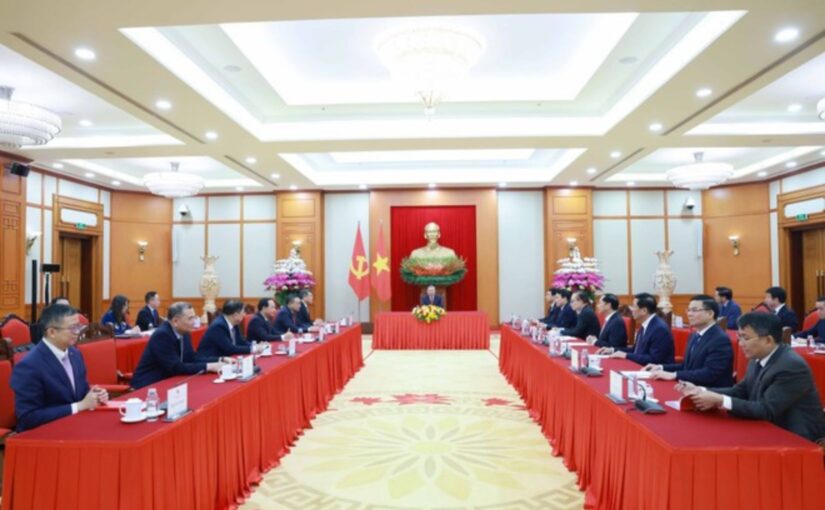
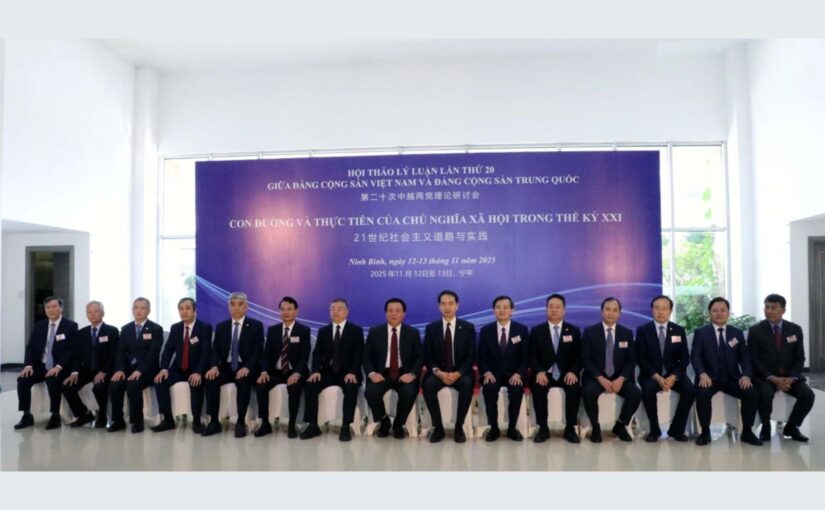
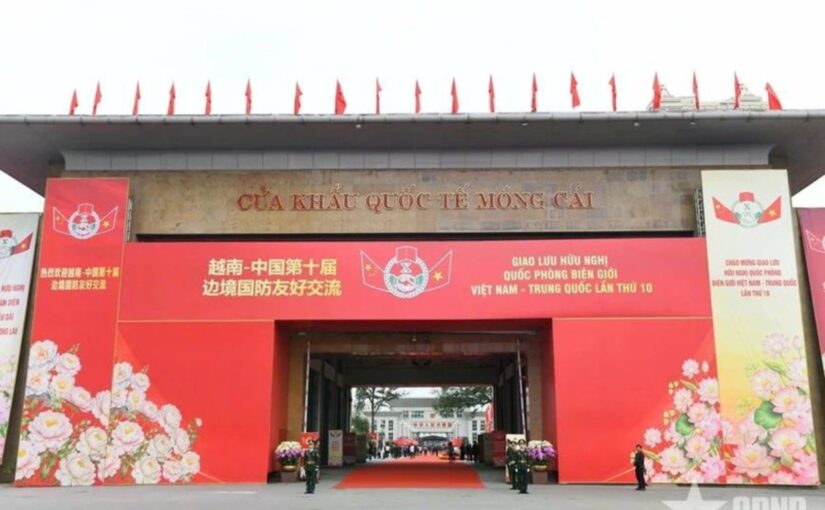
The Communist Parties of China and Vietnam held their 20th theory seminar in Vietnam’s northern Ninh Binh province on November 12 under the theme, “The path and practice of socialism in the 21st century.”

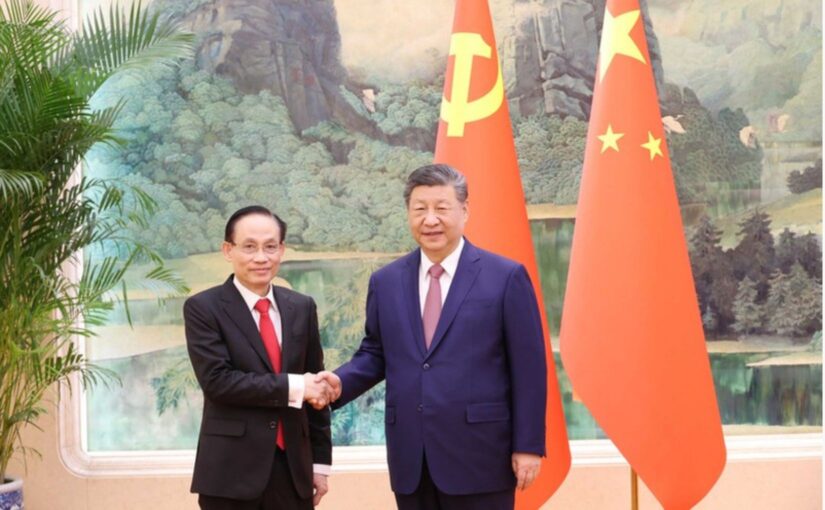
Both parties were represented at Politburo level. The Communist Party of China (CPC) delegation was headed by Li Shulei, Politburo member, Secretary of the CPC Central Committee’s Secretariat, and head of the Publicity Department of the CPC Central Committee, while the Communist Party of Vietnam (CPV) delegation was led by Nguyen Xuan Thang, Politburo member, Chairman of the Central Theory Council, and President of the Ho Chi Minh National Academy of Politics. Attending the seminar were representatives of ministries, central agencies, and localities, along with scientists, experts, and scholars from both countries, as well as the Chinese Ambassador to Vietnam.

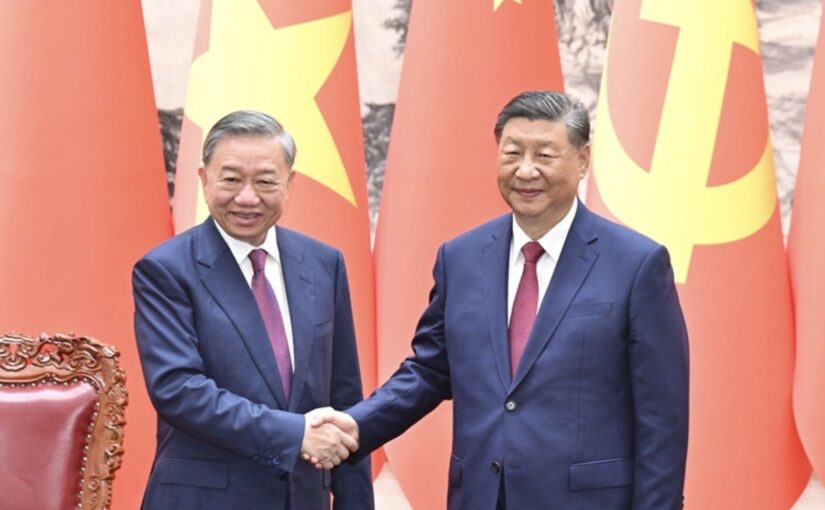
CPC General Secretary Xi Jinping and CPV General Secretary To Lam both sent congratulatory letters to the seminar.

In the letters, the two leaders affirmed the important role of this highest-level theory exchange mechanism between the two Parties, reflecting their strategic vision, close bond, and shared responsibility in safeguarding, applying, and creatively developing Marxism-Leninism in accordance with each country’s realities, as well as demonstrating the high level of political trust between the two Parties and nations.

Xi Jinping said that both the CPC and the CPV uphold and develop Marxism, unswervingly follow the socialist path, and lead their respective countries in socialist construction, facing many of the same or similar issues of the times.

The two parties have carried out in-depth exchanges of experience in governance, jointly explored a socialist modernisation path that suits their national conditions, and worked together to promote the localisation and modernisation of Marxism and the development of the world socialist movement, constantly writing a new chapter of friendship of “comrades plus brothers” in the new era.

He also called for joint efforts to deepen theoretical discussions and academic exchanges, and to jointly enhance their understanding of the laws that underlie governance by a Communist party, socialist construction, as well as the development of human society, so as to provide theoretical support for the socialist cause of both countries and the construction of the China-Vietnam community with a shared future, and contribute to the noble cause of human peace and development.

To Lam affirmed that the CPV stands ready to work with the CPC to further deepen theory cooperation and share experiences in Party building, national development, and social governance, thereby promoting the development of socialist theory in the context of globalisation and the Fourth Industrial Revolution, for the benefit of the peoples of both countries and for a brighter future for socialism worldwide.

At a meeting between the two heads of delegations, the host congratulated China on its recent achievements, including the successful convening of the fourth plenary session of the 20th CPC Central Committee and the adoption of the orientation for formulating the 15th Five-Year Plan. He reaffirmed that Vietnam always attaches great importance and gives top priority to relations with China.

Li affirmed that the CPC firmly believes in and supports the CPV in successfully organising its 14th National Congress, opening a new era of development for Vietnam. He added that China always prioritises the development of relations with Viet Nam in its neighbourhood diplomacy.

Continue reading Chinese and Vietnamese communists discuss the path and practice of socialism in the 21st century

China-Vietnam relations of comrades and brothers underlined in three high-level meetings

The special relations of comrades as well as brothers between China and Vietnam, as Vietnamese communist leader Ho Chi Minh once described it in a poem, were highlighted by three recent overlapping top level exchanges between the two socialist neighbours.

From August 31-September 2, Zhao Leji, Member of the Standing Committee of the Political Bureau of the Communist Party of China (CPC) Central Committee and Chairman of the Standing Committee of the National People’s Congress (NPC), visited Vietnam at the invitation of the Communist Party of Vietnam (CPV) Central Committee and Chairman of the National Assembly of Vietnam Tran Thanh Man, leading a party and state delegation to events marking the 80th anniversary of the August Revolution and the National Day of the Socialist Republic of Vietnam.

When meeting with General Secretary of the CPV Central Committee To Lam, Zhao Leji conveyed General Secretary Xi Jinping’s cordial greetings and extended warm congratulations on the historic achievements made in the cause of the CPV and the country over the past 80 years. Zhao Leji stated that under the new circumstances, China is ready to work with Vietnam to fully implement the important common understandings reached between the top leaders of the two Parties and  jointly advance the socialist modernisation endeavours in their respective countries, and accelerate the building of a China-Vietnam community with a shared future that carries strategic significance.

To Lam asked Zhao Leji to convey his sincere greetings to General Secretary Xi Jinping and expressed his gratitude for the tremendous assistance provided by China during various periods of Vietnam’s revolution and development. He said that under the leadership of the CPC Central Committee with Comrade Xi Jinping at its core, China has achieved remarkable accomplishments in development and has become a main driving force of global economic growth.

When meeting with Vietnamese President Luong Cuong, Zhao Leji conveyed President Xi Jinping’s best wishes to him, noting that China and Vietnam should respond to external uncertainties with the strengths of the socialist system, uphold and strengthen the leadership of the Communist Party, firmly support each other’s reform and development endeavours, leverage the exemplary role of mutually beneficial and win-win cooperation between China and Vietnam, jointly resist the countercurrents of unilateralism and protectionism, and defend international fairness and justice as well as the common interests of developing countries.

Zhao Leji attended the ceremony held at the Ba Dinh Square in Hanoi marking the 80th anniversary of the August Revolution and the National Day of the Socialist Republic of Vietnam, and watched the military parade, mass pageantry and grand cultural performances. The Guard of Honour of the Chinese People’s Liberation Army was invited to participate in the military parade. The full text of General Secretary To Lam’s speech on the occasion may be read here.

Zhao Leji also paid respects at the Ho Chi Minh Mausoleum and visited Ho Chi Minh’s Stilt House.

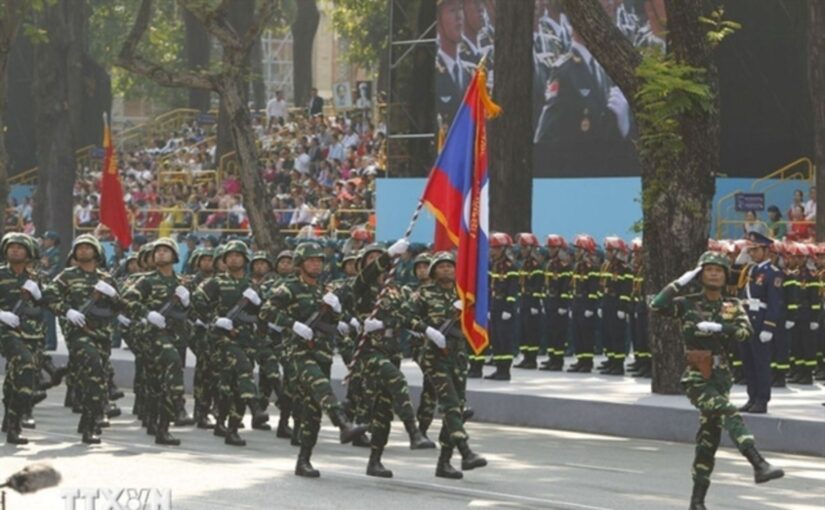
Around 400 military personnel from the armed forces of China, Russia, Laos, and Cambodia took part in the military parade. Receiving them on August 29, Deputy Minister of National Defence Sen. Lt. Gen. Hoang Xuan Chien extended a warm welcome and expressed gratitude to the foreign troops for their participation. He commended their determination and training efforts, noting their swift integration into rehearsals alongside the Vietnamese forces. Since their arrival, the delegations had received warm attention from both local leaders and the public, he noted.

From August 31-September 1, Vietnamese Prime Minister Pham Minh Chinh visited Tianjin to attend the meetings of the Shanghai Cooperation Organisation (SCO).

Continue reading China-Vietnam relations of comrades and brothers underlined in three high-level meetings

Chinese scholar says Vietnamese socialism is a new theoretical model for global socialism and a reference for developing countries

As the Socialist Republic of Vietnam gears up for massive celebrations marking the 80th anniversary of the August Revolution and the September 2nd proclamation of the then Democratic Republic of Vietnam by President Ho Chi Minh, a Chinese Marxist scholar has said that the country exemplifies the successful fusion of socialism and a market economy.

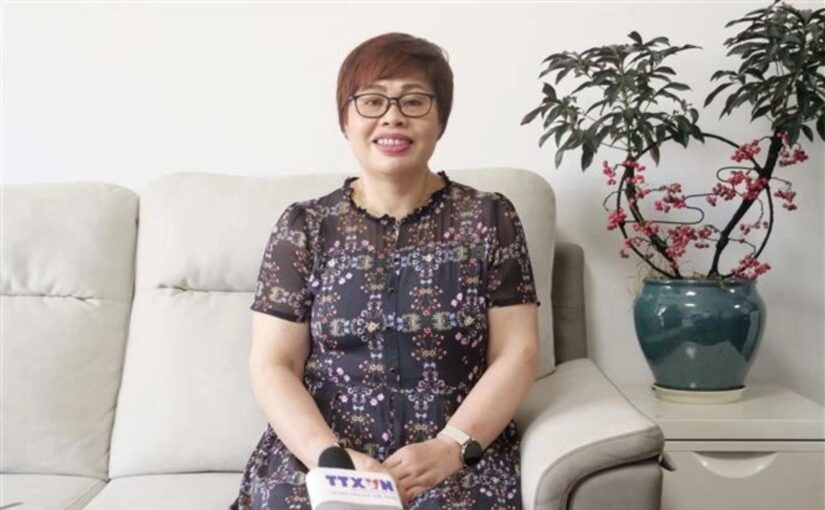
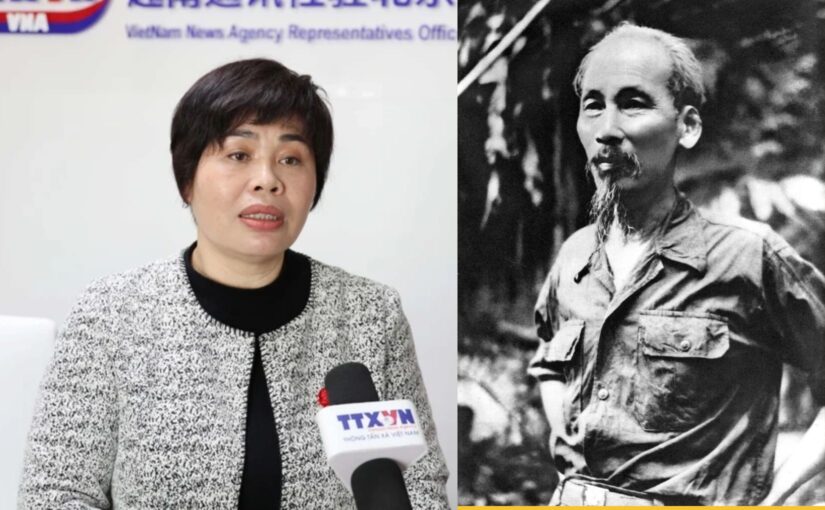
Speaking to Vietnam News Agency (VNA) correspondents in Beijing, Professor Dr. Pan Jin’e from the Research Institute of Marxism under the Chinese Academy of Social Sciences, noted that since embarking on reforms in 1986, Vietnam has gradually built a “socialist-oriented market economy,” shifting from a planned to an open economy. As a result:

  • In 2024, GDP reached 476.3 billion USD and per capita GDP exceeded 4,700 USD.
  • The World Bank recognises Vietnam as a “model for poverty reduction among developing countries.”
  • With renewable energy accounting for 8% of the energy mix by 2024, the country’s target of reaching carbon neutrality by 2050 is drawing global attention.

The country has established the theory of a socialist rule-of-law state “of the people, by the people, and for the people,” blending Marxism with local realities to balance political stability and social vitality, a breakthrough in Marxist theory on proletarian state power.

Additionally, Vietnam pursues “development for the people,” making strides in education, healthcare, employment, and social security. Education is free from preschool to public high school; primary school enrolment reached 99.7% in 2024, with a target of 35% university enrolment by 2030. Healthcare insurance coverage reached 93.35% in 2024, nearing universal health coverage, with life expectancy rising from 40 years in 1945 to 75.8 years today.

The interview notes: “These successes stem from decades of struggle against colonialism and invasion. Vietnam’s history is a heroic example for developing countries overcoming backwardness through socialist leadership, the regime’s strengths, and the unity and resilience of its people, supported by international solidarity and proletarian internationalism.”

Regarding Vietnam’s development of and contributions to global socialism, the Chinese scholar described the country’s accomplishments as offering a “Vietnamese solution” to the world socialist movement. Vietnam presents a new theoretical model and developmental path for socialism globally, serving as a reference for developing countries.

Pan concluded that Vietnam’s achievements in building socialism confirm Marx’s view on diverse development paths. She emphasised that Vietnam’s experience revitalises the global socialist movement and opens “another possibility” for developing countries to explore the path of modernisation. “Socialism is not an abstract doctrine, but a creative practice rooted in the country and responsive to the era’s needs,” making this Vietnam’s most valuable contribution to the global socialist movement.

The following article was originally published by Nhân Dân.

Viet Nam, a country that has steadfastly pursued socialism, has gained remarkable achievements in a wide scope of sectors that includes the economy, politics, society, and culture, according to a Chinese expert on Vietnamese affairs.

Economically, Viet Nam exemplifies the successful fusion of socialism and a market economy, Prof., Dr. Pan Jin’e from the Research Institute of Marxism under the Chinese Academy of Social Sciences, said in an interview with Viet Nam News Agency correspondents in Beijing.

Continue reading Chinese scholar says Vietnamese socialism is a new theoretical model for global socialism and a reference for developing countries

Vietnam and China to celebrate key anniversaries

Socialist neighbours China and Vietnam have confirmed that they will exchange high level delegations on the upcoming 80th anniversaries of Vietnam’s August Revolution and National Day along with the Chinese people’s war of resistance against Japanese aggression and the world anti-fascist war.

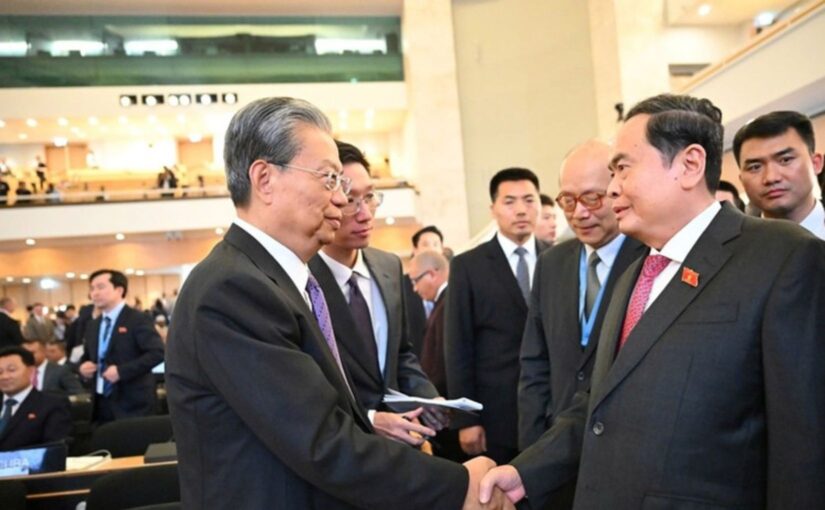
The pledge came when Vietnamese National Assembly Chairman Tran Thanh Man met with Zhao Leji, Chairman of the Standing Committee of the National People’s Congress (NPC) of China, in Geneva, Switzerland, on July 29, on the sidelines of the Sixth World Conference of Speakers of Parliament (WCSP 6).

Tran Thanh Man affirmed that the Vietnamese Party, State and people highly evaluated Party General Secretary and President Xi Jinping’s recent state visit to Vietnam, calling it a historic milestone and a bright highlight in the bilateral relations in 2025.

The Vietnamese top legislator further noted that the bilateral relations have seen remarkable progress, with growing political trust between the two Parties and States, increasingly comprehensive and effective cooperation mechanisms, and closer legislative ties. He informed his Chinese counterpart that the Vietnamese National Assembly is actively preparing for the first session of the Vietnam–China Inter-Parliamentary Committee and expressed his hope to welcome Chairman Zhao to Vietnam to co-chair this important event.

Both sides shared delight at the upcoming participation of senior leaders from the two countries in the celebrations marking the 80th anniversary of Vietnam’s August Revolution and National Day, as well as the 80th anniversary of the Chinese people’s victory against fascism.

The next day Vietnam’s Nhân Dân newspaper reported that the first joint army training exercise of the Vietnamese and Chinese ground forces had wrapped up at the Jianglong Chongzuo Training Base in China’s Guangxi Zhuang Autonomous Region on July 30.

The exercise, which ran from July 21-30, focused on major military disciplines such as reconnaissance, camouflage, unmanned aerial vehicle (UAV) operations, marksmanship, medical aid, chemical defence, field logistics, and coordinated tactical operations. In particular, the UAV exercises involved six practical combat scenarios in mountainous terrain, enhancing reconnaissance, strike, and rescue capabilities while improving coordination between the two forces. Cultural and sports exchanges within the program, including basketball, table tennis, chess, calligraphy, traditional medicine, and artistic performances, also helped strengthen mutual understanding and trust.

Earlier, on July 7, China Daily reported that a four-day exchange program, held under the theme “Youth Uniting for the Future”, was jointly organised by the Publicity Department of the Communist Party of China (CPC) Guizhou Provincial Committee and China Daily, bringing together Chinese and Vietnamese youth delegates, along with Vietnamese experts.

The event was part of broader efforts to implement agreements reached by the top leaders of China and Vietnam. In April, President Xi Jinping proposed inviting Vietnamese youths to China for “Red Study Tours” over the next three years to strengthen bilateral ties.

Continue reading Vietnam and China to celebrate key anniversaries

Vietnam to honour China and other traditional friends on 80th national day

Vietnam’s National Defence Ministry has invited the military of five countries – Russia China, Laos, Cambodia, and Belarus – to join the parade in the ceremony marking the 80th August Revolution Day and the 80th National Day, to be held on September 2 in the capital Hanoi.

The ministry has also sent invitations to defence ministers of eight countries – Russia, China, Laos, Cambodia, Cuba, Belarus, Kazakhstan and Azerbaijan – to attend the ceremony, according to Deputy Minister, Senior Lieutenant General Hoang Xuan Chien.

The Vietnam News Service reported on July 10 that the invitation of military units to participate in the parade is a gesture of friendship, solidarity and the close bonds between the people and army of Vietnam and their traditional allies and further noted that on the occasion of the 50th anniversary of the liberation of the South and National Reunification (April 30 2025), the defence ministries of China, Laos and Cambodia sent military personnel to take part in the parade held in Ho Chi Minh City. This was the first time for Vietnam to invite foreign troops to participate in a national military parade.

Also on July 10, the defence ministry held a meeting with relevant bodies to expedite the construction of a monument dedicated to the soldiers from foreign countries who supported Vietnam during its resistance wars, to be located at the Vietnam Military History Museum.

The memorial complex will include a general symbol commemorating the support and sacrifices of foreign military experts, made of bronze and designed by Vietnam, as well as separate monuments honouring military experts from the Soviet Union/Russia, China, Laos, Cambodia and Cuba, also made of bronze, that will be either designed and constructed by the respective countries or by Vietnam upon request, and a greenstone relief designed and built by Vietnam.

The following article was originally published in Vietnam News.

HÀ NỘI — Việt Nam’s National Defence Ministry has invited the military of five countries – Russia, China, Laos, Cambodia, and Belarus – to join the parade in the ceremony marking the 80th August Revolution Day and National Day on September 2 in Hà Nội.

The ministry has also sent invitations to defence ministers of eight countries of Russia, China, Laos, Cambodia, Cuba, Belarus, Kazakhstan and Azerbaijan to attend the ceremony, according to Deputy Minister, Senior Lieutenant General Hoàng Xuân Chiến.

So far, Cuba has responded to the invitation, confirming that the Minister of the Revolutionary Armed Forces of Cuba will attend the ceremony.

Laos and Cambodia have also expressed their support for the initiative to send military forces to participate in the parade at the celebration, as per Việt Nam’s invitation.

The invitation of military units to participate in the parade is a gesture of friendship, solidarity and close bonds between the people and army of Việt Nam and its traditional allies.

The move also reaffirms Việt Nam’s foreign policy of independence, self-reliance, diversification and multilateralism — being a reliable partner and friend to all nations.

Previously, on the occasion of the 50th anniversary of the Liberation of the South and National Reunification (April 2025), the defence ministries of China, Laos and Cambodia sent military personnel to take part in Việt Nam’s military parade.

On the same day, the defence ministry held a meeting with agencies and units to implement the construction of a monument dedicated to the soldiers from foreign countries who supported Việt Nam during its resistance wars, to be located at the Việt Nam Military History Museum.

This commemorative project carries great significance, paying tribute to foreign military experts and soldiers who assisted Việt Nam in its wars of national liberation.

The memorial complex will include a general symbol commemorating the support and sacrifices of foreign military experts, made of bronze and designed by Việt Nam; separate monuments honouring military experts from the Soviet Union/Russia, China, Laos, Cambodia and Cuba, also made of bronze that will be either designed and constructed by the respective countries or by Việt Nam upon request; and a greenstone relief designed and built by Việt Nam.

The area surrounding the monument will be landscaped with trees and grass lawns.

Chiến has instructed that construction progress be expedited. The first group of statues must be completed before August 15, while the entrance and central exhibition area should be finished by August 10.

China and Vietnam jointly promote Red Tourism

The Vietnamese newspaper Nhân Dân recently reported that an exhibition on President Ho Chi Minh’s revolutionary career in China has been jointly organised by the Guangdong Museum of Revolutionary History of China and the Ho Chi Minh Museum of Viet Nam as part of the activities to celebrate the 75th anniversary of bilateral diplomatic relations and the Year of People-to-People Exchange between the two countries.

During his journey to seek a path for liberating the nation, the paper notes, President Ho Chi Minh spent many years in China, including an extremely important period in Guangzhou, Guangdong province from 1924-1927. During this time, he established the Vietnam Revolutionary Youth League, the predecessor of the Communist Party of Vietnam (CPV), and organised training courses to prepare cadres and build the organisational structure, creating the ideal conditions for the founding of the party.

The exhibition retraces the late Vietnamese leader’s 12 years of revolutionary activities in China and emphasises that, under the leadership of President Ho Chi Minh, Chairman Mao Zedong, and other pioneering leaders, the people of Vietnam and China stood together, enduring hardships in their struggles for independence and national liberation. The friendship as comrades plus brothers between Vietnam and China remains a valuable legacy for both nations and will endure for future generations.

Historical sites, it continues, associated with the revolutionary career of President Ho Chi Minh in China are evidence of his revolutionary journey and serve as important landmarks of Vietnam-China friendship. The Chinese government attaches great importance to preserving these sites, having restored and protected them to enhance their historical value. Today, they serve as “red addresses” – destinations for revolutionary education and people-to-people exchanges, especially among younger generations. The exhibition is scheduled to be held on a rotating basis at several museums in both Vietnam and China.

In a separate article, Nhân Dân reports on the mutual ‘red tourism’ by young people from the two socialist neighbours.

It writes that during her first visit to Vietnam to attend the Vietnam-China Youth Friendship Meeting in April, Huang Chenshen from the China Youth University for Political Studies had listened to speeches by Chinese Party General Secretary Xi Jinping and Vietnamese Party General Secretary To Lam, visited Quang Ninh and Ninh Binh provinces, and explored the local culture. What impressed her most was experiencing the cultural life of Vietnam’s ethnic minorities.

The “Red Study Tour” programme of visits to China was proposed by Xi during his April visit to Vietnam. It links together historical sites associated with President Ho Chi Minh and former Chinese leaders, serving as a “living history classroom” that fosters a spirit of solidarity and a shared sense of responsibility among young people for peace and development.

Nguyen Thi Phuong Hoa, former Deputy Director of the Institute for Chinese Studies and Deputy Editor-in-Chief of the Chinese Studies Journal, said that the content of youth exchanges has become increasingly diverse, shifting from general forums to more practical, thematic discussions closely tied to the role of young people in national development and innovation.

The first tour visited China’s Guangxi Zhuang Autonomous Region in May, with the theme, “Following President Ho Chi Minh’s Footsteps”. In addition to visiting historical sites, Guangxi also organised activities for the young delegates to experience artificial intelligence technology and the digital environment. Vietnamese participants were able to visit a robotics lab, experience high-speed train travel, and explore advanced technological applications.

The following articles were originally published by Nhân Dân.

Exhibition spotlights President Ho Chi Minh’s revolutionary career in China

June 30 (Nhân Dân) — An exhibition on President Ho Chi Minh’s revolutionary career in China has been jointly held by the Guangdong Museum of Revolutionary History of China and the Ho Chi Minh Museum of Viet Nam as part of activities to celebrate the 75th founding anniversary of diplomatic relations and the Year of Humanistic Exchange 2025 between the two nations.

Continue reading China and Vietnam jointly promote Red Tourism

Vietnam boosts China friendship at Summer Davos

Vietnamese Prime Minister Pham Minh Chinh paid a working visit to China, June 24-27, at the invitation of his Chinese counterpart Li Qiang. The centrepiece of his visit was his participation in the 16th Annual Meeting of the New Champions of the World Economic Forum (WEF) in Tianjin at the co-invitation of WEF President and CEO Børge Brende. Known as the ‘Summer Davos’, the event in Tianjin is the second most important annual WEF activity after the gathering in the Swiss resort of Davos itself. Uniquely among foreign leaders, this was the third consecutive year for the Vietnamese Prime Minister to take part. It was also the first visit by a key Vietnamese leader to China in 2025, taking place shortly after the state visit to Vietnam by General Secretary of the Communist Party of China and Chinese President Xi Jinping in April.

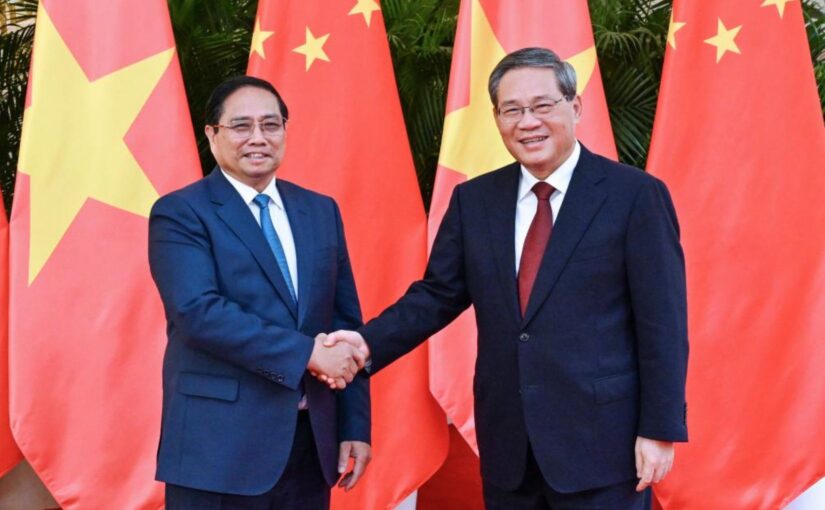
Pham Minh Chinh met with Li Qiang on June 24, shortly after his arrival in Tianjin.

Noting that this year marks the 75th anniversary of the establishment of diplomatic relations between China and Vietnam, Li said the deep friendship of “comrades and brothers” has remained firm and fresh over time. Since the successful visit of Xi Jinping to Vietnam in April, the comprehensive strategic cooperation between China and Vietnam has been further advanced. China is willing to continue to implement the outcomes of President Xi’s visit with Vietnam to bring more benefits to the two peoples.

China welcomes Vietnam to become a BRICS partner country and is willing to work with Vietnam to safeguard free trade and the multilateral trading system, promote an equal and orderly multipolar world and a universally beneficial and inclusive economic globalisation, and inject more stability and positive energy into world peace and development.

Chinh said that Vietnam always considers developing its relationship with China a strategic choice, an objective necessity, and a top priority in its foreign policy and expressed confidence that China will continue to grow and play an increasingly important role in global development, security, and civilisation.

He proposed that both sides further promote the key role of security and defence cooperation in the overall bilateral relationship; improve the quality and effectiveness of practical cooperation across various fields; and maintain regular operations of the intergovernmental working groups on land-based infrastructure, monetary issues, and maritime cooperation, as well as the joint committees on economic-trade and scientific-technological cooperation. He also suggested studying the establishment of new working groups in education, training, finance, culture, and people-to-people exchanges.

Pham Minh Chinh also met with other foreign leaders attending the forum, namely Ecuadorian President Daniel Noboa, Singapore Prime Minister Lawrence Wong,  Kyrgyzstan Prime Minister Adylbek Kasimalyev, and Prime Minister of Senegal Ousmane Sonko.

Thanking Vietnam for its agricultural assistance, Sonko hoped for continued support in rice and cashew cultivation. He praised the success of Vietnam’s agricultural cooperation model in other countries and voiced interest in expanding that model to benefit Senegal and other Global South nations.

The Vietnamese and Senegalese leaders agreed to increase high-level exchanges and mutual visits, boost trade and investment promotion activities, facilitate business connections, and foster market access for each other’s key export products, with a strong focus on agriculture. Chinh invited Sonko to visit Vietnam, an invitation the Senegalese leader accepted with pleasure.

Also, as part of his working trip to China, on June 26 Chinh visited the Memorial Hall of the First National Congress of the Communist Party of China (CPC) and Pudong district, considered a development model in the new era of Shanghai as well as China.

Writing in the memorial hall’s guestbook, Chinh expressed his admiration and congratulations on the remarkable achievements of the CPC in leading the revolution and building a civilised, prosperous, harmonious, and modern nation.

The following articles were originally published by the Xinhua News Agency and Nhân Dân.

Chinese premier meets PM of Vietnam

TIANJIN, June 24 (Xinhua) — Chinese Premier Li Qiang on Tuesday met with Prime Minister of Vietnam Pham Minh Chinh, who is in north China’s Tianjin Municipality for the 2025 Summer Davos.

Noting that this year marks the 75th anniversary of the establishment of diplomatic relations between China and Vietnam, Li said the deep friendship of “comrades and brothers” has remained firm and fresh over time. Since the successful visit of Xi Jinping, general secretary of the Communist Party of China Central Committee and Chinese president, to Vietnam in April, the comprehensive strategic cooperation between China and Vietnam has been further advanced.

Continue reading Vietnam boosts China friendship at Summer Davos

Chinese scholar lauds Vietnam’s revolutionary press

A solemn ceremony was held in the Vietnamese capital Hanoi on June 21 to celebrate the 100th anniversary of the Vietnamese Revolutionary Press Day (June 21, 1925-2025).

Addressing the meeting, Politburo member, Secretary of the Party Central Committee, and Chairman of the Party Central Committee’s Commission for Communications, Education and Mass Mobilisation  of the Communist Party of Vietnam Nguyen Trong Nghia said that the celebration of the 100th anniversary of the Vietnamese Revolutionary Press Day is an opportunity to review and multiply the pride, respect, and infinite gratitude towards President Ho Chi Minh – the founder, leader, trainer and great teacher of the Vietnamese revolutionary press. It is an occasion to show the pride of and gratitude to outstanding and exemplary leaders, revolutionary soldiers, and senior journalists; remember generations of journalists who directly fought and heroically sacrificed during the resistance wars against the French colonialists and US imperialists; and to express gratitude for the contributions of generations of journalists and soldiers who have raised high the Party’s ideological flag.

Emphasising that the 100-year journey of the Vietnamese revolutionary press has marked the efforts, achievements, lessons, challenges, ups and downs, and aspirations to move forward, Nghia affirmed that over the past century, the Vietnamese revolutionary press has always been steadfast, loyal, and devoted to the noble revolutionary cause of the Party, the nation, and the people.

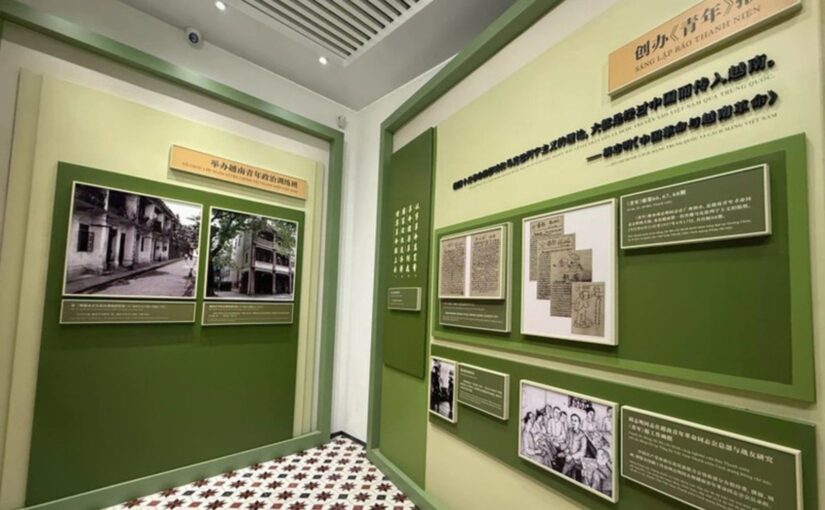
In an interview with the Vietnam News Agency to mark the occasion, Li Minghan, an intellectual from China’s Hong Kong who has devoted most of his life to studying President Ho Chi Minh’s revolutionary career, described “Thanh Nien” (Young People) newspaper, which laid the foundation for Vietnam’s revolutionary journalism a century ago, as a modest publication with great responsibility and mission.

Li said that President Ho Chi Minh, drawing from his experience in the French communist movement and his role in founding the Le Paria (The Pariah) newspaper in Paris in 1922 to expose colonial crimes and unite the global anti-colonial struggle, understood the power of revolutionary journalism as a tool to popularise, mobilise, organise, and lead revolutionary movements. During his stay in China’s Guangzhou city from 1924 to 1927 to prepare for the establishment of a Communist Party to lead Vietnam’s revolution, President Ho Chi Minh founded “Thanh Nien” newspaper and released its first issue on June 21, 1925. Li said that despite its small format and simple design and printing, the newspaper carried immense responsibility and mission, contributing to the establishment of the Communist Party of Vietnam, the decisive factor in the success of the country’s revolution in the past, today, and in the future.

Today, original copies of the early issues are on display at the relic site of the headquarters of the Vietnamese Revolutionary Youth League in Guangzhou city. An exhibition spotlighting the time President Ho Chi Minh spent in China is being held from May 10 to August 10 at the Guangzhou Uprising Memorial Hall, featuring a dedicated display of copies of Thanh Nien.

The following article was originally published by Nhân Dân.

Li Minghan, an intellectual from China’s Hong Kong who has devoted most of his life studying President Ho Chi Minh’s revolutionary career, described “Thanh nien” (Young people) newspaper, which laid foundation for Viet Nam’s revolutionary journalism a century ago, as a modest publication with great responsibility and mission.

In an interview with the Viet Nam News Agency on the occasion of Viet Nam’s Revolutionary Press Day (June 21), Li said that President Ho Chi Minh, drawing from his experience in the French communist movement and his role in founding the Le Paria (The Miserable) newspaper in Paris in 1922 to expose colonial crimes and unite the global anti-colonial struggle, understood the power of revolutionary journalism as a tool to popularise, mobilise, organise, and lead revolutionary movements.

During his stay in China’s Guangzhou city from 1924 to 1927 to prepare for the establishment of a Communist Party to lead Viet Nam’s revolution, President Ho Chi Minh founded “Thanh nien” newspaper and released its first issue on June 21, 1925. Li said that despite its small format and simple design and printing, the newspaper carried immense responsibility and mission, contributing to the establishment of the Communist Party of Viet Nam, the decisive factor in the success of the country’s revolution in the past, today, and in the future.

The newspaper was printed on a compact 18×24 cm paper size, with simple design and clear content.

Between June 21, 1925, and April 17, 1927, the newspaper published a total of 88 issues, with 100 copies of each edition distributed to Viet Nam by sailors, providing information and building solidarity within Viet Nam’s revolutionary movement and connecting it with communist movements in the region and the world.

Today, original copies of the early issues are on display at the relic site of the headquarters of the Vietnamese Revolutionary Youth League in Guangzhou city, Guangzhong province.

An exhibition spotlighting the time President Ho Chi Minh in China is taking place from May 10 to August 10 at the Guangzhou Uprising Memorial Hall, featuring a dedicated display of reproduced copies of Thanh Nien newspaper’s issues No. 63, 66, and 67. The event is held in celebration of the 75th anniversary of the Viet Nam – China diplomatic relations and the Year of China-Viet Nam Humanistic Exchange 2025.

Xi extends condolences over death of former Vietnamese President Tran Duc Luong

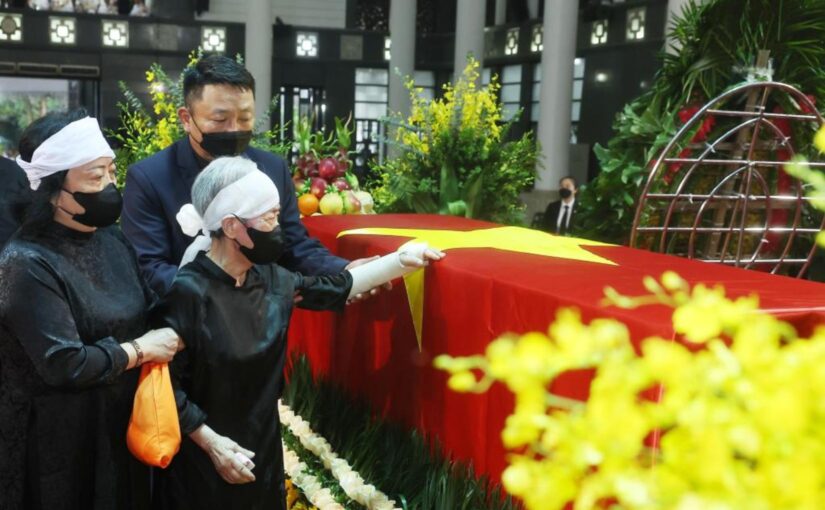
Veteran Vietnamese revolutionary leader Tran Duc Luong, who served as State President from August 1997 to November 2007, passed away in Hanoi on May 20 at the age of 88.

Chinese President Xi Jinping extended condolences to General Secretary of the Communist Party of Vietnam (CPV) Central Committee To Lam and Vietnamese President Luong Cuong, hailing Comrade Tran Duc Luong as an outstanding party and state leader of Vietnam who made important contributions to the country’s development and its cause of Doi Moi (reform). He added that, as an old friend of the Chinese people, he made unremitting efforts to promote the development of relations between the two parties and the two countries.

The Vietnamese newspaper Nhân Dân featured extensive coverage, including a special communique, brief biography,  and details of condolence messages sent by leaders of Laos, China, Cambodia, Cuba and Russia.

The following article was originally published by the Xinhua News Agency.

BEIJING, May 24 (Xinhua) — Chinese President Xi Jinping on Saturday extended condolences to General Secretary of the Communist Party of Vietnam (CPV) Central Committee To Lam and Vietnamese President Luong Cuong over the death of former Vietnamese President Tran Duc Luong.

In his message, Xi, also general secretary of the Communist Party of China (CPC) Central Committee, expressed profound condolences and extended sincere sympathies to Tran Duc Luong’s family on behalf of the CPC, the Chinese government and the Chinese people.

Xi hailed Comrade Tran Duc Luong as an outstanding party and state leader of Vietnam who made important contributions to the country’s development and its cause of Doi Moi (reform).

As an old friend of the Chinese people, Comrade Tran Duc Luong made unremitting efforts to promote the development of relations between the two parties and the two countries, Xi said.

Xi expressed his belief that under the strong leadership of the CPV Central Committee headed by Comrade To Lam, the party, government and people of Vietnam will surely turn their grief into strength and continue to achieve new accomplishments in the cause of socialist construction. 

Ho Chi Minh’s vital contributions to the global socialist and anti-imperialist struggle

Marking the 135th anniversary of the birth of the country’s revolutionary leader Ho Chi Minh, May 19, 2025, the Vietnamese press has carried numerous articles reflecting the worldwide respect felt by progressive people for their national hero.

In one such article, a Vietnam News Agency (VNA) correspondent in Beijing, interviewed Professor Pan Jin’e, a senior fellow at the Academy of Marxism under the Chinese Academy of Social Sciences.

Pan described Ho Chi Minh as the founder of the Democratic Republic of Vietnam, a great revolutionary, a brilliant strategist, and a moral exemplar. She also highlighted his role as a leader of anti-colonial movements across Asia, Africa, and Latin America in the 20th century, as well as his significant place in the history of the international communist movement.

She noted that President Ho Chi Minh remained steadfast in his internationalist ideals. He joined the French Communist Party, actively collaborated with leaders of other socialist countries, and maintained close ties with the Chinese revolution. Alongside leaders such as Mao Zedong and Zhou Enlai, he helped build the traditional friendship between Vietnam and China – a relationship that remains cherished by both parties and peoples.

As a representative of the Communist International, Ho Chi Minh supported revolutionary movements worldwide, particularly in China, Laos, and Cambodia, playing an active role in anti-colonial struggles and proletarian revolutions.

Another article carried by Nhân Dân noted that: “With the friendship of ‘the proletariat in all four directions are brothers’, Ho Chi Minh harshly criticised some comrades in the Communist International for incorrectly assessing the colonial issue and confidently affirmed that the proletarian revolution was completely capable of breaking out first in the colonial countries, thereby creating conditions for workers and labourers in the mother countries to carry out the revolution to liberate the class and liberate society.”

The following article was originally published by Nhân Dân.

President Ho Chi Minh made significant contributions to Viet Nam and the international community, according to Professor Pan Jin’e, a senior fellow at the Academy of Marxism under the Chinese Academy of Social Sciences.

In an interview with a Viet Nam News Agency (VNA) correspondent in Beijing on the occasion of the 135th birth anniversary of the late Vietnamese leader (May 19, 1890–2025), Pan described Ho Chi Minh as the founder of the Democratic Republic of Viet Nam, a great revolutionary, a brilliant strategist, and a moral exemplar. She also highlighted his role as a leader of anti-colonial movements across Asia, Africa, and Latin America in the 20th century, including his significance in the history of the international communist movement.

She emphasised that his contributions were reflected not only in Viet Nam’s national liberation and national building efforts but also in their profound impact on global struggles against colonialism and the international socialist movement.

Ho Chi Minh led the independence movement, founded the Communist Party of Viet Nam, and waged resistance wars against colonial and imperial forces, devoting his entire life to national reunification. He also guided the country’s socialist development in politics, economy and culture, spearheaded land reform, poverty alleviation, and national unity policies.

President Ho Chi Minh remained steadfast in his internationalist ideals. He joined the French Communist Party, actively collaborated with leaders of other socialist countries, and maintained close ties with the Chinese revolution. Alongside leaders such as Mao Zedong and Zhou Enlai, he helped build the traditional friendship between Viet Nam and China—a relationship that remains cherished by both Parties and peoples.

As a representative of the Communist International, Ho Chi Minh supported revolutionary movements worldwide, particularly in China, Laos, and Cambodia, playing an active role in anti-colonial struggles and proletarian revolutions.

According to the Chinese scholar, whether during Viet Nam’s socialist revolutionary era or its ongoing doi moi (renewal) cause, Ho Chi Minh’s status as a national hero and spiritual leader has never diminished. In 2019, the United Nations Educational, Scientific and Cultural Organisation (UNESCO) honoured him as a “Hero of National Liberation and a Great Man of Culture,” acknowledging his historic contributions to humanity.

Reflecting on the spirit of unity embodied in Ho Chi Minh’s Thought, Pan underscored that under his leadership and that of the Communist Party of Viet Nam, the country achieved the historic victory of national reunification on April 30, 1975. This triumph is a powerful testament to his famous teachings: “Unity, unity, great unity. Success, success, great success!” National unity, she noted, remains the most vital force behind Viet Nam’s revolutionary success.

The Chinese scholar expressed her belief that the Vietnamese people will always remember President Ho Chi Minh’s final wishes, continue to uphold national solidarity, and write new chapters in the nation’s proud history. They will strive to build an independent, free, happy, prosperous, and civilised Viet Nam by 2050, fulfilling the late leader’s long-cherished dream of seeing Viet Nam stand shoulder to shoulder with the great powers of the five continents, she continued.

Vietnam celebrates 50th anniversary of the victory of the war of resistance against US aggression

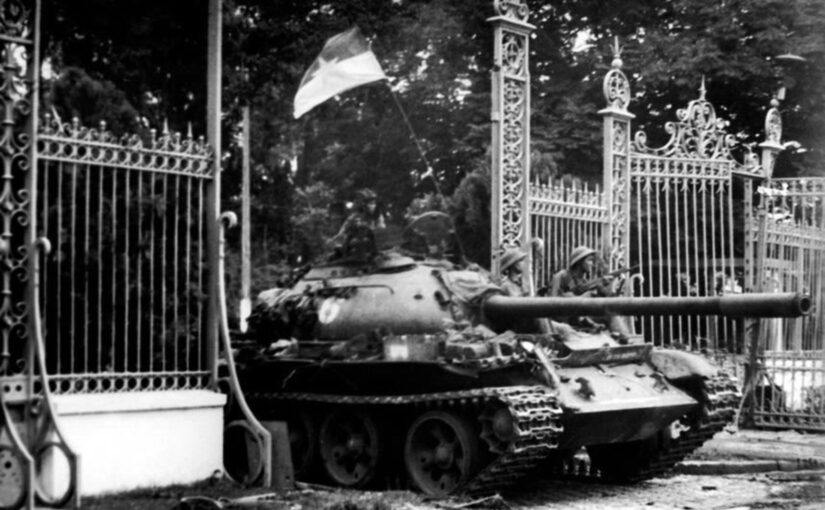
Massive celebrations were held in Ho Chi Minh City (formerly Saigon) on April 30 marking the 50th anniversary of the victory of the Vietnamese people’s war of resistance against US aggression, the liberation of the south and national reunification.

A grand parade also featured military contingents from China, Laos and Cambodia, representing the revolutionary fraternity with neighbouring  countries forged during the war.

On April 28, Vietnamese Prime Minister Pham Minh Chinh met with Pei Jinjia, Minister of Veterans Affairs, who was leading a Chinese party and government delegation to attend the celebrations.

Chinh expressed his appreciation for the Chinese party and government sending Minister Pei to attend and the Chinese People’s Liberation Army personnel to join Vietnam’s grand parade at the celebration, describing the move as a vivid demonstration of China’s support for the important political event of Vietnam and of the high level of the Vietnam-China friendship.

He thanked China for its valuable support during Vietnam’s struggle for independence and national reunification, noting specific historical contributions, including the Yucai schools in Guilin and Nanning, which trained thousands of outstanding Vietnamese students, and the Nan Xishan Hospital in Guilin, which gave treatment to over 5,400 wounded Vietnamese soldiers. He also acknowledged China’s assistance in building major projects including the Ho Chi Minh National Academy of Politics, the Thuy loi University, the Ministry of Planning and Investment headquarters, and the Viet Tri Bridge.

Pei, for his part, congratulated Vietnam on its 50th reunification anniversary while expressing appreciation for the support that generations of Vietnamese revolutionary leaders have provided for China’s revolutionary cause.

Numerous other high-level delegations from around the world also attended the celebrations. They included:

  • General Secretary of the Lao People’s Revolutionary Party (LPRP) and President of Laos Thongloun Sisoulith
  • Hun Sen, President of the Cambodian People’s Party and President of the Cambodian Senate
  • Politburo member Bensalem Mohamed of the National Liberation Front (FLN) of Algeria and Algeria’s Minister of Mujahedeen and Rights Holders Laid Rebiga
  • Vice Chairman of the House of Representatives of the National Assembly of Belarus Ipatau Vadzim

General Secretary of the Central Committee of the Communist Party of Vietnam (CPV) To Lam delivered an address at the national celebration. He described the 50th anniversary as “the most brilliant milestone in the history of building and defending the country; marking the glorious end of the 30-year resilient struggle for independence, freedom, and reunification of the Fatherland; putting an end to the more-than-a-century domination of old and new colonialism; and bringing the country into a new era – the era of national independence and socialism.”

“In this sacred moment, we respectfully remember and express our boundless gratitude for the great contributions of beloved President Ho Chi Minh – the genius Leader of our Party and nation, the great teacher of the Vietnamese revolution, a hero of national liberation, a great man of culture, an outstanding soldier of the international communist and workers’ movements – with the burning desire to liberate the South and reunify the nation, with the faith in victory that ‘No matter how difficult or arduous, our people will definitely win. Our Fatherland will definitely be reunified. Compatriots of the North and the South will definitely be reunited under one roof’… We sincerely thank our brothers, comrades and international friends, progressive forces and peace-loving people around the world for their great, valuable, wholehearted, loyal, and steadfast support and assistance to the Vietnamese people’s cause of national liberation and reunification.”

To Lam noted that immediately after the success of the August Revolution in 1945 and the birth of the Democratic Republic of Vietnam, “our people had to enter two long resistance wars to protect the country’s independence and unification. The resistance war against the French colonialists ended, and like many nations around the world, the Vietnamese people wished for a peaceful, independent and free life. However, the US imperialists quickly replaced the French colonialists, intervening in Vietnam, carrying out the plot to divide our country, and turning the South of our country into a new type of colony and an outpost to prevent communism in Southeast Asia and other progressive forces in the world. During the war of aggression against Vietnam, the US imperialists deployed a large number of soldiers with the most modern and sophisticated weapons, implemented many dangerous war strategies; carried out two brutal destructive wars against the North, causing a lot of pains and losses to the people in both regions of the country; and the consequences of the war still linger today.

Continue reading Vietnam celebrates 50th anniversary of the victory of the war of resistance against US aggression

General Secretary Tô Lâm: Xi Jinping is a sincere comrade and a close friend of Vietnam

We previously republished the article by Chinese President Xi Jinping published in the Vietnamese newspaper Nhân Dân on April 14, coinciding with his arrival in the country for a state visit. The same day, China’s People’s Daily published an article by To Lam, General Secretary of the Communist Party of Vietnam, welcoming Xi’s visit.

In his article, To Lam noted: “This is Comrade Xi Jinping’s fourth visit to Vietnam since he assumed the responsibility of Party General Secretary and President of China, and also his second visit to Vietnam in the 13th-term National Congress of the Communist Party of Vietnam (CPV) and the 20th-term National Congress of the Communist Party of China (CPC). As the Supreme Leader of the Communist Party of China and the People’s Republic of China who has visited Vietnam the most in history, General Secretary and President Xi Jinping is a sincere comrade and a close friend of Vietnam. The Party, State and people of Vietnam warmly welcome and believe that the visit will definitely be a great success, making a great and important contribution to strongly promoting the tradition of friendship and opening a new era of development in Vietnam-China relations.”

The article continues to note that, in the revolutionary journey that was closely linked from the beginning with countless difficulties, generations of leaders of the two Parties and two countries, directly President Ho Chi Minh and Chairman Mao Zedong, constantly worked hard to cultivate “the close relationship between Vietnam and China, both comrades and brothers”. During many years of revolutionary activities in China, President Ho Chi Minh always received precious sentiments and enthusiastic help from the Chinese communists and people. Under the leadership of President Ho Chi Minh, Vietnamese communists also actively participated in the revolutionary movement in China. The history of standing shoulder to shoulder and sharing joys and sorrows between the revolutionary predecessors of the two countries was a shining example in the revolutionary struggle movement of the world proletariat, laying a solid foundation for the future friendship between Vietnam and China.

On the basis of the reliable relationship between the two Communist Parties, on January 18, 1950, shortly after its establishment, the People’s Republic of China became the first country in the world to officially establish diplomatic relations with the Democratic Republic of Vietnam (now the Socialist Republic of Vietnam). Vietnam was also the first Southeast Asian country to officially establish diplomatic relations with China. This was a brilliant historical milestone, opening a new era for the Vietnam-China friendship. Under the guidance of the two Communist Parties, the people of the two countries gave each other sincere and wholehearted help and support, contributing to the victory and success of the national liberation revolution and the cause of national construction and development in the direction of socialism in each country.

In the overall foreign policy of independence, self-reliance, peace, friendship, cooperation and development, multilateralisation and diversification of foreign relations, the Party and State of Vietnam have always persistently and consistently given top priority to and determined to work with the Party and State of China to develop the Comprehensive Strategic Cooperative Partnership, the Vietnam-China Community with a shared future that carries strategic significance, for the happiness of the people of the two countries, for the cause of peace and progress of all mankind. The Vietnamese people will never forget the great and effective assistance of the Chinese people in historical periods. Vietnam always considers China’s prosperous development as an opportunity for itself and is pleased and appreciates China’s affirmation of prioritising the development of relations with Vietnam in its neighbourhood diplomacy and considers this a strategic choice of both countries.

The two sides have satisfactorily resolved many issues left over from history and agreed to persistently and properly handle and actively resolve disagreements through peaceful measures on the basis of mutual understanding and respect, in accordance with international law. For the relations between the two Parties and two countries to develop well and comprehensively as they are today, the most important lesson is the sincerity, trust and mutual understanding between the two socialist neighbouring countries under the leadership of the Communist Parties, deeply rooted in the tradition of humanity and respect for human relations of the two peoples; the intellectual vision, determination and action of generations of leaders of the two Parties and two countries; and the joint efforts and participation of the political systems and people of the two countries. The Party, State and People of Vietnam respect and appreciate the sentiments, enthusiasm and especially important great contributions of General Secretary and President Xi Jinping to the Vietnam-China relationship over the past many years.

The world is undergoing profound, fundamental changes of an epochal nature, with deep transformations in every aspect under the impact of major shifts in politics, economy, culture, society, and science and technology. The period from now until 2030, with a longer-term vision toward 2045 and even 2050, the mid-point of the 21st century – key milestones tied to the revolutionary causes of the two Parties and the two countries – will be the most crucial period for shaping a new world order. It will open up great opportunities, while also posing significant challenges for nations. For Vietnam, this is a period of important strategic opportunity, a decisive sprint stage to usher in a new era of national development and to fulfill President Ho Chi Minh’s aspiration of “building a peaceful, unified, independent, democratic, and prosperous Vietnam, making a worthy contribution to the revolutionary cause of the world.” For China, this is a pivotal period and a stepping stone in realising its second centenary goal, building the People’s Republic of China into a modern socialist power that is prosperous, strong, democratic, civilised, harmonious, and beautiful.

The following English translation of Comrade To Lam’s article was originally published by Nhân Dân.

JOINING HANDS TO OPEN A NEW ERA OF DEVELOPMENT OF VIETNAM-CHINA FRIENDSHIP

To Lam, General Secretary of the Central Committee of the Communist Party of Vietnam

At the invitation of mine and President Luong Cuong of the Socialist Republic of Vietnam, comrade Xi Jinping, General Secretary of the Central Committee of the Communist Party of China and President of the People’s Republic of China, will pay a state visit to Vietnam from April 14-15, 2025, in the year when the people of the two countries joyfully celebrate the 75th founding anniversary of diplomatic relations between Vietnam and China (January 18, 1950 – 2025) and the Year of Vietnam-China Humanistic Exchange.

This is comrade Xi Jinping’s fourth visit to Vietnam since he assumed the responsibility of Party General Secretary and President of China, and also his second visit to Vietnam in the 13th-term National Congress of the Communist Party of Vietnam (CPV) and the 20th-term National Congress of the Communist Party of China (CPC). As the Supreme Leader of the Communist Party of China and the People’s Republic of China who has visited Vietnam the most in history, General Secretary and President Xi Jinping is a sincere comrade and a close friend of Vietnam. The Party, State and people of Vietnam warmly welcome and believe that the visit will definitely be a great success, making a great and important contribution to strongly promoting the tradition of friendship and opening a new era of development in Vietnam – China relations.

I. Vietnam – China relations: History of close friendship, comprehensive cooperation achievements

Vietnam and China are two close neighbours, connected by mountains and rivers, the people of the two countries have shared many similarities in culture and customs, and together cultivated a long-standing traditional friendship that has lasted for thousands of years.

Continue reading General Secretary Tô Lâm: Xi Jinping is a sincere comrade and a close friend of Vietnam

China and Vietnam reaffirm their will to jointly strengthen the cause of socialism in the world

Chinese leader Xi Jinping began his first overseas visit of 2025 with a visit to Vietnam as the first leg of a regional tour that also took him to Malaysia and Cambodia.

Xi landed in the Vietnamese capital Hanoi at noon on April 14, for a state visit at the invitation of General Secretary of the Communist Party of Viet Nam (CPV) Central Committee To Lam and President of the Socialist Republic of Viet Nam Luong Cuong. He was greeted on arrival by President Luong Cuong and other senior Vietnamese leaders.

Xi Jinping delivered a written statement on arrival and, on behalf of the Communist Party of China (CPC), the Chinese government, and the Chinese people, extended sincere greetings and best wishes to the brotherly CPV, the Vietnamese government and the Vietnamese people.

The Chinese leader noted that this year marks the 95th anniversary of the founding of the CPV, the 80th anniversary of the founding of Viet Nam, and the 50th anniversary of the liberation of the South. China and Viet Nam are socialist neighbours connected by mountains and rivers, and a community with a shared future that carries strategic significance. During the arduous years of striving for state independence and national liberation, the two countries fought side by side and supported each other, forging a profound friendship. In exploring a socialist path suitable to their respective national conditions, the two countries have learned from each other and advanced hand-in-hand, demonstrating to the world the bright prospects of the socialist system. This year marks the 75th anniversary of the establishment of diplomatic relations between China and Viet Nam and is the China-Viet Nam Year of People-to-People Exchanges. The building of a China-Viet Nam community with a shared future is ushering in new development opportunities. Xi Jinping said he looks forward to taking this visit as an opportunity to have an in-depth exchange of views with Vietnamese leaders and comrades on the overall, strategic, and directional issues concerning the relations between the two parties and countries, as well as on international and regional issues of common interest and concern, and to jointly drawing up a new blueprint for the building of a China-Viet Nam community with a shared future.

Shortly after his arrival, General Secretary of the CPV Central Committee To Lam held a grand welcome ceremony for Xi Jinping. This was followed by talks between the two communist party leaders.

Xi Jinping said that this year marks the 95th anniversary of the founding of the CPV, the 80th anniversary of the founding of the Democratic Republic of Viet Nam (which is now the Socialist Republic of Viet Nam), and the 50th anniversary of the liberation of the South and he extended warm congratulations to the Vietnamese side on behalf of the CPC and the Chinese government. China will support Viet Nam as always in advancing along the socialist path suited to its national conditions, successfully holding the 14th CPV National Congress in 2026, and marching toward the Two Centenary Goals of the CPV and the country.

President Xi noted that this year marks the 75th anniversary of China-Viet Nam diplomatic ties and the China-Viet Nam Year of People-to-People Exchanges. Over the past 75 years, no matter how the international landscape evolved, the two sides had supported each other in the struggle for national independence and liberation, advanced the cause of socialism hand in hand, and forged ahead with modernisation of the two countries, serving as a model of unity and cooperation between socialist countries. Facing a changing and turbulent world, China and Viet Nam staying committed to peaceful development and deepening friendship and cooperation has brought much-needed stability and certainty to the world. Standing on a new historical starting point, the two sides should build on past achievements and join hands to renew their long-standing friendship featuring “camaraderie plus brotherhood.” In line with the overarching goals characterised by “six mores”, namely, stronger political mutual trust, more substantive security cooperation, deeper practical cooperation, more solid popular foundation, closer coordination and collaboration on multilateral affairs, and better management and resolution of differences, the two countries should advance their comprehensive strategic cooperation with high-quality efforts, ensure steady and sustained progress in building the China-Viet Nam community with a shared future, and make new and greater contributions to building a community with a shared future for mankind.

He said that building the China-Viet Nam community with a shared future carries important global significance. The two countries, both following the path of peaceful development and with their over 1.5 billion people marching toward modernisation together will provide an effective safeguard for peace and stability of the region and even the world, and give a strong boost to common development. A single small boat may not survive a ferocious storm; only by working together can we sail steadily and far.


President Xi proposed six measures to deepen the building of the China-Viet Nam community with a shared future:

  • First, elevating strategic mutual trust to a higher level. Leaders of the two Parties and two countries should visit and communicate with each other frequently like family do.
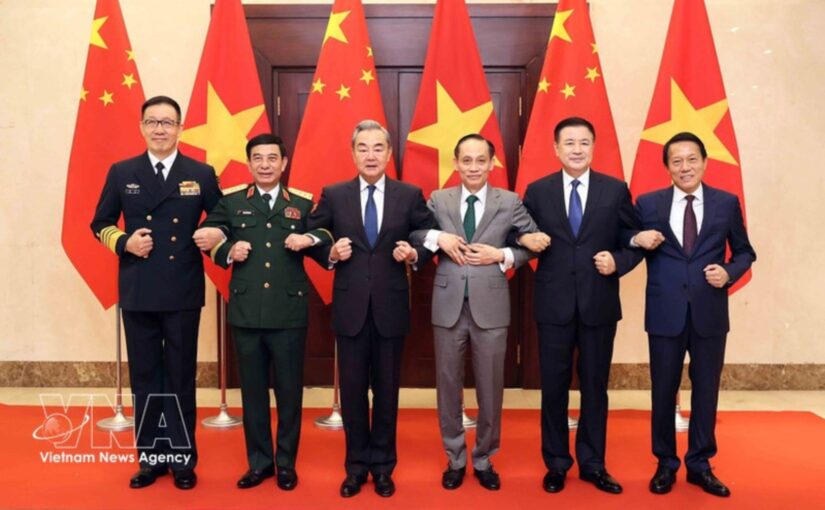
  • Second, building more robust security safeguards. The two sides should designate their “3+3” strategic dialogue on diplomacy, defence and public security as a ministerial-level mechanism to strengthen strategic coordination.
  • Third, expanding higher-quality mutually beneficial cooperation. The two sides should seize the great opportunity of faster formation of new quality productive forces in China and new types of productive forces in Viet Nam to upgrade bilateral practical cooperation. They should work to fully connect their standard-gauge railways, expressways, and smart ports as early as possible, and advance cooperation on AI, IoT and other high technologies.
  • Fourth, making the people-to-people bond more broad-based. The two sides should seize the opportunity of the China-Viet Nam Year of People-to-People Exchanges this year to hold more friendship activities that reach the communities and resonate with the public, and strengthen cooperation in tourism, culture, media, health, etc. The two countries should further tap into revolutionary resources and tell stories of friendship, and China will invite Vietnamese youths to China in the next three years on red study tours. This will help the people of the two countries, especially the younger generation, understand the great sacrifice that led to the founding of the two socialist countries and the great value of their good-neighbourliness, friendship and cooperation.
  • Fifth, carrying out closer multilateral coordination. The two sides should jointly safeguard the outcomes of the victory of the Second World War, firmly defend the UN-centreed international system and the international order based on international law, promote an equal and orderly multipolar world and a universally beneficial and inclusive economic globalisation, and strengthen cooperation within the framework of the Global Development Initiative, the Global Security Initiative and the Global Civilization Initiative.
  • Sixth, engaging in more constructive maritime interactions. The two sides should implement the common understandings reached by the leaders of the two countries, properly handle maritime issues, expand maritime cooperation, make the decision to launch joint development, and work for the early conclusion of the Code of Conduct in the South China Sea.

General Secretary To Lam stated that General Secretary Xi is an outstanding leader of the Chinese people and a great friend of the Vietnamese people. That General Secretary Xi chose Viet Nam as the destination of his first overseas visit this year fully reflects the importance he attaches to Viet Nam-China relations and his support for Viet Nam. This visit will surely become a new milestone in the history of friendly exchanges between the two Parties and two countries and will further advance the building of the China-Viet Nam community with a shared future that carries strategic significance.

Continue reading China and Vietnam reaffirm their will to jointly strengthen the cause of socialism in the world

China and Vietnam: Building on past achievements and making new advances in pursuit of shared goals

Republished below is President Xi Jinping’s signed article in Nhân Dân, the official newspaper of the Communist Party of Vietnam, published to coincide with his state visit to Vietnam – President Xi’s first overseas trip of 2025, and the first stop on a Southeast Asian tour that also includes Malaysia and Cambodia.

The trip will have been planned for some time, but, as a BBC article notes, “it has taken on heightened significance in the wake of a mounting trade war between the US and China”.

In his article, Xi reiterates the firm political and historical basis for China-Vietnam friendship:

China and Viet Nam are friendly socialist neighbors sharing the same ideals and extensive strategic interests. The profound friendship between the two parties and two peoples, forged decades ago, has grown stronger as we explore a socialist path suited to our respective national conditions and advance our respective modernization drive. Building the China-Viet Nam community with a shared future that carries strategic significance serves the common interests of our two countries and is conducive to peace, stability, development and prosperity of our region and beyond. It conforms with the trend of history. And it is the choice by our peoples.

Citing the famous poetic phrase of Chairman Ho Chi Minh that “the friendship between Viet Nam and China is so profound because we are both comrades and brothers”, Xi states that the bilateral friendship is “inherited from our distinctive revolutionary traditions”.

Pioneers of Chinese and Vietnamese revolutions together explored a path to national salvation and made important contribution to the world’s victory in the struggle against colonialism and imperialism.The historical site of the Vietnamese Revolutionary Youth League in Guangzhou and the site of the office of the League for Independence of Viet Nam in Jingxi, Guangxi Zhuang Autonomous Region bear witness to the revolutionary friendship between China and Viet Nam. Chairman Ho Chi Minh joined and supported the Chinese People’s War of Resistance Against Japanese Aggression in Yan’an, Guilin, Chongqing and Kunming . China sent military and political advisers in support of the Vietnamese people’s War Against French Occupation. The Communist Party of China and the Chinese government and people gave full support for Viet Nam’s just War Against U.S. Aggression to Save the Nation.

Reviewing the progress that has been made in economic cooperation between the two countries in recent decades, Xi notes that China has been Vietnam’s biggest trading partner for over 20 years in a row; that railway connectivity and the smart port development project are being steadily advanced; and that bilateral clean energy projects have boosted Vietnam’s electricity supply and its environmental goals. “Contributing to each other’s success and pursuing common development, China and Viet Nam have set an example of solidarity and cooperation in the Global South.” The article proposes further expansion of trade and in cooperation on railways, 5G, artificial intelligence and green development.

An article in China Daily by researchers at the Vietnam Academy of Social Sciences observes that Chinese investments in Vietnam are “shifting toward high-tech industries such as industrial components, electronics, and automobiles”, thereby “presenting Vietnam with an opportunity to access modern technology and integrate more deeply into the global production chain.”

Xi’s article calls on China and Vietnam to deepen strategic mutual trust and advance the socialist cause; to “explore and enrich together socialist theory and practices, and promote the steady development of the two countries’ socialist cause”.

Addressing the global trade war recently launched by the US, Xi calls for China, Vietnam and the other countries of the region to enhance multilateral collaboration and promote Asia’s prosperity and revitalisation, as part of a fairer, more inclusive vision of globalisation.

China will ensure continuity and stability of its neighborhood diplomacy. We will stay committed to the principle of amity, sincerity, mutual benefit and inclusiveness. We will continue to pursue the policy of forging friendship and partnership with our neighbors. And we will steadily deepen friendly cooperation with them to advance Asia’s modernization…

We should work together with the Global South to uphold the common interests of developing countries. Trade war and tariff war will produce no winner, and protectionism will lead nowhere. Our two countries should resolutely safeguard the multilateral trading system, stable global industrial and supply chains, and an open and cooperative international environment.

The article concludes: “Standing at this new starting point of history, China is ready to work with Viet Nam to build on past achievements, write a new chapter in building the China-Viet Nam community with a shared future, and contribute even more to building a community with a shared future for mankind.”

The article is reposted from Xinhua News Agency.

Late spring is full of vitality. As China and Vietnam celebrate the 75th anniversary of diplomatic relations, I will soon pay a state visit to Vietnam at the invitation of Comrade To Lam, General Secretary of the Central Committee of the Communist Party of Vietnam, and Vietnamese President Comrade Luong Cuong. This will be my fourth visit to this beautiful country since I became General Secretary of the Central Committee of the Communist Party of China and President of the People’s Republic of China. I look forward to renewing friendship with Vietnamese leaders, discussing ways of boosting cooperation, and drawing up a new blueprint for the China-Vietnam community with a shared future in the new era.

China and Vietnam are friendly socialist neighbours sharing the same ideals and extensive strategic interests. The profound friendship between the two parties and two peoples, forged decades ago, has grown stronger as we explore a socialist path suited to our respective national conditions and advance our respective modernization drive. Building the China-Vietnam community with a shared future that carries strategic significance serves the common interests of our two countries and is conducive to peace, stability, development and prosperity in our region and beyond. It conforms with the trend of history. And it is the choice by our peoples.

The China-Vietnam community with a shared future is inherited from our distinctive revolutionary traditions. During modern times, pioneers of Chinese and Vietnamese revolutions together explored a path to national salvation and made important contribution to the Third World’s victory in the struggle against colonialism and imperialism. The historical site of the Vietnamese Revolutionary Youth League in Guangzhou and the site of the office of the League for Independence of Vietnam in Jingxi, Guangxi Zhuang Autonomous Region bear witness to the revolutionary friendship between China and Vietnam. President Ho Chi Minh joined and supported the Chinese People’s War of Resistance Against Japanese Aggression in Yan’an, Guilin, Chongqing and Kunming. China sent military and political advisers in support of the Vietnamese people’s War Against French Occupation. The Communist Party of China and the Chinese government and people gave full support for Vietnam’s just War Against U.S. Aggression to Save the Nation. The well-known line: “The friendship between Vietnam and China is so profound because we are both comrades and brothers,” is etched on our shared revolutionary memory.

The China-Vietnam community with a shared future is based on strong political mutual trust. In recent years, General Secretary Nguyen Phu Trong, General Secretary To Lam and other Vietnamese leaders and I have visited each other many times, steering the course for building a China-Vietnam community with a shared future. Our two parties and two countries have kept close high-level engagement. Mechanisms such as the steering committee for bilateral cooperation, the party-to-party theoretical symposium, the border defence friendship exchange, and the conference on crime control between the two public security ministries are functioning smoothly. High-level mechanisms including the joint committee between the National People’s Congress of China and the National Assembly of Vietnam have been established. The “3+3” strategic dialogue on diplomacy, defence and public security between our two countries has been held successfully. China and Vietnam hold similar positions on many regional and international issues and have engaged in close coordination on them.

The China-Vietnam community with a shared future is rooted in our fruitful cooperation. China and Vietnam have pursued closer cooperation on industrial and supply chains amid a sluggish global economic recovery. China has been Vietnam’s biggest trading partner for over 20 years in a row, with total bilateral trade exceeding 260 billion USD in 2024. More and more quality Vietnamese agricultural products such as durian and coconut are available to Chinese consumers. Railway connectivity and the smart port development project are being steadily advanced. Solar panels, waste-to-energy plants and other bilateral clean energy projects have boosted electricity supply in Vietnam. The Cat Linh-Ha Dong metro line built by a Chinese company makes public transport in Hanoi more convenient. Contributing to each other’s success and pursuing common development, China and Vietnam have set an example of solidarity and cooperation in the Global South.

The China-Vietnam community with a shared future is advanced by close people-to-people exchanges. Over the years, we have seen ever more people-to-people exchanges that foster increasingly closer ties between Chinese and Vietnamese peoples. Chinese tourists made more than 3.7 million visits to Vietnam in 2024. With the official launch of the Detian-Ban Gioc Waterfall Cross-Border Tourism Cooperation Zone and the opening of several cross-border road trip routes, visiting two countries in a single day has become possible. Chinese film and television productions and video games are popular among young Vietnamese, and more people in Vietnam are learning Chinese. Many Vietnamese songs are now on hot search lists on social media in China, and many Chinese diners relish pho and other Vietnamese delicacies.

Today, global, epoch-making and historical changes are unfolding like never before, and the world has entered a new period of turbulent transformation. Despite the headwinds of mounting unilateralism and protectionism, the Chinese economy expanded by five percent in 2024, contributing around 30 percent to the global economy. It remains a key engine of the world economy. China’s new energy sector, artificial intelligence and animated films have come into global spotlight. China will continue to provide more opportunities to the world with its high-standard opening up, and will contribute to the development of all countries with its high-quality development.

Asia represents a new elevation in global cooperation and development. At a new starting point toward revitalisation of the whole region, Asia faces both unprecedented opportunities and challenges. China will ensure continuity and stability of its neighbourhood diplomacy. We will stay committed to the principle of amity, sincerity, mutual benefit and inclusiveness. We will continue to pursue the policy of forging friendship and partnership with our neighbours. And we will steadily deepen friendly cooperation with them to advance Asia’s modernization.

China is going all out to build a great modern socialist country and achieve the rejuvenation of the Chinese nation by pursuing Chinese modernization. Vietnam will usher in a new epoch of national development toward the two goals set for the centenary of the party and the country respectively. China always gives Vietnam high priority in its neighbourhood diplomacy. Our two countries should strengthen our efforts on all fronts to build the China-Vietnam community with a shared future, and contribute more to peace, stability, development and prosperity in Asia and the world at large.

— We should deepen strategic mutual trust and advance the socialist cause. The two sides should act on the guidance of the leaders. The China-Vietnam steering committee for bilateral cooperation should coordinate our interactions more effectively to boost party, government, military, law enforcement and security cooperation; jointly tackle external risks and challenges; and uphold political security. China is ready to enhance exchanges of governance practices with Vietnam, explore and enrich together socialist theory and practices, and promote the steady development of the two countries’ socialist cause.

— We should continue win-win cooperation and deliver more benefit to our two peoples. We should create greater synergy between our development strategies, implement well the cooperation plan between the two governments on synergizing the Belt and Road Initiative and the Two Corridors and One Economic Circle strategy, and build more platforms for economic and technological cooperation. China stands ready to advance cooperation with Vietnam on the three standard-gauge railways in northern Vietnam and the smart port. China welcomes more quality Vietnamese products in the Chinese market and encourages more Chinese enterprises to invest and do business in Vietnam. Our two countries should step up cooperation on industrial and supply chains, and expand cooperation in emerging areas such as 5G, artificial intelligence and green development to create more benefits for the two peoples.

— We should strengthen people-to-people exchanges and forge a closer bond between our peoples. This year is the China-Vietnam Year of People-to-People Exchanges, and we should use this opportunity to promote people-to-people exchanges in diverse forms. China welcomes Vietnamese visitors to travel across China and encourages Chinese tourists to visit scenic sites in Vietnam. Our two countries should carry out more activities that will bring our two peoples together such as the friendly meeting between youth and festive events in border areas. We should further tap into our revolutionary resources and tell stories of friendship that resonate with our two peoples, so as to pass on the baton of China-Vietnam friendship from generation to generation.

— We should enhance multilateral collaboration and promote Asia’s prosperity and revitalization. This year marks the 80th anniversary of the victory in the Chinese People’s War of Resistance Against Japanese Aggression and the World Anti-Fascist War as well as the 80th anniversary of the founding of the United Nations. Our two countries should firmly uphold the UN-centered international system and the international order underpinned by international law. It is important that we pursue the Global Development Initiative, the Global Security Initiative and the Global Civilisation Initiative. It is also important that we promote an equal and orderly multipolar world and a universally beneficial and inclusive economic globalization. We should work together with the Global South to uphold the common interests of developing countries. Trade war and tariff war will produce no winner, and protectionism will lead nowhere. Our two countries should resolutely safeguard the multilateral trading system, stable global industrial and supply chains, and open and cooperative international environment. We should strengthen coordination in mechanisms such as East Asia cooperation and Lancang-Mekong cooperation so as to ensure more stability for a changing and turbulent world and inject more positive energy in it.

— We should properly manage differences and safeguard peace and stability in our region. The successful delimitation of our boundaries on land and in the Beibu Gulf demonstrates that with vision, we are fully capable of properly settling maritime issues through consultation and negotiation. The two sides should implement the common understanding reached between the leaders of the two parties and the two countries. We should make good use of the maritime negotiation mechanism so as to properly manage maritime differences, expand maritime cooperation, and build up conditions for the final resolution of the disputes. We should fully and effectively implement the Declaration on the Conduct of Parties in the South China Sea and actively advance the consultation on a Code of Conduct in the South China Sea. We should be impervious to all interference; bridge differences and expand common ground; and make the South China Sea a sea of peace, friendship and cooperation.

Standing at this new starting point of history, China is ready to work with Vietnam to build on past achievements, write a new chapter in building the China-Vietnam community with a shared future, and contribute even more to building a community with a shared future for mankind. 

Vietnam preparing for grand celebrations of the 50th anniversary of the Great Spring Victory

The Socialist Republic of Vietnam is currently preparing for grand celebrations of the 50th anniversary of the Great Spring Victory of April 30. On this day in 1975, Vietnamese revolutionary forces liberated Saigon, now Ho Chi Minh City. This epochal event was a stunning victory over US imperialism after long years of revolutionary war, struggle, suffering and sacrifice. It marked the liberation of the whole country, and the national reunification longed for by late President Ho Chi Minh. The entire Vietnamese nation was now able to embark on the long road of building socialism. This victory was also an immense contribution to the global struggle for peace, national liberation and socialism.

As part of its preparations to celebrate the great victory, on April 1, Vietnam’s Ministry of National Defence announced that it would soon send official invitations to leaders of its Chinese, Lao and Cambodian counterparts to attend a ceremony celebrating the 50th anniversary and to send their military personnel to join the commemorative military and civilian parade.

Meeting the defence attachés of the three nations, Deputy Minister of National Defence Senior Lieutenant General Hoang Xuan Chien said that Vietnam is ramping up preparations for this important political event. The country always remembers the support for its revolutionary cause from international friends, particularly China, Laos, and Cambodia, he affirmed.

The Deputy Minister noted that the Vietnamese defence ministry is looking forward to the participation of the three counterparts, which would contribute to the celebration’s overall success and demonstrate solidarity and friendship between Vietnam and its three neighbouring countries.

The following article was originally published by the Vietnamese newspaper Nhân Dân.

The Ministry of National Defence is set to soon send official invitations to leaders of its Chinese, Lao and Cambodian counterparts to attend a ceremony celebrating the 50th anniversary of the liberation of the South and national reunification (April 30, 1975 – 2025) and to send their military personnel to join commemorative military and civilian parade.

Deputy Minister of National Defence Senior Lieutenant General Hoang Xuan Chien unveiled the information while receiving defence attachés of the three countries in Hanoi on April 1 morning.

He told the officers that Vietnam is ramping up preparations for this important political event. The country always remembers support for its revolutionary cause from international friends, particularly China, Laos, and Cambodia, Chien affirmed.

The Deputy Minister noted that the Vietnamese defence ministry is looking forward to the participation of the three counterparts, which would contribute to the celebration’s overall success and demonstrate solidarity and friendship between Vietnam and its three neighbouring countries.

In recent years, Vietnam has increasingly promoted defence cooperation with the three nations across fields, notably in delegation exchanges, military training and collaboration, and border defence friendship exchange.

The defence attachés said that they will promptly report to their respective authorities and provide relevant recommendations to advance the initiatives outlined by the deputy minister.

Vietnamese Party chief welcomes Party Secretary of China’s Guangxi

Chen Gang, Secretary of the Communist Party of China (CPC) Committee of the Guangxi Zhuang Autonomous Region and Chairman of the Regional People’s Congress Standing Committee, visited Vietnam to attend a New Year meeting for the secretaries of the Party committees of Vietnam’s Quang Ninh, Lang Son, Cao Bang and Ha Giang provinces and China’s Guangxi Zhuang Autonomous Region, as well as the 16th session of their Joint Working Committee, held in Ha Long city of Quang Ninh from February 19-22. The four Vietnamese provinces all share a border with the Chinese autonomous region.

This was Chen’s first overseas trip since he newly assumed his current position, which reflects the Chinese region’s strong commitment to fostering cooperation with Vietnam. For its part, the Vietnamese side showed the high premium and great importance it attaches to friendship and cooperation with China, with February 18 meetings between Chen and both General Secretary of the Communist Party of Vietnam (CPV) Central Committee To Lam and Prime Minister Pham Minh Chinh, a reception which goes considerably beyond the normal requirements of protocol.

In his meeting, To Lam affirmed that Vietnam consistently regards the development of its relations with China as an objective requirement, a strategic choice, and a top priority in its foreign policy of independence, self-reliance, multilateralism and diversification of external relations. He appreciated the pioneering role and position of Guangxi in promoting the friendship and practical cooperation with Vietnam. He applauded Guangxi and the Vietnamese localities’ effective implementation of the New Year meeting and supported both sides’ idea to invite Vietnam’s Hai Phong city to participate in this annual mechanism.

Both sides should effectively implement mutually beneficial cooperation in various fields, particularly economics and trade, infrastructure, science and technology, innovation, and artificial intelligence (AI); and accelerate the building a pilot model of smart border gates to facilitate customs clearance, especially for Vietnam’s agricultural products entering the Chinese market; as well as cooperate in land border management.

Chen said Vietnam is a close neighbour and a leading partner of Guangxi, affirming that the Party organisation and administration of the Guangxi Zhuang Autonomous Region, as well as himself personally, attach great importance to the friendship and cooperation with Vietnamese localities. Guangxi will continue to take the lead in thoroughly and fruitfully implementing the shared perceptions of the top leaders of both Parties and countries regarding the further enhancement of the Comprehensive Strategic Cooperative Partnership and the building of the Vietnam-China community with a shared future that carries strategic significance.

Welcoming Chen, Prime Minister Chinh highlighted the significance of Guangxi’s Party leaders visiting Vietnam for three consecutive years, which shows Guangxi’s commitment to deepening friendship and cooperation with Vietnamese localities.

He expressed appreciation for Guangxi’s historical ties with Vietnam, noting that it holds many significant landmarks related to President Ho Chi Minh’s revolutionary activities. He also recognised its role as China’s leading province in fostering exchanges and cooperation with Vietnam, serving as a gateway between China and ASEAN (the Association of South-East Asian Nations).

Chen expressed his pleasure at visiting Vietnam for the first time, praising the country’s development and reaffirming Guangxi’s strong focus on reinforcing ties with Vietnamese localities, especially the four provinces bordering Guangxi. He pledged that the Chinese side is determined to effectively implement the high-level common perceptions to practically contribute to relations between the two Parties and countries. He outlined a plan to establish a China-ASEAN artificial intelligence cooperation centre in Guangxi’s capital Nanning to promote collaboration in this area with Vietnam and other member states of ASEAN.

The following articles were originally published by Nhân Dân.

Vietnamese Party chief welcomes Party Secretary of China’s Guangxi

Feb. 18 (Nhân Dân) — General Secretary of the Communist Party of Vietnam (CPV) Central Committee To Lam on February 18 received Chen Gang, member of the Communist Party of China (CPC) Central Committee, Secretary of the CPC Committee of the Guangxi Zhuang Autonomous Region and Chairman of the Regional People’s Congress Standing Committee.

Chen is visiting Vietnam to attend a New Year meeting for the secretaries of the Party committees of Vietnam’s Quang Ninh, Lang Son, Cao Bang and Ha Giang provinces and China’s Guangxi Zhuang Autonomous Region, as well as the 16th session of their Joint Working Committee, which will be held in Ha Long city of Quang Ninh from February 19–22.

Lam affirmed that Vietnam consistently regards the development of its relations with China as an objective requirement, a strategic choice, and a top priority in its foreign policy of independence, self-reliance, multilateralism and diversification of external relations.

Continue reading Vietnamese Party chief welcomes Party Secretary of China’s Guangxi

China and Vietnam marching together on the journey of socialist modernisation

The Communist Party of Vietnam (CPV) recently celebrated its 95th founding anniversary. Founded as the Communist Party of Indochina (CPI) on February 3, 1930 in Hong Kong, the CPI may also be considered as the root of the ruling Lao People’s Revolutionary Party (LPRP) and Cambodian People’s Party (CPP).

Greeting the anniversary, the Central Committee of the Communist Party of China (CPC) wrote to its Vietnamese counterpart that: “In the past 95 years, the CPV has united and led the Vietnamese people in successfully realising national unification and liberation with remarkable achievements in the cause of the country’s socialist construction and transformation.

“The CPC and the CPV share a long-standing revolutionary friendship and amicable partnership. Under the personal guidance and careful nurturing of the leaders of previous generations including Mao Zedong and Ho Chi Minh, the two peoples have supported each other in revolutionary struggles, marching together in socialist construction, in the drive of reform and opening up and on the journey of socialist modernisation.

“The CPC is willing to work with the CPV to implement the important consensus reached by the top leaders of the two parties, uphold the 16-word guideline of ‘long-term stability, future orientation, good-neighbourly friendship and comprehensive cooperation’ and the spirit of ‘good neighbours, good friends, good comrades and good partners,’… and push for more progress in building a China-Vietnam community with a shared future to bring greater benefits to both peoples and contribute further to the cause of peace and progress for humanity.”

At time of writing, the CPV newspaper Nhân Dân is continuing to publish a series of articles highlighting the greetings received from fraternal and friendly parties on the anniversary. The first such article was devoted to those parties with which the CPV maintains historic special relations and, besides that from the CPC, reported greetings from the Central Committee of the LPRP, President of the CPP Hun Sen, First Secretary of the Communist Party of Cuba and President of Cuba Miguel Díaz-Canel Bermúdez and Leader of the Cuban Revolution General Raúl Castro Ruz, and General Secretary of the Workers’ Party of Korea Kim Jong Un.

The message from the LPRP Central Committee underlined that over the past 95 years, the CPV, founded and led by President Ho Chi Minh, with its sound, skilful and creative policies has led the Vietnamese people to many glorious victories in the struggle for national liberation and reunification.

“We firmly believe that by upholding its glorious revolutionary tradition and building upon these great and comprehensive achievements, the Party, State, and people of Vietnam will continue to reap new and even greater successes in implementing the Resolution of the 13th National Congress of the CPV and preparing for the upcoming Party congresses at all levels, leading to the successful organisation of the 14th National Congress of the CPV, ” the message read.

On this occasion, the LPRP would like to express its profound gratitude for the Party, State, and people of Vietnam for their invaluable, effective, and timely support for the revolutionary cause of Laos over the years. The Party, State, and people of Laos will continue to stand side by side with the Party, State, and people of Vietnam to do their utmost to preserve and promote the rare and cherished relationship for the common interests of both nations, contributing to peace, stability, cooperation, and development in the region and the world.

The message from the Cuban leaders reaffirmed Cuba’s commitment to deepening the friendship, solidarity and cooperation between the two nations, based on the legacy of Commander-in-Chief Fidel Castro Ruz, the historic leader of the Cuban Revolution, and beloved President Ho Chi Minh.

Kim Jong Un wrote that he was delighted to see that under the leadership of the CPV, the Vietnamese people have made remarkable progress in developing a prosperous and strong nation. He expressed his belief that the traditional friendship between the two Parties will continue to grow in the common struggle to safeguard and preserve the socialist cause.

Nhân Dân also reported that Belarus President Aleksandr Lukashenko wrote that the CPV members are always examples of true patriots who have pioneered in the political and socio-economic development of the fatherland to build a strong sovereign country. Today, the CPV is continuing the cause of socialism building and promoting Vietnam’s role and prestige in the region and the world. He added that Belarus and Vietnam have been faithful friends and responsible partners whose relationship is based on the principle of mutual respect and assistance.

At a meeting of Sri Lankan political parties in the capital Colombo, Deputy Minister of Foreign Affairs and Foreign Employment Arun Hemachandra, on behalf of the People’s Liberation Front (Janatha Vimukthi Peramuna – JVP), highlighted Vietnam’s development achievements under the CPV’s leadership in recent years. He emphasised that the CPV’s steadfast and sound leadership is a crucial factor in the struggle for national liberation and reunification of Vietnam, as well as in its current economic development and poverty reduction efforts.

Continue reading China and Vietnam marching together on the journey of socialist modernisation

China and Vietnam mark 75th anniversary of diplomatic relations

Friendly relations between the two socialist neighbours of China and Vietnam have got off to a flying start in 2025 with a focus on the 75th anniversary of their diplomatic relations. On January 18, 1950, just some three months after its own foundation, the People’s Republic of China became the very first country to establish diplomatic relations with the Democratic Republic of Vietnam (now the Socialist Republic of Vietnam), which had been founded by Ho Chi Minh on September 2, 1945.

Chinese President Xi Jinping, who is also the General Secretary of the Communist Party of China (CPC) Central Committee, exchanged congratulatory messages with General Secretary of the Communist Party of Vietnam (CPV) Central Committee To Lam and Vietnamese President Luong Cuong on the anniversary day.

Xi said that China and Vietnam, two friendly socialist neighbours, represent a community with a shared future that carries strategic significance. Since the establishment of diplomatic ties 75 years ago, the two sides have fought side by side and supported each other in their struggle for national independence and liberation, Xi said, adding that “So profound is the friendship between Vietnam and China, because we are both comrades and brothers” has become the most vivid portrayal of the relations between the two parties and countries.

 In advancing socialism, the two sides have learned from each other and forged ahead hand in hand, thereby deepening their comprehensive strategic cooperation, he said, adding that China and Vietnam share the same ideals and pursue a shared future, which is the most striking feature of the relations between the two parties and countries.

As changes of the world, of the times and of history are unfolding in unprecedented ways, China and Vietnam continuing to follow in good faith the path of socialism has a bearing on the future of the two parties and countries as well as the future of the global socialist cause, and is of great significance to the peace, stability, development and prosperity of the region and the world at large.

Xi added that he attaches great importance to the growth of bilateral relations and is willing to work with Vietnamese leaders to take the opportunity of the 75th anniversary of diplomatic ties and the China-Vietnam Year of People-to-People Exchanges, keep in mind the original mission and forge ahead on the new journey toward socialist modernisation, so as to deliver more benefits to the two peoples and make important contributions to revitalising the world socialist cause as well as pushing for human development and progress.

For his part, To Lam said that over the past 75 years, the two parties and countries have gone hand in hand and have forged a deep traditional friendship described as “So profound is the friendship between Vietnam and China, because we are both comrades and brothers.” [The significance of both leaders employing this same phrase is that it is a line of poetry from Ho Chi Minh.]

Against the backdrop of profound and complex changes in the international and regional situation, with the socialist cause of the two countries entering a critical stage, top leaders of the two parties and countries have agreed to build a Vietnam-China community with a shared future that carries strategic significance, noted To Lam.

Luong Cuong said that experiences over the last 75 years have proved that the consolidation of bilateral traditional friendship is in line with the fundamental aspirations and long-term interests of the two peoples, and will contribute to regional and world peace, stability, cooperation and development.

He expressed the belief that under the strong leadership of the CPC Central Committee with Comrade Xi Jinping at its core and under the guidance of Xi Jinping Thought on Socialism with Chinese Characteristics for a New Era, China will achieve the goals and tasks set forth at the 20th CPC National Congress and build China into a great modern socialist country that is prosperous, strong, democratic, culturally advanced, harmonious and beautiful.

Other Chinese leaders also exchanged messages with their Vietnamese counterparts for the anniversary.

Earlier, Xi Jinping and To Lam had held a phone call on January 15.

The year 2025 marks the conclusion of China’s 14th Five-Year Plan period, and a key year for the preparation of the 14th National Congress of the CPV, Xi said, noting it is a year of great significance for both countries that serves as both a point of continuity and a new starting point. The two sides should continue to rejuvenate and strengthen the two parties, deepen exchanges of socialist theory and practical experience, and promote the development of the socialist cause amid great changes unseen in a century.

He added that the two sides should carry out warm and down to earth people-to-people and cultural exchanges that connect people’s hearts, and strengthen exchanges and cooperation in areas such as media, culture and tourism, as well as between the youths of the two nations and at the sub-national level, creating more projects that win the hearts of the people.

Xi pointed out that since the 13th National Congress of the CPV, the party has united and led all the Vietnamese people to overcome various difficulties and challenges and make new achievements in the cause of socialist construction and renovation.

To Lam said that with the goal of preparing for the 14th National Congress of the CPV, Vietnam is set to embark on a new era of development, which envisions a prosperous, powerful, democratic, equitable, and civilised nation. In this process, Vietnam will learn from China’s development experience as much as possible, especially the new theoretical and practical innovation of Xi Jinping Thought on Socialism with Chinese Characteristics for a New Era.

He added that Vietnam will continue to give top priority to developing Vietnam-China relations in its foreign policy, strengthen strategic communication between the two parties and two countries, enhance policy alignment with China, jointly host the celebration of the 75th anniversary of the establishment of diplomatic ties, properly manage and resolve differences, and push forward the building of a Vietnam-China community with a shared future of strategic significance.

Vietnamese Permanent Deputy Foreign Minister Nguyen Minh Vu gave a media briefing on the occasion.

He said that since the beginning of 2024, the two nations’ key leaders have held over 20 meetings during bilateral visits and on the sidelines of multilateral events. Mechanisms for bilateral exchange and cooperation have become increasingly comprehensive and diverse, reflecting a high level of mutual trust.

At the same time, trade, investment, and tourism cooperation have seen positive growth. In the first 11 months of 2024, bilateral trade reached 185.6 billion USD, an 18.9% increase. Notably, Vietnam’s key agricultural exports saw substantial gains, with durian exports to China exceeding USD 3.5 billion, a 50% rise compared to the previous year. Chinese tourist arrivals to Vietnam surpassed 3.3 million, a remarkable 222% increase.

Celebrations of the anniversary were held in both the Vietnamese capital Hanoi and in the country’s economic powerhouse Ho Chi Minh City.

CPV Politburo member, President of the Ho Chi Minh National Academy of Politics (HCMA) and Chairman of the Central Theory Council Nguyen Xuan Thang attended a banquet hosted by the Chinese Embassy in Vietnam on January 17.

Addressing the event, Thang reflected on the history of Vietnam-China relations, acknowledging periods of ups and downs but emphasising that solidarity, friendship, and cooperation have remained the primary trajectory.

He expressed his confidence that under the leadership of the two countries’ leaders, along with efforts of ministries, sectors, localities and people, the comprehensive strategic cooperative partnership between the two nations and the Vietnam-China community with a shared future that carries strategic significance will thrive in a deep, stable and sustainable manner for the happiness of both countries’ people as well as for peace and progress of humankind.

For his part, Chinese Ambassador to Vietnam He Wei praised the historic achievements of the Vietnam-China relationship over the past 75 years. He highlighted the enduring friendship of being both comrades and brothers initiated by Chairman Mao Zedong and President Ho Chi Minh as the firm political foundation for the two countries’ strong ties.

At the Ho Chi Minh City event, held on January 20, Permanent Vice Chairman of the Ho Chi Minh City People’s Committee Duong Ngoc Hai reflected on the long-standing relationship between the two countries.

He emphasised that over the past 75 years, the governments and people of Vietnam and China have deeply valued the importance of nurturing and strengthening their traditional friendship. This relationship, initiated and cultivated by President Ho Chi Minh and Chairman Mao Zedong, has laid a strong foundation for the continuous development of the bilateral relations.

The Chinese Ambassador, reflecting on the 75-year history,  acknowledged that despite challenges, the relations between Vietnam and China have flourished and reaped positive outcomes in multiple sectors, including politics, defence, trade, tourism, and people-to-people exchanges. He expressed optimism that Ho Chi Minh City, as Vietnam’s economic engine and a pioneer in the country’s reforms, will benefit from the positive development of Vietnam-China relations.

In an interview with the Vietnam News Agency, Vietnamese Ambassador to China Pham Thanh Binh said that over the 75-year journey, the bilateral relationship has experienced ups and downs, but the two Parties, governments, and peoples have stood shoulder to shoulder, offering immense and invaluable support to one another, contributing to the success of national liberation and construction and the development of each country. The friendship of being both comrades and brothers, built and nurtured by President Ho Chi Minh and Chairman Mao Zedong, along with generations of the two countries’ leaders, has become a valuable asset of both nations.

Especially since the normalisation of relations in 1991, the relationship between the two Parties and two countries has been continuously promoted to new heights, registering important achievements and milestones.

In politics, the leaders of the party, state, government, parliament and united front of the two countries regularly meet to promote traditional friendship, strengthen political trust and deepen cooperation across various fields while well controlling disagreements, orienting and promoting the healthy and long-term stable development of Vietnam-China relations.

The economic and trade ties between Vietnam and China have seen robust development. China remains Vietnam’s largest trading partner, its top import market, and its second-largest export market. In 2024, the first year of the two countries implementing agreements and common perceptions after the upgrade of bilateral ties, bilateral trade surpassed 200 billion USD. Vietnam is currently China’s fourth-largest trading partner globally.

Since the normalisation of relations in 1991, bilateral trade has increased more than 6,400 times, from 32 million USD to 200 billion USD. In terms of investment, China has become Vietnam’s third-largest foreign investor, with total registered capital amounting to 31.8 billion USD. This figure marks significant growth from 2014, when China ranked ninth, with cumulative registered capital of about 8 billion USD.

The two countries have resolved two of their three border and territorial issues with the signing of the Land Border Agreement in 1999 and completing the land border demarcation work in 2008, and signing the agreement on the demarcation of the Gulf of Tonkin in 2000. Regarding maritime disputes, senior leaders of the two Parties and countries have reached significant common perceptions on well managing disagreements and maintaining peace and stability at sea.

The following articles were originally published by the Xinhua News Agency and Nhân Dân.

Xi says ready to push for building China-Vietnam community with a shared future

BEIJING, Jan. 18 (Xinhua) — Chinese President Xi Jinping said on Saturday that he is ready to work with Vietnamese leaders to deepen strategic mutual trust, strengthen practical cooperation, and push for new achievements in building a China-Vietnam community with a shared future that carries strategic significance.

Xi, also general secretary of the Communist Party of China (CPC) Central Committee, made the remarks when exchanging congratulations with General Secretary of the Communist Party of Vietnam Central Committee To Lam and Vietnamese President Luong Cuong over the 75th anniversary of diplomatic ties.

Xi said that China and Vietnam, two friendly socialist neighbors, represent a community with a shared future that carries strategic significance.

Since the establishment of diplomatic ties 75 years ago, the two sides have fought side by side and supported each other in their struggle for national independence and liberation, Xi said, adding that “So profound is the friendship between Vietnam and China, because we are both comrades and brothers” has become the most vivid portrayal of the relations between the two parties and countries.

In advancing socialism, the two sides have learned from each other and forged ahead hand in hand, thereby deepening their comprehensive strategic cooperation, he said, adding that China and Vietnam share the same ideals and pursue a shared future, which is the most striking feature of the relations between the two parties and countries.

Recalling his successful visit to Vietnam in 2023, Xi said that the two sides pledged to work for a China-Vietnam community with a shared future that carries strategic significance, raising up the relations between the two parties and countries to a new stage.

As changes of the world, of the times and of history are unfolding in unprecedented ways, Xi said, China and Vietnam continuing to follow in good faith the path of socialism has a bearing on the future of the two parties and countries as well as the future of the global socialist cause, and is of great significance to the peace, stability, development and prosperity of the region and the world at large.

Xi said that he attaches great importance to the growth of bilateral relations and is willing to work with Vietnamese leaders to take the opportunity of the 75th anniversary of diplomatic ties and the China-Vietnam Year of People-to-People Exchanges, keep in mind the original mission and forge ahead on the new journey toward socialist modernization, so as to deliver more benefits to the two peoples and make important contributions to revitalizing the world socialist cause as well as pushing for human development and progress.

For his part, To Lam said that over the past 75 years, the two parties and countries have gone hand in hand and have forged a deep traditional friendship described as “So profound is the friendship between Vietnam and China, because we are both comrades and brothers.”

He noted that the Vietnamese party, government and people have always taken developing good relations with China as a consistent stand and top priority in Vietnam’s foreign policy.

Against the backdrop of profound and complex changes in the international and regional situation, with the socialist cause of the two countries entering a critical stage, top leaders of the two parties and countries have agreed to build a Vietnam-China community with a shared future that carries strategic significance, noted To Lam.

He expressed his firm belief that under the personal attention and guidance of leaders of the two parties and countries, various departments of the two sides will work closely together to push the building of a Vietnam-China community with a shared future to a new level.

Luong Cuong said that experiences over the last 75 years have proved that the consolidation of bilateral traditional friendship is in line with the fundamental aspirations and long-term interests of the two peoples, and will contribute to regional and world peace, stability, cooperation and development.

Vietnam is willing to work with China to continuously deepen their comprehensive strategic cooperation and promote the building of a Vietnam-China community with a shared future that carries strategic significance, he said.

He expressed the belief that under the strong leadership of the CPC Central Committee with Comrade Xi Jinping at its core and under the guidance of Xi Jinping Thought on Socialism with Chinese Characteristics for a New Era, China will achieve the goals and tasks set forth at the 20th CPC National Congress and build China into a great modern socialist country that is prosperous, strong, democratic, culturally advanced, harmonious and beautiful.

On the same day, Chinese Premier Li Qiang exchanged congratulatory messages with Vietnamese Prime Minister Pham Minh Chinh.

Li said that he is willing to work with Pham Minh Chinh to earnestly implement the important consensus reached by the top leaders of the two parties and countries, and push the development of bilateral relations and bilateral cooperation in various fields to a new level.

Pham Minh Chinh pledged Vietnam’s readiness to work with China to strengthen supervision and guidance to various departments and localities, so as to speed up the implementation of important cooperation plans and promote the implementation of the consensus on six major goals reached by leaders of the two parties and countries.


Vietnam, China exchange congratulatory messages on 75th anniversary of diplomatic ties

Jan. 18 (Nhân Dân) — Top Vietnamese and Chinese leaders have exchanged their messages of congratulations on the occasion of the 75th anniversary of diplomatic relations between the two countries (January 18, 1950 – 2025).

General Secretary of the Communist Party of Vietnam Central Committee To Lam, State President Luong Cuong, Prime Minister Pham Minh Chinh, Chairman of the National Assembly Tran Thanh Man, President of the Vietnam Fatherland Front Central Committee Do Van Chien exchanged congratulatory messages with General Secretary of the Communist Party of China Central Committee and President of China Xi Jinping, Premier Li Qiang, Chairman of the Standing Committee of the National People’s Congress of China Zhao Leji and Chairman of the Chinese People’s Political Consultative Conference National Committee Wang Huning.

In their messages, the Vietnamese leaders highlighted that over the past 75 years, the traditional friendship between Vietnam and China has maintained stable development. Political trust has been increasingly consolidated, the bonds of friendship between both nations’ people have been stronger, and cooperation in various fields has deepened and become more substantive, bringing tangible benefits to the two countries’ people, contributing to peace, stability, and prosperity in the region and the world.

The Party, State, and people of Vietnam value and remember the invaluable and effective cooperation and support given by the Party, State, and people of China in historical periods. Developing the traditional friendship and comprehensive cooperation with China remains a consistent policy and a top priority in Vietnam’s foreign policy of independence, self-reliance, and diversification and multilateralisation of relations.

In the context of profound changes in the global and regional landscape, and as the socialist cause in each country enters a pivotal stage, the top leaders of the two Parties and nations have agreed to further strengthen the comprehensive strategic cooperative partnership, promote the building of the Vietnam-China community with a shared future that carries strategic significance, for the happiness of the people of both countries and for peace and progress for humanity. This is both a responsibility and an objective necessity, aligning with the aspirations and interests of the two Parties and peoples.

Meanwhile, the congratulatory messages from Chinese leaders said that China and Vietnam, two friendly socialist neighbours, represents a community with a shared future that carries strategic significance.

Since the establishment of diplomatic ties 75 years ago, the two sides have fought side by side and supported each other in their struggle for national independence and liberation. The Vietnam-China friendship of being both comrades and brothers has become the most vivid symbol of the relations between the two parties and countries.

In advancing socialism, the two sides have learned from each other and forged ahead hand in hand, thereby deepening their comprehensive strategic cooperation.

On this occasion, Secretary of the Party Central Committee and Head of the its Commission for External Relations Le Hoai Trung and Deputy Prime Minister and Minister of Foreign Affairs Bui Thanh Son exchanged congratulatory messages with Head of the International Department of the Communist Party of China Central Committee Liu Jianchao and Director of the Office of the Central Commission for Foreign Affairs and Minister of Foreign Affairs Wang Yi.


Xi urges China, Vietnam to step up connectivity, new quality productive forces cooperation

BEIJING, Jan. 15 (Xinhua) — Chinese President Xi Jinping on Wednesday called on China and Vietnam to step up connectivity, jointly build frontier platform for new quality productive forces cooperation, and build stable and smooth cross-border industrial and supply chains.

Xi, also general secretary of the Communist Party of China (CPC) Central Committee, made the remarks during his phone talks with General Secretary of the Communist Party of Vietnam (CPV) Central Committee To Lam.

Xi said he is glad to hold phone talks with To Lam at the turn of the year and on the occasion of the 75th anniversary of the establishment of bilateral diplomatic ties, recalling that during To Lam’s state visit to China last August, the two leaders had in-depth exchanges and reached broad consensus on deepening relations between the two parties and the two countries, as well as jointly promoting the development of socialist cause.

Over the past six months, the two sides have been active in implementation of the consensus, and the cooperation issues the two leaders agreed on have achieved positive progress, Xi said.

The year 2025 marks the conclusion of China’s 14th Five-Year Plan period, and a key year for the preparation of 14th National Congress of the CPV, Xi said, noting it is a year of great significance for both countries that serves as both a point of continuity and a new starting point.

The two sides should continue to rejuvenate and strengthen the two parties, deepen exchanges of socialist theory and practical experience, and promote the development of the socialist cause amid great changes unseen in a century, said Xi.

It is necessary to fully leverage the political guidance of high-level exchanges and continue to maintain close exchanges, Xi said, adding the two countries should push for more results in mutually beneficial cooperation.

The two sides should carry out warm and down to earth people-to-people and cultural exchanges that connect people’s hearts, and strengthen exchanges and cooperation in areas such as media, culture and tourism, as well as between the youths of the two nations and at the sub-national level, creating more projects that win the hearts of the people, Xi said.

The two countries should also strengthen international and regional coordination, safeguard international fairness and justice, and jointly build a community with a shared future for mankind, he added.

Xi pointed out that since the 13th National Congress of the CPV, the CPV has united and led all the Vietnamese people to overcome various difficulties and challenges and make new achievements in the cause of socialist construction and renovation.

It is believed that under the leadership of the Central Committee of the CPV headed by Comrade To Lam, the party, the state and the people of Vietnam will focus on ensuring the 14th National Congress a success, and firmly advance toward Vietnam’s two centennial goals, Xi said.

For his part, To Lam first extended sincere condolences over the heavy loss of life and property caused by the earthquake in China’s Xizang Autonomous Region, expressing confidence that under the leadership of the CPC Central Committee with Xi at its core, China will overcome the damage caused by the earthquake at an early date.

The Vietnamese side sincerely admires the tremendous development achievements made by the Chinese people under the leadership of the CPC, and believes that China will leverage its advantages in economic scale and development of new quality productive forces and continue to make greater achievements in development, To Lam said.

He added that Vietnam actively supports the three major global initiatives proposed by Xi and is willing to strengthen cooperation with China within this framework.

To Lam noted that over the past year, Vietnam has united the whole party and nation to overcome many difficulties and challenges, achieving significant new results in economic and social development.

To Lam said that with the goal of preparing for the 14th National Congress of the CPV, Vietnam is set to embark on a new era of development, which envisions a prosperous, powerful, democratic, equitable, and civilized nation.

In this process, Vietnam will learn from China’s development experience as much as possible, especially the new theoretical and practical innovation of Xi Jinping Thought on Socialism with Chinese Characteristics for a New Era, he added.

To Lam said that Vietnam will continue to give top priority to developing Vietnam-China relations in its foreign policy, strengthen strategic communication between the two parties and two countries, enhance policy alignment with China, jointly host the celebration of the 75th anniversary of the establishment of diplomatic ties, properly manage and resolve differences, and push forward the building of a Vietnam-China community with a shared future of strategic significance.

Xi and To Lam jointly announced the official launch of the China-Vietnam Year of People-to-People Exchanges, and exchanged New Year greetings, wishing the two peoples good luck and well-being.


Vietnam, China prioritise strengthening bilateral ties

Jan. 15 (Nhân Dân) — General Secretary of the Communist Party of Vietnam (CPV) Central Committee To Lam and General Secretary of the Communist Party of China (CPC) Central Committee and President of China Xi Jinping talked over the phone on January 15, during which both leaders affirmed commitments to prioritising the enhancement of relations between the two countries.

The talks took place on the occasion of the 75th founding anniversary of Vietnam-China diplomatic relations (January 18, 1950 – 2025), and in the context that the two nations are preparing for the Lunar New Year Festival.

The two leaders noted the significance of the phone talks, viewing it as an important and positive start for the Year of Vietnam-China Humanistic Exchange. They said it reflects the high regard and top priority each side places on the relations between the two Parties and countries, setting the direction for their effective cooperation in 2025 and the years to come.

As the Year of the Snake is approaching, the two leaders wished for greater achievements in the socialist building of each country, for prosperity and well-being for the people of both nations, and for the continued healthy and stable development of the relations between the two Parties and countries, contributing to peace, stability, and development in the region and the world at large.

The two leaders praised the traditional Vietnam-China friendship over the past 75 years, saying it has maintained the positive development trend, reaped multiple achievements, and brought tangible benefits to the two countries’ people.

In 2024, high-level exchanges took place frequently, fostering a spirit of friendship and effective cooperation across various levels, sectors, and communities. Many agreements and high-level common perceptions, including the Vietnam-China joint statement issued in August 2024, are being actively implemented.

Lam expressed his sympathy with the families of the victims and to all those affected by the recent devastating earthquake in Tibet. The Vietnamese leader noted confidence that under the timely leadership and guidance of the CPC Central Committee, the Chinese people would quickly overcome the aftermath and stabilise their lives.

He also congratulated China on the significant achievements it has made under the leadership of the CPC, with Xi at its core, and expressed his belief that China will grow stronger and contribute more to peace, stability, and development in the region and the world.

For his part, Xi extended his warm congratulations to the CPV and Lam on the occasion of the 95th founding anniversary of the CPV (February 3, 1930 – 2025).

He lauded the comprehensive achievements Vietnam has recorded in recent years and hoped that the CPV, led by Lam, will continue to guide the Vietnamese people to successfully implement the Resolution of the 13th National Party Congress, successfully organise the 14th National Party Congress, and achieve the centennial goals to celebrate the Party’s and the nation’s founding.

The Chinese top leader said he believed that Vietnam will steadfastly progress toward the new era of the nation’s rise on the path to socialism.

Lam emphasised that the Party, State, and people of Vietnam treasure the valuable support from their Chinese counterparts during historical periods, affirming that Vietnam always considers developing the bilateral relations a top priority in its foreign policy of independence, self-reliance, multilateralisation, and diversification.

In reply, Xi also affirmed that the Party and State of China prioritise developing relations with Vietnam in its neighbourhood diplomacy.

On this occasion, the leaders jointly announced the launch of the the Year of Vietnam-China Humanistic Exchange 2025. They also agreed to effectively coordinate in organising activities to celebrate the 75th founding anniversary of the diplomatic relations and the Year of Vietnam-China Humanistic Exchange 2025; and in raising public awareness, especially among younger generations, of the traditional friendship between the two countries.

They consented to strengthen strategic exchanges between the two Parties and countries, especially high-level exchanges that hold strategic orientation significance for the overall bilateral relations; improve the effectiveness of cooperation mechanisms on the channels of Party, Government, National Assembly/National People’s Congress, and Vietnam Fatherland Front/Chinese People’s Political Consultative Conference; promote defence and security cooperation as an important pillar of the bilateral relationship; create new breakthroughs in economic cooperation, accelerating the connection of three standard gauge railway lines between the two countries; and expand trade and investment cooperation in emerging fields.

Xi welcomed Vietnam’s efforts to better quality and expand the consumption of its high-quality agricultural products in the Chinese market.

The two leaders exchanged information about the situation of each Party and country, agreeing to intensify the exchanges of experience and theory discussions on socialism building, and coordinate on international and regional issues to contribute to promoting peace, stability, and development in the region and the world.

The Vietnamese Party chief suggested the two sides direct their sectors to seek effective methods and solutions to better manage and resolve differences, and to enhance cooperation in accordance with the scope of the bilateral relations, and on the basis of the UN Charter and international law, including the 1982 United Nations Convention on the Law of the Sea (UNCLOS).

He invited the Chinese leader and his spouse to soon visit Vietnam again this year. Xi accepted the invitation with pleasure.


Realisation of Vietnam-China common perceptions on right track: Official

Jan. 18 (Nhân Dân) — Vietnam and China have effectively implemented the common perceptions reached by top leaders of the two countries, Permanent Deputy Foreign Minister Nguyen Minh Vu told the media on the occasion of the 75th anniversary of the Vietnam-China diplomatic relations (January 18, 1950-2025).

Vu said that during the China visit by Party General Secretary To Lam, who also acted as the State President of Vietnam then, in August, 2024, leaders of the two Parties and States outlined six major orientations comprising stronger political trust, more substantial cooperation in defence-security, deeper and more practical cooperation, more solid social foundation, closer multilateral coordination, and better management and settlement of differences.

These important orientations have been seriously implemented by authorities at all levels, as well as sectors and localities of both countries, yielding highly specific and remarkable results. Strategic exchanges and high-level contacts have been significantly enhanced through diverse formats and an unprecedented frequency.

Since the beginning of 2024, the two nations’ key leaders have held over 20 meetings during bilateral visits and on the sidelines of multilateral events. Mechanisms for bilateral exchange and cooperation have become increasingly comprehensive and diverse, reflecting a high level of mutual trust, he stated.

At the same time, trade, investment, and tourism cooperation have seen positive growth. In the first 11 months of 2024, bilateral trade reached 185.6 billion USD, an 18.9% increase. Notably, Vietnam’s key agricultural exports saw substantial gains, with durian exports to China exceeding USD 3.5 billion, a 50% rise compared to the previous year. Chinese tourist arrivals to Vietnam surpassed 3.3 million, a remarkable 222% increase.

He said that in 2025, on the occasion of the 75th anniversary of diplomatic relations, both sides will continue to comprehensively implement high-level common perceptions and enhance the effectiveness of exchanges and cooperation across various fields. These efforts will focus on strengthening three key pillars – political, material, and social foundations.

Regarding political foundation, the official underlined the need for boosting high-level and multi-tier exchanges, maximising the effectiveness of Party, Government, parliamentary, front, and local cooperation mechanisms, especially among key agencies such as foreign affairs, defence, and public security.

On the material foundation, he said that the two sides will strive for breakthroughs in economic and trade collaboration, prioritising major projects such as three railway connections, while expanding into potential areas where China excels and Vietnam requires support, including technology, innovation, digital transformation, green transition, and clean energy.

For social foundation, he pointed to the need for deepening people-to-people exchange, particularly among the youngsters, along with organising activities to mark the 75th anniversary of bilateral diplomatic ties and the Year of Vietnam-China Humanistic Exchange, while effectively managing and properly settling maritime issues in accordance with international law, including the 1982 UN Convention on the Law of the Sea (UNCLOS), contributing to regional peace, cooperation, and development.

Highlighting the implementation of the Year of Vietnam-China Humanistic Exchange, Deputy FM Vu said that friendship, trust, and mutual understanding among nations’ people form a vital foundation for sustainable political relations and economic cooperation.

Recognising the importance of people-to-people diplomacy, leaders of Vietnam and China have identified “stronger social foundations” as one of the six pillars of the “six major orientations,” he said.

To realise this shared vision, the top leaders of the two countries initiated the Year of Vietnam-China Humanistic Exchange in 2025 during their recent telephone talks, aiming to commemorate the 75th anniversary of bilateral diplomatic ties.

Specific activities to be conducted during the year including promoting high-level delegation exchanges between leaders of the two Parties and nations, enhancing collaboration between central Party agencies, ministries, National Assembly bodies, and mass organisations, as well as the Vietnam Union of Friendship Organisations, through diverse, practical people-to-people diplomacy activities. These include cultural, artistic, and sports exchanges, as well as exhibitions, competitions on cultural and linguistic understanding, and engagement with former Chinese experts and advisors who supported Vietnam in the past.

The two sides will focus on organising cultural and friendship events in border provinces to strengthen ties between local communities, and fostering tourism cooperation by facilitating travel, enabling citizens to experience the culture and friendship between the two countries more directly, he stated.

He expressed his confidence that the diverse and meaningful activities in 2025 will strengthen understanding between the two peoples, particularly the younger generation, and solidify the social foundation for the bilateral comprehensive strategic cooperative partnership and the building of the Vietnam-China community with a shared future that carries strategic significance.


Vietnam-China 75-year ties celebrated in Hanoi

Jan. 18 (Nhân Dân) — Politburo member, President of the Ho Chi Minh National Academy of Politics (HCMA) and Chairman of the Central Theory Council Nguyen Xuan Thang attended a banquet hosted by the Chinese Embassy in Vietnam on January 17 to celebrate the 75th anniversary of the Vietnam-China diplomatic relations (January 18, 1950-2025).

Addressing the event, Thang reflected on the history of Vietnam-China relations, acknowledging periods of ups and downs but emphasising that solidarity, friendship, and cooperation have remained the primary trajectory. He affirmed that developing ties with China is a strategic choice and a top priority in Vietnam’s foreign policy of independence, self-reliance, multilateralisation and diversification.

Stable and sustainable ties between the two nations, he noted, align with the interests of their people and contribute to regional and global development and prosperity.

Thang highlighted the achievements of the comprehensive strategic cooperative partnership between Vietnam and China in 2024. He attributed the outcomes to the strategic orientation and close coordination between the two countries’ Party and State leaders.

He noted progress in political trust, security and defence collaboration, robust economic, trade, and investment partnerships, and vibrant people-to-people exchanges.

The Politburo member expressed his confidence that under the leadership of the two countries’ leaders, along with efforts of ministries, sectors, localities and people, the comprehensive strategic cooperative partnership between the two nations and the Vietnam-China community with a shared future that carries strategic significance will thrive in a deep, stable and sustainable manner for the happiness of both countries’ people as well as for peace and progress of humankind.

Thang extended wishes for the Lunar New Year of the Snake to the people of Vietnam and China.

For his part, Chinese Ambassador to Vietnam He Wei praised the historic achievements of the Vietnam-China relationship over the past 75 years. He highlighted the enduring friendship of being both comrades and brothers initiated by Chairman Mao Zedong and President Ho Chi Minh as the firm political foundation for the two countries’ strong ties.

He affirmed that the Party and Government of China attach great importance to developing relations with the Party and State of Vietnam, and are ready to work with Vietnam to build on past achievements, deepen practical cooperation, and strengthen the comprehensive strategic cooperative partnership between the two countries as well as the Vietnam-China community with a shared future that carries strategic significance, making bilateral relationship a model for peaceful, friendly, and mutually beneficial neighbourly relations, advancing the well-being of both nations and contributing to regional and global stability, cooperation and development.


HCM City marks 75th anniversary of Vietnam-China diplomatic ties

Jan. 20 (Nhân Dân) — A ceremony was held in Ho Chi Minh City on January 20 to celebrate the 75th founding anniversary of diplomatic relations between Vietnam and China (January 18, 1950 – 2025).

At the event, Permanent Vice Chairman of the Ho Chi Minh City People’s Committee Duong Ngoc Hai reflected on the long-standing relationship between the two countries.

He emphasised that over the past 75 years, the governments and people of Vietnam and China have deeply valued the importance of nurturing and strengthening their traditional friendship. This relationship, initiated and cultivated by President Ho Chi Minh and Chairman Mao Zedong, has laid a strong foundation for the continuous development of the bilateral relations.

In recent years, leaders of the two Parties and States have paid mutual high-level visits, and agreed to elevate the bilateral relationship to a Comprehensive Strategic Cooperative Partnership and build a Vietnam-China community with a shared future, bringing about positive results in various areas, including politics, diplomacy, trade, culture, and people-to-people exchanges, Hai said.

Additionally, cooperation between localities, ministries, and sectors of both countries has flourished, significantly boosting bilateral trade.

Hai emphasised Ho Chi Minh City’s role as the economic powerhouse of Vietnam, highlighting the city’s ongoing commitment to enhancing cooperation with Chinese ministries, localities, and agencies.

He reaffirmed that strengthening economic ties and facilitating exchanges between local administrations are key priorities to further deepen the Comprehensive strategic cooperative partnership.

The Vice Chairman also pledged that the city would continue promoting the traditional friendship with China, focusing on encouraging younger generations to understand and support the Vietnam-China Comprehensive Strategic Cooperative Partnership.

For his part, Chinese Ambassador to Vietnam He Wei said the hosting of the celebration showed that HCM City has attached importance to strengthening bilateral ties. He expressed his hope that the celebration will inspire Chinese businesses to invest and do business in the city.

Reflecting on the 75-year history, He acknowledged that despite challenges, the relations between Vietnam and China have flourished and reaped positive outcomes in multiple sectors, including politics, defence, trade, tourism, and people-to-people exchanges.

He expressed optimism that Ho Chi Minh City, as Vietnam’s economic engine and a pioneer in the country’s reforms, will benefit from the positive development of Vietnam-China relations.

The Ambassador also hoped that the city and Chinese localities will continue to step up cooperation and strengthen economic, trade, and investment ties while enhancing people-to-people exchanges.


Vietnam-China bilateral relations promoted to new height

Jan. 18 (Nhân Dân) — Vietnamese Ambassador to China Pham Thanh Binh speaks to the Vietnam News Agency’s correspondents in Beijing about the outstanding achievements in bilateral relations and expectations for future cooperation on the occasion of the 75th anniversary of diplomatic ties between the two nations (January 18, 1950 –2025) and the Year of Vietnam-China Humanistic Exchange.

Reporter: 2025 marks a significant milestone as Vietnam and China are celebrating the 75th anniversary of diplomatic relations. What are the prominent achievements in the relationship between the two countries over the past 75 years?

Ambassador Pham Thanh Binh: China was the first country in the world to establish diplomatic relations with the Democratic Republic of Vietnam (now the Socialist Republic of Vietnam) on January 18, 1950, marking an important milestone in the history of the two countries’ relations.

Over the 75-year journey, the bilateral relationship has experienced ups and downs, but the two Parties, governments, and people of the two countries have stood shoulder to shoulder, offering immense and invaluable support to one another, contributing to the success of national liberation and construction and development of each country. The friendship of being both comrades and brothers, built and nurtured by President Ho Chi Minh and Chairman Mao Zedong, along with generations of the two countries’ leaders, has become a valuable asset of both nations.

Especially since the normalisation of relations in 1991, the relationship between the two Parties and two countries has been continuously promoted to new heights, obtaining important achievements and milestones.

On politics, the leaders of the Party, State, Government, National Assembly and Fatherland Front of the two countries regularly meet to promote traditional friendship, strengthen political trust and deepen cooperation across various fields while well controlling disagreements, orienting and promoting the healthy and long-term stable development of Vietnam-China relations.

The two sides have determined to develop bilateral relations with the motto of friendly neighbourliness, comprehensive cooperation, long-term stability and looking toward the future (1999) and the spirit of good neighbours, good friends, good comrades, good partners (2005), and agreed to establish the Vietnam-China comprehensive strategic cooperative partnership (2008) – the highest cooperation framework in Vietnam’s relations with countries around the world.

Following General Secretary of the Communist Party of Vietnam Central Committee Nguyen Phu Trong’s official visit to China in October 2022, during the state visit to Vietnam by General Secretary of the Communist Party of China (CPC) Central Committee and President of China Xi Jinping in December 2023, both sides agreed to continue deepening and elevating the comprehensive strategic partnership between the two countries, and building a Vietnam-China community with a shared future that carries strategic significance. They outlined six major orientations comprising stronger political trust, more substantial cooperation in defence-security, deeper and more practical cooperation, more solid social foundation, closer multilateral coordination, and better management and settlement of differences, for the well-being of the people of both countries and for peace and progress of humankind.

During the successful state visit to China by Party General Secretary and State President To Lam in August 2024, the the two countries’s leaders continued to affirm that developing bilateral relations is a priority in each country’s foreign policy, and agreed to further strengthen the Vietnam-China comprehensive strategic cooperative partnership.

The economic and trade ties between Vietnam and China have seen robust development. China remains Vietnam’s largest trading partner, its top import market, and its second-largest export market. In 2024, the first year of the two countries implementing agreements and common perceptions after the upgrade of bilateral ties, bilateral trade surpassed 200 billion USD. Vietnam is currently China’s fourth-largest trading partner globally.

Since the normalisation of relations in 1991, bilateral trade has increased more than 6,400 times, from 32 million USD to 200 billion USD. In terms of investment, China has become Vietnam’s third-largest foreign investor, with total registered capital amounting to 31.8 billion USD. This figure marks significant growth from 2014, when China ranked ninth, with cumulative registered capital of about 8 billion USD.

People-to-people, cultural, educational, and tourism exchanges between the two countries have also gained notable attainments. Over 23,000 Vietnamese students are currently living and studying in China. Chinese tourist arrivals to Vietnam have been on a steady rise. In 2019, before the COVID-19 pandemic broke out, Vietnam welcomed 5.8 million Chinese visitors, accounting for 30% of all international tourist arrivals. In 2024, Vietnam accommodated approximately 3.7 million Chinese tourists, up 214.4% increase from 2023, making China Vietnam’s second-largest source of tourists after the Republic Korea.

The two countries have resolved two of the three border and territorial issues with the signing of the Land Border Agreement in 1999 and completing the land border demarcation work in 2008, and signing the agreement on the demarcation of the Gulf of Tonkin in 2000.

Regarding maritime disputes, senior leaders of the two Parties and countries have reached significant common perceptions on well managing disagreements and maintaining peace and stability in the East Sea.

The two sides signed an agreement on basic principles guiding the settlement of sea-related issues between Vietnam and China (2011), established and maintained the government-level negotiation mechanism on border and territorial issues as well as three expert-level mechanisms on the area off the mouth of the Tonkin Gulf and on cooperation in less sensitive areas at sea and cooperation for joint development at sea.

The valuable lessons learned from the negotiations to settle border issues on land and the delimitation of the Gulf of Tonkin, along with the agreement on basic principles guiding the settlement of sea-related issues and the common perceptions reached by the two countries’ senior leaders, will serve as a foundation and source of trust for both sides to continue negotiations for peaceful settlement of the East Sea issue, based on friendly relations, mutual respect for each other’s legitimate rights and interests, and in line with international law, particularly the 1982 United Nations Convention on the Law of the Sea (UNCLOS) and the Declaration on the Conduct of Parties in the East Sea (DOC) signed between the Association of Southeast Asian Nations (ASEAN) and China.

It can be said that the ongoing emphasis on fostering, expanding, and deepening bilateral relations reflects the strategic vision of leaders of both Parties and countries. This approach has brought significant practical benefits to both nations’ people, while creating a peaceful and stable environment conducive to mutual development, contributing to peace, stability, and development in the region and the world.

Reporter: In your opinion, where should Vietnam and China focus their cooperation as they enter a new phase of development? What are your expectations for the future development of bilateral relations?

Ambassador Pham Thanh Binh: This is an opportune moment to advance the relations between the two countries to a higher, deeper, and more substantive level. Both sides should focus on implementing and concretising the high-level common perceptions aimed at deepening and elevating the comprehensive strategic partnership, and building the Vietnam-China aommunity with a shared future that carries strategic significance following the “six major orientations,” focusing following specific tasks:

First, the two sides should coordinate effectively to prepare for future high-level exchanges and meetings.

Second, they should continue deepening cooperation across various sectors to achieve tangible results. This includes boosting investment, trade, and expanding the import of goods, especially Vietnamese agricultural products, along with implementing major projects that are the symbol of the growing Vietnam-China cooperation, and broadening cooperation in areas that China has strength and Vietnam has demand such as science and technology, innovation, digital transformation, green growth, and clean energy.

Third, Vietnam and China should enhance people-to-people exchange, reinforcing the social foundation for bilateral ties. The year 2025 has been chosen as the Year of Vietnam – China Humanistic Exchange, and this should be seen as an opportunity to strengthen people-to-people exchange and promote friendship, encourage tourism recovery, and make effective use of revolutionary landmarks to educate the younger generations in both countries about the traditional friendship between the two Parties and two nations. We should also effectively implement the Vietnam-China Cultural and Tourism Cooperation Plan for the 2023-2027 period.

Fourth, the two countries should coordinate closely in managing the land border, enhance exchanges, and seek solutions to promote cooperation and development, while strengthening infrastructure connections, especially railway connections between the two countries, turning the border into an area of peace, stability, cooperation, and development. It is also essential to control maritime disagreements effectively, promote negotiation mechanisms, and respect each other’s legitimate rights and interests in accordance with international law, particularly UNCLOS 1982 and DOC.

I am confident that when both sides work together to implement the important common perceptions reached by the two countries’ senior leaders, and focus on these key areas of cooperation, Vietnam-China relations will continue to strengthen and develop comprehensively and practically, bringing tangible benefits to both countries’ people.

Reporter: Could you please outline activities and events that the Vietnamese Embassy in China plans to implement during the Year of Vietnam – China Humanistic Exchange to promote friendship and enhance people-to-people exchange?

Ambassador Pham Thanh Binh: In 2025, both countries will commemorate the 75th anniversary of the establishment of diplomatic relations. This year will also be designated the Year of Vietnam – China Humanistic Exchange. It is an occasion for both sides to organise meaningful activities, including cultural, artistic, and people-to-people exchanges, aimed at enhancing mutual understanding, fostering and promoting the traditional friendship between the people of our two countries, particularly among the younger generations.

Currently, the embassy is actively coordinating with relevant agencies from both sides to organise humanistic exchange activities as part of a banquet marking the 75th anniversary of the establishment of diplomatic relations between Vietnam and China in the host country. The event is expected to feature distinguished individuals from various sectors in China, along with a variety of meaningful and special events, such as photo exhibitions promoting the image of Vietnam and its people, presentations on Vietnamese culture and tourism, performances by artists from both countries, and stalls showcasing Vietnamese cuisine and agricultural products.

I am confident that these activities will further strengthen the friendship between our two countries and open up new opportunities for cooperation in the future.

Reporter: Thank you very much!

Xi meets with leaders of Russia, Laos, Iran, Egypt and Vietnam

Chinese President Xi Jinping held a number of bilateral meetings with fellow leaders in the margins of the BRICS Summit, which was held, October 22-24, in the Russian city of Kazan.

Xi met with his host, President Vladimir Putin on the day of his arrival. He said that China and Russia have found the right way for neighbouring major countries to get along with each other, which features non-alliance, non-confrontation and not targeting any third party.

Noting that this year marks the 75th anniversary of the establishment of diplomatic relations between China and Russia, Xi said that over the past years, the relationship between the two countries has weathered challenges.

Noting that the world today is facing momentous transformations unseen in a century, resulting in a fast-changing and turbulent international landscape, he expressed confidence that the profound and lasting friendship between China and Russia will not change, nor will their sense of responsibility as major countries for the world and for the people.

Despite complex and severe external challenges, bilateral cooperation in areas such as trade continues to advance, and large-scale joint projects remain stable in operation, he said, adding that both countries should further promote the alignment of the Belt and Road Initiative with the Eurasian Economic Union to support their respective high-quality economic development.

Next year marks the 80th anniversary of the founding of the United Nations and the victory of the World Anti-Fascist War, Xi stressed. China and Russia, both permanent members of the UN Security Council and major countries in the world, should deepen comprehensive strategic coordination, strengthen communication and coordination within multilateral frameworks such as the United Nations and the Shanghai Cooperation Organisation, promote a correct view of World War II history, firmly uphold the UN-centred international system, and jointly safeguard global strategic stability along with international fairness and justice.

President Vladimir Putin said that thanks to joint efforts from both sides, the Russia-China cooperation, based on equality, mutual respect, and mutual benefit, continues to advance, and the activities of the Russia-China Years of Culture have been successfully held, adding that Russia stands ready to further deepen cooperation with China and boost the development and revitalisation of both countries.

Noting that next year marks the 80th anniversary of the end of World War II, Putin said that both Russia and China made tremendous sacrifices for victory in the World Anti-Fascist War, and that Russia is willing to commemorate this important milestone together with China.

Also on October 22, Xi met with Thongloun Sisoulith, General Secretary of the Lao People’s Revolutionary Party (LPRP) Central Committee and President of the Lao People’s Democratic Republic (LPDR), saying that the two sides should continue to strengthen the development of the China-Laos Railway and promote the construction of the China-Laos Economic Corridor.

As socialist comrades and brothers, the relations with Laos are of special importance in China’s neighbourhood diplomacy, and the two countries have always stayed at the forefront of building a community with a shared future, Xi said, adding that regardless of how the international situation changes, China will always be a trustworthy friend and partner of Laos.

Congratulating Laos on successfully hosting the East Asian Leaders’ meetings on cooperation, the Chinese President said he welcomes Laos’ active participation in BRICS cooperation.

Thongloun Sisoulith said that he went to China last year to attend the third Belt and Road Forum for International Cooperation and signed with Xi a new version of the action plan for building a China-Laos community with a shared future, which is being implemented effectively at present.

Laos-China relations are at their best in history, with bilateral cooperation expanding in depth and breadth, he added.

The following day, Xi met with the new Iranian President Masoud Pezeshkian and said that no matter how the international and regional situations change, China will unswervingly develop friendly cooperation with Iran.

Continue reading Xi meets with leaders of Russia, Laos, Iran, Egypt and Vietnam

China and Vietnam reaffirm spirit of being good neighbours, good friends, good comrades, and good partners

Following his October 9-12 visit to Laos, where he also took part in a series of regional meetings, Chinese Premier Li Qiang visited Vietnam from October 12-14, at the invitation of his Vietnamese counterpart, Pham Minh Chinh. It was Li Qiang’s first visit to the country since he assumed office and the first by a Chinese Premier in 11 years. Moreover, the visit marks a further chapter in the current intense program of high-level bilateral exchanges between the two socialist neighbours.

In his statement on arrival, Li Qiang said that the traditional friendship between China and Vietnam has a long and enduring history, adding that in recent years, under the strategic guidance of the leaders of the two countries, bilateral relations have been developing steadily.

Since the beginning of the year, the two countries have maintained close high-level exchanges and achieved fruitful cooperation in various fields, and the building of a China-Vietnam community with a shared future has started well.

In August, Xi Jinping, General Secretary of the Communist Party of China (CPC) Central Committee and Chinese President, held talks with To Lam, General Secretary of the Communist Party of Vietnam (CPV) Central Committee and Vietnamese President, when the two leaders made a strategic blueprint for comprehensively advancing the China-Vietnam community with a shared future under the new circumstances, charting the course for further development of bilateral relations.

In the face of accelerated changes unseen in a century and growing global risks and challenges, China and Vietnam, as companions of socialism, should strengthen unity and coordination and join hands to promote peace and seek common development, Li said.

On the evening of his arrival, To Lam received the Chinese Premier.

Welcoming Li’s first visit to Vietnam as the Premier of China, Lam stressed that the visit is of important significance, as it helps develop the relationship between the two Parties and the two countries in a deeper and more substantive and comprehensive direction, meeting the aspirations and common interests of the two countries’ people, for peace, cooperation, and development in the region and the world.

On the occasion of the 75th founding anniversary of the People’s Republic of China, he congratulated the Chinese Party, State, and people on their significant achievements, especially the successful implementation of the reform and open-door policy, which has led to many important accomplishments in socio-economic development.

“Vietnam always considers the development of relations with China as a top priority in its foreign policy,” he stressed.

Congratulating the Vietnamese people on their important achievements under the leadership of the CPV, the Chinese Premier emphasised that his country regards the development of relations with Vietnam as a priority in its neighbourhood diplomacy and affirmed that the Chinese Party and Government consistently support Vietnam’s renewal, development, and socialist construction.

In an atmosphere of friendship and trust, the leaders informed each other about the situation of each Party and each country. Lam briefed his guest on major positive results in socio-economic development, Party building and rectification, and the fight against corruption and negative phenomena in Vietnam in the past time, as well as preparations for the 14th National Congress of the CPV, which is identified as an important milestone, opening a new era – the era for realising the goal of successfully building socialism.

Host and guest also reviewed the outstanding achievements in bilateral cooperation in the past time, showing their delight at the important and comprehensive progress of the Vietnam-China relationship. They emphasised that the two sides have seriously and actively implemented the important high-level common perceptions reached during the historic visits of late Party General Secretary Nguyen Phu Trong and General Secretary of the CPC Central Committee and President of China Xi Jinping in 2022 and 2023 respectively; and the state visit to China by General Secretary of the CPV Central Committee and State President To Lam to China in line with the “six major goals” (stronger political trust, more substantial cooperation in defence-security, deeper and more practical cooperation, more solid social foundation, closer multilateral coordination, and better management and settlement of differences).

Lam and Li agreed to maintain regular exchanges at all levels, especially the high level; effectively promote the channels of party diplomacy, state diplomacy, and people-to-people diplomacy; boost cooperation in the fields of defence, security, and foreign affairs; together respond effectively to non-traditional security challenges; and improve the effectiveness of existing mechanisms between the two countries and expand the implementation of new mechanisms.

The top Vietnamese leader said Vietnam welcomes and is willing to create favourable conditions for Chinese enterprises to invest in large-scale, advanced technology projects in Vietnam, representing China’s development level and bringing practical benefits to both nations and their people. The Chinese Premier emphasised that China will further open its market to Vietnamese agricultural products and support the neighbouring country in establishing trade promotion offices in China.

Li Qiang met his Vietnamese counterpart Pham Minh Chinh on October 13.

Congratulating the Chinese Party, Government and fraternal people on their achievements over the past 75 years, Chinh affirmed that Vietnam always attaches importance to strengthening and developing its friendly and cooperative relations with China, considering it a consistent policy, an objective requirement, a strategic choice, and a top priority in Vietnam’s foreign policy.

Continue reading China and Vietnam reaffirm spirit of being good neighbours, good friends, good comrades, and good partners