China-DPRK friendship will continue to strengthen and develop

The following article, which was originally published on the website of the Foreign Ministry of the Democratic People’s Republic of Korea (DPRK), on March 25, 2025, recalls the seventh anniversary of the first visit to China by the country’s top leader Kim Jong Un at the invitation of Xi Jinping, March 25-28, 2018.

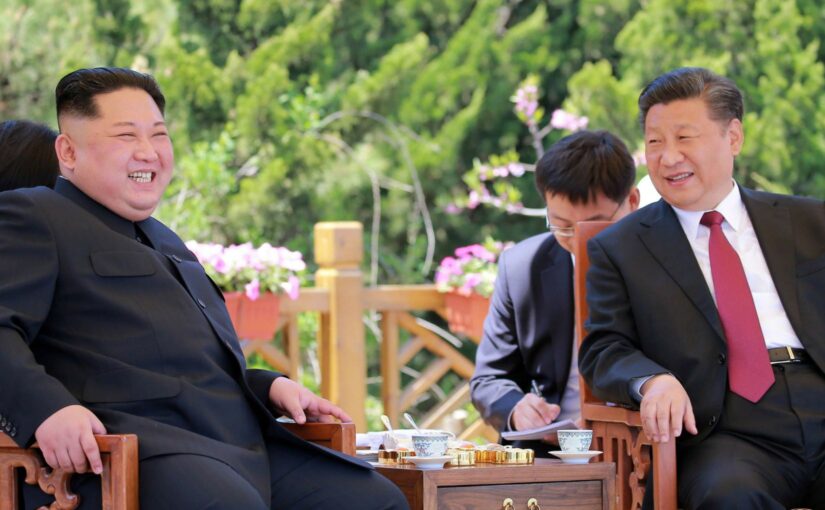
It notes that Xi Jinping, “organised a special luncheon at Yangyuanzhai of the Diaoyutai State Guesthouse, the very place where President Kim Il Sung had shared friendly feelings with the preceding leaders of China and strengthened friendly ties with Comrade Kim Jong Un in a family atmosphere.”

Xi Jinping said that the traditional China-DPRK friendship is a unique one forged by blood, and it provides the two parties and the peoples of the two countries with happiness.

For his part, Kim Jong Un expressed his will to develop onto a new higher level the DPRK-China friendly relationship which was formed in the course of the sacred joint struggle for the socialist cause and which has maintained its original character despite all ordeals of history.

Seven years ago from now, respected Comrade Kim Jong Un, General Secretary of the Workers’ Party of Korea (WPK) and President of the State Affairs of the Democratic People’s Republic of Korea (DPRK), made his first historic visit to China from March 25 to 28, 2018, on invitation by Comrade Xi Jinping, General Secretary of the Central Committee of the Communist Party of China and President of the People’s Republic of China.

During the period, Comrade Xi Jinping, who received respected Comrade Kim Jong Un as the most important state guest, accorded cordial hospitality with utmost sincerity. He organized a special luncheon at Yangyuanzhai of the Diaoyutai State Guesthouse, the very place where President Kim Il Sung had shared friendly feelings with the preceding leaders of China, and strengthened friendly ties with Comrade Kim Jong Un in a family atmosphere.

In his speech made at a grand banquet arranged in welcome of respected Comrade Kim Jong Un’s visit to China, Comrade Xi Jinping said that the traditional China-DPRK friendship is a unique one forged by blood, and it provides the two Parties and the peoples of the two countries with happiness, just as a luxuriant tree with deep roots and a never-drying spring. He also underlined the need for both sides to value, safeguard and glorify the friendship – the precious asset common to the two countries.

Respected Comrade Kim Jong Un, in turn, warmly congratulated Comrade Xi Jinping on his re-election as the president of the state. He expressed the steadfast will of the WPK and the DPRK government to develop onto a new higher level the DPRK-China friendly relationship which was formed in the course of the sacred joint struggle for the socialist cause and which has maintained its original character despite all ordeals of history, true to the noble intentions of the preceding leaders.

The first historic visit to China made by respected Comrade Kim Jong Un opened a brilliant chapter in the chronicles of the DPRK-China friendship. It served as a noteworthy event which provided a radical milestone in expanding and developing onto a new higher platform the time-honored friendly relations shared by the DPRK and China.

Thanks to the wise leadership of the leaders of the two Parties and the two countries, the traditional relations of friendship and cooperation between the DPRK and China will continue to strengthen and develop in the course for accomplishment of the common cause for dynamically promoting socialist construction, providing the peoples of the two countries with material well-being and safeguarding global peace and regional security.
The growing popularity of Indian cinema in China

In the following article, which was originally published by UK-China Film Collab, Asma Waheed looks at the abiding popularity of Indian cinema in China despite the ups and downs of the countries’ bilateral political relations over the decades.

Asma notes that while there has rightly been much attention paid to East-West cinematic exchange, “it is equally important to examine East-East cinematic exchange – in this case, the relationship between Indian and Chinese cinema… Bollywood’s popularity in China provides a real threat to Hollywood’s once-held monopoly in the global film market. But the story of Bollywood in China is not confined to the 21st century – instead it spans across to the 1950s, a time where both countries had undergone monumental change.”

The beginnings of Indian film success in China date from the 1951 film Awaara, or Liulangzhe (流浪者). Directed, produced and starring Raj Kapoor, a legendary icon in Indian film, the story follows the life of a young man, Raj, as he becomes entangled in a life of crime. A mainstay of the Golden Age of Indian cinema, in its exploration of themes such as destiny, justice, and morality, Awaara became a symbol of new nation-building in a post-independence India.

In an act of cultural exchange and diplomacy, the Indian People’s Theatre Association brought Awaara to China in 1955. Such was its popularity that even Chairman Mao was said to be a great fan of the film and its title song, Awaara Hoon. (The Indian People’s Theatre Association [IPTA] is the oldest association of theatre artists in India. It was formed in 1943 and promoted themes related to the Indian freedom struggle against British colonial rule. Communist leaders such as PC Joshi, General Secretary of the Communist Party of India [CPI], and Sajjad Zaheer, General Secretary of the Progressive Writers’ Association, were instrumental in its formation. It remains the cultural wing of the CPI.)

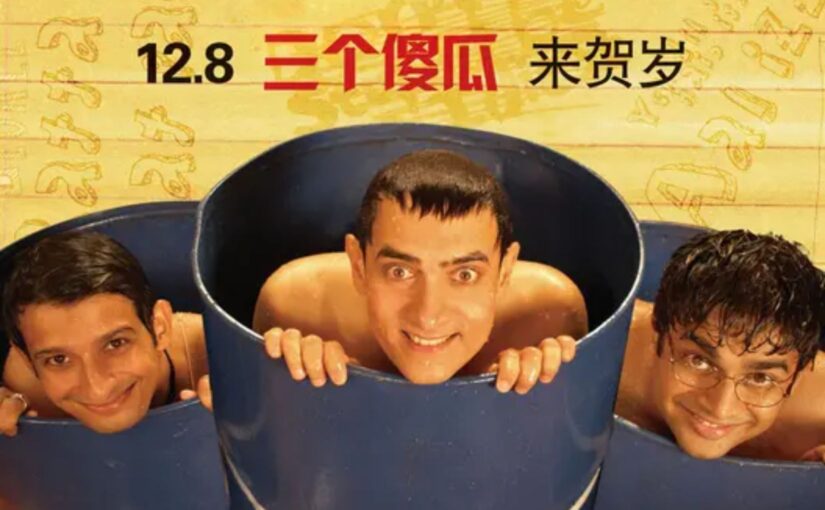
Today, a key inheritor of this legacy is Aamir Khan, famed for his 2001 anti-colonial cricketing epic Lagaan. Asma notes that:

“In the surveys and research regarding South Asian and East Asian film relationships, a primary reason for why audiences enjoyed Aamir Khan’s film and other Indian films was the shared cultural values. This may be surprising to some, but in Yanyan Hong’s research, it found that Indian film movie-goers were attracted to the film’s engagement with social issues relevant to both Indian and Chinese societies.”

She concludes: “The status of Indian cinema in China has shifted with the political climate, enjoying bouts of immense popularity before falling out of favour, only to reemerge years later. The nature of the film industry is such that it has become a vehicle for cultural diplomacy – whether Indian cinema will see another spike of interest in China remains undecided, but their relationship serves as a clear example of how good storytelling resonates across borders, adapting to the unique landscapes of each country and society. More importantly, it showcases the shared nature of human experiences across different cultures and highlights the similarity across seemingly different people.”

As the world grows more globalised in the 21st century, the impacts on the film industry are undeniable.

China emerged as one of the world’s largest box office markets, with over 90,000 cinema screens in the country, and Korean director Bong Joon-ho’s Parasite made history as the Oscars. Fuelled by diasporic communities mainly in the US and UK, Bollywood too continues to garner attraction across the globe. It is certain that the film industries of South and East Asian countries are driving their soft-power transnationally, evident in Korea’s Hallyu Wave growing from a regional trend in East Asia to now a tsunami sweeping across the globe.

There has rightly been much attention on the East-West cinematic exchange, and it is long overdue that Asian cinema has received praise in Hollywood institutions. However to better understand cinema in a global context, it is equally important to examine East-East cinematic exchange— in this case, the relationship between Indian and Chinese cinema.

In this essay series, I will explore the evolving and dynamic relationships between South Asian cinema and two markets— China and the UK. As a country with a considerable South Asian population, the UK presents an interesting case for understanding the reach of Bollywood beyond the subcontinent. Meanwhile, as two of the world’s most sizeable economics, India and China’s film industries offer a fascinating and important case study of cross-border cultural exchange in a globalised world.

In many people’s minds, Indian cinema— especially Bollywood[1]— is a genre full to rhetorical brim with melodramatic narrative, musical sequences, and grand dance numbers. But it is the unique and emotional storytelling that struck a chord with Chinese audiences, leading to major commercial success— indeed, Bollywood’s popularity in China provides a real threat to Hollywood’s once-held monopoly in the global film market.[2] But the story of Bollywood in China is not confined to the 21st century— instead it spans across to the 1950s, a time where both countries had undergone monumental change.

Continue reading The growing popularity of Indian cinema in China

JD Vance admits West wants Global South trapped at bottom of value chain

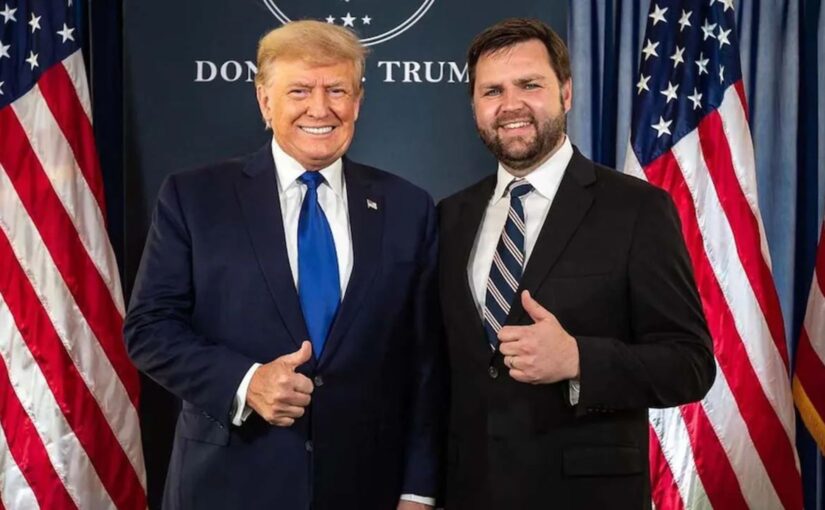
In the following article, that was originally published on his Substack, Geopolitical Economy, Ben Norton draws attention to a recent speech by US Vice President JD Vance on globalisation that  made it clear that Washington’s goal is to keep formerly colonised countries in the Global South trapped at the bottom of the global value chain.

Ben outlines how Vance acknowledged that the US-led West wants to maintain a strict international division of labour, in which poor countries in the periphery produce low value-added goods while the rich nations in the core extract exorbitant monopoly rents. Vance made these remarks at a gathering, called the American Dynamism Summit, that was organised by the Silicon Valley venture capital firm Andreessen Horowitz.

Ben goes on to note that Vance is a China hawk who has scapegoated Beijing for the many economic problems in the US, demonising it as “the biggest threat to our country”. After Donald Trump selected Vance to be his running mate in the 2024 presidential election campaign, Vance pledged that they would end the war in Ukraine, not because they wanted peace for peace’s sake, but rather to prioritise containing China.

In his speech at the American Dynamism Summit, Vance said that: “The idea of globalisation was that rich countries would move further up the value chain, while the poor countries made the simpler things.”

Having referenced the Chinese city of Shenzhen, he continued: “But I think we got it wrong. It turns out that the geographies that do the manufacturing get awfully good at the designing of things.

As Ben notes, in these comments, the US vice president inadvertently acknowledged that the fundamental thesis of the dependency theorists in the 1960s was indeed correct. “The rich countries in the core of the world-system (mostly in the Global North) seek to trap the poor, formerly colonised nations in the periphery (mostly in the Global South) in a cycle of dependency on the core’s high value-added products, through monopolistic control of advanced technologies.”

US Vice President JD Vance gave a speech about globalization that made it clear that Washington’s goal is to keep formerly colonized countries in the Global South trapped at the bottom of the global value chain.

Vance acknowledged that the US-led West wants to maintain a strict international division of labor, in which poor countries in the periphery produce low value-added goods (with lots of competition and therefore low profits), whereas the rich nations in the core extract exorbitant monopoly rents through their control over high value-added technologies (with little to no competition, reinforced by strict intellectual property rights).

Silicon Valley prepares for war with China

The US vice president made these remarks at a summit that was organized by the Silicon Valley venture capital firm Andreessen Horowitz. This annual meeting in Washington, DC is called the American Dynamism Summit, and it brings together corporate executives and US government officials to facilitate contracts.

One of their main priorities is preparing for war with China. Andreessen Horowitz promotes 50 US companies that it says are “shaping the fight of the future”, outlining a scenario of a hypothetical 2027 war with China over Taiwan.

Vance is a China hawk who has scapegoated Beijing for the many economic problems in the US, demonizing it as “the biggest threat to our country”.

After Donald Trump selected Vance to be his running mate in the 2024 campaign, Vance pledged that they would end the war in Ukraine, not because they wanted peace for peace’s sake, but rather to prioritize containing China. The US will “bring this thing to a rapid close so America can focus on the real issue, which is China”, Vance told Fox News, claiming, “That’s the biggest threat to our country and we are completely distracted from it”.

Continue reading JD Vance admits West wants Global South trapped at bottom of value chain

China’s Ecological Civilization explained

The following article by Douglas Rooney, originally published on Li Jingjing’s China Up Close blog, explores the concept of ecological civilisation in depth.

While the phrase is most often associated with President Xi Jinping – who has made it a central theme of Chinese governance – the concept has deep roots in Chinese culture, and is closely connected to the idea of harmony with nature. Doug notes: “The concept of an ‘ecological civilisation’ was first proposed by European researchers in the late 1960s. The term began to be used by Chinese academics in the 1980s and quickly gained in popularity among scientists and researchers. In the 1990s and early 2000s, prominent politicians such as Hu Jintao and Xi Jinping began to push for theories of ecological civilisation to be adopted as Chinese government policy.”

Doug explains that the concept of ecological civilisation became firmly embedded in China’s political mainstream in the 2000s, and is by now widely understood and embraced by the Chinese people. Its acceptance is partly due to its resonance with traditional culture, but also due to the way it has been linked to the country’s modernisation project and improvement of living conditions. In short, “the construction of China’s ecological civilization has created an environment in which investing in the green transition is a good way to make money… China has achieved remarkable progress on the environment by demonstrating to normal people as well as to business and community leaders that they need not choose between the environment and economic prosperity. Indeed, preserving the environment and tackling pollution can often be a route to economic prosperity.”

The results speak for themselves:

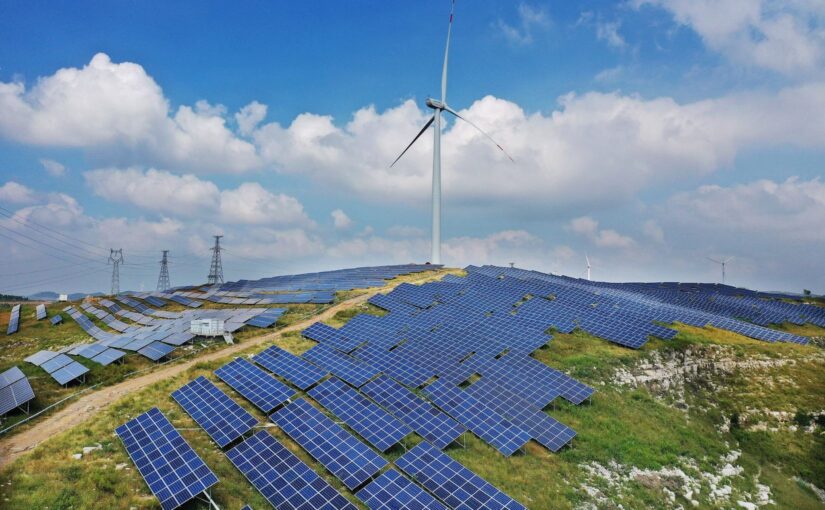
The scale of China’s green transformation in the last few decades is truly staggering. In 2023 alone, China would spend more on its green transition than the rest of the world combined and accounted for 75% of the global wind farm and the majority of solar panel installations. China’s EV batteries account for 60% of the global market. Around 40% of the world’s hydrogen refueling stations are in China, along with the world’s largest green hydrogen project and the world’s first zero-carbon factory.

Furthermore, with the Trump administration in the US pursuing a strategy of environmental recklessness, China is more critical than ever to the global green transition. “East Africa’s largest solar power plant was built by China, as was the Der Aar Wind Farm, one of South Africa’s largest. China was also behind Suriname’s hybrid microgrid solar power project, which ended rural reliance on diesel for the generation of electricity. They also helped build Brazil’s colossal Belo Monte Hydropower plant. As the United States returns to climate denial under the Trump administration, China will be the Global South’s only realistic partner in achieving a green transition that still delivers industrial development.”

Douglas Rooney is a Scottish Christian Socialist, currently working in Beijing.

In 2005, Xi Jinping, then secretary of Zhejiang Province, wrote an article in the Zhejiang Daily newspaper called “Green Mountains and Clear Waters are also Gold and Silver Mountains.” The article argued in favour of Hu Jintao’s concept of the scientific outlook of development, which emphasized the harmony between humanity and nature and underlined that while economic development was vitally important, this could not come at the expense of the environment. This would become known as the “Two Mountains Theory.”

Upon becoming president in 2012, Xi would make the “Two Mountains Theory” a cornerstone of the Chinese government’s approach to development. However, the concept underpinning his “Two Mountains Theory” – that of an ecological civilization – did not originate with Xi. Instead, his 2005 article and the green policies he has championed, first as secretary of Zhejiang and later as president of China, are part of a larger movement within Chinese society that was inspired by theories of ecological civilization coming out of the European scientific community in the 1960s and 1970s. What Xi and other leading Chinese theorists did was to fit these concepts into the Chinese context. Today, China has made the concept of an ecological civilization very much its own, and, I would argue, you cannot understand contemporary China without first understanding what China means when it talks about its ecological civilization.

Continue reading China’s Ecological Civilization explained