China and Vietnam initiate strategic dialogue as “an indispensable and pivotal move towards rejuvenating the global socialist cause”

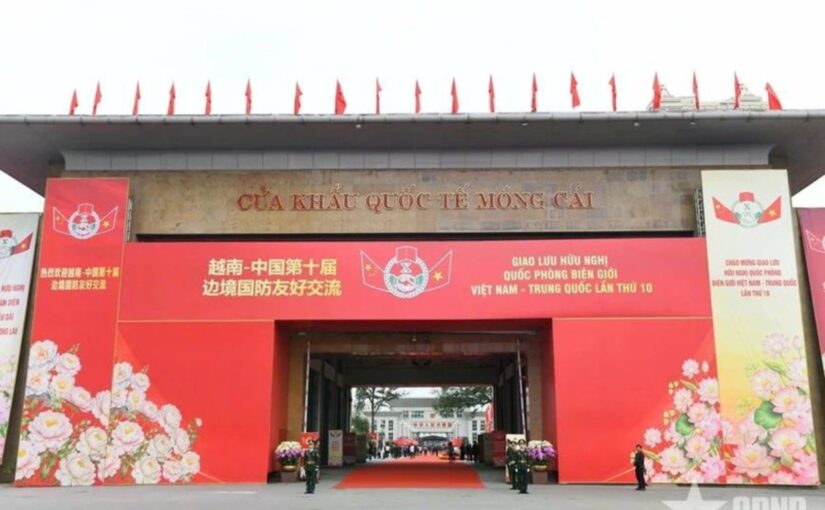
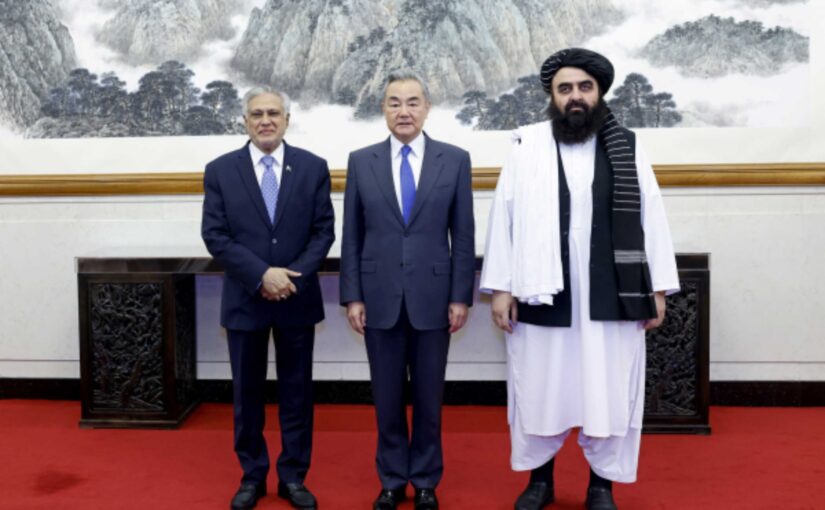
In a highly significant move to strengthen the unity and solidarity between the socialist countries on both a strategic and tactical level in the face of the present capricious international situation, as well as with a view to advancing the global socialist cause, China and Vietnam held the First Ministerial Meeting of the China-Vietnam “3+3” Strategic Dialogue on Diplomacy, Defence and Public Security in the Vietnamese capital Hanoi on March 16.

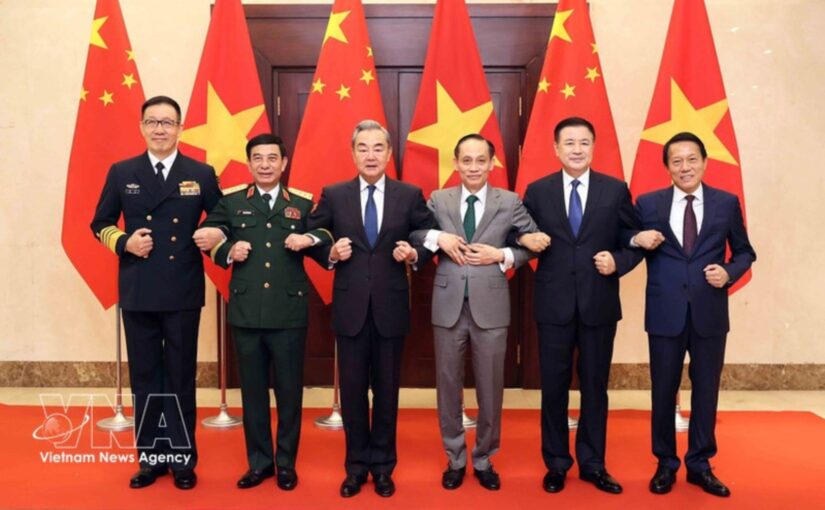
The meeting was jointly chaired by Foreign Minister Wang Yi, Minister of Public Security Wang Xiaohong, and Minister of National Defence Dong Jun, together with Vietnamese Foreign Minister Le Hoai Trung, Defence Minister Phan Van Giang and Minister of Public Security Luong Tam Quang. Centred on the theme “Coordinating Development and Security, Advancing on the Socialist Road with Unwavering Commitment, and Forging United Fronts to Confront Shared Challenges,” the two sides engaged in an in-depth exchange of views regarding the dynamic shifts in the global landscape, the maintenance of political security, and the advancement of defence and law enforcement cooperation.

Wang Yi remarked that last year, General Secretary and President Xi Jinping paid a state visit to Vietnam, where he forged pivotal consensus with Vietnamese leaders on convening the ministerial meeting of the China-Vietnam “3+3” strategic dialogue. This mechanism stands as a groundbreaking and vital strategic communication platform, jointly pioneered by both nations in the global arena. It is a major measure with strategic significance, designed to safeguard the security of political systems and deepen strategic collaboration. It stands not merely as an intrinsic facet in propelling the building of a China-Vietnam community with a shared future, but also as an indispensable and pivotal move towards rejuvenating the global socialist cause.

Wang Yi stated that the contemporary global landscape is beset by intertwined turmoil and chaos, with the international architecture undergoing accelerated realignment, while unilateral bullying gets more rampant. Conversely, the cause of socialism with Chinese characteristics is advancing with strides, witnessing the smooth commencement of the 15th Five-Year Plan. Simultaneously, Vietnam has ushered in a new epoch of national development, accelerating the implementation of the resolutions of the 14th National Congress of the Communist Party of Vietnam. The stability and development of both China and Vietnam will manifest to the world the distinct superiority of the socialist system, the robust vitality of the socialist cause, and the bright prospects for human development and progress.

Wang Yi emphasised that as friendly socialist neighbours, China and Vietnam must not only focus on the fundamental well-being of their peoples, effectively coordinate the dual imperatives of development and security, and steadfastly pursue their respective development paths, but also keep foremost in mind the shared interests of all humanity, steer the correct direction of historical progress, and jointly promote an equal and orderly multipolar world, and an economic globalisation that is inclusive and beneficial to all through the building of a China-Vietnam community with a shared future carrying strategic significance.

Wang Xiaohong stated that the public security departments of the two nations must focus on the overarching goal of “six mores,” prioritising political security and enhance efforts to prevent and resist “colour revolutions.” Strategic planning should be placed at the forefront, serving as a catalyst to galvanise a formidable and united front. Moreover, we should anchor efforts in the people’s interests, pursuing more tangible and substantive cooperation outcomes to effectively bolster the respective socialist endeavours of the two countries and the construction of a strategically significant China-Vietnam community with a shared future.

Dong Jun stated that, confronted with unprecedented external security risks and challenges, the armed forces of China and Vietnam, steadfastly under the absolute leadership of their respective Communist Parties, shoulder a profound and sacred duty in fortifying the Party’s enduring governance and safeguarding the socialist red regime. Under the guidance of the supreme leaders of both parties, they must unite to forge a strong defence and security shield. China stands ready to collaborate closely with Vietnam, continuously deepening mutual trust in military security, further expand cooperation areas, improve the quality and effectiveness of cooperation, jointly safeguard maritime security and stability through positive interaction, and push bilateral defence exchanges and cooperation to a new level, setting an example of unity and self-reliance for the armed forces of socialist countries.

Continue reading China and Vietnam initiate strategic dialogue as “an indispensable and pivotal move towards rejuvenating the global socialist cause”

Stop the War Coalition reaffirms campaigning priorities and highlights heightened danger of war in the Pacific

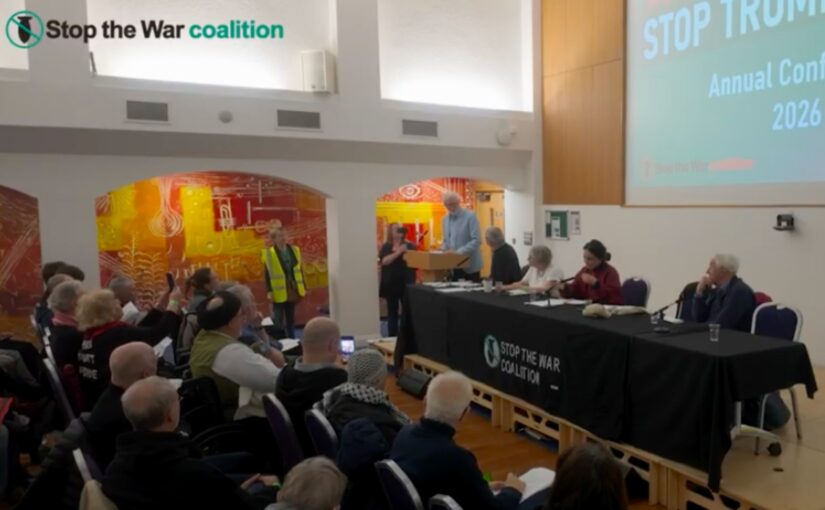
Several hundred people packed central London’s Hamilton House on Saturday March 14 for the annual conference of Britain’s Stop the War Coalition (StW).

Amidst the most dangerous international situation in the lifetime of most if not all of the delegates,  the day’s proceedings represented a powerful, united and militant expression of determination to do everything possible both to end the brutal imperialist wars currently being waged against Iran, Palestine, Lebanon and elsewhere and to prevent the outbreak of a third world war that would threaten the very existence of humanity.

Stop the War’s website reports that during the opening session, Mustafa Barghouti, the renowned Palestinian figure, thanked StW for its solidarity with the Palestinian and Iranian people and drew attention to the devastating attacks Israel is currently conducting against Lebanon.

Jeremy Corbyn MP spoke of StW as a voice for peace, and of UK complicity in the destruction of Gaza, noting how the UK continues to send weapons to Israel.

Maryam Eslamdoust, railworkers’ union TSSA general secretary, who has family in Iran, reminded conference of the human tragedy of war. Maryam said Trump’s attacks were designed to strike fear and terror into civilians to achieve an uprising, fast victory and regime change. However, she believed Iran would not crumble as the imperialists hoped, and that the US would face a Vietnam-style defeat.

A motion on opposition to British foreign policy, moved by Stop the War deputy president and founding chair Andrew Murray, in an exceptionally fiery and impassioned speech, notes that:

  • The Trump administration has embarked on a rampage of aggression that is imperilling the entire world.
  • It has launched a barbaric and illegal attack with Israel on Iran (including murdering its leader) and Lebanon, kidnapped the President of Venezuela, bombed Yemen and Nigeria and is trying to bring down the government in Cuba. It has also threatened Panama, Colombia and Greenland. It has embarked on an intensification of the nuclear arms race.
  • All this is aimed at reversing the relative decline of US imperialism, particularly in the face of China’s growing strength, and securing a new redivision of power and profit in the world to its advantage. It threatens a third world war.
  • Keir Starmer has committed the British government to support for this reckless and bloody policy. All his professed support for international law disappears in the face of Washington’s illegalities. He is craven in his appeasement of Trump when he is not actually joining in with his wars.
  • Instead of aligning with most of the world in condemning this war drive, Britain backs the aggressors. This policy also threatens to beggar the British people with entirely unsustainable and unnecessary increases in military spending, on a scale which will make urgent social improvements all-but impossible.
  • The government also works to prolong the dangerous conflict in Ukraine and to engage in military provocations directed towards China in the Far East.
  • This is all accompanied by a war psychosis designed to condition the population to the inevitability of an impending great power war.

Conference resolved:

Continue reading Stop the War Coalition reaffirms campaigning priorities and highlights heightened danger of war in the Pacific

Interview: Understanding China’s foreign policy

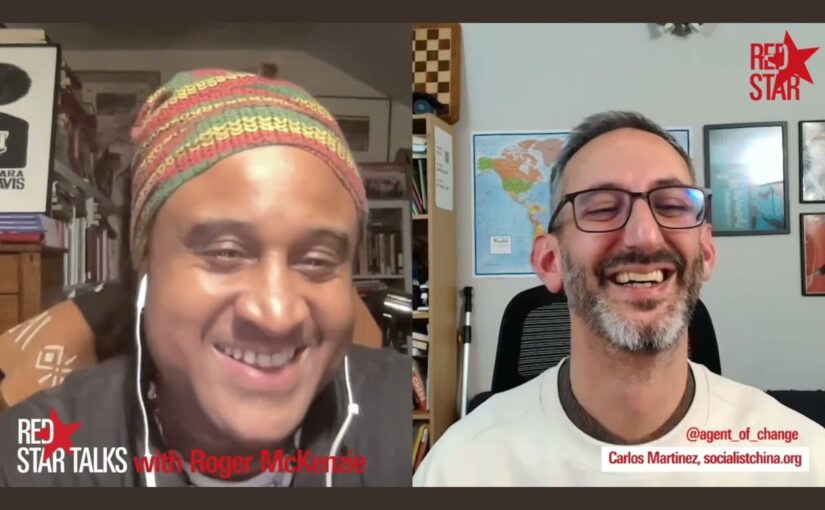
In the video embedded below, Friends of Socialist China co-editor Carlos Martinez joins Roger McKenzie for a detailed exploration of China’s foreign policy, its domestic progress, and the geopolitical strategies shaping the 21st century. The two discuss the importance of understanding China’s rise, the global shift towards multipolarity, and the need for solidarity against imperialist pressures.

Some of the key ideas put forward include:

• China’s foreign policy rests on the Five Principles of Peaceful Coexistence, first formulated by Zhou Enlai in 1954 and adopted at the Bandung Conference the following year. These principles – mutual respect for sovereignty, non-aggression, non-interference, equality and mutual benefit, and peaceful coexistence – elevate what Lenin conceived as a tactical necessity into a principled theoretical framework. The core insight is that countries with fundamentally different social systems can and must coexist, and that all non-imperialist countries share a common interest in opposing domination and pursuing their own development paths. Today these principles find expression in China’s vision of a community with a shared future for humanity, underpinned by the Belt and Road Initiative, BRICS (which now surpasses the G7 in GDP, population and landmass), the SCO, and the G77. Multipolarity – a negotiated international order in which no single power can impose its will – is not only urgently needed to address existential challenges like climate change and nuclear war, but is, as Samir Amin argued, the necessary framework for the possible overcoming of capitalism itself.

• The United States is not accepting this shift passively. Brzezinski identified the nightmare scenario decades ago: a grand coalition of China, Russia and Iran. US responses have included proxy war against Russia in Ukraine, military encirclement of China through AUKUS and Pacific buildups, unconditional support for Israel, tariff wars, semiconductor controls, the kidnapping of president Maduro, the suffocation of Cuba, the reassertion of the Monroe Doctrine, and now open war on Iran. The US is losing economic and technological primacy but retains overwhelming military power, and the danger is precisely that of a declining empire reaching for military solutions.

• The war on Iran must be understood in this context. It is not about nuclear weapons – nobody believes that. It is not about women’s rights – women’s rights are improving in Iran and deteriorating in the West. It is a criminal attack, carried out by presidential decree without reference to international law or domestic legal process, against a sovereign state that supports Palestinian resistance, maintains public ownership of its energy resources, and is a key node in the multipolar project – a crucial link in the Belt and Road, a member of BRICS and the Shanghai Cooperation Organisation, and an important energy partner for China. The attack is simultaneously an attempt to seize control of energy flows, to develop strategic chokepoints that could be used against China in a hot war, and to destroy the axis of resistance across West Asia. It is the empire striking back.

• China is supporting Iran to the best of its abilities – diplomatically, economically, and with military cooperation – but does not have the capacity to project military power into the region. Nonetheless, Iran is a fiercely independent country with formidable military capabilities. The US and Israel will not achieve their objectives: they will not install a puppet regime, will not destroy the Palestinian resistance, and will not seize Iran’s strategic position.

• The task for progressive forces in the West is to oppose the war on Iran, oppose the New Cold War on China and the propaganda war that sustains it, and build the broadest possible united front against imperialism, racism and neoliberalism. We are not the vanguard – that role belongs to the socialist countries and the peoples under direct attack. But everyone has a part to play, and we must do what we can to build solidarity and make war untenable for the imperialists.

China chokehold: Long-term goal of the US war on Iran

Why is the United States waging war on Iran? The official justifications shift by the day – nuclear weapons, Israeli security, bringing “democracy” – but CJ Atkins, writing in People’s World, cuts through the noise to identify a deeper strategic logic.

Ironically, it has fallen to the far-right, pro-Trump, Falun Gong-affiliated Epoch Times to spell it out most clearly. The war on Iran, like the January invasion of Venezuela, is to a considerable degree a move against China. Iran supplied 13.4 percent of China’s seaborne oil imports last year, Venezuela a further 4.5 percent. Combined with Russia, sanctioned suppliers accounted for a third of China’s entire crude import mix in 2024. Neutralising Iran – and with it, threatening Chinese access to the Strait of Hormuz, through which 37.7 percent of China’s crude oil flows – is a bid to put Beijing in an energy chokehold.

Atkins writes: “Iran sits alongside that chokepoint and, as recent days have made abundantly clear, is capable of threatening access to it. It is the one independent actor in the region that can seriously complicate shipping through the whole corridor. That’s a power the U.S. government would prefer to have in its own hands.”

As such, the criminal aggression against Iran and Venezuela forms part of the US-led long-term campaign of containment and encirclement of the People’s Republic of China.

This is a must-read for anyone seeking to understand the deeper architecture of US imperialism’s current offensive. It makes clear that the wars on Iran and Venezuela are not separate conflicts but coordinated moves in a single grand strategy: not only a war on Tehran or Caracas, but a war on the multipolar trajectory. Such a strategy must be resolutely opposed.

There’s an angle to the Iran War that the cable news anchors, retired generals-turned-commentators, and corporate-owned newspapers are barely talking about, if at all. They report on the shifting justifications proffered by Pete Hegseth, Marco Rubio, or Donald Trump, but few in the press are doing anything to illuminate the bigger picture.

The United States isn’t attacking Iran simply because of Tehran’s nuclear program, or out of concern for the welfare of the Iranian people, or even purely for Israel’s security. The Trump administration’s decision to launch its war was motivated by a goal that goes well beyond nuclear non-proliferation. Nor is the war a case of Tel Aviv telling Washington what to do, regardless of what some of Netanyahu’s most intense critics want to believe.

It has fallen to the far-right, anti-communist outlet The Epoch Times—the newspaper associated with the Falun Gong cult—to offer the truth about what the U.S. is up to. “A key strategic dimension of the Iran conflict,” wrote James Gorrie, a regular columnist for the pro-Trump paper in its March 13 issue, “involves Washington’s efforts to control and even restrict Iranian oil flows to China.”

Continue reading China chokehold: Long-term goal of the US war on Iran

Chinese-style modernisation is an inspiring vision for the world

As the US and Israel wage illegal war on Iran and Washington’s economic nationalism tears up the rules-based order it once championed, China is moving in a strikingly different direction. The 15th Five-Year Plan, unveiled in Beijing this March, sets out an ambitious roadmap for the next few years of Chinese-style modernisation: innovation-driven, people-centred, ecologically conscious, and oriented towards the long-term flourishing of China and the world.

In this article, originally published in Beijing Review, Carlos Martinez examines the key features of the plan and situates it within China’s broader development vision – from the 2035 socialist modernisation goal to the Second Centenary Goal of building a great modern socialist country that is prosperous, strong, democratic, culturally advanced, harmonious and beautiful by 2049. The article explores what makes Chinese-style modernisation so compelling as an alternative to the Western model: its commitment to state-led strategic planning, its rapid transformation from scientific backwardness to global innovation leadership, its green
development agenda, and above all its peaceful character – built entirely outside the framework of colonialism, imperialism and war.

At a moment when some Western powers are responding to decline with lawless militarism, China’s vision offers something the world urgently needs: a credible, inspiring path forward.

China and the West appear to be moving in opposite directions. While the West is grappling with economic stagnation and political dysfunction—and attempting to impose its hegemony through military adventurism and all sorts of unilateral coercive measures—China is forging ahead with an ambitious and inspiring vision of modernization.

The 15th Five-Year Plan

The outline of the 15th Five-Year Plan (2026-30), unveiled in Beijing this March, presents a comprehensive roadmap for achieving Chinese-style modernization, emphasizing innovation, sustainability, self-reliance and people-centered development.

Continue reading Chinese-style modernisation is an inspiring vision for the world

China working to restore peace between Pakistan and Afghanistan

A considerable period of rising tension between Pakistan and Afghanistan erupted into open and ongoing conflict on February 21. As a friendly neighbour to both countries China is actively working for the restoration of peace.

Accordingly, on March 10, Chinese Foreign Minister Wang Yi held a phone conversation with Pakistani Deputy Prime Minister and Foreign Minister Mohammad Ishaq Dar at the latter’s request.

Given the overall situation, primary emphasis was given to the US-Israeli war of aggression against Iran, launched on February 28.

Wang Yi said that as all-weather strategic cooperative partners, China and Pakistan share a fine tradition of communication and coordination on major international and regional issues. Both countries have promptly expressed their firm stance on the situation in Iran, demonstrating a responsible attitude and commitment to the purposes and principles of the UN Charter. The outbreak of this war lacks justification and legitimacy, and its continuation will only result in more unnecessary casualties. The key to preventing further escalation lies in the United States and Israel ceasing military operations.

The Chinese side appreciates Pakistan’s mediation efforts to de-escalate regional tensions and stands ready to maintain multilateral and bilateral coordination and cooperation with Pakistan, support Pakistan in continuing to play a constructive role, and jointly work toward the early restoration of peace and stability in the region.

Turning to the situation in Afghanistan, Wang Yi said that the special envoy on Afghan Affairs of the Ministry of Foreign Affairs of China is currently shuttling between Afghanistan and Pakistan to promote peace talks. The pressing priority is to prevent the escalation of the conflict and return to the negotiating table at an early date. The Chinese side firmly supports Pakistan in its counterterrorism efforts and hopes that Pakistan will continue to make the utmost efforts to ensure the safety of Chinese personnel, projects, and institutions in Pakistan.

This was followed by Wang Yi’s call with Afghan Foreign Minister Mawlawi Amir Khan Muttaqi on March 13, again at the latter’s request.

This conversation foregrounded the conflict between Kabul and Islamabad and Mawlawi Amir Khan Muttaqi appreciated China’s active efforts to mediate in the border conflict between Afghanistan and Pakistan, stating that the Afghan people, having suffered greatly from war, cherish the opportunities for peace and development. Afghanistan aspires to be a source of regional peace rather than instability. The Afghan side reiterates that its territory will not be used to attack neighbouring countries, expresses no desire for military confrontation with other nations, and looks forward to mutual trust and friendly coexistence among neighbors. The Afghan side believes that dialogue and consultation are the only way to resolve issues and expects China, as a major country and friendly neighbour, to play an even greater role.

Wang Yi stated that the more turbulent the external environment becomes, the more regional countries should strengthen unity and cooperation to overcome difficulties together, forging a path of cooperative and common security. Afghanistan and Pakistan are inseparable brothers and neighbours that cannot be moved away from each other. Any issues between the two countries can only be resolved through dialogue and consultation. The use of force will only complicate the situation, exacerbate contradictions, benefit neither side, and threaten regional peace and stability. China has always maintained an objective and fair stance on the Afghanistan-Pakistan conflict, and the special envoy on Afghan Affairs of the Ministry of Foreign Affairs of China is currently shuttling between Afghanistan and Pakistan to mediate, urging both sides to remain calm and exercise restraint, engage in face-to-face exchanges as soon as possible, achieve a ceasefire at the earliest opportunity, and resolve contradictions and differences through dialogue.

Continue reading China working to restore peace between Pakistan and Afghanistan

China affirms Iran’s sovereignty, security and territorial integrity, and pledges humanitarian assistance

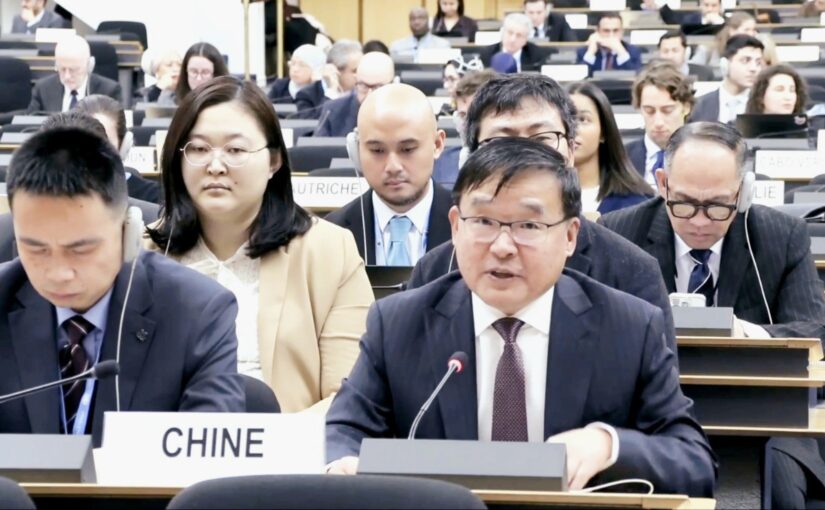
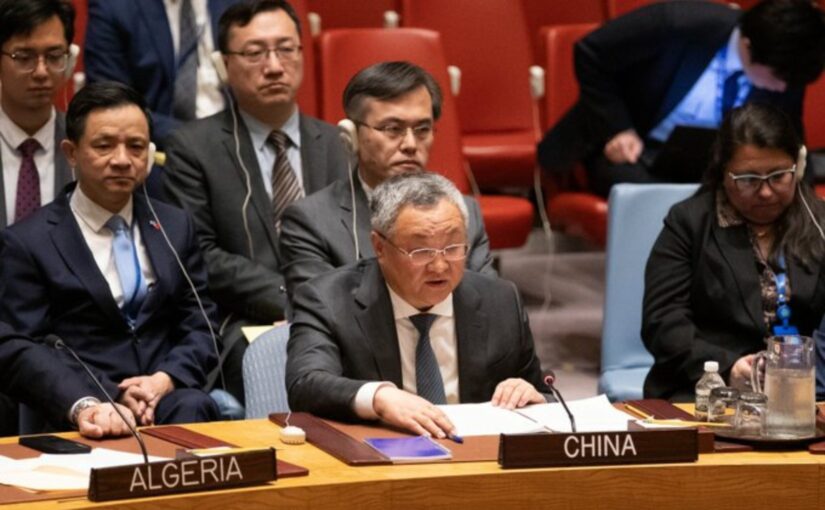
China’s Ambassador to the United Nations Fu Cong made an important statement on his country’s position at a March 13 United Nations Security Council briefing on the Iranian nuclear issue.

Fu began by stating that: “China has just stated its position about the 1737 Committee and its opposition to this meeting and does not intend to comment on the work of the Committee itself. However, as a member of the Security Council, China wishes to emphasise the following points regarding the current situation surrounding the Iranian nuclear issue and the way forward.”

The 1737 Committee was established following the adoption of United Nations Security Council Resolution 1737 on December 23, 2006, which imposed sanctions on Iran.

Having stated this principled opposition, Fu made four key points as follow:

  • The use of force is not the right way to resolve international disputes. Iran’s sovereignty, security, and territorial integrity should be respected. The United States and Israel should immediately stop their military operations, refrain from attacking Iranian nuclear facilities under IAEA (International Atomic Energy Agency) safeguards, avoid further escalation, and prevent the conflict from spreading across the entire Middle East.
  • The Iranian nuclear issue should ultimately return to the track of a political and diplomatic solution. It was the United States unilateral withdrawal from the JCPOA (Joint Comprehensive Plan of Action) that triggered the Iranian nuclear crisis. The United States has also disregarded its own credibility and, together with Israel, twice resorted to the use of force against Iran during the negotiations, causing diplomatic efforts to collapse. Regarding the root cause of the Iranian nuclear crisis, the United States actions violate international law and the purposes and principles of the UN Charter. China strongly condemns this. Relevant European countries should stop fuelling tensions and instead play a constructive role in easing the situation.
  • Fairness and justice must be upheld, and Iran’s right to the peaceful use of nuclear energy, as a State Party to the Treaty on the NPT (nuclear Non-Proliferation Treaty), must be effectively protected. Iran has repeatedly reaffirmed that it does not seek to develop nuclear weapons. Even after its nuclear facilities were attacked, Iran has continued cooperating with the IAEA and engaged in multiple rounds of professional and pragmatic talks with the United States in a constructive spirit. Iran’s sincerity should be taken seriously.
  • Any action by the Security Council should be aimed at easing tensions and preserving long-term peace and stability in the Middle East. It must be fair and impartial, and must not become a tool for sanctions, pressure, or the political agenda of any individual state. The Security Council should help build trust among parties, bridge differences, and create favourable conditions for the resumption of negotiations, ensuring that the dialogue process can proceed smoothly and effectively in an environment free from the threat of force. Relevant countries should stop engaging in political manipulation at the Security Council.

Meanwhile, on March 17, at a regular press conference in Beijing, Foreign Ministry spokesperson Lin Jian said that China has decided to offer emergency humanitarian assistance to Iran, Jordan, Lebanon and Iraq in the hope of easing the humanitarian plight faced by local people.

CGTN, China’s foreign language television service, put the following question to Lin:

Continue reading China affirms Iran’s sovereignty, security and territorial integrity, and pledges humanitarian assistance

China extends support to bereaved parents of Iranian schoolgirls

Following the bestial war crime committed by the United States on February 28, when it murdered at least 175 civilians, the overwhelming majority of them young schoolgirls, in its missile attack on the Shajareh Tayyebeh Elementary School in the southern Iranian town of Minab, the Red Cross Society of China has decided to provide the Red Crescent Society of Iran with US$200,000 in emergency humanitarian assistance as special funds to support the bereaved parents.

Announcing the measure at the Chinese Foreign Ministry’s March 13 press conference in Beijing, in response to a question from the Beijing Youth Daily, spokesperson Guo Jiakun added:

“China stands ready to continue providing necessary assistance to Iran in a humanitarian spirit to help the Iranian people get through this difficult time.”

Their exchange reads as follows:

Beijing Youth Daily: The US and Israel launched military strikes on Iran on February 28. Media reports say that air strikes on Shajarah Tayyebeh primary school in Iran’s Hormozgan province killed over 160 girls. Is China considering providing humanitarian assistance to Iran?

Guo Jiakun: China condemns all indiscriminate attacks against civilians and non-military targets. Attacks on schools and harm to the children, in particular, seriously violate the international humanitarian law and breach the fundamental principles of human conscience. We deeply mourn for the students from Shajarah Tayyebeh primary school in Iran’s Hormozgan province and extend sincere sympathies to their families. The Red Cross Society of China has decided to provide the Red Crescent Society of Iran with US$200,000 in emergency humanitarian assistance as special funds to support the bereaved parents. China stands ready to continue providing necessary assistance to Iran in a humanitarian spirit to help the Iranian people get through this difficult time.

The full press conference can be read here. A related report was carried by the Xinhua News Agency.

Interview: Why does the West fear China?

The video below is an interview of Friends of Socialist China co-editor Carlos Martinez by Jason Smith, for CGTN’s The Bridge podcast. In this wide-ranging discussion, touching on a range of issues from the war in Iran to the nature of China’s whole-process people’s democracy, Carlos opines that “democracy” is not an abstract universal but always has a specific class content. What the West calls liberal democracy is more accurately described as capitalist democracy: a system in which the ruling class – those who own and deploy capital – dominates political life, and government is fundamentally oriented towards preserving existing production relations and expanding capital. As Marx observed, the oppressed are permitted once every few years to choose which representatives of the oppressing class shall govern them.

China operates a different democratic model suited to a different social system. The capitalist class cannot organise politically, cannot direct state power in its own interests, and cannot dictate to the government – for example, Huawei does not tell Beijing what to do. The Communist Party, with over 100 million members, is a party of the working class and its allies, obliged to maintain legitimacy by actually delivering – on poverty alleviation, healthcare, pollution control, housing, renewable energy and more. The result, borne out by polling data including a Harvard Kennedy School survey showing 94 percent government approval, is that Chinese citizens report far higher levels of satisfaction with their democracy than citizens of the US or Britain. The Two Sessions – the annual meetings of the National People’s Congress and the Chinese People’s Political Consultative Conference – give concrete institutional expression to this whole-process people’s democracy, translating debates from across society into national policy, including this year’s 15th Five-Year Plan.

The US-China rivalry is not a conventional geopolitical contest between two comparable powers. The US helped integrate China into the global economic order in the late 1970s on the assumption that China would remain permanently at the bottom of the hierarchy – making cheap goods, opening up to Western capital, abandoning its socialist orientation through peaceful evolution. The reality has been entirely different: China is now the world’s largest economy, the leading force in renewables, telecoms, advanced infrastructure and space exploration, and is advancing an alternative model of modernisation that operates entirely outside the paradigm of imperialism – without war, occupation, austerity or the Washington Consensus. That is the real threat: not military aggression, but the ideological and material demonstration that another development path is possible. The hybrid war against China – sanctions, tech controls, military encirclement, demonisation – is aimed at preventing China’s further rise, weakening its global relationships, and ultimately reversing the Chinese Revolution. China, for its part, simply wants to develop and to cooperate.

The multipolar project is in essence a demand that the principles of the UN Charter – sovereign equality, non-interference, peaceful coexistence – be actually observed, not merely invoked rhetorically. The record of US-led imperialism in the postwar period, from the Korean War to the 1953 coup in Iran to the current wars on Venezuela and Iran, makes clear these principles have never been adhered to by Washington. Institutionally, multipolarity means strengthening the UN, building out BRICS, the SCO, the NAM and the G77+China, developing alternative financing, and expanding south-south cooperation backed by China’s economic weight and the Belt and Road Initiative. This project increasingly has institutions, momentum and a trajectory – though it faces the enduring obstacle of US military hegemony and the reckless aggression of a declining empire.

For those in the West who want to engage constructively, the starting point is to resist the war propaganda that saturates mainstream media, tell the truth about China, and actively participate in anti-war movements – making the case for maximum global cooperation on climate, peace and development.

China invests in a bright future for Cuba

The Trump administration’s energy siege on Cuba – cutting off oil from Venezuela, threatening punitive tariffs on any country that dares sell fuel to the island – is designed to bring the Cuban Revolution to its knees. What it has produced instead is one of the fastest and most remarkable renewable energy transitions ever achieved by a developing country, carried out in close partnership with socialist China.

Facing blackouts lasting up to 20 hours a day, Cuba has responded not with capitulation but with transformation. In just twelve months, solar power’s share of Cuba’s electricity generation has tripled from 5.8 percent to over 20 percent, with 49 new solar parks now connected to the national grid. Wind energy, electric public transport and decentralised home solar systems are all expanding rapidly. The long-term goal is full energy sovereignty – complete independence from imported fossil fuels by 2050.

This article from Workers World surveys Cuba’s ongoing energy revolution, examining the extraordinary scope of China’s solidarity – from large-scale solar parks to individual kits for rural homes and maternity wards – and what it tells us about the real nature of the
China-Cuba relationship: not a relationship between patron and client, but a partnership between two socialist countries committed to each other’s development and determined to build a world beyond imperial domination.

Relations between the two countries continue to develop in all areas, with China providing emergency humanitarian aid in addition to its support in renewable energy. On 12 March, Cuban Foreign Minister Bruno Rodríguez Parrilla held a phone call with Chinese Foreign Minister Wang Yi, in which the two highlighted the powerful links of friendship between the two socialist countries and reaffirmed their intention to continuing strengthening bilateral relations.

In a remarkable example of international solidarity, Cuba, with the aid of China, has more than tripled its solar power production — one of the fastest renewable energy transitions ever achieved by a developing country. China helped Cuba develop 49 new solar parks and committed to completing 92 solar parks by 2028. Cuba’s solar power production has jumped from 5.8% in early 2025 to over 20% of its total energy generation.

The goal is for Cuba to reduce reliance on foreign fuel, gain independence from the U.S. blockade and become completely carbon neutral by 2050.

In February of this year, solar energy accounted for 38% of electricity generation, during daytime hours. However, peak demand is from 7-8 p.m., and Cuba is unable to afford battery storage capacity — the most expensive component of a solar energy system. But China is racing to improve the technology, and “progress in recent months has been incredible,” according to Ember, a global energy think tank. Chinese battery exports last year hit a record high. (Washington Post, March 1)

In addition to large solar parks, China sent 10,000 solar panel kit systems for individual homes and public buildings; 5,000 systems for critical facilities, including maternity homes, nursing homes, emergency rooms and municipal radio stations; and 5,000 kits specifically for rural and “isolated” homes that are not connected to the national grid.

“If you install a 2kW system for these people there, so they can have a refrigerator, a fan, a television, their lives change completely, and then we contribute to preventing these people from migrating from their communities,” said Elena Maidelín Ortiz Fernández, head of the Electric Union’s installation project. (bellyofthebeastcuba.com, March 6)

Cuba is also boosting renewable energy production by restoring thermal generation capacity, production of crude oil and petroleum gas and increasing their natural gas supply. China has provided Cuba with wind turbines and helped with their installation and maintenance since 2018. 

Xinhua News Agency reported that Cuba has four small experimental wind farms with a fifth on the way. They have generated enough energy to save Cuba 29,630 tons of petroleum oil and about 96,000 tons of carbon dioxide (CO2) from being released into the atmosphere.

Socialist planning in energy technology

As an example of socialist planning, data is being gathered from Cuba’s experimental wind farms to determine which technology is the most feasible for each region in Cuba. Cuba’s largest wind farm being completed in La Tunas will contribute 1% of total energy production by 2028 and save 40,000 tons of fossil fuels. Cuba also plans on building another 12 wind farms along the northern central and eastern coasts.

In 2005, China sent the first electric bus to Havana. It was manufactured by Yutong, a leading global producer of electric buses. Between 2015 and 2017, China sent Cuba a fleet of electric vehicles. Since 2021, after escalating fuel shortages imposed by the U.S. blockade, Cuba increased the imports of Chinese electric scooters, tricycles and cars.

China continues to support Cuban public transport by supplying parts, components and equipment to rehabilitate the Yutong bus fleet. In a joint venture, Havana’s Caribbean Electric Vehicles (VEDCA) is assembling thousands of Chinese parts into Cuban EVs.

Dave Jones, an energy analyst with Ember, said that Cuba is in the middle of one of the most rapid solar revolutions anywhere and ahead of most countries, including the U.S., in the share of electricity generated by sun power.

Cuba’s goal is to have 26% to 37% renewable energy generation by 2030-2035. Cuban Energy Minister Vicente de la O Levy said that with China’s help, the project represents “a joint commitment to energy sovereignty.” (socialistchina.org, Feb. 25)

Kim Jong Un says ties between China and DPRK will get closer advancing the common cause of socialism

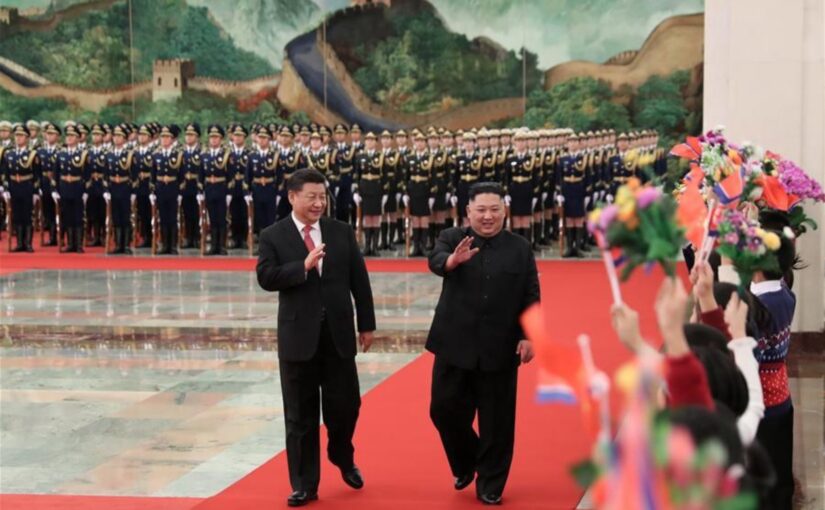
General Secretary of the Workers’ Party of Korea (WPK) Kim Jong Un sent a reply message to his Chinese counterpart Xi Jinping on March 9, thanking him for his message of greetings on his reelection at the recent Ninth Congress of the WPK.

Kim described Xi’s message as “an expression of support and encouragement to me and all our Party members”, adding:

“It is the unshakable stand of our Party and the government of the Republic to continue to consolidate and develop the traditional DPRK-China friendship in conformity with the requirements of the new era and the aspirations of the peoples of the two countries.

 “I believe that the cooperation between the two parties and the two countries will get closer in the future on the road of advancing the common cause of socialism.”

At time of writing, the Korean Central News Agency (KCNA) has also reported similar reply messages from Kim to To Lam, General Secretary of the Communist Party of Vietnam, and Thongloun Sisoulith, General Secretary of the Lao People’s Revolutionary Party.

Meanwhile, on March 12, regular passenger train services were resumed between China and the DPRK.

Reporting this, China Daily noted that on March 10, Chinese Foreign Ministry spokesman Guo Jiakun said that China and the Democratic People’s Republic of Korea are friendly neighbours, and that maintaining regular passenger train operations is important for making travel between the two countries more convenient.

It added that according to China State Railway Group, international passenger train services between Beijing and Pyongyang will run four times a week in both directions — on Mondays, Wednesdays, Thursdays and Saturdays — while services between Dandong in Liaoning province and Pyongyang will operate daily.

The Xinhua News Agency reported on the first service between Dandong and Pyongyang on March 12.

According to the report, Song Ping, a staff member with the Dandong exit-entry frontier inspection station, said authorities had introduced measures to ensure smooth clearance on the first day of operations. The inspection process for the entire train has been shortened to within 30 minutes.

Reporting the train’s arrival in Pyongyang, Xinhua said that the regular service would facilitate cross-border travel and boost economic, trade and cultural exchanges between the two countries.

Regular passenger transport between China and the DPRK was suspended early in 2020 due to the COVID-19 pandemic. Regular air links were restored in 2023.

The following articles were originally published by KCNA, China Daily and the Xinhua News Agency.

Continue reading Kim Jong Un says ties between China and DPRK will get closer advancing the common cause of socialism

Palestine Chronicle: China condemns US-Israeli aggression, backs Tehran’s sovereignty

In the following article, originally published on March 6, the staff of Palestine Chronicle summarise diplomatic responses to date by the People’s Republic of China to the US-Israeli war of aggression against Iran.

It notes that that day Foreign Ministry spokesperson Mao Ning said that Beijing supports Tehran in defending its sovereignty and rights:

“China opposes the US and Israel launching military strikes against Iran in violation of international law.”

She added that: “We support Iran in safeguarding its sovereignty, security, territorial integrity and national dignity and in upholding its legitimate and lawful rights and interests.”

Palestine Chronicle adds that: “Chinese state media and diplomatic officials have repeatedly emphasised that the strikes were carried out without authorisation from the United Nations Security Council, a point Beijing views as a clear violation of international norms.”

The article also refers to Foreign Minister Wang Yi’s related conversations with regional ministers, the most recent of which were with his counterparts from Saudi Arabia and the United Arab Emirates, adding that:

“China’s UN mission has repeatedly stressed that sovereignty and territorial integrity must be respected under international law, and that continued strikes could trigger unpredictable consequences across the Middle East.”

The article was published prior to Foreign Minister Wang Yi’s March 8 press conference in the margins of the annual session of China’s National People’s Congress (NPC).

China Backs Iran’s Sovereignty 

China has strongly condemned the US-Israeli military aggression against Iran, warning that the attacks violate international law and threaten to escalate the conflict across the Middle East.

Speaking during a press briefing on Friday, Chinese Foreign Ministry spokesperson Mao Ning said Beijing supports Tehran in defending its sovereignty and rights.

Continue reading Palestine Chronicle: China condemns US-Israeli aggression, backs Tehran’s sovereignty

While the US pursues war and hegemony, China pursues peace and progress

On Friday 6 March, Friends of Socialist China co-editor Carlos Martinez appeared on the Empire Watch live stream, hosted by Ileana Chan, Sara Vivacqua and João Amorim.

The wide-ranging conversation includes detailed discussion on the criminal US-Israeli war on Iran; how that war is reshaping the multipolar world order; China’s vision of peaceful coexistence; a comparison of the US and China’s military posture; China’s 15th Five-Year Plan; its newly-announced GDP growth target of 4.5 to 5 percent; and the Kenyan state’s illegal detention and torture of Comrade Booker Ngesa Omole.

The full stream is embedded below, followed by a selection of thematic extracts.

New quality productive forces empowering common prosperity in ethnic regions: a logical examination and practical direction

We are pleased to publish the English translation of an important article by Chinese scholars Wang Chen and Gong Wanting on the inter-relationship between the promotion of new quality productive forces and the realising of common prosperity in areas inhabited by ethnic minorities.

The authors note that ethnic regions must fully leverage the role of New Quality Productive Forces, making them a crucial engine for achieving Common Prosperity.

The concept of “New Quality Productive Forces” was first proposed in September 2023. In July 2024, the Third Plenary Session of the 20th Communist Party of China (CPC) Central Committee pointed out that to further comprehensively deepen reform, it is necessary to persist in further liberating and developing productive forces, promote the gathering of various advanced production factors toward developing New Quality Productive Forces, and form a “multiplier effect” of high-quality development driven by New Quality Productive Forces. The proposal of New Quality Productive Forces not only extends and deepens Marxist theories on productive forces but also endows them with Chinese and contemporary significance, becoming a key driving force for addressing economic development challenges in China’s ethnic regions and promoting Common Prosperity in these areas in the new era. The National Conference on Commending Notable Efforts in Ethnic Unity and Progress held on September 27, 2024, clearly stated the need to “accelerate high-quality development in ethnic regions and steadily advance Common Prosperity for all ethnic groups”.

By leveraging the development of New Quality Productive Forces, ethnic regions can deeply integrate traditional production factors with emerging technological elements, driving both the transformation of traditional industries and the rise of emerging industries. For instance, Pu’er in Yunnan has established a traceability system for the coffee industry using blockchain technology, increasing coffee farmers’ incomes by over 30% and reshaping the traditional agricultural value chain. Guizhou, capitalising on its natural endowment advantages, has achieved leapfrog development in the digital economy through the construction of big data centres, actively participating in and advancing the national “East Data, West Computing” strategy to vigorously promote the growth of the digital economy. These efforts have created innovative models and practical solutions with local characteristics.

With strong geographical penetration and reach, new quality productive forces can break through regional physical boundaries, effectively advancing the progress of livelihood initiatives and improving the public service system in ethnic regions, thereby alleviating issues of unbalanced and inadequate development. For example, Karamay City in Xinjiang has promoted the development of a digital government, achieving “one-stop service” for 2,490 administrative items, with 91.7% of government services available online. Additionally, through an AI-powered “dual-teacher classroom” system, rural schools in Kashgar, Xinjiang, have implemented shared courses with key secondary schools in Beijing, enabling students in border regions to access national-level educational resources simultaneously.

Moreover, the ecological perspective inherent in New Quality Productive Forces is a scientific outlook that aims to deeply integrate ecological protection with economic development, promoting the advancement of ecological civilisation through coordinated progress.

The article does not shy away from the problems on the road ahead, noting, for example, that most ethnic regions have not yet formulated specialised development plans for New Quality Productive Forces. Relevant policies are fragmented across documents covering the digital economy, rural revitalisation, and other areas, lacking overall coordination and integration. Among the eight provinces and autonomous regions with larger ethnic minority populations, only a few have introduced specific policy measures.

Continue reading New quality productive forces empowering common prosperity in ethnic regions: a logical examination and practical direction

Chinese Foreign Minister meets the press

Chinese Foreign Minister Wang Yi has used his annual meeting with the Beijing press corps to set out a comprehensive overview regarding his country’s foreign policy and external relations. His March 8 press conference was held on the sidelines of China’s annual parliamentary ‘two sessions’ of the National People’s Congress (NPC) and the Chinese People’s Political Consultative Conference (CPPCC). Wang, who is also a Political Bureau member of the Communist Party of China (CPC) Central Committee, fielded over 20 questions posed by both the Chinese and foreign media and the press conference lasted for 80 minutes.

Among the important points made by Wang were:

  • Today is International Women’s Day. Let me start by extending warm greetings to all women on this special day.
  • China’s diplomacy firmly safeguards national sovereignty, security and development interests, firmly upholds international rule of law and fairness and justice, firmly opposes all unilateral acts, power politics and bullying, firmly observes and fulfills our international obligations, and firmly stands on the right side of history. As the world’s most important force for peace, for stability and for justice, we have full confidence in the future of humanity.
  • China and Russia share a high degree of political mutual trust. Working back-to-back lies at the heart of this relationship… China and Russia act in close coordination. In major international and regional affairs, China and Russia share the broadest strategic consensus and closest strategic coordination.
  • Last year, the heads of state of China and Russia attended the commemorations of the victory of the Anti-Fascist War in each other’s countries, and the two sides issued three important joint statements on deepening comprehensive strategic coordination, cementing global strategic stability and upholding the authority of international law. This has sent a clear message to the world about resolutely upholding the correct view of history on World War II, safeguarding the fruits of the victory of the War and opposing unilateral bullying acts. Eighty years ago, China and Russia together contributed to the building of the postwar order. Today, 80 years on, China and Russia together will add momentum to the advent of a multipolar world.  
Continue reading Chinese Foreign Minister meets the press

Victor Gao: Stop the war on Iran

In an International Manifesto Group webinar held on 1 March, prominent Chinese scholar Victor Gao – Vice President of the Center for China and Globalization – gives a powerful critique of the latest Israeli-US aggression against Iran.

Victor correctly characterises the war launched by Israel and the United States as “a war of aggression and a war of injustice”. He goes on to unambiguously uphold Iran’s right to self-defence:

I listened very carefully to UN Secretary-General António Guterres when he spoke at the Security Council of the United Nations. He condemned the war launched by Israel and the United States against Iran, which I fully support. But he also condemned the military attacks launched by Iran against quite a few countries in the Middle East.

I tend to disagree with Secretary-General Guterres. Why? Because Iran, in my view, has the full right to strike at any military bases, facilities, installations, or military personnel of the United States in other regions in that part of the world—including, for example, in Qatar, the UAE, Bahrain, and so on.

Otherwise, it would be completely odd for Iran to be attacked in such an aggressive manner by the United States and Israel, and yet be expected to sit like a sitting duck under such military attacks – attempts to overthrow its government, probably also to destroy its civilisation – while being bound by the futility of not striking at the military facilities and installations in its neighbourhood, which most likely have been used one way or another in launching this ongoing attack against Iran.

He proceeds to reiterate China’s orientation towards peace and its clear interest in seeing an end to hostilities: “China’s imported oil accounts for about 75 percent of the total oil we consume annually. Much of that comes from the Middle East, and much of it needs to go through the Strait of Hormuz. So we have a vested interest in keeping peace in the Middle East rather than seeing the continuation of the war and the deterioration of the situation.”

Victor concludes with a stark warning:

The US and its allies want to expand. They want to take over land, oil, gas and other minerals from the legitimate possession of other countries. They want to violate sovereignty and territorial integrity. They want to impose war – and this will not be the last war. They want to impose war after war against other countries. If we do not unite to put a stop to this aggression and war, I think they will push the situation – not only involving Iran, or the Middle East, but the whole world – into an abyss of turmoil, chaos, instability, and destruction.

The video of the speech is embedded below.

World Association for Political Economy call for papers

We publish below the Call for Papers for the 19th Annual Forum of the World Association for Political Economy (WAPE), which will be held from August 5-7, 2026, in London on the theme, ‘The Wealth of Nations in the Multipolar Age’.

WAPE is an important initiative to bring together Marxist and socialist scholars worldwide in which the Chinese Academy of Social Sciences plays an important role. Friends of Socialist China co-editors Keith Bennett and Carlos Martinez are participating in the organising committee for the forum.

More detailed information can be found on the conference website.

19th Annual Forum of the World Association for Political Economy: The Wealth of Nations in the Multipolar Age

August 5–7 · University of Greenwich · London UK

Adam Smith’s contradictions are of significance because they contain problems which it is true he does not solve, but which he reveals by contradicting himself. His correct instinct in this connection is best shown by the fact that his successors take opposing stands based on one aspect of his teaching or the other. (Karl Marx, Theories of Surplus Value I, 151)

The World Association for Political Economy (WAPE) is pleased to announce its annual forum on the theme “The Wealth of Nations in the Multipolar Age”, marking the 250th anniversary of the publication of Adam Smith’s The Wealth of Nations. We meet at the Old Royal Naval College in Greenwich, London, where the first Chinese translator of the Smith’s works and first principal of Beijing University, Yan Fu, studied.

We invite scholars, researchers, activists, and practitioners to submit their papers for consideration.

The neoclassical and neoliberal appropriation of Smith is simplistic at best and false at worst. Marx, in contrast, rightly regarded Smith as one of his most important intellectual forbears, whose ideas he both valued and criticized in arriving at his own critique of political economy.

Marx considered Smith to be among those investigating ‘the real internal framework [Zusammenhang] of bourgeois relations of production’ — in particular, through his concept of the division of labour, at once advancing the productive capacities of human labour and stunting the human personality, and his belief that labour was ‘the real measure of the exchangeable value of all commodities’.

Indeed, the centrality of these and other themes of Smith’s work to Marx’s indicates that many of them point beyond capitalism itself.

The Wealth of Nations also addressed, as the curtain rose on the modern capitalist world, the central issue of what makes nations rich or poor. It has formed the running thread of the study of political and geopolitical economy. Today it is central to discussions of the multipolar and pluripolar world, as socialist and other anti-imperialist countries challenge capitalist domination through the increasingly successful pursuit of development, combined with a rejection of the imperial domination that was formative of, and remains fundamental to, capitalism’s very existence.

As in previous years, we will run a geopolitical economy stream to strengthen understanding of what Marx called the ‘relations of producing nations’ of the age of capital, and of the transition away from capitalism.

We commemorate Smith’s The Wealth of Nations this year by inviting submissions that add to existing scholarship on Smith, particularly those that develop the radical and developmental aspects of his thought in the spirit of Marxism, those that investigate his relation to Marx and other critical thinkers since and especially those that which investigate how reconsideration of Smith’s work may contribute to understanding the political and geopolitical economy of the twenty-first century of decaying capitalism, and to advancing socialism in what Marx termed the ‘relations of producing nations’ in the age of multi- and pluripolarity.

Call for Papers

We welcome papers that address theoretical, empirical, or policy-oriented dimensions of the intimately related questions on the themes discussed above and listed below.

Topics

  • Adam Smith’s significance for modern thought
  • The relation of Marx and his successors with Smith
  • The geopolitical economy of the age of capital
  • The political economy of development
  • Advancing productive powers in a multipolar world
  • Modern Forces of Production, Artificial Intelligence, Noonomy, and the Creative Economy
  • The negative effects of the dollar as a world currency and of USD-backed stablecoins
  • The significance and impact of China’s recent policy initiatives (such as the Global Governance Initiative)
  • The role of socialism in the political and geopolitical economy of capitalism
  • The emerging role of organisations anddstructures such as BRICS and the Shanghai Cooperation Organisation
  • The role of regional blocs and institutions in shaping multipolar governance
  • The ecological challenge and resource politics in a multipolar world
  • Shifts in labour relations and production systems under multipolarity
  • International production networks
  • Livelihoods world-wide and the “Death Line” for the American People
  • Contemporary forms of Hegemonism, Imperialism, Colonialism, and Racism
  • Upholding Integrity and Innovating Marxist Political Economy Through International Cooperation
  • Studies on the International Schools of Innovative Marxism
  • Macroeconomic modelling

Submission

Abstracts (250–300 words) with keywords. Indicate stream and format (paper, panel, roundtable).

Please include a brief biography (up to 150 words), highlighting your academic affiliation and key research interests.

Papers selected for presentation will be eligible for consideration in WAPE-affiliated journals (World Review of Political Economy, International Critical Thought, World Marxist Review).

Key Dates

  • Abstract deadline: March 15
  • Decisions: March 30
  • Final programme: July 10

Scare Out (2026): Unsung individuals protecting China’s security and achievements

David Peat, secretary of the Friends of Socialist China Britain committee and editor at Iskra Books, reviews the latest film by the “grandmaster” of Fifth Generation Chinese cinema, Zhang Yimou. A contemporary espionage thriller, made with assistance from China’s Ministry of State Security, which, in a first of its kind, advised actors on surveillance techniques, the film is based on some real life counterespionage cases.

This article contains no spoilers for Scare Out.

Scare Out is the latest film by one of China’s greatest cinematic legends, Zhang Yimou. Best known in the West for his epic, gravity-defying martial arts and historical epics such as Hero (2002), and stories exploring China’s 20th Century history such as To Live (1991), less well-known is the fact that Zhang Yimou was also behind what many consider modern China’s greatest (and largest-scale) statement of cultural soft power to date — the Opening Ceremony of the 2008 Beijing Olympics, co-directed with choreographer, and Lieutenant General of the People’s Liberation Army, Zhang Jigang. Zhang Yimou also directed the closing ceremony in 2008, as well as the  opening and closing ceremonies of the 2022 Winter Olympics and 2022 Winter Paralympics.

His latest film, Scare Out, is a high-tech espionage thriller, its contemporary setting unusual for the Chinese market, which has typically focussed on spy stories in historical settings, including Zhang Yimou’s own 2021 film Cliff Walkers, set in Japanese-occupied Manchuria during the 1930s. Based on details of some real-life counterespionage cases in China, Scare Out tells the story of an Internal Security team putting everything on the line to defeat threats both foreign and domestic, and stars boy band member turned movie star Jackson Yee, noted especially for his parts in The Battle at Lake Changjin (2021) and its sequel the following year, set during the War to Resist US Aggression and Aid Korea (1950-53), as Yan Di, a security officer, second-in-command to Colonel Huang Kai (Zhu Yilong). The story kicks off with a bungled apprehension of a suspect who was attempting to smuggle secrets of China’s sixth generation fighter jet stealth systems to an unspecified but heavily-hinted at foreign nation, after which it is revealed that the leadership suspects the presence of a mole within the counter-espionage department. The story escalates with many twists and turns, and the atmosphere of suspicion and paranoia continues to grow as all members of the team, but particularly our two lead characters, are placed under suspicion. The intrigue is sustained and heightened by the hyper-kinetic editing which combines CCTV overlays with dizzying and cutting-edge drone cinematography of Shenzhen, showcasing China’s by-now signature nightscapes: dazzling forests of LED-adorned skyscrapers. This innovative and modern film-making shows that, even at 75, Zhang Yimou is continuing to experiment and innovate.

The film is also notable as the first contemporary instance in which China’s Ministry of State Security has explicitly contributed to the production. Director Zhang Yimou highlighted in interviews their contributions to realism in terms of how surveillance is carried out, real-life details of some counterespionage cases, and even providing insights into officers’ emotional responses, to aid the actors’ performances. No doubt the idea of such cooperation will raise some eyebrows with Western audiences, but they should perhaps direct their attention instead to the role that US military and security services play in Hollywood – a 2025 paper from Brown University estimated that “since the inception of the Hollywood entertainment industry… over 2,500 war-themed movies and TV programs have been made with Pentagon assistance.”[1] It should also be noted that, given the US’ waning but still overwhelming cultural hegemony, these films, which the Pentagon has tweaked to ensure they serve imperialism’s interests, overwhelmingly dominate at cinemas around the world, almost always without acknowledgement of the security services’ interference.

Internal Security and (counter)espionage in socialist and/or sovereignty-building states serve different functions from those services in imperialist countries. In the former, their primary function is ensuring the hard-earned successes of the revolutionary process are not undermined, whereas in the latter case they primarily focus on oppressing their own populations and seeking to destabilise the sovereignty of countries not under imperialist domination (which, in turn, necessitates more stringency from those countries’ defences).

The long revolutionary journey of the Communist Party of China (CPC) saw them facing against undermining efforts from Nationalist (Guomindang) forces, including outright betrayals during the periods of temporary alliance. Moreover, the CPC had to deal with Japanese spies and their collaborators. As such, the Party, upon the establishment of the People’s Republic, recognised  the enormous importance of Internal Security, with Premier Zhou Enlai holding an important role in the development of these services. Premier Zhou also emphasised the importance of National Security being embedded within the wider project of socialist construction, and followed the approach of “combining specialised work with the mass line” [结合专门工作与群众路线], throughout his tenure as Premier, further elaborating on this concept in a 1975 speech, stating the need to “ensure that the task of consolidating the dictatorship of the proletariat is fulfilled right through to the grass-roots level. We should rely on the broad masses to deal steady, accurate and hard blows at the handful of class enemies, with the emphasis on accuracy.”[2]

This film focuses on those undertaking the aforementioned “specialised work”, and therefore functions also as a statement of intent on the part of China’s internal security services: they will endure extreme sacrifices and exhibit endless vigilance in order to ensure and protect the achievements of the People’s Republic of China. Zhang Yimou stressed the message of the film: “We may never know who they are, but it is these countless unsung individuals who safeguard the peace and reunions we enjoy today.”[3] As hinted at in the director’s comment, the film was released during the Chinese New Year period, the most important window for the Chinese box office, and it is clear therefore that its message is intended to be heard far and wide.

Chinese president Xi Jinping, in his speech at the first session of 14th National People’s Congress in 2023, recalled China’s century of humiliation “when bullying by foreign powers and frequent wars tore the country apart and plunged the Chinese people into an abyss of great suffering.” Only through the strength and unity brought about by the Communist Party of China was it possible to end this tragedy, thanks to “the Chinese people of all ethnic groups…working hard for a century.”[4] Zhang Yimou’s latest film tells the story of some of those working hard at the most extreme edge of ensuring this tragic history is not repeated.

Scare Out is distributed by Trinity CineAsia, the trailer for the film can be viewed here. The film is currently showing at various venues across Britain and Ireland – see details here.


[1] ‘The Militarization of Movies and Television, Tanner Mirrlees, February 25, 2025. https://costsofwar.watson.brown.edu/sites/default/files/papers/Mirrlees-Militarization-of-Movies-and-TV.pdf       

[2] Zhou Enlai, ‘Report on the Work of the Government’, https://www.marxists.org/reference/archive/zhou-enlai/1975/01/13.htm.

[3] Zhang Yimou, Renowned Chinese director Zhang Yimou on his latest national-security thriller ‘Scare out’: Hear the thunderclap in the silence, Global Times,  https://www.globaltimes.cn/page/202602/1355539.shtml

[4] Xi Jinping,  ‘Full text of Xi Jinping’s speech at first session of 14th NPC’,  http://eng.mod.gov.cn/xb/News_213114/TopStories/16209361.html

China’s diplomacy condemns aggression and pushes for peace

Chinese Foreign Minister Wang Yi has repeated his country’s condemnation of the US-Israeli aggression against Iran and stressed that China stands for peace in a number of diplomatic exchanges.

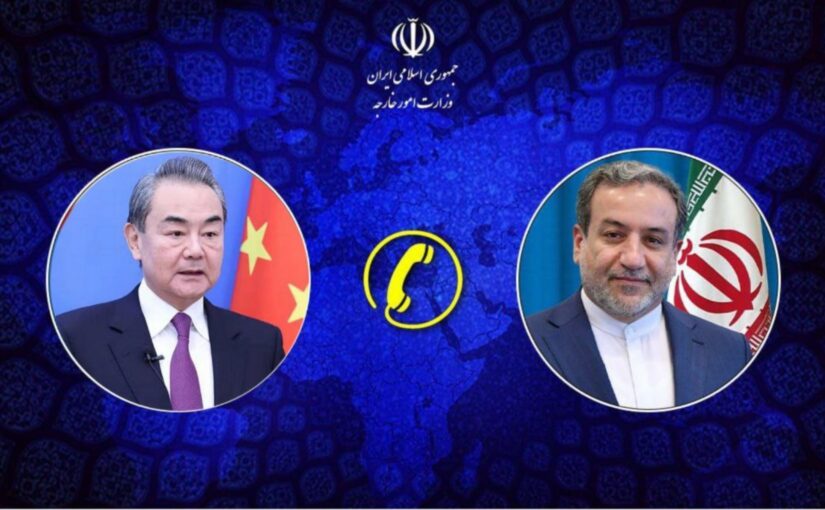
Following his March 1 phone conversation with his Russian counterpart Sergei Lavrov, the following day Wang spoke with the foreign ministers of Iran, Oman and France.

Iranian Foreign Minister Seyed Abbas Araghchi briefed Wang Yi on the latest developments of the situation of Iran, noting that the US has launched war against Iran for the second time during their ongoing negotiations. Though the two sides have made positive progress in the latest round of negotiations, the US action violates all international laws and treads and even crosses the red line of Iran. The Iranian side has no choice but to defend itself at all costs. China has made public its voice for fairness and justice, and Iran hopes that China will continue playing a proactive role in preventing the escalation of tensions in the region.

Wang Yi noted that China values the traditional friendship between China and Iran and supports Iran in safeguarding its sovereignty, security, territorial integrity and national dignity and in upholding its legitimate and lawful rights and interests. He said that China has urged the US and Israel to immediately cease military actions to avoid further escalation of tensions and prevent the conflict from expanding and spreading to the entire Middle East region. China believes that under the current grave and complex situation, Iran will maintain its national and social stability, take seriously the legitimate concerns of neighbouring countries, and ensure the safety of Chinese citizens and institutions in Iran. (At least one Chinese citizen has so far been killed as a result of US-Israeli aggression.)

In his conversation with his Chinese counterpart, Omani Foreign Minister Sayyid Badr bin Hamad bin Hamood Albusaidi noted that under Oman’s mediation, Iran-US negotiations made unprecedented progress, yet regrettably, the US and Israel have cast aside the existing outcomes of the talks and launched a war. If the war continues, it will lead to more casualties and property losses. All parties should work together for an early ceasefire.

Wang Yi said that China appreciates Oman’s active mediation in advancing the negotiations between Iran and the US and its tremendous efforts for safeguarding regional peace. Despite progress in the talks, the US and Israel deliberately provoked a war against Iran, which clearly violates the purposes and principles of the UN Charter.

Regarding the spillover of the conflict to states in the Persian Gulf that harbour aggressive US military bases, Wang Yi pointedly noted that China expects that Gulf states will enhance their independence, oppose external interference, develop good neighbourliness, and strengthen solidarity and coordination, so as to truly hold their future firmly in their own hands.

In his call with Wang Yi, French Minister for Europe and Foreign Affairs Jean-Noël Barrot shared his country’s perspective on the current situation in the Middle East, underscoring that France and China, both permanent members of the UN Security Council, have special responsibility for upholding international peace and security. The US and Israel did not seek the opinions from the UN Security Council regarding their military action against Iran, nor did they obtain authorisation from the Council. All parties should work together to de-escalate the tensions and resolve such issues as the Iranian nuclear issue through negotiation. China has maintained good relations with both Iran and other Gulf states. France looks forward to joining hands with China to proactively ease the situation in the region.

Wang Yi reiterated China’s principled position, stressing that the international community should reject any act that violates international law and refrain from applying double standards. Major countries must not be allowed to attack others at will with their military might, nor should the world revert to the law of the jungle. China hopes that France will uphold an objective and just position, remain calm and rational, and work with China to de-escalate the situation, jointly safeguarding the basic norms of international relations.

On March 3, Wang Yi spoke with the foreign minister of the Zionist entity Gideon Sa’ar.

Wang pointed out that recent negotiations between Iran and the US had been making notable progress, which also took into account Israel’s security concerns. Regrettably, this process has been disrupted by military strikes. China opposes such strikes launched by Israel and the US against Iran. The use of force cannot truly solve problems. China calls for immediate cessation of military actions to prevent the conflict from further escalating and spiraling out of control. Wang further called on Israel to take concrete measures to ensure the safety and security of Chinese personnel and institutions.

Continue reading China’s diplomacy condemns aggression and pushes for peace

Why isn’t China intervening to stop the US war of aggression against Iran?

The following brief article by Brian Berletic, originally published on his Twitter/X, addresses a question that has been raised by some anti-imperialist commentators since the launch of the criminal US-Israeli war on Iran: why has China not directly intervened militarily to stop this aggression. Berletic argues that the answer lies primarily in structural and military realities rather than political will.

First, he explains that, in stark contrast to the US, China’s military doctrine focuses on defending its own borders and deterring threats along its periphery. As a result, it lacks the logistical infrastructure and global deployment capacity necessary to intervene in a distant conflict such as a war in West Asia.

Second, he highlights the extensive regional military network the US has spent decades building around Iran. This includes bases, logistics hubs, air defence systems and political alliances with multiple regional states, as well as military occupations in Iraq and Syria. To directly counter a US military operation in this environment, China would need a comparable network of bases and alliances in the region – something it neither possesses nor seeks to establish.

Third, he argues that China deliberately avoids building influence through military domination or occupation, which differentiates its foreign policy from that of the US. Attempting to match Washington’s global military posture would require a fundamentally different approach to foreign relations.

Instead, Berletic suggests China’s support for Iran takes less direct and obvious forms: economic cooperation to mitigate sanctions, technological assistance for domestic defence production, and supplies of military equipment.

He concludes that the constraints facing China – and similarly Russia – reflect practical limits rather than indifference, warning that blaming them for US actions ultimately deflects responsibility from Washington.

Why isn’t China intervening to stop the US war of aggression against Iran?

Somehow this is still a question people are asking, so I will explain.

  1. China’s military is built to defend China within and along its borders against a massive and growing US military build-up all along its peripheries ongoing for decades.

Its forces are organized around hardware designed specifically for this purpose – not to project military power around the globe like the US does – and the US has these capabilities because it is an aggressor – not for national defense.

China literally has no ability to project the military power required to confront and successfully stop a full-scale US war of aggression on the other side of the planet with the capabilities it has for national defense;

  1. In order to launch this war on Iran – the US spent decades building up a network of global and regional bases, logistical networks, ammunition depots, fuel dumps, regional integrated air defense capabilities etc. to first encircle Iran – then attack it.

China would be required to create an equal or greater network throughout the region to stop this- and this simply isn’t possible;

  1. The US built its network up through both politically capturing nations in the region (Saudi Arabia, Jordan, Bahrain, UAE, Kuwait) and invading/occupying them (Iraq & Syria).

China simply doesn’t conduct its foreign policy this way – because if it did – it would be just as bad as the US itself;

  1. If you think China could simply project military power over the horizon – this is even more difficult and unrealistic. This requires huge amounts of long-range aircraft, immense aerial refueling capabilities, and long-range munitions as well as forward bases at least near the region to do so.

Sending naval vessels would simply place them at the mercy of a better prepared and more extensive military positions the US has established over decades as explained above;

  1. What China has likely done is all that it could do – provide economic support against illegal US sanctions, provide technical/material support for Iran’s military industrial production, provide military support through the transfer of weapons and equipment.

All of these have their limits especially in terms of the transfer of military equipment to Iran – which takes YEARS to train Iranian personnel on EFFECTIVELY, as well as to integrate it through training in modern combined arms operations.

This last point regarding the amount of time it takes to effectively integrate new military hardware into a military is exactly why Ukraine has failed to absorb and fully utilize floods of Western weapons and equipment in the US proxy war on Russia being waged there.

CONCLUSION

There are real-world limitations on what nations like Russia and China can do against US wars of aggression elsewhere especially considering the fact the US is waging proxy war on both Russia and China at the same time it wages direct war on Iran.

Russia and China are doing what is realistic and within their capabilities – and are constantly expanding their own capabilities in order to do more when possible.

Do not confuse real limitations with a lack of concern or will – and realize blaming Russia or China for a US WAR OF AGGRESSION simply serves Washington’s agenda – not Iran’s or any of its allies.