Wang Yi: Riding the trend of the times with a strong sense of responsibility

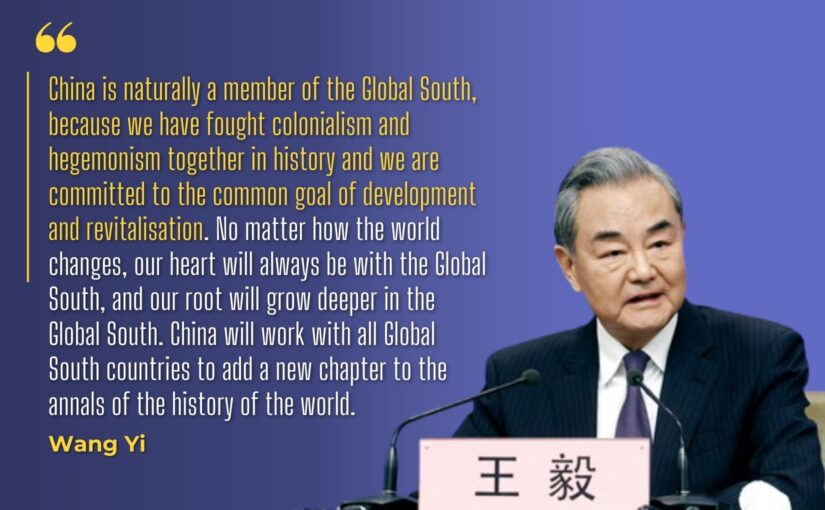
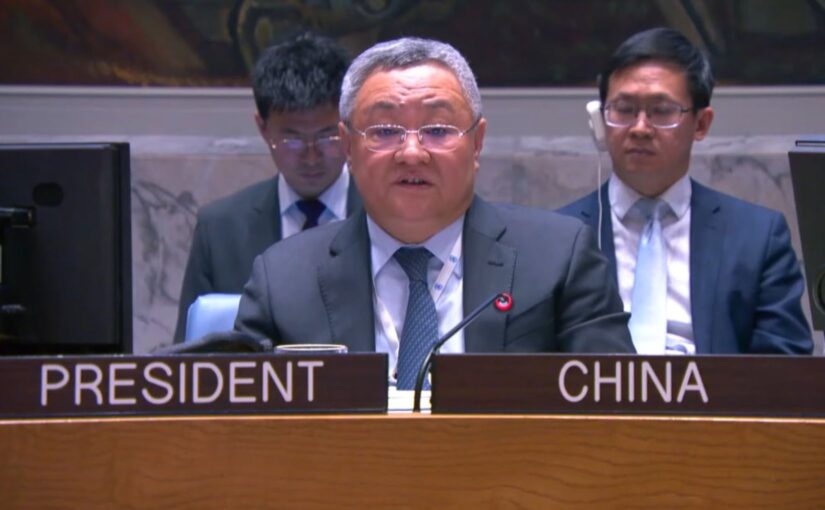
On December 17, Chinese Foreign Minister Wang Yi, who is also a member of the Political Bureau of the Communist Party of China (CPC) Central Committee, delivered a major speech at an important year end symposium in Beijing on the international situation and China’s foreign relations.

Wang makes a detailed and profound exposition of the thinking behind China’s foreign policy and its stance on key questions, summarises the work of China’s diplomacy in 2024, and outlines priorities for the coming year.

Among some of the highlights of his speech are:

  • Building a community with a shared future for humanity is an important vision put forth by President Xi Jinping. It provides an incisive answer to the important question of “what kind of world to build and how to build it.” It envisions a historic progress in state-to-state relations from the pursuit of peaceful coexistence to that of a future shared by all.
  • The building of a community with a shared future for humanity has become a great enterprise joined by various parties. In the course of 2024, China and Brazil have announced joint efforts to build a China-Brazil community with a shared future for a more just world and a more sustainable planet, demonstrating their sense of responsibility as two emerging countries; China and Serbia have launched efforts to build a China-Serbia community with a shared future in the new era, the first of its kind in China’s relations with European countries.
  • What’s worth mentioning in particular is that Chinese and African leaders have agreed to build an all-weather China-Africa community with a shared future for the new era, giving expression to the shared desire of the 2.8 billion Chinese and Africans to pursue common development in greater solidarity.
  • We have actively worked for the restoration of world peace and endeavoured to save human lives. On the Ukraine crisis, we have always maintained an objective and impartial position, and actively pushed for peace talks. China and Brazil jointly issued the six-point consensus on political settlement of the Ukraine crisis. We also brought other Global South countries together to launch the Group of “Friends for Peace” to gather consensus for finding a path to peace.
  • The Gaza conflict has taken too many civilian lives. The immediate priority is a comprehensive ceasefire, the key is to ensure humanitarian assistance, and the fundamental way out is to realize the two-state solution. Over the past year, we have pushed for the adoption of the first resolution by the Security Council on a ceasefire in Gaza, facilitated the reconciliation dialogue and the signing of the Beijing Declaration by various Palestinian factions, and delivered multiple batches of humanitarian assistance to Gaza. We will continue to make unremitting efforts toward a comprehensive, just, and lasting solution to the Palestinian question.
  • We have mediated peace in northern Myanmar and facilitated multiple rounds of peace talks among conflicting parties.
  • We have supported Afghanistan in building an inclusive political framework and realising peace and reconstruction.
  • Facing the dramatic change in Syria, China will continue to stand with the Syrian people and uphold the “Syrian-led and Syrian-owned” principle. China opposes the attempt of terrorist forces to exploit the situation to create chaos, and will help Syria maintain its sovereignty and restore stability.
  • Over the past year, China’s cooperation with other developing countries has set a fine example, which has reinforced the trend of uniting for strength within the Global South. The collective rise of the Global South in the current chapter of history is a distinctive feature of the great transformation across the world. China will always be an important member of the Global South and always be committed to unity and invigoration of the Global South.
  • Building on its historic expansion last year and setting off this [coming] year from the new starting point of greater BRICS cooperation, BRICS is bringing more partners into its big family to make the platform a primary channel for strengthening solidarity and cooperation among Global South nations.
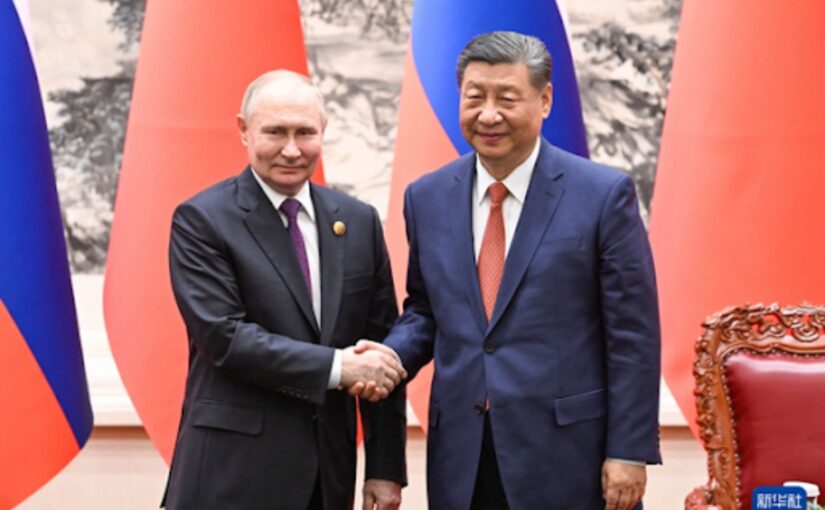
  • The China-Russia relationship, under the visionary guidance of the heads of state, has grown more mature and stable, demonstrated in a clearer way its independence and resilience, and set an example of friendly exchanges between major countries and neighbours. The three meetings between President Xi Jinping and President Putin this year further deepened the China-Russia comprehensive strategic partnership of coordination.
  • China and Europe are two great civilisations of the world and two major forces of the times. China stands ready to work with the European side to handle differences and disputes properly, seek win-win solutions, and jointly safeguard free trade and multilateralism.
  • As long as China and the United States cooperate with each other, they can accomplish many great things together. In the meantime, China firmly safeguards its sovereignty, security and development interests, and firmly opposes the illegal and unreasonable suppression by the US side. In particular, with regard to the US’ gross interference in China’s internal affairs such as Taiwan, China has to make a firm and robust response to resolutely defend its legitimate rights and interests and safeguard the basic norms governing international relations.
  • China will be a firm force for justice in the face of the countercurrents of unilateralism and bullying. We will hold solemn commemorations for the 80th anniversary of the victory of the Chinese people’s war of resistance against Japanese aggression and the world anti-fascist war, promote a correct view of history, uphold true multilateralism, and firmly safeguard the international system with the UN at its core, the international order underpinned by international law, and the basic norms governing international relations based on the purposes and principles of the UN Charter.

The following is the full text of Wang Yi’s speech. It was originally published on the website of the Chinese Foreign Ministry.

Dear Experts and Friends,

It gives me great pleasure to join you at the year-end for an in-depth discussion about the international situation and China’s diplomacy. Let me start by thanking all of you for your longstanding interest in and support for China’s diplomatic efforts.

In 2024, the world witnessed further transformation and instability, marked by protracted and intensified geopolitical conflicts, repeated attempts to decouple and sever supply chains, and the rapid rise of the Global South. It has become all the more clear where the once-in-a-century transformations are heading.

Continue reading Wang Yi: Riding the trend of the times with a strong sense of responsibility

Palestinian rescuers see China’s Blue Sky amid the bomb blasts of Israel-Gaza war

The following article, by Cyril Ip, which was first published in the Hong Kong daily South China Morning Post, is a vivid story of practical people-to-people solidarity and friendship between China and Palestine.

It relates how six Palestinians spent two weeks in China being trained being trained by a team from China’s Blue Sky Rescue in urban search and rescue operations. They were taught how to shore up collapsed buildings, cut through walls, search for victims and safely evacuate survivors.

According to Cyril: “It is over a year since the Israel-Gaza war began, and in that time more than 44,000 Palestinians – including at least 88 of the search and rescue team’s colleagues – have been killed. So, when they were invited to send a delegation for training in China, they jumped at the chance to help save more lives.

“The search and rescue team of the Palestinian Civil Defence first met China’s Blue Sky rescuers back in February 2023, amid the rubble of Malatya, Turkey, as they worked side by side to find survivors after a devastating 7.8 magnitude earthquake hit eastern Turkey and Syria. China sent more than 200 members of its grass-roots rescue organisation to assist in the wake of the disaster.”

Speaking from its headquarters in Ramallah, Raed Qazmouz, director of central operations in the Palestinian Civil Defence, said:

“China has the kindest and most hospitable people. I had known they were a polite and respectful people, but not to this extent.”

One of the Chinese rescuers who coordinated the exchange, whose name is given only as Ming, said it was his own visit to Palestine in June that really opened his eyes to what the search and rescue team is dealing with over there. He described what he saw as a “man-made earthquake”.

“I was mentally prepared for a very difficult situation as a war was taking place, and after going there and seeing the situation in refugee camps, it confirmed my belief that they need international help.

“China was one of the first countries to recognise Palestine as a state and as a country. So, this kind of relationship, especially at the civil level, complements what the government is doing, and we are using our expertise to enable and equip our friends on the front line to save more lives.”

He noted a “strong passion” from many in China to help: “A lot of people have donated to the Palestinian embassy in China, and they are always looking for platforms where they can see direct impact.”

Qazmouz, who first met Ming in the aftermath of the earthquake in Turkey last year, said he was a “very brave man” to have visited areas that had been devastated by Israeli attacks, despite his warnings.  “I told him, ‘It’s not safe for you to visit; it’s a very risky area,’ but he said, ‘I will go to the affected area,’ so he was the first of the Civil Defence’s guests to do that.”

In the eastern city of Changshu, six Palestinians have spent two weeks being trained by a team from China’s Blue Sky Rescue in urban search and rescue operations.

They were taught how to shore up collapsed buildings, cut through walls, search for victims and safely evacuate survivors.

It is over a year since the Israel-Gaza war began, and in that time more than 44,000 Palestinians – including at least 88 of the search and rescue team’s colleagues – have been killed. So when they were invited to send a delegation for training in China, they jumped at the chance to help save more lives.

The search and rescue team of the Palestinian Civil Defence first met China’s Blue Sky rescuers back in February 2023, amid the rubble of Malatya, Turkey, as they worked side by side to find survivors after a devastating 7.8 magnitude earthquake hit eastern Turkey and Syria. China sent more than 200 members of its grass-roots rescue organisation to assist in the wake of the disaster.

That shared experience has led to a growing relationship between the two teams.

“China has the kindest and most hospitable people,” said Raed Qazmouz, director of central operations in the Palestinian Civil Defence, from his headquarters in Ramallah. “I had known they were a polite and respectful people, but not to this extent.”

Invited by Blue Sky Rescue and the local Changshu emergency volunteer association – and facilitated by the United Nations International Search and Rescue Advisory Group (INSARAG) – the Palestinian officers spent their time in China benefiting from Blue Sky’s knowledge.

“There are international standards and guidelines for urban search and rescue operations, and we learned from China how to do that,” Qazmouz said.

Founded in 2007, Blue Sky Rescue is China’s largest non-governmental humanitarian organisation. It provides vital help in natural disaster rescue efforts, both in China and beyond, including during the catastrophic magnitude 8 earthquake in Sichuan in 2008, which killed 69,000 people.

While the Palestinian search and rescue workers are not dealing with natural disasters, there are stark similarities between rescue efforts in earthquakes and those in bombings. Both involve survivors trapped in unknown locations and conditions.

Since the war began on October 7, 2023, the Israeli military has dropped more than 85,000 tonnes of bombs inside the besieged Gaza Strip, according to a statement by the Palestinian Environment Quality Authority in November.

With nearly two decades of experience dealing with floods, quakes and typhoons, Blue Sky instructed the Palestinian team in the use of sensors in rescue operations.

“The techniques were very helpful to our daily missions after any attack, as each intervention dealing with the consequences of an attack takes us at least 10 to 24 hours,” Qazmouz said. “We were amazed at the high capabilities of the Chinese civil defence and civil protection.”

An international rescuer named Ming who coordinated the exchange, said it was his own visit to Palestine in June that really opened his eyes to what the search and rescue team is dealing with over there. He described what he saw as a “man-made earthquake”.

“I was mentally prepared for a very difficult situation as a war was taking place, and after going there and seeing the situation in refugee camps, it confirmed my belief that they need international help,” he said.

“China was one of the first countries to recognise Palestine as a state and as a country. So this kind of relationship, especially at the civil level, complements what the government is doing, and we are using our expertise to enable and equip our friends on the front line to save more lives.”

Qazmouz first met Ming in the aftermath of the earthquake in Turkey last year. He said Ming was a “very brave man” to have visited areas that had been devastated by Israeli attacks, despite his warnings. Ming, who recently assisted with the UN’s evacuation efforts in Beirut, Lebanon, is a firm believer that “actions speak louder than words”.

“I told him, ‘It’s not safe for you to visit; it’s a very risky area,’ but he said, ‘I will go to the affected area,’ so he was the first of the Civil Defence’s guests to do that,” Qazmouz said.

“He went to the affected area in our camps in the north, he walked on the destroyed streets, he heard the sound of the drones, he was inside collapsed buildings – he saw everything there.”

After the 1967 Arab-Israeli War, Israeli military authorities consolidated complete power over all water resources and water-related infrastructure in the Occupied Palestinian Territories. Israel continues to control and restrict Palestinian access to water.

According to Qazmouz, fire engines and water tanks have been shot at by Israeli forces, and there has been very strict control on the availability of water and especially on water tanks – essential to fire and rescue situations. The process of getting replacements for parts has also been challenging.

“After each attack or during the attack, in addition to fire and rescue services, we as Civil Defence are responsible for providing water to hospitals, critical facilities and the population,” he said.

Qazmouz said water supply trucks were an “urgent need”, especially for when Israel cut off water supplies. He also stressed the need for diggers, bulldozers, cutting machines and fire rescue vehicles.

“Some of them are damaged, completely damaged; some of them are consumed and getting out of service,” he said.

Qazmouz added that there was “no problem” for those resources to be received from donors and international organisations through the West Bank.

Ming has noted a “strong passion” from many in China to help, and said there would be opportunities for them to do so in the future.

“There is a strong willingness from the donors to contribute – they just lack the right channels and platforms to do that,” Ming said.

“A lot of people have donated to the Palestinian embassy in China, and they are always looking for platforms where they can see direct impact.”

To round off their two-week visit, the delegation visited nearby Shanghai and Hangzhou, two of China’s most scenic and innovative cities. For the Palestinian delegates, an act as simple as a leisurely stroll along Shanghai’s Bund or Hangzhou’s West Lake was something to savour.

“Most importantly, it is a very safe country … You are safe everywhere you go,” Qazmouz said.

China pledges support to new Sri Lankan government ahead of proposed presidential visit to Beijing

In the following article, contributed to Friends of Socialist China, Shiran Illanperuma outlines positive steps in the relations between China and Sri Lanka since the recent elections, with new President Anura Kumar Dissanayake (AKD) expected to visit Beijing shortly.

Shiran sets these developments against a background of some key moments in China’s relations with Sri Lanka and specifically between the Communist Party of China and the Janatha Vimukthi Peramuna (JVP), the party presently led by AKD, and refutes the persistent myth of Chinese ‘debt trap diplomacy’.

Shiran Illanperuma is a journalist and political economist based in Sri Lanka. He is a researcher and editor at Tricontinental: Institute for Social Research and a contributor to Friends of Socialist China. He has an MSc in Economic Policy from SOAS University of London.

China has pledged to support the recently elected government in Sri Lanka led by president Anura Kumar Dissanayake (AKD), ahead of a proposed visit by him to China. In the past few months, it has stepped up its aid, welcomed the country’s representation at the BRICS summit in Kazan, and organised visits by delegations from the Chinese People’s Political Consultative Conference (CPPCC), International Department of the Communist Party of China Central Committee (IDCPC), and the All-China Women’s Federation (ACWF).

AKD was elected to office in September 2024 with 42.3% of the popular vote. Two months later, in November 2024, his party the National People’s Power (NPP) secured a supermajority in Parliament by winning 61.6% of the popular vote in the general election. NPP describes itself as a political movement comprising 21 parties and civil society organisations. However, its main constituent is the Janatha Vimukthi Peramuna (JVP or People’s Liberation Front) which is organised as a cadre-based Marxist-Leninist party, and of which AKD is also the leader.

On December 18, AKD met with Vice Chairperson of the National Committee of the CPPCC Qin Boyong. During the meeting, Qin said that preparations were underway to welcome AKD on a visit to China. The two also discussed completing unfinished Chinese investments in Sri Lanka and jointly building the Belt and Road Initiative.

On December 17, Vice President of the ACWF, Zhang Dongmei, met with Sri Lankan Prime Minister and National Executive Committee member of the NPP, Dr. Harini Amarasuriya. According to a report by Sri Lankan government media, Zhang shared China’s experience in in improving women’s workforce participation and grassroots representation. The two also discussed shared issues regarding women’s health and education.

The ACWF is China’s first countrywide women’s organisation, which was established after the revolution in 1949 and initially chaired by communist revolutionary and veteran of the Long March Cai Chang. Dr. Amarasuriya is notably Sri Lanka’s second female Prime Minister after Sirimavo Bandaranaike, who in July 1960 became the world’s first woman Premier. A trailblazer of the Non-Aligned Movement (NAM), she also forged a strong friendship with first generation Chinese leaders Chairman Mao Zedong and Premier Zhou Enlai, notably visiting China in 1962, welcoming Zhou Enlai to Sri Lanka in 1964, and being received by Chairman Mao in 1972.

On November 25, Vice Minister of the IDCPC Sun Haiyan led a delegation to meet with President Anura Kumar Dissanayake. According to a report by Sri Lankan government media, the delegation expressed China’s readiness to support Sri Lanka on developmental matters such as rural upliftment, technological transfers, and investment. The delegation also pledged to help train education officials. Sun Haiyan had previously met a delegation of the JVP led by AKD in Beijing in December 2023. During that meeting, held nearly a year ahead of elections, both sides had agreed to improve party-to-party exchanges. (The IDCPC delegation also met with a number of other political parties, including Samagi Jana Balawegaya, Sri Lanka Podujana Peramuna, the Communist Party of Sri Lanka, Pivithuru Hela Urumaya, and National Freedom Front.)

Continue reading China pledges support to new Sri Lankan government ahead of proposed presidential visit to Beijing

Chinese Embassy in London comments on tidal wave of McCarthyite propaganda

The recent decision by Britain’s Special Immigration Appeals Commission (SIAC) to uphold the ban on a Chinese businessman from entering the UK on supposed grounds of “national security” has predictably unleashed a tidal wave of McCarthyite ‘red scare’ propaganda and witch-hunting heavily overladen with thinly disguised racial prejudice on the part of the right-wing media and a number of parliamentarians who are yet to see an anti-China bandwagon that they are not desperate to jump on. The ban was originally imposed by then Home Secretary Suella Braverman.

Braverman is a notorious and shameless extreme right-wing demagogue who in January 2023 was told by a holocaust survivor: “When I hear you using words against refugees like ‘swarms’ and an ‘invasion’, I am reminded of the language used to dehumanise and justify the murder of my family and millions of others.”

Earlier, in October 2022, she said that she would love to see a front page of the hard right Daily Telegraph reporting the sending of asylum seekers to Rwanda, describing it as her “dream” and “obsession”. In November 2023, she callously proposed new laws in England and Wales to limit the use of tents by homeless people, stating that many of them see homelessness as “a lifestyle choice”.

Describing demonstrations in support of the Palestinian people and against genocide as “hate marches”, she wrote to Chief Constables: “I would encourage police to consider whether chants such as: ‘From the river to the sea, Palestine will be free’… in certain contexts may amount to a racially aggravated section 5 public order offence,” adding that, “behaviours that are legitimate in some circumstances, for example the waving of a Palestinian flag, may not be legitimate such as when intended to glorify acts of terrorism.”

She has boasted of having “close family members who serve in the Israel Defense Forces”, yet has also spoken of being engaged in a “battle against Cultural Marxism”, a term generally associated with anti-semitism.

Responding to the tabling of an “urgent question” on the issue in the House of Commons on December 16, the spokesperson for the Chinese Embassy in London commented:

“As for the anti-China clamours made by a handful of UK MPs, they have done nothing but fully revealed their twisted mentality towards China, as well as their arrogance and shamelessness. This is a typical case of a thief crying ‘catch thief’. What they are really up to is to smear China, target against the Chinese community in the UK and undermine normal personnel exchanges between China and the UK.”

The spokesperson added: “We always believe that a sound and stable China-UK relationship is not a one-sided favour but what meets the common interests of both sides… We urge the UK side to immediately stop creating trouble, stop anti-China political manipulations, and stop undermining normal personnel exchanges between China and the UK.”

Earlier, speaking to the Morning Star newspaper, Robert Griffiths, General Secretary of the Communist Party of Britain (CPB), noted that it, “may be no coincidence that this story has resurfaced at the very time the Labour government says it wants to improve economic relations with China.”

An editorial in the same newspaper criticised “the determination of parts of the ruling class to prevent any warming of relations between Britain and China under the new Labour government, which has, so far, seemed marginally more willing than its predecessors to consider cooperation rather than conflict with a country that is the world’s second-largest economy, biggest manufacturer, and a global leader across multiple emerging technologies, including in the crucial renewable energy sector.

“‘Decoupling’ from China will hurt British industry, disrupt a green transition and carries the historically demonstrable risk that trade wars precede actual wars.”

The following article was originally published on the website of the Chinese Embassy in London.

Question: It is reported that the businessman banned from entering the UK has asked his legal team to disclose his identity. This businessman has also made it clear in a statement that he has done nothing wrong or unlawful. In the meantime, the UK Parliament this afternoon heard an urgent question on this issue, during which a few MPs continued to accuse the businessman of being a “Chinese spy”. What is your comment?

Embassy Spokesperson: We have noticed that the businessman has issued a statement to make a clarification.

As for the anti-China clamours made by a handful of UK MPs, they have done nothing but fully revealed their twisted mentality towards China, as well as their arrogance and shamelessness. This is a typical case of a thief crying “catch thief”. What they are really up to is to smear China, target against the Chinese community in the UK and undermine normal personnel exchanges between China and the UK. We strongly condemn this.

I must point out that the CPC and the Chinese government uphold that countries should pursue friendship and cooperation on the basis of mutual respect for each other’s sovereignty and territorial integrity, non-interference in each other’s internal affairs, equality and mutual benefit. This is what we have been saying and what we have been doing. This is also why China has so many friends around the world.

I also want to reiterate that the United Front led by the CPC endeavours to bring together various political parties and people from all walks of life, ethnic groups and organisations to promote cooperation between the CPC and people who are not members of it and promote people-to-people exchanges and friendship with other countries. This is above-board and beyond reproach. Though some UK politicians attempted to demonise China’s United Front work, they are doomed to fail.

We always believe that a sound and stable China-UK relationship is not a one-sided favour but what meets the common interests of both sides. The UK side must have a right perception of China, see the historical trend clearly, and handle its relations with China on the basis of mutual respect, non-interference in each other’s internal affairs, equality and mutual benefit.

We urge the UK side to immediately stop creating trouble, stop anti-China political manipulations, and stop undermining normal personnel exchanges between China and the UK.

CPC reaffirms friendly relations with India’s left-wing political parties

Alongside the improvement of relations between China and India at the state level, the Communist Party of China (CPC) has reaffirmed and reinforced its friendly relations with India’s left-wing political parties.

On December 5, Liu Jianchao, Minister of the International Department of the CPC Central Committee (IDCPC), met with a delegation of the Communist Party of India (CPI) led by Rama Krushna Panda, a member of the party’s national secretariat.

Liu said that China and India are both ancient civilisations in the east, emerging economies and important members of the Global South. “Our common interests far outweigh the differences.” The CPC, he added, is willing to strengthen exchanges and dialogues with the CPI and play a positive role in improving and developing China-India relations.

Panda said that the CPI cherishes its friendly relations with the CPC. The CPC has led the Chinese people to successfully build socialism with Chinese characteristics, bringing hope to the peace-loving people in the world, especially the left-wing political parties. The CPI, he added, is willing to exert its influence and strive to improve India-China relations.

Earlier, on November 5, Sun Haiyan, Vice-Minister of the IDCPC met with a delegation of the All-India Forward Bloc, led by its General Secretary, G. Devarajan.

Sun said that recently, President Xi Jinping and Prime Minister Narendra Modi held a bilateral meeting on the sidelines of the BRICS Summit in Russia, reaching an important consensus on improving and developing China-India relations and charting the course for China-India relations to return to the track of stable development. The CPC is willing to strengthen friendly exchanges with the All-India Forward Bloc and other major Indian political parties, deepen exchanges and mutual learning on party governance and state administration, and contribute to the steady improvement of China-India relations.

Devarajan said that the All-India Forward Bloc and other Indian left-wing political parties admire the great achievements made by the Chinese people under the leadership of the CPC and look forward to strengthening exchanges between the two Parties and promoting India-China friendship.

The All-India Forward Bloc was founded in 1939 by Netaji Subhas Chandra Bose, who had previously been the President of the Indian National Congress, and who also commanded the Indian National Army, which fought against British colonial rule, from 1943 until his death in a plane crash in 1945. Today, the party is a constituent in the Left Front, an electoral alliance whose other national members at present are the Communist Party of India (Marxist), the Communist Party of India, the Communist Party of India (Marxist-Leninist) Liberation and the Revolutionary Socialist Party.

The following articles were originally published on the IDCPC’s website.

Liu Jianchao Meets with a Delegation of the CPI

Beijing, December 5th (IDCPC) — Liu Jianchao, Minister of the International Department of the CPC Central Committee, met here today with a delegation of the Communist Party of India (CPI) led by Rama Krushna Panda, a national secretariat member of the CPI.

Liu said, China and India are both ancient civilizations in the east, emerging economies and important members of the Global South. Our common interests far outweigh the differences. The healthy and stable development of China-India relations is not only in line with the fundamental interests of the 2.8 billion people of the two countries, but is also conducive to world and regional peace, stability, development and prosperity. The CPC is willing to strengthen exchanges and dialogues with the CPI and play a positive role in improving and developing China-India relations.

Panda said, the CPI cherishes its friendly relations with the CPC. The CPC has led the Chinese people to successfully build socialism with Chinese characteristics, bringing hope to the peace-loving people in the world, especially the left-wing political parties. China is an emerging major country, and has an important influence in international politics. The CPI appreciates the Chinese side’s just position on the international stage and expects China to play a greater role in international affairs. The CPI is willing to exert its influence and strive to improve India-China relations.


Sun Haiyan Meets with G. Devarajan, General Secretary of All India Forward Bloc of India

Beijing, November 5th (IDCPC) — Sun Haiyan, Vice-minister of the International Department of the CPC Central Committee, met here today with G. Devarajan, General Secretary of All India Forward Bloc of India and his delegation.

Sun said, as two ancient civilizations, major developing countries, and prominent members of the Global South, China and India are both at critical stages in respective modernization process. Recently, President Xi Jinping and Prime Minister Narendra Modi held a bilateral meeting on the sidelines of the BRICS Summit in Russia, reaching an important consensus on improving and developing China-India relations and charting the course for China-India relations to return to the track of stable development. The CPC is willing to strengthen friendly exchanges with the All India Forward Bloc and other major Indian political parties, deepen exchanges and mutual learning on party governance and state administration, and contribute to the steady improvement of China-India relations.

Devarajan said, maintaining the sound and steady development of India-China relations and strengthening bilateral cooperation are in line with the common interests of both sides and are of vital importance to the two countries and two peoples. The All India Forward Bloc and other Indian left-wing political parties admire the great achievements made by the Chinese people under the leadership of the CPC and look forward to strengthening exchanges between the two Parties and promoting India-China friendship.

China’s bridges to a socialist future

The article below, written by Paweł Wargan for the Morning Star, reflects on China’s extraordinary advances in infrastructure construction, and how these contribute to – and are a product of – China’s unique socialist development model.

Paweł notes of the vast city of Chongqing: “Until the 1980s, boats ferried people across the rivers that snaked through the city; no bridges had yet been built across them. Today, Chongqing has some 14,000 bridges.” The city’s skyline is “so dazzling that it sometimes felt imagined”.

Such comparisons with a few decades ago can be made throughout the country, albeit Chongqing is a particularly striking example. China’s program of modernisation has included the construction of hundreds of thousands of bridges, tunnels, roads, railways, airports and ports, as well as the world’s largest high-speed rail network, transforming the physical contours of the country.

In China, bridges have accelerated the pace at which the burdens of the past could be overcome: underdevelopment, poverty, hunger, dependency, and disparities between the rural and the urban, the coastal and the inland. They reflect the stability, confidence and strength with which the project of socialist construction advances.

Paweł concludes:

At each stage, China has worked to bridge its past with its future, carrying forward the traditions inherited by one of the world’s oldest civilisations, while building a socialism fit for the present day. This is the essence of “socialism with Chinese characteristics.”

Paweł Wargan is an activist, researcher and organiser. He serves as Political Coordinator at the Progressive International, an international coalition of over 100 popular movements, political parties, and unions. He contributed to our conference marking the 75th anniversary of the founding of the People’s Republic of China.

In 1993, Deng Xiaoping walked across the newly opened 8,354-metre bridge connecting the Yangpu District to the Pudong New Area over Shanghai’s Huangpu River. On each pylon, a handwritten inscription from the elder statesman bore the bridge’s name: Yangpu Daqiao, or Yangpu Bridge.

Deng had navigated the People’s Republic of China through a remarkable process of transformation. He declared that socialism could not be built from poverty and set out to build the foundations for what he called the “moderate prosperity” of the Chinese people — then among the world’s poorest.

Now, at the age of 89, he surveyed the results of his efforts. “How wonderful that the road we have walked outperformed all the books we have read,” he said.

I recalled this story on a trip to the sprawling city of Chongqing. From its Qiansimen Bridge — one of the Twin River Bridges across the Yuzhong peninsula — I looked out at the meeting point of the Jialing and Yangtze rivers.

The water reflected a skyline so dazzling that it sometimes felt imagined. To the right, the opera house — a mute olive by day — glowed bright red. To the left, a strip of light dashed across the next bridge over the river, its reflection carried through the water like a bolt of lightning in slow motion. The skyline danced with light.

It was here that, decades earlier, peddlers working in the riverbanks invented the Chongqing hot pot, a hearty dish of spiced stock in which they dipped vegetables and meats — tripe, liver, stomach, lotus, needle mushrooms and leafy greens — to stay warm in the frigid winters.

Until the 1980s, boats ferried people across the rivers that snaked through the city; no bridges had yet been built across them. Today, Chongqing has some 14,000 bridges, and the hot pot is served by restaurants high above the wharves to people who have long forgotten that biting cold. What would Deng make of this sight?

There is a metaphor often used to describe the non-linear road towards socialism in China: “Crossing the river by feeling the stones.” It speaks to the uncertainties inherent in navigating a path with no precedent.

Continue reading China’s bridges to a socialist future

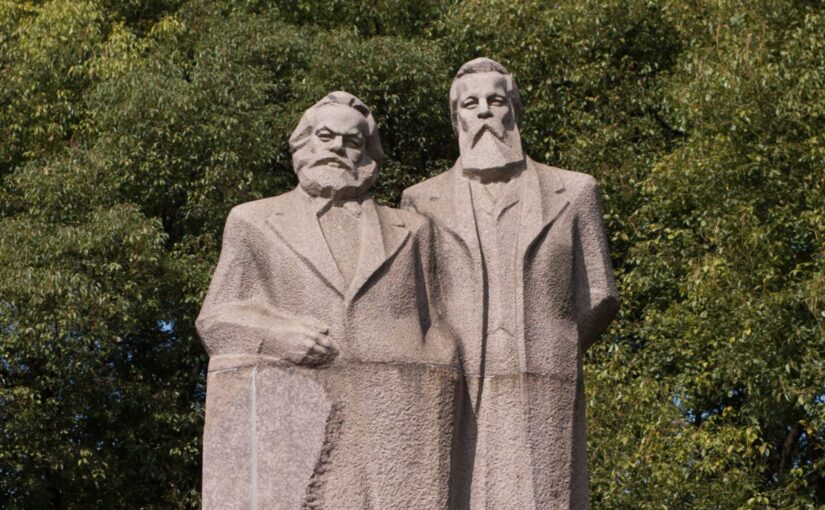
Is Marx still relevant today?

The following article by Zhang Wan, a Current Affairs Commentator at CGTN, has been translated by the Academy of Marxism of the Chinese Academy of Social Sciences and we are publishing it at their request.

It presents the observations and reflections of a number of Chinese and international scholars and political figures, with Xin Xiangyang, head of the Academy of Marxism, noting that, “Although Marx never visited China, his visions and assessments are largely in line with the reality of China.”

Comparing the experiences of China and the former Soviet Union, both Xin and Professor A.V. Lomanov of the Russian Academy of Sciences, draw attention to the crucial importance of the ‘second integration’ advanced by President Xi Jinping, namely that of Marxism with traditional Chinese culture.

The following is the text of the article.

Over a century and a half ago, Karl Marx envisioned that China would eventually experience significant social and economic upheaval as it transitioned from feudalism to a socialist society. The internal contradictions of the feudal system, combined with external pressures from capitalist forces, would lead to class struggles, which would ultimately result in a revolution, thus paving the way for a more equitable social order and shaping its specific path to socialism.

How did Marx foresee the development of Chinese society and its continuous progress? According to Xin Xiangyang, head of the Academy of Marxism of the Chinese Academy of Social Sciences, in 1939, Mao Zedong stated that China’s national condition was a semi-colonial and semi-feudal society. Following that, the Chinese have spent a hundred years with Marxism to understand this condition. “Although Marx never visited China, his visions and assessments are largely in line with the reality of China,” Xin added.

Professor A.V. Lomanov of the Russian Academy of Sciences explains that Marxism evolved in Russia at the end of the 19th century and the early 20th century, where it became known as Leninism. “A new phase began in the 1930s with the Communist Party of China’s adaptation of Marxism, referred to as ‘Marxism with Chinese characteristics’.”

Xin Xiangyang points out that the Communist Party of China has integrated the fundamental principles of Marxism with China’s actual conditions and traditional culture, known as “the two combinations”, achieving the socialist future that Marx envisioned for China’s social development.

Speaking of the weakness of the former Soviet Union, Lomanov believes it was the absence of a “second combination.” “The first combination involved adapting Marxist theory to the specific conditions of the country. However, the second combination, which China pioneered, involved integrating Marxism with traditional culture. In the Soviet context, accepting Marxism often meant rejecting traditional culture, which created a fundamental conflict, akin to mixing fire and water. Soviet culture, particularly shaped by Orthodox Christianity, made it hard to separate the culture of the Soviet Union from its religious roots. Consequently, the Communist Party in the Soviet Union failed to address this area, and this deep cultural foundation – characterised by strong religious elements – remained unresolved until the Soviet Union’s dissolution”, he added.

For thousands of years, Chinese have been striving for the ideals of “Great Harmony” and “The world is for all”. Xin Xiangyang elaborates that these ideals resonate deeply with Marxist concepts of communism and align closely with Marx’s notion of a society where the people are the “protagonists of history.” This emphasis on the people’s role as the foundation of the state parallels the historical Chinese principle of prioritising the well-being of the populace.

Chinese president Xi Jinping has said, “Since the introduction of Marxism to China, scientific socialism has become widely accepted by the Chinese people. It has gone on to take root in this country and delivered impressive results. This is clearly not accidental. It is consistent with the culture and values that our people have taken up and passed on for several thousand years.”

Continue reading Is Marx still relevant today?

10th Asia-Pacific Regional Conference of Solidarity with Cuba held in Beijing

The 10th Asia-Pacific Regional Conference of Solidarity with Cuba was held in Beijing, October 29-30. It was the first time for the conference to be held in China. Hosted by the Chinese People’s Association for Friendship with Foreign Countries (CPAFFC), it also formed part of the celebrations marking the association’s 70th founding anniversary.

The conference called on the United States to lift its crippling blockade on the socialist island as well as its designation as a supposed “terrorist state”. Sun Yi, Deputy Director of the Department of Latin American and Caribbean Affairs at China’s Ministry of Foreign Affairs, said in his address:

“These measures have profound consequences for the people and affect all sectors, including the most sensitive ones, such as health, food and energy.”

Opening the conference, Fernando González, President of the Cuban Institute for Friendship with the Peoples (ICAP), and one of the ‘Cuban Five’ political prisoners held in a US jail from 1998-2014, thanked delegates for all their work in support of Cuba. He underlined the historic ties between China and Cuba, which date back 177 years to the first arrival of Chinese immigrants. Cuba was the first Latin American country to establish diplomatic relations with the People’s Republic of China, following the socialist revolution led by Fidel Castro and Che Guevara, and today China is Cuba’s largest export market.

Dong Huy Cuong, Vice-President of the Vietnam Union of Friendship Organisations (VUOFO), also said that their two countries have close bonds, having “shared the experience of facing a powerful adversary.” Cuba, “inspired others to stand up for national independence. We will never forget Fidel Castro,” who during Vietnam’s ultimately successful struggle against US imperialism declared, “for Vietnam, Cuba is ready to shed its blood,” and was the only head of state ever to visit the liberated areas in south Vietnam.

Senior delegates also attended from old friends of Cuba, Laos and Vietnam, while the largest number of delegates from outside China came from Japan. In all, around 70 delegates from 16 countries and 36 organisations in the Asia-Pacific region participated in the conference.

Speaking to the Cuban news agency Prensa Latina, Edwin De la Cruz, President of the Philippines-Cuba Friendship Society, highlighted the importance of an international movement in support of the Cuban people. “We cannot depend only on governments, it must be a movement of the people, in the streets, in the communities and in the workplaces, because that is the true strength of the international movement against imperialism and all forms of unilateral sanctions.” He also called for unity between countries such as Venezuela, Iran, Nicaragua and the Democratic People’s Republic of Korea.

The meeting also included exchanges of criteria on the best practices of parliamentary groups in solidarity with Cuba, cooperation in support of economic development and the practice of multilateralism to build a community with a shared future.

Among the instances of Cuban international solidarity for which delegates expressed their gratitude were the provision of vaccines and medicines to Cambodia particularly during the COVID pandemic, a literacy program for First Nations in Australia and earthquake relief in Nepal.

The final declaration of the conference declared: “All of us here consider it imperative to strengthen unity, support and cooperation in building a peaceful world with a shared future among our nations. We therefore declare our joint commitment to… support and defend the Cuban Revolution at every opportunity in all possible situations, in our countries, as a demonstration of respect, admiration and solidarity with the dignified Cuban people, starting with practical actions.”

It also called for “an immediate and lasting ceasefire in the Gaza Strip of Palestine, an end to actions that escalate tensions, and measures to alleviate the humanitarian disaster in Gaza,” and said in conclusion:

“We express our special congratulations and deepest thanks to the Chinese People’s Association for Friendship with Foreign Countries (CPAFFC) for the warm hospitality and excellent organisation for the 10th Asia-Pacific Regional Meeting of Solidarity with Cuba. In the year of the commemoration of the 70th Anniversary of the founding of CPAFFC, we would like to extend our best wishes to the Chinese people engaged in national defence and construction.”

We reprint below the full text of the final declaration. It was originally published on the website of the Cuban Foreign Ministry. A report of the meeting was also published by People’s Democracy, the newspaper of the Communist Party of India (Marxist).

The Movement of Solidarity with Cuba of the Asia-Pacific region has held its 10th Regional Meeting of Solidarity with Cuba from 29 to 30 October 2024, in Beijing, People’s Republic of China, with the participation of 70 delegates from 16 countries, representing 36 organizations and groups of friendship and solidarity.

During the discussion sessions, delegates unanimously supported the international demand for an end to the unjust and criminal policy of blockade imposed by the United States Government on the Republic of Cuba for more than six decades, and demanded that Cuba be removed from the unilateral list of countries that sponsor terrorism, since  this false accusation represents the main obstacle to the economic and social development of the Cuban people.

All of us here consider it imperative to strengthen unity, support and cooperation in building a peaceful world with a shared future among our nations. We therefore declare our joint commitment to:

  1. To support and defend the Cuban Revolution at every opportunity in all possible situations, in our countries, as a demonstration of respect, admiration and solidarity with the dignified Cuban people, starting with practical actions.
  2. To demand the immediate permanent, total and unconditional lifting of the economic, financial and commercial blockade, as well as the removal of Cuba from the list of countries allegedly sponsoring terrorism, a measure which increases trade restrictions, hampers economic and social development, creates hardships for the Cuban people and harms the interests of other countries and their citizens who seek relations with Cuba, in flagrant violation of the Charter of the United Nations and international law.
  3. To continue to defend international peace and security, and the integrity and sovereignty of our nations. Cuba, despite having part of its territory illegally occupied with a foreign military base, is the guarantor of world peace and of the Latin American and Caribbean region which was proclaimed a Zone of Peace in Havana ten years ago.
  4. To promote actions of solidarity and cooperation among our organizations and peoples that will make it possible to implement development strategies in those countries that need them most, providing resources and equal opportunities for the shared future that we set out following the example of many nations in the region.
  5. To increase support for the Cuban people in order to benefit health, education and the development of food production systems.
  6. To promote the work of friendship with the new generations, as faithful followers of the dreams of internationalism, collaboration and solidarity among peoples, enhancing the role of graduates of educational institutions in Cuba.
  7. To organize activities during 2024 and 2025 to accompany ICAP in the international events it convenes and organizes, inside and outside Cuba, with the aim of honoring its mission of solidarity as it reaches its 65th anniversary; as well as disseminating the thought and historical legacy of Commander Fidel, the political and ethical paradigm of the peoples of the world in the defense of life and friendship, on the centenary of his birth. 
  8. To call for an immediate and lasting ceasefire in the Gaza Strip of Palestine, an end to actions that escalate tensions, and measures to alleviate the humanitarian disaster in Gaza.

We express our special congratulations and deepest thanks to the Chinese People’s Association for Friendship with Foreign Countries ( CPAFFC) for the warm hospitality and excellent organization for the 10th Asia-Pacific Regional Meeting of Solidarity with Cuba. In the year of the commemoration of the 70th Anniversary of the founding of CPAFFC, we would like to extend our best wishes to the Chinese People engaged in national defense and construction.

Podcast: Celebrating the achievements of Chinese socialism and opposing the New Cold War

We embed below the latest episode of CommieCast, the podcast of the Communist Party of Britain, in which Roger McKenzie (International Editor of the Morning Star), Georgina Andrews (General Secretary of the Young Communist League of Britain) and Carlos Martinez (co-editor of Friends of Socialist China) discuss a range of topics related to China, including their recent visits to the People’s Republic, the achievements of Chinese socialism, the nature of the US-led New Cold War, and the crucial importance of building solidarity with China in the face of imperialist aggression.

The next episode, to be recorded in the coming weeks, will take a deeper dive into the escalating campaign of containment and encirclement of China.

People power crushes South Korean president’s martial law order

In the following article, originally published by the US online journal People’s World, its Managing Editor, CJ Atkins outlines the abortive coup staged December 2-3 by Yoon Suk Yeol, the hard right President of the Republic of Korea (ROK), an incident that carries major ramifications for the entire region and not least for China.

Atkins notes that, “A combination of instant mass street protests, a united parliamentary opposition, and the threat of a nationwide general strike by Korea’s working class snuffed out the attempted return to military rule.”

He analyses in some detail how Yoon’s desperate move came against the backdrop of a steadily mounting class struggle in the face of his anti-working class, anti-women and anti-communist agenda, along with the pervasive stench of corruption surrounding himself, his wife and his political allies.

According to Atkins: “By the time he made the decision to declare martial law on December 3, Yoon essentially had only the arm – and the United States – at his side.

“Alongside 30,000 troops, the US has long stationed nuclear weapons in South Korea, ostensibly as a deterrent against North Korea but in practice also aimed at China. Under Yoon, the arrangement has been beefed up, with US nuclear-armed submarines now docking regularly in South Korean ports and nuclear-capable bombers poised to strike from South Korean airfields. He and his defense officials have even mused about South Korea developing its own nuclear weapons.

“Tying South Korea even tighter into the anti-China coalition has been one of the key foreign policy achievements of the outgoing Biden administration. Winning the American-Japanese-Korean (JAROKUS) trilateral pact, the US-led military alliance aimed at China, was largely credited to Yoon. He dropped South Korea’s longstanding reparations request against Japan for war crimes committed during World War II.

“Helping advance US imperial interests in East Asia earned Yoon praise and strong support from Biden. In February, US Deputy Secretary of State Kurt Campbell claimed Yoon deserved the Nobel Peace Prize, and a short time later, the White House social media team blasted out a gushing video of Yoon singing ‘American Pie’ at a state dinner.

“Yoon’s contempt for democracy and his anti-people policies were already well known in Washington when he was being lauded as such a wonderful ally; no one can claim they didn’t know of his dictatorial proclivities or corruption.”

In conclusion, he writes that:

“While the fallout from Yoon’s coup attempt certainly won’t dislodge South Korea from its firm place in the US imperial orbit, his likely departure from the political scene will rob US imperialism of its key man in Seoul. It’s not clear who might eventually succeed him or whether they will be as keen to continue his belligerent anti-North Korea stance, willingness to buddy up to Japan, or eagerness to pack the Korean peninsula with more nuclear weapons.”

The chaos in Korea—like the genocide in Gaza and the stalemated war in Ukraine—stands as one more item on the list of crises that the Biden administration will leave behind as its foreign policy legacy.

Declaring “emergency martial law” on Tuesday, South Korea’s conservative President Yoon Suk-yeol—known domestically as “K-Trump”—said he was shutting down democracy to combat what he called “shameless pro-North Korean” forces who were “plotting rebellion” and threatening the state.

Less than 48 hours later, however, the president’s coup collapsed, nearly his entire cabinet resigned, and he looked set to only barely survive an impeachment vote (but even that is not guaranteed). A combination of instant mass street protests, a united parliamentary opposition, and the threat of a nationwide general strike by Korea’s working class snuffed out the attempted return to military rule.

Though Yoon’s ditching of democracy and the overwhelming show of people power both caught the world by surprise, the martial law declaration actually capped a crisis that has been building in South Korea for the past few years.

Concentrating mostly on the president’s anti-North Korea foreign policy stances, much of the mainstream corporate media is missing the fuller story here, which is that Yoon’s coup is a sign of the sharpening class struggle in South Korea and poses new uncertainties for U.S. imperial strategy in East Asia.

Continue reading People power crushes South Korean president’s martial law order

“Nothing like before” — China is out-competing the West on EVs

The following article, written by Paweł Wargan for Progressive International, examines the neverending accusations by Western media and politicians regarding China’s putative ‘overcapacity’ in electric vehicles (EVs). Paweł explores the reasons for these accusations, and comprehensively refutes them.

The article observes that China’s industrial utilisation rates and inventory levels are similar to those of the US, and furthermore Chinese profit margins are soaring. These factors indicate that there is no significant overcapacity in China’s EV sector.

As for the notion that China’s rise has caused the decline of Western industry, Paweł points out that the decline of Western manufacturing predates China’s rise. “In the US, the trade balance has seen a sustained deficit since the late 1970s. As the productive structure of its economy shifted, industrial capital made way for financial capital. The number of manufacturing jobs decreased from around 20 million at their peak in 1979 to under 13 million today — a period in which the US saw its population rise by 100 million.”

Describing some of the extraordinary innovations taking place in China’s EV sector – in particular a ‘road-cloud-vehicle’ integration that improves safety and reduces energy use – Paweł comments that “this degree of integration is only possible through control over the entire EV value chain”. Particularly in the light of US-led sanctions and tariffs, “China began to move quickly towards technological sovereignty in all areas, from chips and artificial intelligence to cars and batteries”. As a result, “it competes not only with the automobile industry — historically the domain of the West. It also now competes with the tech giants of Silicon Valley”. Obviously, this speaks to the superiority of a socialist economy where decision-making lies ultimately with the people, rather than a few billionaires.

Paweł writes that the accusations of overcapacity provide a convenient pretext for the West to embark upon its own program of protectionism – exactly what it accuses China of doing – as well as “allowing the Western leadership to blame China for the structural long-term decline of the global capitalist economy”. Alarmingly, the situation also shows that the West would rather sabotage China’s economy and the global green transition than cooperate sensibly with China on the basis of mutual benefit.

Paweł Wargan is an activist, researcher and organiser. He serves as Political Coordinator at the Progressive International, an international coalition of over 100 popular movements, political parties, and unions. He contributed to our conference marking the 75th anniversary of the founding of the People’s Republic of China.

The past year has seen a concerted effort by Western politicians, regime intellectuals, and media stenographers to accuse China of “overcapacity”. The coordinated narrative has accompanied a choreographed escalation in the West’s economic war on China. What is motivating these accusations?

In May 2024, the White House announced a series of new tariffs on Chinese products, including a 100% tax on imports of Chinese electric vehicles (EVs), set to take effect later this year. The European Union followed closely behind. In July, the Commission announced duties ranging from 17.4% to 37.6% on Chinese EV manufacturers. And in August, Canada announced 100% tariffs on Chinese EVs along with 25% tariffs on Chinese steel and aluminium.

The White House insisted that the measures would “protect American manufacturers from China’s unfair trade practices” and ensure that “the future of the auto industry will be made in America by American workers.” The European Commission cited China’s “unfair subsidisation” and Canada warned of the threat of China’s “intentional, state-directed policy of overcapacity”. In this narrative, now choreographed and ritualized across the West, China’s “overcapacity” is to blame for the West’s rising trade deficits and persistent inability to reindustrialize.

China has responded firmly to these accusations. In a meeting with French President Emmanuel Macron and the European Commission’s Ursula von der Leyen in May, Chinese President Xi Jinping said that there is no such thing as “China’s overcapacity problem”, and emphasised China’s contribution to the green transition. China’s Foreign Ministry said that the “overcapacity” thesis was a “pretext” to create new restrictions on China’s energy products.

China’s “overcapacity” and the West’s industrial decline

Overcapacity can be measured in three ways. First, we can look at the “capacity utilization rate”, or the degree to which available industrial capacity is being used. Second, we can look at inventory levels; a high number of unsold goods gathering dust in warehouses might suggest that production exceeds demand. Third, we can look at profit margins, which would have to fall to help empty the brimming warehouses and make way for new goods.

As French economics commentator Arnaud Bertrand found, China does not show signs of “overcapacity” across any of these measures. On the contrary, its industrial utilization rates and inventory levels are similar to those of the United States, and Chinese profit margins are soaring.

Continue reading “Nothing like before” — China is out-competing the West on EVs

Assessing recent high level encounters between Britain and China

In the following article, which was originally published by the Morning Star, Kenny Coyle assesses the significance of two recent high level encounters between Britain’s new Labour government and China, namely Foreign Secretary David Lammy’s China visit in October and Prime Minister Keir Starmer’s meeting with President Xi Jinping the next month, in the margins of the G-20 Summit in the Brazilian city of Rio de Janeiro.

Comparing and contrasting the Chinese and British read outs of the two meetings, Kenny notes how Chinese Foreign Minister Wang Yi rebuffed Lammy’s attempts to interfere in China’s internal affairs, forcing him, with what Kenny wittily describes as a “double-Lammy”, into stating that: “Britain  remains steadfast in honouring its commitment to the Taiwan question since the establishment of diplomatic relations and will stick to it in the long term.”

Kenny then spells out exactly what this means: “Although you wouldn’t know from Britain’s readout, which does not mention Taiwan even once, Wang Yi made Lammy squirm. The British side essentially had to reiterate longstanding British policy, dating back to 1972 in the [Sir Edward] Heath era, where Lammy’s predecessor as foreign secretary, Sir Alec Douglas-Home, stated to the House of Commons that: ‘The government of the United Kingdom acknowledge the position of the Chinese government that Taiwan is a province of the People’s Republic of China.

“‘Both the government of the People’s Republic of China and Taipei maintain that Taiwan is a part of China. We held the view both at Cairo and at Potsdam that Taiwan should be restored to China. That view has not changed. We think that the Taiwan question is China’s internal affair to be settled by the Chinese people themselves.’”

It need only be added that given Lammy’s general level of (in)competence and manifest unsuitability for his current position, it is highly likely that he was utterly clueless as to what Alec Douglas-Home might have said on the matter when the two countries established full diplomatic relations. It is at least equally likely that Douglas-Home’s knowledge of the international agreements forged towards the end of World War II was considerably superior to that of the present Foreign Secretary.

Kenny also focuses on the absence of any mention of Xinjiang in the British read out of Starmer’s meeting with President Xi, let alone of any question of supposed genocide in the Chinese autonomous region, a preposterous charge that the hapless Lammy in particular was previously all too happy to bandy about.

As Kenny notes: “The current and previous British governments stand accused of complicity in a televised, live-streamed genocide, namely the one in Gaza. Starmer’s own rancid apologetics for Israeli war crimes is a matter of public record.”

Indeed, it was in the same month as Starmer’s meeting that 37 rights organisations excoriated Lammy’s wilful obfuscation and denial with regard to the all too real ongoing genocide in Gaza. (The full text and list of signatories may be found here.)

Similarly, and ironically on the very day that Starmer met Xi, William Schabas, former president of the International Association of Genocide Scholars and the author of more than 20 books on genocide and other international law topics, lacerated both Starmer and Lammy for their denial of the Gaza genocide. He told Middle East Eye:

 “These people are hypocrites. They speak with a forked tongue. They do not interpret or apply the Genocide Convention in a consistent manner.”

Regarding the situation in Xinjiang, he added: “There is no serious evidence of killings. Not millions. None. The treatment of Uyghurs in China and that of Palestinian Arabs cannot be compared.”

TWICE over the past two months, senior British government figures have met with their Chinese counterparts. The first encounter was Foreign Secretary David Lammy’s meeting with Chinese foreign policy chief Wang Yi in Beijing in October; the second was the talk between Prime Minister Keir Starmer and Chinese President Xi Jinping at the G20 summit in Rio de Janeiro in Brazil in November.

As is usual with high-level diplomatic bilateral meetings, the full transcripts of the discussions have not been disclosed. Aside from initial pleasantries and photo opportunities, the substantial items of these bilateral talks are always private and confidential.

What we can glean from these two meetings for now is set out in the official “readouts” issued by each government. These readouts are usually predictably formulaic. First, each side indulges in diplomatic pleasantries, second, they highlight areas of broad agreement, and then subtly, the readout may mention issues of disagreement. Finally, it often ends with anodyne suggestions along the lines of “We really should catch up more.”

A careful inspection of the readouts of Lammy’s meeting with Wang Yi and the Starmer-Xi Rio talks is helpful for revealing not just what they say but what they don’t.

If we look at Britain’s Foreign, Commonwealth and Development Office (FDCO) interpretation of the October Lammy meeting, it starts positively enough. It sets out shared aims of “achieving the global green transition” and “promoting secure and resilient growth through increased trade and investment, which creates jobs, drives innovation, boosts productivity and provides economic stability and certainty” for the British economy. They agreed that Britain and China can support both countries” growth objectives.”

Britain’s readout then moves on to obvious areas of difference on the Nato-Russian war in Ukraine and the crises in west Asia (Middle East).

“The Foreign Secretary urged Wang Yi to take all measures to investigate and to prevent Chinese companies from supplying Russia’s military. The Foreign Ministers agreed to continue to discuss this and other broader foreign policy issues, such as the ongoing conflict in the Middle East.”

No mention of preventing Britain from supplying Israel’s military, of course, but no big surprises here.

Then Lammy unwisely turns to China’s internal affairs.

“Human Rights were discussed, including in Xinjiang, and the Foreign Secretary referenced this as an area in which Britain and China must engage, even where viewpoints diverge. Hong Kong is a shared interest, and the Foreign Secretary raised serious concerns around the implementation of the National Security Law and the ongoing treatment of British national Jimmy Lai, again calling for his release.”

How does China’s readout of the same meeting compare? Beijing’s Ministry of Foreign Affairs note largely agrees with the FCDO on the obvious benefits of co-operation rather than conflict.

“The British Labour government has put forward the proposal to develop a long-term, stable and strategically significant relationship with China. The Chinese side has positively evaluated this proposal, as it conforms to the historical logic and practical needs of the bilateral relationship, serves the fundamental interests of the two peoples, and aligns with the historical trend and the international situation.”

But then comes the pushback. First of all, Wang Yi gently reminds Britain’s Foreign Secretary that an MP for Tottenham lecturing China on Chinese soil about Chinese issues is hardly conducive to the “bilateral engagement” that Britain leaders claim to seek.

“Noting that Taiwan and Hong Kong affairs are China’s internal affairs, and non-interference in internal affairs is a fundamental principle of international relations, Wang said both sides should respect each other’s concerns, strengthen dialogue on the basis of equality, enhance understanding, and create an atmosphere for communication and co-operation.

Then the Chinese move in for the second strike, a double-Lammy, if you will.

“Britain remains steadfast in honouring its commitment to the Taiwan question since the establishment of diplomatic relations and will stick to it in the long term, Lammy said.”

Although you wouldn’t know from Britain’s readout, which does not mention Taiwan even once, Wang Yi made Lammy squirm. The British side essentially had to reiterate longstanding British policy, dating back to 1972 in the Heath era, where Lammy’s predecessor as foreign secretary, Sir Alec Douglas-Home, stated to the House of Commons that: “The government of the United Kingdom acknowledge the position of the Chinese government that Taiwan is a province of the People’s Republic of China.

“Both the government of the People’s Republic of China and Taipei maintain that Taiwan is a part of China. We held the view both at Cairo and at Potsdam that Taiwan should be restored to China. That view has not changed. We think that the Taiwan question is China’s internal affair to be settled by the Chinese people themselves.”

Naturally, this does not sit well with the increasingly visible and well-funded Taiwan-separatist lobby at Westminster. It shows, of course, that what British leaders tell China is not necessarily what they tell the British people.

Tellingly, Lammy downgraded the Xinjiang question from one of alleged and utterly unproven “genocide,” a pre-election position held by the Parliamentary Labour Party, to the vague but unimpeachable appeal to human rights.

The Downing Street readout on the November 18 Rio summit was terse, just eight paragraphs. This is the key one.

“The Prime Minister said that he also wanted to engage honestly and frankly on those areas where we have different perspectives, including on Hong Kong, human rights and Russia’s war in Ukraine.”

No mention of Xinjiang at all, nor of Israel’s genocide in Gaza, not even Taiwan.

A number of commentators have assumed that the policy shift on Xinjiang is related purely to the Starmer government’s hope to reset economic relations with Beijing, see for example, “Labour backtracks on Uighur ‘genocide’ stance as Lammy heads to China” (Daily Telegraph, October 17). However, given Britain’s continued utilisation of the Hong Kong situation, this is unlikely to be the whole story.

One other explanation is that the Xinjiang genocide propaganda simply hasn’t worked where it was supposed to. The majority Muslim countries of west, central and south-east Asia have, more often than not, expressed guarded support or at least sympathy for China’s view that one key factor in the Xinjiang question is the role of global Islamist extremist networks and terrorist groups.

Uighur terrorists have been apprehended as far afield as Thailand and Indonesia, for example. The recent resurgence of terrorist attacks in Syria’s Aleppo region, which by sheer coincidence synchronised with the Lebanon-Israel ceasefire, involves armed groups drawn from several Turkic-speaking terror groups. These include Chinese Uighur fighters from the Al Qaida-linked Katibat al Ghuraba al Turkistan (KGT).

Or perhaps, just as with the allegations of Tibetan genocide, which notably intensified in the run-up to the Beijing Olympics in 2008 and then gradually dissipated, there is neither the evidence nor continuing credulity to sustain these propaganda projects.

However, there may be yet another rather more obvious reason.

The current and previous British governments stand accused of complicity in a televised, live-streamed genocide, namely the one in Gaza. Starmer’s own rancid apologetics for Israeli war crimes is a matter of public record.

Whether through shame, embarrassment, or guilt, the British Prime Minister and Foreign Secretary have good reason to drop the term genocide from their anti-China rhetoric. It seems Starmer and Lammy, or their advisers, are fully conscious of this absurd and self-incriminating juxtaposition.

Xi Jinping holds talks with Cambodia’s senate president Hun Sen

Veteran Cambodian leader Samdech Techo Hun Sen, who is currently the President of the Cambodian People’s Party (CPP) as well as of the country’s Senate, paid an official goodwill visit to China, December 2-4, at the invitation of the Communist Party of China (CPC).

Chinese President Xi Jinping, who is also General Secretary of the CPC Central Committee, met with Hun Sen on December 3 and called for firm mutual support to consolidate the ironclad friendship between the two countries. He said that China has always regarded Cambodia as a high priority in its neighbourhood diplomacy and is willing to work together with the country to build a high-quality, high-level and high-standard China-Cambodia community with a shared future in the new era.

Xi called on both sides to deepen exchanges and mutual learning to seek common development. He said the CPC is willing to strengthen strategic communication and cooperation in cadre training with the CPP, and to assist Cambodia in exploring a development path that aligns with its national conditions.

Against the backdrop of an international landscape fraught with instability, change and various global challenges, Xi added, China will continue to support Cambodia in playing a greater role in international and regional affairs, and help boost the strength of the Global South.

He expressed China’s support for ASEAN (the Association of South East Asian Nations) to adhere to its strategic autonomy and its opposition to external forces introducing Cold War mentality into the region. China is ready to work with Cambodia with firm determination to strengthen collaboration and coordination, and jointly address various risks.

Noting that the Cambodia-China friendship has withstood the test of history and time, Hun Sen expressed his country’s gratitude to China for its invaluable support and assistance in Cambodia’s political, economic, and social development over the years. He added that China is Cambodia’s most trusted friend. Friendship with China is a consensus within the CPP, which will not undergo any changes with intergenerational leadership transitions in Cambodia, he added.

The following day, Hun Sen met with Zhao Leji, a member of the Standing Committee of the Political Bureau of the CPC Central Committee and Chairman of the National People’s Congress (NPC) Standing Committee, who noted that the building of the China-Cambodia community with a shared future has entered a new era of high quality, high level and high standard.

Hun Sen said that Cambodia-China cooperation is of great significance to Cambodia’s economic development and poverty alleviation. Cambodia will deepen all-round friendly cooperation with China and firmly push forward the building of a Cambodia-China community with a shared future.

On December 2, he had met with Wang Huning, a member of the Standing Committee of the Political Bureau of the CPC Central Committee and Chairman of the National Committee of the Chinese People’s Political Consultative Conference (CPPCC).

Hun Sen spoke highly of China’s development achievements under the leadership of the Communist Party of China. He said that Cambodia and China are iron-clad friends, and that Cambodia is willing to strengthen exchanges and cooperation with China in various fields, provide firm mutual support, work together to meet challenges, and promote the building of a Cambodia-China community with a shared future.

The following articles were originally published by the Xinhua News Agency.

Xi holds talks with Cambodia’s senate president Hun Sen

BEIJING, Dec. 3 (Xinhua) — Xi Jinping, general secretary of the Communist Party of China (CPC) Central Committee and Chinese president, held talks with Cambodian People’s Party (CPP) President and Senate President Samdech Techo Hun Sen in Beijing on Tuesday, calling for firm mutual support to consolidate the ironclad friendship between the two countries.

Xi said China has always regarded Cambodia as a high priority in its neighborhood diplomacy and is willing to work together with Cambodia to build a high-quality, high-level and high-standard China-Cambodia community with a shared future in the new era.

Xi called on both sides to deepen exchanges and mutual learning to seek common development. He said the CPC is willing to strengthen strategic communication and cooperation in cadre training with the CPP, and to assist Cambodia in exploring a development path that aligns with its national conditions.

The two sides should seize opportunities to make new progress in win-win cooperation, Xi said, adding that China is ready to work with the Cambodian side to continuously enrich the “Diamond Hexagon” cooperation framework, and promote the effective implementation of key cooperative projects.

Against the backdrop of an international landscape fraught with instability, change and various global challenges, Xi said, China will continue to support Cambodia in playing a greater role in international and regional affairs, and help boost the strength of the Global South.

Xi expressed China’s support for the ASEAN to adhere to its strategic autonomy and its opposition to external forces introducing Cold War mentality into the region. China is ready to work with Cambodia with firm determination to strengthen collaboration and coordination, and jointly address various risks, he added.

Noting that the Cambodia-China friendship has withstood the test of history and time, Hun Sen expressed Cambodia’s gratitude to China for its invaluable support and assistance in Cambodia’s political, economic, and social development over the years.

Continue reading Xi Jinping holds talks with Cambodia’s senate president Hun Sen

Remains of 43 Chinese Korean War martyrs returned to China

On November 28, the remains of 43 Chinese People’s Volunteers (CPV) soldiers who died during the War to Resist US Aggression and Aid Korea (1950-1953) were returned to China from the Republic of Korea (ROK).  A Chinese People’s Liberation Army Air Force plane carried the remains of the fallen soldiers and 495 of their personal effects from Incheon International Airport in the ROK to Taoxian International Airport in Shenyang, capital of northeast China’s Liaoning Province.

After the ROK handed over the martyrs’ remains and belongings to the Chinese side, China held a memorial ceremony at Incheon International Airport, during which the Chinese national anthem was played, and each casket was draped with the national flag. Attendees bowed three times to the martyrs before their remains were placed onto the plane.

From 2014-2023, China and the ROK, in accordance with international laws and humanitarian principles, successfully completed 10 consecutive handovers involving the remains of 938 CPV martyrs, along with related artifacts.

The Korean War broke out in June 1950, eight months after the People’s Republic of China was founded. At the request of the Democratic People’s Republic of Korea (DPRK), Chinese ground forces under the CPV banner entered the Korean peninsula on October 19, 1950. A total of 2.9 million CPV soldiers joined the war that lasted almost three years and more than 360,000 were killed or injured.

Describing the atmosphere surrounding the martyrs’ return, the Xinhua News Agency reported:

“The flight from Incheon to Shenyang lasted about an hour and 20 minutes, but for many of the martyrs, this journey home spanned almost seven decades. In the past few days the city of Shenyang has been decorated with slogans that read ‘welcome back, our heroes’.

“As the Y-20 military transport aircraft prepared to land at Shenyang airport, the air traffic control tower transmitted a heartfelt message: ‘The mountains and rivers remain intact, our country is prosperous, and our military is strong. With the utmost respect, we welcome the loyal martyrs back home.’”

The Xinhua report further noted: “The ceremony was also livestreamed online. Among the viewers were faculty and students of a primary school in Shenyang, which was named after CPV martyr Mao Anying, the son of late Chinese Chairman Mao Zedong. In memory of the martyrs, the students had selected personal gifts to take to the martyr’s cemetery at a later date.”

The remains of the 43 martyrs were laid to rest in a solemn ceremony the following day.

The following articles were originally published by the Xinhua News Agency.

China Focus: Remains of 43 Chinese martyrs in Korean War returned to homeland from ROK

SHENYANG, Nov. 28 (Xinhua) — The remains of 43 Chinese People’s Volunteers (CPV) soldiers who died during the War to Resist U.S. Aggression and Aid Korea (1950-1953) were returned to China on Thursday from the Republic of Korea (ROK).

At 12:07 p.m., a Chinese People’s Liberation Army Air Force Y-20 transport aircraft, carrying the remains of the fallen soldiers and 495 of their personal effects, landed at Taoxian International Airport in Shenyang, capital of northeast China’s Liaoning Province.

The plane’s touch down was met with a water cannon salute, as soldiers carried the caskets off the plane before a remembrance ceremony was held at the airport.

Nearly 1,000 people, including representatives from central and local authorities, the military, war veterans, and relatives of CPV martyrs, attended the ceremony.

Following the placement of the caskets, which were covered with the Five-star Red Flag, the participants bowed three times in dignified silence to the soldiers’ remains.

The remains will be laid to rest in a martyrs’ cemetery in Shenyang.

After the ROK handed over the martyrs’ remains and belongings to the Chinese side in Incheon on Thursday morning, China held a memorial ceremony at Incheon International Airport. During the ceremony, the Chinese national anthem was played, and each casket was draped with the national flag. Attendees bowed three times to the martyrs before their remains were placed onto the plane.

From 2014 to 2023, China and the ROK, in accordance with international laws and humanitarian principles, successfully completed 10 consecutive handovers involving the remains of 938 CPV martyrs in the ROK, along with related artifacts.

Continue reading Remains of 43 Chinese Korean War martyrs returned to China

Xi calls for advancing strategic partnership of cooperation with Nepal

Prime Minister of Nepal KP Sharma Oli paid an official visit to China from December 2-5 at the invitation of his Chinese counterpart Premier Li Qiang.

On December 3, Oli, who is also the Chairman of the Communist Party of Nepal (Unified Marxist Leninist) (CPN-UML) met with Chinese President Xi Jinping.

Xi expressed appreciation for Oli’s firm commitment to promoting friendship between the two sides over a long period of time. He added that China and Nepal, linked by the same mountains and rivers, are good neighbours, good friends and good partners, and bilateral relations have maintained sound and steady development.

Noting that next year marks the 70th anniversary of the establishment of diplomatic relations, Xi said China places Nepal in an important position in its neighbourhood diplomacy and is willing to work with Nepal to consolidate their traditional friendship and push for new progress in advancing the China-Nepal strategic partnership of cooperation featuring ever-lasting friendship for development and prosperity.

Stressing that China respects Nepal’s choice to follow a development path suited to its national conditions, he said that China supports Nepal in safeguarding its national independence, sovereignty and territorial integrity.

Oli said that as a friend of China, Nepal is deeply proud of and inspired by China’s remarkable development achievements and hopes to learn from China’s experience to boost its own development.

The Nepalese Prime Minister also met with Premier Li Qiang the same day.

Li said that since the establishment of diplomatic ties nearly 70 years ago, China-Nepal relations have maintained sound and steady development. In 2019, in particular, the bilateral relationship was elevated to the strategic partnership of cooperation featuring ever-lasting friendship for development and prosperity, which has driven the vigorous expansion of exchanges and cooperation in various fields between the two sides and brought tangible benefits to the two peoples.

China firmly supports Nepal in exploring a development path suited to its national conditions and stands ready to enhance the synergy of development strategies with Nepal, leverage the leading role of high-quality Belt and Road cooperation in bilateral cooperation, actively expand two-way trade and investment, and strengthen connectivity at ports, roads, railways and airlines.

Oli also met on December 3 with Zhao Leji, Chairman of the National People’s Congress (NPC) Standing Committee.

A Joint Statement was issued by the two countries.

The two sides agreed that since the establishment of diplomatic relations between China and Nepal in 1955, the bilateral relationship has enjoyed sustained, stable and healthy development. In particular, President Xi Jinping paid a historic state visit to Nepal in 2019, during which the relationship was upgraded to a Strategic Partnership of Cooperation Featuring Ever-lasting Friendship for Development and Prosperity, taking China-Nepal relations into a new historical stage.

As the year 2025 marks the 70th anniversary of the establishment of diplomatic relations between China and Nepal, the two sides comprehensively discussed the ways and means to make the celebration of the anniversary a momentous one. They are ready to take this opportunity to further accelerate the implementation of the important common understandings reached by the leaders of the two countries, maintain high-level exchanges, strengthen political mutual trust, and deepen and expand mutually beneficial cooperation in various fields on the basis of the Five Principles of Peaceful Coexistence and the principle of good neighbourliness and friendship, so as to further grow bilateral relations to the benefit of the two countries and peoples in the spirit of a community with a shared future.

The Nepali side warmly congratulated the Chinese side on the 75th anniversary of the founding of the People’s Republic of China, highly commended the remarkable achievements made by China in the new era and expressed support for China’s efforts to build a great modern socialist country in all respects and achieve national rejuvenation through the Chinese path to modernisation.

The Chinese side spoke highly of the efforts made by the government of Nepal to maintain political stability and promote economic and social development and wished the Nepali people an early realisation of the national aspiration of “Samriddha Nepal, Sukhi Nepali” (“Prosperous Nepal, Happy Nepali”).

The two sides agreed to strengthen the synergy of their development strategies and pursue deeper and even more concrete high-quality Belt and Road cooperation. They expressed their readiness to sign the MoU on building the Trans-Himalayan Multi-Dimensional Connectivity Network and the Framework for Belt and Road Cooperation between the two Governments as soon as possible. Both sides expressed their commitment to strengthening connectivity between the two countries in such areas as ports, roads, railways, aviation, power grids and telecommunication, to help Nepal transform from a land-locked country to a land-linked country.

The Nepali side expressed its appreciation to China for granting Nepal, as one of the least developed countries, zero-tariff treatment under 100 percent tariff lines. China welcomes Nepal to further expand the export of high-quality agricultural products to China.

Continue reading Xi calls for advancing strategic partnership of cooperation with Nepal

People over profit: How China is tackling climate change

The article below, written by Scott Scheffer for Struggle for Socialism, provides an overview of China’s remarkable progress in recent years in developing renewable energy and electric transport, and the role played by socialism in this process.

What China has accomplished shows how people’s ownership of the world’s productive forces, instead of a tiny clique of billionaires owning everything, will solve this planetary crisis.

Scott discusses the global impact of China’s innovation and investment in renewable energy. The production cost of wind and solar power has reduced drastically over the last decade, primarily a function of China-led economies of scale. The impact of this on the Global South is transformative: “For instance, a struggling country in Africa, Latin America, or Asia relying on coal for energy can now replace a decrepit coal-fired power plant with a solar or wind farm more cheaply than repairing or replacing that coal plant.”

Scott further notes that the Communist Party of China (CPC) has “taken the significant step of incorporating environmental protection into both its party constitution and the constitution of the People’s Republic of China”. The nature of China’s socialist system is such that, in its pursuit of an ecological civilisation, the Chinese government “does not face opposition from super-rich monopoly corporations” and can therefore direct its efforts to meeting the needs of people and planet. Scott concludes:

2024 will prove to be the hottest year on record globally. Alongside the horrors of the genocide in Gaza and the U.S. proxy war against Russia, capitalism has dished out the most punishment of the planet in recent memory. Only socialism can end imperialist war and save the planet.

It’s so fitting that just after the 75th anniversary of China’s revolution on Oct. 1, a milestone in China’s efforts to deal with greenhouse gas emissions (GHGs) has emerged in the narrative surrounding global warming. What they have accomplished shows how people’s ownership of the world’s productive forces, instead of a tiny clique of billionaires owning everything, will solve this planetary crisis.

Climatologists and scientists widely recognize that China will likely reach its peak greenhouse gas emissions in 2024, although further research will be needed to confirm this with complete accuracy. If the data ultimately shows that the peak does not occur in 2024, it is almost certain to happen in 2025. Even in that case, China would still achieve peak emissions five years earlier than its official target, which President Xi Jinping announced at the 2020 UN General Assembly. This target aimed to reach peak emissions by 2030.

Other countries have reached peak emissions as well, but because China is so huge, UN figures and climatologists are buzzing with excitement over this development. It has great implications for the entire world, particularly for the Global South. 

U.S. corporate media often portray China’s crowning achievement as a problem rather than progress.

Mass production of renewables

Chinese mass production of renewable energy components — wind and solar — has driven down the prices globally. It isn’t just the solar panels on rooftops that millions are aware of; China has developed renewables on an industrial scale — wind and solar farms built at much lower costs and capable of supplying energy for cities and industry. 

What this means to the Global South cannot be overstated. For instance, a struggling country in Africa, Latin America, or Asia relying on coal for energy can now replace a decrepit coal-fired power plant with a solar or wind farm more cheaply than repairing or replacing that coal plant. 

The flaw of wind and solar power’s intermittent availability is still there. China is still running coal plants in its territory as a backup for those times when the sun goes down, or the wind stops. 

On average, Chinese coal plants run half the time or less. This simple first step provided what seems to be an outsized result, and it can be replicated where it is needed in the Global South until the intermittency problem with renewables is resolved via other methods. 

Continue reading People over profit: How China is tackling climate change

China-Peru friendship blossoms with Xi Jinping visit

From November 13-17, Chinese President Xi Jinping visited Peru at the invitation of his Peruvian counterpart Dina Ercilia Boluarte Zegarra, to attend the 31st APEC [Asia Pacific Economic Cooperation] Economic Leaders’ Meeting and to pay a state visit to the country. He then visited Brazil from November 17-21 at the invitation of President Luiz Inácio Lula da Silva to attend the 19th G20 Summit and pay a state visit.

Immediately prior to his Peruvian visit, Xi published an article in the El Peruano newspaper entitled, “China-Peru Friendship: Setting Sail Toward an Even Brighter Future”.  He noted that:

“It is widely believed in the archaeology communities of China and other countries that the Chinese civilisation and the civilisations of the Americas were in fact created by descendants of the same ancestors at different periods and in different locations,” and added:

“Peruvian thinker José Carlos Mariátegui once said, ‘Spiritually and materially, China is closer to us than Europe. The psychology of our people is more Asian than Western.’ This is the ‘code of civilisation’ that explains the inseparable bond between immigrants of Chinese origin and the local people, forged through seamless integration and familial ties over the past 175 years.”

Xi’s reference to Mariátegui is of special significance. In his speech to our September 28 conference marking the 75th anniversary of the founding of the People’s Republic of China, Dr. Francisco Dominguez noted:

In 1959, Lui Shaoqi, a leader of the revolution said, the Chinese revolution exerts a formidable ‘attraction for the peoples of backward countries that have suffered, or are suffering, imperialist oppression. They feel that they should also be able to do what the Chinese have done.’

A similar strategy had been put forward in Latin America by Peruvian Marxist, José Carlos Mariátegui as early as 1928. He argued that due to its backward nature, the nations in Latin America had a weak, small and dependent bourgeoisie, subordinated to the landed oligarchy and imperialism, therefore, unable and unwilling to undertake the carrying out of the national democratic tasks to modernise society to fully develop capitalism. Thus, the only way to carry through the national democratic tasks was by a socialist revolution led by the proletariat enjoying hegemony over the majority peasantry with land reform as the sine qua non condition of its success.

Mariátegui posited that the peasantry could play a revolutionary role based on its traditions of primitive agrarian communalism. For him, proletarian leadership meant a Marxist party to lead the revolutionised peasantry and the working class to carry out a socialist revolution to accomplish the national democratic tasks (especially land reform) and move simultaneously to the setting up a proletarian state.

In his introduction to the Selected Works of José Carlos Mariátegui, published by Iskra Books, editor and translator Christian Noakes writes:

Considered by many to be the father of Latin American Communism, he is celebrated for being the first person to utilise Marxist methods of analysis in order to better understand concrete reality in Peru and for carving a path to revolution based off of these particular historical conditions. As such, he was one of the first Latin American socialists to acknowledge the revolutionary potential of the peasantry and Indigenous peoples… His influence on revolutionaries in Nicaragua and Cuba has been particularly pronounced.

Xi Jinping goes on to state that: “Peru is one of the first Latin American countries to establish diplomatic relations with the People’s Republic of China. For over 50 years, our bilateral relations have been progressing steadily… It is also among the first in Latin America to participate in cooperation under the Belt and Road Initiative (BRI). China has been Peru’s largest trading partner and largest export market for 10 consecutive years. Last year, Peru’s exports to China accounted for 36 percent of its total exports.” (China and Peru established diplomatic relations on November 2, 1971, during the anti-imperialist and progressive presidency of Juan Velasco Alvarado.)

As a major BRI project, Xi’s visit also saw the inauguration ceremony of Chancay Port: “This is not only an important project under Belt and Road cooperation, but also the first smart port in South America. The first phase of the project, when completed, will reduce the sea shipping time from Peru to China to 23 days, thus cutting logistics costs by at least 20 percent. It is expected to generate US$ 4.5 billion in yearly revenues for Peru and create over 8,000 direct jobs… The port’s development plan also includes establishing animal rescue services to fulfil its social responsibility for the rescue and protection of penguins, seals, and birds and to improve the environment of wetlands, beaches, and habitats.”

Continue reading China-Peru friendship blossoms with Xi Jinping visit

Reflecting on the history of solidarity between the peoples of China and Wales

The Communist Party of Britain (CPB) held its Welsh national congress in Pontypridd on November 30, 2024.

In addition to summing up its work since its last Congress, analysing the current situation in Wales and charting its path ahead in the next period, it welcomed Liz Payne from the CPB’s Executive Committee, along with four guest speakers, namely:

  • Beth Winter, Labour MP for Cynon Valley, 2019-2024, who recently resigned her Labour membership in protest at the party’s steady rightward trajectory under Keir Starmer
  • Owain Meiron from Cymdeithas yr Iaith Gymraeg (the Welsh Language Society)
  • Twm Draper from Cymru Cuba; and
  • Keith Bennett from Friends of Socialist China

In his contribution, Twm said in part:

I was lucky enough to visit Cuba for May Day in 2022 as part of a Young Workers Trade Union delegation. I had the opportunity to see firsthand the benefits a socialist country can bring. One example was the creation of vaccines to protect people against Covid and sharing their supplies with developing countries. A true sign of solidarity and internationalism.

We also heard about how the Young Communist League in Cuba was at the forefront during lockdowns, helping their neighbours in isolation to get essentials whilst keeping the community safe.

May Day had to be the highlight of the trip and something I’ve never experienced before or since. The march saw close to one million workers being celebrated for their contributions to society and every role was seen as equally important. The respect for workers and the importance of union organisation could be seen in all aspects of society.

Whilst this brought me hope that a different future is possible in Britain, it was clear how the inhumane 64-year-old US blockade impacts Cuban lives on a daily basis.

Whilst Cuban doctors were able to create five Covid vaccines, this was out of necessity because the US blockade played with Cuban lives, preventing them getting medical supplies such as needles to administer the vaccines.

At the beginning of this month, Cuba was without electricity for a second time in a matter of weeks following another hurricane. Due to the US blockade, Cuba was unable to import repair parts or fuel, leaving millions without electricity

These are just a couple of examples of many where the US blockade impacts Cubans’ lives daily. And despite everything Cuba is faced with, they remain true to their internationalist values of sharing the resources and expertise that they have with the rest of the world.

We have been promoting and enjoying the people’s release of ‘Comrade Tambo’s London Recruits’ this week. Cuba was at the forefront of internationalist action. In the words of Nelson Mandela, ‘if it were not for Cuba, I would not be a free man today.’”

In his contribution, Keith focused on outlining some of the history of people-to-people ties between Wales and China and of the mutual support and solidarity between the working class and peoples of the two nations.

The main congress resolution, adopted unanimously, identified one of the party’s priorities in the coming period as being to: “Improve and increase the work of the Communist Party in the peace and international solidarity movements in Wales, not least through Stop the War Cymru, CND Cymru, the Palestine Solidarity Campaign, Cymru-Cuba and Friends of Socialist China.”

We publish the text of Keith’s remarks below. A report on the congress was published by the Morning Star.

Dear Comrades

First, on behalf of Friends of Socialist China, I would like to extend warmest greetings to all members of the Communist Party in Wales. Thank you for the invitation to attend your Congress and to make a presentation. We wish success to all your deliberations.

Friends of Socialist China is a young organisation. We were set up in May 2021, with the goal of supporting the People’s Republic of China and spreading understanding of Chinese socialism. We have, throughout, enjoyed excellent working and comradely relations with the Communist Party of Britain, along with the Young Communist League and the Morning Star. One of our very first activities was a joint webinar, organised with the Morning Star, to celebrate the centenary of the Communist Party of China, held on July 3, 2021.

With China playing an ever more important role in the world, with its continuing advance along the road to socialism, as well as the daily more acute international situation, not least the new Cold War, we believe that the need for an organisation such as ours has never been greater.

I could speak further about this, but you can find plenty of material on our website, socialistchina.org, in the books and pamphlets available at the back, including ‘The East is still Red’, written by my comrade Carlos Martinez and ‘People’s China at 75: The Flag stays Red’, as well as in the regular excellent features and editorials in the Morning Star, including today’s centre spread on ‘China’s bridges to a socialist future’.

Continue reading Reflecting on the history of solidarity between the peoples of China and Wales

Understanding the role of BRICS+ in global progress

In the following important article, Dr. Jenny Clegg sets out and responds to eight key criticisms and questions concerning the BRICS+ cooperation mechanism – its nature, significance and role -and argues that, in representing a significant challenge to US hegemony, it contributes to the movement towards a multipolar world.

Noting that, the rise of the BRICS+ has divided left opinion, Jenny writes that: “Critics see, at best, a collection of disorderly capitalist states which, tied to the dollar and lacking political coherence, are in no position to form a real alternative to the existing global order and, in fact, do not even aspire to do so.” She acknowledges that: “The significance of BRICS+ should not be exaggerated: they are in no position to serve as a counterweight to the advanced capitalist states.”

However, “BRICS+ is, in fact, the driver of global growth. In the last 10 years, China and India alone comprised 47 per cent of world growth; now, according to the IMF, the average growth of the BRICS+ this year will be close to 4 per cent while the sluggish G7 barely makes 1 per cent.”

And whilst “talk of dedollarisation has indeed been overhyped… the group is developing a sanctions-proof cross-border payments system and has seen a notable increase in intra-BRICS trading in local currencies, greatly reducing losses in exchange rate charges and currency fluctuations. With BRICS+ partners now added to the scheme, potentially 30-plus per cent of global trade could begin to transition away from using the dollar.”

Turning to the accusation that “the larger BRICS+ members are just pursuing sub-imperialist and neo-imperialist agendas,” whilst acknowledging that “ambitions of national aggrandisement are at play among some of the more powerful BRICS members”, she argues that, “BRICS+ has emerged amidst a rise in diplomatic activity within the developing regions and should not be divorced from this wider momentum in the Global South. To assume that smaller developing countries are passively succumbing to subordinate positions under regional hegemons is frankly patronising.

“From the proposals of Barbados Prime Minister Mia Mottley on tackling debt to the former colonised states’ demands for reparations at the recent Commonwealth Summit to the Caribbean Islands’ proposals for a fund to cover the damage caused by extreme climate events, to name but a few, smaller developing countries are asserting their own agency.”

Jenny also argues that the BRICS+ approach is dual: developing cooperative economic arrangements step by step directed at strengthening the development of member states, so shifting the overall material economic and political balance to build pressure on the World Bank, IMF and WTO to become more inclusive.

“To dismiss this incremental approach as global social democracy, diluting true socialist opposition to imperialism, is to fail to come to terms with the reality of unequal world power so as to develop a concrete strategy for change.”

Taking issue with those who assail BRICS+ for a supposed lack of sufficient anti-imperialist rigour, Jenny responds that:

“It is in its resistance to taking sides in the US’s new cold war that BRICS+ is of such immense significance – a brake on the US-led path of war. Each member brings its own perspective – non-aligned, multi-aligned, anti-imperialist — to the organisation, but no matter how cautious and tentative their individual foreign policies may be, these are all to be valued as ways of exercising independence against the US new cold war.

“It is in the diversity of the BRICS+ that its strength lies. This is not about pro- and anti-Western blocs –  the real choice is between peaceful coexistence and the road to a third world war.”

Answering those who say that BRICS+ is too riven by disputes among its members to build a peaceful world, she draws attention to the recent agreement, on the eve of the BRICS+ summit in Kazan, between key members China and India on the management of their border dispute.

She concludes, in words that have only acquired even more cogency and urgency with US President-elect Donald Trump’s threat to impose 100% tariff rates on the BRICS+ nations should they attempt to develop alternatives to dollar hegemony:

Measuring BRICS+ against preconceived notions of socialism or even anti-imperialism is abstract and utopian, absent of any strategy to end US hegemony and Western dominance. It is in removing these obstacles that the door to socialist advance can be opened.

Taking BRICS+ out of context to knock them down is to wave a false red flag in the face of the very real dangers of war. Now, as Donald Trump brings new international challenges, and with liberal internationalism beyond resuscitation, it is imperative for the left to look South, not least to BRICS+ with its offer of a viable progressive project.

Jenny is an anti-war activist and China specialist. The author of ‘China’s Global Strategy: Towards a multipolar world’ (published by Pluto Press), she is also a member of our advisory group. Her article was first published by the Morning Star.

THE Brics+ Kazan summit in Russia stood out as a pillar of stability in an increasingly volatile and dangerous world. With wars raging in Ukraine and the Middle East, pushing the UN system to breakdown, it kept the spirit of multilateralism alive.

Gathering leaders and representatives from 36 countries, the meeting was the first for the enlarged grouping, which last year added UAE, Ethiopia, Egypt and Iran to the existing Russia, China, India, Brazil and South Africa.

The rise of the Brics+ has divided left opinion. Supporters claim it to be transformative, tipping the global balance against the G7 and spelling the end of US hegemony as bearers of a new international financial order and a more peaceful world.

Critics see, at best, a collection of disorderly capitalist states which, tied to the dollar and lacking political coherence, are in no position to form a real alternative to the existing global order and, in fact, do not even aspire to do so.

The significance of Brics+ should not be exaggerated: they are in no position to serve as a counterweight to the advanced capitalist states.

Brics+ comprises 33 per cent of world GDP (purchasing power parity), overtaking the G7 at 29 per cent. Nevertheless, given their members’ much lower per capita income and technological advancement, they remain far weaker.

What should not be missed here, though, is that Brics+ is, in fact, the driver of global growth. In the last 10 years, China and India alone comprised 47 per cent of world growth; now, according to the IMF, the average growth of the Brics+ this year will be close to 4 per cent while the sluggish G7 barely makes 1 per cent.

The adoption of partnerships for countries at Kazan as a stage to full membership also considerably amplifies Brics+ influence. The as-yet unconfirmed list of 13 partners includes Nigeria and Algeria, making all five of Africa’s largest economies part of the Brics+ zone while bringing in Thailand, Malaysia, Indonesia and Vietnam, as well as Kazakhstan and Uzbekistan to extend Brics+ influence across the whole of Asia, a continent containing the world’s fastest-growing regions.

The Brics+ real significance lies in the future: in 10 to 15 years, China may become the leading world economic power; India, number three; new partner Indonesia, number five; with other new partners Malaysia, Nigeria and Thailand moving up the top 20.

Right now, with its reach into the different developing continents opening up new corridors of trade and communication, Brics+ is well placed to shape the multipolar future.

Predictions of Brics+ replacing the dollar-based global financial system are no more than a pipe dream.

Brics came together originally for economic reasons: to share opportunities for development, trade and investment, their large populations offering great mutual potential. Following the West’s freeze on Russian assets after its invasion of Ukraine, concerns about reducing reliance on the US dollar also became a priority.

Talk of dedollarisation has indeed been overhyped. The Brics+ aim as a collective is to end dollar hegemony — not to replace the dollar system but to reduce dependence on it. To this end, the group is developing a sanctions-proof cross-border payments system and has seen a notable increase in intra-Brics trading in local currencies, greatly reducing losses in exchange rate charges and currency fluctuations.

With Brics+ partners now added to the scheme, potentially 30-plus per cent of global trade could begin to transition away from using the dollar. Such a shift could spark the sell-off of US dollars on a large scale.

The fact is that much of world’s future development will not take place under US economic hegemony. Put another way, the Brics+ trajectory is towards gradually breaking the US monopoly of financial power.

Continue reading Understanding the role of BRICS+ in global progress

Xi Jinping visit to Peru and Brazil strengthens pivotal China-Latin America relationship

In the following article, commissioned by China Daily, Carlos Martinez provides a brief overview of Xi Jinping’s recent visit to Latin America, where he attended the APEC Economic Leaders’ Meeting in Lima, paid a state visit to Peru, attended the G20 Summit in Rio de Janeiro, and paid a state visit to Brazil.

Carlos highlights the significance of the newly-inaugurated Chancay Port, which is set to provide enormous economic benefit not only to Peru but all the countries of the region, and which will substantially strengthen Latin American integration and trans-Pacific trade relationships.

Carlos contrasts the mutually-beneficial relationship between China and Latin America – and indeed the Global South more generally – with that between the US and Latin America, the US’s supposed “back yard”. China’s approach of respect for sovereignty, support for development, and non-interference in other countries’ affairs “stands in stark contrast to the neoliberal hegemony of the ‘Washington Consensus’, with its wars, destabilisation, unilateral sanctions, economic coercion, blackmail, tariffs, nuclear bullying, military alliances and overseas military bases.”

A version of this article is expected to appear in China Daily Global Edition in the coming days.

Chinese President Xi Jinping arrived in Lima, Peru, on 14 November to attend the APEC Economic Leaders’ Meeting and to pay a state visit at the invitation of Peruvian President Peru Dina Boluarte Zegarra.

While in Peru, Xi participated by video link in the opening of the Chancay Port, about 48 miles north of Lima. Chancay is a deep-water port with 15 berths, capable of accommodating some of the world’s largest ships. A shared project of China and Peru, built as part of the Belt and Road Initiative (BRI), it will serve as a crucial gateway linking Latin America and Asia, as well as promoting Latin American economic integration. Furthermore, it is Latin America’s first smart, green, low-carbon port, featuring advanced technologies such as automated cranes and electric driverless trucks.

With the opening of the port, average transportation time from South America to the Asian market will be reduced from 35 to 25 days. The Chancay Port will be a major boost for the regional economy, will create vast numbers of jobs, and will help to reduce poverty and inequality. In Peru alone, the port is expected to generate an additional 4.5 billion US dollars of revenue – just under 2 percent of the country’s GDP – and to create thousands of jobs.

Given that Peru shares borders with Brazil, Colombia, Chile, Ecuador and Bolivia, the port will serve as the starting point of a land-sea corridor between China and Latin America, giving rise to a dramatic increase in trade, investment, cooperation and friendship.

On 17 November, President Xi travelled from Peru to Rio de Janeiro, Brazil, to attend the 19th G20 Summit and to pay a state visit at the invitation of President Luiz Inácio Lula da Silva.

Particularly under the Workers Party (PT) governments of Lula and Dilma Rousseff, China-Brazil relations have gone from strength to strength in recent years. China has been Brazil’s largest trading partner for the last 15 years, and is a major investor in Brazilian industry and agriculture. Furthermore, Brazil is the largest supplier of agricultural imports to China.

At the conclusion of their bilateral meeting on 20 November, Presidents Xi and Lula announced that China Brazil ties would be elevated to a “community with a shared future for a more just world and a more sustainable planet”. Furthermore, the two sides will cooperate closely to align Brazil’s development strategy with the BRI.

Far from treating Brazil simply as a source of primary goods, China is increasingly cooperating with the Latin American giant on green energy, digital innovation, economic diversification, advanced infrastructure and industrial modernisation.

Unlike the West, which has always jealously guarded its technological supremacy, China’s vision of a global community of shared future involves encouraging sustainable development and modernisation throughout the Global South. With China’s support, the countries of Latin America, Africa, Asia, the Caribbean and the Pacific are starting to break the chains of underdevelopment that were imposed by the colonial and imperialist powers.

Aside from the growing economic relationship, Xi Jinping wrote in a signed article in Brazilian media that “China and Brazil, embracing our roles and responsibilities as major countries, have contributed to a multipolar world, promoted greater democracy in international relations, and injected positive energy into global peace and stability”.

China and Brazil have taken the lead in trying to reach a political settlement of the Ukraine crisis and are aligned on attempting to bring about an immediate and permanent ceasefire in Gaza. Both countries are pursuing sustainable development and modernisation, and both support a fair globalisation characterised by equality and common prosperity. In short, this is a relationship that is not only of great benefit to the two countries, but to the world as a whole.

In his speech at the G20 Summit, President Xi made a powerful call to “see the world as one community with a shared future, and shoulder our responsibility for history, take historical initiative and move history forward”. He insisted on the crucial importance of addressing global inequality, of supporting developing countries to achieve modernisation and pursue sustainable development, of supporting developing countries to adopt and integrate digital technologies, and of cooperating globally to tackle the environmental crisis.

The speech resonated loudly with the peoples of the Global South in particular. Xi’s words were a clear reiteration of China’s global vision of peace and common prosperity – which stands in stark contrast to the neoliberal hegemony of the ‘Washington Consensus’, with its wars, destabilisation, unilateral sanctions, economic coercion, blackmail, tariffs, nuclear bullying, military alliances and overseas military bases.

As the great Cuban revolutionary Fidel Castro wrote in 2004, “China has objectively become the most promising hope and the best example for all Third World countries … an important element of balance, progress and safeguarding of world peace and stability”.

For that reason, the US is desperate to throw a spanner in the works; to disrupt the growing ties between China and Latin America, and between China and the Global South more generally. In October, Biden’s trade representative Katherine Tai said she “would encourage our friends in Brazil to look at the risks” of closer ties to China, hinting that the US would punish such unacceptable behaviour.

Shortly after the inauguration of the Chancay Port, US Secretary of State Antony Blinken turned up in Peru to announce a deal for 6 billion dollars’ worth of decades-old trains – presumably an unfortunate attempt to show that the US still has something to offer. A report in South China Morning Post remarked: “as Chinese President Xi Jinping inaugurated the US$3.5 billion Chancay port in Peru this month that promises to jump-start exports in the region and create a gateway to China, US Secretary of State Antony Blinken oversaw a ceremony just a few miles away to give US$6 million in 1980s diesel locomotives to the Andean nation… One was about the future, the other about the past.”

Donald Trump meanwhile is packing his cabinet with both China hawks and Latin America hawks, and will likely be even more aggressive in pressuring countries to toe the US line on China.

Such tactics will not work. The Financial Times reported on 20 November that “Joe Biden is losing to Xi Jinping in battle for Latin America”, noting that China is meeting the region’s enormous need for infrastructure investment.

The days of the Monroe Doctrine – enshrining the entire American super-continent as the US’s “sphere of influence” – are over. The nations of Latin America are asserting their sovereignty and are joining hands with the peoples of the world to reject hegemony and to create a future of global peace and common prosperity.