The global struggle against imperialism, for multipolarity, for peace and for socialism

The following text is based on a talk given by Friends of Socialist China co-editor Carlos Martinez at the Young Communist League of Britain’s Harry Pollitt School, held on 6-7 April 2024 in Manchester.

Participating in a panel Towards A Multipolar World: The End of U.S. Hegemony – alongside YCL International Officer Berkan Çelebi, Fiona Edwards of No Cold War Britain, and comrades from the Communist Party of China, Leninist Komsomol of the Russian Federation and Student Federation of India, Carlos focuses on the meaning of the term multipolarity, and particularly on distinguishing it from inter-imperialist rivalry.

He notes that, while some people point to the period leading up to World War 1 as being ‘multipolar’, the modern idea of multipolarity “isn’t simply about readjustments in the relations between the major powers, but it also includes the rise of the Global South – the increasing influence of China, of India, of Brazil, of regional organisations such as the African Union, ASEAN and Shanghai Cooperation Organisation, as well as international organisations such as the G77 and the Non-Aligned Movement.”

Carlos continues:

Because this process of multipolarisation incorporates the rise of the Global South, and is being led to a significant degree by a socialist country, by which I mean China, it’s much more than just a change in cast; it’s a fundamental, a qualitative change.

He addresses the concern held by some on the left that, with the decline of the US, China will simply become the new imperialist power, noting that such an idea has no theoretical basis, and an observation of today’s reality and the state of international relations amply rebuts it.

Carlos concludes:

The most important dynamic of global politics today is this struggle between, on the one hand, an emerging multipolarity, and on the other, the attempts by the imperialists – led by the US – to preserve their hegemony. Clearly we can’t stand on the sidelines in this fight. Clearly we must do whatever we can in the struggle against imperialism, for multipolarity, for peace and for socialism. That global struggle is our struggle.

I’d like to use my few minutes today to go into a bit of depth on the subject of multipolarity.

This is a word that we hear increasingly often, but in my view it’s not something that’s particularly well understood.

In particular, in some parts of the left, multipolarity is thought to be a sort of synonym for inter-imperialist rivalry.

People understand that there’s a shift from a unipolar situation – the post-Soviet ‘end of history’ of the 1990s – and that increasingly there are multiple centres of power. Which of course is part of the definition of multipolarity.

But they point out: the world situation in 1914 was also ‘multipolar’. The US was a power, Britain was a power, France, Germany, Japan, Russia.

But there was nothing progressive or peaceful about that version of multipolarity; in fact it was precisely that intense, violent rivalry between competing imperialist powers that led to the terrible death and destruction of World War 1.

So what do we mean when we talk about multipolarity?

Jenny Clegg, who’s written an excellent book on the subject, called China’s Global Strategy: Towards a Multipolar World, defines it as a situation where there are “multiple centres of power, all with a certain capacity to influence world affairs, shaping a negotiated order.”

She adds a very important point that multipolarity isn’t simply about readjustments in the relations between the major powers, but it also includes the rise of the Global South – the increasing influence of China, of India, of Brazil, of regional organisations such as the African Union, ASEAN and Shanghai Cooperation Organisation, as well as international organisations such as the G77 and the Non-Aligned Movement.

Jenny’s book was published in 2009. Since that time BRICS has become a very important body in the push towards multipolarisation, as has the Community of Latin American and Caribbean States (CELAC).

With multiple centres of power, you shift away from a situation where one country can impose its will on the others. Which means specifically, in our current context, that you undermine the US-led imperialist world system. You deprive the imperialist bloc of its power to determine the fate of the rest of the world.

This is of course profoundly important and welcome.

The US-led imperialist world system is what’s driving the genocide taking place this very moment in Gaza.

The US’s insistence on upholding and expanding its hegemony in Europe is what’s driving the conflict in Ukraine.

The genocidal war on, and occupation of, Iraq – in which an estimated one million civilians lost their lives, and which set the country’s development back by decades – took place in that same context.

The 20-year war on Afghanistan, which has brought relentless misery to that country.

NATO’s war of regime change against Libya, which transformed a prosperous and thriving country – the country with the highest human development index in Africa – into a failed state.

NATO’s war to destroy Yugoslavia.

The Western-backed Saudi war against Yemen, creating what until six months ago was the worst humanitarian disaster the world had witnessed this century.

Suffocating sanctions against Cuba, Nicaragua, Venezuela, Iran, Syria, the DPRK, Zimbabwe and other countries.

Structural adjustment programs, economic coercion, loans tied to privatisation and deregulation, taking advantage of the dollar’s role in the global economy in order to threaten, coerce and blackmail.

Such is the reality of the US-led imperialist world system. Such is the so-called “rules-based international order” that Biden and his ilk talk so often about.

Undermining and overcoming that situation clearly represents a historic victory for the peoples suffering under it.

And because this process of multipolarisation incorporates the rise of the Global South, and is being led to a significant degree by a socialist country, by which I mean China, it’s much more than just a change in cast; it’s a fundamental, a qualitative change.

It’s not Spanish and Portuguese domination making way for Dutch domination.

It’s not Dutch domination making way for British domination.

It’s not British domination making way for US domination.

It’s an end to the whole system of domination and hegemony. It’s an end to the dynamic whereby a small group of countries sets itself up as ‘rule makers’ and the remaining countries are ‘rule takers’.

It’s an end to the 500-year-old division of the world into oppressor and oppressed nations.

What about China?

Some people seem to worry that, with the decline of the US and the rise of China, China itself could emerge as a new imperialist power.

This is an idea that simply doesn’t hold up, at either a theoretical or practical level.

As of a century ago, the division of the world among the great powers is complete – as observed by Lenin in his famous pamphlet on imperialism. The only way for a new imperialist power to emerge is to displace existing ones, typically by means of war. But China’s record is remarkably peaceful.

Whereas the US maintains over 800 overseas military bases, spends over a trillion dollars annually on its military, and is in a state of more-or-less permanent war, China’s military hasn’t dropped a bomb in over four decades.

China’s per-capita military spending is around one-twentieth of that of the US, in spite of the fact that China is strategically far more vulnerable, and faces a long-running and escalating campaign of containment and encirclement.

China has peaceful development literally written into its constitution. China’s a nuclear power, but it maintains a strictly defensive nuclear posture: it has around 300 nuclear warheads, compared to the US’s 5,500, and it has had a policy of no-first use ever since its first successful nuclear test in 1964.

The Chinese leadership is clear and consistent. In the words of Xi Jinping, as it modernises and becomes more prosperous, “China will neither tread the old path of colonisation and plunder, nor the crooked path taken by some countries to seek hegemony once they grow strong.”

If you look at China’s role in the world – for example in relation to the crises in Gaza, Ukraine or Yemen – its approach is to settle difference through dialogue and to promote peace and cooperation.

China’s global strategy is profoundly different to that of the US or Britain. These countries are driven by a particular economic and political logic that China isn’t subject to.

The relentless drive for expansion, for domination of the world’s land, resources, labour and markets is a function of the expansionist logic of capitalism. A capitalist state represents a capitalist ruling class – the group of people that own and deploy capital, for whom “expand or die” is a basic law of economics.

As the New York Times journalist Thomas Friedman put it with such shocking honesty: “the hidden hand of the market will never work without a hidden fist – McDonald’s cannot flourish without McDonnell Douglas”.

But China’s development is driven by a socialist dynamic. Unlike the imperialist powers, China is not a state run by and for the capitalist class, and China’s rise isn’t built on colonialism or imperialism. It’s built on the basis of a workers’ state, the leadership of the Communist Party, public ownership, an economic strategy directed towards meeting the needs of the people, and of course the incredibly hard work of the Chinese people.

In fact, the existence of a socialist camp is a crucial difference between today’s emerging multipolarity and the system of international relations at the time of World War 1. The world changed forever in October 1917 – that date marks the beginning of the end of era of imperialism. Today Socialist China is the single most important factor driving this historic shift in international relations.

Multipolarity and the path to socialism

So, multipolarity means a framework for ending US hegemony, and for establishing a more democratic, more equal, more peaceful system of international relations, in which all countries enjoy sovereignty.

This is valuable on its own terms, but it also provides foundations for humanity’s global transition to socialism, because it means allowing the nations of the world to defend their sovereignty and choose their own development path.

As Samir Amin put it in his 2013 book Beyond US Hegemony – Assessing the Prospects for a Multipolar World, multipolarity “provides the framework for the possible and necessary overcoming of capitalism”.

New Cold War

Needless to say, what’s good for the socialist countries, for the global working class and oppressed nations, is not good for the imperialists.

So as multipolarity gains strength, so does the resistance to it from the Western ruling classes. Hence the New Cold War, hence the rejuvenation of NATO, hence the creation of AUKUS, hence the trade war and the semiconductor war. The US and its allies are doing everything they can to reverse the multipolar trajectory.

Indeed, the most important dynamic of global politics today is this struggle between, on the one hand, an emerging multipolarity, and on the other, the attempts by the imperialists – led by the US – to preserve their hegemony.

Clearly we can’t stand on the sidelines in this fight. Clearly we must do whatever we can in the struggle against imperialism, for multipolarity, for peace and for socialism. That global struggle is our struggle.

Xi Jinping: China and Vietnam are a like-minded pair bound by a common destiny

Following the recent China visit by Vietnamese Foreign Minister Bui Thanh Son, Vuong Dinh Hue, Chairman of the National Assembly of Vietnam, paid an April 7-12 visit at the invitation of his Chinese counterpart, Zhao Leji, Chairman of the National People’s Congress (NPC) Standing Committee.

In his first official engagement, Hue met with Chinese President Xi Jinping on April 8.  While asking Vuong Dinh Hue to convey cordial greetings to Nguyen Phu Trong, General Secretary of the Communist Party of Vietnam (CPV) Central Committee, Xi also said that during his visit to Vietnam at the end of last year, he and Nguyen Phu Trong had jointly announced the building of a China-Vietnam community with a shared future that carries strategic significance, thereby opening a new chapter in bilateral ties.

Under the joint efforts by the two sides, the consensus reached by him and Nguyen Phu Trong is being implemented, Xi added.

He said the most distinctive feature of China-Vietnam relations is that the two sides are a like-minded pair bound by a common destiny, and “comrades-plus-brothers” is the most vivid portrayal of the traditional friendship between the two parties and two countries.

He urged joint efforts by the two sides to promote more achievements in building a China-Vietnam community with a shared future, better serve their respective modernisation, further benefit the two peoples, and make greater contributions to the global socialist cause.

Amid the profound and complex changes in the international and regional landscape, it serves the common interest of China and Vietnam to safeguard the socialist system and maintain national stability and development.

He urged the two sides to foster a strong sense of a China-Vietnam community with a shared future based on a high level of mutual trust, consolidate the foundation for the vision with high-quality cooperation, and promote this vision with a high degree of political wisdom.

This emphasis on the importance of good China-Vietnam relations not only from the bilateral point of view but also for the global cause of socialism overall, which was stressed throughout Hue’s visit, has acquired particular importance since President Xi paid a state visit to Vietnam last December.

Vuong Dinh Hue conveyed the cordial greetings and best wishes from Nguyen Phu Trong to Xi, noting that the CPV and the Vietnamese government highly appreciate China’s development and progress. China’s two parliamentary sessions held this year set the goals of developing new quality productive forces, among others, which are innovative moves of socialism and provide useful references for Vietnam, he added.

Vietnam regards China as its top strategic priority in its foreign relations, Hue said, adding that the Vietnamese side will follow relevant goals set by Nguyen Phu Trong and Xi to maintain close communications and cooperation with China at various levels and continue to consolidate a high level of political mutual trust.

Continue reading Xi Jinping: China and Vietnam are a like-minded pair bound by a common destiny

What the US really means by overcapacity

In the article below, prominent Marxist economist and International Manifesto Group convenor Radhika Desai responds to the media hype about China’s putative “overcapacity” in renewable energy production – a story that gathered steam during US energy secretary Janet Yellen’s recent visit to China, in which she accused China of “flooding” the world’s energy markets with cheap green energy.

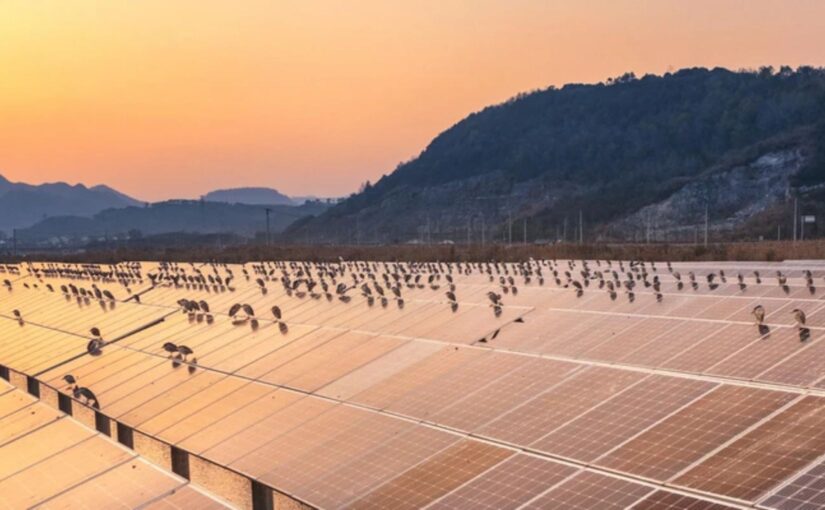
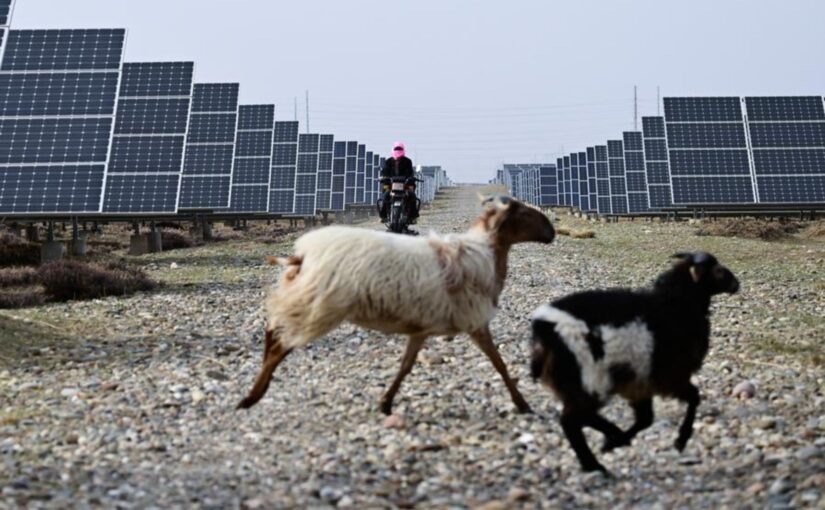
Radhika starts off with the very reasonable point that, given the number of climate records that were broken in 2023, “one might think everyone would welcome China’s plentiful and cheap clean energy equipment”. China’s unparalleled investment in solar and wind energy have resulted in a dramatic fall in the cost of these technologies worldwide, thereby providing a powerful boost to humanity’s efforts to avoid climate catastrophe.

Furthermore, when it comes to “distorting markets” via subsidies, “the US offers billions in industrial subsidies and talks of reviving industrial policy. Moreover, it denies the simple fact that no country has industrialized without protecting itself, and using myriad forms of state direction, including subsidies.” Indeed China’s subsidies are perfectly consistent with WTO rules.

The article notes that declining conditions of the US working class are caused not by Chinese “overcapacity” but by “pro-corporate and pro-financialization neoliberal US policies” which have “deindustrialized the US, stagnated working class wages and, by shifting income and wealth from the ordinary people towards a tiny elite, generated vast inequality”.

Radhika concludes by observing that, as a socialist government committed to the welfare of its people, China “will not roll over and play dead when asked to harm its own economy, its own workers and the possibility of dealing with climate change, all only so that the interests of unproductive inefficient and financialized US corporations may be advanced”.

This article first appeared on CGTN.

U.S. Treasury Secretary Janet Yellen was recently in China to talk about its “clean energy overcapacity.” What can that possibly mean? At a time when the world needs more and cheaper clean energy equipment to deal with climate change, isn’t China helping the world by making this equipment more widely available at prices more of the world can afford? Surely, that is just what the world needs in 2024.

After all, 2023 broke so many climate records. It was the warmest year on record. There were record-breaking forest fires and floods. It was the hottest northern hemisphere summer. July 2023 was the hottest month on record. Considering these facts, one might think everyone would welcome China’s plentiful and cheap clean energy equipment.

Evidently, not. The U.S. Treasury Secretary Janet Yellen accused China of flooding the world with cheap clean energy exports, distorting global markets and harming workers. What explains this perversity?

The crux of the problem is the U.S.’s stance on climate change. It would be understandable if it supported solutions that were beneficial to it and its people. However, not only does the U.S. seek benefits not for its people but its corporations, it seeks solutions that not only benefit them but also put them in a dominant position.

Yellen kicked off her campaign against Chinese overcapacity at a solar energy plant in Georgia just days before she set foot in Beijing. She alleged that China had previously inflicted overcapacity in steel and aluminium and was now doing this in the clean energy sector, particular in solar panels, lithium-ion batteries and electric vehicles. “China’s overcapacity distorts global prices and production patterns and hurts American firms and workers,” she stated.

Capacity can only be excessive in relation to demand. When the problem is labelled overcapacity the ‘solution’ is to cut (other nations’) capacity. One could always see it as a problem of restricted demand, to be solved by expanding it. U.S. elites have long approached the crisis of the 1970s as one of over-capacity and sought to deal with the problem by restricting or even reducing industrial capacity in its rivals. It did this to Japan starting in the 1990s. It is currently doing this to Europe, forcing it to deindustrialize, allegedly in order to fight the hyped-up danger that Russia poses. And now, Yellen has brought this effort to China.

If China’s industrial capacity is deemed excessive, it must be restricted so that, when such equipment becomes scarce, U.S. products of lesser quality and higher cost will find markets. It also amounts to saying that the U.S. absolutely does not wish to increase the rest of the world’s capacity to demand more by increasing development and therefore demand there.

In speaking of China distorting markets, Yellen is saying that China captures markets through subsidies. This is, of course, particularly rich when the U.S. offers billions in industrial subsidies and talks of reviving industrial policy. Moreover, it denies the simple fact that no country has industrialized without protecting itself, and using myriad forms of state direction, including subsidies. This understanding defined the terms on which China entered the World Trade Organization in 2000. The U.S. was willing to grant these terms only because it assumed that China would be no more successful than other developing countries in using such provisions to industrialize and become a technological leader. It was wrong.

Finally, Yellen speaks of China harming U.S. workers. The sad, even macabre, reality is that U.S. workers have been harmed over all these neoliberal decades not by China but by the pro-corporate and pro-financialization neoliberal U.S. policies. They have deindustrialized the U.S., stagnated working class wages and, by shifting income and wealth from the ordinary people towards a tiny elite, generating vast inequality.

Sadly, for Yellen, China is neither Japan nor Europe but a socialist economy whose government is oriented towards advancing egalitarian development for its people. Yellen will find it willing to cooperate for the benefit of people and the planet. But it will not roll over and play dead when asked to harm its own economy, its own workers and the possibility of dealing with climate change, all only so that the interests of unproductive inefficient and financialized U.S. corporations may be advanced.

Left-wing political parties from Arab countries thank China for its support of Palestinian national rights

A delegation of left-wing political parties from Arab countries, led by Bassam Zakarneh, a member of the Revolutionary Council of Palestine’s Fatah, recently visited China.

Meeting the delegation on March 28, Li Mingxiang, Vice-Minister of the Communist Party of China’s International Department (IDCPC), said that China will continue to make unremitting efforts to promote a ceasefire in Gaza and achieve lasting peace and stability in the Middle East. The CPC is willing to deepen strategic communication and experience exchanges in state governance and administration with left-wing political parties in Arab countries, help build a China-Arab community with a shared future in the new era, and jointly advance the cause of human progress.  

Zakarneh thanked the Chinese side for its firm support for the Palestinian peoples’ just cause of regaining their legitimate national rights. Left-wing political parties in Arab countries are willing to strengthen exchanges with the CPC and learn from its successful experience in promoting theoretical innovation and Chinese modernisation.  

The below article was originally published on the website of the IDCPC.

Beijing, March 26th—Li Mingxiang, Vice-minister of the International Department of the CPC Central Committee, met here today with a delegation of left-wing political parties in Arab countries led by Bassam Zakarneh, Member of Fatah’s Revolutionary Council.  

Li spoke positively of relations between China and Arab countries. Combining the spirit of China’s “Two Sessions”, he elaborated on the bright prospect of Chinese modernization in an in-depth manner. Li said that the Chinese side is willing to work with the international community to continue to make unremitting efforts to promote a ceasefire in Gaza and achieve lasting peace and stability in the Middle East. The CPC is willing to deepen strategic communication and experience exchanges in state governance and administration with left-wing political parties in Arab countries, help build a China-Arab community with a shared future in the new era, and jointly advance the cause of human progress.  

Zakarneh said that China-Arab relations in the new era have achieved rapid development on the basis of traditional friendship, injecting confidence and impetus into regional and world peace, stability, development and prosperity, and thanked the Chinese side for its firm support for the Palestinian peoples’ just cause of regaining their legitimate national rights. Left-wing political parties in Arab countries are willing to strengthen exchanges with the CPC and learn from the CPC’s successful experience in promoting theoretical innovation and Chinese modernization. 

Spectre of Fu Manchu still influences UK’s modern Sinophobia

In the following brief article, Ding Gang, a senior editor with People’s Daily and senior fellow with the Chongyang Institute for Financial Studies, discusses the historical roots of the current wave of anti-China fearmongering in the British media and political establishment.

Ding Gang references the notorious fictional character Fu Manchu, invented by Sax Rohmer in the early 20th century. Fu Manchu was the personification of the “menace from the East”, masterminding a dangerous conspiracy to undermine Western civilisation. As China expert and peace activist Jenny Clegg has pointed out, the image of Fu Manchu came to “resonate into the deepest recesses of popular consciousness the world over”.

Ding Gang explains that the Fu Manchu character feeds into a racist ‘yellow-peril’ narrative, within which “East Asians pose a mortal threat to the Western world … reflecting and reinforcing Western anxieties about Asian influence and power.” This mentality continues to stand in the way of mutual understanding and cooperation between China and the West.

The author concludes:

Recognizing and addressing the historical roots of Western perceptions can lead to an informed, respectful and conducive approach to engaging with China for a constructive global future, fostering dialogue and exchanges between China and Britain to build mutual understanding and respect.

This article first appeared in Global Times on 27 March 2024.

The concepts in this article are explored further in a 2021 Society for Anglo-Chinese Understanding webinar Standing Up to Sinophobia – from Fu Manchu to Bat Soup!.

“China could use its electric cars to attack the West” was the title of a commentary I recently read on The Telegraph’s website. The article has even more eye-catching content: “Data espionage has become the signature weapon of the Chinese party state.”

Several other major British media outlets ran front-page headlines on Monday and Tuesday about the so-called Chinese cybersecurity threat, “identifying” China as a significant threat to the UK.

A wave of Sinophobia is sweeping across the country, reminding me of a name that Chinese people have long forgotten, Dr Fu Manchu.

Fu is a fictional character created by English author Sax Rohmer in the early 20th century. He first appeared in the 1913 novel The Mystery of Dr Fu Manchu. Fu is depicted as a brilliant but evil genius, embodying the Western archetype of the “yellow peril.” Over the years, the character has appeared in a series of Rohmer novels and numerous movies, television shows, radio dramas and comic books.

The term refers to the racist ideology that East Asians pose a mortal threat to the Western world. Fu and his adventures inspire and perpetuate fears of the “exotic” and “mysterious” Orient, reflecting and reinforcing Western anxieties about Asian influence and power. Fu’s opponents are usually the British and other Western protagonists who endeavor to thwart Fu’s evil schemes.

As we explore the complexities of modern-day Sinophobia in the UK, it is essential to recognize that the specter of Fu and the historical prejudices he represents still influence contemporary attitudes toward China and its people.

Few figures in the tapestry of British cultural history have cast such a long and dark shadow over perceptions of China as Fu.

While today’s Sinophobia is shaped by the realities of the geopolitical and economic challenges posed by a rising China, it cannot be fully understood without recognizing this historical legacy.

Fu is a creation of the early 20th-century imagination that has continued to resonate in the Western collective consciousness for over a century, regardless of Britain’s shift from a dominant empire to its current state as a declining Western power.

This is not to diminish the possibility of an old empire’s fears about an Eastern power, especially one it once colonized, but to emphasize how historical biases can affect our perceptions and responses today.

If we fail to scrutinize these issues, there will be a danger of worsening the conflict and misinterpreting China’s growth and its population in the future, which will pose a significant challenge to the Western world.

The narrative of China as an economic and security threat, engaging in unfair trade practices and threatening jobs in the West, may help politicians gain votes, but it hinders constructive engagement with China. Misunderstanding the country only fuels unfounded fears and narrow-mindedness.

It reveals, in one way or another, how complex, challenging, and long-term the process of Western acceptance of China’s rise has been. However, there is one thing that even these politicians who promote the “China threat” theory know only too well: China’s rise is unstoppable. What the West needs to do is to sit down with China and find the best way for common development.

In the face of modern Sinophobia, there are serious shortcomings in Western historical education and views on civilization. Their insistence on the superiority of Western civilization often causes them to project their current issues onto external changes, hindering their ability to effectively address such transformations.

As we move forward, let us remember that the shadows cast by figures like Fu Manchu are long. Still, through work and efforts that the sunlight of civilization’s evolution can shine.

Recognizing and addressing the historical roots of Western perceptions can lead to an informed, respectful and conducive approach to engaging with China for a constructive global future, fostering dialogue and exchanges between China and Britain to build mutual understanding and respect.

Xi Jinping holds talks with Indonesian president-elect Prabowo Subianto

Prabowo Subianto, President-elect of the Republic of Indonesia and Great Indonesia Movement Party General Chairman, paid a visit to China at the beginning of April. Prabowo was elected in February but will not assume office until October. Signifying his commitment to continue the friendly relations carefully nurtured by his outgoing predecessor President Joko Widodo, China was his first overseas destination since his election victory.

Chinese President Xi Jinping held talks with Prabowo on April 1. He congratulated Prabowo on winning the election and asked him to relay sincere greetings and best wishes to President Joko Widodo.

Recalling the rapidly developing and fruitful bilateral ties over the past decade under the guidance of the two heads of state, Xi said both sides have made the Jakarta-Bandung High-Speed Railway an exemplar of high-quality bilateral cooperation and entered a new stage of building a community with a shared future.

Xi said China and Indonesia are both representatives of major developing countries and emerging markets. In the past, the two countries have supported each other in the cause of national independence and development, while in the future, the two countries should also unite in good faith to set an example of win-win cooperation and shared development and become a pacesetter for South-South cooperation.

He added that China is ready to strengthen cooperation with Indonesia on poverty reduction and eradication and provide support in this regard.

Noting that at present, momentous changes not seen in a century are accelerating across the world, Xi said the two sides should actively practice the Five Principles of Peaceful Coexistence, vigorously promote the Bandung spirit of solidarity, friendship and cooperation, promote an equal and orderly multipolar world and inclusive economic globalisation that benefits all, strengthen multilateral coordination, and safeguard the common interests of developing countries. (The 1955 Bandung Afro-Asian Conference was hosted by Indonesia’s first President Sukarno and inspired the creation of the Non-Aligned Movement six years later.)

Prabowo conveyed President Joko Widodo’s sincere greetings to Xi, and said he is delighted to make China the first country he visits after being elected. China, he added, is a major influential country and the two countries always respect each other and treat each other as equals.

Prabowo noted that China is a strong partner of Indonesia and Chinese enterprises have participated in-depth in Indonesia’s economic growth and contributed to Indonesia’s national development in recent years.

He said that he supports the development of a closer relationship with China and will continue his country’s friendly policy toward China, adhere to independence and stick to the one-China policy that is always pursued by the Indonesian government.

He appreciated that China has always upheld fairness and justice in international affairs, especially on the Palestinian question, adding that Indonesia is willing to strengthen coordination and cooperation with China on international and regional affairs and make a greater contribution to South-South cooperation.

Continue reading Xi Jinping holds talks with Indonesian president-elect Prabowo Subianto

China’s assistance to Cuba a part of global opposition to hegemony

The following article from Global Times reports on the arrival of the first batch of emergency food aid from the Chinese government to Cuba, which assistance “demonstrates China’s unwavering support for Cuba”.

The report notes that the main causes of Cuba’s food shortages are the US’s criminal blockade, along with the sharp rise in global food prices resulting from NATO’s ongoing proxy war in Ukraine.

The author reiterates China’s firm stance against the blockade, which “severely harms the Cuban ordinary people’s right to survival and development,” and which is imposed because the “Cuban Government and people have never succumbed to the unilateralism and hegemony of the US, and despite the enormous pressure and losses caused by the embargo, Cuba has remained actively committed to promoting global solidarity and international cooperation.”

China’s aid, meanwhile, “is not merely a diplomatic gesture but a substantial contribution to Cuba’s healthcare and food security amid its economic struggles”, and more generally, China’s support for Cuba is “an essential part of the global opposition to hegemony and the effort to establish a fairer, more rational and more inclusive international order.”

On April 3, local time, the first batch of emergency food aid from the Chinese government arrived at José Martí International Airport in Havana. Luo Zhaohui, the director of the China International Development Cooperation Agency, stated at the airport, “The Chinese government is proud of and empathetic toward every progress and every challenge our Cuban friends face. Today’s assistance is a symbol of the friendliness of the Chinese people.”

China’s timely assistance once again clearly demonstrates its unwavering support for Cuba in overcoming food shortages and maintaining social stability.

Due to the Russia-Ukraine conflict and climate change, global food prices have sharply risen over the past two years, leading to severe food shortages in some countries and regions. In last year’s report, United Nations Secretary-General António Guterres wrote, “Over 2.5 billion people are now facing severe hunger, with some on the brink of starvation. This is unacceptable.”

Cuba, reliant on food imports, has been doubly hit. Another blow comes from the long-standing sanctions imposed by the US, severely restricting Cuba’s foreign trade and regular access to external food supplies and corresponding agricultural equipment.

The embargo on Cuba is a remnant of the Cold War period and has garnered significant opposition. It has been widely criticized by the global community, as shown by yearly resolutions at the United Nations General Assembly urging its termination since 1992.

The Economic Commission for Latin America and the Caribbean (ECLAC) cites staggering losses for Cuba, amounting to billions of dollars annually due to the embargo, which significantly hampers its agricultural productivity and poses a severe threat to food security. The US blockade severely harms the Cuban ordinary people’s right to survival and development.

China’s assistance to Cuba, including the delivery of significant amounts of medical equipment and food such as rice, highlights Beijing’s practical steps to support the Cuban people.

This aid is not merely a diplomatic gesture but a substantial contribution to Cuba’s healthcare and food security amid its economic struggles exacerbated by the embargo and support for the Cuban people’s fight against hegemony. In this context, China’s long-standing support for Cuba represents global public opinion against hegemonism.

The Cuban Government and people have never succumbed to the unilateralism and hegemony of the US, and despite the enormous pressure and losses caused by the embargo, Cuba has remained actively committed to promoting global solidarity and international cooperation. The latest news shows that the Cuban government has secured supply of key subsidized food rations by urgently coordinating resources from all sides, including foreign aid, etc. The Cuban government is also seeking to repair food shortages through efforts to revive the tourism industry, earn more foreign exchange and upgrade agricultural development.

The bilateral relations between China and Cuba strengthened under the “Belt and Road” initiative, have facilitated deepened economic and trade exchanges. This cooperation spans various sectors, bringing tangible benefits to the people of both nations and earning the appreciation of many Latin American countries, highlighting the potential of international solidarity in the face of unilateral sanctions.

As the political landscape in Latin America and the Caribbean undergoes a new round of profound adjustments, the narrative that views Latin America as the US “backyard” is outdated and undermines the sovereignty and autonomy of the countries within the region.

In recent years, Latin American countries like Brazil have been more actively supporting Cuba’s economic development and openly opposing the unilateral sanctions imposed by the US. This reflects the countries’ growing awareness of autonomous development within the region and promotes the growing consensus on achieving more equitable global governance and joint development.

The strengthening of Latin American countries’ awareness of autonomous development also makes Washington’s attempts to create rifts between China and Latin American countries and force these countries to choose sides increasingly difficult to advance.

China firmly supports the Cuban people’s just struggle to defend national sovereignty and oppose foreign interference and blockade. The wrongful practices of a few countries that arbitrarily impose unilateral sanctions cut off development aid, and freeze the legitimate assets of other countries must be corrected. China supports the termination of the economic, commercial and financial blockade against Cuba.

China’s support and assistance to Cuba are an essential part of the global opposition to hegemony and the effort to establish a fairer, more rational and more inclusive international order.

Foreign ministers of Vietnam, Laos and Timor-Leste visit China

As part of an ongoing intensive diplomatic effort by China to consolidate and develop friendly relations with the member states of the Association of South East Asian Nations (ASEAN) and other countries in the region, China’s top diplomat, Foreign Minister Wang Yi hosted separate visits from the foreign ministers of Vietnam, Laos and Timor-Leste in the first week of April. The visits all took place in the Guangxi Zhuang Autonomous Region in southern China, bordering Vietnam, serving also to highlight the growing importance attached to subnational ties by China in its foreign policy.

Wang Yi met with his Vietnamese counterpart Bui Thanh Son on April 4. He noted that China-Vietnam relations achieved rapid development last year since the top leaders of the two parties jointly announced the building of a China-Vietnam community with a shared future that carries strategic significance. Quoting a line of poetry from the Vietnamese revolutionary leader Ho Chi Minh, he said that this gave new meaning to the verse, “so profound is the friendship between Vietnam and China, because we are both comrades and brothers.”

Since the beginning of this year, he added, the top leaders of the two parties have exchanged new year greetings and maintained the momentum of high-level visits, while border provinces have pursued close cooperation and two-way personnel exchanges have achieved new breakthroughs.

China always regards Vietnam as a priority in neighbourhood diplomacy and stands ready to work with Vietnam to implement the consensus reached by the top leaders of the two parties, make solid plans for bilateral exchanges and cooperation, and jointly push forward the building of the China-Vietnam community with a shared future to a new level.

He suggested that the two sides should focus on such areas as strengthening high-level strategic communication, accelerating the alignment of development strategies, and continuing to expand cooperation in the economic and trade investment, digital economy, green development, new energy and key minerals.

Calling on both sides to jointly safeguard international equity and justice and continue to support each other on issues concerning major common interests, Wang said that it is necessary to be vigilant against engaging in camp confrontations in the region and cobbling together various “small circles” to undermine regional peace and stability.

Bui Thanh Son said that as a neighbour, comrade and brother, Vietnam supports China’s development and always regards China as the top priority and strategic choice of Vietnam’s foreign relations.

Vietnam is willing to maintain close coordination with China, promote economic and trade investment, deepen subnational cooperation, actively promote Vietnam-China friendship, build a Vietnam-China community with a shared future that bears strategic significance, and bring more benefits to the two peoples.

Vietnam adheres to the one-China principle, firmly supports China’s position on Taiwan and issues related to Xinjiang and Xizang [Tibet], opposes interference in other countries’ internal affairs under the pretext of human rights and democracy, and will strengthen multilateral coordination with China to safeguard common interests, he added.

The previous day, Bui Thanh Son had discussed regional cooperation with the Secretary of the Party Committee of the Guangxi Zhuang Autonomous Region of China Liu Ning. He affirmed that the Vietnamese party and state always support and facilitate cooperation between Vietnamese localities and their Chinese counterparts, including Guangxi.

Vietnamese ministries, agencies and localities, and Guangxi should maintain and raise the efficiency of their existing cooperation mechanisms, step up friendship, conduct theory exchanges and share experience in Party building, social management and economic development.

Continue reading Foreign ministers of Vietnam, Laos and Timor-Leste visit China

China condemns Israel’s attack on Iranian consulate in Damascus

On April 1, the Zionist regime in Israel, out of its malign and desperate attempt to extend its genocidal war in Gaza into a fullscale regional conflagration, which it doubtlessly believes would secure the overt participation of US imperialism, flagrantly attacked the Iranian consulate, adjacent to the country’s embassy, in the Syrian capital Damascus. Some sixteen deaths were reported.

The next day, Chinese Ambassador Geng Shuang addressed a United Nations Security Council briefing on the attack. He stated:

“Yesterday, the Iranian diplomatic premises in Damascus, Syria were attacked by airstrikes, resulting in loss of several Iranian personnel and severe destruction to the premises. This is a grave violation of the UN Charter and international law and a breach of the sovereignty of both Syria and Iran. The attack is of an extremely vicious nature. China strongly condemns this attack.”

Ambassador Geng continued: “Twenty-five years ago, China’s Embassy in the Federal Republic of Yugoslavia was bombed by US-led NATO airstrikes, resulting in personnel casualties and the destruction of the Chinese diplomatic premises. We feel the grief and pain of the Iranian government and people and express to them our deepest sympathy and condolences.”

On May 7, 1999, during the imperialist war of aggression against Yugoslavia, US-led NATO forces bombed the Chinese Embassy in Belgrade. Three journalists from the Xinhua News Agency and the Guangming Daily were martyred and many more Chinese comrades were injured.

Relating the Damascus attack to Israel’s ongoing aggression in Gaza, Geng Shuang continued:

“Since the Gaza conflict broke out in October last year, we have witnessed attacks on homes, attacks on schools, attacks on hospitals, attacks on humanitarian facilities, attacks on UN agencies, and today, attacks on diplomatic premises. The red line of international law and the fundamental principles of international relations has been breached time and again. And the moral bottom line of human conscience has been crushed time and again. Such a tragedy must stop immediately. Last week, the Council adopted Resolution 2728 calling for an immediate ceasefire in Gaza. We strongly call on the international community to work together to ensure this resolution is implemented so that the Muslim community will not have to celebrate the month of Ramadan in the midst of gunfire.”

He added that “the situation in the Middle East has become ever more precarious. Israel’s frequent cross-border strikes against targets in Syria and Lebanon are a serious violation of the sovereignty, independence, and territorial integrity of the countries concerned, and have aggravated tensions throughout the region. Such provocative actions might trigger greater turmoils and jeopardise the security of the entire region. Such actions must stop immediately.”

In its letter to the UN Security Council, Iran stated that it, “reserves its legitimate and inherent right to respond decisively” to Israel’s murderous aggression.

We reprint below the full text of Ambassador Geng Shuang’s remarks. They were originally published on the website of China’s Permanent Mission to the UN. 

Madam President, 

At the outset, I would like to congratulate Malta for assuming the Presidency of the Council for this month. The Chinese delegation will fully cooperate with you and your colleagues. I also commend Japan for all its efforts serving as the President of the Council last month. 

Yesterday, the Iranian diplomatic premises in Damascus, Syria were attacked by airstrikes, resulting in loss of several Iranian personnel and severe destruction to the premises. This is a grave violation of the UN Charter and international law and a breach of the sovereignty of both Syria and Iran. The attack is of an extremely vicious nature. China strongly condemns this attack. 25 years ago, China’s Embassy in the Federal Republic of Yugoslavia was bombed by US-led NATO airstrikes, resulting in personnel casualties and the destruction of the Chinese diplomatic premises. We feel the grief and pain of the Iranian Government and people and express to them our deepest sympathy and condolences. 

In accordance with the Vienna Convention on Diplomatic Relations and the universally recognized fundamental principles governing international relations, the safety and security of diplomatic missions shall be inviolable. To allow impunity for such reckless acts that lack any baseline would sent a seriously wrong signal and would encourage even more risky acts. We take note of the solemn protests and condemnation against Israel raised by Iran, Syria, and other Arab countries. We hope that Israel will respond to them. 

Madam President, 

Since the Gaza conflict broke out in October last year, we have witnessed attacks on homes, attacks on schools, attacks on hospitals, attacks on humanitarian facilities, attacks on UN agencies, and today, attacks on diplomatic premises. The red line of international law and the fundamental principles of international relations has been breached time and again. And the moral bottom line of human conscience has been crushed time and again. Such a tragedy must stop immediately. Last week, the Council adopted Resolution 2728 calling for an immediate ceasefire in Gaza. We strongly call on the international community to work together to ensure this resolution is implemented so that the Muslim community will not have to celebrate the month of Ramadan in the midst of gunfire. 

At present, the ground situation in Gaza is deteriorating with rising spillover risks. And the situation in the Middle East has become ever more precarious. Israel’s frequent cross-border strikes against targets in Syria and Lebanon are a serious violation of the sovereignty, independence, and territorial integrity of the countries concerned, and have aggravated tensions throughout the region. Such provocative actions might trigger greater turmoils and jeopardize the security of the entire region. Such actions must stop immediately. China calls on all parties, especially countries with important influence on Israel, to play a constructive role and to make concrete efforts to bring about an immediate ceasefire in Gaza, ease tensions, and restore peace and stability in the Middle East at an early date. 

Thank you, President.

Three-Body Problem: science fiction for China’s ‘New Era’?

The following article by David Peat – Iskra Books editorial board member and secretary of the Friends of Socialist China Britain Committee – discusses the new Netflix adaptation of Liu Cixin’s novel The Three-Body Problem, comparing it with the original book and with last year’s Chinese television adaptation by Tencent.

While describing the Netflix adaption as “admirable in many respects”, David considers that the series is somewhat let down by “poor scriptwriting and ham-fisted characterisation”. Compared to the Chinese adaptation, the Netflix version is too fast-paced, packing too much into a small number of episodes. “With more room to breathe, the novel and the Tencent series also bring out other elements” not covered by the Netflix series, including ecological themes.

David writes: “It has been noted that recent Western science fiction, particularly in cinema, is based either on simplified superhero narratives or extremely pessimistic dystopian/post-apocalypse scenarios, and this reflects a spiritual and ideological absence in late capitalist culture.” Liu Cixin, by contrast, “focuses on proactive and creative responses to long-standing and seemingly intractable problems affecting the whole of humanity.” As such, “Liu Cixin’s stories are fitting science fiction for China’s ‘New Era’ period of continuing socialist construction, undertaking (and more importantly achieving) its own enormously complex and profound projects of poverty elimination, green transformation, and high-quality development.”

David concludes that the Three-Body Problem has the potential to foster cultural understanding and people-to-people exchange between China and the West, “opening a door to the captivating world of Chinese science fiction for a global audience.”

This article contains no spoilers for any of Liu Cixin’s works or their adaptations.

The Three-Body Problem (三体), a science fiction novel released in 2006, counts as perhaps the major cultural ‘crossover’ success of China in the last decade. This was true even before the release of the new Netflix television adaptation of the book, released on the 21st of March 2024, and produced and written for the screen by Game of Thrones show creators David Benioff and D. B. Weiss, alongside Alexander Woo.

That the creators of arguably the largest television ‘phenomenon’ of recent years saw fit to choose Three-Body as their next project is testament to the cultural impact of this work within China and, increasingly, in the wider world. All the more interesting since the author Liu Cixin, a cultural icon in the PRC, refuses to repudiate his country’s revolutionary history, including its current governing party, the Communist Party of China. As such, he cannot easily be co-opted as a ‘dissident’, and those seeking to market and adapt his works in the West find themselves in the awkward position of having to promote an author who is proud of his country’s achievements and is able to critically engage with the historical path of the Chinese revolution in a productive way, avoiding what Xi Jinping refers to as “historical nihilism.”[1]

This article will look at the original book series, as well as a Chinese-made (Tencent) adaptation from 2023, and compare them with the recently released US-made (Netflix) adaptation. It will assess the relative merits of each version, different audience reactions to these series, as well as some wider considerations of the differences between contemporary Western and Chinese science fiction.

Three-Body Problem was published in China in 2006. The book is the first of a trilogy, with subsequent volumes titled The Dark Forest (黑暗森林) and Death’s End (死神永生), with the trilogy collectively known as Remembrance of Earth’s Past (地球往事). It achieved broad commercial and critical success domestically, with Liu’s works accounting for 2/3rds of the Chinese science fiction market, and abroad, with translations into more than 20 languages. In English, the first volume of the trilogy, translated by Ken Liu, received the coveted Hugo Award for ‘Best Novel’ in 2015, the first non-English speaking writer to do so. Liu Cixin’s dominance of modern Chinese science fiction can also be seen in the enormous domestic (and moderate international) success of film adaptations of his Wandering Earth novel, with China selecting the second instalment in this film series as its submission for this year’s Oscars.

The plot of the Remembrance of Earth’s Past series is difficult to summarise, especially when trying not to spoil anything. In general, the action initially takes place in a near-contemporary era with the deaths by suicide of various theoretical and applied physicists around the world, many of them leaving cryptic notes suggesting something along the lines of “Physics doesn’t exist.” The first book also jumps back to Mao-era China and follows Ye Wenjie, herself a gifted physicist, during the Cultural Revolution and subsequent work at a radio telescope base in Inner Mongolia. In the broadest possible strokes, the series can be considered an ‘alien contact’ story, but it also touches on themes such as ecology and human development, ‘game theory’, the capacity for ideological groups to form depending on external circumstances, global cooperation to overcome multi-generational problems, and high-level physics concepts.

The books were extremely well-received, with many praising their creative and inventive use of scientific concepts, enormously ambitious ‘high-concept’ action sequences, and philosophical themes. Equally, however, some readers critiqued the series, suggesting that these overwhelmingly abstract ‘ideas’ take centre stage, to the detriment of any focus on interpersonal drama and character development. As such, for years it was considered that the novels were ‘unfilmable’.

There had been a few abortive attempts at adapting the book series in China, in animation, or even video game form. Eventually, the Chinese company Tencent succeeded and released a 30-episode series in January 2023. This covers the events of the first novel, Three-Body Problem,,in exhaustive detail, and is considered a highly faithful adaptation, often with dialogue taken straight from the novel. On release, it was praised by fans of the book, with strong performances, excellent cinematography and impressive special effects, especially for its budget and the fact it was a Chinese television drama. However, there were also some criticisms, from both domestic and international audiences, which criticised the show’s irregular pacing, poor performances by non-Chinese actors, and the ‘old-fashioned’ CGI of the ‘video game’ section of the story.

Continue reading Three-Body Problem: science fiction for China’s ‘New Era’?

Wang Huning: China always regards the DPRK as a good comrade, good friend and good neighbour

In an important initiative highlighting the steadily growing solidarity, cooperation and coordination among the socialist countries in Asia, a delegation of the Workers’ Party of Korea (WPK), headed by Kim Song Nam, alternate member of the Politburo and Director of the International Department of the WPK Central Committee recently led a delegation to pay fraternal visits to China, Vietnam and Laos.

Leaving Pyongyang on March 21, Kim met the same day with Wang Huning, Chairman of the National Committee of the Chinese People’s Political Consultative Conference (CPPCC), who is also a member of the Standing Committee of the Political Bureau of the Communist Party of China (CPC) Central Committee.

Wang said that that under the guidance of the top leaders of the two sides, China and the Democratic People’s Republic of Korea (DPRK) have witnessed constant consolidation and development of their traditional friendship.

Noting that this year marks the 75th anniversary of diplomatic ties and is designated as the China-DPRK Friendship Year, Wang said China is willing to work with the DPRK to turn the important consensus reached by the top leaders into concrete actions advancing the friendship between the two sides, deepen collaboration, strengthen strategic communication, and jointly work for a peaceful and stable external environment.

Kim Song Nam referred to the fact that the DPRK-China relations have been steadily developing into genuine and solid comradely relations with socialism as their core under the direct concern of the leaders of the two parties of the DPRK and China.

He appreciated the epoch-making progress made by the CPC and the Chinese people in their efforts to implement the decisions of the 20th Party Congress under the leadership of General Secretary Xi Jinping this year, marking the 75th founding anniversary of the People’s Republic of China.

Wang Huning said that no matter how the international situation may change, the China-DPRK friendship, a strategic choice of both sides, will never waver, adding that China, which always regards the DPRK as a good comrade, good friend and good neighbour, will translate the important agreements of the top leaders of the two parties into substantial practice and thus provide greater happiness to the peoples of the two countries and contribute to the regional peace and stability.

The Chinese side will further preserve the true colours of the China-DPRK relations with socialism as their core by promoting mutual exchange, swapping experience and boosting unity and cooperation with the DPRK side, add vitality to the development of the China-DPRK relations and open up a new chapter this year, the year of friendship marking the 75th anniversary of the establishment of diplomatic relations between the two countries, he stressed.

He expressed the Chinese side’s willingness to promote justice in the international community by jointly responding to the international and regional situation through strengthened strategic communication and tactical cooperation with the DPRK side.

Continue reading Wang Huning: China always regards the DPRK as a good comrade, good friend and good neighbour

Zimbabwean president meets visiting CPC delegation

A Communist Party of China (CPC) delegation, led by Jiang Xinzhi, Vice Chairman of the National Committee of the Chinese People’s Political Consultative Conference (CPPCC) and Deputy Head of the Organisation Department of the CPC Central Committee, recently visited Zimbabwe and South Africa.

On March 19 they met with Zimbabwean President and President of the ruling ZANU-PF party, Emmerson Mnangagwa. Jiang said that under the strategic guidance of Presidents Mnangagwa and Xi Jinping, China-Zimbabwe relations have become a model of China-Africa and South-South cooperation.

He added that the CPC stands ready to strengthen high-level exchanges with ZANU-PF, deepen exchanges of experience in party and state governance and promote further in-depth development of the China-Zimbabwe comprehensive strategic cooperative partnership.

Mnangagwa asked Jiang to convey his good wishes to Xi and thanked China for supporting Zimbabwe’s national liberation and development.

The delegation continued their visit to South Africa where they had meetings with leaders of the African National Congress (ANC) and the South African Communist Party (SACP).

The following articles were originally published by the Xinhua News Agency and the People’s Daily. The People’s Daily article was published in Chinese. It has been machine translated and edited by us.

Zimbabwean president meets visiting CPC delegation

HARARE, March 20 (Xinhua) — Zimbabwean President and President of the ruling ZANU-PF party, Emmerson Mnangagwa, met with Jiang Xinzhi, vice chairman of the 14th National Committee of the Chinese People’s Political Consultative Conference here on Tuesday.

Jiang, also deputy head of the Organization Department of the Communist Party of China (CPC) Central Committee, conveyed cordial greetings from Chinese President Xi Jinping to Mnangagwa.

He said that under Xi’s and Mnangagwa’s strategic guidance, China-Zimbabwe relations have become a model of China-Africa and South-South cooperation.

Jiang said the CPC stands ready to strengthen high-level exchanges with ZANU-PF, deepen exchanges of experience in party and state governance and promote further in-depth development of the China-Zimbabwe comprehensive strategic cooperative partnership.

Mnangagwa asked Jiang to convey his good wishes to Xi and thanked China for supporting Zimbabwe’s national liberation and development.

He said Zimbabwe is willing to strengthen inter-party exchanges and practical cooperation in various fields with China to jointly elevate bilateral relations to a new level.

At the invitation of ZANU-PF, Jiang led a CPC delegation visiting Zimbabwe from Monday to Wednesday. During the visit, Jiang also held talks with ZANU-PF National Chairperson Oppah Muchinguri Kashiri. 


Jiang Xinzhi leads a CPC delegation to visit South Africa

Johannesburg, March 24 (Reporter Yan Yunming) From March 20 to 24, at the invitation of the African National Congress (ANC) of South Africa, Jiang Xinzhi, Vice Chairman of the National Committee of the Chinese People’s Political Consultative Conference (CPPCC) and Deputy Head  of the Organisation Department of the Communist Party of China (CPC) Central Committee, led a CPC delegation to visit South Africa, where they met with the Deputy President of the African National Congress (ANC) Paul Mashatile, who is also Deputy President of the Republic of South Africa, the General Secretary of the ANC Fikile Mbalula, the General Secretary of the South African Communist Party (SACP) Solly Mapaila, and the Chairman of the ANC in the Western Cape Province Vuyiso JJ Tyhalisisu, to introduce Xi Jinping Thought on Socialism with Chinese Characteristics for a New Era and the spirit of the 20th National Congress of the Communist Party of China.

The two sides pledged to jointly implement the important consensus reached by President Xi Jinping and President Cyril Ramaphosa, deepen the exchange of experience in governing the party and the country, strengthen practical cooperation in various fields, and work together to build a high-level China-South Africa community with a shared future.

China and Nauru committed to promoting peace, development and stability in the Pacific

President of Nauru David Adeang paid a state visit to China at the invitation of his counterpart Xi Jinping from March 24-29. The visit comes soon after the tiny South Pacific island nation resumed diplomatic relations with China on January 24.

The two heads of state met on March 25 and Xi noted that Nauru’s political decision to adhere to the one-China principle and restore diplomatic ties with China in January is a move that conforms to the trend of history and the times.

Friendship, no matter its beginning, will have a bright future, and cooperation, regardless of scale, will be productive as long as it is sincere, Xi said.

He added that China-Nauru relations have opened a new chapter in history, and China is ready to work with Nauru to create a better future for relations between the two countries and bring more benefits to the two peoples.

China welcomes Nauru as another country to sign the Belt and Road cooperation document with China, adding that China is ready to expand practical cooperation with Nauru in trade, investment and infrastructure construction, and provide assistance to Nauru for its independent and sustainable development without political strings attached.

Stressing that treating others as equals is a defining feature of China’s diplomacy, Xi said China always believes that all countries, big or small, strong or weak, rich or poor, are equal members of the international community.

China has always been a member of the developing world, and China’s vote in the United Nations Security Council always belongs to the developing countries, Xi said.

Noting that China-Nauru relations are based on mutual respect, equality, mutual benefit and mutual support, Xi noted that China firmly supports Nauru in safeguarding national sovereignty, security and development interests, and in independently pursuing a development path suited to its national conditions.

Calling on the two sides to strengthen exchanges in education, culture, health, youth and other fields, Xi said China welcomes more young Nauruan people to study in China, and is willing to provide Nauru with assistance to address climate change within the framework of South-South cooperation.

China is willing to strengthen communication and coordination with Nauru in multilateral fields such as the United Nations and the Pacific Islands Forum, jointly advocate an equal and orderly multipolar world and inclusive economic globalisation that benefits all, and safeguard the common interests of developing countries, the Chinese president said.

Adeang said it is a great honour to be invited for a state visit to China and experience China’s long history, splendid culture and vibrant development.

Not long ago, Nauru decided to stand on the right side of history and resume diplomatic relations with China on the basis of recognising and adhering to the one-China principle, which is an important landmark in Nauru-China relations and opens a new chapter in Nauru’s national development and bilateral relations, he added.

He said Nauru highly appreciates China’s commitment to equality among all countries, no matter big or small, and is willing to abide by the one-China principle, and continuously deepen cooperation with China.

As the world today faces many global challenges, common progress and prosperity can only be achieved through solidarity and cooperation, Adeang said, noting that the series of global initiatives put forward by President Xi Jinping is of great significance.

In a joint statement issued by the two countries, “the Nauruan side spoke highly of China’s great development achievements in the new era under the leadership of President Xi Jinping, and believes that the Chinese path to modernisation offers new options and solutions to fellow developing countries seeking independent development. Nauru welcomes and supports the vision of building a community with a shared future for humanity and the Global Development Initiative, the Global Security Initiative and the Global Civilisation Initiative set forth by President Xi Jinping.”

The two sides agreed that all countries, regardless of size, strength and wealth, are equals. The Chinese side firmly supports Nauru in upholding its sovereignty, security and development interests, and in independently choosing a development path suited to its national conditions.

The Chinese side welcomes and supports Nauru in joining the Asian Infrastructure Investment Bank (AIIB) at an early date. The two sides agreed to expand exchanges and cooperation in such areas as culture, education, health, sport, tourism, youth, media, and human resources, and take policy measures to promote their cross-border travel.

They agreed that climate change is a global challenge that requires all countries to work together to address it under the framework of multilateralism and following the principles of equity, common but differentiated responsibilities and respective capabilities. The two sides will jointly promote the full and effective implementation of the United Nations Framework Convention on Climate Change and its Paris Agreement.

In a particularly significant section, China and Nauru clearly addressed the twin issues of Japan’s discharge of waste water from the stricken Fukushima nuclear reactor and Britain’s planned provision of nuclear-powered submarines to Australia under the AUKUS agreement that also includes the United States, stating:

“The two sides are committed to working with all sides to promote peace, development and stability in the Pacific Islands region. The two sides firmly uphold the international nuclear non-proliferation regime with the Treaty on the Non-Proliferation of Nuclear Weapons as the cornerstone and the South Pacific Nuclear Free Zone Treaty, and call on relevant countries to fulfil international obligations and prudently handle the discharge of nuclear contaminated water, cooperation on nuclear-powered submarines, etc.”

It added: “The Chinese side reiterated its active support for the Pacific Island Countries in implementing the 2050 Strategy for the Blue Pacific Continent. The two sides agreed to strengthen cooperation under multilateral mechanisms including the China-Pacific Island Countries Foreign Ministers’ Meeting and the China-Pacific Island Countries Economic Development and Cooperation Forum and under multilateral cooperation platforms for emergency supplies, climate response, poverty alleviation and development, disaster prevention and mitigation, Juncao technology [a Chinese innovation that allows for the breeding of a hybrid grass from fungi and herbaceous plants, thereby addressing issues of poverty, soil erosion and desertification] and agriculture, and work together for a closer community with a shared future between China and Pacific Island Countries.”

Continue reading China and Nauru committed to promoting peace, development and stability in the Pacific

Nepal’s Minister for Foreign Affairs meets with Chinese leaders

Narayan Kaji Shrestha, Nepal’s newly appointed Deputy Prime Minister and Minister for Foreign Affairs, paid an official visit to China from March 25-April 1 at the invitation of Foreign Minister Wang Yi. 

On the first day of his visit, Shrestha met with Wang Huning, Chairman of the National Committee of the Chinese People’s Political Consultative Conference (CPPCC).

Noting that the leaders of China and Nepal reached an important consensus on developing bilateral ties in their meeting last year, Wang, also a member of the Standing Committee of the Political Bureau of the Communist Party of China Central Committee, called on the two sides to intensify political support, promote the high-quality Belt and Road cooperation, and enhance people-to-people connectivity.

China is ready to work with Nepal to faithfully implement the important consensus reached by the two countries’ leaders, advance the China-Nepal strategic partnership of cooperation featuring ever-lasting friendship for development and prosperity, and push for an even closer community of shared future between China and Nepal, Wang said.

The same day, Shrestha, who is also the Senior Vice-Chairman of the Communist Party of Nepal (Maoist Centre), met with Sun Haiyan, Vice-Minister of the International Department of the Communist Party of China Central Committee (IDCPC).

She said that the CPC is ready to, together with the Communist Party of Nepal (Maoist Centre), strengthen inter-party exchanges, deepen mutual learning in state governance and administration, and boost China-Nepal relations and cooperation for in depth development.  

Shrestha spoke highly of the relations between the two countries and the two parties. He said, the Nepali left-wing coalition government regards the Chinese side as an important partner, firmly adheres to the one-China principle, and will never allow any force to use Nepal’s territory to engage in any anti-China activities.

The following day, he met with Foreign Minister Wang Yi, who said that China has always placed Nepal in an important position in its neighbourhood diplomacy.

China is ready to work with Nepal to promote the high-quality Belt and Road cooperation and advance the China-Nepal strategic partnership of cooperation featuring ever-lasting friendship for development and prosperity to a new and higher level, he added.

In response to an invitation, Wang reportedly said that he would visit Nepal within this year.

Shrestha said that the new government of Nepal attaches great importance to relations with China. Nepal is willing to work with China to advance the Belt and Road cooperation and has decided to join the Group of Friends of the Global Development Initiative.

Shrestha’s visit comes in the wake of some important political changes in Nepal. On March 4, Nepal Prime Minister Pushpa Kamal Dahal (more commonly known as Prachanda), who leads the Communist Party of Nepal (Maoist Centre), broke his coalition agreement with the Nepali Congress party, in favour of establishing a five-party left-wing coalition government, primarily with the Communist Party of Nepal (Unified Marxist-Leninist) (CPNUML), along with the Communist Party of Nepal (Unified Socialist) and two non-communist parties, the Janata Samajbadi Party and the Rastriya Swantra Party. The new government won a vote of confidence in the Nepalese parliament on March 13. 

In his new post as Foreign Minister, Shrestha chose China for his first international visit, just three weeks after taking office. Besides Beijing, he visited the municipality of Chongqing, Sichuan province and the Xizang (Tibet) Autonomous Region. These areas in the west of the country play the main role in China’s relations with Nepal at the subnational level.

The following articles were originally published by the Xinhua News Agency and on the IDCPC website.

China’s top political advisor meets Nepal’s FM

BEIJING, March 25 (Xinhua) — Wang Huning, chairman of the National Committee of the Chinese People’s Political Consultative Conference (CPPCC), met on Monday with Narayan Kaji Shrestha, Nepal’s deputy prime minister and foreign minister.

Noting that the leaders of China and Nepal reached important consensus on developing bilateral ties in their meeting last year, Wang, also a member of the Standing Committee of the Political Bureau of the Communist Party of China Central Committee, called on the two sides to intensify political support, promote the high-quality Belt and Road cooperation, and enhance people-to-people connectivity.

China is ready to work with Nepal to faithfully implement the important consensus reached by the two countries’ leaders, advance the China-Nepal strategic partnership of cooperation featuring ever-lasting friendship for development and prosperity, and push for an even closer community of shared future between China and Nepal, Wang said.

“The CPPCC is willing to make positive contributions to the above-mentioned endeavors,” said Wang.

Shrestha said Nepal firmly adheres to the one-China principle, adding that Nepal expects enhanced communication and cooperation with China in various fields to better benefit the two peoples.


Sun Haiyan Meets with Narayan Kaji Shrestha, Senior Vice Chairman of Communist Party of Nepal (Maoist Center), Deputy Minister and Minister for Foreign Affairs of Nepal

Beijing, March 25th (IDCPC) — Sun Haiyan, Vice-minister of the International Department of the CPC Central Committee (IDCPC), met here today on the afternoon with Narayan Kaji Shrestha, Senior Vice Chairman of Communist Party of Nepal (Maoist Center), Deputy Minister and Minister for Foreign Affairs of Nepal. 

Sun congratulated Shrestha on his assumption of the new post. She said, the Chinese side is willing to work with the Nepali side to jointly implement the important consensus reached by the leaders of the two countries on the development of China-Nepal relations, accelerate practical cooperation, and support each other on issues involving respective core interests and major concerns. The CPC is ready to, together with the Communist Party of Nepal (Maoist Center), strengthen inter-party exchanges, deepen mutual learning in state governance and administration, and boost China-Nepal relations and cooperation for in depth development.  

Shrestha spoke highly of the relations between the two countries and the two Parties. He said, the Nepali left-wing coalition government regards the Chinese side as an important partner, firmly adheres to the one-China principle, and will never allow any force to use Nepal’s territory to engage in any anti-China activities. The Nepali side expects to work with the Chinese side to strengthen exchanges and cooperation in various fields, learn governance experience from the CPC, promote high-quality Belt and Road cooperation, and elevate Nepal-China relations to a new height. 


Continue reading Nepal’s Minister for Foreign Affairs meets with Chinese leaders

China and the struggle for peace

The following text is based on presentations given by Friends of Socialist China co-editor Carlos Martinez at Morning Star Readers and Supporters meetings in Manchester (19 February), Leeds (13 March) and Brighton 24 March), on the subject of China’s global strategy.

Carlos responds to the assertion by Western politicians and media that China is an aggressive and expansionist power, comparing China’s foreign policy record with that of the United States. He shows that China’s foreign policy is based on the principles of peace, development and win-win cooperation, and explains how this approach is rooted in China’s history and ideology, and is consistent with China’s overall strategic goals.

Carlos also takes note of China’s contribution to the global struggle for multipolarity and to the project of global development. He highlights the Belt and Road Initiative and China’s role in the struggle against climate catastrophe.

The text concludes:

On questions of peace, of development, of protecting the planet, China is on the right side of history. It’s a force for good. As socialists, as progressives, as anti-war activists, as anti-imperialists, we should consider China to be on our side… Those of us who seek a sustainable future of peace and prosperity, of friendship and cooperation between peoples, have a responsibility to oppose this New Cold War, to oppose containment and encirclement, to demand peace, to promote cooperation with China, to promote understanding of China, to build people-to-people links with China, and to make this a significant stream of a powerful mass anti-war movement that our governments can’t ignore.

The Manchester event was also addressed by Jenny Clegg; the Leeds event by Kevan Nelson; and the Brighton event by Keith Bennett.

I’m going to focus my remarks on China’s international relations and its global strategy. This is a subject about which there’s a great deal of misunderstanding and obfuscation, particularly in the context of an escalating New Cold War that’s being led by Washington and that the British ruling class is only too happy to go along with.

The mainstream media is full of hysteria about China’s “aggression” or “assertiveness”. When China reiterates its position on Taiwan – a position which in fact has not meaningfully changed in the last seven decades, and which is completely in line with international law – it’s accused of ramping up the threat of war.

When China refuses to go along with the US’s illegal, unilateral sanctions (for example on Russia, Iran, Syria, Nicaragua, Cuba, Venezuela, Eritrea and Zimbabwe), it’s accused of “subverting the international rules-based order”.

When China establishes bilateral relations and trade agreements with Solomon Islands, Honduras, Nicaragua and Nauru, it’s accused of engaging in colonial domination.

When Chinese companies invest in Africa, Latin America, the Caribbean and the Pacific, they’re accused of imposing debt traps.

And unfortunately much of the left takes a fairly similar position to the ruling class on these issues, considering that China’s an imperialist power, that it’s engaged in a project of expansionism.

This sort of analysis on the left leads inexorably to a position of “Neither Washington Nor Beijing”, putting an equals sign between the US and China; putting China in the same category as the imperialist powers. According to this analysis, the basic dynamic of global politics is today that of inter-imperialist rivalry between the US and China.

And of course if that’s the case, if China’s just another imperialist power, and its only interest is growing its own profit margins and competing with the US, Britain, the EU, Canada and Japan for control of the world’s resources, labour, land and markets, it goes without saying that the global working class and oppressed – the vast majority of the population of the world – cannot possibly consider China to be a strategic ally in the pursuit of a better, fairer, more peaceful, more equal, more prosperous, more sustainable world.

China’s view of international relations

How does China consider its role in the world? What does the Communist Party of China propose regarding China’s foreign relations?

What the Chinese leadership calls for is “building a global community of shared future, with the goal of creating an open, inclusive, clean and beautiful world that enjoys lasting peace, universal security, and common prosperity.”

China consistently expresses its commitment to multipolarity; to peace; to maximum and mutually beneficial cooperation around economic development and tackling climate change, pandemics, and the threat of nuclear war; to working within the context of the UN Charter and international law in support of peaceful coexistence.

Foreign Minister Wang Yi, at his recent Meet the Press session, talked of China “advocating vigorously for peace, development, cooperation and mutual benefit”, and urged that “countries should rise above their differences in history, culture, geography and system, and work together to protect the Earth, the only inhabitable planet for us all, and make it a better place.”

Xi Jinping often talks about China’s orientation towards peace: “Without peace, nothing is possible. Maintaining peace is our greatest common interest and the most cherished aspiration of people of all countries.”

All of this is of course a pretty beautiful and compelling vision. But to what extent does it line up with reality? To what extent is China actually working towards peace, development and sustainability? To what extent does China diverge from the model of international relations pursued by the US and its imperialist allies?

Continue reading China and the struggle for peace

Roosevelt Skerrit: China has been a true friend of Dominica

Prime Minister of the Commonwealth of Dominica Roosevelt Skerrit paid an official visit to China from March 23-29 at the invitation of his Chinese counterpart Premier Li Qiang.

Announcing the visit on March 20, Chinese Foreign Ministry Spokesperson Lin Jian noted that this year marks the 20th anniversary of the diplomatic ties between the two countries, adding: “China welcomes Skerrit’s official visit at this special moment.”

Dominica is an important country in the Caribbean and also a good friend and partner of China in the region, he noted, adding that since the establishment of diplomatic relations 20 years ago, China-Dominica relations have grown steadily, setting a good example of mutual respect, equality, mutual benefit, common development and win-win cooperation between countries of different sizes.

“It is believed that Skerrit’s visit to China will further enhance political mutual trust between the two countries, promote practical cooperation in various fields, consolidate the traditional friendship between the two countries and push bilateral relations to a new level,” he added.

Meeting with Chinese President Xi Jinping on March 25, the Chinese leader told Skerrit that the the two countries have respected each other and treated each other as equals since the establishment of diplomatic ties 20 years ago.

With increasing political mutual trust, vigorous exchanges and cooperation in various fields, and with the deepening friendship between the two peoples, China-Dominica relations have become a good example of South-South cooperation, he added.

China highly appreciates Dominica’s steadfast friendship, Xi said. China is willing to work with Dominica to synergise development strategies and turn the friendly relations into a driving force for win-win cooperation to achieve more results and deliver more benefits for the two peoples.

Xi stressed that the key to the sound development of China-Dominica relations lies in a high level of political mutual trust, as well as in mutual understanding and support on issues involving each other’s core interests and major concerns. China firmly supports the people of Dominica in following a development path suited to their national conditions, and stands ready to bolster friendly exchanges and strengthen the sharing of experience on governance.

China welcomes the Dominican side to board the “express train” of Chinese modernisation and to expand bilateral cooperation in fields such as trade and the economy, infrastructure construction, agriculture and health care, Xi said, noting that China will continue to provide assistance within its capacity for Dominica’s economic and social development.

China is willing to promote cultural and people-to-people exchanges with the Dominican side, welcomes more Dominican students to study in China, and will continue to provide scholarships and training programs.

China advocates an equal, orderly, multipolar world and inclusive economic globalisation that benefits all, and it holds that all countries, big or small, are equal in the international community, Xi said.

Stressing that China attaches importance to the issues of Small Island Developing States related to climate change, Xi said that China supports Dominica in playing an active role in international and regional affairs, and stands ready to strengthen coordination and cooperation with the Dominican side, deepen South-South cooperation, safeguard the common interests of developing countries, and advance the construction of a community with a shared future for humanity.

China attaches great importance to its relations with Caribbean countries, Xi noted, saying that China appreciates Dominica’s important role in promoting China-Caribbean cooperation during the latter’s rotating chairmanship of the Caribbean Community (CARICOM), and that China will continue to support countries in the Caribbean to improve their prosperity, development and people’s well-being.

For his part, Skerrit said that he made the right decision to establish diplomatic relations with China 20 years ago, and that he was glad to visit China again on the 20th anniversary of the establishment of diplomatic ties between the two countries.

Noting that China has not only made great achievements in poverty alleviation and development, but also contributes significantly to the peace and development of Dominica, other Latin American countries and the world at large, Skerrit said that China’s support and cooperation has helped Dominica to safeguard its independence and development.

Skerrit commended the concept of building a community with a shared future for humanity and a series of global initiatives proposed by China, saying that they are crucial to improving solidarity and cooperation, and to the joint promotion of development and prosperity in today’s world.

He expressed Dominica’s willingness to be China’s all-weather strategic partner, and to continue playing a positive role in promoting relations between Caribbean countries and China.

Skerrit added that his country also expects closer communication and coordination on international affairs with China in order to safeguard international fairness and justice, and to make positive contributions to the promotion of world peace and development.

Establishing diplomatic relations with China was one of the first steps taken by Skerrit when he came to power and his meeting with Xi came just two days after the twentieth anniversary.

Marking the anniversary, Xi had exchanged congratulations with Dominican President Sylvanie Burton.

Depicting Dominica-China relations as dynamic and fruitful, Burton said that the Dominican side cherishes the friendship with China, appreciates China’s support and assistance, and is willing to deepen mutually beneficial cooperation to jointly tackle global challenges.

Also on March 25, Skerrit held meetings with Premier Li Qiang and Zhao Leji, Chairman of the National People’s Congress (NPC) Standing Committee.

Noting that this year marks the 20th anniversary of the establishment of diplomatic ties between China and Dominica, Li said the two sides have been treating each other with mutual respect and equality over the past 20 years.

He added that China is ready to work with Dominica to implement the important consensus reached by the leaders of the two countries, further strengthen political mutual trust, and push for the new and greater development of bilateral relations and cooperation.

Li said China has always supported Dominica in safeguarding its national sovereignty and independence, and in following a development path suited to its national conditions. China is willing to enhance cooperation with Dominica continuously in areas such as infrastructure construction, agriculture and trade under the framework of the joint construction of the Belt and Road. It is also ready to develop new highlights in cooperation on new energy and the digital and blue economies, help Dominica improve its disaster prevention and mitigation capabilities, and share more development opportunities.

He noted that China supports its enterprises in investing and doing business in Dominica, and it also welcomes Dominica and other Caribbean countries to actively participate in the fourth China-Caribbean Economic and Trade Cooperation Forum to open broader prospects for cooperation.

For his part, Skerrit said that Dominica and China have always respected each other, cooperated closely, forged a profound friendship and set a good example for the Latin America-China friendship. Dominica abides firmly by the one-China principle, and resolutely opposes the interference of any country in China’s internal affairs and the infringement of any country on China’s sovereignty.

He also said that China is committed to safeguarding world peace and promoting common development, and noted that the global initiatives proposed by China are receiving more and more support from the international community. Dominica is willing to strengthen communication with China further, increase personnel exchanges, expand cooperation, work together to deal with climate change, and promote the construction of a Dominica-China community with a shared future.

Zhao Leji said that China and Dominica are good friends and good partners sharing the same goals. He called on both sides to jointly implement the Global Development Initiative and promote the development of friendly and cooperative relations between China and Dominica.

During his visit, Skerrit also took part in the Boao Forum for Asia Annual Conference 2024, held on China’s southern Hainan island.

Addressing the opening ceremony, he said that the global community should work together to solve the challenges faced today and build a prosperous future.

“We need to work together to pull our strengths and move faster towards achieving peace and sustainable development. We need to strengthen cooperation and solidarity between countries in order to provide effective responses to the financial, economic, and social crises faced by many countries around the world.” 

It is clear that sustainable development continues to be a pressing issue for the international community, given the high levels of inequality, poverty, and marginalisation among countries, he said, noting that inequalities between developed and developing countries persist and are widening.

Prior to embarking on his China visit, Skerrit gave an interview to China’s Xinhua News Agency in the Dominican capital Roseau. He said that, “”China has been a true friend of Dominica, and I would say an all-weather friend.” When Dominica was in difficult times, “China is always one of the first countries, which would come to our aid.”

In 2018, Dominica signed a memorandum of understanding with China to jointly build the Belt and Road. According to Skerrit, the Belt and Road Initiative (BRI) has opened up numerous opportunities not only for Dominica, but for many countries around the world to help with their economic independence and social development.

Skerrit said that under the BRI, Dominica has been actively working with China to set up agricultural technology cooperative projects in order to improve agricultural development, technology transfer and guarantee food security in the country.

Dominica has limited medical resources and the population has a long history of difficulty in accessing health care.

In his opinion, the construction of the Dominica-China Friendship Hospital, the introduction of new technologies and equipment, and the direct support by China in respect to its first cardiology department show “a dramatic improvement in the health care in Dominica as a result of the BRI.”

Many young Dominican students are attending universities in China and attaining their degrees in China. “Most of them are back here working in various fields, such as medicine, agriculture, architecture, environmental studies, international relations studies and psychology,” he said.

 “We always say that every country has a right to determine its own political system. And I believe that the political system which exists in China has also contributed to China’s prosperity and the improvement in the way of life of the Chinese people,” he added.

As this year marks the tenth anniversary of the proclamation of the Forum of China and the Community of Latin American and Caribbean States (CELAC), Skerrit deemed the China-CELAC Forum an opportunity for these countries to participate in international affairs and share ideas.

“Dominica is ideally placed. Dominica has excellent relations with all of the countries within CELAC, especially those from Latin America. We have excellent relations with China, and we will continue to serve as a bridge between China and CELAC and to advance the collaboration and the cooperation,” he said.

Continue reading Roosevelt Skerrit: China has been a true friend of Dominica

China and Sri Lanka reaffirm longstanding friendship and refute imperialist slanders

Sri Lankan Prime Minister Dinesh Gunawardena visited China from March 25-30 at the invitation of his Chinese counterpart Li Qiang. The visit and the agreements reached were a powerful reaffirmation of the long-standing friendship between the two countries and a clear refutation of the slanders spread in the imperialist countries, in particular, regarding their bilateral cooperation under the Belt and Road Initiative (BRI) and China’s supposed ‘debt trap diplomacy’. 

Gunawardena met with President Xi Jinping on March 27. Noting that the friendship between China and Sri Lanka enjoys a long history and the two peoples share a natural affinity, Xi said that consolidating and promoting China-Sri Lanka relations serves the fundamental interests and reflects the common expectations of the two peoples.

China is willing to work with Sri Lanka to carry forward the spirit of the Rubber-Rice Pact, which is characterised by “independence, self-reliance, unity and mutual support,” to consolidate political mutual trust, enhance exchanges of experience in governance, expand practical cooperation, and advance the high-quality Belt and Road cooperation.

The reference to the Rubber-Rice Pact carries great significance. The root of the two countries’ special friendship, it was concluded in December 1952, at a time when Sri Lanka (then known as Ceylon) had not long won its national independence from British colonial rule and the Chinese revolution had recently triumphed. More particularly, by this pact Sri Lanka courageously defied and broke the US-led blockade that had been imposed on New China at a time when the Chinese Volunteer Army was fighting on the Korean front. The agreement, which met the crucial needs of both countries at that time, lasted for 30 years, and led to the United States imposing sanctions, including those aimed at crippling its rubber production, and cutting off aid to Sri Lanka. 

Xi added that both sides should make joint efforts to promote high-quality Belt and Road cooperation, especially that of the two flagship projects, the Colombo Port City and the Hambantota Port. China and Sri Lanka should also work together to enhance logistics, energy, and industrial cooperation, and promote exchanges and cooperation in digital economy, green economy, clean energy, culture-oriented tourism and marine economy. China, he said, is willing to advance cooperation with Sri Lanka on rural poverty reduction, to help the country with economic transformation and upgrading, and with sustainable development.

The two sides, he added, should continue to maintain the Five Principles of Peaceful Coexistence, enhance coordination on international and regional affairs, safeguard the common interests of both sides, uphold international fairness and justice, and promote the construction of a community with a shared future for humanity.

Gunawardena expressed appreciation for China’s assistance to Sri Lanka in times of difficulty, saying that projects such as the Colombo Port City and the Hambantota Port have boosted Sri Lanka’s economic and social development, as well as the overall development of the region.

The previous day Gunawardena held meetings with Premier Li Qiang and Zhao Leji, Chairman of the National People’s Congress (NPC) Standing Committee.

Li said China and Sri Lanka are strategic partners of cooperation characterised by sincere mutual assistance and enduring friendship spanning generations. The two countries have always respected each other and enjoyed equality and reciprocal cooperation since the establishment of diplomatic relations 67 years ago.

Gunawardena thanked China for providing long-term support to Sri Lanka’s efforts to safeguard national sovereignty, independence, and territorial integrity, and helping the country realise economic and social development and cope with the COVID-19 pandemic and financial crisis.

Hailing the Belt and Road Initiative and the global initiatives proposed by China, he said that Sri Lanka has always adhered to the one-China principle and will continue to firmly pursue policies to strengthen friendly cooperation with China.

Zhao said that since the establishment of diplomatic relations between the two countries in 1957, China and Sri Lanka have always enjoyed a sound and steady relationship despite changes in the international landscape.

The two sides released a joint statement on March 29. Noting that the Sri Lankan leader had also attended the Boao Forum for Asia Annual Conference 2024, held on the southern island of Hainan, during his visit, the statement said that:

“The two sides share the view that the peoples of China and Sri Lanka enjoy long-standing friendship, and have engaged in mutual learning, mutual assistance and seeking strength through unity. In the 67 years since the establishment of diplomatic ties, the two countries have strengthened traditional friendship, enhanced political mutual trust, achieved fruitful results in practical cooperation, and engaged in close coordination on regional and international issues, setting a fine example of friendly interactions and mutually beneficial cooperation between countries of different sizes. The two sides agree to carry forward the spirit of independence, self-reliance, solidarity and mutual assistance enshrined in the Agreement on Rice for Rubber, jointly tackle challenges, share opportunities and seek common development, thereby cementing and expanding the China-Sri Lanka strategic cooperative partnership based on sincere mutual assistance and ever-lasting friendship to bring greater benefits to the two countries and peoples.”

Sri Lanka expressed its appreciation to China for “the support that helped its financial difficulties, and, in particular, the pioneering step taken by the Chinese financial institutions last year to propose a bilateral debts settlement plan and the preliminary agreement reached with Sri Lanka on the settlement of China-related debts on the basis of friendly consultation.”

Sri Lanka also expressed thanks and appreciation for “the assistance on its economic and social development, and speaks highly of the important role played by Belt and Road cooperation in boosting the economic development and livelihood improvement in Sri Lanka and other Belt and Road partner countries. The two sides agree to work together to deepen high-quality Belt and Road cooperation, accelerate the formulation of a Belt and Road cooperation plan, and make all-out efforts to advance the Colombo Port City project and the integrated development project of Hambantota Port as signature projects of Belt and Road cooperation between the two countries.

“Sri Lanka welcomes the investment of more Chinese enterprises, and stands ready to provide a favourable investment and business environment for them and roll out at a faster pace preferential policies to facilitate the implementation of the Colombo Port City and Hambantota Port integrated development projects. China will continue to encourage competent Chinese enterprises to invest in Sri Lanka and assist Sri Lanka in achieving economic transformation and sustainable development.”

After detailing concrete steps in a range of areas, including trade, emergency humanitarian assistance, economic development, people’s livelihood, agriculture, education, cultural heritage, tourism, sister city and people-to-people exchanges, and medical aid, the joint statement continued:

“The two sides will jointly champion the building of an equal and orderly multipolar world, practice true multilateralism, promote greater democracy in international relations, and call on all countries to jointly safeguard the purposes and principles of the UN Charter, jointly defend the universally recognised basic norms of international relations, and jointly contribute to the reform and development of the global governance system.”

They also “hold the view that in marking the 70th anniversary of the Five Principles of Peaceful Coexistence, it is important to further carry forward these five principles, i.e. respect for sovereignty and territorial integrity, mutual non-aggression, mutual non-interference in internal affairs, equality and mutual benefit, and peaceful coexistence, and commit to building a community with a shared future for Asia and for humanity.”

The following articles were originally published by the Xinhua News Agency.

Xi meets Sri Lankan PM in Beijing

BEIJING, March 27 (Xinhua) — Chinese President Xi Jinping met with Sri Lankan Prime Minister Dinesh Gunawardena in Beijing on Wednesday.

Noting that the friendship between China and Sri Lanka enjoys a long history and the two peoples share a natural affinity, Xi said consolidating and promoting China-Sri Lanka relations serves the fundamental interests and reflects the common expectations of the two peoples.

China is willing to work with Sri Lanka to carry forward the spirit of the Rubber-Rice Pact, which is characterized by “independence, self-reliance, unity and mutual support,” to consolidate political mutual trust, enhance exchanges of experience in governance, expand practical cooperation, and advance the high-quality Belt and Road cooperation, Xi said.

He noted that China and Sri Lanka should join hands to advance their strategic cooperative partnership featuring sincere mutual assistance and ever-lasting friendship.

China firmly supports Sri Lanka in safeguarding national sovereignty, independence and national dignity, and in exploring a modernization path suited to its national conditions, Xi said, adding that China will continue to provide due assistance within its capacity for Sri Lanka’s economic and social development.

He said that both sides should make joint efforts to promote high-quality Belt and Road cooperation, especially that of the two flagship projects, the Colombo Port City and the Hambantota Port. China and Sri Lanka should also work together to enhance logistics, energy and industrial cooperation, and promote exchanges and cooperation in digital economy, green economy, clean energy, culture-oriented tourism and marine economy.

China will continue to import more high-quality specialty products from Sri Lanka, encourage Chinese enterprises to invest and do business in the country, and hopes that the business environment in Sri Lanka will be fair and transparent, Xi said.

He added that China is willing to advance cooperation with Sri Lanka on rural poverty reduction, to help the country with economic transformation and upgrading, and with sustainable development.

The two sides should continue to maintain the Five Principles of Peaceful Coexistence, enhance coordination on international and regional affairs, safeguard the common interests of both sides, uphold international fairness and justice, and promote the construction of a community with a shared future for humanity, Xi stressed.

Noting that Sri Lanka and China enjoy a traditional friendship, Gunawardena said that Sri Lanka adheres unswervingly to the one-China principle, unequivocally follows the policy of friendly cooperation with China, and gives China priority on its diplomatic agenda.

He expressed appreciation for China’s assistance to Sri Lanka in times of difficulty, saying that projects such as the Colombo Port City and the Hambantota Port have boosted Sri Lanka’s economic and social development, as well as the overall development of the region.

Sri Lanka will take part in the China-proposed Global Development Initiative, Global Security Initiative and Global Civilization Initiative, said Gunawardena, adding that the country will work with China to promote bilateral friendship, expand cooperation on trade and economy, education, tourism, poverty reduction and other fields, and improve international and multilateral communication and coordination.

Continue reading China and Sri Lanka reaffirm longstanding friendship and refute imperialist slanders

What’s really behind the campaign to ban TikTok?

The following article by Chris Garaffa, originally published in Liberation News, provides valuable insight into the US government’s campaign to ban TikTok.

Chris notes that, while some in the US are concerned about TikTok’s data collection, such concerns “play into racist tropes about surveillance in China”. In reality, US social media apps such as Facebook, Twitter and Instagram “collect as much or more information than TikTok and use it to create profiles on users in order to target advertisements”. Furthermore, “these companies willingly hand over information to US law enforcement and surveillance agencies.” Data privacy is an important consideration in general, but it can only be addressed by regulation of the entire industry, not by singling out Chinese companies.

The attempt to ban TikTok must be considered in the context of “the ongoing effort by the US government to stop China’s ascendance on the global stage as part of its new Cold War efforts”, writes Garaffa. This broader campaign also incorporates the US government’s efforts to block Chinese technology companies such as Huawei from participating in the development of 5G networks, and the ongoing (and hapless) ‘semiconductor war’.

The author makes an important connection between the campaign against TikTok and the US-based genocide taking place in Gaza:

The renewed focus on TikTok also comes at a time when millions of people have continuously mobilized in defense of the Palestinian people since Oct 7. The genocide in Palestine is being livestreamed for the world to see on TikTok, and young people increasingly get their news from short-form videos on the platform…

Banning TikTok, or forcing it to be sold to a company based in the United States to continue operating, would have a chilling effect on the ability for people to see what Israel is doing to Palestinians with U.S. political, diplomatic, military and financial support. Such a ban would only be beneficial for U.S. tech giants and their investors, and would serve as a stepping stone in the growing confrontation that the United States is building towards with China.

On March 13, the U.S. House of Representatives passed H.R. 7521. This bill, called the “Protecting Americans from Foreign Adversary Controlled Applications Act,” but more commonly known as the TikTok ban, was passed just eight days after its introduction in the House. If the bill passes the Senate, President Joe Biden has said he will sign it.

The bill explicitly targets ByteDance, the owner of popular social media app TikTok, both in its introduction and in its text. If passed, the legislation would force the sale of the app so long as it’s owned by ByteDance, a Beijing-based company. It would also allow for the blocking of applications and websites with more than 1 million monthly active users if the company that makes the app is based in one of four “foreign adversary countries” defined by U.S. law: North Korea, China, Russia and Iran. App stores run by companies like Apple and Google would be prevented from allowing users to download TikTok and other covered apps to users in the United States.

Not a win for data privacy

Some privacy advocates claim this bill is a win for privacy rights, citing concerns about data collection by TIkTok. While some of these concerns may come from a well-intentioned place, they play into racist tropes about surveillance in China. U.S.-based social media apps collect as much or more information than TikTok and use it to create profiles on users in order to target advertisements. These companies also willingly hand over information to U.S. law enforcement and surveillance agencies.

Apple’s App Store added privacy labels to apps in 2020. Facebook’s app lists a massive 17 categories of information under the “Data Used to Track You” and “Data Linked to You” sections, including ominous and vague Sensitive Info and Other Data items.

Data Used to Track You includes information that may be shared directly with other companies including data brokers, while Data Linked to You includes information that is tied to your identity on the app. By comparison, TikTok lists 13 categories of data under these sections, and doesn’t include Sensitive Info, Health & Fitness or Other Data. X, formerly Twitter, similarly has 17 items under the two sections, with many more items listed directly as “Data Used to Track You” than either Facebook or TikTok. 

Data privacy is not the real concern of those pushing for a TikTok ban. If it were, they would be focusing on the multi-trillion dollar data collection industry that seeks to monetize every video view, every tap, every reaction GIF, and every message we send as users of these apps. If the U.S. government had real data protection regulations, all apps — including TikTok — would be required to follow them in order to do business in the country.

TikTok is already banned on the work devices of federal employees and of state employees in a majority of states. Donald Trump similarly tried to force the sale of TikTok to U.S. companies in 2020, giving retailer Walmart and enterprise software company Oracle a combined 20% stake in the company. Austin, Texas-based Oracle got its start in 1977 with the Central Intelligence Agency as its first customer, and heavily relies on government contracts for its business. Oracle co-founder and multi-billionaire Larry Ellison called for “a national security database combined with biometrics, thumb prints, hand prints, iris scans or whatever is best…” that could be “built in a few months” in a New York Times opinion piece months after the 9/11 attacks.

Continue reading What’s really behind the campaign to ban TikTok?

UN Resolution in Gaza is binding – China challenges US at Security Council

The United Nations Security Council (UNSC) finally adopted a resolution demanding a ceasefire in Gaza, initially for the remainder of the Muslim holy month of Ramadan, on March 25. 

The resolution, which was drafted and proposed by Mozambique, along with the other nine rotating, non-permanent members of the UNSC, was passed with 14 votes in favour. Faced with massive international condemnation and repudiation, the United States, which has repeatedly shielded Israel through the use of its veto power, abstained on this occasion, thereby allowing the resolution to pass. 

Speaking after the vote, China’s UN Ambassador Zhang Jun stated:

“Last Friday, the Security Council voted on the other draft resolution proposed by the United States on the situation in Gaza. China together with Algeria and Russia voted against it. A comparison of the two drafts shows the differences. The current draft is unequivocal and correct in its direction, demanding an immediate ceasefire, while the previous one has been evasive and ambiguous. The current draft demands an unconditional ceasefire, while the previous one has set preconditions for a ceasefire. The current draft reflects the general expectations of the international community and enjoys the collective support of the Arab states, while the previous one has been jointly rejected by the Arab states. The differences between the two drafts boil down to nothing but whether there should be an immediate and unconditional ceasefire and whether the collective punishment of the people in Gaza should be allowed to continue. On this issue, China, like most members of the international community, has been very clear from the very outset. Whether we voted against it last Friday, or in favour of it today, our vote has been based on our consistent position.”

Zhang continued:

“After repeated vetoes of Council actions, the United States finally decided to stop obstructing the Council’s demand for an immediate ceasefire. However, the US still tried to find all kinds of excuses to make accusations against China. The eyes of the international community are discerning. The accusations by the US are untenable. On the contrary, it’s because of China and other countries concerned upholding principles and justice, that we forced the US to realise that it cannot, and is unable to continue to obstruct the efforts of the Council to take the decisive step in the right direction. In the end, justice prevails.”

Predictably, Israel, shielded by the US and other imperialist powers, has ignored the resolution and continued with its genocidal war of aggression, whilst the United States has speciously claimed that the resolution is non-binding. Anticipating this, Zhang declared:

“Nearly six months after the outbreak of the Gaza conflict, over 32,000 innocent civilians have lost their lives. For the lives that have already perished, the Council resolution today comes too late. But for the millions of people in Gaza who remain mired in an unprecedented humanitarian catastrophe, this resolution, if fully and effectively implemented, could still bring long-awaited hope. Security Council resolutions are binding. We call on the parties concerned to fulfil their obligations under the United Nations Charter and to take due action as required by the resolution. We expect the state with significant influence to play a positive role on the party concerned, including by using all necessary and effective means at their disposal to support the implementation of the resolution.

“To this end, all harm against civilians must cease immediately, and the offensive against Gaza must be stopped at once. A ceasefire during the month of Ramadan is only the first step that must serve as a basis leading to a permanent sustainable ceasefire and the early return of the people of Gaza who are forced to flee their homes.”

And stressing the urgent need to get humanitarian relief supplies to the Palestinian people in Gaza, he added: “We categorically reject Israel’s recent vicious campaign of attacks against UNRWA [The United Nations Relief and Works Agency for Palestine Refugees in the Near East] and the United Nations system as a whole.”

He pointedly concluded: “The Security Council must continue to follow closely the situation in Gaza and get ready for further actions when necessary to ensure the timely and full implementation of the resolution.”

The following articles were originally published on the website of the Permanent Mission of the People’s Republic of China to the UN and by the Palestine Chronicle.

Explanation of Vote by Ambassador Zhang Jun on the UN Security Council Resolution on the Gaza Ceasefire

Mr. President,

China voted in favor of the draft resolution that has just been put to the vote. We thank Algeria, Mozambique, and other elected Council members for their efforts.

Last Friday, the Security Council voted on the other draft resolution proposed by the United States on the situation in Gaza. China together with Algeria and Russia voted against it. A comparison of the two drafts shows the differences. The current draft is unequivocal and correct in its direction, demanding an immediate ceasefire, while the previous one has been evasive and ambiguous. The current draft demands an unconditional ceasefire, while the previous one has set preconditions for a ceasefire. The current draft reflects the general expectations of the international community and enjoys the collective support of the Arab states, while the previous one has been jointly rejected by the Arab states. The differences between the two drafts boil down to nothing but whether there should be an immediate and unconditional ceasefire and whether the collective punishment of the people in Gaza should be allowed to continue. On this issue, China, like most members of the international community, has been very clear from the very outset. Whether we voted against it last Friday, or in favor of it today, our vote has been based on our consistent position and proposition.

After repeated vetoes of Council actions, the United States finally decided to stop obstructing the Council’s demand for an immediate ceasefire. However, the US still tried to find all kinds of excuses to make accusations against China. The eyes of the international community are discerning. The accusations by the US are untenable. On the contrary, it’s because of China and other countries concerned upholding principles and justice, that we forced the US to realize that it cannot, and is unable to continue to obstruct the efforts of the Council to take the decisive step in the right direction. In the end, justice prevails.

Continue reading UN Resolution in Gaza is binding – China challenges US at Security Council

Cyberattack allegations: smoke and mirrors instead of truth

In the following brief article for the Morning Star, Carlos Martinez scrutinises the British government’s recent claim that China is engaged in “malicious” cyber activities directed against the UK.

While these allegations are being led by fanatically anti-China Tory MPs such as Iain Duncan Smith, the article notes that Starmer’s Labour Party has also been quick to jump on the bandwagon, with shadow foreign secretary David Lammy promising that a Labour government would put a stop to Chinese cyberattacks by “working with Nato allies to develop new measures designed to protect our democratic values, institutions and open societies”. Carlos comments: “Lammy perhaps missed the irony of lauding Nato’s ‘democratic values’ on the 25th anniversary of that organisation’s criminal bombing campaign against Yugoslavia.”

The slanders about Chinese cyberattacks “contribute to anti-China hysteria, thereby building public support for Britain’s role in a reckless US-led new cold war.” Carlos concludes:

There is no benefit to the British working class of joining in with the new cold war. China does not pose a threat to us. China’s proposal is for mutual respect and non-interference; an economic relationship based on mutual benefit; and for close co-operation on the central issues of our era: climate change, pandemics, peace and development. This is a vision worthy of our support.

On Monday March 25 2024, in an obviously co-ordinated move, the US, UK, New Zealand and Australia accused the Chinese government of backing cyberattacks in order to gather data and undermine Western democracy. On top of their unproven allegations, these countries announced the introduction of new sanctions against China.

Claiming that China was engaged in “malicious” cyber campaigns against MPs, and that it was responsible for a cyberattack on the UK Electoral Commission between August 2021 and October 2022, Deputy PM Oliver Dowden announced: “The UK will not tolerate malicious cyber activity. It is an absolute priority for the UK government to protect our democratic system and values.”

The accusations were led by members of the viscerally anti-China Inter-Parliamentary Alliance on China (IPAC), the ostensible purpose of which is to “counter the threats posed by the Chinese Communist Party to democratic principles.”

IPAC lists its funding sources as the Open Society Foundations, the National Endowment for Democracy and the Taiwan Foundation for Democracy, which should give readers some idea as to its ideological orientation.

Its most prominent British member is Tory MP Iain Duncan Smith, a notoriously fanatical China hawk, who talks often about the “terrible genocide in Xinjiang,” while simultaneously defending Israel’s actual genocide in Gaza. In short, he is an utter reactionary, albeit not a terribly bright one — his rambling utterances bring to mind Marx’s quip about the “British Parliament, which no one will reproach with being excessively endowed with genius.”

His Majesty’s Loyal Opposition was eager to show the ruling class that its foreign policy is every bit as absurd as that of the Tories. Writing in the Mirror on Monday, shadow foreign secretary David Lammy stated: “The wave of cyber-attacks against British politicians and the hack of 40 million voters’ data is chilling. One country, China, is responsible.”

He promised that, if elected, “Labour will work with Nato allies to develop new measures designed to protect our democratic values, institutions and open societies.”

Lammy perhaps missed the irony of lauding Nato’s “democratic values” on the 25th anniversary of that organisation’s criminal bombing campaign against Yugoslavia.

Needless to say, the government singularly failed to back up its accusations with meaningful evidence. Chinese Foreign Ministry spokesperson Lin Jian commented quite reasonably that “there should be comprehensive and objective evidence, rather than slandering other countries without any factual support.”

He added: “China firmly opposes and combats all kinds of cyberattacks, and is committed to working with all countries, on the basis of mutual respect, equality and mutual benefit, to strengthen co-operation and jointly deal with the threats of cybersecurity through channels such as bilateral dialogue or judicial assistance.”

He further affirmed that “the evidence provided by the British side was inadequate and relevant conclusions lack professionalism,” and noted that the US, Britain and their allies themselves have a long history of cyberattacks and espionage against China.

He called on the US and Britain to “stop politicising cybersecurity issues, stop smearing China and imposing unilateral sanctions on China, and stop cyberattacks against China.”

A statement issued by the Chinese embassy in London branded Britain’s accusations “completely unfounded and malicious slander,” adding that “China has always adhered to the principle of non-interference in each other’s internal affairs.”

The embassy statement observed drily that: “whether the British government is good or bad, the British people will come to a conclusion sooner or later.”

Of course, the key purpose of these latest slanders is to contribute to anti-China hysteria, thereby building public support for Britain’s role in a reckless US-led new cold war.

An editorial in the Global Times pointed out that Britain’s shift away from a “golden era” of relations with China towards a position of hostility coincides with an increased economic and political dependence on the US in the aftermath of Brexit.

“It seems that the only way for Britain to secure its position in the ‘co-pilot’ seat is by closely aligning with the US and causing trouble for China.” Issuing slanders against China is simply an example of “deliberately stoking fear to advance their political agendas and achieve their political goals.”

An additional incentive for Britain in painting China as a security threat is to promote protectionism, for example in relation to Chinese-made electric vehicles — which are well known to be both cheaper and better than their European and North American counterparts, and could help meet Britain’s stated environmental objectives.

There is no benefit to the British working class of joining in with the new cold war. China does not pose a threat to us. China’s proposal is for mutual respect and non-interference; an economic relationship based on mutual benefit; and for close co-operation on the central issues of our era: climate change, pandemics, peace and development.

This is a vision worthy of our support.