Qin Gang: Chinese Modernization and the World

Several hundred people from some 80 countries attended the Lanting Forum on China’s Modernization and the World, which opened in Shanghai on April 21, and was jointly organized by the China Public Diplomacy Association and the Chinese People’s Institute for Foreign Affairs, with support from the Shanghai Municipal People’s Government and others. 

Chinese President Xi Jinping sent a congratulatory message to the conference in which he pointed out that China, “will provide new opportunities for global development with new accomplishments in Chinese modernization, lend new impetus to humanity’s search for paths toward modernization and better social systems, and work with all countries to advance the building of a community with a shared future for humanity.”

State Councilor and Foreign Minister Qin Gang delivered a keynote address at the opening session.

Stating that Shanghai was the right place to hold this meeting, he observed that: “A little over a century ago, the Communist Party of China (CPC) started its journey from here. Since then, Shanghai has witnessed not only the vicissitudes of the Chinese nation, but also the profound transformation across the country. The old Shanghai, dominated by foreign powers, is a forerunner today in China’s reform and opening-up. A bustling and prosperous metropolis has risen from devastation since 1949.” 

He went on to note that, “our success in Chinese modernization was not handed down from heaven or just emerged by itself. It has been attained step by step through determined, painstaking efforts of the Chinese people under the leadership of the CPC always staying true to its founding mission… It was not until the birth of the CPC in 1921 that China found the pillar and guidance for its modernization. It is under the CPC’s strong leadership that we have embarked on the great journey of independently building a modern country. We have turned China from an impoverished and backward land into the world’s second largest economy, top trader in goods, biggest holder of foreign exchange reserves, and biggest manufacturer. We have put in place the world’s largest compulsory education system, social security system, and medical and health system. China has realized, in a short span of several decades, industrialization that had taken developed countries several centuries.”

Pointing out that, when Comrade Xi Jinping assumed the leadership of the CPC a little over 10 years ago, at the 18th Party Congress, the “acceleration button” was pressed on China’s modernization drive, Qin Gang continued: “Absolute poverty was eradicated. A moderately prosperous society in all respects became a reality. With this, the First Centenary Goal was realized. The Chinese nation has achieved a great transformation from standing up and growing prosperous to becoming strong. National rejuvenation is now on an irreversible course…With the conviction and responsibility of ‘serving the people selflessly’, President Xi Jinping is steering Chinese modernization forward and leading us in marching on the right path toward a better future.”

Explaining that Chinese modernization is a natural outcome of the laws governing human development, Qin Gang said: “Modernization is a common cause of all humanity. Although the West enjoyed the fruits of modernization ahead of others, history will not end there. As early as 140 years ago, Karl Marx envisioned crossing the Caudine Forks of capitalism, providing a solid theoretical basis for a path of modernization different from that of the West.”

(This refers in particular to some of Marx’s later works, notably studying the Russian commune system, and exploring the potential it held for societies to transition to socialism without passing through all the horrors of the capitalist system. For a detailed consideration of Marx’s views on this matter by a prominent Chinese Marxist scholar, see ‘Leaping Over the Caudine Forks of Capitalism’ by Zhao Jiaxiang, published by Routledge.) 

Qin further noted: “Ample facts have proved that there is no fixed model of, or single solution to, modernization. Any country can achieve modernization, as long as the path suits its conditions and answers the need of its people for development. On the contrary, mechanically copying ill-fitted foreign models is counter-productive, and may even lead to catastrophic consequences.”

Turning to the international ramifications of China’s modernization drive, the Foreign Minister said that, “as a Chinese saying goes, ‘A just cause should be pursued for the common good.’ As the biggest developing country, China always keeps in mind the greater good of the whole world.”

He illustrated this with seven points, arguing that:

  • The modernization of China with such a huge population will be a stronger boost for global economic recovery. 
  • The modernization of China with common prosperity for all will open up a broader path to the common development of all countries.
  • The Global Development Initiative (GDI) is widely welcomed by the international community: “As an African leader put it, the Chinese path inspires all developing countries to believe that every country is able to achieve development even from scratch.”
  • The modernization of China with material and cultural-ethical advancement will open up bright prospects for human progress.
  • The modernization of China with harmony between humanity and nature will provide a more viable pathway to a clean and beautiful world.
  • The modernization of China on the path of peaceful development will bring more certainty to world peace and stability.
  • The Global Security Initiative (GSI) has pointed out the right direction of pursuing common and universal security. 

Qin Gang then outlined five key tasks for Chinese diplomacy following last October’s 20th Party Congress, namely:

  • China will defend the right to development of all countries with greater determination.
  • China will advance high-standard opening-up with more proactive efforts.
  • China will promote exchanges among civilizations more actively.
  • China will work more vigorously for a community of all life on earth.
  • China will safeguard the international order with greater resolve.

Finally, Qin Gang used his speech to clearly reiterate China’s firm and principled position on the question of Taiwan, noting:

“It is right and proper for China to uphold its sovereignty and territorial integrity. We would like to make it clear to those who seek to sabotage international justice in the name of international order: The Taiwan question is the core of the core interests of China, and there will be no vagueness at all in our response to any one who attempts to distort the one-China principle; we will never back down in face of any act that undermines China’s sovereignty and security. Those who play with fire on Taiwan will eventually get themselves burned.”

On the margins of the forum, Qin Gang also met with the Foreign Minister of Gambia, Mamadou Tangara, who had just visited Xinjiang, and with Dilma Rousseff, former President of Brazil and newly appointed President of the New Development Bank, which is headquartered in Shanghai.

We reprint below a report on the message from President Xi Jinping and the full text of Foreign Minister Qin Gang’s keynote address. Both were originally published on the website of the Chinese Foreign Ministry.

President Xi Jinping Sends Congratulatory Message to Lanting Forum on Chinese Modernization and the World

On 21 April, President Xi Jinping sent a congratulatory message to the Lanting Forum on Chinese Modernization and the World held at the Meet-the-World Lounge in Shanghai.

President Xi pointed out that realizing modernization is a relentless pursuit of the Chinese people since modern times began. It is also the common aspiration of people of all countries. In pursuing modernization, a country needs to follow certain general patterns. More importantly, it should proceed from its own realities and develop its own features. After a long and arduous quest, the Communist Party of China has led the entire Chinese nation in finding a development path that suits China’s conditions. We are now building a strong country and advancing national rejuvenation on all fronts through a Chinese path to modernization. China will provide new opportunities for global development with new accomplishments in Chinese modernization, lend new impetus to humanity’s search for paths toward modernization and better social systems, and work with all countries to advance the building of a community with a shared future for mankind.

Continue reading Qin Gang: Chinese Modernization and the World

Bilateral meeting strengthens comradeship between CPC and the Communist Party of Brazil (PCdoB)

The recent visit to China by Brazilian President Lula was also an occasion to reaffirm and further strengthen the close friendship and comradeship between the Communist Party of China (CPC) and the Communist Party of Brazil (PCdoB). Brazil’s main communist party has been a consistent ally of Lula and his Workers’ Party (PT) as well as a long-term friend of China.

On April 14, Liu Jianchao, Minister of the International Department of the CPC Central Committee (IDCPC), met with Luciana Santos, President of the PCdoB. Santos, who is also Brazil’s Minister of Science, Technology and Innovation, was accompanying President Lula on his state visit.

Welcoming the Brazilian comrades, Comrade Liu said that both the CPC and the PCdoB are Marxist political parties with a century-long struggle and this year marks the 70th anniversary of the establishment of their relations. The CPC is willing to deepen traditional friendship with the PCdoB, strengthen experience exchanges in party building and state governance and join hands to deal with common challenges.

Comrade Santos said that the major achievements and historical experience of the CPC over the past century are a precious wealth for promoting the development and progress of humanity. The PCdoB cherishes its traditional friendship with the CPC and hopes to further strengthen exchanges and mutual learning between the two parties. She added that President Lula also attaches great importance to Brazil-China relations. 

The following report was originally carried on the IDCPC website.

Liu Jianchao, Minister of the International Department of the CPC Central Committee, met here today with Luciana Santos, President of the Communist Party of Brazil (PCB) and Minister of Science, Technology and Innovation of Brazil.

Liu welcomed Santos, who accompanied President Luiz Inácio Lula da Silva of Brazil on his visit to China, saying that both the CPC and the PCB are Marxist political parties with a century-long struggle, and this year marks the 70th anniversary of the establishment of relations between the two Parties. The CPC is willing to deepen traditional friendship with the PCB, strengthen experience exchanges in party building and state governance, join hands to deal with common challenges, promote the development and progress of each country, and jointly implement the important consensus reached by the two heads of state during their meeting this time, so as to continuously push the relationship between the two countries to a new level.

Liu said, China and Brazil are major developing countries and important emerging economies, and play an important role in international and regional affairs. Today’s world has entered a new period of turbulence and transformation with various global challenges on the rise. China is willing to, together with Brazil, strengthen the integration of development strategies with Brazil, deepen practical cooperation in various fields, looks forward to Brazil’s participation in the Belt and Road Initiative and Brazil’s active role in cooperation under the BRICS mechanism and in other fields, and is ready to closely coordinate and cooperate in international and regional affairs. It is believed that under the strategic guidance and personal promotion of the two heads of state, China-Brazil comprehensive strategic partnership will usher in a brighter prospect.

Santos said, the major achievements and historical experience of the CPC over the past century are the precious wealth for promoting the development and progress of mankind. The PCB cherishes the traditional friendship with the CPC and hopes to further strengthen exchanges and mutual learning between the two Parties. President Luiz Inácio Lula da Silva attaches great importance to Brazil-China relations. This visit to China with many political and business leaders shows his strong willingness to deepen cooperation with China, and will also send a positive signal to the international community that Brazil and China are jointly committed to promoting world peace and development. Brazilian Ministry of Science and, Technology and Innovation will take this visit as an opportunity to actively promote scientific and technological cooperation between Brazil and China in the field of earth resources satellites, and continue to forge new highlights in practical cooperation between the two countries.

Comrade Chris Matlhako, rest in power

We are deeply saddened to learn of the passing of comrade Chris Matlhako – Secretary for International Relations of the South African Communist Party, freedom fighter and internationalist. In addition to his leadership role in the SACP, Chris was a member of the ANC, General Secretary of the Friends of Cuba Society – South Africa (FOCUS-SA) and a leader of the South African Peace Initiative (SAPI).

Chris was a longstanding friend of China and an advocate of close China-Africa relations, which topic he discussed in his contribution to the China and the Left conference organised by Qiao Collective in September 2021. Remarking on the joint centenary of the SACP and CPC in 2021, he stated that the two parties “have in their own separate ways contributed enormously toward theorization and further elaboration of socialist theory” and that the Belt and Road Initiative, “which enables the post-apartheid South African state and progressive political forces including the SACP to play an important part, is paving the road for further achievement.”

When we formed Friends of Socialist China in May 2021, he immediately agreed to be part of our advisory group. He was consistently supportive of our work, including speaking at our June 2022 event The Empire Strikes Back: Imperialism’s global war on multipolarity. He was a founding signatory of the International Manifesto Group’s manifesto, Through Pluripolarity to Socialism: A Manifesto, and spoke at its launch in September 2021.

We remember his insight, commitment, passion and humility, and we will always be grateful for his support and encouragement. As Enrique Orta González, Cuban ambassador to South Africa, remarked on Twitter, the world has lost one of its most exceptional sons.

Hamba Kahle Comrade Chris!

Published below are the tributes issued by the SACP and ANC.

SACP dips its red flag and mourns the passing of Central Committee member Comrade Chris Matlhako (21 October 1964 – 20 April 2023)

The South African Communist Party (SACP) conveys its message of deepest condolences to the family of Comrade Chris Matlhako, SACP 15th National Congress Central Committee member who served our Party and movement diligently.

Comrade Chris Matlhako passed away on Thursday morning, 20 April 2023.

The SACP also sends its message of condolences to the entire liberation movement which he served till he breathed his last, as well as the working-class across the world.

At the time of his passing, Comrade Chris Matlhako served the SACP as a full-time Central Committee Member as elected by the SACP 15th National Congress held 13 – 16 July 2022. In this capacity, he served as Secretary for International Relations at the Party’s Headquarters in Johannesburg. Previously, he was the SACP 2nd Deputy General Secretary as elected by the 14th National Congress in 2017, and served as a Central Committee member before that tenure. He was also a member of the African National Congress and participated in the mass democratic movement as an activist and leader.

Comrade Chris Matlhako joined the South Africa liberation struggle as a student, actively participating in the student movement to fight against the apartheid system. He later joined the SACP and never shifted from the socialist course.

An astute intellectual fully committed to the socialist cause, Comrade Chris penned many articles for various publications, local and international, on numerous subjects concerning the revolution. A collection of his articles published in various publications over the years was made available and serialised in the magazine Thinking Che, with the first volume appearing in 2019.

Comrade Chris Matlhako did not limit himself to serving the South African working-class, however. He also spread himself across the world, helping to raise the international struggle against imperialism and assiduously delivering the SACP’s message to various parts of the world. As part of his internationalist work, Comrade Chris served as the General-Secretary of the Friends of Cuba Society – South Africa (FOCUS-SA) and was also a member of the South African Peace Initiative, among other responsibilities. He also represented the Party in the Working Group of the International Communist and Workers Parties, directly contributing to shaping and sharpening the socialist voices across all lands.

In paying tribute to Comrade Chris Matlhako, the SACP will continue to tirelessly organise the working-class, galvanise the left forces in order to deepen the building of a socialist movement of the workers and the poor, as mandated by our 15th National Congress. In taking forward his work, the SACP calls for more revolutionaries to actively involve themselves in Marxist-Leninist intellectual work as well as working-class internationalism. The SACP calls upon young communists, as led by the Young Communist League of South Africa, whom Comrade Chris worked very hard to nurture, to preserve his legacy by organising the youth of our country to fight against imperialism, towards socialism.


ANC pays tribute to Comrade Chris Matlhako

The African National Congress (ANC) mourns the passing of a revolutionary, a freedom fighter, internationalist and one of the finest intellectuals produced by our liberation movement. We add our collective voice by exclaiming that the death of Comrade Chris Matlhaku has dealt a devastating blow to the liberation movement by robbing us of one its best and selfless cadres.

Comrade Chris was elected as Central Committee Member of the South African Communist Party (SACP) at its 15th National Congress held 13 to 16 July 2022. He served in a full-time capacity as SACP Secretary for International Relations. Comrade Chris was a committed revolutionary who served both the ANC and SACP until his last breath. The whole country and the entire democratic movement has lost a dedicated and loyal servant.

Comrade Chris joined the struggle at a very tender age when it was extremely dangerous to do so. He consciously chose to risk his life and sacrifice his youth in pursuit of the liberation struggle. As a student and youth activist, he personified the spirit of “no compromise and no surrender”. He was a humble, yet fierce fighter against the injustices of the apartheid regime.

Comrade Chris is an unsung hero of our struggle whose real contribution to our freedom is still to be fully acknowledged and documented. His name will be mentioned alongside those of the best sons and daughters of our country who passed on with dignity and honor after making an outstanding contribution to our liberation.

As a true revolutionary and a patriot, Comrade Chris’ contribution to the struggle for liberation was not aimed at seeking personal glory and fame. It was not motivated by the pursuit of personal ambition, self-interest and or lust for power and self-privilege. His was a genuine commitment to build for our people a future that is qualitatively better than our ugly past.

All freedom-loving people of our country will sorely miss his intellectual sharpness, political maturity and passionate commitment to the plight and aspirations of the working class.

As the Alliance, we must make a solemn commitment never to betray the cause for which he fought all his life. In his honour and in taking forward his legacy, we must continue to work tirelessly towards the unity and renewal of our movement. We must uproot corruption and factionalism wherever they may rear their ugly heads. Consistent with the revolutionary spirit of Comrade Chris, we must do all of these things not to seek personal glory or popularity, but as part of our revolutionary duty to defend the gains of the 1994 democratic breakthrough.

The ANC urges all its cadres, especially young people, to emulate the revolutionary example of selfless service, discipline and loyalty that was displayed by this distinguished son of the soil.

The ANC conveys its heartfelt condolences to his family, comrades, and the entire mass democratic movement. We wish them strength and fortitude during this difficult time. We hope that the family will find comfort in the knowledge that they are not the only ones who have lost a loved one. To the family, we wish to say that we are with you in your difficult hour. Your pain is the ANC’s pain. The whole nation shares in your grief.

May his revolutionary soul find eternal peace.

The France-China strategic partnership: towards a different type of international relations?

The recent state visit of French President Macron to China, and his subsequent comments regarding Taiwan and the overlapping relationships between China, Europe and the United States, have led to considerable furore on the part of other imperialist powers and politicians and certainly appear to indicate a significant breach in the coalition that US President Biden has been seeking to construct against China. 

In this thoughtful and incisive analysis, written specially for Friends of Socialist China, Dr Jenny Clegg, author and campaigner, who is a member of our advisory group, takes a deep dive into the issues surrounding the visit and its aftermath, including:

  • To what extent does it indicate a return to a more independent Gaullist tradition in French foreign policy?
  • Does the Sino-French 51-point Joint Statement offer a fresh template for relations between major developed and developing countries?
  • How can all this contribute to the search for peace in Ukraine and to averting the danger of war in the Asia Pacific Region?
  • How does it relate to President Xi Jinping’s recently announced Global Civilisation Initiative?

Jenny concludes with the observation that, “even if the path is twisted, multipolarity is the objective trend – and a work in progress.”

Introduction

The French President Emmanuel Macron departed for China in early April, apparently on a mission on behalf of the ‘collective West’ to get President Xi Jinping to “bring Russia to its senses”; he came away, however, with quite a different message, calling on the EU to not be too dependent on the US.  It seems it was Xi’s mission to encourage Macron’s Gaullist instinct for ‘strategic autonomy’ that prevailed over the course of the three day state visit.

The fact that Macron was accompanied by a large group of businesspeople suggested that other, more commercial, motives were also at play. Indeed, China’s offer to bulk purchase 140 Airbus aircraft for $17bn was very generous. But this visit was by no means simply just another delegation along the vaunted ‘commerce over human rights’ pattern.

The meeting between leaders of the second and the seventh largest world economies – the largest developing and fourth largest developed respectively –  between two of the five permanent members of the UN Security Council and officially recognised nuclear powers, was made all the more significant by the exceptional times. 

The summit took place following a few short weeks of intense diplomatic manoeuvres – from China’s Ukraine and Middle East peace initiatives and summitry with Putin to the bizarre Sinophobic ‘balloon incident’ in the US, which saw Secretary of State Antony Blinken call off his visit to China, and, in the Pacific, the AUKUS expansion of nuclear-powered submarine capacity. All this reflected the extremely precarious situation internationally, with the Ukraine conflict on the verge of escalation, and now US provocations over Taiwan, potentially bringing major powers to the point of a Third World War.

The prospect of working towards a lasting Sino-French comprehensive strategic partnership held the promise of injecting some rationality into a chaotic situation in danger of veering out of control.

For China, the summit was a key part of its major power diplomacy aimed at promoting a sound interaction between the world’s main players as set out in its recently released Global Security Initiative Concept Paper.  As major powers, both permanent members of the UN Security Council, as China sees it, China and France have a particular responsibility to address the current situation of growing global deficits in peace, development, security and governance, even as the international community confronts multiple risks and challenges.

The Sino-French 51 point joint statement

US President Biden’s New Cold War China policy formula to ‘compete, confront and cooperate’ carries great risks of muddle and incoherence in practice whilst narrowly and unrealistically restricting cooperation to the window of climate change.

The 51-point France-China Joint Statement in contrast opens up a wide range of areas for cooperation – political and strategic; economic and business; cultural and educational – and not only on a bilateral but also a multilateral basis, setting the frame, as major powers on the world stage, of “a shared view of a multipolar world” with “the United Nations at its core”.

On the vital question of the Ukraine crisis, there was support for “efforts to restore peace…on the basis of international law and the purposes and principles of the UN Charter” and, although there was no explicit call for a ceasefire, acknowledgement of Russia’s legitimate security concerns or opposition to unilateral sanctions – all covered in China’s 12 point proposal on the Ukraine crisis – what was of significance was the call for “no action that could heighten the risk of tension”,  given recognition of the dangers of escalation and even nuclear war.

On bilateral cooperation, from artificial intelligence and the digital economy, including 5G, from the general improvement of market access on both sides, to science and technology cooperation, language teaching, inter-university and cultural exchanges, there is little evidence of the paranoia that now permeates the US, UK and the rest of the Anglosphere over alleged Chinese ‘spying’ and the supposed hidden threat in all these to national security.

Continue reading The France-China strategic partnership: towards a different type of international relations?

The TikTok conspiracy – the Montana connection

In the following article, written for Friends of Socialist China, Keith Lamb uncovers the real reasons behind the move by lawmakers in the US state of Montana to ban the hugely popular TikTok app. 

Keith refutes the suggestion that the app presents any national security threat to the US, highlighting instead the degeneration of much of US popular culture as well as the contrast between a bourgeois government in the US – in hock to capital, including the big tech companies – and a socialist government in China, that prioritizes people’s welfare, including the balanced development of the younger generation. 

He also looks at why Montana is the first US state to take this drastic step.

Montana lawmakers have decided to ban TikTok, the popular app owned by the Chinese company ByteDance. Now their decision will go to Montana’s Republican governor, Greg Gianforte, for consideration. The argument for banning TikTok is based on several conspiracy theories. But the real conspiracy theory, which Montana has a role in, isn’t being reported.

The popular conspiracy theory narrative is that China will be able to spy on US citizens, propagandize them, and that China is even using TikTok to dumb down Americans while the Chinese version of the app is used to edify China’s citizens.

First, even the CIA has stated there is no evidence that the Chinese government has access to US TikTok data. Indeed, TikTok stores US data on servers based in Texas. As such, the reasoning for banning TikTok is based on made up and hypothetical situations rather than factual evidence.

Second, it is vacuous to claim that China is using TikTok to propagandize US citizens as US TikTok users overwhelmingly consume homegrown content. Banning TikTok would only mean US content creators would migrate to different apps – this is probably the intention!

In terms of the Chinese version of TikTok, an episode of the 60 Minutes TV show argued that it is more likely to show edifying content to Chinese youth while US children get the dumbed-down version. Thus, the reasoning goes, China is purposely dumbing down Americans!

This dumbed-down argument speaks volumes to the ignorance that masks the real causes for seeking to ban TikTok. Any serious self-reflection on popular US culture would recognize that it has long been dumbed down before TikTok’s advent.

Ignorance and mindless hedonism, combined with the generally illusory prospect of quick wealth added onto a catchy jingle, has long been the background melody that big business has used to propagandize American youth. Without widespread ignorance arguments that combine multiple foreign invasions with notions of “democracy” and “the good guys” would be untenable.

Continue reading The TikTok conspiracy – the Montana connection

43 years on, China remains Zimbabwe’s all-weather friend

On April 18, Zimbabwe celebrated its 43rd independence anniversary. The Southern African country won its liberation primarily through a people’s war, known as Chimurenga, that defeated British colonial and white racist rule. This liberation struggle was strongly supported by China and a number of other countries.

Marking this anniversary, the Xinhua News Agency, in an article we reprint below, quoted Christopher Mutsvangwa, Secretary for Information and Publicity of the ruling Zimbabwe African National Union – Patriotic Front (ZANU-PF), which played the main role in the liberation struggle, as saying that, after standing firmly with Zimbabwe in its struggle for national independence and liberation, China has been playing an important role in the country’s economic transformation by investing in its key economic pillars such as mining, agriculture and infrastructure. “This is probably the most exciting time just like in the 1960s and 1970s when China’s arrival gave an option to the liberation movements to fight for their freedom.”

He added that, through Chinese investment in infrastructure, Zimbabwe will be transformed into a regional trade hub, citing the Chinese-funded expansion of the Robert Gabriel Mugabe International Airport, the country’s largest, as an example.

As Zimbabwe is celebrating its Independence Day on Tuesday, experts have praised China for having been the African country’s all-weather friend for more than four decades.

After standing firmly with Zimbabwe in its struggle for national independence and liberation, China has been playing an important role in the country’s economic transformation by investing in its key economic pillars such as mining, agriculture and infrastructure, said Christopher Mutsvangwa, secretary for information and publicity for Zimbabwe’s ruling Zimbabwe African National Union party.

He said Chinese modernization has created opportunities for African countries including Zimbabwe.

“This is probably the most exciting time just like in the 1960s and 1970s when China’s arrival gave an option to the liberation movements to fight for their freedom,” Mutsvangwa told Xinhua, adding that Zimbabwe’s victory against colonial forces would have been unthinkable without Chinese support.

“Now this has moved into the economic era where the world markets have become flat so that if you are not happy with the price in New York you can always try Shanghai,” he said.

Mutsvangwa further said through Chinese investment in infrastructure, Zimbabwe will be transformed into a regional trade hub.

For example, the Chinese-funded expansion of Zimbabwe’s largest airport — the Robert Gabriel Mugabe International Airport — is due for completion in 2023. The upgrade will allow the airport to grow its passenger handling capacity to about 6 million a year from the current 2.5 million.

Hopewell Mupanganyama, chairman for the youth desk in the Ministry of Foreign Affairs and International Trade, praised China for standing with African countries in their quest for national independence and liberation.

“Around the 1970s, though China was classified to be a poor country of Asia in terms of development,” it “made sure” that it assisted “Africa to dismantle colonialism,” Mupanganyama said, adding that China now once again stands at the forefront of transforming African economies through investment and trade.

Over the years, China and Zimbabwe have kept boosting economic and trade ties. Trade between the two countries surged nearly 30 percent year-on-year to a record high of 2.43 billion U.S. dollars in 2022, the Chinese Embassy in Zimbabwe said.

Brazil-China joint statement on combating climate change

Among the important agreements reached between China and Brazil during President Luiz Inácio Lula da Silva’s recent state visit was one on climate change. Brazil’s Amazon Rainforest is often referred to as the “world’s lungs”. Terrible damage was inflicted on the rainforest, and hence on the global environment, during the far-right rule of Jair Bolsanaro, a climate denialist who pursued policies aimed at benefitting wealthy ranchers at the expense, in particular, of indigenous peoples. Lula, in contrast, has always prioritized environmental issues in his political program and governance. Brazil’s Green Party, along with the Communist Party of Brazil (PCdoB), formed part of his political coalition since he first ran for the presidency in 1989. Today, his Minister for the Environment and Climate Change is Marina Silva, a globally known environmental campaigner. Born on a rubber plantation, she has described herself as a, “black woman of poor origin”. She was among the large delegation that accompanied President Lula to China this time.

The Sino-Brazilian Joint Statement on Combating Climate Change begins by stating that, in their conversation, the two presidents, “recognized that climate change represents one of the greatest challenges of our time and that addressing this crisis contributes to building a shared future of equitable and common prosperity for humankind.”

Noting that the international scientific community has “shown unequivocally that human activity is changing the global climate system, and creating new challenges to sustainable development to developing countries”, it affirms that developed countries, “bear the historical responsibility for greenhouse gas emissions, and should take the lead in scaling up climate actions by reaching climate neutrality earlier than 2050, providing climate finance, and respecting the right to development and the policy space of developing countries.”

The statement stresses the need to combine urgent climate response with nature conservation so as to achieve the UN’s Sustainable Development Goals (SDGs), including the eradication of poverty and hunger, while leaving no one behind. It also reaffirms the important concept of common but differentiated responsibilities, “in the context of sustainable development, the inalienable Right to Development and efforts to eradicate poverty and hunger.”

Developing countries, the statement insists, require “predictable and adequate” support from developed countries in the fight against climate change and for sustainable development. This is important as many grand promises have been made at international gatherings by the imperialist countries, but they have rarely if ever been honored. As the statement goes on to note: “Considering that the implementation of a just transition to a low carbon and climate-resilient economy in developing countries will cost trillions, as presented in the first Report on the determination of the needs of developing countries related to implementing the UNFCCC [United Nations Framework Convention on Climate Change] and its Paris Agreement, we continue to be very concerned that climate finance provided by developed countries continues to fall short of the USD 100 billion per year commitment, as it has every year since the goal was set in 2009, even as the actual amount needed far surpasses that commitment. We urge developed countries to honor their unfulfilled climate finance obligations, and to commit to their new collective quantified goal that goes well beyond the floor of USD 100 billion per year and provide a clear roadmap of doubling adaptation finance.”

The statement also outlines the numerous areas where Brazil and China are committed to continuing and enhancing their bilateral cooperation on climate issues.

We reprint the full text of the joint statement below. It was originally carried by the Xinhua News Agency.

1. Presidents Xi Jinping and Luiz Inácio Lula da Silva met in Beijing on 14 April 2023. During their conversation, President Xi and President Lula recognized that climate change represents one of the greatest challenges of our time and that addressing this crisis contributes to building a shared future of equitable and common prosperity for humankind.

2. The international scientific community has shown unequivocally that human activity is changing the global climate system, and creating new challenges to sustainable development to developing countries. Developed countries bear the historical responsibility for greenhouse gas emissions, and should take the lead in scaling up climate actions by reaching climate neutrality earlier than 2050, providing climate finance, and respecting the right to development and the policy space of developing countries.

3. Brazil and China stress the need to combine urgent climate response with nature conservation to achieve Sustainable Development Goals (SDGs), including the eradication of poverty and hunger, while leaving no one behind.

4. Brazil and China commit to broadening, deepening and diversifying our bilateral cooperation in climate, as well as our joint efforts towards an enhanced global governance under the United Nations Framework Convention on Climate Change (UNFCCC), in accordance with equity and the principle of common but differentiated responsibilities and respective capabilities, in the light of different national circumstances, in the context of sustainable development, the inalienable Right to Development and efforts to eradicate poverty and hunger.

Continue reading Brazil-China joint statement on combating climate change

Chinatowns squeezed between capitalist development, New Cold War

This article by Tina Ngo, Ningshun Chen and Wai Lee Chin Feman, first published in Liberation News shines a light on the pressures faced by Chinatowns in the US. The authors point to a longstanding trajectory of gentrification that is making Chinatowns increasingly unviable, with rising rents and major construction projects that prioritize capitalist profit over the needs of communities. “For the few Chinatowns in which working-class immigrants and families still reside, rabid gentrifying forces are pushing the local residents to fight for their lives.”

Additionally, the article discusses how the New Cold War between the US and China is affecting Chinatown communities, fomenting anti-Asian racism and McCarthyite witch-hunting. The authors draw a parallel with the Red Scare of the 1950s, when state agents “rampaged through Chinatowns in search of Chinese communists and sympathizers”, and the FBI “raided universities and student clubs in search of Asian-American radicals.” The New Cold War and the propaganda that surrounds it are creating the conditions for a new wave of repression and intimidation.

The article concludes with a call for a joined-up struggle against US militarism, racism, McCarthyism and gentrification.

For decades, Chinatowns across the United States have been under attack by racist capitalist developments. Developers, banks and politicians are competing to construct the newest arenas, the tallest mega-jails and the grayest luxury apartment condos. These seemingly upscale yet unsafe and unsound projects have effectively priced out long-time residents and small businesses. Capitalist developments have destroyed entire communities — places where people used to live, gather, and thrive — now sit as empty vessels and lifeless tourist destinations. For the few Chinatowns in which working-class immigrants and families still reside, rabid gentrifying forces are pushing the local residents to fight for their lives.

Profiteering developments are just one instance of the extensive social phenomena threatening our Chinatowns. Notably, the COVID-19 pandemic, combined with a right-wing propaganda campaign, ignited anti-Asian sentiments and hate crimes. Countless acts of violence, most of which targeted women and the elderly, took place within and around Chinatowns across the country. Victims of these hate crimes were shoved off subway platforms and sidewalks, beaten with objects, and dehumanized with racial slurs. 

Mainstream media portray these assaults as supposedly senseless incidents and reduce them to individualized racial “hate.” They exalt that the solution to these problems is to increase crime reporting, expand police budgets, and to strengthen the system of mass incarceration. The news media is cynically manipulating the plight of Asian Americans to promote reactionary “tough on crime” policies. 

Capitalists are opportunistically banking on the latest rise of anti-Asian violence to drive a wedge between oppressed communities, as a means to keep them divided and powerless. This strategy of racial division is part of the larger profit scheme to encroach on Chinatowns by dividing communities fighting for the same right to housing. 

Continue reading Chinatowns squeezed between capitalist development, New Cold War

Lula: China has become a great power by seeking common development

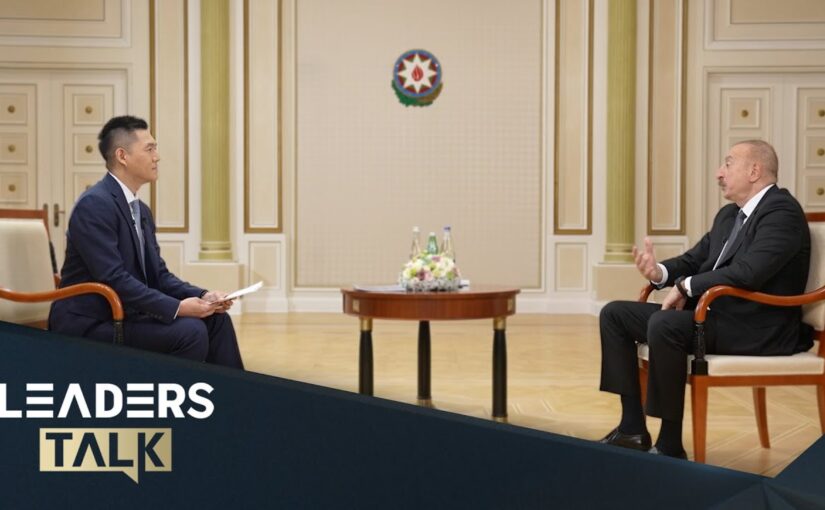
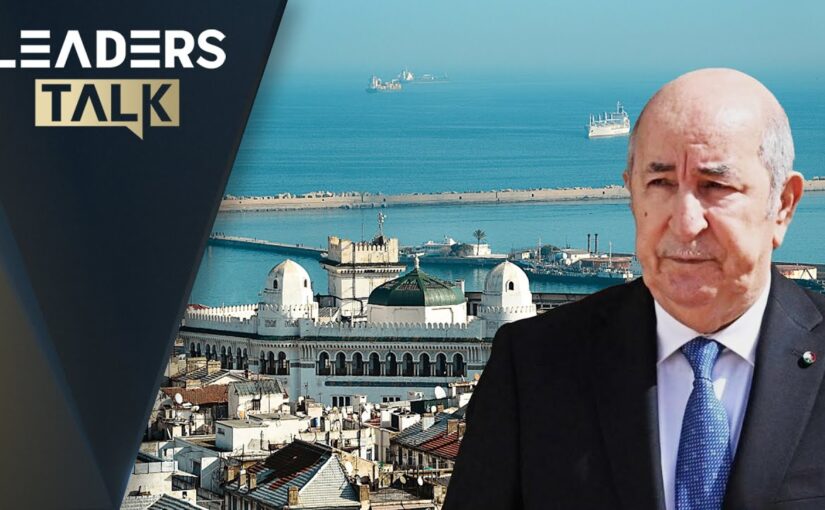
We are very pleased to reproduce the latest episode of the CGTN series Leaders Talk, featuring Brazilian President, Luiz Inácio Lula da Silva.

President Lula spoke to CGTN’s Wang Guan on April 13 in Shanghai, at the start of his state visit to China, his fifth such visit and his first visit outside of the Americas since the start of his third presidential term on January 1. Whilst in Shanghai, Lula attended the inauguration of his successor as Brazilian President following his first two terms of office, and Workers’ Party (PT) comrade, Dilma Rousseff to head the New Development Bank (NDB), initiated by the BRICS grouping, becoming the first head of state to visit the bank, and also visited a research institute of the Chinese telecom company Huawei.

“The decision to create the NDB was a milestone in the joint action of emerging countries…The creation of this bank showed that the union of emerging countries is capable of generating relevant social and economic changes for the world,” Lula tweeted.

He went on to note that: “For the first time, a development bank with global reach was established without the participation of developed countries in its initial phase. It was free, therefore, from the shackles of conditionality imposed by traditional institutions on emerging economies.” 

In his interview with Wang Guan, throughout which he spoke with the candour and passion that befits a lifelong militant and fighter for the working class, Lula said that the aim of his then upcoming talks with his friend President Xi Jinping was to establish a strategic partnership between their two countries that could last for decades and which could cover many areas, besides the economy and trade, including science, technology, education and cooperation in space. 

He intended to build on the “extraordinary relationship” he had enjoyed with China during his first two terms. Referring to the significance of Dilma’s leadership of the NDB, he said that countries like Brazil and China did not need to trade in US dollars. They could use their own currencies or a unified one.

Explaining that the world had changed since 1945, Lula said that a new model of global governance was needed. To solve the Russia/Ukraine conflict, it was necessary to bring the countries that wanted peace together (what has elsewhere been described as a ‘peace club’), so that they could together come up with a proposal.

Fifty years ago, Lula continued, no one believed that China could become a great power. It had done so, not by inciting war, but by seeking common development. He was glad to see that China was investing in Africa and Latin America. In the wake of the 2008 Global Financial Crisis, everyone agreed that the developing countries were in need of investment, but no country had actually delivered on this except for China.

Lula said he finds it admirable that China has achieved high-speed, leapfrog development whilst maintaining its ideology and party building. Lifting hundreds of millions of people out of poverty is not an easy task. Brazil had eliminated hunger by 2012, but now it had returned (thanks to the disastrous far-right presidency of Jair Bolsonaro). Brazil therefore needed to learn from China in a serious, friendly and humble way. There is no need to copy everything, but neither should one deny everything. 

Responding to his interviewer’s observation that Lula has a considerable following in China, the Brazilian leader spoke movingly about what motivated him. One of 12 children, eight of whom survived, he quit school to work as a street vendor at age 8 to help feed his family. “I will always remember where I come from. Being the president is not a profession. It is to represent the Brazilian people in exercising power. The reason I wanted to become the President of Brazil was to improve the lives of the poorest people. We must ensure that they have breakfast, lunch and dinner every day and jobs to support their families.”

The full interview is embedded below.

China commits to assisting Afghanistan’s reconstruction and development

On April 12-13, Chinese State Councilor and Foreign Minister Qin Gang paid an official visit to Uzbekistan and then attended two important meetings, namely the fourth foreign ministers meeting among neighbouring countries of Afghanistan, followed by the second informal meeting of foreign ministers of China, Russia, Pakistan, and Iran on the Afghan issue.

Coinciding with these events, on April 12, the Chinese Foreign Ministry released an 11-point position paper on the Afghan issue. It noted that: “China respects the independence, sovereignty and territorial integrity of Afghanistan, respects the independent choices made by the Afghan people, and respects the religious beliefs and national customs of Afghanistan. China never interferes in Afghanistan’s internal affairs, never seeks selfish interests in Afghanistan, and never pursues so-called sphere of influence.”

China, it said, sincerely hopes that Afghanistan could build an open and inclusive political structure, adopt moderate and prudent domestic and foreign policies, and engage in friendly exchanges with all countries especially neighbouring countries. “We hope the Afghan Interim Government will protect the basic rights and interests of all Afghan people, including women, children and all ethnic groups.”

China will continue to do its best to help Afghanistan with reconstruction and development, make plans with Afghanistan and fulfil its assistance pledges, promote steady progress in economic, trade and investment cooperation, and actively carry out cooperation in such fields as medical care, poverty alleviation, agriculture, and disaster prevention and mitigation, so as to help Afghanistan realise independent and sustainable development at an early date. China welcomes Afghanistan’s participation in Belt and Road cooperation.

Stressing the need to support Afghanistan in countering terrorism, China hopes that Afghanistan will fulfil its commitment in earnest and take more effective measures to crack down on all terrorist forces including the ETIM [East Turkestan Islamic Movement] with greater determination.

The paper added: “It is a widely held view in the international community that, by seizing Afghanistan’s overseas assets and imposing unilateral sanctions, the US, which created the Afghan issue in the first place, is the biggest external factor that hinders substantive improvement in the humanitarian situation in Afghanistan. The US should draw lessons from what happened in Afghanistan, face squarely the grave humanitarian, economic and security risks and challenges in Afghanistan, immediately lift its sanctions, return the Afghan overseas assets, and deliver its pledged humanitarian aid to meet the emergency needs of the Afghan people.”

It also stressed: “It is a shared view of regional countries that the military interference and ‘democratic transformation’ by external forces in Afghanistan over the past 20-odd years have inflicted enormous losses and pain on Afghanistan. It will be difficult to eliminate the negative impacts for many years to come. To help Afghanistan achieve sustained peace and stability, relevant countries should not attempt to re-deploy military facilities in Afghanistan and its neighbourhood, practice double standards on counter-terrorism, or advance their geopolitical agenda by supporting or conniving at terrorism.”

Continue reading China commits to assisting Afghanistan’s reconstruction and development

Lula’s successful visit serves to deepen Brazil-China partnership

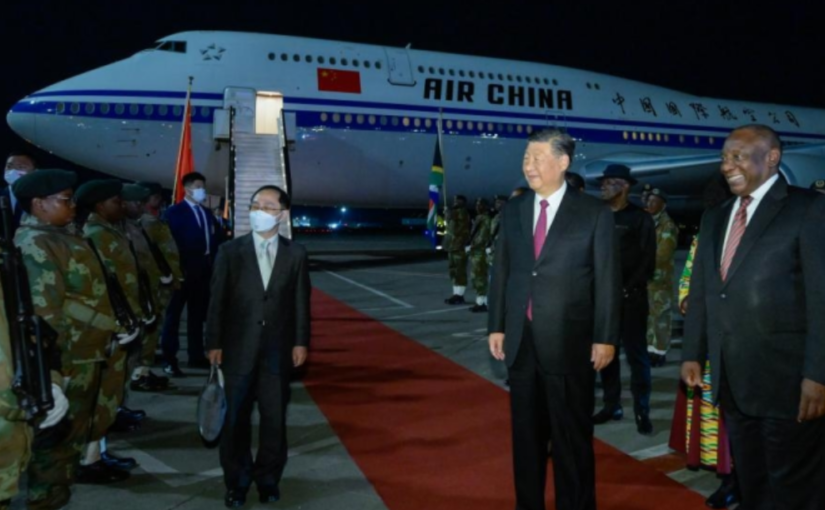
The state visit to China, April 12-15, by Brazilian President Luiz Inácio Lula da Silva, his fifth such visit and his first visit outside the Americas since the start of his third presidential term, was a complete success, characterised by the great warmth shared by the two countries and peoples as well as by their respective leaders. 

The high point of the visit was the formal talks between the two heads of state, which followed a grand welcoming ceremony, where the playing of a popular Brazilian song from the period of struggle against the pro-American military dictatorship, but which also refers to a new era, a concept intrinsic to Xi Jinping Thought, visibly moved at least one Brazilian minister to tears.

Welcoming President Lula, Xi Jinping acclaimed him as an old friend of China, who he was really happy to meet again. He once again expressed his sympathy for Lula’s recent illness, which had caused him to postpone his visit, as well as his appreciation that he had rescheduled so soon after his recovery. 

President Xi pointed out that China and Brazil are the two biggest developing countries and emerging markets in the Eastern and Western hemispheres. As comprehensive strategic partners, China and Brazil share extensive common interests. The overarching, strategic and global influence of China-Brazil relations continues to grow.

The two sides, Xi continued, need to deepen cooperation, steadily advance their major cooperation projects, and further unleash cooperation potential in agriculture, energy, infrastructure, space, aviation, innovation, and so on.

On regional and international issues, President Xi pledged China’s firm support for Latin American and Caribbean (LAC) countries to cement the sound momentum of peace, stability, independence, solidarity and development, advance regional integration and play a greater role in international affairs. China will work with Brazil to ensure the continued success of the China-CELAC [Community of Latin American and Caribbean States] Forum, take cooperation between China and LAC countries to a new level, and achieve common development. China will also work with Brazil to strengthen cooperation with MERCOSUR [Southern Common Market] and UNASUR [Union of South American Nations]. Facing global changes of a magnitude unseen in a century, China and Brazil are resolved to stand on the right side of history, practice true multilateralism, advocate the common values of humanity, work for a more just and equitable international governance system, truly safeguard the common interests of developing countries and international justice and equity, and build a community with a shared future for humanity.

Responding, President Lula said that his choice for his first visit outside the Americas since his return to the presidency reflects Brazil’s affection for China and commitment to Brazil-China relations. Brazil is committed to building closer relations with China from the strategic perspective of shaping a just and equitable international order. Noting his excellent visit to the Huawei research institute in Shanghai, where he met Chinese business representatives, President Lula expressed deep admiration for China’s 5G progress and his hope to expand Brazil-China cooperation in relevant fields. He believed deeper and greater cooperation with China would contribute to Brazil’s reindustrialisation, help address poverty and other issues and deliver benefits to the people.

On the crisis in Ukraine, both sides agreed that dialogue and negotiation is the only feasible way for settling it and that all efforts that are conducive to its peaceful resolution should be encouraged and supported. They appealed to more countries to play a constructive role for a political settlement.

Following their talks, the two presidents witnessed the signing of 15 bilateral agreements on trade and investment, digital economy, scientific and technological innovation, information and communications, poverty reduction, quarantine, space and other areas. They also issued a Joint Statement Between the People’s Republic of China and the Federative Republic of Brazil on Deepening the Comprehensive Strategic Partnership.

The joint statement consists of 49 clauses covering the whole spectrum of bilateral relations as well as a number of other issues. In it, the two leaders called for deepening cooperation in such areas as poverty reduction, social development, and scientific and technological innovation, as well as expanding into new areas of cooperation such as environmental protection, tackling climate change, the low-carbon economy and the digital economy.

They affirmed the central role of the United Nations in the international system and supported the promotion of active discussions amongst BRICS members on the group’s expansion process.  China expressed its support to the Brazilian G20 Presidency, to begin on December 1 2023, seen as an opportunity to strengthen the priorities of developing countries within the group. Attention was also paid to the need to  strengthen bilateral cooperation in the area of environmental protection, combating climate change and the loss of biodiversity, promoting sustainable development and ways to speed up the transition to a low-carbon economy. And they agreed to deepen dialogue in the economic-financial area and to strengthen trade in local currencies.

The agreement noted that: “Faced with the return of the upward trajectory of people in a state of food insecurity in the world, the two parties recalled the successful experience of both countries in the fight against hunger and extreme poverty, and in the adoption of measures to facilitate low-income populations’ access to healthy eating. Given the commitment of both countries in eradicating hunger and extreme poverty at a global level and in line with the United Nations Decade for Family Farming (2019-2028), they recognised the central role of social policies and family farming for the combating of poverty and malnutrition. In this regard, they agreed to strengthen bilateral cooperation. This will establish a joint work plan to address issues related to the fight against hunger and poverty and for rural development, including cooperation in policies and exchange of experiences aimed at improving income transfers, socio-economic inclusion and the sustainability of food production, whether through technical cooperation, adequate machinery, or renewable energy solutions adapted to small rural properties.”

Reflecting on the Covid-19 pandemic, the statement affirmed that Chinese vaccines were instrumental in combating the pandemic in Brazil and contributed to saving millions of Brazilian lives.

The final clause of the agreement states that: “The parties recognised the full success of President Lula’s visit and the outstanding significance of this visit in the history of Brazil-China relations. President Lula thanked President Xi Jinping and the Chinese government and people for the warm welcome and great hospitality received during his visit to China and invited President Xi Jinping to make a State Visit to Brazil on an opportune date in 2024 to celebrate the 50 years of diplomatic relations between Brazil and China. President Xi Jinping expressed, with satisfaction, his gratitude for the invitation, and the parties will follow-up on it through diplomatic channels.” 

We reprint below a report on the talks between the two presidents and the full text of the joint statement. They originally appeared on the websites of the Chinese and Brazilian foreign ministries respectively.

President Xi Jinping Holds Talks with Brazilian President Lula da Silva

On the afternoon of 14 April, President Xi Jinping held talks with Brazilian President Lula da Silva, who is on a state visit to China, at the Great Hall of the People.

President Xi extended a warm welcome to President Lula. He pointed out that China and Brazil are the two biggest developing countries and emerging markets in the Eastern and Western hemispheres. As comprehensive strategic partners, China and Brazil share extensive common interests. The overarching, strategic and global influence of the China-Brazil relations continues to grow. China always views and develops relations with Brazil from a strategic and long-term perspective, and sees the relationship as a high priority on its diplomatic agenda. China will work with Brazil to create a new future for their relations in the new era, deliver greater benefits to the two peoples, and play an important and positive role for peace, stability and prosperity in their regions and around the world.

Continue reading Lula’s successful visit serves to deepen Brazil-China partnership

Biden’s ‘Democracy Summit’ offers no anchor to a sinking US hegemony

In this article for Beijing Review, Friends of Socialist China co-editor Danny Haiphong assesses the recent ‘Summit for Democracy’. From the attendees and content of the event, which was dominated by the US and a few of its close allies in the West, Danny concludes that when the organizers use the term democracy, what they mean is “whatever policies and governance decisions serve US interests.”

Increasingly, the countries of the Global South cannot be duped by the West’s claims to democratic greatness. After all, “no one in the US, or the world, votes for or participates in the American policy of invading, sanctioning and destabilizing nations across the globe.” People are coming to understand the truth that US democracy is “a democracy for the few, a democracy of a tiny number of corporations and their political representatives; a democracy that serves the most destructive force on the planet: US hegemony.”

What the US has is “a system that weaponizes democracy for the sake of hegemony and economic domination.” This is not the democracy the world needs. It is China and the other socialist, progressive and anti-imperialist countries that are moving towards a genuinely democratic world order, based on peace, equality, sovereignty, non-interference, mutual learning and mutual benefit. The West needs to stop lecturing others on the topic of democracy, and instead learn some lessons.

U.S. President Joe Biden hosted the second “Summit for Democracy” from March 28 to 30. In the lead-up to the event, which first took place virtually in December 2021, the U.S. Department of State had promoted the three-day meeting as “a multilateral collaboration” between the U.S. and cohosts spanning four continents—Zambia, the Republic of Korea, Costa Rica and the Netherlands. But nothing could be further from the truth. The gathering proved an exercise in unilateralism that sought to reestablish the American monopoly on democracy, and a failed one at that.

The troubles for the meeting had already begun well before it got underway. Mainstream U.S. media as well as many in the U.S. foreign policy establishment questioned Biden’s decision to host the event during such a delicate period for his country’s global reputation. Chair of the Council on Foreign Relations and former Department of State official Richard Hass referred to it as “a bad idea that won’t go away.” The Washington Post called it “inconsequential” while outlets such as The New Yorker retorted that U.S. democracy is currently in “a worse state than ever before.”

British daily business newspaper Financial Times alternatively labeled the gathering “awkward” in its approach and lamented how the U.S. lacked an effective strategy toward developing stable relations with the Global South.

Continue reading Biden’s ‘Democracy Summit’ offers no anchor to a sinking US hegemony

France is correct to pursue strategic autonomy

French president Emmanuel Macron’s recent comments in Beijing that European countries should avoid “just being America’s followers” and “getting caught up in crises that are not ours” have attracted condemnation from the Inter-Parliamentary Alliance on China (an international alliance of China hawks including Marco Rubio and Iain Duncan Smith), which accuses Macron of “appeasing” Beijing and failing to stand up for democracy.

Friends of Socialist China co-editor Carlos Martinez responded to IPAC’s vitriol in a brief interview with the Morning Star, pointing out that Macron’s comments are essentially a reiteration of the Gaullism that has oriented French foreign policy since the late 1950s. That France should pursue an independent foreign policy based on its own interests, rather than acting as a proxy of the US, is obviously reasonable. Instead of issuing hysterical condemnation of Macron, British politicians would be well advised to follow the example of seeking strategic autonomy and establishing a sensible distance from the US’s reckless New Cold War.

BRITAIN would be well advised to follow [French President Emmanuel] Macron’s example in staying out of a US confrontation with Beijing, a China expert says.

Mr Macron told reporters following a summit with Chinese President Xi Jinping that European countries should avoid “just being America’s followers” and “getting caught up in crises that are not ours.”

He singled out rising tensions over Taiwan, asking: “Is it in our interests to accelerate [a crisis] on Taiwan? No. The worst thing would be to … take our cue from the US agenda and a Chinese overreaction.”

Thirteen British MPs signed an attack on Mr Macron drafted by the Inter-parliamentary Alliance on China, an international assemblage of legislators. It condemns “Beijing’s aggressive stance towards Taiwan” and voices dismay at the French president for “appeasing” China.

But author Carlos Martinez told the Morning Star: “That France should pursue an independent foreign policy, rather than acting as a proxy of the US, is obviously reasonable.

“On this question, Britain would be well advised to follow Macron’s example, although the current political configuration makes that difficult. The hard right in the Conservative Party is pushing for deeper alignment with (or subservience to) the US ruling class, and it’s found an unlikely bedfellow in the Labour leadership.

“It is crucial that Britain stop outsourcing its foreign policy to Washington. British people have much to gain from friendly relations, trade, co-operation and people-to-people exchanges with China.

“Such relations must of course be based on mutual respect, which means we should respect China’s sovereignty and accept that the Taiwan issue can only be solved by the Chinese people on both sides of the strait.”

The sudden arrival of a cold war with China

In the following article, which we are pleased to reprint from the Morning Star, Ken Livingstone, former Mayor of London (2000-2008), denounces the new cold war that has been instigated against China, in which Britain has once again followed behind the United States. 

Outlining some of the hostile measures taken by the UK against China, Ken notes how recent ex-Prime Minister Liz Truss had been set to formally declare China to be an enemy of Britain while current Prime Minister Rishi Sunak describes the country as a “challenge to the world order.”

In contrast, Ken writes: “The rise of China is one of the greatest events in world history in my lifetime. When I was born, life expectancy in China was under 40. Around 90 per cent of the population was illiterate. The country had been torn apart by a century of foreign aggression, invasion, warlordism and civil wars. Millions died every year from floods and famine.

“What a contrast to today’s China, which is on the cusp of overtaking the US as the world’s greatest economy – a change unseen in over a century. China’s life expectancy has already overtaken that of the US… This economic transformation is one that all decent people should welcome.”

Ken compares the present policies towards China with the “golden era” declared by Prime Minister David Cameron and Chancellor George Osborne as recently as 2015 and adds that when he was elected Mayor in 2000, “I was determined that London would develop positive relations with China.” He adds:

“We opened offices for London in Beijing and Shanghai, encouraged Stock Exchange listings, brought the annual celebration of Chinese New Year to Trafalgar Square, and expanded co-operation in a whole range of sectors, such as fashion, design and the creative industries.”

Whilst such positive policies were broadly supported by successive Labour leaders: “Sadly, they now find little or no echo from Keir Starmer and his shadow foreign secretary David Lammy. Their political horizons seem confined to attempting to outdo the Tories as to who can be the most bellicose cold warrior.”

This establishment consensus is leading us into dangerous waters, such as the Aukus nuclear submarine deal with Australia and the United States. Britain is vastly increasing military spending at a time when, “an increasing number of people aren’t being forced to choose between heating and eating because they can’t afford either.”

Ken concludes: “Progressives in the labour movement need to… build the broadest possible alliance to reverse the slide to disaster.”

AS SOMEONE who lived through the first cold war against the Soviet Union and its allies, and who was in some important respects politically shaped by it — including in terms of my decades-long opposition to nuclear weapons — I recognise all too well the depressing signs of a new cold war against China, being fomented by the US, Britain and a handful of other countries.

Here in Britain, we’ve seen:

● A thriving relationship with Chinese telecommunications giant Huawei scuppered at US insistence, leaving 5G infrastructure to be ripped out of our networks, increasing costs to the Treasury and leaving us in the broadband slow lane.

● A ban on the massively popular TikTok app on government devices.

● Attacks and threats to close Confucius Institutes, which play an invaluable role in lessening our educational deficit in the teaching of Chinese language and culture.

● Sanctions and refusal of investment from Chinese companies on dubious national security grounds, costing us jobs, markets and technical upskilling.

● A ban on the Chinese ambassador setting foot in the Palace of Westminster, instigated by a vociferous gang of right-wingers like Iain Duncan Smith.

Not surprisingly, all this, along with the attempts to blame China for the Covid pandemic from Donald Trump and his allies internationally, has led to an upsurge in racist attacks on members of Chinese and Asian communities.

Continue reading The sudden arrival of a cold war with China

Chinese Ambassador visits Northern Ireland

In late March, Zheng Zeguang, China’s Ambassador to the UK, paid his first official visit to Northern Ireland. Despite strained relations between London and Beijing, this visit was a great success, with the Ambassador meeting a wide range of people from political, academic, business and other social circles, in  his two-city tour of Belfast and Derry.

On March 27, Ambassador Zheng met Sinn Féin’s Christina Black, the current Lord Mayor of Belfast. Mayor Black warmly welcomed the Ambassador and his delegation. She said that, in 2016, Belfast became a sister city of Shenyang, and since then the two sides have made positive progress in mutually beneficial cooperation in the fields of economy, trade, education, and culture. Belfast has world-renowned universities and unique advantages in high-end manufacturing, green development, and many other areas. It is a city full of vitality, hope, and warmth. She was eagerly looking forward to unleashing the cooperation potential between China and Belfast through Ambassador Zheng’s visit, and welcomes more Chinese investors, students and tourists to come to Belfast.

Ambassador Zheng thanked the Lord Mayor for her warm hospitality. He said that during his visit to Belfast, he had a taste of the city’s historical heritage and unique political, economic, and cultural characteristics. The Ambassador expressed his hope for joint efforts of the two sides to promote mutual understanding, deepen friendship, and advance exchanges and cooperation.

Ambassador Zheng said that China is promoting high-quality development and will continue to pursue opening up at a higher level and accelerate green transformation. There is great potential for cooperation between China and Belfast on business, education, cultural exchanges, and tourism. It is hoped that Belfast and Shenyang will strengthen exchanges and cooperation as sister cities to bring more tangible benefits to the people of both sides.

Speaking on camera to China Daily after the meeting, Black said: “I have to say our relationship with China is fantastic.”

On being elected Lord Mayor in June last year, Councillor Black had said: “I love this city. I was born and raised here in a strong working-class community and I am immensely proud to be a Bealfeirstian…

“As a community activist, I am committed to empowering local people and communities, and making sure people have a strong voice on their side. It’s what inspired me to get involved in politics, and I am honoured to now be representing the city I love so much, as its First Citizen.”

Councillor Black said one of her priorities for her term in office was to showcase Belfast’s diversity, and support workers and families through the cost of living crisis. She said:

“I’m delighted to have this amazing opportunity. I’m passionate about this city and its people and I can’t wait to get out and meet new people and find out more about the amazing work that’s going on in communities right across our city. I will be Belfast’s biggest ambassador and will use my time in office to keep pushing forward priorities around the inclusive regeneration of our city.

“Belfast is a confident and thriving city with enormous untapped potential to prosper further. The opportunities for our city to grow are endless and working together we can seize them. During my term I want to be a positive voice for everyone in this wonderful city.”

The following day, Ambassador Zheng met with Alex Maskey, the Speaker of the Northern Ireland Assembly.  Maskey is a veteran leader of Sinn Féin who has devoted his whole life to the struggle for Irish freedom. He was interned without trial twice in the 1970s and survived two assassination attempts. 

The two had an in-depth exchange of views on enhancing cooperation between China and Northern Ireland in various fields.

Both sides believe that there is great potential for mutually beneficial cooperation between China and Northern Ireland and that fruitful results have been achieved at the China-UK/Northern Ireland Forum on New Energy Innovation. China and Northern Ireland should strengthen exchanges and dialogue, deepen mutual understanding, and actively expand cooperation in the fields of economy and trade, new energy, financial services, education, culture, and tourism, so as to better benefit their people.

On March 29, the Ambassador met with the Mayor of Derry and Strabane, Sinn Féin’s Sandra Duffy. Mayor Duffy warmly welcomed Ambassador Zheng and his delegation and outlined the city’s development in recent years and its future plans. She said that Derry has a number of favourable conditions, such as its geographical advantage of connecting the European Union and the United Kingdom. It has identified new energy, digital economy, high-end manufacturing, financial services, and health as the key sectors for future development, and Chinese entrepreneurs are welcome to invest in the city. Derry and Dalian have carried out sister-city cooperation for five years, and the two sides have achieved positive results in mutually beneficial cooperation in the fields of economy and trade, education, research and development, tourism, and culture. The city views China as an opportunity for development and looks forward to expanding exchanges and cooperation through the Ambassador’s visit.

Ambassador Zheng thanked Mayor Duffy for her warm hospitality, and expressed his hope that through his visit, mutual understanding between China and Northern Ireland will be enhanced and friendship and cooperation deepened. Although China-UK relations are currently facing some challenges, local practical cooperation has been growing steadily, which reflects the huge potential of cooperation between the two sides and the shared aspirations of the two peoples. China will continue to actively support Dalian and other Chinese cities to expand friendly exchanges and cooperation with Derry, especially to further tap into the potential for cooperation in areas such as economy and trade, education, culture, tourism, sports, new energy, and high-end manufacturing, so as to better benefit the people of both sides.

In her meeting with the Ambassador, the head of the Northern Ireland Civil Service Jayne Brady said that Northern Ireland has long-standing friendly exchanges with China and attaches great importance to developing relations with the country. Northern Ireland enjoys strong technological advantages in fields such as green economy, financial services, and food safety, and has the geographical advantage of being a bridge connecting the two major markets of the European Union and the United Kingdom. She welcomes Chinese companies to invest in Northern Ireland and hopes that hydrogen-powered buses, whiskey and other products from Northern Ireland can enter the Chinese market. Northern Ireland would also like to further expand exchanges and cooperation with China in education, culture, and tourism, among other areas.

Ambassador Zheng said that in recent years, China and Northern Ireland have carried out fruitful cooperation in economy and trade, education, culture, and other fields, bringing tangible benefits to both sides and that there are great potential and broad prospects for cooperation between the two sides in new energy innovation. China welcomes more high-quality products from Northern Ireland to enter the Chinese market and more friends to go to China, supports the cities and institutions of the two sides to strengthen partnerships, and encourages more two-way personnel exchanges, so as to transform the potential of cooperation into practical cooperation results and bring more benefits to the people of both sides.

Ambassador Zheng also visited Ulster University and Queens University Belfast. He commended Ulster University on its outstanding strength in teaching and research and the positive progress it had made in cooperation with Chinese universities. He also applauded Ulster University Confucius Institute for its important contributions to helping the people of Northern Ireland learn Chinese and understand Chinese history and culture, and to promoting educational cooperation between China and Northern Ireland.

Ambassador Zheng expressed hope for Ulster University to continue to take the lead in cooperation with China, strengthen exchanges and cooperation with Chinese universities, and leverage its complementary advantages to achieve mutual benefit. He also expressed best wishes for greater success of the Confucius Institute, and his hope that it will continue to provide world-class Chinese language teaching to students in Northern Ireland and make positive contributions to enhancing the friendship between the people of China and Northern Ireland.

Vice-Chancellor Paul Bartholomew said that Ulster University cherishes its cooperation with China and has established partnerships with many Chinese universities such as Nanjing University of Chinese Medicine and Shaanxi University of Science and Technology. The relevant cooperation continued uninterrupted even during COVID, which speaks fully to its resilience and strong will to cooperate with Chinese universities. Ulster University looks forward to further strengthening the cooperation, and welcomes more Chinese students to study at the university. Ulster University will continue to run the Confucius Institute well and play an active role in promoting educational cooperation and cultural exchanges between China and Northern Ireland.

Visiting Queen’s University Belfast, Vice-Chancellor Ian Greer said that his university attaches great importance to exchanges and cooperation with Chinese universities and welcomes more Chinese students to study at Queen’s. The university values China’s strength in research and huge potential of development and would like to further deepen cooperation with Chinese scientific research institutions. It was a great honour for him to co-host the China-UK/Northern Ireland Forum on New Energy Innovation with the Chinese Consulate General in Belfast. The forum was a meaningful trial to tap into complementary advantages for win-win results. It is hoped that the two sides will continue to explore and carry out mutually beneficial cooperation and contribute to green and low-carbon development in Northern Ireland and China.

Ambassador Zheng noted that Queen’s is a world-renowned university and stands out for its top-class teaching and research capacity. It is great to see that Queen’s has established cooperative relations with many Chinese universities. China is striving for high-quality development and supports technological innovation. It has a super-size market and unique advantages in ultra-large-scale application of emerging technologies. China is ready to encourage more universities to expand teaching and research cooperation with Queen’s and will encourage more Chinese students to choose it as their destination for studying overseas.

Addressing a welcome reception at the Chinese Consulate General in Belfast, Zheng said that his country will encourage more Chinese groups, enterprises, students and tourists to come to Northern Ireland, and believes that in Northern Ireland they will find a safe and friendly cultural environment and a fair and open business environment. We welcome people from all walks of life in Northern Ireland to visit China more often, and hope that the business community in Northern Ireland will expand into the Chinese market and share development opportunities through platforms such as the China International Fair for Trade in Services, the China International Import Expo, the Canton Fair, and the World Intelligence Congress.

At a press conference the Chinese Ambassador said:

“This is my first visit to Northern Ireland and Belfast. I enjoyed the visit so much. Regional cooperation is a very important component of state-to-state relations. The purpose of my visit is to enhance mutual understanding and promote friendship and cooperation. In the past two days, I had extensive exchanges with people from various sectors in Northern Ireland and discussed with them how best to expand cooperation in various fields between China and Northern Ireland. We all see a huge potential and are keen to broaden cooperation between the two sides. I feel very encouraged by it.

“This morning, I attended the China-UK/Northern Ireland Forum on New Energy Innovation, the first of this kind between China and the UK. The discussions were very productive, and in particular, there was a keen interest on both sides to work together to research and develop hydrogen energy and to put it into application. It is a very good example that China and Northern Ireland can conduct more dialogues and discussions in the traditional areas of investment, trade, education, cultural exchange, tourism, and sports, as well as new areas such as new energy, financial services, financial technology, biomedicine and creative industries. I am optimistic about the opportunities of cooperation between the two sides.”

Responding to a question from CGTN, he said:

“I do see the benefits of cooperation and exchanges between China and Northern Ireland already. In recent years, two-way trade and investment have kept growing, and there are about 2,000 Chinese students studying in Queen’s University Belfast, Ulster University and other institutions. The Vice Chancellors of the two universities told me that they want to see more Chinese students coming to Northern Ireland and would like to have stronger cooperation in teaching and research with Chinese universities. The CEO of the corporation which invested and built the Titanic Museum told me that before the pandemic, there were so many Chinese tourists, and that she would love to see more Chinese tourists return to Northern Ireland and Belfast.

“It was an honour for me to have a meeting with Speaker Alex Maskey and talk to the representatives of political parties. I had a very good meeting with the head of the civil service Dr Brady as well. I feel encouraged by their positive attitude towards cooperation with China. I said to my friends here that Northern Ireland is a best kept secret. It is so beautiful, pure, and full of potential. I think in the months to come, you will see more delegations and tourists coming this way. We encourage people from all walks of life here to visit China as well. This cooperation certainly serves the interest of both sides.”

A reporter from Raidió Fáilte asked:Ambassador, on behalf of the Irish speaking community in Belfast, I want to welcome you, on your first visit to our city. Raidió Fáilte are currently working on a series of multi-cultural, multi-lingual projects, with your colleagues in the Confucius institute. In your opinion, how important are these collaborations, and would you like to see similar co-initiatives in the future?”

The Ambassador replied: The cooperation on Confucius Institutes is hugely important as it not only provides opportunities for students here to learn the Chinese language and to better appreciate the Chinese culture, but also helps facilitate cultural exchanges between the two sides.

“The Confucius Institute that I have visited is located at Ulster University. It is a big success, a model institute. It has the support of the British Council, the support of the University and the support of the Chinese Consulate General as well. It is so popular among the young students. I was able to meet with a group of ‘young ambassadors’. The students are speaking perfect Mandarin and they will obviously become citizens of the world. When they travel to China, do business with China, and make friends in China, it will be so easy to do so without language barrier. We will continue to support the teaching of the Chinese language and the Confucius Institutes here.”

Among the diplomatic and business representatives who accompanied Ambassador Zheng on his visit were those from the London offices of the China National Petroleum Corporation, China Construction Bank and the Agricultural Bank of China. Research agreements were signed between Queen’s University Belfast and various academic institutions in China covering hydrogen energy.

Earlier in March, the Republic of Ireland’s Minister for the Environment, Climate and Communications and Minister for Transport, Eamon Ryan, who is also the leader of Ireland’s Green Party, visited China. Ryan, who previously visited China in 1987 and 2010, told the Irish Times prior to his visit:

“One of the main things I’m looking forward to in the visit is to be able to discuss some key issues around climate change and energy, and that’s part of a wider European-Chinese dialogue that is continuing. So, we have to, to a certain extent, put aside if there are other issues of real concern and make sure we do get cooperation, because the world would not be a safe place for anyone if we don’t make that progress on climate.”

Although the main focus of his trip was climate change, renewable energy and transport policy, with visits including those to a high-speed rail terminal and to solar technology companies, Minister Ryan also attended celebrations for Saint Patrick’s Day in Beijing, Shanghai and Hong Kong. In his Irish Times interview, he noted:

“In many ways, they [the Chinese] have a lead now when it comes to the new industrial revolution that’s taking place in clean energy technologies. The Chinese export 85 per cent of the batteries that are going to be used in electric vehicles. They export 80 per cent of the solar panels. So, they have an interest in terms of their own economic development. They have a real opportunity in this clean energy area. So, both for their need to protect their own people, but also to continue to maintain their advantage in clean energy, it makes sense for China to be progressive…

“Historically, China has looked to Ireland with interest in a disproportionate scale to our size for a variety of historical reasons, going right back to their inclusion in the United Nations and so on.”

Embedded below is a short video produced by China Daily on Ambassador Zheng Zeguang’s Northern Ireland visit.

Counter-Summit for Democracy: where the truth was told

This article by Dee Knight – member of the DSA International Committee’s Anti-War Subcommittee and of the Friends of Socialist China advisory group – provides a valuable summary of the Counter-Summit for Democracy we hosted on 2 April 2023.

A key theme running throughout the speeches is that there was nothing democratic whatsoever about Joe Biden’s Summit for Democracy, held a few days before our counter-summit. Prominent invitees to the Summit included Israel, where mass protests are currently taking place against Netanyahu’s authoritarianism; Ukraine, which has banned all communist and socialist parties; France, where millions are protesting Macron’s anti-democratic ramming through of pension changes; and Taiwan, a province of China which was invited specifically in order to undermine the One China Principle and escalate tensions across the Taiwan Strait. Meanwhile the host country – the US – has an entirely dubious democratic record, given its disastrous racism and inequality, not to mention its habit of spreading ‘democracy’ around the world via bombs, coups, sanctions and coercion.

Several speakers noted that the socialist countries are leading the way in terms of developing new forms of popular democracy that are responsive to the needs and aspirations of ordinary people. Meanwhile, US hegemony is dying and a multipolar world is emerging – a system of international relations based on equality, respect for sovereignty, and adherence to the UN Charter. As Calla Walsh commented, “Biden’s summit for democracy would better have been called a summit against a democratic world.”

This article first appeared in LA Progressive.

Speakers at the April 2 “Counter-Summit for Democracy” showed a rogues’ gallery of the “stars of democracy” at Joe Biden’s official summit: authoritarian right-wing leaders Netanyahu of Israel, Duda of Poland, Modi of India, Zelensky of Ukraine and Meloni of Italy. “Even Western officials, corporate media outlets, and mainstream human rights organizations have admitted [they] are authoritarian,” Ben Norton of the GeoPolitical Economy report observed. He said Italy’s far-right Prime Minister Giorgia Meloni “is a defender of former fascist dictator Benito Mussolini… Her far-right political party Fratelli d’Italia (Brothers of Italy) still uses the same symbols and colors of Mussolini’s fascist movement.”

Netanyahu spoke at Biden’s summit while mass protests were going on in Israel against his authoritarian regime. Israel’s most influential newspaper Haaretz warns that “‘Israel’s Government Has neo-Nazi Ministers. It Really Does Recall Germany in 1933′.”

The US pressured all invitees to sign a joint statement denouncing Russia over the proxy war in Ukraine, Norton said. Poland is virulently anti-Russia, so it was welcomed; Hungary has tried to balance good relations with both the West and Russia, so it was the only EU member not invited.

The governments of Lula Da Silva in Brazil and Andres Manuel Lopez Obrador (AMLO) of Mexico refused to support Washington’s denunciation of Moscow. Norton said “the US government exposed its cynical political designs by inviting Ukraine and Taiwan to participate in the summit, despite the fact that Taiwan island is not a country, but rather a province of the People’s Republic of China.”

Volodymyr Zelensky spoke at the conference in spite of his attacks on democracy at home, Norton said. “Zelensky’s regime has banned all communist and socialist parties, while imposing some of the most aggressive anti-worker legislation in the world, suspending collective bargaining rights and essentially making it illegal to form a union. Even the New York Times… acknowledged that Zelensky’s regime has imposed authoritarian control over the media. Meanwhile, Ukrainian opposition politicians and critics have been arbitrarily arrested.”

Continue reading Counter-Summit for Democracy: where the truth was told

China’s diplomacy furthers Yemen peace talks

Since the dramatic announcement from Beijing on March 10 that the hitherto bitterly estranged Middle Eastern neighbors, the Kingdom of Saudi Arabia and the Islamic Republic of Iran, had agreed to reconcile as a result of Chinese mediation, the political map of the region has continued to evolve dramatically in a direction favorable to its countries and peoples and unfavorable to imperialism. 

On April 6, in a further development not flagged in advance, Chinese State Councilor and Foreign Minister Qin Gang met in Beijing, both separately and in a trilateral meeting, with Iranian Foreign Minister Hussein Amir-Abdollahian and Saudi Foreign Minister Prince Faisal bin Farhan Al Saud. Witnessed by their Chinese counterpart, the two ministers signed an agreement re-establishing their diplomatic relations with immediate effect, following up the agreement reached in principle the previous month. 

Iranian President Ebrahim Raisi has accepted an invitation to visit Saudi Arabia and there is talk of future Saudi investment in Iran, which would constitute a significant blow to the US sanctions regime. 

In a related development, on April 2, Reuters reported that Saudi Arabia plans to invite Syrian President Bashar al-Assad to attend the Arab League Summit scheduled for May 19 in Riyadh. This follows a state visit by President Assad and his wife to the United Arab Emirates (UAE) and a visit by the Syrian Foreign Minister to Egypt.

Most dramatically, there seems to be a real prospect of an end to the terrible war, described by the United Nations as the world’s worst humanitarian crisis, that has torn Yemen apart for the last nine years and of a lasting political solution in that country. With the assistance of Omani intermediaries, a Saudi delegation visited the Yemeni capital Sana’a in the first week of April for discussions with the Houthi resistance movement who control the capital and much of the country. On April 8, the outline of a peace process, starting with an 8-month ceasefire was announced. The Wall Street Journal commented: “The prospect of ending Yemen’s seemingly intractable conflict has advanced quickly since last month, when China brokered a détente between Saudi Arabia and Iran.” The paper further quoted Houthi spokesperson Mohammed al-Bukhaiti as saying:

“It is too early to say for sure that the negotiations in Sana’a will be successful, but it is clear that an atmosphere of peace hangs over the region, which gives cause for optimism and hope.”

Analyzing the Yemeni developments, Ryan Grim, writing in The Intercept, states: “What’s startling here is the apparent role of China — and complete absence of the US and President Joe Biden — in the deal-making.” 

He quotes Trita Parsi, executive vice president of the Quincy Institute for Responsible Statecraft: “Biden promised to end the war in Yemen. Two years into his presidency, China may have delivered on that promise.”

Grim adds: “The US always backed Saudi Arabia  to the hilt and vociferously opposed the Houthis, who are backed by Iran. Now China has extracted concessions from the Saudis that made the cease-fire talks possible.”

Grim further cites the Wall Street Journal as reporting on April 6: “In an unannounced visit to Saudi Arabia earlier this week, CIA Director William Burns expressed frustration with the Saudis, according to people familiar with the matter. He told Saudi Crown Prince Mohammed bin Salman that the US has felt blindsided by Riyadh’s rapprochement with Iran and Syria – countries that remain heavily sanctioned by the West – under the auspices of Washington’s global rivals.”

The editors of this website do not agree with all the premises of Grim’s article. Specifically, we believe that it over-emphasizes the degree to which it presents developments as representing some kind of defeat or setback for Saudi Arabia. Rather, we consider the main aspect of developments, far from constituting a zero sum game, as being in the interests and mutual benefit of all parties concerned. Most especially, we do not agree with the reference in the article’s conclusion to a “constellation of satellites”. No country is a satellite of China and China has no interest or desire to develop such relations. We nevertheless are pleased to reproduce the article below for its interesting information and mainly positive analysis.

THE WAR IN Yemen looks like it’s coming to an end. U.S. media reported on Thursday that a cease-fire extending through 2023 had been agreed to, but those reports also included Houthi denials. On Friday, Al Mayadeen, a generally pro-Houthi Lebanese news outlet, reported optimism from the Houthi side that the deal is real and the war is winding down. Reuters later on Friday matched Al Mayadeen’s reporting, confirming that Saudi envoys will be traveling to Sana’a to discuss the terms of a “permanent ceasefire.”

What’s startling here is the apparent role of China — and complete absence of the U.S. and President Joe Biden — in the deal-making.

“Biden promised to end the war in Yemen. Two years into his presidency, China may have delivered on that promise,” said Trita Parsi, executive vice president of the Quincy Institute for Responsible Statecraft. “Decades of militarized American foreign policy in the Middle East have enabled China to play the role of peacemaker while Washington is stuck and unable to offer much more than arms deals and increasingly unconvincing security assurances.”

The U.S. always backed Saudi Arabia to the hilt and vociferously opposed the Houthis, who are backed by Iran. Now China has extracted concessions from the Saudis that made the cease-fire talks possible. The Saudis seem like they are fully capitulating to the Houthi demands, which include opening the major port to allow critical supplies into the country, allowing flights into Sana’a, and allowing the government to have access to its currency to pay its workers and stabilize the economy. Reasonable stuff.

“The Saudi concessions — including a potential lifting of the blockade and exit from the war — demonstrate that their priority is to protect Saudi territory from attack and focus on economic development at home,” said Erik Sperling, executive director of Just Foreign Policy, which has been working for an end to the war in Yemen for years. “This diverges from the approach preferred by many Washington foreign policy elites who continued to hope that the Saudi war and blockade could force the Houthis to make concessions and cede more power to the U.S.-backed Yemeni ‘government.’”

Continue reading China’s diplomacy furthers Yemen peace talks

US uses Taiwan as pawn for war on China

In the following article, which originally appeared in Workers World, Sara Flounders, a contributing editor to the newspaper and a member of our advisory group, unmasks and dissects the US plans for war against China, notably with Taiwan as a pretext.

Sara notes that, “Taiwan, like Ukraine, is a pawn. The military and economic threats on both China and Russia are a desperate bid to quash the emergence of a multipolar world.” She proceeds to outline how, “US imperialist hegemony is being challenged from every side,” citing de-dollarization, the strength of China’s economy, its position in international trade, and the Belt and Road Initiative.

“China,” she notes, “and a growing number of countries are in an increasingly stronger position to resist the U.S.’s unequal demands. Countries with three-quarters of the world’s population refused to go along with sanctions on Russia. Will they be willing to accept US sanctions on China?”

Sara explains that, “Taiwan’s trade with China is far bigger than its trade with the US. Mainland China and Hong Kong accounted for 42% of Taiwan’s exports last year, while the US had only a 15% share, according to official Taiwan data. For Taiwan’s imports, mainland China and Hong Kong again ranked first with a 22% share. The US only had a 10% share, ranking behind Japan, Europe and Southeast Asia. South Korea and Japan have greater trade levels with China than with the US.” For US imperialism, the problem is how to make countries and regions in the Asia-Pacific act against their own economic interests.

Explaining the US military moves in some detail, Sara writes that the US is frantically seeking to stop China’s economic rise by militarily encircling it, aiming to create an Asian version of NATO. In its drive to find an excuse for war, the US is reversing the One China policy to which it has committed over the last 50 years.

Her article ends with the militant call: We must mobilize! US hands off China!

While the U.S.-NATO war against Russia in Ukraine continues unabated, the U.S. is preparing at breakneck speed for war with China, using Taiwan as the excuse. Taiwan, like Ukraine, is a pawn. The military and economic threats on both China and Russia are a desperate bid to quash the emergence of a multipolar world.

U.S. imperialist hegemony is being challenged from every side. De-dollarization among major economies of the Global South is a component of trade agreements among the powerful emerging economies of China, Russia, Iran, Brazil, India, Malaysia and South Africa. Even Saudi Arabia, a reactionary bulwark of U.S. domination in West Asia, is willing to seek new agreements with Iran and is interested in trading their oil in Chinese yuan renminbi, rather than be wholly dependent on U.S. dollars. 

Even more threatening to U.S. capitalists is that China is developing trade relations with the 40 countries sanctioned by Washington, and they are doing this by barter and direct currency exchanges. This works around the almighty dollar, the international reserve currency that has dominated global trade and capital flows for 100 years.

These are not the first efforts to find a replacement to U.S. dollar domination. There is no crime that U.S. imperialism wouldn’t commit to preserve the U.S. dollar. Both oil rich Iraq, which proposed a currency based on the dinar in 1990 and Libya, which attempted an African currency in 2010 found they had fabulous resources but no protection from U.S. bombs. Their efforts at sovereignty led to their brutal destruction by U.S. imperialism.

The aspiration to break free of U.S. corporate control is today being challenged by many more countries. China is a more formidable opponent.China is surpassing the U.S. in gross domestic product and the development of its economy. China is the top trading partner to more than 120 countries and the largest external trading partner of the European Union. 

Continue reading US uses Taiwan as pawn for war on China

TikTok on trial: The latest front in the US tech war on China

This article by Amanda Yee, which was first carried on Liberation News, provides a detailed analysis of the US’s attempt to suppress (or transfer ownership of) the Chinese-owned social media app TikTok.

Amanda writes that the attack on TikTok is merely the latest front in an ongoing tech war being waged by the US ruling class, seeking to demonize Chinese tech companies and restrict their access to US markets. The US is “weaponizing Red Scare tactics” in order to ensure its tech dominance. “Forcing the sale of TikTok to a US company, or banning it entirely, which would drive its users to US competitors like Meta, Instagram Reels (owned by Meta), Snapchat, or YouTube Shorts.”

The article notes that the targeting of TikTok over data privacy concerns is discriminatory. US firms including Google and Facebook are notorious for providing data to the state, to the extent that there is “a mutually beneficial relationship between tech companies and the US government: the state protects the interests of Silicon Valley capital, and in return, Big Tech complies with its data requests.” The problem of data privacy is not TikTok’s specific practises – or its alleged links with the Communist Party of China – but the lack of meaningful regulation of the tech sector by the US government.

The US ruling class is whipping up anti-communist and racist hysteria in order to suppress China’s rise and to protect US economic hegemony. All those on the left should oppose this abhorrent strategy.

On March 23, CEO of TikTok Shou Zi Chew testified before the House Energy and Commerce Committee addressing concerns over the popular social media app’s data collection practices and parent company ByteDance’s alleged links to the Chinese government. Though TikTok is a subsidiary of ByteDance, which is based in Beijing, it operates as an independent entity. Chew has maintained the company has never shared user data with the Chinese government, and would refuse if pressed to do so. Still, the Congressional hearings amounted to nothing more than racist political theater, a McCarthyite witch trial, in which members of Congress who demonstrated little understanding of how basic social media algorithms—or even home Wi–Fi networks—work attempted to spuriously link Chew, who was born, raised, and currently lives in Singapore, to the Communist Party of China.

At one point during the hearings, Rep. Debbie Lesko of Arizona asks Chew, “Do you agree that the Chinese government is persecuting the Uyghur population?” to which a perplexed Chew firmly responds, “Congresswoman, I’m here to describe TikTok and what we do as a platform.”

Make no mistake: the TikTok hearings had nothing to do with the baseless threat of Chinese surveillance and everything to do with maintaining the dominance of U.S. capitalism. TikTok is the most popular and most frequently downloaded social media app worldwide, boasting 150 million users in the United States alone. The overall time users spend on TikTok now far exceeds some of its U.S. competitors, and it has been rapidly pulling digital advertising away from these same companies. 

The hearings were just the latest in the U.S. tech war against China—a key front in the new Cold War—and Silicon Valley has found as its ally rising anti-Chinese sentiment and, through the arm of the capitalist state, is weaponizing such Red Scare tactics to ensure tech dominance. This explains why the U.S. government is trying to force the sale of TikTok to a U.S. company, or ban it entirely, which would drive its users to U.S. competitors like Meta, Instagram Reels (owned by Meta), Snapchat, or YouTube Shorts.

Either way, Silicon Valley stands to benefit. And even if the U.S. government doesn’t go through with a TikTok ban, the spectacle of the hearings and fearmongering over Chinese surveillance was enough to drive up stocks for Meta and Snapchat.

Continue reading TikTok on trial: The latest front in the US tech war on China

Xi Jinping: Life is about doing something meaningful for the people

“Serve the People” is the title of one of Mao Zedong’s most famous articles. And this simple phrase also goes to the heart of the style of work that the Communist Party of China seeks to promote.

This video, released by CGTN to coincide with Xi Jinping’s recent election to serve as the President of China for a third term, shows how the Chinese leader has practiced and come to personify this way of working since his early years.

It begins with his being sent, as a teenage ‘educated youth’, to the poor village of Liangjiahe in Shaanxi province. He rose to become the village party secretary and led the local people to take a whole series of innovative measures to boost food production. Yet he only ate white rice once in the whole of the seven years that he lived there.

The documentary follows the future national leader through his work in Zhengding, a poor area in Hebei province, where he started his political career and encouraged the development of rural research teams and of a semi-suburban economy, to Fujian, where he encouraged local people to become ‘sci-tech’ experts, and to his leadership of disaster relief work in Zhejiang.

Against this historical background, we also see the people’s leader going, in Lenin’s memorable words, “lower and deeper to the real masses” in all parts of the country. Particularly striking are his revisits to the places and people where and with whom he worked in the past. When the film culminates with him taking the oath of office of President last month, with clenched fist raised, one can well appreciate how this accords with the deeply-felt wish of the Chinese people from all ethnic groups.

The CGTN video is embedded below.