TikTok on trial: The latest front in the US tech war on China

This article by Amanda Yee, which was first carried on Liberation News, provides a detailed analysis of the US’s attempt to suppress (or transfer ownership of) the Chinese-owned social media app TikTok.

Amanda writes that the attack on TikTok is merely the latest front in an ongoing tech war being waged by the US ruling class, seeking to demonize Chinese tech companies and restrict their access to US markets. The US is “weaponizing Red Scare tactics” in order to ensure its tech dominance. “Forcing the sale of TikTok to a US company, or banning it entirely, which would drive its users to US competitors like Meta, Instagram Reels (owned by Meta), Snapchat, or YouTube Shorts.”

The article notes that the targeting of TikTok over data privacy concerns is discriminatory. US firms including Google and Facebook are notorious for providing data to the state, to the extent that there is “a mutually beneficial relationship between tech companies and the US government: the state protects the interests of Silicon Valley capital, and in return, Big Tech complies with its data requests.” The problem of data privacy is not TikTok’s specific practises – or its alleged links with the Communist Party of China – but the lack of meaningful regulation of the tech sector by the US government.

The US ruling class is whipping up anti-communist and racist hysteria in order to suppress China’s rise and to protect US economic hegemony. All those on the left should oppose this abhorrent strategy.

On March 23, CEO of TikTok Shou Zi Chew testified before the House Energy and Commerce Committee addressing concerns over the popular social media app’s data collection practices and parent company ByteDance’s alleged links to the Chinese government. Though TikTok is a subsidiary of ByteDance, which is based in Beijing, it operates as an independent entity. Chew has maintained the company has never shared user data with the Chinese government, and would refuse if pressed to do so. Still, the Congressional hearings amounted to nothing more than racist political theater, a McCarthyite witch trial, in which members of Congress who demonstrated little understanding of how basic social media algorithms—or even home Wi–Fi networks—work attempted to spuriously link Chew, who was born, raised, and currently lives in Singapore, to the Communist Party of China.

At one point during the hearings, Rep. Debbie Lesko of Arizona asks Chew, “Do you agree that the Chinese government is persecuting the Uyghur population?” to which a perplexed Chew firmly responds, “Congresswoman, I’m here to describe TikTok and what we do as a platform.”

Make no mistake: the TikTok hearings had nothing to do with the baseless threat of Chinese surveillance and everything to do with maintaining the dominance of U.S. capitalism. TikTok is the most popular and most frequently downloaded social media app worldwide, boasting 150 million users in the United States alone. The overall time users spend on TikTok now far exceeds some of its U.S. competitors, and it has been rapidly pulling digital advertising away from these same companies. 

The hearings were just the latest in the U.S. tech war against China—a key front in the new Cold War—and Silicon Valley has found as its ally rising anti-Chinese sentiment and, through the arm of the capitalist state, is weaponizing such Red Scare tactics to ensure tech dominance. This explains why the U.S. government is trying to force the sale of TikTok to a U.S. company, or ban it entirely, which would drive its users to U.S. competitors like Meta, Instagram Reels (owned by Meta), Snapchat, or YouTube Shorts.

Either way, Silicon Valley stands to benefit. And even if the U.S. government doesn’t go through with a TikTok ban, the spectacle of the hearings and fearmongering over Chinese surveillance was enough to drive up stocks for Meta and Snapchat.

Continue reading TikTok on trial: The latest front in the US tech war on China

Xi Jinping: Life is about doing something meaningful for the people

“Serve the People” is the title of one of Mao Zedong’s most famous articles. And this simple phrase also goes to the heart of the style of work that the Communist Party of China seeks to promote.

This video, released by CGTN to coincide with Xi Jinping’s recent election to serve as the President of China for a third term, shows how the Chinese leader has practiced and come to personify this way of working since his early years.

It begins with his being sent, as a teenage ‘educated youth’, to the poor village of Liangjiahe in Shaanxi province. He rose to become the village party secretary and led the local people to take a whole series of innovative measures to boost food production. Yet he only ate white rice once in the whole of the seven years that he lived there.

The documentary follows the future national leader through his work in Zhengding, a poor area in Hebei province, where he started his political career and encouraged the development of rural research teams and of a semi-suburban economy, to Fujian, where he encouraged local people to become ‘sci-tech’ experts, and to his leadership of disaster relief work in Zhejiang.

Against this historical background, we also see the people’s leader going, in Lenin’s memorable words, “lower and deeper to the real masses” in all parts of the country. Particularly striking are his revisits to the places and people where and with whom he worked in the past. When the film culminates with him taking the oath of office of President last month, with clenched fist raised, one can well appreciate how this accords with the deeply-felt wish of the Chinese people from all ethnic groups.

The CGTN video is embedded below.

Palestinian delegation visits China

The long-term friendship and solidarity between China and Palestine has again been reaffirmed by the recent visit of a delegation of the Palestinian Popular Struggle Front (PPSF) headed by its General Secretary Ahmed Majdalani. Founded in 1967, the PPSF is a major organisation  of the Palestinian resistance.

Meeting the delegation on March 30, Liu Jianchao, Minister of the International Department of the CPC Central Committee (IDCPC), stated that the friendship between China and Palestine is determined by the shared history of both sides and is deeply rooted in the hearts of the people. Over the past half century and more, the two sides have always firmly supported each other on issues concerning each other’s core interests. Regardless of the changes in international and regional situations, the Chinese side firmly supports the Palestinian people’s just cause of restoring their legitimate national rights and always stands with the Palestinian people.

Majdalani said there is deep friendship between the political parties, governments, and peoples of Palestine and China, and the Popular Struggle Front has maintained regular contact with the CPC for many years. The Palestinian side adheres to the One China principle, firmly supports China’s position on issues related to Xinjiang, Hong Kong, and the South China Sea, and supports China in addressing various challenges in the changing world. The Palestinian side congratulates on the successful China-Arab States Summit and China’s successful promotion of the restoration of diplomatic relations between Saudi Arabia and Iran, and supports and welcomes China’s greater role in the security and stability of the Middle East. The Popular Struggle Front attaches great importance to its comradely relations with the CPC and actively responds to the series of initiatives proposed by General Secretary Xi Jinping.

The same day, Majdalani, who is also Palestine’s Minister of Social Development, met with Vice Foreign Minister Deng Li, who welcomed his visit to China and said that China and Palestine are good brothers and good partners, adding that China firmly supports the Palestinian people’s just cause to restore legitimate national rights, and always stands together with the Palestinian people. China will, as always, provide Palestine with humanitarian and development assistance.

Majdalani highly appreciated China for upholding a just position and playing an important role on the Palestinian question, and thanked China for firmly supporting the Palestinian people’s just cause and providing Palestine with long-term and precious support and help.

The next day, the IDCPC hosted a forum on the ‘Common Progress of Civilisations of China and Palestine’ in the southern city of Nanjing. Speaking at the forum, Majdalani thanked the Chinese side for always firmly supporting the just cause of the Palestinian people. He added that the Palestinian side highly appreciates the Global Civilization Initiative proposed by General Secretary Xi Jinping, and is willing to join hands with the Chinese side to promote their respective modernization through exchanges and mutual learning among civilizations.

The following articles were originally carried on the websites of the IDCPC and the Chinese Foreign Ministry. Additionally, articles on their China visit can be read on the PPSF website.

Liu Jianchao Meets a Delegation of the Popular Struggle Front of Palestine

Liu Jianchao, Minister of the International Department of the CPC Central Committee, met here today with a delegation of the Popular Struggle Front of Palestine headed by Ahmed Majdalani, Secretary General of the Popular Struggle Front of Palestine.

Liu stated that the friendship between China and Palestine is determined by the shared history of both sides and deeply rooted in the hearts of the people. Over the past half century and more, the two sides have always firmly supported each other on issues concerning each other’s core interests. In December of last year, President Xi Jinping and Palestinian President Mahmoud Abbas successfully held a meeting, which charted the course for the development of bilateral relations. The CPC attaches great importance to developing friendly relations with the Popular Struggle Front and is willing to take the opportunity of the joint celebration of the 35th anniversary of the establishment of diplomatic relations between the two countries and the 10th anniversary of the Belt and Road Initiative to implement the important consensus reached by the two heads of state, strengthen experience exchanges on state governance and administration and strategic communication, enhance cooperation and inject new momentum into the development of China-Palestine relations through inter-party channels.

Continue reading Palestinian delegation visits China

Chinese Foreign Ministry statement on Tsai Ing-wen’s ‘transit’ through the US

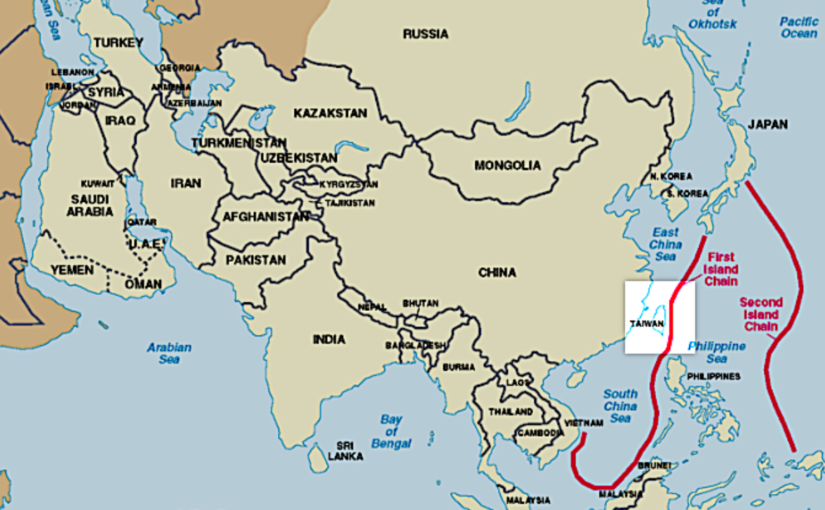
The following statement, issued by the Ministry of Foreign Affairs of the People’s Republic of China on 6 April 2023, expresses China’s strong objection to the US’s facilitation of Tsai Ing-wen’s transit through the US, during which she had a high-profile meeting with US House Speaker Kevin McCarthy. The statement points out that this visit forms part of an increasingly consistent pattern by the US of undermining the One China principle and encouraging Taiwanese separatism, with a view to stoking cross-Strait tensions and weakening China.

The statement urges the US to return to a framework of international law and to its obligations under the three China-US joint communiqués.

Through the past few days, in disregard of China’s serious representations and repeated warnings, the United States deliberately greenlighted the transit of Tsai Ing-wen, leader of the Taiwan region, through the United States. US House Speaker Kevin McCarthy, the number three in the US government, had a high-profile meeting with Tsai. Other US officials and lawmakers also had contact with Tsai and provided the platform for her separatist rhetoric for “Taiwan independence”. This is essentially the United States acting with Taiwan to connive at “Taiwan independence” separatists’ political activities in the United States, conduct official contact with Taiwan and upgrade the substantive relations with Taiwan, and frame it as a “transit”. This is a serious violation of the one-China principle and the provisions of the three China-US joint communiqués. It seriously infringes upon China’s sovereignty and territorial integrity and sends an egregiously wrong signal to the “Taiwan independence” separatist forces. China firmly opposes and strongly condemns it.

The one-China principle is a prevailing consensus of the international community and a basic norm in international relations. It is also the prerequisite and basis for the establishment and development of China-US diplomatic relations. In the three China-US joint communiqués, the United States made a clear commitment of maintaining only unofficial relations with Taiwan. Over the years, however, the United States has obdurately attempted to contain China by exploiting the Taiwan question and betrayed its commitments. The United States has been crossing the line and acting provocatively on issues such as US-Taiwan official exchanges, arms sales to and military dealings with Taiwan and creating chances for Taiwan to expand its so-called “international space”, and kept fudging and hollowing out the one-China principle. Since taking office, Tsai has refused to recognize the 1992 Consensus which embodies the one-China principle. Instead of reining in separatist rhetoric and activities in Taiwan for “Taiwan independence”, Tsai has supported and encouraged them, and sought to push for “incremental independence” under various pretenses. This has put cross-Strait relations in serious difficulty.

The Taiwan question is at the core of China’s core interests and the first red line that must not be crossed in China-US relations. “Taiwan independence” and cross-Strait peace and stability are as irreconcilable as fire and water. The pursuit of “Taiwan independence” will lead nowhere. In response to the egregiously wrong action taken by the United States and Taiwan, China will take strong and resolute measures to defend our sovereignty and territorial integrity. We once again urge the United States to adhere to the one-China principle and the provisions of the three China-US joint communiqués, act on the US leader’s assurances of not supporting “Taiwan independence” and not supporting “two Chinas” or “one China, one Taiwan”, stop at once any form of official exchanges with Taiwan, stop upgrading substantive relations with Taiwan, stop creating factors that could cause tensions in the Taiwan Strait, stop containing China by exploiting the Taiwan question, and not go further down the wrong and dangerous path.

Video: China, Brazil move towards de-dollarizing trade

Brazilian President Lula’s widely anticipated visit to China has now been rescheduled for April 11-14, following his recovery from the influenza and pneumonia that forced a postponement. Whilst a number of bilateral agreements are due to be signed during that visit, a scheduled business seminar between the two countries went ahead as planned, already resulting in more than 20 agreements, most significantly regarding moves to de-dollarize Sino-Brazilian trade, in favour of a move to national currencies. 

On Iran’s Press TV, Kaveh Taghavi was joined by Camila Escalante of Kawsachun News and Montreal-based author and journalist Arnold August to discuss the significance of this move, which, Camila notes, also coincides with the confirmation of the appointment of Dilma Rousseff,  former Brazilian President and Lula’s Workers’ Party (PT) comrade, as President of the BRICS’ New Development Bank (NDB), headquartered in Shanghai, as well as the establishment of diplomatic relations between China and Honduras. 

Arnold August situates these developments in the wider context of the loss of US hegemony and the growth of the BRICS, with an increasing number of developing countries seeking membership. He explains how the People’s Bank of China (PBOC) is able to work for the well-being of the Chinese people and people around the world, and cites the recent Beijing agreement between Iran and Saudi Arabia to repair their relations as another example of China’s increasing role in world affairs. 

The video of their discussion is embedded below.

https://www.youtube.com/watch?v=qVcJrwJPdeA&ab_channel=HIGHLIGHTS

Guangzhou 1927: the Paris Commune of the East

The Paris Commune, which lasted from March 18-May 28 1871, is generally regarded as the first seizure of power by the proletariat, and formation of a workers’ government, in history. As such, it has continued to inspire varied attempts to establish workers power and build socialism, whether in terms of inspiration or direct emulation. 

One such example was the 1927 uprising in the southern Chinese city of Guangzhou, which became known as the ‘Paris Commune of the East’. 

In the following article, originally published in the March-April 2021 issue of the Funambulist journal, which took as its theme ‘The Paris Commune & The World’, Tings Chak locates the background to this heroic struggle and the events that led up to it within the broader sweep of the Chinese revolution.

She begins by foregrounding the work of Qu Qiubai, one of the earliest Chinese communists , who was first politicized by the May 4th Movement of 1919, whose leaders included two key founders of the Communist Party of China two years later, Chen Duxiu and Li Dazhao.  It was Qu who first translated the Internationale, written by the communard Eugène Pottier, after he first heard whilst attending the third anniversary cerebration of the October Revolution in Russia. 

Tings notes the key importance of the Work-Study Program, which drew some 2,000 Chinese young people to France, including Zhou Enlai and Deng Xiaoping, both in introducing Marxist ideas to China and particularly knowledge of the Paris Commune. In 1922, writing in the journal New Youth, Zhou Enlai observed that the “short-lived flower” of the Paris Commune had found its continuation in the October Revolution. 

China’s first mass commemoration of the Paris Commune marked its 55th anniversary on March 18 1926 in Guangzhou. Mao Zedong, too, spoke of the Commune as a “bright flower”, which had brought forth a “happy fruit” in the October Revolution, from which, in turn, more fruits could be born.

The next year, up to one million workers and peasants celebrated the Commune across China. In Wuhan, Liu Shaoqi, later President of the People’s Republic of China, called on the working class to combine the spirit of the Paris Commune with the struggle against imperialism and warlordism. But shortly after, frightened by the rising power of the workers, Chiang Kai-shek unleashed the Shanghai Massacre, ending the Kuomintang’s first united front with the Communist Party. Subsequent communist-led urban uprisings, culminating in the Guangzhou Uprising on December 11, were equally brutally suppressed. However, as the great British communist Ralph Fox, who was later killed fighting with the International Brigades in Spain, wrote:

“For three days a great city in an eastern country dominated by imperialism was seized and held by the oppressed classes ruling through their Soviet. Technical and military errors there were, but, politically, no mistakes were made. The Communist Party of China, which led and organized the revolt, has reason to be proud of its application of Lenin’s teachings in the difficult circumstances of China. The work of the Party in the insurrection showed not only that it had the closest contacts with workers, peasants, petty bourgeoisie and soldiers, but that it understood how to rally the widest masses of all these classes to the support of the revolution by correct slogans and a sure political line.”

The Commune of Canton, 1928

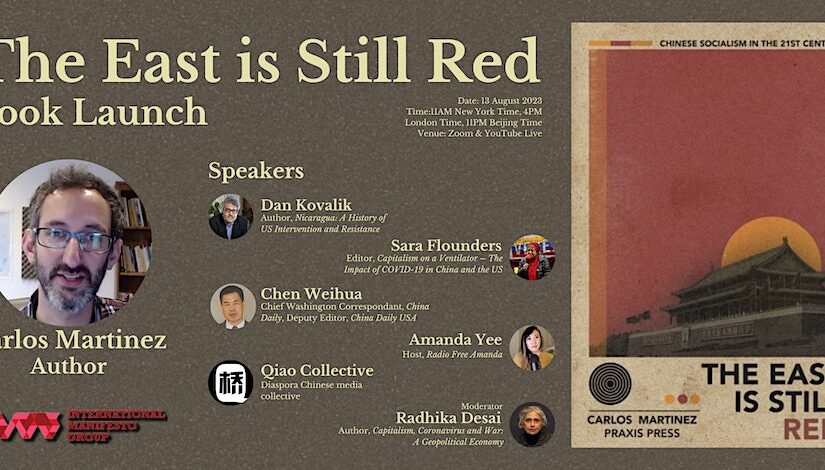
On March 19, Friends of Socialist China co-editor Keith Bennett, along with our advisory group members Professors Ken Hammond and Radhika Desai, and Carlos Garrido of Midwestern Marx, spoke at an International Manifesto Group webinar on The Paris Commune: Its Revolutionary Significance.

It was in the Russian autumn of 1920 when Qu Qiubai first heard L’Internationale, the socialist anthem born of the 1871 Paris Commune. Eugène Pottier, author of the song’s lyrics, was a Communard and elected member of the workers’ state that lasted 72 days in the French capital. Though written nearly half a century earlier, that song had been adopted only recently as the anthem of the Bolshevik Party. Until today, this song is one of the most translated and sung anthems of the oppressed around the world. Qu was attending the third anniversary celebration of the October Revolution, having traveled through Harbin (China’s northernmost provincial capital) to reach Russia. Fluent in French and Russian, he was sent to be a correspondent in Moscow for the Beijing Morning News (晨报), covering the early years of the Bolshevik Revolution.

In 1920, the communist movement in China had barely begun, but the nation was hungry for its ideas. The colonial plunders of two Opium Wars marked the beginning of the “century of humiliation,” which saw the ceding of Hong Kong to the British and the sacking of the Old Summer Palace by Anglo-French forces. The Qing dynasty fell in 1911 only to be succeeded by a puppet Republican government. The country was divided, feudalism and warlordism were rampant. The Chinese people were hungry — physically and spiritually — for its nation to be set free.

Like the thousands of young radicals of the time, Qu was politicized in the May Fourth Movement of 1919. The Paris Peace Conference at the end of World War I saw the ultimate betrayal of China’s interests — instead of having its territories returned, the Western Allies would agree to transfer Shandong Province from the colonial hands of Japan to Germany. In response, a national movement led by students in Beijing was born, anchored in anti-imperialist, anti-feudal and anti-patriarchal politics. This awakening gave birth to the New Culture Movement — with New Youth as its key publication — and an opening for new ideas to guide the country’s transformation. Among its leaders were Beijing University professors, Chen Duxiu and Li Dazhao, who were pivotal in bringing Marxist ideas into China. They both helped found the Communist Party of China (CPC) in 1921.

The betrayal by Western Allies was felt all the more after the contributions that the Chinese people made to the Great War. To meet their growing labor shortages, French and British states relied heavily on the colonies across Africa, Indochina and China. 140,000 Chinese people — mostly peasants — joined the French and British war efforts, while another 200,000 fought on the Eastern Front with the Russian Red Army. The Chinese Labor Corps did every task but bear arms: they dug trenches, worked in munition factories, repaired equipment on the frontlines, buried the dead. Thousands died, though this part of history is little told in the West. Around that same time, there was another group of young Chinese people heading to France. Originally initiated by Chinese anarchists in 1908, the program became formalized into the Diligent Work-Frugal Study program in 1919 that brought 2000 Chinese workers and peasants to Paris: they would work in factories in return for their Western education. The poor living and working conditions politicized many of these students. On February 28, 1921, 400 Chinese work-study students demonstrated against further reductions in bursaries. Events like this one brought the movement closer to the World War I generation workers as they began organizing together in the Renault factories from the industrial banlieues (suburbs) of Boulogne-Billancourt and La Garenne-Colombes. It was from the factory floors and in the university halls where Marxism would enter the Chinese revolutionary thought. Among the students were Zhou Enlai and Deng Xiaoping, founders of the European branch of the CPC. Zhou Enlai would serve as Premier for 26 years and Deng Xiaoping, the Chinese leader who succeeded Mao Zedong upon the founding of the People’s Republic of China (PRC).

Continue reading Guangzhou 1927: the Paris Commune of the East

US push to strip China’s developing country status an attack on development itself

The following article by Danny Haiphong, first published on his blog CGTN, discusses the unanimous vote in the US House of Representatives in favour of the ‘PRC Is Not a Developing Country Act’, which directs the State Department to seek the removal of China’s status as a developing country.

Noting that China’s developing country status is very much consistent with its per capita income (five times lower than the US) and overall development level, Danny demonstrates that this action is yet another component of the US’s broader strategy to contain China’s economic rise and geopolitical influence, and is driven by the US’s inability to compete with China’s rapidly advancing state-led economy. Other components of this strategy include the attempt to ban TikTok and the ban on semiconductor exports to China.

As Danny points out, the ‘PRC Is Not a Developing Country Act’ is an attack on development itself. “It is a warning to nations around the world that they risk economic warfare should their success be perceived as a threat to US hegemony.”

On March 28, the U.S. House of Representatives passed the “PRC Is Not a Developing Country Act” by a unanimous vote of 415-0 in yet another demonstration of the solid bipartisanship that exists in the United States when it comes to containing and isolating China. Under the terms of the bill, U.S. Secretary of State Antony Blinken would be directed to seek the removal of China’s status as a developing country from international organizations and institutions.

The United Nations, the International Monetary Fund (IMF) and the World Bank all recognize China as a developing country for good reason. China’s GDP per capita, while rising, is $12,700 or about five times smaller than the U.S.’s. China’s Human Development Index is 79th in the world. It’s committed to improving living standards for all people and has taken its commitments to the international community seriously. Of course, the “PRC Is Not a Developing Country Act” has nothing to do with facts and everything to do with curbing China’s development.

Ending China’s developing country status prematurely would come with consequences. The World Bank and IMF could rescind tariff preferences and low-interest loans. China’s carbon emissions target may increase and the time-frame for meeting them decrease. In other words, China’s development path would become more difficult, which is exactly what the “PRC Is Not a Developing Country Act” hopes to achieve.

Continue reading US push to strip China’s developing country status an attack on development itself

President Maduro: China is a non-imperialist great power

This short piece from RedRadioVE, translated from Spanish to English by Orinoco Tribune, reports on Venezuelan president Nicolás Maduro’s comments during a farewell ceremony for China’s ambassador to Venezuela, Li Baorong.

Noting that relations between Venezuela and China are “at the highest level, at the best level, that they have ever been”, Maduro reflects on China’s emergence as a major economic and diplomatic power, stating that the evidence indicates China “can be a great power without being an imperialist power”. This echoes his predecessor, Hugo Chávez, who famously commented in 2012 that “China is large but it’s not an empire. China doesn’t trample on anyone, it hasn’t invaded anyone, it doesn’t go around dropping bombs on anyone.”

Maduro further remarked that China and Venezuela are working together in a spirit of solidarity, sharing a concept of a “community of common destiny for humanity.”

“China gives strong signals that it can be a great power without being an imperialist power,” said the president of Venezuela, Nicolás Maduro, this Monday. The comments were made in the context of the new multipolar geopolitical reality in which the People’s Republic of China has emerged as a great power.

“Relations between Greater China and the Homeland of Bolívar have reached their highest level of mutual trust, collaboration, and work, and our relations are at the highest level, at the best level, that relations between Venezuela and China have ever been,” President Maduro said.

The head of state said that both nations have shared visions regarding the construction of a new humanity. That goal must be built, the president said, with relations of respect, cooperation, and solidarity.

Regarding US provocations centered around the Chinese province of Taiwan, the Venezuelan president questioned the aggression of the West towards China: “Venezuela has been on the front line of the battle for truth, denouncing all the provocations against China and supporting the People’s Republic of China and its desire for peace and the peaceful exercise of sovereignty.”

These words were issued by President Maduro during a farewell ceremony for the ambassador from the People’s Republic of China to the Bolivarian Republic of Venezuela, Li Baorong.

“Five years after the beginning of his service as ambassador of the People’s Republic of China, in Venezuela—mission accomplished,” Maduro said. “China and Venezuela will continue their path of redemption, development, and common destiny.”

Despite imperialist aggression, the Chinese ambassador was able to witness how the Venezuelan people faced difficult situations. “Still, we have emerged victorious,” President Maduro said.

The Venezuelan president took the opportunity to extend his congratulations to his counterpart, Xi Jinping, for his recent re-election.

Finally, President Maduro pointed out that, in the face of imperial hegemony, civilizational changes are being generated with the emergence of a great military, political, and economic power that promotes the concept of a new humanity under the slogan of a “community of common destiny for mankind.”

Videos: The Counter-Summit for Democracy

On 2 April 2023, Friends of Socialist China and the International Manifesto Group co-hosted a powerful and successful Counter-Summit for Democracy, a response to the US-sponsored so-called Summit for Democracy held a few days earlier.

The participants at this counter-summit exposed the hegemonic reality behind the US’s talk of a ‘rules-based world order’; explored alternative models of democracy; denounced US-led attempts at ‘decoupling’ and incitement of division; promoted an emerging multipolar, multilateral model of international relations; and called for for global cooperation to solve the vast problems collectively faced by humanity.

The videos from the event are embedded below.

Full event stream
Carlos Martinez: the ‘democracies vs autocracies’ narrative is part of an imperialist propaganda war
Margaret Kimberley: democracy and imperialism are antithetical
Lowkey: the West’s record of genocidal war speaks to its commitment to human rights
Luna Oi: the US working class and oppressed groups suffer systematic abuse of their human rights
Carlos Ron: Latin Americans understand very well that the US has no respect for our sovereignty
Pawel Wargan: the antidote to this brutal capitalist democracy is popular, socialist democracy
Calla Walsh: the ‘democratic’ US is suffocating Cuba because of its socialist democracy
Ju-Hyun Park: Build solidarity with Korea’s anti-imperialist struggle
Mohammad Marandi: The West is a declining empire
Ben Norton: participant list shows that the Summit for Democracy is really a Summit for Hypocrisy

Xi’s visit to Russia: a journey of friendship, cooperation and peace

Following Chinese President Xi Jinping’s state visit to Russia, March 20-22, State Councilor and Foreign Minister Qin Gang, who accompanied the President, briefed the press crew on its results.

This detailed briefing is significant not only for its summation of the visit but more especially for its careful and profound exposition of the thinking behind it within the overall context of Chinese foreign policy and assessment of the international situation.

The visit, Qin Gang explained, was an important decision made by the CPC Central Committee with Comrade Xi Jinping at its core from the perspectives of the overall situation. The changes unseen in a century have been accelerated and the international structures of power have undergone profound adjustments. The historical trend of peace, development and win-win cooperation is unstoppable, while hegemonism, unilateralism and protectionism rampage, the Cold War mentality and bloc politics resurface, and the competition between the two trends and two paths has become more fierce. The world is entering a new period of turbulence and changes. As two major countries in the world and permanent member states of the United Nations Security Council, how the China-Russia relationship goes bears on global strategic stability and security, as well as the future evolution of the world landscape. The more complex the international situation is, the more necessary it is for China and Russia to strengthen communication and coordination.

Qin Gang said that 10 years ago, President Xi Jinping, when delivering a speech at the Moscow State Institute of International Relations, proposed for the first time the vision of building a community with a shared future for humanity. Over the past 10 years, the vision has gained support from a growing number of countries. The evolution of the international situation has proven once again that only in sharing weal and woe and helping each other in solidarity and coordination will every country be able to help resolve global challenges facing humanity.

Clearly taking aim at imperialist propaganda against China, Russia and other anti-imperialist, independent countries, and particularly at US President Biden’s farcical “summit for democracy” held last week, Qin Gang noted that the principal contradiction in today’s world is not at all a so-called “democracy versus autocracy” contest hyped up by certain countries, but a struggle between development and containment of development, and between justice and power politics. In the face of rampant unilateralism and hegemonism, it is all the more valuable for China and Russia to consolidate and strengthen strategic coordination. China and Russia are committed to promoting a multipolar world and greater democracy in international relations, which meets the demand for upholding international fairness and justice.

It was Moscow, he said, that was President Xi Jinping’s first overseas visit destination after he took office as Chinese President in 2013. Ten years on, President Xi Jinping once again chose Russia as his first overseas destination in a new term of office. It was by no means a coincidence, but a political choice made after careful consideration.  China and Russia are each other’s biggest neighbor, and are committed to no-alliance, no-confrontation and not targeting any third party in developing the bilateral relationship.

Qin Gang said, this visit comes as the Ukraine crisis is prolonged and escalated with its spillover effect continually surfacing. Most countries are deeply concerned and call for easing tensions, and there are more and more voices for ceasefire, peace and rationality. Recently, with the promotion and support of China, Saudi Arabia and Iran had successful talks in Beijing and decided to beat swords into plowshares, restoring their diplomatic relations. The international community highly values the Saudi Arabia-Iran talks as fully demonstrating that China is a fair, impartial, trustworthy and responsible major country, and expects China to play a greater role in solving regional hotspot issues. Since the outbreak of the Ukraine crisis, China has taken an objective and impartial position and actively promoted peace talks. 

During this visit, President Xi Jinping and President Putin had an in-depth and candid exchange on the Ukraine crisis. President Xi Jinping pointed out, a review of history shows that basically conflicts have to be settled through dialogue and negotiation. The more difficulties there are, the greater the need to keep space for peace. The more acute the problem is, the more important it is not to give up efforts for dialogue. As long as all parties embrace the vision of common, comprehensive, cooperative and sustainable security, and pursue equal-footed, rational and results-oriented dialogue and consultation, they will find a reasonable way to resolve the Ukraine crisis. The Russian side highly praised China’s objective, impartial and balanced position, and said that Russia has carefully studied China’s position paper, and is open to talks for peace. Russia welcomes China to play a constructive role in this regard.

Foreign Minister Qin noted that  China was not the one creating the Ukraine crisis, nor a party to the crisis. Instead, China is an advocate of the political settlement of the crisis and a promoter of peace talks. Certain countries, out of selfish geopolitical interests, have done everything possible to obstruct peace talks, and even fabricated all kinds of rumors and fallacies to attack and smear China. But justice lies in the heart of people. Who is fanning the flames and fueling the fight? Who is promoting peace talks? These are all facts witnessed by the whole world. China’s position is clear-cut and consistent. Between peace and war, we choose peace. Between dialogue and sanctions, we choose dialogue. Between lowering the temperature and fanning the flames, we choose the former. China does not have selfish political interests or engage in geopolitical manipulation. Instead, China is sincerely committed to promoting peace talks and a ceasefire. 

We reprint below the full text of the briefing. It was originally published on the website of the Chinese Foreign Ministry.

From March 20 to 22, 2023, President Xi Jinping paid a state visit to Russia at the invitation of Russian President Vladimir Putin. Upon wrapping up the trip, State Councilor and Foreign Minister Qin Gang briefed the accompanying press crew on the visit.

Qin Gang said that as China’s “two sessions” have just successfully concluded, President Xi Jinping paid the state visit to Russia, raising the new curtain on China’s head-of-state diplomacy for this year. At this special time of complex situations, the visit was substantive with rich connotations  and fruitful outcomes. The visit was an important decision made by the CPC Central Committee with Comrade Xi Jinping at its core from the perspectives of the overall situation of national development and the general picture of diplomatic strategies, and it showcased China’s resolute commitment to an independent foreign policy of peace and an open mind to promote world peace. The visit has been closely followed internationally and it is commonly  believed that President Xi Jinping’s visit to Russia is an event of far-reaching significance for global geopolitics, shows China’s international image as a peace builder, demonstrates China’s role and responsibility as a responsible major country, and will inject more stability into complicated international situations and conduce to promoting a multi-polar world and greater democracy in international relations.

I. Stay committed to independence and defend international fairness and justice

Qin Gang said that the changes unseen in a century have been accelerated and the international structures of power have undergone profound adjustments. The historical trend of peace, development and win-win cooperation is unstoppable, while hegemonism, unilateralism and protectionism rampage, the Cold War mentality and bloc politics resurface, and the competition between the two trends and two paths has been more fierce. The world is entering a new period of turbulence and changes. As the two major countries in the world and permanent member states of the United Nations Security Council, how the China-Russia relationship goes  bears on global strategic stability and security, as well as the future evolution of the world landscape. The more complex the international situation is, the more necessary it is for China and Russia to strengthen communication and coordination.

Continue reading Xi’s visit to Russia: a journey of friendship, cooperation and peace

Interview: The US system is plutocratic rather than democratic

In this interview for Xinhua, carried out against the backdrop of President Biden’s so-called Summit for Democracy 2023, Carlos Martinez rejects the US ruling class’s claim to be the arbiter of which countries are democratic and which aren’t. The US is in fact “a democracy for the capitalist class – the ruling class, the group of people that own and deploy capital.” Such a democracy “prioritizes fossil fuel profits over preventing climate breakdown; it prioritizes private medical companies and pharmaceutical industry profits over saving lives; it prioritizes the military-industrial complex over preserving peace.” Noting the disastrous and escalating levels of systemic racism in the US, Carlos asks: “Does anybody seriously think this represents the pinnacle of democracy?”

Carlos contrasts the actions of the US government with those of China: “The Chinese government is prioritizing common prosperity, developing clean energy systems in order to protect the planet, rolling out infrastructure throughout the country, tackling corruption, building peaceful and mutually beneficial relations with the peoples of the world.” The alignment between the government’s actions and the needs and aspirations of ordinary people is a strong indicator that China is far more democratic than its detractors in the West.

The United States is portraying itself as the universal model of democracy, but in fact its system is “plutocratic rather than democratic,” British political commentator Carlos Martinez has said.

“As a capitalist democracy, the U.S. is a democracy for the capitalist class — the ruling class, the group of people that own and deploy capital. As many people have pointed out, it is a money democracy, and the government meets the interests primarily of the wealthy,” Martinez told Xinhua in a recent written interview.

“In England we say that ‘the proof of the pudding is in the eating.’ Similarly, you can tell the nature of a government by its actions; by its economic, political and social priorities,” he wrote.

In Martinez’s view, the U.S. government “prioritizes fossil fuel profits over preventing climate breakdown; it prioritizes private medical companies and pharmaceutical industry profits over saving lives; it prioritizes the military-industrial complex over preserving peace. These priorities match those of the elite, not the people, not the vast majority of people that work for a living.”

Despite being one of the richest countries in the world, the United States sees an increasing number of homeless people each year and declining life expectancy, he said.

“The scourge of racism is getting worse in the U.S. This structural racism is evident throughout society: in health indicators, in educational outcomes, in economic outcomes,” Martinez noted.

“Black people, Latinos and indigenous Americans are far more likely to suffer chronic poverty, to live in crowded housing, and to lack access to healthcare. This is the continuing unaddressed legacy of slavery, genocide, colonization and apartheid. Does anybody seriously think this represents the pinnacle of democracy?” he asked.

“Given the state of U.S. democracy, it’s nothing short of farcical that the (Joe) Biden administration persists with organizing the so-called Summit for Democracy,” Martinez said.

He further said that the U.S. government is failing to improve people’s lives, and so “it uses nice words about democracy to attract voters.”

On geopolitics, the Biden administration is using the summit to consolidate an alliance that seeks to protect U.S. hegemony and impede humanity’s movement towards multipolarity, noted Martinez, who also closely watched the first episode of the summit in 2021.

“The Summit for Democracy is, in reality, a summit for hegemony,” he said.

Speaking of China’s democratic practices, he said that the Chinese government is “prioritizing common prosperity, developing clean energy systems in order to protect the planet, rolling out infrastructure throughout the country, tackling corruption, building peaceful and mutually beneficial relations with the peoples of the world.”

“These priorities are entirely consistent with the needs and aspirations of the Chinese people,” he wrote.

Citing challenges such as climate change, nuclear proliferation and poverty, Martinez said what the world needs is genuine democracy in international relations.

“Cooperation, mutual respect, non-interference and a win-win approach are absolutely necessary to secure a safe future for humanity,” he said.

Summit for Democracy 2023 – “a bad idea that won’t go away”

This article by Dee Knight – member of the DSA International Committee’s Anti-War Subcommittee and the Friends of Socialist China advisory group – casts light on the stunning hypocrisy involved in Biden’s so-called Summit for Democracy, held in the last week of March 2023. Dee points out that, even among friends of the US ruling class, there are very few positive opinions about the Summit, and an increasingly generalized sense that US democracy is going in the losing influence. Dee cites Mexican President Andrés Manuel López Obrador telling the hard truth at the Summit itself: “Many of the great crimes against humanity have been committed… in the name of democracy… In some countries, the oligarchy reigns with the façade of democracy.”

Dee also references a series of documents released by China in the days preceding the Summit, incuding State of Democracy in US: 2022 and the Report on US Human Rights Violations in 2022. These documents highlight the systematic abuse of democracy and the manifold human rights violations committed by the US administration, including the tight correlation between wealth and power; the loss of abortion rights; the extensive use of military force and unilateral sanctions; mass incarceration; the cruel treatment of migrants; and the alarming rise in hate crimes. In such a situation, Dee writes, “people who live in glass houses shouldn’t throw stones.”

The author encourages readers to tune in to our Counter-Summit for Democracy.

This article was first carried in LA Progressive.

Positive descriptive terms for this year’s US-sponsored “Summit for Democracy” are scarce. A State Department press release quoted Joe Biden that “we have to prove democracy still works and can improve people’s lives in tangible ways.” That’s “a tough hill to climb,” according to the Washington Post’s March 29 “Today’s Worldview.”

“Critics see the event as an inconsequential talk shop,” the Post said, “or an unwelcome showcase into the inconsistency of US foreign policy on the world stage, as Washington goes to bat for human rights in some contexts and looks the other way in others.”

Some critics were harsher. Richard Haass, president of the Council on Foreign Relations, said “the summit for democracy is a bad idea that [won’t] go away,” adding that “American democracy is hardly a model for others.”

Le Monde, the French newspaper, wrote recently that 2022 was “a year of doubt for US democracy.” Sweden’s International Institute for Democracy and Electoral Assistance added the US to its “list of regressive democracies.” US democracy is “in a worse state than ever before,” according to The New Yorker, Washington Post, and the Brookings Institution. The Carnegie Endowment for International Peace reports that American democracy is “declining faster as the inherent ills of American capitalism worsen.”

So much for those who usually defend the US viewpoint. Stronger views are easy to find. Organizers of a Counter-Summit for Democracy say “Biden’s attempts to consolidate a ‘democratic’ alliance are part of the escalating US-led New Cold War. Labelling socialist and anti-imperialist states as ‘authoritarian,’ the US ruling elite seeks to consolidate a military, economic and political bloc on the basis of its own narrow interests, and to build popular support for its rising hostility towards China, Russia, Iran, Cuba, North Korea, Nicaragua, Venezuela, Syria, Eritrea, Zimbabwe and other countries in the crosshairs of imperialism.”

Organizers – Pivot To Peace, Veterans For Peace, Popular Resistance, Friends of Socialist China, and a dozen other groups – say the Counter-Summit “will expose the hegemonic reality behind the US talk of a ‘rules-based world order;’ explore alternative models of democracy; promote an emerging multipolar, multilateral model of international relations; and call for global cooperation to solve the vast problems faced by humanity.” 

Participants include Margaret Kimberley of Black Agenda Report, Vijay Prashad of India’s Tricontinental Institute, Pawel Wargan of the Progressive International, and Venezuela’s Deputy Minister of Foreign Affairs Carlos Ron, among others. There will also be voices from China, Cuba, Vietnam, Iran, Korea and Nicaragua.

Mexican President AMLO: ‘Crimes in the name of democracy’

President Andrés Manuel López Obrador (AMLO) of Mexico shook up the summit March 29, declaring “Many of the great crimes against humanity have been committed… in the name of democracy.” He added that “in some countries, the oligarchy reigns with the façade of democracy.” He asked, “How can we talk about democracy if there is no separation of economic power and political power?” In many countries he said there is “a mixture of oligarchy and democracy, or a simulated and mediated democracy,” adding that “We must search for greater equality to have more democracy.”

AMLO’s sharp comments follow his March 18 speech condemning US politicians who called for a military invasion of Mexico “to combat drug trafficking.” Speaking to a throng of hundreds of thousands in Mexico City’s “Zócalo” (central plaza), AMLO said “We remind those hypocritical and irresponsible politicians that Mexico is an independent and free country, not a colony or a protectorate of the United States!” He had convened the event to commemorate the 85th anniversary of the 1938 oil nationalization by revolutionary former President Lázaro Cárdenas. He mentioned that he recently re-nationalized Mexico’s oil resources, and its lithium reserves, which may have been a factor in recent US politicians’ invasion threats.

China’s English-language newspaper Global Times editorialized March 28 that the summit is being “used by the Biden administration as a tool to reaffirm US leadership in so-called democracy and human rights. Its ambition to pull more countries into its interest camp to contain its rivals, especially China and Russia.”

Economist Michael Hudson, speaking on Danny Haiphong’s Left Lens video show March 30, called the summit “a charade” that is “pushing the world away.” He pointed to Secretary of State Blinken’s insistence that participants “deplore Russia’s aggression against Ukraine,” ignoring the US-backed coup in 2014 that brought fascists to power and ignited a war against Russian speakers in eastern and southern Ukraine.

Last year’s Summit of the Americas hit many sour notes: “Official ‘Americas Summit’ Sags While People’s Summit Surges” (June 3, 2022); “Is the Failure of Biden’s Summit of the Americas a Welcome Event?” (June 8, 2022); “Storms at the Summit of the Americas” (June 12, 2022); “‘Summit of Exclusion’ Backfires on Biden” (June 15, 2022); “Summit of the Americas Flops” (June 22, 2022) – and on and on.

In “Storms at the Summit of the Americas,” Rosa Miriam Elizalde wrote “hypocrisy seems to be the glue of this summit, and mainstream U.S. media and analysts declared the June 6-10 meeting a failure before it even started.”

Continue reading Summit for Democracy 2023 – “a bad idea that won’t go away”

China isn’t our enemy, targeting of Tiktok is xenophobic

In this brief interview for CGTN, North American anti-war activist Calla Walsh – one of the co-chairs of the National Network on Cuba, and a speaker at our Counter-Summit for Democracy – explains that a growing number of young people in the US do not see China as their enemy but rather as a friend; “as a global leader that is really paving the way to a more peaceful and multi-polar world where all countries have a right to sovereignty, instead of living under the yoke of the United States.” Although young people in the West are exposed to a relentless barrage of anti-China propaganda, increasingly people are able to see and understand certain powerful facts: that it’s the US and its allies that go round the world waging war and imposing domination, while China stands with the Global South; that it’s the US that’s failing to make meaningful progress addressing the climate crisis, while China has emerged as a global leader in green energy. In summary, “China is a progressive force, and the US is extremely regressive.”

Calla also addresses the attack on TikTok – an attack based on xenophobia, anticommunism, and a fear of China’s economic rise. However, this attack is having the opposite of its intended effect: “I think it’ll make the entire user base, which is hundreds of millions of people, even more skeptical of the US government’s narrative on TikTok and on China as a whole.”

The anti-China onslaught in the U.S. doesn’t seem to be having the desired effect on its younger population. A recent survey by The Economist and YouGov reveals that younger Americans are friendlier to China than their older counterparts. Nearly a quarter of Americans aged 18 to 44 view China as “friendly,” only 4 percent of Americans above the age of 45 view China this way.

The report comes amid the U.S. efforts to ban TikTok, a video app that has become a craze among American youth in recent years. At the Congressional hearing of TikTok CEO Shou Zi Chew, U.S. lawmakers couldn’t hide their racism and xenophobia.

To understand how a large number of young Americans are contesting the anti-China narrative within the U.S., CGTN spoke with Calla Walsh, a youth anti-war activist who is on the board of Massachusetts Peace Action and one of the co-chairs of the National Network on Cuba.

Edited Excerpts:

CGTN: Let me ask you the question that The Economist-YouGov poll asked its respondents: Do you consider China to be a friendly nation or an enemy of the United States?

Walsh: China is not our enemy and I’m among the substantial group of young people in the U.S. that sees China as a friend. And I see China not only as a friend, but as a global leader that is really paving the way to a more peaceful and multi-polar world where all countries have a right to sovereignty, instead of living under the yoke of the United States. And it’s really hard to buy the U.S. demonization of China as this existential threat when in the past several decades the U.S. is the country that has committed hundreds of military interventions and invasions.

And I think young people can see through these warmongering lies that the U.S. is spreading about China. And we can also see China is actually delivering on the issues we care about, for example, climate. [U.S. President Joe] Biden is signing off on the willow project; he’s breaking his campaign promises to stop new drilling on federal land while China’s leading the world and reducing carbon emissions, building green infrastructure. So it’s very easy to tell China is a progressive force, and the U.S. is extremely regressive.

CGTN: Does the poll indicate that we are witnessing a slow but gradual generational change in perception about China?

Walsh: I think there is a slow generational shift in how we regard China and how we regard U.S. imperialism as a whole. We are not the generation of the first Cold War against the Soviet Union. I think our generation has been much more shaped by social movements that have really made us more skeptical of the U.S. government narrative on things. We’re the generation of these mass mobilizations against Climate Change, against gun violence, against racism and police brutality. And young people are becoming more civically engaged, having record-breaking voter turnout, and I think we’re much more skeptical of the U.S. government because of the failures on those issues I just mentioned.

CGTN: How do you see the ongoing targeting of TikTok? How will the Congressional hearing of the TikTok CEO affect the view of its user base?

Walsh: The ongoing targeting of TikTok is very much xenophobic, and red-scare tactic. And just when I’ve logged on to TikTok in the past few days, I’ve seen lots of popular accounts, ones that are even apolitical, that are calling this hearing a witch hunt. They’re mocking U.S. Congress members, for not even understanding how the internet works. So it’s really putting into light how ridiculous this anti-China propaganda is. And I think that’ll make the entire user base which is hundreds of millions of people even more skeptical of the U.S. government’s narrative on TikTok and on China as a whole.

And of course the U.S. government literally mass spies on its own citizens. So we know this isn’t about privacy at all. And other U.S. social media companies, like Meta, engage in very harmful data sharing practices. So what we should be talking about is why the U.S. really is doing this and that’s because of the economic competition that China poses.

The sound of the new war drum goes Tik-Tok

In the following article, which originally appeared on the CODEPINK Medium blog, Wei Yu, Nuvpreet Kalra and Melissa Garriga of CODEPINK and its China is Not Our Enemy campaign, counter the hypocrisy of the United States’ campaign against TikTok, whose CEO Shou Zi Chew, was recently subjected to a five-hour grilling in a Congressional hearing that often bore more resemblance to a racist and anti-communist lynching than a dispassionate enquiry by professional politicians. Drawing a stark comparison, the authors note:

“Ten years ago, Edward Snowden told the whole world the truth about the US global surveillance programs. If Congress cares about our digital privacy, it should first begin by investigating the surveillance policies of its own US agencies. The campaign against TikTok is a fear-mongering tactic to wage war on China.”

They further detail how the FBI, the Department of Homeland Security and the Immigration and Customs Enforcement (ICE) use social media to spy on Black Lives Matter protestors and a range of others, including the Muslim, Arab and South Asian communities. ” Unlike China,” they note, “as well as other Western countries, such as the EU, the US does not have any digital privacy laws on the federal level…

“The ongoing effort to investigate and ban TikTok is not about our privacy, but about fuelling more aggression against China. Fearmongering about China has also caused the rise of anti-Asian racism in the US.”

Last Thursday, a Congressional hearing took place where the TikTok CEO was grilled for five hours on the grounds of “security concerns.” This was days after the FBI and DOJ launched an investigation on the Chinese-owned American company. Isn’t it ironic that while the US government is putting TikTok under the magnifying glass, it’s turning a blind eye to its own surveillance programs on the American people?

Ten years ago, Edward Snowden told the whole world the truth about the US global surveillance programs. If Congress cares about our digital privacy, it should first begin by investigating the surveillance policies of its own US agencies. The campaign against TikTok is a fear-mongering tactic to wage war on China.

In 2020, the FBI used social media to monitor racial justice protesters who were targeted for arrests. For example, activist Mike Avery was arrested after posting about protests on Facebook, and his charges were dropped without explanation a few weeks later. An FBI official was so frustrated with the extensive social media surveillance that he told the Intercept, “Man, I don’t even know what’s legal anymore.”

The dissonance between accusing TikTok of security concerns and working with other companies to invade people’s privacy rings loudly in our ears.

Social media has long been a tool used by federal agencies to target individuals and communities designated as “threat.” The Department of Homeland Security and the Immigration and Customs Enforcement have monitored the social media activities of immigrant rights activists. The State Department used social media screening to discriminate against the Muslim, Arab, Middle Eastern, and South Asian communities under the Trump administration’s “Muslim ban.”

Only last year that the post-9/11 NSA phone surveillance program was reported to have shut down. Major telecom companies like Verizon gave the government access to hundreds of millions of calls and texts. Dataminr, a startup Twitter partner, provided police with data about BLM protests. One focus on ‘potential gang members’ targeted Black and Latinx people, including school-aged children.

Meta’s subsidiary WhatsApp was reportedly used by the Saudi government to hack journalist Jamal Khashoggi’s phone. Meanwhile, Meta itself used a VPN to spy on users’ smartphones for market research in exchange for bribes. Yet WhatsApp is not banned on government devices.

If our lawmakers are concerned about protecting digital privacy, then Congress should start with investigating American federal agencies. Unlike China as well as other Western countries, such as the EU, the US does not have any digital privacy laws on the federal level. The US could cooperate with China to better ensure people’s privacy is protected, instead of driving fear to target one single social media platform.

The ongoing effort to investigate and ban TikTok is not about our privacy, but about fueling more aggression against China. Fear-mongering about China has also caused the rise of anti-Asian racism in the US. In banning TikTok, the US is projecting its invasive policies onto another government. Warmongers are using the issue to create paranoia and justify even more aggression towards China.

It is not a coincidence that these recent bans have come about shortly after a Chinese weather balloon was shot down over the US. Privacy concerns are being used to wage war on China. The US should focus on passing federal data privacy laws instead of targeting one app. Double standards and warmongering against China need to stop. China is not our enemy.

Tell Congress to stop using TikTok to drive fear and war towards China!

Did Canada supply ‘infected insects’ to US military during the Korean War?

Even more than 70 years later, the claim, advanced by the People’s Republic of China and the Democratic People’s Republic of Korea (DPRK), that the United States resorted to bacteriological, or germ, warfare during the 1950-53 Korean War (known in China as the War to Resist US Aggression and Aid Korea and in the DPRK as the Fatherland Liberation War) remains one of the most controversial issues surrounding that brutal conflict. Official western circles have constantly tried to dismiss it as nothing but crude communist propaganda, despite its corroboration by various international delegations, including some of the finest minds of the age, such as the world-renowned British scientist, Dr. Joseph Needham.

In this important and detailed article, which we are very pleased to reprint from The Canada Files, Jeffrey S. Kaye, sheds signicant new light on the issue, centered on possible Canadian involvement and the stand taken by the then Chair of the Canadian Peace Congress, Rev. James G. Endicott. 

Like Needham, Endicott was an important historical figure. As the article notes: “He was a famous churchman who spent over two decades as a missionary in China, and was a leader of Canada’s United Christian Church. Endicott was well-known inside Ottawa’s government hallways. In the 1940s he had been an adviser to Soong Mei-ling, aka Madame Chiang Kai-Shek, and China’s New Life Movement…Endicott had tried to convince Chiang Kai-Shek, unsuccessfully, of the importance of implementing land reform. Reporting back to the OSS [Office of Strategic Services, the US intelligence agency in World War II] on Chinese leaders in both the Kuomintang and Communist Party, Endicott found himself more and more drawn to the sincerity and popularity of the Communists, and he came to feel they offered the best hope for the Chinese people.”

Referring to the role of Fort Churchill in Canada’s Manitoba province, Kaye cites a 2020 book by Nicholson Baker, Baseless: My Search for Secrets in the Ruins of the Freedom of Information Act, which described the military facility as the site of “Canada’s Defence Research Northern Laboratory, which did cold-weather weapons testing.” The area had been used by Chemical Corps researchers since 1946 and was the site of a US test release of radioactive mosquitoes in 1949. That same year, suspicions fell upon the site after a number of Inuit [indigenous people] succumbed to a mysterious illness.

This was significant as: “Quite famously, the first reports of US germ warfare in 1952 came during the dead of the Korean and Manchurian winter. Critics pointed to pictures the Communists released of insects wiggling on mounds of snow. They made much of the fact that it seemed absurd to think insects could be used as weapons in such a harsh climate.

“Was the secret work at Fort Churchill related to experiments with insect cold-hardiness or perhaps the breeding of more cold resistant insects and bacteria to be used in germ warfare during the Korean War…

“Biological warfare researchers in the West, as well as in Japan, were interested in how their bioweapons would work in wintry conditions. This was important as from the standpoint of these countries, the Soviet Union, with its vast tracts of frigid countryside, was thought of as their most likely target.

“Shiro Ishii, the leader of Unit 731, Japan’s World War Two biological warfare unit, was, according to General MacArthur’s office in postwar Tokyo, an expert on ‘the use of BW in cold climates.'”

Japan’s Unit 731, which was based in the northeastern Chinese city of Harbin, was notorious for its cruel experiments on Chinese, Soviet and other prisoners. It is well-established that its work was taken over by the United States following the conclusion of World War II.

The article also cites entomologist Jeremy A. Lockwood’s book, Six-Legged Insects: Using Insects as Weapons of War, establishing a connection between biological warfare research by Canada and the USA’s still notorious Fort Detrick: “Although Camp Detrick’s upper echelon was partial to airborne dissemination of pathogens, the Canadians’ progress with rearing and disseminating insect vectors could not be dismissed. Entomologists from the two countries collaborated on a series of field experiments ranging from the banal to the bizarre.”

Faced with tremendous threats and pressure, including calls for him to be charged with treason, Kaye details Endicott’s stand:

“For his part, faced with strong public criticism from Canadian politicians and editorial writers, not to mention possible prosecution, Dr. Endicott denied having accused Canada of any cooperation with the United States in biological warfare attacks against China or the DPRK. But, Endicott reiterated his belief in the veracity of China and the Democratic People’s Republic of Korea’s charges regarding US use of biological weapons. His conviction stemmed from a recent trip to northeast China, where he visited alleged germ war attack sites, and interviewed Chinese scientists, as well as peasant witnesses to the infected insects and feather bomb attacks.”

He continues: “Both declassified records and oral histories have been used in recent years to document the fact that Canada was in league with the United States biological warfare program. Endicott, knowing he was walking on thin legal ice – the Canadian government had recently passed a draconian law against anyone speaking out against allied forces fighting in the Korean War – may have pulled his punches to stay out of prison.

“The new law stated that a Canadian citizen could be prosecuted for ‘assisting, while in or out of Canada, any enemy at war with Canada or any armed forces against whom Canadian forces are engaged in hostilities whether or not a state of war exists between Canada and the country whose forces they are [fighting].'”

Moreover, this matter is not merely of historical interest. As Kaye explains: “According to Canada’s 2022 submission to the UN Biological Weapons Convention (BWC) review conference regarding ‘confidence building measures’ relevant to adherence to the Biological Weapons and Toxin Convention, Canada’s Biological Defence Program at DRDC spent ‘approximately $3,365,269 CAD.’ Another $4 million was spent on contracts with ‘external entities’ in industry and universities.

“Canada’s BWC document states, ‘No offensive [BW] studies of any kind are permitted by the Government of Canada.’ But it notes that military research does continue on ‘the mode of action and toxicity of toxins and the mode of action and infectivity of biological agents,’ supposedly exclusively for defensive purposes. But the Canadian government has made such claims historically before, and has been proven to have lied.”

Despite the threats made against him, Rev. Endicott continued to campaign. As the article notes: “On Sunday 11 May 1952, Dr. Endicott appeared before approximately eight to eleven thousand attendees at Toronto’s Maple Leaf Gardens. He was the featured speaker at a rally commemorating the close of a three-day session of the Canadian Peace Congress. According to Endicott’s biographer, son Stephen Endicott, in his 1980 book, James G. Endicott, Rebel Out of China (University of Toronto Press), the meeting was threatened by Endicott’s ‘opponents [who] arrived at Maple Leaf Gardens with eggs, tomatoes, firecrackers, stink-bomb, and placards’ (pp. 295).

“In response to the threat, Peace Congress officials had called upon five hundred ‘peace supporters, seamen, auto-workers, steel and electrical workers, miners from Sudbury, and other trade unionists’ who volunteered to protect the meeting. In the end, there was no significant disturbance (p. 296). The Canadian government intervened to the extent it could by preventing black scholar WEB DuBois from crossing the US border to address the meeting…

“In Dr. Endicott’s pamphlet, I Accuse, published after the May 1952 speech, the former missionary, turned activist against imperialist war crimes, asked the public:

If you had seen what I have seen, what would you say?

What would you say if you had seen with your own eyes sections of the brains of children who had died from acute encephalitis following germ-war bombardments by US aircraft?…

If you had talked to churchmen and Red Cross officials who thoroughly confirmed what the others said?

If as a result of all this you found out beyond reasonable doubt that germ warfare had been committed, what would you say?

Would you be silent? That would make you an accomplice.

Or would you speak out?”

This is an important and well-researched article which deserves to be carefully read. 

It was late April 1952 and the Korean War was nearing its second anniversary with no end in sight. In Canada, newspapers and the Canadian government erupted in fury when it was reported that the Canadian Peace Congress’ chairman implied that Canada may have supplied infected insects to U.S. forces, who were accused of bombing the Democratic Peoples Republic of Korea (DPRK) and China with bacteriological or “germ” weapons.

China and the DPRK (also referred to as North Korea) accused the United States, under the umbrella of United Nations intervention, of using fleas, flies and other insects that had been deliberately infected with plague, cholera, anthrax and other diseases, to deliver deadly pathogens to Communist troops and civilians.

Continue reading Did Canada supply ‘infected insects’ to US military during the Korean War?

Bank rescue implies US insecurities about technological hegemony

We are pleased to publish this original article by Serena Sojic-Borne – a community organizer in New Orleans and member of Freedom Road Socialist Organization – about the economics and geopolitics of the banking crisis.

Serena locates the origins of this crisis in overproduction in the US technology sector, along with the risk-taking behavior inherent to venture capital. She further explores the link between the situation of the US technology sector and the escalating US-led New Cold War on China. In contrast to the chaos and declining innovation of the tech industry in the US, China is “successfully regulating larger firms and taking advantage of smaller start-ups to fuel technological growth for the socialist state”. The only response the US has is, contrary to all its free market rhetoric, to resort to protectionism. The article cites former chair of the National Security Commission on Artificial Intelligence Jon Bateman recommending that Washington “institute controls in technology areas where China seems close to securing unique, strategically significant, and long-lasting advantages.” This provides important context to, for example, the attempts to ban TikTok.

Hence Cold War attacks on China are, to a significant degree, an expression of a capitalist system that’s running out of steam.

Less than one month before Silicon Valley Bank collapsed, the Chinese Foreign Ministry released “US Hegemony and its Perils,” a report outlining the strategies of US imperialism. Technological monopoly, important among them, now exposes its contradictions. The recent banking panic reflected just how much American capitalism threatens its own technological growth, and the lengths the US will go to salvage it.

SVB relied on the tech industry. During the height of the pandemic, tech boomed as it provided for work and education going remote. The bank’s main depositors came from this sector. As firms rushed to corner their share of the expanding market, SVB scrambled to make new deposits profitable. Lending money wasn’t easy, because the industry rolled in revenue faster than it could re-absorb it. So the bank invested in held-to-maturity securities, such as long-term bonds. The longest-term bonds yielded the best interest rates of the time, even though these rates are unprofitably low today.

The writing was on the wall when the tech industry reached a point of overproduction and reversal in 2021, months before the Fed’s aggressive interest rate hikes began. Big companies laid off workers and small ones closed down. SVB’s loans failed and its deposits started declining. Higher rates only lit the match, and burned up the value of bank’s low interest assets. Silvergate and Signature suffered similar fates because of their similar reliance on a tech-related expansion in cryptocurrency.

Some commentators say this is the story of an interest rate crunch, and blame SVB for failing to diversify its assets. Others recognize the difficulty of doing so when lending opportunities were scarce, and will still blame SVB for being too reliant on one economic sector.

Continue reading Bank rescue implies US insecurities about technological hegemony

China, Vietnam to uphold and develop socialist democracy

Relations between the socialist neighbors of China and Vietnam have continued to move forward on a warm and comradely basis since Comrade Nguyen Phu Trong, General Secretary of the Communist Party of Vietnam, became the first foreign leader to visit Beijing following the conclusion of the 20th National Congress of the Communist Party of China last October.

On March 28, Chinese State Councilor and Foreign Minister Qin Gang held a telephone conversation with his Vietnamese counterpart Bui Thanh Son, marking the 15th anniversary of the conclusion of a comprehensive strategic partnership agreement between the two countries.

Calling China and Vietnam comrades and brothers, Qin said the Chinese side appreciates Vietnam for giving top priority to its relations with China in its foreign policy. China also views and develops its relations with Vietnam from a strategic and long-term perspective, he noted.

The Vietnamese Foreign Minister said that his country has always supported China’s development and growth, appreciated China’s positive contributions to regional and global peace, stability and prosperity, and firmly believed that China will realize the Second Centenary Goal as scheduled and build a great modern socialist country with Chinese characteristics, adding that Vietnam is willing to work with China to promote the “comradely and brotherly” traditional friendship between the two countries.

The previous day, Zhao Leji, a member of the Standing Committee of the Political Bureau of the Communist Party of China (CPC) Central Committee, who was recently elected Chairman of the National People’s Congress Standing Committee at its annual meeting, had a video call with the Chairman of Vietnam’s National Assembly Vuong Dinh Hue.

Zhao said that China and Vietnam are friendly socialist neighbors, adding that China is ready to work with Vietnam to consolidate the traditional friendship, adhere to high-level strategic guidance, strengthen strategic communication, deepen mutually beneficial cooperation, cement public support for the friendship between the two countries, commit to the path of socialism suited to their respective national conditions, and build a China-Vietnam community with a shared future that bears strategic significance.

China’s whole-process people’s democracy is a new form of political civilization created by the people under the leadership of the CPC, Zhao said, adding that China is willing to work with Vietnam to uphold and develop socialist democracy, and to showcase the advantages and bright prospects of the socialist system.

Vuong Dinh Hue, who is also a Political Bureau member of the Communist Party of Vietnam’s Central Committee, said that Vietnam regards developing relations with China as a strategic choice and the top priority of its foreign policy and firmly adheres to the One-China policy.

The following articles were originally carried by the Xinhua News Agency.

Chinese, Vietnamese FMs vow to promote bilateral ties to new level

Xinhua, 28 March 2023

Chinese State Councilor and Foreign Minister Qin Gang and Vietnamese Foreign Minister Bui Thanh Son on Tuesday vowed to take the 15th anniversary of the comprehensive strategic cooperative partnership between their countries as an opportunity to lift bilateral ties to a new level.

In their phone talk, they also pledged to strengthen strategic communication, consolidate mutual political trust, and enhance exchanges at all levels and in various fields.

Calling China and Vietnam comrades and brothers, Qin said the Chinese side appreciates Vietnam for giving top priority to its relations with China in its foreign policy, and for being among the first to send a warm and friendly congratulatory message to the new Chinese leaders.

China also views and develops its relations with Vietnam from a strategic and long-term perspective, Qin noted, adding that the Chinese side stands ready to work with Vietnam to well implement the strategic consensus reached by top leaders of the two parties, strengthen the top-level design of practical cooperation, and deepen the synergy between the Belt and Road Initiative and Vietnam’s “Two Corridors and One Economic Circle” plan.

Continue reading China, Vietnam to uphold and develop socialist democracy

Online event: The Counter-Summit for Democracy

Our next online event takes place on Sunday 2 April 2023, 11am (US Eastern) / 8am (US Pacific) / 4pm (Britain) / 11pm (China).

Biden‘s attempts to consolidate a ‘democratic’ alliance are part of the escalating US-led New Cold War. Labelling socialist and anti-imperialist states as ‘authoritarian’, the US ruling elite seeks to consolidate a military, economic and political bloc on the basis of its own narrow interests, and to build popular support for its rising hostility towards China, Russia, Iran, Cuba, the DPRK, Nicaragua, Venezuela, Syria, Eritrea, Zimbabwe and other countries in the crosshairs of imperialism.

The US and its allies are seeking to universalize the Western model of so-called liberal democracy. This narrative provides valuable cover for the fundamentally plutocratic nature of neoliberal capitalism, whilst simultaneously asserting that all other models of democracy – such as China‘s whole-process people’s democracy – lack legitimacy.

Held to coincide with Biden‘s Summit for Democracy 2023, this counter-summit will: expose the hegemonic reality behind the US’s talk of a ‘rules-based world order’; explore alternative models of democracy; denounce US-led attempts at ‘decoupling’ and incitement of division; promote an emerging multipolar, multilateral model of international relations; and call for global cooperation to solve the vast problems collectively faced by humanity.

Confirmed speakers

  • Vijay Prashad (Executive Director, Tricontinental Institute)
  • Seyed Mohammad Marandi (Professor, University of Tehran)
  • Luna Oi (Vietnamese blogger and broadcaster)
  • Victor Gao (Chair Professor, Soochow University)
  • Margaret Kimberley (Executive Editor, Black Agenda Report)
  • Lowkey (Musician and activist / Journalist with MintPress News)
  • Carlos Ron (Venezuelan vice-minister / President of the Instituto Simón Bolívar)
  • Ben Norton (Editor, Geopolitical Economy Report)
  • Pawel Wargan (Coordinator of the International Secretariat, Progressive International)
  • Ju-Hyun Park (Organizer and writer with the Nodutdol collective)
  • Calla Walsh (Co-Chair of the National Network on Cuba)

Organizers

This webinar is jointly organised by Friends of Socialist China and the International Manifesto Group, and is co-sponsored by the following groups:

Please register and spread the word!

The Summit for Democracy is really a summit for hegemony

In this opinion piece for China Daily, Carlos Martinez exposes the hypocrisy and cynicism of Joe Biden’s second Summit for Democracy, which takes place 28-30 March 2023. Carlos writes that the goals of this Summit are: firstly, to buttress Biden’s 2024 presidential campaign, diverting attention from the startling lack of progress his administration has made thus far in improving people’s lives; and secondly, to consolidate a global military and economic alliance built around the specific interests of the US ruling class and its ‘Project for a New American Century’. This is a Cold War alliance aimed at the containment and encirclement of China, the undermining of Russia, and escalated hostilities against Cuba, Venezuela, Nicaragua, Iran, Syria, Belarus, the Democratic People’s Republic of Korea and other countries.

Carlos writes that “Biden’s Summit for Democracy is part of an elaborate marketing campaign that places an equal sign between hegemonism and democracy and, conversely, between sovereign development and authoritarianism.” Such division is reckless and dangerous, particularly at a time when humanity faces collective existential threats of the magnitude of climate change and nuclear war.

The article notes that Friends of Socialist China and the International Manifesto Group are organizing a Counter-Summit for Democracy on Sunday 2 April, in order to expose the hegemonic reality behind US talk of a “rules-based world order”.

Embedded below the article is a short video, produced by China Daily, in which Carlos Martinez and David Castrillon-Kerrigan, a professor and researcher at Externado University of Colombia, share their views on the Summit for Democracy.

With his second so-called Summit for Democracy, US President Joe Biden is seeking to achieve two goals, one domestic and one international.

On the domestic front, he is still struggling to define a political identity that can appeal to voters in next year’s presidential election. Consistently polling about 40 percent in approval ratings, Biden has delivered very little for the American people in over two years in office.

The Biden administration’s handling of the novel coronavirus pandemic has been abysmal. There has been precious little action on the social justice issues that are supposed to be the hallmark of a Democratic leadership. Real GDP growth is projected to be almost zero this year. And the United States is failing in its climate action responsibilities.

Worse, it has been sending tens of billions of dollars worth of heavy weaponry to Ukraine to fight a proxy war against Russia, while its infrastructure crumbles and tens of millions are denied access to healthcare.

In the face of his administration’s failure to actually improve people’s lives, Biden is campaigning on the basis of liberal democratic ideology — a very specific vision of democracy based on the political and economic needs of the capitalist class. His strategists have calculated that this narrative will help create some distance between him and his likely competitor for the presidency — which could be Donald Trump, who is not known for adhering to any sort of democratic thinking, bourgeois or otherwise.

Continue reading The Summit for Democracy is really a summit for hegemony

Rapid progress of China-Honduras relations

Friendly relations between China and Honduras are already making rapid progress since the two countries established diplomatic relations on March 26, with President Xiomara Castro expected to visit Beijing soon.

Meeting Honduran Foreign Minister Eduardo Reina on March 27, Chinese Vice President Han Zheng conveyed President Xi Jinping’s cordial greetings and best wishes to his Honduran counterpart.  President Xi attaches great importance to China-Honduras relations and welcomes President Castro to visit China as soon as possible to jointly draw up a blueprint for bilateral relations, Han said. He also stressed that China welcomes Honduras to join the Belt and Road and is willing to enhance coordination and cooperation in international affairs, and jointly safeguard the interests of developing countries.

For his part, Minister Reina conveyed President Castro’s sincere greetings to Xi Jinping and said she is willing to visit China as soon as possible. Honduras, he said, intended to learn from China’s successful development experience and deepen practical cooperation with China to benefit the two peoples.

The previous day, Reina and his Chinese counterpart Qin Gang jointly met the press after signing the agreement to establish diplomatic relations. Qin Gang said that, with the establishment of diplomatic relations, China stands ready to work with Honduras on the basis of mutual respect, equality, mutual benefit and common development so as to lose no time in actively carrying out friendly exchanges at all levels and practical cooperation in various fields, so as to benefit the two countries and two peoples. China welcomes President Xiomara Castro’s visit to China at an early date and invites Honduras to organize a delegation of entrepreneurs to China to discuss cooperation in trade, tourism, investment and more. China-Honduras relations have set sail, Qin noted.

Reina said that the establishment of diplomatic relations between Honduras and China is a historic step that has ushered in a new era for the benefit of the people of the two countries. Honduras is ready to strengthen cooperation with China in such areas as finance, trade, infrastructure, science and technology, culture, and tourism, and to increase communication and coordination within multilateral frameworks. Honduras stays committed to safeguarding national sovereignty and dignity, the principle of non-interference in internal affairs and the people’s right to self-determination, and the establishment of diplomatic relations with China is in line with these principles. He thanked the Chinese side for inviting President Castro to visit China and expressed confidence that this visit will benefit the two peoples as well as all humanity.

The following articles were originally published on the websites of the Xinhua News Agency and the Chinese Foreign Ministry.

Chinese vice president meets Honduran foreign minister

Chinese Vice President Han Zheng met with Honduran Foreign Minister Eduardo Reina on Monday in Beijing.

Han conveyed Chinese President Xi Jinping’s cordial greetings and best wishes to Honduran President Xiomara Castro.

President Xi Jinping attaches great importance to China-Honduras relations and welcomes President Castro to visit China as soon as possible to jointly draw a blueprint for bilateral relations, Han said.

The establishment of diplomatic relations between China and Honduras meets the trend of the times, and is in line with the fundamental interests of the two countries and the two peoples, Han said.

China stands ready to work with Honduras to carry out exchanges concerning state governance, and welcomes Honduras to join the Belt and Road cooperation to turn complementary strengths into the energy of comprehensive cooperation, he added.

China is willing to work with Honduras to enhance coordination and cooperation in international affairs, jointly safeguard the interests of developing countries and build a community with a shared future for humanity, said Han.

Continue reading Rapid progress of China-Honduras relations