Telling the truth about China, and learning from China’s example

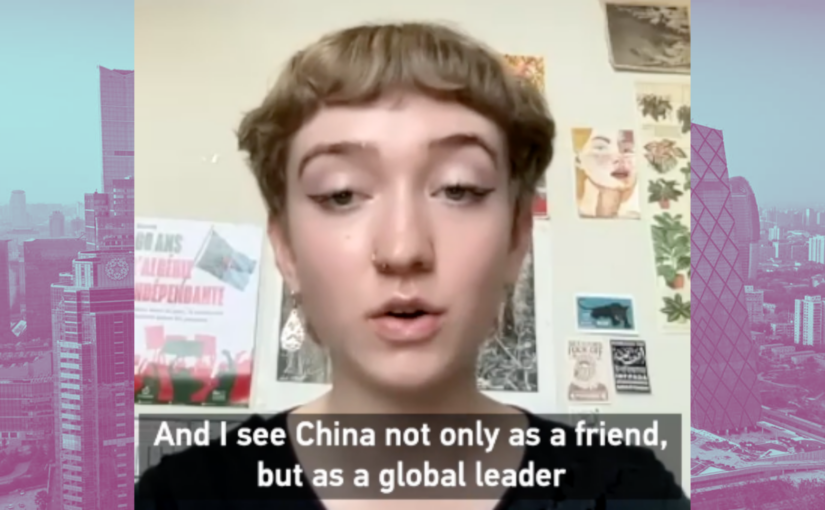
We are pleased to publish the text of a speech by Eben Williams, a Glasgow-based member of the International Committee of the Young Communist League (Britain), given on 17 December at the second of two online seminars on the theme ‘The 20th National Congress of the Communist Party of China and its World Significance’, organised jointly by Friends of Socialist China and IDCPC.

Eben discusses the significance of the 20th Congress, in particular its relevance to young communists in Britain, contrasting Xi Jinping’s work report with the political pronouncements of Britain’s political leaders. The work of the CPC Congress reflects a profound orientation towards, and dedication to, meeting the needs of the masses of the people. The CPC’s adherence to the mass line couldn’t be more different to British parliamentary politics under the dictatorship of capital.

Eben calls on the progressive movement in Britain to learn from China’s experiences, to tell the truth about China, to take inspiration from the achievements of the Chinese people, to unite with Chinese people in the global struggle against imperialism, and to “redouble our efforts to strengthen the anti-capitalist and anti-imperialist resistance here at home.”

First of all, a warm hello to our comrades from the International Department of the Communist Party of China and a big thank you to Carlos and Keith and all of our comrades at Friends of Socialist China for the invitation to join this important discussion on the 20th National Congress of the Communist Party of China and its world significance. I hope to give a few of my own thoughts from watching the congress, the perspective of young communists in Britain that have grown up watching the rise of China, and a small call to practical action.

As communists, our work is obviously very broad, and we do all kinds of different things to help build power for the working class where we live, but one of the areas of our work that I’m most interested in is our work building relationships with other working class and communist organisations around the world through our membership of the World Federation of Democratic Youth and through our International Department. This includes both the Communist Party of China and its youth wing, the Communist Youth League.

Recently, comrades from the CYL invited us to watch the opening ceremony of the 20th National Congress online, together with them and other comrades from around the world. Many of our members are inspired by the Chinese socialist project and this was an exciting opportunity to say the least, like staying up until 3am to watch some kind of communist Superbowl of historic importance.

I was astounded by the scale of it, with more than 2,200 party delegates, representing over 96 million party members, representing over 1.4 billion Chinese citizens, all gathering together at the Great Hall of the People in Beijing to chart out the country’s future in one of the most advanced democratic exercises in the world.

I was moved by the Party’s commitment to ceremony and to its history, honouring the fallen martyrs of the revolution in a minute’s silence, including comrades Mao Zedong, Zhou Enlai, Liu Shaoqi, Deng Xiaoping, Zhu De, and Chen Yun.

Continue reading Telling the truth about China, and learning from China’s example

On the work of young communists in China

We are pleased to publish here the text of a speech by Ms Li Na, Communist Youth League branch secretary of Bureau VII of the International Department of the Communist Party of China (IDCPC), given on 17 December at the second of two online seminars on the theme ‘The 20th National Congress of the Communist Party of China and its World Significance’, organised jointly by Friends of Socialist China and IDCPC.

Li Na’s speech gave a fascinating insight into the workings of the Communist Youth League at a branch level, including the league’s role in organizing study of Marxist theory and recruiting young members – “as the Party’s development needs new blood.”

I am Li Na from the Bureau for North American, Oceanian and Nordic Affairs of IDCPC. I am very honored and grateful to have this opportunity to speak here with you all.

The successful convocation of the 20th CPC National Congress marks a milestone in our Party’s history, as the whole Party and the entire nation embark on a new journey toward building a modern socialist country in all respects, and advance toward the Second Centenary Goal. As one of the youngest Party member of our Bureau’s Party branch and the Secretary of the Communist Youth League branch of our Bureau, today I want to share with you the CPC’s operation at primary-level and the Party’s youth work basing on our own practice.

I. Primary-level CPC organization

As is pointed out in the Report to the 20th CPC National Congress, “the Party’s advantage and strength lie in its close-knit organizational system”. As world’s largest political party of government with over 96 million members, the CPC attaches great importance to strengthening its over 4 million primary-level Party organizations, including those in Party and government offices and public institutions. Today I want to focus on 3 major functions of primary-level CPC organization, taking our Bureau’s Party branch as an example.

Continue reading On the work of young communists in China

Human rights crisis as US Covid cases surpass 100 million

The following article, written by FoSC co-editor Carlos Martinez for CGTN, compares the rising hysteria in the Western media over China’s Covid situation with its near-total silence in relation to the ongoing public health crisis in the US. The US has just surpassed 100 million Covid cases; its Covid death toll exceeds 1 million; and its average life expectancy has dropped to 76.4 years – the lowest since 1999. What’s more, as a result of centuries of systemic racism, the impact of this crisis is multiplied for the black, Latino and indigenous population. The media prefers to sensationalize the wave of Covid cases in China – as a form of deflection and diversion, and as part of the generalized campaign of China-bashing. People should be awake to this tactic, and refuse to be fooled by it.

While the United States is failing to provide global leadership in such areas as ecological protection and the pursuit of peace, it has established itself as something of a COVID-19 trailblazer, with by far the highest number of COVID-19 cases and deaths.

This week, according to data from Johns Hopkins University, the total number of confirmed COVID-19 cases in the U.S. surpassed 100 million. Somewhat surprisingly, this milestone received precious little attention in the Western media, which appears to be far more interested in the evolving COVID-19 situation in China. A Washington Post editorial on December 20 went so far as to claim that “China’s new COVID nightmare could become a global catastrophe.”

Any sentient being would be hard pressed to miss the hypocrisy. The corporate media in the West has, for the last three years, loudly denounced China’s dynamic zero-COVID policy, labeling it as “authoritarian” and “unsustainable.” Now that China’s health authorities have adjusted the strategy in accordance with changing circumstances – the far lower pathogenicity of the dominant Omicron strain, the high level of vaccination, and the improved understanding of how to effectively treat symptoms – all of a sudden U.S. journalists and politicians are concerned for the people of China.

As the veteran Chicago-based education specialist and campaigner Michael Klonsky points out: “The common thread running through all these media stories is that the imperialist mind in the West knows what’s best for China’s health and wealth and has that country’s best interests at heart.”

Continue reading Human rights crisis as US Covid cases surpass 100 million

Covid in China: Western propagandists look set to be disappointed again

The following article by Indian commentator Maitreya Bhakal, originally published in the Global Times, addresses the latest round of Coming Collapse of China hysteria in the imperialist media. Bhakal observes that, having relentlessly mocked China’s dynamic Zero Covid strategy for the last three years, the West is now hoping beyond hope that the lightening of Covid restrictions will trigger a massive public health crisis which will in turn foment widespread dissatisfaction with the Communist Party of China-led government. In these hacks’ fantasy world, the ensuing instability could deliver a mortal blow to Chinese socialism.

Bhakal concludes that the West’s journalists and politicians are destined for frustration: “As with many of their other predictions, whether China’s economy that’s been collapsing for thirty years, or the Communist Party that will be overthrown any time now, Western propagandists look set to be disappointed again.”

If there’s one quality that defines Western civilization, it is racism. Western culture is often filled with bigotry and intolerance.

Few things demonstrate this better than the West’s propaganda around COVID-19.  After all, people generally don’t die in China like the way they do back home. Children aren’t shot in schools, civilians aren’t randomly killed by the police, and drug deaths and violent crime are extremely rare. As a result,  any event that causes Chinese deaths is warmly welcomed by Western propagandists.

As usual, all of this is blamed on China’s political system. Western propaganda is as one-sided as it is lazy: anything wrong in China – from an initial setback against a new disease, to bad weather – is always blamed on China’s supposed “authoritarianism.”

Today, almost three years into the pandemic, Western “democracies” lie devastated. China has four times the population of the US, and its COVID death toll is about 5,200. So far, America’s death toll is 211 times higher, Britain’s 37 times higher, Italy’s 34 times higher, Germany’s 30 times higher, Spain’s 22 times higher, and Canada’s 9 times higher. All these “rich” “democracies” are at the forefront of criticizing China on “human rights”, but they can barely provide their own populations with the most basic human right: the right to live.

So much for the superiority of “democracy.”

Last month, China witnessed a few small-scale protests. The aims and political persuasion of the protestors varied. Some had genuine questions on the direction of China’s COVID policy. Some were protesting local lockdowns in their localities or cities. Some were university students. Some were Westernized liberals. Others were Western propagandists and provocateurs – Western “journalists” or “NGO workers” or “English teachers”, who somehow always seem to materialize at Chinese protest sites. 

Continue reading Covid in China: Western propagandists look set to be disappointed again

On the application of Xi Jinping Thought in an imperialist country

On 10 December, the first of two online seminars on the theme ‘The 20th National Congress of the Communist Party of China and its World Significance’, organised jointly by Friends of Socialist China and the International Department of the Central Committee of the Communist Party of China, was held. We are pleased to publish below the contribution by Dr Hugh Goodacre, Managing Director of the Institute for Independence Studies and lecturer in the History of Economic Thought at University College London. Hugh’s speech provides a profound and thought-provoking analysis of the global relevance of Chinese socialism, situating the new developments in Xi Jinping Thought on Socialism with Chinese Characteristics for a New Era within the overall and ongoing 170-year evolution of Marxism. He observes: “Xi Jinping Thought is deeply grounded in the scientific socialist tradition, standing in direct continuity with the work of its founders, and is indeed the Marxism of today.”

Thank you for the opportunity to participate in this Seminar on the world significance of the 20th Congress of the Communist Party of China. This was indeed an event of historic significance, in particular for its having firmly established the core position of Comrade Xi Jinping in the Central Committee and the Party as a whole, as well as of Xi Jinping Thought.

As the Resolution on the Party Constitution amendment noted: “The Congress unanimously agrees that the new developments in Xi Jinping Thought on Socialism with Chinese Characteristics for a New Era since the Party’s 19th National Congress should be incorporated into the Party Constitution, so as to better reflect the major contributions made by the Central Committee with Comrade Xi Jinping at its core to advancing the Party’s theoretical, practical, and institutional innovations.”

As a contribution to the assessment of its significance, my following comments aim to establish three interlinked points:

First, Xi Jinping Thought, the guiding ideology of socialism with Chinese characteristics, epitomises the outstanding features of socialism in the world today.

Secondly, Xi Jinping Thought is deeply grounded in the scientific socialist tradition, standing in direct continuity with the work of its founders, and is indeed the Marxism of today.

Thirdly, Xi Jinping Thought provides the basis for substantial steps forward in our work in this country to forge a socialist ideology and political line, on the basis of which we can build a genuinely socialist movement in this, the oldest imperialist country.

Continue reading On the application of Xi Jinping Thought in an imperialist country

Our cold warriors say they know what’s best for China as US covid deaths top 1 million

In this commentary on his Edu/Pol blog, veteran US progressive campaigner Mike Klonsky takes issue with the extraordinary hypocrisy of Western news reporting on the Covid situation in China. Since the start of the pandemic in early 2020, the media has, successively: 1) accused China of hatching Covid in a Wuhan lab; 2) attacked China’s dynamic Zero Covid for being authoritarian and/or ineffective; 3) cried copious quantities of crocodile tears over the recent loosening of restrictions, predicting this shift in strategy could result in millions of deaths.

As Mike points out: “The common thread running through all these media stories is that the imperialist mind in the west knows what’s best for China’s health and wealth and has that country’s best interests at heart.”

John Kirby, the White House national security spokesperson, has stated that the US stands ready to help China in its hour of need. Meanwhile, “US missile cruisers and nuclear submarines, sail into the South China Sea and the White House proclaims that China is enemy number one.” Not to mention the fact that the US is hardly in a great position to be advising other countries on how to manage the pandemic, given that over 300 people a day are still dying from Covid in the US.

Mike concludes with the apt proverb: “Physician, heal thyself.”

Whether it’s about the war in Ukraine or the cold war targeting China, it’s getting harder and harder to distinguish authentic news reports from the cold war propaganda produced daily by western intelligence agencies and willingly regurgitated by compliant reporters and news agencies.

Case in point: The continuing misleading and contradictory stories about China’s battles with Covid. They began, of course with Trump’s unsubstantiated claim that Covid was hatched in a Chinese lab. DT even coined the racist term Kung-flu as an anti-immigration dog whistle.

Then, with Biden, came the next two years, of continuous churn about China’s so-called Zero-Covid strategy which was mocked in the west, but was apparently successful in keeping that country virtually Covid-free while the virus was killing more than a million people here at home.

Not only was Zero-Covid supposedly to blame for China’s and Wall Street’s economic woes, but we were told that the recent anti-lockdown street protests (not unlike those in the west) could even lead to the downfall of China’s President Xi. Instead, the protests actually led to a shift away from Zero-Covid and towards a loosening of many government restrictions.

Continue reading Our cold warriors say they know what’s best for China as US covid deaths top 1 million

Taiwan local election shocks US imperialism

The following article from Fighting Words provides a useful summary of the recent local elections held in Taiwan Province. The author, Chris Fry, notes that although local elections are typically about local issues, in this instance Taiwan’s regional leader Tsai Ing-wen of the secessionist Democratic Progressive Party (DPP) had explicitly framed the election in terms of opposing the One China policy and “defending Taiwan’s democracy.”

It was, then, a huge blow to the separatists when the DPP was roundly defeated, winning just five seats, compared to the Kuomintang’s 13. The Kuomintang stands against secessionism and in favour of China’s reunification.

Chris observes that the imperialist powers, led by the US, are desperate to leverage Taiwanese secessionism against Chinese socialism. He concludes the article by calling on progressive forces in the West to oppose all such Cold War tactics aimed at containing and encircling China.

On November 26, local elections were held throughout Taiwan, an island that has always been part of China, but since 1949 has been ruled by a fascist leadership driven out of the mainland by the victorious Chinese People’s Liberation Army (PLA). Taiwan has since been “protected” by the military U.S. fleet, while Taiwan’s rulers maintained 48 years of martial law and a brutal regime of “White Terror”. In 1987, the regime allowed bourgeois elections.

Before the 2022 elections, Taiwan’s president, Tsai Ing-wen, had campaigned for her ruling “Democratic Progressive Party” (DPP) candidates with the assertion that Taiwan is an independent nation, and should prepare to wage war. As a Nov. 25th CNN article describes:

Polls opened in Taiwan on Saturday in local elections that President Tsai Ing-wen has framed as being about sending a message to the world about the island’s determination to defend its democracy in the face of China’s rising bellicosity.

The local elections, for city mayors, county chiefs and local councilors, are ostensibly about domestic issues such as the Covid-19 pandemic and crime, and those elected do not have a direct say on China policy.

But Tsai has recast the election as being more than a local poll, saying the world is watching how Taiwan defends its democracy amid military tensions with China, which claims the island as its territory.

China carried out war games near Taiwan in August to express its anger at a visit to Taipei by then-US House Speaker Nancy Pelosi and its military activities have continued, though on a reduced scale.

Taiwan’s main opposition party the Kuomintang, or KMT, swept the 2018 local elections, and has accused Tsai and the DPP of being overly confrontational with China.

Continue reading Taiwan local election shocks US imperialism

Trade unions in the ‘new economy’

In his report to the 20th National Congress of the Communist Party of China, held in October, General Secretary Xi Jinping said that China would do more to protect the rights and interests of those in flexible and new forms of employment. The following short article, which we reprint from Global Times, illustrates one way in which this is happening. It reports that all of China’s top 100 internet companies have formed trade unions and explains:

“In response to the diverse needs of the employees of internet enterprises, labor unions at all levels should actively implement targeted services, such as building special rooms for nursing mothers, providing childcare services, arranging matchmaking and dating events, sponsoring psychological lectures, and offering healing activities to take care of employees’ social lives and physical and mental wellbeing.”

It notes that with the rapid development of the platform economy, the number of workers engaged in new forms of employment, such as online-hailing cab drivers and internet marketing, has greatly increased.

All of the top 100 Chinese internet companies, including Meituan, JD.com and NetEase, have formed labor unions, a move aimed at protecting the legitimate rights and interests of internet industry workers and promoting the high-quality development of the industry, according to the All-China Federation of Trade Unions (ACFTU).

The ACFTU has demanded that internet companies build the labor unions into the “homes of employees” that focus on protecting the most direct and realistic interests of the employees of internet enterprises.

The ACFTU urged the labor unions to take the initiative to participate in dispute mediation and settlement involving overtime payments and other labor issues, and guide and urge internet enterprises to further standardize employment management.

Continue reading Trade unions in the ‘new economy’

Why Chinese “debt trap diplomacy” is a lie

This useful and comprehensive article by Amanda Yee, originally published in Liberation News, discusses the accusation that China is engaged in “debt trap diplomacy”; that it imposes predatory loans on countries of the Global South with a view to taking control of their resources.

Amanda details the most-cited putative examples of this phenomenon – the Hambantota Port in Sri Lanka and the Entebbe International Airport in Uganda – and in both cases demonstrates incontrovertibly that the accusations of “debt trap diplomacy” are false. There is not a single case of China pressuring countries to take unsustainable loans; nor does China use national assets as collateral. The author points out that, in fact, China’s loan conditions are typically far less onerous than those of the West, and that the infrastructure projects it invests in “are determined by the recipient country, not China, based on their own economic and political interests.”

It’s the IMF and World Bank loans, not China’s, that are “granted on conditions of privatizing public sectors, gutting social welfare programs, and trade liberalization to enrich Western capitalist interests.” Thus a debt trap does exist; it was invented by, and continues to be used by, the imperialist powers. Accusations of China employing “debt trap diplomacy” are sheer projection and New Cold War propaganda.

U.S. politicians and corporate media often promote the narrative that China lures developing countries into predatory, high interest loans to build infrastructure projects as part of its Belt and Road Initiative. As the story goes, China anticipates that the borrowing country will default on that loan, so that it can then seize that asset in order to extend its military or geostrategic influence—evidence of China’s so-called colonizing of the Global South.

The concept of Chinese “debt trap diplomacy” finds its origins in a 2017 academic article published by a think tank in Northern India describing China’s financing of Sri Lanka’s Hambantota Port. The concept was then picked up by two Harvard graduate students in 2018, when they published a paper accusing China of “debtbook diplomacy” and “leveraging accumulated debt to achieve its strategic aims.” This paper was then widely cited by media publications, the idea of Chinese “debt traps” seeped into Washington and intelligence circles, and a short time later, by November 2018, a Google search of the phrase “debt trap diplomacy” generated nearly two million results.

By now the “debt trap diplomacy” accusation has become a bipartisan one: both the Trump and Biden administrations have peddled it, and it’s been further advanced by organizations such as the U.S. International Development Finance Corporation, and corporate media outlets like The New York TimesThe Washington Post, and The Hill

In one egregious instance, BBC News even edited an interview with Deborah Bräutigam—a scholar known for her work challenging the validity of the Chinese “debt trap diplomacy” myth—to only include her explanation of the myth itself, omitting all evidence she cited against it, leading listeners to believe that Bräutigam was, in fact, claiming the concept was true. 

Problems with the “debt trap diplomacy” myth 

Generally, there are three problems with this “debt trap diplomacy” myth.

The first problem is that this myth assumes China unilaterally dictates Belt and Road Initiative projects to lure other countries into taking on these predatory loans. In reality, Chinese development financing is largely recipient-driven, through bilateral interactions and deals. Infrastructure projects are determined by the recipient country, not China, based on their own economic and political interests.

Continue reading Why Chinese “debt trap diplomacy” is a lie

Jenny Clegg on the complex and evolving US-China relationship

On the proposal of the International Department of the Central Committee of the Communist Party of China (IDCPC), Friends of Socialist China (FoSC) and the IDCPC jointly organised two online seminars, with participation by invitation, on the theme of, ‘The 20th National Congress of the Communist Party of China and its World Significance’, on December 10th and 17th.

A total of 36 supporters and friends of FoSC from England, Scotland, Wales and the north of Ireland, from various nationalities and walks of life, and from a broad range of progressive organisations and areas of struggle, participated, the majority of them in both events.

The first seminar focused on expert presentations, with the speakers being:

  • Liu Genfa, Deputy Director, Department of International Exchange, Training and Development of the China Executive Leadership Academy, Pudong;
  • Qu Bo, Associate Professor and Director, Institute of International Relations, China Foreign Affairs University;
  • Dr Hugh Goodacre, Managing Director of the Institute for Independence Studies and Lecturer in the History of Economic Thought at University College London(UCL);
  • Dr Jenny Clegg, China specialist and former Senior Lecturer in Asia Pacific Studies at the University of Central Lancashire (UCLAN).

The second seminar concentrated more on an exchange of views and experiences, with younger comrades taking the lead. The speakers were:

  • Ms Wang Yingchun, Deputy Director General of Bureau VII of the IDCPC;
  • Ms Li Na, Communist Youth League Branch Secretary of Bureau VII of the IDCPC;
  • Eben Williams, Member of the International Committee and Chair of the Glasgow branch of the Young Communist League;
  • Fiona Sim, Organiser with Goldsmiths Anti-Imperialist Society

We plan to publish those of the papers for which we have the text on our website in the coming period and hope to organise more such joint activities with our comrades in the IDCPC in the new year.

Below is the speech given by Jenny Clegg at the session on December 10th. Jenny’s presentation explores in some detail the complex and evolving relationship between the US and China, as well as providing an overview of (and raising some questions for discussion in relation to) China’s socialist modernisation.

My contribution comes in two parts – firstly I focus on the US-China relationship with a view to making some assessment, at the current international conjuncture, of the recent Xi-Biden meeting on the sidelines of the G20 Bali summit.  Secondly I raise some issues about China’s last stages of socialist modernisation.

The US-China relationship: the background

The US China relationship has become the dominant influence on the overall dynamics of international relations.

China’s rise counters US hegemonism; it challenges the system of imperialist rule-making; at the same time China’s socialist orientation shows there is an alternative to capitalism.

These three intertwined contradictions are fundamentally antagonistic but as Mao suggested antagonistic contradictions can also be handled in a non antagonistic way – of course depending on the circumstances. Today it is amidst the increasingly complex context of polycrises – of climate change, the pandemic, debt and economic recession, and now the Ukraine war – that we see the US and China engaged in a sharpening trial of strength. 

Continue reading Jenny Clegg on the complex and evolving US-China relationship

Xi Jinping: global solidarity is the only way to protect biodiversity

The following speech by Xi Jinping, delivered at COP15 (the 15th Meeting of the Conference of the Parties to the Convention on Biological Diversity), details China’s progress over the past decade in biodiversity protection, including the establishment of a system of conservation red lines, a system of national parks, and the successful protection of a large array of rare and endangered species. Xi makes it clear that China is strongly committed to improving biodiversity and will continue to work hard on ecological protection.

The speech also highlights the importance of international cooperation; that “solidarity and cooperation is the only effective way to address global challenges” such as biodiversity protection and the Covid19 pandemic. Xi calls for greater support to be given to developing countries to allow them to build capacity in dealing with climate change and biodiversity. This is a salutary reminder, at a time when the major imperialist powers are promoting “decoupling” and adopting aggressive geopolitical stances – promoting their own narrow, hegemonic interests over the wellbeing and long-term viability of humanity.

Ladies and Gentlemen,

Friends,

Good morning.

On behalf of the Chinese government and people, and also in my own name, I would like to extend warm congratulations to the convening of today’s meeting.

Humanity lives in a community with a shared future. Be it in overcoming the COVID-19 pandemic, or in enhancing biodiversity protection and achieving sustainable development globally, solidarity and cooperation is the only effective way to address global challenges. A sound ecosystem is essential for the prosperity of civilization. We must work together to promote harmonious co-existence between man and Nature, build a community of all life on the Earth, and create a clean and beautiful world for us all.

— We need to build global consensus on biodiversity protection, jointly work for the conclusion of the Post-2020 Global Biodiversity Framework, and identify targets and pathways for global biodiversity protection.

— We need to push forward the global process of biodiversity protection, turn ambitions into action, support developing countries in capacity-building, and coordinate efforts to address climate change, biodiversity loss and other global challenges.

— We need to promote green development through biodiversity protection, speed up the green transition of development modes and lifestyle, and leverage the Global Development Initiative (GDI) to deliver greater benefits to people of all countries.

— We need to uphold a fair and equitable global order on biodiversity protection, firmly defend true multilateralism, firmly support the UN-centered international system and the international order underpinned by international law, and form strong synergy for protecting the Earth, our common homeland.

Continue reading Xi Jinping: global solidarity is the only way to protect biodiversity

Video: What’s going on in China? Protests, Covid, Xi’s Middle East visit

On 14 December 2022, Friends of Socialist China co-editors Danny Haiphong and Carlos Martinez joined Multipolarista editor Ben Norton to discuss recent developments in China.

In the 90-minute stream embedded below, the three discuss some key topics including the recent wave of protests; the changes to China’s management of the pandemic; Xi Jinping’s recent trip to the Middle East; the China-Arab States Summit; China’s position on the Palestinian question; visits to Beijing by Nguyen Phu Trong, Miguel Díaz-Canel and Olaf Scholz; and the death of Jiang Zemin.

The stream was broadcast simultaneously on MultipolaristaThe Left Lens, and Friends of Socialist China.

Analysis of China’s three-year Covid-19 strategy and beyond

In this article, originally published by CGTN, Keith Lamb situates the reaction of the western press to the recent and ongoing modifications made by China to its dynamic zero Covid policy in the context of its coverage throughout the last three years of the pandemic. Basing himself on his time spent in China, he explains that he saw for himself how western reporting was inaccurate; how China would be damned by them no matter what it did; and that it would be foolish for China to take advice from such media and the class it serves.

Keith further notes that China has spent the last three years developing antidotes and modernizing its health service. This has created the basis for the recent changes, which have “already been pounced upon by the corporate media who now, making an abrupt turn, warn that opening up will endanger public health. In light of lockdown propaganda, equated with human rights abuse, this concern for China’s health is just a continuation of using the media to delegitimize China to Western domestic audiences and stir up class divisions in China.”

My time in China during the COVID-19 outbreak taught me three things about transnational corporate media reporting on China. First, reporting was inaccurate regarding events and sentiments on the ground. Second, no matter what China did, it would be damned by these media. Third, considering the inaccuracy and malice it would be foolish for China to take advice from these media and their class interests.

In regard to China’s COVID-19 policy, the corporate press exaggerated minority disgruntlement to convey a totality of an undemocratic hellscape to Western audiences. Lockdowns though implemented organically before they became official policy were presented using an “oppressing human rights” narrative.

Regarding human rights, the U.S. with its laissez-faire policy, favored by transnational capital, lost over one million lives to COVID-19. China has a larger population, denser urbanization, a developing healthcare system, and a family structure where three generations often live under one roof. Had China opened up early, when the virus was most virulent, its death toll could have been higher than the U.S.’s.

If China, urged on by the corporate media, followed the U.S. example then this press, full of schadenfreude, would have vilified China’s governing system which could have faced a crisis for valuing market interests above the democratic interest to protect all life. Ironically, transnational interests would have further leveraged misunderstandings, concerning China’s socialist market economy and the nature of class contradictions in the developmental process, to depict China’s system as aping imperialism.

Continue reading Analysis of China’s three-year Covid-19 strategy and beyond

Miguel Diaz-Canel: President Xi Jinping is my role model

In this clip from an interview with CGTN, Cuban president Miguel Díaz-Canel gives his appraisal of his Chinese counterpart, Xi Jinping. Mentioning that he is an enthusiastic reader of Xi’s speeches and writings – which he considers to be a reference point in the development of socialist theory and practice – he also notes the character traits that contribute to Xi’s leadership style. He describes Xi as “a profound thinker… austere, modest, but also demanding”. Xi Jinping “has the virtue of always thinking about the wellbeing of his people.”

The clip is embedded below. CGTN have also released the following clips:

Cuban president: Cuba to resolve energy shortage through cooperation with China

Cuban president: Goal, vision of Chinese-style modernization very advanced, scientific

Cuban president: Global development, security initiatives in interest of all peoples

China-Arab States Summit: another bridge to a multipolar world

Co-editor of FoSC Danny Haiphong analyzes the significance of the China-Arab Summit held in Riyadh on December 9th and contrasts U.S. policy in the Middle East with China’s to demonstrate how the China-Arab Summit has built another bridge to a multipolar world. This article was originally carried in CGTN.

At this moment of history, the world finds itself in a great deal of turmoil. U.S. and NATO escalations in Ukraine have facilitated an energy crisis in Europe, worsened the inflation crisis globally, and contributed to the horrors of military conflict. Arab states are familiar with this state of affairs.

For more than three decades, U.S. and Western governments exploited the post-Soviet world order to enforce unilateralism and unipolar hegemony in the Middle East. Their interventions in several Arab-led nations devastated the lives of millions and left the region unstable.

While much of the world is seeking an off-ramp for the conflict in Ukraine, Arab states are seeking to ease their reliance on U.S.-led unipolarity. China is a natural partner in this regard. The success of socialism with Chinese characteristics is in large part due to an emphasis on sovereignty. China has managed to both integrate into the world economy and peacefully assert the right to pursue its own development path. This has not only led to significant achievements in poverty alleviation and technological growth but also to an unprecedented degree of political stability.

Multilateral arrangements such as the Belt and Road Initiative (BRI) and the Shanghai Cooperation Organization (SCO) are part of China’s commitment to sharing its successes and building a community with a shared future with nations around the world. The China-Arab States Summit has taken a major step forward in this direction. Saudi Arabia and the Gulf Cooperation Council (GCC) countries are rich in natural resources and are seeking to diversify their economies to meet major development goals.

The China-Arab States Summit achieved fruitful results for all involved. Numerous bilateral and multilateral agreements were signed in the areas of telecommunication, energy, infrastructure, public health, and ecological suitability. Furthermore, China and Saudi Arabia’s comprehensive strategic partnership was affirmed and expanded.

Continue reading China-Arab States Summit: another bridge to a multipolar world

Xi’s visit and the future of the Middle East

In the below article, originally published on Mint Press News, journalist and author Dr. Ramzy Baroud, Editor of the Palestine Chronicle, takes a critical look at western perceptions and media coverage of President Xi Jinping’s visit to Saudi Arabia and the China-Arab Summit last week. He notes how most of the media analysis tends to be short-sighted and focused on the concerns of western governments. This means that both Chinese and Arab diplomacy is perceived as being simply reactive to western policy and actions as opposed to having its own agenda and agency. As a result, its assumptions are “either half-truths or entirely fabricated.” 

China-Arab relations, Ramzy notes, are predicated on the Five Principles of Peaceful Coexistence, which are “founded on an entirely different paradigm” compared to the colonial and latterly neo-colonial practices of the West. They are deep-rooted and well established, and are not based on “knee-jerk political reactions to the attitude of a single American President or administration.”

The problem with most Western media’s political analyses is that they generally tend to be short-sighted and focused mostly on variables that are of direct interest to Western governments.

These types of analyses are now being applied to understanding official Arab attitudes towards Russia, China, global politics and conflicts.

As Chinese President Xi Jinping prepares to lead a large delegation to meet with Arab leaders in Saudi Arabia on December 9, Western media conveys a sense of dread.

The Chinese leader’s visit “comes against the backdrop” of the Biden Administration’s “strained ties with both Beijing and Riyadh” over differences, supposedly concerning “human rights and Russia’s invasion of Ukraine,” Reuters reported.

The same line of reasoning was parroted, with little questioning, by many other major Western media sources, falsely suggesting that ‘human rights’, along with other righteous reasons, are the main priority of the US and Western foreign policy agenda.

And, since these analyses are often shaped by Western interests, they tend to be selective in reading the larger context. If one is to rely exclusively or heavily on the Western understanding of the massive geopolitical changes around the world, one is sure to be misled. Western media wants us to believe that the strong political stances taken by Arab countries – neutrality in the case of war, growing closeness to China and Russia, lowering oil output, etc – are done solely to ‘send a message’ to Washington, or to punish the West for intervening in Arab affairs.

Continue reading Xi’s visit and the future of the Middle East

China’s consistent support for the Palestinian people

During his recent state visit to Saudi Arabia, President Xi Jinping not only attended the first summits between China and the Arab States and between China and the members of the Gulf Cooperation Council (GCC), but also held bilateral meetings with leaders of many countries, including Egypt, Palestine, Kuwait, Sudan, Tunisia, Iraq, Qatar, Somalia, Mauritania, Djibouti, Comoros, Bahrain, Yemen, Oman, Algeria and Lebanon.

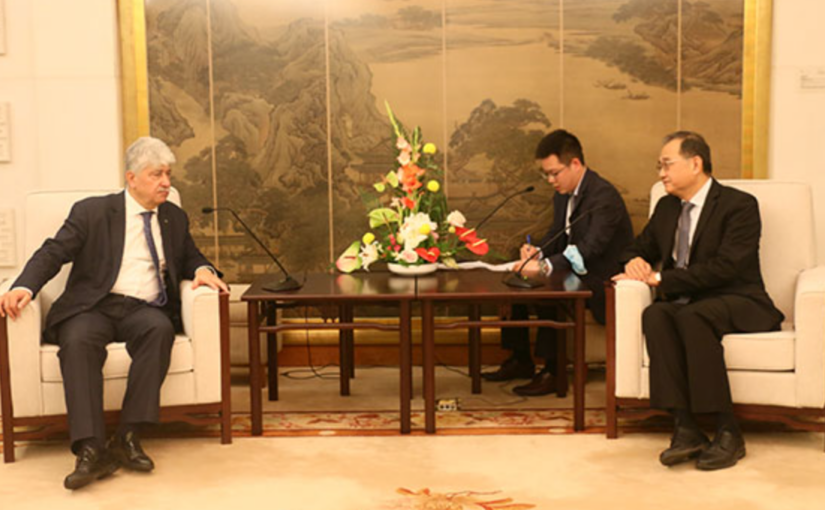
One of his first meetings was with Palestinian President Mahmoud Abbas. President Xi pointed out that China-Palestine friendship is deeply cherished by the two peoples. Over the past five decades and more, the two sides have always trusted and supported each other. No matter how the international and regional situation changes, China always firmly supports the just cause of the Palestinian people to restore the legitimate rights and interests of their nation, and always stands with the Palestinian people.

President Abbas said that the Palestinian people are deeply proud of their friendly relations with the Chinese people. China is Palestine’s sincere and trustworthy friend and has always firmly supported the just cause of the Palestinian people by offering Palestine all-round and unconditional support on the political, economic, moral and other fronts. All Palestinian people hold sincere affections for the Chinese people. 

The words of the two leaders were not empty ones. China sent its first aid to the Palestinian people in 1960.  When the Palestine Liberation Organization (PLO) was founded in 1964, China became the first non-Arab country to recognize it. In March 1965, a PLO delegation headed by Ahmed Shuqairy was welcomed by hundreds of thousands of people and was received by Mao Zedong, Zhou Enlai, Liu Shaoqi and other leaders. The first Palestinian fighters were sent for military training in China that same year.

Already, the previous year, Yasser Arafat’s lifelong comrade-in-arms, Abu Jihad (Khalil al-Wazir) had visited China, along with the neighboring socialist states of Korea and Vietnam, as part of a joint Algerian-Palestinian Fatah delegation that secured the support of the three countries for the Palestinian revolution.

Yasser Arafat himself, the historic leader of the Palestinian revolution, made 14 official visits to China. Late Chinese President Yang Shangkun once told him that even the youngest child in the most remote Chinese village knew his name.

In the 1960s, Arafat’s al-Fatah organization declared that “Mao Zedong Thought is a spiritual atom bomb”, echoing a phrase that was popular in China at that time. In 1970, Arafat said that China is “the biggest influence in supporting our revolution and strengthening its perseverance.” That same year, George Habash, leader of the Popular Front for the Liberation of Palestine (PFLP) simply stated: “China is our best friend.”

To this day, the Fatah leadership maintains a post of Commissioner for Relations with Arab Countries and China, testifying to the special relationship between the two countries, and presently held by Central Committee member Abbas Zaki. 

On August 9, 2021, the Chinese newspaper Global Times, published an article entitled I Will “Move the Mountains” Like the Chinese Do — Yasser Arafat, the “Yu Gong” of Palestine. It stated: “Arafat was a big fan of Mao Zedong and read many of his works. According to people close to him, Arafat led the Palestinians in fighting a quite successful guerrilla war against the Israelis, whose military far outmatched theirs. During those tough years, he drew much wisdom, experience and confidence in the military realm from Chairman Mao’s works on guerrilla warfare. His favorite piece was Yu Gong Moves the Mountains, which he read many times. According to him, the Chinese people have a precious spirit that cannot be bought with money. The Chinese were not afraid of imperialism, neither did he. He saw himself as the Yu Gong in Mao Zedong’s book, determined to move the mountain of imperialism. (Note: The article in question is officially translated as ‘The Foolish Old Man who Removed the Mountains’ and was Comrade Mao Zedong’s concluding speech at the Seventh National Congress of the Communist Party of China held in 1945.) 

“At the end of 1991, after a visit to Southeast Asia, Arafat’s plane landed in Shanghai due to bad weather. He received warm welcome from the Chinese side. Before departure at the Shanghai Hongqiao International Airport, Arafat wrote in the guest book: Long live the Palestine-China friendship! My sincere gratitude! The Palestinian people salute the Chinese people. China has firmly supported the position of Palestine. We will fight shoulder to shoulder until the final victory! In 2000, President Jiang Zemin met with visiting Palestinian President Yasser Arafat and discussed the proposed founding of a State of Palestine. Jiang Zemin told him that China believes the Palestinian people have the inalienable right of national self-determination, including the right of statehood. China respects the choice of the Palestinian people. It recognized the State of Palestine and established diplomatic ties with it as early as in 1988. No matter how the situation may change in the Middle East, your decisions, if they serve the Palestinian people’s interests and the just cause, will always have the support of the Chinese government and the Chinese people. Given such profound friendship, Arafat often chose to visit China when Palestine was at the critical juncture.”

The following report of the meeting between Presidents Xi and Abbas was originally carried on the website of the Chinese Foreign Ministry.

President Xi Jinping Meets with Palestinian President Mahmoud Abbas

On the afternoon of December 8 local time, President Xi Jinping met with Palestinian President Mahmoud Abbas in Riyadh. 

President Xi pointed out that China-Palestine friendship is deeply cherished by the two peoples. Over the past five decades and more, the two sides have always trusted and supported each other. No matter how the international and regional situation changes, China always firmly supports the just cause of the Palestinian people to restore the legitimate rights and interests of their nation, and always stands with the Palestinian people. The international community should prioritize the Palestinian issue on the international agenda, keep to the direction of the two-state solution and the principle of “land for peace”, and facilitate resumption of peace talks on the basis of relevant UN resolutions and the Arab Peace Initiative. China will continue to work for an early, just and durable solution to the Palestinian issue.

Continue reading China’s consistent support for the Palestinian people

Zero Covid: Don’t be deceived by US reports on the protests in China

The following article by Scott Scheffer, originally published in Struggle/La Lucha, assesses the hypocritical and purposefully disingenuous reporting in the Western media regarding the recent Covid protests in China.

Scott points out that several outlets are guilty of massively exaggerating the scale of the protests in order to paint it as an emerging “color revolution”. In truth however, “this brief series of protests was not the mass uprising against the leadership of China that the US capitalist class and their loyal media salivate over.”

The author recognizes that, in spite of China’s unparalleled success in mitigating the effects of the pandemic and keeping the number of fatalities remarkably low, after almost three years there is now a level of frustration in relation to some of the more severe Covid measures, particularly lockdowns, mandatory quarantine and daily PCR testing. Indeed, the government has been gradually rolling out policy updates that reflect both the shifting mentality and the evolution of the virus itself. These policy changes were announced even before the recent tragedy in Urumqi, which was a key trigger for the protests.

Scott rightly concludes that “socialist planning and science saved tens of millions of lives in China and will keep China on the right path as the virus ebbs and flows.”

The opportunism of the major U.S. media was on full display in late November over the protests against China’s anti-COVID lockdowns. The protests began in the Xinjiang city of Urumqi after a terrible fire took the lives of 10 people on Nov. 24. People in the district responded to the tragedy by protesting the lockdown that had gone into effect after a COVID outbreak in late summer. 

The protests occurred in somewhere between 15 and 20 cities, including Beijing and Shanghai. The numbers reported by the U.S. press were purposely vague. The liberal PBS claimed thousands in a Nov. 29 headline and then “tens of thousands” in the article. Some reports indicated hundreds in Shanghai, and many pieces didn’t estimate crowd size at all. 

For context, there are about 60 cities of a million people or larger in China, and about 20% of the world lives in China. So even if the claim by PBS of “tens of thousands” is true, this brief series of protests was not the mass uprising against the leadership of China that the U.S. capitalist class and their loyal media salivate over. 

Hoping the protests would mark the beginning of their long-desired “color revolution” in China, the U.S. media’s elation got the best of them and led to the overblown coverage. But the hyperventilating reportage wasn’t limited to slander. There are reports of Western journalists using Telegram channels to guide “activists” from Hong Kong and Taiwan to the locations of some of the protests. 

When the “color revolution” failed to materialize, their giddy predictions gave way to another distortion of the facts. They claimed the CCP is being pushed by the momentum of the protests to ease its COVID policy, which they claim is the result of Xi’s authoritarianism and his desire to always be correct regardless of consequences. 

Continue reading Zero Covid: Don’t be deceived by US reports on the protests in China

China and Arab states strengthen their cooperation

Continuing his intense programme of diplomatic activity over recent months, Chinese President Xi Jinping last week paid his second state visit to Saudi Arabia, where he also attended the first China-Arab States Summit and the first China-GCC (Gulf Cooperation Council) Summit.

In his keynote speech to the China-Arab States Summit, delivered in the Saudi capital Riyadh on December 9th, President Xi said:

“China and Arab states enjoy a long history of friendly exchanges. We have come to know and befriend each other through the ancient Silk Road. We have shared weal and woe in our respective struggles for national liberation. We have conducted win-win cooperation in the tide of economic globalization. And we have upheld fairness and justice in the changing international environment.”

Over the past decade, he noted, two-way trade had grown by over 100 billion US dollars, to reach over 300 billion dollars, and over 200 Belt and Road projects had been carried out.

Xi Jinping said that China and the Arab countries should:

  • Stay independent and defend our common interests;
  • Focus on economic development and promote win-win cooperation;
  • Uphold regional peace and strive for common security; and
  • Increase exchanges among civilizations to enhance mutual understanding and trust.

The Chinese leader devoted particular attention to the question of Palestine in his speech, clearly noting:

“The historical injustices done to the Palestinian people should not be left unattended indefinitely. The legitimate rights and interests of a nation are not up for trade, and the demand to establish an independent state shall not be denied.”

“Recently,” he continued, “through the efforts of Arab states, important progress has been made in intra-Palestinian reconciliation. China welcomes these developments. I would like to reiterate that China firmly supports the establishment of an independent State of Palestine that enjoys full sovereignty based on the 1967 border and with East Jerusalem as its capital.”

Here, President Xi refers to the agreement concluded in Algiers in October between Fatah, Hamas and 12 other Palestinian resistance organisations, with the active mediation of the Algerian government.

President Xi also presented the Arab leaders with eight major initiatives to boost China-Arab practical cooperation. They cover the following fields:

  • Development Support. This category includes a pledge by China to provide humanitarian support and reconstruction assistance for countries including Palestine, Yemen, Lebanon and Syria. This is particularly significant in that Syria is still unjustly excluded from the League of Arab States, although considerable progress is being made to rectify this.
  • Cooperation on food security
  • Cooperation on public health
  • Cooperation on green innovation
  • Cooperation on energy security
  • Cooperation on inter-civilizational dialogue
  • Cooperation on youth development
  • Cooperation on security and stability

In a declaration issued following the summit, the leaders said they support the establishment of a Middle East zone free of weapons of mass destruction, in accordance with the Treaty on the Non-Proliferation of Nuclear Weapons. The only nuclear-armed state in the region is Israel.

We reprint below the full text of President Xi’s speech to the summit as well as reports on his eight point proposal on cooperation and on the summit declaration. They were originally carried by the Xinhua News Agency.

Full text of Xi Jinping’s keynote speech at China-Arab States Summit

Carrying Forward the Spirit of China-Arab Friendship and Jointly Building a China-Arab Community with a Shared Future in the New Era

Riyadh, 9 December 2022

Distinguished Colleagues,

Friends,

Good afternoon!

At the outset, I wish to thank Saudi Arabia for the warm hospitality and thoughtful arrangement. I am very pleased to join you for the first China-Arab States Summit. The Summit is a milestone in the history of China-Arab relations, and will take us to a more promising future of friendship and cooperation.

China and Arab states enjoy a long history of friendly exchanges. We have come to know and befriend each other through the ancient Silk Road. We have shared weal and woe in our respective struggles for national liberation. We have conducted win-win cooperation in the tide of economic globalization. And we have upheld fairness and justice in the changing international environment. Together, China and Arab states have nurtured the spirit of friendship featuring “solidarity and mutual assistance, equality and mutual benefit, and inclusiveness and mutual learning.”

Solidarity and mutual assistance is a distinct feature of China-Arab friendship. We trust each other, and have forged a brotherly friendship. We firmly support each other on issues involving our respective core interests. We work hand in hand and make progress together to realize the dream of national rejuvenation. We brave wind and storms together in fighting the COVID pandemic. The China-Arab future-oriented strategic partnership of comprehensive cooperation and common development is unbreakable.

Continue reading China and Arab states strengthen their cooperation

New booklet: No Great Wall: on the continuities of the Chinese Revolution

The comrades at Midwestern Marx have produced a booklet based on two essays by Friends of Socialist China co-editor Carlos Martinez, ‘No Great Wall: on the continuities of the Chinese Revolution’, and ‘Will China Suffer the Same Fate as the Soviet Union?’. The book description reads as follows:

In “No Great Wall: On the Continuities of the Chinese Revolution”, Carlos Martinez concisely traces the history of the Chinese revolution from the formation of the Communist Party of China in 1919, to the current Xi Jinping era. Contrary to those who argue there was a betrayal of the revolution in 1978 with Deng Xiaoping’s Reform and Opening Up, Martinez lucidly shows how the Chinese revolution has been a continuous process, adjusting its governance in accord to changes in national and geopolitical contexts.This collection also includes the essay “Will China Suffer the Same Fate as the Soviet Union?” which relates the development of the Chinese revolution to the Soviet, and “The CPC: The Most Successful Political Party in History,” which reflects on the successes of the Chinese revolution following the 20th National Congress of the CPC.

You can order the book from anywhere in the world at the Midwestern Marx website.

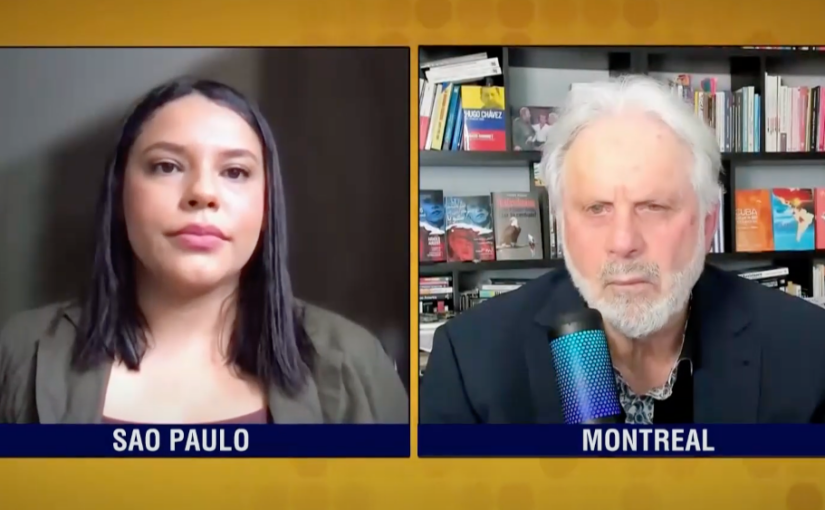
Also embedded below is a recent two-hour discussion between Carlos and Midwestern Marx. They cover a number of important topics, including the conflict in Ukraine, the legacy of the Soviet Union, China’s ecological civilisation, market socialism, the New Cold War, and the 20th National Congress of the CPC.