Ramzy Baroud: China remains committed to its principled stance on Palestine

In this article for MintPress News, Palestinian journalist and author Ramzy Baroud analyzes China’s approach to the Palestine question, noting that while China has always based its position on international law and has always stood up for Palestinian national rights, it has been notably more forthright in recent months. Baroud reports that China’s United Nations Ambassador, Geng Shuang, made strong comments recently about the need for a “comprehensive and just solution” based on ending Israel’s provocations, and called on Tel Aviv to “immediately halt” the “illegal expansion of settlements.” Geng also brought up the plight of the Palestinian refugees – a subject that Israel and its allies in the West would very much prefer went unmentioned.

Baroud concludes that China has (correctly) identified US intransigence as the number one reason for the lack of progress in developing a just solution to the Palestine question. Meanwhile, given China’s blossoming relation with the Arab world, “the more Palestine takes center stage in Arab political discourse, the greater emphasis the issue receives in China’s foreign policy agenda.”

With Palestinian President Mahmoud Abbas arriving in Beijing today (13 June 2023), there is a good opportunity for China to lend its assistance to the project of building a just and lasting peace in the region.

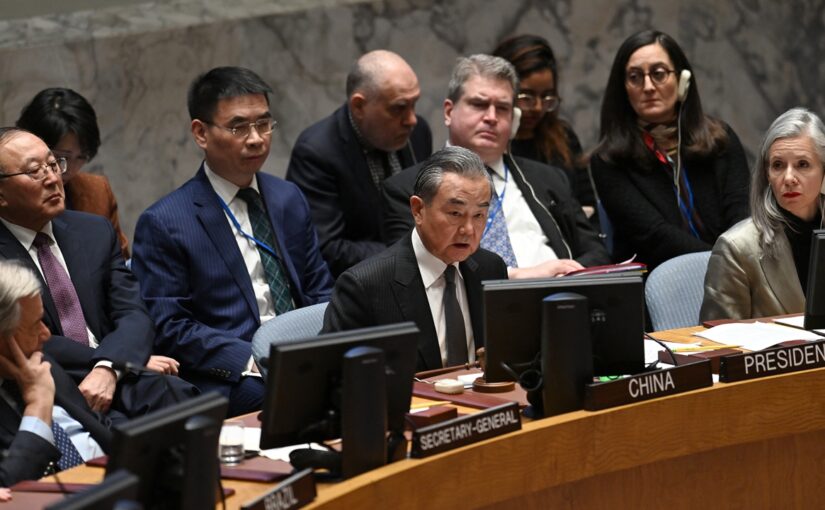
Remarks by China’s United Nations Ambassador, Geng Shuang, on the situation in Occupied Palestine on May 24 were impeccable in terms of their consistency with international law.

Compared to the United States’ position, which perceives the UN, and particularly the Security Council, as a battleground to defend Israeli interests, the Chinese political discourse reflects a legal stance based on a deep understanding of the realities on the ground.

Articulating the Chinese thinking during a UNSC ‘Briefing on the Situation in the Middle East, including the Palestine Question,’ Geng did not mince his words. He spoke forcefully about the “irreplaceable” need for a “comprehensive and just solution” that is based on ending Israel’s “provocations” in Jerusalem and the respect for the right of “Muslim worshipers” as well as the “custodianship of Jordan” in the city’s holy sites.

Continue reading Ramzy Baroud: China remains committed to its principled stance on Palestine

Friendly relations between China and South Africa continue to deepen

The close brotherly relations between China and South Africa have been underlined by a number of recent diplomatic encounters.

On June 9, President Xi Jinping held phone talks with his South African counterpart, Cyril Ramphosa, in which the Chinese leader said that the two countries are both important major developing countries and enjoy special friendly relations like brothers. 

China-South Africa relations are of important strategic significance to safeguarding the common interests of developing countries and guiding China-Africa solidarity and cooperation, Xi added.

China supports South Africa, as the rotating chair, in successfully hosting various BRICS cooperation activities this year.

Ramaphosa said that South Africa supports China’s position paper on the political settlement of the Ukraine crisis and hopes that relevant parties could resume negotiations at an early date.

A peace delegation consisting of leaders of six African countries, including South Africa, will visit Russia and Ukraine to push for an end to the crisis as soon as possible, he added.

Xi told Ramaphosa that China’s position on the Ukraine crisis has been consistent, which is to promote peace talks.

The Chinese leader said that he hopes all parties will build up favourable conditions for solving the crisis through dialogue, adding that it is a good thing that President Ramaphosa and leaders of relevant African countries have formed a peace delegation to visit Russia and Ukraine.

Earlier, from June 1-2, Chinese Vice Foreign Minister Ma Zhaoxu attended the Formal Meeting of BRICS Ministers of Foreign Affairs and International Relations and the Friends of BRICS Foreign Ministers Meeting in Cape Town, South Africa.

BRICS countries, he said, should adhere to fairness and justice, adhere to self-confidence, self-reliance, independence and self-improvement, strengthen strategic communication and coordination with the vast number of developing countries, and promote the building of a community with a shared future for humanity. 

On June 7, Liu Jianchao, Minister of the International Department of the Communist Party of China (CPC) Central Committee (IDCPC), met with a delegation of the National Executive Committee of the African National Congress (ANC) of South Africa, led by its Secretary-General, Fikile Mbalula.

Liu said, China and South Africa have a deep-rooted traditional friendship.  With close institutionalised exchanges and communication between the CPC and the ANC, political mutual trust has been constantly strengthened. The Chinese side will continue to firmly support South Africa in exploring a development path that suits its national conditions and provide more development opportunities for African countries, including South Africa, through China’s high-quality development and the Chinese path to modernisation. The Chinese side supports the South African side in assuming the rotating presidency of the BRICS countries and is willing to actively participate in the “BRICS Plus” dialogue for political parties to be hosted by the ANC.

Mbalula expressed gratitude to the Chinese side for its valuable support in South Africa’s national liberation and development. He added that, under the strong leadership of the CPC, the cause of socialism with Chinese characteristics has achieved great success, inspiring progressive forces worldwide. Through this visit, he said, we hope to learn from the CPC’s experience in state governance and administration to assist the ANC in building a democratic, prosperous, and free South Africa and promoting the economic and social development of the country.

On June 8, Chinese State Councilor and Minister of Public Security, Wang Xiaohong met with South African Police Minister Bheki Cele in Beijing. Wang stressed the need to strengthen pragmatic cooperation in BRICS Summit security, Belt and Road security, the crackdown on transnational crimes and law enforcement capacity building.

The following articles were originally published by the Xinhua News Agency, the Chinese Foreign Ministry and the IDCPC.

Xi, Ramaphosa hold phone talks over bilateral ties, Ukraine crisis

Xinhua, 10 June 2023

Chinese President Xi Jinping on Friday held phone talks with his South African counterpart, Cyril Ramaphosa, pledging to promote China-South Africa ties, and calling for favorable conditions to solve the Ukraine crisis.

Xi said China and South Africa are both important major developing countries and the two enjoy special friendly relations like brothers.

Continue reading Friendly relations between China and South Africa continue to deepen

Chen Weihua on the New Cold War, Taiwan and Ukraine

On the road in Brussels, Friends of Socialist China co-editor Danny Haiphong caught up with the prominent Chinese journalist Chen Weihua (China Daily’s EU bureau chief) for a very interesting interview.

Chen comments at length on the New Cold War and the deterioration in US-China relations during the Trump administration. Having worked in the US for several years during the Obama years, Chen witnessed a far healthier bilateral relationship, characterized mainly by cooperation – in spite of the launch of the Pivot to Asia, which obviously heralded a strategic shift on the part of the US. However, Trump dismantled the policy of engagement that had been in place since the restoration of relations between the two countries in the 1970s and, sadly, the Biden administration has been no improvement when it comes to US-China relations. Biden on the campaign trail criticized Trump’s trade war, but in office he’s continued and deepened it.

Regarding the Taiwan issue, Chen Weihua appealed to US politicians to not undermine the One China Principle or attempt to change the status quo over Taiwan. He stated that there is a consensus in China in favor of peaceful national reunification, and a general understanding that this process may take considerable time. For the US to encourage Taiwanese separatism and stoke the flames of conflict in the region is dangerous and ill-advised.

China and Palestine always trust and support each other

A delegation from Palestine’s Fatah party, led by Ali Mashal, the party’s Assistant Commissioner of Arab and Chinese Relations, recently visited China and met with Zhu Rui, Assistant Minister of the Communist Party of China’s International Department (IDCPC), in Beijing on June 2nd.

Zhu said China and Palestine have always been trusting and supporting each other. The CPC attaches great importance to the friendly relations with the Fatah party, and is willing to further strengthen exchanges and cooperation between the two parties and work for greater achievements in the development of China-Palestine relations.

Mashal said the Palestine-China relationship was forged by leaders of the elder generation of Palestine and China, and President Abbas and the Palestinian people will stand together with the Chinese people as always. Fatah, he said, is expecting China to play a greater role in the settlement of the Palestinian question, adding that, Xi Jinping Thought on Socialism with Chinese Characteristics in the New Era and the Chinese path to modernisation serve as a model for countries in the world to independently explore their own development paths suited to their national conditions.

Palestinian President Mahmoud Abbas will pay a state visit to China, June 13-16, as the first Arab head of state to visit the country this year.

The below article was originally published on the IDCPC website.

Zhu Rui, Assistant-minister of the International Department of the CPC Central Committee, met here today with a delegation of the Fatah Party of Palestine led by Ali Mashal, Assistant Commissioner of Arab and Chinese Relations of the Fatah Party.

Zhu said, China and Palestine have always been trusting and supporting each other. Ever since the beginning of the new era, President Xi Jinping and President of Palestine Mahmoud Abbas have reached consensus on multiple issues, charting the course for the development of bilateral relations. The Chinese side is thankful for the valuable support from the Palestinian side on issues concerning China’s core interests, and will continue to firmly support the just cause of the Palestinian people. The CPC attaches great importance to the friendly relations with the Fatah Party, and is willing to further strengthen exchanges and cooperation between the two Parties and work for greater achievements in the development of China-Palestine relations. Zhu also gave a briefing on the thematic education campaign on learning and implementing Xi Jinping Thought on Socialism with Chinese Characteristics in the New Era.

Mashal said, the Palestine-China relationship was forged by leaders of the elder generation of Palestine and China, and President Abbas and the Palestinian people will stand together with the Chinese people as always. The Fatah Party is willing to join hands with the CPC to promote the in-depth development of the relations between the two Parties and the two countries, and is expecting China to play a greater role in the settlement of the Palestinian question. He noted that it is because of the scientific guidance of Xi Jinping Thought on Socialism with Chinese Characteristics in the New Era that the CPC is able to lead the Chinese people to win one victory after another. Xi Jinping Thought on Socialism with Chinese Characteristics in the New Era and the Chinese path to modernization serve as a model for countries in the world to independently explore their own development paths suited to their national conditions.

Fariz Mehdawi, Palestinian Ambassador to China, was present.

New book calls for solidarity with People’s China

The following review of Carlos Martinez’s The East is Still Red – Chinese Socialism in the 21st Century was written by Friends of Socialist China advisory group member and ChinaSquare co-editor Dirk Nimmegeers. It was originally published in Dutch on ChinaSquare and republished on the Belgian alternative media website De Wereld Morgen. It was translated into English by the author.

Taking a positive attitude towards China seems unforgivable today; indeed, these days even those who refuse to attack China are already indignantly criticized. Politicians and journalists show themselves eager to lend a helping hand to the new cold war, with all due risks.

For peace and climate activists, trade unionists and other progressive citizens, it is a tough assignment to go against this flow, and that can be done in many different ways. For instance, there are observers who note that China is different and think it is ‘allowed’ to be so. They recognise that China has found a way, adapted to historical and present circumstances, of creating prosperity, high technology, sustainable energy sources and self-reliance, to the satisfaction of its people. Some publicists believe that China has created its own form of capitalism while respecting its Confucian traditions. Others implore their supporters and the general public that we are condemned to cooperate with China, under the motto ‘if you can’t beat them join them’. This may be the motivation of those who prefer to talk about de-risking rather than decoupling. A more generously positive view ranks China among the emerging economies that deserve support because they claim the right to pursue an independent course and, above all, because they want to prevent a world war.

Continue reading New book calls for solidarity with People’s China

Venezuelan ambassador: China shows that socialism is not a failed system

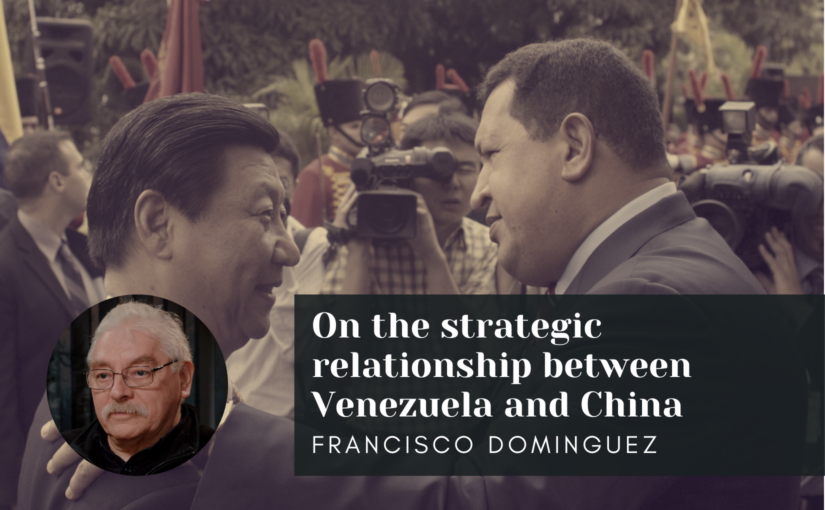
We are very grateful that Venezuela’s ambassador to the UK, Rocío del Valle Maneiro González, spoke at the book launch for Carlos Martinez’s book The East is Still Red on Tuesday 6 June 2023. Rocío was Venezuela’s ambassador to China from 2004 until 2013, and accompanied Hugo Chávez during several of his presidential trips to China.

Rocío described living through a period in which the international balance of power shifted from West to East, principally due to the multipolar strategy promoted by China. Speaking as a representative of Venezuela – a country which continues to suffer due to the sanctions, destabilisation and coercion applied by the Western powers – Rocío stated that China’s international policy is based on equality, on win-win relations, on peaceful cooperation and a collective vision of a prosperous future for humanity. She concluded that, after reading The East is Still Red, “it is almost impossible to describe socialism as a failed political system.”

During the discussion, which can be viewed in the stream of the event (embedded below the article), Rocío intervened in response to a question about women’s equality in China. She observed that, while women are not well represented among the top political leadership of the country, women in China are nonetheless very well represented in the workplace at every level – including as business leaders, engineers, lawyers and academics, as well as having strong social and equal rights. She stated forcefully: “Chinese women are the equal of men; they are the free women of Asia.”

Good evening, first of all, allow me to express my gratitude to Carlos Martínez for inviting me to say a few words on the occasion of the launch of his book “The East is Still Red”. This is an honour for me, even more so as it is held here, at the Carl Marx library, giving it a special historical transcendence.

This is a relevant book and I will explain why. When China decided to open up to the western world, a step it took, in my opinion, in this century, because what China did in the XX century, was to peek through “the window” and start planning a route. Well, when China decided to open up to the world, a number of sinologists, China specialists, showed up in the West, trying to explain China’s complexity with western theories and principles. I read at least 5 of those books published by scholars; I remember one of them having more than 400 pages. Those were the days when I was preparing for the task given to me by President Chavez: I was to become the ambassador of the Bolivarian Republic of Venezuela to the People ́s Republic of China.

When I arrived in China in 2004, nothing of what I had read was of any use to me. Only the books relating to Chinese culture, those great particularities of a civilization that goes back 3 to 5 thousand years, and is still alive. Apart from that, the rest was totally useless, mainly because it had little to do with the facts, with what I was seeing and experiencing.

Carlos’ book has the relevance, the value, to present a different hypothesis to explain what China means to the world today. It is a book that equates with what I lived during those 9 years I

spent as Ambassador in Beijing, from 2004 to 2013. I had the privilege, as did all my colleague ambassadors, to witness how the international balance of power shifted from West to East, due to force applied by China.

From those years of hard work and learning, if one thing became clear to me, it was that China’s greatness is rooted in two main factors: discipline, which comes from the teachings of Confucius and a collective purpose, which is at the heart of Communism. The union of these two factors is, in my opinion, the most objective, rigorous and real starting point to approach to the truth of China. A nation which was reborn and liberated in 1949, a nation which defeated hunger with an enormous effort considered today as a true political and socio-economic miracle of universal history. A nation which today plays a protagonist role as an international player in every field. A nation, and to me this is the most important, which designed an international policy based on equality, a win-win formula, to teach imperialism how to move forward in creating a new world in peace, not with armed intervention but with diplomacy and negotiation guided by a collective purpose.

I congratulate Carlos, because he dares to approach such a complex subject, opposing the position of western experts, and does so based on concrete facts. After reading his book it is almost impossible to affirm that Socialism as a political system is a failure.

Thank you.

“Peak China” – a new low in Western attempts to persuade China to commit suicide

In this detailed article for Guancha (originally published in English on MR Online), British economist John Ross addresses the recent (rehashed) claims by The Econonist that China’s economic development has peaked and that its growth is likely to dramatically slow in the near future.

Noting that The Economist has been making similar pronouncements for the last quarter century, John assesses the specific rationale underlying this most recent claim of ‘Peak China’, which is centered around China allegedly losing its ‘population advantage’. One obvious answer to this is that “China’s average annual population growth from 1978-2022 is 0.9% and China’s annual average GDP growth in the same period is 9.0%.” As such, population size clearly hasn’t been the most important factor driving economic progress in the last four decades, and there’s no reason to believe it would have magically become a key determining factor now.

Far more important to China’s development has been its very high level of investment, coupled with a highly regulated, state-led socialist market economy, with a clear political orientation to meeting the immediate and long-term needs of the Chinese masses. John correctly observes that “it is the CPC, no other political force … which has produced the greatest reduction in poverty in any country in human history, and which overall has produced the most rapid sustained improvement in the living standards of any country in human history.”

That is, China’s extraordinary economic progress is not primarily driven by its large population but by its socialist system and the exceptionally competent and wise leadership of the Communist Party of China.

One of the latest covers of the magazine The Economist carries a headline “Peak China”. This, as its name suggests, is a claim that while during the last seven decades China’s has enjoyed a peaceful “rise”, specifically in relation to the U.S., this has now ended:

Whereas a decade ago forecasters predicted that China’s GDP would zoom past America’s during the mid-21st century (at market exchange rates) and retain a commanding lead, now a much less dramatic shift is in the offing, resulting in something closer to economic parity… One view is that Chinese power will fall relative to that of its rivals… The Peak China thesis rests on the… observation that certain tailwinds are turning to headwinds… All of this is dampening long-run forecasts of China’s economic potential. Twelve years ago Goldman Sachs thought China’s GDP would overtake America’s… and become over 50% larger by mid-century. Last year it revised that prediction, saying China would… peak at less than 15% bigger. Others are more gloomy. Capital Economics, a research firm, argues that the country’s economy will never become top dog, instead peaking at 90% of America’s size in 2035… the most plausible ones [of these projections] seem to agree that China and America will approach economic parity in the next decade or so—and remain locked in this position for decades to come.

The first reaction, was really to literally laugh at what, as will be seen, was the latest of decades long wildly inaccurate predictions by The Economist regarding China. Indeed, the record shows that probably a good working guide to what will happen in China is to take what The Economist says and assume that the opposite will occur! Second, to reflect on what are the deep reasons for such a combination of ignorance and arrogance that it leads to a refusal to make any balance sheet of entirely wrong analyses repeated for these decades but when it still claims to be taken seriously on an issue on which it has such a provenly lamentable record. As the latter applies not only to The Economist but to many other Western publications that make similar claims it will be returned to at the end of this article.

Continue reading “Peak China” – a new low in Western attempts to persuade China to commit suicide

Video: ‘The East is Still Red’ launched in London

On Tuesday 6 June 2023, at Marx Memorial Library in London, we held a launch event for Carlos Martinez’s book The East is Still Red – Chinese socialism in the 21st century. Aside from Carlos, the meeting was addressed by Her Excellency Rocío Maneiro González (Venezuelan ambassador to the UK), Danny Haiphong, Roger McKenzie and Jenny Clegg, and was chaired by Iris Yau.

Carlos opened the session by discussing his purpose in writing the book. He stated that the two key motivations were: to oppose the propaganda war on China such that people’s consent isn’t manufactured for the West’s escalating campaign of containment and encirclement; and to contribute to building understanding of Chinese socialism. Describing China’s extraordinary achievements in the realms of poverty alleviation, green energy development, tackling Covid, and promoting a peaceful, multipolar world order, Carlos questioned why people on the left would want to ascribe such achievements to capitalism. In spite of the introduction of market elements to China’s economy, and its integration into global value chains, the working people led by the Communist Party maintain political power. This is the ‘secret’ of China’s incredible progress and the continuing improvement of people’s living standards.

Roger McKenzie, international editor of the Morning Star, discussed the racist ideology that forms a backdrop to the propaganda war on China and the West’s attempts to disrupt growing economic and political links between the countries of the Global South. Roger further talked about the inspiration the developing world is drawing from China – a country that has directed such massive resources towards improving people’s living standards, which is demonstrating in practice a clear alternative to ‘Washington Consensus’ neoliberalism.

Rocío Maneiro, who was Venezuela’s ambassador to China from 2004 until 2011, and who accompanied Hugo Chávez on his trips to China in that period, described living through a period in which the international balance of power shifted from West to East, principally due to the multipolar strategy promoted by China. Speaking as a representative of Venezuela – a country which continues to suffer due to the sanctions, destabilisation and coercion applied by the Western powers – Rocío stated that China’s international policy is based on equality, on win-win relations, on peaceful cooperation and a collective vision of a prosperous future for humanity. She concluded that, after reading The East is Still Red, “it is almost impossible to describe socialism as a failed political system.”

Danny Haiphong – a popular broadcaster, journalist and co-editor of Friends of Socialist China – focussed on the multipolar project which lies at the heart of China’s foreign policy. The US’s concern with China, Danny pointed out, is not simply about economic factors or the idea that China is becoming economically powerful; more fundamental is that China’s foreign policy – informed by its socialist political system – is offering the global majority a new and far more democratic model of international relations. The Belt and Road Initiative, the BRICS, the Shanghai Cooperation Organisation and other bodies are changing the landscape of international cooperation; are bringing rapid development to the Global South and allowing them to assert their sovereignty and pursue their own development model. This shift constitutes an existential threat to the US-led imperialist world system.

Speaking by Zoom, Jenny Clegg – a longstanding China expert, academic and peace activist – discussed the relentless sinophobic propaganda that accompanies the escalating New Cold War. This propaganda cuts people off from understanding not only China’s internal dynamics but the multipolar project that it pursues. Multipolarity is already opening up space for sovereign development and cooperation in the Global South, and indeed is opening up new paths to socialism, but people in the West find themselves unable to understand and engage with these processes. As long as this is the case, the Western left will continue to struggle to develop its own role in the global struggle against imperialism and for socialism.

The speeches were followed by a lively discussion and Q&A session.

The video stream of the event, hosted by Danny Haiphong, is embedded below.

The West & China on the brink: will the New Cold War turn hot?

Britain’s Stop the War Coalition organized an online lecture and discussion on the danger of the new cold war with China turning hot on May 25, 2023. Dr. Jenny Clegg, former senior lecturer in Asia Pacific Studies as well as an officer of Stop the War and a member of the Friends of Socialist China advisory group, made a presentation and then responded to questions, initially from Chris Nineham, Vice Chair of Stop the War, who chaired the event.

Jenny detailed the extensive militarization of the vast Pacific Ocean by the United States and other imperialist powers, not least with the US Pacific Command based in Hawaii, the US bases located in their colonial territories of Guam and the Northern Mariana Islands, as well as in South Korea, Okinawa and the Japanese mainland, and the recent agreements to regain access to bases in the Philippines and to establish a base in Papua New Guinea. Due to its colonial presence in the region, far from the US mainland, the Pacific waters claimed by the US dwarf those claimed by China. Britain claims about the same amount of the Pacific as China by virtue of its continued colonial possession of the Pitcairn Islands (combined land area of 18 square miles; permanent inhabitants as of January 2020, 47), whilst France also claims vast waters from its colonial occupation of New Caledonia.

According to Jenny, at the center of US strategy to maintain its domination of the Pacific today is a move to create an Asian NATO via a number of initiatives, including linking the AUKUS agreement, between Australia, Britain and the United States, to the upgrading of its military alliance with Japan, to forging new military agreements with the Philippines, and so on. Britain is also at the center of such moves, with, for example, its new military alliance with Japan, along with its central role in AUKUS.

The video embedded below, originally uploaded by Stop the War, features Jenny’s introductory talk, along with her response to questions posed by Chris Nineham.

Video interview with Eritrean President Isaias Afwerki

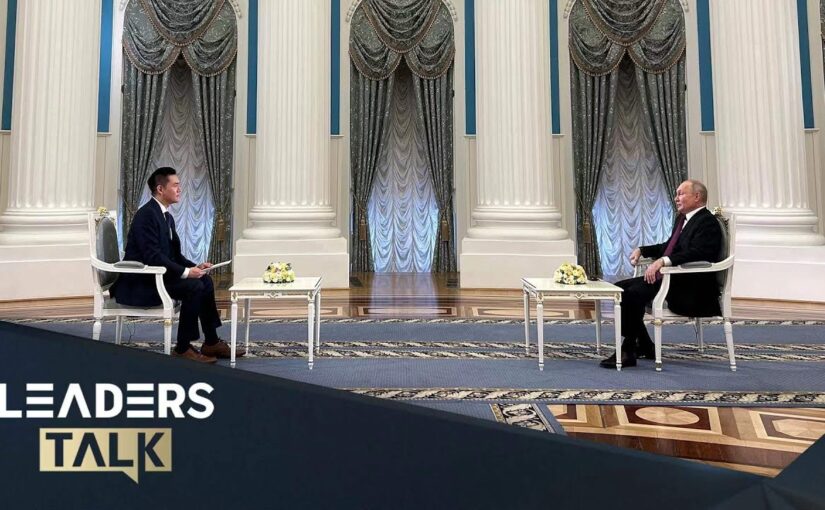
In this edition of the CGTN series Leaders Talk, Zou Yun interviews Eritrean President Isaias Afwerki during the latter’s recent state visit to China.

Speaking on the day after his talks with Chinese President Xi Jinping, and on the eve of the 30th anniversary of the counties’ diplomatic relations, which were established on the day that Eritrea proclaimed its independence, President Afwerki situated the bilateral relationship within what he described as the broader context of the historic mission of humanity. China had immediately stood on the side of the right of the Eritrean people to independence. Independence is the foundation of any international relationship. China, he said, stands on the side of the people of the world. And Eritrea, in solidarity with China, continues to uphold a mission for humanity.

The interview discussed the recent fallout from the conflict in Sudan, where Eritrea had assisted Chinese people who were being evacuated from the war-struck country, while China had also helped Eritrean people to leave Sudan. The Eritrean president described this as “our commitment to our common cause”. In  words that should shame British government ministers, he described how Eritrea had opened its borders to refugees – “No visa. No permissions. Everything is open for saving human lives.”

There was a need, Afwerki said, to create a new world order. No people can survive without solidarity and what China has achieved, both domestically and internationally, is very attractive to people around the world.

Saying that the future is bright, the Eritrean leader was of the view that hegemonism “is no longer the rule of the game” because of what China has achieved. 

Turning to the sanctions imposed on his country by the United States and some other countries, Afwerki described them as the product of a sick mind. Such sanctions, he said, are imposed on all those who defend their independence and sovereignty. Sanctions have inflicted tremendous damage on Eritrea and its development, but they have also taught a powerful lesson with regard to the struggle that needs to be waged to build a nation and have made the Eritrean people more determined to continue that struggle.

Zou Yun referred to President Afwerki as having a “special bond” with China. Over 50 years ago, at the age of 20, he came to China and spent two years in military and political training at the dawn of the Eritrean revolution. Questioned on this period, he said that he learned so much in a short time and what he had learned had changed lives. The main lesson, he said, was the commitment of the country’s leaders and the Communist Party to the people. This has provided a model of success for everyone. China had been considered a backward country by others, but now it is reshaping the global order.

The full interview with President Isaias Afwerki is embedded below.

China continues to support Zimbabwe in opposing interference and sanctions

Chinese State Councilor and Foreign Minister Qin Gang met his Zimbabwean counterpart Frederick Shava, Minister of Foreign Affairs and International Trade, in Beijing on May 29, 2023. Shava was visiting China on Qin’s invitation.

Qin Gang said that since the two countries established diplomatic relations more than 40 years ago, no matter how the international landscape evolves, the traditional friendship between the two countries has always been rock-solid, and the two countries have been good brothers and good partners that trust and support each other.

Zimbabwe and China established diplomatic relations on the day that the southern African country achieved its independence. China had been the main international supporter and backer of the Zimbabwe African National Union (ZANU), whose liberation fighters, organized in the Zimbabwe African National Liberation Army (ZANLA), played the main role in liberating the country.

Qin Gang pointed out that China will, as always, firmly support Zimbabwe in opposing external interference and sanctions, and in taking a development path suited to its national conditions. Imperialist powers, led by the United States and Britain, have placed crippling sanctions on Zimbabwe, since the country embarked on a radical land reform to benefit primarily the masses of rural poor, the main victims of settler colonialism.

Shava said that Zimbabwe-China relations have withstood the test of time and the level of friendly cooperation has been greatly improved. Zimbabwe stands ready to deepen mutually beneficial cooperation with China in various fields, strengthen cooperation within the framework of the Forum on China Africa Cooperation (FOCAC), and continuously bring the comprehensive strategic cooperative partnership between Zimbabwe and China to new levels.

The following article originally appeared on the website of the Chinese Foreign Ministry.

On May 29, 2023, State Councilor and Foreign Minister Qin Gang held talks with Minister of Foreign Affairs and International Trade of Zimbabwe Frederick Shava in Beijing.

Qin Gang said that since the two countries established diplomatic relations more than 40 years ago, no matter how the international landscape evolves, the traditional friendship between the two countries has always been rock-solid, and the two countries have been good brothers and good partners that trust and support each other. China stands ready to work with Zimbabwe to implement the important common understandings reached between the two heads of state, firmly support each other on issues concerning respective core interests, and continuously strive for new and greater development of China-Zimbabwe relations.

Qin Gang pointed out that China will, as always, firmly support Zimbabwe in opposing external interference and sanctions, and in taking a development path suited to its national conditions. China is ready to deepen exchanges of experience in state governance with Zimbabwe, enhance synergies in development strategies, advance high-quality Belt and Road cooperation, and implement all cooperation measures with Africa within the framework of the Forum on China-Africa Cooperation (FOCAC). China will tap the potential for cooperation with Zimbabwe in such fields as investment, trade, energy and mineral resources, clean energy and human resources development, and upgrade bilateral cooperation. China will continue to encourage Chinese enterprises to invest and do business in Zimbabwe. China is ready to work closely with Zimbabwe in international cooperation to promote the implementation of the Global Development Initiative, the Global Security Initiative and the Global Civilization Initiative.

Shava said that Zimbabwe-China relations have withstood the test of time and the level of friendly cooperation has been greatly improved. Zimbabwe firmly pursues the one-China policy and supports the principle of “One Country, Two Systems” formulated by China, as well as the Belt and Road Initiative, the Global Development Initiative, the Global Security Initiative and the Global Civilization Initiative proposed by China. Zimbabwe appreciated China’s strong support to the country in its poverty reduction and fight against the COVID-19 pandemic. Zimbabwe stands ready to deepen mutually beneficial cooperation with China in various fields, strengthen cooperation within the framework of the FOCAC, and continuously bring the comprehensive strategic cooperative partnership between Zimbabwe and China to new levels.

US outcry over Micron ban is hypocritical in the extreme

In the following article, which originally appeared on RT, Timur Fomenko points to the obscene hypocrisy of the US in its trade relationship with China. Washington affords itself the right to impose sanctions on companies such as Huawei and TikTok, and to prevent the export of the most advanced semiconductor technology to China; however, when China takes a reciprocal action – albeit in a much smaller scale – by banning Micron chips from key infrastructure projects, this is labelled as an outrageous violation of the principles of free trade and fair play.

The author notes that the US’s willingness to trade with China is predicated on the latter playing by Washington’s rules. “The US, of course, loves the idea of trade with China and its markets, as long as such trade is conducted entirely according to Washington’s preferences.” But the century of humiliation is long over, and the Chinese people are not willing to be subjected to a position of subservience vis-a-vis US imperialism.

China recently restricted chips made by US semiconductor firm Micron from being used in its national infrastructure, branding them a “national security threat”.

The language and rationale of such a move should sound familiar, because it’s precisely what the US has been doing over the past few years in blacklisting Chinese technology companies and pushing allies to do the same. “You can’t trust having Huawei in your 5G infrastructure” was the general line used by Washington officials. According to them, and to Western media repeating this line, all kinds of Chinese technology constitutes an “espionage risk,” from TikTok to balloons to fridges.

So based on this treatment of Chinese companies by the US, it was only a matter of time before Beijing struck back. And one might think that if Washington was willing to use “national security” as a pretext for market exclusion, it would be acceptable for China to the same. Only fair, right?

Apparently not. Despite the brutal restrictions the US has placed on Chinese technology, which have also included blacklisting its entire semiconductor industry and forcing third-party countries to follow suit, the US reacted with outrage to Beijing’s announcement and accused it of “having no basis in fact.” Not only that, but Washington then further claimed that the move was evidence that China’s regulatory environment was “unreliable” and that the country was no longer committed to “reform and opening up.”

The US can somehow say this with a straight face. Washington is entitled to restrict Chinese firms on an industrial scale, but when Beijing does the same, even on a marginal level, then it’s evidence that China is not reliable for investment. Even as microchip firms point out the damage that disastrous policies of the US are causing, Washington seems to have either no self-awareness, or an extreme sense of self-entitlement, which, as has been discussed many times, gives it the almost divine right to impose on others rules it doesn’t feel obliged to follow itself.

This is an indication of how the US sees its right to exploit China’s own markets. American ties with China have always been conditional, on the premise that Beijing would gradually transform its political system and economy to fall in line with US preferences. In the 1980s and 1990s, during China’s era of “reform and opening up,” the US believed – due to its ideological overconfidence after its victory in the Cold War – that China was changing and was destined to reform.

In this light, free market economics was seen as an evangelically transformative force which, with the onset of capitalism, naturally led to liberal democracy. Thus, there was never a premise of “engaging” China on its own terms, it always had to “lead” to something. By the 2010s, it became clear that this was not going to happen. Not only did China’s political system not change, but its economic trajectory and industries continued to grow in a way which threatened the foundations of American hegemony. US foreign policy subsequently shifted to now trying to “force” China to change and containing it.

The US, of course, loves the idea of trade with China and its markets, as long as such trade is conducted entirely according to Washington’s preferences. That is, to have China’s market to exploit as a subordinate to the US, and to prevent China from having its own world-leading industries. This mindset has created a visible contradiction in political rhetoric: that China “must” open up its markets more for Western goods, but at the same time must be locked out of Western markets in certain areas. China’s resistance to this is decried as so-called “unfair” economic practices.

Because of this, the only kind of “engagement” the US wants with China is that which is completely one-sided, such as being forced to order $200 billion in US farm goods per annum (as Trump envisioned), but being banned from the US semiconductor market. This is also why the US demands that even as its own companies lose market share in China, other countries, like South Korea, should have no right to take up that lost share.

The US is not interested in compromise, only capitulation. Thus, trade with China is really only conditional on either ideological transformation, or if that fails, a surrender to total exploitation, turning China into a neoliberal state which is completely open and gutted of industries, possibly complete with a small clique of very wealthy pro-Western oligarchs who sell out the country.

The US-China economic relationship is directed, on Washington’s side, by a sense of ideological entitlement. We can blacklist your companies and even coercively ban third countries from using any Chinese technology, but don’t even think about limiting one of our own firms. Or else.

China’s modernization is directed toward common prosperity for all

In the following article, originally written in early February 2023, our co-editor Keith Bennett argues that whilst modernization is a common aspiration of humanity, China’s course of socialist modernization, which will more than double the number of people living in modernized societies, offers a fundamentally different paradigm to that of the global minority who led the first wave of modernization beginning with the industrial revolution. China’s modernization, Keith argues, “represents something fundamentally new – something that moreover will come to be seen as a trail blazer for the only modernization that is actually comprehensive, equitable and sustainable.”

China’s modernization aims to achieve common prosperity for all whereas, in the developed capitalist countries, “even after hundreds of years, not only does the gap between rich and poor remain, does the phenomenon of the rich getting richer and the poor getting poorer persist, they are once again being exacerbated and becoming acute.”

And whilst the capitalist countries laid the basis for their development through what Xi Jinping has described as the, “brutal and blood-stained path of enrichment at the expense of others”, a process graphically described by Marx in Volume One of Capital, China is sharing the lessons and opportunities of its socialist modernization through programs such as the Belt and Road Initiative and the Global Development Initiative.

An abbreviated version of the article was published in the People’s Daily on May 29, 2023.

The process of modernization, as it is generally understood today, essentially began with the development of first Great Britain, and then some other countries in Western Europe, as well as the United States, in the nineteenth century with the industrial revolution. Following the Meiji Restoration in 1868, Japan became the first non-white nation to join this historical process.

In the contemporary world, the realization of modernization has become a universal aspiration of humanity. Yet it remains a goal attained by just a minority of the world’s population. It is in this context that we must begin to see the significance of Xi Jinping’s statement, in his report to the 20th National Congress of the Communist Party of China last October that, “from this day forward, the central task” would be to lead the people towards the Second Centenary Goal of “building China into a great modern socialist in all respects”. He explained that this central task entailed:

  • The modernization of a huge population.
  • The modernization of common prosperity for all.
  • The modernization of material and cultural-ethical advancement.
  • The modernization of harmony between humanity and nature.
  • The modernization of peaceful development.

From this five-point summary, one can see that, whilst modernization is a global process and a universal aspiration, it can take and assume radically different forms. So, whilst China’s socialist modernization shares some characteristics with the path trod by western capitalist nations, it has more differences than similarities. It represents something fundamentally new – something that moreover will come to be seen as a trail blazer for the only modernization that is actually comprehensive, equitable and sustainable. The Chinese leader’s thesis on modernization is a significant component of Xi Jinping Thought and as such even a cursory study of its significance will highlight both that it is thoroughly grounded in the scientific socialist tradition and also that it constitutes Marxism for the 21st century.

As already mentioned, so far modernization has only been achieved by a minority of, overwhelmingly white, nations. In terms of scale alone, therefore, China’s modernization will more than double the percentage of the world’s population living in modernized societies. As such, it will profoundly change, and indeed revolutionize, global society and economy, and hence the prospects and possibilities for those nations and peoples still facing existential questions of development. Already, China’s elimination of extreme poverty represents by far the greatest contribution to the United Nations’ Millennium Development Goals (MDG). As Xi Jinping put it in his report to the 19th Party Congress in 2017, socialism with Chinese characteristics “offers a new option for other countries and nations who want to speed up their development while preserving their independence.”

The comprehensive and unique character of China’s socialist modernization is further illustrated in Xi’s second point – that it is modernization of common prosperity for all.

As Chinese leaders from Mao Zedong to Deng Xiaoping made clear, common prosperity is an intrinsic requirement and essential feature of developed socialism. In the first stage of China’s reform and opening up, Deng Xiaoping elucidated that some people should be allowed to get rich first. The overall effect was to very substantially raise the standard of living and quality of life for the overwhelming majority of the population. However, the inequalities generated went too far and in some instances became quite egregious. This generated problems not simply across the nation as a whole, but also, for example in terms of sometimes glaring regional disparities. Nevertheless, Deng himself was always crystal clear that the purpose of allowing some to get rich first was solely as a step towards the long-term goal of realizing common prosperity for all. And, as complex and tough as that process undoubtedly is, China is now making steady progress in that direction.

Data from the National Bureau of Statistics shows that the urban-rural wealth gap has kept narrowing ever since the 18th National Congress of the CPC in 2012. In 2021, disposable income in urban areas was 2.5 times that in rural areas, compared with 2.88 times in 2012. This progress was registered after China successfully pulled the remaining 100 million rural residents out of the World Bank’s definition of absolute poverty over the decade since 2012. China has also managed to create the world’s largest social safety net, even if a great deal remains to be done to improve and perfect it. The basic old age insurance program, China’s pension fund system, has expanded since 2012 to cover 1.04 billion people. The coverage of unemployment benefits and work injury insurance also soared, reaching 230 million and 290 million people respectively.

On a world-wide scale, the fact that China’s modernization is modernization of peaceful development is the most fundamental point of all and provides the starkest contrast with the capitalist road to modernization. The basis for this latter was poignantly and succinctly summarized by the founder of scientific socialism in the nineteenth century. In Chapter 31 of Volume One of his most seminal work, Capital, Karl Marx wrote:

“The discovery of gold and silver in America, the extirpation, enslavement and entombment in mines of the aboriginal population, the beginning of the conquest and looting of the East Indies, the turning of Africa into a warren for the commercial hunting of black-skins, signalised the rosy dawn of the era of capitalist production. These idyllic proceedings are the chief momenta of primitive accumulation.”

Addressing the Oxford Union in 2015, the Indian politician and writer Shashi Tharoor noted: “India’s share of the world economy when Britain arrived on its shores was 23%. By the time the British left it was down to 4%. Why? Simply because India had been governed for the benefit of Britain. Britain’s rise for 200 years was financed by its depredations in India. In fact, Britain’s industrial revolution was actually premised on the deindustrialization of India.”

It is this law of capitalist development uncovered by Marx that led Lenin to define as an essential feature of capitalist society the division of the world into a small handful of oppressor nations on the one hand and a great mass of oppressed nations on the other. It is precisely as a result of this division that the majority of humanity has still to achieve modernization.

Yet, the fact that the key developed nations to a great extent built their modernization on the blood and bones of the global majority does not mean that they have been able to achieve common prosperity for all at home. Even after hundreds of years, not only does the gap between rich and poor remain, does the phenomenon of the rich getting richer and the poor getting poorer persist, they are once again being exacerbated and becoming acute. That is why Britain is currently experiencing a wave of strikes, unprecedented in recent decades, as workers from the most diverse sectors often demand not pay increases in real terms but simply amelioration of the decline in their real wage levels as a result of years of austerity culminating in record inflation. Meanwhile, multimillionaire ministers in the Conservative government are forced to resign when their avoidance of millions of pounds in tax obligations are exposed to the light of day.

Outlining China’s line of march to modernization at the 20th Party Congress, Xi Jinping stressed: “In pursuing modernization, China will not tread the old path of war, colonization, and plunder taken by some countries. That brutal and blood-stained path of enrichment at the expense of others caused great suffering for the people of developing countries. We will stand firmly on the right side of history and on the side of human progress.”

China’s realization of common prosperity for all, its more than doubling of the number of people living in modernized societies, and its contributions to global modernization through such means as the Belt and Road Initiative and the Global Development Initiative constitute the path to the realization of humanity’s community of shared future. It is a fundamentally different paradigm for modernization.

Rest in power Comrade Tongogara

Comrade Tongogara (born Danny Morrell), one of Britain’s staunchest and most outspoken supporters of Mao Zedong and friend of socialist China, passed away on May 11 2023. Born in Jamaica, he spent most of his adult life in north London, a life he devoted to the struggle for black liberation, socialism and communism, working tirelessly and supporting every progressive struggle. His belief in Mao’s concept and practice of the mass line made him many friends and comrades across a wide range of revolutionary and progressive organizations and campaigns, among different communities, and people from various walks of life. Alongside Marx, Lenin and Mao, he was equally inspired by the struggles of the Jamaican people, of the African liberation movements and of such African-American revolutionaries as George Jackson.

In 1970, he was a founding member of the Black Unity and Freedom Party (BUFP), whose newspaper was Black Voice. In a paper presented to the 15th Forum of the World Association for Political Economy (WAPE), hosted by Shanghai’s International Studies University in December 2021, the editors of this website cited the BUFP as one of the organizations that, “collectively constituted the mass proletarian base for China friendship and solidarity in Britain.” 

In his last years, Tongogara especially devoted his energies to the Free Mumia Campaign UK, which he launched at a meeting in Brixton, south London, in 2008. One of the most high-profile political prisoners in the United States, Mumia Abu-Jamal, a revolutionary journalist who first joined the Black Panther Party in 1968 at age 14, was originally sentenced to death on trumped up charges in 1982 and has been held in US prison hell holes ever since.

On being informed of Tongogara’s passing, FoSC co-editor Keith Bennett, who had been his friend and comrade since 1976, wrote in part:

“He was a staunch and constant supporter of Mao Zedong and his work embodied and bore testimony to Comrade Mao’s profound and powerful observation that the evil system of colonialism and imperialism arose and throve with the enslavement of black people and the trade in black people, and it will surely come to its end with the complete emancipation of the black people.

“Tongogara’s life and work helped bring that day closer. He will be remembered and honored.”

The below article was originally published in Fight Racism! Fight Imperialism! and was written by comrades in the Mumia UK Campaign.

`Brother Tongogara (born Danny Morrell) passed away peacefully in Barnet Hospital on Thursday 11 May 2023. Born in Jamaica in 1942 on 6 February (he was proud to share a birthday with Bob Marley), he lived in Tottenham, London, for most of his adult life. A long-time friend and supporter of many campaigns across London and internationally, Comrade Tongogara will be well known to many FRFI readers. He was an untiring campaigner, omnipresent at events such as Africa Liberation Day, May Day, taking political messages to Notting Hill Carnival, picketing the Home Office and outside the BBC for Irish prisoners. He supported the free Leonard Peltier campaign as well as regularly protesting outside the US embassy and the high court.

In 1970 he was a founding member of Black Unity and Freedom Party which later became the African People’s Liberation Organisation in 1998. In the 1990s he supported the work of the Colin Roach Centre in Hackney, campaigning against deaths in police custody and highlighting the racist violence of the state.  He also brought learning to the movement, organising lectures with Caribbean Labour Solidarity, and celebrating Claudia Jones with an annual event. Alongside political action he believed in political study and shared liberation literature, taking books by George Jackson, Karl Marx, Assata Shakur, Mao Tse-Tung and Mumia Abu-Jamal to events and street stalls.

In 2008 he convened a meeting in Brixton to launch the Free Mumia Campaign UK and became an untiring campaigner and spokesperson. He brought many people into the campaign when Mumia was still facing the death penalty and kept the campaign going until the present day. Along with others, Tongogara set the political tone of the campaign which has always been anti-imperialist and anti-racist.

Tongogara took the Free Mumia banner, often alone, far and wide, including outside banks, train stations and Lloyds building in the City of London, demanding the release of Mumia. He was a powerful speaker and a tireless engaging street activist who had the ability to connect people and bring new people into the movement. His kind and principled approach, together with his determination and courage has been an example for many others.

This is a glimpse into the life and legacy of comrade Tongogara. All who knew Brother T can remember with a combination of joy and gratitude what he brought and gave to the struggle for class and race liberation over exemplary decades. May he rest in power.

Africa Day celebrated in Beijing

The 60th Africa Day, inaugurated when the Organization of African Unity (OAU) was founded in 1963, was celebrated in Beijing on May 25. Joining State Councilor and Foreign Minister Qin Gang at the reception were  Deputy Prime Minister and Minister of Foreign Affairs of Ethiopia Demeke Mekonnen Hassen and Vice Prime Minister and Minister of Foreign Affairs of the Democratic Republic of Congo Christophe Lutundula, who were visiting China, as well as the African diplomatic corps.

Qin Gang stressed that, over the past 60 years, China and Africa have offered each other support, sharing weal and woe. No matter how the international situation evolves, China has always been there for Africa. China and Africa enjoy close friendly exchanges, and leaders of the two sides visit each other as often as relatives do. In the last six months alone, four African presidents paid state visits to China, and since the beginning of this year, more than ten African officials above the ministerial level have also visited China.

Being the world’s largest developing country and the continent home to the most developing countries, Qin Gang said, China and Africa need solidarity and cooperation more than ever. Turning to the economic front, he noted, that the two sides have together constructed and commissioned over 10,000 km of railway, nearly 100,000 km of highway, and an array of important infrastructure, including airports, docks, bridges and power plants. China is the first country to explicitly support the African Union (AU) in joining the G20.

Ministers Demeke and Lutundula said that through the common struggle for national liberation and independence, Africa and China have established a profound friendship, with solidarity and mutual trust becoming the cornerstone of the Africa-China partnership. China has made important contributions to Africa’s development and has become the most important partner in Africa’s integration.

The following reports, and Qin Gang’s speech, were first published on the website of the Chinese Foreign Ministry.

Qin Gang Attends Africa Day Reception

Chinese Foreign Ministry, 25 May 2023

On May 25, 2023, State Councilor and Foreign Minister Qin Gang attended and addressed the Africa Day reception in Beijing. Also in attendance were Deputy Prime Minister and Minister of Foreign Affairs of Ethiopia Demeke Mekonnen Hassen, Vice Prime Minister and Minister of Foreign Affairs of the Democratic Republic of Congo Christophe Lutundula, and diplomatic envoys from various African countries to China.

On behalf of the Chinese government, Qin Gang extended congratulations on the 60th anniversary of the founding of the Organization of African Unity (OAU). Qin Gang said that the founding of the OAU is an epoch-making event in the history of Africa, and the start of a new chapter of African countries seeking strength and development through unity. At the turn of the century, the African Union (AU) took over the baton, and led African countries forward with bigger strides toward development and revitalization. With continued rise in its international status, Africa has become an important force with global influence. Over the past 60 years, China and Africa offered each other support, sharing weal and woe. No matter how the international situation evolves, China has always been there for Africa. In particular, over the last decade, guided by the principles of sincerity, real results, amity and good faith, and of pursuing the greater good and shared interests in developing China’s relations with Africa put forth by President Xi Jinping, China-Africa relations have been growing with the “acceleration button” on, and entered a fast track toward a new era of a stronger China-Africa community with a shared future. China and Africa enjoy closer friendly exchanges, and leaders of the two sides visit each other as often as relatives do; enjoy ever-deepening win-win cooperation, delivering more benefits to the two peoples; enjoy stronger coordination on international affairs, serving as an important force for international fairness and justice.

Continue reading Africa Day celebrated in Beijing

The G7, economic coercion and the art of projection

In this article for the Morning Star, Carlos Martinez addresses the “stunning hubris and hypocrisy of the imperialist powers” in accusing China of economic coercion. He points out that G7 states are all involved in multiple forms of economic coercion, and that the US is the world’s sanctions superpower, imposing unilateral economic sanctions on nearly 40 countries, affecting literally billions of people.

When it comes to economic coercion, China is not a perpetrator but a victim. Carlos writes: “What is the Trump-Biden trade war against China other than an attempt to use tariffs, sanctions, threats and penalties in order to contain China’s development; in order to force China’s government and companies to change their behaviour in order to better serve the interests of US capitalism rather than the Chinese people?”

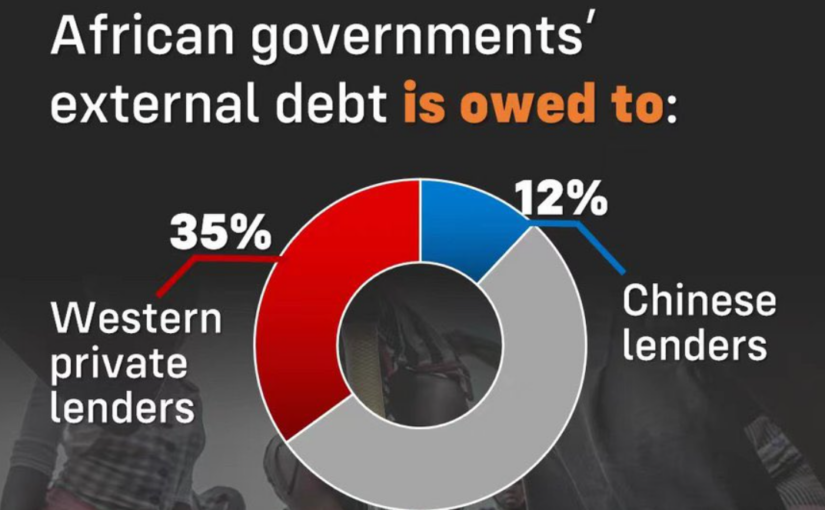
The article also addresses the accusations about Chinese “debt traps” in Africa, citing numerous sources debunking this slanderous claim.

THE stunning hubris and hypocrisy of the imperialist powers was on full display in Hiroshima last weekend, with the G7 condemning China for a “disturbing rise” in its “weaponisation of economic vulnerabilities.”

Coercion is, after all, at the heart of what unites the countries of the G7 — a for-us-by-us club of rich nations with a collective interest in maintaining their place at the top of the geopolitical pyramid.

Each member state built its wealth to a significant degree on the basis of colonialism and the exploitation of the land, labour, resources and markets of the global South.

That the G7’s role in global affairs is to bolster the US-led so-called “international rules-based order” is amply confirmed by the 2014 exclusion of Russia following its intervention in Crimea.

Why wasn’t such an extraordinary measure taken in response to the illegal and genocidal war on Iraq? Or in response to the war of regime change against Muammar Gadaffi, during which Nato countries bombed Libya into the stone age?

Any thinking person can understand the basis of this double standard: that G7 membership is predicated on an acceptance of the US-led imperialist system.

Continue reading The G7, economic coercion and the art of projection

China and the Democratic Republic of the Congo expand cooperation

The President of the Democratic Republic of the Congo (DRC), Félix Antoine Tshisekedi Tshilombo, paid a state visit to China at the invitation of his counterpart, President Xi Jinping, May 24-29. 

Meeting on May 26, the two heads of state announced the elevation of their bilateral relationship from a strategic partnership of win-win cooperation to a comprehensive strategic cooperative partnership.

Xi Jinping pointed out that China and the DRC have established a profound traditional friendship in the historical process of striving for national liberation and opposing colonial aggression, and the two countries are strategic partners sharing broad common understandings and working jointly for common progress.

This statement of President Xi carries deep and profound historical content and significance. When the founding father of the DRC, the Pan-Africanist and revolutionary socialist Patrice Lumumba, was murdered by the imperialists and their local stooges in 1961, millions of people across China gathered to express their militant solidarity with the Congolese people and mourn for their slain leader. Premier Zhou Enlai presided over one such gathering of 100,000 people in Beijing’s Workers’ Stadium.

On November 29 1964, when the US and other imperialist powers escalated their overt intervention in the Congo in response to the tenacious resistance of the Congolese people, millions of Chinese again mobilized in solidarity. Mao Zedong, joined by other senior Chinese leaders, including Zhou Enlai, Liu Shaoqi, Zhu De, Deng Xiaoping, Peng Zhen, Dong Biwu and Guo Moro, presided over a mass rally of 700,000 people in Beijing’s Tiananmen Square. Similar gatherings took place in Shanghai, Guangzhou, Xian, Kunming and across the country.

The previous day, Chairman Mao had issued a statement in support of the Congolese people and against US aggression. US imperialism, the Chinese leader noted, had “murdered the Congolese national hero Lumumba, and subverted the lawful Congolese government. It imposed the puppet Tshombe on the Congolese people, and dispatched mercenary troops to suppress the Congolese national liberation movement. And now, in collusion with Belgium and Britain, it is carrying out direct armed intervention in the Congo. In doing this, the purpose of US imperialism is not only to control the Congo, but to also once again enmesh the whole of Africa, particularly the newly independent African countries, in the grip of US neo-colonialism. US aggression has encountered heroic resistance from the Congolese people and aroused the indignation of the people of Africa and the whole world.”

Mao’s statement continued:

“Congolese people, you are not alone in your just struggle. All the Chinese people are with you. All people throughout the world who oppose imperialism are with you… By strengthening national unity and persevering in protracted struggle, the Congolese people will certainly be victorious and US imperialism will certainly be defeated.”

China’s solidarity with the Congolese people’s struggle was not confined to words and gestures. Throughout the 1960s, China rendered significant moral and material support to the armed struggle of the Congolese people against imperialism and neo-colonialism waged by such historic leaders as Laurent-Désiré Kabila and Antoine Gizenga.

Having referred to this history, Xi Jinping went on to say that China has been the largest trading partner and largest source of foreign investment for the DRC for many consecutive years. The successful experience of Chinese modernization shows that developing countries have the right and ability to explore paths to modernization suited to their national conditions. China is ready to work with the DRC to further synergize their development strategies, and to support each other and pursue cooperation for greater development and common progress on their paths to development and revitalization.

Xi Jinping pointed out that China will continue to provide assistance for the economic and social development of the DRC, support the DRC’s industrialization strategy, strengthen cooperation with the DRC in such fields as energy, minerals, agriculture, infrastructure and manufacturing, and further tap into their potential for cooperation in such fields as digital economy, education and health. China is also ready to send agricultural technology experts to the DRC.

Under the current international circumstances, he noted, China and Africa should strengthen solidarity and cooperation more than ever. Both sides should stay committed to the basic norms governing international relations, reject all forms of hegemonism and power politics, oppose interference in other countries’ internal affair, and safeguard the common interests of developing countries.

Having congratulated Xi on his re-election as General Secretary of the Communist Party of China and as President of China, President Tshisekedi noted that the friendly cooperation between the DRC and China, having withstood the test of time and achieved fruitful results over the past half a century, deserves to be cherished by both sides. He thanked China for its important help and valuable support for the DRC’s economic and social development over the years, and stressed that the DRC remains firmly committed to the one-China policy and firmly supports China’s efforts to realize national reunification. 

After the talks, the two heads of state jointly witnessed the signing of multiple bilateral cooperation agreements in such areas as investment, green economy and digital economy.

President Tshisekedi also met with other Chinese leaders, including Premier Li Qiang. Premier Li noted that China and the DRC are good friends, partners and brothers, adding that bilateral relations will surely achieve greater development and better benefit the two peoples. For his part, Tshisekedi noted that the DRC highly values cooperation with China and is willing to learn from China’s experience in its leapfrog development.

In the joint statement signed by the two heads of state, China and the DRC agreed to expand cooperation in education, scientific research, health, infrastructure construction, mining, agriculture, digital, environment, sustainable development, hydrocarbon fuels, energy, defense and security, and other fields in line with the interests of both sides.

China reiterated its firm support for the Congolese side in safeguarding national independence, sovereignty and territorial integrity, safeguarding its own security and development interests, firmly supporting the Congolese side in steadily advancing major domestic political agendas, firmly supporting the Congolese people in independently choosing a development path suited to their national conditions, and resolutely opposing interference by external forces in the internal affairs of the Democratic Republic of the Congo. 

They agreed to strengthen cooperation in the field of peace and security, especially closer military exchanges between the two countries, cooperation in personnel training, combating transnational crime, equipment technology, military industry, joint exercises and training.

China will encourage more enterprises to invest in the Democratic Republic of the Congo and participate in infrastructure construction in accordance with the relevant plans formulated and recommended by the DRC, so as to help the diversified development and industrialization of the Congolese economy. And it will strengthen mutually beneficial cooperation in agriculture, processing and manufacturing, natural resource exploration, development, and local processing to increase its added value, and support the Congo in achieving independent and sustainable development.

The two sides agreed to regularly evaluate mining cooperation and consolidate relevant cooperation based on the long-term and mutual interests of the two countries. With an attitude of mutual trust, pragmatism and fairness, problems arising in the process of cooperation should be resolved through friendly consultations. China will continue to encourage enterprises to accelerate the implementation of agreed infrastructure projects, strengthen cooperation with the Congolese mining sector, encourage enterprises to participate in investment in the development of the new energy battery value chain, support the upgrading of the industrial chain and enhance independent development capabilities.

They also agreed to deepen high-quality cooperation under the framework of the Belt and Road Initiative. China welcomes the Democratic Republic of the Congo to join the Group of Friends of the Global Development Initiative. The DRC is willing to strengthen cooperation with China at the bilateral and multilateral levels on the implementation of the Global Development Initiative, the Global Security Initiative and the Global Civilization Initiative.

President Xi Jinping was invited to  pay a state visit to the Democratic Republic of the Congo. The specific date will be agreed through diplomatic channels.

Immediately prior and preparatory to the state visit, the DRC’s Vice Prime Minister and Foreign Minister Christophe Lutundula visited China at the invitation of State Councilor and Foreign Minister Qin Gang.

Qin said that China is willing to help the DRC to turn its resource advantages into a driving engine for economic development, and hopes that the DRC could create a sound business environment and provide security guarantee for Chinese investors, adding that both sides should strengthen solidarity and coordination at the UN and on other multilateral occasions, firmly safeguard the principle of non-interference in other countries’ internal affairs, safeguard the common interests of developing countries, and jointly develop fairer and more equitable international order and global governance.

Alexis Gisaro Muvuni, DRC’s minister of state for infrastructure and public works, a member of President Tshisekedi’s delegation, in an interview with Xinhua prior to the visit, praised the results of the two countries’ infrastructure cooperation, such as the People’s Palace, home to the National Assembly and the Senate, and the Martyrs Stadium, which can accommodate 80,000 people. The minister said that Chinese companies genuinely support Africa by building infrastructure, including roads and bridges, and bring tangible benefits to the Congolese people.

The following articles were originally carried on the websites of the Chinese Foreign Ministry, Xinhua News Agency and People’s Daily. The Joint Statement was machine translated from Chinese and lightly edited by us.

Xi Jinping Holds Talks with DRC President Félix-Antoine Tshisekedi Tshilombo

Chinese Foreign Ministry, 26 May 2023

On the afternoon of May 26, 2023, President Xi Jinping held talks at the Great Hall of the People with President Félix-Antoine Tshisekedi Tshilombo of the Democratic Republic of the Congo (DRC) who was in China for a state visit. The two heads of state announced the elevation of the bilateral relationship from a strategic partnership of win-win cooperation to a comprehensive strategic cooperative partnership.

Xi Jinping pointed out that China and the DRC have established a profound traditional friendship in the historical process of striving for national liberation and opposing colonial aggression, and the two countries are strategic partners sharing broad common understandings and working jointly for common progress. Xi said in recent years, bilateral cooperation in various fields has yielded fruitful results. China has been the largest trading partner and largest source of foreign investment for the DRC for  many consecutive years, and the two sides have become a close-knit community with shared interests and a shared future. The successful experience of Chinese modernization shows that developing countries have the right and ability to explore paths to modernization suited to their national conditions. China is ready to work with the DRC to further synergize their development strategies, and support each other and pursue cooperation for greater development and common progress on their paths to development and revitalization. Xi Jinping expressed the confidence that China’s high-quality development will create more cooperation opportunities and a broader market for the DRC, and promote greater progress of bilateral relations.

Xi Jinping pointed out that China will continue to provide assistance for the economic and social development of the DRC, support the DRC’s industrialization strategy, strengthen cooperation with the DRC in such fields as energy, minerals, agriculture, infrastructure and manufacturing, and further tap into their potential of cooperation in such fields as digital economy, education and health. China is also ready to send agricultural technology experts to the DRC. China hopes that the DRC will provide policy support and convenient services to Chinese enterprises investing and doing business in the DRC, and foster a fair, just, and safe business environment. China is ready to work with the DRC to strengthen coordination and cooperation in multilateral affairs, jointly practice true multilateralism, and uphold international fairness and justice.

Xi Jinping stressed that China and Africa, being the world’s largest developing country and the continent home to the largest number of developing countries, have always been a community with a shared future. Under the current international circumstances, China and Africa should strengthen solidarity and cooperation more than ever. Both sides should stay committed to carrying on the basic norms governing international relations, reject all forms of hegemonism and power politics, oppose interference in other countries’ internal affair, and safeguard the common interests of developing countries. China firmly supports Africa in pursuing an independent development path and becoming an important pole in the world politically, economically, and culturally. China is ready to create new opportunities for African countries with its own new development, and will work with African brothers to follow through on the outcomes of the Dakar meeting of the Forum on China-Africa Cooperation, advance the Belt and Road cooperation, support Africa in achieving sustainable development, and jointly build a China-Africa community with a shared future in the new era.

On behalf of the people of the DRC, Tshisekedi once again expressed warm congratulations on the success of the 20th National Congress of the Communist Party of China (CPC) and the Two Sessions of China, on President Xi Jinping’s re-election as General Secretary of the CPC Central Committee and President of China, and on China’s great achievements in the new era under the leadership of President Xi Jinping. He expressed the confidence that China will realize the second centenary goal. Tshisekedi noted that the friendly cooperation between the DRC and China, having withstood the test of time and achieved fruitful results over the past half a century, deserves to be cherished by both sides. He thanked China for its important help and valuable support for the DRC’s economic and social development over the years, and stressed that the DRC remains firmly committed to the one-China policy and firmly supports China’s efforts to realize national reunification. The DRC is ready to work with China to deepen cooperation in such areas as economy, trade, resources, infrastructure and healthcare, enrich the DRC-China comprehensive strategic cooperative partnership, and build a mature, stable and groundbreaking DRC-China relationship for the benefit of the two peoples.

After the talks, the two heads of state jointly witnessed the signing of multiple bilateral cooperation agreements in such areas as investment, green economy and digital economy.

The two sides issued a Joint Statement on Establishing a Comprehensive Strategic Cooperative Partnership between the People’s Republic of China and the Democratic Republic of the Congo.


Chinese premier meets with DRC president

Xinhua, 26 May 2023

Chinese Premier Li Qiang met with visiting President of the Democratic Republic of the Congo (DRC) Felix-Antoine Tshisekedi Tshilombo here on Friday.

Noting that China and the DRC are good friends, partners and brothers, Li said under the strategic guidance of the two heads of state, bilateral relations will surely achieve greater development and better benefit the two peoples.

China is willing to further synergize development strategies with the DRC, work for open cooperation that is mutually beneficial, share development opportunities, jointly promote the development and prosperity of the two countries, said the premier.

Li urged efforts to further expand trade and investment cooperation, boost cooperation in such traditional fields as infrastructure construction and mining industry, and actively explore new growth drivers of cooperation in such areas as agriculture, finance, new energy, and cultural and people-to-people exchange.

It is hoped the DRC can provide a fair and just business environment for Chinese enterprises to make investment in the country, and better guarantee the security and legitimate rights and interests of Chinese citizens and institutions there, Li said.

China will further enhance unity and cooperation with African countries at large including the DRC, support the implementation of the African Union’s Agenda 2063 and the economic recovery and sustainable development in Africa after the pandemic, Li added.

Noting the DRC highly values cooperation with China, Tshisekedi said the country is willing to learn from China’s experience in its leapfrog development, further promote bilateral cooperation, consolidate friendship between the two peoples, and jointly respond to climate change and other global challenges.


Joint statement of the People’s Republic of China and the Democratic Republic of the Congo on the establishment of a comprehensive strategic cooperative partnership

People’s Daily (Chinese), 27 May 2023

At the invitation of President Xi Jinping of the People’s Republic of China, the President of the Democratic Republic of the Congo, Félix Antoine Tshisekedi Tshilombo, paid a state visit to the People’s Republic of China from May 24 to May 29,2023.

During the visit, the two heads of state held talks in a cordial and friendly atmosphere, exchanged in-depth views on China-Congo and China-Africa relations and international and regional issues of common concern, and reached broad and important consensus.

Li Qiang, Premier of the State Council of the People’s Republic of China, and Zhao Leji, Chairman of the Standing Committee of the National People’s Congress, separately met with President Tshisekedi.

The two heads of state said that since the normalization of diplomatic relations between the People’s Republic of China and the Democratic Republic of the Congo in 1972, the friendship between the two countries has stood the test of time and endured for 51 years, benefiting the two peoples.

The two heads of state expressed satisfaction with this and believed that China-Congo friendship is a common precious wealth of both sides and worthy of continuous strengthening and meticulous safeguarding by both sides. In order to further consolidate political mutual trust and deepen and expand practical cooperation in various fields, the two heads of state announced that their bilateral relations will be upgraded to a comprehensive strategic cooperative partnership.

The Congo once again warmly congratulated the 20th National Congress of the Communist Party of China and the national parliamentary ‘Two Sessions’ President Tshisekedi warmly congratulated President Xi Jinping on his outstanding leadership of China and his re-election as General Secretary of the Central Committee of the Communist Party of China and President of the People’s Republic of China.

 The Parties agree that:

(1) We will further give play to the leading role of the head of state diplomacy, maintain the momentum of political dialogue and high-level exchanges between the two countries, and strengthen mutual trust and joint efforts between the two countries;

(2) Further enhance China-Congo relations and expand cooperation to education, scientific research, health, infrastructure construction, mining, agriculture, digital, environment, sustainable development, hydrocarbon fuels, energy, defense and security and other fields in line with the interests of both sides;

(3) To continuously enhance people-to-people exchanges between the two countries, carry out close cultural exchanges and interactions, promote tourism, and consolidate the achievements made in the field of human rights in a spirit of independence and mutual respect;

(4) Maintain consultations to revitalize the mechanism of the Economic and Trade Mixed Commission of the two countries as a powerful framework for planning, promoting and guiding bilateral cooperation, and jointly promote the comprehensive strategic cooperative partnership;

(5) Strengthen the exchange of experience, better align the goals of Chinese-style modernization and the Democratic Republic of the Congo, and establish a fruitful, innovative, fair, closer and more stable strategic partnership;

(6) Strengthening mutual support on issues involving each other’s core interests is the core essence of China-Congo relations. Here, China reiterates its firm support for the Congolese side in safeguarding national independence, sovereignty and territorial integrity, safeguarding its own security and development interests, firmly supporting the Congolese side in steadily advancing major domestic political agendas, firmly supporting the Congolese people in independently choosing a development path suited to their national conditions, and resolutely opposing interference by external forces in the internal affairs of the Democratic Republic of the Congo. The Congolese side reaffirms its firm adherence to the one-China principle, considers Taiwan to be an inalienable part of China, and opposes any words and deeds that undermine China’s sovereignty and territorial integrity;

(7) To support each other in international affairs and defend the international order based on international law and norms governing international relations in accordance with the purposes and principles of the Charter of the United Nations and relevant international conventions;

(8) Strengthen solidarity and cooperation among countries, support true multilateralism, and promote the building of a community with a shared future for humanity;

(9) Strengthen cooperation in the field of peace and security, especially closer military exchanges between the two countries, cooperation in personnel training, combating transnational crime, equipment technology, military industry, joint exercises and training. The two sides agreed to strengthen the protection of the security and legitimate rights and interests of citizens and institutions of the other side in their respective territories. China has provided assistance to the Democratic Republic of the Congo in the implementation of the Military Planning Law and military capacity building.

(10) Promote cooperation in the field of investment under the framework of the strategic partnership established by the mixed committee, in accordance with market rules and the terms of relevant contracts signed. The two sides are willing to promote the high-quality development of investment cooperation between the two countries in accordance with the principle of marketization and the spirit of the contract. China will encourage more enterprises to invest in the Democratic Republic of the Congo and participate in infrastructure construction in accordance with the relevant plans formulated and recommended by the Democratic Republic of the Congo, so as to help the diversified development and industrialization of the Congolese economy. China will help the Congo implement its digital transformation plan, continue to expand investment and financing cooperation with the Congo, strengthen mutually beneficial cooperation in agriculture, processing and manufacturing, natural resource exploration, development, and local processing to increase its added value, and support the Congo in achieving independent and sustainable development. The Congo will further improve the business environment, provide good conditions for Chinese enterprises to operate in the Democratic Republic of the Congo, and effectively protect their legitimate rights and interests, while Chinese enterprises must abide by the laws and regulations of the Democratic Republic of the Congo;

(11) Regularly evaluate mining cooperation and consolidate relevant cooperation based on the long-term and mutual interests of the two countries. In an attitude of mutual trust, pragmatism and fairness, problems arising in the process of cooperation should be resolved through friendly consultations. China will continue to encourage enterprises to accelerate the implementation of agreed infrastructure projects, strengthen cooperation with Congolese mining, encourage enterprises to participate in investment in the development of the new energy battery value chain, and support the upgrading of the industrial chain and enhance independent development capabilities.

(12) Strengthen consultation and coordination on the affairs of the Forum on China-Africa Cooperation (FOCAC), highly value the important role of FOCAC in promoting the comprehensive strategic cooperative partnership between China and Africa, and jointly implement practical cooperation in various fields within the framework of the Dakar Action Plan (2022-2024);

(13) Deepen high-quality cooperation under the framework of the Belt and Road Initiative.

China welcomes the Democratic Republic of the Congo to join the Group of Friends of the Global Development Initiative. The Democratic Republic of the Congo is willing to strengthen cooperation with China at the bilateral and multilateral levels on the implementation of the Global Development Initiative, the Global Security Initiative and the Global Civilization Initiative.

China is highly concerned about the situation in eastern Congo and believes that the countries of the Great Lakes region are a community of shared destiny and security. China calls on all countries concerned to abide by the purposes and principles of the Charter of the United Nations and the Constitution of the African Union and to respect and safeguard the sovereignty, security and territorial integrity of member States. China condemns the violence and human rights abuses committed by armed groups, expresses its sympathy to the Congolese people who have suffered from criminal acts, and supports the re-establishment of confidence and peace through the implementation of the Nairobi Process and the Luanda Road Map. China supports the efforts of relevant regional organizations to restore peace and security in eastern Congo. China firmly supports Africans in resolving African issues in African ways and supports and encourages relevant regional organizations and the UN Secretary-General’s Special Envoy on the Great Lakes Region to continue to play a constructive role.

China appreciates President Tshisekedi’s insistence on putting “people first” as his policy, as put forward by President Xi Jinping in his people-centered development thinking. President Xi spoke highly of the remarkable achievements made by the Democratic Republic of the Congo under the leadership of President Tshisekedi in advancing the domestic political, economic and social development agenda, safeguarding national security, stability and territorial integrity, and enhancing the country’s international influence. China believes that under the leadership of President Tshisekedi, the Democratic Republic of the Congo will accelerate the realization of peace and stability throughout its territory and rapidly restart economic and social development.

The Congolese side highly appreciates China’s support for projects such as the Central African Culture and Art Center and the Koluvić Vocational and Technical Training School. China will strengthen cooperation with the Democratic Republic of the Congo in vocational and technical education and continue to send medical teams to the Democratic Republic of the Congo.

The two sides undertake to implement the important consensus reached during the visit and relevant cooperation agreements.

The two sides agreed that the complete success of President Tshisekedi’s visit to China is of great significance to promoting the development of China-Congo relations and promoting the building of a China-Africa community with a shared future in the new era.

President Tshisekedi expressed his heartfelt thanks to President Xi Jinping and the Chinese government and people for the warm and friendly reception extended to his wife and the Congolese delegation during his visit, and invited President Xi Jinping to pay a state visit to the Democratic Republic of the Congo, the specific date to be agreed upon by the diplomatic channels of the two sides.


Chinese FM meets DRC vice PM

Xinhua, 23 May 2023

Chinese State Councilor and Foreign Minister Qin Gang on Monday met in Beijing with Christophe Lutundula, Vice Prime Minister and Foreign Minister of the Democratic Republic of the Congo (DRC).

Noting China and the DRC are good friends and brothers that enjoy a time-honored friendship, Qin said China warmly welcomes President Felix-Antoine Tshisekedi Tshilombo’s upcoming state visit to China and expects that the two heads of state will make top-level planning and define the strategic direction for the development of China-DRC relations in the next stage.

Qin pointed out that China has been the largest trading partner and source of investment to the DRC for many consecutive years. China will continue to work with the DRC to advance the building of high-quality Belt and Road cooperation, implement the consensus under the framework of the Forum on China-Africa Cooperation, and achieve win-win cooperation.

China is willing to help the DRC to turn the resource advantages into a driving engine for its economic development, and hopes that the DRC could create a sound business environment and provide security guarantee for Chinese investors, Qin said.

Qin said both sides should strengthen solidarity and coordination at the UN and other multilateral occasions, firmly safeguard the principle of non-interference in other countries’ internal affairs, safeguard the common interests of developing countries, and jointly develop fairer and more equitable international order and global governance.

Lutundula thanked China for its important assistance and valuable support to the DRC’s economic and social development over the years, noting that the DRC firmly upholds the one-China policy.

He said that the DRC will promote pragmatic cooperation in various fields and strengthen communication and coordination with China to bring more benefits to the two countries and peoples.


Interview: DRC-China infrastructure cooperation beneficial to Congolese people, says state minister

Xinhua, 25 May 2023

Infrastructure cooperation between the Democratic Republic of the Congo (DRC) and China has yielded fruitful results and practical benefits for the Congolese people, Alexis Gisaro Muvuni, DRC’s minister of state for infrastructure and public works, has said.

Before the DRC’s President Felix Tshisekedi’s state visit to China from May 24 to 29, Muvuni, a member of the Congolese government delegation, praised the infrastructure cooperation between both countries in an interview with Xinhua.

Since the 1970s, the Chinese government has aided the construction of projects such as the People’s Palace, home to the National Assembly and the Senate, and the Martyrs Stadium, said Muvuni.

“The People’s Palace is the place where major political events take place, while the Martyrs Stadium, which can accommodate 80,000 people, often holds various major events. So these projects testified to the vitality of China-Congo infrastructure cooperation,” he said, adding that the China-aided Haut-Katanga General Demonstration Hospital, which was handed over in 2020, is another example of such cooperation.

According to Muvuni, the China-aided Central African Cultural and Arts Center is the project that excites him the most. The project is considered one of Africa’s most significant China-aided initiatives and is expected to be completed by the year-end.

“This is another flagship project for the cooperation between the two countries,” said Muvuni, adding that he closely follows the art center’s construction progress.

Chinese companies and investors have vigorously promoted bilateral infrastructure cooperation and made concrete contributions to local communities over the years, Muvuni said.

He said that Chinese companies genuinely support Africa by building infrastructure, including roads and bridges, and bringing tangible benefits to the Congolese people.

Muvuni also expects closer commercial exchanges between the two countries to serve the bigger picture of the two economies.

G7 drive to war must be stopped in its tracks

We are very pleased to republish the following article by Robert Griffiths, which originally appeared in the Morning Star, and is a summary of the report he delivered to a recent meeting of the Political Committee of the Communist Party of Britain (CPB).

Noting that the G7 summit of leading imperialist powers, recently held in the Japanese city of Hiroshima, represented a drive to war that must be urgently stopped in its tracks, the General Secretary of the CPB observed that whilst these seven powers – the US, Britain, France, Germany, Italy, Japan and Canada – account for more than half the world’s wealth, they constitute no more than one tenth of the world’s population. The leaders of this global minority met in the city where the US – still the only power to have used nuclear weapons in conflict – murdered some 140,000 people, half the civilian population, on August 6 1945. As Comrade Griffiths states:

“Ever since, it [Hiroshima] has symbolised the struggle for peace and nuclear disarmament against the barbarism of weapons of mass destruction.” However: “All but one of the seven leading capitalist states represented in Hiroshima either possess nuclear weapons (the US, Britain and France) or play host to them (Germany, Italy and Japan).” 

Calling out the hypocrisy of western charges against China and the Democratic People’s Republic of Korea (DPRK – North Korea), Griffiths observes that, “the US-funded military build-up continues in Taiwan, although the G7 countries still claim to respect the ‘One China’ policy which recognises that Taiwan is as Chinese as the Isle of Wight is English. The US Seventh Fleet and its nuclear-armed submarines with around 900 nuclear warheads patrol the Pacific and Indian oceans and adjoining seas off the coasts of China and North Korea.” The G7 countries all refuse to sign the Treaty on the Prohibition of Nuclear Weapons (TPNW), which the United Nations voted to adopt in 2017, and which has been signed or ratified by countries, including Cuba, Vietnam, Cambodia, Laos, Venezuela, Nicaragua, Guyana, Bolivia, Palestine, South Africa, Brazil, Ireland, Austria and Malta.

All in all, the CPB General Secretary argues, the decision to hold the G7 meeting in Hiroshima was a “disgusting display of breathtaking hypocrisy, double-speak and dishonesty; a gross insult to the atrocity’s survivors and the bereaved.” Furthermore, the claim that these powers have no intention to “thwart China’s economic progress and development”, he explains, flies in the face of weekly announcements by the US, British and other Western governments blocking or expelling Chinese companies from whole sectors of their economies. 

The G7 summit made clear that the main political, economic and military target of the world’s leading capitalist powers is China, Griffiths explains, going on to state that: “The left, working-class and peace movements ignore these dire danger signals at their – and the planet’s – peril…

“The Doomsday Clock operated by the admirable Bulletin of Atomic Scientists now stands at 90 seconds to midnight — the closest to global catastrophe it has ever been.

“Can the Green Party in England and Wales and the SNP [Scottish National Party] still tell the time? Have all the Labour left MPs lost their watches, leaving the time-telling to Jeremy Corbyn? 

“How much longer will trade unions fail to make the connection between low wages, poor services, precarious employment and the massive expansion of Britain’s nuclear weapons arsenal?”

Calling for intensified efforts to build the peace movement, including the Campaign for Nuclear Disarmament (CND) and the Stop the War Coalition, the CPB General Secretary concludes by calling on his party to “support the invaluable work of the Friends of Socialist China.”

We also take this opportunity to thank the Communist Party of Britain and Comrade Robert Griffiths for their valuable and much appreciated cooperation and support for our work.

THIS year’s G7 summit in Hiroshima, Japan, was a far cry from its origins in the informal gathering of four finance ministers convened by the US 50 years ago.

Last weekend’s three-day high-profile event produced a detailed communique and four supplementary statements from the leaders of the US, Britain, France, Germany, Italy, Japan and Canada.

Together, these states account for more than half (at least 53 per cent) of the world’s wealth, between one-third and a half of global production, but no more than one-tenth of the world’s population. 

China is excluded from this club because it does not subscribe to the sovereignty of capitalist market forces. Following the destruction of its socialist system, Russia was a member of what became the G8 from 1997 until — in the wake of the overthrow of Ukraine’s elected president Viktor Yanukovich — it reincorporated Crimea in 2014.

The EU has played a full part in G7 proceedings since 1977, but is classed as a “non-enumerated member.” Whoever thought up that classification deserves a medal. 

Why was Hiroshima chosen to host this year’s G7 summit? 

Continue reading G7 drive to war must be stopped in its tracks

Introducing ‘The East is Still Red – Chinese socialism in the 21st century’

Friends of Socialist China co-editor Carlos Martinez was interviewed by Sean Blackmon on the Sputnik Radio show By Any Means Necessary about his new book, The East is Still Red – Chinese socialism in the 21st century.

Carlos talks about his motivations for writing the book, the crucial importance of opposing the US-led New Cold War, the necessity for Marxists to understand and defend Chinese socialism, and the ever-contentious question of whether contemporary China is indeed socialist.

The full interview can be viewed on Rumble.

Find out more about the book | Buy the book | Join the book launch on 4 June 2023

Is Japan once again treading the path of aggressive militarism?

We are pleased to publish the below article about the dangers of revived Japanese militarism, and its historical antecedents, which has been submitted to us by James De Burghe, a British socialist long resident in the People’s Republic of China.

James outlines how Shinzo Abe, a former Japanese Prime Minister assassinated in 2022, imbibed far-right, racist and militarist views from his grandfather, Nobusuke Kishi, who had been in charge of economic policy when the Japanese occupied northeast China. Initially imprisoned as a class A war criminal by the American occupation authorities after Japan’s defeat in World War 2, he was soon released in order to play a key part in setting up the Liberal Democratic Party (LDP), which has largely dominated Japanese politics ever since, eventually serving as Prime Minister, 1957-1960.

Abe, who served as Prime Minister from 2006-2007 and again from 2012-2020, followed in the same path as his notorious grandparent, controversially revising school textbooks, declining to apologize for – or even acknowledge – Japanese war crimes, and seeking to repeal or revise Article 9, the supposed ‘peace clause’ of the post-war Japanese constitution.

These revanchist policies are now being pursued with a vengeance under Prime Minister Fumio Kishida, leading to fraught relations with Japan’s neighbors, along with increasing resistance from people at home.

There are alarming signs that Japan is once again drifting towards becoming a fascist-led aggressive militaristic state. The legacy of Nobusuke Kishi has borne fruit through the efforts of his grandson, Shinzo Abe, who was Japanese Prime Minister from 2006–2007 and 2012–2020.     

Nobusuke Kishi was the minister who ran Japan’s economic policy in Japanese-occupied Manchuria from 1937 to 1940. He was a convinced supporter of the Yamato race theory that proclaimed Japan as a racially superior nation.  Kishi had nothing but contempt for the Chinese as a people, and he regarded them as “dogs – that need to be trained to obey us without question”. His brutal policies led directly to the deaths of thousands of Chinese civilians forced to work a 120-hour week at gunpoint for meagre food rations. There was no attempt to make working conditions safe, and many slave laborers perished through accidents with molten metals. Thousands more perished from starvation and disease or were executed. Kishi believed there was no point to establishing the rule of law in Manchukuo (as the Japanese called north east China when it was under their occupation) – instead brute force was what was needed to maintain Japanese control.

Continue reading Is Japan once again treading the path of aggressive militarism?