Remarks marking the 26th anniversary of the NATO bombing of Yugoslavia

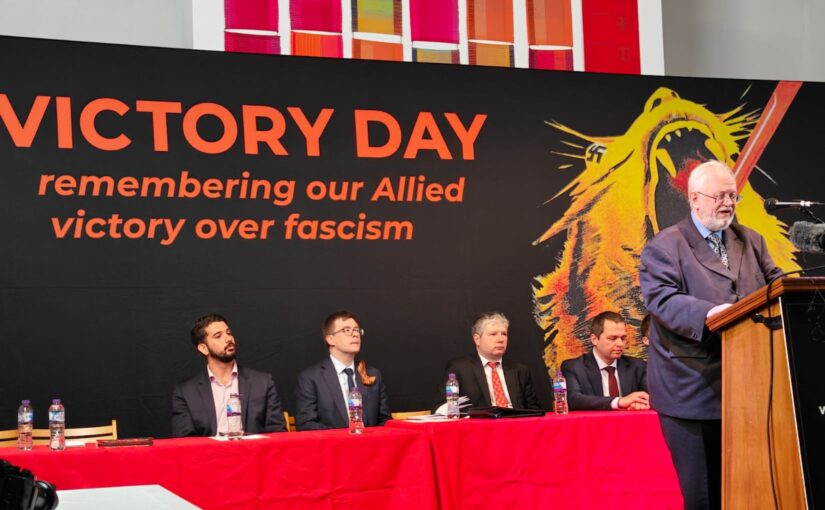
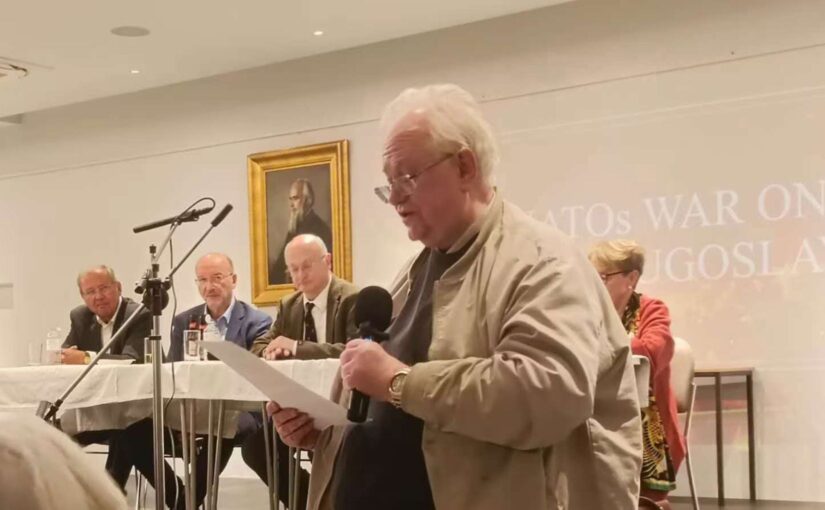
Several hundred people packed the Bishop Nikolaj Community Centre in West London on the evening of Saturday May 24 for a remembrance and discussion event marking 26 years since NATO’s war of aggression against Serbia and the former Yugoslavia, organised by the Round Table of Serbian organisations and community groups in the United Kingdom. Among those present were Serbian Ambassador Goran Aleksić, diplomats from the Belarus Embassy and journalists from the Xinhua News Agency and China Daily.

The meeting was preceded by a memorial service in the adjacent Serbian Orthodox Church of Saint Sava, where prayers offered included those for the three Chinese journalists killed when US-led NATO bombed the Chinese Embassy in Belgrade.

A panel discussion, chaired by retired academic Michael Stenton, featured Misha Gavrilović and Marko Gasić, co-chairs of the British-Serbian Alliance for Peace; Dr. Kate Hudson, Vice-President of the Campaign for Nuclear Disarmament (CND) and author of ‘Breaking the South Slav Dream’; and Laurie Mayer, former BBC and Sky News presenter and broadcast journalist. And, following a break for refreshments and networking, there were contributions from veteran peace activist Carol Turner, who co-founded and led the Committee for Peace in the Balkans with the late Alice Mahon MP in 1994; and Keith Bennett, co-editor of Friends of Socialist China.

The evening was closed with a brief recital from Zorka Maksimovic.

Speakers pointed out that, contrary to the propaganda advanced in Britain, there had been no threat of a Greater Serbia but rather of a Greater NATO. The real meaning of NATO expansion was exposed, namely military aggression beyond its borders. The war against Yugoslavia was neither humanitarian nor legal. Rather, it was what the Nuremburg trials established as the supreme international crime – a war of aggression. The war was characterised by numerous atrocities – the bombing of passenger trains, refugee convoys, factories, hospitals, the TV station and the Chinese Embassy. Depleted Uranium was used, condemning future generations and the environment to its lethal effects.

The wounds of the conflict have not healed. Serbian sovereignty is still being transgressed, for example on the question of Kosovo. Moreover, the war had opened Pandora’s Box – that the Western powers could attack whomever they wanted. This was soon seen in Iraq and is still ongoing – in NATO’s proxy war in Ukraine and Israel’s war against the Palestinian people. In Laurie Mayer’s words, the war against Yugoslavia represented raw imperialism run amuck.

The following is Keith’s message delivered at the meeting on behalf of Friends of Socialist China.

Your Excellency

Ladies and Gentlemen

Dear Friends

On behalf of Friends of Socialist China, I’d like to express our thanks to the organisers of this eventfor inviting us to join them in marking the solemn occasion of the 26th Anniversary of the NATO bombing of the Federal Republic of Yugoslavia.

With war raging in Europe and the Middle East, it is appropriate that we remember and mark this anniversary of the first time that full-scale war returned to our continent since the defeat of fascism in 1945.

This is also the 80th anniversary year of that victory. The peoples of both Serbia and China played heroic and indispensable parts in the defeat of fascism. They pinned down hundreds of thousands, indeed millions, of axis troops and liberated their countries, principally on the basis of self-reliance.

The enduring friendship between China and Serbia has its root in this common struggle on the eastern and western fronts. The 1969 Yugoslav film, The Bridge, vividly depicted those days. It was one of the first foreign films to be shown in China at the start of reform and opening up. Both the film, and through it the song Bella Ciao, became favourites of a generation of Chinese people, including President Xi Jinping.

Dear Friends

As you know, on May 7, 1999, in one of the gross violations of international law that characterised this war of aggression, US-led NATO brazenly bombed the Chinese Embassy in Belgrade. Three journalists, including a newly married couple, from the Xinhua News Agency and the Guangming Daily, were killed and many more people were injured. The husband of the third journalist was blinded.

The indestructible friendship between China and Serbia, which we might call China’s best friend in Europe, is the most fitting tribute to their memory, demonstrating as it does that their sacrifice was not in vain.

As President Xi said during his June 2016 state visit to Serbia, having paid tribute to the martyrs, “The Serbian people, with an indomitable spirit, have revived time and again in history… which the Chinese people admire very much.”

In today’s complicated and tense international situation, the friendship between China and Serbia is an important factor for peace and stability. As friends of China, it is completely natural and appropriate that we think of Serbia, too, as a brotherly and friendly country. And the Serbian diaspora and community here as our brothers and sisters.

This evening, we make new friends and renew old friendships with people with whom we campaigned and marched shoulder to shoulder back in 1999.

Let’s continue to work together for peace and justice.

Thank you once again.
From containment to confrontation, from cold to hot: the US drive to war on China

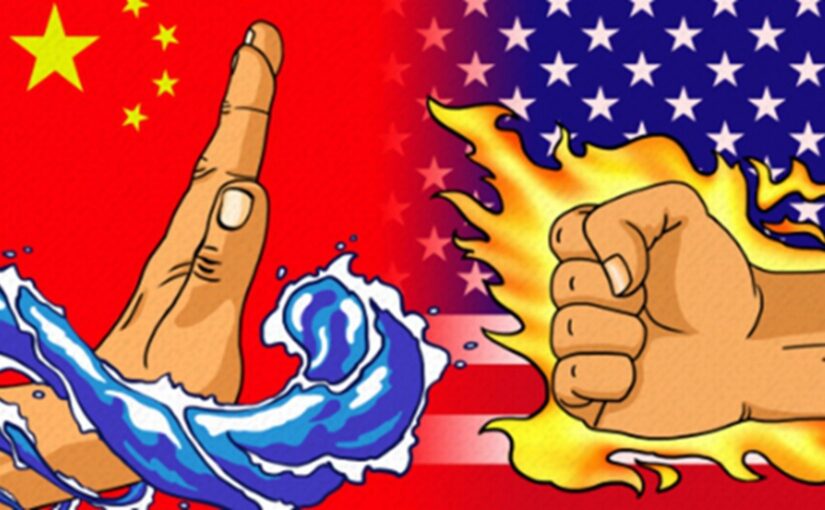
In the following article, Friends of Socialist China co-editor Carlos Martinez argues that the US-led New Cold War against China is failing. Despite extensive efforts to contain China’s rise – through tariffs, sanctions, and attempts at economic decoupling – China continues to grow economically and technologically. It now leads globally in multiple areas including renewable energy, electric vehicles, and advanced manufacturing. Its global reach is expanding, as evidenced by its central role in BRICS, the Belt and Road Initiative, and its status as the top trading partner for three-quarters of the world’s countries.

The West’s tariffs and sanctions have clearly backfired, invigorating China’s domestic industries rather than weakening them.

However, Carlos warns that the failure of “cold” methods could well provoke a shift toward direct military confrontation. The article identifies Taiwan as the most likely flashpoint, with the US escalating arms sales to the island and increasing its military deployments in the region. In the last two decades, successive US administrations, Democratic and Republican alike, have undermined the One China policy and fanned separatist sentiment, in defiance of international law.

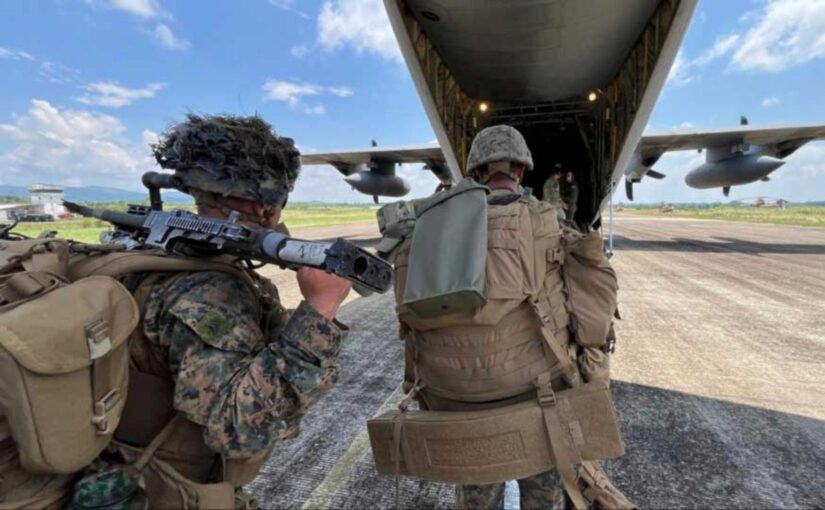
Military preparations, including AUKUS, the rearmament of Japan, and new US bases in the Philippines, reflect a growing bipartisan consensus in Washington in favour of war planning.

This all adds up to accelerating preparations for war with China – a war with the objective of dismantling Chinese socialism, establishing a comprador regime (or set of regimes), privatising China’s economy, rolling back the extraordinary advances of the Chinese working class and peasantry, and replacing common prosperity with common destitution. Needless to say, this would be disastrous not just for the Chinese people but for the entire global working class.

Carlos calls for resolute opposition to this dangerous escalation.

The New Cold War is not working

The US-led ‘cold’ war against China is manifestly failing in its objectives of suppressing China’s rise and weakening its global influence.

China’s economy continues to grow steadily. In purchasing power parity (PPP) terms, it is by now the largest in the world. Its mobilisation of extraordinary resources to break out of underdevelopment and become a science and technology superpower appears to be paying substantial dividends, with the country establishing a clear lead globally in renewable energy, electric vehicles, telecommunications, advanced manufacturing, infrastructure construction and more. It is by far the global leader in poverty alleviation and sustainable development. Sanctions on semiconductor exports have not slowed down China’s progress in computing, and indeed have had an enzymatic effect on its domestic chip industry. The spectacular success of DeepSeek’s open-source R1 large language model indicates that the US can no longer take its leadership in the digital realm for granted.

Meanwhile, the West’s attempts to ‘decouple’ from China have yielded precious little fruit. While a handful of imperialist countries have promised to remove Huawei from their network infrastructure, and while sanctions on Chinese electric vehicles mean that consumers in the West have to pay obscene sums for inferior quality cars, China’s integration and mutually-beneficial cooperation with the world has continued to expand. China is the largest trading partner of approximately two-thirds of the world’s countries. Over 150 states are signed up to the Belt and Road Initiative. China lies at the core of BRICS and the Shanghai Cooperation Organisation.

Trump’s tariffs were meant to coerce China into accepting the US’s trade terms and to force other countries to unambiguously join Washington’s economic and geopolitical ‘camp’, thereby alienating China. Nothing of the sort has taken place. Even the normally supine European Union has denounced the tariffs and signalled its intention to expand trade with China.

In summary, the Project for a New American Century is not going well. Zbigniew Brzezinski famously wrote in his The Grand Chessboard: American Primacy and its Geostrategic Imperatives (1997) that “the most dangerous scenario would be a grand coalition of China, Russia, and perhaps Iran, an ‘anti-hegemonic’ coalition united not by ideology but by complementary grievances.” Precisely such an anti-hegemonic coalition exists, and is uniting the countries of Asia, Africa, Latin America, the Caribbean and the Pacific in a project of building a multipolar future, thereby posing an existential challenge to the so-called ‘rules-based international order’ based on the principles of unilateralism, war, destabilisation, coercion and unequal exchange.

Continue reading From containment to confrontation, from cold to hot: the US drive to war on China

Tongogara Memorial Talk: African liberation and China

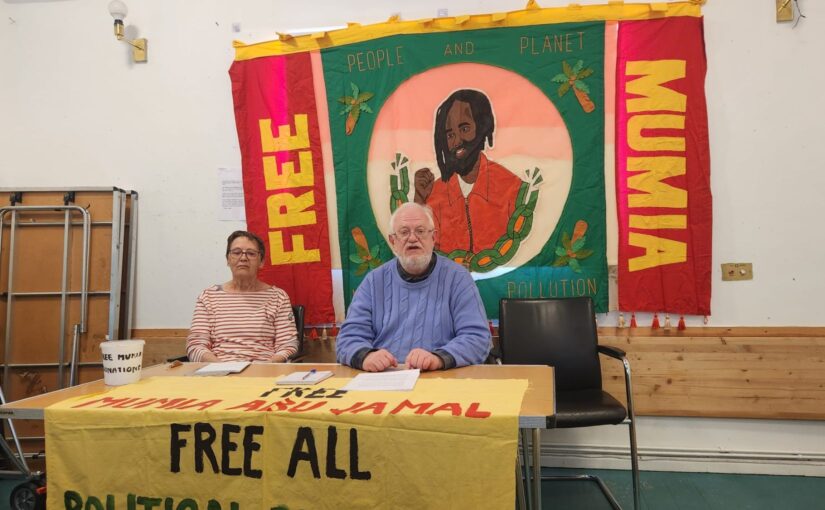
On Saturday May 17, 2025, the Free Mumia Abu Jamal Campaign UK, which campaigns in solidarity with the African-American freedom fighter and revolutionary who has been imprisoned since 1981, the majority of that time on ‘death row’, held a meeting and social event in memory of Comrade Tongogara (born Danny Morrell), who passed away on May 11, 2023, after a lifetime of work in the anti-racist, anti-imperialist and Marxist-Leninist movements. The UK campaign in support of Mumia was launched on Tongogara’s initiative.

The meeting was held in Vida’s ‘My Social’, a community space in Brixton, south London, especially but not exclusively for seniors. It is named after Vida Walsh, a pioneering African-Caribbean community and social activist in the Brixton area in particular. In the 1970s, Vida set up and ran an informal ‘tea and chat club’ for pensioners in Brixton. Despite the support of Age Concern Lambeth and the local residents’ association, resources were limited. Because of this, members congregated in each other’s homes, enabling pensioners to meet on a regular basis to chat and to maintain contacts within the community. This was particularly important for those older residents who, for whatever reason, were unable to rely on familial support structures for advice or assistance. To have a dedicated community space for this work was Vida’s dream and mission.

The campaign invited Friends of Socialist China co-editor Keith Bennett, who was a friend and comrade of Tongogara since the 1970s, to give a talk on the theme of African liberation and China, combining as it does two key aspects of Tongogara’s life and work.

Keith’s talk sought to weave together Tongogara’s own world outlook and political path with China’s historical support to the African revolution in the 1960s and 1970s in particular, citing examples especially from Zimbabwe, Eritrea, Congo, Guinea Bissau, Niger and South Africa.

The talk was followed by a lively ‘Q&A’ and discussion, focused especially on events around Angola’s independence in November 1975 and on present-day relations between China and Africa.

The meeting also heard a heartfelt tribute to Tongogara from Cecil Gutzmore, veteran Pan-African community activist and historian, and a stalwart of the campaign, which was read on his behalf by Wilf Dixon, as well as a brief report from that day’s Palestine solidarity demonstration in central London, which was attended by an estimated 600,000 people.

The formal proceedings were followed by a social with music and delicious home-prepared food.

The following is the main body of Keith’s speech.

It is an honour for me to be invited by the Free Mumia Abu Jamal Campaign UK to give this first Tongogara Memorial Talk, just over two years since he joined the ancestors. I hope it will be the first of many and that this will in some small way help to keep his memory alive in the way he would surely have wanted – enabling others to be inspired by his life and work, to learn from his example and to carry on the cause to which he devoted the great majority of his years.

Let me take this opportunity, on behalf of Friends of Socialist China, to congratulate the Free Mumia Campaign for all the steadfast and unflinching work you have done over years, work in which Tongogara was at the heart, to ensure that this unyielding revolutionary and internationalist is not forgotten in the hell hole of the US prison system.

As Mumia himself has said: “Know this: throughout it all. I have never felt alone. To the eye, I was alone in solitary confinement, on death row, but the eye cannot really see all that is, for behind brick and steel, I felt our love, sometimes like a wave, sometimes like a whisper, but always there, ever present.”

Why should I be giving this talk today? Perhaps it’s for the organisers rather than me to say. But I’m the co-editor of Friends of Socialist China, a platform established four years ago to support the People’s Republic of China and promote understanding of Chinese socialism and the Chinese revolution.

The Chinese revolution and its impact on the world has fascinated me since my early teens. And that’s essentially how I came to know Tongogara. Anyone who knew him, would appreciate that for Tongogara, the Chinese revolution and the teachings of Mao Zedong were central to his outlook on life – a veritable political compass, alongside his unshakeable commitment to the liberation of African people worldwide. At home and abroad, to borrow Marcus Garvey’s expression.

I can’t remember exactly when I first met him, but we certainly knew each other by the summer of 1976, just before my 18th birthday. Danny Morrell, as he was then known, was at that time a member of a small communist organisation, which was going to start producing a factory newspaper for the engineering factory in north London where he and a couple of other comrades had taken jobs.

Obviously, it would have marked the end of their employment, and hence of the political project in which they were engaged, had they openly distributed the paper themselves. That was my job and the night before I stayed at Danny’s bedsit to be there for the early morning shift.

That night we talked – obviously – and that’s when I started to really get to know him. I was touched by the loving photos of family back in Jamaica, which held pride of place alongside the posters produced by the Youth Forces for National Liberation (YFNL), a vibrant Marxist-Leninist organisation in Jamaica at that time.  One of them commemorated the Morant Bay Rebellion of 1865.

Continue reading Tongogara Memorial Talk: African liberation and China

Africa Day celebrated in Beijing

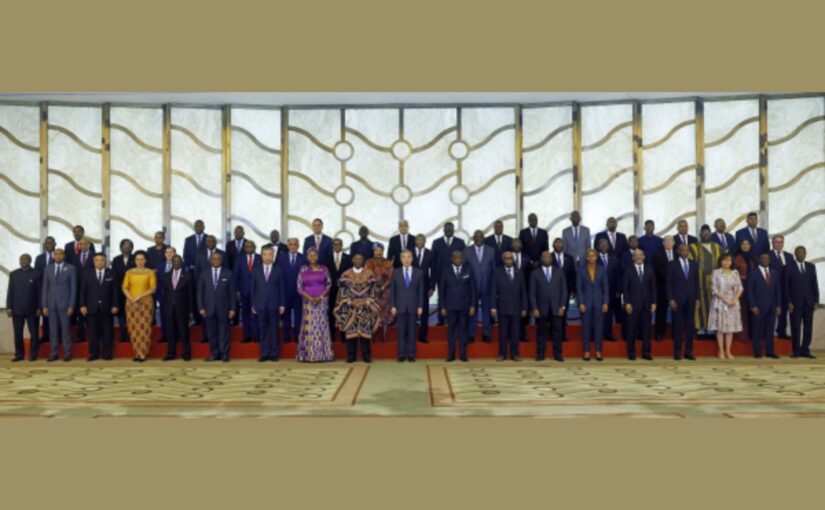
On Monday 26 May, Chinese Foreign Minister Wang Yi held a meeting with African diplomats in Beijing to celebrate Africa Day. He was joined by ambassadors or chargés d’affaires from more than 50 African countries, as well as representatives of the African Union.

In his speech, Wang Yi said that China and Africa are good brothers who fight side by side and share a common future; that China’s relations with Africa are now at their best in history; that China will unswervingly prioritise strengthening solidarity and cooperation with African countries; that China will strive to deliver more tangible benefits to the African people; and that China will remain the most sincere friend and the most reliable partner of African countries.

Noting that Xi Jinping has made five visits to Africa since becoming president, Wang pointed out that, over the years, “the Chinese and African peoples have supported each other in the struggle for independence and liberation and in the endeavour to defend national sovereignty, and have helped each other in exploring development paths and achieving national rejuvenation, forging a deep friendship marked by a shared future and close bonds, and writing many cherished stories of friendship that continue to be told”.

We republish below a report from the Ministry of Foreign Affairs website. The report concludes simply:

Long live Africa Day! Long live Africa-China friendship!

On May 26, 2025, Member of the Political Bureau of the CPC Central Committee and Foreign Minister Wang Yi had a group meeting with diplomatic envoys of African countries to China in Beijing and jointly celebrated Africa Day. Ambassadors or Chargés d’affaires of more than 50 African countries to China, as well as representatives of the African Union to China, among others, were present.

Wang Yi, on behalf of the Chinese government, extended festival greetings to the African diplomatic envoys, saying that China and Africa are good brothers who fight side by side and share a common future. Over the years, the Chinese and African peoples have supported each other in the struggle for independence and liberation and in the endeavor to defend national sovereignty, and have helped each other in exploring development paths and achieving national rejuvenation, forging a deep friendship marked by a shared future and close bonds, and writing many cherished stories of friendship that continue to be told. Since entering the new era, President Xi Jinping has visited Africa five times and put forward the principle of sincerity, real results, amity and good faith for China’s Africa policy, and the principle of pursuing the greater good and shared interests, as well as the spirit of China-Africa friendship and cooperation, elevating China’s bilateral relations with all African countries to the level of strategic relations. The overall positioning of China-Africa relations has also been upgraded to an all-weather China-Africa community with a shared future for the new era, and China’s relations with Africa are now at their best in history. Looking back, the key to the enduring strength and continued vitality of China-Africa friendship lies in the commitment to treating each other as equals, pursuing mutual benefit and win-win results, and upholding fairness and justice. Looking ahead, China will unswervingly prioritize strengthening solidarity and cooperation with African countries in its diplomacy, continue to support each other on issues related to core interests and major concerns, strive to deliver more tangible benefits to the African people, and remain the most sincere friend and the most reliable partner of African countries.

Wang Yi said that this year marks the 25th anniversary of the launch of the Forum on China-Africa Cooperation (FOCAC). China-Africa relations have achieved leapfrog development, and China-Africa cooperation continues to advance to higher levels, greater depth, and wider fields. In September last year, President Xi Jinping put forward that China and Africa should jointly advance modernization characterized by six features and the ten partnership actions at the Beijing Summit of the FOCAC, outlining a new blueprint for and injecting fresh impetus into the high-quality development of China-Africa cooperation. China-Africa cooperation has enormous potential and broad prospects. China is ready to take the upcoming Coordinators’ Meeting on the Implementation of the Follow-up Actions of the Ministerial Conference of FOCAC as an opportunity to add more momentum and strength to the implementation of the common understandings reached by the leaders of both sides, set a benchmark for high-quality Belt and Road cooperation, build a model for delivering on the Global Development Initiative, continuously enhance the sense of gain, happiness, and security of the African people, and accelerate the advancement of modernization shared by China and Africa.

Wang Yi stated that at present, the countercurrents of Cold War mentality, hegemonism, and bullying practices are surging, with multiple risks and challenges overlapping, and the deficits in peace, development, security, and governance are increasingly widening. China and Africa are respectively the largest developing country and the continent with the highest concentration of developing countries in the world. The more turbulent the international situation is, the more China and Africa need to strengthen solidarity and cooperation, jointly oppose power politics, advocate for multilateralism, uphold the international system with the United Nations (UN) at its core, and promote the liberalization and facilitation of trade and investment. The Communist Party of China maintains a global vision and is dedicated to human progress and world harmony. It will remain true to the original aspiration and founding mission, and will, as always, firmly support the just positions of African countries, take concrete steps to redress historical injustices suffered by Africa, and steadfastly support Africa in playing a greater role on the international stage.

African diplomatic envoys renewed friendship and planned for future cooperation centering on the theme of ”China-Africa Solidarity for a Shared Future”. They noted that the brotherly ties between Africa and China have withstood the test of changing international dynamics. Similar historical experiences, shared values, and joint pursuit of development have tightly united the African and Chinese peoples. The African side expressed heartfelt appreciation to China for its longstanding, selfless assistance in Africa’s efforts to redress historical injustices, defend national dignity, and seek independent development. Particularly, since the establishment of FOCAC, the fruitful and pragmatic cooperation between China and Africa has made significant contributions to improving the well-being of the African people, played a leading role in promoting international cooperation with Africa, and set a model for international relations. African countries are greatly encouraged by the series of global initiatives and key Africa-related policies including the ten partnership actions put forth by President Xi Jinping. African countries are full of confidence in Africa-China cooperation and are willing to work together to advance the building of an all-weather China-Africa community with a shared future for the new era. The African side reaffirmed its firm commitment to the one-China principle and expressed resolute support for all efforts made by China to safeguard its sovereignty and achieve national reunification, while firmly opposing interference in China’s internal affairs. Africa is ready to jointly uphold the purposes and principles of the UN Charter and safeguard the common interests of Global South countries. Long live Africa Day! Long live Africa-China friendship!

Xi extends condolences over death of former Vietnamese President Tran Duc Luong

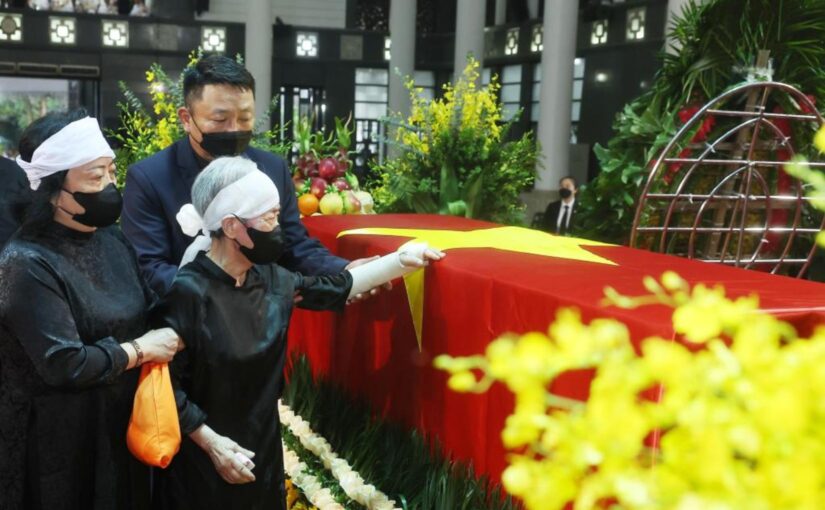
Veteran Vietnamese revolutionary leader Tran Duc Luong, who served as State President from August 1997 to November 2007, passed away in Hanoi on May 20 at the age of 88.

Chinese President Xi Jinping extended condolences to General Secretary of the Communist Party of Vietnam (CPV) Central Committee To Lam and Vietnamese President Luong Cuong, hailing Comrade Tran Duc Luong as an outstanding party and state leader of Vietnam who made important contributions to the country’s development and its cause of Doi Moi (reform). He added that, as an old friend of the Chinese people, he made unremitting efforts to promote the development of relations between the two parties and the two countries.

The Vietnamese newspaper Nhân Dân featured extensive coverage, including a special communique, brief biography,  and details of condolence messages sent by leaders of Laos, China, Cambodia, Cuba and Russia.

The following article was originally published by the Xinhua News Agency.

BEIJING, May 24 (Xinhua) — Chinese President Xi Jinping on Saturday extended condolences to General Secretary of the Communist Party of Vietnam (CPV) Central Committee To Lam and Vietnamese President Luong Cuong over the death of former Vietnamese President Tran Duc Luong.

In his message, Xi, also general secretary of the Communist Party of China (CPC) Central Committee, expressed profound condolences and extended sincere sympathies to Tran Duc Luong’s family on behalf of the CPC, the Chinese government and the Chinese people.

Xi hailed Comrade Tran Duc Luong as an outstanding party and state leader of Vietnam who made important contributions to the country’s development and its cause of Doi Moi (reform).

As an old friend of the Chinese people, Comrade Tran Duc Luong made unremitting efforts to promote the development of relations between the two parties and the two countries, Xi said.

Xi expressed his belief that under the strong leadership of the CPV Central Committee headed by Comrade To Lam, the party, government and people of Vietnam will surely turn their grief into strength and continue to achieve new accomplishments in the cause of socialist construction. 

Wang Yi meets with foreign ministers of Pakistan and Afghanistan

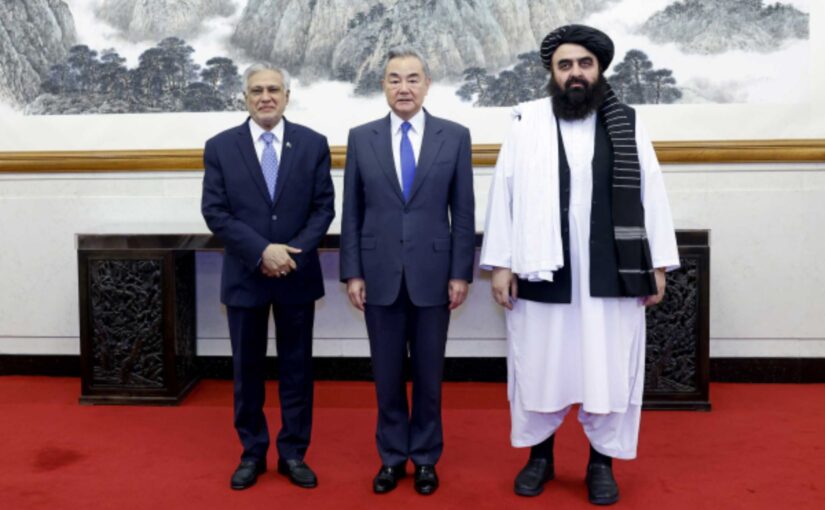
Pakistan Foreign Minister Mohammad Ishaq Dar and Afghanistan’s Acting Foreign Minister Mawlawi Amir Khan Muttaqi both visited China recently.

On May 20, Chinese Foreign Minister Wang Yi met with Dar, who also serves as his country’s Deputy Prime Minister.

Wang Yi said that as ironclad friends, China will, as always, firmly support Pakistan in safeguarding its national sovereignty and territorial integrity, exploring a development path suited to its national conditions, resolutely combating terrorism, and playing a greater role in international and regional affairs. Both sides should work together to create an upgraded version of the China-Pakistan Economic Corridor (CPEC) and promote cooperation in industry, agriculture, energy and minerals, human resource development, counter-terrorism and security, and other fields.

Mohammad Ishaq Dar said that Pakistan admires China’s new development achievements, especially in innovation and scientific and technological progress, and looks forward to strengthening all-round cooperation with China. He expressed the hope for continuous and strong support from China in overcoming current difficulties and promoting national development, security and stability.

Dar also briefed on the latest situation following the ceasefire reached between Pakistan and India, as well as Pakistan’s considerations in that regard. He thanked China for upholding justice and making unremitting efforts and significant contributions to promoting a ceasefire for peace, saying that Pakistan will resolutely safeguard its national sovereignty and territorial integrity, and is willing to maintain dialogue with India to ease the situation.

Wang Yi stated that China welcomes and supports Pakistan and India in properly handling their differences through dialogue, achieving a comprehensive and lasting ceasefire, and seeking fundamental solutions to the issues between them.

The next day, Wang Yi met with Acting Foreign Minister of Afghanistan Mawlawi Amir Khan Muttaqi.

Wang Yi welcomed Muttaqi’s visit to China on the occasion of the 70th anniversary of the establishment of diplomatic relations between the two countries. He stated that China and Afghanistan are traditionally friendly neighbours, and both sides have always understood and supported each other and continuously advanced bilateral relations. China respects Afghanistan’s independence, sovereignty and territorial integrity, the independent choices made by the Afghan people, as well as Afghanistan’s religious beliefs and ethnic culture. China has supported the Afghan people’s just struggle against aggression, never interfered in Afghanistan’s internal affairs, never sought selfish interests by instigating conflicts in Afghanistan, and never pursued so-called spheres of influence in Afghanistan. Since the establishment of the current Afghan government, China was the first to exchange new ambassadors with the country, demonstrating China’s friendship with the Afghan people. China will, as always, support the Afghan government in exercising governance in a moderate and prudent way, focusing on development, firmly combating terrorism, and pursuing good-neighbourliness and friendship, to achieve lasting peace and stability at an early date. China is ready to work with Afghanistan to expand cooperation in areas such as economy and trade, agriculture, energy and minerals, poverty reduction, disaster prevention and mitigation, talent cultivation, medical care and health, law enforcement, and security.

Continue reading Wang Yi meets with foreign ministers of Pakistan and Afghanistan

Ho Chi Minh’s vital contributions to the global socialist and anti-imperialist struggle

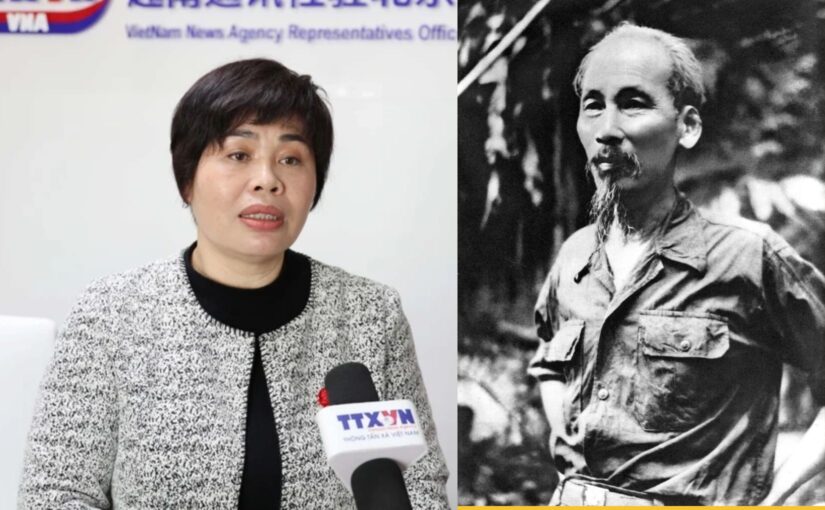
Marking the 135th anniversary of the birth of the country’s revolutionary leader Ho Chi Minh, May 19, 2025, the Vietnamese press has carried numerous articles reflecting the worldwide respect felt by progressive people for their national hero.

In one such article, a Vietnam News Agency (VNA) correspondent in Beijing, interviewed Professor Pan Jin’e, a senior fellow at the Academy of Marxism under the Chinese Academy of Social Sciences.

Pan described Ho Chi Minh as the founder of the Democratic Republic of Vietnam, a great revolutionary, a brilliant strategist, and a moral exemplar. She also highlighted his role as a leader of anti-colonial movements across Asia, Africa, and Latin America in the 20th century, as well as his significant place in the history of the international communist movement.

She noted that President Ho Chi Minh remained steadfast in his internationalist ideals. He joined the French Communist Party, actively collaborated with leaders of other socialist countries, and maintained close ties with the Chinese revolution. Alongside leaders such as Mao Zedong and Zhou Enlai, he helped build the traditional friendship between Vietnam and China – a relationship that remains cherished by both parties and peoples.

As a representative of the Communist International, Ho Chi Minh supported revolutionary movements worldwide, particularly in China, Laos, and Cambodia, playing an active role in anti-colonial struggles and proletarian revolutions.

Another article carried by Nhân Dân noted that: “With the friendship of ‘the proletariat in all four directions are brothers’, Ho Chi Minh harshly criticised some comrades in the Communist International for incorrectly assessing the colonial issue and confidently affirmed that the proletarian revolution was completely capable of breaking out first in the colonial countries, thereby creating conditions for workers and labourers in the mother countries to carry out the revolution to liberate the class and liberate society.”

The following article was originally published by Nhân Dân.

President Ho Chi Minh made significant contributions to Viet Nam and the international community, according to Professor Pan Jin’e, a senior fellow at the Academy of Marxism under the Chinese Academy of Social Sciences.

In an interview with a Viet Nam News Agency (VNA) correspondent in Beijing on the occasion of the 135th birth anniversary of the late Vietnamese leader (May 19, 1890–2025), Pan described Ho Chi Minh as the founder of the Democratic Republic of Viet Nam, a great revolutionary, a brilliant strategist, and a moral exemplar. She also highlighted his role as a leader of anti-colonial movements across Asia, Africa, and Latin America in the 20th century, including his significance in the history of the international communist movement.

She emphasised that his contributions were reflected not only in Viet Nam’s national liberation and national building efforts but also in their profound impact on global struggles against colonialism and the international socialist movement.

Ho Chi Minh led the independence movement, founded the Communist Party of Viet Nam, and waged resistance wars against colonial and imperial forces, devoting his entire life to national reunification. He also guided the country’s socialist development in politics, economy and culture, spearheaded land reform, poverty alleviation, and national unity policies.

President Ho Chi Minh remained steadfast in his internationalist ideals. He joined the French Communist Party, actively collaborated with leaders of other socialist countries, and maintained close ties with the Chinese revolution. Alongside leaders such as Mao Zedong and Zhou Enlai, he helped build the traditional friendship between Viet Nam and China—a relationship that remains cherished by both Parties and peoples.

As a representative of the Communist International, Ho Chi Minh supported revolutionary movements worldwide, particularly in China, Laos, and Cambodia, playing an active role in anti-colonial struggles and proletarian revolutions.

According to the Chinese scholar, whether during Viet Nam’s socialist revolutionary era or its ongoing doi moi (renewal) cause, Ho Chi Minh’s status as a national hero and spiritual leader has never diminished. In 2019, the United Nations Educational, Scientific and Cultural Organisation (UNESCO) honoured him as a “Hero of National Liberation and a Great Man of Culture,” acknowledging his historic contributions to humanity.

Reflecting on the spirit of unity embodied in Ho Chi Minh’s Thought, Pan underscored that under his leadership and that of the Communist Party of Viet Nam, the country achieved the historic victory of national reunification on April 30, 1975. This triumph is a powerful testament to his famous teachings: “Unity, unity, great unity. Success, success, great success!” National unity, she noted, remains the most vital force behind Viet Nam’s revolutionary success.

The Chinese scholar expressed her belief that the Vietnamese people will always remember President Ho Chi Minh’s final wishes, continue to uphold national solidarity, and write new chapters in the nation’s proud history. They will strive to build an independent, free, happy, prosperous, and civilised Viet Nam by 2050, fulfilling the late leader’s long-cherished dream of seeing Viet Nam stand shoulder to shoulder with the great powers of the five continents, she continued.

Liu Jianchao meets with a delegation of the Congress of Deputies of Spain

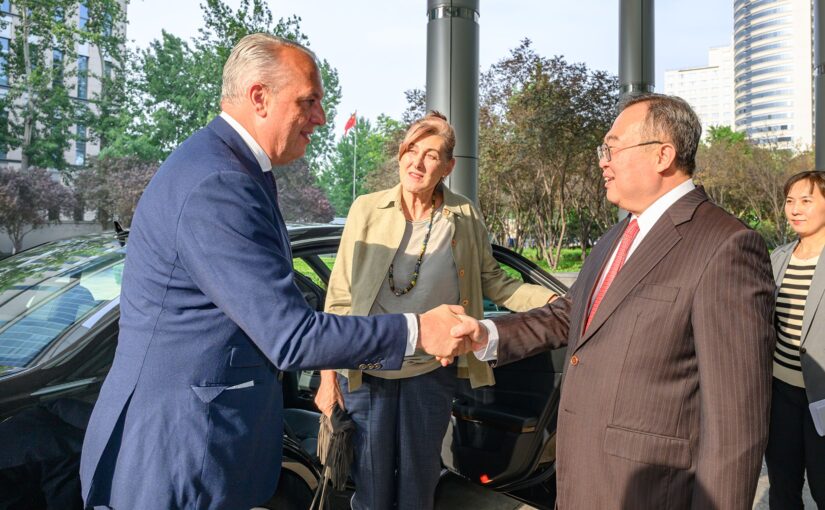
On May 12, Minister Liu Jianchao of the International Department of the Communist Party of China (CPC) Central Committee (IDCPC), met in Beijing with a delegation of the Congress of Deputies of Spain led by Juan Carlos Ruiz Boix, Chairman of its Foreign Affairs Committee.

Liu said that China is ready to work with Spain to implement the important consensus reached by President Xi Jinping and Prime Minister Pedro Sanchez, well implement the Action Plan for Strengthening the Comprehensive Strategic Partnership, enhance the alignment of development strategies, promote practical cooperation in various fields, and facilitate exchanges in culture, sports and other areas to achieve greater progress in bilateral relations. The CPC is willing to enhance political dialogue with Spanish political parties, increase mutual understanding and trust, and further consolidate the foundation for the development of China-Spain relations.

Ruiz said that Prime Minister Pedro Sanchez has visited China many times, and the most recent visit was very successful, reaching important consensus with Chinese leaders. Spain is willing to deepen cooperation with China in areas such as renewable energy, artificial intelligence, people-to-people and cultural exchanges, and tourism, and jointly address global challenges such as climate change. China has achieved great accomplishments in poverty alleviation and epidemic response and plays an important role in resolving global hot issues. Both Spain and China are committed to developing the economy and ensuring that all people share the fruits of development. There are many similar positions between the two sides. “We appreciate the major initiatives put forward by President Xi Jinping, such as the Global Civilisation Initiative.” Spanish political parties are willing to engage in candid and in-depth dialogue with the CPC to promote exchanges and cooperation in various fields between the two countries. The current international situation is turbulent, both Spain and China are committed to peaceful development and should join hands to keep the world away from war.

According to the IDCPC website, the delegation included members of the Congress of Deputies of Spain from the Spanish Socialist Workers’ Party, Sumar, Republican Left of Catalonia, Together for Catalonia, Basque Solidarity and others.

Sumar is an electoral alliance of left and progressive parties. It presently has 24 members of whom the most significant are the Communist Party of Spain (PCE) and United Left (IU – Izquierda Unida.) Of the 135 seats in the Catalan Parliament, Republican Left presently holds 20 and supports the government of the Socialists’ Party of Catalonia. Together for Catalonia holds 35 seats and is the main opposition party. Both parties support Catalan independence. Basque Solidarity (EA – Eusko Alkartasuna), founded in 1986, is one of three member parties of EH Bildu (Euskal Herria Bildu – Basque Country Unite), which groups the pro-independence left. One significant point about this delegation is that it is likely the first time that the IDCPC notes exchanges with pro-independence parties from Catalonia and the Basque Country.

The following article was originally published on the website of the IDCPC.

Beijing, May 12 (IDCPC) — Liu Jianchao, Minister of the International Department of the CPC Central Committee, met here today with a delegation of the Congress of Deputies of Spain led by Juan Carlos Ruiz Boix, Chairman of the Foreign Affairs Committee of the Congress of Deputies of Spain. 

Continue reading Liu Jianchao meets with a delegation of the Congress of Deputies of Spain

China and Russia will always remember the just feats of the two peoples in maintaining world peace

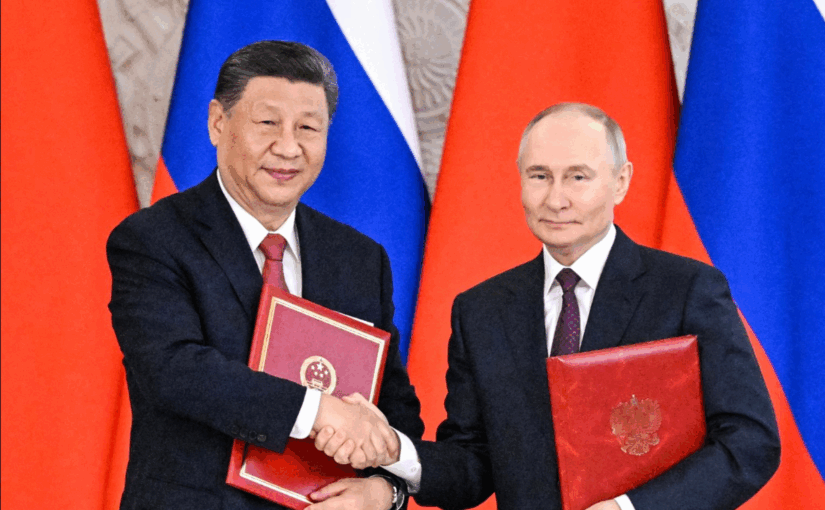
During President Xi Jinping’s May 7-10 state visit to Russia, during which he participated in the celebrations of the 80th anniversary of the Soviet Union’s victory over Nazi Germany in the Great Patriotic War, besides concluding with his Russian counterpart Vladimir Putin the Joint Declaration on Further Strengthening Cooperation to Uphold the Authority of International Law and that on Global Strategic Stability, the two heads of state also signed a Joint Statement of the People’s Republic of China and the Russian Federation on Further Deepening the China-Russia Comprehensive Strategic Partnership of Coordination in the New Era on the Occasion of Commemorating the 80th Anniversary of the Victory of the Chinese People’s War of Resistance Against Japanese Aggression, the Soviet Union’s Great Patriotic War and the Founding of the United Nations.

This 8,500-word statement not only details a wide range of issues connected to these anniversaries and surveys the broad spectrum of bilateral relations between China and Russia. It also sets out the two countries’ identity of views on a great number of contemporary regional and global issues. As with the other joint statements, it goes into granular detail, demonstrating the unprecedentedly high level not only of agreement but of active and practical coordination between Beijing and Moscow. It is therefore not hyperbole to observe that these documents are of considerable historical significance, contributing to and demonstrating President Xi’s oft stated observation that the world is currently experiencing changes unseen in a century. Therefore anyone with a serious interest in international relations should study them closely.

The statement begins by noting that, “This year marks the 80th anniversary of the victory of the Chinese People’s War of Resistance Against Japanese Aggression, the World Anti-Fascist War, and the Soviet Union’s Great Patriotic War. The Second World War was an unprecedented catastrophe in human history. China and the Soviet Union, as the main battlefields in Asia and Europe respectively, stood at the forefront of resisting the attacks of Japanese militarism and Nazi Germany and its vassal states, and were the two backbone forces in the fight against militarism and fascism. The Chinese and Soviet peoples suffered great hardships brought by foreign aggression and the baptism of extremely harsh wars. They fought shoulder to shoulder in arduous struggles, gave each other selfless assistance, made great sacrifices, and achieved great victories, making great historical contributions to defending human dignity and rebuilding world peace.”

In today’s world, China and Russia shoulder the common responsibility and mission of maintaining a correct view of World War II history. China and Russia will always remember the just feats of the two peoples in maintaining world peace, cherish the memory of the tens of millions of heroes and innocent civilians who sacrificed their lives for the freedom and independence of future generations, and pay high tribute to the old soldiers and heroic rear-line workers who made combat exploits during the war years. Both sides will continue to attach importance to educating the younger generation to take the predecessors as role models, adhere to the indelible spirit of patriotism, cultivate the responsibility for the motherland and the people, and promote the fearless spirit of sacrifice for the realisation of national peace and prosperity.

Among many areas of bilateral relations, it states that: “The two sides reiterated that the close relationship between the Chinese and Russian militaries is of special significance, which will help the two countries to more effectively defend their sovereignty and national interests and effectively respond to traditional and non-traditional threats and challenges. The two sides will continue to strengthen military and military-technical cooperation to benefit the people of China and Russia and safeguard global and regional security. The two sides will further deepen military mutual trust and cooperation, expand the scale and scope of joint military exercises, regularly organise joint maritime and air patrols, strengthen exchanges and cooperation under bilateral and multilateral frameworks, and promote China-Russia military cooperation to a higher level.”

Other highlights of the statement include:

Continue reading China and Russia will always remember the just feats of the two peoples in maintaining world peace

China condemns Israeli war crimes and expresses solidarity with the Palestinian people

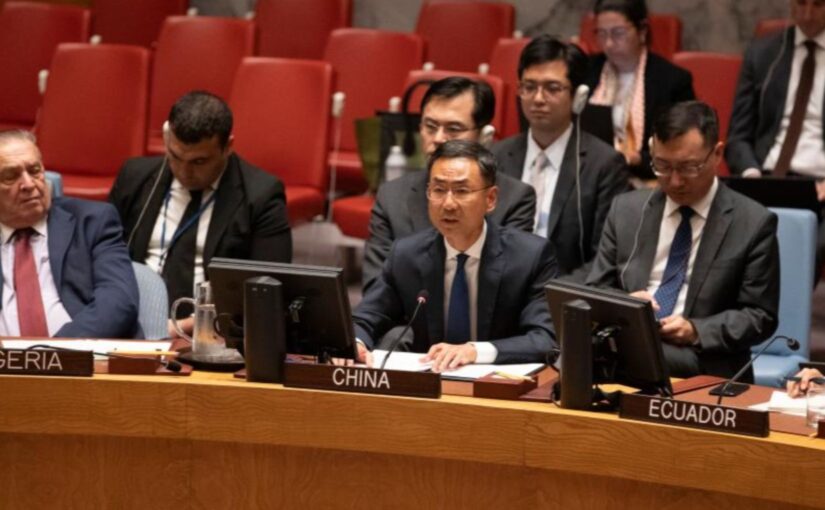
China has twice recently used the platform of the United Nations to condemn Israeli war crimes, draw attention to the role played by the United States and to express solidarity with the struggle of the Palestinian people and with their national aspirations.

Speaking at a Nakba commemoration on May 15, Ambassador Geng Shuang said that: “Seventy-seven years ago, more than half of the Palestinian people were expelled or fled from their homes during the Arab-Israeli war, and they have since embarked on the arduous journey of striving for their legitimate rights and interests. Today, 77 years later, the historical injustice suffered by the Palestinian people has not only remained unaddressed but has even worsened. 

“The war in Gaza has lasted for 19 months, claiming the lives of more than 53,000 Gazans and leaving the once beautiful cities and towns in ruins. Israel’s escalating siege on Gaza has led to an unprecedented humanitarian catastrophe for two million people who face the threat of forced relocation. The continued expansion of settlements in the West Bank and the intensifying settler violence have relentlessly squeezed the space for the Palestinian people and eroded the basis of the two-State solution.”

He added that, “On the question of Palestine, China, upholding fairness and justice, remains steadfast in its support for the just cause of the Palestinian people to restore their legitimate national rights, for the early establishment of the fully sovereign and independent State of Palestine based on the 1967 borders with East Jerusalem as its capital, and for the early admission of the State of Palestine as a full member of the UN,” adding that China would continue to work tirelessly for, “a comprehensive, just, and lasting solution to the question of Palestine at an early date, so that the Nakba day will forever remain in the past.”

Two days previously, on May 13, Ambassador Fu Cong addressed a UN Security Council Briefing on the Humanitarian Situation in Gaza and said:

“Gaza has become a living hell. Israel’s continuous bombing and raids are causing civilian casualties every day. On May 7 alone, there were more than 100 lives lost. Over the two-month-plus blockade, Gaza’s survival supplies were depleted. Hunger and disease are spreading rapidly. According to the IPC [Integrated Food Security Phase Classification] report, the population in Gaza are suffering from severe food shortages, with nearly half a million people in a state of catastrophic hunger.

Continue reading China condemns Israeli war crimes and expresses solidarity with the Palestinian people

China-Latin American/Caribbean cooperation has broad prospects

Chinese Foreign Minister Wang Yi held a number of meetings with his counterparts immediately before and after the Fourth Ministerial Meeting of the China-CELAC [Community of Latin American and Caribbean States] Forum.

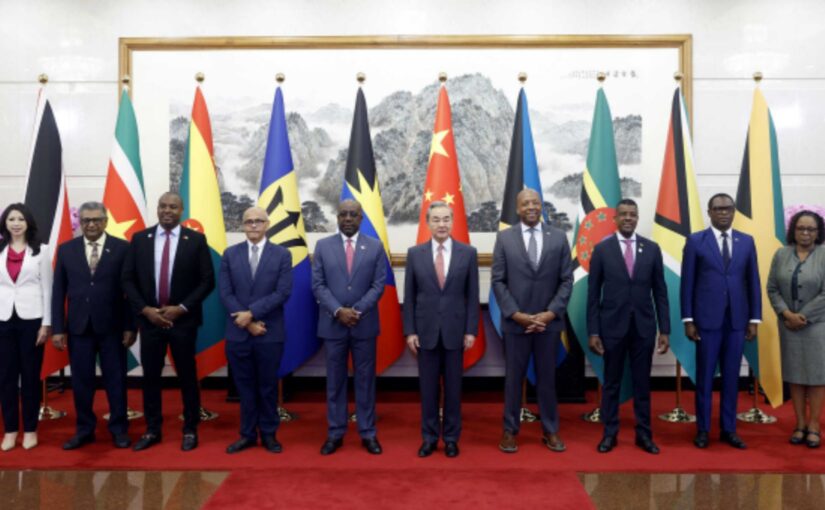
On May 12, he met with his counterparts from Caribbean countries having diplomatic relations with China, and from Cuba, Venezuela, Nicaragua, Brazil, Colombia, Guyana and Peru.

During a group meeting with the foreign ministers and representatives of the Caribbean countries having diplomatic relations with China, including Antigua and Barbuda, the Bahamas, Barbados, Dominica, Grenada, Guyana, Jamaica, Suriname, and Trinidad and Tobago, Wang Yi said that this year marks the 10th anniversary of the establishment of the China-CELAC Forum, which is of great significance in building on past achievements and opening up new prospects. Over the past decade, the China-Caribbean comprehensive cooperative partnership has entered a fast track, yielding remarkable outcomes across various fields. Leaders of all Caribbean countries having diplomatic relations with China have made visits to China, and eight Caribbean nations have joined the big family of the Belt and Road Initiative. A large number of key cooperation projects between China and the Caribbean have been put into use or are well underway. Six Caribbean countries have signed comprehensive mutual visa exemption agreements with China. People-to-people and cultural exchanges between both sides have grown increasingly active. All Caribbean countries having diplomatic relations with China have established Confucius Institutes or Confucius Classrooms, and the number of sister-city partnerships continues to grow. During the pandemic, the two sides stood together through thick and thin, writing a new chapter in China-Caribbean friendship.

He stated that Caribbean countries are an indispensable part of the China-CELAC Forum, and China-Caribbean cooperation has broad prospects. Looking ahead, both sides should work together to deepen and strengthen the China-Caribbean comprehensive cooperative partnership. It is important to deepen political mutual trust and continue mutual support on issues concerning each other’s core interests. Both sides should step up practical cooperation and advance high-quality Belt and Road cooperation to help Caribbean countries accelerate self-driven development. The two sides should enhance people-to-people and cultural exchanges, strengthen cooperation in education, culture, news, sports and other fields, and bring people’s hearts closer. China will offer more government scholarships and training opportunities. China will also continue to assist Caribbean countries in addressing climate change and support Caribbean countries in seeking strength through unity and playing a greater role in international affairs.

Foreign ministers and representatives of Caribbean countries expressed the view that the Caribbean nations and China show mutual trust and mutual respect. They expressed gratitude to China for its long-standing and strong support in key areas such as infrastructure, green development, post-disaster reconstruction, agriculture, healthcare, and education in Caribbean countries. This has helped Caribbean countries improve people’s well-being, enhance economic resilience and accelerate sustainable development, and set an example for South-South cooperation. The one-China principle remains the cornerstone of relations between the Caribbean and China, and Caribbean countries will continue to firmly uphold it.

Continue reading China-Latin American/Caribbean cooperation has broad prospects

Xi Jinping meets with presidents of Colombia and Chile

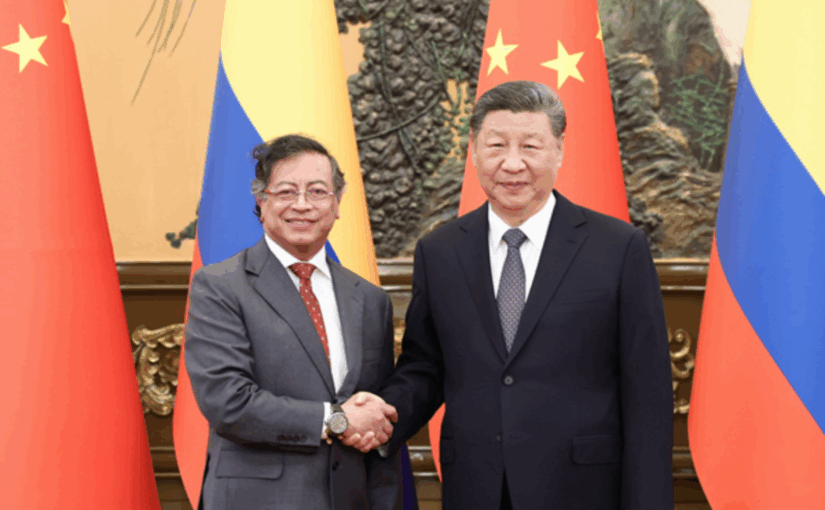
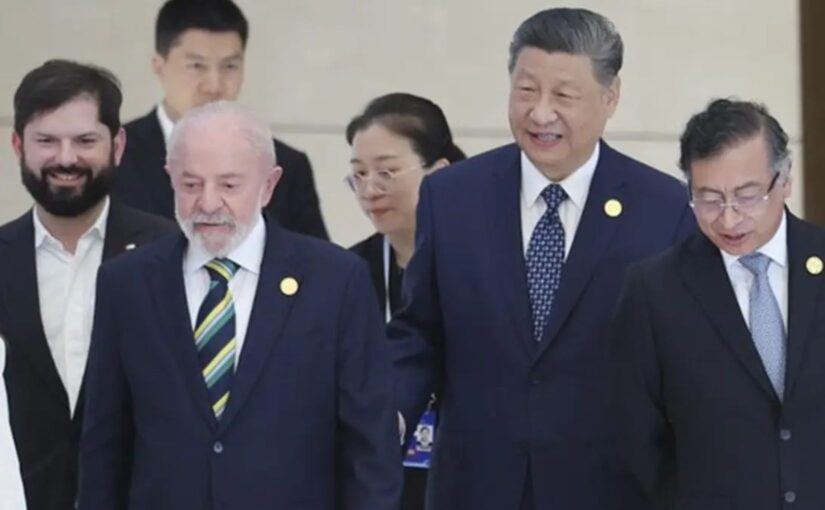
Chinese President Xi Jinping met separately with Colombian President Gustavo Petro and Chilean President Gabriel Boric on the morning of May 14. Both leaders were in China to attend the Fourth Ministerial Meeting of the China-CELAC [Community of Latin American and Caribbean States] Forum.

During his visit President Petro announced that Colombia would formally join the Belt and Road Initiative (BRI). In their meeting, President Xi said that this year marks the 45th anniversary of the establishment of diplomatic relations between China and Colombia. Standing at a new historical starting point, China is ready to work with Colombia to promote greater development of the strategic partnership between the two countries and bring more benefits to the people of both countries. The two sides should take Colombia officially joining the big family of high-quality Belt and Road cooperation as an opportunity to promote the quality improvement and upgrade of cooperation between the two countries. China is ready to import more high-quality products from Colombia, support Chinese enterprises in investing and doing business in Colombia, and participate in infrastructure development. The two sides can further expand cooperation in emerging fields such as wind energy, new energy vehicles, the digital economy and artificial intelligence, and jointly achieve green and low-carbon transformation.

The Chinese leader stressed that China-LAC [Latin America and the Caribbean] cooperation is an important part of South-South cooperation. It conforms to the general trend of world development and historical trends and is in line with the common interests of China and LAC countries. The Fourth Ministerial Meeting of the China-CELAC Forum sent a positive signal to the world of seeking common development and revitalisation. As the rotating president CELAC, Colombia has made significant contributions to the successful holding of the meeting.

Gustavo Petro said, the friendly relations between Colombia and China have a long history. The two sides should deepen political mutual trust, enhance mutual support, advance Belt and Road cooperation, expand cooperation in areas such as trade, infrastructure, new energy and artificial intelligence, and improve people’s livelihood. Amid the current complex and volatile international landscape, the self-serving practices of certain countries are not beneficial to the world. All countries should unite to respond. Colombia is willing to cooperate closely with China to safeguard international fairness and justice and protect the common interests of developing countries.

Petro also met with Wang Huning, Chairman of the National Committee of the Chinese People’s Political Consultative Conference (CPPCC).

Meeting Chilean President Boric, Xi Jinping pointed out that this year marks the 55th anniversary of the establishment of diplomatic relations between China and Chile. Fifty-five years ago, the visionary elder leaders of both countries broke through the shadow of the Cold War and pioneered the establishment of diplomatic relations between the People’s Republic of China and South American countries. [Xi Jinping refers here to Salvador Allende, Mao Zedong and Zhou Enlai. Chile established diplomatic relations with China on December 15, 1970, the first country on the South American mainland to do so, just over three months after Allende led his Popular Unity coalition to victory and assumed office.]

Continue reading Xi Jinping meets with presidents of Colombia and Chile

China and Brazil work together to uphold multipolarity and oppose hegemony

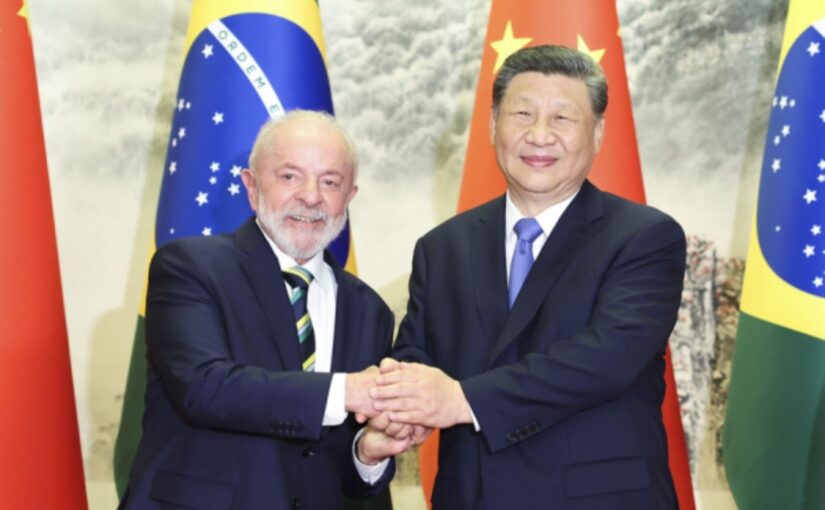
In addition to attending the opening ceremony of the Fourth Ministerial Meeting of the China-CELAC [Community of Latin American and Caribbean States], Brazilian President Luiz Inácio Lula da Silva paid a state visit to China. On the afternoon of May 13, he held talks with President Xi Jinping and other senior Chinese leaders.

Xi Jinping noted that on the occasion of the 50th anniversary of the establishment of diplomatic relations between China and Brazil last year, the two sides jointly announced the elevation of their bilateral relationship to a China-Brazil community with a shared future for a more just world and a more sustainable planet. This strategic decision has drawn a grand blueprint for the next “golden 50 years” of China-Brazil relations. Amid the changing and turbulent international landscape, China and Brazil should remain committed to the original aspiration of contributing to human progress and global development, deepen the building of a China-Brazil community with a shared future, continuously seek greater synergy between development strategies, and work together to promote greater solidarity and coordination among Global South countries.

The two sides should deepen the effective synergy between the Belt and Road Initiative and Brazil’s development strategies, give full play to the role of various cooperation mechanisms between the two countries, strengthen cooperation in traditional areas such as infrastructure, agriculture and energy, and expand new frontiers of cooperation in energy transition, aerospace, the digital economy and artificial intelligence, so as to create more highlights in practical cooperation between the two countries.

Taking the opportunity of the China-Brazil Years of Culture to be held next year, the two sides should enhance cooperation in culture, education, tourism, media, and at the sub-national level, and provide more convenience for people-to-people exchanges between the two countries. And they should maintain multilateral cooperation to enrich the China-Brazil community with a shared future. As two major developing countries in the eastern and western hemispheres, China and Brazil should enhance coordination and collaboration within multilateral mechanisms such as the United Nations, BRICS, and the China-CELAC Forum, jointly uphold multilateralism, improve global governance, and safeguard the international economic and trade order. The two sides should take a clear-cut stand against unilateralism, protectionism, and bullying acts.

President Lula said, Brazil and China uphold mutual respect and share a common future. The bilateral relationship remains solid and unbreakable and brooks no disruption or undermining by any external factors. Unlike other major countries, China has consistently offered sincere support and assistance to Latin American countries, including Brazil, in their pursuit of economic and social development. Brazil is willing to deepen strategic cooperation with China, advance the building of a Brazil-China community with a shared future, work together to build a more just, peaceful and prosperous world, and set an example for other countries. Brazil is ready to synergise its development strategies with the Belt and Road Initiative and deepen cooperation with China in such areas as economy and trade, infrastructure, aerospace, and finance. Brazil seeks to expand youth and cultural exchanges to enhance interactions and friendship between the two peoples. China’s achievements in poverty alleviation are admirable, and Brazil is willing to learn from China’s experience to lift more people out of poverty and hunger. Under the current circumstances, it is essential to firmly defend multilateralism. Protectionism and the abuse of tariffs will not bring development and prosperity but only lead to chaos. China’s firm stance in addressing global challenges gives strength and confidence to all countries. Brazil is willing to strengthen strategic coordination with China in international affairs, jointly safeguard the common interests of the Global South, and uphold international fairness and justice.

The two heads of state also had an exchange of views on the Ukraine crisis, agreeing that as peace-loving forces for progress, China and Brazil should strengthen communication and coordination, give play to the role of the Group of Friends for Peace, support Russia and Ukraine in initiating direct dialogue, and work with other Global South countries to continue playing a constructive role in resolving the crisis.

After the talks, the two heads of state jointly witnessed the signing of 20 cooperation documents covering areas such as the synergy of development strategies, science and technology, agriculture, the digital economy, finance, inspection and quarantine, and media.

The two sides issued the Joint Statement between the People’s Republic of China and the Federative Republic of Brazil on Strengthening the Building of a China-Brazil Community with a Shared Future for a More Just World and a More Sustainable Planet and on Jointly Upholding Multilateralism, as well as the China-Brazil Joint Statement on the Ukraine Crisis.

In their meeting, Chinese Premier Li Qiang stated that since the establishment of diplomatic relations between China and Brazil over 50 years ago, the two countries have always respected and supported each other, becoming good friends and partners who share weal and woe and pursue common development. Currently, under the strategic guidance of the two heads of state, China-Brazil relations have entered a golden period of growth. China is ready to work with Brazil to maintain high-level exchanges, deepen political mutual trust, constantly expand the strategic dimension of bilateral relations, comprehensively intensify mutually beneficial cooperation between the two sides, and move forward side by side and achieve mutual success on the path to modernisation.

Continue reading China and Brazil work together to uphold multipolarity and oppose hegemony

Clean energy just put China’s CO2 emissions into reverse for first time

The analysis below by Lauri Myllyvirta, originally published on Carbon Brief, demonstrates that, “for the first time, the growth in China’s clean power generation has caused the nation’s carbon dioxide (CO2) emissions to fall despite rapid power demand growth”. This indicates that China has almost certainly achieved its target of peaking emissions before 2030.

The article reports that China’s emissions were down 1.6 percent year-on-year in the first quarter of 2025, and notes that the country’s decline in fossil fuel usage resulted not from a slowdown in the economy or reduced energy demand, but from a rapid increase in the share of clean energy – solar, wind, nuclear and hydroelectric – in the power mix. “If this pattern is sustained, then it would herald a peak and sustained decline in China’s power-sector emissions.”

While noting that the possibility of a rebound in emissions later in the coming years cannot be ruled out should the government’s energy strategy significantly shift, Myllyvirta writes: “All of this suggests that there is potential for China’s emissions to continue to fall and for the country to achieve substantial absolute emissions reductions over the next five years”.

This progress is world-historic, because China’s emissions are reducing in spite of the fact that its overall energy demand continues to rise, and it continues to be a major industrial power. Thus its emissions reduction is the result not of de-industrialisation but of systematic investment and innovation in renewable energy. As such it is a model of sustainable development with important implications for other developing countries.

Lauri Myllyvirta is lead analyst at the Centre for Research on Energy and Clean Air and senior fellow at Asia Society Policy Institute.

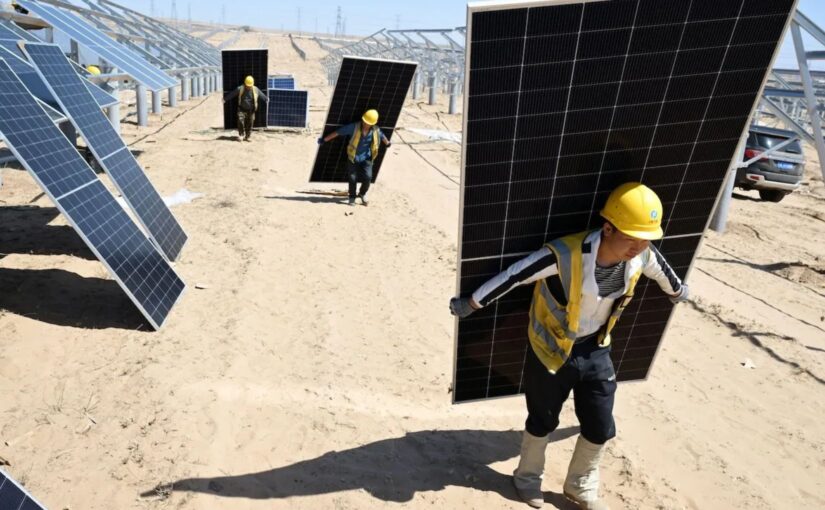
For the first time, the growth in China’s clean power generation has caused the nation’s carbon dioxide (CO2) emissions to fall despite rapid power demand growth.

The new analysis for Carbon Brief shows that China’s emissions were down 1.6% year-on-year in the first quarter of 2025 and by 1% in the latest 12 months.

Electricity supply from new wind, solar and nuclear capacity was enough to cut coal-power output even as demand surged, whereas previous falls were due to weak growth.

The analysis, based on official figures and commercial data, shows that China’s CO2 emissions have now been stable, or falling, for more than a year.

However, they remain only 1% below the latest peak, implying that any short-term jump could cause China’s CO2 emissions to rise to a new record.

Other key findings include:

  • Growth in clean power generation has now overtaken the current and long-term average growth in electricity demand, pushing down fossil fuel use.
  • Power-sector emissions fell 2% year-on-year in the 12 months to March 2025.
  • If this pattern is sustained, then it would herald a peak and sustained decline in China’s power-sector emissions.
  • The trade “war” initiated by US president Donald Trump has prompted renewed efforts to shift China’s economy towards domestic consumption, rather than exports.
  • A new pricing policy for renewables has caused a rush to install before it takes effect.
  • There is a growing gap that would need to be bridged if China is to meet the 2030 emissions targets it pledged under the Paris Agreement.

If sustained, the drop in power-sector CO2 as a result of clean-energy growth could presage the sort of structural decline in emissions anticipated in previous analysis for Carbon Brief.

The trend of falling power-sector emissions is likely to continue in 2025.

Continue reading Clean energy just put China’s CO2 emissions into reverse for first time

Lula: Latin America, the Caribbean and China show it is possible to fight climate change without sacrificing growth and justice

The Fourth Ministerial Meeting of the China-CELAC [Community of Latin American and Caribbean States] Forum, which was held in Beijing on May 13, 2025, saw Chinese President Xi Jinping joined by  Colombian President and current CELAC president Gustavo Petro, Brazilian President Luiz Inácio Lula da Silva, Chilean President Gabriel Boric, and President of the New Development Bank and former Brazilian President Dilma Rousseff in addressing the opening ceremony.

In his speech, President Lula da Silva said: “Over the past decade, ties between Latin America and the Caribbean and China have grown stronger. China is now CELAC’s second-largest trading partner and one of the region’s most important sources of foreign direct investment. Funds from Chinese financial institutions surpass the loans offered by the World Bank or the Inter-American Development Bank. Partnership with China has become a dynamic force in the regional economy.”

He added: “Chinese demand was one of the driving forces behind the growth we experienced at the beginning of the century. We made significant advances in reducing poverty and inequality. It was during this time that we finally looked around us and united to create UNASUR [Union of South American Nations] and CELAC.

 “During the COVID-19 pandemic, Chinese vaccines and medical supplies helped us protect our populations. Only through greater coordination among ourselves can we fully harness the potential of Sino–Latin American and Caribbean cooperation.

“This is especially evident in infrastructure. Chinese support is decisive for moving forward with highways, railways, ports, and transmission lines. But the economic viability of these projects depends on our ability to coordinate as a region and give these initiatives regional scale.”

He noted that, “For centuries, resources extracted from Latin America and the Caribbean enriched other parts of the world. We now have a chance to do things differently”, and particularly emphasised: “Latin America, the Caribbean, and China can show the world that it is possible to fight climate change without sacrificing economic growth and social justice. COP30, to be held in Belém, in the state of Pará, at the heart of the Amazon, aspires to be a turning point in the implementation of climate commitments and in building trust in collective solutions.”

In concluding, he said that he wanted to, “issue a call to all comrades of Latin America: There is no way out for any country on its own. We have 500 years of history that prove this. Either we unite among ourselves and seek partners willing to build a shared world with us, or Latin America will remain a region synonymous with poverty in today’s world.”

In his address, Colombian President Gustavo Petro called for a rethinking of humanity’s path through a new international cooperation paradigm that transcends the nation-state model and embraces a “dialogue of civilisations” as a political, historical and anthropological foundation for the global future.

He noted that: “A dialogue among civilisations cannot be imposed. It is a guiding principle for the relationship between CELAC and China. It is a possibility that China wants, and we want as well.” Challenging the ‘Clash of Civilisations’ theory propounded by the late US political scientist Samuel Huntington, the Colombian president instead advocated for an integrative vision as promoted by China – one in which cultural differences are not sources of conflict, but of collective human development as a political subject.

“How could there be fruitful dialogue if we don’t talk about clean energy, for example? If we don’t talk about decarbonisation? If we don’t speak as equals about how to achieve, through support for decarbonisation in North America, the possibility of prosperity in the South, and therefore, the possibility of mutual cooperation?

Continue reading Lula: Latin America, the Caribbean and China show it is possible to fight climate change without sacrificing growth and justice

China and LAC countries bound by a shared commitment to justice and a common pursuit of modernisation

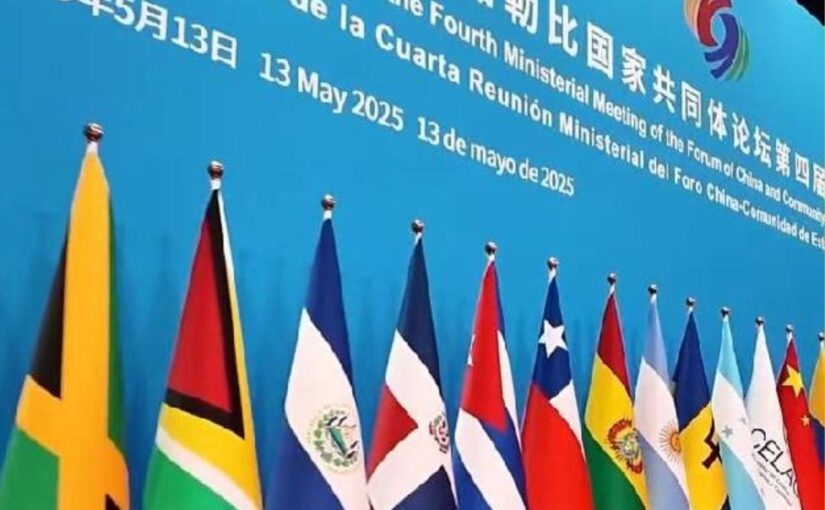
On May 13, 2025, the Fourth Ministerial Meeting of the China-CELAC [Community of Latin American and Caribbean States] Forum was held in Beijing, presided over by Chinese Foreign Minister Wang Yi and attended by foreign ministers and representatives of CELAC member states as well as heads of regional organisations.

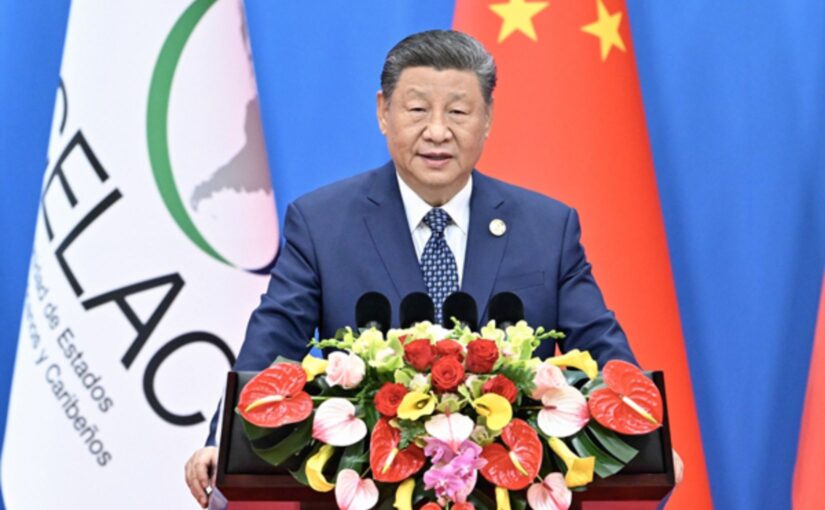
President Xi Jinping attended the opening ceremony and delivered a keynote address.

In the subsequent ministerial meeting, Wang Yi said that this year marks the tenth anniversary of the official launch of the China-CELAC Forum. Ten years ago, President Xi Jinping and Leaders of Latin American and Caribbean (LAC) countries jointly announced the establishment of the China-CELAC Forum and advocated for building a China-LAC community with a shared future. After a decade of dedicated efforts, the Forum has developed into a mature mechanism and an important platform for equal dialogue and mutually beneficial cooperation between China and LAC countries, adding new dimensions to the China-LAC comprehensive cooperative partnership and injecting fresh momentum into the building of a China-LAC community with a shared future.

He added that China and LAC countries are separated by a vast ocean. What binds the two sides together? Not a geopolitical chessboard, nor a game of big power rivalry, but a shared commitment to fairness and justice and a common pursuit of modernisation. China-LAC cooperation rejects bloc confrontation and advocates for openness and win-win results. It has set a new example for building a new type of international relations and injected new impetus into cooperation among the Global South. History and reality have shown that in the face of unilateralism and hegemony, compromise and appeasement offer no way out, and only by standing united can respect be earned. As developing countries and members of the Global South, China and LAC countries should work together to safeguard their legitimate rights and interests.

The meeting adopted the Beijing Declaration of the Fourth Ministerial Meeting of the China-CELAC Forum and the China-CELAC Joint Action Plan for Cooperation in Key Areas (2025-2027).

Just prior to the meeting, Wang Yi released an article, entitled ‘Planning Together for Development and Revitalisation, Building Together a China-LAC Community with a Shared Future’.

He wrote that in the 10 years since the forum was established, Panama, the Dominican Republic, El Salvador, Nicaragua and Honduras established or resumed diplomatic relations with China. The one-China principle has increasingly become the consensus of regional countries. To date, China has established different types of partnerships with 16 countries in the region, including the China-Cuba community with a shared future and the China-Brazil community with a shared future for a more just world and a more sustainable planet.

The Global Development Initiative has gained wide support of regional countries, and more than 20 countries have synergised development strategies with China under the Belt and Road cooperation framework. The trade volume between China and LAC countries doubled in the past decade, reaching a historic milestone of US$518.4 billion in 2024.

More than 200 infrastructure projects and multiple industrial capacity cooperation projects built by China have generated more than one million jobs for local people.

China has so far provided LAC countries with 17,000 government scholarships and around 13,000 training opportunities in China, signed 26 cooperation documents on education with 19 regional countries, and opened 68 Confucius Institutes or Classrooms in 26 regional countries.

China-LAC cooperation is a natural choice in line with the prevailing trend of the world. The collective rise of the Global South is a distinctive hallmark of the great transformation in the world. China and LAC countries are important members of the Global South. Increased cooperation between the two sides sends a strong message of the Global South seeking strength through unity and aligns with the dominant trend toward a multipolar world. This not only injects new substance into China-LAC relations but also makes new contributions to a more fair and equitable international order.

China-LAC cooperation is a natural choice to pursue a shared future. China and LAC countries have supported each other in their respective struggles against imperialism and colonialism and in our fight for national liberation. They have also supported each other in exploring development paths befitting their respective national conditions. Deeper cooperation between them has created growth drivers for both sides. During the COVID-19 pandemic, China and LAC countries went all-out supporting each other. History and reality have consistently demonstrated that building a China-LAC community with a shared future is a common endeavour of the willing that is underpinned by concrete actions.

Continue reading China and LAC countries bound by a shared commitment to justice and a common pursuit of modernisation

China expresses deep condolences over former Uruguayan president Jose Mujica’s passing

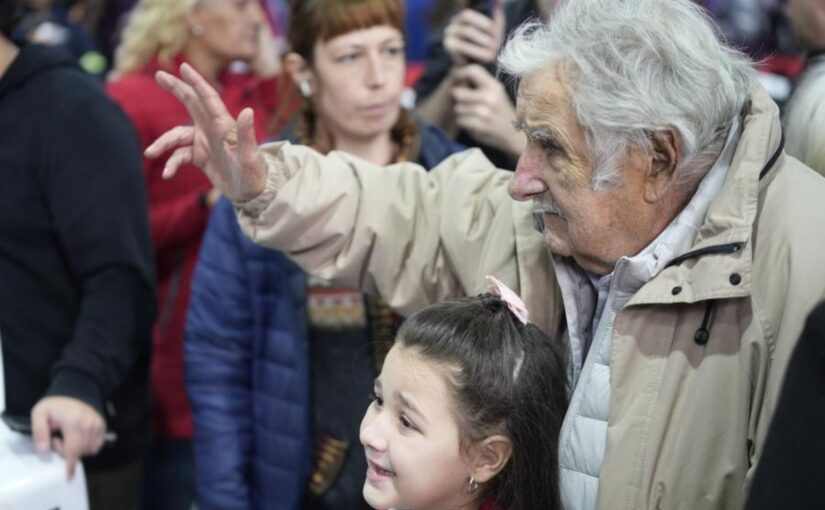
China has expressed deep condolences on the death of former Uruguayan President José “Pepe” Mujica, who died on May 13, at the age of 89. He had earlier been diagnosed with oesophageal cancer.

Chinese President Xi Jinping personally extended his condolences to Uruguayan President Yamandu Orsi, noting that Mujica dedicated his entire life to the well-being of the Uruguayan people and was deeply loved by them. Xi wrote that the Chinese people have lost an old and good friend, observing that Mujica had long been committed to the development of China-Uruguay relations and made positive contributions to the cause of friendship between China and Uruguay.

Foreign Ministry spokesperson Lin Jian described Mujica as a prominent leader of Uruguay, deeply respected and loved by the Uruguayan people, adding that he was also an old and good friend of the Chinese people.

President Yamandú Orsi, to whom Mujica was a political mentor, wrote on the social media platform X: “Thank you for everything you gave us and for your deep love for your people.”

In the 1960s, Mujica helped found the National Liberation Movement-Tupamaros (MLN-T), more commonly known simply as the Tupamaros, a Marxist-Leninist group which, influenced by the Cuban revolution, took the road of armed struggle.

During this period, Mujica was captured four times. On one such occasion, in 1970, he was shot six times and nearly died. He escaped from prison twice, on one occasion through a tunnel with 105 other Tupamaro prisoners.

During the more than 14 years he spent in prison during the 1970s and 1980s, he was tortured and spent most of that time in harsh conditions and solitary confinement, until he was freed in 1985 when the military dictatorship ended.

Along with other former Tupamaros he was instrumental in the 1989 founding of the Movement of Popular Participation (MPP), which became and remains the largest party in Uruguay’s Frente Amplio (Broad Front) left-wing coalition.

He was elected as a parliamentary deputy in 1994 and as a senator in 1999. He served as President of Uruguay, 2010-2015, during which time he pursued an anti-imperialist foreign policy, strengthened the trade unions, significantly increased workers’ wages, and  implemented many progressive social and economic reforms.

Following his presidency, he continued to serve as a senator, until retiring from public office in 2020.

Throughout, he was known for his extremely simple and humble lifestyle. In 2022, he told Al Jazeera: “I believe that politicians should live like the majority of their people, not like how the privileged minority lives.”

The following articles were originally published by Xinhua and Global Times.

Xi extends condolences over death of Uruguay’s former president

Chinese President Xi Jinping on Friday extended condolences to Uruguayan President Yamandu Orsi over the death of former Uruguayan President Jose Mujica.

In his message, Xi expressed deep condolences on behalf of the Chinese government and people, and extended sincere sympathies to Mujica’s family and the people of Uruguay.

As a renowned leader of Uruguay, Mujica dedicated his entire life to the well-being of the Uruguayan people and was deeply loved by them, enjoying a high reputation in the international community, Xi said in the message.

Mujica had long been committed to the development of China-Uruguay relations and made positive contributions to the cause of friendship between China and Uruguay, Xi said, adding that the Chinese people have lost an old and good friend.

Xi said he attaches great significance to developing China-Uruguay relations and looks to work with President Orsi to continue promoting the China-Uruguay comprehensive strategic partnership.


China expresses deep condolences over former Uruguayan president Jose Mujica’s passing: FM

In response to a question from Spanish news agency Agencia EFE regarding the passing of former Uruguayan president Jose “Pepe” Mujica on Tuesday, Chinese Foreign Ministry spokesperson Lin Jian stated on Wednesday that Mujica was a prominent leader of Uruguay, deeply respected and loved by the Uruguayan people. He was also an old and good friend of the Chinese people and made positive contributions to the development of China-Uruguay relations and mutually beneficial cooperation. 

We express our deep condolences over his unfortunate passing and extend our sincere sympathies to his family and the people of Uruguay, said Lin.

Xi Jinping: Writing a new chapter in building a China-LAC Community with a Shared Future

The Fourth Ministerial Meeting of the China-CELAC [Community of Latin American and Caribbean States] Forum was held in Beijing on May 13, 2025.

Of the 33 member states of CELAC, 28 attended, along with six regional organisations. Besides the 26 countries in the region with diplomatic relations with China, two of those still maintaining so-called ‘diplomatic relations’ with the Taiwan authorities, namely Saint Lucia and Haiti, also attended.

Reporting on the message of greetings sent by President Xi Jinping to the ninth summit meeting of CELAC Heads of State and Government, held in the Honduran capital Tegucigalpa on April 9, we drew attention to the significance of his clear statement that all member states would be welcome to attend the Beijing meeting.

Xi Jinping attended the opening ceremony of the Beijing meeting and delivered a keynote address.

He noted that: “Although China and the LAC [Latin America and Caribbean] region are geographically distant, the bonds of our friendship stretch back through centuries… From the 1960s onward, as New China established diplomatic ties with some LAC countries, exchanges and cooperation between the two sides became closer and closer. Since the turn of the century and in particular in recent years, China and LAC countries have ushered in a historic era of building a shared future.”

He went on to say that: “We stand shoulder to shoulder and support each other… In the 1960s, mass rallies and demonstrations took place across China in support of the Panamanian people’s rightful claim to sovereignty over the Panama Canal. In the 1970s, during the Latin American campaign for 200-nautical-mile maritime rights, China voiced its resolute and unequivocal support for the legitimate demands of developing countries. For 32 consecutive times since 1992, China has consistently voted for the United Nations General Assembly resolutions calling for an end to the US embargo against Cuba.

“We unite in tough times to conquer challenges through mutual support. China and LAC countries have collaborated on disaster prevention, mitigation and relief and on joint response to hurricanes, earthquakes and other natural disasters. Since 1993, China has dispatched 38 medical teams to the Caribbean. When the pandemic of the century struck, China was among the first to offer assistance to LAC countries, providing over 300 million doses of vaccines and nearly 40 million units of medical supplies and equipment, and sending multiple teams of medical experts. All this helped protect the lives of hundreds of millions across the region.

“We uphold solidarity and coordination and rise to global challenges with resolve. Together, China and LAC countries champion true multilateralism, uphold international fairness and justice, advance global governance reform, and promote multipolarisation of the world and greater democracy in international relations. We have worked together to address global challenges like climate change, and advance progress in global biodiversity governance. China and Brazil jointly issued a six-point common understanding on the political settlement of the Ukraine crisis, which has been endorsed by more than 110 countries, contributing our wisdom and strength to resolving international hotspot issues.”

Regarding the current situation, Xi said: “The century-defining transformation is accelerating across the globe, with multiple risks compounding one another. Such developments make unity and cooperation among nations indispensable for safeguarding global peace and stability and for promoting global development and prosperity. There are no winners in tariff wars or trade wars. Bullying or hegemonism only leads to self-isolation. China and LAC countries are important members of the Global South. Independence and autonomy are our glorious tradition. Development and revitalisation are our inherent right. And fairness and justice are our common pursuit. In the face of seething undercurrents of geopolitical and bloc confrontation and the surging tide of unilateralism and protectionism, China stands ready to join hands with our LAC partners to launch five programs that advance our shared development and revitalisation and contribute to a China-LAC community with a shared future.”

Continue reading Xi Jinping: Writing a new chapter in building a China-LAC Community with a Shared Future

US war on China, a long time coming

The following article by W. T. Whitney Jr, originally published in People’s World, connects the Trump administration’s hostility towards China back to the US-led campaign of containment and encirclement starting in 1949 with the proclamation of the People’s Republic.

While the current state of relations between the two countries is often described as a New Cold War, Whitney points out that it has a significant military component, with 400 US bases surrounding China with ships, missiles and troops. Furthermore, “US allies in the Western Pacific—Japan and South Korea in the North, Australia and Indonesia in the South, and The Philippines and various islands in between—have long hosted U.S. military installations and/or troop deployments. Nuclear-capable planes and vessels are at the ready. US Navy and Air Force units regularly carry out joint training exercises with the militaries of other nations.”

Vast investment is being ploughed into weapons development in the US, and Trump-supporting producers of advanced modern weaponry (such as Peter Thiel) “exert sufficient influence over government decision-making to ensure happy times for the new breed of weapon producers”.

The article concludes with a call for the anti-war movement in the West to step up in its opposition to war on China, and its efforts to build stronger people-to-people links between the West and China:

Will resistance to war against China end up stronger and more effective than earlier anti-war mobilizations in the post-Vietnam War era?  A first step toward resisting would be to build awareness of the reality that war with China may come soon. General knowledge of relevant history should be broadened, with emphasis on how U.S. imperialism works and on its capitalist origins. Anyone standing up for peace and no war ought to be reaching out in solidarity with socialist China.

Despite all the hype about a possible “breakthrough” in the U.S.’ trade war with China due to Trump’s tariff retreats, the reality is that the movement toward an actual war with China accelerates.

The public, focused on troubles currently upending U.S. politics, does not pay much attention to a war that has actually been on the way for decades.

The watershed moment of course came all the way back in 1949 with the victory of China’s socialist revolution. Amid resurgent anti-communism in the United States, accusations flourished of “who ‘lost’ China.”

Loss in U.S. eyes happened in China with the dawning of national independence and promise of social change. In 1946, a year after the Japanese war ended, U.S. Marines, allied with Chinese Nationalist forces, the Kuomintang, were fighting the People’s Liberation Army in Northeast China.

The U.S. government that year was delaying the return home of troops who fought against Japan. Soldier Erwin Marquit, participant in “mutinies” opposing the delay, explained that the U.S. wanted to “keep open the option of intervention by U.S. troops … [to support] the determination of imperialist powers to hold on to their colonies and neocolonies,” China being one of these.

Continue reading US war on China, a long time coming

Keith Bennett: WW2 victory is inseparable from the heroic struggle of the Soviet and Chinese peoples

The Workers Party of Britain (WPB) packed London’s Bolivar Hall, the cultural premises of the Venezuelan Embassy, on Saturday May 10 for its celebration of the 80th anniversary of the victory over fascism in the European theatre of World War II.

The meeting was attended by Dzmitry Kozlovsky, Chargé d’ Affaires, and Andrei Miskevich , Counsellor, of the Embassy of the Republic of Belarus; Alexander Gusarov, Minister Counsellor and Deputy Head of Mission, and Timofey Kunitskiy, First Secretary, of the Embassy of the Russian Federation; Minister Zhao Fei and Zhen Sitong from the Embassy of the People’s Republic of China; and Wilfredo Hernández Maya, Counsellor of the Embassy of the Bolivarian Republic of Venezuela. 

The meeting heard a message of greetings from Workers Party leader George Galloway, filmed in Moscow’s Red Square, where he was attending the celebrations.

Chaired and introduced by WPB General Secretary Paul Cannon, the meeting was addressed by the diplomatic representatives of Belarus, Russia and Venezuela; Mick Stott from the WPB’s Veterans Group and the No 2 NATO Campaign; Louise Scrivens from the No Conscription League; Jesse Williams from the British Preparatory Committee for the World Festival of Youth; Shanaz Saddique, WPB National Organiser; and Keith Bennett of Friends of Socialist China, who spoke on the war in Asia.

Keith began by congratulating the WPB on organising the meeting and thanking them for the invitation. Extending our greetings to the diplomats present, Keith recalled that FOSC had held its own celebration of the 75th anniversary of the founding of the People’s Republic of China in this same hall in September last year. Expressing his thanks once again, he noted that both events showed how the comrades of the revolutionary government of Venezuela, despite the outrageous pressures, aggression, sanctions and threats to which their country has been and is still subjected, can always be relied on for their support, collaboration and friendship in the best traditions of internationalism.

The following is the text of the main body of Keith’s speech.

Today’s meeting is a timely initiative – 80 years on, the struggle against fascism, against imperialist war and genocide, for the rights of nations, and for a people’s peace and a better life for working people have lost none of their poignancy or urgency.

It is right that we remember this anniversary. And that we remember it from the standpoint of the working class rather than just that of the ruling circles. The war touched the lives of every family in this country just as it did those of every family in all the countries that were swept into its maelstrom. And the victory was the result of the broadest possible unity of democratic forces worldwide.

But whilst the people of every country, including the progressive and democratic forces in the axis powers themselves, played their part, above all, this victory was inseparable from the heroic exploits, struggle and sacrifice of the great Soviet people of all nationalities and the great Chinese people.

Today, we celebrate the victorious end of the war in Europe, but the war in East Asia and the Pacific still had more than three months to run and whilst it was clear that Japanese militarism would be defeated, nobody could be sure how long that would take and how many lives it would still claim. That was the sobering reality to which people awoke after the greatly deserved revelry of the first VE Day.

So, in being asked to speak about the war in the east on this occasion, I’ll try to draw out the essential relationship between what were the two key fronts of a single united struggle. Fronts that were mutually reinforcing and inseparable. And at the heart of this single struggle was the combat alliance, the friendship forged in blood, between the peoples of China, Russia and the other constituent republics of the USSR.

The anti-fascist war in China started earliest and lasted the longest. Japanese imperialism, which had first embarked on the road of aggression against China in the nineteenth century, occupied China’s three northeastern provinces in 1931, creating the puppet state of Manchukuo. In 1937, Japan began an all-out war of aggression against China. In the course of 14 years, China suffered over 35 million casualties.  As Xi Jinping put it in his speech marking the 70th anniversary of victory:

“The victory of the Chinese People’s War of Resistance Against Japanese Aggression is the first complete victory won by China in its resistance against foreign aggression in modern times. This great triumph crushed the plot of the Japanese militarists to colonise and enslave China and put an end to China’s national humiliation of suffering successive defeats at the hands of foreign aggressors in modern times.”

He added: “During the war, with huge national sacrifice, the Chinese people held their ground in the main theatre in the East of the World Anti-Fascist War, thus making a major contribution to its victory.”

And as then Chinese leader Hu Jintao put it 10 years previously:

“The War of Resistance Against Japanese Aggression constitutes a glorious page in the history of the World Anti-Fascist War, for it broke out much earlier and lasted the longest. For a long time, we Chinese contained and pinned down the main forces of Japanese militarism in the China theatre and annihilated more than 1.5 million Japanese troops. This played a decisive role in the total defeat of the Japanese aggressors. The war of resistance lent a strategic support to battles of China’s allies, assisted the strategic operations in the Europe and Pacific theatres, and restrained and disrupted the attempt of Japanese, German and Italian fascists to coordinate their strategic operations… The victory of the war in China sets a shining example of the weak vanquishing the strong for the people all over the world and boosted the confidence and morale of the oppressed and victimised nations to carry on their liberation wars.”

In a word, by their heroic struggle the Chinese people not only rose up to save their nation and civilisation. By pinning down huge numbers of aggressor troops, they prevented Japan from attacking the Soviet Union, thereby ensuring that the Red Army never had to fight on two fronts simultaneously, something that was absolutely crucial to expediting both a victorious conclusion to the war in Europe but also to an overall and decisive victory over the axis powers as a whole.

In 1931, Soviet leader JV Stalin uttered these prophetic words: ““We are 50-100 years behind the advanced countries. We have to close that gap in 10 years. Either we do it or we will be wiped out.”

In putting matters in this way, Stalin was mindful of threats to both the USSR’s East and West.

Since the emergence of Japan as a capitalist nation after the bourgeois revolution of the late 1860s known as the Meiji Restoration, the ruling class of Japan, a country lacking in most raw materials, had cast covetous eyes at the Far East of Russia and at Siberia, with its vast area, small population, but almost limitless mineral and natural wealth.

In 1904, Japan launched a war against Russia, winning a stunning victory the next year. This served notice to the whole world of the emergence of Japan as a major imperialist power, whilst the shock of Russia’s defeat was a major contributory factor to the Russian Revolution of 1905.

Following the October Revolution, Japan joined all the imperialist powers in the war of intervention against the infant Soviet state. In 1918, Japan occupied Russia’s far eastern provinces, including the port of Vladivostok, and parts of Siberia. The Red Army forced their withdrawal in 1922.

Continue reading Keith Bennett: WW2 victory is inseparable from the heroic struggle of the Soviet and Chinese peoples