There is growing need in the West to learn from successes of China’s Five-Year Plans

This article by Keith Lamb, originally published in Global Times, explains the role of Five-Year Plans in China’s economic development. These plans “function as comprehensive blueprints for national social and economic development. They outline goals, strategies, and priorities to address evolving historical challenges. In doing so, they align society toward the common good, chart a course for a better future and function as instruments for strengthening China’s democracy.”

Westerners are primed to think of socialist planning as being a highly bureaucratic and top-down affair. In reality, however, “Chinese citizens are invited to share their suggestions, concerns, and aspirations”, and “experts from a wide range of fields are consulted to ensure the plan’s feasibility”.

Keith explains how, for large-scale and long-term projects, directed toward meeting the needs of the population, state-led planning works far better than laissez-faire neoliberal economics. “Recognising China’s long-term planning as a key instrument in building a democratic reality and a sustainable future, it comes as no surprise that China now leads the world in green technology, electric vehicles, high-speed rail, and desert reclamation. Such achievements would not have been possible if capital, driven by short-term profit cycles, dominated the state at the cost of democracy and environmental well-being.”

The article notes that the current (14th) Five-Year Plan, which draws to a close this year, “has propelled China to the forefront of numerous technologies, particularly in green innovation. Consumer choice has expanded dramatically, and the countryside now boasts modern infrastructure, a thriving tourism sector, and advanced agricultural practices.”

As more Westerners begin to see beyond the corporate media narratives that demonize China, there is a growing need to learn from its successes – or risk continued decline. By prioritizing the common good, China’s Five-Year Plans are democratic, delivering material, social, and increasingly cultural improvements for the majority, not just a select elite.

As China’s 14th Five-Year Plan nears completion, the country is already setting its sights on the next plan, which Chinese President Xi Jinping has stated “must focus on the goal of basically realizing socialist modernization, with a view to building a great country and advancing national rejuvenation” at a Wednesday symposium on China’s economic and social development in the 15th Five-Year Plan period (2026-2030).

China’s Five-Year Plans function as comprehensive blueprints for national social and economic development. They outline goals, strategies, and priorities to address evolving historical challenges. In doing so, they align society toward the common good, chart a course for a better future and function as instruments for strengthening China’s democracy.

Continue reading There is growing need in the West to learn from successes of China’s Five-Year Plans

Xi Jinping meets with leaders of Cuba, Venezuela, Slovakia, Serbia, Myanmar and Vietnam in Moscow

On May 9, during his state visit to Russia and participation in the commemoration of the 80th anniversary of the victory of the Soviet Union in the Great Patriotic War, Chinese President Xi Jinping held bilateral meetings with a number of his counterparts.

Meeting with President of Cuba Miguel Díaz-Canel Bermúdez, Xi Jinping pointed out that in recent years, he has held multiple meetings with Comrade President Miguel Díaz-Canel Bermúdez and jointly led China-Cuba relations into a new stage featuring deeper political mutual trust, closer strategic coordination and stronger public support. This year marks the 65th anniversary of the establishment of diplomatic relations between China and Cuba. China is ready to work with Cuba to further strengthen their ironclad friendship, build a closer China-Cuba community with a shared future, and set an example of solidarity and cooperation between socialist countries and sincere interaction between developing countries. China firmly supports Cuba in upholding its national sovereignty, opposing external interference and blockade, and advancing its economic and social development. As important members of the Global South, the two sides should strengthen coordination and cooperation within such frameworks as BRICS and the China-CELAC [Community of Caribbean and Latin American States] Forum, jointly oppose power politics, unilateralism and bullying, and uphold international fairness and justice.

Miguel Díaz-Canel Bermúdez said that Cuba and China are close friends and brothers. Cuba appreciates China’s long-standing and strong support for Cuba’s economic and social development. Cuba firmly adheres to the one-China principle and is willing to strengthen mutually beneficial cooperation with China, enhance people-to-people friendly exchanges, strengthen coordination and collaboration in international and regional affairs, and advance the building of a community with a shared future, so as to promote greater development of bilateral relations.

Meeting with Venezuelan President Nicolás Maduro Moros, Xi Jinping said, China and Venezuela are good partners of mutual trust and common development. The two sides have forged an ironclad friendship amid the evolving international landscape. Since the two countries elevated bilateral relations to an all-weather strategic partnership in 2023, exchanges across various fields and at all levels have been vigorous, with continuous growth in bilateral trade and new progress in investment cooperation and people-to-people exchanges. The China-Venezuela friendship has become more deeply rooted in the hearts of the people. China has always viewed and developed relations with Venezuela from a strategic and long-term perspective. It will, as always, firmly support Venezuela in safeguarding state sovereignty, national dignity and social stability. China is ready to work with Venezuela to enhance the exchange of governance experiences, continue to deepen practical cooperation in various areas and take bilateral relations to new heights, so as to deliver more benefits to the two peoples.

Nicolás Maduro Moros said, China is a great friend of Venezuela, expressing his gratitude for China’s longstanding and selfless support in safeguarding Venezuela’s national sovereignty and advancing its economic and social development. Venezuela is looking forward to strengthening its all-weather strategic partnership with China and deepening cooperation in trade, energy, agriculture, science and technology, education and other fields for more tangible results, so as to deliver more benefits to the two peoples.

Meeting with Prime Minister of Slovakia Robert Fico, Xi Jinping noted that promoting the all-round, in-depth, and high-level development of China-Slovakia relations serves the fundamental interests of both peoples and accords with the historical trend of openness, cooperation, and mutual benefit. Xi Jinping said that the important common understandings they reached during Robert Fico’s visit to China last November are being actively implemented, and the China-Slovakia strategic partnership has moved into a “fast lane”. Both sides should continue to deepen traditional friendship, expand exchanges and cooperation in various fields, pursue high-quality Belt and Road cooperation, and promote the steady and sustained development of China-Slovakia relations and China-Europe relations. China welcomes Slovakia’s participation as the guest of honor at the 4th China-CEEC [Central and East European Countries] Expo, which will help boost exports of high-quality Slovak products to China.

Robert Fico said that deepening the Slovakia-China strategic partnership is among the top priorities of Slovakia’s foreign policy. Noting that a sound and stable EU-China relationship serves the common interests of both sides, he added that Slovakia is committed to promoting the development of EU-China relations. Slovakia supports major initiatives proposed by China, such as building a community with a shared future for mankind and appreciates China’s positions on and constructive role in issues related to Ukraine and the Middle East. The Slovak side is willing to join hands with China to uphold multilateralism, safeguard free trade rules, and maintain the stability of global industrial and supply chains.

Meeting with Serbian President Aleksandar Vučić, Xi Jinping pointed out that over the past year, the building of a China-Serbia community with a shared future in the new era has got off to a good start with notable achievements. As profound changes unseen in a century unfold at an accelerated pace across the world amid multiple overlapping risks and challenges, China and Serbia should maintain strategic resolve, concentrate on managing their own affairs well, carry forward the ironclad friendship, deepen and expand mutually beneficial cooperation, and promote the building of a China-Serbia community with a shared future with high quality.

Xi Jinping stressed that 80 years ago, the peoples of China and Serbia made important contributions to the victory on the Asian and European battlefields in the World Anti-Fascist War, respectively. China is ready to work with all countries in the world, including Serbia, to unite and cooperate to meet challenges, jointly safeguard world peace and international fairness and justice, safeguard the achievements of economic globalisation, and promote the building of a community with a shared future for mankind.

Continue reading Xi Jinping meets with leaders of Cuba, Venezuela, Slovakia, Serbia, Myanmar and Vietnam in Moscow

Xi attends Russia’s Victory Day celebrations

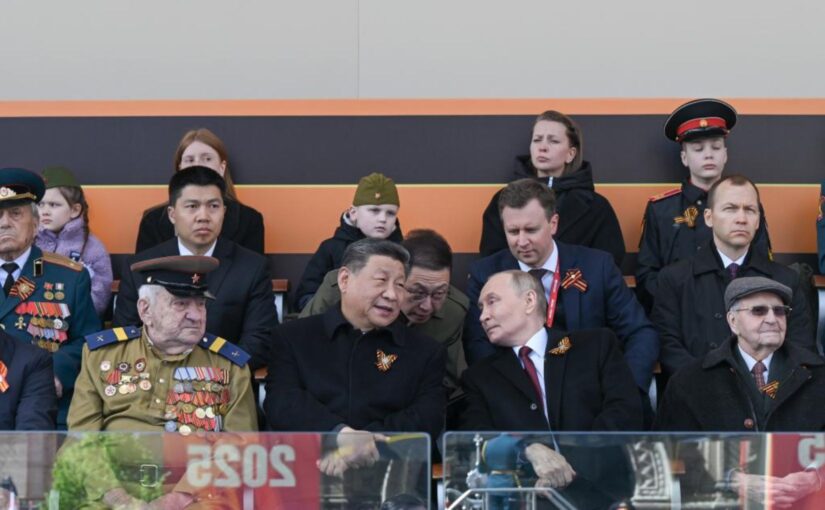
Following an intensive program of talks with Russian President Vladimir Putin on May 8, Chinese President Xi Jinping attended the grand parade marking the 80th anniversary of the Soviet Union’s victory in the Great Patriotic War against Nazi Germany on May 9 in Red Square as the chief guest of honour.

Joining the Chinese and Russian presidents were the national leaders of 26 other countries, as follows:

  • Abkhazia
  • Armenia
  • Belarus
  • Republika Srpska in Bosnia and Herzegovina
  • Brazil
  • Burkina Faso
  • Republic of Congo
  • Cuba
  • Egypt
  • Equatorial Guinea
  • Ethiopia
  • Guinea Bissau
  • Kazakhstan
  • Kyrgyzstan
  • Mongolia
  • Myanmar
  • Palestine
  • Serbia
  • Slovakia
  • South Ossetia
  • Tajikistan
  • Turkmenistan
  • Uzbekistan
  • Venezuela
  • Vietnam
  • Zimbabwe

Additionally, high level representatives came from a number of other countries, including India, Indonesia, Nicaragua, and South Africa, as well as from international organisations.

The leader of Laos had to cancel his planned visit after succumbing to a serious COVID infection.

Military units from a number of countries also took part in the parade namely:

Members of the Commonwealth of Independent States who participated in the Great Patriotic War as constituent republics of the Soviet Union:

  • Azerbaijan
  • Belarus
  • Kazakhstan
  • Kyrgyzstan
  • Tajikistan
  • Turkmenistan
  • Uzbekistan

Friendly Countries:

  • China
  • Vietnam
  • Laos
  • Mongolia
  • Myanmar
  • Egypt

The largest contingent of troops was sent by China.

Additionally, following the parade, Vladimir Putin met with a group of military officers from the Democratic Republic of Korea (DPRK) who had taken part in the recent battles to liberate Kursk from Ukrainian aggression.

In his speech at the parade, President Putin said:

“Today, we are all united by the feelings of joy and grief, pride and gratitude, and admiration for the generation that crushed Nazism and won freedom and peace for all humanity at the cost of millions of lives.

“We remember the lessons of World War II and will never agree with the distortion of those events or attempts to justify the murderers and slander the true victors.

“Our duty is to defend the honour of the Red Army soldiers and commanders, and the heroism of fighters of different ethnic backgrounds who will forever remain Russian soldiers in world history.

Continue reading Xi attends Russia’s Victory Day celebrations

Putin: It is Russia’s strategic choice to unswervingly advance relations with China

Chinese President Xi Jinping visited Russia from May 7-10 to pay a state visit as well as to attend the celebrations marking the 80th anniversary of the Victory in the Great Patriotic War of the Soviet Union at the invitation of his Russian counterpart Vladimir Putin.

On arriving at Vnukovo International Airport in Moscow on the evening of the 7th, Xi delivered a written statement in which he noted that China and Russia are good neighbours always being there for each other, true friends sharing weal and woe, and good partners helping each other succeed. The independent, mature and resilient China-Russia relationship not only brings great benefits to the people of the two countries but also makes important contributions to maintaining global strategic stability and promoting an equal and orderly multipolar world. This year marks the 80th anniversary of the victory of the World Anti-Fascist War and the founding of the United Nations. As major countries in the world and permanent members of the United Nations Security Council, China and Russia will join hands to defend the outcomes of the victory of World War II, resolutely oppose hegemonism and power politics, practice true multilateralism, and work for a more just and equitable global governance system.

President Xi Jinping added that he looks forward to having in-depth communication with President Vladimir Putin on bilateral relations, practical cooperation and international and regional issues of common interest and concern, which will inject strong impetus into promoting the development of the China-Russia comprehensive strategic partnership of coordination for the new era. He also looks forward to joining the leaders of many countries and the Russian people in cherishing the memory of those who dedicated their lives to the victory of the World Anti-Fascist War and jointly sending a strong message of safeguarding international fairness and justice.

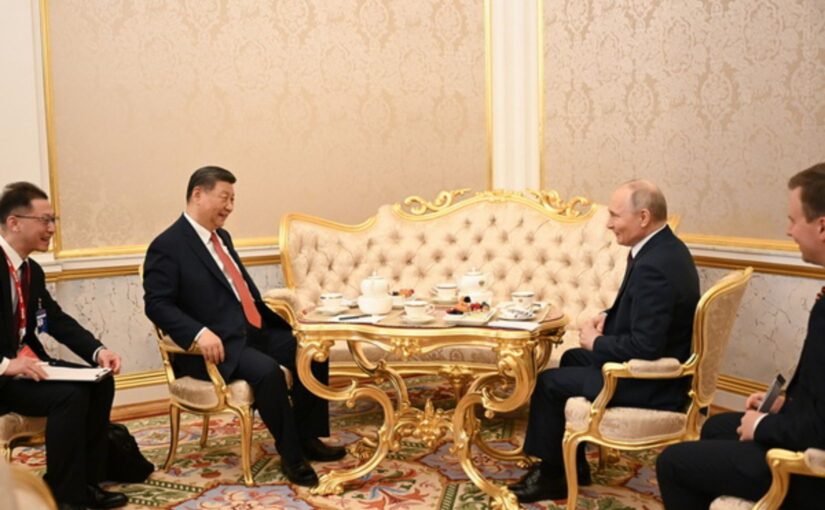
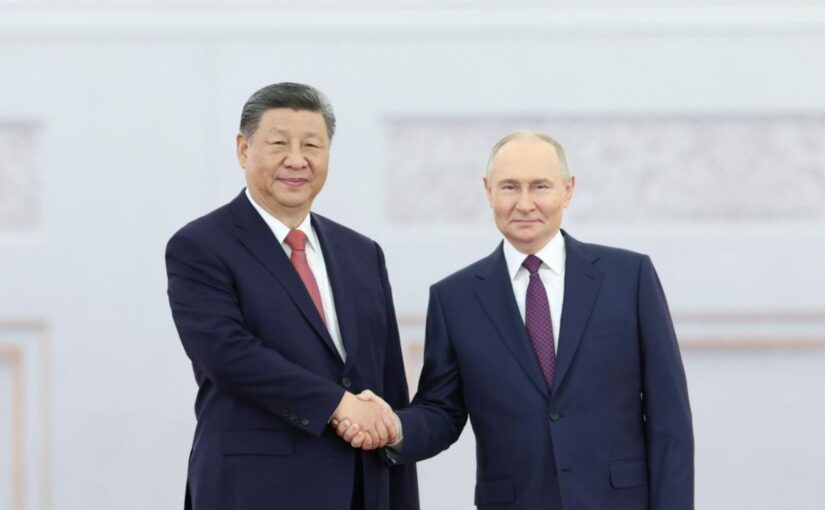
On the morning of May 8, the two Presidents held talks in the Kremlin.

President Xi stressed that 80 years ago, the Chinese and Russian peoples made immense sacrifice and secured a great victory. Their pivotal contribution to world peace and human progress is a shining chapter in the annals of history. Today, in the face of unilateralist countercurrents, bullying and acts of power politics, China is working with Russia to shoulder the special responsibilities of major countries and permanent members of the UN Security Council with courage and conviction, uphold the correct historical perspective on WWII, safeguard the authority and standing of the UN, firmly defend the victorious outcome of WWII, resolutely defend the rights and interests of China, Russia and all other developing countries, and jointly promote an equal and orderly multipolar world and a universally beneficial and inclusive economic globalisation.

He added that China and Russia should keep to the overall direction of cooperation, steer clear of external interference, and provide a more solid foundation and more robust momentum for cooperation. The two sides should leverage their complementary resource endowments and industrial systems to expand high-quality, mutually beneficial cooperation in areas such as trade, energy, agriculture, aviation and aerospace, and artificial intelligence. They should build a high-standard framework for connectivity by synergising Belt and Road cooperation and the Eurasian Economic Union. The potential of the China-Russia Years of Culture should be fully unleashed, with greater cooperation in education, film, tourism, sports, and subnational exchanges to foster closer people-to-people bonds. China and Russia should engage in closer coordination and cooperation on multilateral platforms such as the UN, the Shanghai Cooperation Organisation (SCO), and BRICS to maintain Global South solidarity, uphold true multilateralism, and spearhead global governance reforms in the right direction.

President Putin expressed a warm welcome to President Xi for his state visit to Russia and participation in the celebrations marking the 80th anniversary of the victory of the Soviet Union’s Great Patriotic War. This visit is of great significance, as it will not only inject strong momentum into the development of Russia-China relations but also help safeguard the victorious outcome of WWII.

Putin went on to say that the Russia-China relationship is built on equality and mutual respect. It is neither directed against any third party nor swayed by any transient matters. It is Russia’s strategic choice to unswervingly advance relations and expand mutually beneficial cooperation with China.

Continue reading Putin: It is Russia’s strategic choice to unswervingly advance relations with China

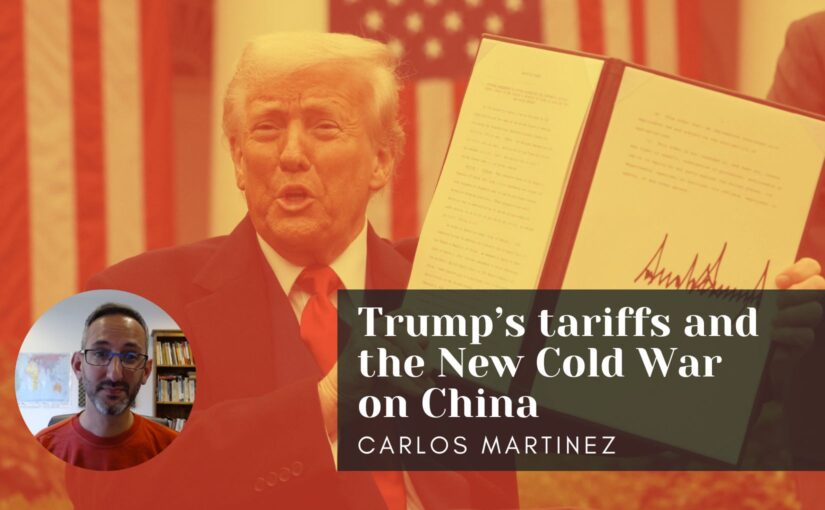
Trump’s tariffs and the New Cold War on China

The article below is based on a speech by Friends of Socialist China co-editor Carlos Martinez to a webinar held by the Black Liberation Alliance on the subject of ‘Trump’s Tariff Wars on the Global South and the New Cold War’, held on 8 May 2025.

Carlos positions the tariff war within the broader US-led New Cold War on China. The tariffs are essentially “a continuation and a deepening of Obama’s so-called Pivot to Asia, designed by Hillary Clinton and first announced in 2011”.

The Trump administration’s justifications for its tariff war – that it will result in re-industrialisation of the US and increase in income – are patent nonsense. “In fact, US treasury secretary Scott Bessent stated openly last month that the objective for the tariffs is to persuade Japan, South Korea and India to participate in a ‘grand encirclement’ strategy to isolate and weaken China.”

Carlos writes that “the US is seeking to punish China for its success in building a modern economy, for developing its sovereignty, and for its refusal to bow down to US hegemony… China’s rise disrupts the whole imperialist system. It gets in the way of the relationship the US wants to have with the rest of the world, whereby it can design the global economic and financial system in its own interests.”

The article observes that the tariff war has no chance of being successful: “The US ruling class wants to isolate China, but actually it will end up isolating itself.” However, with the failure of the tariff war comes the possibility of further dangerous developments:

The obvious concern following on from that is that US imperialism’s next weapon against China may be not be a metaphorical one; that the New Cold War will turn hot. Anti-war movements in the West need to be highly vigilant on that score.

The other speakers on the panel were Radhika Desai (International Manifesto Group), Margaret Kimberley (Black Agenda Report) and Myriam Kane (Black Liberation Alliance).

The first thing to say about the Trump administration’s tariff war is that it is primarily designed to weaken, undermine and isolate the People’s Republic of China.

It’s part of a broader program of “decoupling” from China and a broader New Cold War on China – a system of hybrid warfare incorporating economic measures, diplomatic measures and propaganda measures, along with a significant military component: the deployment of hundreds of thousands of troops to the Pacific region; the US military bases in the Philippines, Guam, Okinawa, Japan, South Korea, Australia; the deployment of sophisticated weapons systems to the region; and the various attempts to create some sort of Asian NATO.

Continue reading Trump’s tariffs and the New Cold War on China

An unexpected friendly encounter: Ambassador Wang Yajun pays tribute to veteran artists from the DPRK

The following article, which was originally published on the website of the Chinese Embassy in the Democratic People’s Republic of Korea (DPRK), relates how Ambassador Wang Yajun and his staff members visited the fine arts exhibition in the capital Pyongyang held in honour of April 15’s 113th birth anniversary of the DPRK’s founding leader Kim Il Sung.

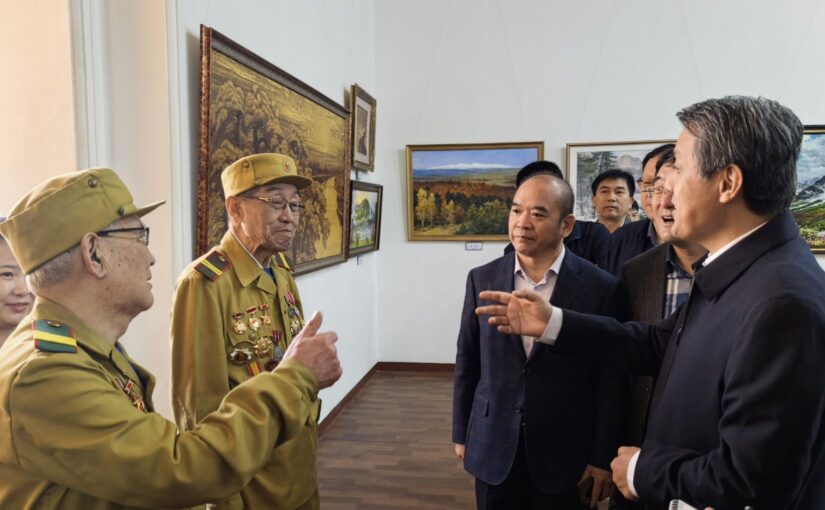
To his surprise, he met there with two old artists in their 90s from the Korean People’s Army. They fought side by side with the Chinese People’s Volunteers more than 70 years ago and have a special bond with the Chinese people.

92-year-old Korean People’s Artist Li Lushan said that he had participated in many major battles, such as blocking the US Army’s Incheon Landing. In 1951, he was seriously injured, and it was the Chinese People’s Volunteer Army that sent him to Changchun, Jilin for treatment. During that time, the Chinese people selflessly donated blood for him and took great care of him. It was China and the Chinese people who gave him a second life.

Cui Shigen, a 90-year-old painter from the Songhua Academy of Fine Arts in the DPRK, said that the Chinese People’s Volunteer Army soldiers had visited his home and encouraged him by patting his shoulders when they heard that he was going to join the army. Later, he fought with the Chinese People’s Volunteer Army on the Eastern Front and participated in post-war reconstruction. At a celebration party, he also created portraits of Chairman Kim Il Sung and Chairman Mao Zedong, which were highly praised by the army leaders and soldiers.

The article noted that the two artists are not only household names in the DPRK. Their work is also very popular in China.

Ambassador Wang paid tribute to the two veteran artists for their contributions to national independence, development and China-DPRK friendship, wished them good health and longevity, and said that through their works, he felt the great love of the Korean people for their national leaders. This year marks the 80th anniversary of the founding of the Workers’ Party of Korea. “I believe that under the leadership of the Workers’ Party of Korea headed by General Secretary Kim Jong Un, the Korean people will surely achieve greater success in the journey of creating a new era of national comprehensive rejuvenation. This year also marks the 75th anniversary of the Chinese People’s Volunteers’ participation in the War to Resist US Aggression and Aid Korea. I believe that under the strategic guidance of General Secretary Xi Jinping and General Secretary Kim Jog Un, the traditional friendship between China and the DPRK, which was forged with blood, will surely be inherited and developed, and will continue to move to a higher level, benefiting the people of the two countries.”

The article was published in Chinese and has been machine translated.

In early spring of April, the “Exhibition of Fine Arts by Veteran Artists in Memory of the 113th Anniversary of the Birth of Chairman Kim Il Sung” was grandly held at the Pyongyang International Cultural Center. On the 20th, Ambassador Wang Yajun of the Chinese Embassy in North Korea and his delegation visited the exhibition.

In the exhibition hall, oil paintings such as “Mangyongdae Residence” and “Spring in Mt. Paektu” vividly show Chairman Kim Il Sung’s revolutionary career and glorious achievements in his dedication to the independence and prosperity of North Korea and the happiness of the people. Korean paintings such as “Golden Autumn” and “In a Greenhouse Benefiting the People’s Livelihood” reflect from multiple angles the fruitful results achieved by General Secretary Kim Jong Un in leading the North Korean people to create a new era of national comprehensive rejuvenation. In addition, there are many exquisite works that vividly present the unique and beautiful natural scenery of North Korea.

What Ambassador Wang and his delegation did not expect was that there were many famous old North Korean artists participating in the exhibition. Among them, two old painters in their 90s were from the People’s Army. They fought side by side with the Chinese People’s Volunteers more than 70 years ago and have a special bond with the Chinese people.

92-year-old Korean People’s Artist Li Lushan said that he had participated in many major battles, such as blocking the US Army’s Incheon Landing. In 1951, he was seriously injured and it was the Chinese People’s Volunteer Army that sent him to Changchun, Jilin for treatment. During that time, the Chinese people selflessly donated blood for him and took great care of him. It was China and the Chinese people who gave him a second life.

Cui Shigen, a 90-year-old painter from the Songhua Academy of Fine Arts in North Korea, said that the Chinese People’s Volunteer Army soldiers had visited his home and encouraged him by patting his shoulders when they heard that he was going to join the army. Later, he fought with the Chinese People’s Volunteer Army on the Eastern Front and participated in post-war reconstruction. At a celebration party, he also created portraits of Chairman Kim Il-sung and Chairman Mao Zedong, which were highly praised by the army leaders and soldiers. When he was moved, Cui Shigen sang the Chinese People’s Volunteer Army Song in Chinese with Ambassador Wang and his entourage. The sincere and friendly atmosphere deeply touched everyone at the scene.

Today, the two old artists are not only household names in North Korea, but their Korean paintings and oil paintings are also very popular in China.

Ambassador Wang paid tribute to the two veteran artists for their contributions to national independence, development and China-DPRK friendship, wished them good health and longevity, and said that through the affectionate works, he felt the great love of the Korean people for their national leaders. This year marks the 80th anniversary of the founding of the Workers’ Party of Korea. I believe that under the leadership of the Workers’ Party of Korea headed by General Secretary Kim Jong-un, the Korean people will surely achieve greater success in the journey of creating a new era of national comprehensive rejuvenation. This year also marks the 75th anniversary of the Chinese People’s Volunteers’ participation in the War to Resist U.S. Aggression and Aid Korea. I believe that under the strategic guidance of General Secretary Xi Jinping and General Secretary Kim Jong-un, the traditional friendship between China and the DPRK, which was forged with blood, will surely be inherited and developed, and will continue to move to a higher level, benefiting the people of the two countries and making greater contributions to maintaining regional peace.

Second International Anti-Fascist Forum in Moscow

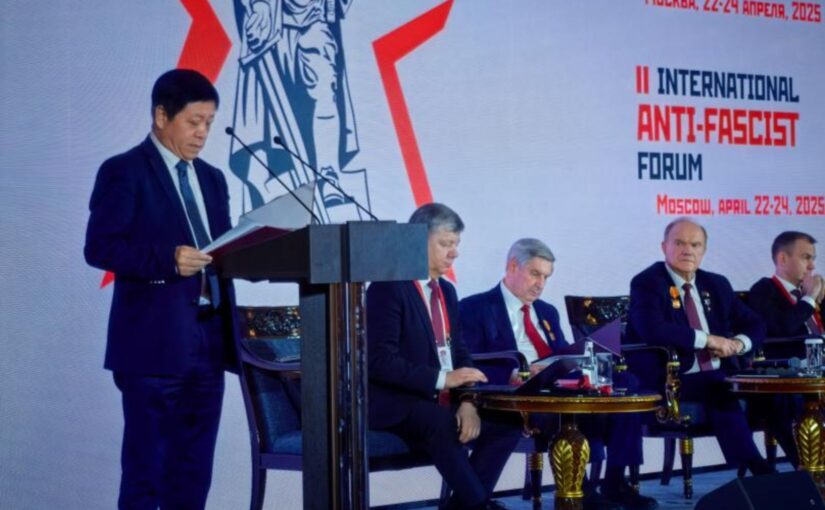
The Communist Party of the Russian Federation (CPRF) held the second International Anti-Fascist Forum in Moscow, from April 22–24 as the Russian capital prepared for a massive international celebration on May 9 of the 80th anniversary of the Soviet victory over Hitler fascism.

The conference was attended by 164 delegations from 91 countries, representing communist and left-wing parties and progressive mass organisations.

Addressing the opening session on behalf of the Communist Party of China, Chinese Ambassador to Russia Zhang Hanhui noted that this year marks the 80th anniversary of the Victory of the Chinese People in the War of Resistance Against Japanese Aggression and the Victory of the Soviet Union in the Great Patriotic War. The Chinese and Russian peoples, unafraid of threats and violence, fought in bloody battles, made enormous national sacrifices to contain the onslaught and destroy the aggressors, protect the state sovereignty and dignity of the country, and thus made an important historical contribution to the Victory in the World Anti-Fascist War.

He stressed that China and the Communist Party of China are willing to work with all progressive forces, including the Communist Party of the Russian Federation, to uphold the post-war world order, take the 80th anniversary of the UN as an opportunity to implement genuine multilateralism, firmly safeguard the authority and role of the UN, ensure real implementation of the purposes and principles of the UN Charter, advocate an equal and orderly multipolar world, as well as an accessible and inclusive economic globalisation, effectively promote the democratisation of international relations, and promote the formation of a more just and reasonable new model of global governance.

The following article was originally published on the website of the Chinese Embassy in Moscow. It was published in Russian and has been machine translated.

Further information and commentary on the forum were published by People’s Democracy, People’s World, the New Worker and Peoples Dispatch.

On April 23, Ambassador Zhang Hanhui took part in the International Anti-Fascist Conference organized by the Communist Party of the Russian Federation. The meeting was chaired by the First Deputy Chairman of the State Duma of the Federal Assembly of the Russian Federation, First Deputy Chairman of the Central Committee of the Communist Party of the Russian Federation, Chairman of the Russian-Chinese Friendship Society I.I. Melnikov. The Chairman of the Central Committee of the Communist Party of the Russian Federation G.A. Zyuganov delivered a keynote speech at the conference. More than 400 representatives of communist parties, workers and left-wing forces from 91 countries took part in the event.

In his speech, Ambassador Zhang Hanhui noted that this year marks the 80th anniversary of the Victory of the Chinese People in the War of Resistance Against Japanese Aggression and the Victory of the Soviet Union in the Great Patriotic War. The Chinese and Russian peoples, unafraid of threats and violence, fought in bloody battles, made enormous national sacrifices to contain the onslaught and destroy the aggressors, protect the state sovereignty and dignity of the country, and thus made an important historical contribution to the Victory in the World Anti-Fascist War.

Zhang Hanhui stressed that China and the Communist Party of China are willing to work with all progressive forces, including the Communist Party of the Russian Federation, to uphold the post-war world order, take the 80th anniversary of the UN as an opportunity to implement genuine multilateralism, firmly safeguard the authority and role of the UN, ensure real implementation of the purposes and principles of the UN Charter, advocate an equal and orderly multipolar world, as well as an accessible and inclusive economic globalization, effectively promote the democratization of international relations, and promote the formation of a more just and reasonable new model of global governance.

The forum participants called on all progressive forces to unite in a joint fight against any manifestations of colonialism and Nazism, to defend the results of victory in World War II, as well as the principles of international justice and impartiality.

After the forum, Ambassador Zhang Hanhui held a warm and friendly meeting with the Chairman of the Communist Party of the Russian Federation G.A. Zyuganov, during which issues of developing relations between the parties of the two countries were discussed.

China says Gaza humanitarian crisis ‘unprecedented’, urges ICJ to uphold law

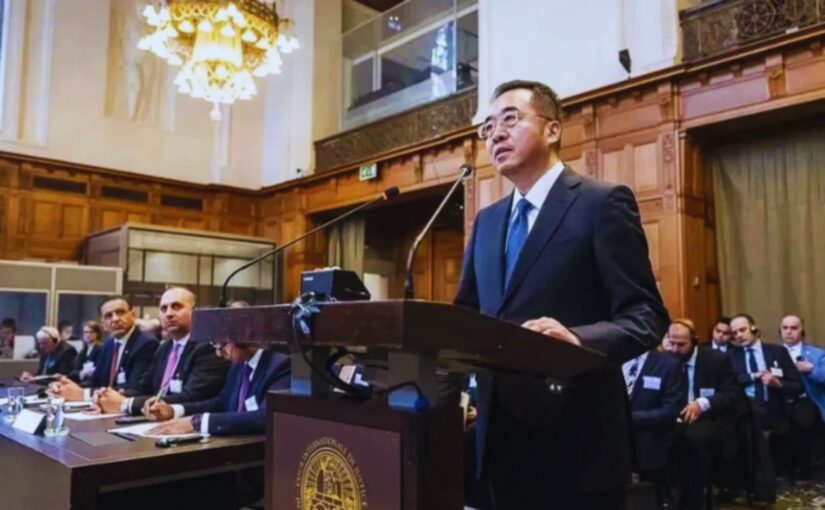
China has told the International Court of Justice (ICJ) that the humanitarian crisis in Gaza and the occupied Palestinian territory has reached “unprecedented” levels and called on the court to uphold international law and international justice.

Addressing week-long public hearings recently held by the court to assess Israel’s legal obligations for the provision of humanitarian aid and the Palestinian people’s right to self-determination, Chinese representative Ma Xinmin said:

“The situation grows more desperate. In Gaza and throughout the occupied territories, we are witnessing an unprecedented humanitarian crisis threatening to overwhelm an already suffering people.”

He stressed that Israel has a clear legal obligation to accept humanitarian assistance from third parties when the population is inadequately supplied: “This is not a discretionary choice. Refusing such assistance could constitute a denial of humane treatment of civilians or a form of collective punishment, both prohibited under international law.”

Despite the advisory opinion issued by the court last year, he emphasised: “Occupation continues and starvation persists.

“The desperate eyes of Gaza children pierce our conscience with two burning questions: Will international law surrender to brute force? Will the pillars of civilisation yield before the law of the jungle?”

The following article was originally published by Palestine Chronicle.

China told the International Court of Justice (ICJ) on Friday that the humanitarian crisis in Gaza and the occupied Palestinian territory has reached “unprecedented” levels, and called on the court to uphold international law and international justice, the Anadolu news agency reported.

“The situation grows more desperate. In Gaza and throughout the occupied territories, we are witnessing an unprecedented humanitarian crisis threatening to overwhelm an already suffering people,” said Ma Xinmin, representing China.

He stressed that Israel has a clear legal obligation to accept humanitarian assistance from third parties when the population is inadequately supplied.

“This is not a discretionary choice. Refusing such assistance could constitute a denial of humane treatment of civilians or a form of collective punishment, both prohibited under international law,” he said.

The week-long public hearings began on Monday to assess Israel’s legal obligations for the provision of humanitarian aid and the Palestinian people’s right to self-determination, following a request from the UN General Assembly.

Aid Workers

Beijing also expressed deep concern over casualties among humanitarian workers in the occupied Palestinian territory, stressing that Israel must ensure the privileges and immunities of UN agencies and bodies.

China reaffirms, the representative said, that the UN should play a “central and unique role” in leading and coordinating humanitarian assistance and called on all states to cooperate to provide relief to the Palestinian people. He reiterated that the fundamental solution lies in implementing a two-state solution.

Despite the advisory opinion of the court last year, he emphasized, “Occupation continues and starvation persists.”

“The desperate eyes of Gaza children pierce our conscience with two burning questions: Will international law surrender to brute force? Will the pillars of civilization yield before the law of the jungle?” he asked.

China also urged the court to issue an advisory opinion that would uphold the integrity of international law and “stir the conscience of the international community” to safeguard fairness, justice, and the rule of law.

Blockade ‘Unacceptable’ – UK

On Thursday, the United Kingdom told the ICJ that Israel must lift its restrictions on humanitarian assistance to Gaza, ensure civilian protection, and fully comply with international humanitarian law, Anadolu reported.

“It is unacceptable that Israel has blocked humanitarian support from entering Gaza for nearly two months, meaning that Palestinian civilians, including one million children, are facing starvation, disease, and death,” said UK representative Sally Langrish, recalling the UK Foreign Office Minister David Lammy’s recent statement to the UN Security Council in which he urged a return to the ceasefire “to end the relentless death and destruction that Palestinians face daily.”

Langrish emphasized the UK’s consistent call on Israel to allow humanitarian access and noted the UK’s suspension of certain arms export licenses to Israel in September 2024, citing “the clear risk that certain military exports to Israel might be used in violation of international humanitarian law.”

UNRWA an ‘Impartial’ Body

Michael Wood, also speaking for the UK, underlined Israel’s obligations under the UN Charter, the 1946 Convention on the Privileges and Immunities of the UN, and international humanitarian law. He said Israel must respect the legal capacities, privileges, and immunities of the UN and its agencies, including UNRWA.

Langrish explained that under Article 59 of the Fourth Geneva Convention, Israel must agree to and facilitate relief efforts when the population is undersupplied. Refusing would be a violation of international law, she said.

She affirmed that the UK regards UNRWA as an “impartial humanitarian organization” and supports its mandate, while stressing the need for the agency to uphold strict neutrality and investigate any allegations of misconduct, noting that such investigations are already underway.

US Defends Israel

The US has stood nearly alone in defending Israel’s restrictions on UNRWA at the hearings.

Josh Simmons, of the US State Department legal team, argued that Israel “has ample grounds  to question UNRWA’s impartiality.”

He cited Israel’s allegations that Hamas “has used UNRWA facilities and that UNRWA staff participated in the 7 October terrorist attack against Israel.”

“In sum, there is no legal requirement that an occupying power permit a specific third state or international organization to conduct activities in occupied territory that would compromise its security interests,” he stated.

Simmons said the US supports the flow of humanitarian aid into Gaza, “with the safeguards to ensure it is not looted or misused by terrorist groups.”

Rising Death Toll

Representatives from 40 countries and four international organizations are presenting oral submissions during the proceedings, including Türkiye, Malaysia, South Africa, China, Russia, Spain, Ireland, Brazil, Qatar, Saudi Arabia, and Egypt.

Key organizations, including the UN, the Organization of Islamic Cooperation, and the Arab League, will also contribute.

Israel, which is among the countries that submitted written statements, will not make an oral submission during the hearings.

Israel also faces a genocide case at the ICJ for its war on the Gaza Strip, which, since October 2023, has killed more than 52,000 Palestinians and reduced much of Gaza to rubble.

The International Criminal Court issued arrest warrants last November for Netanyahu and his former Defense Minister, Yoav Gallant, for war crimes and crimes against humanity in Gaza.

May Day in Cuba – a reaffirmation of the Revolution

The following article by Bernard Regan, originally published in Labour Outlook, outlines the significance of the May Day celebrations in Cuba, in which “over one million Cubans demonstrate in Havana in the Plaza de la Revolución, led by the trade union movement”.

Bernard discusses the cruel economic blockade imposed on Cuba by the US, now being doubled down on by the Trump administration. Biden, a few days before leaving office, removed Cuba from the list of State Sponsors of Terrorism, only for the designation to be restored by Trump within 24 hours of entering the White House. Cuba’s ridiculous designation as a state sponsor of terrorism “is designed to cut Cuba off from any access to international banking agencies making it extremely difficult, if not impossible to trade, to obtain vital medicines, foodstuffs, materials and equipment critical to the functioning of the island’s economy from other countries worldwide”.

The article observes that China is working with Cuba to help reduce the island’s dependency on oil, with agreements in place to for Chinese companies to lead construction of around 100 photovoltaic farms. While China’s involvement in such projects is profit-generating, it “will not interfere in the internal politics of the countries it enters into trade agreements with” – in stark contrast to the US’s mode of doing business.

Indeed China is working with countries throughout Latin America on infrastructure projects that are helping them to break out of underdevelopment and enhance regional integration. Recognising the danger this poses to US hegemonic interests, the US is “now engaged in a war to exclude China from many markets” in the region.

The article concludes by calling on readers to raise their voices against the continued hostility towards Cuba and the relentless attacks on its sovereignty.

Bernard Regan is Secretary of the Cuba Solidarity Campaign.

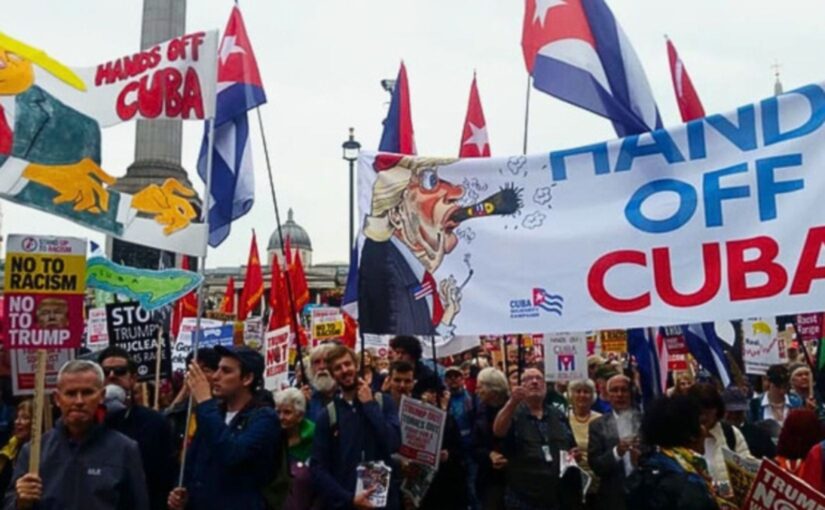
May Day in Cuba is a national holiday marked by huge demonstrations across the country and this year will be no exception.  Over one million Cubans will demonstrate in Havana in the Plaza de la Revolucion led by the trade union movement.

The event will be a positive reaffirmation of the values of the revolution and an expression of Cuba’s determination to resist the pressures of the blockade imposed on the island by successive United States administrations and most recently of course by President Donald Trump.

The blockade is imposed on Cuba despite the United Nations General Assembly voting 32 times consecutively to call for its complete removal. From 1st March 2023 to February 2024 the blockade caused material damages estimated at $5,056,800,000. Just 15 minutes without the blockade would enable Cuba to provide hearing aids for all the children who needed them; 30 minutes blockadeless and all the electrical and conventional wheelchairs needed could be provided. The list goes on and on. It is a totally unjustifiable persecution of the Cuban people.

 In November 2024 the most recent vote recorded 187 countries against the blockade and only two (USA and Israel) voting for its continuance whilst one nation (Moldova) abstained.  Despite this overwhelming vote Trump continues these vindictive policies.  Far from having any negative impact on the world Cuba has displayed an exemplary record of sending medical support to countries across the globe in need of practical solidarity. 

Since 1960, over 600,000 medical professionals have gone to over 160 countries to provide their expertise.  In 2020 it was estimated that there were 30,000 Cuban doctors in 67 countries.  Britain’s population is over 6 times that of Cuba.  Just imagine if Britain had acted with such a selfless sense of solidarity for people across the globe, how many more millions of lives could have been saved and sick and injured treated.

Over the whole period of Cuba’s existence, it has not been possible to put a cigarette paper between the policies of Democrats or Republicans.   Occasionally there have been changes of tack – as when President Obama established diplomatic relations with Cuba but did not remove the most vicious of the legislation that was imposed on the island. 

Trump has never made a secret of his animosity towards Cuba or indeed for that matter towards any nation that asserts its sovereignty.  In 2018 speaking at the United Nations General Assembly he said, “It has been the formal policy of our country since President Monroe (1823) that we reject the interference of foreign nations in this (western) hemisphere and in our own affairs.” It was a clear declaration of intent that he wished to make the Latin American economies subservient to Wall Street’s interests.

On taking office on 20th January 2025 Trump placed Cuba on the list of State Sponsors of Terrorism (SSOT) just 24 hours after his taking office.  President Biden had taken Cuba off the list – but only a week before he was to cease being President.  The appointment by Trump of Marco Rubio as his Secretary of State signalled the President’s clear intention to follow the vicious anti-Cuban policies of his co-Republican.

The SSOT status has been described by some as equivalent to an economic “death sentence”.  It is designed to cut Cuba off from any access to international banking agencies making it extremely difficult, if not impossible to trade, to obtain vital medicines, foodstuffs, materials and equipment critical to the functioning of the island’s economy from other countries worldwide.

Cuba is trying to deal with this for example by reducing its dependency on oil to generate electricity.  It has reached agreements with China, for example, to provide around 100 photovoltaic farms which are currently in the process of being installed.  Whilst some hope that the BRICS group of countries might provide an alternative international currency to rival the almighty dollar that seems unlikely in the short-term and may indeed not come to fruition given the tariff war that the White House is unleashing which may indeed create divisions between China and India for example.

The USA’s tariff wars will continue.  Trump is fearful of China’s influence in Latin America where some 20 countries have already joined the Belt and Road initiative, hence his obsession with the Panama Canal and the renaming of the Gulf of Mexico. However, the opening of the Chancay mega-port in Peru and the much talked about potential alternative of a Nicaraguan “Panama Canal” threaten Washington’s aspitrations for the region. Whilst China will undoubtedly pursue its own economic interests in a pragmatic manner, unlike the USA, it is almost certain, given its track record, that it will not interfere in the internal politics of the countries it enters into trade agreements with.

The tariffs that Washington has imposed on China are a clear indication of the economic war for domination of the continent that is taking place. Like Monroe before him the USA is now engaged in a war to exclude China from many markets across the globe but Latin America is an immediate concern.  The continent holds invaluable resources of rare earth minerals as well as oil in abundance and Washington has already mobilised the Pentagon in this economic conflict.  The current head of the United States Southern Command, Admiral Alvin Holsey, has followed in the footsteps of his predecessor General Laura Richardson, in identifying the economic resources that the continent holds as being of strategic interest to the USA. On 14th January – just a week before Trump was inaugurated – the columnist Bret Stephens wrote in the New York Times a column calling for a USA military intervention to overthrow President Maduro in Venezuela.            

The British government casts its vote against the inhuman blockade of Cuba but does nothing to challenge its punitive affects.  The solidarity campaign with Cuba is as vital as it has ever been. Trump wants to create a unipolar world with Washington and Wall Street at its centre.  Cuba demonstrates that another world is possible – one in which human life is valued and prioritised, in which people can live in dignity and at peace. It is those values which have led to Cuba standing alongside the people of Palestine against tyranny and oppression.  Cuba does not stand alone but we must continue to raise our voices and encourage others to do so to end the unjustifiable assault against its sovereignty which continues to be inflicted on it by successive Presidents of the United States of America.

Lula: China’s resolute and strong countermeasures against “reciprocal tariffs” are admirable

During his recent visit to Brazil to attend three important meetings of the BRICS cooperation mechanism, Chinese Foreign Minister Wang Yi also held a series of bilateral meetings.

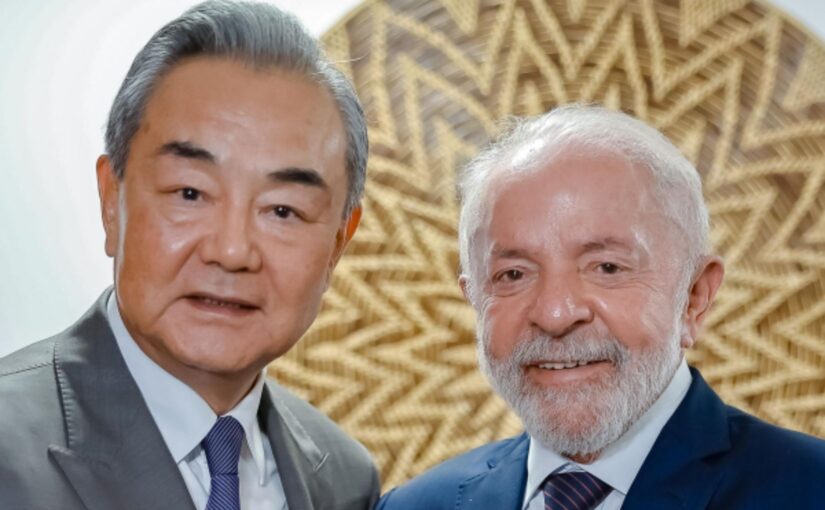
On April 30, 2025, Brazilian President Luiz Inácio Lula da Silva met with Wang Yi in Brasilia.

Lula asked Wang to convey his sincere greetings to President Xi Jinping, stating that Brazil and China have established solid mutual trust, with frequent exchanges at all levels and increasingly deepening cooperation in various fields, which fully proves that keeping friendly relations with China is the right choice and brings a demonstration effect to South-South cooperation. He looked forward to maintaining close high-level exchanges with China, further strengthening economic and trade ties, and expanding mutually beneficial cooperation in finance, energy, and other areas. The Brazilian President further expressed his view that China’s resolute and strong countermeasures against “reciprocal tariffs” are admirable. China’s righteous actions have received widespread support, and the irresponsible unilateral acts of a certain country should be collectively resisted.

Wang Yi conveyed President Xi Jinping’s cordial greetings to President Lula, stating that the two heads of state jointly announced the building of a China-Brazil community with a shared future for a more just world and a more sustainable planet, which has charted the course and drawn the blueprint for the development of China-Brazil relations. President Lula’s political decision to deepen the comprehensive strategic partnership between China and Brazil demonstrates strategic foresight and fully aligns with the long-term and fundamental interests of the Brazilian people.

Wang Yi added that China’s resolute counteraction to unilateral bullying is not only to safeguard its own legitimate rights and interests but also to protect the common interests of developing countries and to defend international fairness and justice. Standing at a critical juncture in history and facing impending storms, China will stay its course and strengthen its foundations, enhance cooperation with BRICS and Global South countries, uphold multilateralism, safeguard international rules, sow new hope for the world, and bring new opportunities for peace.

On April 28, Wang Yi met with the Foreign Ministers of Russia, Thailand and Ethiopia.

Meeting Russian Foreign Minister Sergei Lavrov, Wang Yi said that there have been many new changes in the international situation recently. Change is the norm of this era, but what remains unchanged is the mutual trust and support between China and Russia. The strategic leadership of President Xi Jinping and President Vladimir Putin has always been the fundamental guarantee for maintaining high-level operation of China-Russia relations.

Wang Yi stated that the current rivalry between unilateralism and multilateralism is intensifying, and the contest between maintaining hegemony and opposing hegemony is unfolding around the world. The unity and cooperation of BRICS countries are demonstrating increasingly significant strategic value.

Sergei Lavrov said that in the face of a rapidly changing world, it is essential for Russia and China to maintain close interactions. Russia is willing to work with China to prepare for the next phase of important exchanges between the two heads of state, support each other in hosting commemorative events for the 80th anniversary of the victories of the Soviet Union’s Great Patriotic War and the Chinese People’s War of Resistance Against Japanese Aggression, and deepen practical cooperation in various fields. Both sides should jointly support Brazil in fulfilling its responsibilities as the chair of the BRICS mechanism and work for more positive outcomes in BRICS cooperation.

Continue reading Lula: China’s resolute and strong countermeasures against “reciprocal tariffs” are admirable

Wang Yi: The BRICS family stands at the forefront of the Global South

Following his visit to Kazakhstan, where he attended the Foreign Ministers meeting of China and Central Asian countries, Chinese Foreign Minister Wang Yi travelled on to Brazil to attend meetings of the BRICS cooperation mechanism preparatory to its summit meeting later this year. Brazil is this year’s revolving Chair of BRICS.

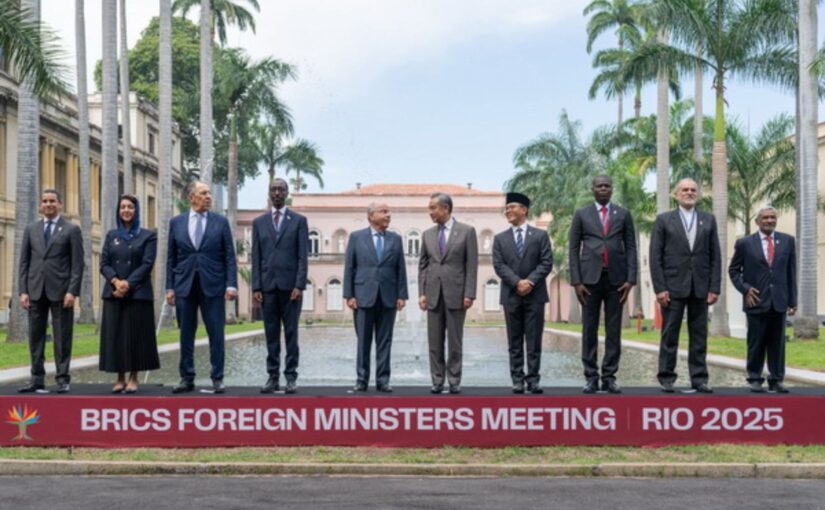
On April 28, Wang Yi attended Session I of the Meeting of BRICS Ministers of Foreign Affairs in Rio de Janeiro. Brazilian Foreign Minister Mauro Vieira chaired the event.

Wang Yi said that this year marks the 80th anniversary of the founding of the United Nations. The founding of the United Nations opened a brand-new chapter for all countries to jointly build peace and seek development and has promoted remarkable progress in human civilisation. Today, 80 years later, the international landscape has undergone profound changes, the world has entered a period of turbulence and transformation, and the cause of peace and development is facing new and severe challenges. The basic concepts of international cooperation have been eroded, the foundation for the development of international relations has been continuously challenged, and the international environment for peace and development is under assault. At a critical juncture in history, whether countries can make the right choices is crucial to the future of humanity. As positive constructive forces for good on the international stage, BRICS countries should take the lead in being the mainstay of the cause of peace and development.

To this end, Wang Yi made four calls:

  • To pursue universal security.
  • To actively promote peace talks.
  • To consolidate the foundation for development.
  • To strengthen practical cooperation.

All parties welcomed Indonesia’s first attendance as a full member at the Meeting of BRICS Ministers of Foreign Affairs and stressed that efforts should be made to safeguard the legitimate rights and interests of BRICS countries and the common interests of the Global South, to promote the establishment of a more just and equitable international order, and to facilitate open, inclusive and sustainable development.

On April 29, the session for Ministers of Foreign Affairs / International Relations from BRICS members and partner countries was held in Rio de Janeiro. The session was chaired by Brazilian Foreign Minister Mauro Vieira. Foreign ministers and senior representatives from 19 countries discussed ways to strengthen cooperation in the Global South and uphold multilateralism.

Addressing the meeting, Wang Yi said that, today, the BRICS family, with a total population of over half of the world’s population and an economic output accounting for nearly 30 percent of the global total, stands at the forefront of the Global South.

He stressed that faced with hegemonism, BRICS countries must uphold principles and serve as the main force in defending fairness and justice. In the face of unilateralism, BRICS countries must stand at the forefront and be the backbone in promoting solidarity and cooperation.

He made three calls in this regard:

  • To defend the core position of the United Nations.
  • To promote the peaceful settlement of disputes.
  • To foster an open and cooperative international environment.

Wang Yi stated that BRICS members should keep their doors wide open and embrace partner countries to help them deeply integrate into BRICS and fully participate in cooperation, so as to ensure the vibrant development of the mechanism. Continuous efforts should be made to expand the “BRICS Plus” model and bring together more like-minded countries to pool forces for peace and development.

He added that the solution to the world’s problems lies in upholding and practicing multilateralism. The expanded Greater BRICS should continue to advocate for extensive consultation, joint contribution and shared benefits, uphold the basic principles of international relations, defend the multilateral trading system, and build a more just and equitable global governance system.

Wang Yi said that in the face of the United States wielding the tariff stick globally, all countries must make the choices: Should the world return to the law of the jungle where the strong prey on the weak? Can the selfish interests of one country override the common interests of all nations? Should international rules be ignored or even abandoned? Do compromise and retreat ensure that one stays out of trouble? The ultimate question is whether to accept a unipolar hegemony dominated by one country or embrace an equal and orderly multipolar world.

Continue reading Wang Yi: The BRICS family stands at the forefront of the Global South

Xi Jinping: Learning from history to build together a brighter future

On May 7, Chinese President Xi Jinping began a state visit to Russia where he will also attend the celebrations marking the 80th anniversary of the Victory in the Great Patriotic War of the Soviet Union at the invitation of his Russian counterpart Vladimir Putin.

Ahead of his arrival, the Chinese leader published an article in the government newspaper Rossiyskaya Gazeta (Russian Gazette).

In his article President Xi recalled that: “Ten years ago around this time, I came to Russia to celebrate the 70th anniversary of the victory. During that visit, I made a special arrangement to meet with 18 representatives of Russian veterans who endured the blood and fire of battlefields during the Soviet Union’s Great Patriotic War and the Chinese People’s War of Resistance Against Japanese Aggression. Their unyielding resolve and indomitable bearing left an indelible impression on me. In the past few years, General M. Gareyev, Major General T. Shchudlo and other veterans passed away. I pay my deepest tribute to them and to all veterans – from generals to the rank and file-for their extraordinary service and heroic feats in securing the victory over fascists around the world. We will never forget them.”

Xi noted that: “During the World Anti-Fascist War, the Chinese and Russian peoples fought shoulder to shoulder and supported each other. In the darkest hours of the Chinese People’s War of Resistance Against Japanese Aggression, the Soviet Volunteer Group, which was part of the Soviet Air Force, came to Nanjing, Wuhan and Chongqing to fight alongside the Chinese people, bravely engaging Japanese invaders in aerial combat – many sacrificing their precious lives.”

He added that: “At the critical juncture of the Soviet Union’s Great Patriotic War, Yan Baohang, a legendary intelligence agent of the Communist Party of China (CPC) who was hailed as the ‘Richard Sorge of the East,’ provided the Soviet Union with primary-source intelligence.”

[Yan Baohang (1895-1968) was an intelligence agent of the CPC and the Communist International, entrusted by later Chinese Premier Zhou Enlai. Based behind enemy lines in Chongqing, in May 1941 the one-time student at Edinburgh University was able to discover the exact date – June 22 – of the planned German attack on the Soviet Union. He managed to get the information to the communist base area in Yan’an by June 6, where Mao Zedong ordered it to be conveyed to Moscow and where it reached Stalin, enabling important preparations to be made in time. On June 30, eight days after the German attack, Stalin telegraphed Yan’an, to thank Yan “for his accurate information that prompted us to prepare for what’s to come.”

[Richard Sorge (1895-1944) was one of the most brilliant intelligence officers of the Communist International and the Soviet Red Army’s Fourth Department, later known as the GRU or military intelligence. Known particularly for his work in Shanghai and then in Tokyo, he was eventually arrested by the Japanese authorities in October 1941 and hanged in Tokyo on November 7, 1944, the fascists having deliberately chosen to execute this outstanding and courageous internationalist fighter for communism on the anniversary of the October Socialist Revolution. He was posthumously awarded the title of Hero of the Soviet Union.]

Drawing attention to the contemporary significance of the 80th anniversary, Xi wrote: “Eighty years ago, the forces of justice around the world, including China and the Soviet Union, united in courageous battles against their common foes and defeated the overbearing fascist powers. Eighty years later today, however, unilateralism, hegemonism, bullying, and coercive practices are severely undermining our world. Again, humankind has come to a crossroads of unity or division, dialogue or confrontation, win-win cooperation or zero-sum games… We must learn from history, especially the hard lessons of the Second World War. We must draw wisdom and strength from the great victory of the World Anti-Fascist War and resolutely resist all forms of hegemonism and power politics. We must work together to build a brighter future for humanity.”

Continue reading Xi Jinping: Learning from history to build together a brighter future

CPC representative: China and Sri Lanka have worked shoulder to shoulder, showing the world how our countries can thrive together

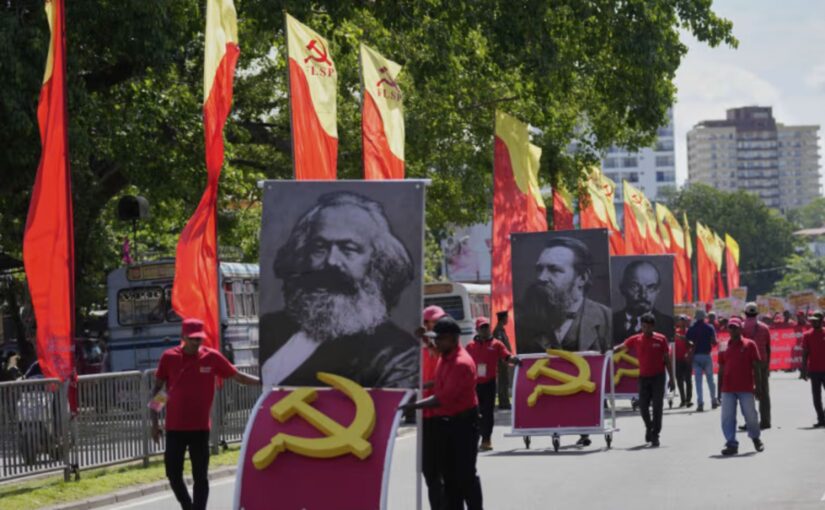
Tens of thousands of people gathered in the iconic Galle Face area of Sri Lanka’s capital Colombo this May Day in a massive show of support for the new government of the National People’s Power (NPP) grouping, whose core is the Janatha Vimukthi Peramuna (JVP – People’s Liberation Front), the country’s largest Marxist party.

President Anura Kumara Dissanayake and other party leaders were joined by representatives of the Communist Party of China, the Communist Party of India and the Communist Party of India (Marxist).

Addressing the rally, Peng Xiubin, Bureau Director General of the Communist Party of China’s International Department (IDCPC) said: “Six decades ago, your hands built the JVP. Over the years, you have kept fighting, making the JVP stronger and stronger, forming the National People’s Power. Eventually, last September, you won the presidential election, a new milestone in the history of Sri Lanka.

“Sri Lanka is China’s good neighbour, trusted brother, reliable partner. For 68 years of our diplomatic ties, we have worked hand in hand, shoulder to shoulder, showing the world how our countries can thrive together. Now, with the JVP leading Sri Lanka, new opportunities arise for China-Sri Lanka ties.”

JVP General Secretary Tilvin Silva said he hoped cooperation with China would help address rural poverty. “China has done tremendous work in this area and we want to get their expertise.”

State Secretary of the Communist Party of India (CPI) Binoy Viswam said that at last year’s May Day rally, Dissanayake predicted that “the next year when we celebrate the May Day, it will be a victorious May Day for the people and the workers of the Sri Lankan country. That day has come.”

AR Sindhu, Central Committee member of the Communist Party of India (Marxist) (CPIM) said: “We proudly tell the people that, yes, Kerala [where the CPIM leads the state government] will follow the Sri Lankan way. Not only Kerala, the entire India will be following the Sri Lankan way.”

A short clip of the rally may be seen here.

Other political parties in Sri Lanka also held May Day rallies, including the Sri Lanka Podujana Peramuna (SLPP), Sri Lanka Freedom Party (SLFP), Communist Party of Sri Lanka and Frontline Socialist Party.

Following May Day, President Dissanayake paid a state visit to Vietnam, May 4-6.

The following articles were first published by the Press Trust of India (PTI) and Singapore’s Channel NewsAsia (CNA).

Communist parties of India, China represented at Lanka’s ruling dispensation’s May Day rally

The Communist Party of India and the Communist Party of China were both represented at the May Day rally held here by President Anura Kumara Dissanayake’s NPP on Thursday.

This is the first May Day celebration by the Janatha Vimukthi Peramuna (JVP), the mother party in the National People’s Power (NPP) broader front, after it came to power.

The party, founded in 1965, had led two rebellions to topple governments through armed revolution in the early 70s and late 80s.

Binoy Viswam of the Communist Party of India (CPI) pointed out how at last year’s May Day rally, Dissanayake predicted that “the next year when we celebrate the May Day, it will be a victorious May Day for the people and the workers of the Sri Lankan country. That day has come”.

Viswam said there were claims in the past that there is no alternative to capitalist system and that there is only one way, and that way is the way of the Americans, the way of the spoilers, the way of the capitalists.

Continue reading CPC representative: China and Sri Lanka have worked shoulder to shoulder, showing the world how our countries can thrive together

Sixth China-Central Asia Foreign Ministers’ Meeting promotes synergised development

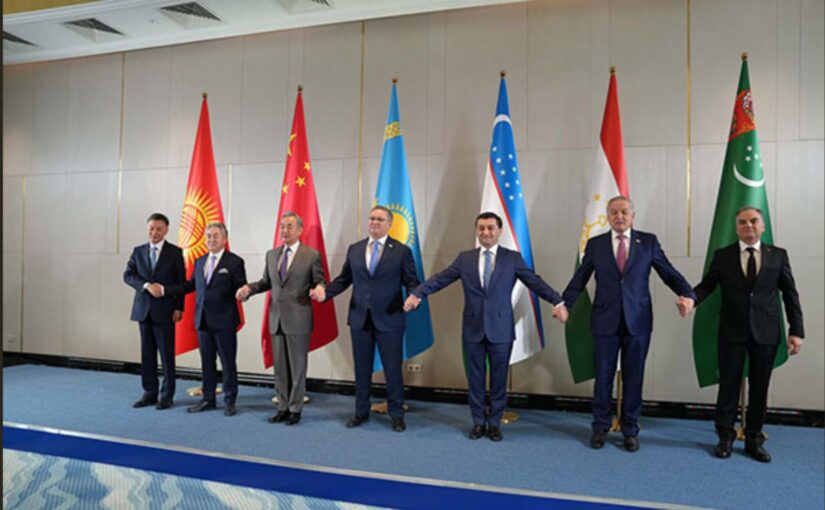
Chinese Foreign Minister Wang Yi recently visited Kazakhstan to attend the Sixth China-Central Asia Foreign Ministers’ Meeting, which was held in the capital Almaty.

Also attending were the Deputy Prime Minister and Minister of Foreign Affairs of Kazakhstan Murat Nurtleu, Minister of Foreign Affairs of Kyrgyzstan Jeenbek Kulubaev, Minister of Foreign Affairs of Tajikistan Sirojiddin Muhriddin, Minister of Foreign Affairs of Uzbekistan Bakhtiyor Saidov, Turkmenistan’s Ambassador to China Parahat Durdyev, and the Secretary-General of the China-Central Asia mechanism.

Addressing the meeting, held on April 26, Wang Yi said that at present, changes of the world, of the times, and of historical significance are unfolding like never before. Unilateralism and trade protectionism are on the rise at an accelerated pace, and the trend of “anti-globalisation” has severely impacted the free trade system. The United States has acted unilaterally to impose tariffs on over 180 countries at will, infringing upon the legitimate rights and interests of these nations, violating World Trade Organisation (WTO) rules, undermining the rule-based multilateral trading system, and destabilising the global economy. China has stepped forward and taken necessary countermeasures, not only to defend its own legitimate rights and interests, but also to safeguard international rules and order as well as international fairness and justice. No matter how the global landscape changes, China, as the world’s second-largest economy and a responsible major country, will unswervingly advance high-standard opening-up, seek common development with neighbouring countries, and share opportunities with the world, while shouldering its due international responsibilities and fulfilling its international obligations.

He put forward five proposals from the Chinese side for deepening China-Central Asia cooperation:

  • First, firmly uphold good faith and foster harmony. China firmly supports the six countries in safeguarding their sovereignty, independence, territorial integrity, and national dignity, and strengthening their collective self-reliance.
  • Second, stick to mutually beneficial cooperation. China is ready to import more high-quality, green agricultural products from Central Asia, select and implement a number of high-quality cooperation projects, expand cooperation in emerging fields, and cultivate new quality productive forces for cooperation.
  • Third, adhere to institutional development. China and Central Asian countries should strengthen coordination, accelerate the development of the mechanism’s pillars, and better leverage the role of the ministerial cooperation mechanism.
  • Fourth, adhere to fairness and justice. China and Central Asian countries should jointly remember history and commemorate the 80th anniversary of the victory of the World Anti-Fascist War and the 80th anniversary of the founding of the United Nations. Standing on the right side of history and human progress, the six countries should join hands to safeguard the international system with the United Nations at its core and oppose any form of resurgence of fascism and militarism.
  • Fifth, be firm in friendship for generations. It is necessary to strengthen cooperation in education and talent training and cultivate inheritors and successors of the cause of friendship.

The Central Asian countries’ representatives said that they will synergise their development strategies with the Belt and Road Initiative, deepen cooperation in priority areas such as unimpeded trade, industrial investment, connectivity, green minerals, agricultural modernistion, and facilitation of personnel exchanges, and achieve sustainable development and common prosperity. 

Continue reading Sixth China-Central Asia Foreign Ministers’ Meeting promotes synergised development

Iranian FM: China is a strategic and trusted partner

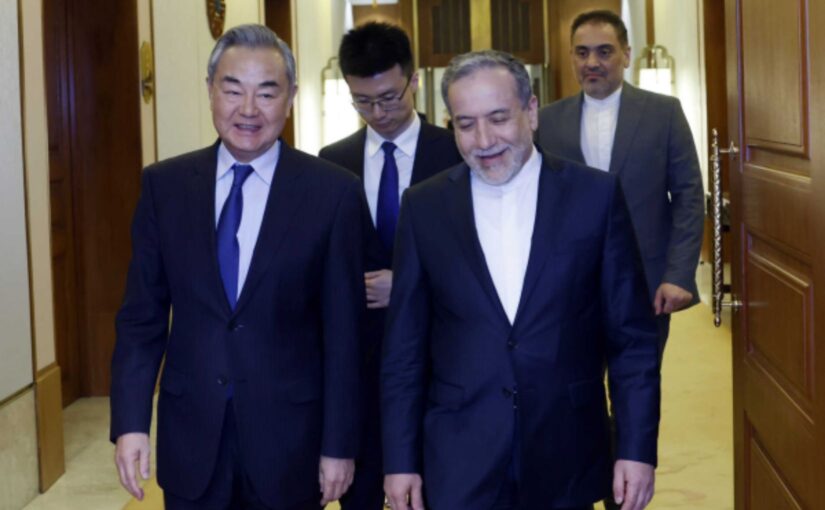
Iranian Foreign Minister Seyed Abbas Araghchi visited China in late April. His visit came just after he visited Moscow, just before the third round of indirect talks between the United States and Iran in Oman and less than four months since his last visit to Beijing.

Araghchi met with his Chinese counterpart Wang Yi on April 23.

Wang said that Iran is a comprehensive strategic partner of China in the Middle East region. The friendship between China and Iran has withstood the test of changes in the international situation, and developing China-Iran relations is a strategic choice made by both sides. In recent years, China and Iran have worked together in solidarity and helped each other, deepened political mutual trust through mutual support, tightened the connection of their interests through practical cooperation, and united and collaborated in the fight against unilateralism and bullying, making the strategic significance of China-Iran relations even more prominent.

China is ready to work with Iran to jointly implement the important common understandings reached between the leaders of the two countries, continuously strengthen friendly cooperation in various fields, deepen coordination and cooperation in international and regional affairs, promote the Shanghai Cooperation Organisation (SCO) and the BRICS mechanism to play a greater role, and make more efforts to safeguard the common interests of both countries and to advance peace and stability in the region and the world.

Wang Yi further emphasised that China has always been committed to the political and diplomatic settlement of the Iranian nuclear issue and opposed the abuse of force and illegal unilateral sanctions. China appreciates Iran’s commitment to not develop nuclear weapons, respects Iran’s right to the peaceful use of nuclear energy, and supports Iran in conducting dialogue with all parties, including the United States, and in safeguarding its legitimate rights and interests through consultation and negotiation.

Araghchi said that the Iran-China comprehensive strategic partnership is based on mutual trust and is at its best in history. The friendship between the two countries has a solid foundation and will not be affected by other factors. In the face of the United States’ abuse of tariffs and its bullying acts, Iran will continue to work with China to support each other, jointly oppose unilateralism and hegemonism, and work together to safeguard multilateralism.

The two foreign ministers also discussed the questions of Palestine, Syria and Yemen among others.

Seyed Abbas Araghchi also met with Chinese Vice Premier Ding Xuexiang the same day.

The Iranian foreign minister highlighted China’s role as a strategic and trusted partner of the Islamic Republic of Iran and emphasised the importance of expanding cooperation on bilateral and multilateral levels, including within frameworks such as the SCO and the BRICS group. He deemed closer interaction among like-minded countries such as Iran and China necessary to counter bullying and unilateralism and reiterated Iran’s unwavering resolve to enhance all-round relations with China.

Araghchi also elucidated the viewpoint of the Islamic Republic regarding regional and international developments, especially the serious risks associated with the ongoing genocide by the Zionist regime in occupied Palestine, the warmongering by the regime in the region and the repeated US aggression against Yemen.

Continue reading Iranian FM: China is a strategic and trusted partner

China helps Cuba fight blackouts, strengthen power grid

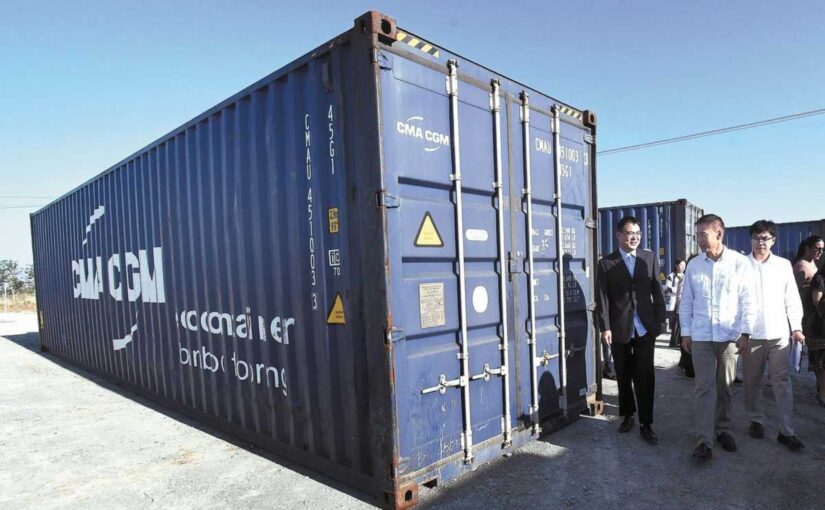
Cuba may slowly ease its crippling blackouts and strengthen its electricity grid as it begins building seven solar parks with the first batch of equipment from China.

The Chinese aid will help Cuba’s plan to build 92 solar installations by 2028, adding about 2,000 megawatts to the island’s power grid and help reduce dependence on fossil fuel imports. Once completed, the project will significantly boost Cuba’s strained power system, which currently has a capacity of 7,264 MW.

According to Maribel Aponte-Garcia, an economist and professor at the University of Puerto Rico, Rio Piedras Campus, the solar parks will also contribute to Cuba’s logistical and financial sovereignty by strengthening the country’s logistics capacity in the Greater Caribbean. For example, the Port of Mariel has the potential to be connected into logistics corridors in the China-Russia-Latin America axis, which can help avoid United States-controlled transit points such as the Panama Canal.

“Cuba is much more than an island with an energy crisis. It’s a critical logistics node in the Greater Caribbean, with direct access to maritime routes that connect the Atlantic with the Gulf of Mexico, Central America and South America.”

China, a major global exporter of solar panels, has emerged as a “comrade and brother” to Cuba, reaffirming its commitment to supporting the island’s energy transition, said Ruvislei Gonzalez Saez, a professor at Cuba’s Centre of Research for International Policy.

“Chinese cooperation in installing solar parks is extremely strategic, particularly in the energy sector,” he noted. In 2018, Cuba formally joined the Belt and Road Initiative, and three years later it joined the Belt and Road Energy Partnership, which aims to boost multinational energy cooperation.

The following article was originally published by China Daily.

Cuba may slowly ease its crippling blackouts and strengthen the electricity grid as it begins building seven solar parks with the first batch of equipment from China.

The Chinese aid helps Cuba’s plan to build 92 solar installations by 2028, adding about 2,000 megawatts to the island’s power grid and help reduce dependence on fossil fuel imports. Once completed, the project would significantly boost Cuba’s strained power system, which currently has a capacity of 7,264 MW.

Installation work is set to begin soon in Artemisa, about 50 kilometers west of Havana, where the equipment arrived late last month. Additional solar parks are planned for the provinces of Pinar del Rio, Las Tunas, Holguin, Granma and Guantanamo. More materials from China are expected in the coming months.

“Chinese investment in solar energy in Cuba is a joint commitment to energy sovereignty, South-South cooperation, and the multipolar reconfiguration of global trade and logistics,” said Maribel Aponte-Garcia, an economist and professor at the University of Puerto Rico, Rio Piedras Campus.

The solar parks will also contribute to Cuba’s logistical and financial sovereignty by strengthening the country’s logistics capacity in the Greater Caribbean, she said.

For example, the Port of Mariel has the potential to be connected into logistics corridors in the China-Russia-Latin America axis, which can help avoid United States-controlled transit points such as the Panama Canal.

“Cuba is much more than an island with an energy crisis,” Aponte-Garcia said. “It’s a critical logistics node in the Greater Caribbean, with direct access to maritime routes that connect the Atlantic with the Gulf of Mexico, Central America and South America.”

Over time, the solar park could become a key component of an emerging South-South architecture, in which renewable energy powers technological platforms, ports and autonomous corridors, she added.

China, a major global exporter of solar panels, has emerged as a “comrade and brother” to Cuba, reaffirming its commitment to supporting the island’s energy transition, said Ruvislei Gonzalez Saez, a professor at Cuba’s Center of Research for International Policy.

Last year, China exported enough solar panels globally to generate 235.93 gigawatts of power, up 13 percent year-on-year, according to US renewables research firm InfoLink Consulting.

Gonzalez emphasized the significance of Chinese cooperation in advancing Cuba’s renewable energy sector.

“Chinese cooperation in installing solar parks is extremely strategic, particularly in the energy sector,” he said, adding the effects are not only political and economic but also show how it can improve the quality of life for Cubans.

Aponte-Garcia said China has long been an active partner of Cuba in terms of trade and investment, with participation in projects such as the Mariel Special Development Zone and the energy sector.

In 2018, Cuba formally joined the Belt and Road Initiative, and three years later it joined the Belt and Road Energy Partnership, which aims to boost multinational energy cooperation.

Beijing and Havana have signed several construction and energy deals aimed at supporting cooperation between China and Latin America.

Beyond energy coordination, China also continues to invest in projects linked to the production of medicines, biotechnology and agriculture, Gonzalez said.

Cuba joined the BRICS+ grouping as a partner state, which could drive integration with the bloc. BRICS+ is an intergovernmental organization that includes Brazil, China, India, Russia and South Africa, along with a growing number of countries such as the United Arab Emirates.

Further, an increased presence of Chinese investments in Cuba is expected, though the US blockade against Cuba “can make some economic-financial operations and processes difficult”, Gonzalez said.

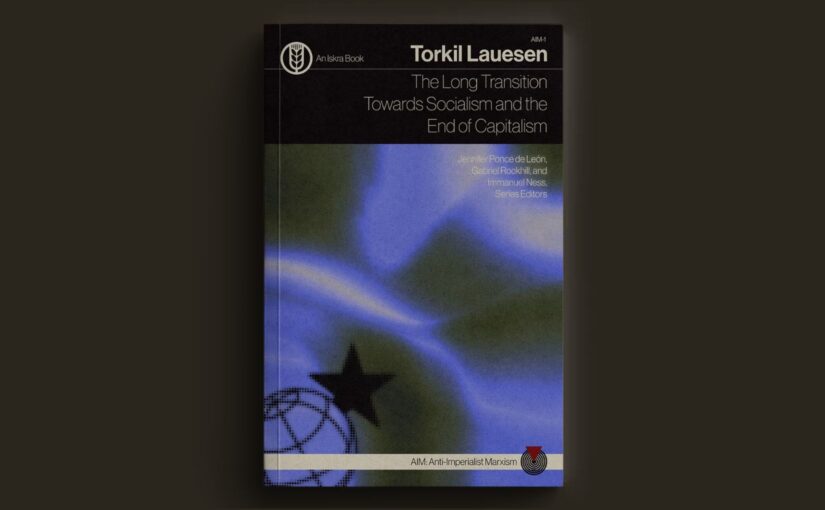
Book review: Torkil Lauesen – The Long Transition Towards Socialism and the End of Capitalism

The following text by Carlos Martinez, written for the May-June 2025 issue of Communist Review, reviews The Long Transition Towards Socialism and the End of Capitalism, by Danish revolutionary intellectual Torkil Lauesen.

The review highlights and explores a number of key themes from the book, including the assessment of the history of the global working class movement within a framework of historical materialism; the possibility that humanity has reached a turning point and that capitalism has run out of ways to sustain itself; and the indispensability of constructing a global united front composed of the socialist countries, the national liberation movements, the anti-imperialist forces of the Global South, and the progressive forces in the advanced capitalist countries.

The review notes: “One of the most significant aspects of The Long Transition is its serious attempt to understand and explain contemporary China, and in particular to assess the results – and perhaps necessity – of the Reform and Opening Up process introduced in 1978, gradually introducing market mechanisms to the economy, allowing private ownership of capital, encouraging investment from abroad, and integrating China into the global economy.”

Lauesen’s investigations of Socialism with Chinese Characteristics lead him to the conclusion that “the importance of socialist-oriented development in China can hardly be overestimated. It can tip the global balance of power decisively in favour of a socialist world order.”

As Carlos states in his review, The Long Transition Towards Socialism and the End of Capitalism is a richly rewarding and important read. It can be purchased or downloaded from Iskra Books.

Long transition

The latest book from Danish revolutionary intellectual Torkil Lauesen, The Long Transition Towards Socialism and the End of Capitalism, is highly ambitious in its scope, providing an assessment of the first two centuries of humanity’s attempts to build socialism, and outlining some of the necessary or possible next steps on that journey.

Lauesen describes in some detail the history thus far of the “long transition” from capitalism to socialism – starting with the first rumblings of proletarian revolt in mid-19th century Europe, then moving on to the Paris Commune, the rise and fall of the German workers’ movement, the October Revolution, the early attempts at socialist construction in the Soviet Union, the eastward shift of the revolutionary centre of gravity in the post-WW2 era, and the ongoing socialist project in the People’s Republic of China.

These milestones are contextualised within a long-running, dialectical struggle between two social systems. While all except the last are by now studied as history rather than as contemporary politics, and while many failed to achieve their stated aims, they all form links in an ongoing chain: the long transition to socialism. Lauesen writes that “the struggle and suffering of millions of communists and socialists for the past two hundred years have not been in vain, but are contributions to this long process of creating a better world.” (p2)

Such a sentiment – heartening to those of us that have lived through a low ebb of the communist tide – echoes the powerful words of Korean revolutionary Kim San in Helen Foster Snow’s remarkable Song of Ariran:

Nearly all the friends and comrades of my youth are dead, hundreds of them… Their warm revolutionary blood flowed proudly into the soil of Korea, Manchuria, Siberia, Japan, China. They failed in the immediate thing, but history keeps a fine accounting. A man’s name and his brief dream may be buried with his bones, but nothing that he has ever done or failed to do is lost in the final balance of forces.[1]

In such a framework, the retreats suffered by our movement should be considered as part of an inevitable ebb and flow of a complex trajectory that could take hundreds of years but which nonetheless has an inexorable historical materialist tide. As Deng Xiaoping observed in 1992, commenting on the collapse of the Soviet Union: “Feudal society replaced slave society, capitalism supplanted feudalism, and, after a long time, socialism will necessarily supersede capitalism. This is an irreversible general trend of historical development, but the road has many twists and turns… Some countries have suffered major setbacks, and socialism appears to have been weakened. But the people have been tempered by the setbacks and have drawn lessons from them, and that will make socialism develop in a healthier direction.”[2]

The transition process is complicated by the fact that capitalism and socialism do not exist independently of one another, but rather constitute a unity of opposites, one constantly acting on and transforming the other. Lauesen writes for example that “the way capitalism works today is a product of the Russian Revolution and Soviet industrialisation, the anti-colonial uprisings in the Third World, the 1968 uprising, and the current Chinese development of socialism.” This view is shared with the late Egyptian Marxist Samir Amin, who wrote that “the long transition of world capitalism to world socialism is defined by the internal conflict of all the societies in the system between the trends and forces of the reproduction of capitalist relations and the (anti-systemic) trends and forces, whose logic has other aspirations – those, precisely, that can be defined as socialism”.[3]

Capitalism is running out of road

Marx and Engels thought that capitalism’s contradictions and its tendency towards crisis would condemn it to a relatively brief existence. Lauesen cites Engels in 1847, writing that the bourgeoisie “will at most win a few years of troubled enjoyment, only to then be immediately overthrown… You shall be allowed to rule for a short time… but do not forget that ‘the hangman stands at the door’”. (p54)

A hundred and seventy-eight years hence, it has to be admitted that capitalism has shown itself to be remarkably adaptive, “finding new escape routes from its problems” (p22) in the form of new technologies, colonial and imperial expansion, war, repression, cultural hegemony, and the provision of “bread and circuses” to a privileged layer of the working class.

However, while problems can be swept under the carpet, they can’t remain there permanently. Neoliberal globalisation gave the US an additional four decades of hegemony starting in the 1970s, but Lauesen considers that capitalism is running out of options for mitigating its contradictions.

I do not believe that capitalism will survive this century. Capitalism reached its zenith around 2000. It is still dominant, but is in decline, reflected in the turn from neoliberal economic globalisation towards military defence of a US hegemony that is no longer economically based. The decline of US hegemony and the rise of China as a driver for a more multipolar world system can lead to a geopolitical balance, in which social movements and nations in the global South can move in the direction of socialism. (p10)

China’s emergence is central to Lauesen’s analysis. While the US-led capitalist world system is in decline, China – led by a Communist Party and following a hybrid economic model with public ownership and planning at its core – is increasing in strength, prosperity and influence. China is “the leading industrial producer and the biggest actor in the world market”, as well as being “the driving force behind the effort to establish a multipolar world-system.” (p10)

Furthermore, China’s rise is not reliant on hegemonism. As President Xi Jinping has pointedly remarked: China will “neither tread the old path of colonisation and plunder, nor the crooked path taken by some countries to seek hegemony once they grow strong.”[4] Because the capitalist class in China is not the ruling class, it is not able to define the country’s foreign policy. Li Zhongjin and David Kotz have pointed out, any drive towards hegemonism by China’s capitalists is restrained by a CPC government which “has no need to aim for imperial domination to achieve its economic aims”, and “the Chinese capitalist class lacks the power to compel the CPC to seek imperial domination.”[5]

Lauesen considers that the failure of the forces of global socialism to win a final victory over capitalism is rooted primarily in the fact that capitalism has still found ways to expand; it has still until very recently retained the edge in terms of driving human progress forward. This is changing. As Deng Xiaoping commented in 1984, “the superiority of the socialist system is demonstrated, in the final analysis, by faster and greater development of those forces than under the capitalist system”.[6] The extraordinary success of DeepSeek’s R1 model; China’s leading role in renewable energy and green transport; its charting of new territory in telecommunications, advanced industry, space exploration, medical science and more all indicate that humanity is reaching a turning point.

Understanding China

One of the most significant aspects of The Long Transition is its serious attempt to understand and explain contemporary China, and in particular to assess the results – and perhaps necessity – of the Reform and Opening Up process introduced in 1978, gradually introducing market mechanisms to the economy, allowing private ownership of capital, encouraging investment from abroad, and integrating China into the global economy.

Lauesen’s writing betrays a certain ambivalence on this topic, and it’s not difficult to imagine that, given his long adherence to a variant of Cultural Revolution-era Maoism, it has been no easy task coming to terms with Deng Xiaoping Theory. And yet, Lauesen’s methodology adheres to Mao Zedong’s observation that “the only yardstick of truth is the revolutionary practice of millions of people”.[7] As such, he recognises that China’s extraordinary rise constitutes “an epochal change in the world-system. China was able, for the first time in two hundred years, to break the polarising dynamic of capitalism between the West and the rest of the world.” (p256)

Lauesen also recognises that this success would likely not have been possible without the introduction of market reforms and integration into the global economy from the late 1970s onwards. Marx writes that “the development of the productive forces of social labour is capital’s historic mission and justification”.[8] China’s leadership recognised that capital could still perform that historic mission in a socialist country, under the leadership and guidance of the Communist Party. Lauesen views this as necessary, in a context where “actually existing socialism” in both Soviet and Chinese flavours had been as yet unable “to break the power of the global capitalist market, which blocked the road to the development of socialism”. (p221)

In a capitalist-dominated world, without a sufficiently developed economic base, China had to become part of the world economy. It had to build up its productive forces under conditions which would almost certainly be a threat to the hard-won political preconditions, since capitalist norms and values would penetrate society… It could not continue the development of its productive forces without investments and trading with capitalist countries. It needed to begin the transfer of technology from the imperial countries. (p226)

Interestingly, Lauesen considers that the concept of ‘Socialism with Chinese Characteristics’ is not a post-Mao development; that China’s economic reform was not a manifestation of Mao Zedong and his supporters losing the two-line struggle with so-called capitalist roaders. Rather, Mao himself “was part of this new strategy, shifting the course from port to starboard to avoid sailing too close to the wind of the looming storm of global capitalism”. (p221)

In this analysis, the Third Industrial Revolution – the rise of electronics, telecommunications, automation and computers, combined with the massive expansion of globalised production chains enabled by containerisation – gave a new lease of life to capitalism and affected the balance of power in the global class struggle. “Revolutions erupted in Cuba, Algeria, Vietnam, Angola, Mozambique, Guinea-Bissau, Namibia, Zimbabwe, Nicaragua, and so on, but despite their socialist aspirations, they hardly left the ground concerning the construction of socialism. Therefore, it was not only the Cultural Revolution that lost its steam through the 1970s, it was revolutionary movements all over the world. This indicates that there was a deeper transformation occurring in world capitalism, which was reflected in global class struggles.” (p218)

China needed to rapidly develop its productive forces – “not only to eradicate poverty in China itself, but also because it is necessary to possess the most developed technology to break the dominance of capitalism, and thus promote a global transformation towards socialism” (p272). And this dynamic is first detected not in Deng’s speech at the third plenary session of the 11th Central Committee of the Communist Party of China in December 1978, but in Richard Nixon’s meeting with Mao in Beijing in February 1972, and China’s acquisition of various industrial facilities from the West in the following years.

Bringing the story up to the present, Lauesen states that “a socialist-oriented China will be of great importance for a transition towards global socialism”, in particular because it “will create possibilities for anti-capitalist struggles within the remaining capitalist world system”. As such, “the importance of socialist-oriented development in China can hardly be overestimated. It can tip the global balance of power decisively in favour of a socialist world order” (p276). This is consistent with the great Italian Marxist philosopher Domenico Losurdo: “Thanks to the prodigious economic and technological development of China, defined as the most important event of the last five hundred years, the Columbian era has come to an end”.[9]

Global united front

The capitalist system is increasingly becoming a hindrance to human progress, and a threat to human survival, but a socialist future is not, of course, guaranteed. It was 110 years ago that the heroic Polish-German revolutionary and theoretician Rosa Luxemburg popularised the idea that humanity faced a stark choice: between socialism and barbarism. But now as then, barbarism is still on the table, and in this era of existential threats to humanity – climate change, pandemics, antimicrobial resistance, nuclear warfare, the dangers posed by unrestrained and unscrupulous use of artificial intelligence – its possible dimensions are all too visible.

Objective factors increasingly favour the global movement for socialism, but the subjective factors have to be mobilised as well. Lauesen writes: “Capitalism can collapse in a brutal, chaotic endgame of wars and natural disasters. To avoid this is our task; and to accomplish that task, we must fulfil the transition to socialism. To do this, we need to learn from the past and mobilise, organise, and develop a strategy for future struggles.” (p2)

In Lauesen’s view, the left in the Global North will not be the driving force in the transition toward global socialism. But this doesn’t mean that the left should simply maintain a humdrum existence fighting for better pay and conditions. “It is not enough to wait for the proletariat of the Global South to create a revolutionary situation in our part of the world”. (p359)

Rather, Marxists in the West must urgently adopt an internationalist perspective and help construct a global united front composed of the socialist countries, the national liberation movements, the anti-imperialist forces of the Global South, and the progressive forces in the advanced capitalist countries. After all, “if reforms in the Global North are not accompanied by the deconstruction of imperialism, then they are not a step forward — they are parasitic”. (p353)

Lauesen urges his readers to make a permanent break with social chauvinism; to make a permanent break with the arrogant Western Marxism described by Losurdo, which rejects the leadership and the lessons of actually existing socialism; to support the Global South’s struggle against imperialism; to support those countries and movements developing socialism; to oppose wars; and to “make sure that the North is no safe ‘hinterland’ for imperialism, which means struggle against right-wing national chauvinism, racism, and imperialist political and military intervention”. (p359)

The appeal from the Baku Congress of the Peoples of the East, held 125 years ago, urges the Western working classes: “You cannot free yourselves without helping us in our struggle for liberation. The wealth of our countries is, in the hands of the capitalists, a means of enslaving you.”[10] Lauesen calls on us to take up this challenge anew.

In a relatively long book, dealing with difficult and controversial topics, there is inevitably no lack of things to disagree with. Nonetheless, The Long Transition Towards Socialism and the End of Capitalism is a richly rewarding and important read.


[1]                  Chang Chi-rak and Nym Wales. Song of Ariran: A Korean Communist in the Chinese Revolution. San Francisco: Ramparts Press, 1972, p216

[2]                 Deng Xiaoping 1992, Excerpts From Talks Given In Wuchang, Shenzhen, Zhuhai and Shanghai, Marxist Internet Archive. https://www.marxists.org/reference/archive/deng-xiaoping/1992/179.htm

[3]                 Samir Amin. Global History: A View from the South. Cape Town, South Africa : Dakar, Senegal : Bangalore, India: Pambazuka Press, 2011, p185

[4]                 Xi Jinping 2023, Full text of Xi Jinping’s keynote address at the CPC in Dialogue with World Political Parties High-level Meeting, Xinhua. https://english.news.cn/20230316/46287ba021164317ab578b18b447a0af/c.html

[5]                 Li Zhongjin and David Kotz 2020, Is China Imperialist? Economy, State, and Insertion in the Global System, American Economic Association. https://www.aeaweb.org/conference/2021/preliminary/paper/e4D3fNd3

[6]                 Deng Xiaoping 1984, Building a Socialism With a Specifically Chinese Character, Marxist Internet Archive. https://www.marxists.org/reference/archive/deng-xiaoping/1984/36.htm

[7]                 Mao Zedong 1940 On New Democracy, Marxist Internet Archive. https://www.marxists.org/reference/archive/mao/selected-works/volume-2/mswv2_26.htm

[8]                 Karl Marx. Capital: A Critique of Political Economy. V. 3: Penguin Classics. London, 1981, p368

[9]                 Domenico Losurdo. Western Marxism: How It Was Born, How It Died, How It Can Be Reborn (ed. Gabriel Rockhill). Monthly Review Press, 2024, p227

[10]               Baku Congress of the Peoples of the East: Appeal from the Congress (1920), Marxist Internet Archive. https://www.marxists.org/history/international/comintern/baku/to-workers.htm
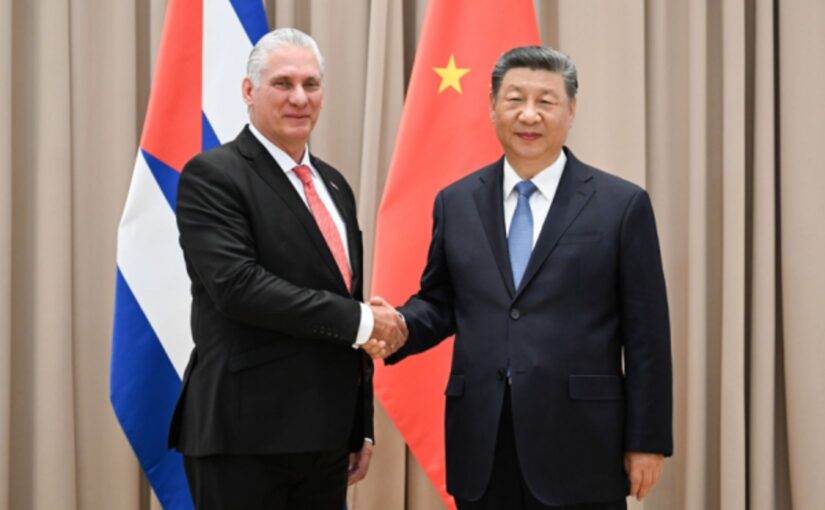
Mark Carney’s anti-China posture will not benefit the Canadian people

Canada held its federal election on April 28.

The ruling Liberal Party won 169 seats, up by 17, and leaving it just short of the 172 seats needed for a majority.  The Conservatives won 144 seats, an increase of 24, but their leader Pierre Poilevre, who before ‘Hurricane Trump’ struck Canada could have pretty confidently looked forward to leading the next government, lost his seat.

The nationalist Bloc Québécois took 33 seats, a loss of 11. The social democratic New Democratic Party (NDP) won just seven seats, a loss of 17, with party leader Jagmeet Singh not only losing his seat but coming third in his riding (as electoral districts are termed in Canada). The Greens lost one of their two seats, with co-leader Jonathan Pedneault becoming the third party leader to lose his place in the federal parliament.

The Marxist-Leninist Party of Canada (MLPC) fielded 35 candidates and the Communist Party of Canada (CPC) fielded 24. MLPC is the registered name for electoral purposes of the Communist Party of Canada (Marxist-Leninist) (CPCML). No other left parties stood candidates.

As a result of this election, Mark Carney has now received his own mandate to serve as Prime Minister. The former Goldman Sachs banker, who went on to become Governor of the Reserve Bank of Canada and then the Bank of England, but who was completely lacking in previous political experience, was shoe-horned into the leadership of the Liberal Party, and hence the office of Prime Minister, after the unpopular and arrogant Justin Trudeau was forced to resign.

As indicated above, the fortunes of the Liberal Party had reached a nadir, leaving the Conservatives confident of a return to office. The Liberals’ change in fortunes came in part from the transition from Trudeau to Carney, but more especially from Donald Trump’s punitive ‘tariff wars’ and his insulting, boorish and aggressive threats to annex Canada, which have stirred a patriotic reaction from the ice hockey rink to the ballot box.

Carney skillfully rode this patriotic wave, with strong rhetoric that appeared to stand up to Trump, whilst Poilevre struggled in vain to shed his previous whole-hearted embrace of MAGA and of his own designation as the ‘Canadian Trump’. It was also this political polarisation and perceived national crisis that squeezed the votes of smaller parties, with many Bloc Québécois, NDP and Green voters doubtless holding their noses while they lent their vote to the Liberals.

Asked to comment on the result at the Chinese Foreign Ministry’s regular Beijing press conference the next day, spokesperson Guo Jiakun said that China is willing to develop its relations with Canada based on mutual respect, equality and mutual benefits. Asked to comment on Carney’s victory and bilateral relations, he said that China has noted relevant reports, and that China’s position on its relations with Canada has been consistent and clear.

The perfunctory tone of Guo’s remarks, devoid of even the most formal diplomatic expression of congratulations, indicates that the once relatively warm relations between Ottawa and Beijing, for now at least, remain decidedly chilly. This is consistent with Carney’s continued hostile rhetoric towards China, even as he strikes a pose of defending Canadian sovereignty from US threats. At the same time, Guo makes clear that China is open to better relations, but that the ball is firmly in Canada’s court.

In the build up to the elections, TML In The News, an online publication of CPC(ML), carried an article by Peggy Morton, “setting the record straight about Canada’s trading relations with China” and citing it as an “example of how a Carney government will manage the economy”.

Peggy begins by explaining that, “Following the lead of then-US President Joe Biden’s administration which imposed 100 per cent tariffs on Chinese electric vehicles in August 2024, the federal government under Justin Trudeau announced in September 2024 that the following month it would impose an import tax of 100 per cent on electric vehicles (EVs) produced in China… Note that Donald Trump had yet to enter the picture with his tariff wars. Nonetheless, paying no attention to World Trade Organisation (WTO) rules which govern the trading relations between trading nations around the world, Canada accused China of ‘distorting global trade’ by exporting EVs at ‘unfairly low prices’ and imposed its draconian tariffs.”

China did not respond with tariffs of its own until March 2025, when, following an investigation, it announced that it would impose a 100 per cent tariff on Canadian canola oil and canola meal and peas, along with 25 per cent tariffs on pork, fish and seafood, as of March 20.

Prime Minister Carney responded that: “The Government of Canada is deeply disappointed by this decision, which will hurt Canadian farmers, harvesters and businesses, and will raise prices and diminish choice for Chinese customers, as well as in the agriculture, fish and seafood, retail, restaurant, and food-preparation industries.”

Continue reading Mark Carney’s anti-China posture will not benefit the Canadian people

Xi Jinping: We must adhere to the people-centred development philosophy

As China prepared for the May Day holiday, President Xi Jinping, who is also General Secretary of the Communist Party of China (CPC) Central Committee and Chairman of the Central Military Commission, attended and delivered a significant speech at a grand gathering to celebrate the 100th anniversary of the founding of the All-China Federation of Trade Unions (ACFTU) and to honour model workers and exemplary individuals.

The gathering was presided over by Premier Li Qiang and attended by other senior leaders. A total of 1,670 people were honoured as national role model workers, and 756 were recognised as exemplary individuals.

In his speech, Xi said that as the May 1st, International Labour Day is approaching, we are celebrating the 100th anniversary of the founding of the All-China Federation of Trade Unions, reviewing and summarising the glorious course and great achievements of the country’s workers’ movement, commending national model workers and advanced workers, and aiming to further mobilise and inspire the country’s working class and the broad masses of working people to forge ahead on a new journey.

He said that on behalf of the CPC Central Committee, he would like to pay high tribute to the revolutionary martyrs and the older generation of trade union leaders who have made outstanding historical contributions to the Party’s labour movement.

“I would like to extend my sincere greetings to the workers, farmers, intellectuals and other working people of all ethnic groups across the country, to trade union organisations at all levels and all trade union workers. I would like to extend holiday greetings to friends in the trade unions and labour circles in the Hong Kong Special Administrative Region, the Macao Special Administrative Region and Taiwan.  I would like to extend warm congratulations to the national model workers and advanced workers who have been commended.

“At the same time, on behalf of the Chinese working class and the broad masses of working people, I would like to extend my best wishes to the working class and the broad masses of working people all over the world.”

He noted that, on May 1, 1925, according to the decision of the CPC Central Committee, the Second National Labour Congress opened in Guangzhou, announcing the formal establishment of the All-China Federation of Trade Unions.

During the New Democratic Revolution, the Chinese trade unions united and mobilised the broad masses of workers to bravely throw themselves into the revolutionary torrent against imperialism, feudalism, and bureaucratic capitalism with a fearless revolutionary spirit. They fought bravely and made important contributions to achieving national independence and people’s liberation and establishing the new China.

During the period of socialist revolution and construction, the Chinese trade unions united and mobilised the broad masses of workers to actively participate in the construction of New China with a sense of ownership and passion, worked hard and built enterprises with arduous efforts, and sang the strong voice of the times that “we workers are powerful”. They made important contributions to consolidating the new people’s political power, establishing the basic socialist system, and advancing socialist construction.

In the new era of reform and opening up and socialist modernisation, the All-China Federation of Trade Unions has united and mobilised the broad masses of workers to shoulder the mission of the main force, actively participated in reform and opening up, and been enterprising and willing to make sacrifices, making important contributions to liberating and developing social productive forces and building socialism with Chinese characteristics.

“The 100 years since the founding of the All-China Federation of Trade Unions have been 100 years of combining Marxist labour movement theory with the concrete reality of the Chinese workers’ movement, and 100 years of the Chinese working class and trade union organisations unswervingly following the Party and working together to achieve the great rejuvenation of the Chinese nation. Practice has fully proved that the Chinese working class is worthy of being the most solid and reliable class foundation of the Communist Party of China, the leading class of our socialist country, the representative of advanced productive forces and production relations, and the main force in upholding and developing socialism with Chinese characteristics…. No matter how the conditions of the times and social groups develop and change, the status and role of the country’s working class cannot be shaken, the fundamental policy of relying wholeheartedly on the working class cannot be shaken, and the nature and functions of the country’s trade unions cannot be shaken.

“This path adheres to the Party’s overall leadership over the labour movement and trade union work, ensuring that the workers’ movement always moves in the right direction; adheres to the fundamental principle of relying wholeheartedly on the working class, giving full play to the role of the working class as the main force; adheres to obeying and serving the Party’s central task, so that the workers’ movement and trade union work consciously act in the [interests of the] overall situation; adheres to the political, advanced and mass nature of trade union organisations, giving full play to the role of the Party as a bridge and link to the masses of workers; adheres to serving the masses of workers as the lifeline, effectively safeguarding the legitimate rights and interests of workers and promoting their all-round development; adheres to carrying out work in accordance with the law and the constitution, and promotes trade union organisations and trade union work to continuously enhance vitality in keeping with the right path and making innovations.”

Continue reading Xi Jinping: We must adhere to the people-centred development philosophy

Tu Youyou, Ho Chi Minh, Mao Zedong and the struggle against malaria

April 25 is marked each year as World Malaria Day. Marking this occasion, the US publication Struggle/La Lucha carried a brief article by Stephen Millies revisiting the inspiring story of Chinese woman scientist Tu Youyou, who, starting in 1967, led more than 500 researchers to develop a malaria treatment. The project was begun to assist Vietnam in its war against US aggression, but it has gone on to save millions of lives all over the world, especially in the Global South.

Mosquitoes were infecting Vietnamese soldiers marching down what the corporate media called the Ho Chi Minh Trail. Older remedies like chloroquine were not as effective as they once were. The Vietnamese communist leader Ho Chi Minh asked the People’s Republic of China for help. Ho’s comrade, Mao Zedong, responded by setting up Project 523 to find a new and better cure. A plant called sweet wormwood, mentioned in a 1,600-year-old Chinese medical text, became the focus of attention. Tu Youyou helped develop an extraction method that led to the discovery of the anti-malaria drug Artemisinin in 1972. Tu Youyou was finally awarded a Nobel Prize for her work in 2015.

Millies comments: “Helping Vietnam was the solidarity given by the other socialist countries, including the then-existing Soviet Union, China, Cuba, and the Democratic People’s Republic of Korea. Part of that solidarity was the work of Tu Youyou and her fellow scientists in finding new cures for malaria.”

Meanwhile, on the same day, a Ugandan health official said China is a key partner in helping the East African country eliminate the deadly disease by 2030.

Jimmy Opigo, head of the National Malaria Control Division at the Ministry of Health, told Xinhua in a recent interview that Uganda is eager to learn from a country whose relentless efforts have reduced annual malaria infections from about 30 million in the 1940s to zero in 2017. In 2021, the World Health Organisation (WHO) officially declared China malaria-free, making it the 40th country in the world to have eliminated malaria.

Opigo said that over the years, China has supported Uganda in fighting the disease, which kills between 70,000 and 100,000 people in the East African country annually, with pregnant women and children most affected. He added that, drawing from China’s experience, quick case detection, investigation and a surveillance system are critical in fighting the disease

“We appreciate the long-standing bilateral relationship between Uganda and China, which has been in several fields, including trade, technology, manufacturing, agriculture, and medicine, and we are now developing one in malaria elimination,” Opigo said. “Uganda is working with China for the elimination of malaria.”

The following articles were originally published by Struggle/La Lucha and the Xinhua News Agency.

Tu Youyou, Ho Chi Minh, Mao Zedong and the struggle against malaria

Caused by a parasite which is spread by infected mosquitoes, malaria has killed billions during thousands of years of human history. Just in the last century, an estimated 150 to 300 million people died from the disease.

While smallpox, cholera, polio and the plague have been beaten back, malaria and tuberculosis continue to kill hundreds of thousands of people annually. In 2023, an estimated 597,000 people died from malaria. Ninety-five percent were Africans.

Continue reading Tu Youyou, Ho Chi Minh, Mao Zedong and the struggle against malaria