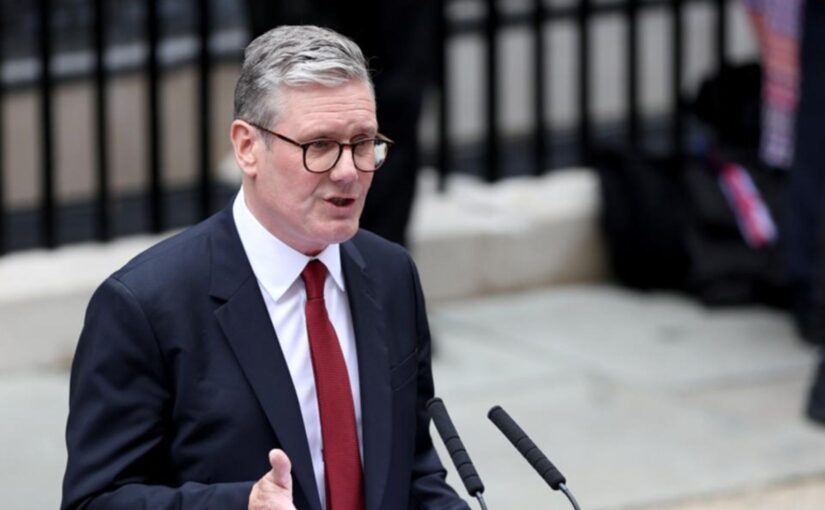
British government’s new China policy: Another case of one step forward two steps back?

The British government published a new National Security Strategy (NSS) on June 24. Before last year’s general election, the Labour Party said that it would carry out a comprehensive audit of the UK’s relationship with China within 100 days of taking office. With the publication of the NSS, a little over 350 days after taking office, the government announced that the audit had been completed. However, contrary to widespread expectations, it will not be published. Rather it is summarised in paragraphs 26, 27 and 28 of the NSS.

The strategy does at least draw a certain line under the more unhinged positions emanating from sections of the Conservative Party, including the short-lived Prime Minister Liz Truss in that it accepts that not engaging with China at all is simply not realistic:

“The actions taken by China, on issues from international security to the global economy, technological development or climate change, have the potential to have a significant effect on the lives of British people.”

“This work underscores the need for direct and high-level engagement and pragmatic cooperation where it is in our national interest – similar to all other members of the G7. In a more volatile world, we need to reduce the risks of misunderstanding and poor communication that have characterised the relationship in recent years. China’s global role makes it increasingly consequential in tackling the biggest global challenges, from climate change to global health to financial stability. We will seek a trade and investment relationship that supports secure and resilient growth and boosts the UK economy.”

However, it then goes on to repeat a number of slanders, false accusations and Cold War tropes, for example:

“Each pillar of the Strategic Framework contains measures that are designed to bolster our overall security with respect to China and other state actors that have the ability to undermine our security.”

“Yet there are several major areas, such as human rights and cyber security, where there are stark differences and where continued tension is likely. Instances of China’s espionage, interference in our democracy and the undermining of our economic security have increased in recent years. Our national security response will therefore continue to be threat-driven, bolstering our defences and responding with strong counter-measures.”

Other anti-China positions and statements are also scattered throughout the militaristic document. For example:

  • Many of the rules which have governed the international system in the past are eroding. Global commons are being contested by major powers like China and Russia, seeking to establish control and secure resources in outer space, cyberspace, the deep sea, and at the Arctic and Antarctic poles.
  • The possibility of major confrontation in the Indo-Pacific continues to grow, with dangerous and destabilising Chinese activity threatening international security.
  • Authoritarian states are putting in place multi-year plans to out-compete liberal democracies in every domain, from military modernisation to science and technology development, from their economic models to the information space…  As the second largest economy in the world, with strong central government control, the challenge of competition from China – which ranges from military modernisation to an assertion of state power that encompasses economic, industrial, science and technology policy – has potentially huge consequences for the lives of British citizens.
  • The hard realities of our geography, security and trade necessitate a prioritisation of the Euro-Atlantic area as part of our “NATO first” approach. But evidence of countries like Russia, China, Iran and North Korea cooperating across theatres – sometimes opportunistically and sometimes by deepening strategic ties – demonstrates the interconnectedness of the Euro-Atlantic with different theatres like the Middle East and Indo-Pacific, where we already have strong partnerships.
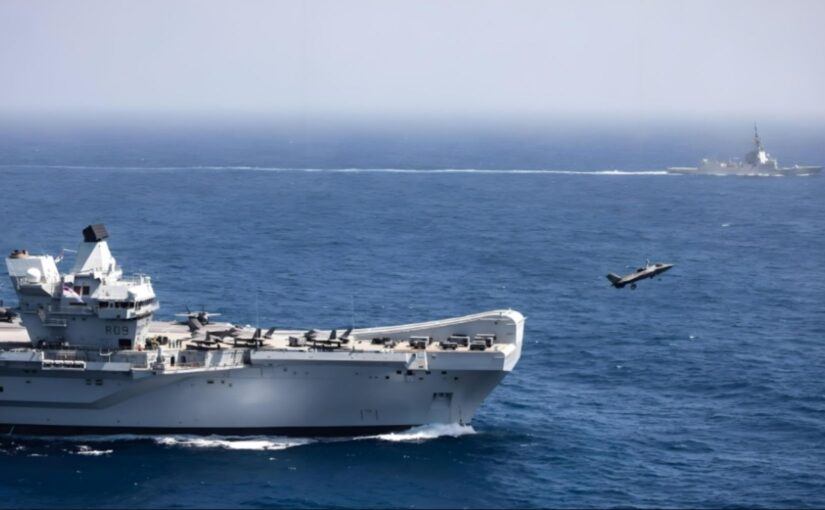
  • The UK’s bilateral relationships and partnerships in the Indo-Pacific are designed to enhance the international security on which our shared prosperity depends. Among others, these include our Global Strategic Partnership with the Republic of Korea, Defence and Security Cooperation Treaty and AUKUS agreement with the US and Australia, our Global Strategic Partnership and joint development of the next generation combat aircraft with Japan alongside Italy, and science and technology collaborations with New Zealand. We will underscore our investment in the stability of the region with the sailing of the UK Carrier Strike Group to Australia, reaffirming the UK’s commitment to a free and open Indo-Pacific.
  • The centrality of the South China Sea and Taiwan Strait to global trade and supply chains underscores the importance to the UK of regional stability. There is a particular risk of escalation around Taiwan… We do not support any unilateral attempts to change the status quo. As part of our strong unofficial relationship with Taiwan we will continue to strengthen and grow ties in a wide range of areas, underpinned by shared democratic values.
  • The AUKUS programme remains a priority project for UK defence and collective security, as part of a NATO-first, but not NATO-only, approach. The US, Australia and the UK will co-develop an advanced fleet of interoperable nuclear-powered attack submarines, which will be operated by both the Royal Navy and Royal Australian Navy, and other advanced capabilities that will strengthen deterrence.

Responding to Pat McFadden, Chancellor of the Duchy of Lancaster, who introduced the report in the House of Commons, Labour’s Emily Thornberry, who chairs the Foreign Affairs Select Committee, asked:

“In the absence of the published China audit, which we have all been looking forward to so much, the national security strategy has been gone through with a fine-toothed comb by many of us. On China, it states:

“‘Instances of China’s espionage, interference in our democracy and the undermining of our economic security have increased in recent years.’

“May we have some guidance on how we will address that, because that is not entirely clear? In particular, what advice is being given to the nations and regions when they are dealing with our third-biggest trading partner, with whom we need to promote but also protect ourselves?”

Continue reading British government’s new China policy: Another case of one step forward two steps back?
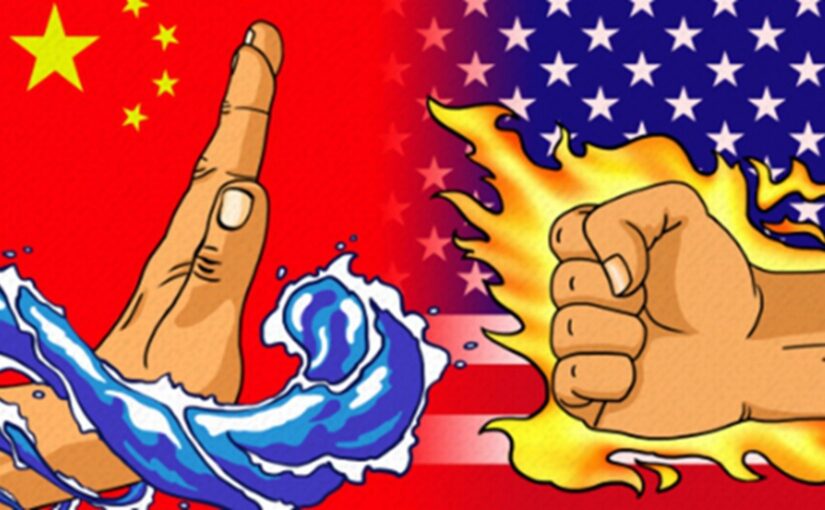
De la contención a la confrontación, del frío al calor: el impulso de EE.UU. hacia la guerra contra China

We are pleased to republish below the Spanish translation, by the progressive Chilean journal El Ciudadano, of Carlos Martinez’s recent article, From containment to confrontation, from cold to hot: the US drive to war on China.

Nos complace republicar a continuación la traducción al español, por parte de la revista progresista chilena El Ciudadano, del reciente artículo de Carlos Martínez, De la contención a la confrontación, del frío al calor: el impulso de EE.UU. hacia la guerra contra China.

La Nueva Guerra Fría no está funcionando

La guerra «fría» liderada por Estados Unidos contra China está fracasando manifiestamente en sus objetivos de suprimir el ascenso de China y debilitar su influencia global.

La economía de China sigue creciendo de manera constante. En términos de paridad de poder adquisitivo (PPA), ya es el más grande del mundo. Su movilización de recursos extraordinarios para salir del subdesarrollo y convertirse en una superpotencia de ciencia y tecnología parece estar dando dividendos sustanciales, con el país estableciendo un claro liderazgo mundial en energía renovable, vehículos eléctricos, telecomunicaciones, fabricación avanzada, construcción de infraestructura y más. Es, con mucho, el líder mundial en el alivio de la pobreza y el desarrollo sostenible. Las sanciones a las exportaciones de semiconductores no han frenado el progreso de China en informática y, de hecho, han tenido un efecto enzimático en su industria nacional de chips. El espectacular éxito del modelo de lenguaje grande R1 de código abierto de DeepSeek indica que Estados Unidos ya no puede dar por sentado su liderazgo en el ámbito digital.

Mientras tanto, los intentos de Occidente de «desacoplarse» de China han dado muy pocos frutos. Si bien un puñado de países imperialistas han prometido eliminar a Huawei de su infraestructura de red, y mientras las sanciones a los vehículos eléctricos chinos significan que los consumidores de Occidente tienen que pagar sumas obscenas por automóviles de calidad inferior, la integración de China y la cooperación mutuamente beneficiosa con el mundo han seguido expandiéndose. China es el mayor socio comercial de aproximadamente dos tercios de los países del mundo. Más de 150 estados se han adherido a la Iniciativa de la Franja y la Ruta. China se encuentra en el centro de los BRICS y de la Organización de Cooperación de Shanghái.Play

Los aranceles de Trump estaban destinados a coaccionar a China para que aceptara los términos comerciales de EE.UU. y obligar a otros países a unirse sin ambigüedades al «campo» económico y geopolítico de Washington, alienando así a China. Nada de eso ha ocurrido. Incluso la Unión Europea, normalmente supina, ha denunciado los aranceles y ha señalado su intención de ampliar el comercio con China.

En resumen, el Proyecto para un Nuevo Siglo Americano no va bien. Zbigniew Brzezinski escribió en su famoso libro El gran tablero de ajedrez: la primacía estadounidense y sus imperativos geoestratégicos (1997) que «el escenario más peligroso sería una gran coalición de China, Rusia y tal vez Irán, una coalición ‘antihegemónica’ unida no por ideología sino por agravios complementarios». Precisamente esa coalición antihegemónica existe, y está uniendo a los países de Asia, África, América Latina, el Caribe y el Pacífico en un proyecto de construcción de un futuro multipolar, lo que plantea un desafío existencial al llamado «orden internacional basado en reglas» basado en los principios del unilateralismo, la guerra, la desestabilización, la coerción y el intercambio desigual.

¿De la guerra fría a la guerra caliente?

Hasta aquí, todo positivo. Pero no hay que olvidar que «la guerra es la continuación de la política por otros medios». Si la política imperialista no está teniendo el efecto deseado, existe un riesgo muy real de que la clase dominante estadounidense y sus secuaces recurran a la guerra abierta en pos de sus ambiciones hegemónicas.

El poder político surge del cañón de una pistola, dijo Mao Zedong. Y aunque el dominio económico de Estados Unidos puede estar disminuyendo, todavía tiene una gran cantidad de armas con las que proyectar poder político. Donald Trump anunció recientemente, sentado junto al genocida maníaco en jefe Benjamin Netanyahu en la Casa Blanca, que el próximo presupuesto de Estados Unidos asignará un billón de dólares récord a las fuerzas armadas. Esto es más de tres veces el gasto militar de China y aproximadamente diez veces el de Rusia. Mientras tanto, Estados Unidos tiene más de 800 bases militares extranjeras, un arsenal de alrededor de 5.500 ojivas nucleares y vastos despliegues de tropas y armas en todo el mundo, cada vez más concentrados en la vecindad de China.

Continue reading De la contención a la confrontación, del frío al calor: el impulso de EE.UU. hacia la guerra contra China

Algerian veterans recall Chinese support to liberation struggle

The Xinhua News Agency recently carried interviews with two veterans of the Algerian liberation struggle regarding the support and training they received from China.

The article states: “In the heat of the Algerian War of Independence in the 1950s, when colonial repression was at its peak and international support was scarce, a distant nation opened its arms to a group of determined young Algerians, training them as soldiers in their quest for national independence. And that nation was the newly founded People’s Republic of China.”

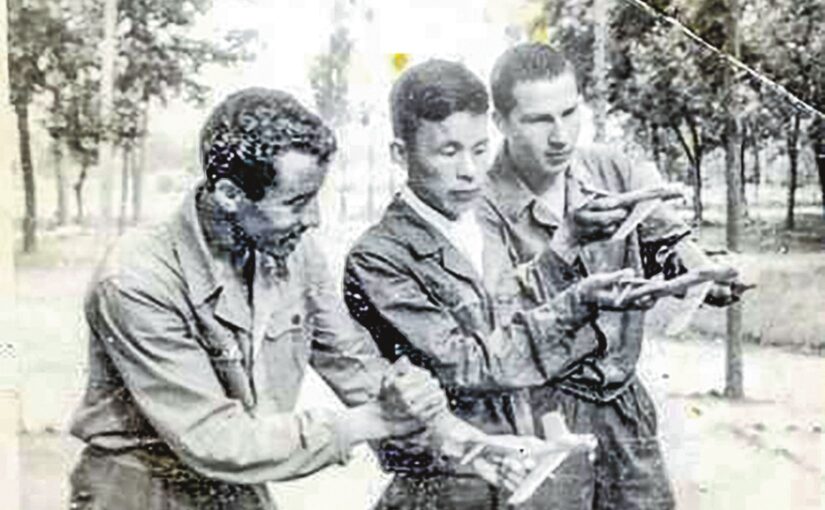
It notes that, after officially recognizing the Provisional Government of the Algerian Republic in September 1958, China hosted 27 Algerian trainees for comprehensive aviation training between 1959 and 1961. More than six decades later, the memories of this experience, which exemplify the long-standing friendship between China and Algeria, remain vivid in the hearts of the veterans.

Retired Lieutenant Colonel Boudaoud Lounes and Colonel Drid Ahmed Lakhdar, two of the Algerian airmen who trained in China, shared their story of sacrifice, solidarity, and a bond that has endured across generations.

Lounes, a former bomber pilot, was among the very first Algerian airmen trained in China during the height of the War of Independence. “We first received basic training in Syria, at the Aleppo military school,” Lounes recalled. “But for our specialization, only one country answered our call: China.” Arriving in China: “We saw immediately the parallels between the Chinese people’s struggles and those of our own people. What touched us most wasn’t just the military knowledge. It was the way they believed in us. We were treated with respect, as equals. In China, we felt like brothers.”

Lakhdar joined the second batch of Algerian air trainees sent to China in 1959. He said: “The Chinese know what it means to be colonized. Their commitment came from their own experience.”

His words echo those of the African-American scholar and revolutionary Dr. WEB Du Bois, speaking in Beijing in 1959 on his 91st birthday:

“China is flesh of your flesh, and blood of your blood. China is colored and knows to what a colored skin in this modern world subjects its owner. But China knows more, much more than this: she knows what to do about it.”

More than 60 years later, Lakhdar recalls when the time came to leave China:

“When we completed our training and went to thank the Chinese Defense Ministry, they told us, ‘no, we must thank you. You opened a front in Africa and freed us from encirclement.’ I will never forget that moment, as it showed how our struggle was part of something bigger. The sense of duty, humility, and collective spirit I learned in China stayed with me for life. I tried to pass it on to younger generations.”

Continue reading Algerian veterans recall Chinese support to liberation struggle

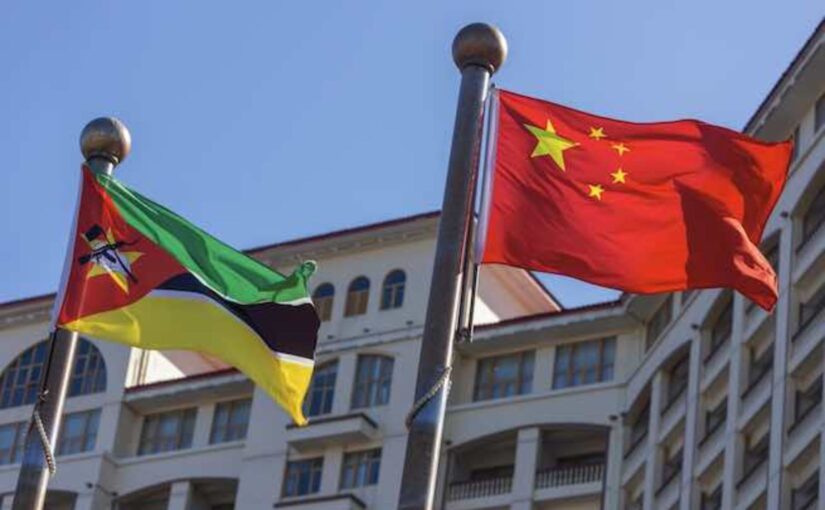
China and Mozambique celebrate 50th anniversary

Chinese President Xi Jinping exchanged messages with his Mozambican counterpart Daniel Francisco Chapo on the occasion of the 50th anniversary of their establishment of bilateral diplomatic relations. On June 25, 1975, Mozambique declared its independence after years of hard-fought people’s war against Portuguese colonial rule. China consistently and strongly supported the armed struggle waged by the FRELIMO liberation movement – which remains Mozambique’s ruling party – and the two countries established diplomatic relations on independence day.

Xi Jinping noted that over the past 50 years since the establishment of diplomatic relations, regardless of changes in the international landscape, China and Mozambique have trusted and supported each other, and the friendship between the two countries remains rock-solid. Xi expressed his firm belief that bilateral relations will surely usher in a brighter future as long as both sides uphold the original aspiration of establishing diplomatic relations and move forward hand in hand.

Daniel Francisco Chapo stated that the 50th anniversary of the establishment of diplomatic relations between the two countries coincides with the 50th anniversary of Mozambique’s independence, which highlights the traditional friendship and brotherhood between the two nations. He expressed gratitude for China’s unconditional support in Mozambique’s struggle for independence.

Foreign Minister Wang Yi also exchanged messages with his counterpart Maria Manuela dos Santos Lucas.

He said that over the past five decades, the two countries have upheld mutual respect and trust, consistently supporting each other on issues concerning their core interests and major concerns. Noting that bilateral cooperation in areas such as agriculture, infrastructure, energy and resources has yielded fruitful results, Wang said the two countries have also maintained close coordination on international affairs, jointly safeguarding international fairness and justice.

Lucas said that over the past 50 years, the traditional friendship between Mozambique and China has grown stronger, and the two countries have established a comprehensive strategic cooperative partnership based on sincerity, equality, mutual respect and trust. Regardless of changes in the international landscape, Mozambique will always consider China a brother and friend.

The following articles were originally published on the website of the Chinese Foreign Ministry and by the Xinhua News Agency.

Xi Jinping Exchanges Congratulatory Messages with Mozambican President Daniel Francisco Chapo on the 50th Anniversary of the Establishment of China-Mozambique Diplomatic Relations

June 25 (MFA) — On June 25, 2025, President Xi Jinping exchanged congratulatory messages with Mozambican President Daniel Francisco Chapo to celebrate the 50th anniversary of the establishment of China-Mozambique diplomatic relations.

Xi Jinping noted that over the past 50 years since the establishment of diplomatic relations, regardless of changes in the international landscape, China and Mozambique have trusted and supported each other, and the friendship between the two countries remains rock-solid. Xi Jinping expressed his firm belief that bilateral relations will surely usher in a brighter future as long as both sides uphold the original aspiration of establishing diplomatic relations and move forward hand in hand. Xi Jinping said he attaches great importance to the development of China-Mozambique relations and is ready to work with Mr. President Daniel Francisco Chapo to take the 50th anniversary of the establishment of diplomatic relations as a new starting point to carry forward traditional friendship, deepen mutually beneficial cooperation within the frameworks of high-quality Belt and Road cooperation and the Forum on China-Africa Cooperation, and jointly write a new chapter in the comprehensive strategic cooperative partnership between China and Mozambique.

Daniel Francisco Chapo stated that the 50th anniversary of the establishment of diplomatic relations between the two countries coincides with the 50th anniversary of Mozambique’s independence, which highlights the traditional friendship and brotherhood between the two nations. He expressed gratitude for China’s unconditional support in Mozambique’s struggle for independence. Mozambique will continue to abide by the one-China principle, support all efforts made by the Chinese government to achieve national reunification, and back the major initiatives proposed by China. Mozambique is willing to continuously deepen bilateral relations with China on the basis of mutual respect, mutual benefit and win-win outcomes, expand practical cooperation, jointly defend multilateralism, and promote world peace, security and prosperity.


Chinese FM exchanges congratulations on 50th anniversary of ties with Mozambican counterpart

BEIJING, June 25 (Xinhua) — Chinese Foreign Minister Wang Yi exchanged congratulations on Wednesday with Mozambican Minister of Foreign Affairs and Cooperation Maria Manuela dos Santos Lucas on the 50th anniversary of diplomatic ties.

Wang, also a member of the Political Bureau of the Communist Party of China Central Committee, noted that China and Mozambique share a traditional friendship.

Over the past five decades, the two countries have upheld mutual respect and trust, consistently supporting each other on issues concerning their core interests and major concerns, he said.

Noting that bilateral cooperation in areas such as agriculture, infrastructure, energy and resources has yielded fruitful results, Wang said the two countries have also maintained close coordination on international affairs, jointly safeguarding international fairness and justice.

He added that standing at a new historical starting point, he is ready to work with Lucas to implement the important consensuses reached by the two heads of state, reinforce mutual support, deepen win-win cooperation, and work for more outcomes while advancing the comprehensive strategic cooperative partnership between China and Mozambique.

For her part, Lucas said that over the past 50 years, the traditional friendship between Mozambique and China has grown stronger, and the two countries have established a comprehensive strategic cooperative partnership based on sincerity, equality, mutual respect and trust.

Regardless of changes in the international landscape, Mozambique will always consider China a brother and friend, the minister said.

She reaffirmed Mozambique’s firm commitment to the one-China principle and expressed willingness to learn from China’s experience in sustainable development.

Lucas also called for deeper cooperation across various sectors, closer coordination on regional and global issues, and joint efforts to defend multilateralism and promote world peace and security.

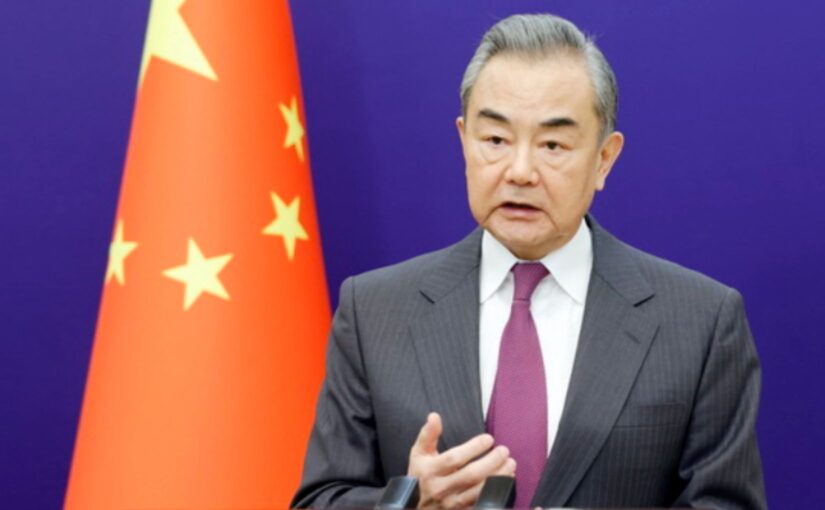
Wang Yi speaks with counterparts from Iran and Türkiye

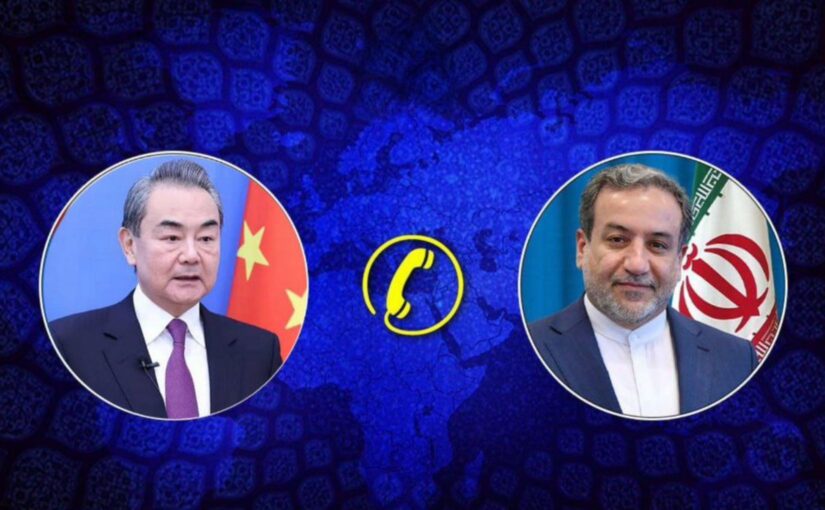
Chinese Foreign Minister continued his round of telephone diplomacy regarding the critical situation in West Asia caused by US-Israeli aggression with calls with his Iranian and Turkish counterparts on June 24.

Iranian Foreign Minister Seyed Abbas Araghchi briefed Wang Yi on the latest developments in the regional situation, emphasising that the dangerous actions by Israel and the United States in attacking Iran’s nuclear facilities seriously violate international law, leaving Iran with no choice but to respond. Although a ceasefire has just been reached between Iran and Israel, the situation remains unstable. Genuine negotiations can only begin once Israel halts its aggression. The session of the Council of Foreign Ministers of the Organisation of Islamic Cooperation (OIC) has condemned the actions of the United States and Israel and expects the Security Council to play a role in this matter. He appreciated China’s understanding and support for Iran’s legitimate position and expressed willingness to maintain close communication with China.

Wang Yi referred to the four proposals recently advanced by President Xi Jinping and added:

After the US attacked Iran, China immediately condemned the action. Military strikes on nuclear facilities under the safeguards of the International Atomic Energy Agency severely violate the purposes of the United Nations (UN) Charter and international law and may lead to nuclear leaks or even nuclear disasters, which should be opposed by the international community.

He said that China supports Iran’s efforts to safeguard national sovereignty and security, and on that basis [emphasis added by us], to achieve a real ceasefire, restore normal life for the people, and help deescalate the situation in the Middle East as soon as possible. China commends the OIC’s unified voice for a ceasefire and an end to the hostilities, as well as the advancement of peace.

In his call with Türkiye’s Foreign Minister Hakan Fidan, Wang Yi said that Israel and the United States have used force against Iran on the grounds of “potential future threats”, which has seriously violated international law and infringed upon Iran’s sovereignty. The US airstrikes on Iran’s nuclear facilities under the safeguards of the International Atomic Energy Agency set a bad precedent and threaten the international nuclear non-proliferation regime. China opposes the use of force to settle disputes and always stands on the side of peace, dialogue, and international justice.

He emphasised that the question of Palestine remains at the heart of the Middle East issue and added that China supports Türkiye in hosting and convening the session of the Council of Foreign Ministers of the Organisation of Islamic Cooperation, urging all parties to send a unified voice opposing war, supporting peace, and calling for deescalation of conflicts.

Hakan Fidan stated that since the outbreak of the conflict between Israel and Iran, Türkiye has been committed to promoting a ceasefire and an end to the hostilities, advocating for dialogue and negotiations. The current ceasefire agreement between the two sides brings some hope. The attacks on nuclear facilities under the safeguards of the International Atomic Energy Agency violate international law and may lead to catastrophic consequences such as nuclear leaks. If Israel wants to safeguard its security, it should accept the two-State solution and stop the humanitarian disaster in Gaza. Maintaining one’s own security at the expense of other nations’ security is unsustainable and may lead to more and wider conflicts.

The following articles were originally published on the website of the Chinese Foreign Ministry.

Wang Yi Has a Phone Call with Iranian Foreign Minister Seyed Abbas Araghchi

June 24 (MFA) — On June 24, 2025, Member of the Political Bureau of the CPC Central Committee and Foreign Minister Wang Yi had a phone call with Iranian Foreign Minister Seyed Abbas Araghchi.

Seyed Abbas Araghchi briefed Wang Yi on the latest developments in the regional situation, emphasizing that the dangerous actions by Israel and the United States in attacking Iran’s nuclear facilities seriously violate international law, leaving Iran with no choice but to respond. Although a ceasefire has just been reached between Iran and Israel, the situation remains unstable. Genuine negotiations can only begin once Israel halts its aggression. The session of the Council of Foreign Ministers of the Organization of Islamic Cooperation (OIC) has condemned the actions of the United States and Israel, and expects the Security Council to play a role in this matter. He appreciated China’s understanding and support for Iran’s legitimate position and expressed willingness to maintain close communication with China. Iran looks forward to China’s greater role in easing the situation.

Continue reading Wang Yi speaks with counterparts from Iran and Türkiye

British government’s Strategic Defence Review hypes war threat against China

The British government published its new “defence” strategy on June 2.

According to a summary carried by the South China Morning Post (SCMP), it “aims to put a ‘stronger, more lethal’ Nato at the forefront of British defence plans as the country boosts its nuclear deterrent, rebuilds munitions and weapons stockpiles and invests billions of pounds into technologically advanced warfare methods.”

Filled with bellicose, Cold War rhetoric, the strategy, as reported by the SCMP:

  • Recommends that Britain should begin discussions with the US and NATO on the “potential benefits and feasibility of enhanced UK participation in NATO’s nuclear mission”. The government wants to achieve this by renewing its existing nuclear deterrent, investing £15 billion (US$20 billion) in its warhead programme.
  • The review is explicit in the need for Britain to play a greater role in nuclear deterrence, as the only European country to assign its nuclear capability to the defence of NATO – something that France does not currently do. The need for stepped-up UK action is driven by “the unprecedented challenge” of the US facing two “near-peer” nuclear powers in Russia and China.
  • With Trident already absorbing much of the UK’s defence expenditure, the policy is likely to be expensive. As well as the investment in nuclear warheads, Britain plans to build as many as 12 new submarines.
  • The study also describes China as a “sophisticated and persistent challenge” while falling short of calling it a threat – in line with the government’s existing approach to the Asian nation. It does warn, however, that the UK is likely to face Chinese technology wherever and with whomever it fights.

Simon Tisdall, foreign affairs commentator for the Guardian newspaper, described the new strategy as escalating the global nuclear arms race and “bringing us closer to Armageddon.”

He writes: “Plans by Keir Starmer’s government to modernise and potentially expand Britain’s nuclear weapons arsenal, unveiled in the 2025 strategic defence review (SDR), seriously undermine international non-proliferation efforts… This dangerous path leads in one direction only: towards the normalisation of nuclear warfare.

“These unconscionable proposals are a far cry from the days when Robin Cook, Labour’s foreign secretary from 1997 to 2001, championed unilateral nuclear disarmament and helped scrap the UK’s airdropped gravity bombs. They are a continuation of a redundant, inhuman, immoral, potentially international law-breaking deterrence policy that cash-strapped Britain can ill afford, will struggle to implement at cost and on time, and which perpetuates illusions about its global power status.”

Responding to the review, a spokesperson for China’s Ministry of Defence rebuked Britain for hyping up the so-called “China threat”. He urged the British side to perceive China in a correct manner and objectively and rationally view China and its military development. “The British side should make more practical efforts to contribute to the growth of relations between the two countries and their militaries.”

In an opinion article, China Military Online wrote:

Continue reading British government’s Strategic Defence Review hypes war threat against China

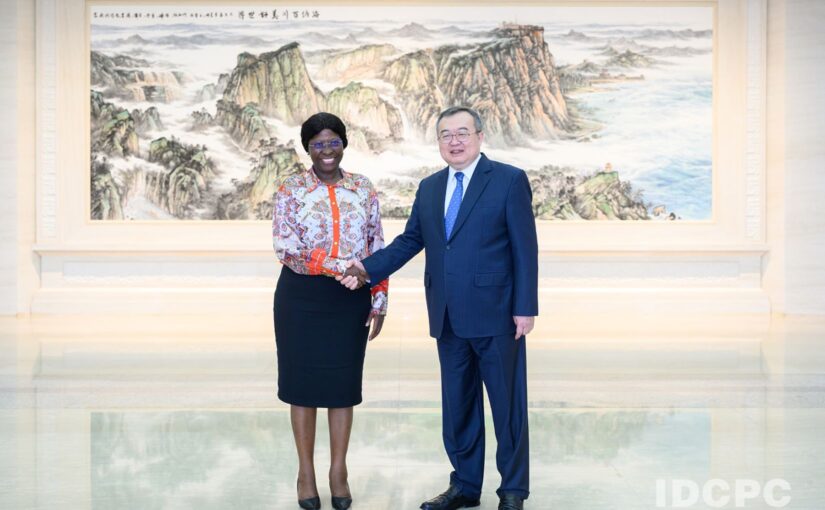
Liu Jianchao meets ministers from Mozambique and Botswana

Liu Jianchao, Minister of the International Department of the Communist Party of China (CPC) Central Committee (IDCPC), met on June 13 with Maria Manuela dos Santos Lucas, Minister of Foreign Affairs and Cooperation of Mozambique, and Phenyo Butale, member of the National Executive Committee of the Umbrella for Democratic Change (UDC) and Minister of International Relations of Botswana.

Both ministers had been in China to attend the Ministerial Meeting of Coordinators on the Implementation of the Follow-up Actions of the Forum on China-Africa Cooperation (FOCAC) and the Fourth China-Africa Economic and Trade Expo, held in Changsha.

Meeting with dos Santos Lucas, Liu said that China and Mozambique are true friends and brothers who have supported and stood alongside each other in trying times. China appreciates Mozambique’s long-term strong support for China on issues concerning China’s core interests and major concerns and will continue to firmly support Mozambique in following a development path that suits its national conditions. China is willing to work with Mozambique, under the strategic guidance of the two heads of state, to take the 50th anniversary of the establishment of diplomatic relations as an opportunity to strengthen the alignment of development strategies, deepen mutually beneficial cooperation in various fields, and better benefit the people of the two countries.

He noted that the CPC and the Mozambique Liberation Front (FRELIMO) have a long-standing friendship which is the political foundation and unique advantage of China-Mozambique relations. The CPC is willing to work with the FRELIMO to carry forward the traditional friendship between the two Parties, strengthen high-level exchanges and political dialogues, engage in in-depth exchanges of experience in party building and poverty alleviation, expand youth exchanges, enhance cooperation in areas such as cadre training, promote practical cooperation in various fields through inter-party channels, and further promote the development of China-Mozambique and China-Africa relations.

Lucas said that China is Mozambique’s most important friend outside Africa. Mozambique is grateful to China for always lending a helping hand to Mozambique in times of difficulties. This year marks the 50th anniversary of Mozambique’s independence as well as the 50th anniversary of the establishment of diplomatic relations between Mozambique and China, but the relationship between FRELIMO and the CPC dates back even further. FRELIMO cherishes its friendly relations with the CPC and is willing to reinforce exchanges at all levels with it and deepen exchanges of experience in party building and state governance. Mozambique appreciates China’s position on the tariff war. China’s approach has inspired many countries, including Mozambique.

Meeting with Phenyo Butale, Liu said, since China and Botswana established diplomatic relations 50 years ago, bilateral relations have always maintained a sound momentum of development, despite the changes in the international landscape. Last year, the two heads of state upgraded China-Botswana relations to a strategic partnership, charting the course for the future development of bilateral relations. China is willing to work with Botswana to implement the important consensus reached by the two heads of state, continue to firmly support each other on issues involving respective core interests and major concerns, strengthen the docking of development strategies, and promote cooperation in economy, trade, infrastructure, and culture under the framework of the Belt and Road Initiative and the FOCAC, so as to promote greater development of China-Botswana and China-Africa relations.

The CPC is willing to, together with the UDC, strengthen political dialogue, enhance mutual learning of experience in party building and state governance, strengthen exchanges in cadre training, and promote practical cooperation in various fields through the “political party +” channel. The world today is fraught with turbulence. Unilateralism, protectionism, and power bullying have severely impacted the international order. Global South countries, including China and Botswana, should strengthen solidarity and coordination, and work together to meet common challenges.

Continue reading Liu Jianchao meets ministers from Mozambique and Botswana

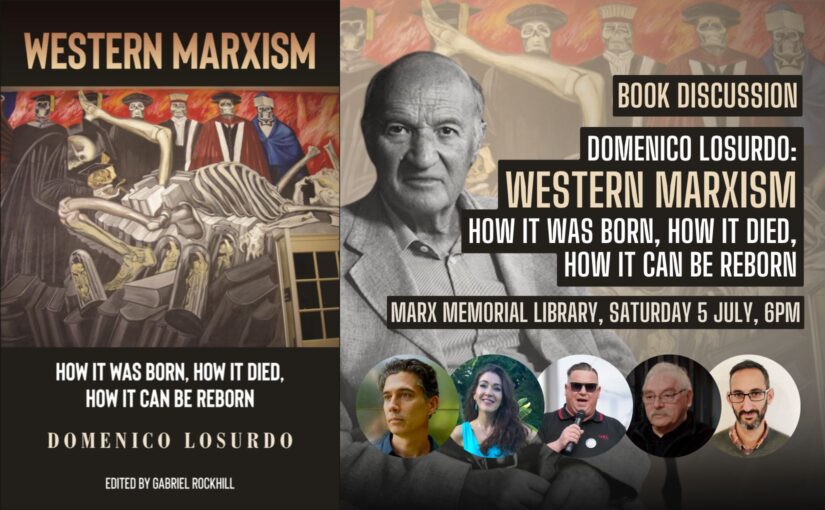
Book discussion: Domenico Losurdo – Western Marxism (5 July)

📆  Saturday 5 July 2025, 6pm Britain, 1pm US Eastern, 10am US Pacific

Join us at the historic Marx Memorial Library (or online) for a discussion of Domenico Losurdo’s crucial book, “Western Marxism: How it was Born, How it Died, How it can be Reborn”, in which the legendary Italian philosopher charts the long and complex history of Marxism’s bifurcation into ‘Western’ and ‘Eastern’ – a division based primarily on the national question and the relative prioritisation of anti-colonial, anti-imperialist struggles.

Only translated into English in 2024, Western Marxism presents a powerful critique of our movement’s historic eurocentrism, and provides a timely challenge to those of us in the West seeking to move forward the struggle for socialism and against imperialism.

Speakers

  • Gabriel Rockhill (Editor of the English edition)
  • Jennifer Ponce de León (Co-author of the introduction to the English edition)
  • Alex Gordon (Chair, Marx Memorial Library)
  • Carlos Martinez (Co-editor, Friends of Socialist China)
  • Chair: Francisco Domínguez (National secretary, Venezuela Solidarity Campaign)

Organisers

Liu Jianchao strengthens ties with Cyprus communists; visits Britain and Norway

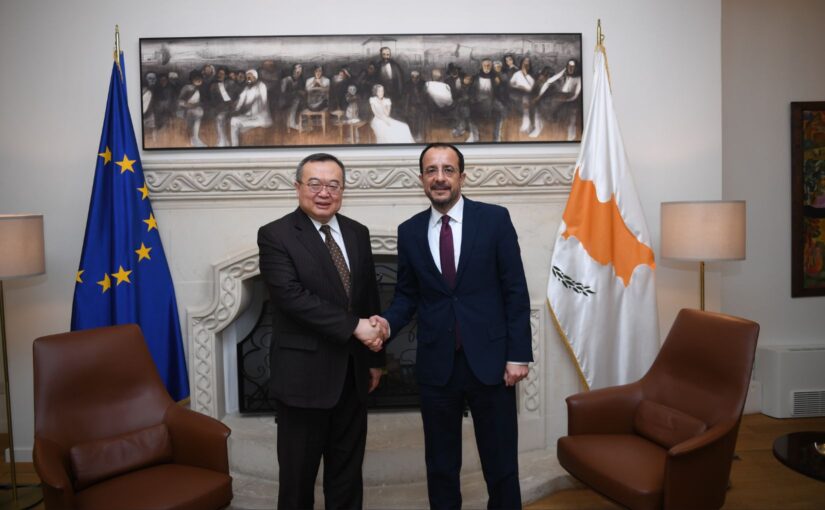
Liu Jianchao, Minister of the International Department of the Communist Party of China Central Committee (IDCPC), recently visited Cyprus, Britain and Norway.

On June 6, he met with Cyprus President Nikos Christodoulides.

Christodoulides said that Cyprus-China relations have a solid foundation and will grow better and stronger no matter how the international situation changes. He expressed Cyprus’s gratitude to China for the valuable support for the Cyprus problem in the UN Security Council, and said Cyprus’s commitment to the one-China principle remains unchanged. Cyprus is willing to, together with China, strengthen high-level visits and promote cooperation in the Belt and Road cooperation, economy, trade, culture and other fields. Cyprus and China both adhere to multilateralism and oppose unilateralism. In the face of a challenging international situation, cooperation is the only choice, while trade wars should be avoided.

Liu said that China appreciates Cyprus’s firm adherence to the one-China principle and will continue to firmly support Cyprus in safeguarding national sovereignty and territorial integrity and support a comprehensive, fair and lasting solution to the Cyprus problem under the framework of relevant UN resolutions. China is willing to work with Cyprus to implement the important consensus reached by the leaders of the two countries, strengthen the alignment of development strategies, expand exchanges and cooperation in economy, trade, agriculture, innovation, culture and education under the framework of the Belt and Road cooperation, and promote greater development of China-Cyprus strategic partnership. In the face of a turbulent and complex international situation, China and the European Union (EU) should adhere to the positioning of our partnership, adhere to mutual respect, mutual benefit and win-win results, and inject more certainty and stability into the world. Cyprus is a good partner of China in the EU and will serve as the rotating presidency of the EU in the first half of next year. China supports Cyprus in playing a greater role in international affairs and hopes that Cyprus will continue to play an active role in promoting the healthy and stable development of China-EU relations.

A major purpose of Liu’s visit was to strengthen ties with the Progressive Party of Working People (AKEL), Cyprus’s communist party. AKEL is a mass party, the second largest in the country’s parliament, holding 15 out of 56 seats.

On June 5, Liu met with AKEL General Secretary Stefanos Stefanou.

Liu noted, China and Cyprus enjoy a profound friendship. China appreciates Cyprus’s firm adherence to the one-China principle, firmly supports Cyprus’s efforts to safeguard its national sovereignty and territorial integrity, and supports a comprehensive, fair and lasting solution to the Cyprus problem under the framework of relevant UN resolutions. China is willing to, together with Cyprus, strengthen the alignment of development strategies, expand practical cooperation in various fields, and strengthen people-to-people and cultural exchanges.

He said that the CPC and the Progressive Party of Working People are good comrades and good partners with similar ideals and beliefs. Next year, the Progressive Party of Working People will celebrate its 100th anniversary, and the CPC will celebrate its 105th birthday. The CPC is willing to work hand in hand with the Progressive Party of Working People to strengthen exchanges and political dialogue at all levels, expand youth exchanges, deepen mutual learning of experience in party building and state governance, and push practical cooperation between the two countries in various fields.

Stefanou welcomed the CPC delegation, which was visiting the headquarters of the Progressive Party of Working People and said that the CPC is a reliable friend and close comrade. He said, the Progressive Party of Working People thanks China for the long-term valuable support to Cyprus and is willing to further expand exchanges with the CPC and promote mutually beneficial cooperation in such areas as economy and trade between the two countries. Hailing the CPC’s achievements in leading the Chinese people to successfully build socialism with Chinese characteristics, he said, we are willing to learn from China’s experience. The Progressive Party of Working People firmly adheres to the one-China principle and appreciates China’s just position on the Cyprus problem. The EU should not regard China as an opponent. The two sides should strengthen cooperation on the basis of equality and mutual respect. The Progressive Party of Working People is willing to play its role in the European Parliament, especially in the European United Left-Nordic Green Left grouping, to promote the development of EU-China relations.

Liu also held discussions on June 7, with the grassroots organisation of the Paphos District Committee of AKEL.

Continue reading Liu Jianchao strengthens ties with Cyprus communists; visits Britain and Norway

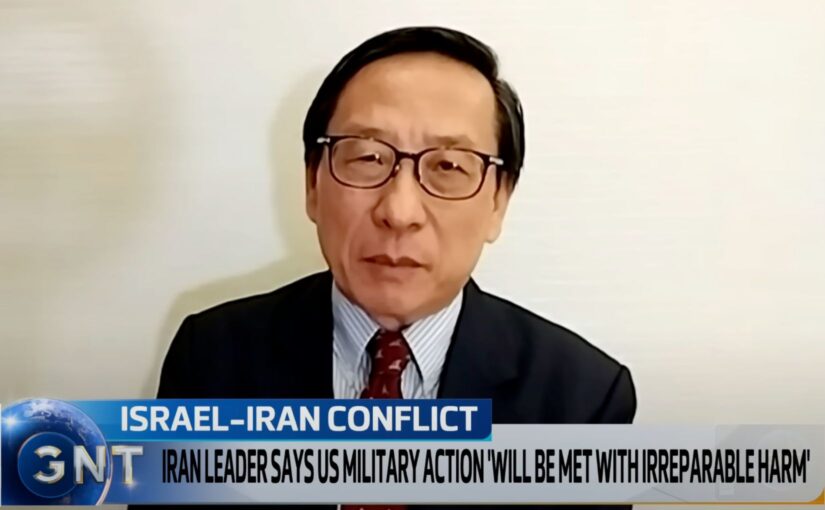
Victor Gao: China deplores Israel’s attack on Iran

In the following interview on Al Arabiya, broadcast on 18 June 2025, prominent Chinese scholar Victor Gao, Vice President of the Center for China and Globalization, gives a powerful critique of the Israeli-US aggression against Iran.

Noting that China has excellent relations with Iran, and that China respects Iran’s sovereignty and territorial integrity, Gao states that China does not recognise the extraterritoriality of any country’s unilateral sanctions against another country, and therefore does not accept the US’s sanctions against Iran. He goes on to clearly reiterate the Chinese government’s position in relation to Israel’s criminal aggression, pointing out that Israel violated international law, unilaterally launching a war against a sovereign country.

China really deplores Israel’s military attack on nuclear facilities inside Iran and considers it a very serious offence against world peace and security.

While condemning Israel’s aggression, Gao notes that Iran’s military response is justified and legitimate, as a defence of sovereignty and territorial integrity.

Victor Gao also points to the outrageous hypocrisy of Israel’s supposed justification for its aggression, that is, that Iran is attempting to develop nuclear weapons. Given that Israel itself possesses nuclear weapons, and that it has never signed the Nuclear Non-Proliferation Treaty, this accusation is a blatant double standard. “I don’t think there’s a higher level of double standards and hypocrisy than that.”

Commenting on US president Trump’s suggestion that the US might assassinate the Iranian leadership, Gao opines that “assassination of heads of state, political or military leaders, or religious figures is unacceptable in today’s world”. As such, he urges the US to maintain a minimum level of decency in its international relations, and to use its influence to de-escalate the situation rather than inflame it.

Young people can build improved people-to-people relations between China and Britain

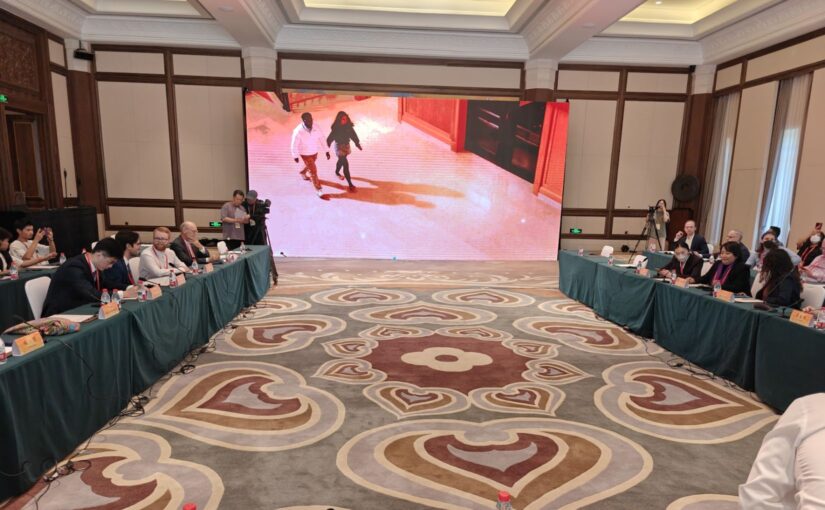
The recent Friends of Socialist China delegation to China contributed to a parallel session of the Dialogue on Exchanges and Mutual Learning Among Civilisations, organised by Schwarzman Scholars of Tsinghua University, on the theme of Youth power in dialogue among civilisations.

Callum Norris, a member of the Young Communist League of Britain and of Friends of Socialist China’s Britain committee, gave the following brief presentation focused on the challenges faced by young people in Britain, and how British youth can provide much-needed leadership in developing people-to-people relations and grassroots friendship with China.

I want to say thank you to our hosts for allowing me the privilege to speak at this event; it’s an honour to share the experiences of Britain’s youth alongside friends from around the world.

Britain’s youth are faced with numerous problems, many of which correlate closely with young people in other parts of the world.  It is common for young people to struggle to find long term, affordable and inadequate housing, dealing with endless rent increases and extortionate house prices. Houses and flats are often filled with mould and damp – in my own experience in tenant unions I have witnessed young people affected by serious, long term health conditions as a result of poor housing conditions.

Education is another big issue in Britain. Tuition fees continue to increase, discouraging many working class youth from attending university. For those able to attend, at the end of their studies they often find a hostile job market with few opportunities available. From personal experience, a close friend achieved a master’s degree in history, but now can only find work in McDonald’s. This is by no means an isolated case, but is increasingly common for people leaving higher education.

There is also the twin threats of war and global warming hanging over the heads of British youth, considering the context of three continuous years of war with Russia in Ukraine, as well as the horrific genocide in Gaza, which the British government has been directly involved in and supported. With regards to Ukraine, the British military has suggested that young people in Britain should prepare for war with Russia by 2030. This all alongside young people who have grown up amidst permanent war headed by NATO and western Imperialism across the Global South.

The issue of war also links into the threat of climate catastrophe; with every bomb dropped, we move a step closer to climate breakdown. The climate crisis has seen the formation of numerous environmental protest groups, their memberships largely made up of young people, which have come under continued state suppression.

This combination of issues has created a generally pessimistic attitude amongst the youth in Britain, who see diminishing prospects for a liveable and rewarding life. It is interesting then, to contrast this with the experiences of young people in China, where cures are often found for these issues. In terms of housing, the majority of people in China own their homes. Meanwhile, educational institutions continue to improve, attracting international recognition. Peace and not war has been the agenda for China since 1949, and China is leading the world in the battle against climate breakdown.

The question then must be how do we better spread this information to young people in Britain. On the positive side, many young people are no longer falling into the propaganda trap laid by Western media organisations. The use of social media, especially TikTok and most recently RedNote, has seen increased direct communication between young people in China and Britain, and has helped greatly to break down the pervasive anti-China narrative.

On the other hand, there are still many who have not been able to see past these lies and smears. It seems to me that the remedy to this is a continued push on digital media in order to foster continued direct people-to-people relationships between China and Britain, with a specific focus on those issues which young people in Britain are most affected by: the aforementioned housing crisis, educational crisis, permanent war and the climate crisis, and contrasting them with China’s continued success in these areas.

I would again like to thank our hosts for allowing me to speak at such an important event, which I hope will continue to foster people-to-people relations between China and the rest of the world, and look forward to the day when young people in China, Britain and the rest of the world can unite together to overcome the many challenges facing the world today and build a brighter future.

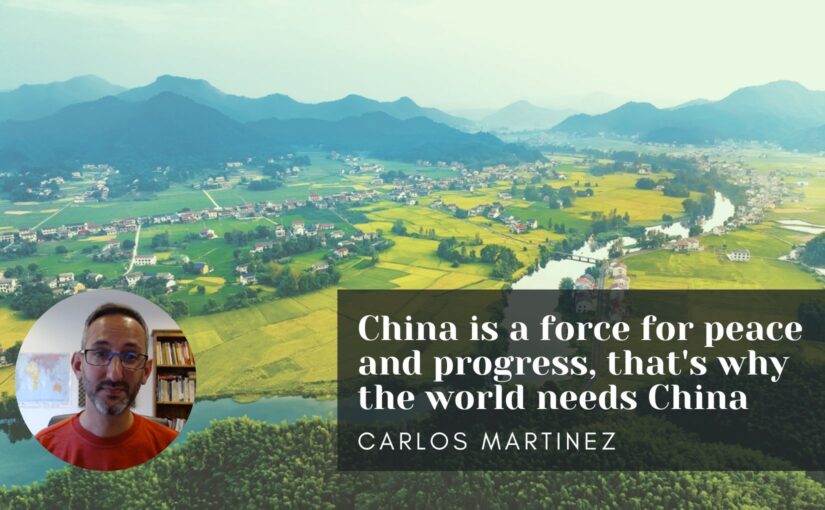
China is a force for peace and progress, that’s why the world needs China

Friends of Socialist China was among the organisers of a hybrid event in Portland, Oregon (US), held on 22 June 2025, discussing Kyle Ferrana’s important book Why the World Needs China.

In his speech (delivered via Zoom), Carlos Martinez endorsed the central thesis of the book, arguing that China represents a global vision centred around peace, progress and sustainable development; whereas the US and its allies represent a global vision centred around imperialism, hegemony, war, ecocide and chaos.

Discussing recent developments in West Asia, in particular the US-Israeli criminal attacks on Iran and the ongoing genocide in Gaza, Carlos highlighted China’s constructive role in the region, including its mediation between Iran and Saudi Arabia and its support for Palestinian unity. He linked the attacks on Iran with the West’s continuing efforts to destabilise China and broader imperialist resistance against a rising multipolar world.

Emphasising the need for global solidarity, Carlos called for building “a global united front composed of the socialist countries, the national liberation movements, the anti-imperialist forces of the Global South, and the progressive forces in the advanced capitalist countries”, for supporting the forces of liberation worldwide, and for supporting the socialist countries – “and particularly China, as the largest and most advanced socialist country, as the country which is at the core of the emerging multipolar system”.

The video of the speech is embedded below, followed by the text.

“Why the World Needs China” is the somewhat provocative title of Kyle’s book.

But in my view the essential correctness of this title is becoming clearer and clearer with every passing day, and specifically with every despicable act of aggression carried out by the United States and its Israeli proxy against the people of Palestine, of Iran, of Yemen and of Lebanon.

As you all know, last night the US military openly joined Israel’s criminal war against Iran, bombing three nuclear facilities. I say “openly joined the war”, because the fact is that the US and its allies been providing weapons, intelligence, logistical support, war propaganda and diplomatic cover from the very beginning – both for this war on Iran and for the genocidal assault on Gaza.

The whole world can increasingly see what the United States and its allies represent, and increasingly the whole world can see what China represents. And these are two vastly different visions of the future of the world, one put forward by the capitalist class in the United States, one put forward by the working class in China.

The US is proposing a Project for a New American Century. This neoconservative notion – originally associated with notorious hawks such as Paul Wolfowitz, Donald Rumsfeld and Dick Cheney – has become a consensus position in mainstream US politics, adhered to by all administrations, Republican and Democrat alike. It’s a fundamentally hegemonist, imperialist proposal; a proposal for spreading death and destruction for the sake of projecting the US’s domination of the 20th century into the 21st century.

Continue reading China is a force for peace and progress, that’s why the world needs China

China, Russia and Pakistan table UN resolution on Iran

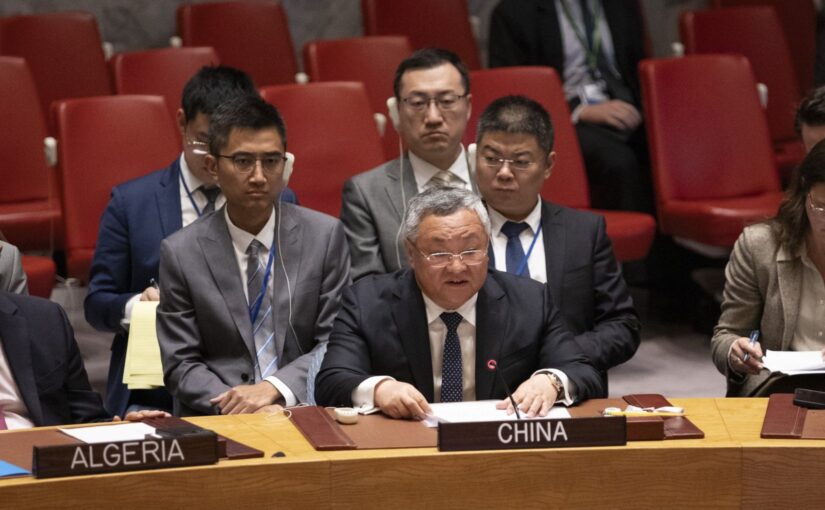
Following the US bombing of nuclear sites in Iran, the United Nations Security Council convened an emergency meeting on Sunday, June 22, 2025.

Addressing the meeting, Chinese Ambassador Fu Cong said:

“Yesterday, the United States conducted attacks on three Iranian nuclear facilities in Fordow, Natanz, and Isfahan. China strongly condemns the US attacks on Iran and the bombing of nuclear facilities under the safeguards of the IAEA [International Atomic Energy Agency]. The actions of the United States seriously violate the purposes and principles of the UN Charter and international law, as well as Iran’s sovereignty, security, and territorial integrity. They have exacerbated tensions in the Middle East and dealt a heavy blow to the international nuclear non-proliferation regime. The international community must uphold justice and make concrete efforts to cool down the situation and restore peace and stability.”

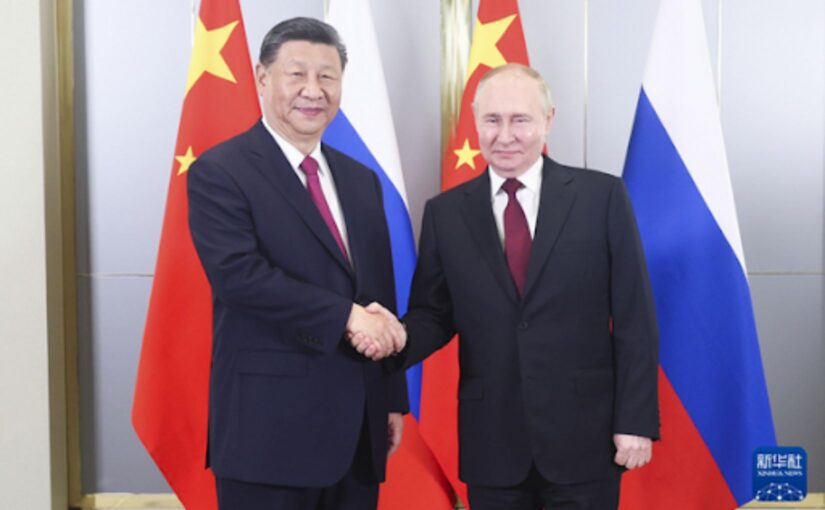
He then went on to make four appeals which are essentially the same as the Chinese position already put forward by President Xi Jinping in his June 19 telephone call with Russian President Vladimir Putin.

Russia, China, and Pakistan, the Ambassador said, have proposed a draft resolution calling for an immediate and unconditional ceasefire, protection of civilians, respect for international law, and engagement in dialogue and negotiation.

The following is the full text of Ambassador Fu Cong’s remarks. They were originally published on the website of China’s Permanent Mission to the United Nations.

President,

I thank you for convening this emergency meeting. I also thank Secretary-General António Guterres for his statement and Assistant Secretary-General Miroslav Jenča and Director General Rafael Grossi for their briefings.

Yesterday, the United States conducted attacks on three Iranian nuclear facilities in Fordow, Natanz, and Isfahan. China strongly condemns the US attacks on Iran and the bombing of nuclear facilities under the safeguards of the IAEA. The actions of the United States seriously violate the purposes and principles of the UN Charter and international law, as well as Iran’s sovereignty, security, and territorial integrity. They have exacerbated tensions in the Middle East and dealt a heavy blow to the international nuclear non-proliferation regime. The international community must uphold justice and make concrete efforts to cool down the situation and restore peace and stability. In this connection, I wish to put forward four appeals.

First, we call for an immediate ceasefire and an end to the hostilities. In the context of the abrupt escalation of tensions in the Middle East, China is deeply concerned about the risk of the situation getting out of control. The parties to the conflict, Israel in particular, should reach an immediate ceasefire to prevent a spiraling escalation and to resolutely avoid the spillover of the war. The parties concerned should abide by international law, curb the impulse to use force, and avoid exacerbating conflicts and adding fuel to the fire.

Second, we call for effective protection of civilians. The ultimate victims of all conflicts are the innocent people. China is deeply saddened by the large number of civilian casualties caused by the conflict. Civilians and the civilian facilities must not become targets of military operations, and the bottom line of international humanitarian law must not be breached. Parties to the conflict should place the interest and well-being of the people of the countries in the region above everything else, and make every effort to avoid harm to innocent civilians and refrain from attacking civilian facilities.

Third, we call for commitment to dialogue and negotiation. Peace in the Middle East cannot be achieved by the use of force. Dialogue and negotiation are the fundamental way out. At present, diplomatic means to address the Iranian nuclear issue have not been exhausted, and there is still hope for a peaceful solution. Parties should stay firmly committed to the political settlement of the Iranian nuclear issue and work to bring it back onto the track of a political solution through dialogue and negotiation, with a view to reaching an agreement acceptable to all parties.

Fourth, we call for swift actions by the Security Council. The Security Council shoulders the primary responsibility for the maintenance of international peace and security. It cannot stand idly by in the face of a major crisis. Russia, China, and Pakistan have proposed a draft resolution calling for an immediate and unconditional ceasefire, protection of civilians, respect for international law, and engagement in dialogue and negotiation. We hope that Council members can demonstrate their strong sense of responsibility by jointly supporting the draft resolution, to enable the Security Council to fulfill its responsibility for the maintenance of international peace and security.

China stands ready to work with the international community to foster synergy, uphold justice, and make unremitting efforts to restore peace and stability in the Middle East.

Thank you, President.

Chinese scholar lauds Vietnam’s revolutionary press

A solemn ceremony was held in the Vietnamese capital Hanoi on June 21 to celebrate the 100th anniversary of the Vietnamese Revolutionary Press Day (June 21, 1925-2025).

Addressing the meeting, Politburo member, Secretary of the Party Central Committee, and Chairman of the Party Central Committee’s Commission for Communications, Education and Mass Mobilisation  of the Communist Party of Vietnam Nguyen Trong Nghia said that the celebration of the 100th anniversary of the Vietnamese Revolutionary Press Day is an opportunity to review and multiply the pride, respect, and infinite gratitude towards President Ho Chi Minh – the founder, leader, trainer and great teacher of the Vietnamese revolutionary press. It is an occasion to show the pride of and gratitude to outstanding and exemplary leaders, revolutionary soldiers, and senior journalists; remember generations of journalists who directly fought and heroically sacrificed during the resistance wars against the French colonialists and US imperialists; and to express gratitude for the contributions of generations of journalists and soldiers who have raised high the Party’s ideological flag.

Emphasising that the 100-year journey of the Vietnamese revolutionary press has marked the efforts, achievements, lessons, challenges, ups and downs, and aspirations to move forward, Nghia affirmed that over the past century, the Vietnamese revolutionary press has always been steadfast, loyal, and devoted to the noble revolutionary cause of the Party, the nation, and the people.

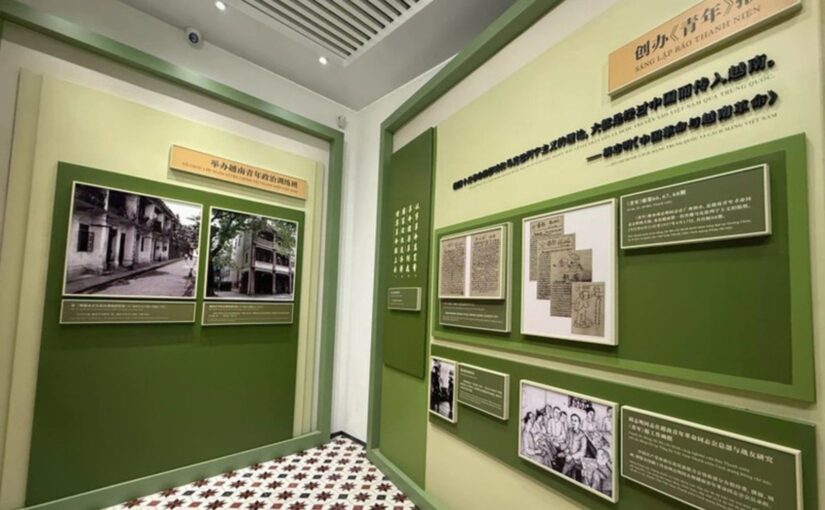
In an interview with the Vietnam News Agency to mark the occasion, Li Minghan, an intellectual from China’s Hong Kong who has devoted most of his life to studying President Ho Chi Minh’s revolutionary career, described “Thanh Nien” (Young People) newspaper, which laid the foundation for Vietnam’s revolutionary journalism a century ago, as a modest publication with great responsibility and mission.

Li said that President Ho Chi Minh, drawing from his experience in the French communist movement and his role in founding the Le Paria (The Pariah) newspaper in Paris in 1922 to expose colonial crimes and unite the global anti-colonial struggle, understood the power of revolutionary journalism as a tool to popularise, mobilise, organise, and lead revolutionary movements. During his stay in China’s Guangzhou city from 1924 to 1927 to prepare for the establishment of a Communist Party to lead Vietnam’s revolution, President Ho Chi Minh founded “Thanh Nien” newspaper and released its first issue on June 21, 1925. Li said that despite its small format and simple design and printing, the newspaper carried immense responsibility and mission, contributing to the establishment of the Communist Party of Vietnam, the decisive factor in the success of the country’s revolution in the past, today, and in the future.

Today, original copies of the early issues are on display at the relic site of the headquarters of the Vietnamese Revolutionary Youth League in Guangzhou city. An exhibition spotlighting the time President Ho Chi Minh spent in China is being held from May 10 to August 10 at the Guangzhou Uprising Memorial Hall, featuring a dedicated display of copies of Thanh Nien.

The following article was originally published by Nhân Dân.

Li Minghan, an intellectual from China’s Hong Kong who has devoted most of his life studying President Ho Chi Minh’s revolutionary career, described “Thanh nien” (Young people) newspaper, which laid foundation for Viet Nam’s revolutionary journalism a century ago, as a modest publication with great responsibility and mission.

In an interview with the Viet Nam News Agency on the occasion of Viet Nam’s Revolutionary Press Day (June 21), Li said that President Ho Chi Minh, drawing from his experience in the French communist movement and his role in founding the Le Paria (The Miserable) newspaper in Paris in 1922 to expose colonial crimes and unite the global anti-colonial struggle, understood the power of revolutionary journalism as a tool to popularise, mobilise, organise, and lead revolutionary movements.

During his stay in China’s Guangzhou city from 1924 to 1927 to prepare for the establishment of a Communist Party to lead Viet Nam’s revolution, President Ho Chi Minh founded “Thanh nien” newspaper and released its first issue on June 21, 1925. Li said that despite its small format and simple design and printing, the newspaper carried immense responsibility and mission, contributing to the establishment of the Communist Party of Viet Nam, the decisive factor in the success of the country’s revolution in the past, today, and in the future.

The newspaper was printed on a compact 18×24 cm paper size, with simple design and clear content.

Between June 21, 1925, and April 17, 1927, the newspaper published a total of 88 issues, with 100 copies of each edition distributed to Viet Nam by sailors, providing information and building solidarity within Viet Nam’s revolutionary movement and connecting it with communist movements in the region and the world.

Today, original copies of the early issues are on display at the relic site of the headquarters of the Vietnamese Revolutionary Youth League in Guangzhou city, Guangzhong province.

An exhibition spotlighting the time President Ho Chi Minh in China is taking place from May 10 to August 10 at the Guangzhou Uprising Memorial Hall, featuring a dedicated display of reproduced copies of Thanh Nien newspaper’s issues No. 63, 66, and 67. The event is held in celebration of the 75th anniversary of the Viet Nam – China diplomatic relations and the Year of China-Viet Nam Humanistic Exchange 2025.

China and DPRK support dialogue between civilisations

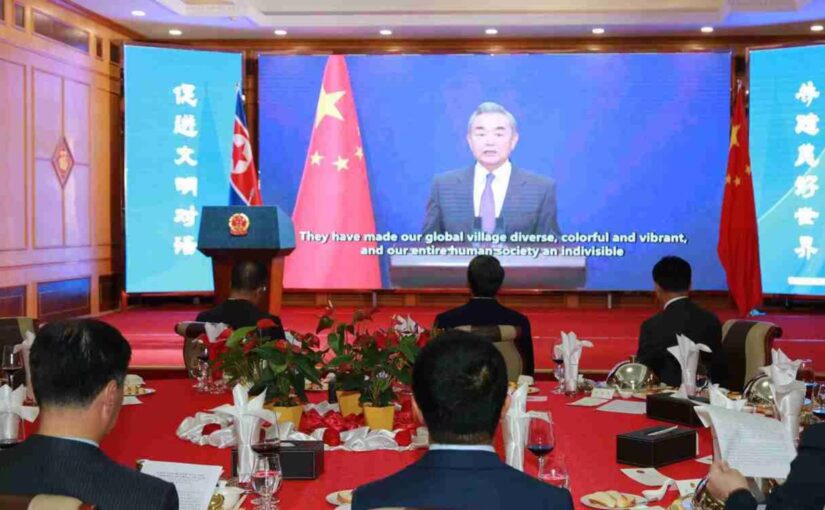
The Chinese Embassy in the Democratic People’s Republic of Korea (DPRK) held a reception for the first International Day for Dialogue among Civilisations on June 17.

In June 2024, the 78th session of the United Nations General Assembly adopted a resolution initiated by China and more than 80 other countries, which declares June 10 the International Day for Dialogue among Civilisations.

Addressing the reception, Chinese Ambassador to the DPRK Wang Yajun underscored the significance of dialogue among civilizations in lighting up the path to peace and development for the humankind, adding that the pursuit of peace and development is a historical trend and common aspiration of peoples across the world.

DPRK Vice Foreign Minister Kim Son Gyong said that the diversity of civilisations, as a result of long-time evolution in history, deserves respect, and that the acts of recklessly pursuing geopolitical interests, inciting conflict and antagonism among civilisations, and obstructing world peace and development, should be flatly rejected.

China’s initiative to establish the International Day for Dialogue among Civilisations is an important contribution to advancing exchanges and cooperation among nations and civilisations and building a just international order.

Kim added that deepening the traditional friendly ties between the DPRK and China has been a consistent stance of the Workers’ Party of Korea and the government of the DPRK, and the DPRK side is ready to work with the Chinese side to safeguard the common interests of developing countries and pursue true internationalism.

The following article was originally published by the Xinhua News Agency.

PYONGYANG, June 18 (Xinhua) — The Chinese Embassy in Pyongyang on Tuesday held a reception for the first International Day for Dialogue among Civilizations, aiming to boost dialogue for a better world.

Present at the event were Kim Son Gyong, vice minister of foreign affairs of the Democratic People’s Republic of Korea (DPRK), other DPRK officials from the foreign and culture ministries, as well as diplomats from various countries.

Addressing the reception, Chinese Ambassador to the DPRK Wang Yajun said civilizations are beautiful and complementary for diversity, and harmonious for exchanges.

Wang underscored the significance of dialogue among civilizations in lighting up the path to peace and development for the humankind, adding that the pursuit of peace and development is a historical trend and common aspiration of peoples across the world.

He urged the international community to jointly uphold the equality among civilizations, practice exchanges of civilizations and enhance the progress of civilizations, in a bid to build a better future for mankind.

Kim, the DPRK vice foreign minister, said in his address that the diversity of civilizations, as a result of long-time evolution in history, deserves respect, and that the acts of recklessly pursuing geopolitical interests, inciting conflict and antagonism among civilizations, and obstructing world peace and development, should be flatly rejected.

China’s initiative to establish the International Day for Dialogue among Civilizations is an important contribution to advancing exchanges and cooperation among nations and civilizations, and building a just international order, Kim said.

Deepening the traditional friendly ties between the DPRK and China has been a consistent stance of the Workers’ Party of Korea and the government of the DPRK, Kim said, adding that the DPRK side is ready to work with the Chinese side to safeguard the common interests of developing countries and pursue true internationalism.

In June 2024, the 78th session of the United Nations General Assembly adopted a resolution initiated by China and more than 80 other countries, which declares June 10 the International Day for Dialogue among Civilizations. 

Chinese and Sri Lankan communists strengthen ties

Ties between Chinese and Sri Lankan communists have taken a significant step forward with a visit to Beijing by a delegation led by Tilvin Silva, General Secretary of the Janatha Vimukthi Peramuna (JVP – People’s Liberation Front) of Sri Lanka. The JVP is Sri Lanka’s largest Marxist Party and the country’s ruling party since the presidential and parliamentary elections respectively held in September and November 2024.

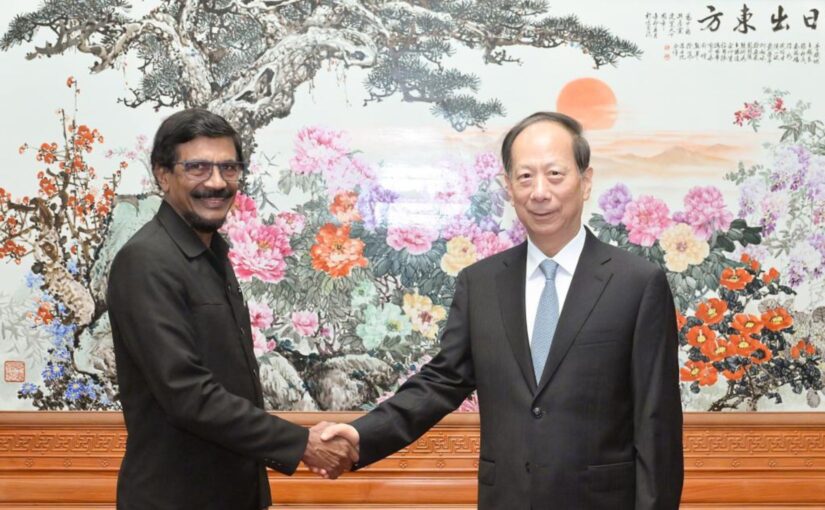
On June 18, the delegation of senior JVP cadres led by Silva met with Shi Taifeng, a member of the Political Bureau of the Communist Party of China (CPC) Central Committee and head of the CPC Central Committee’s Organisation Department.

Shi said China is willing to deepen the exchange of experience in party and state governance and build a community with a shared future. Silva said Sri Lanka stands ready to implement the important consensus reached between the two heads of state, deepen the inter-party relations and further enhance friendship.

The previous day, the delegation met with Liu Jianchao, Minister of the International Department of the CPC Central Committee (IDCPC).

Liu and Silva also presided over a political dialogue between the two Parties.

Liu said that China and Sri Lanka have a long-standing friendship, and the Rubber-Rice Pact stands as a true testament to the genuine amity between the two countries. [The Rubber-Rice Pact was concluded between the two countries on December 18, 1952, five years before their establishment of diplomatic relations. It provided much needed economic and food security support to Sri Lanka – then known as Ceylon – while breaking the US-led embargo on rubber exports to China. It was the People’s Republic’s first trade agreement with a non-socialist country.] Since the establishment of diplomatic relations 68 years ago, the two sides have always supported each other, pursued solidarity and cooperation, and are committed to building a stronger China-Sri Lanka relationship. In January this year, President Xi Jinping held talks with President Anura Kumara Dissanayake [who is also the leader of the JVP] who was visiting China, drawing a grand blueprint for the development of China-Sri Lanka relations. In the face of an international situation marked by changes and chaos, regional countries should seek strength through unity and jointly respond to risks and challenges. China and Sri Lanka should strengthen coordination in international and regional affairs, jointly defend international fairness and justice and the global economic and trade order and safeguard the common and long-term interests of both sides.

Liu added that, sharing similar beliefs and ideas, the CPC is willing to work with the JVP to advance exchanges at all levels, engage in institutionalised political dialogues, deepen concept exchanges, and engage in mutual learning in governance experience to strengthen the governing capacity of both Parties. China is willing to work with Sri Lanka through the “political party +” platform to expand practical cooperation in various fields, implement more livelihood projects, and ensure that the dividends of the growing relations between the two Parties and the two countries better benefit the two peoples. 

Silva said that Sri Lanka thanks China for always lending timely and valuable support in times of difficulty. Sri Lanka admires China’s major achievements in modernisation. It stands ready to give full play to its geographical advantages in the high-quality Belt and Road cooperation as well as strengthen cooperation with China in areas such as infrastructure, finance and poverty reduction, to boost Sri Lanka’s economic and social development and the development of the region. The JVP is willing to continue to deepen and consolidate the traditional friendship with the CPC and play an active role in boosting China-Sri Lanka strategic cooperative partnership.

The following articles were originally published by the Xinhua News Agency and on the IDCPC website.

Senior Chinese official meets Sri Lankan JVP delegation

BEIJING, June 18 (Xinhua) — Shi Taifeng, a member of the Political Bureau of the Communist Party of China (CPC) Central Committee and head of the CPC Central Committee’s Organization Department, met with a delegation of senior cadres from Janatha Vimukthi Peramuna (JVP) of Sri Lanka, led by its General Secretary Tilvin Silva, in Beijing on Wednesday.

Shi said China is willing to work with Sri Lanka to, under the strategic guidance of the important consensus reached between the two heads of state, promote mutually beneficial cooperation in areas such as high-quality Belt and Road cooperation, deepen the exchange of experience in party and state governance, and build a community with a shared future.

Silva said Sri Lanka stands ready to implement the important consensus reached between the two heads of state, deepen the inter-party relations and further enhance friendship.


Liu Jianchao Meets with a Delegation of the Janatha Vimukthi Peramuna of Sri Lanka

Beijing, June 17th (IDCPC) —Liu Jianchao, Minister of the International Department of the CPC Central Committee (IDCPC), met here today with a delegation led by Tilvin Silva, General Secretary of the Janatha Vimukthi Peramuna (JVP) of Sri Lanka. Liu and Silva also presided over a political dialogue between the two Parties.

Liu said that China and Sri Lanka has a long-standing friendship, and the Rubber-Rice Pact stands as a true testament to the genuine amity between the two countries. Since the establishment of diplomatic relations 68 years ago, the two sides have always supported each other, pursued solidarity and cooperation, and are committed to building a stronger China-Sri Lanka relationship. In January this year, President Xi Jinping held talks with President Anura Kumara Dissanayake who was visiting China, drawing a grand blueprint for the development of China-Sri Lanka relations. China-Sri Lanka relations are of vital importance to regional stability and development. China consistently prioritizes Sri Lanka in its neighborhood diplomacy and stands ready to work with Sri Lanka to implement the important consensus reached by the two heads of state, continuously consolidate strategic mutual trust, enhance mutual learning in governance, deepen development integration, jointly build a China-Sri Lanka community with a shared future, and promote the building of a community with a shared future with neighboring countries. In the face of an international situation marked by changes and chaos, regional countries should seek strength through unity, and jointly respond to risks and challenges. China and Sri Lanka should strengthen coordination in international and regional affairs, jointly defend international fairness and justice and the global economic and trade order, and safeguard the common and long-term interests of both sides.

Liu expressed that friendly exchanges between political parties have long boosted China-Sri Lanka relations. Sharing similar beliefs and ideas, the CPC is willing to work with the JVP to advance exchanges at all levels, engage in institutionalized political dialogues, deepen concept exchanges, and engage in mutual learning in governance experience to strengthen the governing capacity of both Parties. China is willing to work with Sri Lanka through the “political party +” platform to expand practical cooperation in various fields, implement more livelihood projects, and ensure that the dividends of the growing relations between the two Parties and the two countries better benefit the two peoples.

Silva said, Sri Lanka attaches great importance to its relations with China and firmly adheres to the one-China principle. Sri Lanka thanks China for always lending timely and valuable support to Sri Lanka in times of difficulty. Sri Lanka admires China’s major achievements in modernization. It stands ready to give full play to its geographical advantages in the high-quality Belt and Road cooperation as well as strengthen cooperation with China in areas such as infrastructure, finance, poverty reduction to boost Sri Lanka’s economic and social development and the development of the region. Sri Lanka appreciates China’s constructive role in regional and international affairs and is ready to strengthen communication with China on regional affairs to promote regional peace and stability. The JVP is willing to continue to deepen and consolidate the traditional friendship with the CPC and play an active role in boosting China-Sri Lanka strategic cooperative partnership.

Sun Haiyan, Vice-minister of the IDCPC, Eranga Gunasekara, National Organizer of the Socialist Youth Union of the JVP and Deputy Minister of Youth Affairs, and Muneer Mulaffer, Deputy Minister of Justice and National Integration, participated in the political dialogue.

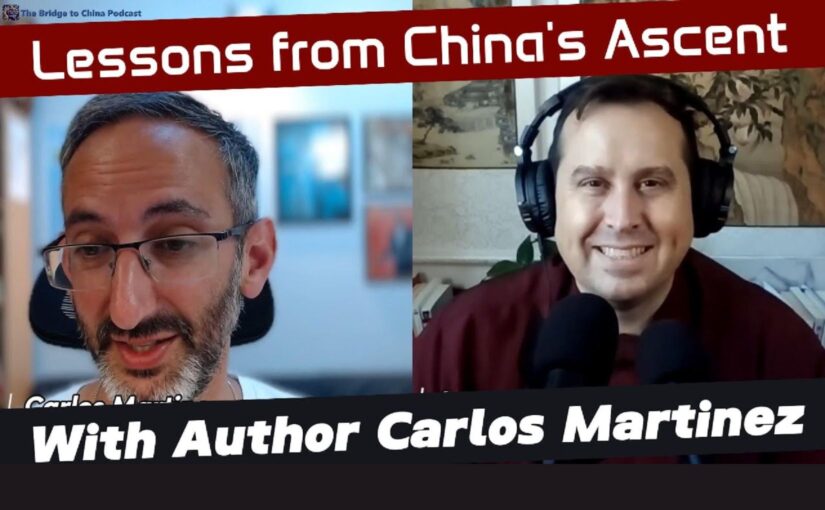
Interview: Lessons from China’s Ascent

Embedded below is an interview with Friends of Socialist China co-editor Carlos Martinez on the CGTN Radio podcast The Bridge, hosted by Jason Smith.

Carlos and Jason have a detailed discussion on the role of China’s state-owned enterprises; the rationale behind the Belt and Road Initiative; what lessons the Western left can learn from China; the impact of China’s rise on the West’s ideological, economic and political hegemony; China’s approach to Israel’s war on Iran; the uprisings in Los Angeles; the emerging threat of fascism; and more.

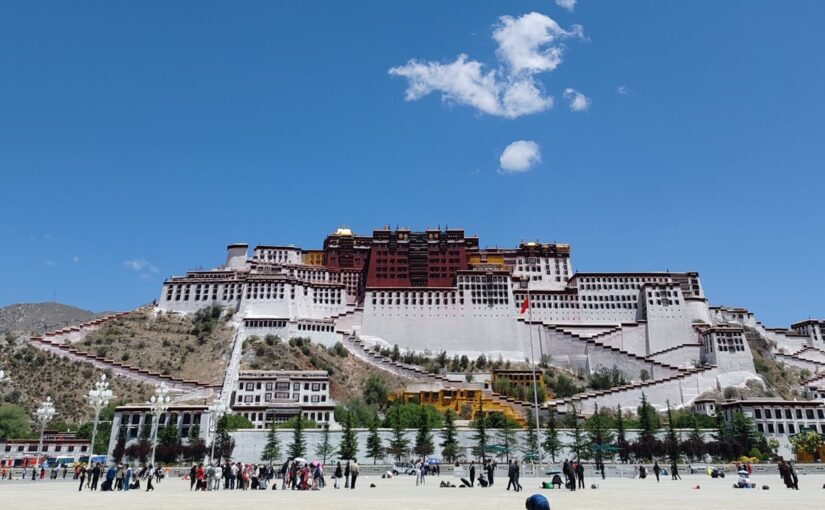
‘Tashi Delek’ – Tibetans’ welcome to international guests experiencing Xizang’s rich culture and rapid modernisation

In the following article, Friends of Socialist China Britain Committee Secretary David Peat reports back first-hand observations from a recent trip to Tibet (Xizang Autonomous Region). The visit, part of a commercial delegation assessing tourism offerings, allowed David to experience the beautiful natural scenery, the evident leaps and bounds of development, and the rich, vibrant cultural life of the region. Countering Western narratives which seek to destabilise the region (and China at large) by depicting Xizang as a repressive police state, David was able to observe how the Tibetan language, religious, and cultural practices are integrally woven into daily life, alongside the major improvements in livelihood which have occurred since the founding of the Xizang Autonomous Region, this year celebrating its 60th anniversary.

For thousands of years Tibet, or to give its proper contemporary title, Xizang Autonomous Region, has held a particular mystique for travellers, both in Asia and further beyond. In the West, this has often taken an ‘orientalist’ form, and the realities of life in Tibet were exoticised and misrepresented to fulfil western explorers’ and/or spiritualists’ particular delusions. Then and now, this kind of obfuscation has been weaponised by western imperialist interests to paint a picture of a ‘Holy’, innocent land being repressed by ‘Oriental despots’ (or, in contemporary times, ‘Godless communists’), and therefore requiring of liberation from ‘civilised’ westerners. This was seen in recent decades in the form of the ‘Free Tibet’ campaigns, which wholly ignored both the cruel realities of the feudal, slave-owning system present in the region until its liberation, and the enormous subsequent development taking place.

The reality of life in Xizang is, of course, more complicated, and one of the best ways to “seek truth from facts” and gain an accurate understanding is by visiting the region. Thankfully, this is becoming easier and easier, and I was able to do so recently as part of a large commercial delegation organised by the Chinese National Tourism Organisation.

More than 100 travel agents, representing more than 10 European and Australasian countries, were invited to experience the tourism resources in the region, and decide whether they would be suitable to promote to their clients in their respective countries. A standard practice across the global travel industry, these ‘familiarisation tours’ are operated with the participation of local tourism bureaus, hoteliers, experience providers, and so on. They are offered as ways to promote knowledge of the region, encourage networking, and hopefully increase tourism numbers. However, it is entirely up to the participating travel agent to decide if they wish to develop products as a result (no ‘deliverables’ are required as a condition of joining).

This tour was for six days in Xizang and consisted of two-night stays in three cities: Shannan, Shigatse, and the regional capital of Lhasa. It should come as no surprise that Xizang is a truly outstanding tourist destination. The stunning and diverse natural landscapes, the unique architectural styles and distinct religious/cultural iconography, and above all the welcoming local population, who are more often than found wearing beautiful traditional clothing, make it a genuinely unique location, and one that is sure to become a must-visit destination in coming years. It must also be remembered that Xizang is fully part of a rapidly modernising China, and its socialist construction is evident in all respects—from high quality transport infrastructure to widespread green energy installations. The effects of Chinese President Xi Jinping’s ecological civilisation slogan and nationwide campaign of “clear waters and green mountains” can be felt most strongly here. The juxtaposition of ancient and modern is to be found everywhere, with for example experiencing better 5G on an ancient sacred mountain at 5000m altitude than you would get in central London(!), and being able to leave an offering to a Bodhisattva statue (if so inclined) using the omnipresent WeChat Pay/Alipay QR payment codes.

Discussions with our local Tibetan guide were free and open, and beyond the planned itinerary participants were free to explore cities independently. Despite frequently repeated propaganda claims in the west about intense repression, police and military presence was not strongly evident, and certainly not more so than in the rest of the country. Indeed, a small unarmed police presence at major tourists spots is considerably more relaxed than most European destinations. As we toured historic and cultural sites, of which the guides were quite clearly very proud, they discussed the long and eventful history of the region. Readers looking to better understand the history of the region should seek out the excellent books When the Serfs Stood up in Tibet by American journalist Anna Louise Strong and Tibet Transformed by Polish-born journalist Israel Epstein.

Of particular historical interest on this tour was the discussion by the guide of the destruction of cultural and religious sites by an invading British force in the early 20th Century, the so-called “Younghusband Expedition”, let by the eponymous Colonel, which sought to extend the control of the British empire from the Indian subcontinent and prevent Russian imperial interests from gaining purchase. The invading force, which was composed primarily of British Indian conscripts, was highly destructive and cruel, killing many Tibetans and destroying important historic sites. Also discussed openly was the Cultural Revolution, during which some religious and cultural sites were damaged and destroyed. It should be noted that for the participants these sites represented the feudal and slave-owning system, which had been overthrown in recent living memory (the preceding 10-20 years), and as such the destruction can perhaps be contextualised. In spite of all this tumult, the region retains a huge amount of its historic treasures, and they can be enjoyed and cherished by the locals and visitors alike. Some images from the journey can be viewed here.

Xizang’s population is more than 86 percent Tibetan, with Han at around 12 percent, with other ethnic minorities such as Hui Muslims making up the rest. As was true throughout the country, ethnic minorities were not subject to the one-child policy in Xizang. The prevalence of Tibetan cultural and religious practices, the Tibetan language, cuisine etc., can be seen everywhere, and flies in the face of tales of its suppression. The Tibetan economy has seen huge growth in recent years, outpacing the rest of the country with GDP growth of 9.5 percent in 2023, and, as part of the nationwide campaign and First Centenary Goal, it was able to fully eradicate extreme poverty in 2019.[1] Average life expectancy in Tibet has surpassed 72 years, more than double the figure of 35.5 years recorded in 1951. 

Incidentally, during the time of the trip, Panchen Erdeni Chos-kyi rGyal-po (also known as the Panchen Lama), the primary Tibetan Buddhist religious leader residing in Xizang, held an important visit with Chinese President Xi Jinping in Beijing. This year marks 60 years since the founding of the Xizang Autonomous Region,[2] and president Xi expressed the hope that the religious leader “will carry on the glorious tradition of Tibetan Buddhism in loving the country, and resolutely safeguard national unity and ethnic solidarity.”[3]

The “Xizang issue” is likely to become a news item again in the near future, with the “government-in-exile” (and more importantly their imperialist backers) planning to weaponise the succession of the title of Dalai Lama (a religious and political leader). Given the advanced age of the current holder of that title, the succession is almost certain to occur in the coming years.

In accordance with General Secretary and Chinese President Xi Jinping’s view of tourism as “an emerging strategic pillar industry, which has contributed to the people’s wellbeing and their sense of happiness”,[4] travel to the entire People’s Republic has never been easier, thanks to the introduction of many visa-free programs (especially for shorter stays) and simplified visa processing for longer stays. Travel to Tibet/Xizang requires an additional permit which can be secured quite simply by any reputable travel agent that organises group or individual itineraries in China.

Everywhere you go in Xizang you are welcomed with the phrase བཀྲ་ཤིས་བདེ་ལགས། ‘Tashi delek’ [auspicious blessing] and more often than not given a hada, a white scarf symbolizing purity and auspiciousness. This is the sincere attitude of the Tibetan people towards visitors, whether from the rest of the country or further afield, and they are extremely welcoming of international guests coming to experience their rich culture, and to see the life that the Tibetan people are building as an integral part of the Chinese path to modernisation. As such, when planning your next trip to China, consider including a visit to Xizang Autonomous Region for a truly unique and memorable experience.


[1] ‘Xizang experiencing its best period of development’, Xinhua, https://english.news.cn/20240309/908a619bb225490a9e9b766c843bf287/c.html

[2] ‘Logo unveiled for 60th anniversary celebration of Xizang Autonomous Region’, Global Times,  https://www.globaltimes.cn/page/202505/1334708.shtml

[3] ‘Xi receives visit from Panchen Rinpoche’, Global Times, https://www.globaltimes.cn/page/202506/1335569.shtml

[4] ‘Xi stresses efforts to promote high-quality development of tourism sector’, Xinhua, https://english.www.gov.cn/news/202405/20/content_WS664b2890c6d0868f4e8e746c.html

Wang Yi: Israel’s actions violate international law and the norms governing international relations

In response to the continuing Israeli aggression against Iran, on June 18, Chinese Foreign Minister Wang Yi held telephone talks with the Foreign Ministers of Egypt and Oman at their request.

Egyptian Minister of Foreign Affairs, Immigration and Expatriates Badr Abdel Aaty said that Israel’s attack on Iran clearly violates international law. Egypt condemns this and hopes the Iranian nuclear issue will return to the track of political settlement as soon as possible.

Wang Yi said that Israel’s actions, which disregard international law and norms, have sharply escalated tensions in the Middle East. China is deeply concerned about the risk of the situation spiraling out of control. China once again calls on the parties to the conflict, especially Israel, to prioritise the interests and well-being of the people in the region, immediately achieve a ceasefire, ease tensions, and create conditions for a return to dialogue and negotiation. Egypt recently led 20 other Arab and Islamic countries in issuing a joint statement by their foreign ministers, jointly calling for a ceasefire and cessation of hostilities, the resumption of negotiations on the Iranian nuclear issue, and the maintenance of lasting peace in the region. This is a timely and necessary move to help de-escalate the situation, and China fully supports it.

Omani Foreign Minister Sayyid Badr bin Hamad bin Hamood Albusaidi said that Israel’s attack on Iran blatantly violates the United Nations Charter and international law, infringing upon Iran’s sovereignty and territorial integrity. Oman is deeply concerned about the current situation, especially the strikes targeting nuclear facilities, which may lead to nuclear leaks and will cause catastrophic consequences for the region. China has always upheld justice and safeguarded peace in the international community, which Oman highly appreciates. Oman looks forward to China playing a greater role in restoring peace and stability in the Middle East.

Wang Yi stated that the ins and outs of the current situation are crystal-clear. Israel’s actions violate international law and the norms governing international relations, infringe upon Iran’s sovereignty and security, and undermine regional peace and stability. The conflict has also interrupted the hard-won process of indirect negotiations on the Iranian nuclear issue, rendering Oman’s mediation efforts futile. China has promptly expressed its position of opposition to Israel’s military actions.

The Chinese Foreign Minister emphasised that the most pressing task now is to achieve a ceasefire and cessation of hostilities. China supports the joint statement issued by 21 Arab and Islamic countries, including Oman, calling for respect for the sovereignty and territorial integrity of other countries and a balanced stance on resolving disputes by peaceful means. At this critical juncture, the international community, especially regional countries, should further unite their efforts, uphold justice, and generate an international momentum opposing war, advocating for peace and promoting political settlement. China hopes that Arab and Islamic countries will remain united and continue efforts to promote talks for peace.

The following articles were originally published on the website of the Chinese Foreign Ministry.

Continue reading Wang Yi: Israel’s actions violate international law and the norms governing international relations

Xi and Putin discuss crisis engendered by Israeli aggression against Iran

Chinese President Xi Jinping held a telephone conversation with his Russian counterpart Vladimir Putin to discuss the crisis engendered by the Israeli aggression against Iran on the afternoon of June 19,2025.

In the approximately one-hour conversation, according to the website of the Chinese Foreign Ministry, Vladimir Putin briefed on Russia’s views on the current situation in the Middle East, saying that Israel’s attack on Iran’s nuclear facilities is extremely dangerous, and that the escalation of the conflict is not in the interest of any party.

Xi Jinping said that if the conflict continues to escalate, not only will both parties to the conflict suffer greater losses, but countries across the region will also be severely affected. He put forward four proposals, namely:

  • Promoting a ceasefire and ending the hostilities is an urgent priority. The use of force is not the right way to resolve international disputes; it will only exacerbate hatred and conflicts.
  • Ensuring the safety of civilians is of paramount importance. The red line of protecting civilians in armed conflicts must not be crossed at any time, and the indiscriminate use of force is unacceptable.
  • Opening dialogue and negotiation is the fundamental way forward. Communication and dialogue are the right ways to achieve lasting peace.
  • Efforts by the international community to promote peace are indispensable. Without stability in the Middle East, there can hardly be peace in the world. The international community, particularly major countries that have special influence on the parties to the conflict, should make efforts to deescalate the situation, rather than the opposite. The United Nations Security Council should play a greater role in this regard.

Further details were provided by Russian Presidential Aide Yury Ushakov.

He said that the President of Russia informed his colleague about his latest international contacts with a focus on his telephone conversations with the key actors in the context of the confrontation between Israel and Iran. The Russian leader reaffirmed Russia’s readiness to offer its good offices, if necessary. The Chinese leader expressed support for this mediation effort, saying that he believed it could promote de-escalation amid the extreme tension we are witnessing today. [Prior to the call with Xi, President Putin had spoken with both Iranian President Masoud Pezeshkian and Israeli Prime Minister Benjamin Netanyahu.]

Turning to other issues, Ushakov said that it was emphasised that the Chinese President’s participation as the main guest in the celebrations of the 80th anniversary of Victory in the Great Patriotic War held special significance and served as a compelling testament to the shared steadfast positions in upholding historical truth and preserving the memory of the heroic feats of our forefathers. Both presidents stressed the fact that we stood together back then, stand together now, and will stand together in the future. It has been agreed that the next time the leaders will see each other will be on Chinese soil during the Shanghai Cooperation Organisation (SCO) Summit in Tianjin on August 31-September 1. The two leaders will then take part in the festivities marking the 80th anniversary of victory over militarist Japan and the end of World War II in Beijing on September 3. Full-scale bilateral talks will be held on September 2.

Continue reading Xi and Putin discuss crisis engendered by Israeli aggression against Iran