In the opinion piece below, originally published in Al Jazeera, Jason Hickel and Dylan Sullivan argue that Western hostility towards China is not driven by serious concerns over China’s putative threat to the “international rules-based order” but rather by its very real challenge to the imperial economic order. Over the past two decades, US policy has shifted from cooperation to confrontation, with sanctions, trade restrictions and military build-up. The authors write: “Washington wants people to believe that China poses a threat. China’s rise indeed threatens US interests, but not in the way the US political elite seeks to frame it.”
The article situates US-China tensions in the framework of the capitalist world system, where the core imperialist states rely on cheap labour and resources from the Global South. For decades, China provided low-cost but skilled labour for Western supply chains. However, wages in China have risen from under $1 an hour in the early 2000s to over $8 today, undermining Western firms’ profits and reducing the West’s ability to extract value through unequal exchange. Strengthened public services and state intervention over the last two decades have further empowered Chinese workers.
At the same time, China is putting an end to the West’s monopoly in advanced technology, and now leads in sectors like renewable energy, electric vehicles, AI, and high-speed rail. This gives developing countries alternative suppliers and threatens the West’s strategy of maintaining dependency. The authors observe that this “poses a fundamental challenge to the imperial arrangement.”
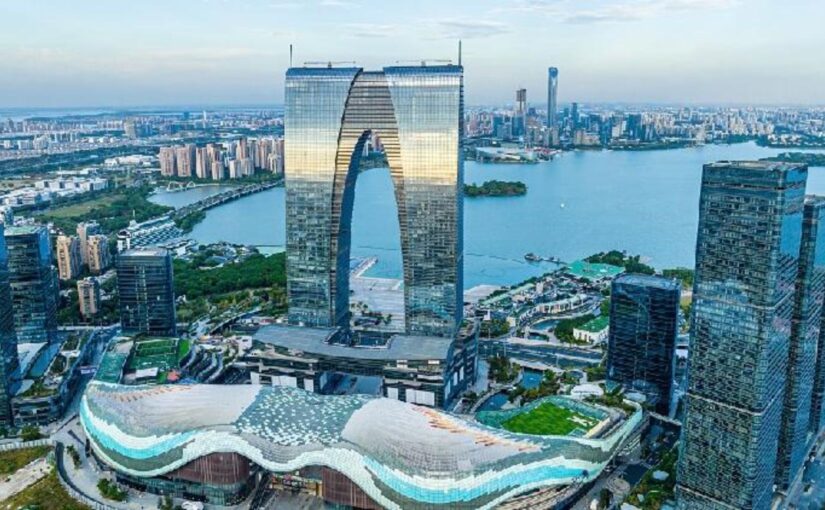
Beijing has used industrial policy to prioritise technological development in strategic sectors over the past decade, and has achieved remarkable progress. It now has the world’s largest high-speed rail network, manufactures its own commercial aircraft, leads the world on renewable energy technology and electric vehicles, and enjoys advanced medical technology, smartphone technology, microchip production, artificial intelligence, etc. The tech news coming out of China has been dizzying. These are achievements that we only expect from high-income countries, and China is doing it with almost 80 percent less GDP per capita than the average “advanced economy”. It is unprecedented.
This poses a problem for the core states because one of the main pillars of the imperial arrangement is that they need to maintain a monopoly over necessary technologies like capital goods, medicines, computers, aircraft and so on. This forces the “Global South” into a position of dependency, so they are forced to export large quantities of their cheapened resources in order to obtain these necessary technologies. This is what sustains the core’s net-appropriation through unequal exchange.
China’s technological development is now breaking Western monopolies, and may give other developing countries alternative suppliers for necessary goods at more affordable prices. This poses a fundamental challenge to the imperial arrangement and unequal exchange.
In response, the US has turned to sanctions and escalating military rhetoric, presenting China as a threat to global security. But this is transparent propaganda.
The material facts tell a fundamentally different story. In fact, China’s military spending per capita is less than the global average, and 1/10th that of the US alone. Yes, China has a big population, but even in absolute terms, the US-aligned military bloc spends over seven times more on military power than China does. The US controls eight nuclear weapons for every one that China has…
Furthermore, China has not fired a single bullet in international warfare in over 40 years, while during this time the US has invaded, bombed or carried out regime-change operations in over a dozen Global South countries. If there is any state that poses a known threat to world peace and security, it is the US.
The authors conclude that the real reason for Western warmongering is that “China is achieving sovereign development and this is undermining the imperial arrangement on which Western capital accumulation depends”. That is, China’s rise, its alignment with the countries of the Global South and its promotion of multipolarity are posing an existential threat to the imperialist world system.
Over the past two decades, the posture of the United States towards China has evolved from economic cooperation to outright antagonism. US media outlets and politicians have engaged in persistent anti-China rhetoric, while the US government has imposed trade restrictions and sanctions on China and pursued military build-up close to Chinese territory. Washington wants people to believe that China poses a threat.
China’s rise indeed threatens US interests, but not in the way the US political elite seeks to frame it.
The US relationship with China needs to be understood in the context of the capitalist world system. Capital accumulation in the core states, often glossed as the “Global North”, depends on cheap labour and cheap resources from the periphery and semi-periphery, the so-called “Global South”.
This arrangement is crucial to ensuring high profits for the multinational firms that dominate global supply chains. The systematic price disparity between the core and periphery also enables the core to achieve a large net-appropriation of value from the periphery through unequal exchange in international trade.
Ever since the 1980s, when China opened up to Western investment and trade, it has been a crucial part of this arrangement, providing a major source of labour for Western firms – labour that is cheap but also highly skilled and highly productive. For instance, much of Apple’s production relies on Chinese labour. According to research by the economist Donald A Clelland, if Apple had to pay Chinese and East Asian workers at the same rate as a US worker, this would have cost them an additional $572 per iPad in 2011.
But over the past two decades, wages in China have increased quite dramatically. Around 2005, the manufacturing labour cost per hour in China was lower than in India, less than $1 per hour. In the years since, China’s hourly labour costs have increased to more than $8 per hour, while India’s are now only about $2 per hour. Indeed, wages in China are now higher than in every other developing country in Asia. This is a major, historical development.
This has happened for several key reasons. For one, surplus labour in China has been increasingly absorbed into the wage-labour economy, which has amplified workers’ bargaining power. At the same time, the current leadership of President Xi Jinping has expanded the role of the state in China’s economy, strengthening public provisioning systems – including public healthcare and public housing – that have further improved the position of workers.
These are positive changes for China – and specifically for Chinese workers – but they pose a severe problem for Western capital. Higher wages in China impose a constraint on the profits of Western firms that operate there or that depend on Chinese manufacturing for intermediate parts and other key inputs.
The other problem, for the core states, is that the increase in China’s wages and prices is reducing its exposure to unequal exchange. During the low-wage era of the 1990s, China’s export-to-import ratio with the core was extremely high. In other words, China had to export very large quantities of goods in order to obtain necessary imports. Today, this ratio is much lower, representing a dramatic improvement in China’s terms of trade, substantially reducing the core’s ability to appropriate value from China.
Given all this, capitalists in the core states are now desperate to do something to restore their access to cheap labour and resources. One option – increasingly promoted by the Western business press – is to relocate industrial production to other parts of Asia where wages are cheaper. But this is costly in terms of lost production, the need to find new staff, and other supply chain disruptions. The other option is to force Chinese wages back down. Hence, the attempts by the United States to undermine the Chinese government and destabilise the Chinese economy – including through economic warfare and the constant threat of military escalation.
Ironically, Western governments sometimes justify their opposition to China on the grounds that China’s exports are too cheap. It is often claimed that China “cheats” in international trade, by artificially suppressing the exchange rate for its currency, the renminbi. The problem with this argument, however, is that China abandoned this policy around a decade ago. As the prominent economist and Columbia University professor Jose Antonio Ocampo noted in 2017, “In recent years, China has rather been making efforts to avoid a depreciation of the renminbi, sacrificing a large amount of reserves. This may imply that, if anything, this currency is now overvalued.” China did eventually permit a devaluation in 2019, when tariffs imposed by the administration of US President Donald Trump increased pressure on the renminbi. But this was a normal response to a change in market conditions, not an attempt to suppress the renminbi below its market rate.
The US largely supported the Chinese government in the period when its currency was undervalued, including through loans from the IMF and World Bank. The West turned decisively against China in the mid-2010s, at precisely the moment when the country began to raise its prices and challenge its position as a peripheral supplier of cheap inputs to Western-dominated supply chains.
The second element that’s driving US hostility towards China is technology. Beijing has used industrial policy to prioritise technological development in strategic sectors over the past decade, and has achieved remarkable progress. It now has the world’s largest high-speed rail network, manufactures its own commercial aircraft, leads the world on renewable energy technology and electric vehicles, and enjoys advanced medical technology, smartphone technology, microchip production, artificial intelligence, etc. The tech news coming out of China has been dizzying. These are achievements that we only expect from high-income countries, and China is doing it with almost 80 percent less GDP per capita than the average “advanced economy”. It is unprecedented.
This poses a problem for the core states because one of the main pillars of the imperial arrangement is that they need to maintain a monopoly over necessary technologies like capital goods, medicines, computers, aircraft and so on. This forces the “Global South” into a position of dependency, so they are forced to export large quantities of their cheapened resources in order to obtain these necessary technologies. This is what sustains the core’s net-appropriation through unequal exchange.
China’s technological development is now breaking Western monopolies, and may give other developing countries alternative suppliers for necessary goods at more affordable prices. This poses a fundamental challenge to the imperial arrangement and unequal exchange.
The US has responded by imposing sanctions designed to cripple China’s technological development. So far, this has not worked; if anything, it has increased incentives for China to develop sovereign technological capacities. With this weapon mostly neutralised, the US wants to resort to warmongering, the main objective of which would be to destroy China’s industrial base, and divert China’s investment capital and productive capacities towards defence. The US wants to go to war with China not because China poses some kind of military threat to the American people, but because Chinese development undermines the interests of imperial capital.
Western claims about China posing some kind of military threat are pure propaganda. The material facts tell a fundamentally different story. In fact, China’s military spending per capita is less than the global average, and 1/10th that of the US alone. Yes, China has a big population, but even in absolute terms, the US-aligned military bloc spends over seven times more on military power than China does. The US controls eight nuclear weapons for every one that China has.
China may have the power to prevent the US from imposing its will on it, but it does not have the power to impose its will on the rest of the world in the way that the core states do. The narrative that China poses some kind of military threat is wildly overblown.
In fact, the opposite is true. The US has hundreds of military bases and facilities around the world. A significant number of them are stationed near China – in Japan and South Korea. By contrast, China has only one foreign military base, in Djibouti, and zero military bases near US borders.
Furthermore, China has not fired a single bullet in international warfare in over 40 years, while during this time the US has invaded, bombed or carried out regime-change operations in over a dozen Global South countries. If there is any state that poses a known threat to world peace and security, it is the US.
The real reason for Western warmongering is because China is achieving sovereign development and this is undermining the imperial arrangement on which Western capital accumulation depends. The West will not let global economic power slip from its hands so easily.






A stellar response to American hypocrisy, countering their hackneyed arguments for their attempted suppression of China’s rightful share of world markets.
The PRC’s Belt and Road Initiative has brought developments previously unimaginable in Third World countries.
Thanks to President Xi Jin Ping millions of disadvantaged people now enjoy modern conveniences.
Thank you for this article! Very important to note that is is precisely the China’s rapid, quality development (and it’s tangible support for other Global South countries to do the same) that poses a threat to the imperialist economic order. I’ll be sharing this article far and wide!
Your final sentence is so pertinent. ‘The West will not let global economic power slip from its hands so easily’. American empire’s centuries old objectives of global economic and military pre-eminence has finally met it’s military match in the form of the Russian Federation and it’s economic match in the form of the People’s Republic of China (PRC). A combination of the American empire’s fundamentally flawed Project 2025 and global objectives of economic and military pre-eminence plus the election in 2024 of such an unstable, unpredictable President as Donald Trump, does not bode well for the future. War between nuclear armed states is now more likely than not.