Chinese and Cuban communists hold joint theoretical seminar

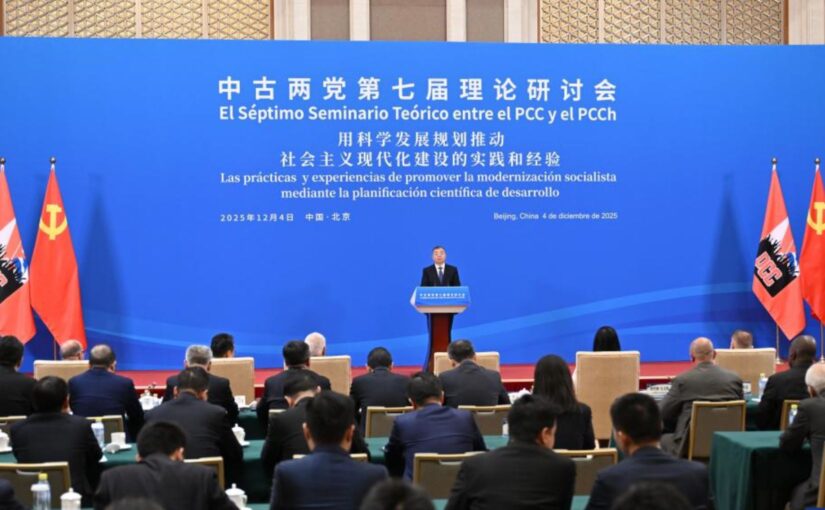
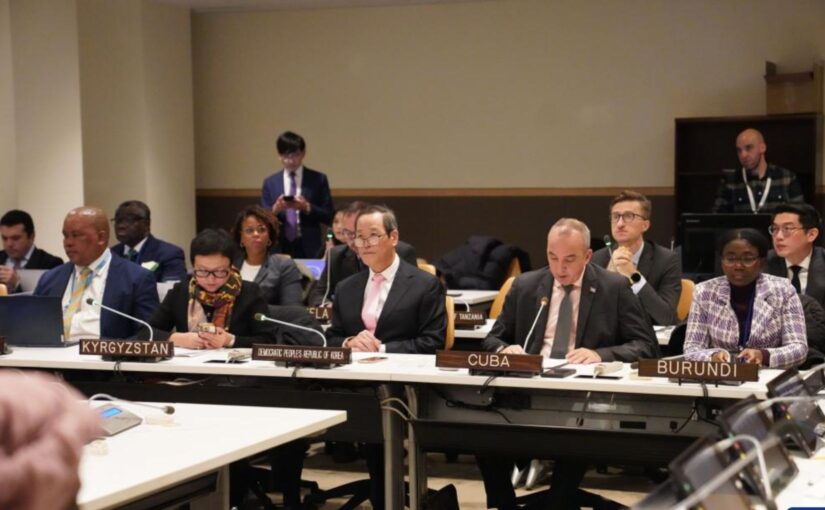
The Communist Party of China (CPC) and the Communist Party of Cuba (PCC) held their seventh theory seminar on December 4 in Beijing, focusing on the practice and experience in promoting socialist modernisation through scientific development planning.

Li Shulei, a member of the Political Bureau of the CPC Central Committee and head of the Publicity Department of the CPC Central Committee, and Gladys Martínez Verdecia, a member of the Politburo of the Central Committee of the PCC and First Secretary of the Artemisa Provincial Party Committee, attended and delivered keynote speeches.

Li noted that this year marks the 65th anniversary of the establishment of diplomatic relations between China and Cuba, and that the top leaders of the two parties and countries have exchanged congratulatory messages on this occasion and held two meetings this year, engaging in in-depth discussions on the relations between the two parties and countries.

“These interactions have provided strategic guidance for further strengthening the ironclad friendship and building an even closer China-Cuba community with a shared future.”

He also stressed the need to develop medium- and long-term strategic plans for socio-economic development. In this regard, he explained China’s experience in drawing up five-year plans, which, he said, have a broad basis of scientific development planning.

Gladys Martínez highlighted the role of these exchanges as a mechanism to strengthen bilateral cooperation in the construction of a community of shared future. She pointed out that the meetings allow participants to address, from a Marxist approach, the current challenges of socialism and propose concrete solutions. She further affirmed that the alliance between the two countries reinforces the validity of socialism as a model of development for both peoples.

Martínez denounced the unprecedented tightening of the US economic, commercial and financial blockade against Cuba, as well as the arbitrary inclusion of the island in the list of countries sponsoring terrorism. In this regard, she thanked China for its constant denunciation of this siege and expressed the island’s gratitude for the support of the Chinese government and people in key sectors such as agri-food, energy and cybersecurity. She further pointed out that both parties constitute an example of solidarity and cooperation in the construction of socialism.

The Cuban delegation began its China visit in the province of Hunan, whose collaboration with the province of Artemisa is emerging as a positive reference for local ties between Cuba and China, with concrete results in agriculture, trade and economic development.

Whilst in Hunan, the Cuban delegation paid tribute to the historical leader of the Chinese Revolution, Mao Zedong, at the monumental complex there in his honour. Martínez said that Cuba welcomes the idea of establishing a twinning agreement between Hunan and Holguín. These regions, which are the birthplaces of the historical leaders of both socialist revolutions, Fidel Castro and Mao Zedong, have potential for collaboration in tourism and mining.

This seminar is the third one of its kind recently held between the CPC and its fellow ruling communist parties in the socialist countries, following those with the Lao People’s Revolutionary Party and the Communist Party of Vietnam.

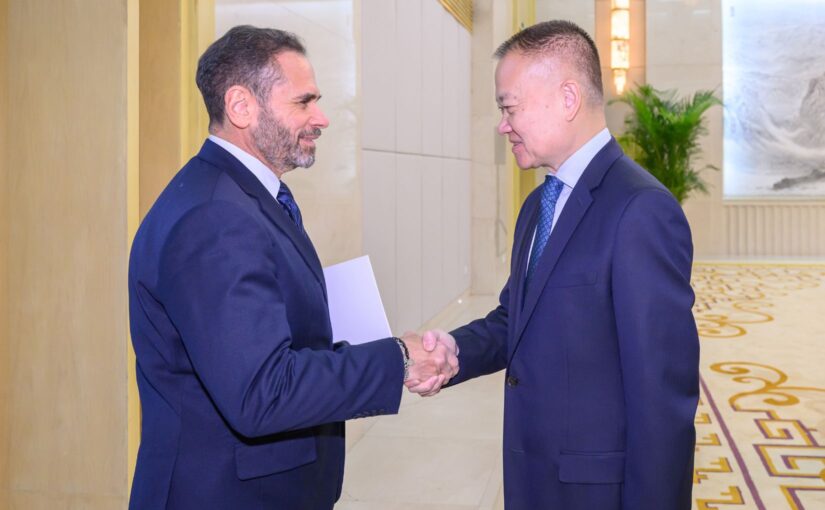
Also, on December 4, Liu Haixing, Minister of the International Department of the CPC Central Committee (IDCPC), met with Emilio Lozada García, Head of the International Relations Department of the PCC, who was in China to participate in the seminar.

Liu said, under the strategic guidance of General Secretary Xi Jinping and First Secretary Miguel Diaz-Canel, the special friendly relations between China and Cuba have maintained high-level operation with continuously enriched significance. The two Parties and countries have always supported and helped each other. Regardless of the changes in the international situation, China’s commitment to the long-term friendship with Cuba will not change, its determination to support Cuba’s socialist path will not change, its direction in promoting pragmatic cooperation with Cuba will not change, and its will to defend international fairness and justice and oppose hegemony and power politics together with Cuba will not change.

Emilio Lozada García said, Cuba thanks China for the long-term and valuable support, and appreciates China’s consistent opposition to the US blockade and sanctions against Cuba. The relationship between the two Parties is the cornerstone of Cuba-China relationship. The PCC is willing to strengthen exchanges with the CPC at all levels and in all fields, advance the exchanges between the two Parties in a more systematic and institutionalised manner, and strengthen coordination on international affairs, so as to make due contributions to the development of both countries and to the building of a Cuba-China community with a shared future.

Continue reading Chinese and Cuban communists hold joint theoretical seminar

Xi Jinping pledges US$100 million for Palestine

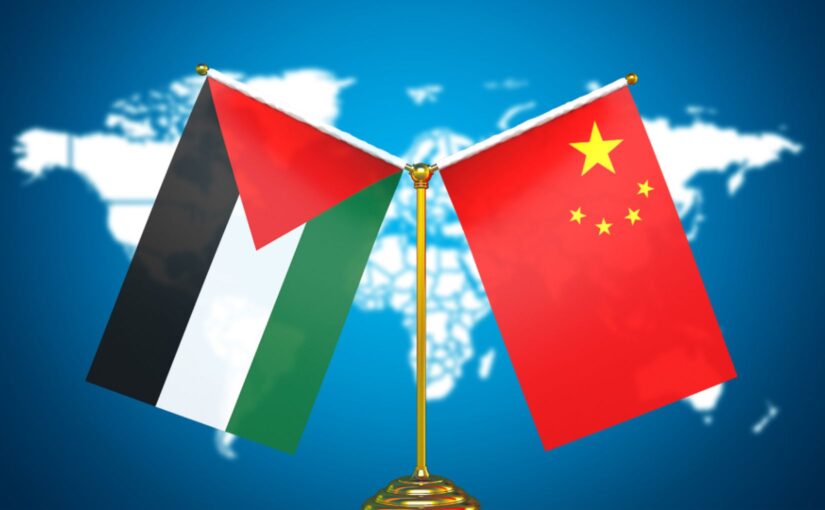
In the latest manifestation of China’s long-standing support for the just struggle of the Palestinian people, President Xi Jinping has announced that his country will provide 100 million US dollars of assistance to Palestine to alleviate the humanitarian crisis in Gaza and support its recovery and reconstruction.

Xi made the announcement on December 4 during a joint press conference with French President Emmanuel Macron, who was paying a state visit to China.

The following day Chinese Foreign Ministry Spokesperson Lin Jian said that since the outbreak of the conflict, China has provided multiple batches of humanitarian supplies to the Gaza Strip through the UN, Egypt, Jordan and other channels, which was welcomed and appreciated by the Palestinian government and people. China firmly supports the just cause of the Palestinian people in restoring their legitimate national rights and will continue working relentlessly with the international community for a full and lasting ceasefire in Gaza, the easing of humanitarian situation there, and an early political settlement of the Palestinian question.

In its response to this news, Hamas stated:

“The Islamic Resistance Movement Hamas expresses its great appreciation to Chinese President Xi Jinping and the friendly People’s Republic of China for announcing the provision of humanitarian aid worth $100 million in support of the Palestinian people in the Gaza Strip and to alleviate their humanitarian suffering under the continuous aggression imposed by the occupation on our people, and to contribute to the efforts of reconstruction.

“This generous initiative comes as an extension of China’s historical and firm positions in support of the rights of our Palestinian people, which are non-negotiable, including their right to freedom and independence, their right to self-determination, and the establishment of their independent Palestinian state with full sovereignty and its capital Jerusalem.”

The Palestinian News and Information Agency WAFA further reported that President Mahmoud Abbas had sent a letter to Xi Jinping expressing his deep appreciation, adding that this generous initiative embodies China’s principled and unwavering stance in support of justice and reflects the profound humanitarian and moral solidarity demonstrated by the Chinese leadership towards the Palestinian people in light of the unprecedented aggression and suffering they are enduring.

Continue reading Xi Jinping pledges US$100 million for Palestine

Chinese medical internationalism in Nicaragua

The Chinese naval hospital ship Silk Road Ark visited Nicaragua’s Corinto Port from November 10-14 to provide medical care to the local population.

In the vessel’s first visit to the western hemisphere, a crew of more than 400 doctors, nurses and auxiliary personnel treated patients free of charge and shared experiences with Nicaraguan medical professionals.

During that time, Chinese doctors worked together with Nicaraguan specialists to see 1,125 patients from the Chinandega area. They treated patients needing specialised medical support – from pediatrics to gynecology, obstetrics to internal medicine, orthopedics to urology. They carried out examinations on patients’ eyes, ears, noses, throats, hearts, kidneys, gastrointestinal tracts, and tested for infectious diseases. The team also performed ultrasounds, surgeries, and treated patients using traditional Chinese medicine.

In addition, specialists from China and Nicaragua held a meeting to share experiences on topics such as robotic surgery, chronic kidney disease, congenital heart disease, maternal and fetal health, and breast cancer.

This ship is part of “Harmony Mission 2025,” a Chinese humanitarian initiative to provide free medical care and strengthen international ties. So far, it has previously visited Fiji and Tonga, providing 3,330 consultations and performing 426 surgeries in Fiji, and treating more than 5,000 people in Tonga.

Speaking at the opening ceremonies, the Chinese Ambassador to Nicaragua, Qu Yuhui, expressed hopes that this Peace Ship will serve as a vehicle for the seeds of friendship between the navies of both countries to take deep root and foster a spirit of peace and cooperation, which will be passed down from generation to generation in furthering relations between China and Nicaragua.

At the closing ceremony prior to the ship’s departure, Laureano Ortega Murillo, Presidential Advisor for the Promotion of Investment, Trade and International Cooperation, said:

“We have come on a visit, delegated by our Co-Presidents, Commander Daniel, Comrade Rosario, to bid farewell to this Hospital Ship of the People’s Republic of China, of the People’s Liberation Army, to bid farewell to this laudable work of solidarity carried out by the Chinese people and Government with the peoples of the world.

“We are extremely grateful and we will continue to advance in this relationship of brotherhood, cemented in the relationship between our parties, the Sandinista National Liberation Front and the Communist Party of China. So, on behalf of our people and our Government, our gratitude, our love, our affection to the people and Government of the People’s Republic of China. Long live China and long live Nicaragua!”

The following articles were originally published by Sovereign Media and El 19 Digital. The latter was published in Spanish and was machine translated.

Continue reading Chinese medical internationalism in Nicaragua

Laos celebrates 50 years of progress on the socialist road

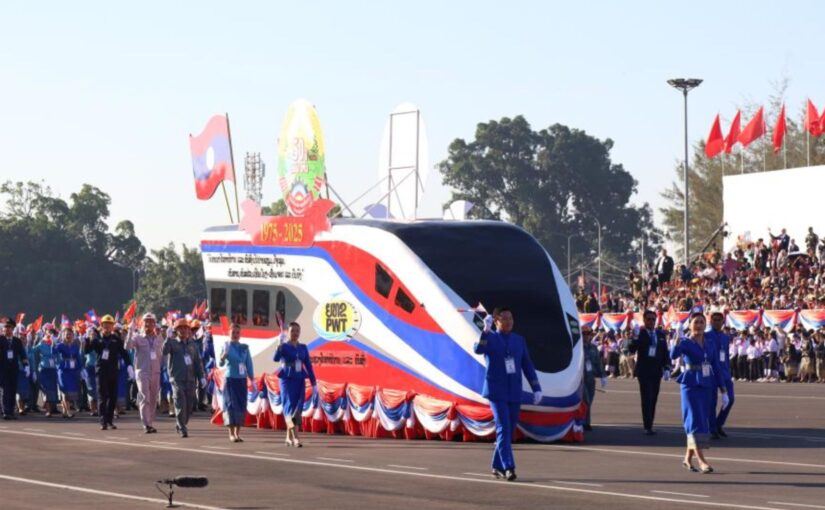
The Lao People’s Democratic Republic (LPDR) celebrated its 50th founding anniversary on December 2. The establishment of the LPDR was the culmination of decades of heroic struggle, and immense sacrifice, against French colonialism, Japanese militarism, US imperialism and domestic reactionaries, under the leadership of first the Communist Party of Indochina and subsequently the Lao People’s Revolutionary Party (LPRP).

 General Secretary of the Central Committee of the Communist Party of China (CPC) and President Xi Jinping sent a congratulatory message to General Secretary of the Central Committee of the LPRP and Lao President Thongloun Sisoulith marking the anniversary.

Xi Jinping noted that the LPRP has united and led the Lao people in persevering through hardships and forging ahead and achieved gratifying results in the cause of reform and opening up. The people’s livelihoods have continuously improved, and the country’s international and regional influence has been significantly enhanced. As a comrade and brother, China is deeply pleased with this. The Chinese side is firmly convinced that Laos will continue to follow a socialist path suited to its national conditions, successfully convene the 12th National Congress of the LPRP, and continuously open up new prospects for the development of the Party and the country.

Wang Huning, a member of the Standing Committee of the Political Bureau of the CPC Central Committee and Chairman of the National Committee of the Chinese People’s Political Consultative Conference (CPPCC), led a Chinese party and government delegation on an official visit to Laos from December 1 to 3, and attended celebrations marking the 50th anniversary.

During the visit, Wang met separately with Thongloun Sisoulith, Lao Prime Minister Sonexay Siphandone, and Lao National Assembly (NA) President Saysomphone Phomvihane. He also held talks with Sinlavong Khoutphaythoune, President of the Central Committee of the Lao Front for National Development (LFND).

During his meeting with Thongloun, Wang noted that China is willing to work with Laos to implement the strategic consensus reached by leaders of the two parties and countries, continue to firmly support each other on issues concerning their core interests and major concerns, including the Taiwan question, and accelerate the building of a high-standard, high-quality, and high-level China-Laos community with a shared future. Wang also briefed Thongloun on the fourth plenary session of the 20th CPC Central Committee and expressed China’s readiness to deepen exchanges with Laos on governance experience and jointly advance each country’s socialist path.

He thanked President Thongloun for the warm reception and conveyed Xi’s message of congratulations. He commended Laos for its achievements in national development under the leadership of the LPRP and conveyed his best wishes for the upcoming 12th Party Congress to be held in early 2026.

Thongloun congratulated China on the successful convening of the fourth plenary session of the 20th CPC Central Committee. He expressed Laos’ sincere appreciation for China’s long-term and valuable support, noting that bilateral relations are at their best in history and that cooperation has brought tangible benefits to the Lao people. He said Laos is committed to working with China to further enhance the building of a Laos-China community with a shared future.

During the visit, Wang attended the Lao National Day rally and military parade marking the 50th anniversary of the founding of the Lao People’s Democratic Republic, laid a wreath at the Tomb of the Unknown Soldiers, inspected the Vientiane Station of the China-Laos Railway, and attended the ceremony celebrating the railway’s fourth anniversary of operation.

Among other distinguished foreign guests attending the celebrations were:

  • General Secretary of the Communist Party of Vietnam (CPV) Central Committee, To Lam
  • Prime Minister of the Socialist Republic of Vietnam, Pham Minh Chinh (to attend the 48th Meeting of the Vietnam–Laos Intergovernmental Committee on Bilateral Cooperation)
  • Senior Advisor to His Majesty the King and Vice President of the Cambodian People’s Party (CPP), Samdech Pichey Sena Tea Banh
  • Member of the Political Bureau of the Central Committee of the Communist Party of Cuba (PCC) and Director General of Cuba’s Centre for Genetic Engineering and Biotechnology, Marta Ayala Ávila
  • Deputy Chairman of the Federation Council of the Russian Federation, Nikolai Zhuravlyov
  • Deputy Minister of Defence of the Russian Federation, Vasily Osmakov

A Xinhua News Agency report from the capital Vientiane said that Laos was marking the anniversary with pride and hope:

“In a comprehensive address marking the historic milestone, Thongloun Sisoulith reflected on the nation’s journey. He emphasised the unwavering commitment to the socialist ideal, the great national unity of all Lao ethnic groups, and the continuous strengthening of the people’s democratic regime.

“Thongloun outlined the nation’s steadfast foreign policy of peace, independence, friendship, and cooperation. He also stressed the goal of building a self-reliant economy, and following a balanced development path that harmonises economy, culture, society, and environment toward green and sustainable growth.”

The following articles were originally published on the website of the Chinese Foreign Ministry and by the Xinhua News Agency and the KPL Lao News Agency.

Xi Jinping Sends Congratulatory Message to General Secretary of the Central Committee of the Lao People’s Revolutionary Party and Lao President Thongloun Sisoulith on the 50th Anniversary of the Founding of the Lao People’s Democratic Republic

December 2 (MFA) – On December 2, 2025, General Secretary of the Central Committee of the Communist Party of China (CPC) and President Xi Jinping sent a congratulatory message to General Secretary of the Central Committee of the Lao People’s Revolutionary Party (LPRP) and Lao President Thongloun Sisoulith on the 50th anniversary of the founding of the Lao People’s Democratic Republic.

Xi Jinping noted that the LPRP has united and led the Lao people in persevering through hardships and forging ahead, and achieved gratifying results in the cause of reform and opening-up. The people’s livelihoods have continuously improved, and the country’s international and regional influence has significantly enhanced. As a comrade and brother, China is deeply pleased with this. The Chinese side is firmly convinced that Laos will continue to follow a socialist path suited to its national conditions, successfully convene the 12th National Congress of the LPRP, and continuously open up new prospects for the development of the Party and the country.

Xi Jinping emphasized that during General Secretary Thongloun Sisoulith’s successful visit to China in September this year, he and General Secretary Thongloun Sisoulith reached new strategic common understandings on deepening the building of the China-Laos community with a shared future. China has always prioritized Laos in its neighborhood diplomacy and stands ready to work with Laos to take the 65th anniversary of the establishment of diplomatic relations between China and Laos next year as an opportunity to carry forward the traditional friendship, strengthen solidarity and cooperation, continuously deepen and substantiate the China-Laos comprehensive strategic cooperation in the new era, bring more benefits to the two peoples, and make greater contributions to peace and development in the region and the world.


China’s top political advisor pays official visit to Laos

VIENTIANE, Dec. 3 (Xinhua) — China’s top political advisor Wang Huning led a Chinese party and government delegation on an official visit to Laos from Dec. 1 to 3, and attended celebrations marking the 50th anniversary of the founding of the Lao People’s Democratic Republic.

Wang, a member of the Standing Committee of the Political Bureau of the Communist Party of China (CPC) Central Committee and chairman of the National Committee of the Chinese People’s Political Consultative Conference (CPPCC), and his delegation arrived here at the invitation of the Lao People’s Revolutionary Party (LPRP) Central Committee and the Lao government.

During the visit, Wang met separately with Thongloun Sisoulith, general secretary of the LPRP Central Committee and Lao president, Lao Prime Minister Sonexay Siphandone, and Lao National Assembly (NA) President Saysomphone Phomvihane. He also held talks with Sinlavong Khoutphaythoune, president of the Central Committee of the Lao Front for National Development (LFND).

During his meeting with Thongloun, Wang noted that China is willing to work with Laos to implement the strategic consensus reached by leaders of the two parties and countries, continue to firmly support each other on issues concerning their core interests and major concerns, including the Taiwan question, and accelerate the building of a high-standard, high-quality, and high-level China-Laos community with a shared future. Wang also briefed Thongloun on the fourth plenary session of the 20th CPC Central Committee and expressed China’s readiness to deepen exchanges with Laos on governance experience and jointly advance each country’s socialist path.

Thongloun congratulated China on the successful convening of the fourth plenary session of the 20th CPC Central Committee. He expressed Laos’ sincere appreciation for China’s long-term and valuable support, noting that bilateral relations are at their best in history and that cooperation has brought tangible benefits to the Lao people. He said Laos is committed to working with China to further enhance the building of Laos-China community with a shared future, firmly adheres to the one-China principle, and resolutely opposes any erroneous remarks or actions that interfere in China’s internal affairs.

During his meeting with Sonexay, Wang said that under the strategic guidance of leaders of both parties and countries, China-Laos comprehensive strategic cooperation continues to make steady progress, adding that China is ready to deepen strategic coordination with Laos and set an example for building a community with a shared future among neighboring countries.

Sonexay reaffirmed Laos’ firm support for China in safeguarding its core interests, and expressed his country’s willingness to enhance all-round, mutually beneficial cooperation with China and jointly build a high-standard, high-quality, and high-level Laos-China community with a shared future.

During his meeting with Saysomphone, Wang said that the 65th anniversary of diplomatic relations next year presents an opportunity for both sides to deepen practical cooperation across various sectors and inject fresh momentum into their respective socialist modernization efforts. Saysomphone noted that the Laos-China community with a shared future has achieved remarkable progress and expressed Laos’ readiness to strengthen legislative exchanges with China to further advance bilateral friendship and practical cooperation.

During his talks with Sinlavong, Wang said that the CPPCC is willing to work with the LFND to implement the important consensus reached by the two countries’ top leaders, enhance exchanges and cooperation, and tell the story of friendship between the two countries well, so as to play an active role in advancing the building of a China-Laos community with a shared future. Sinlavong said Laos is willing to learn from China’s governance experience and that the LFND will strengthen cooperation and exchanges with the CPPCC to further consolidate bilateral relations.

During the visit, Wang attended the Lao National Day rally and military parade marking the 50th anniversary of the founding of the Lao People’s Democratic Republic, laid a wreath at the Tomb of the Unknown Soldiers, inspected the Vientiane Station of the China-Laos Railway, and attended the ceremony celebrating the railway’s fourth anniversary of operation.


President Thongloun Receives Senior Chinese Delegation

December 3 (KPL) – Lao President and General Secretary of the Lao People’s Revolutionary Party (LPRP), Comrade Thongloun Sisoulith, met Comrade Wang Huning, a member of the Standing Committee of the Political Bureau of the Communist Party of China (CPC) and Chairman of the Chinese People’s Political Consultative Conference (CPPCC), in Vientiane on 1 December 2025.

Wang is leading a high-level Chinese Party-State delegation on an official goodwill visit to Laos from 1–3 December and is attending events commemorating the 50th anniversary of the establishment of the Lao PDR.

President Thongloun welcomed the delegation and said the visit underscores the strength of the Laos–China relationship. He noted that China’s participation in the anniversary celebrations reflects continued support for Laos and reinforces the countries’ comprehensive strategic partnership. He also highlighted progress in cooperation between the Lao Front for National Construction (LFNC) and the CPPCC, and described the Laos–China Railway as a project of long-term strategic significance.

The President expressed appreciation for China’s ongoing support to Laos, both historically and in current development efforts. He reiterated Laos’ consistent adherence to the One-China principle and welcomed the congratulatory message sent by Chinese President Xi Jinping on the national anniversary.

Wang thanked President Thongloun for the warm reception and conveyed Xi’s message of congratulations. He commended Laos for its achievements in national development under the leadership of the LPRP and conveyed his best wishes for the upcoming 12th Party Congress in early 2026.

Wang also briefed the Lao leader on his meetings with the Prime Minister and the President of the LFNC, expressing confidence that the guidance of the two Parties’ top leaders will continue to steer bilateral cooperation toward deeper and more effective progress.


Laos marks 50th founding anniversary with pride, hope

VIENTIANE, Dec. 2 (Xinhua) — Laos is alive with celebrations honoring five decades of steady national growth as the country marks the 50th anniversary of the founding of the Lao People’s Democratic Republic on Tuesday.

The 50th anniversary celebrations began Tuesday morning with a grand parade, broadcast live on television, as residents across the country joined the festivities.

In a comprehensive address marking the historic milestone, Thongloun Sisoulith, general secretary of the Lao People’s Revolutionary Party Central Committee and Lao president, reflected on the nation’s journey.

He emphasized the unwavering commitment to the socialist ideal, the great national unity of all Lao ethnic groups, and the continuous strengthening of the people’s democratic regime.

Thongloun outlined the nation’s steadfast foreign policy of peace, independence, friendship, and cooperation. He also stressed the goal of building a self-reliant economy, following a balanced development path that harmonizes economy, culture, society, and environment toward green and sustainable growth.

Namfon, a 20-year-old student, expressed hope that Laos will continue to develop in the years ahead, noting that the celebrations serve as a reminder for the next generation to preserve the nation’s achievements and build on the prosperity achieved so far.

Proudly celebrating the nation’s development on this milestone, Noyna, a resident of Vientiane, said that she is firmly committed to contributing and working alongside the leaders to help further develop the country.

The celebrations were broadcast live on television and online, attracting a large audience who actively participated virtually. Netizens shared similar feelings of gratitude and hope.

In the evening, a drone display and fireworks will light up the sky to mark the occasion.

“The drone display rehearsals circulating online went viral a few days ago, offering a glimpse of the spectacular show for the Lao people. It was grand and exciting, and I can’t wait to see it in person,” said Andy.

To mark the occasion, senior Party and government leaders, led by Thongloun, paid tribute at key national monuments on Monday.

Senior leaders and officials from friendly countries attended the celebrations. Leaders from various countries also sent congratulatory messages.
To engage with China, Britain should learn from France and Germany

British Prime Minister Keir Starmer made a speech on foreign policy on December 1 at the Lady Mayor’s Banquet at the Guildhall, London. The major part of his speech related to China.

Starmer said that the US, the EU and China are the three global giants today, and that the absence of the UK’s engagement with China should not continue. He said the UK needs to engage with China and work and trade with China. At the same time, he claimed that China poses “national security threats” to the UK and that the UK will continue to take measures in response. He also touched upon issues related to Hong Kong and other matters.

In response, the spokesperson for the Chinese Embassy in London said that China firmly opposes the erroneous remarks in Starmer’s speech that spread the so-called “China threat,” make groundless accusations against China, and interfere in China’s internal affairs.

Reporting these developments, the Chinese newspaper Global Times quoted Li Haidong, a professor at China Foreign Affairs University, as saying that Starmer’s remarks amount to a “have-it-both-ways” strategic calculation: he seeks to constrain China’s development space and international influence to satisfy domestic hardliners, while still hoping to extract economic benefits from China.

Starmer, who it is understood hopes to visit China at the end of January 2026, bemoaned the flip flops of previous Conservative governments with regard to China policy, ‘from golden age to ice age’, and noted:

“The result is that, whilst our allies have developed a more sophisticated approach, the UK has become an outlier. President Trump met President Xi in October and will visit China in April. Since early 2018, President Macron has visited China twice, and he’ll be again there later this week. German leaders have visited four times, and Chancellor Merz will be there in the New Year. Yet, during this same period, no British Prime Minister has visited China.”

Professor Li’s response is that Starmer’s apparent “envy” of the frequent visits to China by French and German leaders underscores how Europe is relying on active engagement with Beijing to advance its own strategic autonomy. France and Germany have strengthened their interactions with China to safeguard their national interests, while the UK, constrained by its tendency to follow the policy frameworks of another country (referring to the United States), has struggled to escape the passive role of a “political dwarf.”

Continue reading To engage with China, Britain should learn from France and Germany

China promotes sustainability, development and fairness at Johannesburg G20 Summit

Following his visits to Russia and Zambia, Chinese Premier Li Qiang arrived in South Africa on November 20 to attend the 20th summit of the G20.

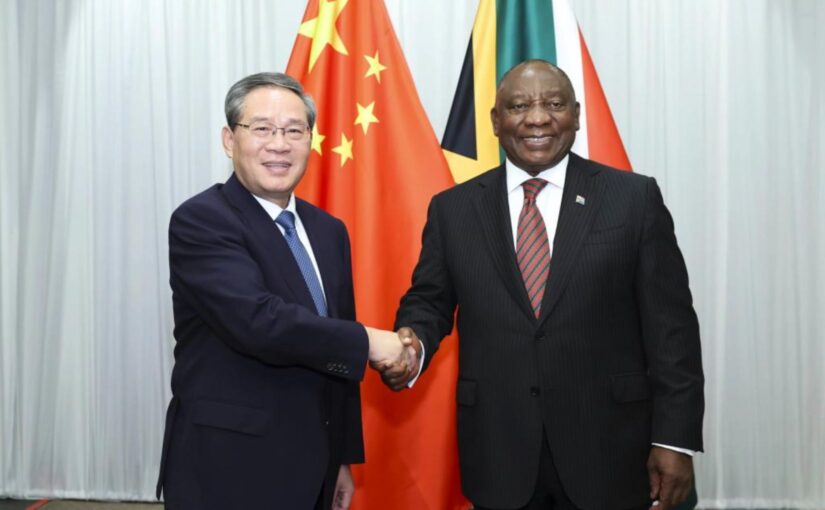
Li Qiang met with South African President Cyril Ramaphosa in Johannesburg on November 21.

Li said that China stands ready to work with South Africa to deepen political mutual trust and firmly support each other on issues concerning their respective core interests and major concerns. He conveyed to Ramaphosa the cordial greetings from Chinese President Xi Jinping, noting that for decades China and South Africa have treated each other as close brothers, with a friendship that spans mountains and seas and has grown ever stronger. China is ready to continue working with South Africa to carry forward their traditional friendship, expand cooperation across various fields, so as to better promote the common development of the two countries, as well as unity and cooperation between China and Africa as a whole.

He called on the two countries to leverage their complementary advantages in resource and economic structure, deepen cooperation in mining and infrastructure construction, develop new highlights in the auto industry, explore potential in emerging sectors such as new energy and artificial intelligence, and expand cooperation in science and technology innovation, including in satellite navigation and joint laboratory construction.

He also urged China and South Africa to strengthen exchanges of experience in poverty reduction and rural revitalisation, and advance cooperation in public health, culture, education and youth, among others, so as to enhance the sense of fulfilment of their peoples.

Ramaphosa expressed appreciation for China’s support for South Africa’s economic and social development, and said South Africa stands ready to deepen cooperation with China in areas including trade, investment, mining, industry, science and technology, energy and infrastructure, public health and poverty alleviation, so as to bring more benefits to the two peoples.

He noted that South Africa sincerely appreciates China’s strong support for hosting the G20 Summit, saying that China plays an important role in helping the summit build consensus and deliver outcomes. South Africa stands ready to strengthen communication and coordination with China within the United Nations, the G20 and other multilateral frameworks to jointly uphold multilateralism.

Meeting South African Deputy President Paul Mashatile on November 23, Li Qiang said that China and South Africa are good friends and good brothers enjoying a deep friendship. China is ready to accelerate coordination with South Africa and help more quality and competitive South African products enter the Chinese market by negotiating and signing an agreement on economic partnership for shared development and advancing in South Africa the early implementation of China’s zero-tariff treatment for 100 percent tariff lines for African countries having diplomatic relations with China.

Paul Mashatile said that South Africa is willing to work with China to maintain close multilateral communication and coordination, uphold multilateralism, safeguard the authority of the United Nations, and promote the common development and prosperity of Global South countries.

Continue reading China promotes sustainability, development and fairness at Johannesburg G20 Summit

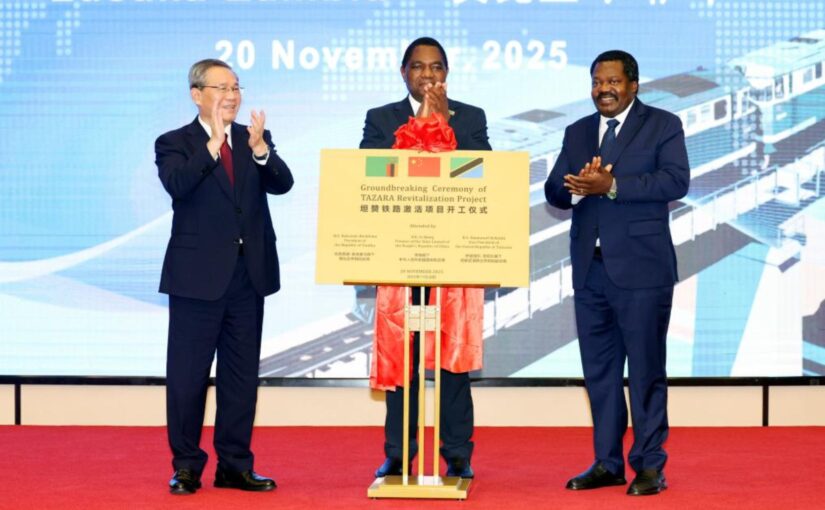
Li Qiang’s Zambia visit boosts revitalization of TAZARA railway

Following his visit to Russia, where he attended the 24th Meeting of the Council of Heads of Government of Member States of the Shanghai Cooperation Organisation (SCO), Chinese Premier Li Qiang paid an official visit to Zambia, November 19-20.

Arriving in the capital Lusaka, Li said that Zambia is the first country in Southern Africa to establish diplomatic ties with China, and the two countries share a profound tradition of friendship. Over the years, despite changes in the international landscape, China and Zambia have consistently respected, trusted and supported each other, jointly forging the spirit of China-Africa friendship and cooperation, including the Tanzania-Zambia Railway spirit.

He added that China stands ready to work with Zambia to carry forward the traditional friendship, deepen mutually beneficial cooperation, promote mutual understanding and affinity between the two peoples, and advance together on the path of modernisation.

Faced with a world of intertwined changes and chaos, China is willing to enhance multilateral communication and coordination with Zambia, stand united with the broad ranks of Global South countries, safeguard the international order as well as fairness and justice, and promote the building of a community with a shared future for humanity.

Li Qiang held talks with Zambian President Hakainde Hichilema on the day after his arrival. He first conveyed the cordial greetings and best wishes of Chinese President Xi Jinping to Hichilema and said that China and Zambia are good brothers, good friends and good partners. Last year, the two countries celebrated the 60th anniversary of diplomatic ties, and President Xi met with President Hichilema during the Beijing Summit of the Forum on China-Africa Cooperation (FOCAC), drawing a new blueprint for the deepening and development of bilateral relations.

China is willing to strengthen cooperation with Zambia in areas related to people’s livelihood, such as healthcare, agriculture and human resources development, so as to enhance the two peoples’ sense of gain from bilateral cooperation, Li said, adding that the revitalisation of the Tanzania-Zambia Railway is a shared aspiration of the peoples of China, Tanzania and Zambia, and the project is a landmark of high-quality development of Belt and Road cooperation.

At present, Li noted, unilateralism and protectionism are on the rise, posing serious challenges to the international system and global economy. China and Zambia should strengthen multilateral coordination and cooperation, and work with the broad ranks of Global South countries to safeguard the international trade order, uphold fairness and justice, and defend their joint benefits.

President Hichilema noted that the time-honoured and ever-strengthening friendship between Zambia and China was forged by the older generations of leaders of the two countries, adding that he and President Xi have reached important consensus on deepening the comprehensive strategic cooperative partnership between the two countries.

Continue reading Li Qiang’s Zambia visit boosts revitalization of TAZARA railway

Li Qiang attends SCO heads of government meeting in Moscow

From November 17-24, Chinese Premier Li Qiang visited Russia to attend the 24th Meeting of the Council of Heads of Government of Member States of the Shanghai Cooperation Organisation (SCO); Zambia to pay an official visit; and South Africa to attend the 20th G20 Summit.

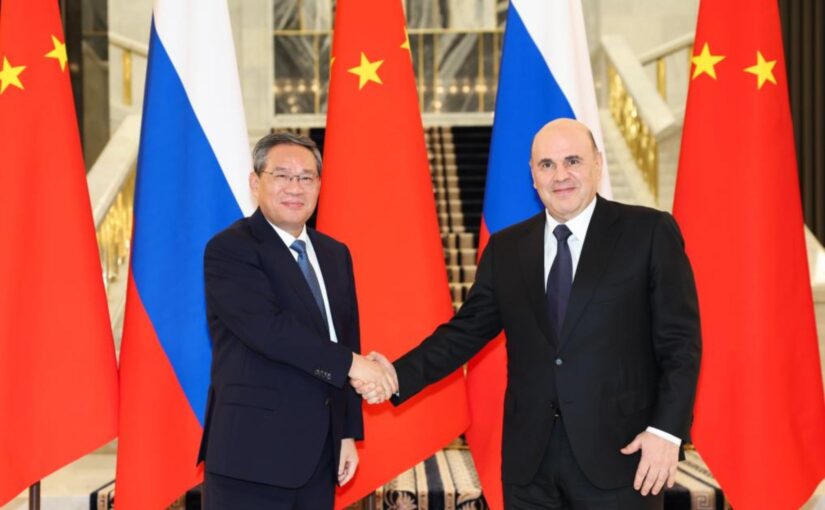
On November 17, Li Qiang met with his Russian counterpart Mikhail Mishustin and said that China stands ready to deepen cooperation with Russia in investment, energy, agriculture and other fields, adding that the Chinese market welcomes more high-quality agricultural and food products from Russia.

Li said that not too long ago he and Mishustin held in Hangzhou, the capital of east China’s Zhejiang Province, the 30th regular meeting of the Chinese and Russian heads of government, which focused on the implementation of the important consensus reached by Chinese President Xi Jinping and Russian President Vladimir Putin.

China stands ready to work with Russia to follow the strategic guidance of the two heads of state, further strengthen communication, continuously deepen mutually beneficial cooperation between the two sides, and create more benefits for the two peoples, Li said. He also urged both sides to continue to expand people-to-people and cultural exchanges, and to strengthen cooperation in areas such as culture, education and films.

Noting that the Tianjin Summit of the Shanghai Cooperation Organisation (SCO) held in September achieved a series of fruitful results, Li said China is willing to maintain close coordination and collaboration with Russia to encourage all parties of the SCO to uphold the Shanghai Spirit and materialise the development blueprint outlined by the leaders at an early date.

He urged further advancing pragmatic cooperation to bolster the development momentum of all member states, to continuously improve the institutional building of the SCO, to enhance its influence in international affairs, and to stand in solidarity with the vast number of Global South countries to promote an equitable and orderly multipolar world as well as a universally beneficial and inclusive economic globalisation.

Continue reading Li Qiang attends SCO heads of government meeting in Moscow

Japanese Communist Party rejects Takaichi’s provocative remarks on Taiwan

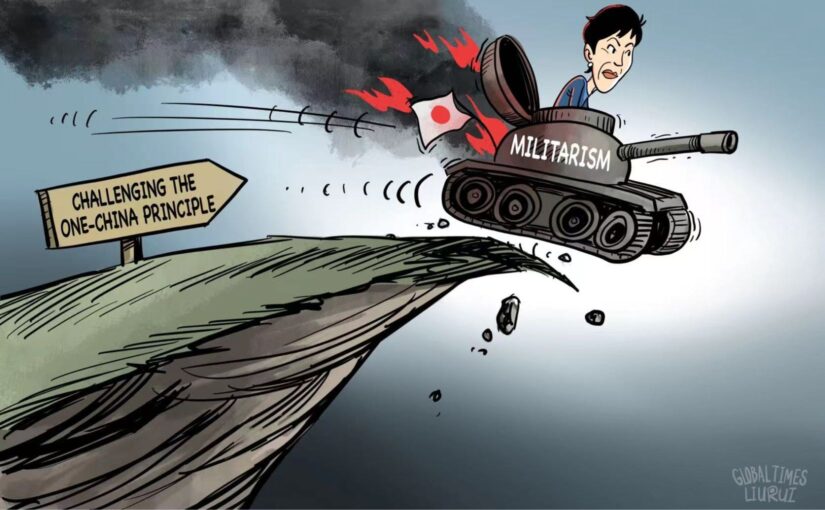
The Japanese Communist Party (JCP) has taken a strong stance against the remarks of Prime Minister Sanae Takaichi in a parliamentary session, that a military “contingency” regarding China’s island province of Taiwan could trigger the involvement of Japanese armed forces, which have plunged relations between China and Japan into their worst crisis in decades.

On November 15, the Chinese newspaper Global Times, citing a release on the website of Shimbun Akahata, the JCP’s daily newspaper, reported that JCP Chair Shii Kazuo had, the previous day, demanded that Takaichi withdraw her remarks, warning that attempts to exaggerate the “crisis” by claiming that a Taiwan emergency would be an existential threat and using it to justify a massive military buildup must be firmly rejected.

Shii Kazuo, who is also a member of the Japanese House of Representatives, had posted on X that the prime minister’s “remarks had escalated into a serious international issue. What is needed to positively resolve Japan-China relations requires calm dialogue grounded in agreements affirmed by both sides, including the 2008 pledge of not posing a threat to each other, rather than provocative rhetoric that intensifies tensions. We again urge her to retract her remarks.”

The Shimbun Akahata report noted that even late former prime minister Shinzo Abe said things like, “a Taiwan contingency is a Japan contingency” only after leaving office, refraining from making such statements while in office. This is because he understood how serious the situation would be. Takaichi lacks such basic diplomatic common sense. This diplomatic blunder should be corrected now, the report said.

Shii Kazuo had made a similar demand previously, on November 11, also in a post on X.

The Japan Press Weekly reported that on November 10, JCP Secretariat Head Koike Akira, at a press conference in the Diet (parliament) building, criticised Takaichi for implying that a “Taiwan contingency” would threaten Japan’s survival and thus allow Japan’s Self-Defence Forces to participate in a US-led war against China. He called the remarks “extremely dangerous.”

Koike added that she is the first prime minister to cite a specific case regarding Japan facing a crisis of “survival-threatening situation” that would justify the country’s use of the collective self-defence right. He criticised the remarks as “dangerous and reckless.”

Japan Press Weekly is an English-language online newsletter issued by the JCP.

Continue reading Japanese Communist Party rejects Takaichi’s provocative remarks on Taiwan

Japan and the US move toward open military confrontation over Taiwan

In the following article, which was originally published by Struggle/La Lucha, Sharon Black analyses the joint moves of Japan and the United States to instigate war against socialist China.

Regarding new Japanese Prime Minister Sanae Takaichi’s statement that any Chinese move to reunify Taiwan with the mainland would threaten Japan’s very survival – and that Tokyo would be ready to join military action to stop it she writes:

“For Beijing, the message was clear: Japan was abandoning its long-standing stance of avoiding any commitment to take sides in a conflict over Taiwan and was now declaring that it would join the United States in a military response.”

Noting reports claiming that Donald Trump had privately urged Takaichi to tone down her public threats, Sharon observes:

“The move fits a familiar Trump pattern: loud public belligerence paired with quiet tactical repositioning when trade negotiations or economic pressure campaigns stall… But far from signaling a real shift, this is political maneuvering. Even as the administration adjusts its tone for trade talks with China, US war planning continues without pause, and Washington is pouring new investments into Japan’s military.

“At the same time that Japan was escalating its rhetoric, the United States approved a new $330 million arms package for Taiwan on November 13 – the first such sale under Trump’s return to office.”

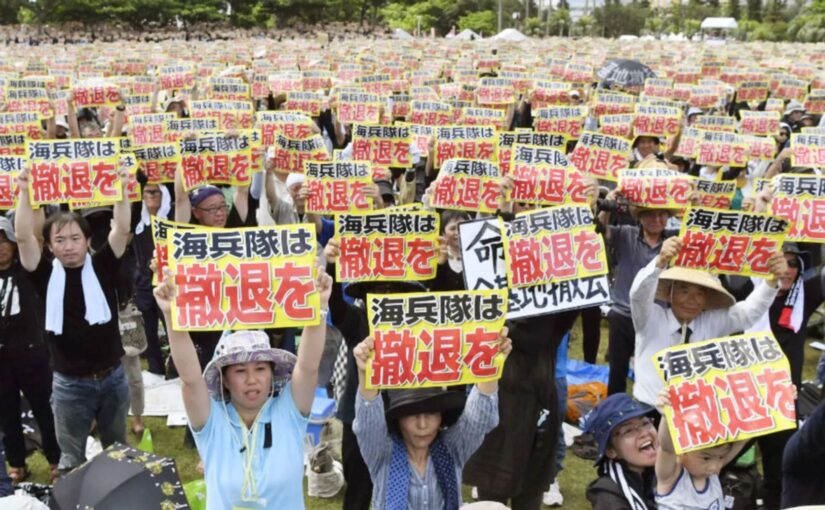
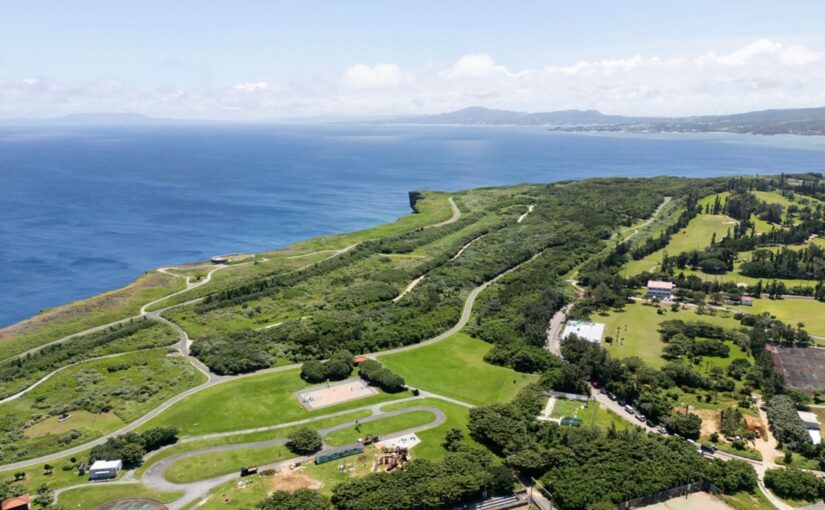
Japan, she notes, remains the centrepiece of Washington’s military strategy in the western Pacific. The United States operates more than 120 military installations across the country, including 15 major bases, and stations over 54,000 troops there – the largest concentration of US forces anywhere outside the continental United States. Okinawa carries the heaviest burden of this occupation, with bases crowding the island and dominating local life.

Sharon also reminds readers that China’s response to Japan’s renewed new militarism cannot be understood without remembering the past. In the first half of the 20th century, the Japanese Empire invaded, occupied, and devastated large parts of China. The War of Resistance against Japanese Aggression brought mass displacement, famine, and systematic atrocities. The most infamous was the Nanjing Massacre of 1937, when Japanese troops killed an estimated 200,000 civilians and carried out widespread rape and torture. In the course of the eight-year war, more than 20 million Chinese people were killed.

She further explains that Taiwan’s modern history is inseparable from the Chinese revolution. As the People’s Liberation Army (PLA) defeated the reactionary Kuomintang on the mainland, Chiang Kai-shek evacuated roughly 1.5 to 2 million soldiers, officials, and supporters to Taiwan.

Once ensconced on the island, the KMT imposed martial law and unleashed the “White Terror,” a brutal campaign of repression against workers, students, leftists, and anyone suspected of sympathising with the Chinese revolution. Tens of thousands were imprisoned, thousands were executed, and many simply disappeared into military prisons. The terror lasted for decades, well into the 1980s.

Meanwhile, in June 1950, US President Harry Truman ordered the US Seventh Fleet into the Taiwan Strait, blocking the PLA from liberating Taiwan. For two decades Washington insisted that the Kuomintang remnants represented “Free China” and maneuvered to keep the People’s Republic out of the United Nations.

“This had nothing to do with ‘defending democracy.’ It was part of a broader US effort to contain the Chinese revolution and suppress anti-colonial movements rising across Asia.”

However: “Today, the world situation has changed dramatically. Both the United States and Japan are facing deep capitalist stagnation – marked by slowing growth, rising prices, and long-term economic decline. These crises are pushing the ruling classes in both countries toward greater militarism abroad. At the same time, socialist China has emerged as one of the central engines of the global economy.

Continue reading Japan and the US move toward open military confrontation over Taiwan

Chinese scholars question Japanese sovereignty over Ryukyu islands

Academic circles in China are paying increasing attention to Ryukyu studies, specifically the history of the island group, often referred to as Okinawa, and the legitimacy or otherwise of Japan’s claim to sovereignty over the ancient kingdom.

On November 18, the Global Times newspaper reported that an academic conference marking the 30th anniversary of the China Ryukyu Research Institute, and advancing the development of Ryukyu studies, had been held at Fujian Normal University.

Global Times spoke with Professor Xie Bizhen, academic head of the institute, who emphasised that Japan’s annexation of Ryukyu and subsequent assimilation policies, including the forced change of surnames, place names, and even rebranding the “Ryukyu Islands” as the “Southwestern Islands,” were aimed at erasing historical memory. “As a result, many Okinawans today are unfamiliar with this part of their own past,” he said. “This is why our research matters: to restore historical truth, preserve collective memory.”

On November 23, CGTN published an opinion piece by Tang Yongliang, a researcher at the Institute of Japanese Studies of the Chinese Academy of Social Sciences, outlining what he described as the “undetermined status of Ryukyu.”

Stating that “the sovereignty over the Ryukyu Islands remains disputed,” Tang added that this could be understood in both a broad and a narrow way.

“In the broad sense, the ‘undetermined status of Ryukyu’ refers to the situation since modern times, where Ryukyu was illegally occupied by Japan without widespread recognition by the international community. To this day, the sovereignty issue remains unresolved.

“In the narrow sense, it refers specifically to the end of World War II, when the Cairo Declaration and the Potsdam Proclamation – documents concerning the post-war disposition of fascist Japan – explicitly delimited Japan’s territorial scope, separated Ryukyu from Japan, placed it as a ‘potential trusteeship territory’ and left its sovereignty legally unsettled to this day.”

Further in the broad sense: “Historically, Ryukyu was an independent kingdom. Japan’s modern annexation of Ryukyu was a unilateral act of violent seizure: no treaty regarding state sovereignty was concluded, no consent was obtained from China, the suzerain power, and the annexation contravened international legal norms on the acquisition of territorial sovereignty in the 19th century.”

Further in the narrow sense: “From November 22 to 26, 1943, the leaders of China, the United States, and the United Kingdom convened the Cairo Conference in Egypt, during which they discussed the post-war disposition of Ryukyu. Although the issue was not ultimately written into the Cairo Declaration, the declaration’s provision that ‘Japan will also be expelled from all other territories which she has taken by violence and greed’ undoubtedly applied to Ryukyu.

“On July 26, 1945, the three nations issued the Potsdam Proclamation, urging Japan’s unconditional surrender. It clearly stated that ‘the terms of the Cairo Declaration shall be carried out’ and that ‘the Japanese sovereignty shall be limited to the islands of Honshu, Hokkaido, Kyushu, Shikoku and such minor islands as we determine,’ thereby explicitly separating Ryukyu from Japanese territory.”

What happened later was that: “With the deepening of the Cold War, the US-Japan alliance became increasingly intertwined; the United States gradually relaxed its restrictions on Japanese influence within the Ryukyu Islands, and in 1953 and 1968 unilaterally transferred administrative rights over the Amami Islands and the Nanpo Islands to Japan.

“In 1971, under pressure from the Vietnam War and the Ryukyuan anti-US movement, the Nixon administration concluded the ‘Agreement Between Japan and the United States of America Concerning the Ryukyu Islands and the Daito Islands,’ again unilaterally transferring administrative rights to Japan on the condition that Japan allow continued US military presence in the islands.

Continue reading Chinese scholars question Japanese sovereignty over Ryukyu islands

Australian communists learn from China’s experience in party building

The Communist Party of Australia (CPA) has said that it can learn from the Communist Party of China’s efforts to uproot corruption and bureaucracy and retain a good style of work based on the mass line.

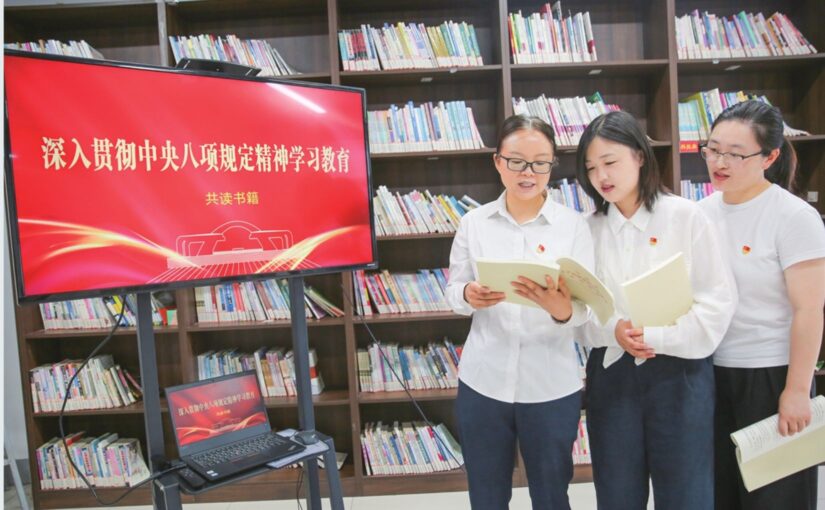
In a recent interview with the Global Times newspaper, Vinnie Molina, National President of the CPA, was asked what lessons China’s “eight-point decision” provides for Marxist parties worldwide.

The eight-point decision is a set of rules first adopted by the CPC leadership in December 2012 to address chronic bureaucratic issues, including official privileges.

Spelled out in just over 600 words, it established rules for Party leaders governing research tours, meetings, documentation, and other official duties. It later expanded into a Party-wide initiative for all members to adopt its principles to improve governance conduct. After more than a decade of implementation, the decision has been hailed as a “game changer” in China’s governance.

In March 2025, the CPC launched a further Party-wide education campaign to implement the program.

Asked what provisions made the deepest impressions on him, Molina replied:

“To be a good Communist requires dedication and humility. I really admire the leadership style of Chinese President Xi Jinping, especially how he leads by example… The first regulation is crucial: ‘leaders must keep in close contact with the grassroots.’ Those who are in positions of responsibility must work hard to earn the people’s trust and never separate themselves from the people. Local knowledge and experience are vital for leadership on the national level.”

As the president of a Marxist-Leninist party, Molina sees the decision as inheriting and developing Marxist party-building doctrine:

“Friedrich Engels, in his ‘Rules of the Communist League (1847),’ recognised that if the working masses were to overcome capitalism, they would need to be highly organised. He also stressed the importance of responsibility to the community and having safeguards against the misuse of funds. It is easy to deviate from party discipline if we are not closely linked to the people. It is with the people that the Communist Parties test their leadership and policies.”

He added: “The CPC uses the method of criticism and self-criticism in party-building at all levels from the leadership to the rank and file to strengthen the unity of the organisation and its place in Chinese society. As Marxist-Leninist parties, we must reflect on the principles and methods of work and establish strict requirements to ensure both centralism and democracy are adhered to. We can only grow and thrive if we have cadres who are disciplined and understand the need for democratic centralism, self-discipline and leading by example.”

On the relations between Marxist parties worldwide, including between the CPA and CPC, Molina concludes:

“The exchanges between Communist Parties are vital to upholding our commitment to proletarian internationalism. By learning how each party applies universal principles to its specific context, we gain invaluable insights. The CPC’s decision of engaging with Marxist parties worldwide is not only correct but essential. We deeply value this dialogue and hope to see in-depth information sharing. ‘Workers of the world, unite’ is a phrase that rings true throughout history. To isolate ourselves from the world can lead to the withering of our movement – as seen in parts of the Western left, which have at times fallen prey to the imperialist propaganda. That is why we support greater opportunities for Marxist education exchanges, which can help smaller parties like the CPA train cadres capable of building a stronger communist presence.”

Continue reading Australian communists learn from China’s experience in party building

CPC reiterates solidarity with Venezuela

The Communist Party of China (CPC) has reiterated its solidarity with the United Socialist Party of Venezuela (PSUV) and with the revolutionary government of President Maduro.

Liu Haixing, Minister of the International Department of the CPC Central Committee (IDCPC), met on November 26 with Remigio Ceballos, the Venezuelan Ambassador to China.

Liu said, in recent years, under the strategic guidance of President Xi Jinping and President Nicolas Maduro, China-Venezuela relations have continuously reached new heights. China will, as always, firmly support Venezuela in safeguarding its sovereignty and independence, oppose external interference and support Venezuela in independently choosing its development path. The CPC and the PSUV share similar ideals and goals.

The Chinese side is willing to jointly implement the important consensus reached by the two heads of state, continuously deepen exchanges and mutual learning of experience in party building and state governance, enhance exchanges at all levels, promote cooperation in areas such as cadre training, and increase coordination and cooperation in international and regional affairs, so as to advance the all-weather strategic partnership between China and Venezuela through inter-party channels.

Ceballos said, the governments, political parties and people of Venezuela and China maintain a brotherly friendship. Venezuela firmly supports China’s position on the Taiwan question and the concept of a community with a shared future for humanity and the Belt and Road cooperation proposed by President Xi Jinping. No matter how the international situation changes, Venezuela will continue to uphold and fulfill its firm commitment to developing friendly relations with China and is willing to deepen practical cooperation with China in areas such as economy, trade, energy and education. The Embassy of Venezuela in China is willing to actively promote exchanges and cooperation between the ruling parties of the two countries.

The following article was first published on the website of the IDCPC.

Beijing, November 26th—Liu Haixing, Minister of the International Department of the CPC Central Committee (IDCPC), met here today with Remigio Ceballos, Venezuelan Ambassador to China.

Continue reading CPC reiterates solidarity with Venezuela