Debunking myths about the Chinese economy

In the following article, which was originally published on his website, The Next Recession, the Marxist economist Michael Roberts presents an objective analysis of the present state and prospects of the Chinese economy, in the course of which he also debunks many of the myths and misunderstandings perpetrated by mainstream economists, joined by many avowed Marxists, in the West.

Michael begins by noting that, in his New Year address, Chinese President Xi Jinping had “praised the country’s advancements in key sectors. Images ranging from humanoid robots performing kung fu to new hydropower projects rolled on the screen as he spoke.”

He goes on to argue that: “China’s 15th five-year plan is all about AI. The 14th Plan (2021-2025), which has just ended, focused on the ‘dual circulation’ strategy (domestic + foreign trade) i.e driving economic growth not just through exports, but also through investment in the domestic economy, particularly aiming at self-dependence in technology. The new plan will continue that drive for technological independence, but this time through the diffusion of AI into industrial processes, consumer products, health care, education and digital government. The plan is that by 2030 AI is expected to be as widespread as electricity or the internet – and so a big driver of economic growth. The government talks of China becoming an ‘intelligent society’ by 2035.”

In this regard he highlights a key difference with the capitalist economies: “It seems that China’s leaders are even more committed to making AI succeed than in the major economies of the West, where there are sceptical voices about what it can deliver in new discoveries, higher productivity and profitability.  To me, the difference is that in China there is a plan to meet key targets in technology that will boost the whole economy etc., while in the major capitalist economies, all the AI eggs are in a basket owned by the privately-owned AI hyperscalers and the Magnificent Seven giant tech media companies – and for them, profitability is key, not technology outcomes.”

China commences its next five-year plan this spring, with the current plan having, “achieved mostly what it set out to do in the previous plan. China looks set to achieve 5% real GDP growth in 2025, and while its annual real GDP growth is no longer in double-digits, it is still growing twice as fast as the US economy, which managed 2.5% in 2025, at best, while the rest of the G7 economies struggled to expand by more than 1%… Depending on how you measure it, China’s GDP is close to surpassing that of the US and will, at current rates of growth, do so by the end of this new five-year plan.”

However: “China’s Western critics say that if you compare nominal GDP growth, which includes inflation, then US nominal GDP rose 5% in 2025, as much as China’s nominal rate. This shows that China is in a deflationary spiral that is weakening consumer spending and lowering investment growth.  Many Western mainstream economists argue that ‘moderate’ inflation is good for an economy. If there is deflation (falling prices), then consumers may spend less on goods and services and save their money in the hope that prices will fall further, and so economic growth will slow.”

To this Michael pointedly responds: “But what is good is ‘moderate and steady’ inflation for capitalist enterprises to give them room to raise prices to maintain profits. This argument should apply to China too. But it does not apply to average households in the US, Europe and now Japan, facing unending rises in prices of essential goods, while in China prices are steady and even falling.”

Dealing with capitalist perspectives on the absence of inflation in the Chinese economy, he notes: “Apparently, it is all to do with ‘involution’. Veteran ‘China watcher’, American economist Stephen Roach explains that persistent deflation in prices in China reflects involution… referring to price declines arising from disorderly, overly aggressive competition in several key industries.  Prices are falling because competition among producers of vehicles, solar panels, batteries etc. is too strong! And yet we are always told in mainstream economics that competition is good.”

This, in turn, leads to the much-hyped theory that China’s economy is staring at the prospect of ‘Japanification’: “According to [US economist Stephen] Roach and other Western observers, including many on the left, without greater consumer demand, the Chinese economy remains at risk of falling into a Japanese-like [from the late 1980s on] quagmire of falling prices and rising debt.”

Continue reading Debunking myths about the Chinese economy

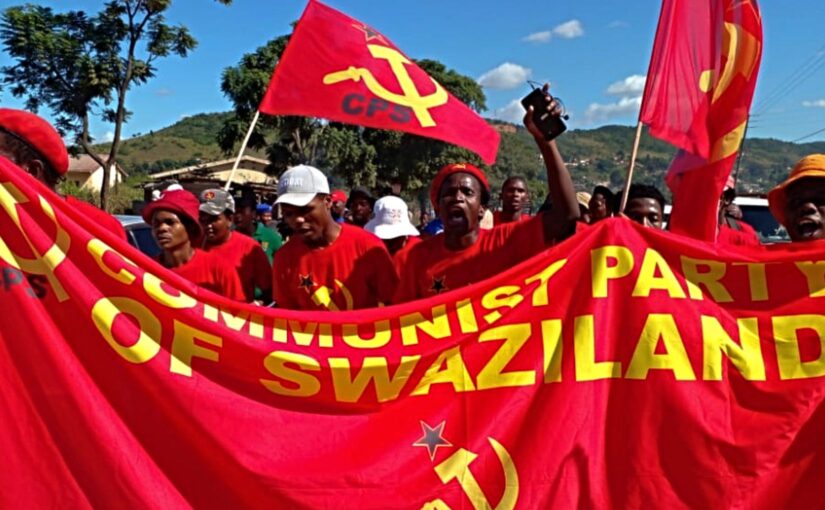
South African and Swazi communists back one-China principle

The communist parties of South Africa and Swaziland have strongly condemned the US plan to sell US$ 11 billion worth of arms to the separatist authorities in Taiwan and reaffirmed their full backing for the one-China principle.

In a January 3, 2026, statement, the South African Communist Party (SACP) said that the proposed package would represent one of the largest US weapons sales to Taiwan and the most drastic US imperialistic intervention in China’s domestic political matters in recent history. It would also grossly violate the one-China policy and the three China-US joint communiques, in addition to infringing China’s sovereignty, security and territorial integrity and underming peace and stability in the Taiwan Strait.

It added: “The SACP remains steadfast in its firm support of the one-China principle and China’s inalienable right to safeguard its national sovereignty and territorial integrity.”

In a December 29, 2025, statement, the Communist Party of Swaziland (CPS) noted: “To the Swazi people, the arming of the Taiwan administration represents not only interference in China’s internal affairs but also, direct reinforcement of the Mswati dictatorship. Such military supplies inevitably find their way into the hands of oppressive regimes, strengthening authoritarian rule and perpetuating human rights abuses in our country.”

It declared that the CPS “stands in firm solidarity with the Communist Party of China and the People’s Republic of China in all efforts to mobilise against this provocation.”

As indicated above, the proposed US action is of particular concern to the CPS. Swaziland is an absolute monarchy in which the CPS and other progressive and democratic forces have to struggle under condition of clandestinity and repression. It is also the only country in Africa that maintains so-called ‘diplomatic relations’ with the Taiwan authorities. [NOTE: King         Mswati III changed the name of the country to Eswatini in April 2018 but this is not recognised by the CPS and other left-wing and progressive parties.]

Accordingly, on October 23, 2025, the CPS issued a perspectives paper on the Taiwan issue. It states that, “The CPS, as a Marxist-Leninist Party, adheres to principles that emphasise the importance of national sovereignty, anti-imperialism, and the unity of socialist states. The Party views the Taiwan issue through the lens of class struggle… [and] expresses strong solidarity with the PRC [People’s Republic of China], viewing it as a leading force in the global socialist movement.” The party’s  support for the PRC’s stance on Taiwan aligns with its broader ideological commitment to socialism and the fight against imperialism. “The CPS strongly criticises any separatist movements in Taiwan, framing them as counter-revolutionary or influenced by foreign interests. We argue that such movements undermine the struggle for socialism and threaten the stability of the region.”

The perspectives note that: “By supporting the PRC’s position on Taiwan, the CPS argues that it contributes to regional stability in Southern Africa and Africa. We advocate for closer ties with other African nations that share similar views on sovereignty and territorial integrity, fostering a united front against perceived imperialist encroachments via the political base which Taiwan is establishing in Swaziland.”

The party’s advocacy for a unified stance on the Taiwan question, it argues, resonates with other political entities in Swaziland, where even ordinary people across ideological divides feel that the relationship with Taiwan, “only serves the interests of the monarchy and political elites. Setting out very well our stand on Taiwan will potentially lead to broader discussions on foreign policy and national identity for the future People’s Republic of Swaziland. This could create a political environment where socialist principles gain more traction in domestic discourse against imperialism.”

The party also highlights the economic implications of aligning with the PRC, emphasising the potential for increased and mutually beneficial investment, trade, and development collaboration with China and adds:

“The Party’s stance reflects a broader commitment to the principles of national sovereignty, anti-colonialism, and the pursuit of socialism on a global scale.”

The following articles were originally published by Solidnet and on the website of the Communist Party of Swaziland.


South African CP, SACP condemns proposed US weapons package to Taiwan, calls for respect of China’s national sovereignty

January 3 (Solidnet) – The South African Communist Party (SACP) condemns the proposed US massive arms package sale to Taiwan, valued at 11 billion dollars. If approved by the US Congress, this package would represent one of the largest US weapons packages to Taiwan and the most drastic US imperialistic intervention in China’s domestic political matters in recent history. It would also constitute one of the most aggressive actions of the US in Taiwan in violation of China’s sovereignty.

The intended arms sale would grossly violate the one-China policy and the three China-US joint communiques, in addition to infringing China’s sovereignty, security and territorial integrity and undermine peace and stability in the Taiwan Strait. The intended arms sale also sends an unfortunate and gravely wrong signal to “Taiwan independence” forces, wrongly interpreting a provincial, domestic internal dispute into an international question with diplomatic implications.

The SACP remains steadfast in its firm support of the one-China principle and China’s inalienable right to safeguard its national sovereignty and territorial integrity.

In the interest of international security and global stability, the SACP calls on all countries to respect the sovereignty of other states and to stand with the Chinese people in this instance where its sovereignty is being undermined by the imperialist US regime.


CPS calls for global mobilisation denouncing USA arms deal with the Taiwan region illegitimate separatists administration.

December 29 (CPS) – The Communist Party of Swaziland (CPS) strongly condemns the recent United States $11.1 billion arms package to the Taiwan
region of China. This provocative act constitutes a blatant violation of the One-China principle and undermines regional
stability and global peace.

It is common cause to believe that the USA is either effectively donating these arms to right-wing forces in Taiwan or
laying the basis for a military presence within Chinese territory. At no point can one be convinced that the bankrupt
and poorly managed separatist administration could sustain an $11.1 billion transaction. This deal will ultimately
become another costly imperialist war burden imposed on the ordinary people of the USA.

Historically, imperialist wars financed through massive US budgets have resulted in severe economic setbacks for working
people while simultaneously undermining global peace, economic stability, and universal justice.

To the Swazi people, the arming of the Taiwan administration represents not only interference in China’s internal affairs
but also direct reinforcement of the Mswati dictatorship. Such military supplies inevitably find their way into the hands
of oppressive regimes, strengthening authoritarian rule and perpetuating human rights abuses in our country.

Whether through so-called high-level diplomatic visits or direct military transfers, these criminal packages embolden
dictatorships at the expense of the people’s freedom. This mirrors US diplomatic trends toward Swaziland that have
consistently prioritised geopolitical interests over democracy and human rights.

The CPS stands in firm solidarity with the Communist Party of China and the People’s Republic of China in all efforts to
mobilise against this provocation. We call upon all progressive forces and peace-loving people worldwide to:

  • Denounce US interference in China’s internal affairs.
  • Support the One-China principle and China’s territorial integrity.
  • Recognise that attacks on China’s sovereignty strengthen dictatorships everywhere.
  • Build international solidarity against imperialist policies that arm oppressive and illegitimate regimes.

The struggle for Taiwan’s reunification with mainland China is inseparable from our own struggle for democracy in Swaziland. Imperialism abroad reinforces dictatorship at home. Only international solidarity can bring genuine liberation for all peoples.

Long live international solidarity!
Long live the People’s Republic of China!
Down with imperialism and dictatorship!


Communist Party of Swaziland’s (CPS) Perspectives on the Taiwan Question in Swaziland.

October 23 (CPS) – Overview of the Taiwan Question

The Taiwan question is a significant geopolitical issue that has persisted since the end of the Chinese Civil War in 1949. The island of Taiwan operates under its own government, known as the Republic of China (ROC), while the mainland is governed by the People’s Republic of China (PRC). Taiwan as a breakaway province that must be reunified with the mainland, while the separatist maintains a distinct political identity, with its own so called democratic institutions. The international community remains divided, with some countries recognizing the PRC and others maintaining unofficial relations with Taiwan.

Historical Context

1. Colonial and Post-Colonial Dynamics

Taiwan’s history is marked by periods of colonial rule, first under the Dutch, then the Qing Dynasty, and later Japanese occupation. After World War II, Taiwan was placed under the control of the Nationalist government, which fled to the island following its defeat by the Communists led revolution which needed the civil war. This historical backdrop has shaped Taiwan’s identity and its complex relationship with the mainland

2. Cold War Influences

During the Cold War, Taiwan became a focal point in the struggle between communist and capitalist ideologies. The United States supported the ‘ROC’ as a counterbalance to communist expansion in Asia, leading to a complicated diplomatic landscape. The PRC, in turn, sought to isolate Taiwan diplomatically, promoting the One China principle as a means to reclaim sovereignty over the island.

3. Recent Developments

In recent years, tensions have escalated as Taiwan has moved toward a more assertive identity, with increasing support for independence among some political factions. The PRC has responded with military posturing and diplomatic pressure, to resolve this complicated the situation.

Ideological Foundations of the CPS Position

1. Marxist-Leninist Principles

The CPS, as a Marxist-Leninist Party, adheres to principles that emphasize the importance of national sovereignty, anti-imperialism, and the unity of socialist states. The Party views the Taiwan issue through the lens of class struggle, asserting that any division among socialist movements weakens the global fight against capitalism.

2. Solidarity with the PRC

The CPS expresses strong solidarity with the PRC, viewing it as a leading force in the global socialist movement. Their support for the PRC’s stance on Taiwan aligns with their broader ideological commitment to socialism and the fight against imperialism.

3. Critique of Western Imperialism

The CPS frames its position on Taiwan within a broader critique of Western imperialism, arguing that support for Taiwan’s independence is part of a strategy by imperialist powers to weaken socialist states. This perspective emphasizes the need for unity among socialist and anti Imperialist countries and forces to resist external pressures.

Specific Stances and Advocacy

1. Support for the One China Policy

The CPS actively endorse the One China policy, advocating for international recognition of the PRC’s stand that Taiwan is part of China and there is one China whose only state administration is in Beijing. This stance reflects our commitment to national sovereignty and the belief that Taiwan’s status should be resolved through peaceful means, rather than through foreign interference which practically disrupts the peace process..

2. Criticism of Separatist Movements

The CPS strongly criticizes any separatist movements in Taiwan, framing them as counter-revolutionary or influenced by foreign interests. We argue that such movements undermine the struggle for socialism and threaten the stability of the region.

3. Educational and Cultural Initiatives

The CPS will engage in educational initiatives to raise awareness about the historical context of the Taiwan issue and promote narratives that align with our principled ideological stance. This will include organising seminars, producing publications, and leveraging social media to disseminate their views.

4. Diplomatic Advocacy

The CPS call upon the governments to put pressure to ISOLATE the Mswati regime which is the HARBOUR BASE of Taiwan administration in Africa. These governments must continue to of strengthen its diplomatic ties with the PRC. We will advocate for policies that align with the PRC’s interests in the region, potentially exposing the Swaziland foreign relations with other countries as hypocrite and scandalous.

5. Collaboration with Other Leftist Movements

The CPS seek alliances with other leftist parties and organizations globally and in the country that share a similar stance on the Taiwan question. This collaboration will involve joint statements, coordinated actions, and mutual support in international forums and campaigns for democracy in the country.

Broader Implications for Domestic and Foreign Policy

1. Expose tinkundla and Mswatis Disastrous Foreign Relations

The CPS’s position on the Taiwan question significantly influence the struggle for democracy in Swaziland to assume a posture of One China Policy. This shift will weaken the strong ties that exist between the Mswati dictatorship and Taiwan , particularly given the growing influence of China in Africa whose positive outlook bypasses the people of Swaziland presently.

2. Regional Stability and Cooperation

By supporting the PRC’s position on Taiwan, the CPS argues that it contributes to regional stability in Southern Africa and Africa. We advocate for closer ties with other African nations that share similar views on sovereignty and territorial integrity, fostering a united front against perceived imperialist encroachments via the political base which Taiwan is establishing in Swaziland.

3. Impact on Local Political Dynamics

The CPS’s advocacy for a unified stance on the Taiwan question resonates with other political entities in Swaziland where even ordinary people across ideological divide, feels the Taiwan/tinkundla relationships only serves the interests of the monarchy and political elites. Setting up very well our stand on Taiwan will potentially lead to broader discussions on foreign policy and national identity for the future People’s Republic of Swaziland. This could create a political environment where socialist principles gain more traction in domestic discourse against Imperialism.

4. Economic Considerations

The CPS highlight the economic implications of aligning with the PRC, emphasizing the potential for increased investment, trade, and development mutually benefiting collaboration with China. This economic dimension is our persuasive argument for supporting the PRC’s over Taiwan.

5. Human development and Governance:

While advocating for solidarity with the PRC, the CPS promotes the achievements of the PRC government on improving the lives of ordinary people, ending poverty and improve Human development index with a stable and efficient governance and production ethics and cultural practices. The Party navigates these complexities while maintaining its ideological stance, potentially exposing criticisms of the PRC as part of an imperialist narrative which only entrenches the Mswati dictatorship and Taiwan colonial hegemony in our country.

Conclusion

The Communist Party of Swaziland’s position on the Taiwan question is deeply rooted in its Marxist-Leninist ideology, emphasizing solidarity with the PRC and opposition to perceived imperialist interventions. By advocating for the One China policy and criticizing separatism, the CPS seeks to align the struggle for democracy in Swaziland to the popular anti Imperialist campaigns to influence foreign policy with its ideological commitments, which have significant implications for the future democratic Swaziland diplomatic relations and regional dynamics. The Party’s stance reflects a broader commitment to the principles of national sovereignty, anti-colonialism, and the pursuit of socialism on a global scale. As the situation evolves, the CPS will continue to navigate the complexities of international relations while promoting its ideological clarity to explain with clarity these dynamics to the majority of our population.
Nicaragua inaugurates major Chinese-invested projects

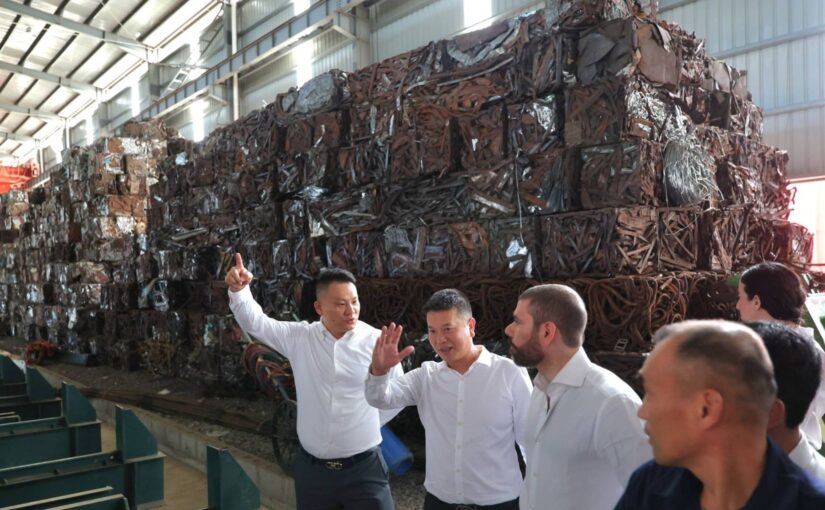
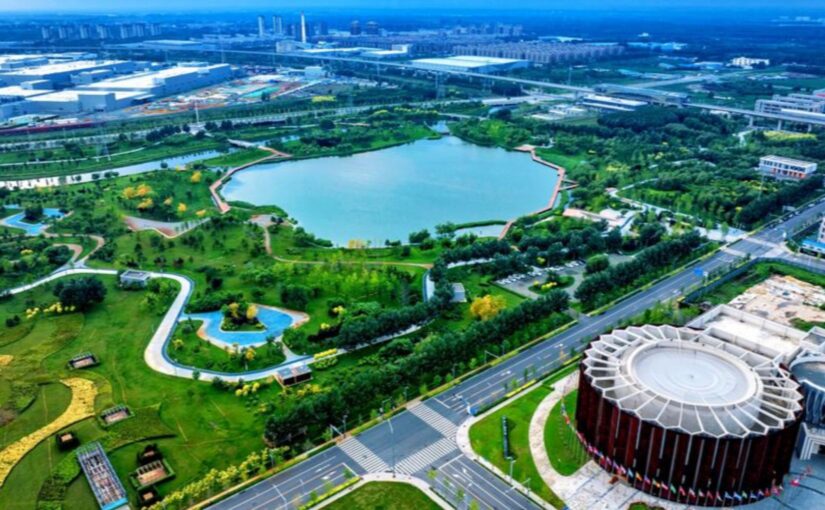
Nicaragua has recently inaugurated two major industrial projects, built with investment and support from China, that will make a substantial contribution to the country’s industrial development and modernisation.

On December 23, 2025, Presidential Adviser Laureano Ortega Murillo inaugurated the American Recycling Steel and Materials Processing Plant alongside Nicaraguan and Chinese officials. This steel plant is considered the most sophisticated and largest in all of Central America. US$ 60 million were invested in its construction and it will directly create 500 jobs.

Ortega said that, with the commissioning of this plant, Nicaragua and the Central American region will have steel products for construction, made under the highest standards of quality and sustainability.

“Within the framework of our brotherhood, in that brotherhood cemented between the Communist Party of China and the Sandinista National Liberation Front, we take on the task of continuing to promote and facilitate the investments of our Chinese brothers in Nicaragua and from Nicaragua, to promote and project this relationship for all of Central America and also framed in compliance with adherence to all the initiatives that President Xi Jinping has proposed: Belt and Road, Global Development, Global Security, Global Governance Initiative and all cooperation programs with Latin America; here we are working with our brothers in the People’s Republic of China for the development of Nicaragua and mutual benefit,” he said.

Then, on January 14 2026, a further plant that will manufacture PVC-based materials, galvanised steel sheets and related products which will be used for construction in the country as well as for export, was also opened by Laureano Ortega Murillo.

Suyen Ang, General Manager of L&L Contemporary Exteriors said: “We are here to contribute to the development of Nicaragua and the generation of employment and strengthening the national industry. Nicaragua is an attractive country for investment and is favourable for doing business.”

The following articles were originally published by La Gente – Radio La Primerísima.

Largest steel plant inaugurated in Central America

December 23 (Radio La Primerísima) – A steel plant, considered the most sophisticated and largest in all of Central America, was inaugurated on Tuesday morning by officials of the Sandinista Government and the People’s Republic of China.

The American Recycling Materials Recycling and Processing Steel Plant is located on the Masaya–Tipitapa highway, kilometer 29, in the Guanacastillo region.

60 million dollars were invested in the construction of the plant.

During the opening ceremony, Laureano Ortega Murillo, presidential advisor for the Promotion of Investment, Trade and Cooperation, explained that the project is located on a 150 thousand square meter plot of land, of which 70 thousand square meters correspond to the recycling plant.

Continue reading Nicaragua inaugurates major Chinese-invested projects

Venezuela and China reaffirm mutual solidarity

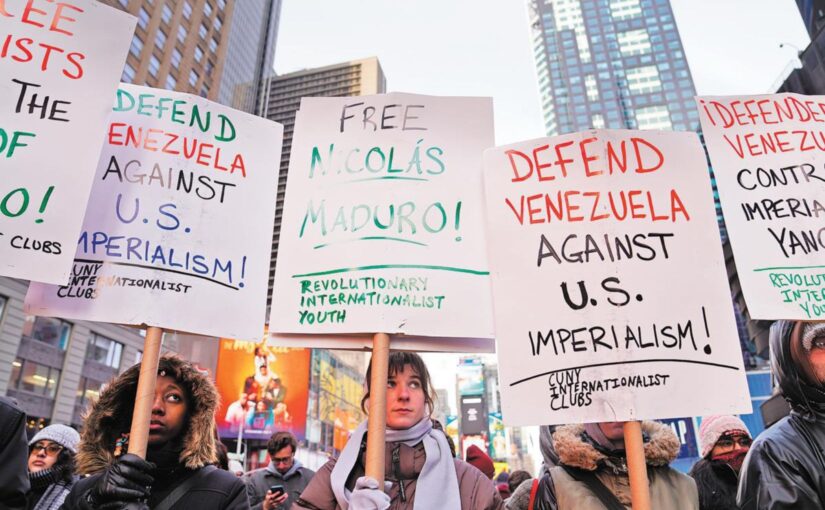
Venezuela and China have taken several opportunities to reaffirm their continued mutual support and solidarity following the brigandish US aggression which saw the kidnap of President Maduro and his wife, the murder of numerous Venezuelans and Cuban internationalists, and repeated hegemonic acts and utterances by the US, seeking, among other things, to estrange Venezuela from its closest friends, including China, Cuba and Russia.

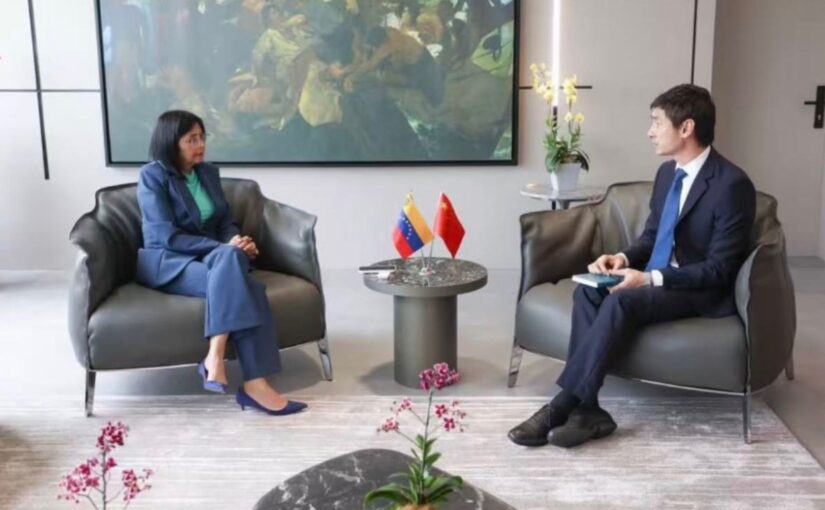
On January 9, Acting President Delcy Rodriguez reported that she had met the previous day with Chinese Ambassador Lan Hu and expressed gratitude to China for condemning the US aggression against Venezuela and the seizure of the country’s legitimate President and First Lady. She noted that Caracas values China’s firm position in strongly denouncing the grave violations of international law and Venezuelan sovereignty.

For her part, responding to Rodriguez’s comments on social media, Chinese Foreign Ministry Spokesperson Mao Ning said that China attaches importance to its relations with Venezuela and maintains sound communication and cooperation with the Venezuelan government.

Also on January 8, Venezuelan Foreign Minister Yván Gil once again expressed his gratitude to China for its support for Venezuela in social media posts. Posting on X, he said that: “We thank China for its firm position in rejecting the violation of international law and of Venezuela’s sovereignty. The Venezuelan people reaffirm their commitment to political, territorial sovereignty and over their natural resources.”

He also posted a video of Mao Ning responding to questions on Venezuela and stated on Telegram that: “Venezuela reaffirms its commitment to deepening trade and economic agreements with the People’s Republic of China.”

In a previous posting on X, Gil stated that: “We particularly value its [China’s] warning that no country can place its norms and foreign policies above the international provisions that govern and protect all our peoples. Likewise, we extend our gratitude for China’s willingness to collaborate with the Latin American and Caribbean region in preserving the status of peace zone.”

The following article was originally published by Global Times.

Venezuela’s acting president Delcy Rodriguez on Thursday expressed gratitude to China for condemning the US aggression against Venezuela and the seizure of Venezuelan President Nicolas Maduro and his wife, according to a post Rodriguez published on Instagram.

Continue reading Venezuela and China reaffirm mutual solidarity

Wang Yi continues 36-year tradition with first visit of 2026 to Africa

For the 36th consecutive year, the Chinese Foreign Minister has begun his program of diplomatic visits for 2026 by visiting Africa.

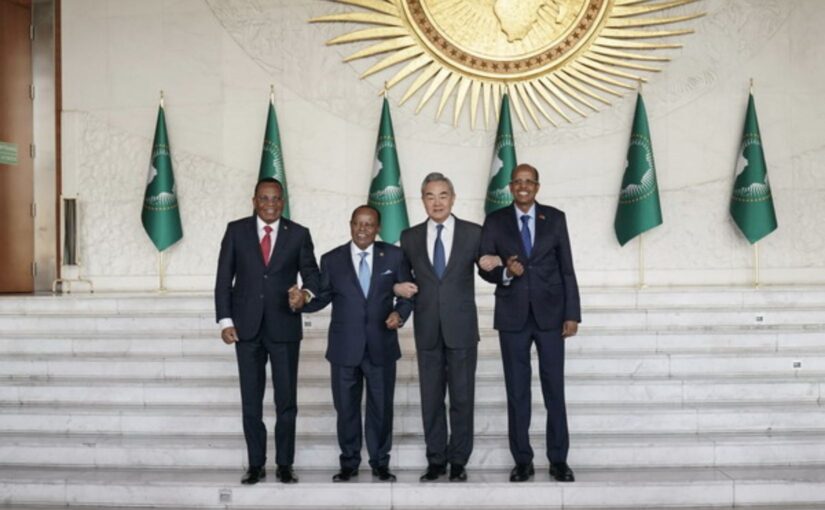
Beginning January 7, Wang Yi visited Ethiopia (which is also the home of the African Union), followed by Tanzania and Lesotho.

On January 8, Wang and Chairperson of the African Union (AU) Commission Mahmoud Ali Youssouf jointly held the ninth China-AU Strategic Dialogue at the AU headquarters in the Ethiopian capital Addis Ababa.

Wang Yi said that the AU is the “locomotive” driving African unity and cooperation, playing an important and unique role in China-Africa relations. President Xi Jinping has sent congratulatory messages to the AU Summits for 13 consecutive years, which fully demonstrates China’s high regard for developing relations with the AU. This year marks the 70th anniversary of the start of diplomatic relations between China and Africa, and also the 36th consecutive year for Africa to be the destination of the Chinese Foreign Minister’s first overseas trip in a new year.

Elaborating on the significance of this, Wang said that it is the inheritance of the China-Africa friendship. China-Africa friendship was forged in their arm-in-arm struggle for the cause of national independence and liberation and has matured through their respective national development and economic growth. It demonstrates the solidarity of developing countries. Both China and Africa belong to the Global South and share similar historical experiences and common aspirations. The unity and concerted efforts of more than 2.8 billion people in China and Africa will enable them to overcome any difficulties and challenges, accelerate the pace of their shared path toward modernisation, and contribute to a more equitable, cooperative, harmonious and stable world.

China is willing to leverage its own development to provide support for the vast number of developing countries, including those in Africa, to achieve modernisation together and jointly safeguard the interests of the Global South. The Forum on China-Africa Cooperation (FOCAC) has played an important role in the common development of China and Africa, blazing a path of win-win cooperation between China and Africa. Both sides should continue to make good use of this platform to deepen practical cooperation.

Mahmoud Ali Youssouf said that China is a partner that Africa can fully trust and rely on. The fact that the Chinese foreign ministers have made Africa the destination of their first overseas visit in a new year for 36 consecutive years fully reflects China’s strategic emphasis on Africa. Africa-China friendship, based on mutual respect and a shared vision for peace and development, has become a model of cooperation in the Global South. The AU appreciates China’s long-standing partnership with Africa across various fields and its selfless support for Africa’s development. It further highly commends the fruitful outcomes of the FOCAC and the tangible benefits it has brought to the people of Africa and China.

Youssouf added that the AU congratulates China on successfully hosting the Commemoration of the 80th Anniversary of the Victory of the Chinese People’s War of Resistance Against Japanese Aggression and the World Anti-Fascist War. At a time when power politics and bullying are on the rise and multilateralism is under attack, Africa and China are at a critical moment to remember history, look to the future, and defend sovereignty. It is even more necessary for Africa and China to deepen their partnership.

In a Joint Press Release of the African Union-China Strategic Dialogue, both sides noted that China and the African Union, members of the Global South, share broad consensus on major international and regional issues. They underscored the importance of jointly safeguarding the legitimate rights and interests of the Global South and reaffirmed their commitment to supporting each other to safeguard their respective core interests and major concerns. In this regard, they emphasised the need to further strengthen coordination and cooperation in order to inject positive momentum into global and regional peace, stability, and development.

The two sides reiterated the imperative of upholding a global order based on international law, in particular the respect for sovereignty and territorial integrity, as well as the peaceful settlement of disputes and specifically expressed concerns on the recent developments in the Bolivarian Republic of Venezuela, reaffirmimg that the sovereignty and territorial integrity of all countries must be respected, and the fundamental principles of the Charter of the United Nations and international law must be adhered to.

Continue reading Wang Yi continues 36-year tradition with first visit of 2026 to Africa

Xi Jinping congratulates Lao leader on re-election

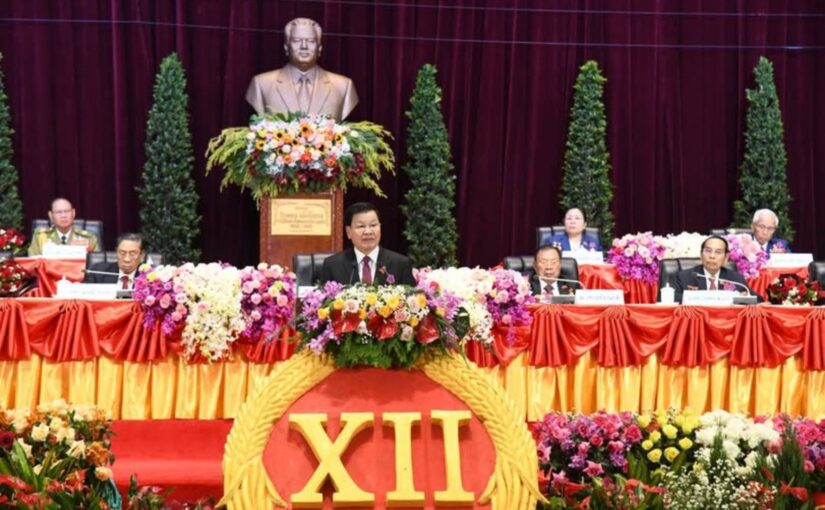
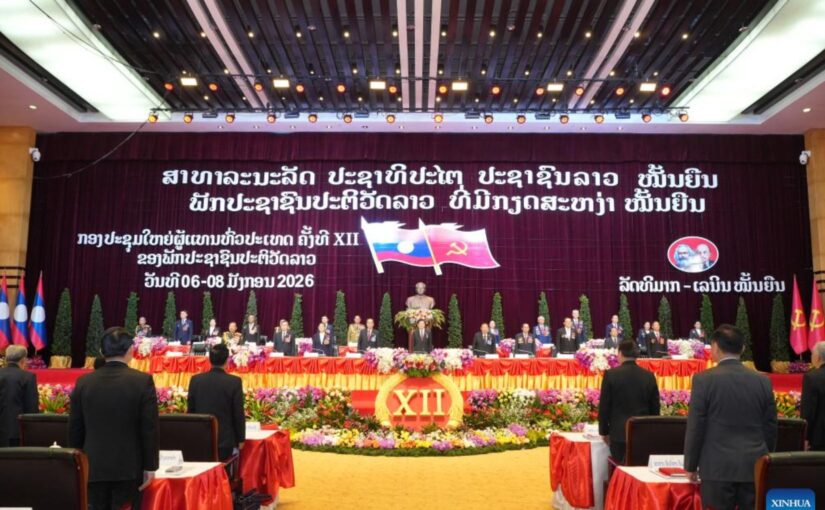
The 12th National Congress of the Lao People’s Revolutionary Party (LPRP) concluded on January 8, with the re-election of Thongloun Sisoulith as General Secretary.

On the same day, Xi Jinping, General Secretary of the Communist Party of China (CPC) Central Committee, sent a congratulatory message to Thongloun Sisoulith.

Xi wrote that the successful convening of the 12th National Congress of the LPRP is highly significant for building on past achievements and opening up new prospects for the development of the party and the socialist cause in Laos. He expressed the hope that under the strong leadership of the LPRP Central Committee with Thongloun Sisoulith at its core, the LPRP and the Lao people will remain united and continue their efforts to successfully fulfill all goals and tasks set forth by the 12th National Congress of the LPRP, continuously make new advances in the socialist cause of Laos, and press forward with resolve toward the party’s centenary goal in 2055.

He added that China and Laos are friendly socialist neighbours connected by shared mountains and rivers. In recent years, through joint efforts of both sides, China-Laos relations have been at their best in history, with the endeavor to build the China-Laos community of shared future with strategic significance steadily deepening and becoming more tangible, yielding a series of fruitful results.

Xi Jinping said he is ready to work with General Secretary Thongloun Sisoulith to strengthen the strategic guidance for the development of China-Laos relations, carry forward the traditional friendship between China and Laos, deepen the exchange of experience in both party and state governance, expand practical cooperation in various fields, and drive the building of the China-Laos community with a shared future toward a high-standard, high-quality and high-level goal, with a view to bring greater benefits to the two peoples, better serve the development of the socialist cause of both countries, and make new contributions to promoting peace, stability, development and prosperity in the region and the world at large.

Among the similar messages received by Thongloun Sisoulith were those from General Secretary of the Workers’ Party of Korea Kim Jong Un, General Secretary of the Communist Party of Vietnam To Lam, and President of the Cambodian People’s Party Hun Sen.

The following articles were originally published on the website of the Chinese Foreign Ministry and by the KPL Lao News Agency.

Continue reading Xi Jinping congratulates Lao leader on re-election

International law a casualty in US assault on Venezuela

The following opinion piece from China Daily, written by Beijing-based commentator Xu Ying, vehemently decries the US’s bombing of Venezuela and the kidnapping of President Nicolás Maduro and his wife Cilia Flores.

It was not an internationally sanctioned action. It was a unilateral act of force against a sovereign state — one that directly violates the United Nations Charter and undermines the most basic norms governing relations between nations.

The author points out:

The prohibition on the use of force is not a marginal rule of international law, it is its cornerstone. Article 2 of the UN Charter leaves no ambiguity: states must refrain from threatening or using force against the territorial integrity or political independence of other states. Only two exceptions exist — self-defence against an armed attack, or authorisation by the UN Security Council. The US’ action against Venezuela satisfies neither.

While the Trump administration has sought to justify its actions on the basis of absurd claims about narcotics trafficking by top Venezuelan officials, the article points out that “international law does not recognise the extraterritorial enforcement of domestic criminal law through military means”.

The US government’s statements about “managing” Venezuela and running its oil industry “strip Venezuelan sovereignty of any real meaning” and “treat a UN member state as an object to be administered rather than as a subject of international law”.

The article concludes by saying that “Governance imposed at gunpoint is no governance at all, and abandoning restraint today risks a world where, tomorrow, no rule, no border and no state will be secure”. The correct approach to international relations is that taken by China:

China advocates a multipolar world where all countries, regardless of size or strength, enjoy equal sovereignty. Upholding international law is not a rhetorical preference, it is a practical necessity for global stability.

On Jan 3, 2026, the United States crossed a line that the postwar international order was explicitly designed to prevent. In a coordinated military operation involving air strikes and special forces, US troops entered Venezuelan territory, forcibly seized the country’s sitting president Nicolás Maduro and his wife Cilia Flores and transferred them to the United States to face domestic criminal charges. Washington subsequently announced its intention to oversee a “transition” in Venezuela and facilitate the entry of US oil companies into the country’s energy sector.

Continue reading International law a casualty in US assault on Venezuela

BK Basu – Indian doctor and internationalist in China

In the following article, which was originally published on the Indian website Scroll, Ajay Kamalakaran shares fascinating details regarding the five Indian doctors, particularly Dr. BK Basu, who served on the frontlines during the Chinese people’s war of resistance against Japanese aggression, providing critically needed medical care.

Prior to their August 1938 departure from Bombay (now Mumbai) they were cautioned by Indian independence movement leader Sarojini Naidu: “You are undertaking a dangerous task…some, or one of you, may not return.”

They were all aware of the risks, but as the 28-year-old Dr. Basu wrote, their anxieties were outweighed by the pride they felt in taking part in an act of “internationalism and anti-imperialism”.

Throughout a long voyage, the Indian doctors received an impressive welcome at each port of call.

In Colombo [Ceylon now Sri Lanka], an enthusiastic Chinese store owner took a photo with the group in front of his shop. In Penang [Malaya], a “welcoming mass of people”, predominantly overseas Chinese and Indians, garlanded the doctors.

“Singapore was much the same, with large crowds at the pier waving Indian and Chinese flags… In Hong Kong, too, they were greeted with cheers and applause.”

Reaching Guangzhou, then known as Canton, they were feted by Soong Ching-ling, the widow of Dr. Sun Yat Sen and later a Vice-President and finally the Honorary President of the People’s Republic of China.

Reaching Changsha, in Hunan province, “the spirit of international support was palpable… Volunteers from the United States, Europe, Russia and even Java joined a banquet hosted for the Indians by Ye Jianying, the chief of the Eight Route Army, the larger of the two communist forces that fought the Japanese. Among those at the banquet was the writer-journalist Agnes Smedley, an ardent supporter of Indian independence.” [An account of Smedley’s role in the fight for Indian independence may be read here.]

Basu developed a particularly close relationship with Dr. DK Kotnis, who was admitted to membership of the Communist Party of China and died of illness in 1942, aged just 32. “Together their efforts extended beyond treating the wounded. When crossing enemy lines, they would actively sabotage infrastructure used by the Japanese, including railway tracks.”

Continue reading BK Basu – Indian doctor and internationalist in China

Community or Command: China, the American Pole, and the battle for Latin America

The following article from Weaponized Information, published in late December 2025, frames the current period as a pivotal moment for Latin America and the Caribbean, with competing visions of how the region fits into broader geopolitical shifts.

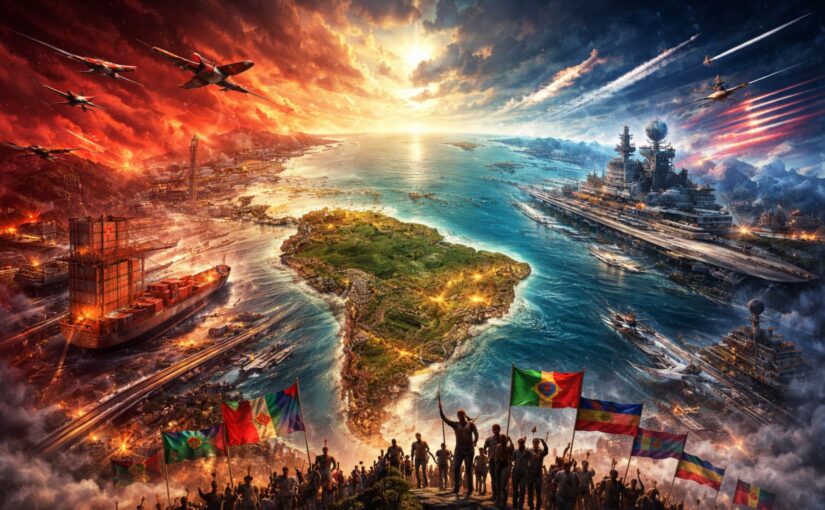
“Within weeks of each other, two texts appeared that quietly announced Latin America and the Caribbean as a decisive front in the struggle over the next world order. China released its third Policy Paper on Latin America and the Caribbean, framing the present as a moment of ‘changes unseen in a century’, with the Global South rising in influence while unilateral coercion destabilises peace and development. At nearly the same time, the Trump administration issued its National Security Strategy, declaring that American power had been ‘restored’, borders militarised, tariffs weaponised, and the Western Hemisphere re-centred as a strategic priority under an unapologetic America First doctrine. These are not parallel statements. They are opposing blueprints.”

China’s policy paper presents the region as an active political subject and an essential force within the rising Global South. It emphasises integration through trade, infrastructure, industrial cooperation, technology transfer, cultural exchange, regional institution-building, local-currency settlement, and engagement via multilateral bodies such as CELAC. In China’s vision, sovereignty is strengthened through diversified partnerships that reduce exposure to US financial vetoes, sanctions and conditional lending.

The Trump administration’s NSS, by contrast, is framed in terms of the restoration and enforcement of US hegemony. It asserts that US power has been “restored” under an unapologetic America First doctrine, militarising borders, weaponising tariffs and engaging in direct military aggression. Such a strategy does not treat Latin America and the Caribbean as a collective political subject at all, but as a managed perimeter and strategic rear base, echoing the Monroe Doctrine without any liberal euphemism. Infrastructure, ports, supply chains, payment systems and information spaces are reclassified as assets to be locked down or insulated from “non-hemispheric competitors”. Security becomes the alibi for expanded coercive reach.

The article highlights that in the lived history of the Americas, “security” has often meant security for capital and compliant oligarchies, enforced through coups, lawfare and counterinsurgency against popular movements.

When China speaks of development without political conditions, it challenges the architecture that has historically converted economic dependency into political obedience. The US response to China’s role is to attempt to narrow options for countries of the region, via the threat of tariffs, sanctions, statecraft, destabilisation, lawfare and – as we are currently witnessing in Venezuela – direct military aggression and the blatant violation of the most basic principles of international law.

The author concludes that the difference between the US and Chinese approach is not about democracy versus authoritarianism, but community versus command. Multipolar integration introduces something disruptive the region has long been denied: the normalisation of choice. The intensity of the US’s reaction signals a historic shift – autonomy is no longer unthinkable. The hemisphere now faces a clear struggle over whether it remains frozen in managed dependency or expands sovereignty through cooperation and plural development paths.

The Hemisphere at the Breaking Point

There are moments when states stop improvising and start publishing doctrine. Not press statements, not campaign slogans, but documents meant to harden intentions into policy and turn instinct into structure. Late 2025 was one of those moments. Within weeks of each other, two texts appeared that quietly announced Latin America and the Caribbean as a decisive front in the struggle over the next world order. China released its third Policy Paper on Latin America and the Caribbean, framing the present as a moment of “changes unseen in a century,” with the Global South rising in influence while unilateral coercion destabilizes peace and development. At nearly the same time, the Trump administration issued its National Security Strategy, declaring that American power had been “restored,” borders militarized, tariffs weaponized, and the Western Hemisphere re-centered as a strategic priority under an unapologetic America First doctrine. These are not parallel statements. They are opposing blueprints.

Continue reading Community or Command: China, the American Pole, and the battle for Latin America

Strategic dialogue enhances China-Pakistan friendship

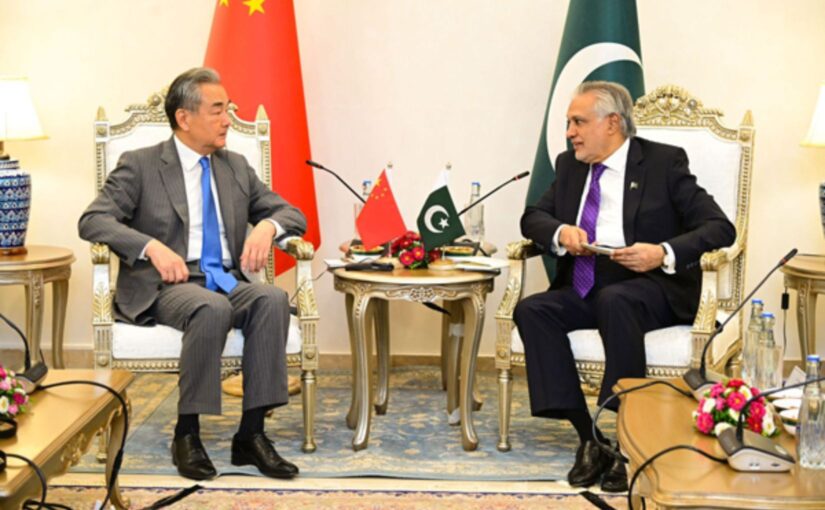
Mohammad Ishaq Dar, Deputy Prime Minister and Foreign Minister of Pakistan, visited China from January 3-5, 2026 and co-chaired the Seventh Round of China-Pakistan Foreign Ministers’ Strategic Dialogue in Beijing with his Chinese counterpart and host Wang Yi on January 4.

Following the dialogue a detailed Joint Press Communiqué was issued setting out its decisions. Among its key points are:

  • The two sides announced the launch of commemorative activities in 2026 celebrating the 75th anniversary of the establishment of diplomatic relations between China and Pakistan, which will serve as an opportunity to consolidate China-Pakistan friendship and expand new areas of cooperation so that China-Pakistan friendship could grow from strength to strength and pass from generation to generation.
  • The two sides reaffirmed their unyielding support for each other on issues concerning their respective core interests. Pakistan reaffirmed its firm commitment to the one-China principle and reiterated that Taiwan is an inalienable part of China’s territory. Pakistan firmly supports every effort of China to achieve national reunification and opposes any form of “Taiwan independence” and any attempt to create “two Chinas” or “one China, one Taiwan.”
  • China reiterated its steadfast support for Pakistan in safeguarding its sovereignty, independence and territorial integrity. China supports Pakistan in pursuing a development path suited to its national conditions and achieving economic prosperity and supports Pakistan in firmly combating terrorism and playing a bigger role in international and regional affairs.
  • The two sides agreed to further align their development plans and priorities and build an upgraded version 2.0 of the China-Pakistan Economic Corridor (CPEC), which is a pioneering project of the Belt and Road Initiative. The two sides agreed to focus on the three key sectors of industry, agriculture and mining, promote the building and operation of the Gwadar Port, ensure the smooth passage of the Karakoram Highway, and enhance Pakistan’s capacity for sustainable development. The two sides will deepen cooperation in areas such as trade and investment, information technology, science and technology, cybersecurity, technical and vocational training and education, and people-to-people and cultural exchanges.
  • The two sides welcomed third-party participation in CPEC cooperation that conforms with the modalities set by China and Pakistan.
  • The two sides expressed satisfaction at their expanding space cooperation and for the expected early entrance of Pakistani astronauts into the China Space Station. They agreed to explore space in a peaceful and mutually beneficial manner for greater economic and social development and prosperity.
  • The two sides agreed that it is essential to firmly uphold the outcomes of the victory of World War II, adhere to the purposes and principles of the UN Charter, reject attempts to distort historical facts, and oppose the plotted resurgence of fascism and militarism.
  • The two sides emphasised the importance of a South Asian regional order underpinned by the UN Charter, international law, and the basic norms governing international relations, reiterated opposition to any unilateral actions, and reaffirmed the significance of maintaining peace and stability in South Asia and the necessity of resolving all outstanding disputes through dialogue and consultation.
  • The Pakistani side briefed the Chinese side on its position on and latest developments of the situation in Jammu and Kashmir. China reiterated that the Jammu and Kashmir dispute is left over from history and should be properly and peacefully resolved in accordance with the UN Charter, relevant UN Security Council resolutions and bilateral agreements.
  • The two sides expressed readiness to continue leveraging the China-Afghanistan-Pakistan Trilateral Foreign Ministers’ Dialogue and the China-Bangladesh-Pakistan cooperation mechanism to deliver new outcomes.
  • Pakistan highly commended China’s efforts to safeguard developing countries’ right to sustainable development.
  • The two sides expressed satisfaction over their cooperation within multilateral mechanisms such as the UN and the Shanghai Cooperation Organisation (SCO) and agreed to deepen coordination and collaboration to safeguard the common interests of developing countries and international fairness and justice.
  • The two sides reaffirmed their commitment to the purposes and principles of the UN Charter, their support for multilateralism and free trade, and their opposition to hegemonism, bullying behaviours violating national sovereignty of other countries, the forming of “small circles” and bloc confrontation.
  • China congratulated Pakistan on its outstanding performance during its UN Security Council presidency and expressed full support for Pakistan to work as the rotating president of the SCO from 2026 to 2027.
  • The two sides agreed to keep in close communication and coordination on the Afghan issue, work with the international community to encourage the Afghan government to build an inclusive political framework, adopt moderate policies, focus on development, pursue good-neighbourliness, and play a constructive role in helping Afghanistan achieve stable development and integrate into the international community. The two sides called for more visible and verifiable actions to dismantle and eliminate all terrorist organisations based in Afghanistan which continue to pose serious threats to regional and global security and prevent terrorist organisations from using the Afghan territory for terrorism against any other country and to endanger any other country.
  • The two sides called for an unconditional, comprehensive and permanent ceasefire in Gaza, and reaffirmed their support for the Palestinian people’s right to self-determination and for the implementation of the two-state solution with the establishment of an independent state of Palestine. The two sides also expressed their concern at the situation in the occupied West Bank and urged the need for urgently addressing it.
  • The two sides agreed to hold the next round of Foreign Ministers’ Strategic Dialogue in Islamabad next year on mutually convenient dates.

The following is the full text of the joint communiqué. It was originally published by the Xinhua News Agency.

Continue reading Strategic dialogue enhances China-Pakistan friendship

CPC greets Lao party congress

The 12th National Congress of the Lao People’s Revolutionary Party (LPRP) opened on January 6 in the capital Vientiane.

The congress is being held under the theme “Enhancing the Party’s Strong Leadership, Proactively Building an Independent and Self-Reliant Economy, Continuing to Consolidate the People’s Democratic Regime, and Advancing towards Socialism.”

In a congratulatory message, the Central Committee of the Communist Party of China (CPC) writes:

“As the strong leadership core of the Lao people and the socialist cause of Laos, since the 11th national congress of the party, the Central Committee of the LPRP, led by General Secretary Thongloun Sisoulith, has been committed to promoting the party’s self-building, consolidated its leadership position, united and led the people of all ethnic groups in Laos, actively explored a socialist development path that suits the country’s national conditions, and achieved a series of important progress and results in the party and the country’s various undertakings.”

It adds that both China and Laos are socialist countries led by communist parties and the CPC and the Chinese government have always viewed and handled the relationship between the two parties and countries from a strategic and long-term perspective.

The following article was originally published by the Xinhua News Agency.

BEIJING, Jan. 6 (Xinhua) — The Central Committee of the Communist Party of China (CPC) on Tuesday sent a congratulatory message to the Lao People’s Revolutionary Party (LPRP) on the opening of its 12th National Congress.


As the strong leadership core of the Lao people and the socialist cause of Laos, the message said, since the 11th national congress of the party, the Central Committee of the LPRP, led by General Secretary Thongloun Sisoulith, has been committed to promoting the party’s self-building, consolidated its leadership position, united and led the people of all ethnic groups in Laos, actively explored a socialist development path that suits the country’s national conditions, and achieved a series of important progress and results in the party and the country’s various undertakings.

In the message, the CPC Central Committee said it is sincerely pleased with these achievements and highly evaluates them.

The 12th congress is a milestone in the development process of Laos’ socialist cause, said the message, adding that it will review and approve the party’s third Political Programme and other important political documents, as well as make strategic plans and specific arrangements for the development of the party and the country’s various undertakings in the coming period.

It is believed that under the strong leadership of the LPRP, the Lao people will successfully achieve the goals and tasks set by the congress and advance Laos’ socialist cause to a new stage of development, it said.

Both China and Laos are socialist countries led by communist parties, it noted, adding that the CPC and the Chinese government have always viewed and handled the relationship between the two parties and countries from a strategic and long-term perspective.

In the current new situation, China is willing to work with Laos, following the important consensus of the highest leaders of both parties and countries as the fundamental guide, to strengthen strategic communication, deepen exchanges and cooperation, and steadily promote the building of a China-Laos community with a shared future, it said.

This will help push forward the continuous, sound and stable development of the China-Laos comprehensive strategic cooperative partnership, benefit both countries and peoples, and make new positive contributions to world peace, development and progress, it said. 

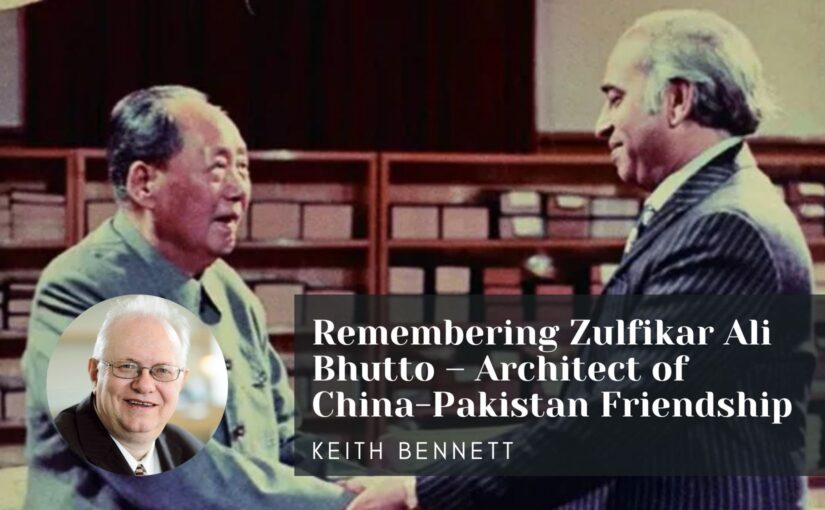
Remembering Zulfikar Ali Bhutto – Architect of China-Pakistan Friendship

Third World Solidarity organised a meeting on Monday January 5, 2026, marking the 98th birth anniversary of the late Pakistani leader Zulfikar Ali Bhutto, who made an outstanding contribution to the friendship between his country and China.

The meeting, held in the Baseline Studios, home to a number of community organisations and projects in west London, was attended by many prominent members of the Pakistani community, and others who have been friends with members of the Bhutto family.

Chairing the meeting, Mushtaq Lasharie, Chair of Third World Solidarity, the British Pakistani Mayors Association and Lancaster West Residents Association, drew attention to the price that has often been paid by leaders of the Global South who stand for independence and popular democracy, from the martyrdom of Zulfikar Ali Bhutto and his daughter Benazir Bhutto, to today’s illegal kidnapping of Venezuelan President Maduro and his wife. This was also one of the themes that was returned to in the discussion period following the main speeches, in which Keith Bennett explained how the hand of US imperialism was present in all these cases, whether overtly or covertly.

The first speaker was London-based Pakistani journalist Javed Soomro, whose family has long had a close relationship with the Bhuttos. He explained that before Z.A. Bhutto founded and led the Pakistan People’s Party (PPP), politics in the country had been confined to the feudal class and the boardrooms of the industrialists. The people were irrelevant. Bhutto was “the first to bring the voices of the masses and ordinary people” to the political arena. The basic slogan of the PPP was for clothes, food and shelter. [Note: In its simplicity and profundity this has echoes of the Bolshevik call for bread, peace and land.]

In 1974, he organised a major conference aimed at uniting the Muslim countries. This effort was key to the animosity that the United States came to harbour for Bhutto. [This has clear parallels with the way that the efforts of the late Hugo Chávez and President Maduro to unite the countries of Latin America and the Caribbean has intensified the hatred of the United States for the Bolivarian revolution in Venezuela.]

Javed was followed by Keith Bennett, co-editor of Friends of Socialist China, who spoke on the great contributions of Z.A. Bhutto, as well as his daughter Benazir Bhutto and grandson Bilawal Bhutto Zardari, to Pakistan’s friendship with both the People’s Republic of China and the Democratic People’s Republic of Korea (DPRK).

The full text of Keith’s speech is reproduced below.

The final speaker was Victoria Schofield, author of ‘Bhutto: Trial and Execution’ (1979) and ‘The Fragrance of Tears: My Friendship with Benazir Bhutto’ (2020).

Victoria forged a close friendship with Benazir Bhutto when they were fellow students at Oxford University. With Benazir’s encouragement she succeeded her as President of the Oxford Union. She travelled to Pakistan in 1978, when Z.A. Bhutto was on trial and subsequently hanged, at Benazir’s invitation. She was one of the last people to see Bhutto alive and recalled how Benazir was not even allowed to hug her father on their last meeting, just a couple of days before he was executed.

She further recalled Bhutto’s vision for his country, as outlined to the Spectator:

“My vision is that of a Pakistan whose social standards are comparable to some parts of Europe. This means a war against illiteracy and ignorance. It means fighting prejudice and obscurantism. It involves the equality of men and women. It demands the mobilisation of the people’s selected energies. It dictates the restoration of dignity to the human person… It requires a check on the growth of population and easy access to education and medical care throughout the country. It contemplates better towns and cities and cleaner villages. It raises 100 challenges. It is a long haul. We have braced ourselves for it.”

Following a lively Q&A, closing remarks were delivered by Mian Saleem, President of PPP Greater London.

The formal proceedings were followed by two songs from Hugh Goodacre on guitar and dinner.

The following is the full text of Keith’s speech.

Continue reading Remembering Zulfikar Ali Bhutto – Architect of China-Pakistan Friendship

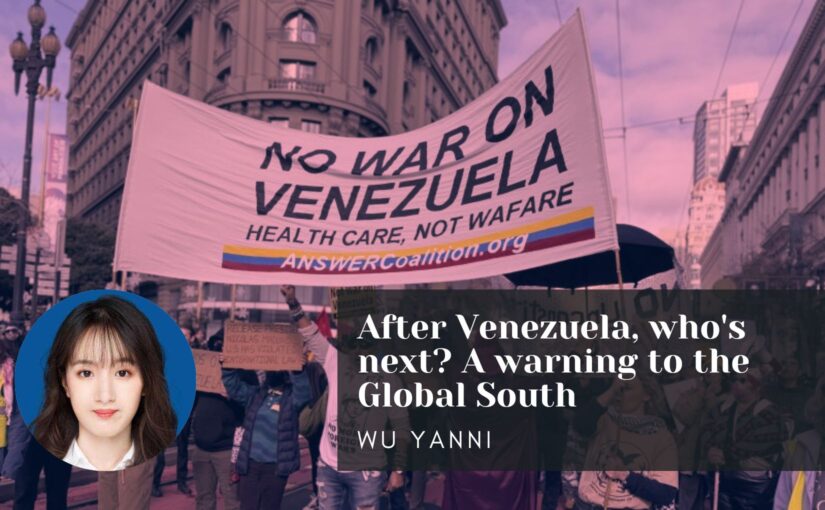
After Venezuela, who’s next? A warning to the Global South

We are pleased to publish below an original article by Wu Yanni, a Beijing-based political commentator and contributor to Chinese and international media, which draws attention to the destabilising consequences of unchecked US power in international affairs. Drawing on Kofi Annan’s observation that the world resembles an interconnected community, Wu Yanni argues that when a single hegemonic actor behaves as a bully without meaningful constraint, global norms erode and instability spreads, creating a dangerous “broken windows effect” in global politics.

The article centres on the Trump administration’s kidnapping of Venezuelan president Nicolás Maduro not as an isolated event, but as a warning to the Global South. It recounts accusations made at the UN General Assembly last year by Venezuelan Foreign Minister Yván Gil, who charged Washington with resource plunder, orchestrating regime change, assassination attempts, mercenary incursions, and economic warfare expressed through over 1,000 unilateral sanctions targeting Venezuela’s oil industry and productive sectors. The author emphasises that Venezuela foresaw these threats, yet its appeals were largely ignored, demonstrating a global asymmetry where moral condemnation has failed to translate into real limits on US conduct.

To underline that this is a structural, not episodic, problem, the article revisits historical US interventions – including the 1989 invasion and seizure of Panama’s president, the 1973 coup in Chile, and the 1954 CIA-backed overthrow in Guatemala – portraying a consistent pattern of military force, subversion, espionage and sanctions.

The author concludes that solidarity without power is insufficient. The Global South must transform shared principles into durable institutions, pursue substantive UN reform to give international law binding force, and strengthen regional and cross-regional alliances, financial systems and energy cooperation to resist unilateral coercion. The crisis, she insists, will define the next era of geopolitics: if the power gap remains unfilled, “international order” will become an empty phrase.

As ex-UN Secretary-General Kofi Annan observed, the world is like a global village. However, if a single “village bully” is able to operate with impunity for years and the village council in question–the United Nations–is not working as it should, there will be concerns. Such multiple violations of norms and rules have the potential to set off a “broken windows effect,” encouraging other world powers to follow suit and ultimately throwing the international order into disarray. This is not just a Venezuela crisis; this is a warning for countries in the Global South. If today it’s Venezuela, what will tomorrow be?

Continue reading After Venezuela, who’s next? A warning to the Global South

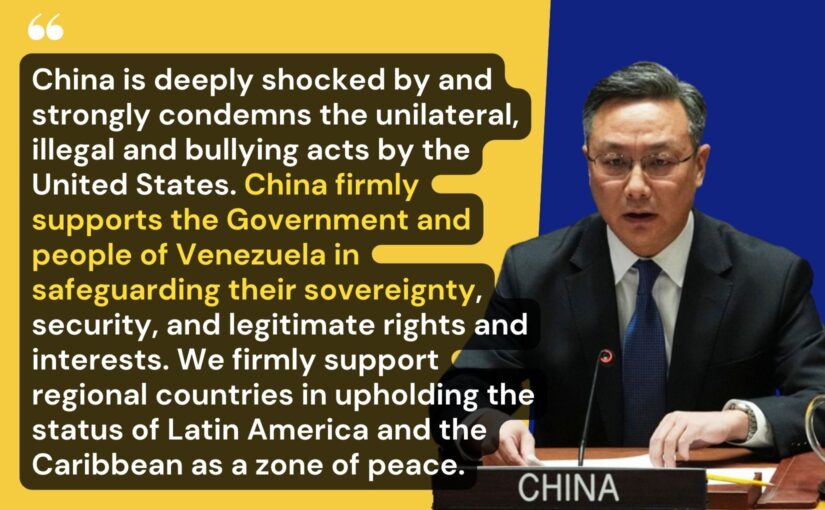
China at UN: Venezuela has every right to defend its sovereignty and national dignity

China has again declared its solidarity with Venezuela and its strong condemnation of the United States’ flagrant and brigandish acts of aggression, including the illegal kidnapping of the country’s President and First Lady.

Speaking at an emergency session of the United Nations Security Council on January 5, requested by Colombia and supported by China, Russia and other countries, Chargé d’Affaires a.i. Sun Lei said that:

“On January 3, the United States blatantly launched large-scale military strikes against Venezuela, forcibly seized Venezuelan President Nicolás Maduro and his wife, and took them out of the country. It claimed that it would ‘run’ Venezuela and even did not rule out launching a second round of military operations on an even larger scale. China is deeply shocked by and strongly condemns the unilateral, illegal, and bullying acts by the United States.”

Noting that the council had already previously convened two emergency meetings in connection with the US sanctions, blockade, and threats of force against Venezuela, he said that, “the US has disregarded the grave concerns of the international community, wantonly trampled upon Venezuela’s sovereignty, security, and legitimate rights and interests, and seriously violated the principles of sovereign equality, non-interference in internal affairs, peaceful settlement of international disputes, and the prohibition of the use of force in international relations. These principles constitute the fundamental tenets of the UN Charter and form the cornerstone of maintaining international peace and security. The US has placed its own power above multilateralism and military actions above diplomatic efforts, posing a grave threat to peace and security in Latin America and the Caribbean and even internationally. China firmly opposes this, and the international community has also expressed widespread grave concerns and strong condemnation.”

Continue reading China at UN: Venezuela has every right to defend its sovereignty and national dignity

US invasion act of imperialist aggression: China Daily editorial

China Daily published a hard-hitting editorial on January 4, branding US actions against Venezuela an invasion and an act of imperialist aggression.

It began by noting that: “The international community is deeply shocked by the United States’ blatant use of force against Venezuela, including large-scale air strikes on the country and the forcible seizure of its president and his wife. Its actions should be condemned as they constitute a naked act of armed aggression against a sovereign state and flagrantly violate international law…

“By any definition, the US military operation amounts to an invasion. It dangerously escalates the so-called ‘Monroe Doctrine’ from a 19th-century, isolationist-era concept into a 21st-century doctrine of force and coercion. This sets an alarming precedent for Latin America and the Caribbean, posing a direct threat to the sovereignty and security of countries across the region.”

Dealing with various pretexts advanced by the US, it points out: “Washington’s justification of it being a ‘counter narcotics’ action is neither credible nor legitimate. No such pretext can justify the bombing of a sovereign country or the abduction of its head of state. If such reasoning were to be accepted, it would effectively grant powerful nations a license to intervene militarily wherever they see fit, under a pretext given by themselves, hollowing out international law and replacing it with the law of the jungle.”

And referring to Trump’s statements that the US would “run” Venezuela to “get the oil flowing”, it responds: “These remarks tore away the already thin veil of moral pretence, exposing the operation for what it was: a resource-grabbing power play. Any veneer of pursuing justice or stability was blasted away in a blatant demonstration of lawless hypocrisy. The pattern is disturbingly reminiscent of the Iraq War — another chapter in Washington’s long record of seizing other countries’ resources under false pretences.”

While Washington speaks of “strategic retrenchment”: “For other countries in the Americas, this is not retrenchment but imperialist expansion — an aggressive reassertion of arrogant conceit. Venezuela is unlikely to be the last victim if this logic is allowed to prevail. The military action also aims to intimidate regional countries and deter them from deepening cooperation with other partners in the fields that the US is trying to dominate.”

“From fabricated charges to military strikes and regime change, the operation follows a familiar and deeply troubling script — one that reflects the logic of state piracy. Sovereign governments are first delegitimised, then destroyed by force, after which foreign capital moves in to carve up natural resources. This behaviour drags the world back toward a barbaric colonial era of plunder, in open defiance of international law… No wonder even some in the US political circle said they never again wanted to hear US leaders preach about a so-called ‘rules-based’ international order.”

It concludes: “What the world is witnessing is not a ‘rules-based’ order, but colonial pillaging. Upholding sovereignty, equality and non-interference is not optional. It is the foundation of global stability — and it must be defended.”

The following is the full text of the editorial.

Continue reading US invasion act of imperialist aggression: China Daily editorial

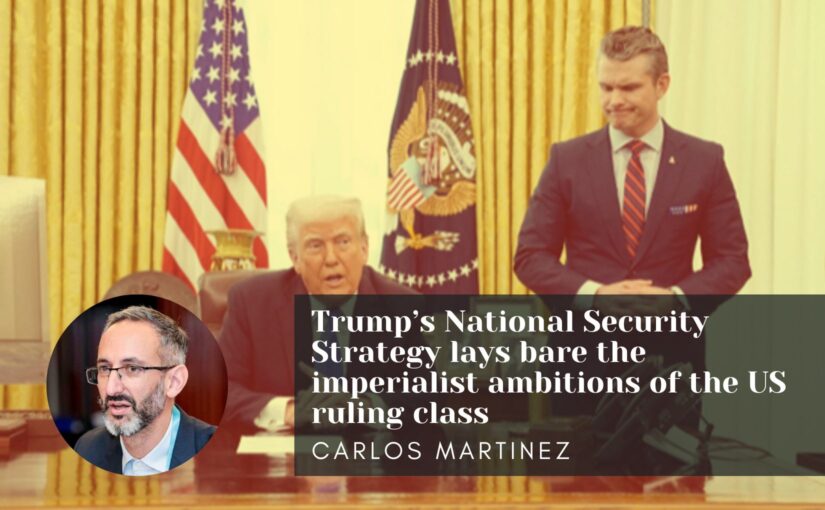
Trump’s National Security Strategy lays bare the imperialist ambitions of the US ruling class

The following article by Carlos Martinez argues that the Trump administration’s new National Security Strategy (NSS) marks a sharper and less diplomatic phase of US imperial policy. Its most notable feature is the explicit reassertion of the Monroe Doctrine, pledging to block “non-Hemispheric competitors” from controlling strategic assets or positioning forces in the Americas. The article interprets this as a signal of escalating hybrid war against Latin American and Caribbean states that resist US dominance and maintain strong ties with China, Russia, Iran and other countries that resist imperialist hegemony.

A parallel theme is Europe’s changing role in US strategy. While previous Cold War alliances treated Western Europe as Washington’s primary partner against the Soviet Union, the NSS portrays Europe as economically weakened, politically fragmented, and strategically unreliable. The US instead expects Europe to accept a more clearly subordinate relationship, to spend its taxpayers’ money on the US military-industrial complex, to align fully with US sanctions and technology controls, and to absorb higher tariffs or punishment if it deviates. The document’s rhetoric on migration, “demographic collapse” and low birthrates is fuel for rising far-right nationalist politics that Washington may leverage.

Despite limited direct mentions of China, the NSS outlines a long-term confrontation strategy focused on the Indo-Pacific, strengthening US military presence in the Western Pacific, reinforcing the First Island Chain, boosting allies’ military budgets, and deepening support for Taiwan as a geopolitical flashpoint. The article concludes that the NSS prioritises maintaining US hegemony, disrupting China’s global influence, and suppressing multipolar alternatives, framing the strategy as a continuation and escalation of the US’s longstanding campaign of containment and encirclement of China.

A shorter version of this article first appeared in Beijing Review.

The Trump administration’s new National Security Strategy (NSS), released in late November, has inspired widespread comment and a diverse array of interpretations.

The most striking feature of the document is its explicit re-assertion of the Monroe Doctrine, shifting the focus of US military strategy towards “defending our hemisphere”, with “more troops, bases and military operations” in the Americas. Hegemony over the Western Hemisphere is of course a constant of US foreign policy, but previous administrations have at least made some pretence at multilateralism and respect for international law. The NSS does away with any such niceties:

Continue reading Trump’s National Security Strategy lays bare the imperialist ambitions of the US ruling class

Chinese scholar says resistance is only viable approach but patience is needed

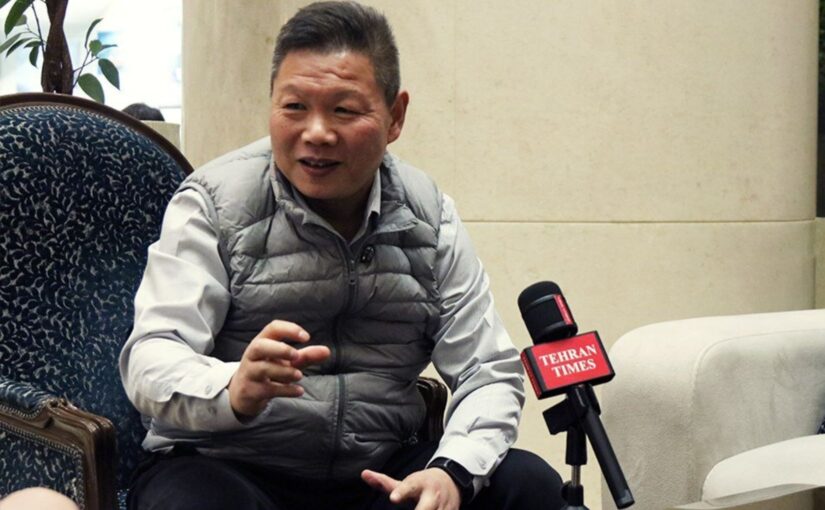
The following is the text of an interview conducted by the Tehran Times with Chinese scholar Professor Jin Liangxiang on the sidelines of the recent Conference on People’s Rights and Legitimate Freedoms in the Thoughts of Ayatollah Khamenei.

Professor Jin notes that: “The Americans like to talk about liberal democracy and, when doing so, they link it to human rights. They even intervene in the domestic affairs of countries in the Middle East – such as Iran and many others – in the name of humanitarian concerns.

“But in Gaza and Palestine, we have witnessed atrocities committed by Israel, resulting in more than 70,000 deaths. In this regard, the Americans have turned a blind eye. So, I believe the United States is not in a position to lecture others about liberal democracy or to intervene under the banner of humanitarianism.”

Responding to a question on different perceptions of people’s rights and freedoms, he stresses that resistance is the only way out:

“When we talk about freedom, we must begin with justice. The most serious challenge to justice in the region is hegemony and power politics. Therefore, resistance becomes the only viable approach to achieving justice.

“We should not assume that hegemonic powers will make concessions on their own. Those policies will not disappear by themselves. The only way to deliver justice is through resistance. Even though the Middle East has experienced some changes in recent years, as long as oppression exists, resistance will continue.”

However: “The evolution of the international order will be a long process. People across the region – not only Iranians – do not accept hegemony. But weakening hegemonic structures and transforming the global order will take time… So, patience is required. BRICS is developing strong momentum and is expanding with new members. It will need time for internal integration, improving mechanisms, and organising resources. But it will become an important mechanism in shaping the future international order, playing a growing role not only financially but also politically and in the security arena.”

Jin is a senior research fellow at the Shanghai Institute for International Studies (SIIS) as well as a nonresident senior fellow at the Middle East Council on Global Affairs, based in Doha, Qatar.

The following article was originally published by Tehran Times. A video of the interview may be viewed here.

Continue reading Chinese scholar says resistance is only viable approach but patience is needed

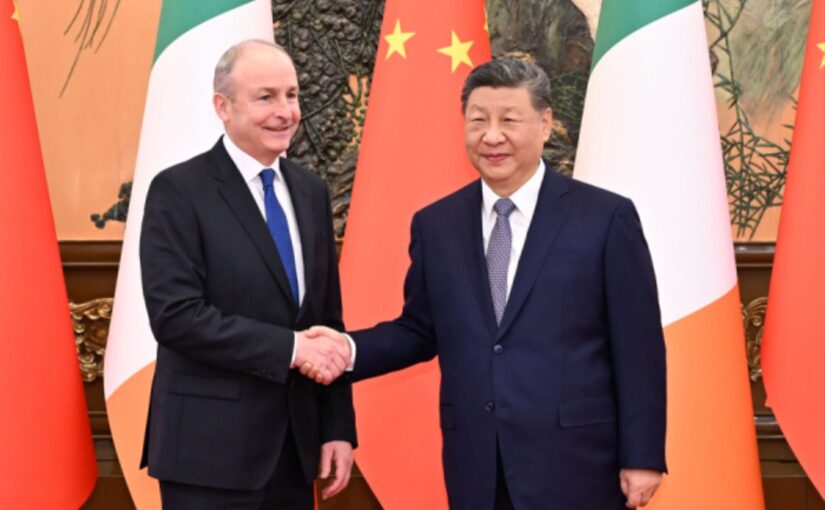
Xi Jinping assails unilateral and bullying acts in meeting with Irish leader

Chinese President Xi Jinping has taken the opportunity of his first meeting with a foreign visitor in 2026 to denounce unilateral and bullying acts in international relations – a clear reference not least to the piratical action of the United States in brutally kidnapping, maltreating and attempting to humiliate Venezuelan President Nicolás Maduro and his wife.

Xi was meeting on the morning of January 5 with Irish Taoiseach (Prime Minister) Micheál Martin, who began an official visit to China the previous day. It is the first visit to China by an Irish head of government in 14 years and will last until January 8.

At the start of his opening remarks, Xi Jinping made a significant statement, noting that both China and Ireland are peace-loving, open, inclusive, self-reliant and enterprising. The two countries achieved independence and national liberation through the struggle of the people and have advanced toward modernisation with the hard work of one generation after another.

He added that mutual respect, equality and mutual benefit are valuable experience gathered from long-term steady development of China-Ireland relations. He said the two sides should jointly pass them down and carry them forward and underlined the need for China and Ireland to maintain friendly exchanges at multiple levels and in different fields, continuously enhance communication and understanding, accommodate each other’s core interests and major concerns, cement political mutual trust, and consolidate the political foundation of bilateral relations. China stands ready to work with Ireland to step up economic and trade cooperation, seek synergy of development strategies in such areas as artificial intelligence, the digital economy, and pharmaceuticals and health, and encourage two-way investment, so as to draw on each other’s strengths, share opportunities, and pursue common development. The two sides need to strengthen cooperation in education, culture and tourism, and foster closer people-to-people bonds. China welcomes more Irish youth to come to China for study and exchanges.

President Xi then pointed out that the world today is undergoing changes and turbulence. Unilateral and bullying acts are dealing a serious blow to the international order. All countries should respect other countries’ development paths chosen independently by their people and observe international law and the purposes and principles of the UN Charter. Major countries, in particular, should lead by example. Both China and Ireland support multilateralism and advocate international fairness and justice. The two sides should strengthen coordination and cooperation in international affairs, jointly uphold the authority of the UN, and work for a more just and equitable global governance system.

Continue reading Xi Jinping assails unilateral and bullying acts in meeting with Irish leader

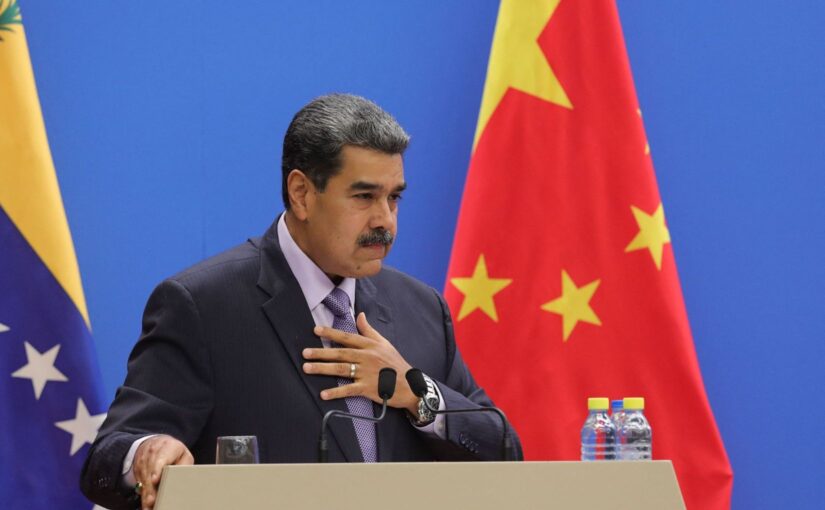
China strongly condemns US aggression against Venezuela, kidnapping of President Maduro

China has immediately responded to the latest US aggression against Venezuela and its brigandish and gangster-like kidnapping, in blatant violation of international law, of the country’s President Nicolás Maduro and his wife Cilia Adela Flores de Maduro.

On Saturday January 3, in a statement issued prior to confirmation of President Maduro’s arrival in New York, a foreign ministry spokesperson said that China is deeply shocked by and strongly condemns the US’s blatant use of force against a sovereign state and action against its president, adding:

“Such hegemonic acts of the US seriously violate international law and Venezuela’s sovereignty and threaten peace and security in Latin America and the Caribbean region.”

The next day, in a further statement, the Foreign Ministry said that China called on the United States to immediaetely release Venezuelan President Nicolás Maduro and his wife.

“China calls on the United States to ensure the personal safety of Maduro and his wife, release them at once, stop toppling the government of Venezuela, and resolve issues through dialogue and negotiation.”

Also, on Sunday January 4, the issue was directly addressed by Foreign Minister Wang Yi.

When holding the Seventh Round of China-Pakistan Foreign Ministers’ Strategic Dialogue with Pakistani Deputy Prime Minister and Foreign Minister Mohammad Ishaq Dar in Beijing, Wang Yi said that China always opposes the use or threat of force, as well as any imposition of one country’s will on another.

“We never believe that any country can play the role of world policeman, nor do we agree that any country can claim itself to be an international judge,” Wang said, adding that the sovereignty and security of all countries should be fully protected by international law.

China is willing to work with the international community, including Pakistan, to firmly uphold the United Nations Charter, maintain the bottom line of international morality, adhere to the equality of all countries’ sovereignty, and jointly safeguard world peace and development and promote the building of a community with a shared future for humanity.

On China-Pakistan relations, Wang said China hopes this visit will kick off the commemoration of the 75th anniversary of diplomatic relations between the two countries.

Both sides agreed to unite the Global South to safeguard common interests, uphold the UN Charter, and oppose bullying acts that violate the sovereignty of other countries.

On January 3, the Xinhua News Agency issued a commentary entitled, ‘Venezuela strike shows who is really undermining the International law’. It said:

“The US military incursion into Venezuela and the action against its President, Nicolás Maduro, as announced by the US administration, once again lays bare Washington’s reliance on unilateral force to shape outcomes beyond its borders. This aggression also hollows out decades of US rhetoric positioning America as the guardian of international rules.

“Article 2(4) of the United Nations Charter, a foundational principle of international law, explicitly prohibits the use or threat of force against the sovereignty and territorial integrity of states. Therefore, the action against a sovereign nation’s leader has shown the world, unequivocally, who stands as the true transgressor of international law.

“History offers ample precedent. From Iraq and Libya to Panama and Grenada, the United States has repeatedly used or threatened force under dubious justifications… Venezuela, long subjected to sanctions and political pressure, now joins that list, with diplomacy once again sidelined in favor of military coercion.”

Continue reading China strongly condemns US aggression against Venezuela, kidnapping of President Maduro

China brokers peace between Thailand and Cambodia

Intensive diplomatic efforts by China to halt the resumed armed conflict between Thailand and Cambodia and to address its underlying causes scored a significant success with a December 29, 2025, trilateral meeting of the foreign ministers of China, Cambodia, and Thailand, held in Yuxi, Yunnan Province.

Chinese Foreign Minister Wang Yi stated that since the outbreak of the border conflict between Cambodia and Thailand, China has upheld the spirit of the Global Security Initiative put forth by President Xi Jinping, actively mediating and using its good offices. Chinese leaders have maintained friendly communication with the leaders of Cambodia and Thailand, and the foreign ministers have held multiple phone conversations. The Chinese special envoy has made four shuttle visits for the important objective of listening to the two sides, accommodating their legitimate concerns, and seeking a path to resolve differences through dialogue and negotiation. Thanks to the joint efforts of all parties, the militaries of Cambodia and Thailand recently reached a ceasefire agreement, and China is pleased to see this progress.

Wang said that the trilateral meeting is timely. The three parties have held multiple bilateral talks here, and especially, the diplomatic and military departments of Cambodia and Thailand have engaged in face-to-face, in-depth exchanges. The discussions among the three parties were beneficial and constructive, leading to important consensus that:

  • It is necessary to look forward and move ahead together. The ceasefire agreement is hard-won and must not stagnate or be derailed halfway, let alone allow conflict to be reignited. This is not what the people want, nor what China hopes for.
  • Both sides should proceed step by step without stopping. The implementation of the ceasefire arrangement requires continuous communication and consultation. The restoration of bilateral relations should be gradually advanced. But as long as both sides maintain confidence and engage in equal dialogue, the goals will surely be achieved.
  • Rebuilding mutual trust is paramount. The conflict has led to a loss of trust, but Cambodia and Thailand are eternal neighbours with a long history of friendly exchanges. This gathering by the Fuxian Lake is intended to heal the wounds caused by the conflict, dispel the estrangement between the two sides, and truly restore friendly relations. This serves the interests of the Cambodian and Thai peoples and is the shared expectation of all parties. China will always be a promoter of the development of Cambodia-Thailand relations and is willing to provide all necessary assistance and support, including ceasefire monitoring, humanitarian aid, and demining cooperation.

After the trilateral meeting, a press release was issued, specifying five areas where Cambodia and Thailand will further strengthen communication and enhance understanding:

Continue reading China brokers peace between Thailand and Cambodia