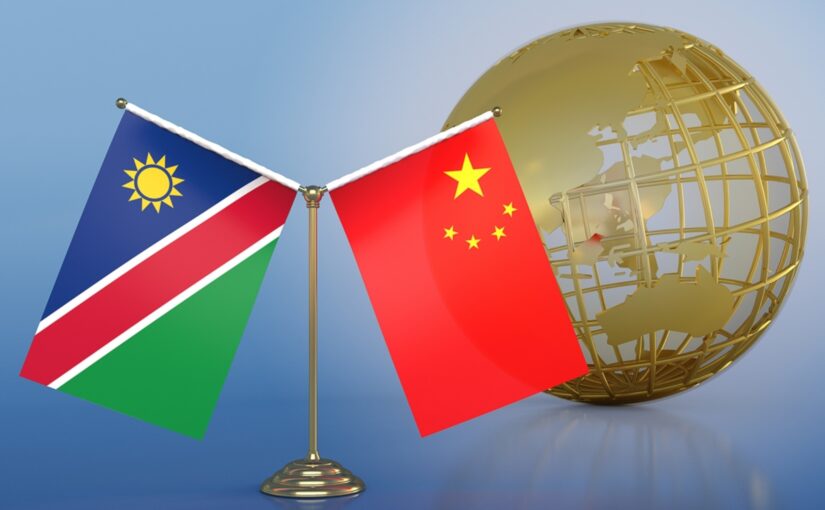
The Republic of Namibia celebrated the 36th anniversary of its independence on March 21 – an independence won after years of armed struggle against the imperialist-backed South African apartheid racist regime.
Marking the occasion, Sophia Shaningwa, secretary general of the country’s South West Africa People’s Organisation (SWAPO), gave an interview to China’s Xinhua News Agency. SWAPO led the liberation struggle and has governed the country since independence.
Shaningwa said that the historical bonds between Namibia and China continue to underpin a deepening strategic partnership, reflecting a model of South-South cooperation rooted in solidarity, equality and shared development goals.
China’s solidarity with Namibia dates back to a time “when the forces of apartheid and imperialism sought to crush our legitimate quest for self-determination. This solidarity was not merely rhetorical; it was concrete, consistent and rooted in the shared anti-imperialist principles that define South-South cooperation.”
Noting that China played a pivotal role on multiple fronts during Namibia’s liberation struggle, the secretary general said that what distinguished China’s support from that of some other partners was its principled and consistent nature.
“Unlike some partners whose assistance was sometimes tempered by geopolitical calculations or conditionalities, China’s solidarity was rooted in genuine anti-imperialist conviction and mutual respect for national sovereignty. It combined political advocacy, diplomatic engagement and practical aid without seeking influence or concessions.”
Since independence, China’s role in Namibia’s infrastructure development has been particularly visible, with projects delivered by Chinese companies, including major road networks, port expansions at Walvis Bay and energy infrastructure, she noted. “These projects have significantly improved connectivity, facilitated trade, and contributed to employment creation and energy security.”
Regarding trade and investment, Shaningwa said the relationship is “mutually beneficial and sustainable,” with a focus on “local content, skills transfer and long-term value creation. Our partnership with China is one of equals, characterised by mutual respect, non-interference in internal affairs and tangible results that advance national development.
“Through continued South-South cooperation, we aim to deepen people-to-people ties, expand trade on equitable terms, and jointly advance the Global Development Initiative. This partnership will remain a cornerstone of Namibia’s inclusive and sustainable development.”
The following article was originally published by the Xinhua News Agency.
As Namibia marks its 36th Independence Day, the historical bonds between Namibia and China continue to underpin a deepening strategic partnership, reflecting a model of South-South cooperation rooted in solidarity, equality and shared development goals, said Sophia Shaningwa, secretary general of the country’s South West Africa People’s Organization (SWAPO).
Namibia celebrated its 36th Independence Day under the theme “Beyond 35: For a Prosperous Future” in late March with President Netumbo Nandi-Ndaitwah presiding over the commemorations. Founded in 1960, the SWAPO has been the governing party since the country gained independence in 1990.
In an exclusive interview with Xinhua, Shaningwa said China’s solidarity with Namibia dates back to a time “when the forces of apartheid and imperialism sought to crush our legitimate quest for self-determination.”
“This solidarity was not merely rhetorical; it was concrete, consistent and rooted in the shared anti-imperialist principles that define South-South cooperation,” she said.
According to Shaningwa, China played a pivotal role on multiple fronts during Namibia’s liberation struggle. In 1973, the United Nations General Assembly recognized the SWAPO as the sole legitimate representative of the Namibian people.
Shaningwa said that what distinguished China’s support from that of some other partners was its principled and consistent nature.
“Unlike some partners whose assistance was sometimes tempered by geopolitical calculations or conditionalities, China’s solidarity was rooted in genuine anti-imperialist conviction and mutual respect for national sovereignty,” she said.
“It combined political advocacy, diplomatic engagement and practical aid without seeking influence or concessions,” she added, noting that the solidarity forged during the liberation struggle later evolved into a development partnership after independence.
“The history of solidarity has forged an unbreakable bond of mutual trust and respect that has seamlessly transitioned from a liberation partnership into strategic cooperation. Since independence, this legacy has manifested in a relationship built on equality, non-interference and shared development goals,” she said.
This enduring foundation has ensured that cooperation remains guided by the spirit of South-South solidarity, while Namibia’s engagement with frameworks such as the Forum on China-Africa Cooperation and its participation in the Belt and Road Initiative have further deepened bilateral ties, Shaningwa said.
China’s role in Namibia’s infrastructure development has been particularly visible, with projects delivered by Chinese companies, including major road networks, port expansions at Walvis Bay and energy infrastructure, she noted. “These projects have significantly improved connectivity, facilitated trade, and contributed to employment creation and energy security.”
Regarding trade and investment, Shaningwa said the relationship is “mutually beneficial and sustainable,” with a focus on “local content, skills transfer and long-term value creation.”
“Our partnership with China is one of equals, characterized by mutual respect, non-interference in internal affairs and tangible results that advance national development,” she said.
Looking ahead, Shaningwa identified industrialization, renewable energy, digital infrastructure and value addition in key sectors, such as mining and agriculture, as priority areas for future cooperation with China.
“Through continued South-South cooperation, we aim to deepen people-to-people ties, expand trade on equitable terms, and jointly advance the Global Development Initiative. This partnership will remain a cornerstone of Namibia’s inclusive and sustainable development,” she said.