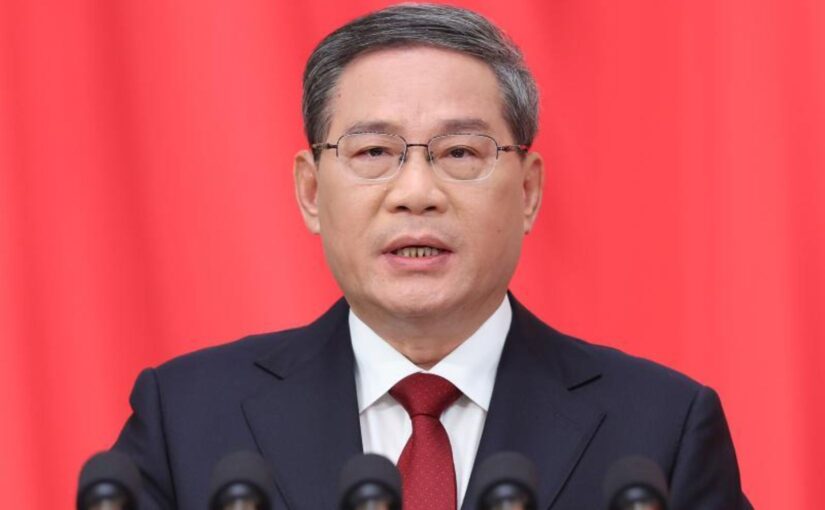
2024 designated as China-DPRK Friendship Year

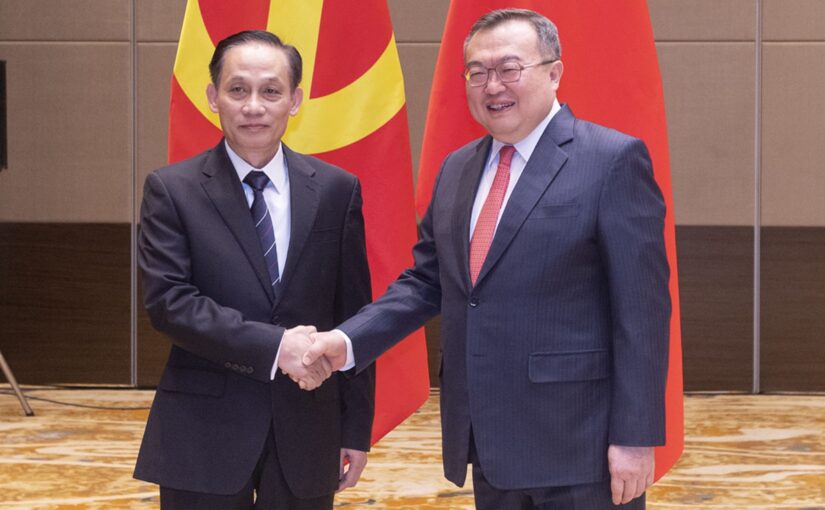
China and the Democratic People’s Republic of Korea (DPRK) have declared 2024 as the China-DPRK Friendship Year. The move was jointly announced in an exchange of New Year greetings messages between Chinese President Xi Jinping and DPRK top leader Kim Jong Un. The only similar exchange of new year messages reported by China’s Xinhua News Agency was one between Xi and Russian President Vladimir Putin.

In his message, Xi pointed out that China and the DPRK are friendly neighbours connected by mountains and rivers, saying that the traditional friendship between China and the DPRK was forged by the older generation of leaders of the two parties and two countries, cemented in the revolutionary struggle, and continuously deepened in the course of socialist construction.

In the new era, the two sides have maintained close strategic communication, deepened practical cooperation, strengthened coordination and collaboration in multilateral international affairs, pushed forward the continuous development of China-DPRK relations, safeguarded the common interests of the two countries, and maintained regional peace and stability, Xi said, adding that it is China’s unwavering policy to maintain, consolidate and develop the long-standing friendly and cooperative relations between the two countries.

In his message, Kim noted that 2024 is a significant year marking the 75th anniversary of diplomatic relations between the DPRK and China, saying that socialist construction in the two countries has presently entered a new stage of progress whilst the international situation is undergoing complex changes.

The unbreakable DPRK-China friendship, forged and consolidated in the struggle for socialism, will be fully displayed this year, he said.

Through the activities during the friendship year, the two parties and governments will further promote exchanges in all fields, including politics, economy and culture, further deepen the bonds of friendship and unity, and step-up cooperation in the joint efforts to safeguard regional and global peace and stability, thus writing a new chapter in DPRK-China relations, Kim added.

The Friendship Year is being held to mark the 75th anniversary of the two countries’ diplomatic relations. The People’s Republic of China was founded on October 1, 1949, and diplomatic relations were established with the DPRK five days later. However, the close ties between the Chinese and Korean revolutions predate their state relations. Kim Il Sung, the founding leader of the DPRK, began his revolutionary career in China as a teenager, securing vital support from Chinese comrades, and even became a cadre of the Communist Party of China. Chinese and Korean communists and patriots fought shoulder-to-shoulder until the defeat of Japanese militarism in August 1945. Then, between 1946-49, with the liberation of the northern part of the Korean peninsula, Kim Il Sung sent many thousands of Korea’s best combatants to support the liberation war in north-east China, significantly contributing to the victory of the Chinese revolution and the founding of the People’s Republic.

The following articles were originally published by the Xinhua News Agency and the Korean Central News Agency (KCNA).

Xi, Kim jointly designate 2024 as China-DPRK Friendship Year

BEIJING, Jan. 1 (Xinhua) — Chinese President Xi Jinping and the Democratic People’s Republic of Korea (DPRK)’s top leader Kim Jong Un on Monday jointly designated 2024 as the China-DPRK Friendship Year and launched a series of activities.

Xi, also general secretary of the Communist Party of China (CPC) Central Committee, and Kim, general secretary of the Workers’ Party of Korea and president of the State Affairs of the DPRK, made the announcement in their exchange of New Year greeting messages.

In his message, Xi pointed out that China and the DPRK are friendly neighbors connected by mountains and rivers, saying that the traditional friendship between China and the DPRK was forged by the older generation of leaders of the two parties and two countries, cemented in the revolutionary struggle, and continuously deepened in the course of socialist construction.

In recent years, Xi said, the traditional friendly cooperation between China and the DPRK has entered a new historical period with joint efforts.

The two sides have maintained close strategic communication, deepened practical cooperation, strengthened coordination and collaboration in multilateral international affairs, pushed forward the continuous development of China-DPRK relations, safeguarded the common interests of the two countries, and maintained regional peace and stability, Xi added.

Under the new situation in the new era, the CPC and the Chinese government have always viewed China-DPRK relations from a strategic and long-term perspective, and it is China’s unwavering policy to maintain, consolidate and develop the long-standing friendly and cooperative relations between the two countries, Xi said.

China is ready to work with the DPRK to take the 75th anniversary of bilateral diplomatic relations and the China-DPRK Friendship Year as an opportunity to carry forward the long-standing friendship, deepen strategic mutual trust, enhance exchanges and cooperation, and ensure that bilateral ties move forward with the times for greater development so as to better benefit the two peoples, and continuously make new contributions to safeguarding regional peace and stability, Xi stressed.

In his message, Kim noted that 2024 is a significant year marking the 75th anniversary of diplomatic relations between the DPRK and China, saying that socialist construction in the two countries has at the moment entered a new stage of progress and the international situation is undergoing complex changes.

The two parties and governments have decided to designate this year as the China-DPRK Friendship Year, and further promote the traditional relations of friendship and cooperation between the two sides in accordance with needs of the times, which conforms to the common expectation and desire of the people of the two countries, Kim added.

The unbreakable DPRK-China friendship, forged and consolidated in the struggle for socialism, will be fully displayed this year, he said.

Through the activities during the friendship year, the two parties and governments will further promote exchanges in all fields, including politics, economy and culture, further deepen the bonds of friendship and unity, and step up cooperation in the joint efforts to safeguard regional and global peace and stability, thus writing a new chapter in DPRK-China relations, Kim said. 

Continue reading 2024 designated as China-DPRK Friendship Year

Elections in Taiwan: Does the island choose further confrontation with China?

The following article by Wim De Ceukelaire of Belgium’s Médecine pour le Peuple, produced by Globetrotter and first published in Countercurrents, discusses the upcoming presidential and parliamentary elections in Taiwan Province, emphasising their significance in shaping Taiwan’s relationship with mainland China.

Drawing on an interview with Wu Rong-yuan, Chair of the Labor Party of Taiwan, Wim notes the emergence of a third mainstream party – the Taiwan People’s Party – which introduces an extra element of unpredictability to the situation. Given the pro-independence Democratic Progressive Party (DPP)’s declining popularity, it would normally be expected that “the opposition would win these upcoming elections hands down”; that is, the Kuomintang (KMT), which supports maintaining the status quo with the People’s Republic of China, would win in a landslide. However, with a divided opposition, either the DPP or KMT could end up leading a minority government in the province.

Clearly, a DPP victory is the least desirable outcome in terms of preserving peace, furthering the cause of reunification and completing the historic process of reversing the imperialist division of China. Wu points out that “the independence the DPP seeks, isolates us from the mainland and goes against the interests of the workers.” The Labor Party’s position is clear: “Reunification between Taiwan and China is the only path to peace and prosperity: ‘One country, two systems’ is a realistic formula.”

Wim published a detailed interview with Wu Rong-yuan in early 2023, which readers may find helpful.

On January 13, the residents of Taiwan, an island off the coast of China, will go to the polls to elect a new president and parliament. These elections attract more international attention than one might expect for a country with only 24 million inhabitants. The outcome will have consequences for the evolution of the conflict between the United States and China, and consequently, possibly for world peace.

Two weeks before the elections, I spoke with Wu Rong-yuan, the chairman of the Labor Party of Taiwan, in the capital, Taipei. His party is contesting seats in three districts. Due to the first-past-the-post system, this is an uphill battle. Moreover, the Labor Party is marginalized due to its pro-reunification stance with China. To better understand this, I let the veteran of the labor struggle explain the history to me once again.

Taiwan lived under the dictatorship of the Kuomintang, Chiang Kai-shek’s party, until 1987. The roots of the Kuomintang are on the mainland of China, where they were in power until the victory of the socialist revolution in 1949. Even after the end of the dictatorship, the party continued to rule in Taiwan, officially still named the Republic of China, and initiated a process of democratization. Meanwhile, the main opposition coalesced around the Democratic Progressive Party (DPP).

For a long time, the island’s politics were a two-way contest between the Kuomintang and the DPP. Almost all other, much smaller, political forces sided with either the blue or the green coalition, corresponding to the respective colors of the two parties. While the Kuomintang sees the island as part of China, the DPP is unequivocally in favor of an independent Taiwan.

In 2000, the DPP came to power for the first time. After an eight-year hiatus, that happened again in 2016. They not only had the president, Tsai Ing-wen but also governed with a majority in the parliament. It is under Tsai that tensions with China increased further, fueled by the United States.

Wu explained to me that the economic positions of both parties are not significantly different. Both align themselves with the U.S. “Moreover, they also find common ground in anti-communism against the rulers in Beijing,” said Wu, “but while the Kuomintang claims that the residents of Taiwan and the mainland of China form one Chinese nation, separated by the sea and different ideologies, the DPP invented Taiwanese nationalism: Since they came to power 23 years ago, they managed to create a distinct Taiwanese identity out of nothing.”

This does not mean that all Taiwanese support the DPP’s course. On the contrary, the popularity of the ruling DPP has significantly declined. Normally, the opposition would win these upcoming elections hands down. The population is divided over the right stance toward China. The extension of military service from four to 12 months makes the looming military escalation suddenly very concrete. The energy crisis, on the other hand, symbolizes the country’s poor economic performance. The population is far from satisfied with the government’s policies.

A sure win for the Kuomintang, then? Not quite, because this time there is a third party that can convince a significant portion of the voters. The recently established Taiwan People’s Party presents itself as an alternative to the blue and green alliances, putting forward a credible candidate for the presidency, the former mayor of Taipei. It briefly seemed like this party would form a joint presidential ticket with the Kuomintang, but in November, they ultimately chose to run separately.

With a divided opposition, the DPP could still win the elections. The presidential candidates of the DPP and the Kuomintang are neck and neck in the polls. No one can predict who will win. However, the rise of a third party has an important consequence: Regardless of who wins the presidential elections, they will likely not have a majority in the parliament. This means compromises will have to be made.

According to Wu Rong-yuan, these are crucial elections for the relations between Taiwan and China. The Kuomintang advocates the status quo which means that both recognize there is one China but have different interpretations about what this means. The DPP wants to assert Taiwan’s status as an independent country and can count on U.S. support for that. “The confrontational policy of the U.S. makes the status quo impossible,” says Wu, “while the independence the DPP seeks, isolates us from the mainland and goes against the interests of the workers.”

Wu finally explains the vision of the Labor Party: “Reunification between Taiwan and China is the only path to peace and prosperity: ‘One country, two systems’ is a realistic formula.” On the question of whether this would be based on the arrangement with Hong Kong, the answer is negative: “China has clearly stated that Taiwan would have more autonomy, and there are good reasons for that: Hong Kong was a colony of Britain when it was transferred to China, while Taiwan has existed for decades as an autonomous economic and political entity.”

Although there seems to be little openness from the two traditional parties for now, the Labor Party hopes that there will be room for dialogue between Taipei and Beijing after the elections: “There is no model for reunification, and it is only through dialogue and exchange that we can find solutions.”

South Sudan: China supports displaced persons

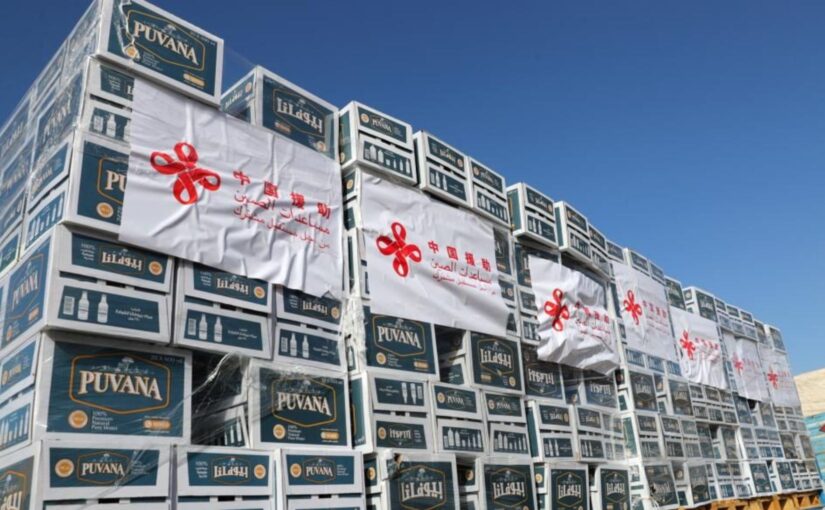
China is extending humanitarian support to the impoverished nation of South Sudan as it copes with an influx of refugees and returnees resulting from the bitter civil conflict currently raging in its northern neighbour.

On December 28, 2023, the South Sudanese government reported that trucks carrying humanitarian aid donated by China to support refugees and returnees displaced from Sudan had started to arrive in the capital, Juba. Minister for Humanitarian Affairs and Disaster Management Albino Akol Atak said: “This has been a generous donation by the government of China to the people of South Sudan.”

He added that the donation by China will be used to shelter the returnees and refugees at the transit sites and the final destinations and noted that there will be further support from the Chinese government for the displaced persons, totalling 1.4 million US dollars, which will be delivered before the end of January.

Akol expressed gratitude for the generous contribution, saying that it affirmed the true friendship between South Sudan and China.

South Sudan and China have enjoyed friendly relations since the former won its independence in July 2011. This relationship is underpinned by the close ties between the two ruling parties, the Sudan People’s Liberation Movement (SPLM) and the Communist Party of China (CPC).

The below article was originally published by Telesur.

On Thursday, the government of South Sudan said that trucks carrying humanitarian aid donated by China to support refugees and returnees displaced from Sudan have started to arrive in Juba, South Sudan’s capital.

Minister for Humanitarian Affairs and Disaster Management Albino Akol Atak said six trucks carrying a total of 26,145 pieces of plastic sheets arrived in Juba, the capital of South Sudan, to support the returnees and refugees.

“This has been a generous donation by the government of China to the people of South Sudan and is a result of our engagement with the international community and donors for them to help the government and to support the efforts of the government in its responses to the influx of refugees and returnees that have come as a result of the conflict in Sudan,” Akol told reporters in Juba.

He said more than 460,000 people have already been displaced to South Sudan as a result of the Sudanese conflict and are in dire need of shelter, food, and medicines in the transit centers and their final destination.

Akol said the donation by China will be used to shelter the returnees and refugees at the transit sites and the final destinations.

He noted that there will be another support from the Chinese government for the displaced persons totaling 1.4 million U.S. dollars, which will be delivered before the end of January 2024.

Akol expressed gratitude for the generous contribution of the government of China, affirming the true friendship between South Sudan and China.

‘Al Aqsa Storm’ reshapes the Middle East

In the following article, which was originally published in the Pakistani newspaper The Express Tribune on December 29, 2023, Mushahid Hussain Syed, the Chairman of the Defence Committee in the Pakistan Senate, and a member of our Advisory Group, analyses the strategic implications for Israel and the United States, including for US policy towards China, following the launch of the ‘Al-Aqsa Storm’ by the Palestinian resistance on October 7, 2023.

According to Senator Mushahid, Israel’s and the United States’ “hubris, supreme over-confidence and carefully laid-down plans for maintaining an iniquitous status quo now lie buried under the rubble in Gaza.” He writes:

“To counter the Iran-led ‘Axis of Resistance’, the US cobbled an ‘Axis of Repression’ to maintain the regional status quo, freezing disputes like Palestine and Kashmir to combat the ‘real enemy’, China. Washington was endeavouring to connect an Israel-centred Middle East with an India-focused ‘Indo-Pacific’, to supplement and support the American-led New Cold War against China. Essentially, India is replicating Israeli policies of repression in Occupied Kashmir, with American complicity, so US regional strategy would rest on ‘twin pillars’, Israel in the Middle East and India in South Asia.”

Just a fortnight before the launch of the ‘Al Aqsa Storm’, three separate but related developments corroborated this policy:

  • On 22 September, Netanyahu proudly unfolded the map of the ‘New Middle East’ at the United Nations General Assembly, where the Palestinians were conspicuously absent.
  • On 20 September, following the G-20 Summit in New Delhi, the India-Israel Middle East-European Union Corridor (IMEC) was launched with much fanfare, touted as the West’s copycat response to China’s highly successful Belt and Road Initiative (BRI).
  • In May 2023, President Biden’s National Security Adviser Jake Sullivan personally took his Indian counterpart, Ajit Doval, to meet Saudi Arabia’s Prime Minister and Crown Prince Muhammad bin Salman to “advance their shared vision of a more secure and prosperous Middle East region interconnected with India and the world”. And on October 2, Jake Sullivan wrote in the influential Foreign Affairs magazine that “the Middle East has never been so calm before as it is today.” Five days later, ‘Al Aqsa Storm’ shattered that calm.

Senator Mushahid goes on to outline the six strategic consequences of a reshaped Middle East that have emerged as a result of ‘Al-Aqsa Storm’:

  • Israel and the United States were trying to ‘stage Hamlet without the Prince of Denmark’, in other words, build a ‘New Middle East’ minus Palestine. That policy is now in tatters: no durable peace or stability is possible in the Middle East without an independent Palestinian State.
  • A myth had been created about invincibility of the Israeli army and intelligence. Some 1,400 determined Palestinian fighters blew up that myth through ‘Al Aqsa Storm’ on October 7.
  • Israel presented itself as a safe haven, an ‘island of peace and tranquillity in a sea of a turbulent, volatile and weak Muslim World’. Now they say they have suffered the biggest casualties since the Holocaust.
  • The ‘Axis of Resistance’ led by Iran has shown itself more resilient than the ‘Axis of Repression’, as the Iran-led troika of Hamas, Hezbollah and Houthis of Yemen, have tightened the tactical noose around shipping lanes, diplomacy and military strategy in the Middle East, and Tehran is now central to Middle East stability. Instead of the encirclement and containment of Iran, it is Israel that is now feeling encircled.
  • ‘Al Aqsa Storm’ was apparently celebrated in Moscow as the ‘best birthday gift’ to President Putin as the Ukraine War is now relegated to the back-burner and now the US is suddenly facing a three-front situation: Ukraine, New Cold War in Asia-Pacific against China, and the storm in the Middle East, an untenable strategic scenario for Washington policymakers.
  • ‘Al Aqsa Storm’ is giving birth to a clear, new global South-North divide. The Global South, spearheaded by China, with a supportive Russia, is presenting a strategic option, an alternative worldview, to the US-led Global North, whether it’s Gaza or Ukraine or BRI or the hegemony of the dollar. The global centre of gravity is shifting inexorably to the South, and the ‘Al Aqsa Storm’ has accentuated this divide, as evidenced in the voting at the United Nations.

Senator Mushahid also notes that: “Gaza is also the first televised genocide in history. Despite Israel’s brutal capacity to kill, the Palestinians are unwavering in their determination and willingness to resist and die for the cause of freedom. The Palestinians are winning by not losing.”

The October 7, 2023 Operation ‘Al Aqsa Storm’ launched by the Palestinians in the Israeli-occupied Gaza has broader strategic implications for Israel and the US, whose hubris, supreme over-confidence and carefully laid-down plans for maintaining an iniquitous status quo now lie buried under the rubble in Gaza.

To counter the Iran-led ‘Axis of Resistance’, the US cobbled an ‘Axis of Repression’ to maintain the regional status quo, freezing disputes like Palestine and Kashmir to combat the ‘real enemy’, China. Washington was endeavouring to connect an Israel-centred Middle East with an India-focused ‘Indo-Pacific’, to supplement and support the American-led New Cold War against China. Essentially, India is replicating Israeli policies of repression in Occupied Kashmir, with American complicity, so US regional strategy would rest on ‘twin pillars’, Israel in the Middle East and India in South Asia.

Just a fortnight before the launch of the ‘Al Aqsa Storm’, three separate but related developments corroborated this policy. One, on 22 September, Netanyahu proudly unfolded the map of the ‘New Middle East’ at the United Nations General Assembly, where the Palestinians were conspicuously absent. Two, on 20 September, following the G-20 Summit in New Delhi, the India-Israel Middle East European Union Corridor (IMEC) was launched with much fanfare, touted as the West’s copycat response to China’s highly successful Belt & Road Initiative (BRI). Three, in May 2023, President Biden’s National Security Adviser Jake Sullivan personally took his Indian counterpart, Ajit Doval, to meet Saudi Arabia’s Prime Minister and Crown Prince Muhammad bin Salman to “advance their shared vision of a more secure and prosperous Middle East region interconnected with India and the world”. And on October 2, Jake Sullivan wrote in the influential Foreign Affairs magazine that “the Middle East has never been so calm before as it is today.” Five days later, ‘Al Aqsa Storm’ shattered that calm! In fact, the Biden Administration is the first US Administration in 50 years that even dispensed with the fig-leaf of initiating a ‘peace process’ for the Middle East, being content with the Israeli-propped status quo of a coercive occupation.

Continue reading ‘Al Aqsa Storm’ reshapes the Middle East

Xi Jinping’s New Year address: We will work for the common good of humanity and make the world a better place for all

Chinese President Xi Jinping delivered his New Year Address for 2024 on December 31, 2023. 

Having reviewed a wide range of China’s achievements, trends and key milestones in the preceding year, and alluding to the period of the Covid-19 pandemic, he said: “All these exhilarating activities have made our lives richer and more colourful, and they mark the return of bustling life across the country. They embody people’s pursuit of a beautiful life, and present a vibrant and flourishing China to the world.”

Noting that many challenges remain, Xi continued: “Along the way, we are bound to encounter headwinds. Some enterprises had a tough time. Some people had difficulty finding jobs and meeting basic needs. Some places were hit by floods, typhoons, earthquakes or other natural disasters. All these remain at the forefront of my mind. When I see people rising to the occasion, reaching out to each other in adversity, meeting challenges head-on and overcoming difficulties, I am deeply moved… Each and every ordinary Chinese has made an extraordinary contribution! You, the people, are the ones we look to when we fight to prevail over all difficulties or challenges.”

Noting that 2024 will see the 75th anniversary of the founding of the People’s Republic of China, and setting out key themes and goals for this significant year, Xi emphasised:

“Our goal is both inspiring and simple. Ultimately, it is about delivering a better life for the people. Our children should be well taken care of and receive good education. Our young people should have the opportunities to pursue their careers and succeed. And our elderly people should have adequate access to medical services and elderly care. These issues matter to every family, and they are also a top priority of the government. We must work together to deliver on these issues. Today, in our fast-paced society, people are all busy and face a lot of pressure in work and life. We should foster a warm and harmonious atmosphere in our society, expand the inclusive and dynamic environment for innovation, and create convenient and good living conditions, so that the people can live happy lives, bring out their best, and realise their dreams.”

Touching on the international situation, the Chinese leader said:

“As I speak to you, conflicts are still raging in some parts of the world. We Chinese are keenly aware of what peace means. We will work closely with the international community for the common good of humanity, build a community with a shared future for mankind, and make the world a better place for all.”

We reprint below the full text of President Xi’s speech. It was originally published by the Xinhua News Agency. We also reprint an article from China Daily which includes comment from our co-editor Keith Bennett on President Xi’s address.

Full text of President Xi Jinping’s 2024 New Year message

Greetings to you all! As energy rises after the Winter Solstice, we are about to bid farewell to the old year and usher in the new. From Beijing, I extend my best New Year wishes to each and every one of you!

In 2023, we have continued to forge ahead with resolve and tenacity. We have gone through the test of winds and rains, have seen beautiful scenes unfolding on the way, and have made plenty real achievements. We will remember this year as one of hard work and perseverance. Going forward, we have full confidence in the future.

This year, we have marched forward with solid steps. We achieved a smooth transition in our COVID-19 response efforts. The Chinese economy has sustained the momentum of recovery. Steady progress has been made in pursuing high-quality development. Our modernized industrial system has been further upgraded. A number of advanced, smart and green industries are rapidly emerging as new pillars of the economy. We have secured a bumper harvest for the 20th year in a row. Waters have become clearer and mountains greener. New advances have been made in pursuing rural revitalization. New progress has been made in fully revitalizing northeast China. The Xiong’an New Area is growing fast, the Yangtze River Economic Belt is full of vitality, and the Guangdong-Hong Kong-Macao Greater Bay Area is embracing new development opportunities. Having weathered the storm, the Chinese economy is more resilient and dynamic than before.

This year, we have marched forward with robust steps. Thanks to years of dedicated efforts, China’s innovation-driven development is full of energy. The C919 large passenger airliner entered commercial service. The Chinese-built large cruise ship completed its trial voyage. The Shenzhou spaceships are continuing their missions in space. The deep-sea manned submersible Fendouzhe reached the deepest ocean trench. Products designed and made in China, especially trendy brands, are highly popular with consumers. The latest models of Chinese-made mobile phones are an instant market success. New energy vehicles, lithium batteries, and photovoltaic products are a new testimony to China’s manufacturing prowess. Everywhere across our country, new heights are being scaled with dogged determination, and new creations and innovations are emerging every day.

Continue reading Xi Jinping’s New Year address: We will work for the common good of humanity and make the world a better place for all

China marks the 130th birthday of Chairman Mao Zedong

The Chinese people commemorated the 130th birthday of Chairman Mao Zedong, the founder of New China, which fell on December 26, in numerous ways, from solemn gatherings at the highest level to countless informal and spontaneous gatherings throughout the country.

On the morning of December 26, Cai Qi, a member of the Standing Committee of the Political Bureau of the Communist Party of China (CPC) Central Committee presided over a symposium in Beijing’s Great Hall of the People. 

Xi Jinping, General Secretary of the CPC Central Committee, Chinese President, and Chairman of the Central Military Commission, delivered an important speech. Xi emphasised that:

  • Mao was a great Marxist, and a great proletarian revolutionary, strategist, and theorist.
  • He was a great trailblazer in adapting Marxism to the Chinese context, and laid the groundwork of China’s socialist modernisation.
  • He was a great patriot and national hero in modern Chinese history and the core of the Party’s first generation of central leadership.
  • He was a great man who led the Chinese people to change their destiny and the nation as a whole, and
  • A great internationalist who made significant contributions to the liberation of oppressed nations and the cause of human progress worldwide.

Mao Zedong Thought, the Chinese leader added, is the precious spiritual asset of our Party and will continue to guide what we do for a long time to come. The best way to commemorate Mao is to continuously advance the cause he initiated.

Xi pointed out that Mao devoted his life to achieving national prosperity, rejuvenating the Chinese nation, and promoting people’s well-being. He led the people in starting the historical process of adapting Marxism to the Chinese context, forging the great, glorious, and correct Communist Party of China, founding the New China with the people enjoying the status as masters of the country, creating an advanced socialist system, and building a new model of people’s army that is invincible. He made indelible historical contributions to the Chinese nation and the Chinese people and made shining contributions that will go down in history.

Xi further emphasised that Comrade Mao Zedong dedicated his entire life to the Party and the people, leaving behind a lofty and inspirational spirit for future generations. Comrade Mao, as a great revolutionary leader, demonstrated far-sighted political vision, firm revolutionary conviction, extraordinary courage to blaze a new trail, perfect art of waging struggle, outstanding leadership, deep concern for the people, an open and broad-minded demeanour, and an exemplary work ethic of hard endeavour. As a result, he earned the love and respect of the entire Party and people of all ethnic groups. Comrade Mao’s noble spirit will forever be a motivating force inspiring us to forge ahead.

On the new journey, he continued, we must never forget our original aspiration and founding mission, be confident in our history, and take historical initiative to continuously advance the great cause of Chinese modernisation.

Chinese modernisation, Xi noted, is the cause of the Chinese people, and we must closely rely on the people, pool the inexhaustible wisdom and strength inherent in the people, and fully motivate the historical initiative of the people. It is crucial to adhere to the fundamental viewpoint of historical materialism that the people are the fundamental driving force in creating history, uphold the people’s principal position, take it as the fundamental purpose of our work to defend, realise and develop the fundamental interests of the vast majority of the people, so as to ensure that all the Chinese people share the achievements of modernisation in a more equitable manner. Efforts should be made to establish systems that ensure the people’s status as masters of the country, improve the mechanisms that uphold social fairness and justice, focus on ensuring and improving people’s well-being, follow the mass line in the new era, always maintain a close connection with the people, accept criticism and supervision from the people, always breathe the same air as the people, share the same future, and stay truly connected to them, in order to provide the most reliable, profound, and sustainable source of strength for advancing Chinese modernisation.

Xi emphasised that reform and opening up is a major reason why China is able to catch up with the times, and it is the key move that determines whether Chinese modernisation will succeed and went on to stress the need to continuously liberate and develop the social productive forces and unleash and enhance social vitality. It is imperative to adapt to the new trends of the times, meet the new requirements of development, and fulfil the new expectations of the people, he said.

Xi pointed out that Chinese modernisation is the socialist modernisation led by the CPC. Only by always staying alert and determined to tackle the unique challenges that a large party like ours faces, and by strengthening the Party more vigorously, can we ensure that Chinese modernisation advances through waves and storms, and steadily moves forward.

It is important to continue to take coordinated steps to see that officials do not have the audacity, opportunity, or desire to become corrupt, so that the Party can remain true to its original aspiration and mission, and at the forefront of the times, and always stay vibrant and vigorous. By doing so, we can ensure that the Party will never change its nature, its conviction, or its character.

Cai Qi, chairing the meeting, noted how affectionately General Secretary Xi, in his important speech, had looked back upon the great practices of Comrade Mao Zedong in leading China’s revolution and construction, and how he has recognised the monumental achievements Comrade Mao Zedong made for the Chinese nation and Chinese people. He went on to note that Xi had proposed explicit requirements for commemorating Comrade Mao Zedong with concrete actions and with efforts to push ahead with the magnificent cause of Chinese modernisation.

Before the symposium, Xi Jinping and other leaders visited the Chairman Mao Memorial Hall where, in accordance with the Chinese custom denoting the highest respect, they bowed three times to the seated statue of Comrade Mao Zedong, and then proceeded to pay respects to his remains.

A further symposium marking the 130th anniversary of the birth of Mao was held in Beijing from December 26-28. At the opening ceremony, Cai Qi stressed the importance of honouring the monumental achievements made by Comrade Mao Zedong, passing on his thought and lofty spirit, advocating the great founding spirit of the Party, and making greater progress in theoretical studies. Cai called on social scientists and theoretical researchers to produce more high-quality research findings in the study of Mao Zedong Thought.

Probably the largest gathering held around the country was that in Mao’s birthplace, Shaoshan, where more than 110,000 people from around the country gathered, with spontaneous mass celebrations and commemorative activities beginning on the afternoon of December 25.

The Chinese newspaper Global Times quoted a middle aged woman from Yunnan province in south-west China as saying that she was surprised and excited to join tens of thousands of people singing, dancing, reciting poems, and waving flags on Mao Zedong Square at midnight. 

Another impressive point for her was the large number of young people present. “I used to think that only middle-aged people and the older generation felt strongly about Chairman Mao. It wasn’t until I arrived here that I realised there are so many young people who respect and remember the stories about Chairman Mao,” she said. “Our younger generation is full of vitality and hope.” 

The paper further reported a 21-year-old college student as having animated discussions with the older generation on the square. He defined his feelings for Mao Zedong as “sublime faith.” 

“As young people of the new generation, we have never forgotten Chairman Mao’s contributions to the Chinese people,” he told the Global Times. “It is our responsibility as young people to inherit the Chairman’s revolutionary spirit and become the backbone of China.”  

He added that some Western media and politicians have interpreted young people’s worshipping Mao Zedong as representing a narrow nationalism, but he rejected this saying:

“Our feelings for Chairman Mao are not narrow worship, but a hope to inherit his idea that ‘the world belongs to the people.’ The ultimate ideal is world harmony. How could this be a form of narrow nationalism?” 

On the morning of December 26, visitors from across China, gathered in Shaoshan, were served a free breakfast of birthday noodles, recalling that the Chairman had never celebrated his birthday in his lifetime, simply eating a bowl of noodles. They then gathered again at Mao Zedong Square, where a flower laying ceremony was held, and everyone present bowed to Mao Zedong’s statue, followed by the many thousands of people singing together the revolutionary song “The East is Red,” written in praise of Mao Zedong.

The following articles were originally published by the Xinhua News Agency and Global Times.

Symposium held to commemorate 130th anniversary of Comrade Mao Zedong’s birth, Xi delivers important speech

BEIJING, Dec. 27 (Xinhua) — On the morning of Dec. 26, the Central Committee of the Communist Party of China (CPC) held a symposium at the Great Hall of the People in Beijing to commemorate the 130th anniversary of Comrade Mao Zedong’s birth. Xi Jinping, general secretary of the CPC Central Committee, Chinese president, and chairman of the Central Military Commission, delivered an important speech. He emphasized that Mao was a great Marxist, and a great proletarian revolutionary, strategist, and theorist. He was a great trailblazer in adapting Marxism to the Chinese context, and laid the groundwork of China’s socialist modernization. He was a great patriot and national hero in modern Chinese history, and the core of the Party’s first generation of central leadership. He was a great man who led the Chinese people to change their destiny and the nation as a whole, and a great internationalist who made significant contributions to the liberation of oppressed nations and the cause of human progress worldwide. Mao Zedong Thought is the precious spiritual asset of our Party and will continue to guide what we do for a long time to come. The best way to commemorate Mao is to continuously advance the cause he initiated.

Li Qiang, Zhao Leji, Wang Huning, Ding Xuexiang, and Li Xi, all members of the Standing Committee of the Political Bureau of the CPC Central Committee, and Chinese Vice President Han Zheng, attended the event. Cai Qi, a member of the Standing Committee of the Political Bureau of the CPC Central Committee, presided over the symposium.

In his speech, Xi pointed out that Mao devoted his life to achieving national prosperity, rejuvenating the Chinese nation, and promoting people’s well-being. He led the people in starting the historical process of adapting Marxism to the Chinese context, forging the great, glorious, and correct Communist Party of China, founding the New China with the people enjoying the status as masters of the country, creating an advanced socialist system, and building a new model of people’s army that is invincible. He made indelible historical contributions to the Chinese nation and the Chinese people, and made shining contributions that will go down in history.

Xi emphasized that Comrade Mao Zedong dedicated his entire life to the Party and the people, leaving behind a lofty and inspirational spirit for future generations. Comrade Mao, as a great revolutionary leader, demonstrated far-sighted political vision, firm revolutionary conviction, extraordinary courage to blaze a new trail, perfect art of waging struggle, outstanding leadership, deep concern for the people, an open and broad-minded demeanor, and an exemplary work ethic of hard endeavor. As a result, he earned the love and respect of the entire Party and people of all ethnic groups. Comrade Mao’s noble spirit will forever be a motivating force inspiring us to forge ahead.

Xi stated that advancing the building of China into a strong country and realizing the great rejuvenation of the Chinese nation on all fronts through a path to Chinese modernization is the central task for the entire Party and people of all ethnic groups on the new journey in the new era. This is an unrealized cause of the older generation of revolutionaries such as Mao Zedong, and is the solemn historical responsibility of contemporary Chinese communists. On the new journey, we must never forget our original aspiration and founding mission, be confident in our history, and take historical initiative to continuously advance the great cause of Chinese modernization.

Xi emphasized that Chinese modernization is the cause of the Chinese people, and we must closely rely on the people, pool the inexhaustible wisdom and strength inherent in the people, and fully motivate the historical initiative of the people. It is crucial to adhere to the fundamental viewpoint of historical materialism that the people are the fundamental driving force in creating history, uphold the people’s principal position, take it as the fundamental purpose of our work to defend, realize and develop the fundamental interests of the vast majority of the people, so as to ensure that all the Chinese people share the achievements of modernization in a more equitable manner. Efforts should be made to establish systems that ensure the people’s status as masters of the country, improve the mechanisms that uphold social fairness and justice, focus on ensuring and improving people’s well-being, follow the mass line in the new era, always maintain a close connection with the people, accept criticism and supervision from the people, always breathe the same air as the people, share the same future, and stay truly connected to them, in order to provide the most reliable, profound, and sustainable source of strength for advancing Chinese modernization.

Continue reading China marks the 130th birthday of Chairman Mao Zedong

Eritrean President Isaias Afwerki meets with Special Envoy for the Horn of Africa Affairs Xue Bing

The friendly relations between China and Eritrea were underlined on December 15, 2023, with a meeting in the Eritrean capital Asmara between President Isaias Afwerki and the visiting Special Envoy for Horn of Africa Affairs of China’s Foreign Ministry Xue Bing.

Xue Bing said that this year marks the 30th anniversary of the establishment of diplomatic relations between China and Eritrea. In May this year, President Isaias Afwerki paid a successful visit to China and reached a lot of common understandings with President Xi Jinping, drawing a new blueprint for the future development of bilateral relations. China is ready to work with Eritrea, taking the common understandings between the two heads of state as a guide, to strengthen the alignment of development strategies, advance the implementation of the Outlook on Peace and Development in the Horn of Africa, and elevate bilateral cooperation to a higher level.

Isaias Afwerki said that he had paid a successful state visit to China. Eritrea greatly admires China’s tremendous achievements in development, and appreciates China’s important role in international affairs. Eritrea is ready to strengthen strategic communication and coordination with China, expand practical cooperation in various fields, and promote the building of a more equitable and reasonable international order.

Eritrea officially proclaimed its independence on May 24, 1993. Diplomatic relations with China, which had supported the Eritrean liberation struggle since its early days, were established on the same day.

The following article was originally published on the website of the Chinese Foreign Ministry.

On December 15, 2023, Eritrean President Isaias Afwerki met with Special Envoy for the Horn of Africa Affairs of the Foreign Ministry Xue Bing at the President’s Office in Eritrea. Eritrean Foreign Minister Osman Saleh, Economic Advisor to the President and General Coordinator for China Affairs Hagos Gebrehiwet, and Chargé d’Affaires a.i. of the Chinese Embassy in Eritrea Dai Demao were present.

Xue Bing said that this year marks the 30th anniversary of the establishment of diplomatic relations between China and Eritrea. In May this year, Mr. President Isaias Afwerki paid a successful visit to China and reached a lot of common understandings with President Xi Jinping, drawing a new blueprint for the future development of bilateral relations. China is ready to work with Eritrea, taking the common understandings between the two heads of state as a guide, to strengthen the alignment of development strategies, advance the implementation of the Outlook on Peace and Development in the Horn of Africa, and elevate bilateral cooperation to a higher level.

Isaias Afwerki said that he paid a state visit to China and had a successful meeting with President Xi Jinping in May this year. Eritrea greatly admires China’s tremendous achievements in development, and appreciates China’s important role in international affairs. Eritrea is ready to strengthen strategic communication and coordination with China, expand practical cooperation in various fields, and promote the building of a more equitable and reasonable international order.

International Publishers, the Chinese Revolution, and world socialism

International Publishers, the Marxist book publishing company based in New York City, celebrated its centenary with a day-long syposium on 26 October 2023, held at NYU Libraries. Among those addressing the event were Gerald Horne, the revolutionary feminist scholar Elisabeth Armstrong, West African history specialist Dennis Laumann, and International Publishers vice-president Tony Pecinovsky. A summary of the event was published in People’s World.

Friends of Socialist China co-editor Carlos Martinez attended via Zoom, giving a presentation on the subject of “International Publishers, the Chinese Revolution, and world socialism”, in which he gave an overview of the role played by International Publishers and associated communist publishing houses in raising awareness of the Chinese Revolution in its early phases.

The presentation also touches on the Sino-Soviet split and its impact on relations between the Western left and China. Carlos posits that we are in an ongoing important process of overcoming the Sino-Soviet split, and that “International Publishers has a key role to play in this process… Its recent publication of China’s Economic Dialectic by Cheng Enfu – one of China’s foremost Marxist scholars – is an exciting step forward, particularly as there are so few good books available in the English language about modern Chinese Marxism.”

The speech also briefly discusses the issue of the social character of the People’s Republic of China, and the importance of opposing the US-led New Cold War.

The full text of the presentation is reproduced below.

Dear friends,

Many thanks for inviting me to participate in today’s event. It’s an honour to be with you.

The progressive movement in the United States, and other parts of the Western world, has a long history of solidarity with the Chinese Revolution and the project of building socialism in China, and of telling people the truth about China.

International Publishers – and the CPUSA – blazed a trail in this regard. In the case of International Publishers, support for Red China goes back almost to the very beginning of its history, for example printing in 1937 the first North American edition of Mao Zedong’s famous essay On Practice.

Other publishing houses with which IP worked closely – New Century Publishers and Workers Library Publishers – also printed a number of titles in solidarity with China during the War of Resistance against Japanese Aggression, including China’s Fight for National Liberation and Hell Over Shanghai.

In 1945, William Z Foster wrote the foreword to the volume Fight for a New China, based on Mao’s report to the Seventh National Congress of the CPC.

A number of theoretical works were also published in English for the first time, including Liu Shaoqi’s On Inner-Party Struggle and Mao Zedong’s On New Democracy.

A great many prominent communists and anti-imperialists in the US threw their weight behind China’s liberation.

The great African-American activist, linguist and performer Paul Robeson became widely known in China for his powerful rendition in Chinese of the March of the Volunteers, the song that was to become, and remains, the national anthem of the People’s Republic. Robeson first recorded the song in 1941, with a chorus made up of Chinese workers in New York. The proceeds from the gramophone record went to support China’s war effort against Japanese invasion.

The sociologist Dr WEB DuBois, one of the greatest scholars of the 20th century, who joined the CPUSA in 1961 – at the tender age of 93 – forged a profound friendship with Mao Zedong and other Chinese leaders.

In the late 1930s, the CPUSA joined with the Communist Party of Canada to send Dr Norman Bethune to the frontline in China, where he was instrumental in setting up the system of “barefoot doctors”, training ordinary peasants to provide primary medical care. He died a martyr in 1939 while stationed with the Eighth Route Army in Shanxi Province, and became the embodiment of revolutionary internationalism for the people of China and beyond. In his eulogy, Mao wrote: “Every communist must learn the true communist spirit from Comrade Bethune.”

Continue reading International Publishers, the Chinese Revolution, and world socialism

New Zealand leaning towards AUKUS

The following article, written by independent journalist Mick Hall, details the growing danger that New Zealand may join the AUKUS (Australia, United Kingdom, United States) agreement, an aggressive military alliance directed against China. The planned deployment of nuclear-powered submarines by Australia is at the heart of the AUKUS project. New Zealand has hitherto followed a strict non-nuclear policy since the adoption of the Nuclear Free Zone, Disarmament and Arms Control Act in 1987. According to Marco de Jong, historian and co-director of Te Kuaka NZA, an organisation advocating an independent and progressive foreign policy, if New Zealand did join the US-led bloc it would effectively compromise this long-held anti-nuclear policy. 

The move comes after a new coalition government, led by the right wing National Party, and including ACT, a far right libertarian party, took office on November 27, 2023, following the defeat of the previously governing New Zealand Labour Party in the country’s October 14 general election. 

Early statements by ministers in the country’s new government indicate that its foreign policy will be much more in synch with the ‘Five Eyes’ Anglosphere and US strategic interests than the previous Labour government, which took a relatively independent stand.  However, pre-election, Labour Prime Minister Chris Hipkins had indicated that, he too was open to at least some type of relationship with AUKUS. Hipkins became Prime Minister on January 25, 2023, following the resignation of the relatively more progressive and popular Jacinda Ardern, a factor that many believe contributed to Labour’s subsequent defeat at the polls.

According to Marco de Jong, a New Zealand move towards AUKUS is not wanted either by other nations in the Pacific nor by the country’s indigenous Maori population:

“Deeper integration with the military industrial base of the Anglosphere is something that we should be incredibly concerned about for New Zealand and its standing in the region and in the world.”

New Zealand’s anti-nuclear policy has also been a factor in the country’s good relations with China, which is its largest trading partner. 

Te Pati Maori, also known as The Maori Party, a left wing party representing the country’s indigenous people, and which won six seats in the October general election, wants New Zealand to be non-aligned. Its co-leader  Rawiri Waititi said his party feared for the nation’s sovereignty if  an alignment with AUKUS was pursued.

“We’re deeply concerned with the implications this has on Aotearoa’s independence and ability to remain militarily neutral,” he said, adding:

“As Maori we cannot allow our sovereignty to be determined by others, whether they are in Canberra or Washington. Aotearoa should not act as a Pacific spy base in the wars of imperial powers. Joining AUKUS will severely undermine our country’s sovereignty, constitution, and ability to remain nuclear free. There is too much at stake for our government to make a commitment of this magnitude without a democratic process.” (Aotearoa is increasingly used as the name for the country in place of New Zealand.)

The following article was originally published by Consortium News.

Concerns are rising for peace and sovereignty in the Pacific after strong signals from New Zealand’s new government that it wants to swiftly join the U.S.-led military alliance AUKUS.

If New Zealand does join the U.S.-led military bloc it would effectively compromise the country’s long-held anti-nuclear policy, Marco De Jong, historian and co-director of the New Zealand foreign policy group Te Kuaka, told Consortium News.

He said the decision would put an end to what is left of the nation’s independent foreign policy, as well as its image as an “honest broker” in a region already divided by increasing militarization.

The 2021 AUKUS agreement among Australia, the U.K. and the U.S. centers on the tripartite development of a nuclear submarine fleet within a security partnership geared to upholding the “rules-based international order,” as well as a “free and open Indo-Pacific.” Though not stated explicitly, it is seen as an anti-China alliance, based on a hyped-up threat of Beijing to  the region.

It is controversial in Australia because the decision to join AUKUS with an AU$368 billion price tag for the submarines was continued by Prime Minister Anthony Albanese (following its initiation by the previous prime minister Scott Morrison) without any consultation with Parliament, let alone the public.

There is dissension in Albanese’s Labor Party, and former Labor Prime Minister Paul Keating, four days after the event in San Diego, publicly ripped the deal.

Keating said Australia was

“now part of a containment policy against China. The Chinese government doesn’t want to attack anybody. They don’t want to attack us … We supply their iron ore which keeps their industrial base going, and there’s nowhere else but us to get it. Why would they attack? They don’t want to attack the Americans … It’s about one matter only: the maintenance of U.S. strategic hegemony in East Asia. This is what this [AUKUS] is all about.”

By subordinating itself, Keating said Australia is forfeiting its sovereignty to rely on Britain, which abandoned its former colony years ago, to build nuclear submarines that serve U.S. — and not Australian — interests. 

Nevertheless the deal is still on track. It was announced in March that SNN-AUKUS nuclear submarines would be delivered to Australia by the early 2040s and the U.K. by the late 2030s.

A bill passed in the U.S. Congress on Thursday cleared the way to sell three-to-five Virginia-class submarines to Australia in the interim by the early 2030s.

Continue reading New Zealand leaning towards AUKUS

China, Laos pledge enhanced anti-corruption cooperation

The close and comprehensive ties between China and its socialist neighbour, the Lao People’s Democratic Republic have been reinforced with a recent visit by Khamphanh Phommathath, Politburo member of the Central Committee of the Lao People’s Revolutionary Party (LPRP), chairman of the Inspection Committee of the Party Central Committee and president of the State Inspection Authority.

In a meeting with his Chinese counterpart Li Xi, a member of the Standing Committee of the Political Bureau of the Communist Party of China (CPC) Central Committee and secretary of the CPC Central Commission for Discipline Inspection, in Beijing on December 6, Li noted that China and Laos are friendly socialist neighbours that walk hand in hand, bound by the same destiny.

China, he added, supports Laos in playing a bigger role in ASEAN and in international and regional affairs, and stands ready to work with Laos to realise the vision of a community with a shared future for humanity. 

Laos will assume the rotating chair of the Association of South East Asian Nations (ASEAN) for 2024.

While briefing the Lao side on the CPC’s efforts to enforce strict Party governance and fight corruption comprehensively, Li said the CPC is willing to strengthen its exchanges of experience with the LPRP on improving party conduct, building a clean government and combating corruption.

Khamphanh said the LPRP cherishes its close friendship with the CPC, and that it is willing to work with the Chinese side to firmly implement the important consensus reached by the top leaders of the two parties and countries as well as promote the construction of a clean railway between Laos and China, promote the greater development of relations between the two parties and two countries, and deepen cooperation on discipline inspection, supervision and anti-corruption work.

The following article was originally carried by the Xinhua News Agency.

BEIJING, Dec. 6 (Xinhua) — Li Xi, a member of the Standing Committee of the Political Bureau of the Communist Party of China (CPC) Central Committee and secretary of the CPC Central Commission for Discipline Inspection, on Wednesday held talks with Khamphanh Phommathath, Politburo member of the Party Central Committee of the Lao People’s Revolutionary Party (LPRP), chairman of the Inspection Committee of the Party Central Committee and president of the State Inspection Authority.

Li noted that China and Laos are friendly socialist neighbours that walk hand in hand, bound by the same destiny. He said that China, guided by the important consensus reached by the top leaders of the two parties and countries, is ready to work with Laos to intensify high-level exchanges, enhance strategic communication, synergize development strategies further, and expand high-quality cooperation on the joint construction of the Belt and Road.

China supports Laos in playing a bigger role in ASEAN and in international and regional affairs, and stands ready to work with Laos to realize the vision of a community with a shared future for humanity, build the Belt and Road, and implement the Global Development Initiative, the Global Security Initiative and the Global Civilization Initiative, Li added.

While briefing the Lao side on the CPC’s efforts to enforce strict Party governance and fight corruption comprehensively, Li said the CPC is willing to strengthen its exchanges of experience with the LPRP on improving party conduct, building a clean government and combating corruption. He said the CPC is ready to deepen communication and coordination under multilateral anti-corruption mechanisms, work with Laos to promote the construction of a clean Silk Road, cooperate in combating cross-border corruption crimes, and provide a strong guarantee to promote the construction of a community with a shared future between China and Laos.

Khamphanh said the LPRP cherishes its close friendship with the CPC, and that it is willing to work with the Chinese side to firmly implement the important consensus reached by the top leaders of the two parties and countries. He said the LPRP is ready to intensify high-level exchanges, strengthen exchanges and mutual learning related to governance experience, promote the construction of a clean railway between Laos and China, promote the greater development of relations between the two parties and two countries, and deepen cooperation on discipline inspection, supervision and anti-corruption work. 

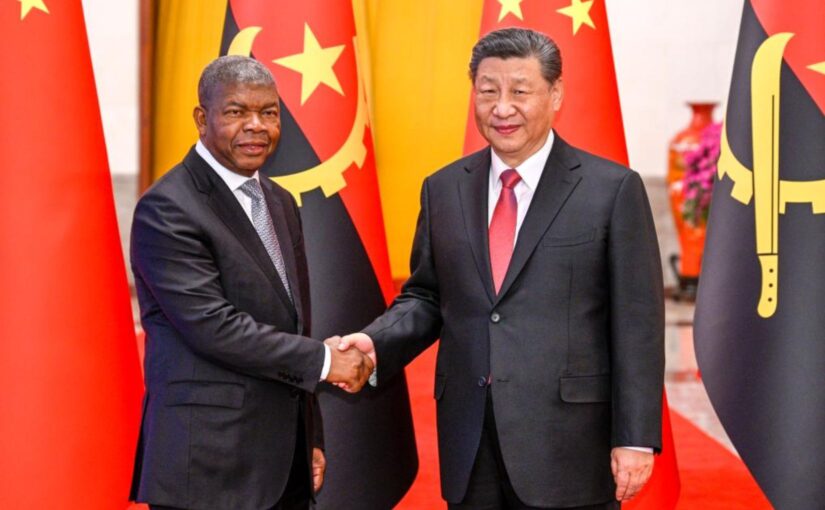
Wang Yi holds talks with Angolan Foreign Minister Téte António

We previously reported on the visit to China by Angolan Foreign Minister Téte António in early December 2023. Further information on this visit has now been made available on the website of the Chinese Foreign Ministry.

Meeting his Angolan counterpart on December 6, Chinese Foreign Minister Wang Yi said that this year marks the 40th anniversary of the establishment of diplomatic relations between China and Angola and is of important transitional significance. China and Angola have forged a friendship of sharing weal and woe in the anti-imperialist and anti-colonialist struggle, and have pursued a path of mutually beneficial and win-win cooperation on their respective journey towards development and revitalisation. Under the strategic guidance of the two heads of state, China-Angola relations have maintained a strong momentum of development with fruitful results in practical cooperation, which has brought tangible benefits to the people of the two countries, provided an important boost to Angola’s accelerated development and also set an example for South-South cooperation. 

Wang Yi added that China appreciates Angola’s commitment to the one-China principle and the country’s support for China in safeguarding its core interests, and China also firmly supports Angola in safeguarding sovereignty, security and development interests, and in exploring a successful development path suited to Angola’s national reality. China is ready to work with Angola to strengthen multilateral coordination, advance the mechanism building of the Forum on China-Africa Cooperation (FOCAC), build a closer China-Africa community with a shared future, jointly safeguard the legitimate rights and interests of developing countries, and make the international order more equitable and reasonable.

Téte António said that Angola and China are sincere friends and also strategic partners. Angola thanks China for providing the country with precious support in its post-war reconstruction, economic development, pandemic response, and improvement of the people’s livelihood, as well as for playing a role as a major country in safeguarding Africa’s peace and security and correcting historical injustice.  Angola stands ready to work with China to continue to enhance communication and coordination, jointly advance the building of the FOCAC, jointly safeguard the United Nations-centred international system, and build a new type of international relations.

The following article was originally carried on the website of the Chinese Foreign Ministry.

On December 6, 2023, Member of the Political Bureau of the CPC Central Committee and Foreign Minister Wang Yi held talks with Foreign Minister of Angola Téte António in Beijing.

Wang Yi said that this year marks the 40th anniversary of the establishment of diplomatic relations between China and Angola, and is of important transitioning significance. China and Angola have forged a friendship of sharing weal and woe in the anti-imperialism and anti-colonialism struggle, and have pursued a path of mutually beneficial and win-win cooperation on their respective journey towards development and revitalization. Under the strategic guidance of the two heads of state, China-Angola relations have maintained a strong momentum of development with fruitful results in practical cooperation, which has brought tangible benefits to the people of the two countries, provided an important boost to Angola’s accelerated development and also set an example for South-South cooperation. The two sides should follow through on the important common understandings reached by the two heads of state, and push for the development of China-Angola relations at a higher and deeper level. China is ready to share with Angola the experience of development of Chinese modernization and opportunities in the mega market, expand practical cooperation in infrastructure, digital economy, clean energy, health care and food security, among others, deepen people-to-people and cultural exchanges, enhance people-to-people ties, and consolidate the popular foundation of China-Angola friendship.

Wang Yi said that China appreciates Angola’s commitment to the one-China principle and the country’s support for China in safeguarding its core interests, and China also firmly supports Angola in safeguarding sovereignty, security and development interests, and in exploring a successful development path suited to Angola’s national reality. China is ready to work with Angola to strengthen multilateral coordination, advance the mechanism building of the Forum on China-Africa Cooperation (FOCAC), build a closer China-Africa community with a shared future, jointly safeguard the legitimate rights and interests of developing countries, and make the international order more equitable and reasonable.

Téte António said that Angola and China are sincere friends and also strategic partners. Under the guidance of the two heads of state, Angola-China relations have been constantly enriched, and cooperation has been increasingly deepened. Angola thanks China for providing the country with precious support in its post-war reconstruction, economic development, pandemic response and improvement of the people’s livelihood, and for playing a role as a major country in safeguarding Africa’s peace and security and correcting historical injustice. Angola will remain committed to the one-China principle, and support China in safeguarding sovereignty and territorial integrity. Angola-China cooperation is mutually beneficial and win-win, and major projects have been continuously successfully implemented, which have witnessed and promoted friendship between the two countries. Angola welcomes China’s investment and will earnestly protect the safety and security of Chinese enterprises and personnel in Angola. Angola stands ready to work with China to continue to enhance communication and coordination, jointly advance the building of the FOCAC, jointly safeguard the United Nations-centered international system, and build a new type of international relations.

Ken Hammond: Through 45 years of reform, the CPC has remained committed to the original goals of the revolution

In this article for Global Times, China expert and Friends of Socialist China advisory group member Professor Ken Hammond reflects on the 45th anniversary of China’s Reform and Opening Up, initiated in December 1978.

Ken observes that the material basis for reform was China’s prevailing relative poverty and underdevelopment: “Slow but steady growth in the economy had modestly exceeded population growth, so that while there had been significant improvements in life expectancy and public health, housing provision, education, and other social services, in 1978 China remained a poor country.” In order to build a socialist society that was “abundant enough to meet not only basic needs but to allow all people to pursue their self-development, to fulfill their potential as human beings and members of society”, China’s leaders introduced policies “to revise the organization and operation of Chinese enterprises and to open the country to foreign capital in order to drive a process of development which would give China the capacity to produce goods and services in much greater volume and at much lower costs.”

There is a near-consensus in China that the reform process has been hugely successful, in that the vast majority of people live better lives than they used to, and China is far stronger than it was. “China has become a world leader in innovation and creativity, and is at the forefront of the fight to save the planet from the menace of climate change through the development of alternative energy and the building of an ecological civilization. China is playing a central role in improving the lives of people in developing countries around the world through its Belt and Road Initiative and other efforts to support the flourishing of a multipolar world with a future of shared prosperity.”

Nonetheless there have inevitably been problems and contradictions associated with market reforms, including inequality and environmental degradation. Ken writes that the Chinese leadership always understood these contradictions, and calculated that they could be overcome and managed over time as long as the guiding role of the Communist Party of China was maintained (this can be usefully contrasted with Gorbachev’s perestroika, which was accompanied with a sidelining of the Communist Party of the Soviet Union and a hollowing out of the institutions of working class power).

Ken points out that, particularly over the last decade, “the CPC has managed the complexities of policy and practice, guiding the processes of development and the intricate dialectic between the socialist core and the private sector, remaining committed to the original goals of the revolution, and navigating China’s re-emergence as a significant participant in global affairs.” He concludes that, “guided by the insights of Marxist theory and the deep historical experience of China’s ancient civilization, and with the ongoing leadership of the CPC, the road ahead is one of hope.”

In December 1978 the leadership of the Communist Party of China (CPC) made a momentous decision to open a new program of economic development. Over the first three decades of the People’s Republic of  China, a foundation for a modern socialist system had been built, but this had been an arduous process, with advances and retreats, successes and failures, and much contention about how best to pursue the goals of enhancing production in industry and agriculture and of improving the material conditions and the livelihoods of the Chinese people. 

Slow but steady growth in the economy had modestly exceeded population growth, so that while there had been significant improvements in life expectancy and public health, housing provision, education, and other social services, in 1978 China remained a poor country. China had achieved a kind of egalitarianism of poverty, but this was not the goal of the revolution. Socialism is a society of shared prosperity, based upon the equitable distribution of the wealth produced by social labor, wealth which should be abundant enough to meet not only basic needs but to allow all people to pursue their self-development, to fulfill their potential as human beings and members of society. To achieve this, China’s leaders understood that this required bold new measures and a radical will to experiment.

Deng Xiaoping and others formulated new policies designed to utilize the mechanisms of the market to develop the productive economy. Marxists have long recognized the historical role of markets in the rise of the capitalist system, including the massive expansion and enhancement if productive capacities. The aim of the new policies, which came to be labeled as reform and opening-up, was to revise the organization and operation of Chinese enterprises and to open the country to foreign capital in order to drive a process of development which would give China the capacity to produce goods and services in much greater volume and at much lower costs. This would not happen overnight, and it would entail certain risks and challenges.

Markets can generate growth and development, but they also generate contradictions. The Chinese leadership understood this, and recognized that the key to success, the key to survival and flourishing of the socialist project, would be the guiding role of the CPC. They anticipated that rapid development using market mechanisms could create contradictions involving inequality, corruption, environmental stresses, as well as other problems. If the markets and foreign capital were simply allowed to run unregulated these could overwhelm the country and lead to the end of the socialist venture and the abandonment of the goals of the revolution. They understood that all of this would take time, that, as Deng Xiaoping famously said, some people would get rich first, and make accommodations with the global capitalist system in order to acquire the capital, technology and other resources needed to advance along the path of development.

As China marks the 45th anniversary of the reform era, we can see that much has been achieved. China has reached the primary stage of socialism, a society of modest prosperity, in which more than 800 million people have been lifted out of absolute poverty, in which health, education and social services have been dramatically improved. China has become a world leader in innovation and creativity, and is at the forefront of the fight to save the planet from the menace of climate change through the development of alternative energy and the building of an ecological civilization. China is playing a central role in improving the lives of people in developing countries around the world through its Belt and Road Initiative and other efforts to support the flourishing of a multipolar world with a future of shared prosperity.

All of this has been possible because of the leadership of the CPC. Over the past decade under General Secretary Xi Jinping, the CPC has managed the complexities of policy and practice, guiding the processes of development and the intricate dialectic between the socialist core and the private sector, remaining committed to the original goals of the revolution, and navigating China’s re-emergence as a significant participant in global affairs. There is much work to be done. The contradictions of development remain as factors which must be carefully attended to, and the tensions in global geopolitics as the world goes through an era of structural transformation and some long-established powers find it difficult to embrace the newly emerging realities pose serious challenges. 

It is time to celebrate what has been accomplished, and to reaffirm commitment to the tasks which lie ahead. Guided by the insights of Marxist theory and the deep historical experience of China’s ancient civilization, and with the ongoing leadership of the CPC, the road ahead is one of hope.

Xi Jinping: Integrate the basic tenets of Marxism with China’s specific realities and the best of its traditional culture

The following is the text of a speech given by Xi Jinping, General Secretary of the Central Committee of the Communist Party of China, at a meeting on cultural inheritance and development in June 2023, at which he comprehensively set out his views on the integration of Marxism with China’s specific realities and especially the best of its traditional culture, which is now being known as the “two integrations”.

Xi notes that:

“The traditional Chinese culture encompasses a multitude of significant concepts, including social ideals of pursuing the common good for all and achieving universal peace; governance principles of regarding the people as the foundation of the state and governing by virtue; traditions of striving for great unity in the country and ensuring unity amid diversity; values of dedicating oneself to self-cultivation, family management, state governance, and peace for all and shouldering one’s duties to secure the future of the nation; aspirations of embracing the world with virtue and cultivating integrity; economic principles of enriching the people and improving their lives and pursuing the greater good and shared interests; ecological ideas of promoting harmony between humanity and nature and the coexistence of all living things; philosophical thoughts of seeking truth from facts and combining knowledge with action.”

Explaining that Chinese civilisation is distinguished by its continuity, he adds that Chinese people’s deep-rooted sentiments for the motherland and profound sense of history constitute an ideal for upholding great unity and provide spiritual support for guiding the Chinese nation through countless hardships on the path to national rejuvenation.

He also refers to the creativity of Chinese civilisation, saying that it “places stress on discarding the outdated in favour of the new and making progress on a daily basis… The creativity of Chinese civilisation determines that it upholds tradition without clinging to the past and respects ancient wisdom without reverting to archaic thinking. It also determines that the Chinese nation is fearless in facing new challenges and embracing new things.”

It is also inclusive:

“Rather than replacing diverse cultures with a single monoculture, Chinese civilisation endeavours to integrate various cultures into a shared tapestry.”

Next, Xi Jinping turns his attention to the significance of the two integrations with Marxism, explaining that:

“Given the profound foundations of our venerable 5,000-year-old civilisation, the only path for pioneering and developing Chinese socialism is to integrate the basic tenets of Marxism with China’s specific realities and the best of its traditional culture (‘two integrations’). This systematic conclusion has been derived from our extensive explorations of Chinese socialism. We have always emphasised integrating the basic tenets of Marxism with China’s specific realities and have now officially brought forward the integration of the basic tenets of Marxism with China’s fine traditional culture. As I once stated, without the 5,000-year-old Chinese civilisation, where would the Chinese characteristics come from?”

Mutual compatibility, he insists, is the fundamental prerequisite:

“The ‘two integrations’ is not a far-fetched proposition. Despite their distinct origins, Marxism and traditional Chinese culture exhibit remarkable congruence. For instance, the social principles of pursuing the common good for all and acting in good faith and being friendly to others resonate harmoniously with the ideals and convictions of communism and socialism; the governing concepts of regarding the people as the foundation of the state and governing by virtue align seamlessly with the political principle of putting the people first; and the practices of discarding the outdated in favour of the new and ceaselessly pursuing self-improvement correspond faithfully to the revolutionary spirit of Communists. Marxism sees the essence of man from the angle of social relations, while in Chinese culture, people are defined by their relationships with their family, their country, and the world. Both reject the notion of viewing humans as isolated entities.”

“Integration,” he further explains, “extends beyond mere juxtaposition; instead, it creates a new, organically unified cultural entity. On one hand, Marxism entered China with its advanced theories, giving a new lease of life to Chinese civilisation with its truthfulness. It ushered China into the modern era, revitalising and modernising Chinese culture. Traditional concepts such as regarding the people as the foundation of the state, all regions sharing common customs and practices, all things living side by side, and enriching the people have transformed to modern ideas of pursuing democracy, forging a strong sense of community for the Chinese nation, maintaining harmony between humanity and nature, and striving for common prosperity.”

This integration has reinforced the foundations of China’s socialist path:

“The path of Chinese socialism is fundamentally socialist, grounded in Marxism. The essential socialist elements in Chinese culture provide an intellectual foundation for the embrace of Marxism in China. The path of Chinese socialism is continually broadening, and our determination to remain on this path is unwavering.”

In the concluding part of his speech, Xi Jinping points out that: “Under the guidance of Marxism, we must adeptly integrate the past with the present, draw on successful foreign experiences, make informed choices through dialectical reasoning, and develop the new from the old, therefore achieving a seamless fusion of traditional and contemporary cultures.”

The speech was originally published in Chinese in Qiushi Journal, theoretical organ of the Communist Party of China, issue 17 of 2023. This official English translation appeared in Qiushi’s English language edition, issue 5 of 2023.

Today, we convened a meeting on cultural inheritance and development. Preceding this event, I visited the newly built China National Archives of Publications and Culture and the Chinese Archaeological Museum at the Chinese Academy of History and found them exceptionally insightful.

To establish both the Chinese Academy of History and the China National Archives of Publications and Culture was a decision of great significance made by the CPC Central Committee. The Chinese nation boasts a legacy spanning millions of years of humanity, ten millennia of culture, and five thousand years of civilization. My visit to these two places helped deepen my appreciation for the time-honored Chinese culture and the profound depth of Chinese civilization. Only through a comprehensive and deep understanding of the history of Chinese civilization can we more effectively promote the creative transformation and development of the best of the traditional Chinese culture, vigorously push forward the progress of socialist culture with Chinese characteristics, and cultivate a modern Chinese civilization.

Culture is fundamental to a nation’s foundation and future. Recently, I have consistently pondered the major issue of promoting China’s socialist culture and developing a modern Chinese civilization. This is precisely the reason that led us to convene this meeting today. Here, I would like to address three key points.

I. Developing a profound understanding of the defining characteristics of Chinese civilization

The traditional Chinese culture encompasses a multitude of significant concepts, including social ideals of pursuing the common good for all and achieving universal peace; governance principles of regarding the people as the foundation of the state and governing by virtue; traditions of striving for great unity in the country and ensuring unity amid diversity; values of dedicating oneself to self-cultivation, family management, state governance, and peace for all and shouldering one’s duties to secure the future of the nation; aspirations of embracing the world with virtue and cultivating integrity; economic principles of enriching the people and improving their lives and pursuing the greater good and shared interests; ecological ideas of promoting harmony between humanity and nature and the coexistence of all living things; philosophical thoughts of seeking truth from facts and combining knowledge with action; the mindset of understanding multiple perspectives and seeking harmony through the middle way; and communication approaches of acting in good faith and being friendly to others. These concepts collectively shape the defining characteristics of Chinese civilization.

Chinese civilization is distinguished by its continuity

Chinese civilization is the only great, uninterrupted civilization that continues to this day in a state form. This unequivocally affirms the cultural identity and robust vitality of Chinese civilization as it has responded to challenges and broken new ground through self-development. Chinese people’s deep-rooted sentiments for the motherland and profound sense of history constitute an ideal for upholding great unity and provide spiritual support for guiding the Chinese nation through countless hardships on the path to national rejuvenation. This continuity inherently dictates that the Chinese nation will follow its own path. If not through the prism of its extensive history of continuity, one would not be able to understand ancient China, contemporary China, let alone China of the future.

Chinese civilization is distinguished by its creativity

Chinese civilization places stress on discarding the outdated in favor of the new and making progress on a daily basis. It embodies both profound depth and dynamic forward surges. Continuity doesn’t mean being stagnant or inflexible; on the contrary, it represents a history marked by creativity-driven progress. The Chinese nation embraces the ethos of self-renewal, as an ancient saying goes “improve oneself in one day, do so from day to day, and there will be daily improvement.” This spirit propels the Chinese nation’s sustained material, cultural-ethical, and political advancement, allowing it to stand tall and firm as one of the most prosperous and powerful civilizations throughout a long historical period. The creativity of Chinese civilization determines that it upholds tradition without clinging to the past and respects ancient wisdom without reverting to archaic thinking. It also determines that the Chinese nation is fearless in facing new challenges and embracing new things.

Continue reading Xi Jinping: Integrate the basic tenets of Marxism with China’s specific realities and the best of its traditional culture

Wang Yi: China-DPRK friendship is a valuable asset for both sides

Preparations were made by the People’s Republic of China (PRC) and the Democratic People’s Republic of Korea (DPRK) to celebrate the 75th anniversary of their diplomatic relations next year, with a Beijing visit by DPRK Deputy Foreign Minister Pak Myong Ho. The relations were established on October 6, 1949, just five days after the founding of the PRC. The DPRK had been founded one year earlier. 

Meeting the DPRK visitors on December 18, China’s Foreign Minister Wang Yi said that the traditional friendship between China and the DPRK is a valuable asset for both sides. In recent years, this traditional friendship has been further developed in the new era under the strategic guidance and personal care of the top leaders of the two countries, he added, and continued to note that  China is willing to jointly host a series of commemorative activities for the 75th anniversary of the establishment of diplomatic ties between the two countries next year, and to promote the sustained and steady development of China-DPRK friendly and cooperative relations.

Pak said it is the unswerving position of the DPRK side to continuously develop DPRK-China relations in accordance with the lofty will of the top leaders of the two countries and the requirements of the new era. Noting that the DPRK is willing to work with China to consolidate the brotherly friendship between the two countries, he added that the DPRK will continue to strengthen multilateral coordination with China so as to safeguard common interests and regional peace and stability.

At the Chinese Foreign Ministry’s regular press conference the same day, a correspondent from South Korea’s Yonhap News Agency asked spokesperson Wang Wenbin: “The Foreign Ministry put out a readout on the meeting between China’s Foreign Minister Wang Yi and the DPRK’s Deputy Foreign Minister Pak Myong Ho this morning. Can you share more details about the meeting?”

Wang replied as follows: “This morning, Member of the Political Bureau of the CPC Central Committee and Foreign Minister Wang Yi in Beijing met with Deputy Foreign Minister of the DPRK Pak Myong Ho who came to China for diplomatic consultations between the two countries.

“Foreign Minister Wang Yi noted that the traditional friendship between China and the DPRK were forged and fostered personally by the older generation of leaders of the two parties and two countries, and is a valuable asset for both sides. In recent years, under the strategic guidance and personal care of the top leaders of the two parties and two countries, the China-DPRK traditional friendship has been further deepened in the new era. In a world fraught with change and instability, China and the DPRK have firmly supported and trusted each other, which demonstrates the strategic significance of China-DPRK friendship and cooperation. China always views its relations with the DPRK from a strategic height and long-term perspective. We would like to work with the DPRK to enhance communication and coordination, deepen exchanges and cooperation in various areas, jointly hold a number of events next year in commemoration of the 75th anniversary of diplomatic ties, and advance the sustained and steady growth of China-DPRK friendship and cooperation.

“Deputy Foreign Minister Pak Myong Ho noted that it is the unswerving position of the party and government of the DPRK to continue to deepen the DPRK-China relations in line with the noble will of the top leaders of the two parties and two countries as well as the requirements of the new era. The DPRK stands ready to work with China to take the 75th anniversary of diplomatic ties as an opportunity to consolidate the brotherly friendship between the two countries and take the relations forward. The DPRK will continue to enhance coordination with China on multilateral affairs, safeguard the common interests of the two countries and contribute to peace and stability in the region.

“The two sides also exchanged views on issues of mutual interest.”

The following article was originally published by the Xinhua News Agency.

BEIJING, Dec. 18 (Xinhua) — Chinese Foreign Minister Wang Yi met with Deputy Foreign Minister of the Democratic People’s Republic of Korea (DPRK) Pak Myong Ho on Monday in Beijing.

Wang, also a member of the Political Bureau of the Communist Party of China Central Committee, said the traditional friendship between China and the DPRK is a valuable asset for both sides.

In recent years, the traditional friendship between China and the DPRK has been further developed in the new era under the strategic guidance and personal care of the top leaders of the two countries, Wang noted.

China always views its relations with the DPRK from a strategic and long-term perspective, Wang said, adding that China stands ready to work with the DPRK to strengthen communication and coordination, and deepen exchanges and cooperation in various fields.

Wang said that China is willing to jointly host a series of commemorative activities for the 75th anniversary of the establishment of diplomatic ties between the two countries next year, and promote the sustained and steady development of China-DPRK friendly and cooperative relations.

Pak said it is the unswerving position of the DPRK side to continuously develop DPRK-China relations in accordance with the lofty will of the top leaders of the two countries and the requirements of the new era.

Noting that the DPRK is willing to work with China to consolidate the brotherly friendship between the two countries, Pak said the DPRK will continue to strengthen multilateral coordination with China to safeguard common interests and regional peace and stability. 

In Xi Jinping’s China, is Chairman Mao back?

Marking the 130th anniversary of Comrade Mao Zedong’s birth, Morning Star editor Ben Chacko published this thoughtful response to the Western media scare stories about President Xi Jinping leading a “reversion to Maoism.” Ben points out that this theme “is inseparable from a wider narrative in which China is becoming more adversarial and threatening” – a narrative which is being used to justify an escalating New Cold War on China.

Ben observes that there has been significant continuity from one leadership generation to the next in terms of China’s overall political trajectory and goals, and “the idea post-Mao China decisively broke with Mao is not one which has ever been accepted by Chinese leaders.” The pursuit of an advanced socialism is core to the whole history of the CPC. “Though most Western observers assumed China’s theory of the ‘primary stage of socialism’ was merely an excuse for continued Communist Party rule over a capitalist country, Xi’s policies conform precisely to what the party said it was intending to do all along.”

Nonetheless, Ben recognises that with a renewed emphasis on common prosperity, with the crackdown on corruption and excessive wealth, and with China’s growing voice and influence on the world stage, there are certain parallels between Xi Jinping’s leadership and that of Mao Zedong. “If Xi echoes Mao, it is perhaps because the questions which absorbed the Chairman, from wealth differentials to China’s role as a leader of the decolonisation movement, are as acute today as they were 50 years ago: with the rise of the global South possibly a greater challenge to imperialism even than the Soviet Union was.”

Ben concludes:

When the histories of how the historically brief supremacy of the West came to an end are written, it seems a fair bet that both Mao and Xi will have starring roles.

BOXING Day marks 130 years since the birth of Chairman Mao — a revolutionary whose significance seems all the greater now given the rise of China.

China’s alleged reversion to Maoism under President Xi Jinping is a recurring theme in Western media. A year ago the Guardian was quoting the US-based academic Hu Ping on how Xi was “increasingly reverting to Mao” on domestic policy; outlets from the New York Times to Al Jazeera have referred to Xi as “the new Mao.”

China is certainly celebrating Mao this winter. A new film, When We Were Young, will depict his student years; a TV series, Kunpeng Strikes the Waves, will tell the story of his early activism and discovery of Marxism. The “kun” and “peng” are mythological creatures, or one creature, since the kun, a huge fish, transforms into the peng, a huge bird, whose flight, in the Taoist classic the Zhuangzi, causes storms lasting months and churns up the sea for hundreds of miles around: an indication of how great an impact Mao is deemed to have had on China’s history.

Xi himself has promoted the “back to Mao” narrative. Shortly after his election to a third term leading China’s Communist Party last year, he took the politburo on a high-profile visit to Yan’an, the communist base area after the Long March of the 1930s, from which Mao directed much of the civil war, received Western admirers such as Edgar Snow, and which became a sort of prototype Red China before victory on a national scale in 1949.

In Western depictions, this is inseparable from a wider narrative in which China is becoming more adversarial and threatening.

Where a generation ago it was portrayed as having embraced capitalism, now the leading capitalist countries see it as an enemy its communist character is hyped up.

How real is the shift? Ofcom in 2021 revoked its state broadcaster CGTN’s right to broadcast in Britain, saying it was “ultimately controlled by the Communist Party.” China’s Foreign Ministry spokesman Wang Wenbin noted drily that Britain “knew clearly the nature of our media from CGTN’s first day of reporting in the UK over 10 years ago” and that “China is a communist country led by the Chinese Communist Party” — it was Britain, not China, that had changed its attitude.

A lot of the mainstream narrative about China is frankly nonsense. A politically motivated growth in US sanctions, obediently copied by London and Brussels, is used to claim Xi’s China has turned in on itself and is economically isolated.

But it is under Xi that China has become the biggest trading partner of two-thirds of countries and under Xi that the Belt & Road Initiative has replaced the World Bank as the largest lender of development finance worldwide.

Continue reading In Xi Jinping’s China, is Chairman Mao back?

The contributions of Mao Zedong to Marxism-Leninism

The following article by J Sykes, originally published in Fight Back! to coincide with the 130th anniversary of Mao Zedong’s birth, discusses Mao’s profound contributions to Marxism-Leninism.

The author notes in particular Mao’s writings on philosophy, which explore and develop Marx’s dialectical and historical materialism. “On Practice teaches us that theory must be grounded in practice, in our experience in production, class struggle, and scientific experiment… On Contradiction is a manual on the practical application of dialectical materialism.” Mao’s works on revolutionary strategy, and particularly the theory of protracted people’s war, are “applicable broadly to large, semi-colonial and semi-feudal countries fighting for national liberation and socialism.” Mao’s theory of the mass line remains “the key to the fusion of Marxism with the working class movement.”

Sykes observes that Mao developed his ideas together with his contemporaries, and that we still “have a lot to gain from studying the works of Zhu De, Zhou Enlai, Liu Shaoqi, Chen Yun, and Deng Xiaoping.” Sykes also makes the crucial point that the CPC today carries forward the legacy of Mao Zedong and that “today, Xi Jinping continues to lead the Chinese people in applying Marxism-Leninism to Chinese conditions.”

Many of these themes are explored in Sykes’ valuable book, The Revolutionary Science of Marxism-Leninism.

December 26, 2023 marks the 130th anniversary of the birth of the great leader and teacher of the Chinese revolution, Mao Zedong. This is an excellent occasion to review Mao’s contributions as one of the principal theorists of the science of revolution, Marxism-Leninism.

Mao Zedong always stressed that it is the masses who make history, but like all Marxists he recognized the importance of leadership in revolutionary change. As the leader of the revolution in China, Mao made innumerable practical contributions both to the Chinese Revolution and to the international communist movement as a whole.

Mao led the Chinese Revolution to victory in establishing new democracy and socialism, thus liberating the Chinese people from feudalism and imperialism. Under Mao’s leadership, the Chinese people carried out land reform, industrialized and modernized their productive forces, and went from a backward, semi-colonial and semi-feudal country dominated by domestic warlords and plundered by foreign imperialists, to a powerful, independent country, where the working class wields state power for the betterment of the people.

After the death of Stalin in 1953 and the rise to power of Khrushchev in the Soviet Union in 1956, Mao led the struggle against modern revisionism in the international communist movement, upholding and defending the revolutionary essence of Marxism-Leninism.

“The theory of Marx, Engels, Lenin and Stalin is universally applicable. We should regard it not as a dogma, but as a guide to action,” wrote Mao. “Studying it is not merely a matter of learning terms and phrases but of learning Marxism-Leninism as the science of revolution.” Indeed, Mao Zedong’s leadership united practical struggle with revolutionary theory, and Mao always emphasized the importance of the dialectical relationship between theory and practice. For Mao, Marxism was always a science, driven by the practical demands of the Chinese revolution, and a weapon of class struggle, to be used to overthrow the old society and build a new world.

The theory of Mao Zedong is likewise universally applicable, and we should study it closely. As Lenin said, Marxism has three main components: philosophy, political economy, and scientific socialism. Mao wrote important texts contributing to our understanding of each of the aspects of Marxism-Leninism, as well as important works on revolutionary strategy.

Continue reading The contributions of Mao Zedong to Marxism-Leninism

Prime Minister Manuel Marrero: Cuba has much to learn from the Chinese experience

In this episode of the CGTN interview series Leaders Talk, Zou Yun speaks with Cuban Prime Minister Manuel Marrero, who was primarily in China to attend the sixth China International Import Expo, which was held in Shanghai between November 5-10, 2023. It was his first China visit since his assumption of office and he also visited Beijing and Zhejiang province. Marrero previously served as Cuba’s Minister of Tourism for 16 years.

Marrero welcomed the open and inclusive spirit of the expo, the only one of its kind in the world, providing both the developed countries and those of the Global South with opportunities to promote their products and services. Cuba had particularly displayed its rum, coffee and seafood this time. 

He also acclaimed the Belt and Road Initiative (BRI), describing it as the pinnacle of China’s global initiatives. President Xi Jinping’s considerations, the Cuban Prime Minister observed, go well beyond China. They are for prosperity and development worldwide. 

Thanks to China, and the Communist Party of China, many forgotten and exploited countries now have opportunities to acquire technology and development experiences. 

He was particularly moved by his meeting with President Xi Jinping. Cuba and China, Marrero said, share years of a traditional friendship and they face many similar situations. Cuba has much to learn from the Chinese experience, aligning it to their national realities, particularly, for example in terms of attracting foreign investment despite the US blockade. 

Speaking of the impact of the 60 plus years US blockade of the socialist island, he notes Raúl Castro’s constant reminder that those responsible are the US government, not the US people, towards whom the Cuban people always maintain a positive and friendly standpoint. 

The full video of the interview is embedded below.

Benjamin Zephaniah – lifelong champion of the oppressed

The celebrated British poet, novelist and campaigner Benjamin Zephaniah passed away on 7 December 2023. Zephaniah was a friend of China and owned a flat in Beijing, spending several months a year there, writing and training in martial arts. His famous novels Refugee Boy, Gangsta Rap and Teacher’s Dead were written in China.

His funeral is being held today, 28 December 2023. We publish below a brief obituary by Friends of Socialist China co-editor Carlos Martinez.

One of Britain’s most important and impactful cultural workers breathed his last breath on 7 December 2023, having been diagnosed with a brain tumour eight weeks previously.

Benjamin Zephaniah was widely known as a poet, author and actor, but also as a tireless and courageous campaigner for justice. He never hesitated to speak his mind; he never put his career before his principles. He was quite unique in his ability to cut through ruling class cultural hegemony – a function of his prodigious talent and his strong roots in the British working class, in particular among oppressed communities.

As a black man from a working class Jamaican background, Zephaniah faced racism all his life, and anti-racism was one of his main areas of focus as an activist. For decades, he stood shoulder to shoulder with oppressed peoples demanding equality – indeed he was among those marching in Southall on 23 April 1979 to defend the local population against the National Front, on which occasion the Metropolitan Police, acting in defence of and in cahoots with the fascists, killed Blair Peach.

Zephaniah well understood that the fundamental purpose of racism is to divide working people. He wrote a few years ago:

“I have always thought that poor white people and poor black people should unite and confront the people who oversee all of our miseries… The biggest fear of all of the mainstream politicians is that we all reach a point where we understand how much we have in common and, instead of turning on ourselves, we turn on them. In poetry and prose I have said that unity is strength, and that we should get to a point where we are not talking about black rights or white rights, Asian rights or rights for migrant workers; we are just talking about our rights.”

He elaborated on this point in his 2018 autobiography, The Life and Rhymes of Benjamin Zephaniah, where he talked about the racism he would sometimes face doing miners’ strike solidarity work in the mid-1980s. In response to some miners in Nottinghamshire shouting derogatory remarks while he was performing, another miner jumped on stage and “delivered a diatribe against racism and urged working-class people to stick together, pointing out that I was the person who in the previous week had sent them a donation of £1,500 (a lot of money in those days) from an African-Caribbean association, and they, the miners, were happy to take the money and feed their kids.”

Reflecting on how miners’ attitudes towards black workers shifted over the course of the strike, Zephaniah noted: “The miners realised they couldn’t win the fight on their own; they needed the solidarity of their wives, black poets, Chinese chefs and Bengali factory workers… Those who were involved in that strike will never forget the picket line battles, the workers’ solidarity, the lessons learned through struggle and the dark forces of police and state that were unleashed upon those workers.”

Although his talent won him a level of acceptance within the mainstream, Zephaniah was not afraid to express revolutionary and anti-imperialist views. Interviewed by the Guardian in the aftermath of the 2017 Grenfell disaster, he stated bluntly: “I go on Question Time and I talk to politicians and get involved, but actually I’d like to just burn the lot of them. The system stinks.”

Elsewhere he discusses the hypocrisy of the bourgeois narrative in relation to democracy and freedom of speech: “Some of us think that, because we have so many TV stations, we have freedom. We don’t. We have the illusion of freedom.”

In 2018, with the US escalating its propaganda war against the People’s Republic of China, Zephaniah talked about his experiences in that country, where he had spent several extended periods writing and training in martial arts.

“Back in the year 2000 I did a tour of clubs and schools in Hong Kong. When the performances were over I was asked if I wanted to go for a day trip into what people called mainland China. How I hate that term. I won’t go on about how the British stole Hong Kong (along with lots of other stuff) and then did a ninety-nine-year deal that was completely unfair to the Chinese. Or how hypocritical the British were in criticising ‘undemocratic’ China while at the same time denying citizens of Chinese origin the right to vote in the British bit of China.”

He continued: “I quickly realised I loved the place. This was the time when everyone started talking about China’s rapid growth, and I saw it happening right in front of me. I’ve never seen a country growing so quickly… I met people who by Western standards were middle class, but one generation ago their families were slum dwellers… After that first independent visit, I would return to China many times. I found it a great place to be creative.”

Interestingly, the following year another prominent British wordsmith of African-Caribbean origin, Akala, wrote in his book Natives: Race and Class in the Ruins of Empire:

Over the past few decades, China has pulled at least 500 million people out of poverty (the Communist propagandists at the World Bank actually put the figure at around 800 million), industrialised at a pace faster than any nation before and today stands at the leading edge of many green technologies, and it has managed to do all of this without invading and colonising half the planet. For these and many other reasons – despite obvious and undeniable injustices in China – you would think China would be universally admired by those who claim to believe industrial capitalism to be the holy grail of human achievement. Yet reading about China in the press, I can’t help but feel a tinge of the old ‘yellow peril’ sentiment still lurking beneath the narratives.

Given the extraordinary pressure on anyone in the public eye to conform to the anti-China consensus, it’s impressive and hugely helpful when a courageous few speak the truth like this.

Benjamin Zephaniah was a longstanding friend of socialist Cuba and patron of the Cuba Solidarity Campaign, saying: “I am a proud friend of Cuba. We do what we do to support a small nation that is fighting to defend its sovereignty. We do what we do to gain justice for the Miami Five, to help with hurricane relief, and to support Cuban medical teams wherever they go in the world.”

His vision was truly global. He stood with the oppressed in every continent. He was a stalwart of the struggle against apartheid in both South Africa and Palestine. At a 2019 meeting of the Palestine Solidarity Campaign, of which he was a patron, he recalled: “When I was young, there were two things that I really wanted to see: a free South Africa and a free Palestine.”

Visiting the Occupied Territories for the first time in 1988, he wrote: “I have come to the conclusion that Zionism is apartheid.” And three decades later, he was one of very few public figures to loudly defend then-Labour leader Jeremy Corbyn against absurd charges of antisemitism, saying on Question Time – to rapturous applause from the studio audience – that Corbyn was “the only mainstream politician who’s been arrested for anti-racism… He’s the kind of person that shouldn’t actually be in politics, because politics is so dirty.”

Zephaniah placed a special emphasis on opposing British colonialism and imperialism, and raised his voice in support of Irish freedom (including performing at Troops Out Movement events) and for the return of the Chagos Islands to Mauritius. Famously, in 2003 he turned down the offer of an OBE:

“‘Me? I thought, OBE me? Up yours, I thought. I get angry when I hear that word ‘empire’; it reminds me of slavery, it reminds of thousands of years of brutality, it reminds me of how my foremothers were raped and my forefathers brutalised… Benjamin Zephaniah OBE – no way Mr Blair, no way Mrs Queen. I am profoundly anti-empire.’

Benjamin Zephaniah will be sadly missed, but he leaves a body of work and a legacy of campaigning that will continue to inspire new generations in their struggles for a better world.

Xi Jinping Thought can justly be acclaimed as Marxism for the 21st Century

The Chinese Academy of Social Sciences, together with various institutions under its umbrella, including the Academy of Marxism and the World Socialism Research Centre, organised the 13th World Socialism Forum in Beijing, November 28-30.

Numerous Chinese delegates, including leading members of the Communist Party of China, scholars, researchers and students of Marxism, and others, were joined by scholars and political and social activists from around the world. They included leaders, representatives and members of communist parties and other left-wing parties and organisations from many countries, including Cuba, Vietnam and Laos; Nepal, Bangladesh, Sri Lanka, Turkiye, Lebanon, Syria, Japan and Australia; South Africa, Zambia, Ghana and Kenya; Peru, Argentina, Brazil and the USA; and Russia, Hungary, Spain, Portugal, Italy, Britain, France, Switzerland, Finland and Cyprus.

Friends of Socialist China was represented by our co-editor Keith Bennett.

Following the main conference in Beijing, the international delegates were divided into two groups which travelled respectively to Shandong and Fujian provinces.

The following is the text of the speech given by Keith at the conference at Fuzhou University. Citing VI Lenin, JV Stalin, Mao Zedong, Deng Xiaoping and Xi Jinping, Keith touches on the relationship between socialist countries and the struggle for socialism on a world scale and proceeds to analyse how this relates to President Xi Jinping’s concept of a shared future for humanity and especially the Belt and Road Initiative (BRI). Keith also delivered a similar paper (slightly abbreviated due to time constraints) at the forum in Beijing.

Dear Comrades

First, I would like to express my sincere thanks to the Academy of Marxism of the Chinese Academy of Social Sciences and to Fuzhou University, along with all the organisers and co-organisers, for their kind invitation, excellent arrangements and generous hospitality.

I would also like to join our comrade from the Communist Party of the USA, who spoke a little earlier, in saying how inspiring it is to see so many young students here today and, in particular, so many young women students. Seeing you all brings to my mind what Chairman Mao said to the Chinese students in Moscow in 1957 – that the future of China and the world belongs to you and that our hopes are placed in you.

It is not by chance that we meet here in the People’s Republic of China, the world’s leading socialist country, to discuss the prospects for world socialism.

It is also very significant that we are joined here by representatives of the heroic socialist nations of Vietnam and Laos, and I take this opportunity to again warmly congratulate our Laotian comrades on yesterday’s 48th anniversary of the victory of their revolution.

In his Draft Theses on the National and Colonial Question, written for the Second Congress of the Communist International on June 5, 1920, Lenin wrote that, “proletarian internationalism demands, first, that the interests of the proletarian struggle in any one country should be subordinated to the interests of that struggle on a world-wide scale, and, second, that a nation which is achieving victory over the bourgeoisie should be able and willing to make the greatest national sacrifices for the overthrow of international capital.”

In his talk with African friends on August 8, 1963, Comrade Mao Zedong said: “The people who have triumphed in their own revolution should help those still struggling for liberation. This is our internationalist duty.”

In his talk with former President of Tanzania Julius Nyerere on November 23, 1989, Comrade Deng Xiaoping said: “So long as socialism does not collapse in China, it will always hold its ground in the world.”

Continue reading Xi Jinping Thought can justly be acclaimed as Marxism for the 21st Century

Wang Yi meets with Foreign Minister of Mexico Alicia Bárcena

We previously reported on the visit to China by Mexican Foreign Minister Alicia Bárcena in early December 2023. Further information on this visit has now been made available on the website of the Chinese Foreign Ministry.

Meeting his Mexican counterpart on December 5, Chinese Foreign Minister Wang Yi said that President Xi Jinping and President Andrés Manuel López Obrador held an important meeting in San Francisco, providing important strategic guidance for the development of relations between the two countries and setting out a blueprint for bilateral cooperation.

Mexico is a major Latin American country and an important emerging market with global influence. China values Mexico’s international status, is optimistic about Mexico’s development prospects, and supports Mexico in pursuing a development path suited to its own national conditions. This year marks the 10th anniversary of the establishment of the comprehensive strategic partnership between China and Mexico, and relations between the two countries are at an important transitional stage. China stands ready to view and grow China-Mexico relations from a strategic and long-term perspective, and to work with Mexico to jointly uphold mutual respect and treat each other as equals, so as to lift China-Mexico relations to a new level.

China and Mexico, both being major developing countries, need to strengthen multilateral coordination, safeguard the common interests of developing countries, and join hands in response to global challenges. China hopes that the two sides will continue to work together to promote further development of China-Latin America relations.

Alicia Bárcena said that Mexico attaches great importance to growing relations with China and stands ready to work with China to follow through on the important common understandings reached by the two heads of state in San Francisco, and to push for greater development of relations between the two countries. More Chinese enterprises are welcome to invest and do business in Mexico. 

A series of important global initiatives put forth by President Xi Jinping are in alignment with many concepts proposed by President Andrés Manuel López Obrador, and Mexico stands ready to strengthen dialogue and communication with China. Mexico attaches great importance to China’s international status and influence and is ready to work with China to strengthen coordination and cooperation within such multilateral mechanisms as the United Nations and the Group of 20, and to continue to actively advance the building of the China-CELAC (Community of Latin American and Caribbean States) Forum.

Alicia Bárcena also thanked China for providing Mexico with strong support in response to its recent hurricane disaster and the supply of disaster relief materials. Wang Yi said that China and Mexico are friends and partners. When a friend is in need, China always lends a helping hand immediately. 

The following article was originally published on the website of the Chinese Foreign Ministry.

On December 5, 2023, Member of the Political Bureau of the CPC Central Committee and Foreign Minister Wang Yi met with Foreign Minister of Mexico Alicia Bárcena in Beijing.

Wang Yi said that President Xi Jinping and President Andrés Manuel López Obrador held an important meeting in San Francisco, providing important strategic guidance for the development of relations between the two countries and setting out a blueprint for bilateral cooperation. Mexico is a major Latin American country and an important emerging market of global influence. China values Mexico’s international status, is optimistic about Mexico’s development prospects, and supports Mexico in pursuing a development path suited to its own national conditions. This year marks the 10th anniversary of the establishment of the comprehensive strategic partnership between China and Mexico, and relations between the two countries are at an important transitioning stage. China stands ready to view and grow China-Mexico relations from a strategic and long-term perspective, and work with Mexico to jointly uphold mutual respect and treat each other as equals, so as to lift China-Mexico relations to a new level.

Wang Yi said that cooperation between China and Mexico has huge potential, and tremendous space for development. The two sides should advance exchanges and cooperation in such fields as economy and trade as well as people-to-people and cultural exchanges across the board. The Belt and Road Initiative has become the most popular international public good and largest-scale international cooperation platform, and China welcomes Mexico’s active participation in a flexible manner. The two sides can promote the alignment of high-quality Belt and Road cooperation and Mexico’s development strategies, to provide Mexico’s national development with a new engine. China and Mexico, as both major developing countries, need to strengthen multilateral coordination, safeguard the common interests of developing countries, and join hands in response to global challenges. China hopes that the two sides will continue to work together to promote further development of China-Latin America relations.

Alicia Bárcena said that Mexico attaches great importance to growing relations with China, and stands ready to work with China to follow through on the important common understandings reached by the two heads of state in San Francisco, and push for greater development of relations between the two countries. More Chinese enterprises are welcome to invest and do business in Mexico. Mexico is willing to have close exchanges at all levels and personnel exchanges, and strengthen cooperation between the two countries in such fields as economy, trade and counter-narcotics. Mexico will unswervingly adhere to the one-China principle. A series of important global initiatives put forth by President Xi Jinping are in alignment with many concepts proposed by President Andrés Manuel López Obrador, and Mexico stands ready to strengthen dialogue and communication with China. Mexico attaches great importance to China’s international status and influence, and stands ready to work with China to strengthen coordination and cooperation within such multilateral mechanisms as the United Nations and the Group of 20, and stands ready to continue to actively advance the building of the China-CELAC Forum.

Alicia Bárcena also thanked China for providing Mexico with strong support in response to the hurricane disaster and the procurement of disaster relief materials. Wang Yi said that China and Mexico are friends and partners. When a friend is in need, China always lends a helping hand immediately. China believes that under the leadership of President Andrés Manuel López Obrador, people in the disaster-stricken area of Mexico will surely rebuild their home as soon as possible.

The two sides also had an exchange of views on such hotspot issues as the Palestinian-Israeli conflict.