Can we avoid war with China, and save the planet instead?

In this review of Carlos Martinez’s The East is Still Red: Chinese Socialism in the 21st Century, author and activist Dee Knight decries the US ruling class’s obsession with maintaining its “single-superpower status”. This obsession – shared by both Republicans and Democrats – is the top source of instability and the threat of war. Furthermore, it stands in the way of desperately-needed cooperation to prevent climate breakdown.

Dee writes that, while the US is aggressive in asserting its hegemony, China is “aggressive about saving the planet”, becoming the world’s first renewable energy superpower. It is in the process of shifting its growth model towards high-quality, green growth, based on innovation and emphasizing fairness of distribution. However, China’s path to modernization – built on common prosperity, peace, and harmony with nature – is “viable for a socialist society, but difficult to achieve with capitalism in which growth is the holy grail, no matter at what cost.” Dee writes that “China can indeed have ‘the best of both worlds’ – faster growth through centralized planning in a mixed economy, and better quality development since it doesn’t have to depend exclusively on the profit motive.”

As such, China’s socialism provides valuable inspiration and support for the countries of the Global South.

This article was first carried in LA Progressive on 22 June 2023.

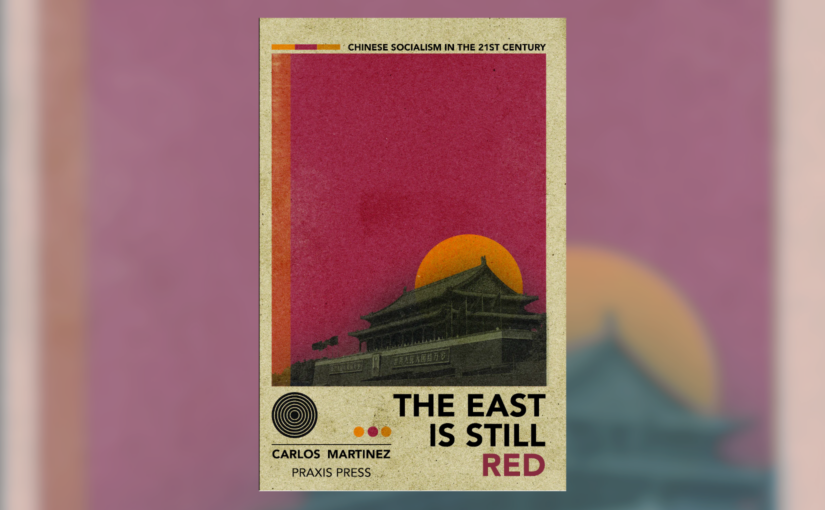
Carlos’s book can be purchased in paperback and electronic formats from Praxis Press.

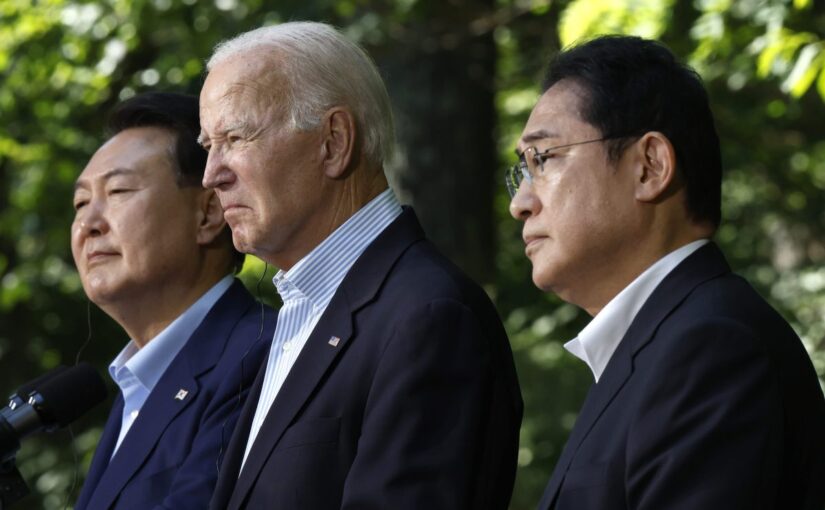
As US Secretary of State Antony Blinken arrived in China June 18, a NY Times report said “a wall of suspicion awaits him.” In a phone call before the visit, the report said “China’s foreign minister told Mr. Blinken it was ‘clear who bears responsibility’ for deteriorating bilateral relations.” The report added that the US has “issued a barrage of sanctions on Chinese officials and companies, and tried to cut off Chinese access to critical technology globally.”

The next day Chinese President Xi Jinping met with Blinken. Xi said China “respects the interests of the United States and will not challenge or replace the United States,” and that Washington “must also respect China and not harm China’s legitimate rights and interests.” Xi also said what happens between the two countries has a “bearing on the future and destiny of mankind,” and that their two governments “should properly handle Sino-US relations with an attitude of being responsible to history, the people and the world.”

There was a near-war incident in the Taiwan Strait during the second week of June. A Chinese patrol boat intercepted a US Navy war ship. The two vessels came within about 150 yards of each other, according to reports. US officials deemed the Chinese interception an “unnecessary provocation,” claiming its war ship was merely exercising freedom of navigation on the open seas. The Chinese defense minister said such “freedom of navigation” patrols are a provocation to China.

For US officials The Taiwan Strait is “open seas,” but China regards the narrow waterway as part of its internal territorial waters. For comparison, we can imagine what would happen if China sent war ships to exercise freedom of navigation next to the island of Santa Catalina, near Los Angeles, or near Hawaii, or Puerto Rico.

The Taiwan Strait interception is a reminder of the 1964 Gulf of Tonkin incident, which led to the nightmare of war in Vietnam. The two incidents are part of a pattern: the US first fosters and fortifies “friendly” elements inside a country it wants to dominate, then deploys its military dangerously close to the chosen enemy’s borders; then it accuses the enemy of “aggression.” The pattern has been at work against both China and Russia in recent years. The results have already been disastrous, and could easily become catastrophic.

Continue reading Can we avoid war with China, and save the planet instead?

Strategies of denial: Bidenomics and the New Cold War on China

In this insightful article on New Left Review’s Sidecar blog, Grey Anderson explores the Biden administration’s new industrial strategy (incorporating the American Rescue Plan, the Bipartisan Infrastructure Law, the CHIPS and Science Act, and the Inflation Reduction Act), and its connection with the ongoing efforts to suppress China’s economic rise.

Anderson writes that this anti-China orientation is not an “unfortunate by-product” of the $4 trillion spending plan, but its “motivating purpose”. The logic governing the new era of infrastructure spending is fundamentally geopolitical; “its precedent is to be sought not in the New Deal but in the military Keynesianism of the Cold War, seen by the ‘Wise Men’ who waged it as a condition for victory in America’s struggle against the Soviet Union.”

The article notes that export restrictions on AI and semiconductor components are specifically geared towards preventing China from emerging as a major player in these crucial industries, and as such constitute “a veritable declaration of economic war.” The New Cold War, however, is not solely economic, given the US’s renewed commitment to the Quad alliance, its creation of AUKUS, its huge and expanding array of military bases, its growing expenditure on hi-tech weaponry, and its increased supply of arms and military advisors to Taiwan.

The author notes that Washington is currently in a difficult position, in that it must “reconcile the imperative to prevent any state other than itself from dominating one of the great centres of world power (Asia, Europe, the Persian Gulf) with evidence of its citizens’ likely disinclination to back a major international war abroad, after twenty years of unending armed escapades.” The proposed ‘solution’ to this problem appears to be seeking to lure China into aggressive actions, thereby “hardening the resolve of the peoples in the broader coalition to intervene and for those engaged to intensify and widen the war to a level at which they would win it.”

There has been a lively debate on the American left about the Biden Administration’s industrial strategy. Discussion has focused on the prospects opened up by the massive stimulus – totalling some $4 trillion, if we factor in the American Rescue Plan, the Bipartisan Infrastructure Law and the CHIPS and Science Act alongside the Inflation Reduction Act – from training up ‘progressive technocrats’ to retrofit buildings to the feasibility of capitalist state-led ‘decarbonization’ under conditions of global overcapacity and falling economic growth.

So far, assessments have been mixed, differentiating ‘the good, the bad, the ugly’, albeit with the stress on the first. If the boost to employment and ‘green’ good works promised by the IRA cannot be dismissed, nor can its shortcomings: lack of funding for housing and public transport, neutered regulatory standards in the electricity sector, leasing agreements that give oil and gas producers access to public land. ‘The IRA’, a representative appraisal in Jacobin reckoned, ‘is at once a massive fossil fuel industry giveaway, a historic but inadequate investment in clean energy, and our best hope for staving off planetary catastrophe’.

In other words, the left critique has gone beyond ‘good, but not big enough’ – but perhaps not very far beyond. Almost entirely absent in these discussions is the geostrategic rationale that powers this national-investment drive, reshoring production on the US mainland, bagging lithium mines and sponsoring construction of microchip factories, in a militarized bid to outflank China.

Viewed from the halls of power, the anti-China orientation of US industrial policy is not an unfortunate by-product of the green ‘transition’, but its motivating purpose. For its conceptors, the logic governing the new era of infrastructure spending is fundamentally geopolitical; its precedent is to be sought not in the New Deal but in the military Keynesianism of the Cold War, seen by the ‘Wise Men’ who waged it as a condition for victory in America’s struggle against the Soviet Union.

Today, as after 1945, policymakers find themselves at an ‘inflexion point’. ‘History’, wrote future National Security Advisor Jake Sullivan during the 2020 presidential campaign, ‘is again knocking’:

The growing competition with China and shifts in the international political and economic order should provoke a similar instinct within the contemporary foreign-policy establishment. Today’s national security experts need to move beyond the prevailing neoliberal economic philosophy of the past forty years… The US national security community is rightly beginning to insist on the investments in infrastructure, technology, innovation, and education that will determine the United States’ long-term competitiveness vis-à-vis China.

Detailed at length in a report for the Carnegie Foundation, under the signature of Sullivan and a camarilla of other Biden advisers, ‘foreign policy for the middle class’ collapsed factitious distinctions between national security and economic planning. Hopes that globalized doux commerce might permanently induce other powers to accept US hegemony had been deceived. Another approach was in order. ‘There’s no longer a bright line between foreign and domestic policy’, Biden declared in his inaugural foreign policy speech. ‘Every action we take in our conduct abroad, we must take with American working families in mind.’ Trump’s victory, forged in the deindustrialized heartlands of the opioid crisis and ‘American carnage’, had shaken the Democrat establishment. What’s good for Goldman Sachs was no longer, it seemed, necessarily good for America.

Continue reading Strategies of denial: Bidenomics and the New Cold War on China

Campaigning against the New Cold War is crucial for all who value peace and justice

We are pleased to publish below the video and speech of a presentation made by Friends of Socialist China co-editor Carlos Martinez at a 28 June webinar of the United National Anti-War Coalition, on the theme of US anti-China propaganda, a prelude to war. Carlos exposes the extraordinary hypocrisy and falsehood of the propaganda war that the Western powers are waging against China, and highlights how it is being leveraged to shift public opinion in favor of anti-China hostility.

He points out that the escalating campaign of China encirclement and containment is threatening to derail global progress on key issues, noting that “the future of humanity actually hinges on global cooperation to address our collective problems.” As such, Carlos calls on all progressive and peace-loving people to make campaigning against the New Cold War a core part of their work.

Other speakers at the event included Lee Siu Hin of the China-US Solidarity Network, Sara Flounders of the International Action Center, and Arjae Red of Workers World Party. The full webinar can be viewed on YouTube.

Dear friends, thank you so much for inviting me to speak at this important event. I’m very sorry not to be able to join you in person, as I’m currently in Guiyang, China, on a delegation.

The theme of today’s event, “Anti-Chinese propaganda, a prelude to war”, is closely connected to the rationale for writing my book, “The East is Still Red: Chinese socialism in the 21st century.”

I had two key aims in mind with the book.

One was to talk about socialism, about how China is a socialist country. So many people think that China used to be a socialist country and then became capitalist with the introduction of market reforms. I wanted to show that China remains a socialist country and that socialism provides the framework for its incredible successes in poverty alleviation, development, renewable energy, and so on.

And I wanted to say to the Western left – which tends to be a bit unsure about China – look, China’s achieved all these things, it’s raised living standards beyond recognition, it’s gone from being a technologically backward and oppressed country to being a science and tech powerhouse, it’s leading the global shift to multipolarity; why on earth would we want to ascribe these successes to capitalism rather than socialism? Let’s celebrate socialist victories, let’s uphold the history and politics of the global working class.

Hence ‘The East is Still Red’.

The second key aim in writing the book was to stand up to the propaganda war, which is part of a wider New Cold War against China, and that’s the focus of my talk today.

This work of standing up to the propaganda war is urgent. It needs to be a major focus for socialists, communists, progressives, for anti-war campaigners worldwide; really for anyone that doesn’t think “better dead than red” is a viable slogan for the 21st century.

Because the propaganda war is war propaganda.

It seeks to build the broadest possible public support for a New Cold War, for a campaign of containment and encirclement, and ultimately very possibly for a hot war.

Let’s get something straight. This New Cold War, this anti-China campaign, has absolutely nothing to do with human rights.

When the West throws disgraceful slanders at China over alleged human rights abuses in Xinjiang, does anybody seriously think they’re manifesting a hitherto secret fondness and respect for Muslim people and their religion?

Where was that sentiment when they killed over a million people in Iraq?

Where was that sentiment when they destroyed Afghanistan, turning a quarter of its population into refugees and imposing brutal poverty on the rest?

Where was that sentiment when they bombed Libya into the Stone Age?

Where’s that sentiment today as they wage a disastrous proxy war against Iran in Yemen, creating the most severe humanitarian crisis in the world?

If they’re concerned about Muslims being placed in prison camps and denied their human rights, the first place they need to look is their illegally occupied corner of Cuba, that is, Guantanamo Bay.

When the West spreads outright lies about the suppression of Tibetan or Inner Mongolian language and culture, does anyone seriously think they’re standing up for the rights of indigenous peoples and for the preservation of precious human history?

How many indigenous languages are taught in US schools? To what extent is indigenous culture – and righteous resistance against colonialism – celebrated in US society? When was the last time native rights were upheld over drilling rights? Why does the US Congress seem more concerned with preserving Tibetan heritage than shutting down the Dakota Access pipeline?

These anti-China stories – all of which can be and have been comprehensively debunked – have nothing to do with upholding the principles of freedom, democracy and justice.

Continue reading Campaigning against the New Cold War is crucial for all who value peace and justice

Full text of Xi Jinping’s address at the SCO summit

We are pleased to republish below President Xi Jinping’s video address to the 23rd meeting of the Council of Heads of State of the Shanghai Cooperation Organization (SCO), delivered on Tuesday 4 July 2023 and first published in English on Xinhua.

President Xi’s address is a powerful reiteration of China’s commitment to peace, multipolarity, multilateralism and the principles of UN Charter, and anyone reading it cannot but be struck by the dramatic contrast between China’s policy of peace and cooperation and the US’s policy of hegemonism.

Whereas the US has re-imposed crippling (and illegal) sanctions on Iran, China and the other countries of the SCO are welcoming Iran as a full member, increasing cooperation on economic development, environmental protection, trade, agriculture, technology and security challenges.

Whereas the US has worked for decades to undermine Afghanistan’s sovereignty, has waged a brutal war against it, and has stolen billions of dollars’ worth of Afghan assets, Xi calls for increased coordination among Afghanistan’s neighbours to increase humanitarian support and protect peace.

Whereas the US is waging a proxy war against Russia, providing ever-more powerful weaponry to Ukraine in an attempt to keep the conflict going as long as possible and to “fight to the last Ukrainian”, China is working with the SCO and other countries to promote dialogue and consultation, and to find a peaceful settlement to the conflict.

Whereas the US is expanding the NATO military bloc, and forming new military alliances such as AUKUS and the Quad, China proposes the Global Security Initiative – based on the principle of common security – and strongly opposes any new Cold War or camp-based confrontation.

Whereas the US attempts to use dollar hegemony to impose its will on other countries, Xi calls for the SCO to oppose unilateral sanctions, to scale up local currency settlement between member states, to expand cooperation on a sovereign digital currency, and create an SCO development bank.

Whereas the US and its allies in the West are engaged in McCarthyite suppression of Confucius Institutes and other forms of cultural exchange, Xi Jinping announces the creation of new scholarships for young scientists and language teachers to study and work in China.

China is standing firmly and consistently for a world of peace, cooperation and mutual benefit, and is working with other countries to build a community with a shared future for humanity. This is a project that all progressive and peace-loving people should promote and support.

Staying True to Our Founding Mission and Advancing Unity and Coordination to Realize Greater Development

Statement by H.E. Xi Jinping
President of the People’s Republic of China
At the 23rd Meeting of the Council of Heads of State of the Shanghai Cooperation Organization

Your Excellency Prime Minister Narendra Modi,

Distinguished Colleagues,

I wish to thank India for hosting the meeting of the Council of Heads of State as the current president of the Shanghai Cooperation Organization (SCO).

At this meeting, we are going to welcome Iran as a full member and sign the memorandum of obligations on the membership of Belarus. This will manifest the vitality of our SCO family. I offer my congratulations to the two countries.

Colleagues,

Ten years ago, in view of the changes of the world, of our times and of the trajectory of history, I opined that mankind, living in the same global village, are increasingly becoming a community with a shared future in which everyone’s interest is closely interlinked. Since then, the concept of a community with a shared future for mankind has gained extensive recognition and support from the international community, and has been transforming from an idea to action and a vision to reality. At the forefront of this trend is the SCO, upholding this very concept and the Shanghai Spirit to build an SCO community with a shared future.

— We have followed our fine tradition of standing together through thick and thin, as passengers in the same boat should do, and we have firmly supported each other in standing up for our respective core interests. We have become trustworthy partners on our paths to development and national rejuvenation.

— We have acted out the concept of common, comprehensive, cooperative and sustainable security, accommodated each other’s legitimate security concerns, and responded to both traditional and nontraditional security challenges. Together we have safeguarded peace and tranquility in the region, and fostered a favorable environment for countries in the region to pursue development and prosperity.

— We have embraced the development philosophy of innovative, coordinated, green, open and shared growth, synergized our national development strategies and regional cooperation initiatives, and nurtured new growth areas for our cooperation in economy and trade, connectivity, energy, agriculture, finance, and innovation. This has helped promote coordination in our economic development.

— We have carried forward the spirit of good-neighborliness, and advocated equality, mutual learning, dialogue and inclusiveness between civilizations. We have called for peaceful coexistence and harmonious development of different civilizations, and expanded people-to-people and cultural cooperation. We have enhanced the popular support for our state-to-state relations.

— We have upheld international fairness and justice, and opposed hegemonic, high-handed, and bullying acts. We have enlarged the circle of friends of our Organization, and built partnerships featuring dialogue instead of confrontation, cooperation instead of alliance. This has strengthened the progressive forces for world peace and stability.

Colleagues,

The world today is undergoing both transformation and upheaval; changes unseen in a century are unfolding at a faster pace; human society faces unprecedented challenges. Unity or split, peace or conflict, cooperation or confrontation — these are the questions raised again by our times. My answer is this: the people’s wish for a happy life is our goal, and peace, development and win-win cooperation are the unstoppable trends of the times.

The SCO has been growing stronger in recent years. This means development opportunities as well as unprecedented risks and challenges. As the great Indian poet Rabindranath Tagore put it, “The sea of danger, doubt and denial around man’s little island of certainty challenges him to dare the unknown.” We must rise to the call of our times, keep in mind our founding mission, and stay in unity and coordination to bring more certainty and positive energy to world peace and development. To this end, I wish to make the following proposals:

First, we should keep to the right direction and enhance solidarity and mutual trust. Since its founding over 20 years ago, the SCO has withstood the test of the changing international landscape, and kept moving in the right direction of promoting solidarity, mutual trust, development and cooperation. We have accumulated valuable experience, and achieved hard-won development gains. Facts have shown that as long as we bear in mind the larger picture, shoulder our responsibilities and remain undisturbed by all sorts of distractions, we will be able to protect and promote the security and development interests of our member states.

Continue reading Full text of Xi Jinping’s address at the SCO summit

Nicaragua’s new mutually beneficial relations with China

In the following interview with journalist Erving Vega, Laureano Ortega, the Adviser to the President of Nicaragua for Investment Issues, International Trade and Cooperation, provides an overview of the wide scale and broad reach of the cooperation between China and Nicaragua, since the two countries re-established their diplomatic relations in December 2021.

Laureano, who played a key part in the negotiations on resuming diplomatic relations, affirms that “it is important to frame where this cooperation comes from; first of all, we reiterate that this comes from the historical relationship of two brother parties, the Sandinista National Liberation Front Party and the Communist Party of China, and then, in an ideological and political affinity, of shared objectives.” He explains that Nicaragua fully supports all the important initiatives put forward by Chinese President Xi Jinping, such as the Belt and Road Initiative, Global Development Initiative, Global Security Initiative and Global Civilization Initiative, noting that: “In these turbulent times in the world, these proposals, that have emerged from President Xi Jinping give us a light, a hope, a path of hope, a guide on how to achieve fair development and equal and respectful treatment by the international community. That is very important.”

The interview was conducted the day after work began on a Chinese project to build 12,000 new homes for social housing in the Nicaraguan capital, Managua. This is just one of numerous projects agreed during a visit from the President of the Chinese International Cooperation Agency for Development, which “will give great benefits to the Nicaraguan people.”

Noting how China had previously provided Nicaragua with three million vaccines to fight Covid-19, along with respirators, materials for the neonatal sector and other much needed equipment, Laureano outlines other areas of his country’s collaboration with China, including donations of wheat and fertilizers, scholarships for Nicaraguan university students, cultural exchanges, renewable energy, telecommunications, infrastructure, mining, and fisheries. “We see that the Chinese comrades work as we do, with a deep sense of social commitment, with a deep sense of humanism, of humanity, and it is not only for mercantilist profit, but there is truly a work that is of mutual benefit: ‘If you do well, I do well too’.”

The two countries are making rapid progress on a Free Trade Agreement, which is expected to enter into force next year.

The interview was originally published in Spanish by Tortilla con Sal. This version was published in English translation by Chicago ALBA Solidarity.

Nicaragua’s Housing Program with China is Building 12,000 New Homes

Laureano Ortega: Yesterday we inaugurated the first phase of the Housing Program, which is a first step, a very significant emblematic step, because it is the first Social Benefit Infrastructure Program to be developed in Nicaragua, with the cooperation of the People’s Republic of China.

The first step I say, because during the visit of the Chinese International Cooperation Agency for Development we have reviewed a large portfolio of projects, so that the prospects for cooperation with them are very large and that will give great benefits to the Nicaraguan people.

Erving Vega: We are motivated by the interview precisely to learn or go into a little more depth about this visit. A large Chinese delegation headed by the President of the Cooperation Agency was in the country this weekend [April 15-16]. What did they talk about? What are the topics on the agenda? And in this context the inauguration or launching of the Project; I say huge because we are talking about more than 12,000 houses.

LO: That’s right. It is a huge Project for Nicaragua because everything, of course in its due proportion, historic because of what it symbolizes. But it is also enormous because of the benefits, the number of families that will benefit, the Decent Roof that our Nicaraguan families, not only in Managua, but also in Chinandega, Estelí, Rivas, Masaya, Leon, the cities that are part of the program that will be developed over the next few years, as it should be, with these infrastructure programs that also take time of formulation and execution, to make them well, to make them right.

Continue reading Nicaragua’s new mutually beneficial relations with China

China’s Global Security Initiative Concept Paper: finding a way to peace

The following article is based on a contribution given by Dr Jenny Clegg at a discussion on the Global Security Initiative (GSI) Concept Paper, hosted by the Society for Anglo-Chinese Understanding (SACU) on 30 May 2023.

Providing the crucial historical background for the GSI, Jenny explains that the principles set out in the concept paper are “drawn from a world history of struggle against war and division” and are grounded in older conceptions: indivisible security (“the idea that the security of one country should not come at the expense of another”) and the five principles of peaceful coexistence. Jenny points out that the five principles – respect for sovereignty and territorial integrity, mutual non-aggression, non-interference, equality and mutual benefit – have long served as the fundamental basis of China’s foreign policy. Furthermore they informed the Bandung Conference in 1955 and the theory of nonalignment; as such, the concept paper and the principles it upholds are “far from Sinocentric” and represent a broad global trend, grounded particularly in the Global South.

Consistent with the United Nations Charter, the concept paper calls on the major powers to respond to conflict by facilitating peace talks and “encourage conflicting parties to build trust, settle disputes and promote security through dialogue.” People demand peace; war can be avoided; and governments must be held accountable. The difference with the West’s approach can be seen all too clearly in the case of the Ukraine crisis: while the G7 and NATO escalate by providing ever-heavier weaponry to Ukraine, China and other countries consistently advocate a political solution.

Other speakers at the webinar included Minister Wang Qi from the Chinese Embassy in London; Tom Unterrainer, Chair of the Campaign for Nuclear Disarmament (CND); Dr. Zeno Leoni, Lecturer in Defence Studies at King’s College London; and John Gittings, long-term China specialist and peace activist and former assistant foreign editor at the Guardian newspaper. The session was introduced and chaired by Keith Bennett, SACU member and co-editor of Friends of Socialist China.

“Today, our world, our times and history are changing in ways like never before, and the international community is confronted with multiple risks and challenges rarely seen before… The deficits in peace, development, security and governance are growing, and the world is once again at a crossroads in history. This is an era rife with challenges.”[1]

So opens the Global Security Initiative Concept Paper released by the PRC Foreign Ministry on February 21st, 2023. 

This was indeed a critical moment with the war in Ukraine threatening to spiral out of control. Just three days later, China’s leader, Xi Jinping seized the time with his announcement of the 12-point proposal on the political settlement of the Ukraine crisis. 

The purpose of the paper is to launch a New Security Concept based on common interests and equal participation for all states.  Whilst almost entirely escaping the superficial attention of the Western media, it in fact provides clarification of the rationale behind the 12-point proposal.[2]  Setting out the aim of the GSI as seeking to ‘eliminate the root cause of wars and improve global security governance’, it indicates the Ukraine-Russia initiative is actually part of a much wider and deeper agenda of global transformation.

There has been much angst-ridden speculation in the West in recent years over China’s emergence as a more powerful global actor.  What then does this concept paper reveal about China’s intentions as a world leader? In the past, China’s practice has been to declare principles to make its position known but not get involved operationally: so now in such uncertain times, is Xi Jinping stepping forward with some concrete solutions? If so is this just another self-serving agenda as with any other power? If not, is this only more of the same foreign policy rhetoric, just another case of old wine in a new bottle?

Perhaps China is making an opportunistic grab for power as it sees the West’s leadership apparently failing? Is it seeking to counter NATO which last year set out its own Strategic Concept identifying China as a security challenge, subverting the rules-based international order?

The GSI: the background

The GSI was first introduced last year at a forum for Asian dialogue and is best understood as part of a series of initiatives advanced by Xi Jinping – the Global Development Initiative put forward at the UN Summit in 2021 to advance the right to development, and the Global Civilisation Initiative launched in March just after the GSI concept paper, advocating mutual learning.  These three proposals frame Xi Jinping’s aim to bring ‘Chinese wisdom’ to the world negotiating table.

Global thinking on security has broadened out over recent years to cover not just matters of war and peace, but also issues of economic security, climate change, pandemics and human rights.  At first sight, China’s document appears as a quick skate over a broad list of concerns, citing also numbers of organisations and initiatives mostly associated with China itself, so making the document look decidedly Sinocentric.  However it needs a deeper dive to understand its holistic approach.

Continue reading China’s Global Security Initiative Concept Paper: finding a way to peace

The Global Security Initiative could drastically reduce nuclear risks

The Society for Anglo-Chinese Understanding (SACU) organised a webinar on May 30 to discuss the Global Security Initiative (GSI) put forward by President Xi Jinping. Speakers were Minister Wang Qi from the Chinese Embassy in London; Tom Unterrainer, Chair of the Campaign for Nuclear Disarmament (CND); Dr. Zeno Leoni, Lecturer in Defence Studies at King’s College London; John Gittings, long-term China specialist and peace activist and former assistant foreign editor at the Guardian newspaper; and Dr. Jenny Clegg, retired senior lecturer in Asia-Pacific studies, peace activist, Vice-President of SACU, and member of the Friends of Socialist China advisory group. The webinar was introduced and chaired by Keith Bennett, SACU member and Co-editor of Friends of Socialist China.

In his contribution, Tom noted that the GSI has a focus on nuclear weapons, reiterating that, “a nuclear war can never be won and must never be fought.” Yet today, “rather than a reduction in nuclear risks the world is faced with the most acute set of such risks since the opening of the atomic age.” The famed ‘Doomsday Clock’ of the Bulletin of Atomic Scientists is now set at 90 seconds, Tom said, adding:

“It goes without saying that if the proposals contained in China’s GSI were to become the norm through which states and groups of states interacted on the global stage, then we would expect to see a drastic ‘winding back’ of the minute and second hands of the ‘Doomsday Clock’.”

China’s policy with regard to nuclear weapons, Tom explained, is not new, but dates back to the country’s first test of an atomic bomb on 16 October 1964, when the Chinese government noted that it has, “consistently advocated the complete prohibition and thorough destruction of nuclear weapons. If this had been achieved, China need not have developed nuclear weapons. But our proposal was met with stubborn resistance…The Chinese Government hereby solemnly declares that China will never at any time or under any circumstances be the first to use nuclear weapons.”

These policies have remained consistent to the present day.

Tom further noted that it is a matter of public record that China has been repeatedly threatened with nuclear attack, including by Truman in 1950, by Eisenhower in 1953, and then consistently through the 1950s. The UK’s National Archives also reveal that the British government considered threatening China with nuclear attack in 1961.

The GSI, he observed, “offers a number of straightforward measures that could drastically reduce these [nuclear] risks.”

We reprint below a slightly expanded version of Tom’s contribution to the webinar, which was originally published on END Info, a blog produced by the Bertrand Russell Peace Foundation for European Nuclear Disarmament (END). The full webinar can be viewed here.

I want to focus on nuclear weapons questions as they relate to the Global Security Initiative but in so doing, it would be wrong to conceive of nuclear risks as entirely separate from the general security issues that the GSI seeks to address. I’d go further and say that eliminating the existential risks posed by the prospect of nuclear use is a central aspect of any coherent approach to security.

Priority 3 of the concept paper addresses nuclear questions and opens with a reaffirmation of the 2022 joint statement of five nuclear-armed states, China included. This statement was, of course, a reaffirmation of a similar statement by Reagan and Gorbachev in the 1980s: “a nuclear war cannot be won and must never be fought”.

Since the January 2022 statement, rather than a reduction in nuclear risks the world is faced with the most acute set of such risks since the opening of the atomic age.

As evidence, we need look no further than the decision of the Atomic Scientists to set the hands of their ‘Doomsday Clock’ to ’90 seconds to Midnight’. This cautionary metaphor – signalling the perils we all face resulting from the combined dangers nuclear war, climate catastrophe and technological threats – has never been as close to ‘Midnight’ as it is now. The Atomic Scientists were clear about the contribution of nuclear threats, arising from the terrible events in Ukraine, to their decision.

Continue reading The Global Security Initiative could drastically reduce nuclear risks

Andrew Murray: The significance of the Chinese revolution

In this thought-provoking, sympathetic, but not uncritical article, Andrew Murray addresses himself to the question of the significance of the Chinese revolution, which, he notes in opening, is “the most important single fact of 21st-century politics.” Andrew demonstrates this by noting that the rise of China is bringing to an end centuries of European/North American hegemony at a global level; is reversing the economic ‘great divergence’ that began with the opium wars of the mid-19th century; and is challenging the monopoly of global violence at the state level exercised by the United States and its allies. As a result, “unipolarity now faces a systemic negation,” with many countries of the Global South now having socio-economic options they did not previously, thereby creating the possibility of a more equal world.

Andrew points out that whilst the concepts of socialism and capitalism have universal application, they are not invariant. “It would be wrong to expect a civilisation as old and developed as the Chinese not to modify our understanding of these unfinishable categories.” He notes that in the 20th century, two tendencies struggled for hegemony in the global socialist movement – the Soviet model, which ultimately collapsed, and social democracy, which in reality was not socialism at all and which can be seen as a product of imperialism. Drawing on Marx’s concept of the dictatorship of the proletariat, and the understanding of socialism as a transitional form, he notes that, despite certain claims to the contrary, “no society has developed much beyond the foundations of socialism … the relatively modest claims made by the Communist Party of China … may be much better founded than the more sweeping claims … [and] the suppression of capitalism by socialism will be the work of a very long time, with numerous zigzags and experiments on the way.”

Regarding the concept of the ‘sinification of Marxism’, Andrew asserts that certain concepts of Mao Zedong and his comrades, such as placing the peasantry as a central revolutionary subject, the idea of surrounding the cities from the countryside, and the theory of new democracy, are of enduring importance. “China takes Marxism from the European labour movement and returns it to the world enriched, developed and nearer to universalism, but not, of course, ‘finished’.”

Turning to the changes initiated in China from the late 1970s, and the differences in line between Mao Zedong and Deng Xiaoping, Andrew is of the view that “the former prioritised the transformation of social relations, while the latter prioritised the development of the forces of production. Either can be justified in Marxist terms.” In the author’s assessment, whereas Mao “fetishised” class struggle, his successors, such as Deng and Jiang Zemin, “radically diminished” its importance, “even as class differences have re-emerged quite sharply.” This, however, “did not make the People’s Republic a bourgeois society.”

Bringing the story up to the present, Andrew outlines Xi Jinping’s concept of six phases in the history of socialism, adding that what in China are referred to as the ‘four cardinal principles’, and which were originally advanced by Deng Xiaoping, “underline that there is no absolute rupture between CPC strategy today and that in Mao’s time. Mao himself was a flexible and sometimes contradictory thinker whose works can provide fertile justification for varying strategies.”

Without shying away from complexities, contradictions and caveats, moving towards his conclusion, Andrew notes that, “what is undeniable is that the future of socialism in the world depends very heavily on developments in China and on the leadership of its communist party. As Xi has said, without China socialism risked being pushed entirely to the margins of world affairs after 1991.”

In the view of the editors of this website, Andrew’s article is an important contribution to a vital debate that needs to be read and discussed seriously and widely. The author was previously the Chief of Staff at Unite, Britain’s second-largest trade union, Adviser to Labour Party leader Jeremy Corbyn, and Chair of the Stop the War Coalition. He worked at the Morning Star daily newspaper, 1977-1985, and currently does so again. He is the author of a number of books, including most recently, ‘Is Socialism Possible in Britain?’, published by Verso.

The main themes of this article were first outlined by Andrew in his talk to the Friends of Socialist China meeting on the evolving significance of the Chinese revolution, where he exchanged views with visiting US professor Ken Hammond, at the Marx Memorial Library on 28 November 2022. This article was published in the 2023 edition of Theory and Struggle, journal of the Marx Memorial Library and Workers’ School, published by Liverpool University Press, who hold copyright. This accepted author manuscript is published under a Creative Commons Attribution License and with the kind permission of the author.

The broad significance of China’s rise is evident.1 It is the most important single fact of 21st-century politics and can be simply stated as follows.

First, it is bringing to an end two centuries of European/North American hegemony at a global level.

Second, it is reversing what has been called the ‘great divergence’ in economic power and prosperity, which began with the 19th-century opium war and opened up an enormous gap in favour of the west.

Third, it challenges the monopoly of global violence at the state level exercised by the United States and its allies.

In all these respects, China is bringing to an end the ‘unipolar moment’ that prevailed in world affairs after the end of the Soviet Union more than 30 years ago. Already weakened by US military defeats and the disastrous consequences of ‘Washington consensus’ economics, unipolarity now faces a systemic negation. At the global level, this means many countries of Africa, Asia and South America now have socio-economic options that they did not have previously. They have more room to shape their own futures. All this creates the possibility of a more equal world, with a lessening of the gross disparities that have been a central feature of the imperialist era.

In purely Chinese terms, the country’s development has led to a vast increase in prosperity for the Chinese people. Yet at the same time what was, under Mao Zedong, one of the most equal countries in the world has now become marked by dizzying inequality. Once rock-solid, if very basic, social security was comprehensively undermined and has only recently been reconstructed to some extent (it should be noted, however, that life expectancy has continued to rise throughout this period).

This has long raised the question among the left: what is the China that has done all this? A socialist state, or a capitalist one? What frames its development?

These are bigger questions than can be answered in a single article, particularly one by an author who claims no great expertise on China. Here I just want to advance some considerations for further reflection.

Continue reading Andrew Murray: The significance of the Chinese revolution

Webinar: US anti-China propaganda, a prelude to war

Date Wednesday 28 June
Time8pm US Eastern / 5pm US Pacific
VenueZoom

SPEAKERS

  • Lee Siu Hin – China-US Solidarity Network
  • Carlos Martinez – Author: The East Is Still Red
  • Sara Flounders – International Action Center
  • Arjae Red – Workers World Party

Even as the war in Ukraine rages, the US has increased its aggression towards China including increasing its military presence around China, provocations over Taiwan, heightened propaganda on Xinjiang, and claims of a Chinese spy base in Cuba. Does Blinken’s trip to China mean any change in these war threats?

Recently two US antiwar activists have returned from a trip to China.  Hear from these antiwar activists and from others presently in China about the real situation in the country. Friends of Socialist China co-editor Carlos Martinez will be introducing his new book The East is Still Red: Chinese Socialism in the 21st Century.

Chinese scholars discuss Engels in Eastbourne

The English coastal town of Eastbourne was the venue for an international conference on the life and work of Friedrich Engels’, Karl Marx’s closest comrade, friend and collaborator, in early June. The conference was co-hosted by the University of Brighton, which has a campus in Eastbourne, and the International Association of Marx & Engels Humanities Studies (MEIA).

Marxist scholars from more than 10 countries participated, marking the 175th anniversary of the publication of the Communist Manifesto, authored by Marx and Engels, and which remains a programmatic document of the communist movement worldwide. 

Eastbourne was chosen as the location as it was Engels’ favoured holiday location. After his death, and in accordance with his wishes, his ashes were scattered in the sea by Marx’s daughter and others from Beachy Head, a famous nearby landmark. An ongoing campaign to honour Engels with a commemorative plaque in the town has the support of Eastbourne Labour Party, Eastbourne Trades Council and local union branches, including those of Unite, Unison and the University & College Union (UCU). The conference was held at the View Hotel, which is owned by Unite.

Chinese scholars played a prominent role in the conference, addressing the influence of Marxism on China’s development path among other topics. 

According to Christian Høgsbjerg, the conference was, “an incredible opportunity to have so many Chinese scholars of Marxism here in Britain and to have those dialogues and make connections.” Høgsbjerg, who is senior lecturer in the School of Humanities and Social Science at the University of Brighton, is most well-known for his work on CLR James, the famous Trinidadian Marxist, and his pioneering work on the 1791-1804 Haitian revolution, first analysed by James in his seminal work, Black Jacobins.  Høgsbjerg is an author or editor of numerous books, including CLR James in Imperial Britain and Toussaint Louverture: A Black Jacobin in the Age of Revolutions. The Red and the Black: The Russian Revolution and the Black Atlantic (Racism, Resistance and Social Change), co-edited by Høgsbjerg, together with David Featherstone, outlines how the Russian revolution of 1917 was not just a world-historical event in its own right, but also struck powerful blows against racism and imperialism, and thereby inspired many black radicals internationally.

According to the publishers, Manchester University Press, it “explores the implications of the creation of the Soviet Union and the Communist International for black and colonial liberation struggles across the African diaspora…Challenging European-centred understandings of the Russian revolution and the global left, [it] offers new insights on the relations between communism, various lefts and anti-colonialisms across the Black Atlantic – including Garveyism and various other strands of Pan-Africanism.”

The following article was originally published by the Xinhua News Agency. We also embed a video report from New China TV, which is the broadcasting arm of Xinhua.

The seaside resort of Eastbourne in East Sussex, England, is hosting an international conference titled “Engels in Eastbourne,” which kicked off on Thursday and runs to Saturday.

Nearly a hundred professors, experts and scholars from more than 20 universities and research institutions in more than ten countries, including the United Kingdom, China, Germany, the United States, Ireland, Spain, Romania, Denmark, Turkey and India, hold in-depth discussions to commemorate the 175th anniversary of “The Communist manifesto.”

The conference is co-hosted by the University of Brighton and the International Association of Marx & Engels Humanities Studies (MEIA).

According to the MEIA, a British independent non-governmental organization, the subjects discussed include Friedrich Engels’ life and experiences, his contribution to the development of Marxism, the influence of Engels’ theories on the development of the contemporary world, and the influence of Marxism on China’s modernization path.

Continue reading Chinese scholars discuss Engels in Eastbourne

The Communist Youth League of China’s international responsibilities and tasks in the New Era

The Communist Youth League (CYL) of China opened its 19th National Congress in Beijing on June 19. Nearly 1,500 delegates, representing nearly 73 million CYL members, were joined at the opening ceremony by Xi Jinping and other top party leaders. Delivering greetings on behalf of the Communist Party of China Central Committee, Cai Qi urged the youth in China to strive to be the new era’s great young generation with ideals, a sense of responsibility, grit, and dedication. Continued efforts should be made to deliver new results that are worthy of the times and history, and true to the expectations of the people, he added.

Congratulations to the congress were also delivered by the All-China Federation of Trade Unions, the All-China Women’s Federation, and other people’s organizations.

The congress concluded its work on June 22.

In this context, we are grateful to our advisory group member Roland Boer – Professor at the School of Philosophy at Renmin University of China – for drawing our attention to the below article by Zhuo Mingliang, which was originally published in the journal Party Building Reference Material, and for translating it for us. Zhuo Mingliang is a research fellow at the Youth Think Tank and the Academy of Marxism, both of which are under the umbrella of the Chinese Academy of Social Sciences.

In his article, Zhuo argues that China’s CYL should take the initiative to promote the construction of a World Communist Youth League United Front, drawing on historical experience and for the following key reasons:

  • First, from a Chinese perspective it is objectively necessary to engage in struggle over international public opinion in the new era, win the support and approval of international youth, and carry out central tasks for the Party and the country.
  • Second, it is inevitable that the world’s youth should choose to work together in dealing with the impact of Western capitalist ideology.
  • Finally, it is a strategic move to promote the unity of young people around the world, strengthen mutual understanding, learn from each other’s strengths, and complement each other’s weaknesses, view the world from the perspective of appreciation, mutual learning, and sharing, and join hands to build a community of shared future for humankind.

The author further argues that there are now sufficient subjective and objective conditions for this, in that young communist organisations:

  • Accept the guidance of Marxism-Leninism and communism.
  • Accept the leadership of the Communist Party.
  • Are mass organisations of communist parties.
  • Are guided by the spirit of proletarian internationalism.
  • Have similar historical origins.
  • Maintain some existing organisational ties, for example membership of the World Federation of Democratic Youth (WFDY).
  • Young people the world over face similar tasks and responsibilities.

Zhuo insists that the young communists of China would not be seeking to “recreate a centralised system” or “establish another world authority.” Instead, they would seek to build a new type of international coordinating body based on the principles of voluntary participation, equality, consultation, mutual assistance, and joint construction. He also says that China’s CYL should, “seek to guide the Communist Youth Leagues of socialist countries to take the initiative in assuming international responsibilities and obligations and strengthen publicity of and support for the Communist Youth Leagues in capitalist countries.”

He proposes that the CYL should learn from the Communist Party of China’s recent experience in arranging dialogues with Marxist parties from around the world and further suggests it holds an annual summer or winter camp for young communists from around the world.

The article is an interesting indication of important debates taking place in China.

Translator’s introduction: The article translated here was written by Zhuo Mingliang, who is a research fellow at the Youth Think Tank and the Academy of Marxism, both of which are under the umbrella of the Chinese Academy of Social Sciences. The article is one result of a research project concerning the international responsibilities and tasks of the Communist Youth League of China.

I would add that the article is one example of the extraordinary ferment of ideas, proposals, and plans taking place in China at the moment. This is truly a time of “letting a hundred flowers bloom and a hundred schools of thought contend.” All of this takes place in a context in which there is a quiet but very evident optimism in China about the future, and the sense that the times suit China very well. While this is primarily due to the internal dynamics and ever clearer qualitative advantages of China’s socialist construction, the global context also plays a role. The growing consensus here in China is that the West has hit rock bottom and it will be an immense struggle for Western countries to understand the reasons and find a way out. By the time they do so, the world will be a very different place. Readers may note the phrase – very common in China – “changes taking place in the world that we have not seen for a century.” Think back a century or so: this was the time of the Russian Revolution and its aftermath. Historically, of course, we are in a very different situation, but the deep nature of the changes underway at the moment is analogous to the changes of a century ago.


In April of 2022, the State Department Information Office of China published the white paper entitled “Youth of China Youth in the New Era”. The white paper points out that humanity has entered a new era of inter-connectivity, in which the interests and destinies of all countries are closely linked and intertwined. Since the world today is faced with increasingly obvious deficits in governance, trust, peace, and development, as well as worsening chaos, discord and injustice, our era calls on young people around the world to unite, strengthen mutual understanding, learn from each other’s strengths and complement each other’s weaknesses, view the world from the perspective of appreciation, mutual learning, and sharing, and join hands to build a community of shared future for humankind. Since the Communist Youth League of China is the largest of such organisations in the world, the League should take the initiative in promoting the building of a World Communist Youth League united front, explain well the stories of the Communist Party of China and Communist Youth League of China, and draw upon the wisdom and strength of youth in building a community with a shared future for humankind.

Continue reading The Communist Youth League of China’s international responsibilities and tasks in the New Era

DPRK exposes chicanery of Blinken’s China visit

The Democratic People’s Republic of Korea (DPRK) has exposed the US hypocrisy and chicanery behind the recent Beijing visit of Secretary of State Antony Blinken. A commentary describing it as a “provoker’s shameful begging visit”, written by international affairs analyst Jong Yong Hak, was released by the Korean Central News Agency (KCNA) on June 21. 

According to Jong, the Biden administration has pursued a policy aimed at controlling, opposing and isolating China from Day One. This included threatening military intervention over Taiwan, the most important of China’s core interests, while escalating regional anti-China moves through mechanisms, such as the Quad and AUKUS, and seeking to create a new military bloc with Japan and South Korea. 

However now the US says that it is calling for dialogue. In Jong’s words: “The US made the bilateral relations complicated and created problems. So if it respects the vital interests of China and stops all the hostile acts, the reason for deteriorating the bilateral ties will not exist any longer.”

According to KCNA, “the US Secretary of State flew to China to beg for the relaxation of relations, because of the extreme uneasiness that the attempt to press and restrain China may become a boomerang striking a fatal blow to the US economy and that China-US confrontation may trigger off the unprecedented military conflict which can lead to irretrievable disasters. In a word, the US state secretary’s recent junket can never be judged otherwise than a disgraceful begging trip of the provoker admitting the failure of the policy of putting pressure on China.”

The below article was originally carried by KCNA.

Jong Yong Hak, an international affairs analyst of the DPRK, made public the following article “Provoker’s Shameful Begging Visit” on June 21:

U.S. Secretary of State Blinken recently visited China, which attracted the attention of the international community.

The U.S., that had talked so often about the “theory of threat from China” and seriously threatened the main interests of China, dispatched its top diplomat to China, calling for “relaxation of relations”. This creates a lot of conjecture and comments.

The point of the foreign policy pursued by the present U.S. administration after its inauguration was to control, oppose and isolate China.

From the first day of its assumption of power, the Biden administration in the grip of repugnancy toward the Chinese government had made the pressure and control in an all-round way the point of its policy towards China, deliberately escalated the confrontation, violated the legal development and interests of the Chinese people and attempted in every way to prevent the prosperity of China.

It also described the Communist Party of China as a devil and spoke ill of the “human rights” situation in China. And even the U.S. chief executive committed serious political and military provocation without hesitation by openly suggesting U.S. forces’ “military intervention” over the Taiwan issue, the most important of China’s main interests.

It is none other than the present U.S. administration that has deliberately escalated the regional tensions while strengthening the anti-China complexes, including QUAD and AUKUS, and seeking to establish a new military bloc consisting of Japan and puppet south Korea.

But now the U.S. is talking about “communication” with China and “removal of the danger from misunderstanding and misjudgment”. It is just like a guilty party filing the suit first.

As the saying goes, “The man who made a knot should untie it”.

The U.S. made the bilateral relations complicated and created problems. So if it respects the vital interests of China and stops all the hostile acts, the reason for deteriorating the bilateral ties will not exist any longer.

It is the height of the double-dealing and impudence peculiar to the U.S. to provoke first and then talk about the so-called “responsible control over divergence of opinion”.

This time, the U.S. secretary of state flew to China to beg for the relaxation of relations, because of the extreme uneasiness that the attempt to press and restrain China may become a boomerang striking a fatal blow to the U.S. economy and that China-U.S. confrontation may trigger off the unprecedented military conflict which can lead to irretrievable disasters.

In a word, the U.S. state secretary’s recent junket can never be judged otherwise than a disgraceful begging trip of the provoker admitting the failure of the policy of putting pressure on China.

It is quite natural that China urged the U.S. to stop clamoring about the “theory of threat from China”, cancel illegal and unilateral sanctions on China, abandon suppression of China’s sci-tech development and not to interfere in the internal affairs of China at will.

If one forgets history, one will repeat the same mistake and if one fails to see reality properly, one will make a bigger mistake.

If the U.S. persists in its moves to seek hegemony and confrontation in international relations, oblivious of the lesson of history, it will never be able to escape from the fate of the loser.

CGTN interview with Palestinian President Mahmoud Abbas

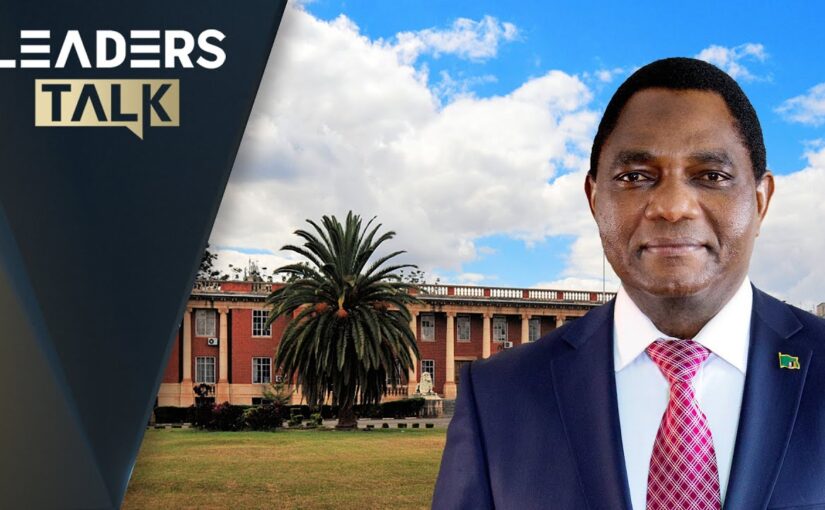
In this latest instalment of the CGTN series, Leaders Talk, Wang Guan interviews Palestinian President Mahmoud Abbas during his recent state visit to China. 

Abbas says that that the upgrading of relations between China and Palestine to that of a strategic partnership this time is of great significance. It is a good fortune to the Palestinian people that China always firmly stands on their side and provides assistance to them. Agreements reached during this visit include major projects in economy, agriculture, sister city programs, and so on. 

The Palestinian leader regards China’s brokering of reconciliation between Iran and Saudi Arabia, and the resulting steps to resolve other disputes, both long-standing and more recent, in the region, as a miracle, adding that all Arabs are pleased with China’s efforts. 

In response to his interviewer’s observation that the Palestinian issue is at the heart of Middle Eastern politics, but no progress has been made in its resolution due to the unbalanced US position, Abbas notes that Israel has discussed a ‘two-state solution’ but not enacted it. The US, he explains, acts as a roadblock, with little interest in solving the Palestinian issue. However, the United States also once refused to recognise Nelson Mandela and supported the racist policy of apartheid in South Africa, but they eventually capitulated and changed their stance. 

Asked for his impressions of Chinese leader Xi Jinping, Abbas described him as a dear friend, both to himself and to the Palestinian people – a man who keeps his promises and never resorts to empty talk. Palestine, he continued, stands with China on the Taiwan issue. “If any country opposes China, we will resolutely oppose them and firmly stand with China.”

At the age of 13, Abbas, together with his family, had to leave their home and become refugees in Syria at the time of the Palestinian Nakba in 1948. Abbas reflects: “Our land was seized by others and Palestinians were forced into displacement. Today we are still fighting to return to our homeland and establish an independent Palestinian state.” The Palestinian President, who has visited China a total of 13 times, five of them as state visits, says that one significant similarity between the Palestinian and Chinese peoples is their determination to tirelessly strive for their goals once they have resolved to do so.

The full interview with President Abbas is embedded below.

Blinken’s visit and Biden’s true colors: imperialist arrogance toward China

In this informative discussion on Breakthrough News, Brian Becker and Ken Hammond address the latest developments in US-China relations, in particular Antony Blinken’s visit to Beijing and Joe Biden’s labelling of Xi Jinping as a “dictator”.

The two note that there was some short-lived optimism following Blinken’s visit that there could genuinely be scope for improving US-China relations, which are currently at their lowest ebb in half a century. Blinken had a lengthy discussion with Chinese foreign minister Qin Gang, as well as meeting separately with President Xi and Wang Yi, China’s top diplomat. The Chinese Foreign Ministry reported that Wang Yi reiterated China’s baseline – and entirely reasonable – demands: “that the US stop playing up the so-called ‘China threat’, lift illegal unilateral sanctions against China, stop suppressing China’s scientific and technological advances, and not wantonly interfere in China’s internal affairs.” Blinken meanwhile asserted that the US is committed to “managing differences responsibly and cooperating in areas of common interests.”

However, Biden’s foolish comments about the so-called spy balloon incident, in which he referred to Xi Jinping as a “dictator”, almost immediately wiped out any goodwill resulting from the Blinken visit. Ken observes that Biden’s comment betrays the US administration’s profound hostility towards China, and its fear of China’s rise. This fear, combined with the continued need of US capitalism to engage economically with China, leads to erratic and confused statements and policies.

Brian points to certain parallels between the McCarthyism of the Cold War era and the New McCarthyism of the New Cold War, including a nasty, racist and deeply antidemocratic witch-hunt. He points out, however, that China’s integration into the global economy means that attacks on China also cause significant harm to the West. Furthermore, import restrictions on Chinese products such as solar panels lead to inflated prices for US consumers and are impeding meaningful climate action. As such, the New Cold War is damaging for ordinary people in the West.

Ken and Brian describe the US as being addicted to war, and observe that the propaganda war against China is part of a broader war drive. They call for a determined struggle against this propaganda war.

Professor Hammond’s new book, China’s Revolution and the Quest for a Socialist Future, is available on 1804 Books.

Lowkey contrasts US and Chinese policies on the Middle East

At an important webinar organized by the International Manifesto Group on The End of US Hegemonism in West Asia, British-Iraqi researcher, academic and musician Lowkey provided an extremely interesting comparison of US and Chinese policy in relation to the West Asian region.

Noting that the US war in Afghanistan has turned a quarter of Afghans into refugees and left over 70 percent of the remaining population in poverty, Lowkey pointed out that China is providing humanitarian assistance and major investment, including a proposed 10 billion dollar deal for access to lithium deposits.

The US-led war on Iraq has resulted in over a million deaths, and created cancer rates in Fallujah worse than those recorded in the aftermath of the bombing of Hiroshima. The US alliance dropped an average of 46 bombs a day for 20 years, displacing around 37 million people. Meanwhile China has signed a contract to build 8,000 schools in Iraq, and the Iraqi government is finding that China offers much fairer terms in relation to oil purchases.

Western sanctions on Iran have had a terrible impact on living standards, on employment levels, on the ability of the country’s health system to import medicines, and more. China, in contrast, has agreed to invest 400 billion dollars in Iran over 25 years. Furthermore, China’s diplomatic activity is helping Iran to undo some of the work the US has been doing for decades to isolate it. The rapprochement with Saudi Arabia, facilitated by China, brings about the possibility of peace in Yemen – the greatest humanitarian crisis of our time.

The Iran-Saudi rapprochement is an important boon for the Palestinian people, as is China’s increasing involvement in trying to bring about a lasting and fair solution to the Palestine question. Lowkey assessed that “China’s policies are directly having an effect on the ability of Palestinians to defend themselves from Israeli violence.”

The video of the speech is embedded below.

Reality in Xinjiang belies US propaganda

In the second article carried by the US newspaper Workers World regarding the recent visit by Workers World Party and International Action Center members to China as part of a delegation organised by the China/US Solidarity Network, Sara Flounders, who is also a member of our advisory group, reports on their visit to Xinjiang, where the group gathered footage for a forthcoming documentary that aims to show the reality of life in the autonomous region, which has been a major propaganda focus of the US-led new cold war on China.

Having visited the regional capital of Urumqi and the ancient city of Kashgar, as well as the countryside, small towns and villages, Sara writes: “Torrents of US media reports had told us to expect cities under martial law, military forces of occupation and heavily armed police on every corner…Coming from the New York City area, I expected a police force of at least equal size. The New York City police force is the world’s eighth-largest armed body. On our return, reports of ‘Stop and Frisk’ programs centered on Black and Brown youth dominated the media…

“What we saw in Xinjiang was vibrant cities…full of tens of thousands of tourists, along with the local population of many nationalities. Huge and colorful marketplaces and bazaars, almost all of them run by Uygur families, stretched for many blocks. Busy subway lines crossed the cities. Everywhere we saw food markets brimming with inexpensive produce. Restaurants,  cafés,  and street food stalls were packed with local people. In the evenings, the streets were full – not silent and ominous.”

Outlining the region’s social progress in health, education and other areas, Sara notes: “The illiteracy rate in Xinjiang has fallen to 2.66%, lower than the country’s impressive 2.85% national average. At the time of the 1949 Chinese Revolution, illiteracy was 80% throughout China and more than 90% in Tibet and Xinjiang. Today 97.51% of small children are in preschool programs. Some 98.82% of the youth are enrolled in senior high schools in Xinjiang.”

In Kashgar, she reports that the 15th century Idkah Mosque can house up to 20,000 worshippers. “It is only one of the numerous Islamic centers and mosques, which we saw while walking the city streets and in several villages. Tall, slender minarets and dome-shaped roofs seemed to be a part of every block.”

No wonder, therefore, that, in stark contrast to the harsh sanctions imposed by the US government: “No Arab or Muslim countries have joined in the US rewriting of history and its targeted attacks on China. This is because these countries know that the US government is responsible for 30 years of massively disruptive wars, sanctions, drone attacks and targeted assassinations in a series of Muslim countries, including Iraq, Iran, Lebanon, Libya, Syria, Sudan, Somalia and Afghanistan.”

Sara’s article is republished below.

U.S. propaganda is powerful. Responding to an increase in U.S. attacks on China, a delegation was organized by the China / U.S. Solidarity Network, which then visited China from May 11 to May 31.

One focus of the trip was a visit to Xinjiang (pronounced Shinjaang) province to gather video footage and interviews that give a more realistic picture of this vast and quickly modernizing, multiethnic region. Footage for the documentary, currently named “Voice of Xinjiang,” focuses on an area with 4,000 years of history, which is at the center of the ancient Silk Road that today is a major hub in China’s ambitious Belt and Road trade program.

The Xinjiang Uygur Autonomous Region (XUAR) is a vast arid, mountainous and high-desert region in China’s far northwest. Xinjiang has significant oil and mineral reserves and is currently China’s largest natural gas-producing region. The province — although the largest in geographic area, covering one-sixth of China’s total land mass — is sparsely populated, having only 2% of China’s 1.4 billion population. Of Xinjiang’s population of 25 million, 60% belong to 13 ethnic minorities.

Continue reading Reality in Xinjiang belies US propaganda

The Western left must reject anti-China propaganda and join the progressive global trend

What follows is the text of a speech given by veteran British peace activist and China specialist Jenny Clegg at the launch event in London for Carlos Martinez’s book The East is Still Red: Chinese socialism in the 21st century.

Summarising the key points of the book, Jenny highlights in particular the escalating New Cold War and anti-China rhetoric in the West. “China is being presented as an existential threat to the Western way of life so as to prepare a climate for war.”

Beyond the obvious dangers of preparing a climate for war, Jenny points out that the incessant lies and misinformation about China also serve to cut progressive movements in the West off from a rising multipolarity, thereby leaving them “isolated from potential alternatives, trapped in the cul-de-sac of racist myths of the indispensable West.” And further: “The Western Left risks getting left behind as the multipolar trend begins to shift US hegemonism and imperialism to the margins.”

Jenny concludes by recommending the book as a weapon against the New Cold War; a “tool for activists to get ready to grasp the great changes that are unfolding.”

The East is Still Red – Chinese socialism in the 21st century can be purchased in paperback or digital editions from Praxis Press.

Back in 2017, following Trump’s election, Xi Jinping made a landmark observation that ‘the world is in the midst of great changes unseen in a century’.

At that time, there were only a handful of us on the Left here in Britain seriously following China – connecting now and then to a few other individuals in Europe, in North America.

As Trump went on to unleash his trade and technology wars, disrupting 40 relatively tranquil years of US-China engagement, we found ourselves deluged in hostility, struggling to stay sane in an environment awash with crazy lies and disinformation – about the Hong Kong ‘democracy’ movement, the Uighurs, the so-called ‘Wuhan virus’ – unleashing Sinophobia.  Distinct among racisms, this gives the ‘threatening hordes’ a leader, imagining behind every Chinese lurks a demonic Fu Manchu.  We began to network.

Then came Pompeo’s speech at the Nixon Centre in July 2020 – “Securing our freedoms from the Chinese Communist Party is the mission of our time” he declared.  Our networks sprang into action – first No Cold War, then the International Manifesto Group, initiated by Radhika Desai (whose book on Coronavirus, Capitalism and War we launched here just over a month ago), and also Friends of Socialist China. 

Continue reading The Western left must reject anti-China propaganda and join the progressive global trend

CPC deepens ties with Central and Eastern European Marxist parties

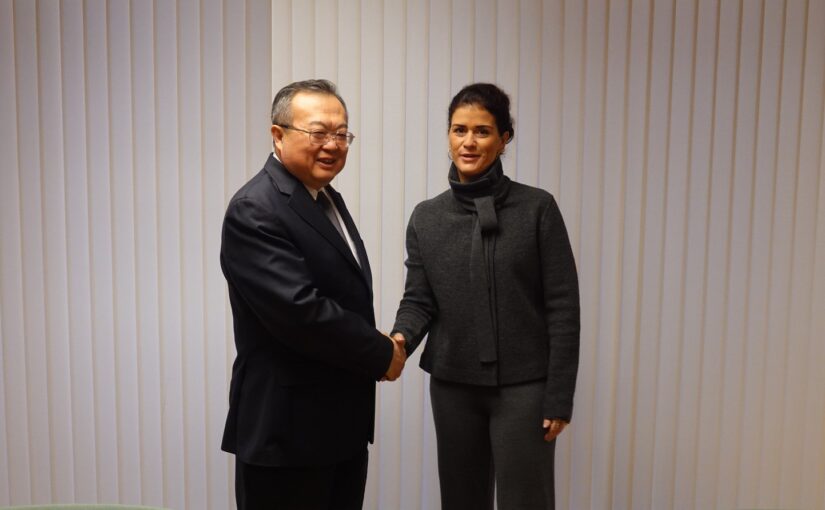
On June 2, the delegation met with Liu Jianchao, Minister of the Communist Party of China’s International Department (IDCPC). Liu told the visitors that the CPC and the communist parties and left-wing parties from Central and Eastern European countries visiting China this time are all Marxist parties. Both sides should strengthen theoretical discussions and jointly tell the stories of Marxism in the 21st century and the communist parties in our respective countries. And both sides should deepen exchanges and mutual learning in the concept and experiences of party building and state governance, better assist each other in advancing the adaptation of Marxism to the local context and the needs of our times, and explore development paths for socialism. Both sides should also strengthen solidarity and cooperation on multilateral platforms, safeguard common interests, and push relations between China and Central and Eastern European countries as well as China-Europe relations more generally.

Leaders of the various parties said that their visit to China had allowed them to witness the tremendous achievements China has made in the economic, social, and cultural fields, fully demonstrating the superiority of the socialist system and indicating that socialism is not only viable but also represents the future of the world. China’s achievements have provided confidence and inspiration for other countries around the world, and more and more countries hope to strengthen cooperation with China, while more and more political parties hope to enhance exchanges and mutual learning with the CPC on state governance and administration.

The following article was originally carried on the website of the IDCPC.

Liu Jianchao, Minister of the International Department of the CPC Central Committee, met here today with a delegation of political parties from Central and Eastern European countries led by Katerina Konecna, Chairwoman of the Communist Party of Bohemia and Moravia and Member of the European Parliament from the Czech Republic.

Liu said, China and Central and Eastern European countries have a long-standing traditional friendship, and bilateral cooperation has maintained good development momentum in recent years. Inter-party exchanges are an important support for the development of state-to-state relations. The CPC and the communist parties and left-wing parties from Central and Eastern European countries visiting China this time are all Marxist parties. Both sides should strengthen theoretical discussions and jointly tell the stories of Marxism in the 21st century and the communist parties in our respective countries. Both sides should deepen exchanges and mutual learning in the concept and experiences on party building and state governance, better assist each other in advancing the adaption of Marxism to the local context and the needs of our times, and explore development paths for socialism. Both sides should also strengthen solidarity and cooperation on multilateral platforms, safeguard common interests, and push relations between China and Central and Eastern European countries as well as China-Europe relations for further development.

Continue reading CPC deepens ties with Central and Eastern European Marxist parties

On economic coercion: Imperialist hypocrisy reigns supreme

In this article for the Morning Star, Andrew Murray takes issue with the G7’s accusations against China over ‘economic coercion’. Andrew points out that this obscenely hypocritical accusation is just the latest excuse for China-bashing. “With Hong Kong now quiet, the Covid pandemic abating and the Dalai Lama asking young followers to suck his tongue, the world’s great capitalist powers have instead united around challenging China’s economic relations with the rest of the world.”

The article details the extensive economic coercion practised by the US, including sanctions on Afghanistan, Belarus, China, Cuba, Eritrea, Russia, Sudan, Syria, Iran, Libya, Myanmar, North Korea, Nicaragua, Venezuela, Yemen, Zimbabwe and Palestine – almost none with UN backing. “The US really loves its sanctions.” Aside from which, the US’s financial domination is built precisely on coercion, in the form of forced austerity, privatisation and deregulation.

China, meanwhile, “has been lending money to countries across the global South to help power their development and give them an option beyond dependence on London and Washington.” Certainly it’s true that China benefits from its loans and investments, but with the all-important difference that “there is no Chinese McDonnell Douglas lurking in the small print of their deals. Beijing is not going to invade or bomb anyone, nor subvert a sovereign government.”

Andrew concludes that the G7’s China-bashing is simply a manifestation of the US and its allies refusal to accept that the days of their “rules-based world order” (ie hegemony) are numbered: “The G7 attacks on China are the sound of the departing masters of the universe raging against the passing of their power.”

A brand new spectre is haunting the head honchos of the world economy — it is “economic coercion.”

Who is doing the coercing? The People’s Republic of China of course.

Having decided to convene, wildly inappropriately, in Hiroshima last month, it was perhaps inevitable that the leaders of the G7 states would devote some time to stoking up international conflict.

Today, that means above all finding fresh reasons to confront China. With Hong Kong now quiet, the Covid pandemic abating and the Dalai Lama asking young followers to suck his tongue, the world’s great capitalist powers have instead united around challenging China’s economic relations with the rest of the world.

Now to accuse imperialists of hypocrisy is akin to accusing the Pope of believing in the resurrection or Keir Starmer of believing in nothing much at all. It is not just a statement of the obvious, it is a key part of the job specification.

Continue reading On economic coercion: Imperialist hypocrisy reigns supreme

Closer ties with NATO would be a strategic blunder for India

In the following article, which was originally published in the Morning Star, Keith Lamb argues that Washington’s flattery of India and its encouragement of stronger ties with NATO, citing an alleged “Chinese threat”, is a trap into which New Delhi should not fall. The border dispute between India and China, he notes, is a legacy of British colonial aggression and India’s future lies in greater cooperation with China and the Global South generally. India’s support for the struggle of Mauritius to reclaim the Chagos Archipelago, a territory in the Indian Ocean which remains under illegal British colonial control and is home to a massive US military base, is cited by Keith as an example of how India grasps this imperative on some level. India’s interests, he argues would be well served by further consolidation of the BRICS grouping and greater promotion of regional energy integration and supply chains, not least the long-mooted Turkmenistan-Afghanistan-Pakistan-India (TAPI) natural gas pipeline.

After a recommendation by the congressional committee on strategic competition with China, the US claims that India “is one of Washington’s closest allies.” As such, it is now courting India to join Nato to counter Chinese “aggression.”

India must not fall to Washington’s flattery and the trumped-up China threat. Strategically and economically, India’s future lies with greater co-operation with China and the global South, not Nato, which opposes development.

In terms of Chinese “aggression,” the US hypes up the border dispute. This dispute is a remnant of British colonialism annexing Chinese territory.

China’s claims are rational, not expansionist — they exist due to British hegemonic attempts to swallow up both China and India.

Importantly, this dispute is managed unprecedentedly well. The line of actual control is patrolled by non-gun-carrying troops. This peaceful status quo would be ruined by US-led Nato machinations, which continue, under a different guise, the hegemonic project of the British empire.

Colonialism hasn’t finished — it is alive under US leadership which has a greater global military presence than under the British empire. It seeks, through its hard power, to divide the global South and bring it to heel — strategically this is what India’s invitation to Nato represents.

On one level, India understands this, which is why India backs Mauritius’s claim on the British-controlled Chagos Archipelago in the Indian Ocean, which hosts a US military base capable of threatening the Indian subcontinent.

The US talks about developing India and using India as the new “world factory,” but due to hegemonic strategic concerns, a country the size of India will never be allowed to develop to a comparable standard to that of the US

Hegemonism doesn’t seek development — it seeks to exploit and it seeks unipolarity. Those who try to break out of the net of economic domination will be countered.

China is the perfect example of this. It co-operated with the US, but due to its huge size, even a modest standard of development is seen as a threat to unipolarity.

India, if successful, would encounter the same problem — though if it loses its independence to the cancer of Nato perhaps it will never develop beyond being a low-end factory.

Anyone who doubts the resolve of the US and its power to silently smother its Nato “allies” needs to revisit the Nord Stream pipeline bombing allegations.

Europe is now cut away from Eurasia and is more reliant than ever on transatlantic shipping for its trade and energy.

India, though artificially disconnected from Eurasia, due to politics and connectivity, unlike the Nato-led Europe, still has the independence to overcome these issues.

Political co-operation can be achieved through the Brics coalition, which is currently expanding based on the principle of win-win global South development, rather than Nato’s principle of preventing the rise of the global South.

Continue reading Closer ties with NATO would be a strategic blunder for India