China-Latin American/Caribbean cooperation has broad prospects

Chinese Foreign Minister Wang Yi held a number of meetings with his counterparts immediately before and after the Fourth Ministerial Meeting of the China-CELAC [Community of Latin American and Caribbean States] Forum.

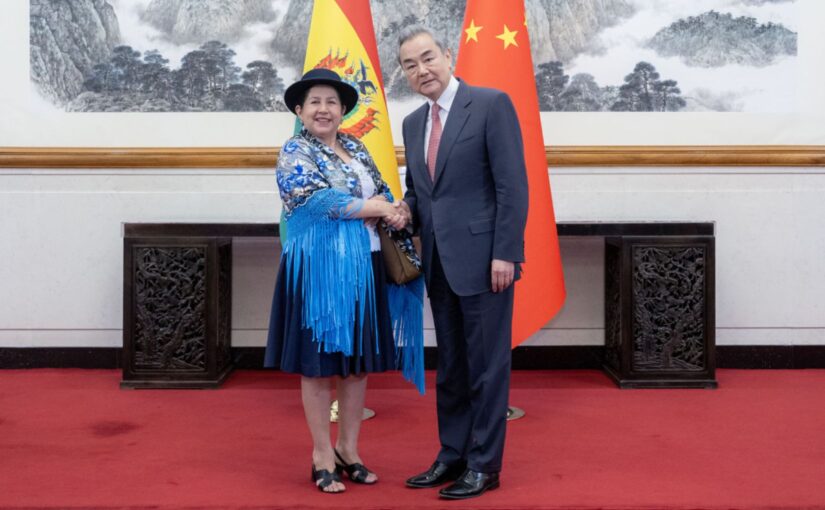
On May 12, he met with his counterparts from Caribbean countries having diplomatic relations with China, and from Cuba, Venezuela, Nicaragua, Brazil, Colombia, Guyana and Peru.

During a group meeting with the foreign ministers and representatives of the Caribbean countries having diplomatic relations with China, including Antigua and Barbuda, the Bahamas, Barbados, Dominica, Grenada, Guyana, Jamaica, Suriname, and Trinidad and Tobago, Wang Yi said that this year marks the 10th anniversary of the establishment of the China-CELAC Forum, which is of great significance in building on past achievements and opening up new prospects. Over the past decade, the China-Caribbean comprehensive cooperative partnership has entered a fast track, yielding remarkable outcomes across various fields. Leaders of all Caribbean countries having diplomatic relations with China have made visits to China, and eight Caribbean nations have joined the big family of the Belt and Road Initiative. A large number of key cooperation projects between China and the Caribbean have been put into use or are well underway. Six Caribbean countries have signed comprehensive mutual visa exemption agreements with China. People-to-people and cultural exchanges between both sides have grown increasingly active. All Caribbean countries having diplomatic relations with China have established Confucius Institutes or Confucius Classrooms, and the number of sister-city partnerships continues to grow. During the pandemic, the two sides stood together through thick and thin, writing a new chapter in China-Caribbean friendship.

He stated that Caribbean countries are an indispensable part of the China-CELAC Forum, and China-Caribbean cooperation has broad prospects. Looking ahead, both sides should work together to deepen and strengthen the China-Caribbean comprehensive cooperative partnership. It is important to deepen political mutual trust and continue mutual support on issues concerning each other’s core interests. Both sides should step up practical cooperation and advance high-quality Belt and Road cooperation to help Caribbean countries accelerate self-driven development. The two sides should enhance people-to-people and cultural exchanges, strengthen cooperation in education, culture, news, sports and other fields, and bring people’s hearts closer. China will offer more government scholarships and training opportunities. China will also continue to assist Caribbean countries in addressing climate change and support Caribbean countries in seeking strength through unity and playing a greater role in international affairs.

Foreign ministers and representatives of Caribbean countries expressed the view that the Caribbean nations and China show mutual trust and mutual respect. They expressed gratitude to China for its long-standing and strong support in key areas such as infrastructure, green development, post-disaster reconstruction, agriculture, healthcare, and education in Caribbean countries. This has helped Caribbean countries improve people’s well-being, enhance economic resilience and accelerate sustainable development, and set an example for South-South cooperation. The one-China principle remains the cornerstone of relations between the Caribbean and China, and Caribbean countries will continue to firmly uphold it.

Continue reading China-Latin American/Caribbean cooperation has broad prospects

Xi Jinping meets with presidents of Colombia and Chile

Chinese President Xi Jinping met separately with Colombian President Gustavo Petro and Chilean President Gabriel Boric on the morning of May 14. Both leaders were in China to attend the Fourth Ministerial Meeting of the China-CELAC [Community of Latin American and Caribbean States] Forum.

During his visit President Petro announced that Colombia would formally join the Belt and Road Initiative (BRI). In their meeting, President Xi said that this year marks the 45th anniversary of the establishment of diplomatic relations between China and Colombia. Standing at a new historical starting point, China is ready to work with Colombia to promote greater development of the strategic partnership between the two countries and bring more benefits to the people of both countries. The two sides should take Colombia officially joining the big family of high-quality Belt and Road cooperation as an opportunity to promote the quality improvement and upgrade of cooperation between the two countries. China is ready to import more high-quality products from Colombia, support Chinese enterprises in investing and doing business in Colombia, and participate in infrastructure development. The two sides can further expand cooperation in emerging fields such as wind energy, new energy vehicles, the digital economy and artificial intelligence, and jointly achieve green and low-carbon transformation.

The Chinese leader stressed that China-LAC [Latin America and the Caribbean] cooperation is an important part of South-South cooperation. It conforms to the general trend of world development and historical trends and is in line with the common interests of China and LAC countries. The Fourth Ministerial Meeting of the China-CELAC Forum sent a positive signal to the world of seeking common development and revitalisation. As the rotating president CELAC, Colombia has made significant contributions to the successful holding of the meeting.

Gustavo Petro said, the friendly relations between Colombia and China have a long history. The two sides should deepen political mutual trust, enhance mutual support, advance Belt and Road cooperation, expand cooperation in areas such as trade, infrastructure, new energy and artificial intelligence, and improve people’s livelihood. Amid the current complex and volatile international landscape, the self-serving practices of certain countries are not beneficial to the world. All countries should unite to respond. Colombia is willing to cooperate closely with China to safeguard international fairness and justice and protect the common interests of developing countries.

Petro also met with Wang Huning, Chairman of the National Committee of the Chinese People’s Political Consultative Conference (CPPCC).

Meeting Chilean President Boric, Xi Jinping pointed out that this year marks the 55th anniversary of the establishment of diplomatic relations between China and Chile. Fifty-five years ago, the visionary elder leaders of both countries broke through the shadow of the Cold War and pioneered the establishment of diplomatic relations between the People’s Republic of China and South American countries. [Xi Jinping refers here to Salvador Allende, Mao Zedong and Zhou Enlai. Chile established diplomatic relations with China on December 15, 1970, the first country on the South American mainland to do so, just over three months after Allende led his Popular Unity coalition to victory and assumed office.]

Continue reading Xi Jinping meets with presidents of Colombia and Chile

China and Brazil work together to uphold multipolarity and oppose hegemony

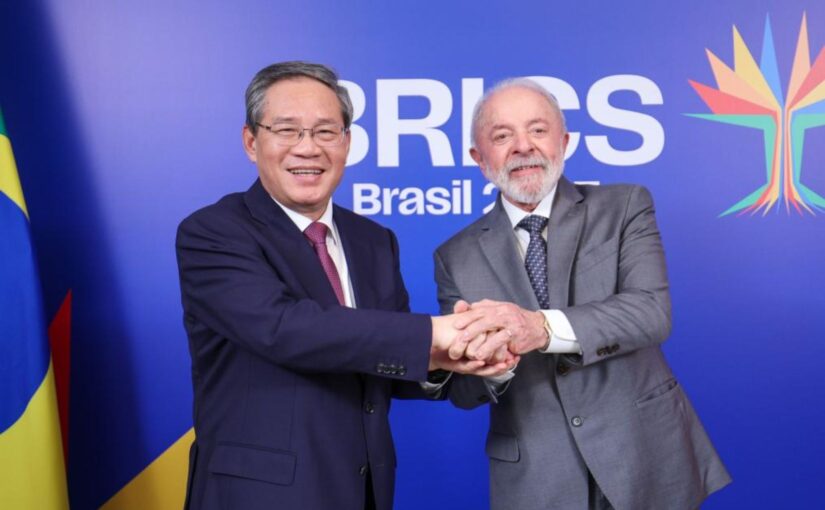
In addition to attending the opening ceremony of the Fourth Ministerial Meeting of the China-CELAC [Community of Latin American and Caribbean States], Brazilian President Luiz Inácio Lula da Silva paid a state visit to China. On the afternoon of May 13, he held talks with President Xi Jinping and other senior Chinese leaders.

Xi Jinping noted that on the occasion of the 50th anniversary of the establishment of diplomatic relations between China and Brazil last year, the two sides jointly announced the elevation of their bilateral relationship to a China-Brazil community with a shared future for a more just world and a more sustainable planet. This strategic decision has drawn a grand blueprint for the next “golden 50 years” of China-Brazil relations. Amid the changing and turbulent international landscape, China and Brazil should remain committed to the original aspiration of contributing to human progress and global development, deepen the building of a China-Brazil community with a shared future, continuously seek greater synergy between development strategies, and work together to promote greater solidarity and coordination among Global South countries.

The two sides should deepen the effective synergy between the Belt and Road Initiative and Brazil’s development strategies, give full play to the role of various cooperation mechanisms between the two countries, strengthen cooperation in traditional areas such as infrastructure, agriculture and energy, and expand new frontiers of cooperation in energy transition, aerospace, the digital economy and artificial intelligence, so as to create more highlights in practical cooperation between the two countries.

Taking the opportunity of the China-Brazil Years of Culture to be held next year, the two sides should enhance cooperation in culture, education, tourism, media, and at the sub-national level, and provide more convenience for people-to-people exchanges between the two countries. And they should maintain multilateral cooperation to enrich the China-Brazil community with a shared future. As two major developing countries in the eastern and western hemispheres, China and Brazil should enhance coordination and collaboration within multilateral mechanisms such as the United Nations, BRICS, and the China-CELAC Forum, jointly uphold multilateralism, improve global governance, and safeguard the international economic and trade order. The two sides should take a clear-cut stand against unilateralism, protectionism, and bullying acts.

President Lula said, Brazil and China uphold mutual respect and share a common future. The bilateral relationship remains solid and unbreakable and brooks no disruption or undermining by any external factors. Unlike other major countries, China has consistently offered sincere support and assistance to Latin American countries, including Brazil, in their pursuit of economic and social development. Brazil is willing to deepen strategic cooperation with China, advance the building of a Brazil-China community with a shared future, work together to build a more just, peaceful and prosperous world, and set an example for other countries. Brazil is ready to synergise its development strategies with the Belt and Road Initiative and deepen cooperation with China in such areas as economy and trade, infrastructure, aerospace, and finance. Brazil seeks to expand youth and cultural exchanges to enhance interactions and friendship between the two peoples. China’s achievements in poverty alleviation are admirable, and Brazil is willing to learn from China’s experience to lift more people out of poverty and hunger. Under the current circumstances, it is essential to firmly defend multilateralism. Protectionism and the abuse of tariffs will not bring development and prosperity but only lead to chaos. China’s firm stance in addressing global challenges gives strength and confidence to all countries. Brazil is willing to strengthen strategic coordination with China in international affairs, jointly safeguard the common interests of the Global South, and uphold international fairness and justice.

The two heads of state also had an exchange of views on the Ukraine crisis, agreeing that as peace-loving forces for progress, China and Brazil should strengthen communication and coordination, give play to the role of the Group of Friends for Peace, support Russia and Ukraine in initiating direct dialogue, and work with other Global South countries to continue playing a constructive role in resolving the crisis.

After the talks, the two heads of state jointly witnessed the signing of 20 cooperation documents covering areas such as the synergy of development strategies, science and technology, agriculture, the digital economy, finance, inspection and quarantine, and media.

The two sides issued the Joint Statement between the People’s Republic of China and the Federative Republic of Brazil on Strengthening the Building of a China-Brazil Community with a Shared Future for a More Just World and a More Sustainable Planet and on Jointly Upholding Multilateralism, as well as the China-Brazil Joint Statement on the Ukraine Crisis.

In their meeting, Chinese Premier Li Qiang stated that since the establishment of diplomatic relations between China and Brazil over 50 years ago, the two countries have always respected and supported each other, becoming good friends and partners who share weal and woe and pursue common development. Currently, under the strategic guidance of the two heads of state, China-Brazil relations have entered a golden period of growth. China is ready to work with Brazil to maintain high-level exchanges, deepen political mutual trust, constantly expand the strategic dimension of bilateral relations, comprehensively intensify mutually beneficial cooperation between the two sides, and move forward side by side and achieve mutual success on the path to modernisation.

Continue reading China and Brazil work together to uphold multipolarity and oppose hegemony

Lula: Latin America, the Caribbean and China show it is possible to fight climate change without sacrificing growth and justice

The Fourth Ministerial Meeting of the China-CELAC [Community of Latin American and Caribbean States] Forum, which was held in Beijing on May 13, 2025, saw Chinese President Xi Jinping joined by  Colombian President and current CELAC president Gustavo Petro, Brazilian President Luiz Inácio Lula da Silva, Chilean President Gabriel Boric, and President of the New Development Bank and former Brazilian President Dilma Rousseff in addressing the opening ceremony.

In his speech, President Lula da Silva said: “Over the past decade, ties between Latin America and the Caribbean and China have grown stronger. China is now CELAC’s second-largest trading partner and one of the region’s most important sources of foreign direct investment. Funds from Chinese financial institutions surpass the loans offered by the World Bank or the Inter-American Development Bank. Partnership with China has become a dynamic force in the regional economy.”

He added: “Chinese demand was one of the driving forces behind the growth we experienced at the beginning of the century. We made significant advances in reducing poverty and inequality. It was during this time that we finally looked around us and united to create UNASUR [Union of South American Nations] and CELAC.

 “During the COVID-19 pandemic, Chinese vaccines and medical supplies helped us protect our populations. Only through greater coordination among ourselves can we fully harness the potential of Sino–Latin American and Caribbean cooperation.

“This is especially evident in infrastructure. Chinese support is decisive for moving forward with highways, railways, ports, and transmission lines. But the economic viability of these projects depends on our ability to coordinate as a region and give these initiatives regional scale.”

He noted that, “For centuries, resources extracted from Latin America and the Caribbean enriched other parts of the world. We now have a chance to do things differently”, and particularly emphasised: “Latin America, the Caribbean, and China can show the world that it is possible to fight climate change without sacrificing economic growth and social justice. COP30, to be held in Belém, in the state of Pará, at the heart of the Amazon, aspires to be a turning point in the implementation of climate commitments and in building trust in collective solutions.”

In concluding, he said that he wanted to, “issue a call to all comrades of Latin America: There is no way out for any country on its own. We have 500 years of history that prove this. Either we unite among ourselves and seek partners willing to build a shared world with us, or Latin America will remain a region synonymous with poverty in today’s world.”

In his address, Colombian President Gustavo Petro called for a rethinking of humanity’s path through a new international cooperation paradigm that transcends the nation-state model and embraces a “dialogue of civilisations” as a political, historical and anthropological foundation for the global future.

He noted that: “A dialogue among civilisations cannot be imposed. It is a guiding principle for the relationship between CELAC and China. It is a possibility that China wants, and we want as well.” Challenging the ‘Clash of Civilisations’ theory propounded by the late US political scientist Samuel Huntington, the Colombian president instead advocated for an integrative vision as promoted by China – one in which cultural differences are not sources of conflict, but of collective human development as a political subject.

“How could there be fruitful dialogue if we don’t talk about clean energy, for example? If we don’t talk about decarbonisation? If we don’t speak as equals about how to achieve, through support for decarbonisation in North America, the possibility of prosperity in the South, and therefore, the possibility of mutual cooperation?

Continue reading Lula: Latin America, the Caribbean and China show it is possible to fight climate change without sacrificing growth and justice

China and LAC countries bound by a shared commitment to justice and a common pursuit of modernisation

On May 13, 2025, the Fourth Ministerial Meeting of the China-CELAC [Community of Latin American and Caribbean States] Forum was held in Beijing, presided over by Chinese Foreign Minister Wang Yi and attended by foreign ministers and representatives of CELAC member states as well as heads of regional organisations.

President Xi Jinping attended the opening ceremony and delivered a keynote address.

In the subsequent ministerial meeting, Wang Yi said that this year marks the tenth anniversary of the official launch of the China-CELAC Forum. Ten years ago, President Xi Jinping and Leaders of Latin American and Caribbean (LAC) countries jointly announced the establishment of the China-CELAC Forum and advocated for building a China-LAC community with a shared future. After a decade of dedicated efforts, the Forum has developed into a mature mechanism and an important platform for equal dialogue and mutually beneficial cooperation between China and LAC countries, adding new dimensions to the China-LAC comprehensive cooperative partnership and injecting fresh momentum into the building of a China-LAC community with a shared future.

He added that China and LAC countries are separated by a vast ocean. What binds the two sides together? Not a geopolitical chessboard, nor a game of big power rivalry, but a shared commitment to fairness and justice and a common pursuit of modernisation. China-LAC cooperation rejects bloc confrontation and advocates for openness and win-win results. It has set a new example for building a new type of international relations and injected new impetus into cooperation among the Global South. History and reality have shown that in the face of unilateralism and hegemony, compromise and appeasement offer no way out, and only by standing united can respect be earned. As developing countries and members of the Global South, China and LAC countries should work together to safeguard their legitimate rights and interests.

The meeting adopted the Beijing Declaration of the Fourth Ministerial Meeting of the China-CELAC Forum and the China-CELAC Joint Action Plan for Cooperation in Key Areas (2025-2027).

Just prior to the meeting, Wang Yi released an article, entitled ‘Planning Together for Development and Revitalisation, Building Together a China-LAC Community with a Shared Future’.

He wrote that in the 10 years since the forum was established, Panama, the Dominican Republic, El Salvador, Nicaragua and Honduras established or resumed diplomatic relations with China. The one-China principle has increasingly become the consensus of regional countries. To date, China has established different types of partnerships with 16 countries in the region, including the China-Cuba community with a shared future and the China-Brazil community with a shared future for a more just world and a more sustainable planet.

The Global Development Initiative has gained wide support of regional countries, and more than 20 countries have synergised development strategies with China under the Belt and Road cooperation framework. The trade volume between China and LAC countries doubled in the past decade, reaching a historic milestone of US$518.4 billion in 2024.

More than 200 infrastructure projects and multiple industrial capacity cooperation projects built by China have generated more than one million jobs for local people.

China has so far provided LAC countries with 17,000 government scholarships and around 13,000 training opportunities in China, signed 26 cooperation documents on education with 19 regional countries, and opened 68 Confucius Institutes or Classrooms in 26 regional countries.

China-LAC cooperation is a natural choice in line with the prevailing trend of the world. The collective rise of the Global South is a distinctive hallmark of the great transformation in the world. China and LAC countries are important members of the Global South. Increased cooperation between the two sides sends a strong message of the Global South seeking strength through unity and aligns with the dominant trend toward a multipolar world. This not only injects new substance into China-LAC relations but also makes new contributions to a more fair and equitable international order.

China-LAC cooperation is a natural choice to pursue a shared future. China and LAC countries have supported each other in their respective struggles against imperialism and colonialism and in our fight for national liberation. They have also supported each other in exploring development paths befitting their respective national conditions. Deeper cooperation between them has created growth drivers for both sides. During the COVID-19 pandemic, China and LAC countries went all-out supporting each other. History and reality have consistently demonstrated that building a China-LAC community with a shared future is a common endeavour of the willing that is underpinned by concrete actions.

Continue reading China and LAC countries bound by a shared commitment to justice and a common pursuit of modernisation

Xi Jinping: Writing a new chapter in building a China-LAC Community with a Shared Future

The Fourth Ministerial Meeting of the China-CELAC [Community of Latin American and Caribbean States] Forum was held in Beijing on May 13, 2025.

Of the 33 member states of CELAC, 28 attended, along with six regional organisations. Besides the 26 countries in the region with diplomatic relations with China, two of those still maintaining so-called ‘diplomatic relations’ with the Taiwan authorities, namely Saint Lucia and Haiti, also attended.

Reporting on the message of greetings sent by President Xi Jinping to the ninth summit meeting of CELAC Heads of State and Government, held in the Honduran capital Tegucigalpa on April 9, we drew attention to the significance of his clear statement that all member states would be welcome to attend the Beijing meeting.

Xi Jinping attended the opening ceremony of the Beijing meeting and delivered a keynote address.

He noted that: “Although China and the LAC [Latin America and Caribbean] region are geographically distant, the bonds of our friendship stretch back through centuries… From the 1960s onward, as New China established diplomatic ties with some LAC countries, exchanges and cooperation between the two sides became closer and closer. Since the turn of the century and in particular in recent years, China and LAC countries have ushered in a historic era of building a shared future.”

He went on to say that: “We stand shoulder to shoulder and support each other… In the 1960s, mass rallies and demonstrations took place across China in support of the Panamanian people’s rightful claim to sovereignty over the Panama Canal. In the 1970s, during the Latin American campaign for 200-nautical-mile maritime rights, China voiced its resolute and unequivocal support for the legitimate demands of developing countries. For 32 consecutive times since 1992, China has consistently voted for the United Nations General Assembly resolutions calling for an end to the US embargo against Cuba.

“We unite in tough times to conquer challenges through mutual support. China and LAC countries have collaborated on disaster prevention, mitigation and relief and on joint response to hurricanes, earthquakes and other natural disasters. Since 1993, China has dispatched 38 medical teams to the Caribbean. When the pandemic of the century struck, China was among the first to offer assistance to LAC countries, providing over 300 million doses of vaccines and nearly 40 million units of medical supplies and equipment, and sending multiple teams of medical experts. All this helped protect the lives of hundreds of millions across the region.

“We uphold solidarity and coordination and rise to global challenges with resolve. Together, China and LAC countries champion true multilateralism, uphold international fairness and justice, advance global governance reform, and promote multipolarisation of the world and greater democracy in international relations. We have worked together to address global challenges like climate change, and advance progress in global biodiversity governance. China and Brazil jointly issued a six-point common understanding on the political settlement of the Ukraine crisis, which has been endorsed by more than 110 countries, contributing our wisdom and strength to resolving international hotspot issues.”

Regarding the current situation, Xi said: “The century-defining transformation is accelerating across the globe, with multiple risks compounding one another. Such developments make unity and cooperation among nations indispensable for safeguarding global peace and stability and for promoting global development and prosperity. There are no winners in tariff wars or trade wars. Bullying or hegemonism only leads to self-isolation. China and LAC countries are important members of the Global South. Independence and autonomy are our glorious tradition. Development and revitalisation are our inherent right. And fairness and justice are our common pursuit. In the face of seething undercurrents of geopolitical and bloc confrontation and the surging tide of unilateralism and protectionism, China stands ready to join hands with our LAC partners to launch five programs that advance our shared development and revitalisation and contribute to a China-LAC community with a shared future.”

Continue reading Xi Jinping: Writing a new chapter in building a China-LAC Community with a Shared Future

Xi Jinping meets with leaders of Cuba, Venezuela, Slovakia, Serbia, Myanmar and Vietnam in Moscow

On May 9, during his state visit to Russia and participation in the commemoration of the 80th anniversary of the victory of the Soviet Union in the Great Patriotic War, Chinese President Xi Jinping held bilateral meetings with a number of his counterparts.

Meeting with President of Cuba Miguel Díaz-Canel Bermúdez, Xi Jinping pointed out that in recent years, he has held multiple meetings with Comrade President Miguel Díaz-Canel Bermúdez and jointly led China-Cuba relations into a new stage featuring deeper political mutual trust, closer strategic coordination and stronger public support. This year marks the 65th anniversary of the establishment of diplomatic relations between China and Cuba. China is ready to work with Cuba to further strengthen their ironclad friendship, build a closer China-Cuba community with a shared future, and set an example of solidarity and cooperation between socialist countries and sincere interaction between developing countries. China firmly supports Cuba in upholding its national sovereignty, opposing external interference and blockade, and advancing its economic and social development. As important members of the Global South, the two sides should strengthen coordination and cooperation within such frameworks as BRICS and the China-CELAC [Community of Caribbean and Latin American States] Forum, jointly oppose power politics, unilateralism and bullying, and uphold international fairness and justice.

Miguel Díaz-Canel Bermúdez said that Cuba and China are close friends and brothers. Cuba appreciates China’s long-standing and strong support for Cuba’s economic and social development. Cuba firmly adheres to the one-China principle and is willing to strengthen mutually beneficial cooperation with China, enhance people-to-people friendly exchanges, strengthen coordination and collaboration in international and regional affairs, and advance the building of a community with a shared future, so as to promote greater development of bilateral relations.

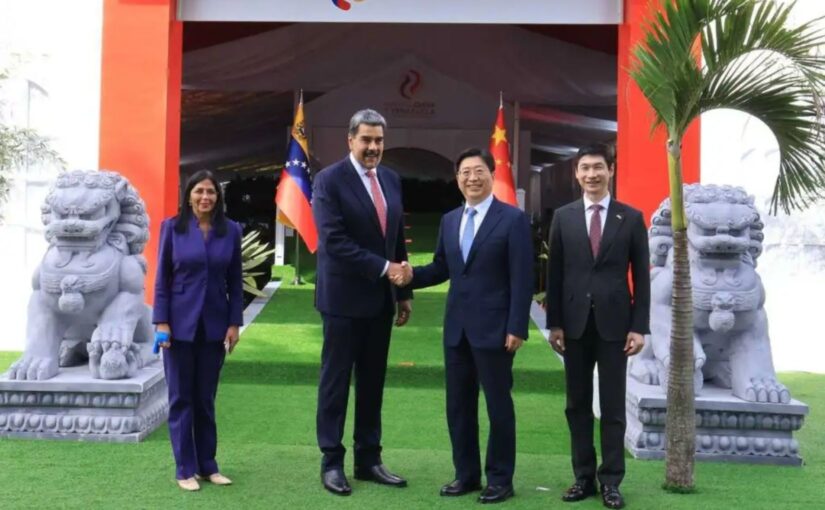
Meeting with Venezuelan President Nicolás Maduro Moros, Xi Jinping said, China and Venezuela are good partners of mutual trust and common development. The two sides have forged an ironclad friendship amid the evolving international landscape. Since the two countries elevated bilateral relations to an all-weather strategic partnership in 2023, exchanges across various fields and at all levels have been vigorous, with continuous growth in bilateral trade and new progress in investment cooperation and people-to-people exchanges. The China-Venezuela friendship has become more deeply rooted in the hearts of the people. China has always viewed and developed relations with Venezuela from a strategic and long-term perspective. It will, as always, firmly support Venezuela in safeguarding state sovereignty, national dignity and social stability. China is ready to work with Venezuela to enhance the exchange of governance experiences, continue to deepen practical cooperation in various areas and take bilateral relations to new heights, so as to deliver more benefits to the two peoples.

Nicolás Maduro Moros said, China is a great friend of Venezuela, expressing his gratitude for China’s longstanding and selfless support in safeguarding Venezuela’s national sovereignty and advancing its economic and social development. Venezuela is looking forward to strengthening its all-weather strategic partnership with China and deepening cooperation in trade, energy, agriculture, science and technology, education and other fields for more tangible results, so as to deliver more benefits to the two peoples.

Meeting with Prime Minister of Slovakia Robert Fico, Xi Jinping noted that promoting the all-round, in-depth, and high-level development of China-Slovakia relations serves the fundamental interests of both peoples and accords with the historical trend of openness, cooperation, and mutual benefit. Xi Jinping said that the important common understandings they reached during Robert Fico’s visit to China last November are being actively implemented, and the China-Slovakia strategic partnership has moved into a “fast lane”. Both sides should continue to deepen traditional friendship, expand exchanges and cooperation in various fields, pursue high-quality Belt and Road cooperation, and promote the steady and sustained development of China-Slovakia relations and China-Europe relations. China welcomes Slovakia’s participation as the guest of honor at the 4th China-CEEC [Central and East European Countries] Expo, which will help boost exports of high-quality Slovak products to China.

Robert Fico said that deepening the Slovakia-China strategic partnership is among the top priorities of Slovakia’s foreign policy. Noting that a sound and stable EU-China relationship serves the common interests of both sides, he added that Slovakia is committed to promoting the development of EU-China relations. Slovakia supports major initiatives proposed by China, such as building a community with a shared future for mankind and appreciates China’s positions on and constructive role in issues related to Ukraine and the Middle East. The Slovak side is willing to join hands with China to uphold multilateralism, safeguard free trade rules, and maintain the stability of global industrial and supply chains.

Meeting with Serbian President Aleksandar Vučić, Xi Jinping pointed out that over the past year, the building of a China-Serbia community with a shared future in the new era has got off to a good start with notable achievements. As profound changes unseen in a century unfold at an accelerated pace across the world amid multiple overlapping risks and challenges, China and Serbia should maintain strategic resolve, concentrate on managing their own affairs well, carry forward the ironclad friendship, deepen and expand mutually beneficial cooperation, and promote the building of a China-Serbia community with a shared future with high quality.

Xi Jinping stressed that 80 years ago, the peoples of China and Serbia made important contributions to the victory on the Asian and European battlefields in the World Anti-Fascist War, respectively. China is ready to work with all countries in the world, including Serbia, to unite and cooperate to meet challenges, jointly safeguard world peace and international fairness and justice, safeguard the achievements of economic globalisation, and promote the building of a community with a shared future for mankind.

Continue reading Xi Jinping meets with leaders of Cuba, Venezuela, Slovakia, Serbia, Myanmar and Vietnam in Moscow

Putin: It is Russia’s strategic choice to unswervingly advance relations with China

Chinese President Xi Jinping visited Russia from May 7-10 to pay a state visit as well as to attend the celebrations marking the 80th anniversary of the Victory in the Great Patriotic War of the Soviet Union at the invitation of his Russian counterpart Vladimir Putin.

On arriving at Vnukovo International Airport in Moscow on the evening of the 7th, Xi delivered a written statement in which he noted that China and Russia are good neighbours always being there for each other, true friends sharing weal and woe, and good partners helping each other succeed. The independent, mature and resilient China-Russia relationship not only brings great benefits to the people of the two countries but also makes important contributions to maintaining global strategic stability and promoting an equal and orderly multipolar world. This year marks the 80th anniversary of the victory of the World Anti-Fascist War and the founding of the United Nations. As major countries in the world and permanent members of the United Nations Security Council, China and Russia will join hands to defend the outcomes of the victory of World War II, resolutely oppose hegemonism and power politics, practice true multilateralism, and work for a more just and equitable global governance system.

President Xi Jinping added that he looks forward to having in-depth communication with President Vladimir Putin on bilateral relations, practical cooperation and international and regional issues of common interest and concern, which will inject strong impetus into promoting the development of the China-Russia comprehensive strategic partnership of coordination for the new era. He also looks forward to joining the leaders of many countries and the Russian people in cherishing the memory of those who dedicated their lives to the victory of the World Anti-Fascist War and jointly sending a strong message of safeguarding international fairness and justice.

On the morning of May 8, the two Presidents held talks in the Kremlin.

President Xi stressed that 80 years ago, the Chinese and Russian peoples made immense sacrifice and secured a great victory. Their pivotal contribution to world peace and human progress is a shining chapter in the annals of history. Today, in the face of unilateralist countercurrents, bullying and acts of power politics, China is working with Russia to shoulder the special responsibilities of major countries and permanent members of the UN Security Council with courage and conviction, uphold the correct historical perspective on WWII, safeguard the authority and standing of the UN, firmly defend the victorious outcome of WWII, resolutely defend the rights and interests of China, Russia and all other developing countries, and jointly promote an equal and orderly multipolar world and a universally beneficial and inclusive economic globalisation.

He added that China and Russia should keep to the overall direction of cooperation, steer clear of external interference, and provide a more solid foundation and more robust momentum for cooperation. The two sides should leverage their complementary resource endowments and industrial systems to expand high-quality, mutually beneficial cooperation in areas such as trade, energy, agriculture, aviation and aerospace, and artificial intelligence. They should build a high-standard framework for connectivity by synergising Belt and Road cooperation and the Eurasian Economic Union. The potential of the China-Russia Years of Culture should be fully unleashed, with greater cooperation in education, film, tourism, sports, and subnational exchanges to foster closer people-to-people bonds. China and Russia should engage in closer coordination and cooperation on multilateral platforms such as the UN, the Shanghai Cooperation Organisation (SCO), and BRICS to maintain Global South solidarity, uphold true multilateralism, and spearhead global governance reforms in the right direction.

President Putin expressed a warm welcome to President Xi for his state visit to Russia and participation in the celebrations marking the 80th anniversary of the victory of the Soviet Union’s Great Patriotic War. This visit is of great significance, as it will not only inject strong momentum into the development of Russia-China relations but also help safeguard the victorious outcome of WWII.

Putin went on to say that the Russia-China relationship is built on equality and mutual respect. It is neither directed against any third party nor swayed by any transient matters. It is Russia’s strategic choice to unswervingly advance relations and expand mutually beneficial cooperation with China.

Continue reading Putin: It is Russia’s strategic choice to unswervingly advance relations with China

Lula: China’s resolute and strong countermeasures against “reciprocal tariffs” are admirable

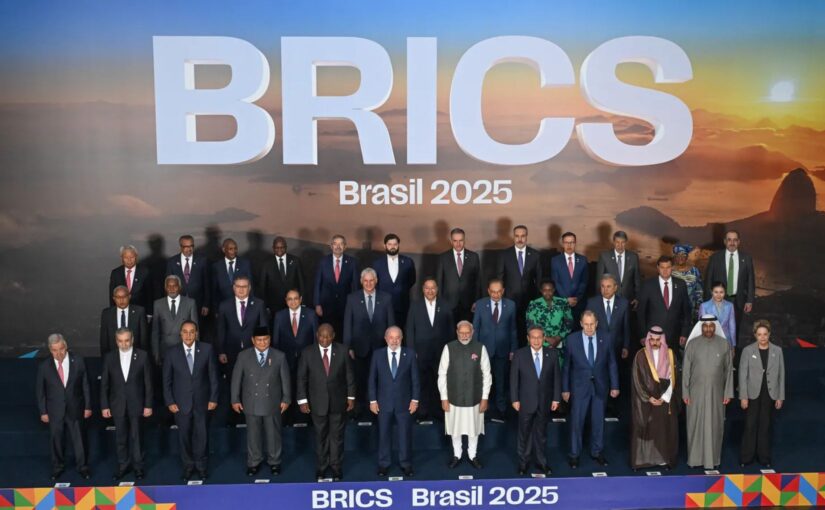
During his recent visit to Brazil to attend three important meetings of the BRICS cooperation mechanism, Chinese Foreign Minister Wang Yi also held a series of bilateral meetings.

On April 30, 2025, Brazilian President Luiz Inácio Lula da Silva met with Wang Yi in Brasilia.

Lula asked Wang to convey his sincere greetings to President Xi Jinping, stating that Brazil and China have established solid mutual trust, with frequent exchanges at all levels and increasingly deepening cooperation in various fields, which fully proves that keeping friendly relations with China is the right choice and brings a demonstration effect to South-South cooperation. He looked forward to maintaining close high-level exchanges with China, further strengthening economic and trade ties, and expanding mutually beneficial cooperation in finance, energy, and other areas. The Brazilian President further expressed his view that China’s resolute and strong countermeasures against “reciprocal tariffs” are admirable. China’s righteous actions have received widespread support, and the irresponsible unilateral acts of a certain country should be collectively resisted.

Wang Yi conveyed President Xi Jinping’s cordial greetings to President Lula, stating that the two heads of state jointly announced the building of a China-Brazil community with a shared future for a more just world and a more sustainable planet, which has charted the course and drawn the blueprint for the development of China-Brazil relations. President Lula’s political decision to deepen the comprehensive strategic partnership between China and Brazil demonstrates strategic foresight and fully aligns with the long-term and fundamental interests of the Brazilian people.

Wang Yi added that China’s resolute counteraction to unilateral bullying is not only to safeguard its own legitimate rights and interests but also to protect the common interests of developing countries and to defend international fairness and justice. Standing at a critical juncture in history and facing impending storms, China will stay its course and strengthen its foundations, enhance cooperation with BRICS and Global South countries, uphold multilateralism, safeguard international rules, sow new hope for the world, and bring new opportunities for peace.

On April 28, Wang Yi met with the Foreign Ministers of Russia, Thailand and Ethiopia.

Meeting Russian Foreign Minister Sergei Lavrov, Wang Yi said that there have been many new changes in the international situation recently. Change is the norm of this era, but what remains unchanged is the mutual trust and support between China and Russia. The strategic leadership of President Xi Jinping and President Vladimir Putin has always been the fundamental guarantee for maintaining high-level operation of China-Russia relations.

Wang Yi stated that the current rivalry between unilateralism and multilateralism is intensifying, and the contest between maintaining hegemony and opposing hegemony is unfolding around the world. The unity and cooperation of BRICS countries are demonstrating increasingly significant strategic value.

Sergei Lavrov said that in the face of a rapidly changing world, it is essential for Russia and China to maintain close interactions. Russia is willing to work with China to prepare for the next phase of important exchanges between the two heads of state, support each other in hosting commemorative events for the 80th anniversary of the victories of the Soviet Union’s Great Patriotic War and the Chinese People’s War of Resistance Against Japanese Aggression, and deepen practical cooperation in various fields. Both sides should jointly support Brazil in fulfilling its responsibilities as the chair of the BRICS mechanism and work for more positive outcomes in BRICS cooperation.

Continue reading Lula: China’s resolute and strong countermeasures against “reciprocal tariffs” are admirable

Wang Yi: The BRICS family stands at the forefront of the Global South

Following his visit to Kazakhstan, where he attended the Foreign Ministers meeting of China and Central Asian countries, Chinese Foreign Minister Wang Yi travelled on to Brazil to attend meetings of the BRICS cooperation mechanism preparatory to its summit meeting later this year. Brazil is this year’s revolving Chair of BRICS.

On April 28, Wang Yi attended Session I of the Meeting of BRICS Ministers of Foreign Affairs in Rio de Janeiro. Brazilian Foreign Minister Mauro Vieira chaired the event.

Wang Yi said that this year marks the 80th anniversary of the founding of the United Nations. The founding of the United Nations opened a brand-new chapter for all countries to jointly build peace and seek development and has promoted remarkable progress in human civilisation. Today, 80 years later, the international landscape has undergone profound changes, the world has entered a period of turbulence and transformation, and the cause of peace and development is facing new and severe challenges. The basic concepts of international cooperation have been eroded, the foundation for the development of international relations has been continuously challenged, and the international environment for peace and development is under assault. At a critical juncture in history, whether countries can make the right choices is crucial to the future of humanity. As positive constructive forces for good on the international stage, BRICS countries should take the lead in being the mainstay of the cause of peace and development.

To this end, Wang Yi made four calls:

  • To pursue universal security.
  • To actively promote peace talks.
  • To consolidate the foundation for development.
  • To strengthen practical cooperation.

All parties welcomed Indonesia’s first attendance as a full member at the Meeting of BRICS Ministers of Foreign Affairs and stressed that efforts should be made to safeguard the legitimate rights and interests of BRICS countries and the common interests of the Global South, to promote the establishment of a more just and equitable international order, and to facilitate open, inclusive and sustainable development.

On April 29, the session for Ministers of Foreign Affairs / International Relations from BRICS members and partner countries was held in Rio de Janeiro. The session was chaired by Brazilian Foreign Minister Mauro Vieira. Foreign ministers and senior representatives from 19 countries discussed ways to strengthen cooperation in the Global South and uphold multilateralism.

Addressing the meeting, Wang Yi said that, today, the BRICS family, with a total population of over half of the world’s population and an economic output accounting for nearly 30 percent of the global total, stands at the forefront of the Global South.

He stressed that faced with hegemonism, BRICS countries must uphold principles and serve as the main force in defending fairness and justice. In the face of unilateralism, BRICS countries must stand at the forefront and be the backbone in promoting solidarity and cooperation.

He made three calls in this regard:

  • To defend the core position of the United Nations.
  • To promote the peaceful settlement of disputes.
  • To foster an open and cooperative international environment.

Wang Yi stated that BRICS members should keep their doors wide open and embrace partner countries to help them deeply integrate into BRICS and fully participate in cooperation, so as to ensure the vibrant development of the mechanism. Continuous efforts should be made to expand the “BRICS Plus” model and bring together more like-minded countries to pool forces for peace and development.

He added that the solution to the world’s problems lies in upholding and practicing multilateralism. The expanded Greater BRICS should continue to advocate for extensive consultation, joint contribution and shared benefits, uphold the basic principles of international relations, defend the multilateral trading system, and build a more just and equitable global governance system.

Wang Yi said that in the face of the United States wielding the tariff stick globally, all countries must make the choices: Should the world return to the law of the jungle where the strong prey on the weak? Can the selfish interests of one country override the common interests of all nations? Should international rules be ignored or even abandoned? Do compromise and retreat ensure that one stays out of trouble? The ultimate question is whether to accept a unipolar hegemony dominated by one country or embrace an equal and orderly multipolar world.

Continue reading Wang Yi: The BRICS family stands at the forefront of the Global South

Xi Jinping: Learning from history to build together a brighter future

On May 7, Chinese President Xi Jinping began a state visit to Russia where he will also attend the celebrations marking the 80th anniversary of the Victory in the Great Patriotic War of the Soviet Union at the invitation of his Russian counterpart Vladimir Putin.

Ahead of his arrival, the Chinese leader published an article in the government newspaper Rossiyskaya Gazeta (Russian Gazette).

In his article President Xi recalled that: “Ten years ago around this time, I came to Russia to celebrate the 70th anniversary of the victory. During that visit, I made a special arrangement to meet with 18 representatives of Russian veterans who endured the blood and fire of battlefields during the Soviet Union’s Great Patriotic War and the Chinese People’s War of Resistance Against Japanese Aggression. Their unyielding resolve and indomitable bearing left an indelible impression on me. In the past few years, General M. Gareyev, Major General T. Shchudlo and other veterans passed away. I pay my deepest tribute to them and to all veterans – from generals to the rank and file-for their extraordinary service and heroic feats in securing the victory over fascists around the world. We will never forget them.”

Xi noted that: “During the World Anti-Fascist War, the Chinese and Russian peoples fought shoulder to shoulder and supported each other. In the darkest hours of the Chinese People’s War of Resistance Against Japanese Aggression, the Soviet Volunteer Group, which was part of the Soviet Air Force, came to Nanjing, Wuhan and Chongqing to fight alongside the Chinese people, bravely engaging Japanese invaders in aerial combat – many sacrificing their precious lives.”

He added that: “At the critical juncture of the Soviet Union’s Great Patriotic War, Yan Baohang, a legendary intelligence agent of the Communist Party of China (CPC) who was hailed as the ‘Richard Sorge of the East,’ provided the Soviet Union with primary-source intelligence.”

[Yan Baohang (1895-1968) was an intelligence agent of the CPC and the Communist International, entrusted by later Chinese Premier Zhou Enlai. Based behind enemy lines in Chongqing, in May 1941 the one-time student at Edinburgh University was able to discover the exact date – June 22 – of the planned German attack on the Soviet Union. He managed to get the information to the communist base area in Yan’an by June 6, where Mao Zedong ordered it to be conveyed to Moscow and where it reached Stalin, enabling important preparations to be made in time. On June 30, eight days after the German attack, Stalin telegraphed Yan’an, to thank Yan “for his accurate information that prompted us to prepare for what’s to come.”

[Richard Sorge (1895-1944) was one of the most brilliant intelligence officers of the Communist International and the Soviet Red Army’s Fourth Department, later known as the GRU or military intelligence. Known particularly for his work in Shanghai and then in Tokyo, he was eventually arrested by the Japanese authorities in October 1941 and hanged in Tokyo on November 7, 1944, the fascists having deliberately chosen to execute this outstanding and courageous internationalist fighter for communism on the anniversary of the October Socialist Revolution. He was posthumously awarded the title of Hero of the Soviet Union.]

Drawing attention to the contemporary significance of the 80th anniversary, Xi wrote: “Eighty years ago, the forces of justice around the world, including China and the Soviet Union, united in courageous battles against their common foes and defeated the overbearing fascist powers. Eighty years later today, however, unilateralism, hegemonism, bullying, and coercive practices are severely undermining our world. Again, humankind has come to a crossroads of unity or division, dialogue or confrontation, win-win cooperation or zero-sum games… We must learn from history, especially the hard lessons of the Second World War. We must draw wisdom and strength from the great victory of the World Anti-Fascist War and resolutely resist all forms of hegemonism and power politics. We must work together to build a brighter future for humanity.”

Continue reading Xi Jinping: Learning from history to build together a brighter future

Sixth China-Central Asia Foreign Ministers’ Meeting promotes synergised development

Chinese Foreign Minister Wang Yi recently visited Kazakhstan to attend the Sixth China-Central Asia Foreign Ministers’ Meeting, which was held in the capital Almaty.

Also attending were the Deputy Prime Minister and Minister of Foreign Affairs of Kazakhstan Murat Nurtleu, Minister of Foreign Affairs of Kyrgyzstan Jeenbek Kulubaev, Minister of Foreign Affairs of Tajikistan Sirojiddin Muhriddin, Minister of Foreign Affairs of Uzbekistan Bakhtiyor Saidov, Turkmenistan’s Ambassador to China Parahat Durdyev, and the Secretary-General of the China-Central Asia mechanism.

Addressing the meeting, held on April 26, Wang Yi said that at present, changes of the world, of the times, and of historical significance are unfolding like never before. Unilateralism and trade protectionism are on the rise at an accelerated pace, and the trend of “anti-globalisation” has severely impacted the free trade system. The United States has acted unilaterally to impose tariffs on over 180 countries at will, infringing upon the legitimate rights and interests of these nations, violating World Trade Organisation (WTO) rules, undermining the rule-based multilateral trading system, and destabilising the global economy. China has stepped forward and taken necessary countermeasures, not only to defend its own legitimate rights and interests, but also to safeguard international rules and order as well as international fairness and justice. No matter how the global landscape changes, China, as the world’s second-largest economy and a responsible major country, will unswervingly advance high-standard opening-up, seek common development with neighbouring countries, and share opportunities with the world, while shouldering its due international responsibilities and fulfilling its international obligations.

He put forward five proposals from the Chinese side for deepening China-Central Asia cooperation:

  • First, firmly uphold good faith and foster harmony. China firmly supports the six countries in safeguarding their sovereignty, independence, territorial integrity, and national dignity, and strengthening their collective self-reliance.
  • Second, stick to mutually beneficial cooperation. China is ready to import more high-quality, green agricultural products from Central Asia, select and implement a number of high-quality cooperation projects, expand cooperation in emerging fields, and cultivate new quality productive forces for cooperation.
  • Third, adhere to institutional development. China and Central Asian countries should strengthen coordination, accelerate the development of the mechanism’s pillars, and better leverage the role of the ministerial cooperation mechanism.
  • Fourth, adhere to fairness and justice. China and Central Asian countries should jointly remember history and commemorate the 80th anniversary of the victory of the World Anti-Fascist War and the 80th anniversary of the founding of the United Nations. Standing on the right side of history and human progress, the six countries should join hands to safeguard the international system with the United Nations at its core and oppose any form of resurgence of fascism and militarism.
  • Fifth, be firm in friendship for generations. It is necessary to strengthen cooperation in education and talent training and cultivate inheritors and successors of the cause of friendship.

The Central Asian countries’ representatives said that they will synergise their development strategies with the Belt and Road Initiative, deepen cooperation in priority areas such as unimpeded trade, industrial investment, connectivity, green minerals, agricultural modernistion, and facilitation of personnel exchanges, and achieve sustainable development and common prosperity. 

Continue reading Sixth China-Central Asia Foreign Ministers’ Meeting promotes synergised development

Iranian FM: China is a strategic and trusted partner

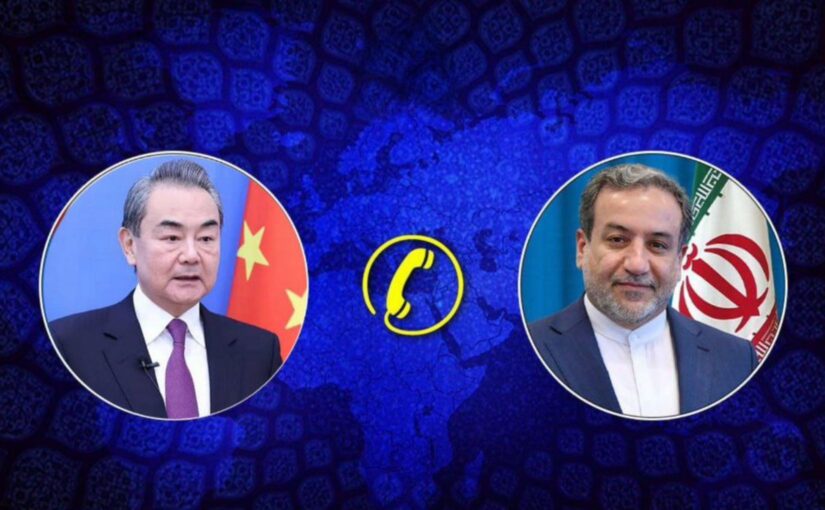
Iranian Foreign Minister Seyed Abbas Araghchi visited China in late April. His visit came just after he visited Moscow, just before the third round of indirect talks between the United States and Iran in Oman and less than four months since his last visit to Beijing.

Araghchi met with his Chinese counterpart Wang Yi on April 23.

Wang said that Iran is a comprehensive strategic partner of China in the Middle East region. The friendship between China and Iran has withstood the test of changes in the international situation, and developing China-Iran relations is a strategic choice made by both sides. In recent years, China and Iran have worked together in solidarity and helped each other, deepened political mutual trust through mutual support, tightened the connection of their interests through practical cooperation, and united and collaborated in the fight against unilateralism and bullying, making the strategic significance of China-Iran relations even more prominent.

China is ready to work with Iran to jointly implement the important common understandings reached between the leaders of the two countries, continuously strengthen friendly cooperation in various fields, deepen coordination and cooperation in international and regional affairs, promote the Shanghai Cooperation Organisation (SCO) and the BRICS mechanism to play a greater role, and make more efforts to safeguard the common interests of both countries and to advance peace and stability in the region and the world.

Wang Yi further emphasised that China has always been committed to the political and diplomatic settlement of the Iranian nuclear issue and opposed the abuse of force and illegal unilateral sanctions. China appreciates Iran’s commitment to not develop nuclear weapons, respects Iran’s right to the peaceful use of nuclear energy, and supports Iran in conducting dialogue with all parties, including the United States, and in safeguarding its legitimate rights and interests through consultation and negotiation.

Araghchi said that the Iran-China comprehensive strategic partnership is based on mutual trust and is at its best in history. The friendship between the two countries has a solid foundation and will not be affected by other factors. In the face of the United States’ abuse of tariffs and its bullying acts, Iran will continue to work with China to support each other, jointly oppose unilateralism and hegemonism, and work together to safeguard multilateralism.

The two foreign ministers also discussed the questions of Palestine, Syria and Yemen among others.

Seyed Abbas Araghchi also met with Chinese Vice Premier Ding Xuexiang the same day.

The Iranian foreign minister highlighted China’s role as a strategic and trusted partner of the Islamic Republic of Iran and emphasised the importance of expanding cooperation on bilateral and multilateral levels, including within frameworks such as the SCO and the BRICS group. He deemed closer interaction among like-minded countries such as Iran and China necessary to counter bullying and unilateralism and reiterated Iran’s unwavering resolve to enhance all-round relations with China.

Araghchi also elucidated the viewpoint of the Islamic Republic regarding regional and international developments, especially the serious risks associated with the ongoing genocide by the Zionist regime in occupied Palestine, the warmongering by the regime in the region and the repeated US aggression against Yemen.

Continue reading Iranian FM: China is a strategic and trusted partner

Mark Carney’s anti-China posture will not benefit the Canadian people

Canada held its federal election on April 28.

The ruling Liberal Party won 169 seats, up by 17, and leaving it just short of the 172 seats needed for a majority.  The Conservatives won 144 seats, an increase of 24, but their leader Pierre Poilevre, who before ‘Hurricane Trump’ struck Canada could have pretty confidently looked forward to leading the next government, lost his seat.

The nationalist Bloc Québécois took 33 seats, a loss of 11. The social democratic New Democratic Party (NDP) won just seven seats, a loss of 17, with party leader Jagmeet Singh not only losing his seat but coming third in his riding (as electoral districts are termed in Canada). The Greens lost one of their two seats, with co-leader Jonathan Pedneault becoming the third party leader to lose his place in the federal parliament.

The Marxist-Leninist Party of Canada (MLPC) fielded 35 candidates and the Communist Party of Canada (CPC) fielded 24. MLPC is the registered name for electoral purposes of the Communist Party of Canada (Marxist-Leninist) (CPCML). No other left parties stood candidates.

As a result of this election, Mark Carney has now received his own mandate to serve as Prime Minister. The former Goldman Sachs banker, who went on to become Governor of the Reserve Bank of Canada and then the Bank of England, but who was completely lacking in previous political experience, was shoe-horned into the leadership of the Liberal Party, and hence the office of Prime Minister, after the unpopular and arrogant Justin Trudeau was forced to resign.

As indicated above, the fortunes of the Liberal Party had reached a nadir, leaving the Conservatives confident of a return to office. The Liberals’ change in fortunes came in part from the transition from Trudeau to Carney, but more especially from Donald Trump’s punitive ‘tariff wars’ and his insulting, boorish and aggressive threats to annex Canada, which have stirred a patriotic reaction from the ice hockey rink to the ballot box.

Carney skillfully rode this patriotic wave, with strong rhetoric that appeared to stand up to Trump, whilst Poilevre struggled in vain to shed his previous whole-hearted embrace of MAGA and of his own designation as the ‘Canadian Trump’. It was also this political polarisation and perceived national crisis that squeezed the votes of smaller parties, with many Bloc Québécois, NDP and Green voters doubtless holding their noses while they lent their vote to the Liberals.

Asked to comment on the result at the Chinese Foreign Ministry’s regular Beijing press conference the next day, spokesperson Guo Jiakun said that China is willing to develop its relations with Canada based on mutual respect, equality and mutual benefits. Asked to comment on Carney’s victory and bilateral relations, he said that China has noted relevant reports, and that China’s position on its relations with Canada has been consistent and clear.

The perfunctory tone of Guo’s remarks, devoid of even the most formal diplomatic expression of congratulations, indicates that the once relatively warm relations between Ottawa and Beijing, for now at least, remain decidedly chilly. This is consistent with Carney’s continued hostile rhetoric towards China, even as he strikes a pose of defending Canadian sovereignty from US threats. At the same time, Guo makes clear that China is open to better relations, but that the ball is firmly in Canada’s court.

In the build up to the elections, TML In The News, an online publication of CPC(ML), carried an article by Peggy Morton, “setting the record straight about Canada’s trading relations with China” and citing it as an “example of how a Carney government will manage the economy”.

Peggy begins by explaining that, “Following the lead of then-US President Joe Biden’s administration which imposed 100 per cent tariffs on Chinese electric vehicles in August 2024, the federal government under Justin Trudeau announced in September 2024 that the following month it would impose an import tax of 100 per cent on electric vehicles (EVs) produced in China… Note that Donald Trump had yet to enter the picture with his tariff wars. Nonetheless, paying no attention to World Trade Organisation (WTO) rules which govern the trading relations between trading nations around the world, Canada accused China of ‘distorting global trade’ by exporting EVs at ‘unfairly low prices’ and imposed its draconian tariffs.”

China did not respond with tariffs of its own until March 2025, when, following an investigation, it announced that it would impose a 100 per cent tariff on Canadian canola oil and canola meal and peas, along with 25 per cent tariffs on pork, fish and seafood, as of March 20.

Prime Minister Carney responded that: “The Government of Canada is deeply disappointed by this decision, which will hurt Canadian farmers, harvesters and businesses, and will raise prices and diminish choice for Chinese customers, as well as in the agriculture, fish and seafood, retail, restaurant, and food-preparation industries.”

Continue reading Mark Carney’s anti-China posture will not benefit the Canadian people

Chinese Ambassador: Haiti’s future should not be sacrificed to US strategic interests

China has launched a sharp attack on the role of the United States in creating and perpetuating the political chaos and humanitarian disaster gripping the Caribbean state of Haiti and in the immiseration of its people.

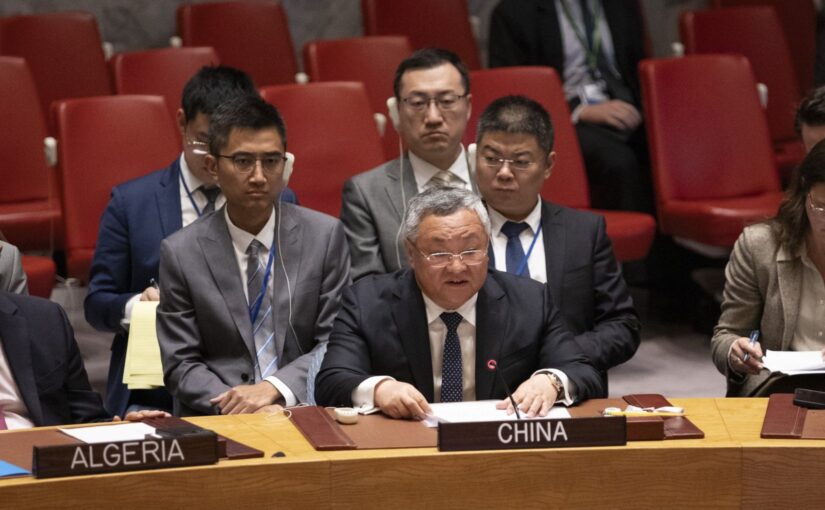
Addressing a meeting of the United Nations Security Council in New York, called to hear briefings on the work of BINUH (the United Nations Integrated Office in Haiti) on April 21, Chinese Ambassador Geng Shuang made three points:

  • First, Haiti must shoulder its own responsibility. As a sovereign state, Haiti bears the primary responsibility of governance. “We call on all parties in Haiti to prioritise the interest of the nation and its people, enhance dialogue and consultation, demonstrate flexibility, and work together to advance a political process that is Haitian-led and Haitian-owned, with the goal of establishing a legitimate, effective, and responsible government at an early date.”
  • Second, external support must be effective. “On the political process, we need to support CARICOM [the Caribbean Community] and BINUH in continuing their good offices to accelerate the implementation of a transitional arrangement that is aligned with the realities of Haiti and is widely recognised… On humanitarian assistance, it is necessary to mobilise the resources of the international community and encourage all parties to continue to provide more assistance to the Haitian people to alleviate their sufferings.”

However, by far his strongest and most substantive comments addressed the role and responsibility of the United States:

“Third, the instigator of the crisis must shoulder its responsibility. Haiti was the first Latin American country to declare independence. However, it has then suffered many hardships due to a long period of military occupation, external interference, and economic exploitation. Throughout this process, the United States has been the greatest external factor affecting Haiti’s security, stability, and development. 

“The US has always been the mastermind behind the political landscape in Haiti. For over a century, it has blatantly deployed troops, installed puppet governments, and manipulated Haiti’s constitution, entrenching itself in Haiti’s political affairs.”

He went on to say that the United States has always been a major source of interference in Haiti’s development. While it claims to support the Haitian people, it has significantly cut foreign aid and continued deporting Haitian immigrants on the pretext of national priorities precisely when Haiti is in dire need of support. What is even more shocking is that not long ago, while the US defied world opinion by imposing sweeping tariffs on all trade partners, it also extended its so-called baseline tariff of 10% to Haiti, one of the world’s least developed countries as defined by the UN. This display of unilateralism, protectionism, and economic bullying is not just aimed at the so-called competitors like China. It has also inflicted damage on a nation teetering on the edge of collapse, such as a fragile country like Haiti, where the people are in dire straits. This is not only cruel and absurd, but also profoundly heartbreaking. 

“We hope that the US will reflect on all of the above. Haiti’s future should not be sacrificed to the US pursuit of its own strategic interests, nor should ‘being too close to the US’ become a curse for Haiti.”

Reporting on the meeting, Peoples Dispatch quoted Maria Isabel Salvador, Special Representative of the United Nations Secretary General for Haiti and Head of BINUH, as saying that, in February and March alone, 1,086 people were killed, 383 were injured, and more than 60,000 were forcibly displaced. Since December of last year, one million people have been displaced.

“The humanitarian crisis in Haiti has reached critical levels… Cholera outbreaks and gender-based violence – especially in places of displacement – are widespread; insecurity has closed 39 health facilities and more than 900 schools in [the capital] Port-au-Prince,” she told the meeting.

Haiti has yet to establish diplomatic relations with the People’s Republic of China. However, the two countries maintain representative and trade offices in their respective capitals.

The following articles were originally published on the website of China’s Permanent Mission to the UN and by Peoples Dispatch. The Peoples Dispatch article was first published by Brasil de Fato in Portuguese.

Remarks on BINUH by Ambassador Geng Shuang at the UN Security Council Briefing

President, 

I thank Special Representative Maria Isabel Salvador and National Security Advisor Monica Juma for their briefings. I welcome the representatives of Haiti and the Dominican Republic at today’s meeting. I have also listened carefully to the statement made by the civil society representative. 

Continue reading Chinese Ambassador: Haiti’s future should not be sacrificed to US strategic interests

From Bandung to BRICS: the inexorable rise of the Global South

The following is the text of the speech given by our co-editor Keith Bennett to the webinar jointly organised by Friends of Socialist China and the International Manifesto Group on Sunday 27 April, 2025, marking the 70th anniversary of the historic Africa Asia Conference held in the Indonesian city of Bandung.

In his speech, Keith outlined the historic significance of the Bandung Conference, linking it both to its antecedents as well as to the later institutions of the Global South that it inspired, such as the Non-Aligned Movement (NAM) and the BRICS cooperation mechanism.

He pays particular attention to the key role played by Chinese Premier Zhou Enlai at the conference and cites Malcolm X, who highlighted the broad unity that Bandung embodied.

We called this meeting to celebrate the 70th anniversary of the Bandung Conference and to affirm its continued relevance.

What do I mean by that?

It was a key moment in the evolution and development of the international situation post-World War 2.

It came at the cusp of the anti-imperialist national liberation movement:

  • Just after the liberation of China, itself preceded by the independence of India, Pakistan, Ceylon (now Sri Lanka) and Burma (now Myanmar).
  • When Korea and Indochina were at the forefront of the global diplomatic agenda – this being the year after the 1954 Geneva Conference.
  • Just prior to the great wave of decolonisation in Africa, to begin with the independence of Ghana from British colonial rule, under the leadership of Osagyefo Dr. Kwame Nkrumah in March 1957, followed by the independence of Guinea from French colonial rule, under the leadership of Ahmed Sekou Toure, in October 1958.
  • And with the world waking up to the full iniquity of the apartheid regime being progressively consolidated – with newly independent India having been the first country to raise the question at the United Nations.

It was against this backdrop that Bandung established a distinct and common Africa Asia identity as a political concept and geopolitical reality.

Of course, there were antecedents, to a great extent related to the international communist movement and to actually existing socialism:

  • The Communist International had convened the Baku Congress of the Peoples of the East in September 1920.
  • In 1927, again at the instigation of the Communist International, delegates including Jawaharlal Nehru of India, Song Qingling (Mme. Sun Yat-Sen) from China, and indeed Fenner Brockway from Britain’s Independent Labour Party, had gathered in Brussels to found the League Against Imperialism.
  • And in 1945, Manchester hosted the fifth Pan African Congress, attended by three future African heads of state – Kwame Nkrumah, Jomo Kenyatta of Kenya and Hastings Banda of Malawi – along with the African-American scholar and revolutionary Dr. WEB Du Bois, who had attended the first congress in Paris in 1919, and Amy Ashwood Garvey, the widow of Marcus Garvey.

But Bandung occurred at a qualitatively different historical moment in that it was an initiative of independent sovereign states – and in the main of newly independent sovereign states that had just set out on the road of building a new society. They therefore represented what both Indonesian President Sukarno, the host of the conference, and Korean leader Kim Il Sung referred to as the new emerging forces.

Continue reading From Bandung to BRICS: the inexorable rise of the Global South

Webinar marks 70th anniversary of the Bandung Conference

Seventy years ago, the Bandung Conference brought together 29 Asian and African countries to discuss the common challenges facing the Third World. The conference was a milestone in the global struggle against colonialism and imperialism, and laid the foundations for the Non-Aligned Movement.

Friends of Socialist China and the International Manifesto Group co-organised a webinar on Sunday 27 April 2025 to address the legacy of Bandung and its relevance to the contemporary world. Speakers at the event were:

  • Radhika Desai (Convenor, International Manifesto Group)
  • Ben Norton (Founder and editor, Geopolitical Economy Report)
  • Tings Chak (Asia Coordinator, Tricontinental Institute)
  • Jenny Clegg (Author, China’s Global Strategy: Towards a Multipolar World)
  • Isaac Saney (Cuba and Black studies specialist, Dalhousie University)
  • Keith Bennett (Co-editor, Friends of Socialist China)
  • Mushahid Hussain (Pakistani senator, Chairman of the China-Pakistan Institute)

The presentations were followed by a lively and interesting discussion. The video of the webinar is embedded below.

Detailed joint statements adopted between China and Vietnam, Malaysia and Cambodia

As a key part of Chinese President Xi Jinping’s recent regional tour, detailed and comprehensive joint statements were adopted between China and all three countries visited by the Chinese leader, namely Vietnam, Malaysia and Cambodia.

The joint statement with Vietnam took as its key theme, continuing to deepen the Comprehensive Strategic Cooperative Partnership and promoting the building of a Vietnam-China community with a shared future that carries strategic significance.

The two sides held that Vietnam and China are geographically adjacent, culturally close, and have close people-to-people ties, similar regimes, and interrelated destinies. They are good neighbours, good friends, good comrades, and good partners. They are both socialist countries led by the Communist Parties, and both strive for the happiness of the people and the prosperity of their country, as well as for the noble cause of peace and progress of humanity. The two sides looked back at the development of the relationship between the two Parties and countries since the establishment of diplomatic relations 75 years ago. Vietnam was the first country in Southeast Asia to establish diplomatic relations with the People’s Republic of China, while China was the first country in the world to recognise and establish diplomatic relations with the Democratic Republic of Vietnam, now the Socialist Republic of Vietnam. No matter how the world situation changes, the two sides have always fought side by side, supported each other in the struggles for national independence and liberation, learned from each other, and together moved forward to seek a socialist path suitable to the situation of each country and modernisation bearing the characteristics of each country. The Party, State and people of Vietnam always appreciate and cherish the strong support of the Party, State and people of China. The two sides shared the view that the traditional friendship – “the profound Vietnam-China relationship, both comrades and brothers” – built and nurtured by President Ho Chi Minh, Chairman Mao Zedong and leaders of previous generations, is increasingly strong. It is a valuable asset shared by two countries’ people, and needs to be well inherited, protected and promoted.

Given the changes of the world, the times, and history, China emphasised that it consistently pursues the policy of friendship with Vietnam, always considering Vietnam a priority in its neighbourhood diplomacy. Vietnam reaffirmed that it always considers relations with China a consistent policy, an objective requirement, and a top priority in its foreign policy of independence, self-reliance, multilateralisation, and diversification. This is the strategic choice of both sides.

They will take the occasion of the 75th anniversary of the diplomatic relations as an opportunity to continue to deepen the Comprehensive Strategic Cooperative Partnership, promote the building of the Vietnam-China community with a shared future that carries strategic significance, enhance mutually beneficial cooperation between the two sides with higher quality, deepen strategic coordination, bring more practical benefits to the people of the two countries, make important contributions to the stable development of the region and the cause of peace and progress of humanity, and create a positive model for building a community with a shared future of humanity.

The Vietnamese side wished and believed that, under the steadfast leadership of the Communist Party of China Central Committee with Xi Jinping as the core, and the guidance of Xi Jinping Thought on Socialism with Chinese Characteristics for a New Era, the Party, Government and people of China will certainly complete the goals and tasks of the 14th five-year plan with high quality, comprehensively build a modern socialist power, and successfully realise the second centenary goal.

The Chinese side wished and believed that under the strong leadership of the Communist Party of Vietnam Central Committee headed by General Secretary To Lam, the Party, State and people of Vietnam will certainly successfully implement the goals and tasks set by the 13th National Party Congress, prepare well and successfully organise the 14th National Party Congress in 2026, bring the country into a new era of development, successfully build a socialist Vietnam with rich people, strong country, democracy, equality and civilisation. China reaffirmed its support for Vietnam’s efforts for prosperous development, the happiness of its people, a strong, independent, and self-reliant economy, comprehensive promotion of reform, industrialisation, modernisation, international integration, the expansion of its foreign relations, and its enhanced role for peace, stability, development, and prosperity in the region and the world.

Both sides also agreed to continue to fully promote the special role of the Party channel, further strengthen the role of the exchange and cooperation mechanism between the two Parties, especially high-level meetings and theoretical seminars between the two Parties; improve the effectiveness of exchange and cooperation between the respective agencies of the two Parties at the central level, as well as between local party organisations of the two countries, especially the border provinces (regions). Through theoretical seminars, and cooperation in personnel training, and delegation exchanges via the Party channel, both sides will comprehensively implement exchanges of theory and practical experiences in Party building and national governance, and work together to deepen mutual understanding of the Party’s leadership role, advance the socialist cause in the context of unprecedented changes in the world, thus contributing to Party building and the development of socialism in both countries.

This year marks the 80th founding anniversary of the United Nations. The two sides reaffirmed the perseverance to defend the international system with the United Nations as its core, the international order with international law as its foundation, and the adherence to the “Five Principles of Peaceful Coexistence” and the basic norms of international relations with the purpose and principles of the United Nations Charter as the cornerstone. Vietnam congratulated China on the successful commemoration of the 70th anniversary of the proclamation of the “Five Principles of Peaceful Coexistence”. Facing the uncertainty, instability and unpredictability of the international situation, the two sides will firmly uphold multilateralism, jointly safeguard international fairness and justice and the common interests of developing countries; maintain solidarity and cooperation in the international community, promote the common values of humanity on peace, development, fairness, justice, democracy and freedom; support an equal and orderly multipolar world and the globalisation of inclusive economy, bringing about common benefits and developing global governance in a more equitable and reasonable direction. The two sides emphasised the joint opposition to hegemony and power politics, to unilateralism in all forms, and to actions that jeopardise regional peace and stability.

Continue reading Detailed joint statements adopted between China and Vietnam, Malaysia and Cambodia

Spanish PM: US tariffs “unjustified, unjust and harmful for everybody”

Spanish Prime Minister Pedro Sánchez recently visited China, becoming the first foreign leader to meet President Xi Jinping since US President Donald Trump dramatically intensified his ‘tariff war’ against the global economy and against China in particular.

Among current Western European leaders Sánchez stands out as being particularly friendly to China and has visited the country three times in the last two years.

Reporting his most recent visit, an article published by the financial news service Bloomberg clearly outlined how the Spanish leader has defied and stood up to US pressure and bullying:

“Earlier this week, US Treasury Secretary Scott Bessent warned the EU against seeking to pivot toward China and away from the US, singling out Sánchez’s push to deepen ties with Beijing. ‘That would be cutting your own throat,’ he said.”

Sánchez, for his part, called the US levies “unjustified, unjust and harmful for everybody.” Speaking at a press conference following his meeting with Xi, he announced that Spain’s head of state, King Felipe VI, will make a state visit to China this year.

Meeting Sánchez on April 11, Xi Jinping pointed out that transformation not seen in a century is accelerating across the world with multiple risks and challenges piling up. Only through solidarity and coordination can countries maintain world peace and stability and promote global development and prosperity. As the international situation gets more complex and volatile, it is increasingly important for China and Spain to develop sound and stable relations. This year marks the 20th anniversary of the comprehensive strategic partnership between China and Spain. China stands ready to work with Spain to build a more strategically resilient and dynamic comprehensive strategic partnership, to better serve the well-being of both peoples, inject impetus into the China-EU relations, and make greater contributions to world peace, stability, and development.

He stressed that the China-Spain friendship is a wise choice made by the two peoples based on traditional friendship, practical needs, and long-term interests. Both sides should continue to consolidate the political foundation of mutual support, trust and respect each other, and support each other on issues concerning core interests and major concerns. China is ready to work with Spain to leverage their mutually beneficial and complementary cooperation advantages, make good use of the economic and technological cooperation mechanisms, tap the potential in areas like new energy, high-tech manufacturing and smart cities, and produce more outcomes of mutually beneficial cooperation.

Xi Jinping pointed out that China always sees in the European Union an important pole in a multipolar world. China is a major country that explicitly supports the unity, development, and growth of the EU. In the current context, it is of great practical significance to strengthen the China-EU partnerships of peace, growth, reform, and civilisation. China and the EU should see each other as partners and embrace open cooperation. There are no winners in tariff wars. Going against the world will only lead to self-isolation. China’s development over the past seven decades is a result of self-reliance and hard work, not favours from others. China does not flinch from any unjust suppression. No matter how the external environment changes, China will remain confident, stay composed, and concentrate on managing its own affairs well.

Sánchez said that over the past 20 years since China and Spain established a comprehensive strategic partnership, the two countries have always respected each other and engaged in friendly cooperation. The relationship has been steadily deepening and growing. Under the leadership of President Xi Jinping, China has achieved remarkable accomplishments in its development and made significant contributions to global prosperity and stability. Spain values its relationship with China and firmly upholds the one-China policy. There are no winners in trade wars. In the face of a complex and challenging global environment, Spain and the EU would like to enhance communication and coordination with China to safeguard international trade order, jointly meet challenges like climate change and poverty alleviation, and preserve the common interests of the international community.

Prior to his China visit, Sánchez had visited Vietnam, the first visit by a Spanish head of government  since the establishment of diplomatic relations between the two countries in 1977.

The Spanish Prime Minister affirmed that Vietnam is one of Spain’s top priority partners in Southeast Asia and agreed on the need to elevate the bilateral ties to a comprehensive strategic partnership.

The following article was originally published on the website of the Chinese Foreign Ministry.

On the morning of April 11, 2025, President Xi Jinping met with visiting Spanish Prime Minister Pedro Sánchez at the Diaoyutai State Guesthouse in Beijing.

Xi Jinping pointed out that transformation not seen in a century is accelerating across the world with multiple risks and challenges piling up. Only through solidarity and coordination can countries maintain world peace and stability, and promote global development and prosperity. As the international situation gets more complex and volatile, it is increasingly important for China and Spain to develop sound and stable relations. This year marks the 20th anniversary of the comprehensive strategic partnership between China and Spain. China stands ready to work with Spain to build a more strategically resilient and dynamic comprehensive strategic partnership, to better serve the well-being of both peoples, inject impetus into the China-EU relations, and make greater contributions to world peace, stability, and development.

Xi Jinping quoted the Chinese proverb “Range far your eye over long vistas.” He stressed that the China-Spain friendship is a wise choice made by the two peoples based on traditional friendship, practical needs, and long-term interests. Both sides should continue to consolidate the political foundation of mutual support, trust and respect each other, and support each other on issues concerning core interests and major concerns, especially in safeguarding sovereignty and territorial integrity. China’s consumption upgrade for 1.4 billion people and industrial transformation potential will provide strong momentum for the world economy. China is ready to work with Spain to leverage their mutually beneficial and complementary cooperation advantages, make good use of the economic and technological cooperation mechanisms, tap the potential in areas like new energy, high-tech manufacturing and smart cities, and produce more outcomes of mutually beneficial cooperation.

Continue reading Spanish PM: US tariffs “unjustified, unjust and harmful for everybody”

China and Cambodia: friendly neighbours and ironclad friends

Following his visit to Malaysia, Chinese President Xi Jinping arrived in Cambodia on the morning of April 17 to begin a state visit a state visit at the invitation of King Norodom Sihamoni, as the final leg of his visit to neighbouring countries in south-east Asia.

King Norodom Sihamoni presided over a grand welcome ceremony at Phnom Penh International Airport, the first of his reign. Xi Jinping made a written statement on arrival, extending his best New Year wishes to the Cambodian government and people on the occasion of the Khmer New Year, that fell that day. He pointed out that the China-Cambodia relationship was forged and carefully nurtured by the elder generation of leaders from both countries. It has withstood the test of the evolving international landscape and remains as solid as a rock.

That afternoon, King Norodom Sihamoni met with Xi at the Royal Palace.

Noting that Cambodia has recently celebrated the 20th anniversary of King Norodom Sihamoni’s enthronement and the Khmer New Year, Xi Jinping said he is delighted to visit the beautiful Cambodia at the invitation of King Norodom Sihamoni, extending his heartfelt New Year greetings to the Cambodian people. Xi Jinping said that Cambodia’s national development is thriving, and he believes that under the blessings of King Norodom Sihamoni, the hardworking and intelligent Cambodian people will surely build an even more prosperous and stronger nation. He stressed that China values its friendship with the Cambodian royal family and spoke highly of the important contributions made by the Cambodian royal family to the cause of China-Cambodia friendship over the years. Under the new circumstances, China and Cambodia should cherish and carry forward the ironclad friendship between the two countries jointly forged by the elder generation of Chinese leaders and King Father Norodom Sihanouk, enrich the China-Cambodia community with a shared future with the features of the new era, serve the development of their respective countries and the well-being of their people, and make greater contributions to building a community with a shared future with neighbouring countries and promoting the building of a community with a shared future for mankind.

Norodom Sihamoni also noted that the friendship between Cambodia and China was forged and cultivated by the elder generation of leaders of the two countries.

He presented the National Order of Independence – Grand Collar to Xi Jinping. He said that President Xi Jinping holds special friendly feelings towards Cambodia and has made outstanding contributions to promoting the development of Cambodia-China relations, adding that Xi Jinping is a great friend of Cambodia.

Xi Jinping said this medal fully demonstrates Cambodia’s high regard for developing China-Cambodia relations and carries the deep friendship of the Cambodian people towards the Chinese people. This honour belongs not only to him personally, but also to all the friendly people who have cultivated and contributed to the friendship between China and Cambodia.

That evening Xi Jinping met with Queen Mother Norodom Monineath Sihanouk.

Xi Jinping extended his best wishes to Norodom Monineath Sihanouk for the Khmer New Year. He noted that King Father Norodom Sihanouk was a symbol of China-Cambodia friendship. Together with the elder generation of Chinese leaders, he personally forged an unbreakable ironclad friendship between China and Cambodia, and we will always remember the historic contributions he made. Noting that Queen Mother Norodom Monineath Sihanouk is a witness and promoter of China-Cambodia friendship, Xi Jinping said she has a special friendship towards the Chinese people, and she well deserves to be awarded the Friendship Medal of the People’s Republic of China. Xi Jinping also said that China, as her second home, welcomes her visit at any time.

Norodom Monineath Sihanouk said President Xi Jinping is the greatest friend of Cambodia, and this visit is a great honour for all the Cambodian people. She is very pleased to see that the China-Cambodia friendship forged by the elder generation of leaders of the two countries has been continuously consolidated and developed. She expressed confidence that the ironclad friendship between the two countries will grow even deeper and more unbreakable.

Continue reading China and Cambodia: friendly neighbours and ironclad friends