FBI upgrade enmeshes New Zealand in anti-China war plans

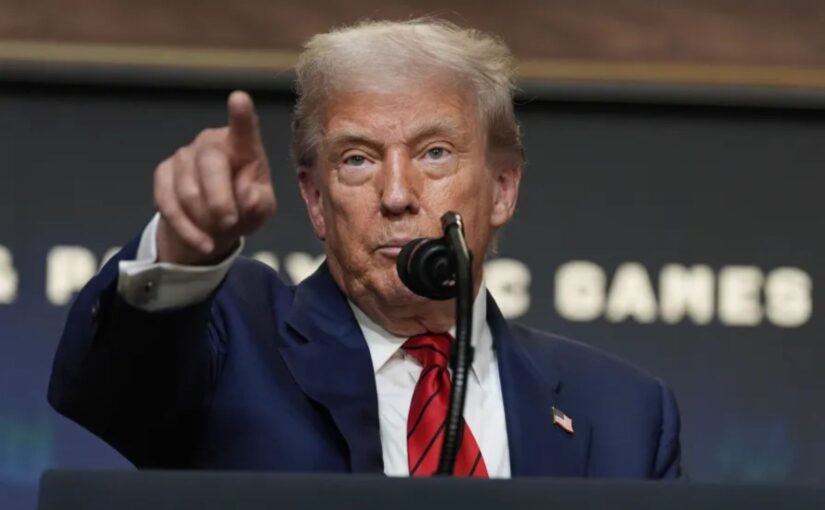
In the following article, which was originally published on Consortium News, Mick Hall analyses how the recent visit to New Zealand by Kash Patel, Donald Trump’s far-right Director of the Federal Bureau of Investigation (FBI), where he announced a significant upgrade in the bureau’s local presence, will further enmesh the twin island South Pacific nation in the anti-China machinations of the Anglo-Saxon ‘Five Eyes’ espionage cabal.

Speaking in the capital Wellington on July 31, Patel was clear as to the main purpose of his visit: “Some of the most important global issues of our times are the ones that New Zealand and America work on together – countering the CCP [Chinese Communist Party].”

The upgraded presence will also oversee FBI activities in Antarctica, Samoa, Niue, the Cook Islands and Tonga, as well as in New Zealand itself.

The day after Patel’s comments, Chinese Foreign Ministry spokesperson Guo Jiakun warned that “cooperation between countries should not target any third party.”

He added: “Seeking so-called absolute security through forming small groupings under the banner of countering China does not help keep the Asia-Pacific and the world at large peaceful and stable.”

New Zealand’s main opposition Labour Party questioned why the office was needed and said more information would be sought before commenting further.

Other opposition parties were more outspoken. Addressing demonstrators outside the US Consulate in Auckland on August 2, representatives of the Green Party of Aotearoa New Zealand and Te Pati Maori (representing the country’s indigenous people), drew cheers after vowing to have the office shut down.

Green Party co-leader Chloe Swarbrick had posted on social media that the opening of the office signalled New Zealand was “tying itself to an increasingly unstable Trump administration.”

“We are not, nor should we allow ourselves to be, pawns in a power struggle between the US and China.”

Hall observes that: “The Wellington upgrade is a sign of increasing Western focus on the Asia-Pacific region. The US and Five Eyes intelligence-sharing partners Australia and New Zealand have been preparing for war with China… [but] as many analysts observe, the real threat is the rise of multipolarity, as Western neocolonial hegemony is challenged by the expanding BRICS trading group, led by China, Russia and emerging nations in the Global South. The Asia-Pacific region is relatively peaceful, with an increasing BRICS presence dovetailing with the Association of Southeast Asian Nations (ASEAN), an organisation of 10 countries in Southeast Asia, promoting economic, political, and security cooperation.”

The opening of a Federal Bureau of Investigations standalone office in New Zealand has caused widespread opposition, sparking a protest outside a U.S. consulate and vows by opposition parties to have it closed.

F.B.I. Director Kash Patel announced his organisation’s upgraded presence in the South Pacific nation on July 31, during a visit to Wellington, standing alongside senior government officials in its parliamentary building, The Beehive.

He told media:

“Some of the most important global issues of our times are the ones that New Zealand and America work on together — countering the CCP [Chinese Communist Party] in the Indo PACOM theatre, countering the narcotics trade, working together against cyber-intrusions and ransomware operations and, most importantly, protecting our respective citizenry.”

The F.B.I. operates legats, or legal attaches, across the world, allowing the organisation to coordinate with domestic law enforcement agencies, government officials and intelligence partners. The bureau has maintained a presence in Wellington since 2017, with its main regional office based in Australia’s capital, Canberra, since 1999.

Continue reading FBI upgrade enmeshes New Zealand in anti-China war plans
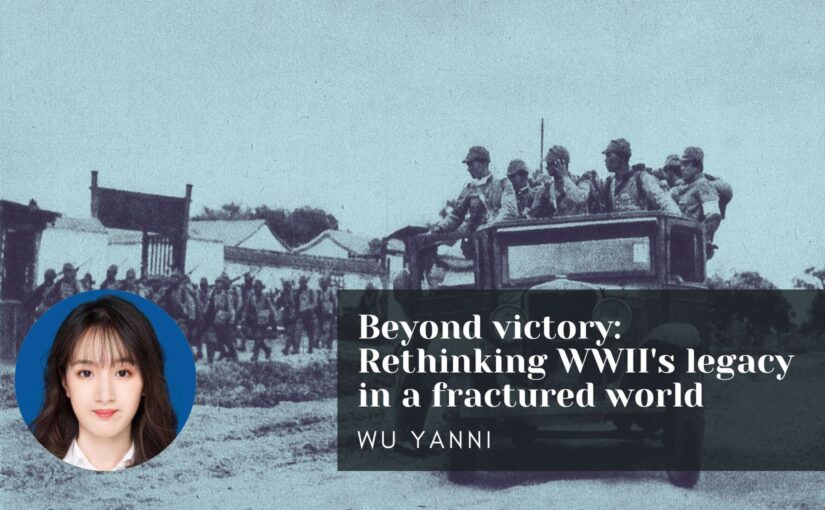
Beyond victory: Rethinking WWII’s legacy in a fractured world

We are pleased to publish below an original article by Wu Yanni, a Beijing-based political commentator and contributor to Chinese and international media, arguing that the lessons of World War II remain relevant – and indeed urgent – in today’s geopolitical context.

Marking the 80th anniversary of the victory over fascism and the founding of the United Nations, Wu stresses that the war’s devastation—100 million casualties worldwide, including 35 million Chinese lives—is a sobering reminder that militarism “leads not to greatness, but to ruin.” For China, the 14-year resistance against Japan became both a struggle for survival and part of the foundation of its modern nationhood.

A central theme is the danger of selective memory. Wu critiques attempts in Japan to downplay atrocities such as the Nanjing Massacre or Unit 731, a secret research facility in Heilongjiang, northeast China, where criminal and inhumane experiments were carried out on Chinese, Russian, Korean and other prisoners. Globally, she warns, invoking distorted history to justify present-day militarism and aggression undermines the spirit of the UN Charter and runs counter to the multipolar trend.

The article highlights the overlooked role of the Global South in the war: India’s 2.5 million volunteer soldiers, African and Latin American contributions, and Brazil’s combat role. These experiences have been marginalised and largely ignored in Western historical accounts. Wu writes:

As soldiers returned home, many questioned why they had fought for freedom abroad while being denied basic rights at home. From Vietnam to Ghana to Indonesia, national liberation movements accelerated. The 1955 Bandung Conference, where newly independent nations charted a path toward nonalignment and sovereignty, marked a turning point.

Today, however, “the Global South is no longer a silent object of history. From BRICS cooperation to African-led development frameworks and Latin American regionalism, formerly marginalised voices are demanding a say in shaping global rules.”

Wu Yanni concludes by recounting China’s peaceful rise and its consistent orientation towards inclusive development and multilateral cooperation. As such, China is helping to truly apply the lessons of WWII, “building a future where peace is sustained not by dominance but by cooperation, equity, and respect”.

War and peace have always shaped the trajectory of human civilization. This year marks the 80th anniversary of the victory in the Chinese People’s War of Resistance Against Japanese Aggression and the broader World Anti-Fascist War, as well as the founding of the United Nations.

Eighty years ago, nations came together in the wake of unprecedented devastation to chart a new path for global peace. China, along with the Soviet Union, was among the first to sign the UN Charter, an act symbolizing a shared hope that the horrors of fascism would never be repeated.

The price of that hope was staggering: over 100 million casualties, with half of humanity drawn into the conflict. For China, the war was not just a battleground against foreign invasion; it was a pivotal moment in its modern nationhood. The 14-year resistance against Japanese aggression, which cost 35 million Chinese military and civilian lives, held the Eastern Front and helped shape the moral foundation of the postwar international order.

Looking back from today’s fractured and uncertain world, the lessons of that war remain painfully relevant. Militarism, no matter how technologically advanced or ideologically justified, inevitably breeds destruction. Dominant narratives that claim moral superiority cannot contain the rising currents of multipolarity. Real peace cannot be achieved through alliances defined by exclusion. It requires a shared commitment to inclusion, fairness, and mutual respect.

Continue reading Beyond victory: Rethinking WWII’s legacy in a fractured world

Chinese Ambassador recalls wartime solidarity between Chinese and British people

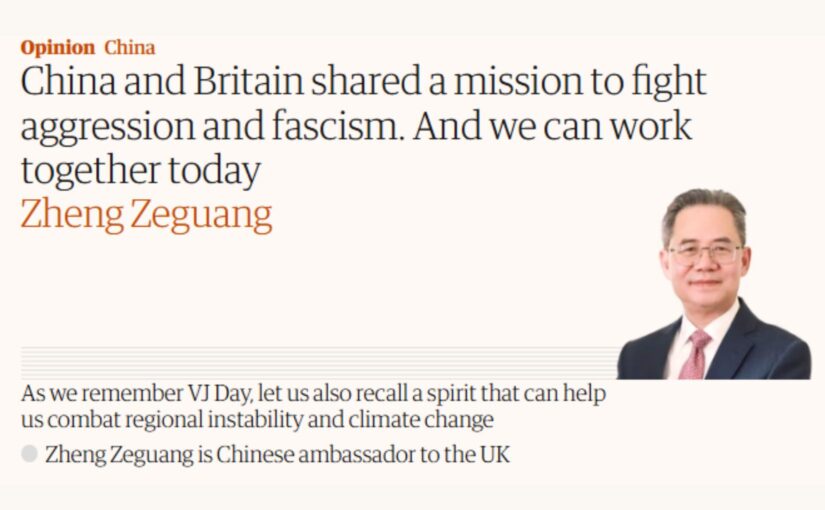
On August 15, which marked the 80th anniversary of Japan’s surrender in the Second World War, Chinese Ambassador to Britain Zheng Zeguang published an article in the Guardian newspaper entitled, ‘China and Britain shared a mission to fight aggression and fascism. And we can work together today’.

Ambassador Zheng wrote: “At the darkest hour of the Second World War, China and the UK fought on different fronts but shared a common mission: to defend humanity against fascism and aggression. Millions of lives were lost, cities razed, and families torn apart. Yet in that darkness, courage and solidarity illuminated the way forward. The Chinese and British peoples stood shoulder to shoulder, united by sacrifice and a shared belief in freedom and justice.”

Among the examples he cites:

  • In Asia, Chinese forces made immense sacrifices to support Allied efforts. In 1942, the Chinese Expeditionary Force marched over 1,500 gruelling kilometers through the jungles of Myanmar to rescue British forces trapped by Japanese troops.
  • In Britain, thousands of Chinese seamen served with quiet courage in perilous convoys. They braved the freezing Atlantic to deliver fuel and supplies to British forces on the front lines – often with little recognition and no promise of return. [In fact, thousands of them were shamefully deported after the war in an act of egregious racism by the Labour government that tore families apart forever.]
  • In October 1942, when the Lisbon Maru, a Japanese transport vessel carrying over 1,800 British prisoners of war, was mistakenly torpedoed by a US submarine… local fishermen risked their lives, dodging volleys of Japanese gunfire, to rescue 384 survivors from the sea.
  • Across the UK, ordinary citizens formed aid organisations, held fundraisers, and sent donations to support the Chinese people.
  • George Hogg, a young man from Harpenden (a one-time reporter for the Manchester Guardian) [the precursor of today’s Guardian]… journeyed to China to provide schooling and shelter for displaced children, dedicating his youth, passion and ultimately his life to a just cause. His internationalist spirit remains deeply cherished by the Chinese people. 

“History has shown,” Zheng Zeguang writes, “what China and the UK can achieve when we stand together. As we commemorate this historic anniversary, China stands ready to work with the UK to carry forward the legacy of those who came before us.”

The following is the full text of the Ambassador’s article as reproduced on the website of the Chinese Embassy in London.

This year marks the 80th anniversary of the victory in the Chinese people’s war of resistance against Japanese aggression and the world anti-fascist war. There will be a two-minute silence at 12 noon in the UK to honour the 80th anniversary of VJ Day. This is a moment not only for solemn remembrance, but also for reflection on the enduring bonds forged in the crucible of history—bonds that continue to resonate in our world today.

At the darkest hour of the second world war, China and the UK fought on different fronts but shared a common mission: to defend humanity against fascism and aggression. Millions of lives were lost, cities razed, and families torn apart. Yet in that darkness, courage and solidarity illuminated the way forward. The Chinese and British peoples stood shoulder to shoulder, united by sacrifice and a shared belief in freedom and justice.

Continue reading Chinese Ambassador recalls wartime solidarity between Chinese and British people

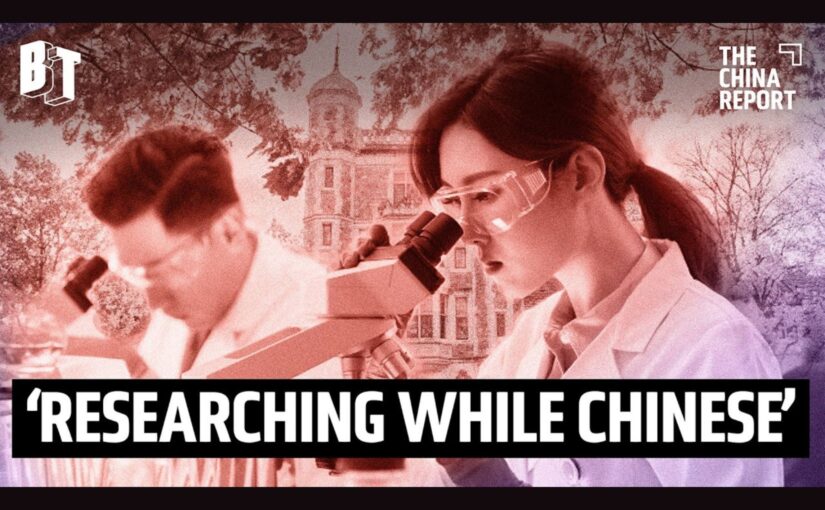
Academic witch hunt: US arrests Chinese scientists in dangerous escalation

This episode of The China Report, hosted by KJ Noh in collaboration with Pivot to Peace, focuses on the recent arrest of two Chinese researchers from the University of Michigan on US federal charges of ‘agroterrorism’. The scientists, Yunqing Jian and Chengxuan Han, are accused of smuggling biological materials into the country – fusarium graminearum, a plant fungus – without permits. Prosecutors allege these could pose a grave threat to US crops, but plant pathology experts say the fungus is already widespread in the United States, is not on any official list of dangerous pathogens, and that the researchers’ work aimed to mitigate its effects, not cause harm.

The discussion brings together three guests: Linda Wan, a University of Michigan alumna and Code Pink organiser; Julie Tang, retired judge and co-founder of Pivot to Peace; and Bob McMurray, local resident and Michigan graduate. Linda Wan, who has been helping to organise protests and petitions in defence of the scientists, frames the case as part of a broader pattern of fear-mongering and xenophobia toward China and Chinese people.

Julie Tang calls the prosecution a clear case of overcharging – padding the main allegation with lesser counts to pressure a plea deal – and situates it within the racist McCarthyite China Initiative, introduced under the first Trump presidency, which investigated hundreds of Chinese scientists in order to whip up anti-China hysteria.

Bob McMurray notes that this case follows a standard playbook for manufacturing consent for both cold and hot wars. The arrests are part of an escalating pattern of propaganda, legal overreach and racial tropes aimed at building public support for confrontation with China. This is damaging to US-China relations, to the Asian-American community, to scientific progress, and to the prospects for peace.

Trump’s tariffs against Latin America: part of a global battle

In the following Morning Star article, Francisco Domínguez (Secretary of the Venezuela Solidarity Campaign and member of Friends of Socialist China’s Britain committee) situates Donald Trump’s escalating tariff war against Latin America within a broader US imperial strategy to block the emergence of a multipolar world — particularly one shaped by China’s growing influence.

While Trump’s tariffs and other coercive economic measures often appear chaotic, their underlying goal is to “slow down, reduce and if possible, eliminate altogether” China’s alternative vision of global order, based on solidarity and mutually beneficial cooperation rather than “weaponisation of the dollar, economic sanctions or military aggression.”

Washington views the increasingly close relationship between the Community of Latin American and Caribbean States (CELAC) and China as intolerable. China has become South America’s main trading partner and Central America’s second largest, expanding beyond raw materials into infrastructure, electric vehicles, telecommunications and renewable energy. Thus China is helping the countries of the region to break out of centuries of underdevelopment imposed by North America and Europe.

Francisco argues that the US–China relationship is often misrepresented as an inevitable conflict between superpowers (a ‘Thucydides Trap’), when in reality it reflects “two different conceptions of how to organise the global economy.” The US insists on a zero-sum model that creates winners in the developed North and losers in the Global South; China promotes a model based on multipolarity, sovereignty and common prosperity.

The article concludes: “The US considers itself the ‘indispensable nation’ which has always engaged in zero-sum games whose outcome produces winners (the US and its economically developed accomplices) and losers (the vast majority of humanity who reside in the global South). Trump’s tariffs intend to keep it that way, while Latin America’s orientation towards Asia, China and the Brics is correctly pushing in the opposite direction: to a fairer, multipolar world.”

Francisco elaborates on these points in a recent interview on the Global Majority for Peace podcast, which we embed below the article.

Trump’s threat of imposing a crippling 50 per cent tariff on all Brazilian imports to the United States took everyone by surprise, especially, considering the US enjoys a trade surplus with the South American giant (surplus it has enjoyed since 2007). Lula made it clear that Brazil would reciprocate in kind.

Trump tariffs against Brazil are in line with his overall policy of applying tariffs on all countries in the world. Under Trump US imperialism seeks to establish a global system that it suits itself such that it can impose or change any rule any time it wants and attack any country it dislikes.

As with many other global institutions, Trump, following in the footsteps of previous US administrations, is prepared to run roughshod over World Trade Organisation rules that US imperialism itself was central in establishing in 1995.

Thus, his attack on Mexico is not surprising either, country with which it has a substantial trade deficit caused by its southern neighbour’s incorporation into US supply chain arrangements ever since the 1994 North American Free Trade Agreement (Nafta).

The US has had a trade deficit with Mexico ever since 1995, exactly one year after Nafta.

To Trump’s chagrin, Mexican President Claudia Sheinbaum has vigorously defended her country’s sovereignty and has skilfully navigated US provocations.

To the charge of Mexico being a drug-trafficking hub, she has pointed out to US negotiators that the “the US itself harbours cartels, is the largest narcotic consumer market, exports the majority of armaments used by drug barons and hosts money-laundering banks.” She has also resolutely refused the deployment of US troops on Mexican soil.

Continue reading Trump’s tariffs against Latin America: part of a global battle

At the UN Security Council and on the streets of Taipei, Chinese people speak out for Palestine

China has firmly condemned the Israeli government’s genocidal plan to reoccupy Gaza.

Speaking at a United Nations Security Council meeting on August 10, Ambassador Fu Cong said that: “The Gaza conflict has persisted for 22 months, leading to over 61,000 civilian deaths and resulting in an unprecedented humanitarian catastrophe… Given the urgency at hand, the international community, including the Security Council, must take all necessary actions before a greater disaster unfolds.”

He then put forward ‘four musts’:

  • Any attempt to occupy Gaza must be firmly opposed. Gaza belongs to the Palestinian people. It is an integral part of the Palestinian territory. Any action that seeks to alter its demographic and territorial structure must be met with utmost rejection and resistance.
  • The illusion of military supremacy must be abandoned… The country with significant influence over the parties must uphold a just and responsible stance and take concrete steps to push forward a ceasefire. [Referring to the United States, which was alone among Security Council members in refusing to criticise Israeli actions.]
  • The humanitarian disaster in Gaza must be alleviated. Gaza is on the verge of famine, with nearly 200 people having already died of starvation. Israel issued forced evacuation orders one after another, affecting over 87% of the Gazan territory and repeatedly displacing more than 1.9 million people. The lives of two million Gazans must not be the sacrifice of the war. The weaponisation of humanitarian supplies is unacceptable. The collective punishment of the Gazan people is unacceptable. Attacking civilians and humanitarian workers as they search for supplies is equally unacceptable.
  • The prospect of the two-State solution must be reinvigorated. Implementing the two-State solution is the only viable path to resolving the Palestinian question.

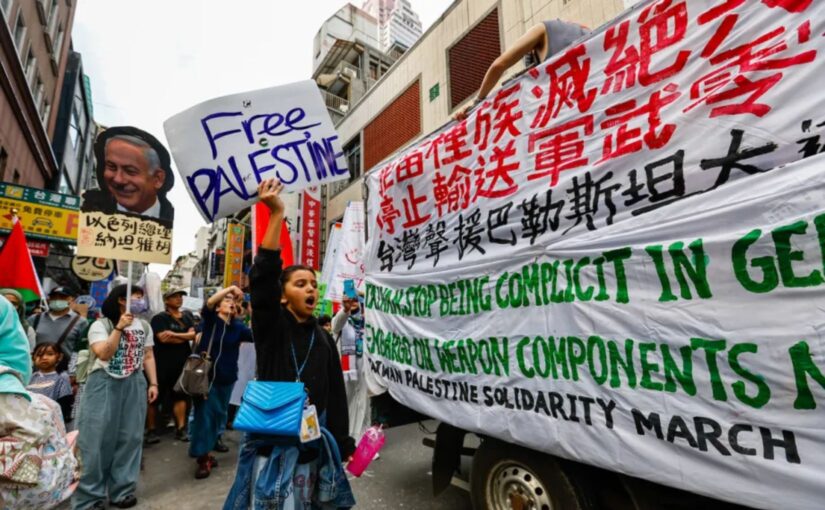
Meanwhile, on August 3, the Middle East Monitor, citing the Andalou News Agency, reported that hundreds of pro-Palestinian activists in Taipei, capital of China’s Taiwan, banged pots and pasted mock banknotes smeared with red dye symbolising blood on Israeli and Taiwanese separatist flags outside Taiwan’s “Foreign Ministry”. They accused Taipei’s envoy to Israel of pledging money to a health centre inside an illegal Israeli settlement in the occupied West Bank and demanded that the Taiwan authorities halt all financial assistance to Israel. The website noted that Taiwan, “has deepened ties with Israel since the Gaza war erupted nearly two years ago. It has launched a parliamentary friendship group, donated $500,000 to Israeli medical patrols, opened a reciprocal working-holiday program, as well as encouraged technology and trade cooperation.”

The Taiwan International Workers Association, which fights for the rights and interests of migrant workers on the island, says that several Taiwanese firms supply components used in American and Israeli weapons systems.

The following articles were originally published on the website of the Chinese UN Mission and by Middle East Monitor.

Remarks by Ambassador Fu Cong on the Palestinian-Israeli Issue at the UN Security Council Briefing

President,

China supports the initiative of the United Kingdom, Denmark, France, Greece, and Slovenia to convene this meeting. We also thank Assistant Secretary-General Miroslav Jenča and Mr Ramesh Rajasingham for their briefings.

Continue reading At the UN Security Council and on the streets of Taipei, Chinese people speak out for Palestine

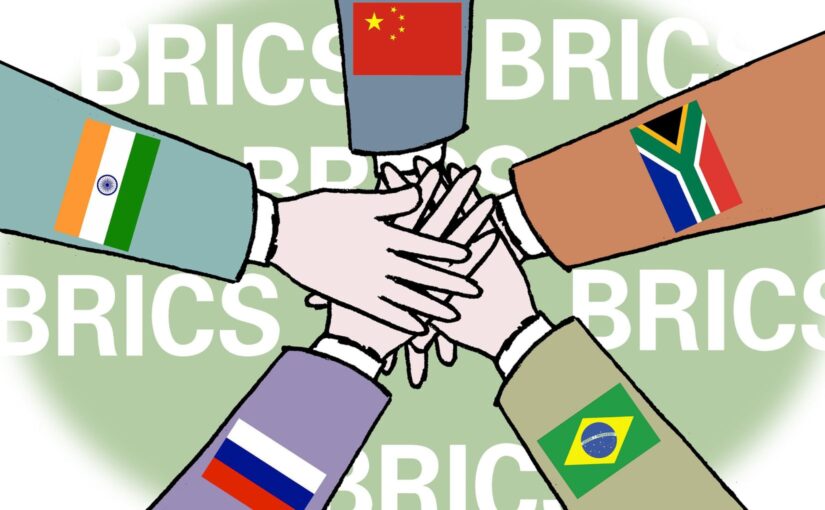
Trump makes BRICS great again

As Russian President Vladimir Putin and US President Donald Trump prepare to meet in the current US state and former Russian territory of Alaska on August 15 for talks centred on the conflict in Ukraine, they do so against a wider diplomatic background of engagements among the Global South, with BRICS+ in the lead, and triggered not least by the indiscriminate bullying tactics on the part of Trump.

Faced with the shameless bullying and arbitrary economic punishment beating on the part of the United States, not least in support of Trump’s fascist friend, former President Jair Bolsonaro, Brazilian President Luiz Inácio Lula da Silva has conducted telephone diplomacy to coordinate positions with his Chinese, Russian and Indian counterparts.

On August 12, President Xi Jinping spoke with President Lula for one hour, at the latter’s request.

Xi Jinping pointed out that China-Brazil relations are at their best in history, with a good start and strong momentum in building the China-Brazil community with a shared future and aligning development strategies. China is ready to work with Brazil to seize opportunities, strengthen coordination, deliver more mutually beneficial cooperation outcomes, set an example of uniting for strength among major Global South countries, and build a more just world and sustainable planet.

Luiz Inácio Lula da Silva briefed on Brazil’s current relationship with the United States and Brazil’s principled stance on firmly safeguarding its sovereignty. He appreciated China’s efforts to uphold multilateralism and free trade rules, and its responsible role in international affairs. Brazil is ready to enhance communication and coordination with China within BRICS and other multilateral mechanisms, oppose unilateralism and bullying acts, and safeguard the common interests of all countries.

Xi Jinping said that China supports the Brazilian people in defending national sovereignty and supports Brazil in safeguarding its legitimate rights and interests. Countries should unite in unequivocally opposing unilateralism and protectionism. The BRICS mechanism is an important platform for building consensus in the Global South. He congratulated Brazil on successfully hosting the BRICS Summit. Global South countries should join hands to uphold international fairness and justice, safeguard the basic norms governing international relations, and protect the legitimate rights and interests of developing countries.

Their conversation was preceded by an August 6 call between Foreign Minister Wang Yi and Brazilian Chief Advisor to the Presidency Celso Luiz Nunes Amorim, again at the latter’s request.

Wang Yi said that China resolutely supports Brazil in defending its state sovereignty and national dignity and opposes groundless interference in Brazil’s internal affairs by external forces. China firmly supports Brazil in protecting its development rights and interests and resisting the bullying practices of arbitrary tariffs. China firmly supports Brazil in strengthening solidarity and cooperation among the Global South through the BRICS mechanism and promoting strength through unity among developing countries. Using tariffs as a weapon to suppress other countries runs counter to the purposes of the United Nations Charter and undermines WTO rules. Such practices will win no support and cannot be sustained. China is ready to work with Brazil to fully implement the important common understandings reached by the two heads of state, deepen bilateral cooperation, enrich the strategic dimension of the China-Brazil community with a shared future, and effectively offset external uncertainties through the stability and complementarity of bilateral cooperation.

Celso Amorim noted that the profound friendship, strong mutual trust, and fruitful pragmatic cooperation between the two countries are truly commendable. Brazil is willing to work with China to fully implement the common understandings reached between the two heads of state and deepen cooperation in various fields such as trade and finance. The United States’ imposition of high tariffs on Brazil has disrupted normal economic and trade relations and interfered in Brazil’s internal affairs, which Brazil firmly opposes. Brazil thanks China for its steadfast support and is willing to work with China to promote the improvement and development of the BRICS mechanism, enhance solidarity and self-strength among the Global South, and uphold international fairness and justice.

What is also noteworthy is that relations between China and India are significantly improving.

On August 13, the financial news service Bloomberg reported that, “Prime Minister Narendra Modi is drawing closer to the BRICS countries after US President Donald Trump hit the South Asian nation with a 50% tariff.

“Modi’s latest move is to resume direct flights with China as soon as next month, said people familiar with the negotiations who asked for anonymity to discuss private matters. The deal could be formally announced when Modi is expected to head to China for the first time in seven years and meet leader Xi Jinping at the Shanghai Cooperation Organisation held in Tianjin from Aug. 31…

“Modi’s economic calculus was fundamentally altered this month when Trump doubled tariffs on Indian goods to 50% as a penalty for its purchases of Russian oil. The US president’s remarks that India’s economy was ‘dead’ and its tariff barriers ‘obnoxious’ further strained relations.”

The report added: “The Adani Group [of billionaire Gautam Adani, currently facing a US court indictment] is exploring a tieup with Chinese EV giant BYD Co. that would allow… Adani’s conglomerate to manufacture batteries in India and extend its push into clean energy, according to people familiar with the matter.”

Moreover, prior to his Alaska visit, Vladimir Putin also had a telephone conversation with Xi Jinping on August 8, at the request of the Russian President.

President Putin briefed Xi Jinping on Russia’s views on the current situation of the Ukraine crisis and the recent contact and communication between Russia and the United States, adding that Russia highly appreciates the constructive role China has been playing in the political settlement of the crisis. He stated that the comprehensive strategic partnership of coordination between Russia and China will not change under any circumstances.

Xi Jinping said that no matter how the situation evolves, China will maintain its consistent position and continue promoting talks for peace. China welcomes contacts between Russia and the US to improve bilateral ties and advance the process of realising a political settlement of the crisis.

Both sides said they will make concerted efforts in preparation for the Shanghai Cooperation Organisation (SCO) Tianjin Summit to ensure a successful gathering of friendship, solidarity and fruitful results.

This call was one of a number made by the Russian President to brief and discuss with friendly leaders in the Global South ahead of his meeting with Trump. They include – in the order reported by the Russian President’s website – the leaders of South Africa, Uzbekistan, Kazakhstan, Belarus, India, Brazil, Tajikistan, Kyrgyzstan, Armenia, and the Democratic People’s Republic of Korea (DPRK).

Continue reading Trump makes BRICS great again

Wales mobilises against AUKUS

Campaigners in southwest Wales say that their campaign against the local installation of US ‘space war’ radar is continuing to grow following an August 7 demonstration along the Pembrokeshire coastline.

Local group PARC Against DARC has been campaigning against Ministry of Defence (MoD) plans to build 27 radar dishes at the local Cawdor Barracks. They are considered to be an integral part of the tripartite AUKUS project that threatens war against China. (PARC  = Pembrokeshire Against Radar Campaign; DARC = Deep Space Advanced Radar Capability)

Reporting the launch of the project on December 2, 2023, the Pembrokeshire Herald wrote:  “This pioneering initiative aims to significantly bolster the defence capabilities of AUKUS nations (Australia, the UK, and the US) by providing 24/7, all-weather capabilities to monitor objects as far as 36,000 kilometers away from Earth.”

Uncritically regurgitating British government propaganda, it added: “AUKUS, a landmark security and defence partnership, is set to benefit significantly from DARC, marking a significant step forward in delivering enhanced security capabilities among the partner nations and supporting a free and open Indo-Pacific region.”

The paper did however report a spokesperson for the Campaign Against the Arms Trade (CAAT) as insisting that “The huge sums of money involved would be far better spent building fairer and more equal societies here rather than further militarising space.”

Reporting the August 7 protest, the Morning Star quoted PARC Against DARC campaigner Jim Scott as saying: “ “We believe [it] is intended to allow the US to make a first strike against… China without fear of retaliation, threatening to encumber the world with even more economic and military subservience to America at a time when it has such little regard for international law that it is openly arming a live-streamed genocide in Gaza and the West Bank.”

The following article was originally published in the Morning Star.

More information on the excellent work of PARC Against DARC, including a short introductory video, can be found on its website. It reports that, at its October 2024 conference, the Welsh nationalist party Plaid Cymru unanimously voted to support the campaign. Current polls suggest that Plaid Cymru, which celebrated its 100th birthday on August 5, has become the most popular party in Wales, with support for Labour collapsing. Elections to the Senedd (Welsh Parliament) are due in 2026.

Public opposition to plans for a US space radar array in Pembrokeshire “just seems to grow and grow,” campaigners said today, following a demonstration on the famous Welsh coastline.

In action organised by the pressure group PARC (Pembrokeshire Against Radar Campaign), locals linked hands on Newgale beach to protest against Ministry of Defence (MoD) plans to build 27 radar dishes at Cawdor Barracks in Brawdy, Pembrokeshire, known as Darc.

PARC campaigner Jim Scott said: “Although Darc is a hangover from Biden’s AUKUS pact between the US, the UK and Australia, its purpose of allowing the US to target and shoot down other nations’ satellites is exactly in line with Donald Trump’s outrageously aggressive and wasteful plan to create a multi-trillion-dollar ‘Golden Dome’ of satellite weaponry.

“We believe [it] is intended to allow the US to make a first strike against other superpowers like China without fear of retaliation, threatening to encumber the world with even more economic and military subservience to America at a time when it has such little regard for international law that it is openly arming a live-streamed genocide in Gaza and the West Bank.”

The group has “no intention of easing up our pressure on UK and Welsh Labour decision-makers, and their refusal to live up to their jobs as public servants,” he added.

Brian Jones, of Campaign for Nuclear Disarmament Wales, said: “I do wonder how much longer we can walk that tightrope of countries having nuclear weapons poised to launch at a moment’s notice, and there won’t be time to check if something was just a mistake, a false reading, or a miscalculation.”

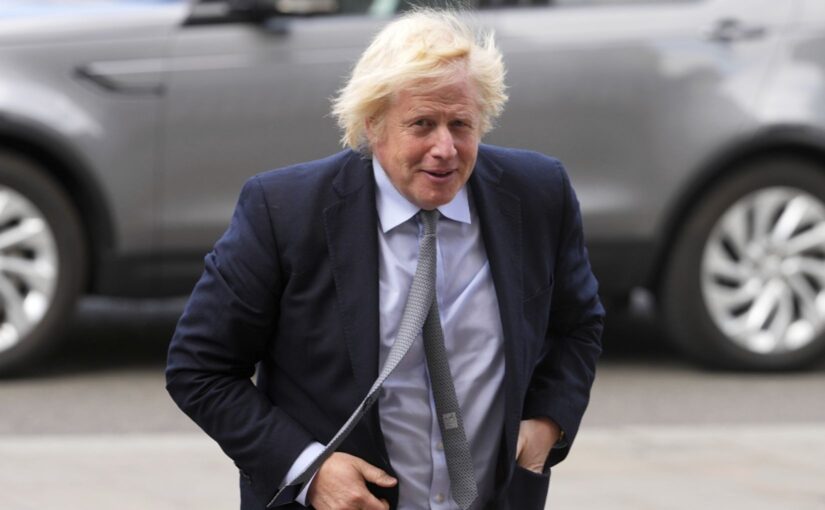
Boris Johnson plays the fool in Taiwan with provocative remarks against China and Palestine

Serial buffoon and former British Prime Minister Boris Johnson recently visited China’s island province of Taiwan, where, participating in the Ketagalan Forum, a security confab, he made a series of absurd and provocative remarks, not only encouraging the separatist forces seeking to divide China but even going so far as to claim that Taiwan has a “far more robust” claim to statehood than Palestine.

Posting on X/Twitter, our co-editor Carlos Martinez aptly described Johnson as a clown and noted, “the closer parallel is actually between Taiwan and Israel. Both are essentially colonial projects designed to facilitate US power projection and to undermine Global South sovereignty.

“As Mao Zedong said in 1965, ‘Israel and Taiwan are bases of operation for imperialism in Asia. They created Israel for the Arabs and Taiwan for us. They both have the same objective.’

“And it’s no coincidence that Taiwan consistently supports Israel whereas China consistently supports Palestine. [Taiwan even made a big show recently of donating to illegal and fascist settlers in the occupied West Bank.]

“The correct anti-imperialist position is therefore: One China, Free Palestine.”

In a commentary, the website Middle East Monitor called out Johnson for “dismissing the UK’s historic responsibility for Palestinian statelessness and misrepresenting norms around international recognition of states.” It added:

“Johnson’s comments contradict the legal and diplomatic realities. As of August 2025, Palestine is recognised by… a majority of UN member states and the overwhelming majority of states in the Global South. By contrast, Taiwan is recognised by just 12 countries, with most of the international community upholding the One-China policy.

“In a column for the ‘Daily Mail’, Johnson accused UK Prime Minister Keir Starmer of capitulating to ‘Hamas propaganda’ and described the move to recognise Palestinian statehood as ‘craven and pathetic.’

“Yet Johnson’s framing has been criticised for omitting the fact that Palestine’s right to statehood is affirmed in numerous UN resolutions, and that its pursuit of self-determination predates the formation of Hamas in 1987. It has further been pointed out that Israel’s borders remain undefined under international law, as claims to territory beyond the 1967 Green Line have been consistently rejected by the UN Security Council and ruled unlawful by the International Court of Justice.

“Palestinians and legal scholars have pointed to Britain’s own colonial history as a direct cause of Palestinian dispossession… Palestinians view the UK as bearing a direct historical responsibility for creating the conditions that have led to decades of occupation, apartheid, and now genocide in Gaza.”

Continue reading Boris Johnson plays the fool in Taiwan with provocative remarks against China and Palestine

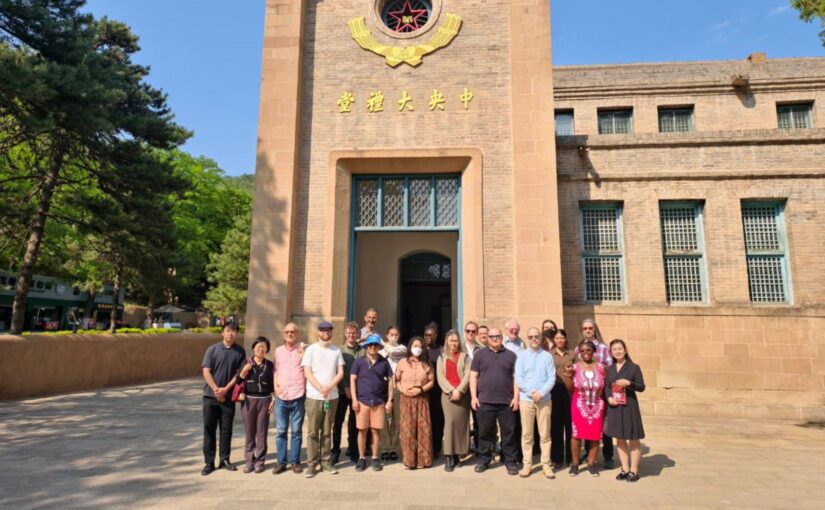
Interview: China shows socialism is the future

Sydney Loving, a Central Committee member of the Freedom Road Socialist Organization, joined the 2025 Friends of Socialist China delegation on a ten-day visit to Xi’an, Yan’an, Dunhuang, Jiayuguan, and Shanghai. The trip, hosted by the China NGO Network for International Exchanges, aimed to deepen solidarity, build understanding of the Global Civilisation Initiative, and counter Western Cold War lies about China.

In the interview below, originally published in FightBack News, Sydney emphasises that China’s achievements must be seen in the context of its pre-1949 poverty, war, and foreign domination. Visiting Yan’an, the cradle of the revolution, underscored how the Communist Party of China (CPC) grounded itself in the masses. Today, after 76 years of socialist construction, China has lifted hundreds of millions out of extreme poverty, raised life expectancy to over 79 years, and built a high-tech, increasingly green economy.

Daily life in China, Sydney observes, contrasts sharply with US cities: clean, walkable streets, safety for pedestrians, abundant public spaces, and virtually no homelessness. Historical and cultural heritage is actively preserved and made accessible. In poorer Gansu Province, projects like the JISCO steel complex, solar power plants, and ecological greening of desert areas illustrate the link between poverty alleviation and environmental sustainability.

Sydney stresses the CPC’s visible role in daily life, from free medical checkups to street sanitation, with leadership positions earned by serving the people rather than by spending money on marketing. She argues that socialism’s central planning and mass mobilisation achieve outcomes capitalism simply cannot.

For US revolutionaries, the lesson is twofold: socialism works, and the main obstacle to global peace and dignity is US imperialism. While China’s path cannot be copied directly, its example shows that a people-centred, revolutionary movement is possible.

Fight Back!: How did you go to China? What was the purpose of the trip?

Sydney Loving: The delegation was organized by Friends of Socialist China, a political project aiming to strengthen understanding and support for China on the basis of solidarity and truth. I repped Freedom Road Socialist Organization, and the delegation included folks from Black Alliance for Peace, Workers World, Progressive International, Communist Party of Britain Young Communist League, Black Liberation Alliance, Qiao Collective, Iskra Books, and others.

We were invited by the China NGO Network for International Exchanges, and over ten days we visited Xi’an, Yan’an, Dunhuang, Jiayuguan, and Shanghai.

Traveling to a range of areas, we got to investigate how China is building socialism, the incredible advances they’ve made in 76 years of socialist construction, and we had awesome dialogues about how we can better counter the negative narratives and Cold War-type lies we’re bombarded with in the West. Ultimately what we found was a country led by a forward-thinking political party, with a purpose that’s carving out a better future for everybody.

Continue reading Interview: China shows socialism is the future

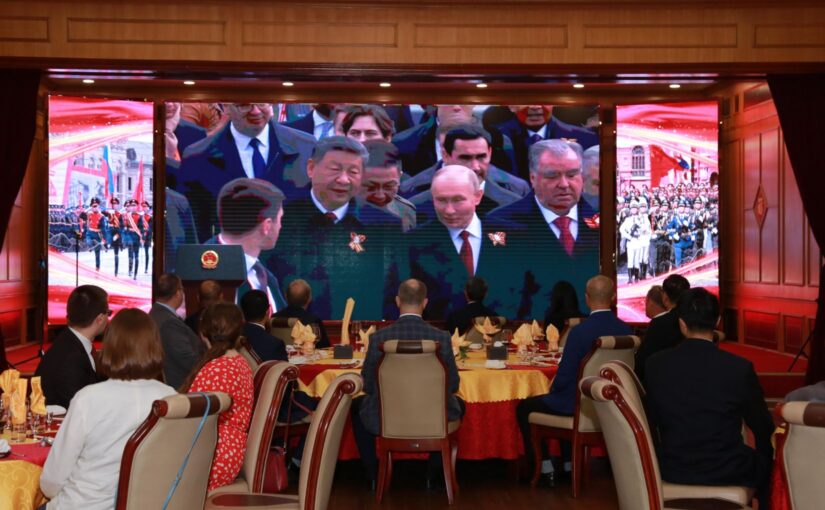
Chinese and Russian diplomats celebrate anti-fascist victory in DPRK

Chinese and Russian diplomats in the Democratic People’s Republic of Korea (DPRK) jointly commemorated the 80th anniversary of the victory of the Chinese People’s War of Resistance Against Japanese Aggression and the World Anti-Fascist War on July 31.

Chinese Ambassador Wang Yajun said that 80 years ago, China and the Soviet Union fought side by side and supported each other, won the War of Resistance Against Japanese Aggression and the Great Patriotic War on their respective battlefields, and made significant historical contributions to the victory of the world anti-fascist war. In May this year, President Xi Jinping attended a celebration commemorating the 80th anniversary of the victory of the Soviet Union in the Great Patriotic War. In September, President Putin will also attend the 80th anniversary of the victory of the Chinese People’s War of Resistance Against Japanese Aggression.

Russian Ambassador Alexander Matsegora congratulated the Chinese people on the 80th anniversary of the victory in the War of Resistance Against Japanese Aggression, saying that the Russian and Chinese peoples made the greatest sacrifices in the European and Pacific theatres respectively and played a decisive role in the struggle to defeat German Nazism and Japanese militarism.

The following article was originally published in Chinese on the website of the Chinese Embassy in the DPRK and has been machine translated.

On July 31, 2025, Ambassador Wang Yajun and Russian Ambassador to the DPRK Matsegora led diplomats from the Chinese and Russian embassies in the DPRK in a friendly exchange event to commemorate the 80th anniversary of the victory of the Chinese People’s War of Resistance Against Japanese Aggression and the World Anti-Fascist War. The event was attended by Minister Feng Chuntai of the Chinese Embassy in the DPRK, Defense Attaché Major General Wang Yisheng, Counsellor Gao Wu, and Counsellor Xu Feng, as well as Minister Counsellor Topeha, Defense Attaché Major General Batusov, and Political Counselor Shutov of the Russian Embassy in the DPRK.

Ambassador Wang stated that 80 years ago, China and the Soviet Union fought side by side and supported each other, achieving victory in the War of Resistance Against Japanese Aggression and the Great Patriotic War on their respective fronts, making significant historical contributions to the victory of the World Anti-Fascist War. In May of this year, President Xi Jinping attended the celebrations commemorating the 80th anniversary of the Soviet Union’s victory in the Great Patriotic War. In September, President Putin will also attend the commemorations of the 80th anniversary of the victory of the Chinese People’s War of Resistance Against Japanese Aggression. China is willing to work with Russia, guided by the important consensus reached by the two heads of state, to remember history, cherish the memory of the martyrs, promote a correct view of World War II history, safeguard the achievements of World War II and the post-war international order, and uphold international fairness and justice and regional peace and stability.

Ambassador Matsegora congratulated the Chinese people on the 80th anniversary of the victory of the War of Resistance Against Japanese Aggression. He stated that the Russian and Chinese peoples made the greatest sacrifices in the European and Pacific theaters, respectively, and played a decisive role in defeating German Nazism and Japanese militarism. Russia has always advocated peace and hopes to create a peaceful and stable environment for economic development and improving people’s livelihoods. The international community should work together to build a just and peaceful international order and ensure equal rights for all nations and peoples.

The two sides jointly watched a video commemorating the victory of the Chinese People’s War of Resistance Against Japanese Aggression and the victory of Russia’s Great Patriotic War. Chinese and Russian diplomats respectively recited the poem “The Eternal Torch” and sang the song “Blood Type” to express their remembrance of history and their cherishment of peace.

Chinese Consulate marks a decade of building friendship with Northern Ireland

On July 21, China’s Consul General in Belfast, Northern Ireland, Li Nan published a signed article entitled ‘A Fruitful Decade Marks a New Phase of China-NI Relationship’ in the Irish News newspaper, celebrating the consulate’s 10th anniversary.

Li Nan acknowledges the important role played by the late senior Sinn Féin leader Martin McGuinness in the establishment of the consulate:

“Ten years ago, Chinese Foreign Minister Wang Yi visited Northern Ireland and together with then Deputy Minister Martin McGuinness and Finance Minister Arlene Foster, witnessed the inauguration of the Chinese Consulate General in Belfast… Since then, the relationship between China and Northern Ireland has entered a new chapter.

“Over the past decade, from sincere mutual trust and pragmatic cooperation to strong people-to-people exchanges, the Consulate General has worked hand in hand with all sectors of NI society to continuously elevate local exchanges and cooperation.”

Updating the story, Li Nan writes: “In recent years, H.E. Zheng Zeguang, the Chinese Ambassador to the UK, has visited Northern Ireland twice, meeting with the First Minister, the Deputy First Minister, the Speaker of the Assembly, and representatives from various sectors. He also attended China–UK/NI forums on new energy and education in 2023 and 2024 respectively, promoting the deepening of practical bilateral cooperation. In 2024, H.E. Qibatu, Vice Chairman of the Inner Mongolia Autonomous Region, visited Northern Ireland to explore opportunities for expanding agricultural cooperation. In 2025, H.E. Wu Yan, Vice Minister of Education of China, led a delegation to Northern Ireland and held in-depth discussions on enhancing high-level educational cooperation.”

Northern Ireland has established sister-province relations with Hubei and Liaoning, along with seven sister-city relations, including those between Belfast and Shenyang, Derry/Londonderry and Dalian, and Fermanagh and Huangshi.

On the economic front, China is Northern Ireland’s second-largest import market and its 12th-largest export market. Bilateral trade has reached and stabilised at around £1 billion for several consecutive years, demonstrating strong resilience and vitality.

“Well-known companies, including Lakeland Dairies, Cranswick Country Foods Ballymena, Old Bushmills Distillery, and Mallaghan Engineering Ltd, have maintained close ties with the Chinese market, with their exports continuing to grow steadily. Chinese brand BYD’s electric vehicles can now be seen on the streets of Northern Ireland, while specialty products from Northern Ireland, like whiskey, pork, and dairy products are making their way onto Chinese dining tables.”

Continue reading Chinese Consulate marks a decade of building friendship with Northern Ireland

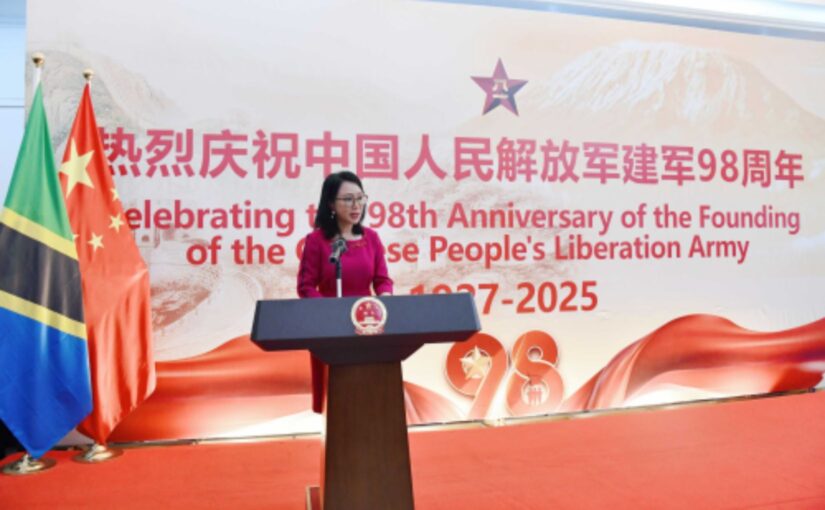
Chinese Ambassador reaffirms special relationship with Tanzania

Chinese Ambassador to Tanzania Chen Mingjian has strongly reaffirmed the historic friendship between the two countries.

Addressing a late July reception celebrating the 98th anniversary of China’s People’s Liberation Army (PLA) she stated:

“I would like to avail this opportunity to honour the deep, broad and robust relations between China and Tanzania. China has always regarded Tanzania as our best friend and placed the development of friendly relations with Tanzania in an important position in our foreign relations. China-Tanzania traditional friendship is forged by our older generation of leaders of the two countries, including Chairman Mao Zedong and President Julius Nyerere. From the struggles for national liberation, to the pursuit of national rejuvenation, and to the march towards modernisation, we have always stood together through thick and thin, and supported each other, thus tightening our bilateral bond stronger and stronger and pushing our bilateral relations higher and higher.”

She also said: “This celebration is a venue to review the history of the Chinese PLA, which was created by the Communist Party of China on 1st August 1927. During the past 98 years, the Chinese PLA has made indelible achievements in realising national independence, liberating the Chinese people, and making China prosperous and strong. In recent years, China’s PLA has been steadfast on the way to realise the centenary goal in 2027. It has intensified troop training and enhanced combat preparedness across the board, accelerated the transformation and upgrading of military training, strengthened new-domain forces with new combat capabilities, and enhanced the ability to win informatised and intelligent warfare.”

The previous week, in an interview with Tanzania’s Guardian newspaper, Ambassador Chen said: “The recent development of China-Tanzania relations comes from our common past. The special relationship can date back to the leadership of the founding fathers of our two nations. We will never forget how Chairman Mao Zedong, Premier Zhou Enlai and Tanzanian President Julius Nyerere, and Vice President Abeid Karume nurtured our unbreakable traditional friendship with sincerity and good faith in the old days. From then on, China and Tanzania share a long-standing strong relationship built on mutual respect and mutual trust. No matter how the international situation changes, no matter what challenges we face, and no matter what kind of disturbance and disruption we encounter, the traditional friendship between China and Tanzania has withstood the test of time and is getting stronger with time.”

She also recalled that President Xi Jinping visited Tanzania right after assuming office (along with Russia, the Republic of Congo and South Africa).

The Guardian also posted the video of the interview and reported the reception for the PLA anniversary.

The following articles were originally published on the website of the Chinese Embassy in Tanzania and are reprinted here from that of the Chinese Foreign Ministry.

Speech of Chinese Ambassador to Tanzania Chen Mingjian at the Reception in Celebration of the 98th Anniversary of Chinese PLA

July 25 (MFA) – Honorable Lieutenant General Salum Haji Othman, Chief of Staff, Tanzania Peoples’ Defence Forces,
Honorable Rear Admiral Hassan, Tanzania Navy Commander,
Honorable Major General Kodi, Chief of Logistics and Engineering, TPDF,
Honorable Major General Ibuge, Commandant of Tanzania National Defence College,
Excellencies,
My Fellow Chinese Nationals,
Dear Guests, Ladies and Gentlemen,

Good evening! Habari za jioni!

Continue reading Chinese Ambassador reaffirms special relationship with Tanzania

China’s planning holds lessons for Britain – Morning Star

The Morning Star published a significant editorial on August 5 arguing that historic Soviet and contemporary Chinese economic and social planning can provide valuable lessons and reference material for developing a progressive agenda for Britain.

It notes that in 1931 the London publishers Jonathan Cape brought out a 218-page book ‘Moscow has a Plan’, which “contrasted the crisis conditions in the Depression-era economies of the capitalist West with the great progress being made in constructing the Soviet Union’s socialist economy. [It was] remarkably free of hyperbole and grounded in the hard-headed realism of people directly building socialism.” (A full PDF of the book is available here.)

The editorial continues: “Today China is preparing for the next stage in its economic and social development with its fourteenth economic plan. The conditions are vastly different but understanding the continuities between the stellar success of the early Soviet economy and China’s contemporary achievements is critical.”

The editorial grounds these continuities in the fact that, “In the year the book was published in an English translation Stalin warned the Soviet peoples that they had a decade in which to prepare for an attack from the West. It was to the success of their planned socialist economy – combined with a vast patriotic and internationalist mobilisation – that the Nazi extermination machine was itself exterminated.”

Likewise, “A quarter of all World War II casualties were Chinese with 20 million dead, and the Chinese communists took power in a backward country ruined by Japanese occupation and civil war.”

China, it argues, has been remarkably creative in finding ways to integrate into the global capitalist economy, tap into advanced technologies, find markets for their expanding industries and has leveraged the socialist and planned elements in their economic management to challenge the capitalist world.

It also affirms the emphasis placed on expanding the social security, health and education sectors, in perfecting urban planning and in shifting to a carbon neutral economy.

Continue reading China’s planning holds lessons for Britain – Morning Star

Hong Kong China makes rugby history with World Cup qualification

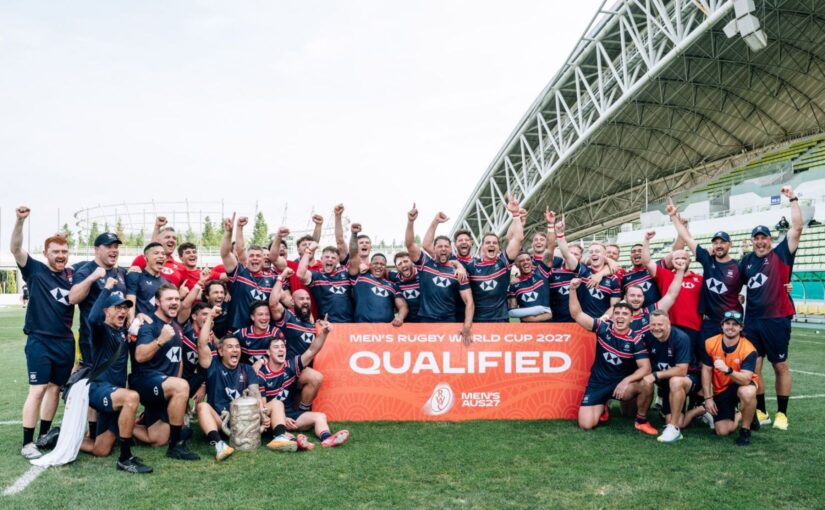
Hong Kong China has become just the second Asian side, after Japan, to qualify for the men’s Rugby World Cup, following a decisive 70-22 thrashing of South Korea in Incheon on July 5, which also saw them win the Asia Rugby Emirates Men’s Championship Trophy for a sixth consecutive time.

Having now automatically qualified to compete in the 2027 World Cup in Australia, the men’s team follows in the footsteps of Hong Kong China Women’s 15s, who took part in the Women’s Rugby World Cup 2017 in Ireland.

Hong Kong China Rugby (HKCR) Chairman, Chris Brooke said: “Our sport has thrived in Hong Kong in recent years, thanks to the continued global success of the Cathay/HSBC Hong Kong Sevens, the tireless efforts of our senior, community, youth and mini clubs, as well as the continued expansion of school and summer programmes, touch rugby leagues and our Official Charity Rugby For Good. Qualifying for a Men’s World Cup is a historic moment that will act as a further catalyst for growth at all levels of the game.”

For historical reasons, much of the present first 15 is still comprised of members of Hong Kong’s expatriate community from established rugby playing nations. However, 49 caps winner Yiu Kam Shing now leads several key HKCR programmes that identify, recruit and develop local talent into rugby. He spoke of the significance that a World Cup appearance can have on the next generation of players:

“Having our men’s team at a Rugby World Cup will grow the profile of the sport in Hong Kong even further. In the tournament, Hong Kong China will be playing against the world’s best-known teams and biggest superstars, and I believe that boys and girls across Hong Kong will watch these matches and be inspired to play the game.”

One person key to Hong Kong China’s growing rugby success is Lewis Evans, former captain of Dragons RFC (Clwb Rygbi Dreigiau) in Newport, south Wales, who has been working with the side since 2021 and was on the management team for the sixth successive Asia Rugby Championship triumph. He told the BBC:

“We aren’t going to win the World Cup, but look at what Portugal did last time, we want to be the darlings of the tournament… Facing South Africa, Ireland, New Zealand, England would be very tough, but if you can’t build yourself up for that… Expansion of the World Cup is important to give emerging nations the chance to be on that big stage trying to compete.”

Highlighting the strong Welsh contribution to the development of Hong Kong rugby, the article noted:

“Evans is following in the footsteps of the likes of Leigh Jones, Dai Rees and Will Thomas in Hong Kong and is part of a sizeable Welsh contingent featuring former Cardiff coach Paul John, ex-Dragons forward Jevon Groves, former Dragons and Ospreys back Tom Isaacs and ex-Newport RFC favourite Adam Frampton.”

The following article was originally published on the official website of Hong Kong China Rugby.

Hong Kong China Men’s 15s overcame Korea 70-22 in Incheon this afternoon, and in doing so lifted the Asia Rugby Emirates Men’s Championship Trophy for a sixth consecutive time.

More importantly for this year, the Asia Rugby title has rewarded Hong Kong China with automatic qualification to the Men’s Rugby World Cup 2027 in Australia, as World Rugby’s flagship tournament expands to 24 teams for the 2027 edition and beyond. 

Continue reading Hong Kong China makes rugby history with World Cup qualification

China honours communist composer Theodorakis on his centenary

Special concerts celebrating the 100th anniversary of the birth of legendary Greek communist composer Mikis Theodorakis were held in three Chinese cities from July 29 to August 2. They marked the first time for the composer’s work to be performed in China, a country he had long wished to visit but failed to realise before his death on September 2, 2021.

Known for his film scores, including the iconic music for ‘Zorba the Greek’, Theodorakis’ compositions often blend traditional Greek music with classical and contemporary styles, creating a unique and powerful sound.

Minister Counselor and Chargé d’Affaires ad interim of the Greek Embassy in Beijing Alexandros Vidouris told Global Times that the loud applause during the performance was way beyond his expectations.

“It was a dream of composer Theodorakis to have his work performed in China. Unfortunately, he could not come before he passed away. So, this was a very significant moment in his memory commemorated yesterday [July 29], a hundred years since the day he was born,” he said.

Maria Papageorgiou, a classical and classical crossover performer, added: “Theodorakis was a global composer, because he had strength and was willing to bring all people together in peace and protest for their rights, or for their love and their country.”

The Greek Reporter  also reported on the concerts.

In a separate article, it reviewed the composer’s life: “The shadow of war, however, soon fell over his formative years. The German occupation during World War II and the subsequent Greek Civil War were not just historical events; they were lived experiences that forged his unwavering commitment to justice and human rights. He joined the resistance, faced arrests, torture, and exile – trials that would forever infuse his music with raw, visceral power.”

Noting how his music combined classical techniques while remaining true to his roots, the article continued: “It was this unique synthesis that allowed him to bridge the gap between popular music and high art. He took the poetry of Greece’s greatest literary figures – Nobel laureates like George Seferis and Odysseas Elytis, and the revered Yannis Ritsos – and set them to music, making complex verses accessible to the masses.

“His scores for films like ‘Zorba the Greek’ (1964) introduced the iconic sirtaki dance to the world, making him an international sensation. Yet, it was the epic oratorio ‘Axion Esti’ (1960), based on Elytis’s poem, that truly cemented his place as a national treasure, a work that became an anthem for Greek identity.

“Nevertheless, Theodorakis was more than a composer; he was a revolutionary. When the military junta seized power in Greece in 1967, his music was banned, and he was once again imprisoned. From his cell, his melodies became the clandestine soundtrack of defiance.

“Smuggled out of the country, his songs became anthems for protesters worldwide, a powerful symbol of the Greek people’s struggle against tyranny. His international renown, fueled by artists and intellectuals who championed his cause, eventually led to his release and exile, but his voice remained unbroken.

“Upon his return to Greece after the fall of the junta, Theodorakis continued to compose prolifically, always with an eye towards social justice and peace.”

Continue reading China honours communist composer Theodorakis on his centenary

China and Iran consolidate ties in face of US-Israeli aggression

A Chinese international relations scholar has outlined the broad prospects for further consolidation and development of bilateral friendly relations with Iran.

Writing in the Tehran Times on August 4, Dr. Jin Liangxiang, Senior Fellow at the Shanghai Institute for International Studies (SIIS), noted that China-Iran mutual political trust has reached a new and higher level since last October’s meeting between the two heads of state on the sideline of the BRICS Summit in Kazan, Russia.

When Iran faced outright aggression from Israel and the United States in June, China promptly expressed its solidarity, with President Xi Jinping putting forward a four-point peace proposal, Foreign Minister Wang Yi speaking with his Iranian counterpart twice within 12 days, and introducing a resolution for an immediate ceasefire in the United Nations Security Council, together with Russia and Pakistan.

Dr. Jin further notes that China and Iran, as two great nations with ancient civilisations, have long histories of resilience in the face of adversity and crisis. This shared legacy has fostered a deep-rooted aspiration for independence within their national identities – an outlook that leaves little room for illusions about Western hegemonic power.

However: “There used to be illusions for so-called Western liberal democracy in the two countries, which took it for granted that human rights would be protected. Some even had illusions that non-Western countries like China and Iran could be treated fairly, their legitimate rights could be regarded and national dignity could be respected.”

But US support for and European countries’ silence in regard to Israel’s genocide in Palestine, among other issues, had manifested fully the hypocritical nature of the policies of the West. “The illusions of the two [countries], though never mainstream, for the West had been shattered.”

As a result, as more people return to a realistic understanding of global dynamics, both nations are becoming increasingly resolute in advancing their relationship.

The relationship has been further institutionalised through the Shanghai Cooperation Organisation (SCO) and BRICS. “Iran’s membership in the two institutions had greatly enhanced the legitimacy of the two institutions.”

Jin also points out that: “China has grown much more mature and confident in resisting America’s political and economic pressures. China and the US had conducted three rounds of negotiations on tariff issue respectively in Geneva, London and Stockholm from May to July 2025. No evidence suggested that China will make concessions facing US bluffing. China’s confidence in its face-off with the US will certainly be good news for China-Iran trade relations in short and long terms.”

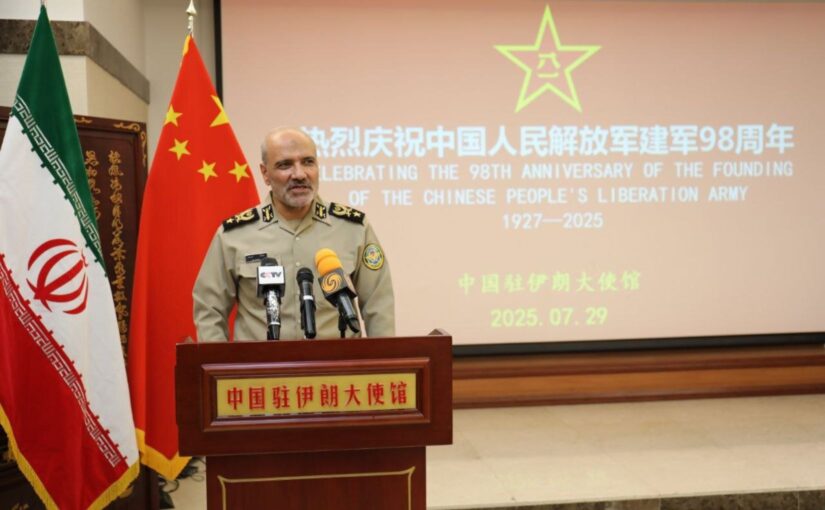
Meanwhile, on July 30, Tehran Times reported Brigadier-General Mohammad Ahadi, Chief of Defence Diplomacy and International Relations of the Iranian Armed Forces, as stating: “I consider it necessary to acknowledge the fair positions of the Chinese government and other governments that, without fear of the hegemonic power of the West, took the lead in condemning the acts of aggression against the Islamic Republic of Iran.”

He made the remarks at the Chinese Embassy in Tehran during a reception the previous day marking the 98th anniversary of the founding of the Chinese People’s Liberation Army (PLA).

Continue reading China and Iran consolidate ties in face of US-Israeli aggression

The Yangtze River Protection Law as a model of ecological governance

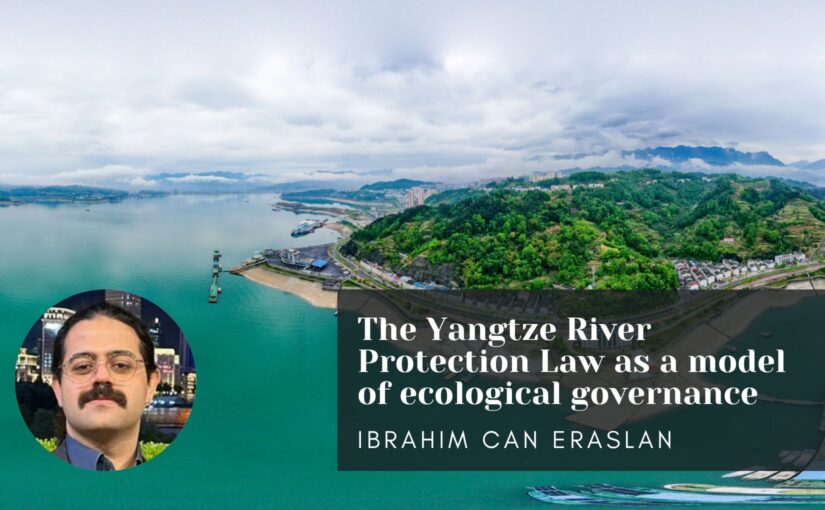
The Yangtze River Protection Law (YPL), enacted on March 1, 2021, is China’s first comprehensive river-specific legislation and a landmark in the country’s environmental governance.

The following article, submitted by İbrahim Can Eraslan, describes how, rooted in the concept of ecological civilisation and the principle of harmony between humanity and nature, the YPL seeks to balance economic growth with ecological protection. It addresses decades of industrial, agricultural, and developmental pressures that have degraded the Yangtze River Basin, aiming to integrate ecological restoration, sustainable resource use, and coordinated governance.

Key measures of the law include permanent fishing bans in critical waters, regulation of sand mining, navigation controls in sensitive zones, pollution control, and biodiversity restoration. The YPL also prohibits relocating polluting industries upstream, restricts hazardous chemical transport, and protects shoreline and wetland ecosystems.

As is increasingly the case in China, the YPL embeds environmental protection into economic and land-use planning. By combining detailed statutory provisions, cross-agency cooperation, public oversight and adaptive planning, the YPL creates a model of environmental governance which not only advances China’s ecological modernisation but also offers a potential blueprint for Global South nations confronting similar development–environment tensions.

The author is a Turkish socialist and postgraduate student of Chinese Law and Governance at Tongji University, Shanghai.

As stated in Xi Jinping’s article “Green Mountains and Clean Waters are also Gold and Silver Mountains”, while economic development and growth are prioritized, the environment should not be sacrificed for these goals[i]. Again, in Xi Jinping’s 2017 keynote speech at the opening ceremony of the Belt and Road Forum for International Cooperation, green development was emphasized[ii]. In the same speech, he called for strengthening cooperation in ecological and environmental protection and for building an ecological civilization while achieving the goals of the 2030 Agenda for Sustainable Development. Also in 2017, the Chinese government published the Guiding Opinions on Promoting Green Belt and Road Construction and the Belt and Road Ecological and Environmental Cooperation Plan. From all of these, it can be understood that while the Communist Party of China emphasizes development, the principle of “harmony between humans and nature” is adopted as a guiding concept in China’s path to modernization.[iii]

In terms of these principles, the Yangtze River carries significant importance. Following China’s economic reforms, the rapid development of industry and agricultural methods implemented to increase productivity have led to the pollution of the Yangtze. However, the Chinese government has taken significant protective steps in this regard, one of which is the Yangtze River Protection Law, a unique law exclusively dedicated to the protection of the Yangtze. In this sense, I believe that analyzing this law is important in terms of its potential to serve as a model for countries in the Global South.

There are seven laws related to the environment in China.[iv] Although the Constitution holds a different place within the legal hierarchy, special laws also have practical application in their respective areas. In essence, Article 26 of the Constitution of China directly mandates state action to protect and improve the living and ecological environment. It requires pollution control, afforestation, and forest protection. This is the most direct article in the Constitution concerning the environment and represents the principle of “ecological civilization.” On the other hand, Article 22 of the Constitution, by stipulating the protection of sites of scenic and historic importance, combines environmental and cultural elements under the umbrella of national identity. Articles 9 and 10 also form the constitutional backbone of environmental protection.

Continue reading The Yangtze River Protection Law as a model of ecological governance

Rabindranath Tagore: Enduring pioneer of India-China Friendship

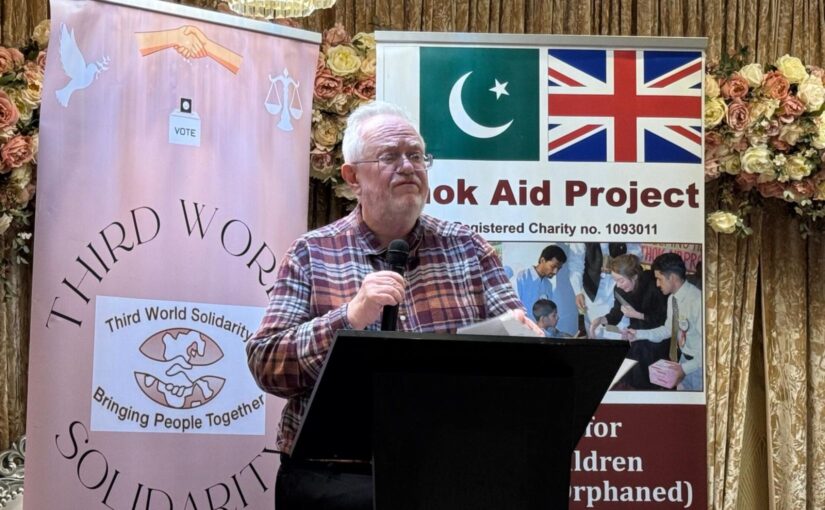
Third World Solidarity organised a meeting and reception at the Royal Nawaab in west London on the evening of August 7 to honour the life and work of the Indian intellectual giant Rabindranath Tagore on the 84th anniversary of his death.

Our co-editor Keith Bennett spoke there and focused on Tagore’s anti-imperialist internationalism, with specific reference to the Soviet Union, China and Korea.

Keith noted how, on setting foot in China on April 12, 1924, Tagore said: “I do not know why coming to China seems to me like returning to my native soil. I always feel that India has been one of China’s extremely close relatives, and China and India have been enjoying time-honoured and affectionate brotherhood.”

Visiting the West Lake in Hangzhou, he wrote: “No matter how the situation changes, as guests, friends and brothers, we will always stand by you. The mountains of China and India speak the same language, the lakes have the same charming smile on their faces, and the trees in the two countries are also similar. Therefore, they feel very friendly and not at all strange.”

When paying a visit to India in June 1954, Chinese Premier Zhou Enlai said, “We will never forget Tagore’s love towards China and also cannot forget Tagore’s support towards China’s national liberation movement.”

And during his visit to India in September 2014, President Xi Jinping recalled that he had read several of Tagore’s poetry collections.

When Japan launched its all-out war of aggression against China in 1937, Tagore observed with extraordinary prescience: “China is unconquerable, her civilisation has endless potential, and her people, with their unconditional loyalty to the country and unprecedented unity, are creating a new century for that country.”

The evening was introduced by Southend Labour Councillor Shahid Nadeem Sandhu, who is also the Chair of Pakistanis for Labour and Secretary General of Third World Solidarity, and chaired by Hon. Alderman Mushtaq Lasharie, Chair of Third World Solidarity. Other speakers included Ziauddin Yousafzai, the father of Malala Yousafzai, (by video link); Hounslow Labour Councillor Pritam Grewal; Rita Payne, President Emeritus of the Commonwealth Journalists Association; veteran journalist Mihir Bose, the BBC’s first sports editor and its first non-white editor; and Mian Saleem, President of the Pakistan People’s Party (PPP – Greater London).

The following is the text of Keith’s speech.

I’m grateful to Third World Solidarity for giving me the opportunity to say a few words at this timely meeting to honour the life and work of Rabindranath Tagore.

Timely not least, of course, since today is exactly 84 years since he passed away.

The first non-European ever to win a Nobel Prize in any category, Tagore’s name is synonymous with the Bengal Renaissance. And, as a poet, writer, playwright, composer, philosopher, social activist and painter, he surely belongs among that select view to whom the accolade of polymath truly applies.

Continue reading Rabindranath Tagore: Enduring pioneer of India-China Friendship

Hawaiian independence party resists US war drive against China

The following is an interview by People’s Dispatch with Kawenaʻulaokalā Kapahua, of the Hawaiian independence party Hui Aloha ʻĀina (Hawaiian Patriotic League).

Kawena spoke to People’s Dispatch ahead of the People’s Summit for Korea, which took place in New York City, July 25-26.

“Our nations are caught in the middle,” of the massive US escalation in aggression towards China, said Kawena, who is the Political Education Chair for Hui Aloha ʻĀina. The party was founded in 1893 to resist the US occupation of Hawai’i. He says that the US drive towards war can in fact present “a major opportunity to start building, not just with ourselves in Hawai’i, but also with our Pacific comrades, neighbors, and cousins, to start fighting back… Our ocean is the frontline in this Cold War between China and the United States.”

Referring to the deleterious effect on his country of the escalating US confrontation with China, he adds: “Now as the military pivots towards confrontation with China, it’s also at the same time trying to extend and even expand its control of Hawaiian land through new land acquisitions, through the retention of current leases that are expiring.”

He also links the struggle of his people to that of the Palestinians:

“Israel cannot exist without the support of the United States. One of the ways that they offer support in addition to the military and stuff they get is training and military exercise involvement through the United States. RIMPAC is a great example of that. The largest military wargames that take place in the entire region, the largest naval war games on the planet, they’re called the Rim of the Pacific exercises. And yet Israel is always invited and always takes part… Contrary to whatever Zionist expansionist belief, Israel doesn’t have a Pacific coast. They have no tie to the region and yet are involved in this.”

Peoples Dispatch: What is the significance of anti-imperialism to the independence movement in Hawai’i?

Kawenaʻulaokalā Kapahua: US violence against the rest of the world is funneled through the Pacific. Not just Hawai’i, but Guam, and the Micronesian nations like Marshall Islands and Palau, as well as the Philippines. These end up becoming launching points for US imperialism. We’re operating both as a frontline and behind enemy lines, because the US military’s presence within our region is so massive.

The Indo-Pacific Command (INDOPACOM) is the largest military command on the planet. The US is pouring more and more resources into the Pacific every day. They’re moving more troops into the Pacific, more military equipment, and more weapons. This offers us an opportunity in the Pacific battle against that, because there are so many new weaknesses in their logistics supply chains that are being unveiled, and they’re starting to stretch themselves thin.

Military recruitment has been down for years at this point. It’s not going to go back up anytime soon, unless the US institutes a mandatory draft. We’re watching the fraying at the edges of this military apparatus.

Especially in Hawai’i, you’re starting to see the tide turn against this. The military has never been more unpopular, then maybe when they first invaded and took over, and the poisoning of the water via the Red Hill Bulk Fuel Storage Facility.

Continue reading Hawaiian independence party resists US war drive against China