May 19 was the 136th birthday of the Vietnamese revolutionary leader Ho Chi Minh.
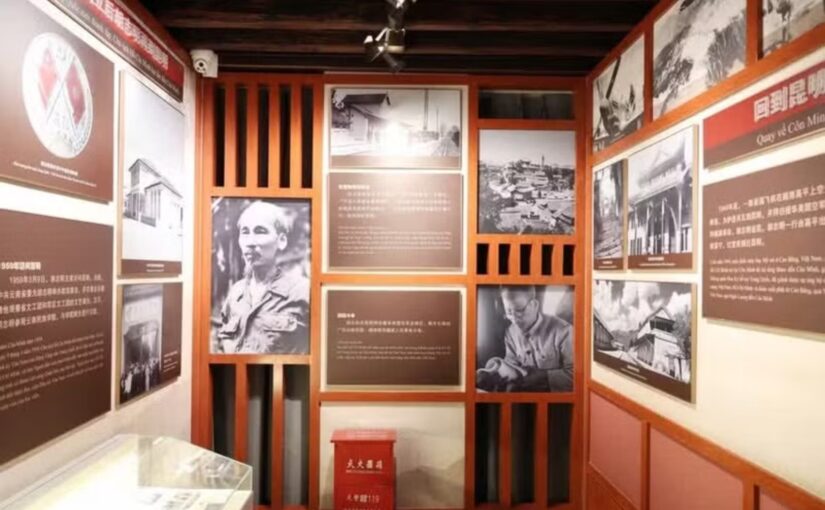
As part of its coverage of the anniversary, the newspaper Nhân Dân reported on an interview given by Chinese cultural and historical scholar Xie Chaode regarding Ho’s activities in the Chinese regions of Guangxi, Guangzhou and Yunnan during a crucial preparatory stage of the Vietnamese revolution. It writes that at a time when Vietnam’s revolutionary movement was still in its infancy, young patriot Nguyen Ai Quoc, later known as Ho Chi Minh, lived and operated under extreme hardships, constantly relocating to evade persecution while secretly mobilising and rallying revolutionary forces. These years of revolutionary activities in China were decisive in shaping both his political ideology and strategy for liberating Vietnam.
In particular, Guangxi then served as a gathering place for overseas Vietnamese and various Chinese revolutionary groups. There, Ho forged ties with patriotic organisations, absorbed revolutionary theory, and studied Chinese revolutionary experience before adapting those lessons to Vietnam’s struggle for independence.
Li Jie, a tour guide at Nanyang Hotel Memorial House in Liuzhou, Guangxi, said that during President Ho Chi Minh’s stay there, he produced a body of literary works and poems that reflected resilience, determination, and an unbroken will under hardships, all while operating in secrecy. He later relocated to Guangzhou where he ran political and military training courses and educated core personnel for Vietnam’s revolutionary cause.
Xie stressed that President Ho Chi Minh’s activities in China not only made critical contributions to Vietnam’s revolutionary struggle but also embodied the traditional friendship cultivated between the two peoples across multiple historical periods.
Nhân Dân also reported that on May 19, the Vietnamese Consulate General in Hong Kong organised a flower-offering ceremony in tribute to President Ho Chi Minh at the Tai Kwun heritage site, a historic place closely associated with his revolutionary activities, including the founding of the Communist Party of Vietnam (CPV) and his detention in Hong Kong in the early 1930s.
Vietnamese Consul General in Hong Kong and Macao Le Duc Hanh said that every year on May 19, the Consulate General joins members of the Vietnamese community in in visiting Tai Kwun, formerly Victoria Prison, where President Ho Chi Minh was arrested and imprisoned during his revolutionary activities.
She said the annual activity recalls a pivotal chapter in Vietnam’s revolutionary history while reminding younger generations of the sacrifices, hardships and moral example set by the country’s early revolutionary leaders in the struggle for national independence and reunification.
In addition to Tai Kwun, Hong Kong is home to several other historic landmarks linked to President Ho Chi Minh’s revolutionary activities in the early 20th century, including Sung Wong Toi Park, where a stone from Sung Wong Toi Hill marks the site where he convened the conference leading to the establishment of the CPV. House No. 186 Tam Kung also served as one of his secret residences before his arrest. Hanh noted that the Tai Kwun heritage site has been restored and preserved by the Hong Kong authorities, with exhibitions documenting President Ho Chi Minh’s activities and locations associated with his revolutionary journey.
The following articles were originally published by Nhân Dân.
Chinese scholar reflects on President Ho Chi Minh’s footsteps in Guangxi
May 17 (Nhân Dân) – At a time when Viet Nam’s revolutionary movement was still in its infancy, young patriot Nguyen Ai Quoc, later known as Ho Chi Minh, lived and operated under extremely hardships, constantly relocating to evade persecution while secretly mobilising and rallying revolutionary forces.
President Ho Chi Minh’s years of revolutionary activities in China were decisive in shaping both his political ideology and strategy for liberating Viet Nam, Chinese cultural and historical scholar Xie Chaode told Viet Nam News Agency reporters in Beijing.
Xie said President Ho Chi Minh spent a long time conducting revolutionary activities in China, especially in Guangxi, Guangzhou and Yunnan, where he not only advanced revolutionary work but also focused on personnel training and laying the groundwork for Viet Nam’s national liberation movement.
At a time when Viet Nam’s revolutionary movement was still in its infancy, young patriot Nguyen Ai Quoc, later known as Ho Chi Minh, lived and operated under extremely hardships, constantly relocating to evade persecution while secretly mobilising and rallying revolutionary forces.
Guangxi then served as a gathering place for overseas Vietnamese and various Chinese revolutionary groups. There, he forged ties with patriotic organisations, absorbed revolutionary theory, and studied Chinese revolutionary experience before adapting those lessons to Viet Nam’s struggle for independence.
During this period, the leader contributed newspaper articles, compiled propaganda materials, promoted the ideology of national liberation, and trained personnel for Viet Nam’s revolutionary movement. He also paid special attention to building solidarity within the overseas Vietnamese community, instructing compatriots on how to conduct revolutionary activities safely while adhering to the principles that “the revolution must rely on the people” and that “everything is for national independence”.
Li Jie, a tour guide at Nanyang Hotel Memorial House in Liuzhou, Guangxi, said that during President Ho Chi Minh’s stay there, he produced a body of literary works and poems that reflected resilience, determination, and an unbroken will under hardships, all while operating in secrecy. He later relocated to Guangzhou where he ran political and military training courses and educated core personnel for Viet Nam’s revolutionary cause.
Xie stressed that President Ho Chi Minh’s activities in China not only delivered critical contributions to Viet Nam’s revolutionary struggle but also embodied the traditional friendship cultivated between the two peoples across multiple historical periods.
The revered Vietnamese leader’s footsteps in China stand as vivid testimony to his perseverance, indomitable will, and strategic vision during his quest for a path to national salvation, while simultaneously contributing to the continued deepening of Viet Nam–China ties, he added.
Historic relic sites in Hong Kong inspire national pride among overseas Vietnamese
May 20 (Nhân Dân) – The Vietnamese Consulate General in Hong Kong (China) on May 19 organised a flower-offering ceremony in tribute to President Ho Chi Minh at the Tai Kwun heritage site, a historic site closely associated with his revolutionary activities, including the founding of the Communist Party of Viet Nam (CPV) and his detention in Hong Kong in the early 1930s.
The event marked the 136th birth anniversary of President Ho Chi Minh (May 19, 1890 – 2026) and the 115th anniversary of his departure in search of a path for national salvation (June 5, 1911 – 2026).
Vietnamese Consul General in Hong Kong and Macau Le Duc Hanh said that every year on May 19, the Consulate General joins members of the Vietnamese community in Hong Kong and Macau in visiting Tai Kwun, formerly Victoria Prison, where President Ho Chi Minh was arrested and imprisoned during his revolutionary activities.
She said the annual activity recalls a pivotal chapter in Viet Nam’s revolutionary history while reminding younger generations of the sacrifices, hardships and moral example set by the country’s early revolutionary leaders in the struggle for national independence and reunification.
According to Hanh, President Ho Chi Minh’s time in Hong Kong coincided with a particularly important and dynamic phase of the Vietnamese revolution. It was also a period when the resilience and mettle of President Ho Chi Minh and fellow revolutionaries were severely tested, while Viet Nam’s revolutionary movement began attracting growing international attention and support.
In addition to Tai Kwun, Hong Kong is home to several other historic landmarks linked to President Ho Chi Minh’s revolutionary activities in the early 20th century, including Sung Wong Toi Park, where a stone from Sung Wong Toi Hill marks the site where he convened the conference leading to the establishment of the CPV. House No. 186 Tam Kung also served as one of his secret residences before his arrest.
Tracing these historic landmarks helps preserve revolutionary traditions, deepen historical awareness and promote cultural and tourism exchanges between Hong Kong residents and international visitors, she added.
Hanh noted that the Tai Kwun heritage site has been restored and preserved by the Hong Kong authorities, with exhibitions documenting President Ho Chi Minh’s activities and locations associated with his revolutionary journey. These tangible and intangible heritage values continue to provide lasting benefits for present and future generations while creating opportunities for historical research, academic study and cultural exchange.
She also highlighted the growing number of Vietnamese students in Hong Kong, noting that many young Vietnamese visitors now seek out sites associated with President Ho Chi Minh and the revolutionary movement, helping nurture national pride and a spirit of dedication while enhancing mutual understanding with people of Hong Kong and the broader international community.
Meanwhile, Chairman of the Overseas Vietnamese Association in Macau Duong Trung Duc said the Vietnamese community in Macau always keeps President Ho Chi Minh’s teachings on solidarity close to the heart and hopes to further promote Vietnamese culture in the host society, contributing to better understanding and stronger friendship between the two peoples.