China’s energy transition is a world historical breakthrough

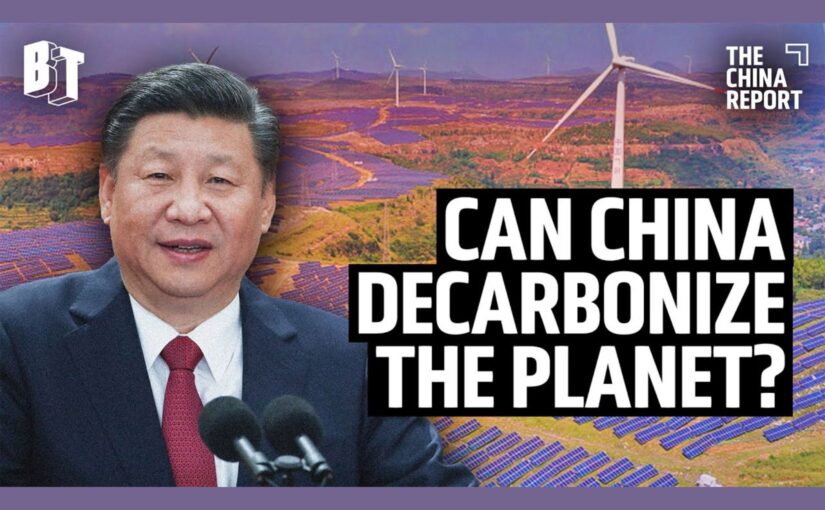
In the following article written for the Morning Star, Nick Matthews highlights a major breakthrough in the battle against climate catastrophe: China’s clean energy transition has led to a net reduction in carbon emissions, in spite of the fact that China’s economy and its energy demand continue to grow.

Drawing on data from the well-regarded Carbon Brief website, he reports that in the first quarter of 2025, China’s CO₂ emissions fell by 1.6 percent year-on-year, driven largely by a 5.8 percent drop in emissions from the power sector. This marks the first time China’s emissions have decreased due to expanded clean energy capacity, rather than reduced energy demand (as happened during the Covid-19 pandemic).

Nick notes that electrification of transport and heating is accelerating, with electricity demand from EV charging and battery swapping services growing by 78 percent in 2023 – 3.5 times more than the rest of the world combined. China now leads globally not only in electric cars, but also in electric vans, buses, two-wheelers and heat pumps.

This energy shift has taken many experts by surprise, and has a clear global impact. Nick cites the historian Adam Tooze as saying: “China’s huge surge in renewable energy, above all in solar power, actually puts us on track for the first time to meet these objectives”

Major challenges remain for China’s project of ecological civilisation – especially grid restructuring and balancing renewable supply – but reaching the goal of peak emissions several years ahead of the 2030 target can be considered a turning point. The country’s rapid clean energy development shows that with the political will – which is of course a function of a socialist political structure – a sustainable future is entirely possible.

While most news this year has been nothing short of bleak, we have had a piece of news that is of world historical significance. I am not sure how many Morning Star readers are regular readers of the Carbon Brief, a British website that covers the latest developments in climate science, climate policy and energy policy.

The news I am referring to not that the British output of solar energy this year has increased by 42 per cent due to the driest spring on record, welcome as that is. The even better news was: “For the first time, the growth in China’s clean power generation has caused the nation’s carbon dioxide (CO2) emissions to fall despite rapid power demand growth.

“The new analysis for Carbon Brief shows that China’s emissions were down 1.6 per cent year-on-year in the first quarter of 2025 and by 1 per cent in the latest 12 months. Electricity supply from new wind, solar and nuclear capacity was enough to cut coal-power output even as demand surged, whereas previous falls were due to weak growth.”

The reduction in China’s first-quarter CO2 emissions in 2025 was due to a 5.8 per cent drop in the power sector. While power demand grew by 2.5 per cent overall, there was a 4.7 per cent drop in thermal power generation, mainly coal and gas.

Increases in solar, wind and nuclear power generation, driven by investments in new generating capacity, more than covered the growth in demand. The increase in hydropower, which is more related to seasonal variation, helped push down fossil power generation.

This is not some small country making the clean energy transition. This is the world’s largest manufacturing economy.

China is way ahead in electrifying heating and transport, and building electrolyser capacity. In 2023, China’s electricity demand from the charging and battery swapping service industry grew by 78 per cent and added an estimated 56 TWh to China’s electricity demand, 3.5 times more than the rest of the world.

What that means is measured in terms of power consumed. China’s electrification of road transport is 3.5 times larger than that of the rest of the world put together.

It is this revolution that has Western governments and automakers in a panic. China accounts for 60 per cent of the world’s electric light-vehicle sales, but this segment represents only an estimated 18 TWh of the 56 TWh demand increase, with the rest coming from electric vans, trucks, buses and two-wheelers, which China dominates globally. It is also the largest heat pump market in the world, with more installations per year than any other country.

The significance of this news is hard to overestimate. At Cop28 in 2023, many countries around the world committed to tripling global renewable electricity capacity by 2030. If undertaken, this has the potential to almost halve power sector emissions by 2030, as coal-fired power generation will be replaced first. Furthermore, it will provide enough new electricity to drive forward the electrification of transport, home and industrial heating with a 32 per cent increase in electricity demand.

Many thought that this was something of a pipedream. But as leading economic historian Adam Tooze has said: “China’s huge surge in renewable energy, above all in solar power, actually puts us on track for the first time to meet these objectives.”

As the clean energy think tank Ember reports, it has taken experts around the world by surprise. What we are witnessing is the most rapid take-up of a significant energy technology in history.

It’s worth looking in detail at what China is achieving. The Carbon Brief report by Lauri Myllyvirta, lead analyst at the Centre for Research on Energy and Clean Air and senior fellow at the Asia Society Policy Institute, goes into a lot of detail and is well evidenced.

We are not quite on the road to a carbon-neutral world, as Ember points out, the drama of green electrification is only just beginning. It is one thing to replace dirty power generation for existing uses with solar and wind. It is another to build out the entire electricity system to meet the new demands for electricity in data-processing, transport, domestic and industrial uses.

The challenges of switching to renewables and the restructuring of energy grids have only just begun, and balancing supply across a myriad of renewable sources clearly represents a significant challenge. China’s example, however, shows that with political will, it is possible. So mark May 2025 in your calendar; thanks to China, we can now see the outline of what a carbon-free energy future looks like.

Xi Jinping – Champion of the Global South

The 17th Summit of the BRICS cooperation mechanism was held in the Brazilian city of Rio de Janeiro, July 6-7.

On this occasion, due to a scheduling clash, apparently related to the July 7 anniversary of the Marco Polo Bridge Incident, when Japan launched its full-scale invasion of China, an event that assumes greater significance in this year of the 80th anniversary of victory in the anti-fascist war, President Xi Jinping did not attend the summit, with China being represented by Premier Li Qiang.

However, prior to the summit, on July 3, the Xinhua News Agency published a detailed commentary highlighting Xi’s consistent commitment to BRICS and to the Global South more generally.

It quotes Xi as saying that “the collective rise of the Global South is a distinctive feature of the great transformation across the world,” when he addressed the “BRICS Plus” Dialogue held in Kazan, Russia, in October last year.

The article notes that much more than a pure geographical or economic term, the Global South refers to a community of emerging markets and developing countries that share similar historical experiences, development stages and goals, and political pursuits.

It adds: “The concept of ‘South’ was first coined in Antonio Gramsci’s work ‘The Southern Question’ written in 1926, in which the Italian Marxist philosopher highlighted the development gap between northern and southern Italy.”

The rise of the Global South, it continues, has been decades in the making. Back in 1955, the landmark Bandung Conference convened in Indonesia under the flag of solidarity, friendship and cooperation, marking the awakening of the Global South after centuries of Western colonial rule. In 1964, the Group of 77, a coalition of developing countries, was established in Geneva within the framework of the United Nations to promote South-South cooperation and work towards a new international economic order.

Through extensive cooperation, the countries of the Global South have emerged as a key driver of global growth. They have contributed as much as 80 percent over the past 20 years, with their share of global GDP increasing from 24 percent four decades ago to more than 40 percent today.

The article acknowledges that some Westerners have challenged China’s position that it is part of the Global South. It cites Xi in response:

“As a developing country and a member of the Global South, China breathes the same breath with other developing countries and pursues a shared future with them.”

Historically, China has suffered from Western colonialism and imperialism, much like other developing countries, according to Cavince Adhere, a Kenya-based international relations scholar.

“Even today, despite inordinate success by Beijing to rise from the backwaters of development to be the second-largest economy in the world, as well as the first developing country to eliminate extreme poverty, China still faces common development challenges and holds similar views regarding the current international order and global governance. Because of this, China has emerged as a strong champion for the legitimate rights and interests of many Global South countries.”

To boost common development in the Global South, Xi has been promoting practical cooperation through major infrastructure projects as part of the Belt and Road Initiative. During his foreign visits over the years, Xi would launch or visit major projects, such as the Chancay Port in Peru, the Dushanbe No. 2 power plant in Tajikistan and the Colombo Port City in Sri Lanka.

Continue reading Xi Jinping – Champion of the Global South

Ties with Bolivia and Ghana reaffirmed

Chinese President Xi Jinping and Bolivian President Luis Arce exchanged congratulations on the 40th anniversary of diplomatic relations on July 9.

Noting that China and Bolivia are good friends and good brothers, Xi said that the two sides have firmly supported each other on issues concerning their core interests and major concerns, adding that the high-quality Belt and Road cooperation has yielded fruitful results, and the friendship has taken deeper roots in the hearts of the two peoples.

For his part, Arce said that the Bolivian side highly commends China’s support and assistance in areas such as infrastructure, technology, energy and healthcare, and applauds China’s leadership in uniting the Global South, promoting China-Latin America cooperation and working toward a more just, equitable and inclusive international order.

Earlier, on July 5, Chinese Foreign Minister Wang Yi exchanged congratulations with his Ghanaian counterpart, Samuel Okudzeto Ablakwa, on the 65th anniversary of diplomatic ties.

Wang noted that Ghana is one of the first Sub-Saharan African countries to establish diplomatic ties with China.

For his part, Ablakwa expressed his gratitude to China for its long-term valuable support and assistance to Ghana’s socio-economic development. The Ghanaian side looks forward to working with China to push for the continuous development of the Ghana-China strategic partnership.

The following articles were originally published by the Xinhua News Agency.

Xi, Bolivian president exchange congratulations on 40th anniversary of diplomatic ties

BEIJING, July 9 (Xinhua) — Chinese President Xi Jinping and Bolivian President Luis Arce exchanged congratulations on the 40th anniversary of diplomatic relations on Wednesday.

Noting that China and Bolivia are good friends and good brothers, Xi said that over the 40 years since the establishment of diplomatic ties, China-Bolivia relations have withstood the test of changing international circumstances and have always maintained a sound momentum for growth.

Continue reading Ties with Bolivia and Ghana reaffirmed

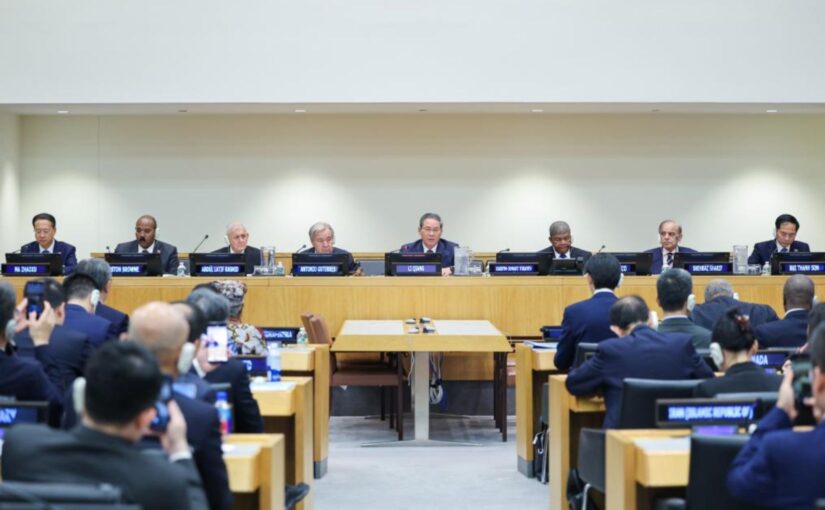
Li Qiang: The Global South should stand at the forefront of global governance reform

The 17th Summit of the BRICS cooperation mechanism was held in the Brazilian city of Rio de Janeiro, July 6-7.

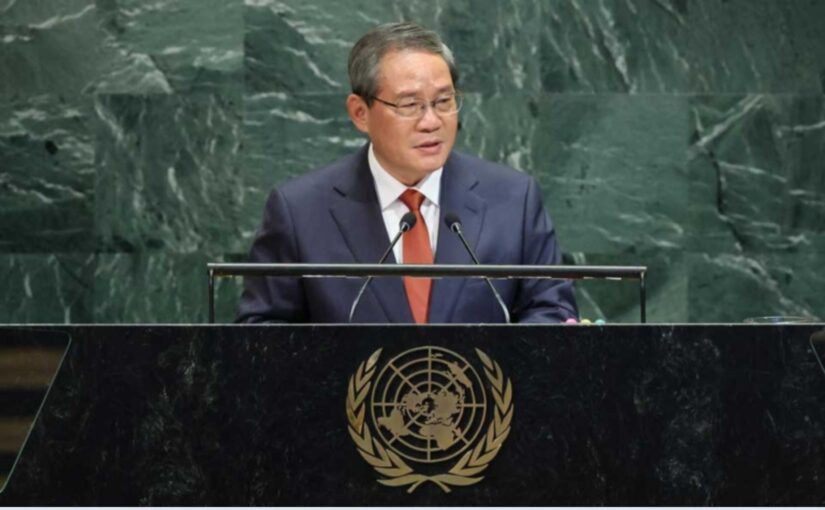
On July 6, Chinese Premier Li Qiang delivered a speech at the plenary session focused on the theme of Peace and Security and Reform of Global Governance.

He noted that: “Today, transformations unseen in a century are accelerating in the world. Geopolitical conflicts and economic and trade frictions keep emerging, flames of war continue to rage in some regions, international rules and order face serious challenges, and the authority and efficacy of multilateral mechanisms are weakening.”

Faced with the growing necessity and urgency to reform the global governance system, China believes that in this process, one must firmly safeguard the shared interests of the international community and always stand on the right side of history. This is the only way to avoid taking a wrong turn or backpedalling, and to march forward in big strides toward peace, security, prosperity and sustainable development.

“There should be less arrogance and prejudice, and more sincerity and understanding. We need to look for the best answer that serves the interests of all through friendly consultation conducted on the basis of equality… Humanity lives in the same global village, and countries have increasingly become one community with a shared future. Whether it is tackling global challenges or promoting long-term development, no country can do it alone. Only by standing together in solidarity and working in close collaboration can we build a better home for us all… Development should not be a zero-sum game where one profits at the expense of the other, but a win-win story where all can benefit through mutual assistance. Countries’ development ought to be opportunities, not threats to each other.”

Observing that over the years, Global South countries have grown stronger and become champions of and contributors to the reform and improvement of the global governance system, Li said that, “standing at the forefront of the Global South, we BRICS countries should uphold independence, act with a sense of responsibility, take bigger steps to build consensus and synergy, and strive to be the pioneering force in advancing global governance reform.”

To this end, he made three key points:

  • We should uphold justice and safeguard world peace and tranquillity. When international rules are being undermined and bullying practices are on the rise, we need to stand up for what is right and speak up for justice.
  • We should focus on development and bolster the driving forces of economic growth. China’s journey of reform and opening up shows that in solving all problems, development is the foundation and key. This year, China will establish the China-BRICS New Quality Productive Forces Research Centre and the BRICS New Industry Golden Egret Excellence Scholarships, which will help BRICS countries train talents in areas such as industry and telecommunication and pursue innovation-driven development.
  • We should uphold inclusiveness and promote exchange and mutual learning among civilisations. With rich histories and cultures, BRICS countries should be advocates of harmonious coexistence of civilisations. We need to call for respect for cultural diversity in the world, and work to ensure that different civilisations inspire each other and prosper together.

The following is the full text of the speech. It was originally published by the Xinhua News Agency.

The summit adopted a detailed declaration. The full text may be read here.

RIO DE JANEIRO, July 6 (Xinhua) — Chinese Premier Li Qiang delivered a speech on Sunday at the plenary session of “Peace and Security and Reform of Global Governance” of the 17th BRICS Summit.

Continue reading Li Qiang: The Global South should stand at the forefront of global governance reform

Oldest matrilineal society unearthed in China

We are pleased to republish the following article by Ding Rui, originally published in the Chinese online magazine Sixth Tone, about a groundbreaking discovery at the Fujia archaeological site in Shandong, China.

The findings, published in Nature, provide the first genome-wide evidence of a prehistoric society organised around maternal lineage, dating back to 2750–2500 BCE.

Researchers from Peking University and the Shandong Provincial Institute of Cultural Relics and Archaeology analysed the remains of 60 individuals buried at two cemeteries linked to the Neolithic-era Dawenkou culture, known for advancements in pottery production. Through DNA analysis and radiocarbon dating, they found that while paternal Y-chromosome DNA varied significantly within burial groups, maternal mitochondrial DNA was nearly identical, strongly suggesting the communities centred on maternal ancestry.

Until now, the only confirmed ancient matrilineal society was the Chaco Canyon elite in North America (800–1300 AD). Fujia’s discovery significantly predates that and, according to Sun Bo, director of the Shandong Provincial Institute of Cultural Relics and Archaeology, it adds weight to the theories set forth in Friedrich Engels’ classic work, The Origin of the Family, Private Property and the State, written in 1884.

The discovery provides direct empirical evidence from East Asia for the theories proposed by (Lewis Henry) Morgan and (Friedrich) Engels. It holds great significance for understanding the roots of human civilisation.

Chinese scientists have uncovered the world’s first comprehensive genetic evidence of a prehistoric matrilineal society, offering fresh insight into the ongoing debate over whether fathers or mothers led early human civilizations.

Published Wednesday in the prestigious journal Nature, the study centers on the Fujia archaeological site in eastern China’s Shandong province, where researchers from the Shandong Provincial Institute of Cultural Relics and Archaeology and Peking University found that communities dating back more than 4,500 years were organized around maternal lineage.

“Previously, all reported ancient DNA studies indicated that prehistoric societies were organized based on patrilineal principles,” Ning Chao, an archaeologist at Peking University, told domestic media. “Genetic evidence for matrilineal societies could only be traced back as far as the Iron Age in Europe.”

However, the Nature article states that even evidence for matrilineality in these societies was suggestive, adding that “almost all genome-wide studies examining the Neolithic and Bronze Age periods to date have consistently supported patrilocality and patrilineality, and the existence and locations of matriliny in the remote or prehistoric past are still largely unknown.”

Continue reading Oldest matrilineal society unearthed in China

Report: Delegation to China, May-June 2025

As reported previously, between 25 May and 5 June 2025, an international delegation – organised by the China NGO Network for International Exchanges (CNIE) and Friends of Socialist China – visited Shaanxi, Gansu, and Shanghai to witness China’s ongoing socialist development.

Comprising activists from organisations including Friends of Socialist China, the Progressive International, Black Alliance for Peace, Freedom Road Socialist Organization, the Communist Party of Britain, the Black Liberation Alliance, Workers World Party and Bronx Anti-War, the group explored China’s revolutionary history, technological achievements, sustainable planning, and its commitment to peace and friendship among civilisations.

The trip affirmed for participants that China’s development model, rooted in socialist planning and common prosperity, has clearly become a powerful alternative to Western capitalism, and is a source of inspiration for global movements seeking a more just, peaceful, prosperous and sustainable world.

The detailed report below, which originally appeared on Progressive International, was prepared collectively by the participating organisations.

Between 25 May and 5 June, the China NGO Network for International Exchanges (CNIE), working in coordination with Friends of Socialist China, hosted an international delegation to three regions of China: Shaanxi province, Gansu province, and Shanghai.

The delegation included members of Friends of Socialist China, the Progressive International, the Black Alliance for Peace, Freedom Road Socialist Organization, the Communist Party of Britain, the Young Communist League – Britain, the Black Liberation Alliance, Workers World, Bronx Anti-War, and others.

Delegates attended the 4th Dialogue on Exchanges and Mutual Learning Among Civilisations, and visited a range of historic revolutionary sites, museums, and state-owned firms to witness and deliberate the rapid development made possible by the enduring project of Chinese socialism.

This report was prepared collectively by the participating organizations.

Overview

The delegation’s 10-day journey through China traced a remarkable arc of transformation — from the humble beginnings of revolutionary struggle to the latest achievements of contemporary socialist construction. The visit followed the Communist Party of China’s (CPC) evolution from a group of thirteen participants meeting in a small Shanghai room in 1921 to a governing force that has fundamentally reshaped not only the world’s most populous nation — but also the world beyond it.

The trip began with a journey from Xi’an to Yan’an — a quick trip by express train that less than a century ago would have taken days of travel along dangerous and ragged mountain roads. Yan’an is a cradle of Chinese socialism. It is where the Red Army concluded its heroic Long March in 1936. Here, living in yaodong cave dwellings and equipped with rudimentary arms and thin cotton uniforms, the fighters of the CPC crafted their victory over Japan, while Mao Zedong penned some of his most notable theoretical works in a simple mud-brick house.

The wide rift between these austere conditions — all just one lifetime ago — and the achievements of Chinese modernization today remained a theme throughout the visit. This gap illustrated the profound scale of China’s revolutionary transformation. In Yan’an, the delegation saw where the building blocks of Chinese socialism were laid. Here, the modern CPC developed its ideological foundations, established institutions like the Party School, and developed the prototypes for the first institutions of the socialist state.

The thread connecting revolutionary struggle to China’s contemporary advancements became clear as the delegation visited Gansu province, a vast region — among China’s poorest — between Inner Mongolia and Xinjiang. In Jiayuguan, a former desert outpost transformed into China’s fourteenth-largest steel producer, the delegation witnessed how strategic planning could reshape entire regions. The remote desert town, established in 1958 around around the Jiuquan Iron and Steel Corporation (JISCO), came to underpin a remarkable process of high-quality development that continues to this day. Delegates noted how the level of development in the city — with its clean streets, modern infrastructure, high-quality public housing, and abundant parks — easily surpassed that seen in most towns in the United States and United Kingdom.

In Gansu province, the delegation also witnessed the critical advancements in China’s green technology. The Dunhuang Molten Salt Tower plant, featuring 12,000 heliostats channeling desert sunlight into a groundbreaking technology that liquifies salt, enables solar power to continue generating electricity even at nighttime. The AI-powered Smart Grid and Localised New Energy Consumption Demonstration Project, developed by JISCO to manage energy distribution within Jiayuguan, has enabled decreasing energy consumption even as living standards and industrial outputs increased — an achievement of decoupling energy use from growth that many experts in the West have longed deemed impossible.

The delegation concluded its trip in Shanghai, where the CPC held its 1st National Congress. The contrast between the the modest room where thirteen revolutionaries held that first meeting and the sprawling metropolis outside it speaks to the scale of the transformation that China has seen in just a little over a century since the CPC was established. Delegates were impressed by the visible quality of that development — one that prioritizes the common good rather than individual profit, and builds cities that are green, affordable, walkable, and livable, in stark contrast to many of the cities that the delegation travelled from in their home countries. China offers a model of development that is attractive to people around the world, and demonstrates the continued vitality of socialist construction in the 21st century.

As a teacher from Jiayuguan told the delegation: “China not only learned from the experiences of the Soviet Union. China saved socialism. Looking at what has been achieved, I am satisfied, and I am proud.”

Continue reading Report: Delegation to China, May-June 2025

Reject Western Marxism, defend the socialist countries, and stand with the peoples of the world against imperialism

On Saturday 5 July 2025, Friends of Socialist China hosted – along with the Morning Star, the International Manifesto Group, Critical Theory Workshop and Iskra books – a discussion of Domenico Losurdo’s crucial book, Western Marxism: How it was Born, How it Died, How it can be Reborn, in which the legendary Italian philosopher charts the long and complex history of Marxism’s bifurcation into ‘Western’ and ‘Eastern’ – a division based primarily on the national question and the relative prioritisation of anti-colonial, anti-imperialist struggles.

The meeting was held in-person at Marx Memorial Library in London (and online via Zoom and YouTube), and the packed room was addressed by Gabriel Rockhill (Editor of the English edition), Jennifer Ponce de León (Co-author of the introduction to the English edition), Alex Gordon (Chair, Marx Memorial Library) and Carlos Martinez (Co-editor, Friends of Socialist China), and was chaired by Francisco Domínguez (National secretary, Venezuela Solidarity Campaign).

Embedded below is the video of the event, followed by the text of Carlos’s speech. Carlos describes the journey Marxism has taken since its inception around the world – “a journey to the East and South”, transforming it “from being a liberatory framework for the industrial proletariat in Western Europe and North America, to being a liberatory framework for the working and oppressed peoples around the world”.

He goes on to define academic Western Marxism on the basis of its rejection of this globalisation of class struggle, and explores the material and ideological reasons for this trend’s refusal to support the socialist states and to prioritise the struggle against colonialism and imperialism.

The speech concludes with a plan of action:

Reject dogmatism and purism, reject Eurocentrism and chauvinism, and get back to playing our part in a global united front composed of the socialist countries, the oppressed nations, and the working classes and progressive forces in the imperialist countries. That’s what will get us on the path to a socialist future.

I’ve been involved in the Marxist movement in the West in some way or another since I was a teenager, but thankfully have never got particularly close to Western Marxism.

The political tradition I grew up in emphasised the importance of supporting the socialist states, and always prioritised the struggle against imperialism, colonialism and racism. To support China, to support the DPRK, to support Cuba, to support the national liberation struggles of the Irish, Palestinian, Zimbabwean, Vietnamese and other peoples were very much part of that tradition.

So despite being a Marxist in the West, I haven’t had all that much exposure to the Western Marxist academics described by Losurdo, and haven’t had to go through that extremely difficult “unlearning” process that many others have. I’ve read a lot of Lenin; I’ve read very little Adorno, Zizek and Perry Anderson.

Nevertheless, Losurdo’s book was really clarifying for me, and helped me understand the ideological roots of some of the objectively reactionary positions that you come up against all the time. Because although Western Marxism exists mainly in an academic ivory tower, it seeps into the wider movement for revolutionary change, which it seems to find quite fertile soil.

Marxism moves East and South

Marxism is, obviously, Western by birth. The first line of the Communist Manifesto is after all: “A spectre is haunting Europe — the spectre of communism”.

The nascent communist movement was geographically limited to Europe and North America, and focused almost exclusively on the industrial working class.

But from the beginning, it’s been on a journey to the East and South, including in Marx’s own lifetime.

Continue reading Reject Western Marxism, defend the socialist countries, and stand with the peoples of the world against imperialism

Liberation movement ties recalled and carried forward

China’s diplomatic missions in South Africa and Tanzania have recently highlighted the historical legacy and continued relevance of the bonds of solidarity forged during the struggle for national liberation.

On 17 June, Pan Qingjiang, China’s Consul General in Johannesburg, published an article entitled “Driving Education Culture, Fostering Youth Friendship Between China and South Africa” in various major South African media outlets.

According to an article published by the South African Government News Agency: “In South Africa, Youth Month is celebrated every June following a declaration by our first democratic President, Tata Nelson Rolihlahla Mandela. It is a time when we collectively honour the pivotal role that young people played in the struggle against Apartheid and the historic Soweto Uprising of 1976. Every 16 June, as we mark National Youth Day, we not only remember the sacrifices and courage of those young people, but we also renew our commitment to equipping today’s youth for a vibrant future.”

Pan writes: “On the occasion of South Africa’s Youth Month, I wish to extend my sincere festive greetings to all our young friends. The youth are the future of nations and the future of China-South Africa friendship as well… Our nations, the People’s Republic of China and the Republic of South Africa, enjoy traditional friendship characterised by a strong ‘comradeship plus brotherhood’ bond…. The shared history and common future between China and South Africa are the solid foundation and driving force for the friendship among our youths.

“In June last year, the Consulate General of China in Johannesburg organised a themed short video competition for secondary school learners, encouraging the youth to reflect on both South Africa’s 1976 Soweto Uprising and China’s May Fourth Movement. More than one hundred participants from over twenty schools in Gauteng and the Free State submitted their creative entries in a variety of creative forms, including drama, speech, song, and dance, which vividly portrayed the heroic struggles of both countries against colonial oppression.

“Together, we paid tribute to, learned, and gained strength from the shared legacy of Chinese and South African youth in their pursuit of freedom, justice, and progress.”

The 1976 Soweto Uprising, led by the township youth, spread like a prairie fire across South Africa. Its brutal repression led thousands of young people to leave home and join the ranks of the African National Congress (ANC) and the other liberation movements waging armed struggle against the apartheid regime. It is considered a key turning point in the fight for a free South Africa.

China’s May Fourth Movement, a student-led anti-imperialist uprising, was sparked by the capitulation of the Chinese government to the humiliating terms imposed by the imperialist powers meeting at the 1919 Versailles peace conference. Together with the influence of the October Revolution in Russia, it played a major role in preparing for the founding of the Communist Party of China (CPC) two years later. Key founders of the CPC, Li Dazhao and Chen Duxiu were central leaders of the May Fourth Movement.

After detailing a number of current educational and cultural exchanges between South Africa and China, Pan’s article concludes:

“Like the rising sun, the youth brings brilliant prospects. China and South Africa are bound together by shared history, common developmental tasks and strategic interests. The youth serves as the vanguard in building a high-level China-South Africa community with a shared future and advancing our all-round strategic cooperative partnership in the new era.”

Earlier, on May 28, China’s Ambassador to Tanzania, Chen Mingjian visited the African Liberation Movement Freedom Fighters Kongwa Camp, together with officials from the Tanzanian government and the Chama Cha Mapinduzi (Revolutionary Party of Tanzania).

The two sides reflected on China’s contributions to Tanzania’s independence and the national liberation of southern Africa, and agreed to strengthen historical sites protection and inheritance, and to promote inter-party and sub-national cooperation between the two countries.

District Council Chairman White Zuberi, who witnessed the national liberation movement, showed Ambassador Chen around the camp and, together with her, recalled the glorious history of mutual support between China and Africa. The camp was built in 1964 and both Mozambique’s founding President Samora Machel and Namibia’s founding President Sam Nujoma were trained there.

The following articles were originally published on the websites of the Chinese Consulate General in Johannesburg and the Chinese Embassy in Tanzania. They are reproduced here from that of the Chinese Foreign Ministry.

Chinese Consul General in Johannesburg Pan Qingjiang Publishes Signed Article Titled Driving Education Culture, Fostering Youth Friendship Between China and South Africa

June 17 (MFA) — On 17 June, Consul General Pan Qingjiang published a signed article entitled “Driving Education Culture,Fostering Youth Friendship Between China and South Africa” in the mainstream media of South Africa, including the Star, the Mercury, the Cape Times and the IOL website. Full text below:

On the occasion of South Africa’s Youth Month, I wish to extend my sincere festive greetings to all our young friends. The youth are the future of nations and the future of China-South Africa friendship as well. I have been deeply impressed by the confidence, optimism, and ingenuity of the young South African people.

Our nations, the People’s Republic of China and the Republic of South Africa, enjoy traditional friendship characterized by a strong “comradeship plus brotherhood” bond.

Continue reading Liberation movement ties recalled and carried forward

Sports and culture promote Ireland-China people’s friendship

We previously reported the visit to China in March by members of two Gaelic Athletic Association (GAA) clubs in the north of Ireland,  St Johns GAA and Naomh Cholmaín Droím an Easa Drumaness GAC, led by Sinn Féin Member of Parliament for South Down, Chris Hazzard.

Following this very successful visit, the Chinese Consul General in Belfast, Li Nan organised a friendship gathering with Chris and members of the two clubs on June 12.

Li emphasised that culture and sports help bring people closer and foster mutual understanding. He expressed the hope that club members would actively serve as inheritors of the friendship between China and Northern Ireland, promoters of friendly cooperation, and builders of shared development.

Chris Hazzard shared his experiences from visiting China and expressed his desire to further expand dialogue, cooperation, and exchanges in areas such as culture, education, and sports. Club members also took turns sharing their thoughts and reflections from their time in China.

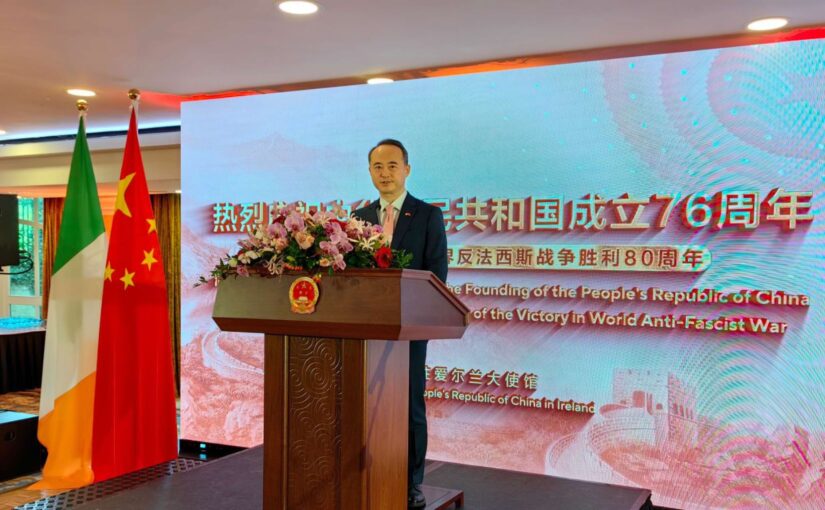
Meanwhile, on June 16, at the invitation of the James Joyce Centre, Chinese Ambassador to Ireland Zhao Xiyuan attended the Bloomsday celebration at Belvedere College S.J. in Dublin.

Bloomsday is an annual celebration held on June 16 to commemorate James Joyce’s novel Ulysses, which is set on that specific date in 1904. It is named after the novel’s central character, Leopold Bloom. Joyce’s experience studying at the Belvedere College informed much of the writing of the novel.  In 2012, President Xi Jinping, then Vice President of China, visited the Confucius Classroom at Belvedere College.

With the help of the Chinese Embassy in Ireland, the three Chinese versions of Ulysses that have been published, have been donated to the National Library of Ireland, the James Joyce Centre and the Museum of Literature Ireland for their collections.

Ulysses is widely considered to be one of the most complex and difficult works of world literature to translate. Translation into Chinese required many years of devoted effort and painstaking work. This comparative study of the three Chinese versions was published by the James Joyce Society of Korea.

The following articles were originally published on the websites of the Chinese Consulate General in Belfast and the Chinese Embassy in Ireland and are republished here from that of the Chinese Foreign Ministry.

Chinese Consulate General in Belfast Holds GAA Club Visit to China Sharing Session and Consulate General Open Day

June 14 (MFA) — On 12 June, the Chinese Consulate General in Belfast hosted a sharing session following the GAA Club’s visit to China and the Consulate’s Open Day. Consul General Mr. Li Nan attended and delivered a speech. Over 50 guests participated in the event, including Mr. Christopher Hazzard MP; the President and members of Drumaness and St John’s Club; and Professor Yu Xiang, Vice President of Hubei Normal University.

Consul General Li welcomed all guests to the Consulate and highlighted China’s latest achievements in economic and social development. He noted that Chinese-style modernization is progressing steadily, and a prosperous, open, and friendly China is creating new opportunities for the world. Mr. Li emphasized that culture and sports help bring people closer and foster mutual understanding. He expressed hope that club members would actively serve as inheritors of the friendship between China and Northern Ireland, promoters of friendly cooperation, and builders of shared development.

Mr. Hazzard shared his experiences from visiting China and expressed his desire to further expand dialogue, cooperation, and exchanges in areas such as culture, education, and sports. Club members also took turns sharing their thoughts and reflections from their time in China. The atmosphere was warm and engaging.


Chinese Ambassador to Ireland Zhao Xiyuan Attends the Bloomsday Celebration

June 18 (MFA) — On June 16th, at the invitation of the James Joyce Centre, Ambassador Zhao Xiyuan and Madam Li Yi, together with ambassadors from other countries to Ireland and officials from Dublin, attended the Bloomsday celebration at Belvedere College S.J. in Dublin.

Bloomsday is an annual celebration held on June 16th to commemorate James Joyce’s novel Ulysses, which is set on that specific date in 1904. It is named after the novel’s central character, Leopold Bloom. Joyce’s studying experience at the Belvedere College was applied many times in his writings. In 2012, President Xi Jinping, then Vice President of China, visited the Confucius Classroom at Belvedere College.

Every June 16th, literature lovers hold various festivities in Dublin, Ireland, and elsewhere including China, through readings, performances, and re-enactments of scenes from the book, often with participants dressed in Edwardian attire. With the coordination of the Embassy of the People’s Republic of China in Ireland, the three Chinese versions of Ulysses that have been published, were donated to the National Library of Ireland, the James Joyce Centre and the Museum of Literature Ireland for collection.

China and Vietnam jointly promote Red Tourism

The Vietnamese newspaper Nhân Dân recently reported that an exhibition on President Ho Chi Minh’s revolutionary career in China has been jointly organised by the Guangdong Museum of Revolutionary History of China and the Ho Chi Minh Museum of Viet Nam as part of the activities to celebrate the 75th anniversary of bilateral diplomatic relations and the Year of People-to-People Exchange between the two countries.

During his journey to seek a path for liberating the nation, the paper notes, President Ho Chi Minh spent many years in China, including an extremely important period in Guangzhou, Guangdong province from 1924-1927. During this time, he established the Vietnam Revolutionary Youth League, the predecessor of the Communist Party of Vietnam (CPV), and organised training courses to prepare cadres and build the organisational structure, creating the ideal conditions for the founding of the party.

The exhibition retraces the late Vietnamese leader’s 12 years of revolutionary activities in China and emphasises that, under the leadership of President Ho Chi Minh, Chairman Mao Zedong, and other pioneering leaders, the people of Vietnam and China stood together, enduring hardships in their struggles for independence and national liberation. The friendship as comrades plus brothers between Vietnam and China remains a valuable legacy for both nations and will endure for future generations.

Historical sites, it continues, associated with the revolutionary career of President Ho Chi Minh in China are evidence of his revolutionary journey and serve as important landmarks of Vietnam-China friendship. The Chinese government attaches great importance to preserving these sites, having restored and protected them to enhance their historical value. Today, they serve as “red addresses” – destinations for revolutionary education and people-to-people exchanges, especially among younger generations. The exhibition is scheduled to be held on a rotating basis at several museums in both Vietnam and China.

In a separate article, Nhân Dân reports on the mutual ‘red tourism’ by young people from the two socialist neighbours.

It writes that during her first visit to Vietnam to attend the Vietnam-China Youth Friendship Meeting in April, Huang Chenshen from the China Youth University for Political Studies had listened to speeches by Chinese Party General Secretary Xi Jinping and Vietnamese Party General Secretary To Lam, visited Quang Ninh and Ninh Binh provinces, and explored the local culture. What impressed her most was experiencing the cultural life of Vietnam’s ethnic minorities.

The “Red Study Tour” programme of visits to China was proposed by Xi during his April visit to Vietnam. It links together historical sites associated with President Ho Chi Minh and former Chinese leaders, serving as a “living history classroom” that fosters a spirit of solidarity and a shared sense of responsibility among young people for peace and development.

Nguyen Thi Phuong Hoa, former Deputy Director of the Institute for Chinese Studies and Deputy Editor-in-Chief of the Chinese Studies Journal, said that the content of youth exchanges has become increasingly diverse, shifting from general forums to more practical, thematic discussions closely tied to the role of young people in national development and innovation.

The first tour visited China’s Guangxi Zhuang Autonomous Region in May, with the theme, “Following President Ho Chi Minh’s Footsteps”. In addition to visiting historical sites, Guangxi also organised activities for the young delegates to experience artificial intelligence technology and the digital environment. Vietnamese participants were able to visit a robotics lab, experience high-speed train travel, and explore advanced technological applications.

The following articles were originally published by Nhân Dân.

Exhibition spotlights President Ho Chi Minh’s revolutionary career in China

June 30 (Nhân Dân) — An exhibition on President Ho Chi Minh’s revolutionary career in China has been jointly held by the Guangdong Museum of Revolutionary History of China and the Ho Chi Minh Museum of Viet Nam as part of activities to celebrate the 75th founding anniversary of diplomatic relations and the Year of Humanistic Exchange 2025 between the two nations.

Continue reading China and Vietnam jointly promote Red Tourism

China and Senegal reaffirm solidarity

Prime Minister of Senegal Ousmane Sonko met separately in Beijing on June 27 with Chinese President Xi Jinping and Premier Li Qiang. Sonko was visiting China to attend the 2025 ‘Summer Davos’ in Tianjin.

Xi said that last September, he co-chaired the 2024 Summit of the Forum on China-Africa Cooperation (FOCAC) in Beijing, together with Senegalese President Bassirou Diomaye Faye, leading China-Africa relations into a new phase of jointly building an all-weather China-Africa community with a shared future for the new era.

Noting that China and Senegal are companions on the path to development and revitalisation as well as good brothers, he added that China is willing to work with Senegal to strengthen solidarity and cooperation, deepen their comprehensive strategic cooperative partnership, bring more benefits to the two peoples, and inject fresh impetus into China-Africa friendship and Global South cooperation. China and Senegal should firmly support each other in pursuing independent development paths and enhance exchanges among the two countries’ political parties. China stands ready to work closely with Senegal to advance the 10 China-Africa partnership actions for jointly advancing modernisation and implement more projects for people’s well-being.

Sonko conveyed President Faye’s sincere greetings to Xi. He said China is a reliable partner for Senegal, and the bilateral ties have featured mutual respect, mutual support, resilience and stability, with sound progress made in various fields of cooperation. Noting that the two countries, both as members of the Global South, share common values and aspirations, Sonko said Senegal is willing to closely coordinate with China in international and regional affairs, steadfastly act as China’s strategic partner to jointly promote international fairness and justice, and uphold the common interests of the Global South.

Li Qiang said that over the years, China and Senegal have respected each other, treated each other as equals, and carried out mutually beneficial cooperation in a sincere and friendly manner, achieving fruitful results. China encourages Chinese enterprises to invest and start businesses in Senegal and welcomes Senegalese enterprises making good use of platforms such as the China International Import Expo to enhance the promotion of their products in the Chinese market.

Sonko said Senegal admires the tremendous achievements made in China’s economic and social development and sincerely appreciates China for the vigorous assistance it has provided to Senegal over a long period of time. Senegal is willing to maintain close high-level exchanges with China, promote cooperation on economy and trade, energy and mineral resources, finance, and agriculture under the framework of the Belt and Road Initiative, and deepen people-to-people exchanges.

Sonko, who is also the Leader of PASTEF, the progressive ruling party in Senegal, also met with Liu Jianchao, Minister of the International Department of the Communist Party of China (CPC) Central Committee (IDCPC), at the former’s request.

Sonko said that Senegal and China enjoy a profound friendship, and China has always treated Senegal with equality and respect. The PASTEF administration looks forward to strengthening exchanges and cooperation with China in various fields such as politics, economy and society. PASTEF has gained a lot of inspiration from the endeavour of the CPC, and looks forward to cooperating with China in institutionalised inter-party exchanges, cadre training and youth exchanges, learning from the successful experience of the CPC in party building and state governance, and improving its own governing capacity.

Liu noted that the CPC and the PASTEF party share similar ideas and missions. China is willing to work with Senegal to intensify exchanges between the ruling parties, strengthen political dialogue and strategic integration, deepen mutual learning of experience in state governance and administration, expand exchanges in cadre training, exchanges at local level, and exchanges between youth and women’s organisations, as well as advance practical cooperation in various fields.

Continue reading China and Senegal reaffirm solidarity

Dialogue with Fudan University’s China Institute: videos

As previously reported, on Monday 3 June 2025, the recent Friends of Socialist China delegation participated in a dialogue with the China Institute of Shanghai’s Fudan University, consisting of a panel discussion featuring Professor Zhang Weiwei, Professor Wu Xinwen, and Friends of Socialist China co-editors Carlos Martinez and Keith Bennett, followed by a wide-ranging discussion with the audience.

We have now posted the videos of the full event, plus introductory speeches, on our YouTube channel. These are embedded below.

Witnessing China’s socialist transformation

In the following report for Workers World, Ché Marino reflects on the recent delegation to China, organised by Friends of Socialist China and hosted by the China NGO Network for International Exchanges. Travelling through Shaanxi, Gansu, and Shanghai, the delegation explored China’s development, cultural heritage, and political system.

Ché contrasts the remarkable improvements in living standards and development level in China since his first visit in 2009 – from Shanghai’s modern infrastructure to expansive public amenities and smart technologies. Indeed, China’s development “stands in stark contrast to the crumbling infrastructure and growing inequality I see in New York City”.

Ché emphasises that these changes stem not from a capitalist approach but from China’s socialist model, where policies are shaped by the Communist Party to serve the public good. He cites the lifting of 800 million people from poverty, leadership in renewable energy, and peaceful diplomacy as evidence of socialism’s success. Detailed discussions with scholars such as Professor Zhang Weiwei reinforced the idea that Chinese socialism has global relevance, offering an alternative to imperialism and neoliberalism.

The article also highlights China’s Belt and Road Initiative and Global Civilisation Initiative as examples of international cooperation rooted in mutual benefit and respect, especially in China’s relations with Africa. Ché notes the Western media’s distortions about China, contrasting them with what he witnessed firsthand: a people-centred society focused on ecological sustainability and global solidarity.

Ché concludes that China’s socialist path offers vital lessons for the global left, particularly for youth disillusioned by Western capitalism.

In a world facing multiple crises, from climate change to growing inequality, China’s socialist path illuminates a way forward — not as a template to be mechanically copied but as a source of inspiration for all who seek a more just, peaceful and sustainable world.

In May 2025, I had the privilege of joining a delegation organized by Friends of Socialist China, a collective dedicated to fostering international solidarity and understanding of China’s socialist model. Our journey, hosted by the China NGO Network for International Exchanges (CNIE), took us across several regions, including Shaanxi, Gansu and Shanghai. 

The purpose of our trip was to engage in dialogues on civilizational exchange, witness China’s remarkable socio-economic transformations and deepen our understanding of the principles underpinning its development. Through visits to historic revolutionary sites, discussions with local leaders and participation in cultural events, we aimed to explore the realities of Chinese socialism and its implications for global solidarity.

As I stepped off the plane in Shanghai in 2025, memories of my first visit in 2009 came flooding back. Sixteen years ago, I arrived as a college student seeking the cheapest study abroad option available. What I found then was unmistakably a developing nation: streets that flooded when it rained, large swaths of underdeveloped public infrastructure and transportation that consisted of hitching rides on motorcycles to reach the nearest train station.

The transformation I witnessed upon my return is nothing short of remarkable. Where once stood only the Oriental Pearl Tower on the Bund now rises a skyline of architectural marvels. The face-scanning technology that allows commuters to enter subway stations with just a glance would have seemed like science fiction during my first visit, when my university ID was merely a laminated photo. 

This dramatic metamorphosis represents more than just economic growth; it embodies the success of China’s socialist project with Chinese characteristics. As I traveled through residential areas of Shanghai, I was struck by the quality of life afforded to ordinary citizens: beautiful parks, running tracks with specialized materials that protect joints and extensive bicycle paths. “We don’t have this in New York City,” I found myself repeatedly saying.

Continue reading Witnessing China’s socialist transformation

Vietnam boosts China friendship at Summer Davos

Vietnamese Prime Minister Pham Minh Chinh paid a working visit to China, June 24-27, at the invitation of his Chinese counterpart Li Qiang. The centrepiece of his visit was his participation in the 16th Annual Meeting of the New Champions of the World Economic Forum (WEF) in Tianjin at the co-invitation of WEF President and CEO Børge Brende. Known as the ‘Summer Davos’, the event in Tianjin is the second most important annual WEF activity after the gathering in the Swiss resort of Davos itself. Uniquely among foreign leaders, this was the third consecutive year for the Vietnamese Prime Minister to take part. It was also the first visit by a key Vietnamese leader to China in 2025, taking place shortly after the state visit to Vietnam by General Secretary of the Communist Party of China and Chinese President Xi Jinping in April.

Pham Minh Chinh met with Li Qiang on June 24, shortly after his arrival in Tianjin.

Noting that this year marks the 75th anniversary of the establishment of diplomatic relations between China and Vietnam, Li said the deep friendship of “comrades and brothers” has remained firm and fresh over time. Since the successful visit of Xi Jinping to Vietnam in April, the comprehensive strategic cooperation between China and Vietnam has been further advanced. China is willing to continue to implement the outcomes of President Xi’s visit with Vietnam to bring more benefits to the two peoples.

China welcomes Vietnam to become a BRICS partner country and is willing to work with Vietnam to safeguard free trade and the multilateral trading system, promote an equal and orderly multipolar world and a universally beneficial and inclusive economic globalisation, and inject more stability and positive energy into world peace and development.

Chinh said that Vietnam always considers developing its relationship with China a strategic choice, an objective necessity, and a top priority in its foreign policy and expressed confidence that China will continue to grow and play an increasingly important role in global development, security, and civilisation.

He proposed that both sides further promote the key role of security and defence cooperation in the overall bilateral relationship; improve the quality and effectiveness of practical cooperation across various fields; and maintain regular operations of the intergovernmental working groups on land-based infrastructure, monetary issues, and maritime cooperation, as well as the joint committees on economic-trade and scientific-technological cooperation. He also suggested studying the establishment of new working groups in education, training, finance, culture, and people-to-people exchanges.

Pham Minh Chinh also met with other foreign leaders attending the forum, namely Ecuadorian President Daniel Noboa, Singapore Prime Minister Lawrence Wong,  Kyrgyzstan Prime Minister Adylbek Kasimalyev, and Prime Minister of Senegal Ousmane Sonko.

Thanking Vietnam for its agricultural assistance, Sonko hoped for continued support in rice and cashew cultivation. He praised the success of Vietnam’s agricultural cooperation model in other countries and voiced interest in expanding that model to benefit Senegal and other Global South nations.

The Vietnamese and Senegalese leaders agreed to increase high-level exchanges and mutual visits, boost trade and investment promotion activities, facilitate business connections, and foster market access for each other’s key export products, with a strong focus on agriculture. Chinh invited Sonko to visit Vietnam, an invitation the Senegalese leader accepted with pleasure.

Also, as part of his working trip to China, on June 26 Chinh visited the Memorial Hall of the First National Congress of the Communist Party of China (CPC) and Pudong district, considered a development model in the new era of Shanghai as well as China.

Writing in the memorial hall’s guestbook, Chinh expressed his admiration and congratulations on the remarkable achievements of the CPC in leading the revolution and building a civilised, prosperous, harmonious, and modern nation.

The following articles were originally published by the Xinhua News Agency and Nhân Dân.

Chinese premier meets PM of Vietnam

TIANJIN, June 24 (Xinhua) — Chinese Premier Li Qiang on Tuesday met with Prime Minister of Vietnam Pham Minh Chinh, who is in north China’s Tianjin Municipality for the 2025 Summer Davos.

Noting that this year marks the 75th anniversary of the establishment of diplomatic relations between China and Vietnam, Li said the deep friendship of “comrades and brothers” has remained firm and fresh over time. Since the successful visit of Xi Jinping, general secretary of the Communist Party of China Central Committee and Chinese president, to Vietnam in April, the comprehensive strategic cooperation between China and Vietnam has been further advanced.

Continue reading Vietnam boosts China friendship at Summer Davos

NATO backs the anti-China war drive – Diane Abbott

In the following article, which was originally published by the Morning Star, Diane Abbott sounds a warning that, “Europe is acquiescing in Trump’s manoeuvrings – where Europe takes over the US forever war in Ukraine while Washington gets ready for a future fight with China. And it’s working people who will be left paying the price.”

Noting that the recent NATO Summit saw members commit to spending five percent of GDP on “defence”, Diane explains: “This is more than we were spending during the Gulf war and much more than when this country was waging war on Iraq and Afghanistan. We have not seen such a rapid expansion of military spending in this country since the beginning of the second world war.”

Explaining what lies behind this, she writes: “The US president described the outcome of the Nato summit as ‘a great victory.’ For once, he was telling the truth. It was a great personal victory for him and for the US war machine.

“Trump’s plan, as he said himself, is to ‘un-unite’ Russia and China, so that he can pursue a confrontation with the latter. All of his recent manoeuvrings in imposing tariffs on the world have clearly had that as a central objective, including trying to dictate that other countries are not allowed to trade with China, under threat of even more tariffs.

“Europe’s role in all this is to replace the US resources (under the Nato banner) in Europe that are being used to fight Russia. Those US resources can then be freed up and redeployed to south-east Asia and the coming fight with China.”

She notes that one exception to this policy is the Socialist government in Spain led by Pedro Sánchez. “He is no left-wing firebrand and verbally he makes all the warmongers’ noises about the threats we face and the need for a military upgrade and reform. The essential difference is that he refuses to fund Trump’s war machine and argues that the current level of 2.1 per cent of GDP in the military is quite sufficient. Actions are more important than rhetoric.”

She exposes NATO’s warmongering record: “Despite widespread claims to the contrary, it is not as if the NATO members have a record of demonstrating peaceful intent. NATO was part of the aggression against Serbia, Afghanistan and Libya. Currently, its members have been helping the Israeli genocide, bombing Yemen, installing terrorists in Syria and fighting a nuclear-armed Russia. The latest illegal act is the bombing of Iran. As much-discussed scenarios for the start of World War III go, that is almost the complete set.”

Finally, she clearly draws the link between imperialist war abroad and attacks on the working class at home:

“From the government’s perspective, very large welfare and other cuts are necessary to deliver on the promises to increase the military budget. The war drive and the austerity drive go hand-in-hand. But the sheer scale of the planned rise in the MoD [Ministry of Defence] budget means that austerity, in a number of forms, will go much wider and deeper than it has already. We must be prepared to fight them both.”

Diane Abbott is the Labour MP for Hackney North and Stoke Newington in East London. In 1987, she became the first ever black woman to be elected to the British parliament. She is now the ‘Mother of the House’, the longest continuously serving female member of the House of Commons. Consistently on the left of the party, she served as Shadow Home Secretary during Jeremy Corbyn’s leadership and subsequently defeated a vicious campaign spearheaded by Keir Starmer to drive her out of the Labour Party.

At the recent Nato summit most member countries committed themselves to a target of spending 5 per cent of GDP on the military budget. This is more than we were spending during the Gulf war and much more than when this country was waging war on Iraq and Afghanistan. We have not seen such a rapid expansion of military spending in this country since the beginning of the second world war.

The consequences for the safety and security of this country will be very grave and there will be very significant, negative consequences for most other areas of government spending as a result. The government plans to shift us to a wartime economy, with all the serious consequences that implies.

The US president described the outcome of the Nato summit as “a great victory.” For once, he was telling the truth. It was a great personal victory for him and for the US war machine.

Continue reading NATO backs the anti-China war drive – Diane Abbott

Planned obsolescence of capitalism versus sustainable Chinese alternatives: a clash of ideologies

We are pleased to republish below an interesting opinion piece by Bhabani Shankar Nayak, arguing that the fierce hostility of Western elites toward China stems to a significant degree from an ideological clash between neoliberal capitalism and China’s alternative development model. Unlike the US system – driven by profit and sustained through planned obsolescence – China promotes long-term, sustainable, people-centred development aimed at public well-being and common prosperity.

Bhabani includes examples such as China’s breakthrough in nuclear battery technology by Betavolt, with a 50-year lifespan that threatens the Western consumer electronics model reliant on constant upgrades. Similarly, China’s Cross-Border Interbank Payment System (CIPS) challenges US financial dominance by providing an alternative to the SWIFT network. These innovations, alongside China’s space program and infrastructure development, reflect a vision rooted in durability and public interest rather than profit.

The article critiques the Schumpeterian notion of ‘creative destruction’ as a myth that masks the exploitative nature of innovation under capitalism, whereby the creative potential of labour is entirely subordinated to private profit. It argues that capitalism commodifies both material goods and human emotions, perpetuating waste and insecurity.

In contrast, China offers a civilisational alternative that fundamentally threatens both the economic viability and ideological foundations of capitalism. This dynamic is a major part of what drives the ongoing campaign to contain and encircle China and to suppress its rise.

Bhabani Shankar Nayak is a Professor of Business Management at London Metropolitan University. He is the author or editor of numerous books and articles on China and other issues related to development in the Global South. This article was first published in Countercurrents.

Why do the American ruling elites, both in the Republican and Democratic parties, oppose China so strongly?


Since taking office, President Donald Trump imposed tariffs of up to 145% on Chinese goods. But it doesn’t stop at trade and tariffs. The American imperialist strategy—marked by political, economic, and military bullying—continues in an unprecedented scale in an effort to pressure China into submission under imperialist hegemony. The core objective is to undermine China’s development and its alternative path, which challenges the foundations of the capitalist system.

What has China achieved that fundamentally challenges the very foundation of American capitalism?

One striking example is the development of a miniature nuclear battery by the Chinese company Betavolt, with support from the Chinese government. This battery boasts a lifespan of 50 years, eliminating the need for recharging in devices such as mobile phones and electric vehicles. Such a breakthrough not only renders frequent charging obsolete but also disrupts the business models of American and European electronics companies, which rely heavily on planned obsolescence—a strategy that encourages repeated consumption through short-lived products and continual upgrades. For example, Apple Inc. products like iPhones continuously changes every year.

China has not only developed its own space station and lunar exploration program but has also created an international transaction system known as the Cross-Border Interbank Payment System (CIPS). This system has the potential to completely bypass the Western-dominated SWIFT (Society for Worldwide Interbank Financial Telecommunication) network used for global banking and international transactions.

These are just a few examples of the achievements stemming from China’s scientific, political and economic system, which fundamentally contrasts with the American and European capitalist model. Unlike the Western approach, which is largely driven by profit, China’s scientific and technological advancements are geared toward improving the well-being of its people and promoting sustainable development and long-term prosperity. Such alternatives pose a direct challenge to the American-led imperialist capitalist order—one that the ruling elites find deeply threatening and, therefore, unacceptable to their capitalist hegemony.

The Schumpeterian notion of capitalism as a process of “creative destruction”—where innovation leads to the replacement of outdated industries by newer, more efficient ones—is, in reality, a myth. The Schumpeterian sympathy for capitalism stems from its lenient understanding of capitalist innovation. What is truly creative and innovative is labour itself. However, under capitalism, the creative potential of labour is not liberated but rather controlled and exploited to sustain and expand a profit-driven system. Capitalism continually restructures itself to either accommodate or dominate the productive and creative capacities of labour. This dynamic reinforces the strategy of planned obsolescence, accelerating the exploitation of both nature and human beings—as producers and consumers.

Rapid technological advancement, rather than serving human progress, is often harnessed to sustain this exploitative system. The capitalist logic of planned obsolescence deliberately designs products with artificially limited lifespans, ensuring they become quickly outdated. This fuels a “use-and-throw” culture—one that perpetuates constant consumption and reinforces commodity dependency. Far from promoting genuine innovation, this cycle serves to undermine it, replacing durable progress with short-term profitability.

Technological progress under American and European capitalism is primarily driven by the logic of planned obsolescence. It functions not to meet genuine human needs, but to manufacture ever-new desires for commodity-based consumption. Products and services are deliberately designed with short lifespans, encouraging constant replacement and repeat purchases—strategies rooted in corporate interests aimed at sustaining perpetual profit. This cycle not only accelerates the depletion of natural resources but also fuels consumer anxiety, particularly through the psychological pressure of the “fear of missing out.” In this way, capitalism commodifies both material goods and emotional experience, reinforcing a culture of disposability and dependency.

However, China’s scientific and economic progress is guided by a long-term vision centered on the well-being of its people—an approach fundamentally opposed to the capitalist strategy of planned obsolescence. Unlike the American and European market-led systems, which prioritise profit based on exploitation, the Chinese model places public welfare at the core of its technological and developmental agenda. This alternative model threatens the very foundations of Western capitalism by offering a path rooted in sustainability, resilience, and durability—countering the wasteful “use-and-throw” culture that has emerged from capitalist cycles of consumption and planned obsolescence.

In this context, China presents not just a geopolitical rival, but a civilisational alternative—one that challenges the dominance of profit over people. It is precisely because of this that American imperialism, along with its European allies, relentlessly seeks to undermine and weaken China and its achievements. The fear is not merely rooted in economic competition, but in the example that China sets: a political model of planned economic development grounded in peace, progress, and prosperity—one that dares to envision a future beyond capitalist exploitation and its foundation in planned obsolescence.

Iran and the new cold war

The following article by Carlos Martinez, originally published in the Morning Star, argues that the criminal Israeli-US strikes on Iran are not credibly rooted in concerns over the latter’s alleged nuclear weapons program, but rather in its consistent anti-imperialist stance and its far-reaching material support for the cause of Palestinian freedom.

The article also links the attacks to broader geopolitical dynamics, especially Iran’s deepening alliance with China. Since signing a 25-year cooperation agreement with China in 2021, Iran has become integral to the Belt and Road Initiative, in addition to joining BRICS and the Shanghai Cooperation Organisation, and emerging as China’s primary trading partner in West Asia.

This growing partnership makes Iran a strategic obstacle to US-led imperialism, especially in the context of the New Cold War against China. Carlos draws parallels with the 1953 coup against Iran’s Prime Minister Mossadegh, orchestrated by the CIA and MI6 to protect Western oil interests in the context of the original Cold War.

Today, the New Cold War, centred on US efforts to encircle and contain the People’s Republic of China, is adding urgency to the US’s bid for regime change in Iran. Iran’s deepening integration into the Belt and Road Initiative, and its close coordination with China and Russia, mark it as a frontline state in the struggle between the Project for a New American Century and the Global Community of Shared Future…

The installation of a US proxy regime in Tehran would be a major blow to the Belt and Road Initiative, and it would potentially compromise China’s energy security, giving the US de facto control over the flow of oil and other resources through the Persian Gulf.

The article concludes by urging Western anti-war movements to oppose this escalating campaign to preserve and expand imperialist hegemony.

There has been a great deal of speculation as to the reasons for the criminal Israeli-US attack on Iran.

The reason proffered by Israeli Prime Minister Benjamin Netanyahu and US President Donald Trump is that Iran is on the cusp of acquiring a nuclear weapon, and that therefore the forcible dismantling of its nuclear infrastructure is a matter of great urgency.

Obviously, no reasonable person believes this; certainly nobody who remembers Tony Blair’s cynical 2003 claim that Iraq could deploy weapons of mass destruction within 45 minutes.

After all, Netanyahu first publicly accused Iran of developing nuclear weapons back in 1992 – 33 years ago – when, in a speech to the Knesset as Deputy Foreign Minister, he declared that Iran was three to five years away from acquiring a nuclear weapon and argued for preemptive action.

Netanyahu was later subjected to widespread mockery in September 2012 when, holding up a cartoonish drawing of a bomb during his speech at the UN, he claimed that Iran was 90 percent of the way to the level of uranium enrichment needed for weaponisation.

Meanwhile, Iran continues to deny seeking nuclear weapons and is a longstanding signatory to the Treaty on the Non-Proliferation of Nuclear Weapons (NPT). The country’s government maintains a strict edict against the development, production, stockpiling and use of nuclear weapons or indeed any weapons of mass destruction – contrasting rather starkly with Israel, an undeclared nuclear weapons state and non-signatory to the NPT. Furthermore, there has been no credible intelligence validating Netanyahu and Trump’s claims about Iran’s weapons program.

Continue reading Iran and the new cold war

British government’s new China policy: Another case of one step forward two steps back?

The British government published a new National Security Strategy (NSS) on June 24. Before last year’s general election, the Labour Party said that it would carry out a comprehensive audit of the UK’s relationship with China within 100 days of taking office. With the publication of the NSS, a little over 350 days after taking office, the government announced that the audit had been completed. However, contrary to widespread expectations, it will not be published. Rather it is summarised in paragraphs 26, 27 and 28 of the NSS.

The strategy does at least draw a certain line under the more unhinged positions emanating from sections of the Conservative Party, including the short-lived Prime Minister Liz Truss in that it accepts that not engaging with China at all is simply not realistic:

“The actions taken by China, on issues from international security to the global economy, technological development or climate change, have the potential to have a significant effect on the lives of British people.”

“This work underscores the need for direct and high-level engagement and pragmatic cooperation where it is in our national interest – similar to all other members of the G7. In a more volatile world, we need to reduce the risks of misunderstanding and poor communication that have characterised the relationship in recent years. China’s global role makes it increasingly consequential in tackling the biggest global challenges, from climate change to global health to financial stability. We will seek a trade and investment relationship that supports secure and resilient growth and boosts the UK economy.”

However, it then goes on to repeat a number of slanders, false accusations and Cold War tropes, for example:

“Each pillar of the Strategic Framework contains measures that are designed to bolster our overall security with respect to China and other state actors that have the ability to undermine our security.”

“Yet there are several major areas, such as human rights and cyber security, where there are stark differences and where continued tension is likely. Instances of China’s espionage, interference in our democracy and the undermining of our economic security have increased in recent years. Our national security response will therefore continue to be threat-driven, bolstering our defences and responding with strong counter-measures.”

Other anti-China positions and statements are also scattered throughout the militaristic document. For example:

  • Many of the rules which have governed the international system in the past are eroding. Global commons are being contested by major powers like China and Russia, seeking to establish control and secure resources in outer space, cyberspace, the deep sea, and at the Arctic and Antarctic poles.
  • The possibility of major confrontation in the Indo-Pacific continues to grow, with dangerous and destabilising Chinese activity threatening international security.
  • Authoritarian states are putting in place multi-year plans to out-compete liberal democracies in every domain, from military modernisation to science and technology development, from their economic models to the information space…  As the second largest economy in the world, with strong central government control, the challenge of competition from China – which ranges from military modernisation to an assertion of state power that encompasses economic, industrial, science and technology policy – has potentially huge consequences for the lives of British citizens.
  • The hard realities of our geography, security and trade necessitate a prioritisation of the Euro-Atlantic area as part of our “NATO first” approach. But evidence of countries like Russia, China, Iran and North Korea cooperating across theatres – sometimes opportunistically and sometimes by deepening strategic ties – demonstrates the interconnectedness of the Euro-Atlantic with different theatres like the Middle East and Indo-Pacific, where we already have strong partnerships.
  • The UK’s bilateral relationships and partnerships in the Indo-Pacific are designed to enhance the international security on which our shared prosperity depends. Among others, these include our Global Strategic Partnership with the Republic of Korea, Defence and Security Cooperation Treaty and AUKUS agreement with the US and Australia, our Global Strategic Partnership and joint development of the next generation combat aircraft with Japan alongside Italy, and science and technology collaborations with New Zealand. We will underscore our investment in the stability of the region with the sailing of the UK Carrier Strike Group to Australia, reaffirming the UK’s commitment to a free and open Indo-Pacific.
  • The centrality of the South China Sea and Taiwan Strait to global trade and supply chains underscores the importance to the UK of regional stability. There is a particular risk of escalation around Taiwan… We do not support any unilateral attempts to change the status quo. As part of our strong unofficial relationship with Taiwan we will continue to strengthen and grow ties in a wide range of areas, underpinned by shared democratic values.
  • The AUKUS programme remains a priority project for UK defence and collective security, as part of a NATO-first, but not NATO-only, approach. The US, Australia and the UK will co-develop an advanced fleet of interoperable nuclear-powered attack submarines, which will be operated by both the Royal Navy and Royal Australian Navy, and other advanced capabilities that will strengthen deterrence.

Responding to Pat McFadden, Chancellor of the Duchy of Lancaster, who introduced the report in the House of Commons, Labour’s Emily Thornberry, who chairs the Foreign Affairs Select Committee, asked:

“In the absence of the published China audit, which we have all been looking forward to so much, the national security strategy has been gone through with a fine-toothed comb by many of us. On China, it states:

“‘Instances of China’s espionage, interference in our democracy and the undermining of our economic security have increased in recent years.’

“May we have some guidance on how we will address that, because that is not entirely clear? In particular, what advice is being given to the nations and regions when they are dealing with our third-biggest trading partner, with whom we need to promote but also protect ourselves?”

Continue reading British government’s new China policy: Another case of one step forward two steps back?

De la contención a la confrontación, del frío al calor: el impulso de EE.UU. hacia la guerra contra China

We are pleased to republish below the Spanish translation, by the progressive Chilean journal El Ciudadano, of Carlos Martinez’s recent article, From containment to confrontation, from cold to hot: the US drive to war on China.

Nos complace republicar a continuación la traducción al español, por parte de la revista progresista chilena El Ciudadano, del reciente artículo de Carlos Martínez, De la contención a la confrontación, del frío al calor: el impulso de EE.UU. hacia la guerra contra China.

La Nueva Guerra Fría no está funcionando

La guerra «fría» liderada por Estados Unidos contra China está fracasando manifiestamente en sus objetivos de suprimir el ascenso de China y debilitar su influencia global.

La economía de China sigue creciendo de manera constante. En términos de paridad de poder adquisitivo (PPA), ya es el más grande del mundo. Su movilización de recursos extraordinarios para salir del subdesarrollo y convertirse en una superpotencia de ciencia y tecnología parece estar dando dividendos sustanciales, con el país estableciendo un claro liderazgo mundial en energía renovable, vehículos eléctricos, telecomunicaciones, fabricación avanzada, construcción de infraestructura y más. Es, con mucho, el líder mundial en el alivio de la pobreza y el desarrollo sostenible. Las sanciones a las exportaciones de semiconductores no han frenado el progreso de China en informática y, de hecho, han tenido un efecto enzimático en su industria nacional de chips. El espectacular éxito del modelo de lenguaje grande R1 de código abierto de DeepSeek indica que Estados Unidos ya no puede dar por sentado su liderazgo en el ámbito digital.

Mientras tanto, los intentos de Occidente de «desacoplarse» de China han dado muy pocos frutos. Si bien un puñado de países imperialistas han prometido eliminar a Huawei de su infraestructura de red, y mientras las sanciones a los vehículos eléctricos chinos significan que los consumidores de Occidente tienen que pagar sumas obscenas por automóviles de calidad inferior, la integración de China y la cooperación mutuamente beneficiosa con el mundo han seguido expandiéndose. China es el mayor socio comercial de aproximadamente dos tercios de los países del mundo. Más de 150 estados se han adherido a la Iniciativa de la Franja y la Ruta. China se encuentra en el centro de los BRICS y de la Organización de Cooperación de Shanghái.Play

Los aranceles de Trump estaban destinados a coaccionar a China para que aceptara los términos comerciales de EE.UU. y obligar a otros países a unirse sin ambigüedades al «campo» económico y geopolítico de Washington, alienando así a China. Nada de eso ha ocurrido. Incluso la Unión Europea, normalmente supina, ha denunciado los aranceles y ha señalado su intención de ampliar el comercio con China.

En resumen, el Proyecto para un Nuevo Siglo Americano no va bien. Zbigniew Brzezinski escribió en su famoso libro El gran tablero de ajedrez: la primacía estadounidense y sus imperativos geoestratégicos (1997) que «el escenario más peligroso sería una gran coalición de China, Rusia y tal vez Irán, una coalición ‘antihegemónica’ unida no por ideología sino por agravios complementarios». Precisamente esa coalición antihegemónica existe, y está uniendo a los países de Asia, África, América Latina, el Caribe y el Pacífico en un proyecto de construcción de un futuro multipolar, lo que plantea un desafío existencial al llamado «orden internacional basado en reglas» basado en los principios del unilateralismo, la guerra, la desestabilización, la coerción y el intercambio desigual.

¿De la guerra fría a la guerra caliente?

Hasta aquí, todo positivo. Pero no hay que olvidar que «la guerra es la continuación de la política por otros medios». Si la política imperialista no está teniendo el efecto deseado, existe un riesgo muy real de que la clase dominante estadounidense y sus secuaces recurran a la guerra abierta en pos de sus ambiciones hegemónicas.

El poder político surge del cañón de una pistola, dijo Mao Zedong. Y aunque el dominio económico de Estados Unidos puede estar disminuyendo, todavía tiene una gran cantidad de armas con las que proyectar poder político. Donald Trump anunció recientemente, sentado junto al genocida maníaco en jefe Benjamin Netanyahu en la Casa Blanca, que el próximo presupuesto de Estados Unidos asignará un billón de dólares récord a las fuerzas armadas. Esto es más de tres veces el gasto militar de China y aproximadamente diez veces el de Rusia. Mientras tanto, Estados Unidos tiene más de 800 bases militares extranjeras, un arsenal de alrededor de 5.500 ojivas nucleares y vastos despliegues de tropas y armas en todo el mundo, cada vez más concentrados en la vecindad de China.

Continue reading De la contención a la confrontación, del frío al calor: el impulso de EE.UU. hacia la guerra contra China

Algerian veterans recall Chinese support to liberation struggle

The Xinhua News Agency recently carried interviews with two veterans of the Algerian liberation struggle regarding the support and training they received from China.

The article states: “In the heat of the Algerian War of Independence in the 1950s, when colonial repression was at its peak and international support was scarce, a distant nation opened its arms to a group of determined young Algerians, training them as soldiers in their quest for national independence. And that nation was the newly founded People’s Republic of China.”

It notes that, after officially recognizing the Provisional Government of the Algerian Republic in September 1958, China hosted 27 Algerian trainees for comprehensive aviation training between 1959 and 1961. More than six decades later, the memories of this experience, which exemplify the long-standing friendship between China and Algeria, remain vivid in the hearts of the veterans.

Retired Lieutenant Colonel Boudaoud Lounes and Colonel Drid Ahmed Lakhdar, two of the Algerian airmen who trained in China, shared their story of sacrifice, solidarity, and a bond that has endured across generations.

Lounes, a former bomber pilot, was among the very first Algerian airmen trained in China during the height of the War of Independence. “We first received basic training in Syria, at the Aleppo military school,” Lounes recalled. “But for our specialization, only one country answered our call: China.” Arriving in China: “We saw immediately the parallels between the Chinese people’s struggles and those of our own people. What touched us most wasn’t just the military knowledge. It was the way they believed in us. We were treated with respect, as equals. In China, we felt like brothers.”

Lakhdar joined the second batch of Algerian air trainees sent to China in 1959. He said: “The Chinese know what it means to be colonized. Their commitment came from their own experience.”

His words echo those of the African-American scholar and revolutionary Dr. WEB Du Bois, speaking in Beijing in 1959 on his 91st birthday:

“China is flesh of your flesh, and blood of your blood. China is colored and knows to what a colored skin in this modern world subjects its owner. But China knows more, much more than this: she knows what to do about it.”

More than 60 years later, Lakhdar recalls when the time came to leave China:

“When we completed our training and went to thank the Chinese Defense Ministry, they told us, ‘no, we must thank you. You opened a front in Africa and freed us from encirclement.’ I will never forget that moment, as it showed how our struggle was part of something bigger. The sense of duty, humility, and collective spirit I learned in China stayed with me for life. I tried to pass it on to younger generations.”

Continue reading Algerian veterans recall Chinese support to liberation struggle