A century of the Communist Party of China: the rise and fall of New Democracy

We are republishing this article by Friends of Socialist China co-editor Carlos Martinez, which originally appeared in the Morning Star on 11 June 2021. It is the second in a series of articles about the history of the Communist Party of China, which celebrates its centenary on 1 July 2021.


In the period of the Second United Front (1937-45), the Chinese communists won enormous prestige for their leadership of the national defence efforts and for their commitment to improving the lives of the population in the territories under CPC control.

The CPC’s headquarters in Yan’an became a pole of attraction for revolutionary and progressive youth throughout the country.

British academic Graham Hutchings writes, “Yan’an seemed to stand for a new type of society. Visitors, foreign and Chinese, found it brimming with purpose, equality and hope.

“Many students and intellectuals chose to leave areas under the control of a central government they felt lacked a sense of justice, as well as the will to confront the national enemy, for life in the border regions and the communist or ‘progressive’ camp.”

In this period, the CPC leadership devoted some time to theorising the type of society they were trying to build; what the substance of their revolution was.

The results of these debates and discussions are synthesised in Mao’s 1940 pamphlet On New Democracy, which describes the Chinese Revolution as necessarily having two stages: first of New Democracy and then of socialism.

New Democracy was not to be a socialist society, but rather a “democratic republic under the joint dictatorship of all anti-imperialist and anti-feudal people led by the proletariat.”

Political power would be shared by all the anti-imperialist classes: the workers, the peasantry, the petty bourgeoisie and the patriotic national bourgeoisie.

The key elements of this stage of the revolution were to defeat imperialism and to establish national sovereignty, as an essential step on the road to the longer-term goal of building socialism.

How long would this stage last? It would “need quite a long time and cannot be accomplished overnight. We are not utopians and cannot divorce ourselves from the actual conditions confronting us.”

In economic terms, New Democracy would include elements of both socialism and capitalism.

“The republic will neither confiscate capitalist private property in general nor forbid the development of such capitalist production as does not ‘dominate the livelihood of the people’, for China’s economy is still very backward.”

Land reform would be carried out and the activities of private capital would be subjected to heavy regulation.

Perhaps anticipating the “opening up” of four decades later, in conversation with Edgar Snow, Mao envisaged China taking its place within an ever-more globalised world.

“When China really wins her independence, then legitimate foreign trading interests will enjoy more opportunities than ever before.

“The power of production and consumption of 450 million people is not a matter that can remain the exclusive interest of the Chinese, but one that must engage the many nations.”

Following the communist victory in the civil war and the establishment of the People’s Republic of China on October 1, 1949, the new government started building the type of society described in On New Democracy.

Its governance was based on the Common Programme — an interim constitution drawn up by the Chinese People’s Political Consultative Conference, with 662 delegates representing 45 different organisations.

The Common Programme did not call for the immediate establishment of a socialist society and it promised to encourage private business. As Mao had written earlier in the year, “Our present policy is to regulate capitalism and not to destroy it.”

The most important immediate economic change was the comprehensive dismantling of feudalism: the abolition of the rural class system and the distribution of land to the peasantry (a process already well underway in the areas under CPC control).

Land reform resulted in a large agricultural surplus which, along with Soviet support, created the conditions for a rapid state-led industrialisation. Life expectancy, literacy rates and living standards dramatically improved throughout the country.

There was an unprecedented shift in the status of women, who had suffered every oppression and indignity under feudalism. Via a system of “barefoot doctors,” basic medical care was made available to the peasantry.

The New Democracy period only lasted a few years. By 1954, the government was promoting collectivisation in the countryside and shifting private production into state hands. By the time of the Great Leap Forward in 1958, there was no more talk of a slow and cautious road to socialism; the plan now was to “surpass Britain and catch up to America” within 15 years.

The reasons for moving on from New Democracy are complex and contested and reflect a shifting global political environment.

The CPC had envisaged — or at least hoped for — mutually beneficial relations with the West, as is hinted at in the quote above that “legitimate foreign trading interests will enjoy more opportunities than ever before.”

However, by the time of the founding of the PRC, the Cold War was already in full swing. After the defeat of Japan in 1945 and with the outbreak of civil war between the communists and the nationalists, the US came down on the side of the latter, on the basis that Chiang Kai-shek understood the civil war to be “an integral part of the worldwide conflict between communism and capitalism” and was resolutely on the side of capitalism.

The US made its hostility to the People’s Republic manifestly clear from early on. US involvement in the Korean War, starting in June 1950, was to no small degree connected to the West’s determination to “contain” People’s China.

The genocidal force directed against the Korean people — including the repeated threat of nuclear warfare — was also a warning to China’s communists (although the warning was returned with interest, when hundreds of thousands of Chinese volunteers joined hands with their Korean brothers and sisters, rapidly pushing the US-led troops back to the 38th parallel and forcing an effective stalemate).

Soon after the arrival of US troops in Korea, president Truman announced that his government would act to prevent the Chinese island of Taiwan’s incorporation into the PRC, since this would constitute “a threat to the security of the Pacific area and to United States forces performing their lawful and necessary functions in that area.”

Truman ordered the Seventh Fleet of the US Navy into the Taiwan Strait in order to prevent China from liberating it (such, incidentally, are the imperialist origins of the notion of Taiwanese independence).

Along with these acts of physical aggression, the US imposed a total embargo on China, depriving the country of various important materials required for reconstruction.

The dangerously hostile external environment made New Democracy less viable. There are parallels here with the Soviet abandonment of the New Economic Policy (NEP) in 1929. Much like New Democracy, the NEP had consisted of a mixed economy, with private business encouraged in order to increase production and enhance productivity.

Introduced in 1921, the NEP proved highly successful, allowing the Soviet Union to recover economically from war whilst minimising internal class conflict.

By the end of the decade, however, new external dangers were emerging and it became clear to the Soviet leadership that the imperialist powers were starting to mobilise for war.

From 1929 the Soviet economy shifted to something like a wartime basis, with near-total centralisation, total state ownership of industry, collectivisation of agriculture and a major focus on heavy industry and military production.

Similarly in China in the mid-1950s, the shifting regional situation contributed to an economic and political shift. Beyond that, there was undoubtedly a subjective factor of the CPC leadership wanting to accelerate the journey to socialism — to “accomplish socialist industrialisation and socialist transformation in 15 years or a little longer,” as Mao put it in 1953.

With the death of Stalin in March 1953 and the gradual deterioration of relations between the CPC and the new Soviet leadership under Nikita Khrushchev, the Chinese came to feel that the Soviets were abandoning the path of revolutionary struggle and that responsibility for blazing a trail in the construction of socialism had fallen to China.

To move from a position of economic and scientific backwardness to becoming an advanced socialist power would require nothing less than a “great leap.”

China, navigating a path to socialism

We are republishing this article by Friends of Socialist China co-editor Carlos Martinez, which originally appeared in the Morning Star on 4 June 2021. It is the first in a series of articles about the history of the Communist Party of China, which celebrates its centenary on 1 July 2021.


The Communist Party of China (CPC) was formed in July 1921. From that time up to the present day, it has led the Chinese Revolution – a revolution to eliminate feudalism, to regain China’s national sovereignty, to end foreign domination of China, to build socialism, to create a better life for the Chinese people, and to contribute to a peaceful and prosperous future for humanity.

Feudalism was dismantled in CPC-controlled territories from the early 1930s onwards, and throughout the country in the period immediately following the establishment of the People’s Republic in 1949.

Similarly, warlord rule was ended and a unified China essentially established in 1949; Hong Kong was returned to Chinese rule in 1997 and Macao in 1999. Only Taiwan continues to be governed separately and to serve foreign interests.

And yet in a world system still principally defined by US hegemony, the imperialist threat remains – and is intensifying with the development of a US-led hybrid war against China. Therefore the project of protecting China’s sovereignty and resisting imperialism continues. Similarly, the path to socialism is constantly evolving.

In the course of trying to build socialism in a vast semi-colonial, semi-feudal country, mistakes have certainly been made.

The collected works of Marx and Lenin bubble over with profound ideas, but they contain no templates or formulae. Chinese Marxists have had to continuously engage in “concrete analysis of concrete conditions,” applying and developing socialist theory, creatively adapting it to an ever-changing material reality.

This series will focus in on a number of controversies in Chinese revolutionary history, in particular the New Democracy period, the Great Leap Forward, the Cultural Revolution and the Reform and Opening Up process. I argue that, while the Chinese Revolution has taken numerous twists and turns, and while the CPC leadership has adopted vastly contrasting strategies at different times, there is a common thread running through modern Chinese history: dedication to navigating a path to socialism, development and independence, improving the lot of the Chinese people, and contributing to a peaceful and prosperous future for humanity.

Historical background

In order to lay the ground for the rest of the series, this first article will give a very brief overview of the early history of the Chinese Revolution.

The CPC was formed in response to a clear need for revolutionary leadership. The 1911 bourgeois revolution that had finally overthrown the Qing dynasty and established the Republic of China had come to a dead end, owing to the manoeuvring of the imperialist powers and their comprador agents. Most of the country was run by warlords.

The feudal economy remained in place and the bulk of the population remained permanently on the brink of starvation, indebted to landlords. The various imperialist powers maintained their footholds, with Britain, the US, Japan and Germany competing for control of China’s land and resources.

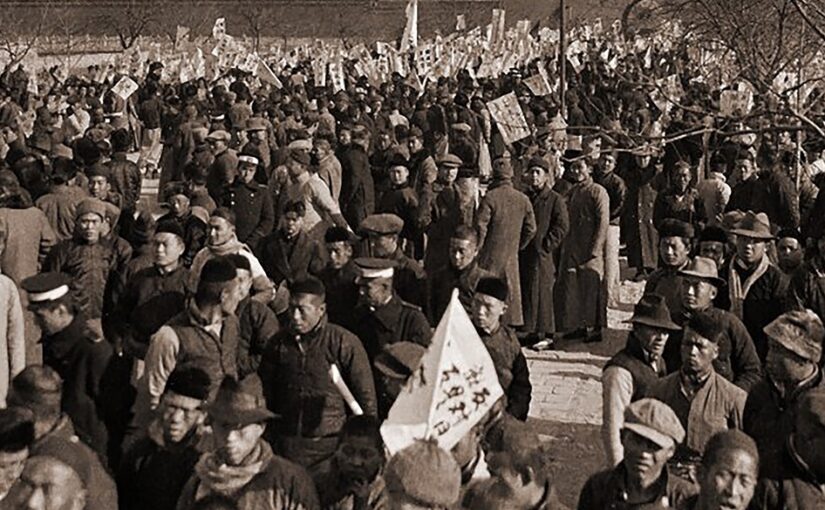
Young people in particular were searching for a path forward. A turning point came on May 4 1919, when the students of Beijing marched on the government buildings in protest at the Treaty of Versailles, which legalised the Japanese seizure of Shandong province and rejected China’s demands for the abolition of foreign spheres of influence and the withdrawal of foreign troops.

The CPC, formed two years later, was the first organisation to put forward the slogan “Down with imperialism,” recognising that China’s weakness and backwardness were inherently bound up with foreign domination.

Some relatively forward-thinking elements of the emerging capitalist class had hoped that the US or Japan might help China to establish itself as a modern capitalist power, but the communists recognised that this reflected a fundamental misunderstanding of the nature of imperialism. The major capitalist powers were compelled by the nature of their economic system to compete for control of China – a country offering an abundance of land, people, natural resources and geostrategic advantage.

The CPC’s anti-imperialist position quickly won it the support of a significant section of the population.

Soon after its formation, the CPC pushed for a united front with the Guomindang (GMD), a revolutionary nationalist party set up by Sun Yat-sen in 1912. The idea of the united front was to construct an anti-imperialist alliance incorporating workers, peasants, intellectuals and the patriotic elements of the capitalist class, with a view to decisively ending feudalism, uniting the country under a single central government and driving out the imperialist powers.

Denied recognition or support by the West, the GMD was in the process of orienting towards the recently formed Soviet Union, which had already demonstrated itself to be a supporter of Chinese sovereignty.

This first united front started to fracture after the death in 1925 of Sun Yat-sen. The GMD’s right wing gained the ascendancy under the leadership of the fiercely anti-communist Chiang Kai-shek. Fearing that the communists were gaining too much popular support, Chiang orchestrated a coup against them, in collaboration with the various foreign powers that had recognised in Chiang a potential partner in the pursuit of an “acceptable” political conjuncture in China.

When, in April 1927, Shanghai was liberated from warlord control as the result of an insurrection of the local working class (led primarily by CPC forces), Chiang’s forces won control of the city by means of a massacre of its liberators, killing an estimated 5,000 people. This marked the start of a several-year campaign of mass killings by Chiang’s forces against communists and progressive workers.

With CPC members formally ejected from the GMD and the united front dismantled, Chiang Kai-shek set up a new regime in Nanjing, under which communism became a crime punishable by death. The government focused its efforts not on resisting imperialism or uniting the country but on suppressing communists.

Facing something close to physical annihilation, the membership of the CPC fell from 58,000 at the start of 1927 to 10,000 by the end of the year.

These disastrous events led the communists to a strategic reorientation. It was clear that a united front policy focused on the major urban centres was no longer a viable option. Meanwhile, “as every schoolboy knows, 80 per cent of China’s population are peasants” (Mao Zedong, On Contradiction). The CPC was moving towards the development of the world’s first rural-based revolutionary Marxist movement.

Following a failed uprising in his native Hunan, Mao Zedong fled with his forces into the Jinggang mountains, in the border region of Jiangxi and Hunan provinces. This became the birthplace of the Chinese Red Army and the site of the first liberated territory.

The Jiangxi Soviet expanded over the course of several years to incorporate parts of seven counties and a population of more than half a million.

Between 1929 and 1934, Chiang’s forces led a series of brutal encirclement campaigns in an attempt to bury the Jiangxi Soviet. After suffering a series of defeats at the hands of a highly motivated and skilled Red Army, the Guomindang mobilised warlord armies from around the country, organising a force of more than a million troops. The communists had no choice but to abandon the liberated territory and break the siege. This process became the Long March: the extraordinary year-long retreat to the north-west, covering over 9,000 kilometres and ending with the establishment of a revolutionary base area in Shaanxi.

In the liberated territories, the communists led the creation of a new political economy in the countryside that – along with their determined struggle against Japanese militarism – would earn them the support of the broad masses of the peasantry.

Land reform was carried out and basic educational and healthcare infrastructure established. Millions of peasants finally learned to read in schools set up by the Red Army.

In the context of an expanding Japanese occupation of north-east China, more progressive elements within the GMD took the initiative, detaining Chiang in the north-western city of Xi’an and forcing him to agree to co-operate with the CPC against Japanese occupation. Thus was formed the Second United Front. The red base at Yan’an was recognised as a provincial government and the CPC was legalised; the Red Army was re-designated as the Eighth Route Army.

By the time of Japan’s defeat in 1945, it was abundantly clear that the communists were the most cohesive, committed and competent political force in China; the only political party with the potential to restore China’s sovereignty, unity and dignity.

The CPC proposed a democratic coalition with the GMD, and this was agreed; however, Chiang Kai-shek could accept nothing less than full control of the country, and he persisted in ferocious military attacks against CPC-controlled territory. A bitter four-year civil war ensued, resulting in the communists’ victory and the flight of Chiang Kai-shek and his generals to Taiwan.

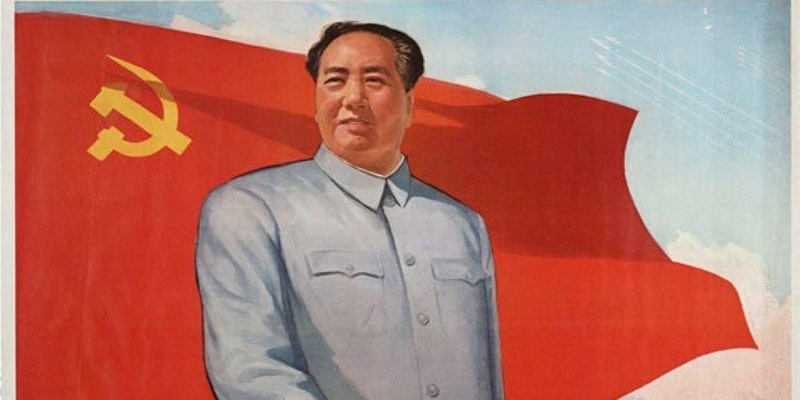
The People’s Republic of China was proclaimed on October 1 1949 by Mao Zedong, who announced to the hundreds of thousands present in Tiananmen Square that “the Chinese people have stood up!”

From Spain to China: The story of David Crook

We are pleased to republish this fascinating article by He Yan about David Crook, a friend of socialist China if ever there was one. The article appeared in the March 2021 issue of Voice of Friendship, the magazine of the Chinese People’s Association for Friendship with Foreign Countries.


“Cmour sacré de la Patrie,
Conduis, soutiensnos bras
vengeurs
Liberté, Libertéchérie,
Combats avec tesdéfenseurs,
Combats avec tesdéfenseurs!
Sous nosdrapeaux que la victoire
Accoure a tesmales accents,
Que tesennemisexpirants
Voient ton triomphe et notre
gloire!”

Speaking of his teacher David Crook, Zhou Nan, a Chinese diplomat in his 90s lying in bed at Beijing Hospital, began to sing The Marseillaise in French. The Marseillaise is a popular paean of freedom popularized by the French Revolution and the Spanish Civil War.

It was the morning of May 16, 2018, when the sun shone into the room and the song filled my ears. Zhou Nan then stopped singing and said to me, “In 1948, I learned The Internationale and the Marseillaise at the Central Foreign Affairs School in Nanhaishan.”

Spanish anti-fascist battlefield

On the morning of Nov 4, 2020, I went to Zhou Nan’s home. Zhou recalled: “In 1937 before he came to China, David Crook took part in the International Brigades to support the government of the Republic of Spain in fighting Franco’s fascist regime. He taught me The Internationale and The Marseillaise, which he had learned in the International Brigades. Later on, I myself often sang The Marseillaise. Although I forgot the first half, the second half is still in my mind.”

David Crook was born in London on Aug 14, 1910. His Jewish grandparents had escaped from Poland and gone to the United Kingdom in avoid of czar’s religious persecution. His father’s fur business, in spite of earlier development, failed in 1921. As a result, David dropped out of school when he was 15 years old.

David was working at a relative’s factory during the great labor strike in 1926 in the UK. His parents sent him to London Polytechnic and then to Paris to learn French so that he was able to enter the middle class. Dreaming of becoming a millionaire to repay his parents for their upbringing, David traveled to the United States alone in April 1929. As he wrote in his unpublished autobiography — From Hampstead Heath to Tian’anmen (finished in 1993) — “… it is a bad timing. I chose to come to America six months before the US stock market crashed in October 1929.”

David worked at a leather factory as the Great Depression settled in across the United States. He processed stinking pelts every day and earned a pitiful $15 a week. Witnessing the miserable life of laborers on the bottom rung of society, he began to read books and reports about the Soviet Union.

Through part-time work and part-time study, he was admitted to Columbia University. He then joined the Communist Youth League and became an activist in the student movement, which gave him a chance to gain more knowledge about communism. Combining communist theory and practice, he and his schoolmates supported the local miners’ strike in Harlan County, Kentucky, which ended up with his being expelled. That prompted him to join the Communist Party of Britain in London after his graduation from Columbia.

In July 1936, Francisco Franco led a military coup to overthrow the democratically elected left-wing government of the Republic of Spain and establish fascist rule, triggering a civil war in the country. David joined the International Brigades and fought with the Spanish people. He wrote: “Our batch of volunteers rode on from the border of France and Spain to Barcelona at the beginning of January 1937. Uniformed young soldiers of the Republican Army leaned out of the windows, their faces smiling, their right arms raised in the clenched-fist popular front salute, above the vow, whitewashed on the wooden sides of the train: ‘Rather die than submit to tyranny.’ That was the spirit of Republican Spain.”

David was shot in the leg in the battle defending the Jarama Valley. Later, the song Jarama commemorated the battle. The lyrics include: “There’s a valley in Spain called Jarama. It’s a place that we all know right well. For it’s there that we gave of our manhood. And many of our brave comrades fell.”

David recalled in an article: “On Feb 12, 1937, Sam Wild and I were part of a platoon of British Volunteers stationed on the crest of a hill, having been told, ‘Don’t leave that bloody hill till you’re told to.’ Bloody it was and we obeyed orders until none of our mates were left alive. Then we retreated down the slope into a grove of olive trees. There we took cover behind the mounds of earth banking up the trees.”

At midnight, he was sent to the hospital in Madrid where Norman Bethune worked. During his six weeks of hospitalization, he became an assistant broadcaster in English and interviewed Ernest Hemingway. “Ernest Hemingway covered the Spanish Civil War with his pen. Hemingway in a hotel room in Madrid, laughing, gambling, drinking with friends as the bombs burst nearby. It was, of course, the top floor of the hotel, the most dangerous place to be. I was in that room one night with Hemingway and his pals.”

During his stay in the hospital, he borrowed a book from Bethune called Red Star Over China by American journalist Edgar Snow and thus began to follow the Chinese revolution. As he later wrote in his article Red Star Leads Me to China, “I read Snow’s reports on five counterattacks against (the Kuomintang’s) Encirclement and Extermination Campaign and the (Red Army’s) Long March, including the crossing of the Dadu River, flying away from the Luding Bridge and tramping over snow mountains and marshy grasslands. I got to know Yan’an, a revolutionary base area in China, and its local life. I was deeply touched by the heroism of the Chinese workers, farmers, intellectuals and populace in the face of Japanese invaders. … I found things in common between the Chinese People’s War of Resistance against the Japanese Aggression and the Spanish people’s war against fascism. When the International Brigades left Spain, I was eager to fight in Yan’an one day.”

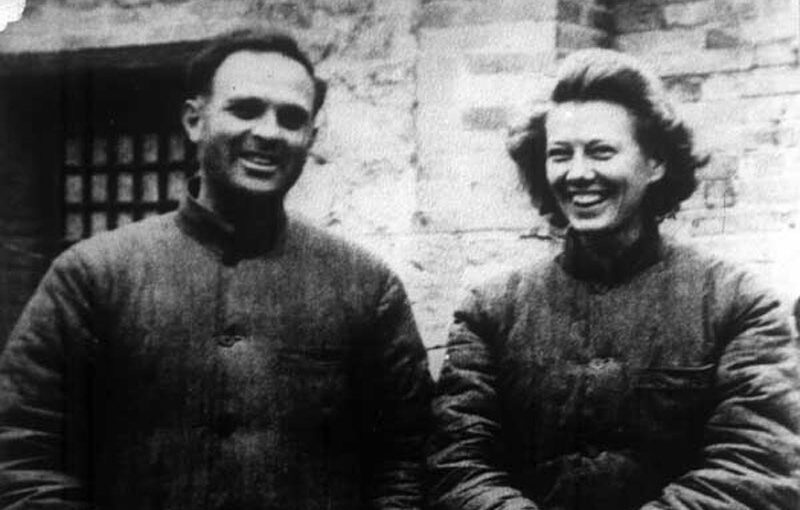
In the summer of 1938, David was sent by the Communist International from Spain to Shanghai, which was under Japanese occupation, to prepare reports on local workers. He taught at St. John’s University. In 1940, he went to Chengdu, Sichuan province, and taught at the University of Nanking, which had been forced to move to Chengdu because of the Japanese invasion. David met Isabel Brown in the office and fell in love with her at first sight. Isabel was born in Chengdu and her parents were Canadian missionaries. In 1938, she earned a master’s degree in child psychology from the University of Toronto in Canada and came back to China. She came to replace her sick sister as a teacher.

Employed by the National Christian Council of China, Isabel participated in the rural construction of Xinglongchang, Bishan county. David often went to see her at that time. In the summer of 1941, they visited a spot by the Dadu River where the Red Army had fought a fierce battle. On the iron chain bridge stretching across the river, David proposed to Isabel.

In June 1941, when Nazi Germany invaded the Soviet Union, David decided to return to Britain via New York to fight fascism. He worked with Edgar Snow at the American Committee in Aid of the Chinese Industrial Cooperatives in New York and raised money for China’s anti-fascist war. After a long journey, David and Isabel returned to London one after another. They married in 1942. David was enlisted in the British Royal Air Force and was sent to India, Ceylon (Sri Lanka) and Burma (today’s Myanmar) for intelligence work. Isabel joined the Communist Party of Britain and served in the Canadian Women’s Army Corps.

After the end of World War II in 1945, David retired from military service and began to study the Chinese language at the School of Oriental and African Studies of the University of London, while Isabel pursued her PhD in philosophy in anthropology under Raymond Firth at the London School of Economics. Rereading Red Star Over China renewed their interest in the country. The couple wanted to see changes in China, and their ideas were supported by the Central Committee of the Communist Party of Britain which gave them a letter of introduction.

In the autumn of 1947, the couple traveled via Hong Kong to Shanghai and Tianjin. With the help of the underground organization of the Chinese Communist Party, they arrived at Shilidian (Ten Mile Inn) in Shidong village of Hebei province’s Wu’an county, in the Taihang mountain area. They participated in the land reform as observers. In homespun uniforms, they integrated into the local community, eating with farmers while carrying bowls and squatting on the ground. Through talks, they collected historical data and materials on land reform in the village between 1937 and 1947, yielding two works: Revolution in a Chinese Village: Ten Mile Inn; and Ten Mile Inn: Mass Movement in a Chinese Village.

With the liberated areas of north China expanded and merged, the liberation of Beijing and Tianjin were close at hand. In the summer of 1948, the couple finished their investigations and were ready to return to Britain. Wang Bingnan, deputy director of the Foreign Affairs Department of the CPC Central Committee, invited them to teach English at the Central Foreign Affairs School. They agreed.

Continue reading From Spain to China: The story of David Crook

No Great Wall: on the continuities of the Chinese Revolution

This essay by Friends of Socialist China co-editor Carlos Martinez argues that there is a common thread running through the hundred-year history of the Communist Party of China. While there have been numerous twists and turns, and several contrasting strategies, the constant factor is the creativity and dedication in forging a path to socialism, improving the lot of the Chinese people, and contributing to a peaceful and prosperous future for humanity.

It was first published on Invent the Future.


The Communist Party of China (CPC) was formed in July 1921. From that time up to the present day, it has led the Chinese Revolution – a revolution to eliminate feudalism, to regain China’s national sovereignty, to end foreign domination of China, to build socialism, to create a better life for the Chinese people, and to contribute to a peaceful and prosperous future for humanity.

Some of these goals have already been achieved; others are ongoing. Thus the Chinese Revolution is a continuing process, and its basic political orientation remains the same.

Feudalism was dismantled in CPC-controlled territories from the early 1930s onwards, and throughout the country in the period immediately following the establishment of the People’s Republic in 1949. Similarly, warlord rule was ended and a unified China essentially established in 1949; Hong Kong was returned to Chinese rule in 1997 and Macao in 1999. Only Taiwan continues to be governed separately and to serve foreign interests. And yet in a world system still principally defined by US hegemony, the imperialist threat remains – and is intensifying with the development of a US-led hybrid war against China. Therefore the project of protecting China’s sovereignty and resisting imperialism continues. Similarly, the path to socialism is constantly evolving.

In the course of trying to build socialism in a vast semi-colonial, semi-feudal country, mistakes have certainly been made. The collected works of Marx and Lenin bubble over with profound ideas, but they contain no templates or formulae. Chinese Marxists have had to continuously engage in “concrete analysis of concrete conditions”,1 applying and developing socialist theory, creatively adapting it to an ever-changing material reality. In their foreword to Agnes Smedley’s biography of Zhu De, The Great Road, Leo Huberman and Paul Sweezy wrote that the Chinese communists, “in the midst of their struggle for survival … have proceeded to evolve a more flexible and sophisticated theory which enriched Marxism by reflecting and absorbing the stubborn realities of the Chinese scene.”2

As Liu Shaoqi, a prominent CPC leader until his denunciation during the Cultural Revolution, explained: “because of the distinctive peculiarities in China’s social and historical development and her backwardness in science, it is a unique and difficult task to apply Marxism systematically to China and to transform it from its European form into a Chinese form… Many of these problems have never been solved or raised by the world’s Marxists, for here in China the main section of the masses are not workers but peasants, and the fight is directed against foreign imperialist oppression and medieval survivals, and not against domestic capitalism.”3

This article argues that, while the Chinese Revolution has taken numerous twists and turns, and while the CPC leadership has adopted different strategies at different times, there is a common thread running through modern Chinese history: of the CPC dedicating itself to navigating a path to socialism, development and independence, improving the lot of the Chinese people, and contributing to a peaceful and prosperous future for humanity.

Continue reading No Great Wall: on the continuities of the Chinese Revolution