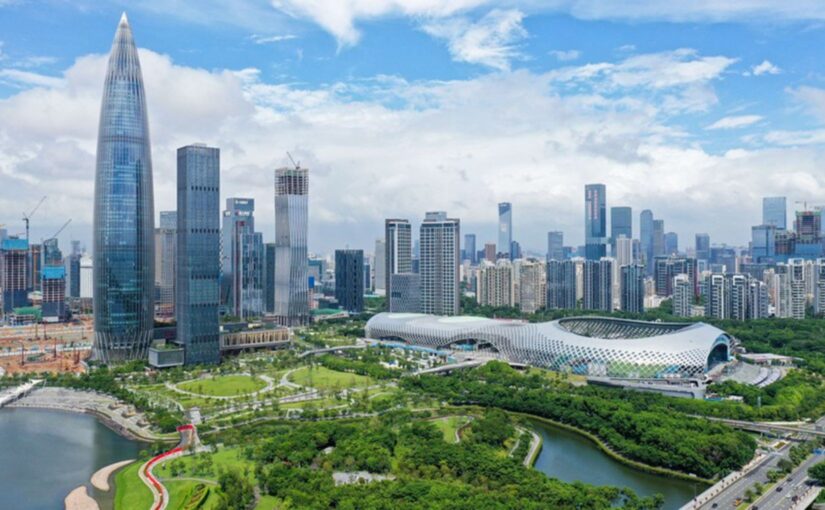
Some aspects of China’s development model

The following article by Shiran Illanperuma, originally published in the Sri Lankan daily newspaper The Island, explores some of the key elements of China’s economic rise, in particular debunking the myth put forward by neoclassical economists that China is “the model par excellence of market liberalisation and the superiority of private sector driven growth”.

Shiran argues that the main competitive advantage of China’s labour force is not its low cost – after all, there are far cheaper labour markets in the world – but the fact that it is well-educated and healthy, and benefits from excellent transport and energy infrastructure. “This, combined with a domestic value chain, is China’s main strength and why economic growth has been combined with rising wages and standards of living.”

Foreign direct investment (FDI) has been leveraged very purposefully in China particularly from the 1990s onwards in order to develop the domestic economy, and to build up the country’s technological capabilities. Meanwhile, “state-owned enterprises (SOEs) are the elephant in the room when it comes to China’s development model”.

Broadly speaking, SOEs in China perform four ‘macroeconomic’ functions. First, they conduct the low-cost production of upstream inputs such as metals, chemicals, and rare earth minerals. Second, they manage essential commodity reserves and intervene in commodity markets to stabilise prices. Third, they engage in countercyclical spending on public works during economic downturns. Fourth, they are deployed to respond during emergencies and external shocks such as the 2008 Sichuan earthquake and the COVID-19 pandemic. The through line in these functions is to keep costs low and smoothen out business and commodity cycles. This is why China has not yet faced a recession comparable to many capitalist economies.

The leading role of the CPC in China’s economic strategy is also crucial:

The Communist Party of China, which has around 100 million members (almost five times the population of Sri Lanka!), has been key to the process of China’s development. The party remains committed to developing Marxist-Leninist philosophy and applying it to the country’s concrete conditions. It retains deep roots in all levels of Chinese society, engaging in consultation during the policymaking process.

As such, China’s remarkable rise cannot be separated from its system of Socialism with Chinese Characteristics.

Shiran Illanperuma is a researcher at Tricontinental: Institute for Social Research and a co-editor of Wenhua Zongheng: A Journal of Contemporary Chinese Thought

China’s rapid development over the last few decades has been the source of much debate among economists. Some claim China as the model par excellence of market liberalisation and the superiority of private sector driven growth. Others equally argue that China’s model is one of planning and state intervention.

On 28 March, I was invited by Nexus Research to deliver a presentation on China’s development model alongside former Ambassador to China Dr. Palitha Kohona. Unfortunately, the contents of this presentation have been misreported in an article in the Island published on 4 April (Dr Kohona: developing countries should covet China model). The article claimed that my presentation touched on “low-cost labour, foreign direct investments, and global trade agreements”. In fact, such simplistic tropes were precisely what I had intended to counter.

China’s development model challenges many of the axioms of neoclassical economics. If low-cost labour were the decisive factor for take-off, then investment should be pouring into much-cheaper labour markets in sub-Saharan Africa. On the contrary, rising wages in China have not led to the outflow of capital one would expect under such a model. This is because the advantage China offers is a healthy and skilled workforce (relative to price) and an infrastructural system that keeps non-wage operating costs (such as transport and energy) low. This, combined with a domestic value chain, is China’s main strength and why economic growth has been combined with rising wages and standards of living.

While foreign direct investment (FDI) has been a huge part of China’s success story, it is possible to overstate their importance. First, FDIs only really took off from the 1990s onwards, yet to begin there would be to ignore the decades of work done to develop the country’s agricultural self-sufficiency, basic industrial system, and institutional structure. Second, what has mattered for China is the quality of FDI, which is determined by government policy. By the standards of the OECD Foreign Direct Investment Regulatory Restrictiveness Index, China remains fairly selective on what FDI is allowed and encouraged. FDI is promoted not as an end in itself but as a means to acquire technology that should be transferred to national champions.

Role of Local Government

A significant portion of my presentation for Nexus Research was on the role of local governments economic policy – something that is often neglected (though there is a growing literature on the subject). China has a fairly decentralised system of governance, a product of its vast size and geography, as well as the institutional changes and experiments in direct democracy during the period of the Cultural Revolution.

Chinese economist Xiaohuan Lan, in his book How China Works (2024), has said that “In China, it is impossible to understand the economy without understanding the government.” While the central government in China formulates indicative plans and the overall goals and trajectory for development, implementation of these plans is delegated to local governments. Local governments have a broad remit to interpret these plans, experiment with implementation, and compete with each other for investment. This leads to a much more dynamic and decentralised development process that encourages grassroots participation.

A comparison between China and India on the share of public employment at different levels of government is very revealing. For China, over 60% of public employment is at the level of local government, with federal and state governments comprising less than 40% of employment. In contrast, less than 20% of Indian public employment is in local government. India, therefore, despite its much-touted linguistic federal system, is far more centralised than China. The weakness of Indian local governments remains a significant barrier for its development.

Continue reading Some aspects of China’s development model
Breaking the silence on Palestinian armed struggle: a call for legal clarity

The following article by Ramzy Baroud and Romana Rubeo, reposted from Palestine Chronicle, addresses the Palestinian people’s right to armed struggle against colonial occupation – recognised under international law but widely ignored by Israel and its supporters.

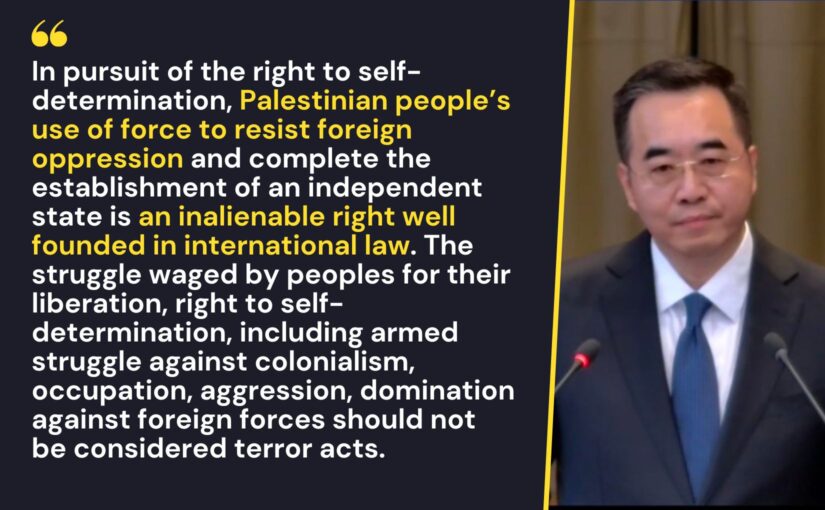
The authors highlight the significance of the February 2024 testimony at the International Court of Justice (ICJ) by Ma Xinmin, legal advisor to China’s Foreign Ministry, articulating the Chinese position on this conflictive issue, a topic that “even Palestine’s closest allies in the Middle East and Global South dare not touch”.

Palestinian people’s use of force to resist foreign oppression and complete the establishment of an independent state is an inalienable right… The struggle waged by peoples for their liberation, right to self-determination, including armed struggle against colonialism, occupation, aggression, domination against foreign forces should not be considered terror acts.

The article cites Professor Richard Falk, a leading scholar of international law and former UN special rapporteur for Palestine, strongly supporting this position. Addressing the events of 7 October 2023, Falk states: “To the extent that there is real evidence of atrocities accompanying the October 7 attack, those would constitute violations, but the attack itself is something that, in context, appears entirely justifiable and long overdue.”

These points are hugely important in that they affirm the legal and moral legitimacy of Palestinian resistance, and counter the relentless attempts to delegitimise the Palestinian struggle. As such, China’s clearly-stated position is a valuable contribution to the pursuit of Palestinian national rights.

On February 22, 2024, Ma Xinmin, China’s Representative at the International Court of Justice (ICJ), uttered the unexpected.

His testimony, like that of a number of others, was meant to help the International Court of Justice (ICJ) formulate a critical and long-overdue legal opinion on the legal consequences of Israel’s occupation of Palestine. 

Ma Xinmin articulated the Chinese position, which, unlike the American envoy’s testimony, was entirely aligned with international and humanitarian laws.

But he delved into a tabooed subject—one that even Palestine’s closest allies in the Middle East and Global South dared not touch: the right to use armed struggle.

 “Palestinian people’s use of force to resist foreign oppression and complete the establishment of an independent state is an inalienable right,” the Chinese Ambassador said, insisting that “the struggle waged by peoples for their liberation, right to self-determination, including armed struggle against colonialism, occupation, aggression, domination against foreign forces should not be considered terror acts”.

Continue reading Breaking the silence on Palestinian armed struggle: a call for legal clarity

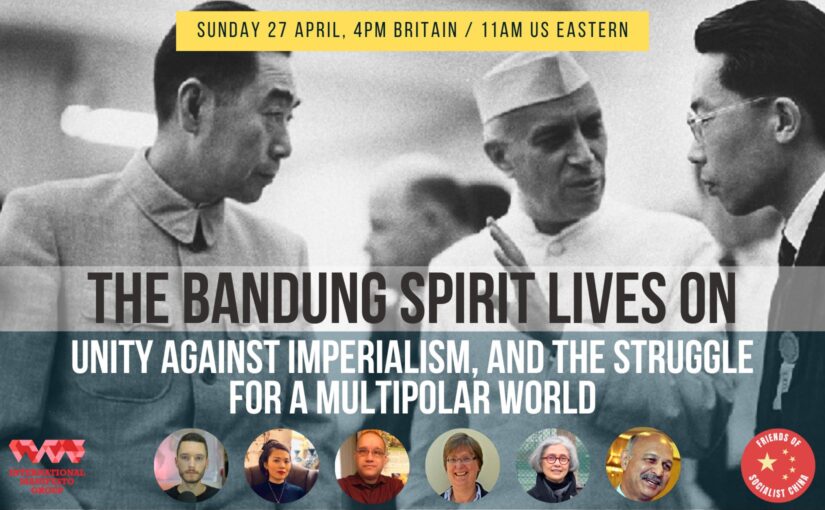
Webinar: The Bandung spirit lives on! Unity against imperialism, and the struggle for a multipolar world

📆 Sunday 27 April 2025, 4pm Britain, 11am US Eastern, 8am US Pacific

Seventy years ago, the Bandung Conference brought together 29 Asian and African countries to discuss the common challenges facing the Third World. The conference was a milestone in the global struggle against colonialism and imperialism, and laid the foundations for the Non-Aligned Movement. This webinar will address the legacy of Bandung, and its relevance to the contemporary world. It will seek to find answers to questions such as:

  • Are the Five Principles of Peaceful Coexistence, adopted at Bandung, still relevant today?
  • How can the Bandung spirit help us to build a global united front against imperialism?
  • What international organisations and movements are carrying forward the Bandung spirit?
  • Are the US and its allies still trying to divide the Global South, as they did during the Cold War?
  • How does China’s rise affect humanity’s trajectory towards multipolarity, sovereignty and socialism?

Confirmed speakers

  • Ben Norton (Founder and editor, Geopolitical Economy Report)
  • Mushahid Hussain (Pakistani senator, Chairman of the China-Pakistan Institute)
  • Tings Chak (Asia Coordinator, Tricontinental Institute)
  • Professor Isaac Saney (Cuba and Black studies specialist, Dalhousie University)
  • Dr Jenny Clegg (Author, China’s Global Strategy: Towards a Multipolar World)
  • Moderator: Professor Radhika Desai (Convenor, International Manifesto Group)

Organisers

This webinar is organised jointly by the International Manifesto Group and Friends of Socialist China.

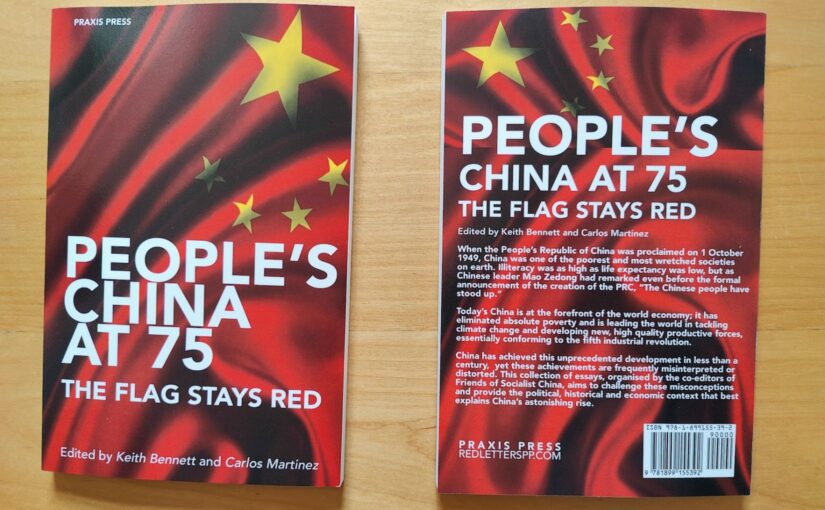
Book review: People’s China at 75 – The Flag Stays Red

We are pleased to republish this short review of ‘People’s China at 75, the Flag Stays Red’, edited by our co-editors Keith Bennett and Carlos Martinez, which was originally published in the current (Spring 2025) edition of China Eye, the magazine of the Society for Anglo-Chinese Understanding (SACU).

In the editorial, editor Walter Fung also writes: “Keith Bennett and Carlos Martinez’s book, People’s China at 75, the Flag Stays Red, is extremely important as it presents facts from the Chinese point of view of China’s development since the 1949 revolution. Not all histories, even by eminent historians and well qualified scholars present accounts which are without some ‘Western’ bias.”

Further information about SACU, including PDF editions of China Eye, may be found here. The book can be purchased from the Praxis Press website in paperback or digital format.

People’s China at 75, the Flag Stays Red, Edited by Keith Bennett and Carlos Martinez. 152 pages. Praxis Press Glasgow, 2025. 

This is an important book for anybody who wants to understand the People’s Republic of China (PRC) and the Communist Party of China (CPC). Written by several expert authors, the book relates the origins of the CPC and the formation of the PRC and discusses the current position in the world in a clear and concise way. Many references are given at the end of each chapter. The introductory chapter is ‘understanding socialism with Chinese characteristics’, written by the two editors of the book, both of whom are members of SACU.

The aims of Xi Jinping in his programme for a’ New Era;’ are listed and explained. They include: battling against corruption, eliminating extreme poverty and ensuring that those lifted out of poverty do not slip back into poverty, tackling pollution, protecting the environment, safeguarding diversity, being a leader in renewable energy and working against climate change, increasing medical care and insurance and also old age pensions.

Steps will be taken to strengthen the Party and ensuring that it serves the people. In addition, support will be given to support other socialist countries. A strategic goal will be building a world community of a shared future for humanity.  

Other chapters include; building socialism with Chinese characteristics, standing up and opposing hegemony and China’s socialist democracy. Jenny Clegg, a SACU Vice-President relates China’s transition to socialism during the years 1949-56. Despite many challengers and mistakes much was achieved in providing basic necessities of life such as food, clothing and rural medicine through the efforts of barefoot doctors. Advances were made in agricultural techniques and life expectancy was significantly increased.  

BRICS laying the groundwork for a more balanced global financial system

In the following article, which was originally published in China Daily, Endalkachew Sime, a former Minister of Planning and Development in Ethiopia, who is currently studying for his PhD at Peking University, provides a balanced overview of the trend towards de-dollarisation and the role played by the BRICS+ cooperation mechanism.

He notes that it has emerged as a pivotal actor in this regard, adding: “This strategic shift seeks to reduce dependence on the US dollar in international trade, investments and monetary reserves.” But “far from being an antagonistic move against the United States, it represents a pragmatic effort by the BRICS nations to assert financial autonomy and protect their economies from external shocks.” The New Development Bank, established by the BRICS nations in 2015, represents a concrete institutional response to dollar dominance and China’s trade with such major partners as Russia and South Africa have seen significant shifts away from the ‘greenback’.

BRICS nations have also developed alternative payment systems to bypass traditional US-dominated infrastructure. China’s Cross-Border Interbank Payment System and Russia’s System for Transfer of Financial Messages offer alternatives to SWIFT, while India’s rupee-based trade settlement mechanism challenges the US dollar’s dominance in regional trade. These systems enhance financial sovereignty by providing secure, independent channels for international transactions.

Moreover, by diversifying their foreign exchange reserves into alternative currencies and assets – such as the euro, yen and gold – BRICS countries aim to enhance financial stability. Gold reserves have seen particularly dramatic increases.

Sime notes that: “Developing economies face significant risks when their financial systems are closely tied to the US dollar. Changes in US interest rates, quantitative easing, or other monetary policies can trigger capital flows, currency volatility, and economic instability in dollar-dependent economies. By reducing dollar dependence, Global South nations can insulate themselves from these external shocks and maintain greater control over their domestic economic policies. US sanctions have become a powerful tool of economic coercion, particularly against countries such as Russia, Iran and Venezuela. De-dollarisation efforts provide a mechanism for these nations to conduct international trade and finance outside the reach of US sanctions.”

He adds that the current global financial architecture disproportionately benefits developed economies, particularly the US. By creating alternative financial institutions and mechanisms, BRICS nations contribute to a more multipolar system where multiple currencies and financial architectures coexist. This evolution could lead to greater fairness and representation for developing economies in global financial governance.

However, he goes on to warn: “Despite these advances, challenges remain in establishing a fully integrated BRICS financial architecture. The heterogeneity of economic structures, political priorities, and developmental stages among member countries complicates coordination. Furthermore, the US dollar retains its dominance in global finance, and transitioning to alternative systems requires significant investment and institutional development.”

Nevertheless, he concludes: “By creating alternative financial institutions and instruments, BRICS nations are laying the groundwork for a more balanced global financial system. This shift could potentially reduce the effectiveness of the US’ politically motivated unilateral sanctions, enhance financial sovereignty for developing economies, and promote greater stability in international monetary relations… De-dollarisation represents not a threat to the global economic system but an opportunity to create a more resilient and equitable architecture that respects the sovereign economic interests of all nations. For the Global South, this movement is fundamentally about protecting domestic economies from external shocks, asserting financial autonomy, and participating in a more multipolar world order.”

The “BRICS Plus” grouping — Brazil, Russia, India, China, South Africa, Egypt, Ethiopia, Saudi Arabia, Iran, the United Arab Emirates and Indonesia — has emerged as a pivotal actor in the global movement toward de-dollarization. This strategic shift seeks to reduce dependence on the US dollar in international trade, investments and monetary reserves. Far from being an antagonistic move against the United States, it represents a pragmatic effort by the BRICS nations to assert financial autonomy and protect their economies from external shocks.

The US dollar accounted for about 58 percent of global foreign currency reserves and 88 percent of the daily foreign exchange market turnover as of 2023. However, this dominance creates vulnerabilities for countries whose economies are closely tied to its performance.

The New Development Bank, established in 2015 with an initial capital of $50 billion, represents a concrete institutional response to the dollar dominance. By 2023, the NDB had approved over $30 billion in funding for infrastructure and sustainable development projects across BRICS nations, with approximately 30 percent of these funds disbursed in nondollar currencies. Further, the Contingent Reserve Arrangement, a $100 billion financial safety net established in 2014, provides liquidity support in nondollar currencies during financial crises. This mechanism helps BRICS nations mitigate the risks associated with dollar volatility and potential capital flight.

Bilateral trade settlements have seen significant shifts away from the dollar. For instance, the share of the US dollar in Russia-China bilateral trade settlement plummeted from nearly 90 percent in 2015 to 46 percent in the first half of 2020, while the use of local currencies in India-Russia bilateral trade surged from 6 percent to 30 percent between 2014 and 2019. Similarly, the renminbi’s usage in South African trade grew by 65 percent in 2016 alone. These changes reflect a deliberate strategy to reduce exposure to dollar fluctuations and enhance trade stability.

Continue reading BRICS laying the groundwork for a more balanced global financial system

CODEPINK peace group subjected to McCarthyite lies

On 25 March 2025, at a US Senate Intelligence Committee hearing on global threats, CODEPINK activist Tighe Barry stood up and called on the US government to stop funding Israel’s genocide in Gaza. Fanatical China hawk Senator Tom Cotton responded by labelling Barry as a “CODEPINK lunatic that was funded by the Communist Party of China”. Retired Colonel Ann Wright stood up and shouted “I’m a retired Army Colonel and former diplomat. I work with CODEPINK and it is not funded by Communist China.”

Both activists were ejected from the room and arrested. Cotton meanwhile proceeded with his McCarthyite diatribe: “The fact that Communist China funds CODEPINK, which interrupts a hearing about Israel illustrates Director Gabbard’s point that China, Russia, Iran and North Korea are working together in greater concert than they ever had before.”

The purpose of this narrative is to portray any opposition to US hegemonism and imperialism as being funded and fomented by foreign powers – just as in the 1950s and 60s, working class, progressive and anti-war activists were portrayed as Soviet agents.

We republish below an article about the incident by Ann Wright from CovertAction magazine, and a petition by CODEPINK, Senator Cotton: Stop Lying about Peace Activists!, which we encourage people to sign.

Senate Intelligence Committee Hearing Turns Ugly with McCarthy-Style Lies About CODEPINK: Women for Peace

On March 25, at the U.S. Senate Intelligence Committee hearing on global threats with the five heads of intelligence agencies of the U.S. government, Senator Tom Cotton, accused on national TV a group I have worked with for over 20 years, CODEPINK: Women for Peace, of being funded by the Communist Party of China.

During the hearing CODEPINK activist Tighe Barry stood up following the presentation of the Director of National Security Tulsi Gabbard’s lengthy statement about global threats to U.S. national security and yelled “Stop Funding Israel.”

This was because neither Intelligence Committee Chair Tom Cotton and Vice Chair Mark Warner had mentioned Israel in their opening statement nor had Gabbard mentioned the Israeli genocide of Palestinians in Gaza in her statement either.

Continue reading CODEPINK peace group subjected to McCarthyite lies

China’s solar space station: A game-changer in renewable energy

We are pleased to republish below an article by James Wood, a British-Australian technologist and geopolitical analyst based in China, about exciting developments being made by Chinese scientists in the realm of space-based solar power (SBSP), supplementing the article we posted several weeks ago, Science fiction or science reality: China makes impressive progress towards space-based solar power, and providing an Australian perspective.

Describing the technology in easy-to-understand terms, James writes: “Imagine a kilometre-wide solar array orbiting Earth, harvesting limitless, uninterrupted solar energy and beaming it back home, day and night, without the interference of clouds or darkness… Unlike Earth-based solar farms, which suffer from weather conditions and night-time dips, a solar station in space captures continuous, unfiltered solar radiation, potentially more efficient than anything on the ground. The energy is then converted into microwaves and beamed down to terrestrial receiving stations, where it is transformed back into electricity and integrated into the grid.”

The author notes that China’s “state-driven, centralised approach allows for massive co-ordination and rapid development, unlike the fragmented, slow-moving private sector initiatives in the US”. Meanwhile Australia, “despite its vast potential, has been lagging in both space-based technology and terrestrial renewable energy advancements”. This is attributed to inadequate infrastructure and a lack of long-term strategic planning.

In this as in many other fields, China’s socialist system is proving its superiority over capitalism in terms of moving human understanding and capacity forward.

This article originally appeared on Pearls and Irritations.

China is making the once sci-fi dream of space-based solar power a reality and leaving the West scrambling to keep up. Imagine a kilometre-wide solar array orbiting Earth, harvesting limitless, uninterrupted solar energy and beaming it back home, day and night, without the interference of clouds or darkness. The China Academy of Space Technology is spearheading this geostationary solar power station and with a 2028-2050 roadmap, Beijing is set to redefine the global energy game.

In 2028, China plans to launch a low Earth orbit test satellite generating 10 kilowatts (kW) to trial microwave power transmission. By 2030, a 1-megawatt (MW) station is expected to be deployed in geostationary orbit at 36,000 km, where it will be assembled in space before beaming power back to Earth. By 2035, the system aims to scale up to 10 MW, proving its potential for mass energy production. By 2050, the goal is to have a commercially operated solar power plant in space generating two gigawatts (GW) of electricity with an approximately one-kilometre-wide antenna and complex solar cell array assembled in space.

Unlike Earth-based solar farms, which suffer from weather conditions and night-time dips, a solar station in space captures continuous, unfiltered solar radiation, potentially more efficient than anything on the ground. The energy is then converted into microwaves and beamed down to terrestrial receiving stations, where it is transformed back into electricity and integrated into the grid. The Bishan testing facility in Chongqing, backed by $15 million in funding, is already fine-tuning the radio wave transmission technology needed to transmit solar energy from orbit to Earth.

Continue reading China’s solar space station: A game-changer in renewable energy

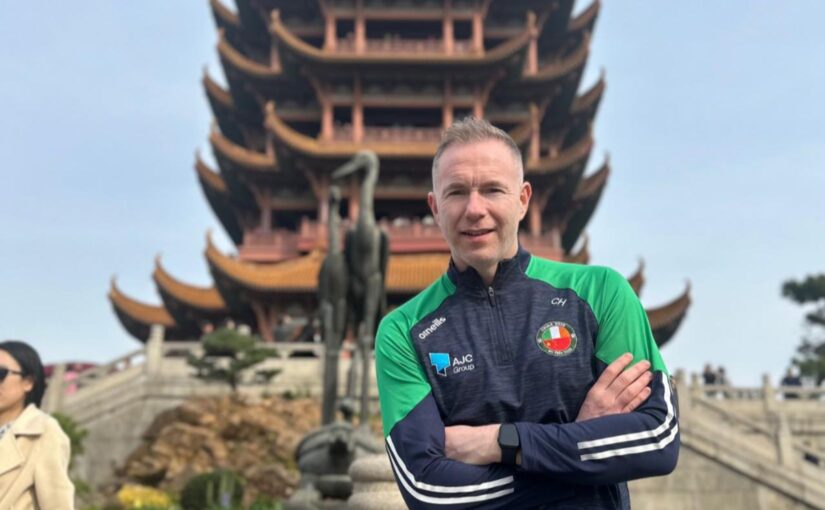
Chris Hazzard MP leads cultural exchange visit to China

Chris Hazzard, the Sinn Féin Member of Parliament for South Down in the north of Ireland, led a delegation from two local Gaelic Athletic Association (GAA) clubs in his constituency to visit China in March.

Local newspaper The Down Recorder said it was “a cultural exchange visit which has been described as ‘an experience they will cherish forever’”, adding: “Members of Drumaness GAC and St John’s GAC are now back home following a very special St Patrick’s [Day] cultural exchange visit to the Far East.”

The delegation included 30 players, coaches and officials from the two clubs and Hazzard, who is also a Drumaness GAC member, “said it was a ‘fantastic privilege’ to lead a delegation of Down Gaels to showcase the very best of what the GAA has to offer across China.

“He said from Huangshi and Wuhan in the… province of Hubei, and finishing off in the megacity of Beijing, the delegation visited schools, universities, Chinese civic society organisations and various cultural and sporting clubs.

“‘The delegation also visited some of China’s national sporting facilities, including the iconic ‘bird’s nest stadium’ in Beijing and the National Ping Pong Training Centre where we were put through our paces by the next generation of Olympic champions.’”

He thanked all the individuals and organisations who helped make the delegation possible, including the Confucius Institute at Ulster University, Down GAA County Board, Beijing GAA, the AJC Group, JJ Donnelly Menswear and the Breedon Construction Group.

Drumaness GAC chairperson Damien McEvoy said: “We were completely blown away by the hospitality, kindness and generosity of the Chinese students, teachers and organisations we met throughout China during our visit. It was truly a once in a lifetime opportunity and I’m especially delighted a great group of young people from Co Down were able to have such an extraordinary experience.”

St John’s GAC chairperson Mary Boyle described the trip as a “fantastic opportunity” for club members to profile everything that is good about the GAA and “our community, games and culture to inquisitive minds more than 5,000 miles away in China. From putting on GAA training for school pupils in Hubei, playing Beijing GAC under the lights in China’s capital, to climbing the Great Wall with new friends from Drumaness GAC, this was truly an amazing experience that we will cherish forever.”

The following article was originally published in the Down Recorder. You can also follow the delegation’s progress around China on the Facebook pages of Chris Hazzard MP, St Johns GAA and Naomh Cholmaín Droím an Easa Drumaness GAC.

A delegation from two local GAA clubs travelled to China recently for a cultural exchange visit which has been described as “an experience they will cherish forever”.

Members of Drumaness GAC and St John’s GAC are now back home following a very special St Patrick’s cultural exchange visit to the Far East.

The delegation was led by Drumaness GAC member and South Down MP Chris Hazzard and included 30 players, coaches and officials from the two local clubs. 

Mr Hazzard said it was a “fantastic privilege” to lead a delegation of Down gaels to showcase the very best of what the GAA has to offer across China. 

He said from Huangshi and Wuhan in the rural province of Hubei, and finishing off in the megacity of Beijing, the delegation visited schools, universities, Chinese civic society organisations and various cultural and sporting clubs. 

“The delegation also visited some of China’s national sporting facilities, including the iconic ‘bird’s nest stadium’ in Beijing and the National Ping Pong Training Centre where we were put through our paces by the next generation of Olympic champions,” he said.

“In their meticulous planning and delivery of GAA training sessions, the delegates from Drumaness and St John’s were a real credit to their clubs, county and country.”

The MP has thanked all the individuals and organisations who helped make the delegation possible, including the Confucius Institute at Ulster University, Down GAA County Board, Beijing GAA, the AJC Group, JJ Donnelly Menswear and the Breedon Construction Group.

Drumaness GAC chairperson Damien McEvoy said it was “such a privilege” to travel to China to promote the skills, ethos and values of the GAA “and share what it means to our community here in Ireland”.

He continued: “We were completely blown away by the hospitality, kindness and generosity of the Chinese students, teachers and organisations we met throughout China during our visit.

“It was truly a once in a lifetime opportunity and I’m especially delighted a great group of young people from Co Down were able to have such an extraordinary experience.

“I have no doubt it will help broaden their horizons as they continue on with their studies and plot out their careers in the years ahead.”

Damien added: “A huge thank you to everybody who made this unforgettable trip possible from everybody at Drumaness GAC.” 

St John’s GAC chairperson Mary Boyle described the trip as a “fantastic opportunity” for club members to profile everything that is good about the GAA and “our community, games and culture to inquisitive minds more than 5,000 miles away in China”.

She continued: “Crucially, the visit also gave our members the opportunity to experience Chinese culture and traditions. It was a truly unique exchange that will stay with us forever. 

“From putting on GAA training for school pupils in Hubei, playing Beijing GAC under the lights in China’s capital, to climbing the Great Wall with new friends from Drumaness GAC, this was truly an amazing experience that we will cherish forever.”

Mary added: “We are extremely grateful to the Confucius Institute at Ulster University and local MP Chris Hazzard for extending an invite to our members to participate in this truly unforgettable delegation.”

Tariff blackmail cannot intimidate China

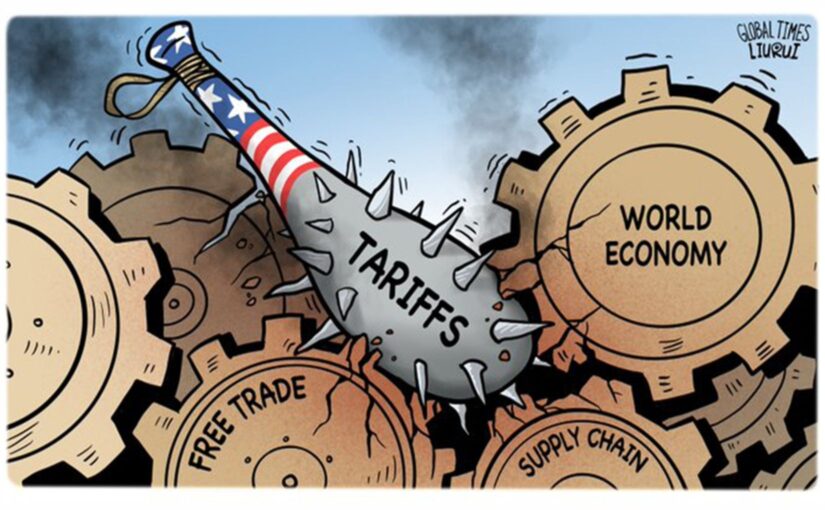
On Saturday 5 April, the Chinese government set out its position opposing the US’s unilateral imposition of tariffs on all its trading partners, including China. The statement correctly noted that these tariffs are in clear breach of World Trade Organisation (WTO) rules, and threaten to seriously disrupt the global economy. “Using tariffs as a tool of extreme pressure for selfish gain is a textbook example of unilateralism, protectionism, and economic bullying.”

It’s clear that China is the main target of the US’s tariff blackmail, which is being used to undermine China’s growth, to force China to accept the US’s terms of trade, to bully other countries into siding with the US against China, and to punish China for its success in building a modern economy and its refusal to bow down to US hegemony.

It’s equally clear that China will not back down in the face of this bullying. “We don’t make trouble, but we have no fear of trouble”, the statement said. Announcing its countermeasures on 8 April, China’s Commerce Ministry stated that “China will fight to the end if the US side is bent on going down the wrong path”.

A recent Bloomberg article describes how “China has already trade-war-proofed its economy”, observing that Chinese “companies and consumers will feel the pain from tariffs much less than Americans”. Similarly, an article in the Guardian notes that “since Trump’s first trade war with China in 2018, China has ramped up trade with other countries, making it less dependent on the US. Between 2018 and 2020, Brazil’s soya bean exports to China increased by more than 45% compared to the 2015-2017 average, while US exports declined 38% over the same period”.

While China can weather the storm, workers and business in the US will suffer. As Michael Roberts has observed: “Tariffs will substantially increase prices – US consumers will bear the brunt on a wide variety of basic foods and essential goods that physically cannot be produced domestically, with the poorest households being hit the hardest. American industry will struggle with higher costs for key intermediate supplies, machinery, and equipment, dwarfing any marginal benefits from reduced foreign competition.”

The US is exposing itself as a bully and a violator of international law and norms of behaviour. Meanwhile the global economy increasingly needs China more than it does the US. The likely effect of the Trump regime’s tariff war will be to isolate the US, not China.

We republish below articles from Global Times and Xinhua.

Tariff blackmail cannot intimidate China: Global Times editorial

April 8 (Global Times) — The US government, under the guise of “reciprocity,” has announced tariff hikes on all its trade partners, including China, provoking widespread outrage in the international community. The Chinese government’s position on opposing the US abuse of tariffs emphasizes that the US has used tariffs as a tool for extreme pressure and to pursue selfish interests. Previously, China announced a series of countermeasures, and the international community has clearly seen China’s firm determination and will to defend its sovereignty, security, development, and to uphold international fairness and justice. Tariff blackmail will not intimidate China, nor will it undermine justice. China does not provoke trouble, nor is it intimidated by trouble. Pressuring and threatening are not the right way in dealing with China.

China’s firm stance on striking countermeasures stems from the fact that the US’ reason for tariff hikes is utterly unfounded. Under the guise of addressing “unfair foreign trade practices,” the US has slapped high tariffs on its global trade partners. In reality, this is nothing more than protectionism and unilateral bullying – political blackmail wrapped in the cloak of economic means. Such actions blatantly violate the core rules of the World Trade Organization and trample on China’s legitimate rights in global trade, as well as its long-standing efforts to open up. The so-called “reciprocal tariffs” have caused enormous damage to the world trade system and global supply chains, and they will pose a serious drag on global economic growth.

Continue reading Tariff blackmail cannot intimidate China

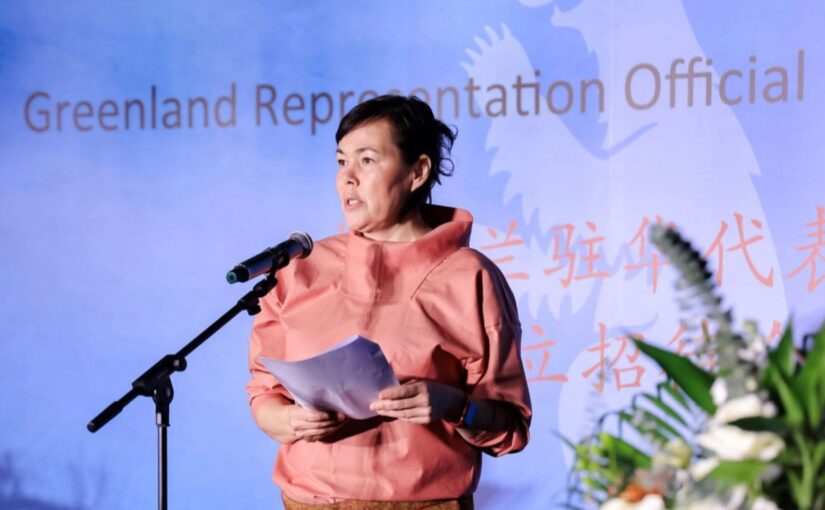
Greenlandic politicians express wish to develop greater cooperation with China

With the eyes of the world focused on Greenland as the Trump administration continues with its aggressive and bullying campaign – including such high-profile stunts as the recent visit by Vice President Vance to a US base on the island after local people made it quite clear that his wife was not welcome at a traditional dog sled race – aimed at replacing Danish rule with US annexation, overriding the people’s desire for independence, leading Greenlandic politicians have expressed their wish to develop greater cooperation with China.

Reporting from the capital Nuuk on March 28, the Xinhua News Agency said that they expressed interest in deepening cooperation with China in areas such as trade, fisheries, and sustainable development while highlighting the potential for a free trade agreement between the two sides.

Vivian Motzfeldt, the incoming foreign minister of Greenland’s new autonomous government, told Xinhua that strengthening ties with China will be one of her priorities. “My trip to China in 2023 was memorable,” she said, noting that China is one of Greenland’s largest seafood markets. “China is very important to us, and we are eager to strengthen our cooperation.”

Following a general election on March 11, taking into account the critical situation facing their country, four of the five political parties that secured seats agreed to form a unity government on March 28. Together, Demokraatit, Siumut, Inuit Ataqatigiit (IA), and Atassut hold 23 out of 31 seats in the Inatsisartut, Greenland’s parliament.

The above-mentioned report is one of a number that Xinhua has recently carried from Nuuk. On March 24, under the headline, ‘Feature: “We don’t want to be Americans” – Greenlanders’, Xinhua reported:

“‘That day, the entire city of Nuuk stood united!’ said Gustav Petersen, a member of Naleraq, the second-largest party in Greenland’s parliament, referring to the anti-US protest held on March 15. [Naleraq won the second largest number of seats in the election but was the only party that has declined to join the new government.]

“According to local media, more than 1,000 people participated in the protest – an impressive turnout for Nuuk, a city with a population of just 15,000. Carrying banners reading ‘We are not for sale,’ ‘Greenland for Greenlanders,’ and ‘Make America Go Away,’ demonstrators marched from the city centre to the US Consulate in Nuuk, sending a clear message of opposition to Washington’s ambitions.

“Petersen said although Greenlanders had varying political preferences during the March 11 parliamentary elections, there was one point of unanimous agreement: ‘We don’t want to be Americans! The United States cannot treat Greenland as a commodity to be bought at will.’

“The US Consulate in Nuuk… remained shuttered when Xinhua reporters visited. ‘On the day of our protest, it was the same – completely deserted,’ Petersen said.

“Standing outside the consulate, Nuuk resident Nikolaj Davidson, who works at a slaughterhouse, voiced his opposition to Trump’s proposal. ‘I don’t want to be American, and neither do my family nor friends,’ he said. ‘Almost everyone in my family disagrees with Trump. From what I know, the vast majority of Greenlanders do not want Greenland to become part of the United States. The American healthcare and welfare systems are not appealing to us.’

“Davidson said that Trump’s main motivation is Greenland’s rich natural resources. ‘Just like the US government has done before, Trump might look for various pretexts to legitimise the takeover of Greenland,’ he warned.”

The following article was originally published by the Xinhua News Agency. We also embed the video of a speech on the current situation regarding Greenland by Lotte Rørtoft Madsen, the President of Denmark’s Communist Party (KP – Kommunistisk Partis). Lotte was speaking in a March 30 webinar entitled ‘Trump’s Aggression in the Americas – the return of the Monroe Doctrine?’ organised by the International Manifesto Group. You can watch the entire discussion at https://youtube.com/live/cKdBHeyBtZU.

Greenlandic political leaders looks to enhance cooperation with China

NUUK, Greenland, March 28 (Xinhua) — Greenland’s political leaders on Friday expressed interest in deepening cooperation with China in areas such as trade, fisheries, and sustainable development while highlighting the potential for a free trade agreement between the two sides.

Vivian Motzfeldt, the incoming foreign minister of Greenland’s new autonomous government, told Xinhua that strengthening ties with China will be one of her priorities.

“My trip to China in 2023 was memorable,” she said, noting that China is one of Greenland’s largest seafood markets. “China is very important to us, and we are eager to strengthen our cooperation.”

Motzfeldt said her tasks include boosting exports, enhancing cooperation in the fisheries sector, and pursuing a free trade agreement with China.

Aqqalu Jerimiassen, chairman of the Atassut party and a member of the Greenlandic Parliament, shared similar views based on his visit to China in 2018.

“I’ve been to Beijing, Guangzhou and several other cities,” he told Xinhua. “I was very impressed during my visit to China. I was particularly interested in how we can build good cooperation with Chinese enterprises and authorities.”

On Friday, Greenland announced the formation of a new autonomous government in Nuuk, the capital. At a ceremony held at the Katuaq Cultural Center, four political parties, representing 23 of the 31 seats in Greenland’s parliament, signed a coalition agreement to establish the new autonomous government.

Greenland was a Danish colony until 1953 when it became an integral part of the Kingdom of Denmark. In 1979, it gained home rule, expanding its autonomy, while Denmark retained control over foreign affairs and defense policy.


On Qingming Festival, China honours its internationalist heroes

The Chinese people celebrated the traditional Qingming Festival this year on April 5. A day to remember and honour ancestors, its origins date back to the Zhou Dynasty (1046–256 BCE). However, it became an official festival during the Tang Dynasty (618–907 CE) when Emperor Xuanzong decreed that people should formally honour their ancestors during this period. One of the most important customs of the Qingming Festival is tomb sweeping. Families visit cemeteries to clean the graves of their ancestors, remove weeds, and offer food, tea, wine, and incense as a sign of respect.

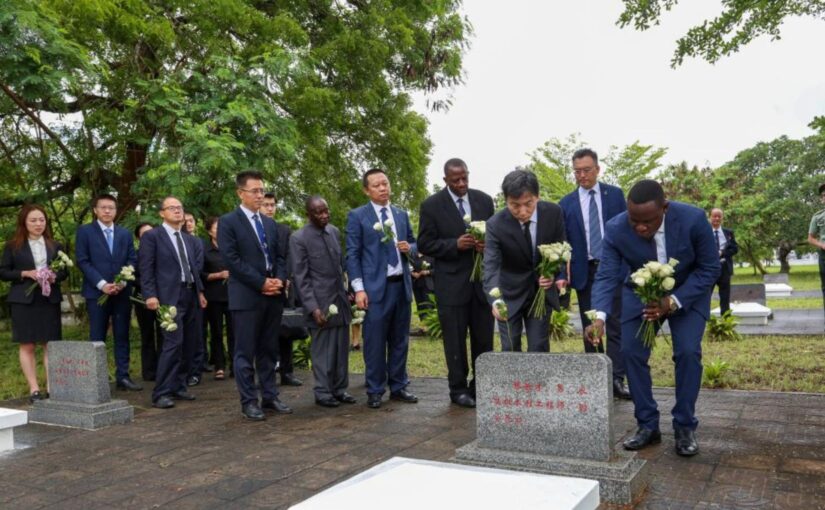
Particularly poignant this year were those ceremonies performed in foreign lands where Chinese fighters and workers laid down their lives while fulfilling their internationalist duties.

On March 30, Chinese Ambassador to the Democratic People’s Republic of Korea (DPRK) Wang Yajun led all staff members and other members of the local Chinese community to pay tribute to the Yang Gensi Martyrs Monument in Chongjin County.

The Chinese Embassy’s website noted that, “The heroic deeds of the martyr Yang Gensi, who detonated the explosive pack and died together with the enemy in the battle of Xiaogaoling in Xiajieyu Village, Chongjin Lake, and was the first special meritorious service and special combat hero of New China, a Hero of the Democratic People’s Republic of Korea, [and holder of] the First Class National Flag Medal and the Gold Star Medal, are well known to everyone.”

It reported that the DPRK monument administrator introduced the history, repair and management of the Yang Gensi Martyrs Monument to Ambassador Wang and his delegation and said that the deeds of Martyr Yang Gensi are well known in his country. The DPRK people will always remember the great sacrifices and great achievements made by the Chinese People’s Volunteers and will come here to pay tribute and mourn on every important anniversary.

Ambassador Wang thanked the DPRK Party and Government for their long-term meticulous maintenance and management of the memorial facilities for the Chinese People’s Volunteers in Korea and said that this year marks the 75th anniversary of the Chinese People’s Volunteers’ participation in the War to Resist US Aggression and Aid Korea. 75 years ago, the Chinese People’s Volunteers, represented by Yang Gensi, composed of outstanding Chinese sons and daughters, crossed the Yalu River, and withstood the severe cold, the difficulties of transport lines being cut off by enemy planes, insufficient supplies, and lack of heavy weapons. They, together with the DPRK soldiers and civilians, won the victory of the War to Resist US Aggression and Aid Korea with their flesh and blood. Today, we comfort the spirits of the martyrs of the Volunteer Army with the brilliant achievements made in the construction of New China and the fruitful results of the sustained development of China-DPRK relations. In the new era and new situation, we must inherit and carry forward the great spirit of resisting US aggression and aiding Korea, eliminate all interference, unswervingly deepen the traditional friendship between China and the DPRK cemented with blood, work together to advance the socialist cause of the two countries, and create a happier and better life for the people of the two countries.

Recent Chinese feature films have vividly recorded much of this history.

In an article published by China Military on October 16, 2020 (marking the 70th anniversary of the Chinese People’s Volunteer Army entering Korea), the newspaper of China’s Ministry of National Defence noted:

“Yang Gensi, the Special-Class Combat Hero of the Chinese People’s Volunteers (CPV), was born in 1922 in Taixing, Jiangsu Province. Joining the New Fourth Army in 1944, Yang used to serve as commander of the squad, platoon and company and had the reputation of ‘Master of explosives’.

“Yang Gensi and his platoon, in the heroic spirit of guarding the position regardless of life or death, repelled eight waves of US offensives. Seeing that more than 40 American soldiers had climbed up to the hilltop when only he and two injured soldiers were still holding the position, Yang grabbed the last blasting charge, pulled the fuse and plunged into the enemies, dying a heroic death along with them.

Continue reading On Qingming Festival, China honours its internationalist heroes

Jean-Claude Gakosso: China is a sincere friend and partner of the Republic of the Congo and all other African countries

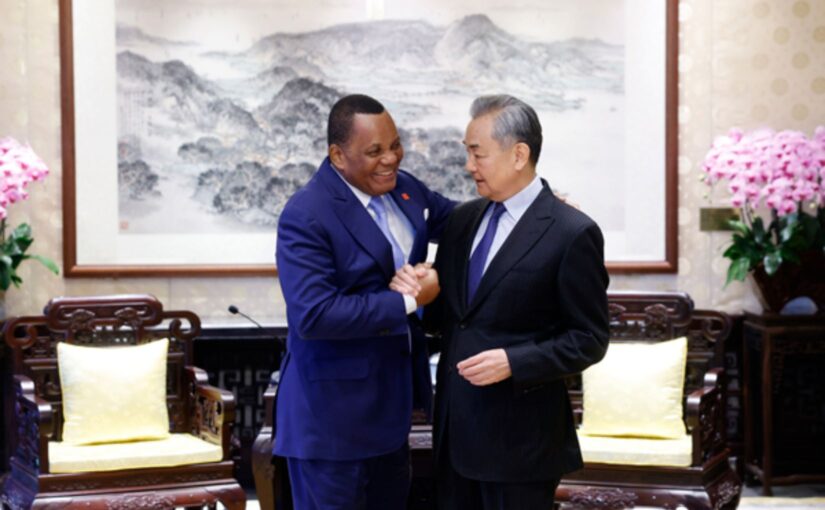
On March 28, Chinese Foreign Minister Wang Yi met with Foreign Minister of the Republic of the Congo Jean-Claude Gakosso in Beijing.

The Republic of the Congo (also widely known as Congo Brazzaville) is one of China’s oldest and closest friends in Africa. At last September’s summit meeting in Beijing of the Forum on China-Africa Cooperation (FOCAC), Congo assumed the rotating position of its African co-chair and Gakosso’s visit was focused on the forum’s work for 2025.

Wang Yi said China and the Republic of the Congo have always understood, trusted and supported each other, and bilateral relations have become a model of China-Africa solidarity and cooperation. Under the strategic guidance of President Xi Jinping and President Denis Sassou Nguesso, bilateral relations have maintained a momentum of vigorous development, which has brought tangible benefits to the two peoples and played an important role in the development and prosperity of Africa.

With the support of African countries, the Republic of the Congo assumed the role of the African co-chair of the FOCAC last year. China is ready to work with the Republic of the Congo to actively implement the outcomes of the FOCAC Beijing Summit, particularly the ten partnership actions, and jointly prepare for the coordinators’ meeting on the implementation of the follow-up actions of the ministerial conference of FOCAC to promote the high-quality development of China-Africa cooperation and send more positive signals to the world.

Jean-Claude Gakosso said that China is a great country and a sincere friend and partner of the Republic of the Congo and all other African countries. The Republic of the Congo attaches great importance to the responsibilities of the co-chairmanship of the FOCAC and is willing to work closely with China to make good preparations for the coordinators’ meeting on the implementation of the follow-up actions of the ministerial conference of FOCAC and the China-Africa Economic and Trade Expo, so as to achieve more results in Africa-China cooperation.

The following article was originally published on the website of the Chinese Foreign Ministry.

On March 28, 2025, Member of the Political Bureau of the CPC Central Committee and Foreign Minister Wang Yi met with Foreign Minister of the Republic of the Congo Jean-Claude Gakosso in Beijing.

Wang Yi said China and the Republic of the Congo have always understood, trusted and supported each other, and bilateral relations have become a model of China-Africa solidarity and cooperation. Under the strategic guidance of President Xi Jinping and President Denis Sassou Nguesso, bilateral relations have maintained a momentum of vigorous development, which has brought tangible benefits to the two peoples and played an important role in the development and prosperity of Africa. The Forum on China-Africa Cooperation (FOCAC) is the most important platform for China and Africa to achieve common development through solidarity and mutual assistance. With the support of African countries, the Republic of the Congo assumed the role of the African co-chair of the FOCAC last year. China is ready to work with the Republic of the Congo to actively implement the outcomes of the FOCAC Beijing Summit, particularly the ten partnership actions, and jointly prepare for the coordinators’ meeting on the implementation of the follow-up actions of the ministerial conference of FOCAC to promote the high-quality development of China-Africa cooperation and send more positive signals to the world. Faced with an international situation full of changes and turmoil, China and African countries need to unite and cooperate more closely to safeguard the common interests of developing countries and promote world peace, stability and development.

Jean-Claude Gakosso said that China is a great country and a sincere friend and partner of the Republic of the Congo and all other African countries. The Republic of the Congo attaches great importance to the responsibilities of the co-chairmanship of the FOCAC and is willing to work closely with China to make good preparations for the coordinators’ meeting on the implementation of the follow-up actions of the ministerial conference of FOCAC and China-Africa Economic and Trade Expo, so as to achieve more results in Africa-China cooperation. The international situation is undergoing rapid changes. He expressed the belief that China, as an ancient civilization, has the wisdom to find solutions to the problems facing the world and play a more significant role in peace and stability in Africa.

The two sides also had an exchange of views on the current situation in Africa.

China and India mark 75th anniversary of diplomatic relations

China and India marked the 75th anniversary of their diplomatic relations on April 1, with President Xi Jinping exchanging congratulatory messages with Indian President Droupadi Murmu.

Xi Jinping noted that China and India, both ancient civilisations, major developing countries and important members of the Global South, are both at a critical stage of their respective modernisation efforts. The development of China-India relations demonstrates that it is the right choice for the two countries to be partners of mutual achievement and realise the “Dragon-Elephant Tango”, which fully serves the fundamental interests of both countries and their peoples. Both sides should view and handle China-India relations from a strategic height and long-term perspective, seek a way for neighbouring major countries to get along with each other, which features peaceful coexistence, mutual trust, mutual benefit and common development, and jointly promote a multipolar world and greater democracy in international relations.

Droupadi Murmu said that India and China are two neighbouring major countries that are home to one-third of the world’s population. A stable, predictable and friendly bilateral relationship will benefit both countries and the world. She proposed to take the 75th anniversary of the establishment of diplomatic relations between India and China as an opportunity to jointly promote the sound and steady development of India-China relations.

On the same day, Chinese Premier Li Qiang exchanged congratulatory messages with Indian Prime Minister Narendra Modi. Li Qiang said that China is ready to work with India to take the 75th anniversary of the establishment of diplomatic relations between the two countries as an opportunity to continuously enhance strategic mutual trust, promote exchanges and cooperation in various fields, properly handle the boundary question, steer bilateral relations forward along a sound and stable track, and bring more benefits to the two peoples.

Narendra Modi said that India and China, as two ancient civilisations, have played an important role in shaping the course of human history, and now shoulder the heavy responsibility of promoting peace and development. The development of India-China relations is not only conducive to the prosperity and stability of the world but also contributes to the realisation of a multipolar world.

China’s Ambassador to India, Xu Feihong hosted a major reception to celebrate the anniversary that day.

In his speech, Ambassador Xu said: “Looking back at the extraordinary journey of China-India relations, there are four inspirations embedded therein that are particularly worth drawing upon.

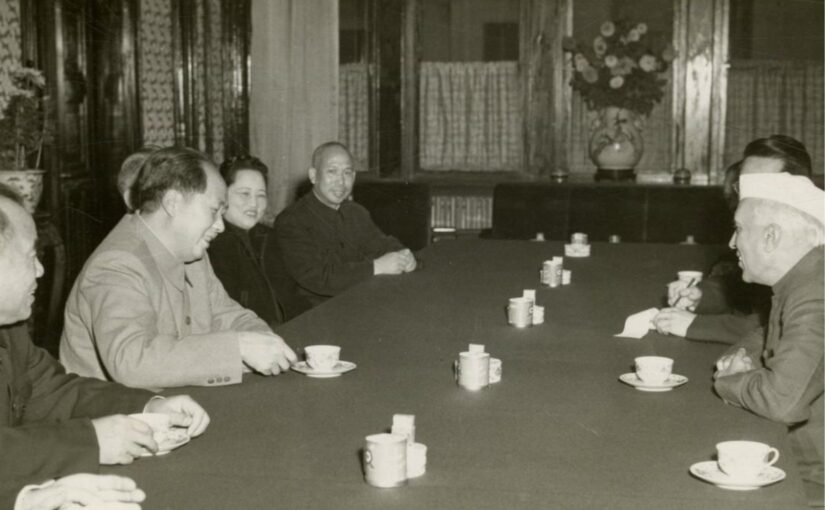
“First, strategic guidance of our leaders serves as the ‘anchor’ for China-India relations. Over the past 75 years, the leaders of the two countries have consistently steered the relationship at critical historical junctures. In 1950, Chairman Mao Zedong and Prime Minister Jawaharlal Nehru made the historic decision of establishing diplomatic ties, and India became the first non-socialist country to have diplomatic relations with China. In 1988, Prime Minister Rajiv Gandhi visited China, and the two sides agreed to ‘look forward’, initiating the normalisation process of bilateral relations. Since 2013, President Xi Jinping and Prime Minister Narendra Modi carried out ‘hometown diplomacy’ and two informal meetings, which propelled the bilateral relations into a period of rapid development. Last October, the leaders of our two countries met in Kazan, and opened a new chapter for China-India relations.

“Second, friendly exchanges and cooperation form the ‘foundational fabric’ of China-India relations.  Our two peoples have sympathised with and supported each other in our respective struggle for national independence and liberation. Rabindranath Tagore and Dr. Kotnis have become timeless emblems of China-India friendship.

“Third, bridging differences through dialogue stands as the ‘one and only key’ of China-India relations. As close neighbours, our peoples may sometimes have differences. As Prime Minister Modi said, when two neighbouring countries exist, occasional disagreements are bound to happen. Even within a family, not everything is always perfect. But our focus is to ensure that these differences don’t turn into disputes. As two ancient civilisations, China and India both have the tradition and characteristics of cherishing peace and goodwill, as well as the wisdom and capacity to resolve differences through dialogue.

“Fourth, working for the future of the world is the ‘important mission’ of China-India relations. President Xi Jinping once said, if China and India speak with one voice, the whole world will listen; and if we join hands, the whole world will pay attention. Historically, the two great civilisations of China and India have enriched each other, and the total economic volume of the two countries has long accounted for half of global GDP, making momentous contributions to human progress. After the establishment of diplomatic relations, China and India jointly advocated the Five Principles of Peaceful Coexistence, attended the Bandung Conference together, and promoted the independence and unity of Asian and African countries and the peaceful development of the world.”

Continue reading China and India mark 75th anniversary of diplomatic relations

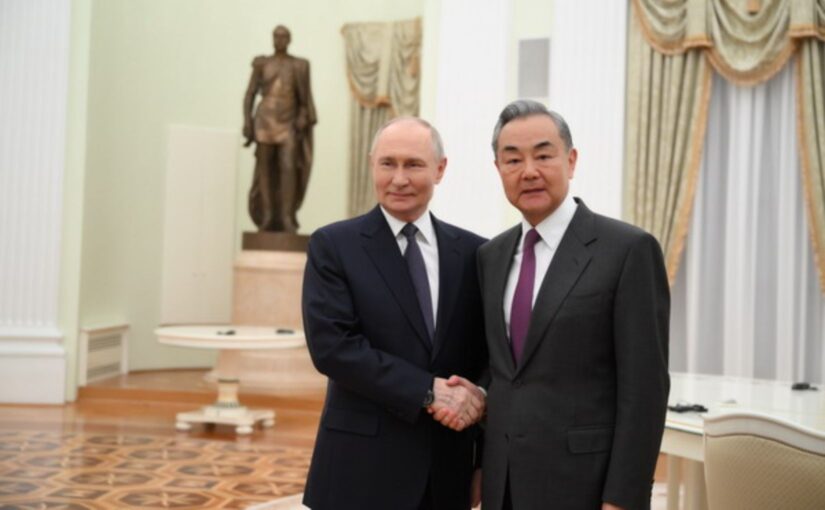
Wang Yi: China and Russia are “forever friends, never enemies”

Chinese Foreign Minister Wang Yi visited Moscow at the beginning of April, with his main agenda being the preparation of President Xi Jinping’s upcoming visit in May for the 80th anniversary celebrations of the Soviet Union’s victory in the Great Patriotic War against Nazi Germany.

Meeting with Wang on April 1, Russian President Vladimir Putin called on Russia and China to consistently enhance their strategic cooperation amid global turbulence. Marking the 80th anniversary of the Soviet Union’s victory in the Great Patriotic War, Putin extended an invitation for Chinese representatives to attend commemorative events in Russia. He emphasised the shared historical significance of celebrating victories over Nazi fascism and Japanese militarism, stating that Russia is fully making preparations for the occasion and added that this milestone should propel Russia-China comprehensive strategic partnership to new heights and strengthen multilateral collaboration within frameworks such as the United Nations, the Shanghai Cooperation Organisation, and the BRICS + mechanism.

Responding, Wang Yi recalled that over 80 years ago, the peoples of China and the Soviet Union fought tenaciously on the Asian and European fronts, sacrificing immensely to defeat Japanese militarism and Nazi fascism, thereby contributing decisively to global peace. Today, as pivotal stabilising forces in a turbulent world, China and Russia must jointly uphold the outcomes of World War II, defend the post-war international order, and reinforce the United Nations’ central role in the global system. Both countries, he added, are committed to advancing multilateralism and democratising international relations.

He further said that the two countries have aligned their plans to support each other’s 80th-anniversary commemorative events, expressing confidence that the leaders’ engagements this year will further promote bilateral ties.

The official website of the Russian President published extracts from the two men’s opening remarks.

President Putin said: “I am aware that you have an extensive and busy programme for your visit. First of all, it is connected with preparations for the visit of the President of the People’s Republic of China to Russia. We will prepare a good and fulfilling programme. I hope it will involve not only participation in solemn events but will also be a separate visit. The President of the People’s Republic of China will be our main guest, and we will have an opportunity to discuss the current state of bilateral relations and our interaction on international venues, primarily the UN – the UN Security Council – as well as the Shanghai Cooperation Organisation, BRICS and a number of other platforms where we work together with great success.” [A number of analysts have suggested that Putin’s reference to Xi as being the “main guest” means either that the speculation that US President Donald Trump might also visit Moscow at this time is without foundation or that the US President would be accorded a lower protocol status than his Chinese counterpart.]

Wang Yi responded: “You have accurately noted that this year marks the 80th anniversary of Great Victory in the war against Nazism and the 80th anniversary of the founding of the UN. Eighty years ago, the Chinese and Soviet people fought bravely in Europe and Asia, on the main front, suffered heavy national losses, and defeated militaristic Japan and Nazi Germany, thus making a major contribution to peace for humanity. Eighty years later, today we must unite to uphold the outcomes of World War II, the post-war world order, and the UN-centric international system, and join our efforts to promote multipolarity and democratisation of international relations.

“Mr President, you accurately noted that preparations for President Xi Jinping’s visit and his participation in the celebrations to be held in early May are the main purpose of my current visit. Before this meeting with you now, Minister Lavrov and I have met to align every item on our agenda that concerns preparations for this visit.”

In the above-mentioned meeting with Sergey Lavrov, the Russian Foreign Minister said that his country highly appreciates the global initiatives that China proposed, fully supports China’s position on the Taiwan question, and is willing to jointly uphold the purposes and principles of the UN Charter, and safeguard a just and equitable international order.

Discussing Ukraine, Wang reiterated China’s consistent position and expressed support for all peace efforts, noting that China is willing to continue to build more international consensus through the Group of Friends for Peace and play a constructive role in promoting a political settlement of the crisis.

During his visit, Wang Yi also gave an extensive and exclusive interview to the Russia Today media group.

On the overall state of bilateral relations, he said:

“Under the strategic leadership of President Xi Jinping and President Putin, the partnership and strategic interaction between China and Russia has been continuously deepened, which not only fully meets the logic of history, but also proves the powerful self-sufficiency of bilateral ties. This allows us to live in peace, harmony and common prosperity, and furthermore contributes to the formation of a multipolar world and the democratisation of international relations.

“Today’s Sino-Russian relations have three characteristics: First, ‘Forever friends, never enemies.’ Our relations have matured on the basis of continuously summing up historical experience and learning from past lessons. The leaders of the two countries, with their inherent political foresight, made a historic decision to ‘close the past and open the future.’

“Second, equality and mutually beneficial cooperation. Chinese-Russian relations have acquired a qualitatively new content and scope. Cooperation is not only high-level, but also accessible to ordinary people, brings real tangible benefits to our peoples and provides enormous benefits to other countries of the world. 

“Third, non-alignment, non-confrontation and non-targeting of third parties. Sino-Russian relations do not pose any threat to others, much less are they subject to outside interference or disruption and are not only a modern example of a new type of relationship between major powers, but also an important stabilising factor in a turbulent world.”

Continue reading Wang Yi: China and Russia are “forever friends, never enemies”

An improving China-India relationship serves the common interests of both countries and the region

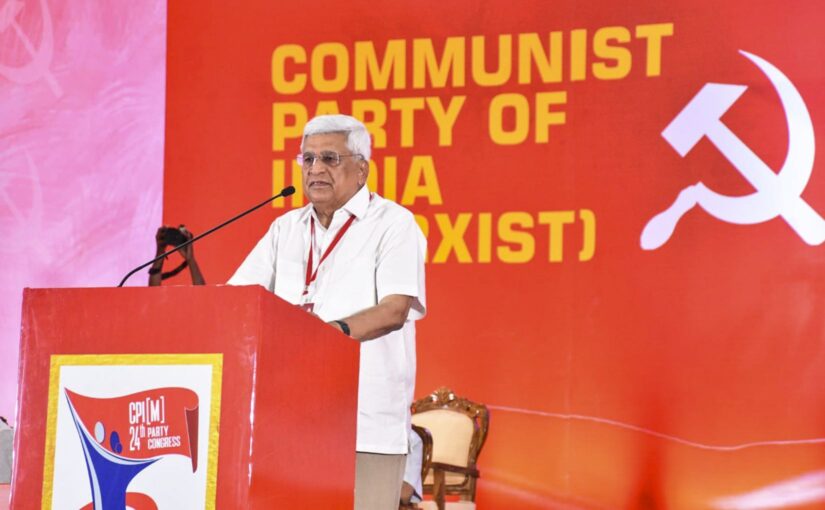
The Communist Party of India (Marxist) (CPIM), India’s largest communist party, opened its 24th Congress on April 2, 2025, in the historic Tamil Nadu city of Madurai.

The party’s English language weekly newspaper People’s Democracy carried the text of the messages of greetings from the ruling communist parties in the socialist countries of China, Cuba, Vietnam, the Democratic People’s Republic of Korea (DPRK) and Laos. The party’s website also carried the congratulatory messages received from more than 30 fraternal parties throughout the world.

In its greetings, the International Department of the Central Committee of the Communist Party of China (IDCPC) said that: “As an important Left force in India with a century-long history, the CPI(M) has long been committed to advancing economic and social progress of India.  We believe that the Congress will serve as an opportunity for the CPI(M) to achieve new development and make contributions to promoting regional prosperity and progress.

“An improving China-India relationship serves the common interests of both countries and the region. The CPC and the CPI(M) have long maintained friendly exchanges, which has played a significant role for facilitating mutual understanding and practical cooperation between our two sides. Under the new circumstances, the CPC stands ready to strengthen exchanges and strategic communication as well as experience sharing of party and state governance with the CPI(M) and other Indian political parties.”

The opening session of the Congress was also addressed by the leaders of the Communist Party of India, the Communist Party of India (Marxist-Leninist) Liberation, the All-India Forward Bloc and the Revolutionary Socialist Party.

MK Stalin, Chief Minister of Tamil Nadu and leader of the Dravida Munnetra Kazhagam (DMK) party addressed a special seminar at the Congress.  Earlier, he had announced the installation of a statue of Karl Marx in the state capital Chennai, in a show of solidarity with the Left. “Half of the DMK flag is red! You are part of us,” he said. “The bond between the Dravidian movement and the communist movement is an ideological friendship. I have come to this conference as a symbol of that bond.”

Stalin recalled how his father and former chief minister M. Karunanidhi identified himself as a communist:

“The relationship between the Dravidian and communist movements began, when Thanthai Periyar translated the Communist Manifesto into Tamil and published it… I, named Stalin, announced in the assembly that a statue of world-renowned genius Karl Marx will be erected in Chennai.”

The following article was originally published in People’s Democracy.

Messages of greetings from fraternal parties

COMMUNIST PARTY OF CHINA (CPC)

18 March 2025, Beijing

Dear Comrades,

Delighted to learn that the Communist Party of India (Marxist) (CPI(M)) will convene its 24th Party Congress, the International Department of the Central Committee of the Communist Party of China (CPC) wishes to extend our warmest congratulations to you and wishes the Congress a complete success.

As an important Left force in India with a century-long history, the CPI(M) has long been committed to advancing economic and social progress of India.  We believe that the Congress will serve as an opportunity for the CPI(M) to achieve new development and make contributions to promoting regional prosperity and progress.

The international landscape and world order are now in a new round of transformation.  An improving China-India relationship serves the common interests of both countries and the region. The CPC and the CPI(M) have long maintained friendly exchanges, which has played a significant role for facilitating mutual understanding and practical cooperation between our two sides. Under the new circumstances, the CPC stands ready to strengthen exchanges and strategic communication as well as experience sharing of party and state governance with the CPI(M) and other Indian political parties, so as to promote  continued progress of China-India relations as well as peace and stability of the region. 

International Department

Central Committee

Communist Party of China


Message of Greeting from Communist Party of Cuba

Havana, March 31, 2025

ON behalf of the Central Committee of the Communist Party of Cuba, I extend my warmest congratulations to the Communist Party of India (Marxist) on the occasion of its 24th Congress.

We wish you success at this important Party event and are convinced that the elected leadership will continue the legacy of our beloved Comrade Sitaram Yechury, a dear friend of the Cuban Revolution and staunch defender of just causes.

The Communist Party of Cuba appreciates the ongoing support that the CPI(M) has provided to the struggle against the economic, commercial, and financial blockade imposed by the United States government and against the inclusion of our country on the unilateral list of states that allegedly sponsor terrorism.

At the same time, we reaffirm our firm commitment to continue strengthening the bonds of friendship and cooperation between both Party organisations.

Please accept my highest consideration and esteem.

Emilio Lozada García

Head of the International Relations Department


COMMUNIST PARTY OF VIET NAM (CPV)

Dear comrades,

On the occasion of the 24th Congress of the Communist Party of India (Marxist) convening from April 2 to 6, 2025, the Communist Party of Viet Nam would like to convey warmest congratulations. 

Over the past years, the Communist Party of India (Marxist) has always championed for strengthening the solidarity of the Left movement, making many important contributions to the struggle to protect the people’s livelihood, democracy and legitimate rights of the working people and minority communities.

We believe that the important resolutions adopted at the 24th  Congress of the Communist Party of India (Marxist) would envision concrete directions and goals to help enhance your Party’s position and influence in the Indian politics, and make positive and significant contributions to the cause of building a peaceful, unified, democratic and prosperous India. 

May the 24th Congress of the Communist Party of India (Marxist) be a resounding success.

May the traditional friendship and excellent cooperation between our two Parties, the peoples of Viet Nam and India as well as between the State of Kerala and provinces of Viet Nam be further consolidated and flourish.

With best regards,

The Central Committee

The Communist Party of Viet Nam


WORKERS’ PARTY OF KOREA (DPRK)

Pyongyang, April 2, 2025

24th Congress of the Communist Party of India (Marxist)

Madurai.

The Central Committee of the Workers’ Party of Korea extends its hearty congratulations to the 24th Congress of the Communist Party of India (Marxist) and through the Congress, also sends its warm and comradely greetings to the entire members of your Party.

We believe the 24th Congress of your Party will be an important occasion setting the new milestone in strengthening the Party’s organisational base and mass foundation.

Expressing our conviction that the long-standing friendship and cooperation between our two Parties would further develop in the future, we sincerely wish your Party Congress great success.

Central Committee Workers’ Party of Korea


LAO PEOPLE’S REVOLUTIONARY PARTY

12 March 2025

Dear Comrades,

On the occasion of the 24th Congress of the Communist Party of India (Marxist), on behalf of Lao People’s Revolutionary Party Central Committee, party members and Lao people, we would like to express our warm congratulations and best wishes to the delegates of Congress and through the delegates to party members and the entire Indian people. 

The Congress of the Communist Party of India (Marxist) will be held amidst the regional and international situation continuing to be more chaotic and complicated.  This Congress is an important political event for the Communist Party of India (Marxist), to usher its unstoppable growth.  We are confident that the resolution of the Congress and various important documents adopted by the Congress will give a direction for the Party in the coming years to contribute to the mission of building and developing India and bringing prosperity to the Indian people as well as to continuously raising the role and influence of the party in the political arena in India.

May the 24th Congress of the Communist Party of India (Marxist) gloriously succeed.

May the friendly relations between the Lao People’s Revolutionary Party and the Communist Party of India (Marxist) be further enhanced for the benefit of Lao and Indian peoples as well as for the mission of building peace, friendship and cooperation for development in the region and the world at large.

Lao People’s Revolutionary Party Central Committee

New Red Scare: House reps lead attack on Chinese students

The following article by Tasfia Jahangir and Miles Wetherington, originally published in Liberation News, describes the rising McCarthyism in the US, in particular the red-scare narrative around Chinese students and scientists.

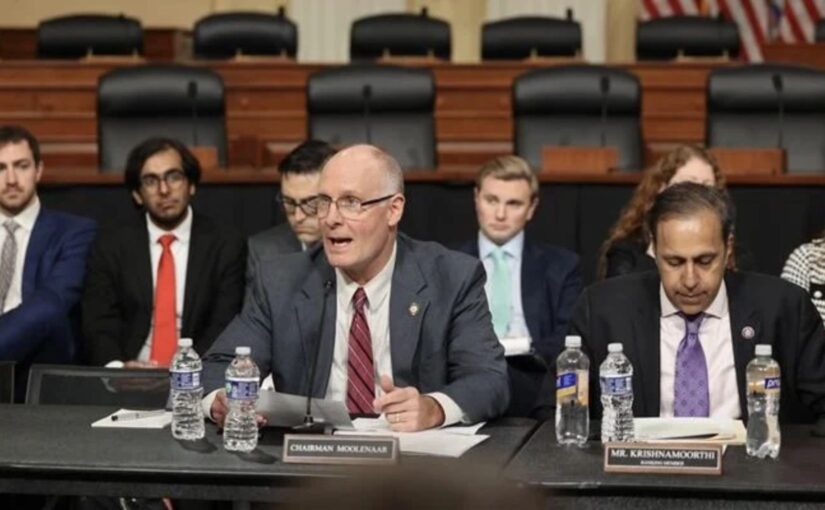
The authors note that John Moolenaar, a Michigan Republican who chairs the House Select Committee on the CPC, has sent letters to six US universities, including Stanford, demanding that they provide detailed information about their entire Chinese student populations, saying that the student visa system has become a “Trojan horse” and implying that “any Chinese national studying in a STEM field — especially those working in key research areas like AI, semiconductors, or aerospace — is potentially a spy”. At the same time, lawmakers have introduced a “Stop Chinese Communist Visas Act”, seeking to block visas for Chinese students studying in the US, on supposed national security grounds.

Hostility towards Chinese students and scientists is bipartisan, and has been trending upwards for years, under both the Trump and Biden administrations. The authors note that this escalation “also fits into a broader pattern of repression targeting international students. Indian students — the largest international group — have been told to ‘self-deport’ for campus activism, while students like Mahmoud Khalil, Rumeysa Ozturk and Momodou Taal have faced repression for opposing the genocide in Palestine.”

The focus on Chinese academics in particular is “part of the US strategy of containment, encirclement and suppression on China”. The US ruling class seeks to win public support for the New Cold War, painting China as a threat to the US and the world. Such a portrayal is becoming increasing untenable:

US officials try to demonise China as if it is on the warpath, but it is the United States that poses the greatest threat to world peace. In the last 30 years alone, the United States has launched 251 military interventions across the globe. In stark contrast, China has eradicated extreme poverty for more than 850 million people, and managed to overcome the legacy of colonialism and underdevelopment by reaching a level of moderate prosperity all while upholding the Five Principles of Peaceful Coexistence.

Ultimately this revival of reds-under-the-bed hysteria will only serve to fuel racism and xenophobia, and to further poison US-China relations. What’s more, it “actively sabotages the kind of international cooperation needed to confront global crises”. Ironically, it will also provide a boost for China’s domestic innovation, as top Chinese students will opt to study at home rather than face an increasingly hostile and dangerous environment in the US.

The authors conclude:

Collaboration between the US and China — two of the largest research and innovation hubs in the world — could offer humanity an opportunity to solve the pressing crises of our time: pandemics, climate change, AI ethics and more. But to those in power, shared progress is a threat. It undermines the need for endless militarisation, sanctions and rivalry. It challenges the US ruling class’ worldview based on zero-sum competition and global hegemony.

On March 19, U.S. Representative John Moolenaar, Chairman of the House Select Committee on the Chinese Communist Party, sent a letter to six American universities demanding that they provide detailed personal, academic, and financial information about Chinese international students in STEM fields. Disguised as a routine inquiry into national security, the letter levies sweeping accusations. It claims that Chinese students “jeopardize” U.S. technological leadership, and labels the American student visa system as a “Trojan horse” for these students to steal intellectual property on behalf of the Chinese government. On top of this, the House also recently introduced the STOP CCP VISAs Act, a bill that, if passed, would ban student visas for all Chinese national students.

We must oppose this vilification of Chinese students and recognize it for what it is — an attack on global science.

The war on Chinese students is a war on global science

The Select Committee on the CCP letter and STOP CCP VISAs Act are part of a decade-long bipartisan campaign to surveil, vilify and push out Chinese researchers and students from American institutions. Under both Trump and Biden administrations, we’ve witnessed countless attacks on Chinese scholars and scientists based solely on their national origin — federal investigations with no evidence, layoffs, cancelled visas, and partnerships dismantled under political pressure. 

Moolenaar’s letter escalates this campaign by implying that any Chinese national studying in a STEM field — especially those working in key research areas like AI, semiconductors, or aerospace — is potentially a spy. It makes absurd and xenophobic claims, such as the idea that the mere act of returning to China after graduation should be treated with suspicion. This logic dehumanizes thousands of students as geopolitical pawns rather than what they are: workers, researchers and colleagues striving to build a better future.

Continue reading New Red Scare: House reps lead attack on Chinese students

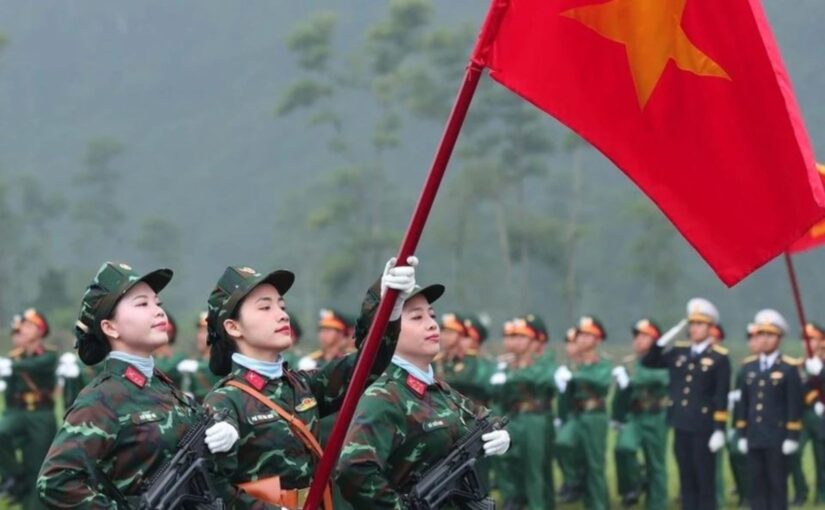
Vietnam preparing for grand celebrations of the 50th anniversary of the Great Spring Victory

The Socialist Republic of Vietnam is currently preparing for grand celebrations of the 50th anniversary of the Great Spring Victory of April 30. On this day in 1975, Vietnamese revolutionary forces liberated Saigon, now Ho Chi Minh City. This epochal event was a stunning victory over US imperialism after long years of revolutionary war, struggle, suffering and sacrifice. It marked the liberation of the whole country, and the national reunification longed for by late President Ho Chi Minh. The entire Vietnamese nation was now able to embark on the long road of building socialism. This victory was also an immense contribution to the global struggle for peace, national liberation and socialism.

As part of its preparations to celebrate the great victory, on April 1, Vietnam’s Ministry of National Defence announced that it would soon send official invitations to leaders of its Chinese, Lao and Cambodian counterparts to attend a ceremony celebrating the 50th anniversary and to send their military personnel to join the commemorative military and civilian parade.

Meeting the defence attachés of the three nations, Deputy Minister of National Defence Senior Lieutenant General Hoang Xuan Chien said that Vietnam is ramping up preparations for this important political event. The country always remembers the support for its revolutionary cause from international friends, particularly China, Laos, and Cambodia, he affirmed.

The Deputy Minister noted that the Vietnamese defence ministry is looking forward to the participation of the three counterparts, which would contribute to the celebration’s overall success and demonstrate solidarity and friendship between Vietnam and its three neighbouring countries.

The following article was originally published by the Vietnamese newspaper Nhân Dân.

The Ministry of National Defence is set to soon send official invitations to leaders of its Chinese, Lao and Cambodian counterparts to attend a ceremony celebrating the 50th anniversary of the liberation of the South and national reunification (April 30, 1975 – 2025) and to send their military personnel to join commemorative military and civilian parade.

Deputy Minister of National Defence Senior Lieutenant General Hoang Xuan Chien unveiled the information while receiving defence attachés of the three countries in Hanoi on April 1 morning.

He told the officers that Vietnam is ramping up preparations for this important political event. The country always remembers support for its revolutionary cause from international friends, particularly China, Laos, and Cambodia, Chien affirmed.

The Deputy Minister noted that the Vietnamese defence ministry is looking forward to the participation of the three counterparts, which would contribute to the celebration’s overall success and demonstrate solidarity and friendship between Vietnam and its three neighbouring countries.

In recent years, Vietnam has increasingly promoted defence cooperation with the three nations across fields, notably in delegation exchanges, military training and collaboration, and border defence friendship exchange.

The defence attachés said that they will promptly report to their respective authorities and provide relevant recommendations to advance the initiatives outlined by the deputy minister.

Khamtay Siphandone, former President of the Lao People’s Democratic Republic, passes away

A pioneer and hero of the Lao revolution, Khamtay Siphandone, former President of the Lao People’s Democratic Republic (LPDR) and former Chairman of the Lao People’s Revolutionary Party (LPRP), passed away in the capital Vientiane on April 2, at the age of 101.

In a message sent the same day to his Lao counterpart Thongloun Sisoulith, Chinese President Xi Jinping was reported by the Xinhua News Agency as extending profound condolences and sincere sympathies, hailing Comrade Khamtay as a steadfast communist, outstanding leader of the older generation of the Lao party and state, and close comrade and friend of the Communist Party of China and the Chinese people, who will always cherish his memory.

Noting that China and Laos are socialist neighbours linked by the same mountains and rivers, Xi said the two countries are not only good neighbours, but also good friends, good comrades and good partners.

His message was also reported by the KPL Lao News Agency.

The newspaper Laotian Times reported that Khamtay was born into a poor family in 1924. He plunged into the movement for national liberation against French colonial rule in the immediate aftermath of World War II and became a founder member of the LPRP in 1955.

Laos has declared a period of national mourning until April 7.

On April 3, the leaders of the LPRP gathered to pay their respects to the late President. General Secretary and State President Thongloun Sisoulith stated: “Comrade General Khamtay was a courageous and outstanding revolutionary and national leader who dedicated his life to the cause of national liberation, protection, and development, contributing to the prosperity of the Lao nation… His name will remain eternally intertwined with the revolutionary cause of our Party.”

General Secretary of the Communist Party of Vietnam To Lam visited Laos to express condolences. Meeting with Thongloun Sisoulith, he stressed that the loss of Comrade Khamtay is not only a great sorrow for Laos but also for Vietnam, as he was a cherished comrade and close friend who stood side by side with Vietnam in their shared struggles. He reaffirmed Vietnam’s commitment to further strengthening the great friendship, special solidarity, and comprehensive cooperation between the two countries.

Sonexay Siphandone, the son of Khamtay, who currently serves as the Prime Minister of Laos, expressed sincere gratitude to Lam and the Vietnamese delegation, noting that they were the first to come to Laos to offer condolences to the Lao Party and State, and the late leader’s family. This gesture, he noted, reflects the deep bond and affection for their beloved father, a great leader of the Lao party, state, and people.

To Lam described Khamtay as an eminent figure of the first generation of Lao revolutionaries, who played a pivotal role in building the Lao revolution, leading the national democratic revolution, and safeguarding and developing the country. He was also a pioneer in implementing the LPRP’s comprehensive renewal policy, and a loyal, close and steadfast friend of Vietnam who stood shoulder to shoulder with the Vietnamese people through their struggles for national protection and nation building. His passing is a great loss to the party, state, and people of both Laos and Vietnam.

To honour Khamtay’s contributions, Lam announced that the Vietnamese party and state have decided to observe two days of national mourning.

Lam and the Lao leaders reflected on Khamtay’s illustrious revolutionary career, which began with his involvement in the Indochinese Communist Party. They underscored his close ties to the Vietnamese revolution and his strong relationships with Vietnam’s senior revolutionary leaders, describing these as vivid manifestations of the rare unbreakable and loyal relationship between the parties, states, and revolutionary causes of both nations.

The Lao leaders affirmed that future generations of Lao leaders will continue to work alongside their Vietnamese counterparts to nurture the special friendship and solidarity between Vietnam and Laos, built and nurtured by President Ho Chi Minh, President Kaysone Phomvihane, President Souphanouvong, and other leaders of both countries.

The following articles were originally published by the Xinhua News Agency, the KPL Lao News Agency, Nhân Dân and the Laotian Times.

Xi extends condolences over passing of Laos’ former president

BEIJING, April 3 (Xinhua) — Chinese President Xi Jinping on Wednesday sent a message to Lao President Thongloun Sisoulith, extending his deep condolences over the passing of Khamtay Siphandone, former president of Laos and former chairman of the Lao People’s Revolutionary Party (LPRP).

Xi, also general secretary of the Communist Party of China (CPC) Central Committee, extended profound condolences to the LPRP, the Lao government and people over the passing of Khamtay Siphandone, and expressed sincere sympathies to his family on behalf of the CPC, the Chinese government and people, and in his own name.

Continue reading Khamtay Siphandone, former President of the Lao People’s Democratic Republic, passes away

Hong Kong team participates in 2025 Kabaddi World Cup

A small but significant step in sports diplomacy and people-to-people friendship between China and India was marked by the participation of Hong Kong China in the 2025 Kabaddi World Cup, which was held from March 17-23, 2025.

Kabaddi originated in India some 4-5,000 years ago. It is a contact sport between two teams on opposite halves of a field or court where individuals take turns to chase and try to touch members of the opposing team without being captured by them. The name is derived from the Tamil word “Kai-pidi,” which means “holding hands.” It is the second most popular and viewed sport in India after cricket and is particularly popular in Punjab, Tamil Nadu, Andhra Pradesh, Uttar Pradesh, Bihar, Maharashtra, Madhya Pradesh, and Gujarat. It is also the national sport of Bangladesh and is widely played in Pakistan, Nepal, Sri Lanka and elsewhere in South Asia. In all, it is currently estimated to be played in some 50 countries and has been an official sport at the Asian Games since 1990.

This year’s World Cup was also significant for being the first to be held outside Asia. Games were played in the cities of Wolverhampton, Birmingham, Coventry and Walsall in England’s West Midlands region. The previous World Cup was held in Melaka, Malaysia.

Bhupinder Gakhal, a City of Wolverhampton Council cabinet member for resident services, welcomed the tournament: “This is a proud moment for our city. We aim to use the World Cup to introduce kabaddi to more schools, colleges, and universities across the West Midlands, inspiring our young population to be more active.”

Hosted by World Kabaddi and delivered by the British Kabaddi League (BKL) on behalf the England Kabaddi Association, and sponsored by the Irish sports betting company Paddy Power, the key objectives of the World Cup included:

  • Promoting diverse cultures and bringing communities together through Kabaddi.
  • Celebrating the sporting heritage of black minority ethnic (BAME) communities.
  • Encouraging physical activity and exercise among minority ethnic groups.
  • Delivering coaching and learning programs for local schools through Kabaddi.

A total of 16 national teams were expected to participate, but this was reduced to 10 due to visa and other issues.

With the Hong Kong Kabaddi Association of China having just been founded in 2018, their teams were unsurprisingly not ranked among the favourites.

Playing in Group B, on March 18, the men’s team lost 49-68 to Wales, 21-73 to India on March 19, and 28-70 to Scotland on March 20. Also on March 20, they defeated Italy, 53-50.  They lost 23-89 to England in the Quarter Finals.

The Women’s team fared better, advancing to the semi-finals. On March 17, they defeated Hungary 73-20 and lost 39-45 to England on March 19. They lost 15-53 to India in the semi-final. In the match to decide third place, they defeated Wales 75-14.

We embed below a short video clip where a member of the women’s team reacts to taking third place in the tournament and a detailed interview from four years ago with Wai-man (Wyman) Tang, the key founder of organized kabaddi in Hong Kong on what inspired him and his hopes for the sport’s development in China’s special administrative region.

You can read more about the Hong Kong Kabaddi Federation here.

CODEPINK China Is Not Our Enemy book club discussion with Carlos Martinez

On 10 March 2025, the CODEPINK China Is Not Our Enemy book club hosted Friends of Socialist China co-editor Carlos Martinez for a discussion about The East is Still Red, which was the first book the group read together. The video of the session is embedded below.

The video starts with a 10 minute introduction by Carlos, explaining the key motivations for writing the book: to challenge the New Cold War propaganda against China; and to build understanding of Chinese socialism and counter the notion that China has “gone capitalist”.

The presentation is followed by a wide-ranging discussion about common prosperity, China’s foreign relations, China’s democratic processes, its management of the Covid-19 pandemic, and its actions around preventing climate breakdown.

The video was first posted on the CODEPINK YouTube channel.

The East is Still Red can be purchased in paperback and electronic formats from the Praxis Press website.