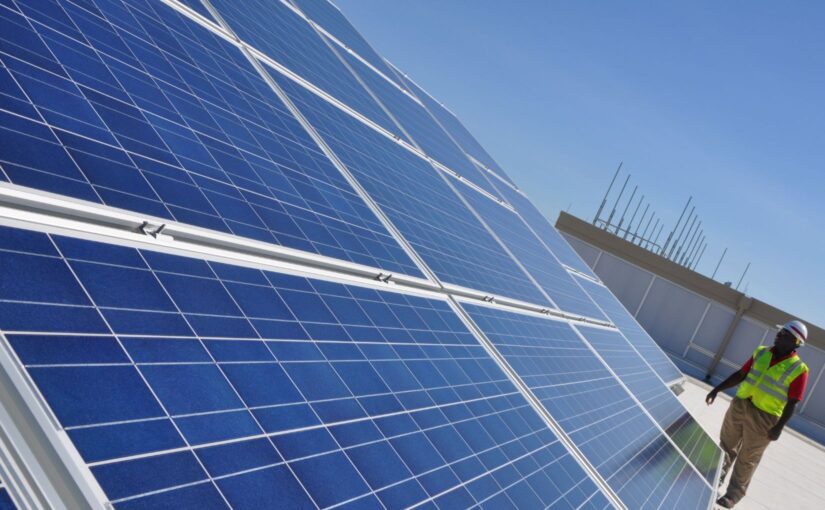
The following article, originally published in Microgrid Media (an independent news platform dedicated to covering the global shift toward renewable energy) details how, over the last 12 months alone, Cuba has managed to increase its solar-generated electricity from 5.8 percent to over 20 percent of total generation. “The Caribbean nation connected 49 new solar parks to its grid between early 2025 and early 2026, adding more than 1,000 megawatts of capacity with equipment and financing from China. The expansion represents one of the fastest renewable energy transitions ever achieved by a developing country.”
The author notes that China’s support has been indispensable to these efforts. “The rapid expansion would have been impossible without sustained support from Beijing. China committed to building 92 solar parks by 2028 with combined capacity of approximately 2,000 megawatts, nearly matching Cuba’s entire current fossil fuel generation capacity. Beyond large solar farms, China donated approximately 70 tons of power generator parts and committed to installing 10,000 photovoltaic systems for isolated homes and critical facilities including maternity wards and clinics.”
In the face of a cruel, criminal and escalating US energy blockade, Cuba’s rapid progress in solar power represents a substantial boost for defending the country’s sovereignty and its socialist development path. The article observes: “If Cuba sustains installation pace, achieves adequate battery storage, and maintains Chinese support through 2028, it could reach energy independence that renders oil blockades economically irrelevant.”
We have previously covered China’s support helping Cuba advance towards energy sovereignty and sustainability, as well as China’s recent emergency aid to the island.
Cuba has transformed its electricity system in just 12 months, increasing solar power from 5.8% to over 20% of total generation as the country races to escape dependence on oil imports now blocked by US sanctions.
The Caribbean nation connected 49 new solar parks to its grid between early 2025 and early 2026, adding more than 1,000 megawatts of capacity with equipment and financing from China. The expansion represents one of the fastest renewable energy transitions ever achieved by a developing country.
The dramatic shift comes as Cuba faces what officials call an “energy siege.” President Donald Trump signed an executive order in early 2026 threatening tariffs against any country providing oil to the island, cutting fuel imports by approximately 90 percent and triggering blackouts lasting up to 20 hours per day in some regions.
From Crisis to Solar Record
On February 11, 2026, Cuba generated more than 900 megawatts from solar panels for the first time, breaking a record set just one day earlier. The milestone showed that solar infrastructure had reached a scale capable of meeting substantial portions of daytime electricity demand.
By August 2025, the island’s 26 operational solar parks were generating 2,366 megawatt-hours daily, with peak midday output reaching 557 megawatts. For a nation that previously struggled to generate 3,500 megawatts total across all sources, the solar contribution marked a fundamental transformation.
The speed of construction defied normal timelines. Some facilities achieved grid connection within 35 days of equipment arrival. Multiple parks were synchronized simultaneously rather than sequentially as political constraints evaporated amid the deepening crisis.
China Steps In With Technology and Financing
The rapid expansion would have been impossible without sustained support from Beijing. China committed to building 92 solar parks by 2028 with combined capacity of approximately 2,000 megawatts, nearly matching Cuba’s entire current fossil fuel generation capacity.
The partnership operates through energy-backed financing and donations that bypass US sanctions, including the Helms-Burton Act. Each park costs approximately $16 million in imported equipment, with Cuban investment covering domestic infrastructure.
Chinese Ambassador Hua Xin framed the cooperation as “firm support under all circumstances.” Cuban Energy Minister Vicente de la O Levy called it “extremely strategic” and emphasized the projects represent “a joint commitment to energy sovereignty.”
Beyond large solar farms, China donated approximately 70 tons of power generator parts and committed to installing 10,000 photovoltaic systems for isolated homes and critical facilities including maternity wards and clinics.
The Strategic Calculation
Each megawatt of solar capacity installed represents approximately 18,000 tons of imported fuel no longer needed. If Cuba reaches its 2,000-megawatt target by 2028, oil blockades could become economically irrelevant.
President Miguel Díaz-Canel explicitly framed the expansion as “energy sovereignty,” emphasizing that renewable sources “strengthen Cuba’s energy sovereignty” while contributing to environmental sustainability.
The strategy represents a direct counter to Washington’s pressure. By rendering the oil blockade ineffective through alternative energy, Cuba neutralizes what had been America’s primary economic weapon.
Darkness and Desperation
The crisis that sparked the solar race created genuine humanitarian emergencies. Health Minister José Ángel Portal Miranda warned in February 2026 that US sanctions threatened “basic human safety.”
Approximately 5 million Cubans with chronic illnesses faced disrupted medications or treatments. 16,000 cancer patients requiring radiotherapy and another 12,400 undergoing chemotherapy depended on electricity-powered equipment that became unavailable during blackouts.
Ambulances struggled to find fuel. Hospitals experienced persistent outages. Flights bringing vital supplies were suspended. The government implemented a four-day work week for state entities and drastically reduced public transportation.
Ordinary Cubans Join the Solar Race
While government solar parks represent the most visible transformation, individual Cubans began installing panels on rooftops and in yards as diesel generators became impossible to operate.
“Given the frequent outages, which pretty much stop you from doing anything, a friend offered to help me invest in panels,” explained Havana resident Roberto Sarriga. His installation allows basic functions like internet access and phone charging that had become luxuries.
Raydel Cano, who services properties throughout Havana, reported dramatic increases in customer inquiries. “Private businesses see themselves obligated to install panels,” he said as the electrical grid deteriorated.
Cuban authorities offered tax incentives eliminating personal income taxes for up to eight years for business owners pursuing renewable projects. However, dollar-denominated imported panels remain financially out of reach for most Cubans.
The Night Remains Dark
Even with dramatic solar expansion, fundamental challenges remain. Solar generation concentrates during daylight hours, yet peak electricity demand occurs between 7 and 8 p.m.
Of 55 solar parks planned for 2025, only four were equipped with battery storage systems by that date. Without sufficient storage capacity, the most expensive component of modern renewable systems, solar parks generate electricity when demand is lowest.
Approximately 16 percent of all electricity generated is lost in aging transmission infrastructure before reaching consumers. Grid stability requires constant balancing that variable solar generation complicates.
Minister de la O Levy acknowledged reality: “This does not mean that blackouts will be completely eliminated. This is a gradual, costly, investment-intensive process.”
Racing Toward 2028
Cuban authorities plan to add approximately 1,200 additional megawatts during 2026, matching the previous year’s record pace. If achieved, renewable energy could reach 30-35 percent of generation by year’s end.
The 2028 target of 92 parks and 2,000 megawatts represents an extraordinary commitment. Few countries have achieved such rapid transitions under any circumstances.
However, significant constraints threaten the timeline. Financing remains dependent almost entirely on continued Chinese support. Trump administration tariff threats could disrupt supply chains. Cuban construction capacity cannot accelerate indefinitely.
By 2028, the nation would need perhaps 500-600 megawatts of battery storage to create genuinely reliable renewable power. Without adequate storage, evening demand keeps the island partially dependent on imported fuel.
What Comes Next
The outcome remains genuinely uncertain. If Cuba sustains installation pace, achieves adequate battery storage, and maintains Chinese support through 2028, it could reach energy independence that renders oil blockades economically irrelevant.
Such success would provide a template for other developing nations facing energy crises and prove that geopolitical pressure can paradoxically accelerate clean energy transitions.
If construction slows, Chinese support diminishes, or geopolitical conditions shift, progress could stall well short of targets. The nation would remain vulnerable to energy pressure.
What seems clear is that the age when oil embargo could simply strangle Cuba into submission has ended. Whether Chinese solar panels prove more durable than American sanctions will become evident over the next two years.
For now, each sunrise over Cuban solar parks generates electricity without imported fuel, a tangible demonstration that desperation combined with technological access can drive transformations once dismissed as impossible.






15 thoughts on “With Chinese support, Cuba triples solar power in one year”