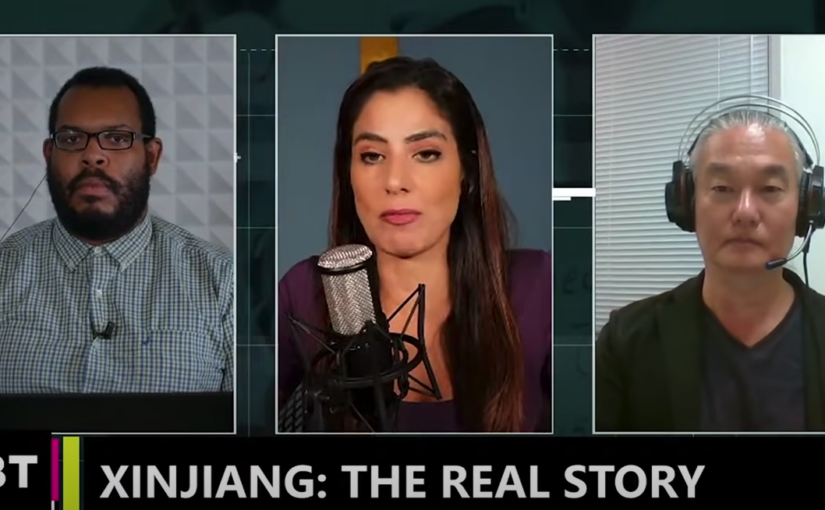
In this recent interview on BreakThrough News, peace activist and East Asian studies scholar KJ Noh debunks several of the most popular myths regarding the supposed cultural genocide of Uyghur Muslims in Xinjiang. He also describes the contents of the recent European academic study about terrorism and counter-terrorism measures in the region.
Author: Friends of Socialist China
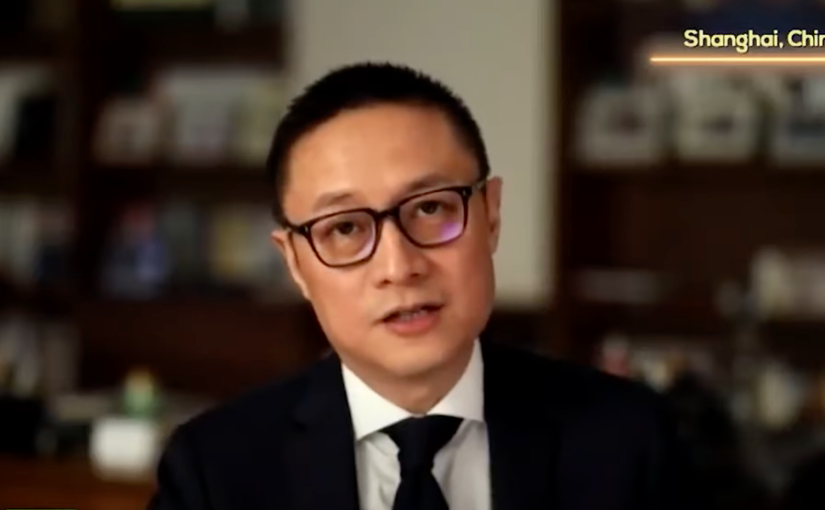
Eric Li on China’s peaceful rise
Interviewed on RT on 5 August 2021, Eric Li made an important point about how China’s emergence as a great power contrasts with the rise of Britain, the US and others, in that it has not been accompanied by bloodshed, aggression and expansionism.
China put forward this idea of a peaceful rise. This is what has happened. We went from a poor agrarian country to the great industrial powerhouse that China is today in merely two generations… Yet China hasn’t invaded a single country, not a single shot fired. That’s unprecedented in human history… That’s a great accomplishment. But instead of celebrating that accomplishment, we have this hostility from the Western powers. I find it preposterous, unfortunate and disappointing.
Virus blame game infecting ‘Trumpiden’ presidency
We are republishing this article by Radhika Desai, first published on CGTN, about the Biden administration’s continuation of Trump’s hybrid warfare against China.
What are we to make of the fact that after originally opposing Donald Trump’s outrageous allegations about a “lab leak theory,” U.S. President Joe Biden is now pressuring the World Health Organization (WHO) to mount a new inquiry into the origins of COVID-19? The WHO only last March completed a study, which included experts from 10 nations.
Why is he giving new life to the lab leak theory, which he once dismissed and the scientific community still does? Why has Biden also asked the U.S. “intelligence community” to investigate the same matter? Why is he threatening to sue China in U.S. courts on this matter?
In this as in many other matters – pandemic policy, economic policy and, above all, on waging a new Cold War on China – after straining every nerve to appear different from its predecessor, the Biden administration appears to be merging with its predecessor into a single “Trumpiden” presidency. The only differences are style: Motor mouth Trump vs. the inarticulately mumbling Biden.
Continue reading Virus blame game infecting ‘Trumpiden’ presidency
Sovereign development as a human right
This article by Friends of Socialist China co-editor Carlos Martinez first appeared (in condensed form) on the Global Times website on 2 August 2021.
Multiple perspectives on human rights
Starting with the Carter administration (1977-81), the US has made human rights a centrepiece of its foreign policy. Jimmy Carter, seeking to improve the international image of the US in the aftermath of the Vietnam War, criticised human rights abuses and the lack of political freedoms in various US-allied dictatorships, including Chile, Nicaragua, Argentina and Brazil. Such criticisms were designed not only to enhance the US’s reputation internationally but also to buttress and give credibility to its ongoing ideological warfare against the socialist world.
Taking up residence of the White House in 1981, Ronald Reagan – a Cold Warrior par excellence – shifted the human rights spotlight away from the US’s geostrategic allies and towards its enemies, particularly the Soviet Union. The USSR’s refusal to implement a Western-style parliamentary system was painted as the quintessential abuse of human rights, and was used to rally support for the Reagan administration’s ‘full-court press’ hybrid warfare against the socialist camp and the Global South. Ironically, this included propping up some of the world’s most violent and repressive regimes, including in apartheid South Africa.
Since then, the conversation on human rights – at least in the West – has been whittled down to a discussion on a specific set of individual political rights. This narrative is framed such that the leading capitalist countries appear as the poster children of human rights; conversely, countries with alternative political models are pariahs.
Continue reading Sovereign development as a human right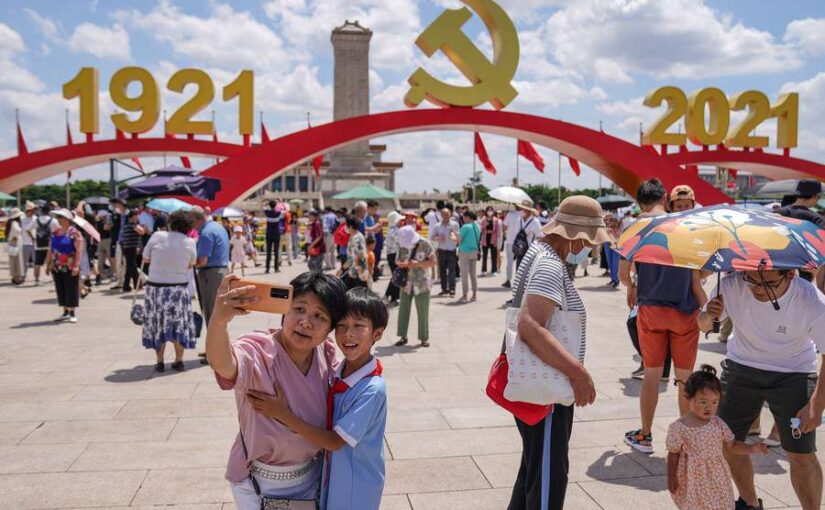
A hundred years of the Communist Party of China
We are republishing this useful historical outline of the CPC by Belgian journalist Marc Vandepitte. The article first appeared on ChinaSquare (in Dutch), and the English translation was first published on Global Research.
Historical context
For centuries, China had been a leading and powerful empire. That situation changed dramatically after the opium wars starting in 1840.[i] The country was relegated to the status of a semi-colony. Large areas were occupied by foreign powers or fell under their sphere of influence. The imperialist countries destroyed the fledgling industrialization. The population was totally impoverished, riddled with famines.[ii] Tens of millions of Chinese perished during that period through deprivation and political violence. It was also during this period that the black slave trade was replaced by the yellow trade in Chinese people.
Repeatedly, the Chinese revolted against the poor living conditions and for national independence. In 1911 there was a revolution in which the emperor was ousted. The new president Sun Yat-sen was the founder of the Republic of China. However, he failed to get rid of foreign domination and the feudal structures of the country.
That was the context in which, ten years later, thirteen men met in secret to establish a new, Communist Party (CPC). One of them was Mao Zedong. Their great example was the Russian Revolution of 1917. At the time, the party had only 53 members.
Continue reading A hundred years of the Communist Party of China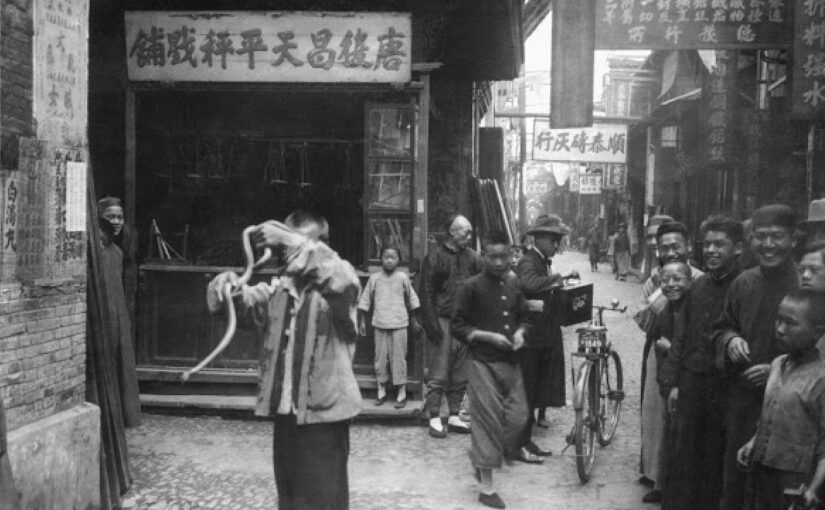
The first international Marxist study group in Shanghai
We are pleased to republish this fascinating history, written by Zhang Wei and published in the Chinese People’s Association for Friendship with Foreign Countries‘ quarterly magazine ‘Voice of Friendship’ (June 2021), about the first international Marxist study group in Shanghai. The group was supported by Soong Chingling and included such legendary friends of China as Rewi Alley, Agnes Smedley and Helen Foster Snow.
In 1934, encouraged and supported by Soong Ching Ling, about 20 Chinese and foreign leftists established the first international Marxist study group in Shanghai. They studied classic theories, conducted social research, discussed current affairs and actively joined in and assisted the struggle of the Communist Party of China. In fact, the group became the foreign ally of the Chinese revolution.
Three core members
Rewi Alley, a core member of the study group, was a social activist and writer from New Zealand. At the time, he was chief inspector of the fire department and the chief of the industrial department under the municipal council in the Shanghai international settlement. He was shocked to witness a large number of Chinese people in deep distress during an inspection of the factories. He gave an important description of the study group in the 1980s when recalling those days. He presented a clear list of the members of the group as follows:
“In 1934, like-minded people gradually gathered together to discuss politics. The idea was mainly put forward by German political economy writer Hans Shippe. He wrote articles for the English magazine Pacific Affairs under the pen name Asiaticus. His Chinese name is Xibo. Agnes Smedley said that “we were supposed to know the theories,” but she was too busy and didn’t understand the theories herself. Alec Camplin, an electrical engineer who lived in the same apartment with me in a three-story building on Yuyuan Road, joined our study group. There was also Dr. Hatem, whom Agnes considered a potential participant for the revolution. Other members included the young Austrian progressive Ruth Weiss; Hans Shippe’s wife, Gertrude Rosenberg; the Dutch manager of the leftist Zeitgeist Book Store, Irene Wiedemeyer; four secretaries of the Young Women’s Christian Association, namely, Talitha Gerlach, Maud Russell, Lillian Haass, and Deng Yuzhi; and a teacher at Medhurst High School, Cao Liang. Hans Shippe served as our political instructor. Later, he was killed by enemies while working in the New Fourth Army at Yimeng Mountain, Shandong.”
Continue reading The first international Marxist study group in Shanghai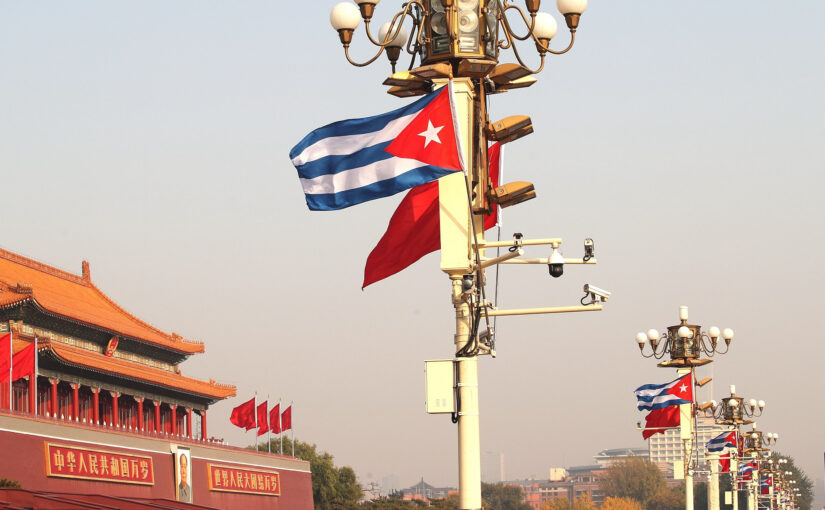
Foreign Ministry spokesperson denounces US sanctions against Cuba
At a Ministry of Foreign Affairs press conference on 4 August 2021, the spokesperson was asked for China’s response to the announcement by the US of new sanctions against Cuba. The response demonstrates China’s solidarity with socialist Cuba and its strict adherence to international law and the principles of non-interference, global cooperation.
Q: It is reported that on July 30, the US Treasury Department announced sanctions against Cuba’s national revolutionary police and its top two officials, citing repression of anti-government protests. During a meeting with Cuban-American figures at the White House, US President Joe Biden said that there would be more sanctions, “unless there’s some drastic change in Cuba”. In response, Cuban Foreign Minister Bruno Rodriguez said on July 30 that “these arbitrary measures, coupled with disinformation and aggression, are used to justify the inhumane blockade of Cuba”. Separately, 30 ventilators provided by the Chinese government to the Cuban government arrived in Havana on July 31. What is China’s comment?
A: China firmly opposes any move to arbitrarily impose unilateral sanctions and interfere in other countries’ internal affairs under the pretext of so-called “freedom”, “human rights” and “democracy”. The recent US sanctions against Cuban institution and officials severely violate the basic norms governing international relations and once again demonstrate to the world the typical US-style double standard and bullyism. As is known to all, it is the economic, commercial and financial embargo of the US that gravely impedes Cuba’s efforts to improve its economy and people’s livelihood, and tramples on the Cuban people’s right to subsistence and development. We urge the US to heed the universal appeal of the international community, immediately and completely lift the sanctions and embargo against Cuba, and immediately stop making excuses to engage in gross interference and destabilization.
Enough with sanctions! The right way is to support. Recently, China and many other friendly countries and international organizations have extended a helping hand to Cuba, aiding the Cuban government and people to fight the epidemic and improve people’s livelihood, illustrating that true friendship stands the test of adversity. China will continue to implement the consensus reached by the leaders of the two countries, deepen China-Cuba friendly relations and firmly support Cuba’s efforts to overcome the impact of the epidemic, promote economic development and maintain social stability.
Martin Jacques: There should be an international investigation into why the West failed so disastrously containing Covid
We are republishing this important analysis by Martin Jacques, writing in Global Times, about the West’s reversion to a colonial mentality in its attitude to China.
Covid-19 arrived three years after the anti-China crusade began. From the outset the virus was infused with Cold War politics. Imagine if the first case of COVID-19 had occurred at the end of 2012 rather than the end of 2019. Many things would have been the same, but one would have been different. At the end of 2012, relations between China and the US were relatively benign; by 2019 we were in a different world. The new occupant of the White House took every opportunity to attack, denigrate and undermine China.
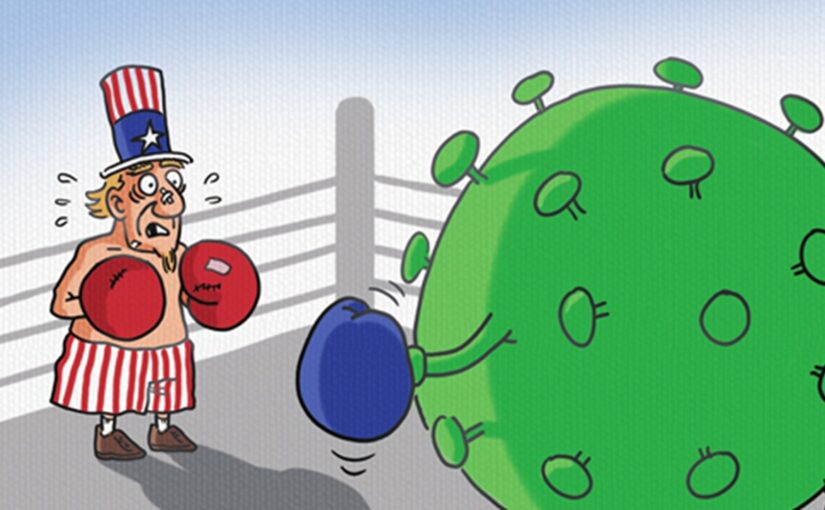
From January onwards a tsunami of abuse was directed at China. It was accused of secrecy and a cover-up. And to this day it has never ceased. China could do no right. It received zero compassion even when it was struggling on its own against the virus in the first three months. If this had been 2012, it would not have been like this. There would have been criticism of China, but also dialogue and cooperation. Now there was none, just abuse. COVID-19 became the symbol and bearer of a new cold war and the breakdown of the US-China relationship.
Continue reading Martin Jacques: There should be an international investigation into why the West failed so disastrously containing Covid
Corporate media joins the anti-vaxxers when it comes to Chinese- and Russian-made vaccines
We are republishing this important analysis by Alan Macleod about the West’s dangerous and hypocritical disinformation campaign against Chinese and Russian Covid vaccines. The article first appeared in MintPress News on 27 July 2021.
WASHINGTON — “Hundreds of Thai medical workers infected despite Sinovac vaccinations,” ran Reuters’ bombshell headline earlier this month. The report detailed how 618 Thai medical workers inoculated with the Chinese COVID vaccine have become infected anyway, leading to one death. As is common with such an influential newswire, Reuters’ story was picked up across the world by hundreds of publications, including The Washington Post, Yahoo! News and The New York Post.
Yet the article also notes that over 677,000 Thai medical workers have received the dose, meaning that more than 99.9% of those vaccinated have not developed COVID-19 — a fact that flies in the face of the headline’s implications. A large majority of news consumers do not read past the title, meaning that they were given the false impression that Sinovac is ineffective.
Being fully vaccinated does not offer complete protection from COVID-19. In late June, CNBC noted that well over 4,000 vaccinated Americans had been hospitalized with the virus, including 750 who died. Yet Reuters spun the news into an opportunity to spread distrust of Sinovac in Thailand, which is currently living through a rapid and unprecedented spike in coronavirus cases.
Continue reading Corporate media joins the anti-vaxxers when it comes to Chinese- and Russian-made vaccines
WHO probe into lab leak theory strengthens imperialism at the expense of cooperation
We are republishing this article by Friends of Socialist China co-editor Danny Haiphong, which originally appeared on CGTN, on US-led attempts to revive the ‘lab leak’ theory and where these fit into the overall pattern of international relations.
China’s opposition to the World Health Organization’s (WHO) plan to base phase-two research into the origins of COVID-19 on the lab leak theory was met with harsh criticism in the United States. Jen Psaki , White House Press Secretary for U.S. President said the administration was “deeply disappointed.” For China and much of the world, the feeling of disappointment is mutual. The proposed WHO probe into the lab leak theory threatens to strengthen the hand of imperialism at the expense of global cooperation.
Biden’s enthusiasm for “multilateralism” led some to believe that he would enhance the cause of peace. However, the Biden administration has followed a longstanding trend of imperialism in U.S. foreign policy. Since World War II, the United States has wielded economic hegemony through its disproportionate influence over multilateral organizations such as the International Monetary Fund (IMF) and the World Bank. These institutions have leveraged aid to enrich U.S. corporate shareholders and impoverish Asian, African, and Latin American nations seeking a way out of centuries of colonial underdevelopment.
The WHO has not been immune to the influence of U.S. imperialism. Direct contributions from member nations only cover about 20 percent of operating costs. That means 80 percent of the WHO’s funding comes from other, mainly private, sources; the second largest donor being the U.S.-based Bill and Melinda Gates Foundation (BMGF). Critics of the WHO have cited the pressures placed on the Global South nations to privatize their health systems to the benefit of the U.S. private health sector. Donald Trump’s decision to remove the U.S. from the WHO greatly hindered the global fight against COVID-19 but did not negate the fact that the U.S. has used its influence over multilateral institutions as a form of soft power.
It is no coincidence that the WHO probe comes at the same time that Biden announced an end-of-August deadline for his own intelligence-driven probe into the lab leak theory. Biden reentered the WHO upon his first 90 days in office and has since paid back funds withheld by the Trump administration. The Biden administration views the WHO as a valuable tool in the U.S. ongoing New Cold War against China. Rather than engaging with China as equals in the fight against the pandemic, Biden has chosen to weaponize the WHO for imperialist aims.
Continue reading WHO probe into lab leak theory strengthens imperialism at the expense of cooperation
Video: No Great wall – the continuities of the Chinese Revolution
The Communist Party of China (CPC) was formed a century ago, in July 1921. From that time up to the present day, it has led the Chinese Revolution – a revolution to eliminate feudalism, to regain China’s national sovereignty, to end foreign domination of China, to build socialism, to create a better life for the Chinese people, and to contribute to a peaceful and prosperous future for humanity.
In this video lecture, Friends of Socialist China co-editor Carlos Martinez argues that, while the Chinese Revolution has taken numerous twists and turns, and while the CPC leadership has adopted different strategies at different times, there is a common thread running through modern Chinese history: of the CPC dedicating itself to navigating a path to socialism, development and independence, improving the lot of the Chinese people, and contributing to a peaceful and prosperous future for humanity.
The video is based on the essay No Great Wall: on the continuities of the Chinese Revolution.
Evo Morales on China-Bolivia cooperation and the nature of Chinese policy
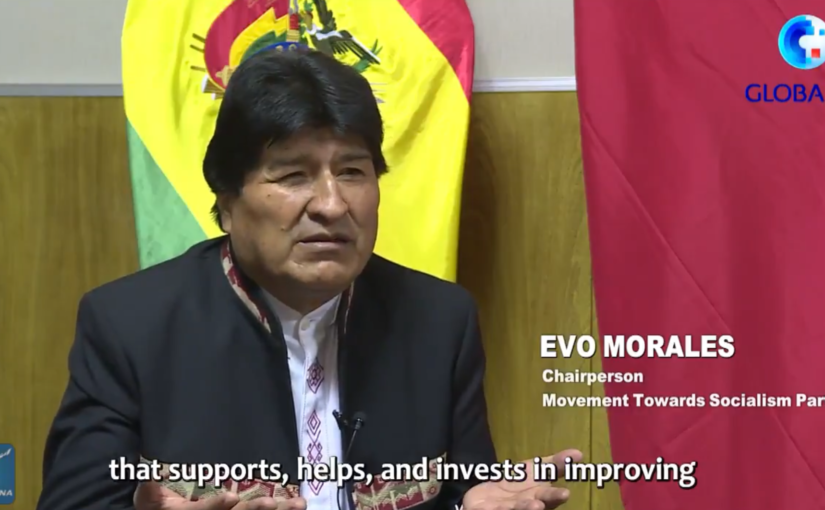
Embedded below is a lovely short video featuring former Bolivian president Evo Morales, leader of the Movement Towards Socialism (MAS), discussing his thoughts on China, the Belt and Road Initiative, China-Bolivia relations, and his impressions of Xi Jinping. The video, produced by Xinhua, first appeared on Twitter.
Text
The best policy is one that supports social equality, that supports, helps, and invests in improving the social and economic situation of the poorest people. China’s policies aim to help countries, peoples, and social sectors that are often forgotten.
China develops, and helps, invests, without any conditions, just to support our development. China is always ready to cooperate unconditionally.
What I understood is that he (President Xi Jinping) treats us brother to brother, as equals. I never felt that they looked at us from above. That is the difference, even with other countries. Again I want to tell you, a population like China, with more than 1,400 million inhabitants dealing with a nation of little more than 10 million inhabitants, treating them as equals, draws my attention. I feel that it is a cultural fact in humanity.
The Belt and Road Initiative is an impressive initiative proposed by China. Not only the Chinese people, but many people (in the world) are also going to benefit from the Belt and Road Initiative. Bolivia’s interoceanic railway project coincides with this Belt and Road plan proposed by China.
I respect, admire, and love the Chinese president, the CPC, and the Chinese people, as they put humanity in their thoughts.
China has every right to reject WHO’s embrace of lab leak theory
We are republishing this article by Friends of Socialist China co-editor Danny Haiphong, which originally appeared on CGTN, about the recent announcement by China’s National Health Commission that it has rejected the WHO’s proposal for a second phase of investigation into the origins of the Covid-19 pandemic.
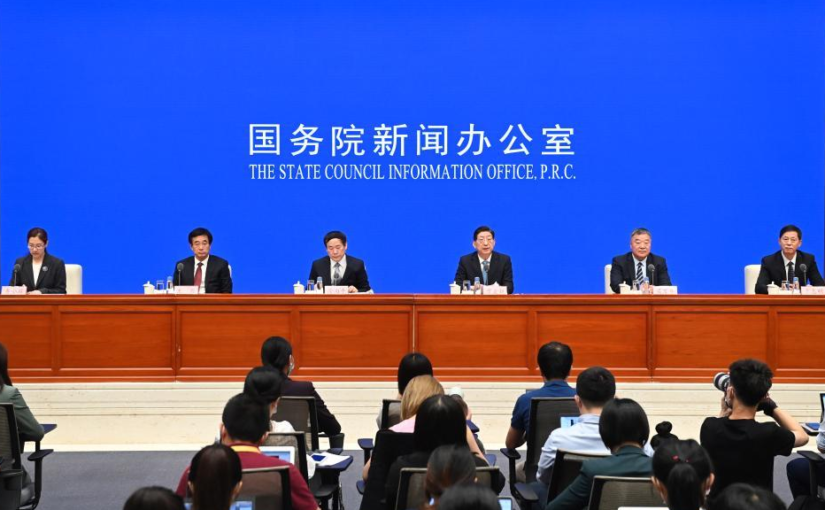
Deputy of the National Health Commission Zeng Yixin asserted that China will not follow the World Health Organization’s (WHO) suggested plan to focus second phase research into the origins of COVID-19 on the lab leak theory. The remarks came at a press briefing held on July 22. Outlets such as CNN and Reuters reported on the development with a strong negative bias. Each report appeared to conclude that China was shirking its commitments to the international effort to uncover COVID-19’s origins.
Yet China has every right to be suspicious of the undue focus that has been placed on the Wuhan Institute of Virology (WIV). The lab leak theory emerged from far-right political forces in the United States such as Senator Tom Cotton very early in China’s battle with COVID-19 and has since been mainstreamed by the likes of Donald Trump’s former Center for Disease Control (CDC) Director Robert Redfield.
Current President Joe Biden ordered an intelligence investigation into COVID-19’s possible origins in Wuhan after a Wall Street Journalreport claimed that workers at the WIV had become ill in November 2019.
Michael R. Gordon co-authored the report using evidence from anonymous former intelligence officials. Gordon also co-authored the famous article in 2002 with Judith Butler which claimed that Saddam Hussein was harboring Weapons of Mass Destruction (WMDs) in Iraq. This report was influential in the U.S. decision to invade Iraq in 2003. Over eight years, U.S. military forces were culpable in the death of nearly one million people and the massive instability currently plaguing the region.
The lab leak theory is a highly politicized framework for pursuing answers into the origins of COVID-19. That China would exercise caution in supporting an investigation that possesses far-from-impartial motives should come as no surprise.
The WHO’s study into the origins of COVID-19 released this past March declared that a lab leak was “extremely unlikely.” From this vantage point, Zeng remarked that any follow up investigation on the origins of COVID-19 should build upon the basis of the first study.
COVID-19 is an extremely complex phenomenon. It will likely take years for scientific experts to fully understand a virus that has facilitated such a historic public health crisis in every part of the world. China has been targeted unfairly by U.S. and Western governments for the virus’ origins without any evidence. Without full and equal cooperation among all governments and countries, more questions than answers are likely to arise from investigations into COVID-19’s roots.
China is not turning its back to the international effort to understand the development of COVID-19, but is simply asking that fairness be exercised in the process. The undue focus on WIV ignores several additional indications that the virus may not have emerged from the first known outbreak in Wuhan. Traces of COVID-19 were found in Spain’s sewage system as early as March 2019. Research further suggests that COVID-19 was spreading in Italy as early as September 2019.
That the lab leak theory would be a priority at this time is neither consistent with these developments nor the global situation. Millions of Chinese netizens have signed a petition demanding that the U.S.’s lab in Fort Detrick become subject to international investigation. Fifty-five nations have denounced the politicization of investigations into COVID-19’s origins. China is thus not alone in its rejection of the WHO’s intention to investigate the lab leak theory.
Experts who attended the press briefing made clear that they supported a wide-ranging investigation of COVID-19’s origins that takes more than just a few, politicized hypotheses into account.
Detractors in the U.S. and the West will undoubtedly argue that China is not being transparent in its rejection of a lab leak investigation. But facts are stubborn things. China has been a model of transparency throughout the duration of the COVID-19 crisis. Health and government officials in China have worked tirelessly with the WHO and countries around the world in the fight against COVID-19. The U.S. and West, on the other hand, have latched onto a theory of the virus’ origins which relies upon arguably the least transparent institutions in the world: their own intelligence agencies.
Experience is the greatest teacher. The U.S. and West have yet to contain the pandemic and lead the world in global cases and deaths. China is rapidly vaccinating its population and has already provided hundreds of millions of doses to beleaguered countries after bringing COVID-19 under control last year. It should be clear by now that those who have accused China for lacking transparency during this delicate moment are in fact the ones placing the interests of hegemony over the needs of humanity.
Webinar: For peace and socialism – celebrating the centenary of the CPC (25 July)
The Communist Party of Britain is holding an online meeting to celebrate the centenary of the Communist Party of China. The event takes place online via Zoom on Sunday 25 July 2021 at 2pm Britain / 9am US Eastern / 9pm China. Register on Zoom.
Speakers
- Ms. Wang Yingchun (Deputy Director-General, CPC International Department) on the ‘Historic Role of the CPC and Today’s World’
- Jenny Clegg (Senior Lecturer in International Studies and a China specialist at the University of Central Lancashire)
- Robert Griffiths (CPB General Secretary)
- Kenny Coyle (author and international scholar on Asia)
- Iain Inglis (CPB member resident in China)
- Chair: Liz Payne (CPB Chair)
Along with the speeches there will be vintage film footage and new productions not previously seen including China’s struggle against COVID and 100 years of the CPC.
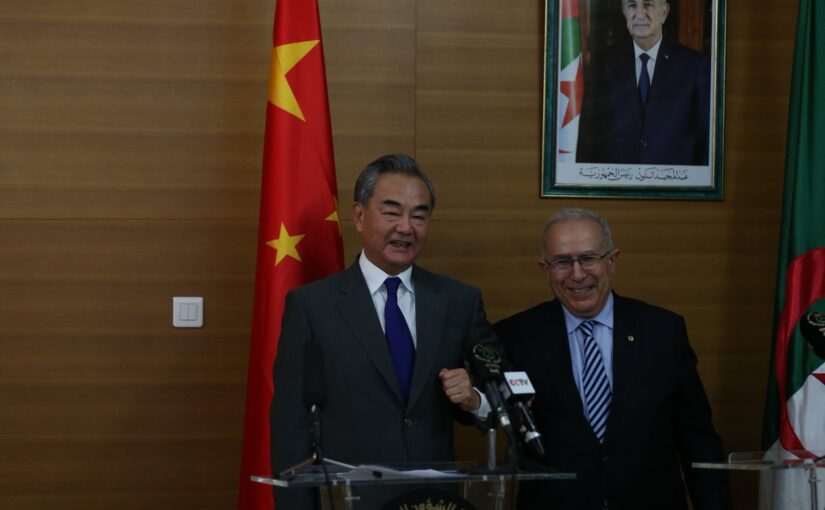
Wang Yi: China breathes the same air and shares common destiny with developing countries
We are republishing this important speech by Foreign Minister Wang Yi, originally published on the Ministry of Foreign Affairs website, reiterating China’s enduring commitment to representing the voice and aspirations of the developing world.
On July 19, 2021 local time, State Councilor and Foreign Minister Wang Yi answered questions on the relationship between China and developing countries when he met with the press together with Algerian Foreign Minister Ramtane Lamamra in Algiers.
Wang Yi said, back to 50 years ago when a resolution jointly submitted by Algeria and other countries was passed by an overwhelming majority at the United Nations (UN) General Assembly, the vast number of developing countries “carried” China into the UN, which is a vivid illustration of the solidarity and cooperation between China and other developing countries. The purpose of my special visit to Algeria is to relive the experience of the joint struggle, and express my heartfelt thanks once again to Algeria and all other friends from other countries which stood up to pressure, upheld justice and firmly supported China.
Continue reading Wang Yi: China breathes the same air and shares common destiny with developing countries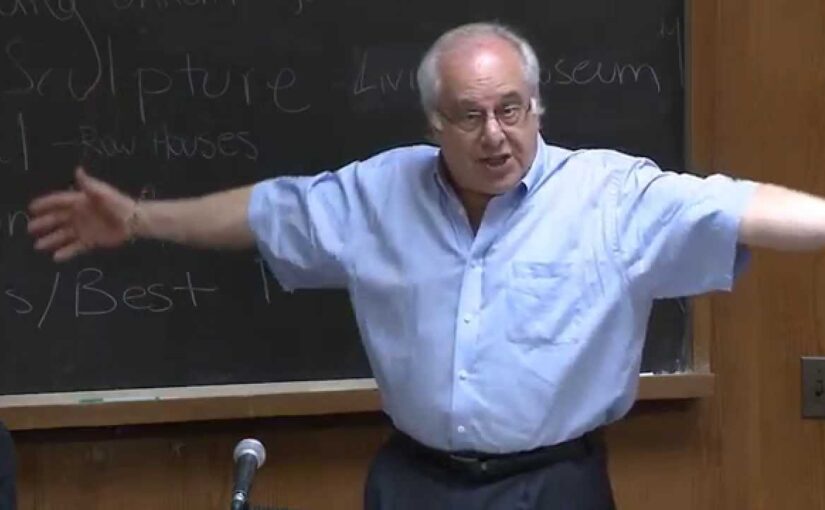
Richard Wolff on China’s rise to global prominence
We are republishing this very interesting interview with Marxist economist Richard Wolff in Beijing Review, in which he discusses the reasons behind China’s economic success and the motivations for the US-led New Cold War.
On CPC-induced synergy
The first book I ever read about China was The Good Earth by Pearl Buck, presenting the stories of poverty and suffering across the Chinese countryside in the early 20th century. What she described in the book actually didn’t take place too long ago, but when you look at what China has achieved over the past years and then compare it to what Buck wrote about, it makes for an incredible feat.
Since 1949, when the communist revolution succeeded, U.S. foreign aid did not go to China because the latter was a socialist country. U.S. foreign aid was, however, dispatched to every other Third World country across Asia, Africa and Latin America. Nevertheless, China has done better economically than every other country that did receive the assistance.
What does that tell us about getting aid from the West? It’s not the path to economic growth, it never was. The reality is that the path to economic growth was not to take aid from the West, but to rely on yourself. The Soviet Union once helped China, before the 1960s, but in general, the Chinese achieved it mostly by themselves. That’s a very powerful message all over the world.
Continue reading Richard Wolff on China’s rise to global prominence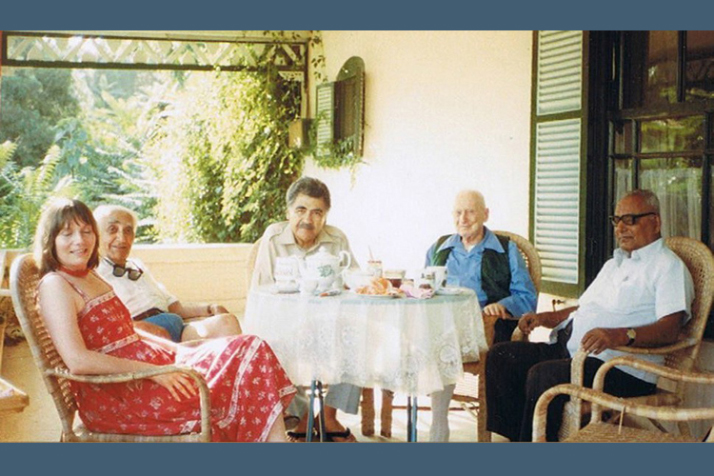
International figures support the CPC and PRC throughout history
We are republishing this lovely article from Beijing Review highlighting the life and contributions of Rewi Alley, the New Zealand-born writer, social reformer and educator who spent 60 years of his life working in China.
The life path of many an international figure has crossed with that of the Communist Party of China (CPC) over the past 100 years. As China witnessed tremendous progress and change, their stories, too, have been remembered. Rewi Alley (1897-1987) was one of those international friends, who shared long-term ties with the CPC dating all the way back to the earliest of days when the Party was embracing the struggle to save the nation from peril.
The New Zealand-born writer, social reformer and educator spent 60 years of his life working in China. He arrived in Shanghai on April 21, 1927, and later decided to align himself with China’s working class after witnessing their trials and tribulations.
During the Chinese People’s War of Resistance Against Japanese Aggression (1931-1945), Alley and a handful of his both Chinese and foreign associates, including American journalist Edgar Snow and his wife, initiated and organized the Gung Ho movement, short for the Chinese Industrial Cooperatives movement, in 1938, mobilizing mass production to support the war effort. By 1942, they had set up about 2,000 such cooperatives.
“The movement made important contributions to the Chinese people’s victory against the invaders and the success in China’s new democratic revolution,” Lin Songtian, President of the Chinese People’s Association for Friendship With Foreign Countries (CPAFFC), a national organization engaged in people-to-people diplomacy, told Beijing Review.
Additionally, from the mid-1940s to the early 1950s, Alley founded the Shandan Bailie Schools in the northwestern county of Shandan in Gansu Province. Through the creation of a work-study program, students would use their brains as well as brawn. The school ended up generating a host of young technical staffs ready to support the country’s economic construction.
“After the founding of the People’s Republic of China (PRC) in 1949, Alley spared no efforts in supporting China’s development, promoting the people-to-people friendship between China and other countries, and safeguarding world peace,” Lin added.
Alley passed away in Beijing on December 27, 1987.
On July 10, the former residence of Alley in Beijing was reopened after having been renovated in memory of his years in China.
A friendly p(a)lace
Located in the CPAFFC compound, the house is also known as the Friendship Palace. However, strictly speaking, it did not just belong to Alley as four other expats also took up residence there at one time or another, according to Lin.
Many people must have heard about Chairman Mao Zedong’s assertion that “all reactionaries are paper tigers.” It owes its publicity to an American journalist by the name of Anna Louise Strong, who once lived in the house. During her fifth trip to China in 1946, Strong interviewed Mao in Yan’an, the headquarters of the CPC Central Committee from 1935 to 1948. She then had the chance to listen to this famous thesis and went on to include the term “paper tiger” in her book.
In 1958, Strong, then 73, visited China for the sixth time. This time around, she decided to not return to her old home and instead adopted China as her new haven where she would live out the rest of her days. On March 30, 1970, this American writer with a profound passion for China passed away from illness in the country that she considered her “ideal resting place.”
Other residents included Chilean painter Jose Venturelli, the first well-known Latin American artist to visit China after the founding of the PRC. Venturelli, who died in Beijing in 1988, always expressed a deep concern for those living and working at the grassroots throughout his body of work. Then there was American activist Robert F. Williams, who stood at the forefront in the fight for African American rights, and Japanese politician Kinkazu Saionji, who was active in promoting good relations between Japan and China following his move to Beijing in the late 1950s.
Michael Crook, Chairman of the International Committee for the Promotion of Chinese Industrial Cooperatives (ICCIC), established in 1939 based on the Gung Ho movement, attended the ceremony together with his mother, 106-year-old Isabel Crook, who has spent most of her life in China, teaching English and training students.
Aside from those who actually lived here, many more made their choice to come and stay in China and support the cause of peace and justice, including Korean composer Zheng Lucheng, who joined China’s fight against Japanese aggression, according to Michael Crook.
New chapters
Lebanese-American doctor George Hatem, known as Ma Haide in China, was the first foreigner to join the CPC, in 1937, and the first expat to obtain Chinese citizenship after the founding of the PRC, in 1950. Alley used to live with Hatem in a cave house in Yan’an back in early 1939, according to Zhou Youma, Hatem’s son.
Zhou scattered both Alley’s and his father’s ashes across the places dearest to them in China. “With my own hand, I sent them, two dear friends who forged a friendship through thick and thin, back to the land where they had devoted their lives to the Chinese people,” he said.
Zhou added that he and the descendants of Alley and other international friends of China are also part of the endeavor to realize the great rejuvenation for the Chinese nation. “We will keep putting our best foot forward,” Zhou said.
“Today, under the leadership of the CPC, we have realized the first centenary goal of building a moderately prosperous society in all respects and brought about a historic resolution to the problem of absolute poverty in China,” Lin said. “I believe our international friends can be satisfied with the CPC’s achievements, and proud of the contributions they themselves have made.”
Michael Crook said if Alley and the other residents who used to live in the house had known they would serve as an inspiration to so many Chinese and foreigners in the pursuit of peace and development, they would have been absolutely thrilled.
In 2017, Chinese President Xi Jinping called on the ICCIC to continue its international cultural exchanges and make new contributions to world peace and development in a letter responding to the ICCIC and Beijing Bailie University, one of the Bailie schools.
Beijing Bailie University has managed to uphold the notion of vocational education as championed by its founding and former presidents, and over the course of its history has cultivated a large talent pool for China’s modernization.
The ICCIC, on its part, has played a role in helping to lift people out of absolute poverty, proving an enduring inspiration to all international friends, according to Michael Crook. “We are continuing Alley’s legacy,” he said. “Let’s try and answer Xi’s call for Gung Ho and start writing some new chapters in international friendship.”
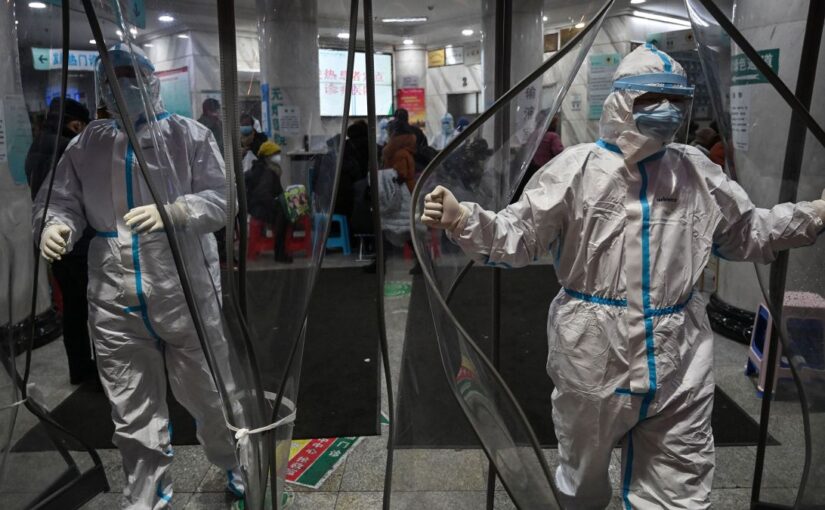
Interview with the Editor of ‘Waiting for Dawn: 21 Diaries from 16 COVID-19 Frontlines’
We are republishing this interview with Leijie Wei, editor of the book ‘Waiting for Dawn: 21 Diaries from 16 COVID-19 Frontlines’ and academic at the School of Law, Xiamen University, Xiamen, China. It provides valuable insight into China’s public health system and the social, economic and political structures that allowed China to very quickly and effectively contain the Covid-19 pandemic.
The interview was conducted by Shuoying Chen (Academy of Marxism, Chinese Academy of Social Sciences), and was originally published in World Review of Political Economy, Volume 11, Number 4, Winter 2020. Republished with permission.
ABSTRACT
Waiting for Dawn: 21 Diaries from 16 COVID-19 Frontlines takes a global perspective, examining the impact of the COVID-19 epidemic on governments and the public around the world. The editor of the book believes that the reasons why mandatory tracking, testing and quarantine measures have been effectively implemented in China center on the unified leadership provided by the Communist Party of China (CPC); the active response by state-owned enterprises and institutions; and the full trust of the majority of the public in the government’s anti-pandemic measures. In an effort to win elections, meanwhile, politicians in Europe and the United States are politicizing the pandemic and making China a scapegoat. In contrast to socialist China’s policy of ensuring all those in need are hospitalized with free testing and treatment, the essentially capitalist public health models applied in most Western countries have brought more concrete and explicit class conflict, and the drawn-out pandemic in the West has exacerbated various forms of social injustice. The COVID-19 epidemic is a reminder that a country’s governance ability should not be judged on the basis of simplistic conceptions of democracy, and that the needs of Mother Earth must be considered in the collective building of a community of shared future for humankind.
Shuoying Chen (SC): To begin with, how did you come to the idea of producing a collection of diaries from different countries around the world?
Leijie Wei (LW): In 2020, China faced a very dangerous first few months, but through the efforts of the whole nation, it achieved an epic reversal. The global pandemic began in February when the novel coronavirus (COVID-19) broke through the threshold of extraterritorial spread, and the world then fell gradually into the “darkest moment” of the pandemic. Since that time, we have had to rethink COVID-19 from a global rather than a local perspective, taking account especially of how other countries are different from or similar to China in terms of their experience of fighting the pandemic. With that in mind, I invited 21 contributors from 16 countries to document the lives during the pandemic of people around the world, recording what they have seen, heard, felt and understood during this period, with various narrative perspectives and in the form of diaries. Various pandemic diaries kept by Chinese people in quarantined cities, based on personal experience and with a strong literary flavor, undoubtedly have their value. Nevertheless, their unidimensional focus on a single area and lack of a multi-dimensional comparative perspective may lead to narrow and idiosyncratic accounts. This collection, entitled 21 Diaries from 16 COVID-19 Frontlines, covers 16 countries on four continents, including Asia, Europe, North America and South America. The authors are from various social backgrounds and differ in their social status. With its multi-dimensional and global perspective, the collection offers particular promise as a way of examining the impact of COVID-19 on different governments and populations, and as a history of everyday life in the age of the pandemic, it will also serve in future years as a first-hand account of this unforgettable experience.
Continue reading Interview with the Editor of ‘Waiting for Dawn: 21 Diaries from 16 COVID-19 Frontlines’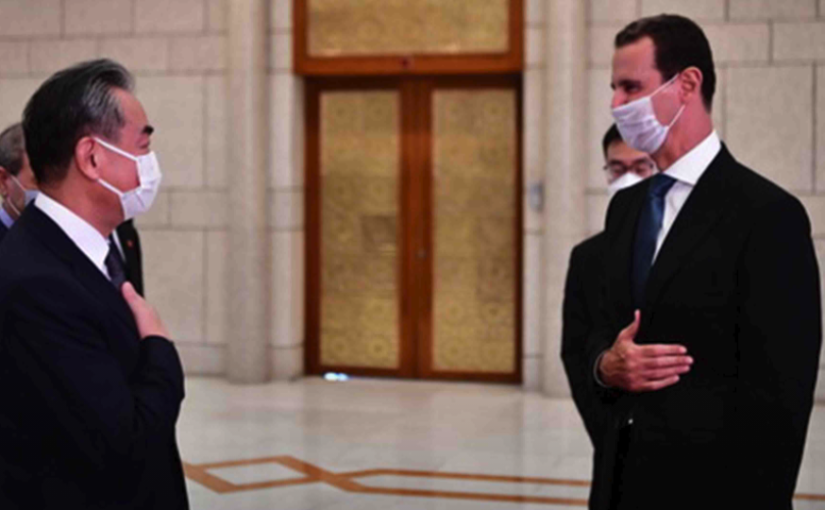
China opposes any attempt to seek regime change in Syria
This article first appeared on CGTN. It provides an example of China’s principled stance in relation to the situation in Syria, in which the US and its allies have been waging proxy warfare for the last decade in an attempt to remove a government that refuses to submit to imperialist diktat.
China opposes any attempt to seek regime change in Syria and will boost cooperation with Syria for the benefit of the people of both countries, visiting Chinese State Councilor and Foreign Minister Wang Yi said on Saturday.
Wang made the remarks at a meeting with Syrian President Bashar al-Assad, to whom the senior Chinese diplomat first conveyed Chinese President Xi Jinping’s cordial greetings.
Under Assad’s leadership, the Syrian people have made valuable achievements in combating terrorism and opposing external interference, Wang said, adding that Assad’s re-election reflects the strong trust and support of the Syrian people.
Wang praised the Syrian people as backboned and dignified, adding that blatant foreign interventions in Syria have failed in the past and will not succeed in the future. He expressed the belief that the Syrian people will be more united and committed to the reconstruction and revitalization of their country.
Continue reading China opposes any attempt to seek regime change in Syria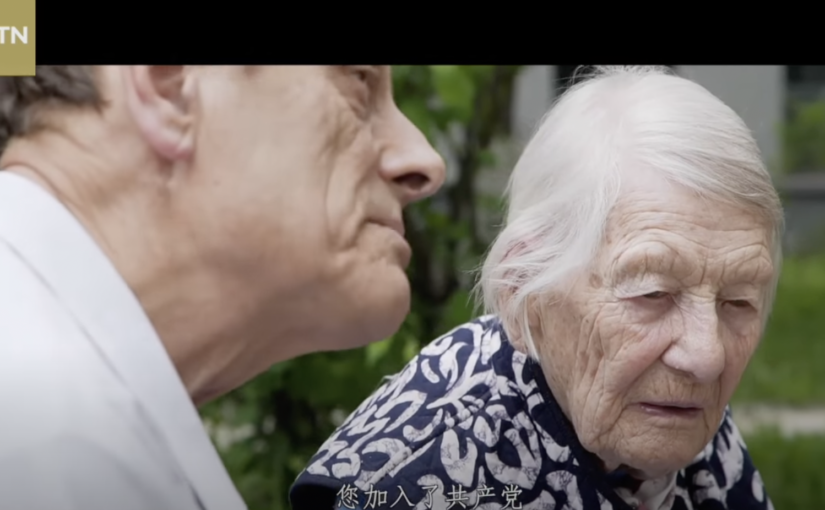
Documentary: Isabel Crook – We belonged and this is why we stayed
This feature length documentary aired by CGTN last week provides a vivid account of the lifelong dedication to the Chinese revolution on the part of communist fighters David and Isabel Crook and of the love and respect in which they have been held by successive generations of Chinese people from all walks of life.