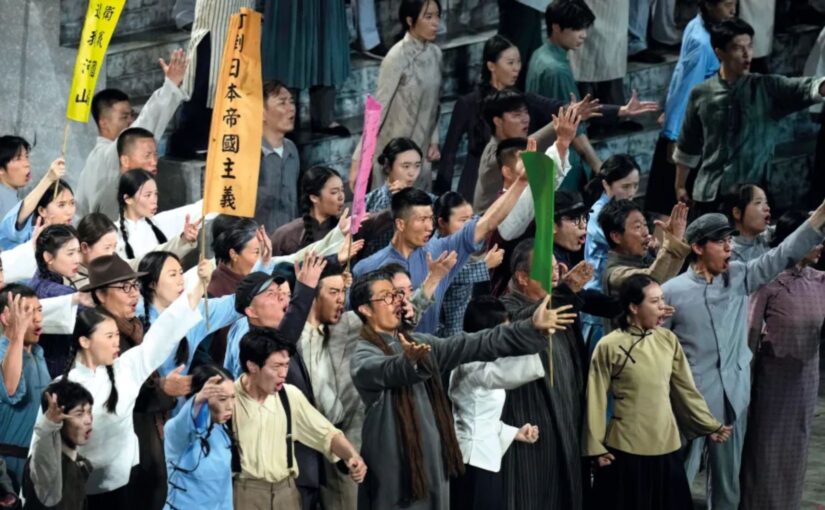
Delegates from Britain and the US witness Socialist China’s remarkable progress

We are pleased to republish below a short report by Callum Norris of the 11-day Friends of Socialist China delegation in May-June 2025. As Callum notes, the visit focused on strengthening international people-to-people ties and learning about China’s efforts toward building an ecological civilisation.

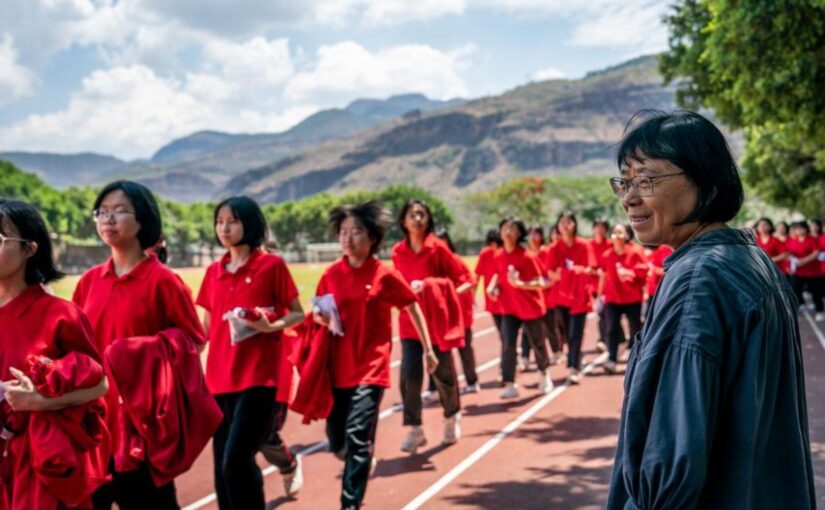
A key event was the Fourth Dialogue on Exchanges and Mutual Learning Among Civilisations in Dunhuang, where Vice-President Han Zheng and speakers from over 60 countries emphasised global cooperation, mutual respect and cultural exchange. At a parallel session, delegates from Britain and US youth organisations highlighted the grim realities young people face in the West—housing crises, job insecurity, and climate anxiety—and contrasted this with China’s continually-improving standards of living and its commitment to environmental protection.

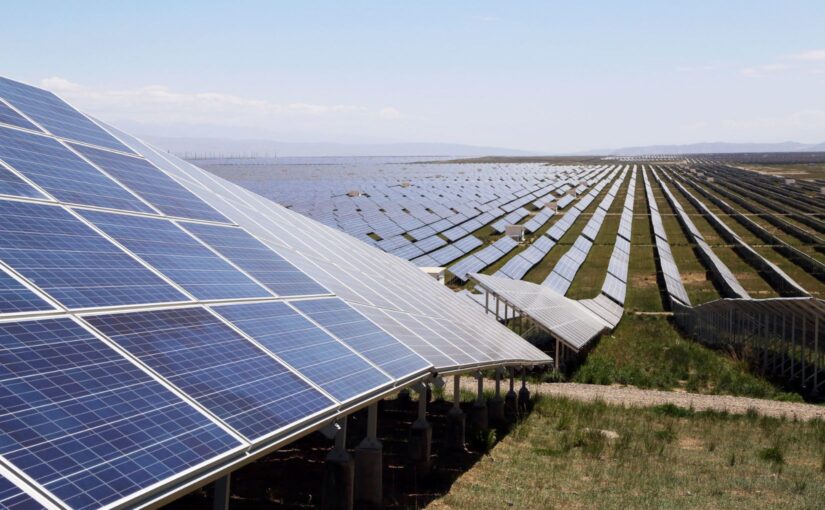
The delegation also toured Dunhuang’s massive solar plant, as well as a smart energy grid in Jiayuguan. Delegates noted the extensive greenery across Chinese cities, witnessing firsthand China’s remarkable journey towards sustainability.

‘Red tourism’ in Yan’an and the site of the CPC’s first national congress in Shanghai underscored how far China has come. Callum writes:

In 1949, China was one of the poorest nations in the world, had a life expectancy in the 20s and 30s, had literacy rates barely above 10 per cent and suffered greatly under the boot of Western and Japanese colonialism.

As we saw during our delegation, China is today the world’s largest economic power; it has rid itself of its former subjugation, in the process laying the foundation of what a model country of the future looks like.

It is a country where every citizen is guaranteed the right to education and healthcare, where not one single person goes without a roof over their head, where humanity’s challenge against the threat of climate catastrophe is being solved. All this is only possible because of the success of the Chinese revolution and the continued commitment to constructing socialism.

Delegates left inspired, confident in the superiority of socialism, and ready to fight harder than ever for a better future at home.

This article first appeared in the Morning Star on 2 July 2025.

Delegates representing Friends of Socialist China from Britain and the US were invited by the International Department of the Communist Party of China (CPC) for an 11-day educational exchange on the topics of building people-to-people relations between China and the rest of the world and building an ecological civilisation.

Fourth dialogue on exchanges and mutual learning among civilisations

Visiting Dunhuang in Gansu Province, delegates took part in the Fourth Dialogue on Exchanges and Mutual Learning Among Civilisations, an international conference which aimed at expanding China’s Global Civilisational Initiative, an organisation aiming to promote mutual respect among different civilisations.

The conference began with an opening address by Han Zheng, the Vice-President of the People’s Republic of China, followed by addresses from representatives of Laos, Nepal, Botswana and others, before the delegates from over 60 countries took part in meetings and cultural events. The speakers highlighted the need to respect, share and learn from each other’s varied cultures, acknowledging that cultural exchange and not cultural isolation enhances cultural value.

Continue reading Delegates from Britain and the US witness Socialist China’s remarkable progress

China at UN: The success of the Colombian peace process depends on rural reform

China has again reiterated its support for the peace process in Colombia and for the efforts of the progressive government of President Petro in that regard.

Speaking at a United Nations Security Council briefing held on 18 July, Ambassador Geng Shuang said that: “The Colombian peace process is a successful example of ending conflict and rebuilding peace through dialogue and negotiation. At present, as the Colombian peace process has entered uncharted waters, relevant parties should firm up resolve to overcome difficulties and steadfastly advance the peace process for the country’s stability and development… China supports President Petro’s decision to prioritise implementation of the peace agreement in the remainder of his term.”

However, he forcefully underlined – as China has previously stated – that the success of the peace process is highly dependent on expediting and deepening rural reform in the country:

“Comprehensive rural reform is a priority for implementing the peace agreement, as well as an important pillar for Colombia’s national development. At present, with the average implementation rate standing at only 30%, the rural reform progress is lagging. China encourages the Colombian government to increase resource allocation, strengthen coordination, accelerate rural reform and continuously unlock development dividends. China welcomes Colombia’s decision to host the Second International Conference on Agrarian Reform and Rural Development in February next year. China is ready to actively participate in the meeting and to share its experiences in poverty reduction and rural revitalisation, and support Colombia in agricultural and rural development.”

He added that: “Regarding the recent violent conflict in some regions, we support the Colombian government in strengthening security deployment, enhancing effective control over conflict-affected and remote areas, ensuring safety and security of the people, including former combatants, ethnic minorities, women, children and other vulnerable groups, and preventing the recurrence of such violent incidents.”

The following is the full text of Geng Shuang’s remarks. They were originally published on the website of China’s permanent mission to the United Nations.

President, 

I thank SRSG Carlos Ruiz Massieu for his briefing. Over the past six years, under his leadership, the UN Verification Mission in Colombia has played an important role in supporting the Colombian peace process. China commends SRSG Massieu for his work, and looks forward to his even greater achievements in his new capacity as SRSG on Haiti. 

I welcome Vice Foreign Minister Mauricio Jaramillo Jassir to today’s meeting, and congratulate Colombia on its election as a non-permanent member of the UN Security Council for the 2026-2027 term.

Continue reading China at UN: The success of the Colombian peace process depends on rural reform

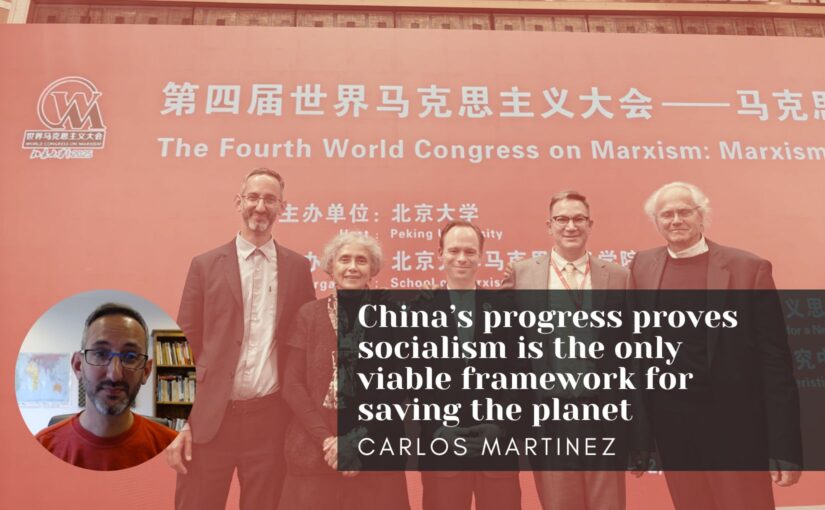
China’s progress proves socialism is the only viable political framework for saving the planet

The following article by Carlos Martinez argues that China’s remarkable progress in green energy and other aspects of environmental sustainability demonstrates that socialism is the only viable framework for addressing the global climate crisis.

In June 2025, China surpassed 1 terawatt (TW) of installed solar power—about 45 percent of the global total—while combined solar and wind capacity now exceeds coal, marking a pivotal shift and decisive progress towards the country’s goal of achieving net zero by 2060.

Carlos states that China’s successes stem from its socialist system: public ownership and central planning allow for the rapid implementation of large-scale environmental initiatives. “China’s economic system is structured in such a way that political and economic priorities are determined not by capital’s drive for constant expansion but by the needs and aspirations of the people.”

In contrast, capitalist countries continue subsidising fossil fuels and outsourcing emissions while pushing responsibility onto individuals. Decades of climate summits and treaties have failed to slow global emissions, and Green New Deal proposals in the West remain mostly rhetorical.

Carlos concludes that China’s example shows how socialism can provide the structural tools necessary to tackle climate change—offering both practical support for developing countries and political inspiration for those in the capitalist West.

It was reported in late June 2025 that China has reached a historic milestone in its energy transition: the country’s cumulative installed solar capacity has surpassed 1 terawatt (TW). This represents approximately 45 percent of the global total, and is several times higher than the figure for the US (177 gigawatts (GW)) and the European Union (269 GW).

According to the latest figures released by China’s National Energy Administration (NEA), the nation’s total installed capacity of wind and solar photovoltaic power has reached 1.5 TW, outstripping thermal power for the first time. This achievement solidifies China’s status as the world’s only renewable energy superpower, and reflects its firm commitment to phasing out its use of fossil fuels.

Ecological civilisation

This progress is a manifestation of China’s program of ecological civilisation, which promotes balanced and sustainable development directed towards the harmonious coexistence of humanity and nature, and which has led to China emerging as the undisputed global leader in renewable energy, biodiversity protection, forestation, pollution reduction and sustainable transport .

China’s strategy is based on an understanding that, in the words of President Xi Jinping, “humankind can no longer afford to ignore the repeated warnings of nature and go down the beaten path of extracting resources without investing in conservation, pursuing development at the expense of protection, and exploiting resources without restoration”.

Continue reading China’s progress proves socialism is the only viable political framework for saving the planet

Quebec Green Party promotes understanding and cooperation with China

Alex Tyrell, leader of the Parti Vert du Québec (Green Party of Quebec) in Canada paid a visit to China in late April on invitation. On June 9, he gave a detailed report back to a public webinar hosted by the Hamilton Coalition to Stop the War and endorsed by the Canada-Wide Peace and Justice Network.

The Quebec Green Party notes: “Tyrrell’s visit came amidst rising tensions between Canada and China, including unproven allegations of election interference, confrontational military posturing in the Taiwan Strait, and the passage of Canada’s Foreign Agents Registry Act, which Tyrrell described as ‘the modern Exclusion Act’ targeting Chinese Canadians. ‘This hysteria,’ he argued, ‘is building animosity towards China and preparing Canadians for conflict.’”

The party also noted that Tyrrell, who has led the PVQ since 2013, situated his visit within his party’s eco-socialist and anti-imperialist framework. “Canada has nothing to gain from provoking a war with China,” he said, adding that the PVQ supports diplomacy and cooperation over confrontation and sanctions. He sharply criticised the Green Party of Canada’s shift toward militarism. He also contrasted Canada’s aggressive posture with China’s record: “China hasn’t been involved in a military conflict for over 45 years,” he said, adding that its international development strategy – particularly in Africa – relies on shared infrastructure ownership, not regime change or military force.

Tyrrell’s trip spanned Beijing, Hangzhou, Ningbo, and Shanghai, including meetings with foreign ministry officials, artists, journalists, and students. While political conversations dominated his first days in Beijing, he also emphasised China’s extraordinary achievements in infrastructure and technology. Among the highlights here were:

  • Fully automated shipping ports in Ningbo.
  • Small affordable electric vehicles, some under $20,000.
  • Wide bike lanes and massive fleets of public-use electric bikes and scooters.
  • The world’s fastest commercial train – the Maglev – operating at 300 km/h.
  • Refrigerator tech that quadruples produce shelf life via vacuum-sealed drawers.

He praised these advancements as models for Canada’s green transition, particularly criticising Ottawa’s 100% tariffs on Chinese EVs and solar panels: “Canada is slowing down the energy transition for political reasons.”

Tyrrell did not shy away from addressing controversial topics but emphasised that many accusations – such as so-called “Chinese police stations” in Canada – are based on leaks rather than evidence. While refraining from taking a definitive stance on every issue, he expressed scepticism toward narratives pushed by Canadian media and intelligence agencies. He encouraged Canadians to question the double standards – particularly on genocide designations in Xinjiang versus Gaza. On Taiwan, he reiterated his party’s support for Canada’s official One China policy, warning that military provocations near the island could spark catastrophic conflict.

Asked what role the Green movement could play in improving Canada-China relations, Tyrrell drew a sharp contrast between his Quebec party and the federal Greens under Elizabeth May. “They’re echoing the politics of fear, militarism, and empire,” he said. “We need a complete 180 – and that includes replacing the current leadership… Right now, the Green Party of Canada is a huge embarrassment to the peace movement.”

Just prior to his visit, Tyrell was interviewed by prominent Canadian anti-imperialist Yves Engler on his Talking Foreign Policy podcast. He said that:

“The mainstream media has been continuously vilifying Chinese Canadians, the Chinese Communist Party, and the Chinese government. It’s important to push back on this anti-China narrative. Canada has gone from having a very pro-China policy to a very, very negative relationship with the People’s Republic of China.”

Tyrrell referenced his recent interview with Senator Yuen Pau Woo, who cautioned that the foreign agent registry law could have a chilling effect on Chinese Canadian political participation. Tyrrell called the bill “preoccupying” and noted that it “could potentially go as far as jailing people in Canada for participating in elections” due to vague language about associations with foreign entities.

Continue reading Quebec Green Party promotes understanding and cooperation with China

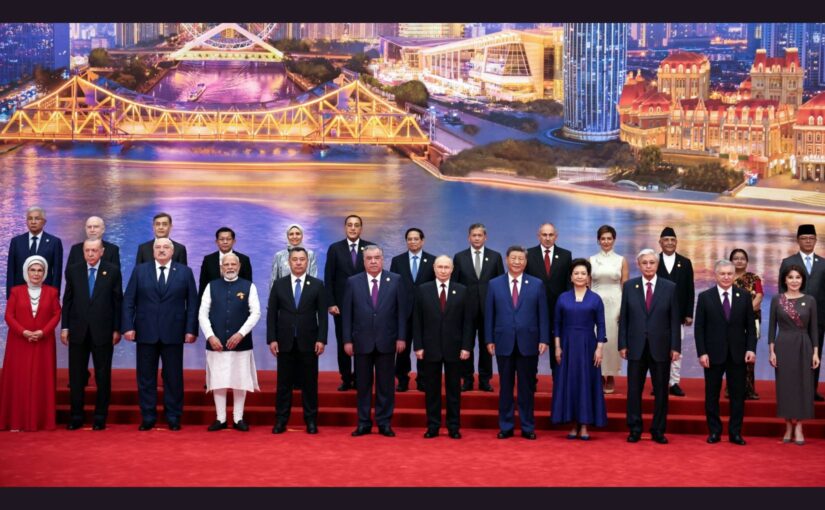
Shanghai Cooperation Organisation prepares for Tianjin Summit

The Foreign Ministers of the Shanghai Cooperation Organisation (SCO) met in the Chinese city of Tianjin on July 15 to make preparations for the SCO Summit, which will be held in the same city on August 31-September 1, immediately prior to China’s celebration of the 80th anniversary of victory in the war of resistance against Japanese aggression and the global anti-fascist war, scheduled for September 3.

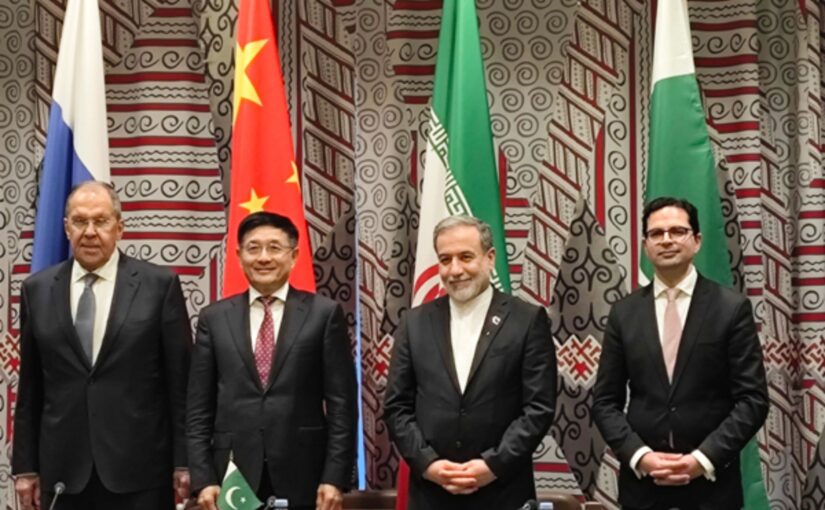
As China currently holds the rotating presidency of the SCO, the meeting was chaired by Chinese Foreign Minister Wang Yi and was attended by:

  • Belarusian Foreign Minister Maxim Ryzhenkov
  • Indian External Affairs Minister Subrahmanyam Jaishankar
  • Iranian Foreign Minister Seyed Abbas Araghchi
  • Kazakh Deputy Prime Minister and Minister of Foreign Affairs Murat Nurtleu
  • Kyrgyz Minister of Foreign Affairs Jeenbek Kulubaev
  • Pakistani Deputy Prime Minister and Foreign Minister Mohammad Ishaq Dar
  • Russian Foreign Minister Sergei Lavrov
  • Tajik Foreign Minister Sirojiddin Muhriddin
  • Uzbek Foreign Minister Bakhtiyor Saidov
  • SCO Secretary-General Nurlan Yermekbayev; and
  • Director of the Executive Committee of the SCO Regional Anti-Terrorist Structure Ularbek Sharsheev

Wang Yi said that over the past 24 years since its founding, under the strategic guidance of the leaders of member states, the SCO has maintained steady and positive growth, continuously expanded cooperation areas, consistently enhanced its international prestige, and increasingly highlighted its strategic value, becoming a reliable anchor for member states to maintain regional stability and achieve common development.

He noted that at present, profound changes unseen in a century unfold at a faster pace, with intertwined and overlapped turbulence and transformation. While a multipolar world and economic globalisation continue to deepen and the Global South stands out with a strong momentum, at the same time, hegemonism and power politics run counter to the tide of progress, the counter-current of protectionism surges, and regional conflicts keep flaring up. Under the new circumstances, member states need to adopt a responsible attitude toward history and the future and reach further consensus on strengthening the SCO.

Wang Yi put forward five proposals for the SCO’s future development:

  • Stay true to its founding mission and carry forward the Shanghai Spirit. Mutual trust, mutual benefit, equality, consultation, respect for diversity of civilisations and pursuit of common development illustrate what a new type of international relations should be.
  • Share weal and woe and consolidate the foundation of security. China is deeply concerned about the situation in the Middle East. The use of force against Iran’s sovereignty and security is a clear violation of international law and undermines the international nuclear non-proliferation regime. Afghanistan is an important member of the SCO family. Efforts should be made to support Afghanistan’s reconstruction and development, and address both symptoms and root causes to realise lasting peace and stability.
  • Pursue mutual benefit and win-win results to drive the engine of development. Development is of paramount importance and holds the master key to all problems.
  • Champion good-neighbourliness and jointly build a beautiful home. Helping one’s neighbours is helping oneself.
  • Uphold the right path and defend fairness and justice. A certain country puts its own interests over the international public good, undermining the common interests of the international community. The SCO should take the 80th anniversary of the founding of the United Nations (UN) as an opportunity to champion the common values of humanity, safeguard the legitimate rights and interests of member states, and work for a more just and equitable global governance system.

At a later press conference, Wang Yi announced that leaders from more than 20 countries and heads of 10 international organisations will attend the August 31-September 1 summit and related events. He added that the meeting made comprehensive preparations for the Tianjin Summit and signed multiple resolutions, including the draft Tianjin Declaration of the Council of Heads of State and the draft SCO Development Strategy for the Next Decade.

In the morning of July 15, prior to the Tianjin meeting, Chinese President Xi Jinping had a group meeting with the foreign ministers and heads of permanent bodies of the SCO at the Great Hall of the People in Beijing.

Continue reading Shanghai Cooperation Organisation prepares for Tianjin Summit

Liu Jianchao meets old friends from Indonesia and Namibia

Liu Jianchao, Minister of the International Department of the Communist Party of China Central Committee (IDCPC), met with visiting former heads of state from Indonesia and Namibia on July 9 and 11 respectively.

On July 9, he met with Megawati Sukarnoputri, Head of the Indonesian Democratic Party of Struggle (PDI-P) and former Indonesian President, who is also a daughter of Indonesia’s founding president Sukarno.

Liu said, this year marks the 75th anniversary of the establishment of diplomatic relations between China and Indonesia. “Your father, President Sukarno, and the older generation of Chinese leaders were the founders of the friendly relations between China and Indonesia. You are also a witness and promoter of the deep friendship between China and Indonesia. We are here today to warmly welcome you and express our respect for the historic contributions made by you and President Sukarno to the development of China-Indonesia relations. The Bandung Conference successfully held under the promotion of the older generation of leaders of the two countries opened a new chapter of unity and cooperation among China, Indonesia and other developing countries.”

He added that the CPC and the PDI-P share similar development concepts and common goals. In today’s world fraught with turmoil and changes, profound changes unseen in a century are accelerating. The CPC is willing to establish a political dialogue mechanism with the PDI-P, deepen exchanges of experience in party building and state governance, explore ways to promote the development of their respective countries and improve global governance, jointly maintain peace and stability in Asia, promote regional development and prosperity, and expand the international voice of developing countries.

Megawati fondly recalled the friendly exchanges between her father, President Sukarno, and China, as well as her own friendly exchanges with the country, saying that every time she comes to China, it feels like coming to a “second home”. This year marks the 70th anniversary of the Bandung Conference. Indonesia is willing to work with China to vigorously carry forward the Bandung Spirit, promote unity and cooperation among developing countries, and jointly address global risks and challenges such as financial stability, climate change, and food security. General Secretary Xi Jinping’s “two centenary goals” led China to the historic achievement of eradicating absolute poverty, effectively safeguarding and improving people’s livelihoods. The PDI-P values the deep friendship with the CPC and is willing to deepen exchanges between the two parties, learn from the CPC’s experiences in medium- and long-term national planning, rural revitalisation, youth development, and addressing population aging, and promote practical cooperation in relevant fields between the two countries to better benefit the two peoples.

On July 11, Liu met with Nangolo Mbumba, former President of Namibia.

Liu highly spoke of Mbumba’s long-term contributions to the development of China-Namibia and China-Africa relations. China-Africa unity represents the strengthening of the Global South and the forces of justice. China is willing to work with Namibia and other Global South countries to further strengthen mutually beneficial cooperation, promote people-to-people friendship, advance mutual learning among civilisations, enhance multilateral coordination, firmly uphold the international system with the United Nations at its core, safeguard each other’s legitimate rights and interests, and inject more positive energy into building a community with a shared future for humanity. The CPC and the SWAPO party of Namibia share similar political ideas and similar struggles, and both have contributed to the cause of human peace and development through their own practices.

Continue reading Liu Jianchao meets old friends from Indonesia and Namibia

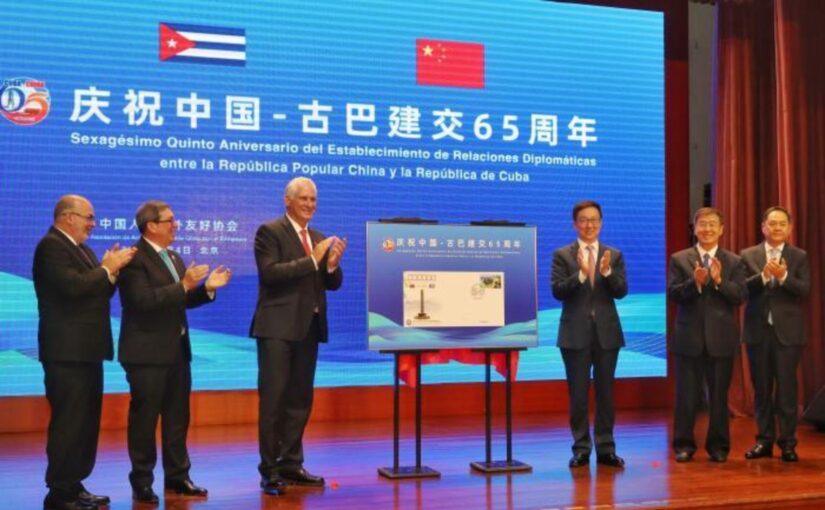
China demands end to US blockade of Cuba, expands scientific collaboration

In the following article for Workers World, Andrew Johnson highlights the deepening solidarity between China and Cuba, rooted in the two countries’ shared socialist project and their opposition to imperialism. The article highlights China’s increasingly assertive international stance, enabled by decades of rapid state-led economic development, which has lifted hundreds of millions out of poverty and positioned China as an economic and technological powerhouse.

China has become Cuba’s largest trading partner and a vital ally as Cuba continues to endure the harsh effects of the decades-long US blockade, which has intensified since the Soviet Union’s collapse. The blockade, described by China’s Foreign Ministry as a “profound disaster” and a violation of international law, prevents Cuba from trading freely and punishes third-party countries for engaging economically with the island.

Demonstrating practical solidarity, China has donated solar panels to bolster Cuba’s energy grid and continues to expand scientific collaboration. A major development is the establishment of a joint biotech lab between the Cuban Center for Immunoassay and China’s Beijing Institute of Technology, focused on research into viruses like Covid-19 and influenza. In February 2025, the first Sino-Cuban biopharmaceutical company opened in Changzi, China, dedicated to producing advanced antibody medicines.

The article frames these moves as part of a broader resurgence of socialist internationalism, with Cuba joining BRICS as a partner state in 2023. The collaboration between the two nations poses a challenge to waning US hegemony and a step toward building a more multipolar world.

Andrew concludes:

China and Cuba both boast a history of scientific achievements, particularly in the biomedical field. Increased scientific cooperation between the two countries is proving to be a powerful basis for the two socialist countries to bilaterally strengthen their solidarity.

The People’s Republic of China (PRC) has a long history of supporting the global working class. This has recently included vital support for and cooperative projects with socialist Cuba that aid both countries’ people. 

Continue reading China demands end to US blockade of Cuba, expands scientific collaboration

Wang Yi praises Malta’s ‘small country, big diplomacy’

Chinese Foreign Minister Wang Yi met in Beijing on 14 July with Malta’s Deputy Prime Minister and Minister for Foreign Affairs and Tourism Ian Borg.

Wang Yi noted that Malta, located at the strategic crossroads of Asia, Europe and Africa, has pursued “small country, big diplomacy”, playing a unique and positive role in safeguarding world peace and stability. China and Malta enjoy traditional friendship, with strong political mutual trust and profound public support. China cherishes its friendship with Malta and appreciates Malta’s long-standing commitment to making the development of relations with China a diplomatic priority.

Ian Borg said that Malta and China enjoy traditional friendship and fruitful cooperation. Malta attaches great importance to its relations with China, always makes developing relations with China a diplomatic priority, firmly adheres to the one-China principle, and actively participates in Belt and Road cooperation. Malta is willing to continue playing an active role in promoting EU-China relations.

Malta and China have a long history of friendship, especially since the two countries established diplomatic relations on 31 January 1972, when Dom Mintoff of the Malta Labour Party was Prime Minister.

That friendship was reflected in a separate meeting the same day with Liu Jianchao, Minister of the International Department of the Communist Party of China (CPC) Central Committee (IDCPC).

Liu stated that the CPC stands ready to maintain institutionalised exchanges with the Labour Party of Malta, strengthen political dialogue, and promote exchanges between think tanks, media outlets, and youth organisations, enhance mutual understanding and trust, and continuously consolidate the social and political foundations of China-Malta relations.

Borg said that he visited China for the first time in 2006 and witnessed the tremendous achievements China has made in economic and social development in recent years. In particular, under the leadership of President Xi Jinping, China has eliminated absolute poverty and realised many dreams. Since the establishment of diplomatic relations between Malta and China, the bilateral relationship has maintained sound development. Malta firmly adheres to the one-China policy, supports and actively participates in the Belt and Road cooperation, and is willing to work with China to further tap the potential of bilateral relations and strengthen cooperation in economy, trade, ports, new energy vehicles, climate change, and tourism. Despite different sizes and social systems, Malta and China have similar views on many issues.

The Labour Party is willing to strengthen exchanges and dialogues with the CPC, promote youth exchanges, and pass on the friendship between Malta and China.

Borg paid an official visit to China, July 13-16.

A review of the historical significance of Malta-China friendship may be read here. The following articles were originally published on the websites of the Chinese Foreign Ministry and the IDCPC.

Wang Yi Holds Talks with Malta’s Deputy Prime Minister and Minister for Foreign Affairs and Tourism Ian Borg

July 14 (MFA) — On July 14, 2025, Member of the Political Bureau of the CPC Central Committee and Foreign Minister Wang Yi held talks with Malta’s Deputy Prime Minister and Minister for Foreign Affairs and Tourism Ian Borg in Beijing.

Wang Yi noted that Malta, located at the strategic crossroads of Asia, Europe and Africa, has pursued “small country, big diplomacy”, playing a unique and positive role in safeguarding world peace and stability. China and Malta enjoy traditional friendship, with strong political mutual trust and profound public support. China cherishes its friendship with Malta and appreciates Malta’s long-standing commitment to making the development of relations with China a diplomatic priority. China is ready to maintain high-level political mutual trust, mutual respect, mutual understanding and mutual support with Malta, honor commitments on issues concerning each other’s core interests and major concerns, deepen mutually beneficial cooperation in such areas as trade, investment, culture and tourism, science and education, and maintain sound communication and coordination in international affairs.

Continue reading Wang Yi praises Malta’s ‘small country, big diplomacy’

US Congressman claims young people’s rejection of Israeli war crimes is a Chinese plot

We are pleased to republish the following article by Alex Lo, which addresses one of the latest anti-China smears emanating from US political circles.

Democrat Congressman Jared Moskowitz says that China is following the ‘Nazi playbook’ by using TikTok to ‘brainwash’ American youth. Alex Lo writes:

“China has been accused of doing many nefarious things in the United States, but deliberately spreading anti-semitism?

“That’s the claim made by Democrat Congressman Jared Moskowitz in an official hearing. You have to admit facts-free China criticism in the US gets more inventive by the day.”

Moskowitz said: “This is not going well for Jews right now, and it isn’t getting better. We have not yet peaked… We are losing the youth of this country. We are losing them on TikTok, which is owned by a foreign country… The Chinese plan is to get us angry and divisive. And the Chinese plan is to start with the easiest plan possible, and that is us.”

Alex’s retort is clear and to the point: “There is a simple reason why many American youth are becoming critical of Israel – they read the news.”

Writing on July 6, he cites a number of reports published since the start of June including:

  • “Israeli air strike kills Gaza hospital director along with his family – Israeli attacks have killed 70 healthcare workers over the past 50 days.”
  • “Israeli forces kill 112 Palestinians in Gaza over 24 hours – At least 16 were reported killed while seeking aid.”
  • “Israel has demolished 1,000 Palestinian homes in West Bank camps since January”.

Others he cites were reported by Associated Press, the Financial Times and the Israeli newspaper Haaretz. He concludes:

“Anti-semitism has been a scourge responsible for some of the worst horrors in history and remains a problem today. But by committing genocide, Israel is making itself a pariah state.”

Alex Lo is a regular columnist for Hong Kong’s South China Morning Post since 2012. A journalist for 25 years, he has worked for various publications in Hong Kong and Toronto, Canada, as a news reporter and editor. He has also lectured in journalism at the University of Hong Kong.

The article was originally published in the South China Morning Post and is reproduced with the kind permission of the author.
China has been accused of doing many nefarious things in the United States, but deliberately spreading antisemitism?

That’s the claim made by Democrat Congressman Jared Moskowitz in an official hearing. You have to admit facts-free China criticism in the US gets more inventive by the day.

Beijing has been criticised for allowing antisemitic content without online censorship within China, and TikTok has been accused – the big reason it faces being banned – of platforming antisemitic criticism of Israel in the US. But equating the two explicitly is pretty new.

“This is not going well for Jews right now, and it isn’t getting better. We have not yet peaked,” Moskowitz said.

“We are losing the youth of this country. We are losing them on TikTok, which is owned by a foreign country that the president has now extended beyond what the law has allowed.”

He was referring to Donald Trump’s repeated extension of the deadline for a total ban or a forced sale of TikTok required by US law.

Moskowitz continues: “I don’t want TikTok to go away but I want it to get out of the hands of the Chinese. They are doing the Nazi playbook. They are dividing us. They are funding. They don’t need to do it with B2 bombers.

“That’s not what the Chinese plan is. The Chinese plan is to get us fighting among ourselves. The Chinese plan is to get us angry and divisive. And the Chinese plan is to start with the easiest plan possible, and that is us. Until we stop this ‘who did what to who’ stuff, we are not going to solve this.

“Jews are losing their usual allies. Those allies that we’ve had for decades and decades, groups that Jews have stood up for, we are losing them by the moment, especially among young people.

“This [congressional] hearing ain’t gonna fix s***. This is a virus that is spreading; until we are serious about what’s going on online and the brainwashing of our kids, this is going to get worse and more people are going to die in this country.”

There is a simple reason why many American youth are becoming critical of Israel – they read the news. Here are some reports since the start of June:

“Israeli air strike kills Gaza hospital director along with his family – Israeli attacks have killed 70 healthcare workers over the past 50 days.”

“Israeli forces kill 112 Palestinians in Gaza over 24 hours – At least 16 were reported killed while seeking aid.”

“Israel has demolished 1,000 Palestinian homes in West Bank camps since January”.

“UN report accuses global corporations of profiting from Gaza genocide.”

“Gazans survive among unexploded bombs – ‘Uninhabitable’ according to the US government, the Gaza Strip is strewn with undetonated explosives.”

“Hundreds of Palestinian families flee West Bank camp ahead of Israeli demolition orders.”

“West Bank town becomes ‘big prison’ as Israel fences it in”.

This one is from Haaretz, a leading liberal Israeli newspaper, so it’s not fake news: “‘It’s a killing field’: IDF aoldiers ordered to shoot deliberately at unarmed Gazans waiting for humanitarian aid.”

This one is from the Associated Press, so it’s not fake news either: “US contractors say their colleagues are firing live ammo as Palestinians seek food in Gaza”.

This news summary is from +972, an Israeli online news magazine: “Near-daily Israeli massacres at food distribution sites have killed over 400 Palestinians in the past month alone. Survivors describe stepping over corpses to get their hands on a bag of flour: ‘What choice do we have?’”

This is an investigative report by the Financial Times about a leading global firm, Boston Consulting Group: “BCG modelled plan to ‘relocate’ Palestinians from Gaza – Consulting firm had multimillion-dollar role in contentious new aid scheme for shattered enclave”.

Antisemitism has been a scourge responsible for some of the worst horrors in history and remains a problem today. But by committing genocide, Israel is making itself a pariah state.

Wang Yi pursues regional cooperation and friendship in Kuala Lumpur

Chinese Foreign Minister Wang Yi attended the China-ASEAN [Association of South East Asian Nations] Foreign Ministers’ Meeting, the ASEAN Plus Three Foreign Ministers’ Meeting, the East Asia Summit Foreign Ministers’ Meeting and the ASEAN Regional Forum Foreign Ministers’ Meeting in Kuala Lumpur, Malaysia, from July 10-11.

The China-ASEAN Foreign Ministers’ Meeting was held on July 10. Wang Yi said that China and ASEAN share similar visions for development, common demands, and converging interests. China regards ASEAN as a priority in its neighbourhood diplomacy and a pioneer area for building a community with a shared future for humanity. The two sides should support each other and help each other succeed in advancing the modernisation process of Asia.

He briefed on the achievements of China-ASEAN cooperation and put forward four suggestions:

  • To act as a model in defending international fairness and justice. The two sides should firmly uphold the international system with the United Nations at its core and the international order underpinned by international law.
  • To act as a model for safeguarding regional peace and stability. In the turbulent world today, peace and stability in the region are particularly precious and must be firmly protected. No geopolitical conflicts or bloc confrontations should be allowed to infiltrate the Asian home. China is willing to take the lead in signing the Protocol to the Treaty on the Southeast Asia Nuclear Weapon-Free Zone. The South China Sea is a shared home for countries in the region, not an arena for major power rivalry. China is ready to work with ASEAN countries to expand cooperation in areas such as marine environmental protection, navigation safety, maritime law enforcement, and key marine infrastructure, and jointly foster a new narrative of cooperation, stability, and friendship in the South China Sea. The two sides should fully implement the Declaration on the Conduct of Parties in the South China Sea, advance consultations on a Code of Conduct in the South China Sea (COC), and always keep the initiative on the South China Sea issue in the hands of regional countries.
  • To set an example of conducting mutually beneficial and win-win cooperation. China is ready to work with ASEAN to jointly build the Version 3.0 China-ASEAN Free Trade Area, promote high-quality implementation of the Regional Comprehensive Economic Partnership (RCEP), and create a high-level free trade network. China will continue to take the high-quality Belt and Road cooperation as the main platform to strengthen connectivity and cooperation in industrial and supply chains with ASEAN, and create highlights of cooperation in artificial intelligence, digital transformation, and clean energy.
  • To set an example for promoting inclusiveness and mutual learning. China is willing to work with ASEAN countries to continue advocating for dialogue, exchanges and mutual learning among different civilisations, and jointly build an Asian family that promotes harmony, inclusiveness, and respect for differences.

Attending the ASEAN Plus China, Japan, Republic of Korea (ROK) (ASEAN Plus Three – APT) Foreign Ministers’ Meeting, Wang Yi noted that since the establishment of the APT cooperation mechanism, all parties have continuously strengthened their crisis response capabilities, advanced the process of regional economic integration, and fostered new drivers for development through joint efforts. Cooperation in various areas has yielded fruitful results, helping East Asia become the most dynamic region in the world.

The focus on development and commitment to cooperation is the general trend and mainstream, though challenges persist, including the impact of unilateralism and protectionism, and the abuse of tariffs by a certain major country. The more complex the situation, the more the APT cooperation should stay undisturbed, work in solidarity, and keep strengthening the momentum for cooperation, enhancing development resilience, and continuously advancing the process of regional integration to make the shared home a better place.

At the 32nd ASEAN Regional Forum (ARF) Foreign Ministers’ Meeting, Wang Yi noted that security is closely connected with development. The rapid development of the Asia-Pacific benefited from a generally peaceful and stable regional environment, which should be cherished all the more.

Wang Yi stated that the world today has entered a period of turbulence and transformation. To ensure the stability and development of the Asia-Pacific and to enable the ARF to continue playing its due role, China proposes the following: uphold the vision of common, comprehensive, cooperative and sustainable security; work to build a balanced, effective and sustainable regional security architecture; actively build a model of security for Asia that features sharing weal and woe, seeking common ground while shelving differences, and prioritising dialogue and consultation; and blaze a new path toward security that features dialogue over confrontation, partnership over alliance, and win-win results over zero-sum game.

There is no such thing as “absolute security” in the world, and no one’s security is superior to that of others. Creating division and confrontation through a zero-sum mindset runs counter to the goal of maintaining security. It is essential to respect the sovereignty and territorial integrity of all countries, uphold peaceful settlement of disputes, oppose the threat or use of force, and address both symptoms and root causes to eliminate the sources of conflict and war. This year marks the 70th anniversary of the Bandung Conference. It is important to draw wisdom from the Bandung Spirit, seek common ground while overcoming differences, and take seriously and accommodate the legitimate security concerns of all parties.

At the 15th East Asia Summit Foreign Ministers’ Meeting, Wang Yi stressed the need for a return to dialogue. He said the original intention of the Summit is to carry out constructive dialogue and enhance strategic mutual trust. However, certain countries outside the region have deviated from this track in recent years, frequently using the Summit platform to hype up differences, attack other countries, and interfere in internal affairs. Wang Yi expressed the hope that all parties can respect each other, communicate in good faith, and focus on increasing understanding and cooperation.

China supports the ASEAN-centred regional cooperation architecture, firmly upholds the multilateral trading system, builds a high-level regional free trade network, and promotes regional integration. China opposes bringing Cold War mentality and bloc confrontation into the region and rejects attempts to create competing structures or exclusive “small circles”.

Wang Yi emphasised that the root cause of tensions in the Taiwan Strait lies in the increasingly rampant separatist activities of ”Taiwan independence” and the connivance and support by external forces. Some claim to safeguard peace and stability across the Taiwan Strait, but if they truly care about peace and stability across the Taiwan Strait, they must resolutely stop the “Taiwan independence” forces from expanding. Some say that the status quo of the Taiwan Strait should not be changed, but the fact that Taiwan and the mainland both belong to one and the same China is the fundamental status quo of the Taiwan Strait. He expressed the hope that all countries will continue to unequivocally uphold the one-China principle, oppose any form of “Taiwan independence”, and support China’s reunification.

Wang Yi also held a number of bilateral meetings on the sidelines of the above meetings.

On July 11, he met with Malaysian Prime Minister Anwar Ibrahim in Putrajaya.

Anwar Ibrahim asked Wang Yi to convey his cordial greetings to President Xi Jinping, stating that China is a trustworthy friend and partner of Malaysia. President Xi Jinping’s successful visit this year is a significant event in the history of Malaysia-China relations. President Xi Jinping’s care and thoughts about the future and destiny of the world have earned the heartfelt respect of the Malaysian government and people.

Wang Yi said that the tide of history always moves forward, and the rise of the Global South is unstoppable. As developing countries, emerging economies, and key representatives of the Global South, China and Malaysia should join hands to address challenges and seek development and revitalisation. The United States’ unilateral imposition of high tariffs is irresponsible and unpopular. China will always stand with the vast number of developing countries.

In a separate meeting with Malaysian Foreign Minister Mohamad Hasan, Wang Yi said that the two sides should work together to deliver on the important common understandings reached between the leaders of the two countries, put into practice the Belt and Road cooperation plan, strengthen cooperation on economy, trade, investment and connectivity, advance key projects such as the East Coast Rail Link and the “Two Countries, Twin Parks”, deepen cooperation in frontier areas, seize the opportunities of the new industrial revolution, and jointly build a regional highland for cooperation on new quality productive forces. The two sides should continue to successfully hold the “Confucian-Islamic Civilisational Dialogue” and ensure the implementation of the mutual visa exemption agreement that will soon come into effect to strengthen people-to-people exchanges and consolidate the public foundation.

The United States has imposed high tariffs on ASEAN countries simply based on a single letter, which is a typical act of unilateralism and bullying that no country would recognise or support. China’s resolute countermeasures are not only to safeguard its own interests, but also to defend the common interests of all countries, including ASEAN member states. China is ready to strengthen cooperation with ASEAN to jointly uphold the multilateral trading system, keep global industrial and supply chains stable, and promote a universally beneficial and inclusive economic globalisation.

Mohamad Hasan said that under the current circumstances, it is clear who is a true friend. In the face of tariffs and other issues, Malaysia will not just consider its own interests, nor will it sacrifice the interests of third parties, as that is not the ASEAN way.

Meeting with Russian Foreign Minister Sergei Lavrov, Wang Yi said that in May this year, President Xi Jinping paid a successful visit to Russia and attended the celebrations marking the 80th anniversary of the victory in the Great Patriotic War of the Soviet Union, commemorating history together with the peace-loving people of all countries and opening up the future. Last month, the two heads of state had a phone call, jointly sending a strong voice of China and Russia on international and regional hotspot issues. China is ready to work with Russia to fully implement the common understandings reached between the two heads of state, continuously elevate the level of China-Russia strategic coordination, safeguard the security and development interests of both countries, and support each other’s development and rejuvenation.

Sergei Lavrov, on behalf of Russia, extended congratulations on the 104th anniversary of the founding of the Communist Party of China (CPC). The two countries should remain vigilant against attempts by a certain major power to sow division and provoke confrontation in the region. Russia will fully support China in assuming the rotating presidency of the Shanghai Cooperation Organisation, jointly prepare for the next phase of high-level exchanges and cooperation in various fields, and strengthen communication and coordination within frameworks such as BRICS.

Wang Yi thanked Russia for its congratulations on the 104th anniversary of the founding of the CPC, saying that this reflects the traditional friendship between the two sides. The CPC has more than 100 million members, making it the world’s largest political party and demonstrating an ever-growing vitality and vigor. As General Secretary Xi Jinping pointed out, dedicated to the great long-term cause of the Chinese nation, the CPC at its centenary is right in its prime.

Meeting with Deputy Prime Minister and Foreign Minister of Viet Nam Bui Thanh Son, Wang Yi said that in April this year, General Secretary and President Xi Jinping paid a successful state visit to Viet Nam, during which the top leaders of the two Parties and the two countries made strategic plans to deepen the China-Viet Nam community with a shared future that carries strategic significance. At present, bilateral cooperation in various fields continues to expand, connectivity development is being advanced across the board, and people-to-people exchanges are delivering numerous highlights.

China welcomes Viet Nam to become a BRICS partner country and supports Viet Nam in joining the big family of the Shanghai Cooperation Organisation at an early date to jointly uphold true multilateralism and safeguard international fairness and justice. China always opposes economic and trade bullying as well as tariff coercion, and advocates for resolving economic, trade and tariff issues through equal-footed dialogue. China stands ready to work with Viet Nam to jointly uphold multilateral trade rules and systems and safeguard the legitimate interests of all countries through solidarity and self-reliance.

Meeting with Cambodian Deputy Prime Minister and Minister of Foreign Affairs and International Cooperation Prak Sokhonn, Wang Yi said that the China-Cambodia friendship has withstood the tests of international changes and remains rock-solid. In April this year, President Xi Jinping paid a historic visit to Cambodia, which was of milestone significance. The two leaders jointly announced the building of an all-weather China-Cambodia community with a shared future in the new era, and both sides have once again taken the lead in building a community with a shared future for humanity. Facing the volatile and turbulent international situation, China is ready to be a trustworthy friend and partner of Cambodia.

He stressed that the United States imposing high tariffs on Cambodia and other Southeast Asian countries is an attempt to deprive all parties of their legitimate rights to development. He expressed confidence that Southeast Asian countries are capable of coping with the complex situation, upholding principled positions, and safeguarding their own interests as well as the common interests of all parties.

Prak Sokhonn said that China is Cambodia’s most reliable friend. President Xi Jinping’s visit to Cambodia this year was very successful, and both sides decided to build an all-weather Cambodia-China community with a shared future in the new era. He expressed gratitude for China’s selfless assistance in Cambodia’s economic and social development and the willingness to follow through on the common understandings reached between the leaders of the two countries, and to deepen pragmatic cooperation in trade, infrastructure and other fields. He thanked China for giving zero-tariff treatment for 100 percent tariff lines from Cambodia, calling it an act of friendship and brotherhood and a great help to Cambodia, which stands in stark contrast to the 36 percent tariff imposed by the United States on Cambodia. Cambodia is willing to resolve differences with the United States through negotiations but will neither abandon its principles and interests nor sacrifice the interests of third parties.

Wang Yi listened to Prak Sokhonn’s briefing on the situation at the Cambodia-Thailand border. He said that although Cambodia and Thailand hold different positions, both sides are willing to manage the situation and ease tensions. Noting that Cambodia and Thailand are neighbours that cannot be moved away, Wang Yi expressed the belief that both sides will surely uphold the spirit of valuing the primacy of peace and forging friendships with neighbours to properly handle the issue. China will maintain an impartial, fair and just stance, respond to the needs of the parties concerned, and play a constructive role in this regard.

Meeting with Thai Foreign Minister Maris Sangiampongsa, Wang Yi called on the two sides to accelerate the construction of the China-Thailand Railway and give play to the demonstration effect of major projects to promote the implementation of the vision of interconnected development of China, Laos and Thailand. He said that the abuse of tariffs by the United States undermines the free trade system and disrupts the stability of the global industrial and supply chains. He expressed the belief that Thailand and other ASEAN countries will safeguard their respective legitimate interests, resist unilateralism, power politics and bullying acts, deepen the building of a community with a shared future among Lancang-Mekong countries, and promote the sound development of East Asian cooperation.

Wang Yi emphasised that both Thailand and Cambodia are China’s good neighbours and good friends. Regarding the border dispute between Thailand and Cambodia, China hopes that both sides will act in goodwill towards each other and properly resolve the issue through friendly dialogue and consultation, so as to deescalate the situation and restore stability at an early date. China will uphold an objective and impartial stance and play a constructive role in promoting harmonious coexistence between Thailand and Cambodia.

Maris Sangiampongsa said that China is a reliable friend of Thailand. Over the past 50 years since the establishment of diplomatic relations, the two sides have maintained mutual trust and respected each other’s core interests. Thailand and China continue to be as close as one family, and new results have been achieved constantly in the building of a Thailand-China community with a shared future.

Meeting with Sri Lankan Foreign Minister Vijitha Herath, Wang Yi said that China and Sri Lanka enjoy a traditional friendship. In January this year, President Xi Jinping held fruitful talks with President Anura Kumara Dissanayake, during which they reached important common understandings on deepening the China-Sri Lanka strategic cooperative partnership and jointly building a China-Sri Lanka community with a shared future, charting the course and providing guidance for the development of China-Sri Lanka relations. China is ready to work with Sri Lanka to promote the development of the strategic cooperative partnership featuring sincere mutual assistance and ever-lasting friendship between the two countries.

The two sides should deepen high-quality Belt and Road cooperation and practical cooperation in various fields. Both sides should jointly implement the two flagship projects for the comprehensive development of Colombo Port City and Hambantota Port, accelerate the negotiations on the China-Sri Lanka Free Trade Agreement, and create new growth drivers for cooperation in areas such as green energy, digital economy, modern agriculture and marine economy. China-Sri Lanka maritime cooperation is mutually beneficial and win-win. It does not target any third party and should not be disrupted by any third party.

Continue reading Wang Yi pursues regional cooperation and friendship in Kuala Lumpur

A nuclear free world is the answer to the war drive against China – Sophie Bolt

In the below article, which was originally published by China Daily on June 27, Sophie Bolt, the General Secretary of Britain’s Campaign for Nuclear Disarmament (CND), reports on the mood of the June 21-22 Hague summit, held to counter the 77th annual meeting of NATO, in which peace campaigners from over 17 countries participated.

Sophie notes that: “The NATO summit endorsed a higher defence spending of five percent of GDP in response to a demand made by US President Donald Trump. It is clear that all Trump is interested in is securing funding for his global war. As the largest security alliance in the world, NATO’s military spending amounted to $1,506 billion last year, which was 55 percent of the global military expenditure, according to the Stockholm International Peace Research Institute.”

Some key European members of NATO, including Britain, are recklessly whipping up international tensions to justify these huge spending hikes. The British government’s newly published Strategic Defence Review asserts a “landmark shift” in the UK’s nuclear weapons use and Britain has also reasserted its role within the trilateral AUKUS treaty with the US and Australia, pledging the construction of nuclear-powered submarines to be “shared” with non-nuclear weapons state Australia, which will only further increase tensions in the Asia Pacific.

According to Sophie: “Successive NATO Strategic Concepts characterise China as a strategic competitor and a threat to NATO’s interests, security and values. In short, European NATO states must pay for Trump’s global war drive against China… On the one hand, we face a future Europe bristling with even more nuclear weapons and the constant threat of nuclear confrontation with Russia. On the other hand, we see a global confrontation led by the US against China, which also risks nuclear conflict.”

Outlining the fightback, Sophie notes that: “Protests at US bases like RAF Lakenheath are growing in frequency, size and intensity. In April, hundreds of people from across the country, the US, Japan, the Republic of Korea and Europe took part in a debate and nonviolent protest at the base… The counter-summit in The Hague reflected this international solidarity and reasserted the need to build a nuclear-free world based on peace and global cooperation.”

Although it was billed as a demonstration against NATO’s “warmongering” and its huge military spending drive, the swelling opposition to Israel’s ongoing military operations in the Gaza Strip and to the bombing of Iran by Israel and the United States was clearly palpable.

A summit to counter the 77th annual meeting of NATO, a 32-nation security alliance, was held on Saturday and Sunday in The Hague, in which people from over 17 countries participated.

The NATO summit endorsed a higher defense spending of 5 percent of GDP in response to a demand made by US President Donald Trump. It is clear that all Trump is interested in is securing funding for his global war.

As the largest security alliance in the world, NATO’s military spending amounted to $1,506 billion last year, which was 55 percent of the global military expenditure, according to the Stockholm International Peace Research Institute.

Some European countries and key NATO members, like the United Kingdom, are recklessly whipping up international tensions to justify these huge spending hikes.

Over 800 billion euros ($928 billion) has reportedly been secured for a massive European rearmament program. New US B61-12″tactical” nuclear bombs — designed for use on the battlefield — are reported to be already forward-deployed to NATO bases across Europe.

Meanwhile, French President Emmanuel Macron’s nuclear deterrent proposal for Europe risks the deployment of Rafale jets armed with nuclear weapons in Poland — on Russia’s border.

UK’s Prime Minister Keir Starmer has put a NATO-first defense policy at the heart of his government’s political program.

The newly published Strategic Defence Review asserts a “landmark shift” in the UK’s nuclear weapons use “to war-fighting readiness to deter threats and strengthen security in the Euro Atlantic area”.

The UK reasserts its role within the trilateral AUKUS treaty with the US and Australia, pledging the construction of nuclear-powered submarines to be “shared” with nonnuclear weapons state Australia, which will only further increase tensions in the Asia Pacific.

The review also recommends “enhanced UK participation in NATO’s nuclear mission”. This reflects talks between Starmer and Trump regarding Britain’s purchase of nuclear-capable F-35A fighter jets, designed to launch the US B61-12 nuclear bombs. This increases the likelihood of these bombs being stationed at RAF Lakenheath in the UK, and also opens up the possibility of other US bases being upgraded.

While countries such as France and Germany have been trying to present the war drive as an alternative to Trump’s militarism, NATO Secretary-General Mark Rutte has made absolutely clear this is all about ensuring that US plans to shift toward Asia are “coordinated with European allies”. Successive NATO Strategic Concepts characterize China as a strategic competitor and a threat to NATO’s interests, security and values. In short, European NATO states must pay for Trump’s global war drive against China.

For those who participated in the debates at the counter-summit in The Hague over the weekend, there is great fear and outrage over the prospects of a possible nuclear war.

On the one hand, we face a future Europe bristling with even more nuclear weapons and the constant threat of nuclear confrontation with Russia. On the other hand, we see a global confrontation led by the US against China, which also risks nuclear conflict.

And Trump’s bombing of Iran indicates how dangerous the world can be under his leadership.

In response, there is an acceleration in the opposition to this disastrous direction. Hundreds of thousands of people took to the streets of Rome, Italy and the UK. It is estimated that some 300,000 took part in demonstrations — almost all supporting Palestine and voicing their concerns over strikes on Iran.

Alongside this growing opposition to the austerity accompanying militarism, there is also a rising opposition to Britain’s so-called special relationship with the US.

Polling shows an increasing opposition to US nuclear weapons being based in Britain — now at 61 percent of the population.

People rightly see the UK’s military alliance with the US as deeply dangerous that risks drawing us into more wars. At a time of heightened nuclear threats, stationing US nuclear weapons in Britain puts us all on the nuclear frontline.

There is also huge anger at the undemocratic nature of hosting US bases. There has been no debate in the British Parliament on whether the UK should host these nuclear bombs and absolutely no consultation with residents, who will be at immediate risk if there is a nuclear attack or nuclear accident.

Protests at US bases like RAF Lakenheath are growing in frequency, size and intensity. In April, hundreds of people from across the country, the US, Japan, the Republic of Korea and Europe took part in a debate and nonviolent protest at the base.

Certainly, the counter-summit in The Hague reflected this international solidarity and reasserted the need to build a nuclear-free world based on peace and global cooperation.

High-level delegation of Chinese Marxists visits London

On 15 July 2025, Friends of Socialist China, in collaboration with the International Manifesto Group and the Communist Party of Britain, hosted a round-table discussion with a delegation from the Academy of Marxism at the Chinese Academy of Social Sciences (CASS) at London’s Marx Memorial Library.

Introducing the discussion, Friends of Socialist China co-editor Carlos Martinez noted that the Academy of Marxism is the leading Marxist think tank in China, and that it plays an important role in developing the ideological principles underpinning policymaking in China. He emphasised the importance of engaging with Chinese Marxists, who are making some of the most important contributions to the development of Marxism in the 21st century. Carlos also highlighted the need for people-to-people ties, at a time when Western governments are pursuing policies of containment, encirclement, decoupling and New Cold War.

The five delegates from CASS were led by Professor Chen Zhigang, Vice President of the Academy of Marxism, who gave a detailed presentation on the development of Chinese Marxism, stating that it’s because of Marxism that China has been able to achieve remarkable successes. Chen discussed the meaning and relevance of Xi Jinping Thought, as the latest development of Marxism in China; a Marxism adapted to the conditions prevailing in the 21st century and the array of new challenges that present themselves.

Professor Chen pointed to what should be a well-understood and obvious truth: that as society develops, theory must develop along with it. “If Marxism does not evolve, its vitality will be limited”. He also noted that Socialism with Chinese Characteristics has thrived by combining Marxist ideas with Chinese culture and traditions, hence Chinese people do not think of Marxism as a foreign phenomenon.

Regarding the global applicability of Xi Jinping Thought, Chen said that China seeks to offer Chinese wisdom towards the solution of problems of global governance. The concept of a Global Community of Shared Future, the Belt and Road Initiative, the Global Development Initiative, the Global Civilisation Initiative and the Global Security Initiative are all based on the principles of mutual learning, exchanges and dialogue, and all seek to promote peace, sustainability, development, cooperation and friendship.

The discussion then opened up to the 20 British participants. There was a rich and lively exchange of ideas, with contributions on topics including how to cultivate a new generation of Marxist thinkers; the need to overcome dollar hegemony; the significance of the concept of Common Prosperity; the relevance of China’s development model for the Global South; China’s foreign policy; the need to develop a more profound understanding of Chinese socialism in the West; and the reasons why socialist revolution has succeeded first in relatively underdeveloped countries rather than the advanced capitalist countries of Western Europe and North America.

Following the discussion, the CASS delegation was given a tour of the Marx Memorial Library, after which the delegates joined the British comrades for a dinner at Hiba Palestinian restaurant in London.

The following is a short report by Bhabani Shankar Nayak, who participated in the discussion.

An Evening with Chinese Comrades in London

As dusk settled over the cloudy British sky above London, summer humidity lingered in the air, clinging to the busy streets and concrete jungle of a decadent city shaped by colonial legacies, capitalist wealth and imperialist power. A few drops of rain brought a sense of calm to a mind otherwise clouded by the busyness of the day. Comrades gathered to reflect on developments in China, aiming to demystify the anti-Chinese propaganda that seeks to undermine the revolutionary achievements of the Chinese people and to expose the hypocrisy of Western capitalist development models, which prioritise profit over people.

The media trials and various forms of anti-Chinese propaganda reveal the racist, colonial, capitalist and imperialist character of American, British and European capitalism and their ruling elites. They prefer to see China as merely the world’s factory and the Chinese people as passive workers, incapable of developing revolutionary consciousness for their own emancipation. As a result, Western media and its backers promote fraudulent and illiberal visions of democracy, wrapped in the illusion of individual freedom and the delirium of the American Dream.  In contrast, the Chinese system promotes a form of decentralised working-class democracy that guides China’s unique path of democratic, socialist and peaceful development. At the heart of this system—led by the Communist Party of China—is the pursuit of human emancipation from poverty, hunger, homelessness, illiteracy, unemployment, insecurity, and everyday risks.

On 15th of July 2025, Friends of Socialist China in the UK, led by Comrade Carlos Martinez and Comrade Keith Bennett, organised a roundtable at the Marx Memorial Library in London. The event brought together comrades, researchers, and professors from the Institute of Marxism at the Chinese Academy of Social Sciences (CASS)—a research institution established by the Communist Party of China (CPC) in 2005. Comrade Professor Chen Zhigang, Vice President of the Institute, led the discussion, offering valuable insights into the workings of the CPC and its role in China’s development. He addressed the challenges facing rural development in China and elaborated on the concept of socialism with Chinese characteristics, the guiding principles of Xi Jinping thoughts, and its fundamental opposition to the Western model of globalisation and imperialist agendas. Professor Chen advocated for a model of inclusive globalisation that benefits all nations.

Throughout the discussion, he reiterated China’s commitment to building an ecological civilisation grounded in world peace and inclusive development. Comrade Han Dongjun translated Professor Chen’s remarks, while comrades Liu Yan, Fang Tao, and Zhuo Mingliang highlighted various achievements of China under the leadership of the CPC.

During the roundtable, comrades from the UK posed a range of ideological questions on various issues, which were thoughtfully addressed by the delegates from CASS. The discussion concluded with a shared commitment to developing and coordinating a new generation of Marxist thinkers, intellectuals, and organisations dedicated to the empowerment and emancipation of working people around the world. It was agreed that more such exchanges should be organised to help the Western left gain a deeper understanding of Chinese socialism and its revolutionary praxis.

The roundtable concluded at the Hiba Restaurant in Holborn, where the Chinese comrades shared their revolutionary praxis in a relaxed social setting over generous portions of Palestinian and Lebanese food, accompanied by Gaza Cola drinks, real ales, and a few bottles of white and red wine. The Chinese comrades represented a range of age groups and held various political and professional positions within their organisational hierarchy. Yet, there was absolutely no observable power distance among them. They interacted with one another as equals—with warmth, confidence, and camaraderie—sharing food and conversation as comrades and friends. This experience laid bare the hollowness of Hofstede’s cultural dimensions, which are widely taught in universities around the world. These frameworks are not only flawed but stem from a supercilious, Eurocentric misreading of Chinese society, politics, and culture. The revolutionary praxis of the Communist Party of China has transformed a historically feudal, unequal and poverty ridden society into one that is modern, progressive, prosperous, and fundamentally egalitarian.

This revolutionary praxis has enabled China to emerge as a bankable state for the working poor in both rural and urban areas, while offering emancipatory hope to working people around the world. From toys to supercomputers, from agricultural science to space technology, from needles to iPhones, and from modern medicine to traditional and alternative health practices, China’s development demonstrates that there is a viable alternative to capitalism, imperialism, and their hegemonic control over people and the planet. Yet, imperialist powers and their capitalist regimes remain determined and working actively every day to undermine China, its people, and their revolutionary achievements.

As the evening came to an end and we prepared to leave Hiba Restaurant, Comrade Professor Chen and Comrade Zhuo Mingliang warmly wished, “Goodbye, comrade,” followed by the words, “Long live Indo-China friendship.” This self-reflective, harmonious and memorable evening with Chinese comrades in London renewed the collective commitment to the revolutionary and emancipatory politics of the working class—and to the belief in its potential to offer a genuine alternative to racialised capitalism and its warmongering, imperialist hegemony, which undermine peace and disempower people. In contrast, China stands as a model of peaceful and progressive development, dedicated to the empowerment and emancipation of working people.

Vietnam to honour China and other traditional friends on 80th national day

Vietnam’s National Defence Ministry has invited the military of five countries – Russia China, Laos, Cambodia, and Belarus – to join the parade in the ceremony marking the 80th August Revolution Day and the 80th National Day, to be held on September 2 in the capital Hanoi.

The ministry has also sent invitations to defence ministers of eight countries – Russia, China, Laos, Cambodia, Cuba, Belarus, Kazakhstan and Azerbaijan – to attend the ceremony, according to Deputy Minister, Senior Lieutenant General Hoang Xuan Chien.

The Vietnam News Service reported on July 10 that the invitation of military units to participate in the parade is a gesture of friendship, solidarity and the close bonds between the people and army of Vietnam and their traditional allies and further noted that on the occasion of the 50th anniversary of the liberation of the South and National Reunification (April 30 2025), the defence ministries of China, Laos and Cambodia sent military personnel to take part in the parade held in Ho Chi Minh City. This was the first time for Vietnam to invite foreign troops to participate in a national military parade.

Also on July 10, the defence ministry held a meeting with relevant bodies to expedite the construction of a monument dedicated to the soldiers from foreign countries who supported Vietnam during its resistance wars, to be located at the Vietnam Military History Museum.

The memorial complex will include a general symbol commemorating the support and sacrifices of foreign military experts, made of bronze and designed by Vietnam, as well as separate monuments honouring military experts from the Soviet Union/Russia, China, Laos, Cambodia and Cuba, also made of bronze, that will be either designed and constructed by the respective countries or by Vietnam upon request, and a greenstone relief designed and built by Vietnam.

The following article was originally published in Vietnam News.

HÀ NỘI — Việt Nam’s National Defence Ministry has invited the military of five countries – Russia, China, Laos, Cambodia, and Belarus – to join the parade in the ceremony marking the 80th August Revolution Day and National Day on September 2 in Hà Nội.

The ministry has also sent invitations to defence ministers of eight countries of Russia, China, Laos, Cambodia, Cuba, Belarus, Kazakhstan and Azerbaijan to attend the ceremony, according to Deputy Minister, Senior Lieutenant General Hoàng Xuân Chiến.

So far, Cuba has responded to the invitation, confirming that the Minister of the Revolutionary Armed Forces of Cuba will attend the ceremony.

Laos and Cambodia have also expressed their support for the initiative to send military forces to participate in the parade at the celebration, as per Việt Nam’s invitation.

The invitation of military units to participate in the parade is a gesture of friendship, solidarity and close bonds between the people and army of Việt Nam and its traditional allies.

The move also reaffirms Việt Nam’s foreign policy of independence, self-reliance, diversification and multilateralism — being a reliable partner and friend to all nations.

Previously, on the occasion of the 50th anniversary of the Liberation of the South and National Reunification (April 2025), the defence ministries of China, Laos and Cambodia sent military personnel to take part in Việt Nam’s military parade.

On the same day, the defence ministry held a meeting with agencies and units to implement the construction of a monument dedicated to the soldiers from foreign countries who supported Việt Nam during its resistance wars, to be located at the Việt Nam Military History Museum.

This commemorative project carries great significance, paying tribute to foreign military experts and soldiers who assisted Việt Nam in its wars of national liberation.

The memorial complex will include a general symbol commemorating the support and sacrifices of foreign military experts, made of bronze and designed by Việt Nam; separate monuments honouring military experts from the Soviet Union/Russia, China, Laos, Cambodia and Cuba, also made of bronze that will be either designed and constructed by the respective countries or by Việt Nam upon request; and a greenstone relief designed and built by Việt Nam.

The area surrounding the monument will be landscaped with trees and grass lawns.

Chiến has instructed that construction progress be expedited. The first group of statues must be completed before August 15, while the entrance and central exhibition area should be finished by August 10.

Interview: Lessons from China

The video below features a discussion between KJ Noh and Carlos Martinez, originally aired on BreakThrough News on 9 July 2025, about China’s development and its role in the world.

KJ and Carlos discuss the recent Friends of Socialist China delegation to China; the US and China’s contrasting visions for the world (‘clash of civilisations’ vs the Global Civilisation Initiative); living standards in China and the West; increasing poverty, repression, racism and xenophobia in Britain and the US; the reasons for US hostility towards China; China’s world-historic successes in tackling extreme poverty and building renewable energy and advanced infrastructure; the relationship between capital and political power in China and the West; and the relationship between the US-Israeli criminal war on Iran and the ongoing campaign to encircle and contain the People’s Republic of China.

Jiayuguan – the socialist future today

In the following article, which was originally published in the Morning Star under the title ‘China’s socialism succeeds where Eastern European failed’, Pawel Wargan, Political Coordinator at the Progressive International, writes movingly about his recent visit to Jiayuguan, a ‘steel city’ in western China’s Gansu province, contrasting this prosperous and civilised socialist community to the dystopian fate of similarly conceived projects in his native Poland and other formerly socialist countries.

Pawel writes that, “those of us who were born on the ruins of the socialist Eastern Bloc know how purpose-built, industrial ‘monotowns’ are meant to look. Rusting steel mills, cracked and potholed roads, weathered sheets of corrugated metal strewn about. Thick smog and poisoned soil. Drunks passed out on the train platform. Emaciated stray dogs. A lone child skipping down the muddy path of a panel-block neighbourhood silenced by demographic blight.”

All this, he notes, serves to “beat down the idea that socialism can produce anything but misery. And they have become so firmly embedded in the popular imagination that, for many, it is difficult to believe otherwise.”

Yet Poland’s Nowa Huta, the sprawling Krakow neighbourhood built around the Vladimir Lenin Steelworks; Russia’s Magnitogorsk, built around its eponymous Iron and Steel Works; or Germany’s Eisenhuttenstadt, established by the socialist German Democratic Republic around a major steel mill, also served as a template for the dignified life that communism envisioned for all working people. However, capitalist restoration shattered their ambitions.

Pawel continues: “How might these cities look today had the process of socialist construction continued uninterrupted? I found one possible answer in Jiayuguan, a remote desert city in China’s Gansu Province built from the ground up around a steel plant.”

The Jiuquan Iron and Steel Corporation (JISCO) was founded in 1958 as part of revolutionary China’s ambitious drive to establish the basis of a modern, industrialised economy. “It was a gruelling effort… Workers who came to the region dug the earth with their hands, trudged through waist-high mud, and carried heavy equipment on their backs. They faced the desert’s biting cold and punishing heat.”

But now, where once there was desert stands China’s fourteenth-largest steel producer. It has an annual capacity of over 11 million tons of crude steel – double the total steel-making capacity of Britain. And the state-owned enterprise has expanded its activities far beyond metals, to agricultural products and industrial manufacturing equipment, packaging and logistics, housing and healthcare, education and even wine, boasting the largest wine cellar in Asia. JISCO also manages the city’s power grid. Its Smart Grid and Localised New Energy Consumption Demonstration Project, powered almost entirely by artificial intelligence, automatically distributes energy, optimising for consumption patterns in real-time, thereby decoupling growth from energy use.

Therefore, he concludes: “Jiayuguan offered proof that the images of decay and despair that many have come to associate with industrial cities in Eastern Europe were not products of their socialist past, but symptoms of their capitalist present.”

Pawel visited Jiayuguan as part of an international delegation organised by the China NGO Network for International Exchanges (CNIE) and Friends of Socialist China that visited China between 25 May and 5 June 2025.

Those of us who were born on the ruins of the socialist Eastern Bloc know how purpose-built, industrial “monotowns” are meant to look.

Rusting steel mills, cracked and potholed roads, weathered sheets of corrugated metal strewn about. Thick smog and poisoned soil. Drunks passed out on the train platform. Emaciated stray dogs. A lone child skipping down the muddy path of a panel-block neighbourhood silenced by demographic blight.

Continue reading Jiayuguan – the socialist future today

As Trump threatens BRICS, it grows stronger, resisting US dollar and Western imperialism

In the following article, which was originally published on his Geopolitical Economy website, Beijing-based US journalist and political analyst, Ben Norton assesses the impact and significance of the 17th BRICS Summit, which was held July 6-7 in the Brazilian city of Rio de Janeiro.

Ben notes that, among his daily plethora of crude threats to sovereign nations, US President Donald Trump had recently threatened to impose 100% tariffs on the members of BRICS and then claimed that the Global South economic cooperation mechanism was “dead” as a result.  However, it is growing, currently with 10 members and 10 partners, as well as a number of observers participating in the summit, where measured steps towards a process of ‘dedollarisation’ ranked high on the agenda.  

The Rio Summit was historic not least in the participation of socialist Vietnam and Cuba among the new category of formal partner countries. Ben observes: “This was symbolic, given that Cuba has suffered under illegal US sanctions and a devastating blockade for more than 60 years.”

He adds that, despite the country’s proximity to, and economic integration with, the United States: “Mexico’s progressive President Claudia Sheinbaum sent Foreign Secretary Juan Ramón de la Fuente to Brazil to participate, even though Mexico is not…  a member or partner of BRICS.”

The steady progress of BRICS (to paraphrase the US writer Mark Twain reports of its death were clearly exaggerated) again riled the short-fused US President, who threatened its members with an additional 10% in tariffs – for Trump watchers evidently something of a climbdown from the previously threatened 100%.

This new threat brought a stinging rebuke from Brazil’s President Lula: “The world has changed. We don’t want an emperor.”

Trump also bizarrely cited Spain as a “BRICS nation”, which, in this case, he threatened with 100% tariffs. Spain is neither a member nor a partner of BRICS, which is exclusively made up of members of the Global South. Indeed, it is a NATO ally of the United States. Its social democratic government has, however, enraged Trump by condemning the Israeli genocide in Gaza, being the sole NATO member to outright refuse Trump’s demand to increase defence spending to 5% of GDP and insisting on maintaining positive relations with China.

In the following days, Trump further escalated his feud with Brazil by leaping to the defence of his fascist friend, former President Jair Bolsonaro, who is facing trial on charges of attempting a coup following his 2022 election defeat, a case with certain echoes of the violent attempt to overturn the result of the 2020 presidential election in the United States.

Lula reacted furiously to Trump’s attempt to help his fellow putschist by threatening Brazil with additional tariffs at 50%. The financial news service Bloomberg reported:

“President Luiz Inacio Lula da Silva insisted Brazil can survive without trade with the US and will look to other partners to replace it, a sharp response to Donald Trump after the American leader threatened 50% tariffs against the nation.

“‘We’re going to have to look for other partners to buy our products. Brazil’s trade with the US represents 1.7% of its GDP,’ Lula said in a broadcast interview with Record TV… ‘It’s not like we can’t survive without the US.’

“The Brazilian also said countries like his are not obliged to continue using the dollar to trade, reiterating remarks he made at last weekend’s BRICS summit in Rio de Janeiro that he acknowledged ‘likely worried Trump.’

“‘We are interested in creating a trade currency among other countries,’ Lula said in the Record interview. ‘I’m not obligated to buy dollars to conduct trade with Venezuela, Bolivia, Chile, Sweden, the European Union, or China. We can trade in our own currencies.’”

Continue reading As Trump threatens BRICS, it grows stronger, resisting US dollar and Western imperialism

China and DPRK mark treaty anniversary

The 64th anniversary of the signing of the China-DPRK (Democratic People’s Republic of Korea) Treaty of Friendship, Cooperation and Mutual Assistance was celebrated in Pyongyang and Beijing on July 8th and 10th respectively.

The Xinhua News Agency reported that, addressing the reception held at his embassy, Chinese Ambassador to the DPRK Wang Yajun said that the treaty embodies the friendship the two peoples built with their blood in the process of resisting foreign aggression and striving for national independence and liberation and lays a solid legal and political foundation for the long-term development of bilateral relations.

He added that at the moment when changes in the global landscape unseen in a century are going deeper, highlighted by intertwined chaos and ever emerging risks and challenges, it is of great significance to well implement the spirit of the treaty and well develop bilateral ties.

In his address at the event, Kang Yun Sok, Vice Chairman of the Standing Committee of the Supreme People’s Assembly of the DPRK, said that the bilateral treaty lays a solid legal foundation for the continuous consolidation and development of the friendly and cooperative relations between the DPRK and China amid any changes and challenges.

The DPRK-China friendship was jointly forged by the two countries’ older generations of leadership in striving to fight imperialism, achieve independence and build socialism, he said, noting that it is the DPRK’s unwavering stance to pass on and deepen the friendship with China from generation to generation.

The Korean Central News Agency (KCNA) also carried a report on the reception.

China’s People’s Daily reported that Wang Dongming, Vice Chairman of the Standing Committee of the National People’s Congress (NPC), attended a reception on July 10 to commemorate the 64th anniversary of the signing of the treaty hosted by DPRK Ambassador to China Ri Yong Nam.

KCNA noted the large number of Chinese institutions who participated in the reception.

On July 11, People’s Daily carried a commentary saying that: “On July 11, 1961, Premier Zhou Enlai and Prime Minister Kim Il Sung jointly signed the Sino-DPRK Treaty of Friendship, Cooperation and Mutual Assistance in Beijing. This important document has laid a political and legal foundation for the development of friendly and cooperative relations between the two countries and embodies the common desire of the two sides to inherit and carry forward the traditional friendship and safeguard regional peace.

It added: “In recent years, General Secretary Xi Jinping and General Secretary Kim Jong Un have maintained close exchanges and interactions through various forms, leading and promoting the traditional friendly and cooperative relations between China and the DPRK into a new historical period. China and the DPRK have adhered to the original aspiration of friendship for generations, strengthened strategic communication, exchanges and cooperation, firmly supported each other, and safeguarded the common interests of the two countries, fully demonstrating the unbreakable and vigorous vitality of the traditional friendship between China and the DPRK.”

Under the leadership of the Workers’ Party of Korea (WPK) headed by General Secretary Kim Jong Un, it continued, the DPRK people have actively implemented the spirit of the previous plenary sessions of the Central Committee of the WPK and comprehensively promoted all work of socialist construction. As a good comrade and good neighbour, the Chinese side sincerely wishes that the fraternal DPRK people will continue to make new and greater achievements in the cause of socialist construction.

This year marks the 80th anniversary of the victory of the Chinese People’s War of Resistance Against Japanese Aggression and the World Anti-Fascist War. During the arduous war years, the peoples of China and the DPRK supported each other, fought side by side, and made important contributions to the just cause of humanity. It is the firm stand of the Chinese party and government to maintain, consolidate and develop China-DPRK relations.

The following articles were originally published by the Xinhua News Agency and People’s Daily. The People’s Daily commentary was published in Chinese and has been machine translated.

Chinese embassy marks 64th anniversary of signing of China-DPRK friendship treaty

PYONGYANG, July 10 (Xinhua) — The Chinese Embassy in Pyongyang on Wednesday held a reception to commemorate the 64th anniversary of the signing of the China-DPRK Treaty of Friendship, Cooperation and Mutual Assistance.

Over 130 diplomats and officials from both sides attended the event.

Addressing the reception, Chinese Ambassador to the DPRK Wang Yajun said the bilateral treaty is a document of historical significance as well as a monument marking the friendship between China and the DPRK.

Continue reading China and DPRK mark treaty anniversary

Panda progress: biodiversity protection and wildlife conservation in China

In the week before the start of our recent delegation, Carlos Martinez joined fellow Friends of Socialist China co-founder Danny Haiphong on a tour of Chongqing and Chengdu organised by Beijing Review. One of the visits organised by our hosts was to the Chengdu Research Base of Giant Panda Breeding.

In the article below, originally published in Beijing Review, Carlos reflects on the visit, and highlights how decades of conservation efforts – such as habitat protection, scientific breeding, and the creation of national parks – have led to a near doubling of the wild panda population, as a result of which their status has been upgraded from ‘endangered’ to ‘vulnerable’.

The article notes that China’s biodiversity efforts go well beyond pandas. The country has launched protection programs for other endangered species like the Tibetan antelope and Siberian tiger, while expanding afforestation on a massive scale. Forest coverage has doubled over the past 40 years, and projects like the Green Great Wall have successfully contained desertification, including surrounding the vast Taklimakan Desert with a 3,000-km green belt.

China’s ecological vision is grounded in both traditional philosophy and modern socialist governance. Its concept of ecological civilisation emphasises harmony between humans and nature, and has enabled large-scale environmental progress through the deployment of vast resources and people-centred economic planning.

China also promotes international cooperation on biodiversity protection. It supports Africa’s Great Green Wall, partners with Kenya on biodiversity research, and collaborates with Brazil on satellite monitoring of the Amazon, among other examples. At the 2024 G20 Summit, President Xi reaffirmed China’s commitment to helping developing nations pursue sustainable development, calling for the G20 “to support developing countries in adopting sustainable production and lifestyle, properly responding to challenges like climate change, biodiversity loss and environmental pollution, enhancing ecological conservation, and achieving harmony between human and nature.”

Carlos describes how China is leading the way in ecological conservation and proving that large-scale biodiversity protection is both achievable and essential.

On May 21, I visited the Chengdu Research Base of Giant Panda Breeding in Chengdu, capital of the southwestern Chinese province of Sichuan. The panda sanctuary was truly impressive: vast and lush. The pandas appear happy and healthy, enjoying a huge area in which to roam freely and consume the abundant bamboo supply. Staff are clearly very dedicated to the animals’ care.

China has emerged as a global leader in wildlife conservation. In 1979, the World Wildlife Fund became the first international conservation organization to sign a cooperation agreement with China. Since that time, China’s wild giant panda population has almost doubled (to just under 2,000), thanks to extensive breeding, conservation and reforestation efforts, along with scientific advancements. Additionally, the Giant Panda National Park, consisting of 67 nature reserves and covering a vast 27,134 square km, was opened in 2020 with the express purpose of protecting the panda population.

As a result of all these efforts, the giant panda’s status has been downgraded from “endangered” to “vulnerable” on the International Union for Conservation of Nature’s Red List of Threatened Species.

China has also in recent decades strengthened protection of several other endangered species—including the Siberian tiger, Amur leopard, Tibetan antelope and Hainan gibbon—through habitat protection, artificial breeding and cultivation, and reintroduction to nature. Former UNESCO Director General Irina Bokova has said that China’s efforts in ecological protection and restoration “echo profoundly with the concept of sustainable development embodied in the United Nations Agenda 2030 (Adopted in 2015, this is a global action plan to achieve 17 Sustainable Development Goals (SDGs) by 2030—Ed.), in whose implementation China is emerging as a leader.”

Importance of biodiversity

Action on wildlife conservation and biodiversity protection is essential for a healthy planet and for human wellbeing. Balanced, thriving ecosystems contribute to climate regulation, agricultural production, pollination, nutrient cycling, medicine development, disease control, pest control and much more. Healthy ecosystems are better placed to withstand stresses such as flooding, extreme heat and invasive species, and to adapt to environmental change. As prominent British data scientist Hannah Ritchie points out in her 2024 book Not the End of the World, “From the food we eat and the fresh water we drink to the regulation of the climate: we are dependent on the balance of species around us.”

Chinese President Xi Jinping, when visiting a wildlife sanctuary in Zimbabwe in December 2015, phrased it well, “Wildlife plays a crucial role in the intricate web of life on Earth, contributing substantially to the natural ecological system. The wellbeing of these creatures is intricately intertwined with the sustainable development of humanity.”

Unfortunately, biodiversity is under severe threat as a result of climate change, deforestation, habitat loss and pollution. Scientists estimate that species loss is occurring at over 1,000 times the rate it would without human activity. Therefore, the UN SDGs include a call for governments around the world to “take urgent and significant action to reduce the degradation of natural habitats, halt the loss of biodiversity and protect and prevent the extinction of threatened species.”

Continue reading Panda progress: biodiversity protection and wildlife conservation in China

Venezuela expo boosts development and friendship

Venezuelan President Nicolás Maduro and Vice President Delcy Rodríguez visited the Great China-Venezuela Expo, held in La Carlota, Miranda state, on July 4.

The event, whose motto was “Building a Splendorous Future,” was held to coincide with the 51st anniversary of the establishment of diplomatic relations between Venezuela and China.

Three agreements were signed: On the delivery and reception of the donation of supplies for the protection of water resources granted by China to Venezuela; A technological cooperation agreement; and one with the China Development Bank.

President Maduro explained that significant investments were discussed with the China Development Bank “for the development of agriculture, agroindustry, aquaculture, and investments in the hydrocarbons sector for the production of oil, gas, and the development of petrochemicals and the refining industry.”

A memorandum of understanding was also signed with China’s iFlutek to jointly develop AI technology. iFlutek develops voice recognition and artificial intelligence technologies, and the agreement is expected to provide Venezuela with advanced solutions in key sectors such as education, health, agriculture, energy, and telecommunications.

President Maduro highlighted the importance of an agreement between “a world leader in technology and the Bolivarian Republic of Venezuela to develop Venezuelan artificial intelligence, sovereign, and at the highest level of the alliance with the People’s Republic of China.”

“This expo is one more step towards a future of shared prosperity,” he said, and pointed out that the relations with China are an example that another world is possible and that the first power in the world is now the People’s Republic of China.

The following article was first published in Spanish by Ultimas Noticias.  This English translation was originally carried by Orinoco Tribune.

Venezuela President Nicolás Maduro attended the Great China-Venezuela Expo being held in La Carlota, Miranda state. This event, whose motto is “Building a Splendorous Future,” is being held on the 51st anniversary of the establishment of diplomatic relations between Venezuela and China.

On Friday, July 4, three agreements were signed between the two countries. The first one was on the delivery and reception of the donation of supplies for the protection of water resources granted by China to Venezuela. The second one was a technological cooperation agreement, and the third one was with the China Development Bank.

Investment in the hydrocarbons sector

President Maduro explained that significant investments were discussed with the China Development Bank “for the development of agriculture, agroindustry, aquaculture, and investments in the hydrocarbons sector for the production of oil, gas, and the development of petrochemicals and the refining industry.”

He also reported that investments for the development of infrastructure for the electricity supply service, transportation, and science and technology were discussed.

Artificial intelligence

A memorandum of understanding was also signed with China’s iFlutek to jointly develop AI technology.

iFlutek develops voice recognition and artificial intelligence technologies, and the agreement is expected to provide Venezuela with advanced solutions in key sectors such as education, health, agriculture, energy, and telecommunications.

President Maduro highlighted the importance of an agreement between “a world leader in technology and the Bolivarian Republic of Venezuela to develop Venezuelan artificial intelligence, sovereign, and at the highest level of the alliance with the People’s Republic of China.”

“Venezuela enters through the front door in the vanguard in the development of artificial intelligence,” he emphasized.

He highlighted that China and Venezuela have built a relationship based on complementarity and mutual respect. “This expo is one more step towards a future of shared prosperity,” he said.

He stressed that it is a “great brotherhood in conditions of respect,” relations that have been strengthened with China.

At the event, President Maduro was accompanied by Vice President Delcy Rodríguez (who chairs the China-Venezuela High-Level Commission). They toured alongside the Chinese delegation various booths and halls where the agreements and alliances between the two nations were reviewed.

President Maduro pointed out that the relations with China are an example that another world is possible and that the first power in the world is now the People’s Republic of China.

Vice President Delcy Rodríguez highlighted the self-determination and sovereignty of both countries that maintain relations within the framework of respect.

“I thank President Xi Jinping for all his support, all his solidarity, for his constant encouragement at all junctures. I thank the President of the China Development Bank, Comrade Tang, for this visit, which marks a new beginning, a new start of a splendid relationship,” said President Maduro.

For his part, the Chinese ambassador to Venezuela, Lan Hu, said that it is necessary to expand pragmatic cooperation and further strengthen cultural and human ties.

He noted that the expo opens the opportunity to boost bilateral cooperation even further.

“For more than half a century, bilateral coordination has achieved significant development in all areas. Despite international adversities, we have supported each other, defending international equity and justice and the rights of the countries of the Global South,” he said.

“Understanding and respect for political systems and development philosophies have prevailed,” he said, asserting that over 50 Chinese companies from different sectors are present at the fair. “Products, materials, and services are exhibited, and the bilateral relationship is very dynamic,” he added.

The expo: Building a Splendorous Future

Those who visit the Great Expo will be able to appreciate commercial exhibitions of Venezuelan-Chinese products and services, business rounds to strengthen bilateral investment, and cultural presentations.

The Great China-Venezuela Expo “Building a Splendorous Future” aims to be a symbol of friendship and progress, laying the groundwork for new growth opportunities for the benefit of the peoples of both nations.

The main events will be held on July 5-6 at the Simón Bolívar Park in La Carlota. They will showcase the progress in bilateral cooperation and explore opportunities in key sectors such as technology, energy, trade, and infrastructure.

China and Brazil stress high quality cooperation

Chinese Premier Li Qiang met with Brazilian President Luiz Inacio Lula da Silva in Rio de Janeiro on July 5, the eve of the 17th BRICS Summit.

Li said that China is willing to work with Brazil to leverage each other’s complementary advantages and expand cooperation in such areas as digital economy, green economy, sci-tech innovation and aerospace. He conveyed Chinese President Xi Jinping’s warm greetings to Lula, noting that China-Brazil relations are in their best shape ever, with both sides working together to build a China-Brazil community with a shared future for a more just world and a more sustainable planet.

Li also urged both countries to jointly ensure the success of the China-Brazil Year of Culture in 2026, step up cooperation in education, youth, healthcare and other areas, further facilitate people-to-people exchanges and strengthen public support for China-Brazil friendship and cooperation, adding that China supports Brazil in hosting the UN Climate Change Conference in Belem (COP30) later this year.

Lula said that Brazil is ready to promote exchanges and cooperation with China in such areas as economy and trade, science and technology, finance, and aerospace, and also seeks to deepen collaboration with China in addressing climate change. Brazil welcomes China’s participation in the upcoming COP30.

The previous day, Li made a stopover on the Greek island of Rhodes on his way to Brazil.

Meeting with Greek Deputy Prime Minister Kostis Hatzidakis, Li said that China is willing to work with Greece to leverage complementary advantages, advance the implementation of the plan for the Port of Piraeus in a high-quality manner, and promote more optimised and balanced development of the bilateral trade.

He noted that President Xi Jinping met with Greek Prime Minister Kyriakos Mitsotakis during his visit to China in November 2023 and reached important consensus on deepening bilateral relations. Over the past two years, he added, China and Greece have actively implemented the outcomes of the visit and promoted high-quality development of the Belt and Road cooperation, delivering more benefits to the peoples of both countries.

China is also ready to work with Greece to enhance cooperation in such fields as clean energy, power transmission and transformation, and artificial intelligence (AI), and foster new drivers for economic growth. China also supports and encourages more capable Chinese enterprises to actively invest in Greece.

It is hoped that Greece will continue to play a constructive role in promoting the development of China-EU relations, he added.

For his part, Hatzidakis said that Greece and China are both ancient civilisations, and Greece attaches great importance to developing its relations with China.

China is a major country with significant international influence, he said, adding that Greece is ready to strengthen multilateral coordination with China, jointly uphold the purposes and principles of the UN Charter and address global challenges such as climate change. Greece is also willing to contribute to the development of EU-China relations.

The following articles were originally published by the Xinhua News Agency.

Chinese premier says to expand cooperation with Brazil in digital economy, aerospace

RIO DE JANEIRO, July 5 (Xinhua) — Chinese Premier Li Qiang said on Saturday that China is willing to work with Brazil to leverage each other’s complementary advantages and expand cooperation in such areas as digital economy, green economy, sci-tech innovation and aerospace.

Li made the remarks during his meeting with Brazilian President Luiz Inacio Lula da Silva. The Chinese premier arrived in Rio de Janeiro on Saturday to attend the 17th BRICS Summit.

Continue reading China and Brazil stress high quality cooperation