Democracy and human rights: China vs USA

We are republishing this insightful article in LA Progressive by Dee Knight (member of the DSA International Committee) comparing human and democratic rights in the US and China, and challenging the lazy, eurocentric assumptions that China is ‘authoritarian’ and that the only valid system of governance is Western capitalist democracy.


The leaders of the USA and China faced off at the United Nations General Assembly in late September, in a dramatic verbal conflict over peace, democracy, and human values. Biden said “The authoritarians of the world, they seek to proclaim the end of the age of democracy, but they’re wrong.” He added that the U.S. will “oppose attempts by stronger countries to dominate weaker ones, whether through changes to territory by force, economic coercion, technological exploitation or disinformation… But we’re not seeking a new Cold War or a separation of the world into rigid blocs…”

The UN delegates listened as Biden proclaimed the United States “is not at war” for the first time in two decades – weeks after the U.S. withdrawal from Afghanistan. He did not mention continued U.S. military occupations in Iraq, Syria, and Somalia – all of which have been deemed failures – or U.S. military presence in at least thirteen other African countries and hundreds of bases across the globe.

Biden also offered no explanation for the recent agreement with Australia and the United Kingdom to develop and deploy nuclear submarines in the Indo-Pacific region, or the “Quad” alliance with Japan, South Korea and India to threaten China with war ships and nuclear missiles. The question of U.S. sanctions against targeted enemies across the globe also was not mentioned. Neither were the activities of the National Endowment for Democracy and the Alliance for Progress to try to control internal affairs in numerous countries, including China.

Xi Jinping responded that “China has never and will never invade or bully others to seek hegemony… A world of peace and development should embrace civilizations of various forms and must accommodate diverse paths to modernization. One country’s success does not have to mean another country’s failure,” Xi continued. “The world is big enough to accommodate common development progress of all countries.”

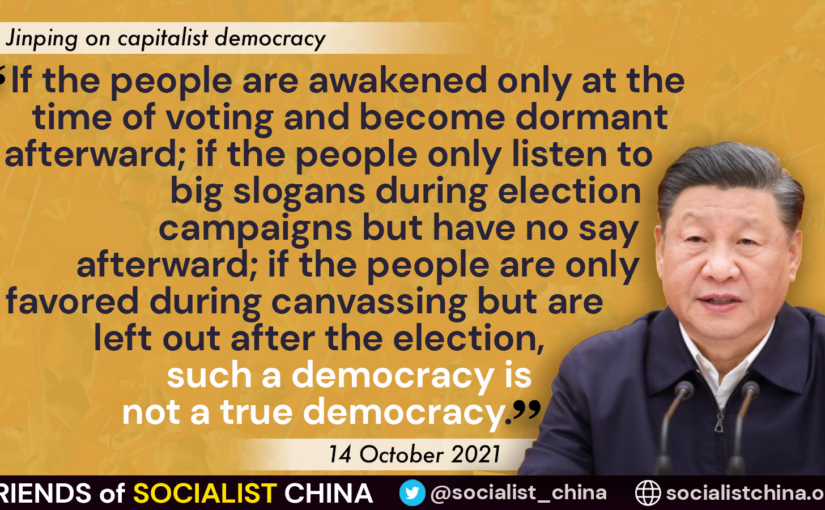
Xi emphasized that “Democracy is not a special right reserved for any individual country but a right for the people of all countries to enjoy.”

The U.S. president did not mention his difficulties getting bills through Congress to upgrade the country’s infrastructure and provide improved basic services to people – services like health care, child care, housing and education, which are guaranteed in China, often free or at minimal cost. The “Build Back Better” bills are supported by a decisive majority of the U.S. population, but are fiercely opposed by recalcitrant right-wingers in Congress, along with “moderate” Democrats beholden to big oil and big pharma. These bills – dubbed “enormous” and unaffordable by Congressional opponents – pale in cost when compared with the military budget. At $743 billion for one year, while the infrastructure and budget reconciliation bills are for ten years, the military budget is nearly double their total for each year. (This doesn’t include military-related items, such as intelligence and veterans’ services, which bring the annual military total up above a trillion.)

An effort to pare off just ten percent of the military budget was crushed in Congress in September: a sign of the political power of the military-industrial complex, which combines with big oil, big pharma, big banks and insurance companies to dominate the U.S. political process. These same forces are helping right-wingers in both Congress and many states to quash voting rights, reversing the historic gains of the mid-century Civil Rights movement.

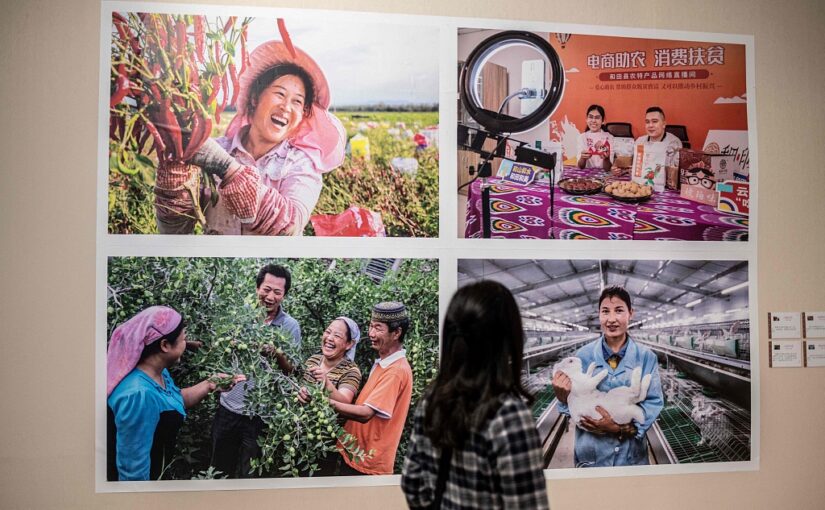
While the U.S. economy struggles to recover, levels of inequality reach historic proportions, and the political system is ever more polarized, Xi could point to China’s success in helping 800 million people lift themselves out of extreme poverty. A recent report noted that “In 2019, as China entered the last stages of its poverty eradication scheme, UN Secretary General Antonio Guterres said, ‘Every time I visit China, I am stunned by the speed of change and progress. You have created one of the most dynamic economies in the world, while helping more than 800 million people to lift themselves out of poverty – the greatest anti-poverty achievement in history’.”

Average wages for urban workers in China doubled between 2010 and 2020.”>China’s economic success – growing at an average rate of 9.5 percent per year, growing in size by almost 35 times (according to China’s Great Road, by John Ross), building railroads, highways, subways, even entire cities, to become the second largest economy in the world – didn’t happen without strain. Inequality increased, and some worried that the new “market socialism” was a lot like capitalism. The poverty eradication campaign was essential, just as efforts to restrain big capitalists were as well. These efforts were possible in large part due to the Chinese approach to democracy. As Xi said:

What we now face is the contradiction between unbalanced and inadequate development and the people’s ever-growing needs for a better life… The needs to be met for the people to live better lives are increasingly broad. Not only have their material and cultural needs grown; their demands for democracy, rule of law, fairness and justice, security, and a better environment are increasing.

How China’s leaders intervened is an illustration of China’s democratic path. A report from Harvard University’s Ash Center for Democratic Governance and Innovation finds over 90% of the Chinese people like their government, and “rate it as more capable and effective than ever before. Interestingly, more marginalized groups in poorer, inland regions are actually comparatively more likely to report increases in satisfaction.” It says Chinese people’s attitudes “appear to respond to real changes in their material well-being.”

This contrasts with people’s attitudes in the United States, which are polarized politically, racially, and economically. Public trust in the U.S. government is in crisis. There are very real human rights concerns, with police killings, homelessness and mass incarceration at pandemic proportions. A new report says police killings in the U.S. have been undercounted by more than half during the past four decades. Of nearly 31,000 people killed by police during that period, more than 17,000 were unaccounted for in official statistics. Black people were 3.5 times as likely to be killed by the police as white people. Latinx and indigenous people also suffered higher rates of fatal police violence than white people.

Chinese democracy

The Chinese revolution itself was fundamentally democratic – abolishing feudalistic hierarchy and privilege, equalizing gender differences, and enabling poor workers and farmers to be involved in national administration. The Ash Center study includes an important essay, “Democracy in China: Challenge or Opportunity?” by Yu Keping, director of the China Center for Comparative Politics and Economics. Yu Keping says “Western scholars use their democratic standards, such as a multi-party system, universal suffrage, and checks and balances, to evaluate Chinese political development,… and conclude that Chinese reform is more economic than political.” This, he says, is an unnecessary bias and misunderstanding.

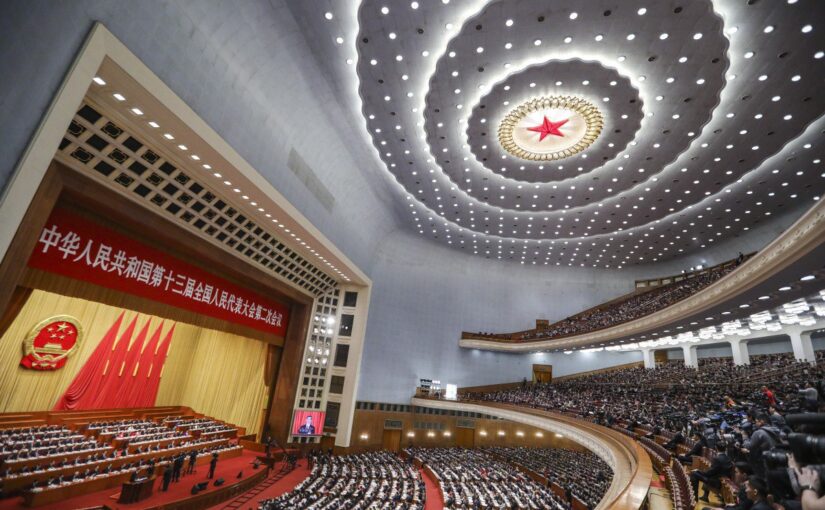
The basics of Chinese democracy are people’s congresses at local, provincial and national levels. A Global Times report says “according to the State Council, ‘Deputies to the people’s congresses of cities not divided into districts, municipal districts, counties, autonomous counties, townships, ethnic minority townships and towns are elected directly by their constituencies. Deputies to the NPC [National People’s Congress] and the people’s congresses of the provinces, autonomous regions, municipalities directly under the Central Government, cities divided into districts, and autonomous prefectures are elected by the people’s congresses at the next lower level.’ These elections are all competitive.”

There are also regular consultations between government officials and the people at all levels. Key principles are “people-oriented government, human rights, private property, rule of law, civil society, harmonious society, government innovation, and good governance,” Yu Keping wrote.

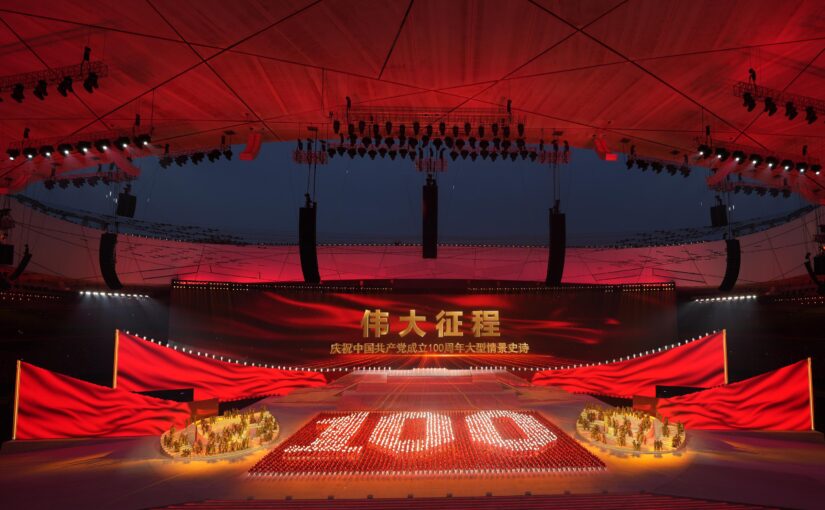
The Chinese Communist Party (CCP) is at the core of all this. Its 95 million members make it a preponderant factor in Chinese society. There are eight non-communist political parties, with which the CCP consults regularly. But CCP members lead society. The guiding slogan is “serve the people.” The story of the poverty eradication campaign provides a good example:

The targeted phase of poverty alleviation required building relationships and trust between the Party and the people in the countryside as well as strengthening Party organization at the grassroots level. Party secretaries [were] assigned to oversee the task of poverty alleviation across five levels of government, from the province, city, county, and township, down to the village… Three million carefully selected cadres were dispatched to poor villages, forming 255,000 teams that reside there. Living in humble conditions for generally one to three years at a time, the teams worked alongside poor peasants, local officials, and volunteers until each household was lifted out of poverty. In this process, many cadres were unable to return home to visit families for long stretches of time; some fell ill in the harsh natural conditions of rural areas and more than 1,800 Party members and officials lost their lives in the fight against poverty. The first teams were dispatched in 2013; by 2015, all poor villages had a resident team, and every poor household had an assigned cadre to help in the process of being lifted, and more importantly, of lifting themselves out of poverty. At the end of 2020, the goal of eliminating extreme poverty was reached.

The study says the “cadres and officials who have mobilized in the countryside have been essential in building public support for and confidence in the Party and the government.”

The government’s effective response to the COVID-19 pandemic continued to build public support. Shortly after Wuhan emerged from the COVID-19 lockdown, York University Professor Cary Woo led a survey of 19,816 people across 31 provinces and administrative regions. Published in the Washington Post, the study found that 49 percent of respondents became more trusting of the government following its response to the pandemic, and overall trust increased to 98 percent at the national level and 91 percent at the township level.

“The Chinese way of political development,” Yu Keping says, “is extremely different from the Western democratic tradition… Consequently, it is almost dead-end to explain the Chinese way of democratic politics through using existing Western democratic theories.” Democracy means “government by the people,” the professor says. So “the fundamental criteria to judge whether a country is a ‘democracy’ or not is government’s responsiveness to its citizens… As long as a country has formal institutions to guarantee that government policies can effectively reflect the public’s opinions, that citizens can participate in political life, and the incumbent political regime has to respond to people’s interests, it can be considered democratic regardless of the particular party systems, election procedures, or power separation mechanisms.”

Western Challenges

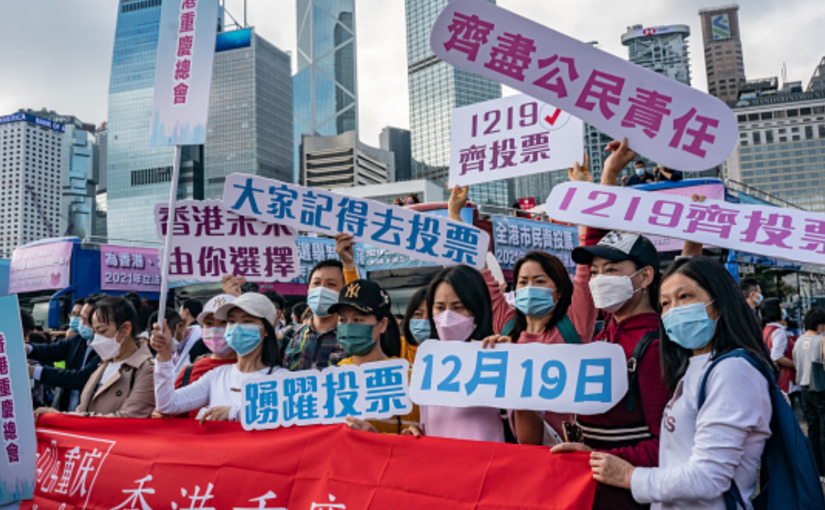
Former U.S. Secretary of State Mike Pompeo admitted in 2019 that “We lied, we cheated, we stole… It’s part of the glory of the American experiment.” Pompeo’s claims that the Chinese Communist Party is “the greatest danger” to democracy in the world, and that China’s to blame for the COVID-19 pandemic have served to discredit the U.S. position rather than strengthen it. Biden, Secretary of State Blinken and most in Congress, to their shame, are continuing Pompeo’s infamous campaign. Despite hundreds of millions of U.S. funds to support protests in Hong Kong, that effort has fizzled. Hong Kong ranks in the top three on the Fraser Human Freedoms Index, while the U.S. is in 17th place. (An earlier LA Progressive article provides additional information.)

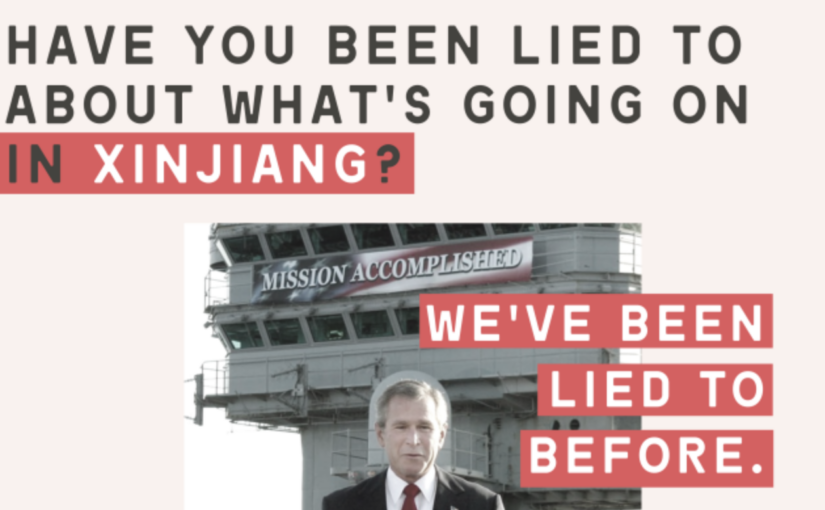
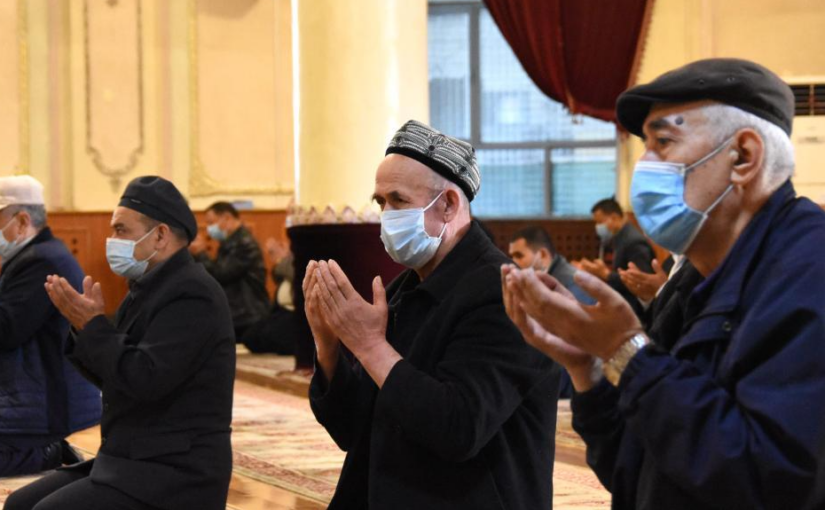
Regarding claims of “genocide” in Xinjiang, Columbia University Professor Jeffrey Sachs, a special advisor to the UN Secretary General, says “The US government has offered no proof, and unless it can, the State Department should withdraw the charge.” Code Pink webinars have demolished U.S. anti-China claims. Using these lies and false accusations, the U.S. has imposed sanctions and launched an international boycott of products made in Xinjiang. The main result has been to hurt the people of Xinjiang. But the smear campaign has also confused many progressives and so-called “leftists” in the U.S., who have fallen victim to the continued repetition of these lies in the mainstream media.

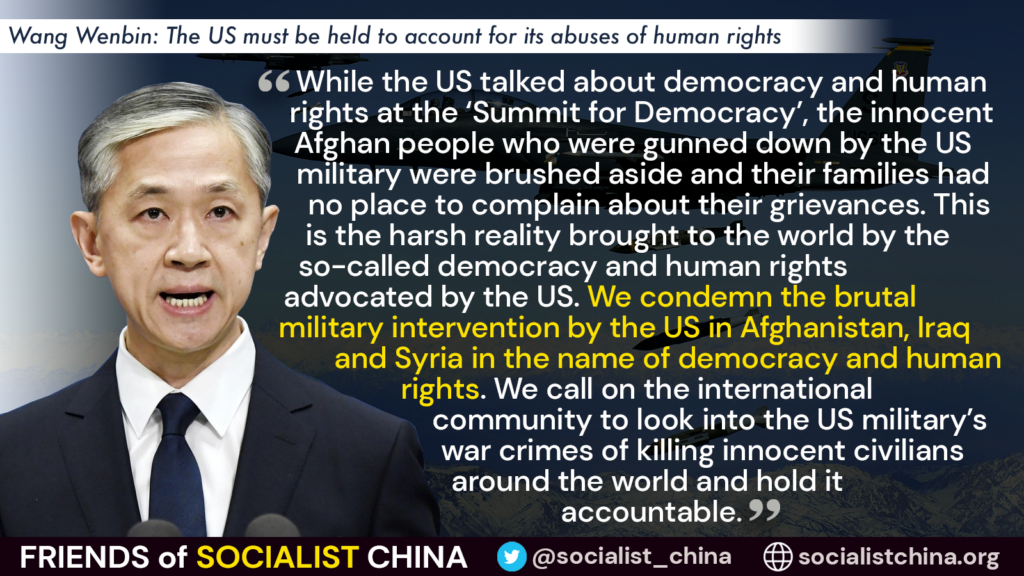
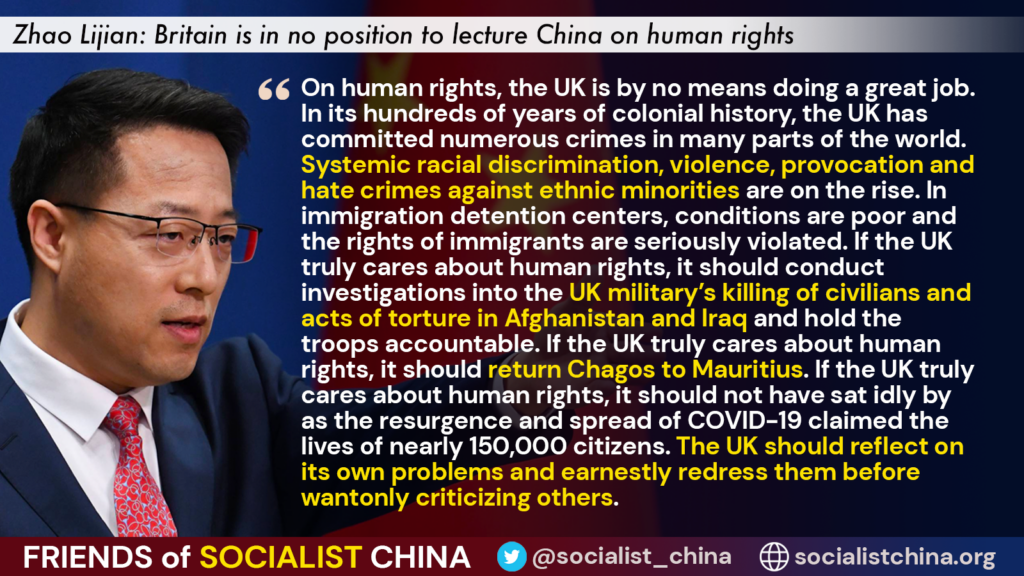
China has answered the U.S. slander campaign with claims of its own. In late September it called on the UN Human Rights Council to “work to eliminate the negative impacts of colonialism on people around the world.” The statement, issued with 21 other countries, said “Economic exploitation, inequality, racism, violations of indigenous peoples’ rights, modern slavery, armed conflicts and damage to cultural heritage are among the legacies of colonial repression.” In a separate statement, China “called for nations that have conducted illegal military interventions to pay reparations. Without naming any states, he pointed out that such action had severe consequences for social and economic development.”

“A democratic system is a marriage of universality and particularity,” Professor Keping says. “We cannot make arbitrary conclusions that democracy has only one model merely based on the assumption that democracy is a universal value and has common features… The nature of democracy is government by the people or ‘people become their own masters,’ which is reflected in a series of institutions and mechanisms that guarantee the citizens’ democratic rights… Chinese democracy, growing out of Chinese tradition and society, will not only bring good fortune to the Chinese people, but also contribute greatly to the advancement of democratic theory and practice for all mankind.”

Carlos Martinez: Meng Wanzhou’s release is a victory for the peoples of the world

On Thursday 30 September, Carlos Martinez was interviewed by Rania Khalek and Eugene Puryear on BreakThrough News. They discuss the global significance of Meng Wanzhou’s release, parallels with the kidnappings of Venezuelan diplomat Alex Saab and North Korean entrepreneur Mun Chol-myong, Taiwan, the militarisation of the Pacific, and the need for multipolarity.

Robert Griffiths: The origins of the Chinese ‘lab leak’ theory

This article by Robert Griffiths, general secretary of the Communist Party of Britain, comprehensively exposes the mendacity and cynical motivations of the conspiracy theory that the Covid-19 pandemic was caused by a ‘lab leak’ from the Wuhan Institute of Virology. It is republished from the Morning Star.


On January 24 last year, the Washington Times reported: “The deadly animal virus epidemic spreading globally may have originated in a Wuhan laboratory linked to China’s covert biological weapons program, according to an Israeli biological warfare expert.”

Reporter Bill Gertz based his story on a five-year-old broadcast on Radio Free Asia about the Wuhan virology institute and his interview with Dany Shoham, “a former Israeli military intelligence officer who has studied Chinese bio warfare.”

Continue reading Robert Griffiths: The origins of the Chinese ‘lab leak’ theory

Charles McKelvey: China and the Third World

We are pleased to republish this interesting piece by Charles McKelvey which explores the parallel trajectories – and recent convergence – of the projects for Third World liberation and Chinese socialist construction. The article, rich in historical detail, concludes that the continuing and deepening coordination between China and the rest of the developing world is crucial to the emergence of a more rational, prosperous and democratic world system.


Two projects of importance to the future of humanity have sustained themselves for the last seven decades, namely, the Third World project of national and social liberation, and the Chinese project of socialist construction. They evolved in a parallel form, with occasional points of contact and coincidence. But for the past ten years, they have moved toward significant cooperation, and in the process, they are constructing an alternative more just and less conflictive world-system. And they are doing so precisely in a historic moment in which the capitalist world-economy is falling into parasitic decadence. The project of the Third World plus China is laying the foundation for a sustainable future for humanity; whereas the neocolonial world-system is demonstrating its unsustainability.

Continue reading Charles McKelvey: China and the Third World

Happy birthday socialist China!

We are republishing this excellent article by Stephen Millies in Struggle for Socialism. The article gives an overview of China’s extraordinary achievements since the founding of the People’s Republic on 1 October 1949, and highlights its continuing significance to working class and oppressed peoples worldwide.


Seventy-two years ago, on Oct. 1, 1949, Mao Zedong declared “China has stood up!” The socialist People’s Republic of China was born after decades of struggle.

Chinese women stepped forward with unbound feet. No longer could U.S. and British warships prowl the Yangtze River. Peasants, workers and progressive intellectuals knew their liberation had come.

Continue reading Happy birthday socialist China!

Interview with Carlos Martinez on the propaganda war against China

On 25 September, Friends of Socialist China co-editor Carlos Martinez was interviewed on the Rebirth of Communism YouTube channel about China: what is the nature of the propaganda war being waged against it? What’s really happening in Xinjiang? Why does much of the Western left support this propaganda war? What are the reasons for the different levels of economic and social progress in India and China since the late 1940s? Will China suffer the fate of the Soviet Union? What does China’s project of being a ‘great modern socialist country’ by 2049 entail?

Fully implementing the new development philosophy and accelerating efforts to foster a new development dynamic

We are pleased to publish this important article from the latest English language edition of Qiushi, the main theoretical journal of the Communist Party of China. It presents a comprehensive and detailed outline of China’s new development dynamic, focused on the domestic economy. It draws attention to China’s decreased reliance on foreign trade, which peaked in 2006. The article deals frankly with the challenges faced and the problems needing to be tackled on both the domestic and international fronts, but also explains how these can be overcome on the basis of the growing prosperity of China and the inherent strengths of the socialist system. It deserves careful reading.


While addressing a seminar for principal provincial- and ministerial-level leaders on the guiding principles of the Fifth Plenary Session of the 19th CPC Central Committee on January 11, 2021, General Secretary Xi Jinping stressed that moving faster to foster a new development dynamic dominated by the flows of the domestic economy but in which domestic and international flows are mutually reinforcing is a major strategic task proposed by the CPC Central Committee in its Recommendations for the 14th Five-Year Plan for Economic and Social Development that concerns the overall development interests of the country. We must acquire an accurate understanding of this task from an overall perspective and actively promote its advancement. 

Continue reading Fully implementing the new development philosophy and accelerating efforts to foster a new development dynamic

Reminder: Special online showing of ‘1921’ (2 October)

Friends of Socialist China are pleased to offer a rare opportunity to watch the film 1921.

  • Date: Saturday 2 October 2021
  • Time: 7pm Britain / 2pm US Eastern / 11am US Pacific
  • Registration: Eventbrite

About ‘1921’

‘1921’ is a full length feature film produced to mark this year’s centenary of the Communist Party of China. It is set against the background of the intense class struggle waged by the young Chinese working class in Shanghai in particular. The action also takes us to Moscow, Paris and elsewhere. Key early Chinese communists like Li Dazhao, Chen Duxiu, Mao Zedong and Deng Xiaoping all feature in this not to be missed film. As gripping as any Hollywood blockbuster, it is also an education and an inspiration.

A review by Friends of Socialist China co-editor Keith Bennett can be read online.

Please note the film is in Mandarin Chinese with English subtitles.

Who is organising the screening?

This event is organised by Friends of Socialist China, in coordination with Trinity Cine Asia. It is co-sponsored by the Society for Anglo-Chinese Understanding, the Morning Star, the Geopolitical Economy Research Group, the International Manifesto Group, and Qiao Collective.

How does the online screening work?

At the start time (7pm Britain, 2pm US Eastern, 11am US Pacific), registered users will receive (by email) a link to stream the film. They will then have a three-hour window in which to watch it.

Why are we charging for this event?

Please note that Friends of Socialist China are not making any money from the showing; our purpose in arranging it is to ensure that its important political and cultural content reaches a wider audience. However, Trinity Cine Asia, with whom we are partnering to organise the screening, have paid the costs of distribution and marketing; therefore all proceeds go to them.

China calls on the UN Human Rights Council to address impact of colonialism

Republished from CGTN


The United Nations’ Human Rights Council should work to eliminate the negative impacts of colonialism on people around the world, a group of 21 countries and regions has urged.

Economic exploitation, inequality, racism, violations of indigenous peoples’ rights, modern slavery, armed conflicts and damage to cultural heritage are among the legacies of colonial repression, according to a statement read by China’s ambassador to the UN in Geneva Chen Xu.

The signatories to the statement come from across the globe including Russia, Egypt, Syria, Argentina, Republic of Congo, Sierra Leone, Iran, Sri Lanka, Armenia and Myanmar.

“We call on the Human Rights Council, the Office of High Commissioner for Human Rights and relevant Special Procedures to pay continued attention to the negative impact of legacies of colonialism on the enjoyment of human rights,” the statement read.

Nicaragua, Palestine, Comoros, Tajikistan, Laos, Belarus, DPRK, Burundi, Venezuela and Cuba also put their names to the statement.

The period 2021-2030 marks the fourth decade the UN has dedicated to the eradication of colonialism. The first being 30 years after the pioneering 1960 Declaration on Decolonization.

A separate statement delivered by Jiang Duan, a minister in the Chinese delegation also on behalf of a group of UN members, called for nations that have conducted illegal military interventions to pay reparations. Without naming any states, he pointed out that such action had severe consequences for social and economic development.

Crimes committed during such interventions need to be fully investigated, he added. 

Hua Chunying: Washington DC is the birthplace and headquarters of economic coercion

A powerful quote from Ministry of Foreign Affairs spokesperson Hua Chunying about the US use of economic warfare against developing countries.

For a long time, the US has been engaged in unilateral bullying practices, imposing long-term sanctions on Cuba, the DPRK, Iran, Venezuela, among other countries. Washington DC is the birthplace and headquarters of economic coercion. The US, through its policies and actions, has provided the world with textbook examples of coercive diplomacy, which means achieving one’s strategic goals with military threats, political isolation, economic sanctions and technical blockade.

Foreign Ministry Spokesperson Hua Chunying’s Regular Press Conference on September 29, 2021

Carlos Martinez: Will China stay red?

On 25 September, Friends of Socialist China co-editor Carlos Martinez was interviewed on the Rebirth of Communism YouTube channel about China. Topics discussed include: what is the nature of the propaganda war being waged against it? What’s really happening in Xinjiang? Why does much of the Western left support this propaganda war? What are the reasons for the different levels of economic and social progress in India and China since the late 1940s? Will China suffer the fate of the Soviet Union? What does China’s project of being a ‘great modern socialist country’ by 2049 entail?

This clip addresses the question of whether China can withstand the external and internal pressures to change its class character, or is it destined to suffer the same fate as the Soviet Union, abandoning socialism and adopting capitalism.

Radhika Desai: Release of Meng Wanzhou ends a contemptible mess of illegality

This article by Radhika Desai, reposted from CGTN, shines a light on the geopolitical motivations and the illegality of Meng Wanzhou’s detention, and situates it within the US’s ongoing attempts to preserve a “rules-based international order” based on unilateralism and hegemonism.


The release of Meng Wanzhou, chief financial officer of Huawei, from her detention in Vancouver and her immediate return to China end a complex saga that would fill multiple volumes.

They would concern the U.S.’s underhand moves to meet the technological and competitive challenge of Huawei, particularly on 5G technologies. They would detail the U.S.’s mixed and ambiguous motivations concerning China. It would further involve Canada’s own entanglement in tense relations between its two biggest economic partners. All this before we even got to the details of the case against Meng. Here we can only make a few limited but critically important points.

Continue reading Radhika Desai: Release of Meng Wanzhou ends a contemptible mess of illegality

Roland Boer: We need to talk more about China’s socialist democracy

We are pleased to publish this original article by Roland Boer (Professor of Marxist Philosophy at Dalian University of Technology, China, and author of Socialism with Chinese Characteristics: A Guide for Foreigners (Springer, 2021)). The article provides the reader with a very valuable introduction to China’s socialist democratic system, a topic about which there is widespread ignorance in the West.

Este artículo se ha traducido en español.


We need to talk more – much more – about China’s socialist democratic system. Why? There are many reasons, but the main reason is that we should not let the criticisms of China from the small number of “Western” countries set the agenda. So let me propose the following thesis: China’s socialist democratic system is already quite mature and superior to any other democratic system. Actually, this is not my proposition, but that of a host of Chinese specialists. They are very clear that China’s socialist democratic system is already showing its latent quality. Obviously, we need to know much more about how this system works and how it is constantly improving.

Continue reading Roland Boer: We need to talk more about China’s socialist democracy

China and Vietnam vow to promote their shared socialist path

We are pleased to reproduce this account in CGTN of the recent phone conversation between Chinese President Xi Jinping and Nguyen Phu Trong, general secretary of the Communist Party of Vietnam’s (CPV) Central Committee. Both leaders emphasised that communist party-led rule and the development of the socialist system is the core of the two countries’ shared interests.


Chinese President Xi Jinping and Nguyen Phu Trong, general secretary of the Communist Party of Vietnam’s (CPV) Central Committee, on Friday renewed their pledge to promote the socialist course of both countries, during a phone conversation.

President Xi, also general secretary of the Communist Party of China (CPC) Central Committee, said China and Vietnam, as socialist neighbors, share a community of destiny with strategic significance, and have a lot of common interests and concerns given the complex situation brought by the combination of the once-in-a-century world changes and COVID-19 pandemic.

Continue reading China and Vietnam vow to promote their shared socialist path

Carlos Martinez: lies about Xinjiang are designed to build public support for the New Cold War

Below is the text of a speech given by Carlos Martinez at the recent webinar organised by the Islamabad Institute of Conflict Resolution and the China NGO Network for International Exchanges to expose the Western media’s propaganda in relation to the treatment of Uyghur Muslims in Xinjiang.

The video of the full event can be watched on YouTube. The webinar has also been written up in CGTN, China Daily, and Asia Free Press.


Thank you very much for inviting me to speak today.

Living in the West – as I do, in London, England – I’m exposed to a very intense media propaganda campaign in relation to Xinjiang.

When I read the newspapers, or I watch the debates in the Houses of Parliament, I often see accusations of Chinese genocide against Uyghur Muslims, of cultural genocide, of forced labour, of forced sterilisation of women, of prison camps. Actually we see these sorts of accusations every day.

Continue reading Carlos Martinez: lies about Xinjiang are designed to build public support for the New Cold War

Review of ‘China and the Left: a socialist forum’

We are pleased to republish this detailed and helpful summary of the recent ‘China and the Left’ forum recently organised by Qiao Collective in association with the People’s Forum, Monthly Review and CODEPINK. The review first appeared on Charles McKelvey’s blog.

A full playlist of videos from the forum can be found on YouTube.


A socialist forum on China and the Left, sponsored by the Qiao Collective, was held in New York City on September 18, 2021.  The Qiao Collective was formed in January 2020 by intellectuals and activists of the Chinese diaspora, with the intention of defending Chinese socialism against imperialist aggression. 

Opening Keynote Address by the Qiao Collective

In the Opening Keynote address on the “The U.S. Hybrid War,” Michelle of the Qiao Collective maintained that Chinese trade has long stimulated imperialist aggression, which has included the colonial concession zones, the taking of Hong Kong, the backing of Chinese nationalists, and the support of Formosa.  Imperialist aggression against China is historic. 

Continue reading Review of ‘China and the Left: a socialist forum’

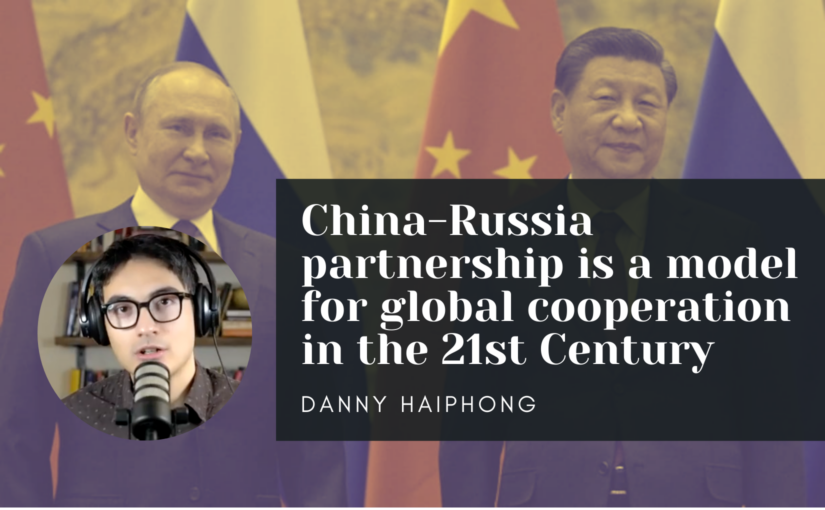
Danny Haiphong: Biden’s Global COVID-19 Summit is an exercise in American selfishness

In this article for CGTN, Danny Haiphong exposes the motivation behind the Virtual Global COVID-⁠19 Summit hosted by Joe Biden on 22 September 2021. Having utterly failed to protect its population from the pandemic, having refused to properly learn from and cooperate with China, and having led the construction of a system of vaccine apartheid, the US now seeks to portray itself as a global leader in the struggle against Covid-19.


On September 22, U.S. President Joe Biden held a virtual summit on COVID-19 and pledged to increase U.S. assistance in the global fight to end the pandemic. Biden’s promises, when taken out of context, appear reasonable. The U.S. will pledge an additional $370 million to administer COVID-19 vaccines globally and work with the European Union to meet the World Health Organization (WHO)’s goal of ensuring 70 percent of the world’s population is fully vaccinated by the end of 2022. The U.S. will also increase its donations of ventilators, therapeutics and personal protective equipment (PPE) to lower-income countries.

Continue reading Danny Haiphong: Biden’s Global COVID-19 Summit is an exercise in American selfishness

Speakers from Pakistan, China and Britain expose media lies about Xinjiang

On 24 September 2021, the Islamabad Institute of Conflict Resolution (IICR, an Islamabad based think tank) and the China NGO Network for International Exchanges (CNIE) held a webinar of international experts to expose the Western media’s propaganda in relation to the treatment of Uyghur Muslims in Xinjiang. Friends of Socialist China co-editor Carlos Martinez was among the speakers. The video is embedded below, along with a list of the speakers and a report of the event, republished from Asia Free Press.

Speakers

  • Sabah Aslam, Executive Director, Islamabad Institute of Conflict Resolution
  • Liu Lujun, Secretary-General, CNIE
  • Xu Lyuping, Vice-President of CNIE, former Vice-Minister of the International Department of CPC Central Committee
  • Carlos Martinez, author and co-editor of Friends of Socialist China
  • Dr Wang Jiang, Research Fellow, Institute of China’s Borderland Studies, Zhejiang Normal University, China
  • Maria Zeb, Culture Program Manager, All Pakistan Chinese Overseas Youth Federation
  • Muhammad Zamir Assadi, journalist with Independent News Pakistan
  • Mustafa Hyder Sayed, Executive Director, Pakistan-China Institute
  • Pang Chunxue, Minister-Counselor of the Embassy of China in Pakistan
Continue reading Speakers from Pakistan, China and Britain expose media lies about Xinjiang

Xi Jinping’s reply to letter sent by the family members of historic friends of China

Demonstrating the unbroken internationalist ties between the Chinese revolution and its internationalist comrades across centuries and generations, President Xi Jinping has replied to a joint letter received from the family members of foreign comrades and friends who made outstanding contributions to China’s liberation and the building of socialism. They include relatives of such legendary figures as Edgar and Helen Snow, George Hatem (Ma Haide), Rewi Alley, Israel Epstein, Hans Muller and David Crook.

Originally published on the Ministry of Foreign Affairs website.


On September 14, 2021, General Secretary of the Communist Party of China (CPC) Central Committee and President Xi Jinping replied to the letter from family members of some international friends, including Edgar and Helen Snow, George Hatem, Rewi Alley and Israel Epstein, paying high tribute to the international friends who had stood and fought shoulder to shoulder with the CPC and the Chinese people through thick and thin and made invaluable contributions to China’s revolution, development and reform.

In his reply, Xi Jinping pointed out that in the first half of the 20th century, a large number of international friends, including Snow, Hatem, Norman Bethune, Dwarkanath Kotnis, Alley and Epstein, traveled thousands of miles to China, where they shared weal and woe and fought side by side with the CPC and the Chinese people. We always remember their invaluable contributions to China’s revolution, development and reform and their genuine friendship with the CPC and the Chinese people.

Xi Jinping underlined, in the past 100 years since its founding, the CPC has, answering the call of the times, people’s expectations, and trust of its international friends, united and led the Chinese people in delivering the first centenary goal of building a moderately prosperous society in all respects through unrelenting hard work, and is now leading the Chinese people in marching toward the second centenary goal of fully building a great modern socialist country and in promoting the noble cause of world peace and development. The choices your loved ones made decades ago are exactly right.

Xi Jinping noted, history keeps surging on, and the great spirit is passed down from generation to generation. I hope you will follow the steps of your loved ones, and contribute your fair share to strengthening the friendship and cooperation between the Chinese people and people of the world, and to building a community with a shared future for mankind.

Recently, 16 family members of international friends, including Snow, Hatem, Alley, Epstein, Hans Muller, David Crook, Zheng Lvcheng, Elizebetta Pavlovna Kishkina, Richard Frey, Ruth Weiss, Eva Sandberg and Betty Chandler, have jointly sent a letter to President Xi Jinping. In the letter, they extended warm congratulations on the 100th anniversary of the founding of the CPC, and expressed their hope of jointly commemorating the martyrs on the occasion of the 76th anniversary of the victory of the Chinese People’s War of Resistance Against Japanese Aggression and the World Anti-Fascist War. They said, they are proud that their family members chose to stand with the CPC and the Chinese people, and are willing to carry forward the internationalist spirit in the new era under the guidance of the initiative of building a community with a shared future for mankind, and make new contributions to enhancing the friendship between Chinese and foreign people and supporting China in realizing the second centenary goal.