France is correct to pursue strategic autonomy

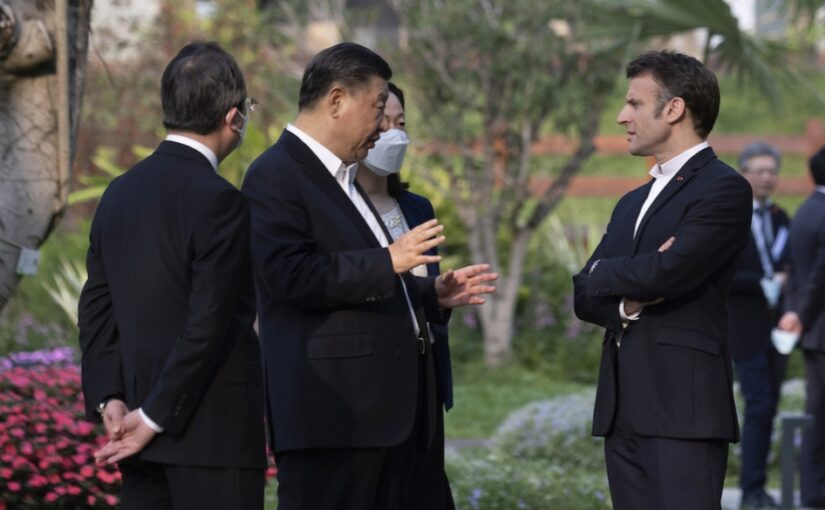
French president Emmanuel Macron’s recent comments in Beijing that European countries should avoid “just being America’s followers” and “getting caught up in crises that are not ours” have attracted condemnation from the Inter-Parliamentary Alliance on China (an international alliance of China hawks including Marco Rubio and Iain Duncan Smith), which accuses Macron of “appeasing” Beijing and failing to stand up for democracy.

Friends of Socialist China co-editor Carlos Martinez responded to IPAC’s vitriol in a brief interview with the Morning Star, pointing out that Macron’s comments are essentially a reiteration of the Gaullism that has oriented French foreign policy since the late 1950s. That France should pursue an independent foreign policy based on its own interests, rather than acting as a proxy of the US, is obviously reasonable. Instead of issuing hysterical condemnation of Macron, British politicians would be well advised to follow the example of seeking strategic autonomy and establishing a sensible distance from the US’s reckless New Cold War.

BRITAIN would be well advised to follow [French President Emmanuel] Macron’s example in staying out of a US confrontation with Beijing, a China expert says.

Mr Macron told reporters following a summit with Chinese President Xi Jinping that European countries should avoid “just being America’s followers” and “getting caught up in crises that are not ours.”

He singled out rising tensions over Taiwan, asking: “Is it in our interests to accelerate [a crisis] on Taiwan? No. The worst thing would be to … take our cue from the US agenda and a Chinese overreaction.”

Thirteen British MPs signed an attack on Mr Macron drafted by the Inter-parliamentary Alliance on China, an international assemblage of legislators. It condemns “Beijing’s aggressive stance towards Taiwan” and voices dismay at the French president for “appeasing” China.

But author Carlos Martinez told the Morning Star: “That France should pursue an independent foreign policy, rather than acting as a proxy of the US, is obviously reasonable.

“On this question, Britain would be well advised to follow Macron’s example, although the current political configuration makes that difficult. The hard right in the Conservative Party is pushing for deeper alignment with (or subservience to) the US ruling class, and it’s found an unlikely bedfellow in the Labour leadership.

“It is crucial that Britain stop outsourcing its foreign policy to Washington. British people have much to gain from friendly relations, trade, co-operation and people-to-people exchanges with China.

“Such relations must of course be based on mutual respect, which means we should respect China’s sovereignty and accept that the Taiwan issue can only be solved by the Chinese people on both sides of the strait.”

Chinese Ambassador visits Northern Ireland

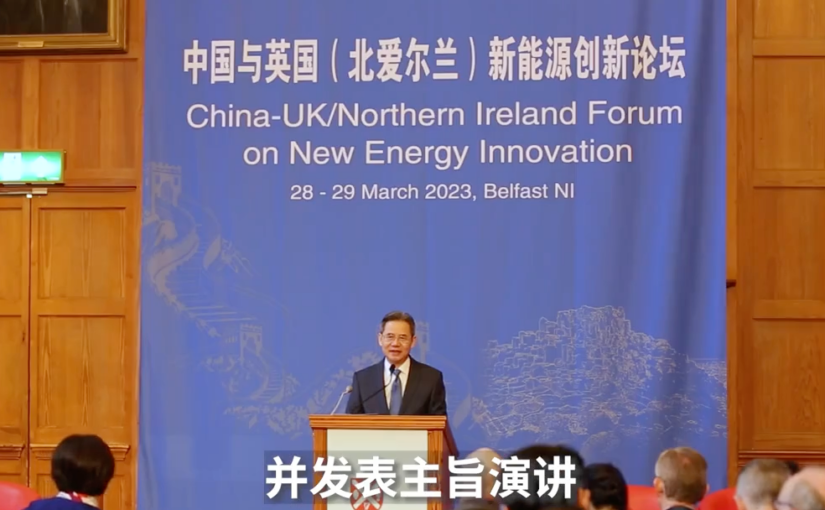
In late March, Zheng Zeguang, China’s Ambassador to the UK, paid his first official visit to Northern Ireland. Despite strained relations between London and Beijing, this visit was a great success, with the Ambassador meeting a wide range of people from political, academic, business and other social circles, in  his two-city tour of Belfast and Derry.

On March 27, Ambassador Zheng met Sinn Féin’s Christina Black, the current Lord Mayor of Belfast. Mayor Black warmly welcomed the Ambassador and his delegation. She said that, in 2016, Belfast became a sister city of Shenyang, and since then the two sides have made positive progress in mutually beneficial cooperation in the fields of economy, trade, education, and culture. Belfast has world-renowned universities and unique advantages in high-end manufacturing, green development, and many other areas. It is a city full of vitality, hope, and warmth. She was eagerly looking forward to unleashing the cooperation potential between China and Belfast through Ambassador Zheng’s visit, and welcomes more Chinese investors, students and tourists to come to Belfast.

Ambassador Zheng thanked the Lord Mayor for her warm hospitality. He said that during his visit to Belfast, he had a taste of the city’s historical heritage and unique political, economic, and cultural characteristics. The Ambassador expressed his hope for joint efforts of the two sides to promote mutual understanding, deepen friendship, and advance exchanges and cooperation.

Ambassador Zheng said that China is promoting high-quality development and will continue to pursue opening up at a higher level and accelerate green transformation. There is great potential for cooperation between China and Belfast on business, education, cultural exchanges, and tourism. It is hoped that Belfast and Shenyang will strengthen exchanges and cooperation as sister cities to bring more tangible benefits to the people of both sides.

Speaking on camera to China Daily after the meeting, Black said: “I have to say our relationship with China is fantastic.”

On being elected Lord Mayor in June last year, Councillor Black had said: “I love this city. I was born and raised here in a strong working-class community and I am immensely proud to be a Bealfeirstian…

“As a community activist, I am committed to empowering local people and communities, and making sure people have a strong voice on their side. It’s what inspired me to get involved in politics, and I am honoured to now be representing the city I love so much, as its First Citizen.”

Councillor Black said one of her priorities for her term in office was to showcase Belfast’s diversity, and support workers and families through the cost of living crisis. She said:

“I’m delighted to have this amazing opportunity. I’m passionate about this city and its people and I can’t wait to get out and meet new people and find out more about the amazing work that’s going on in communities right across our city. I will be Belfast’s biggest ambassador and will use my time in office to keep pushing forward priorities around the inclusive regeneration of our city.

“Belfast is a confident and thriving city with enormous untapped potential to prosper further. The opportunities for our city to grow are endless and working together we can seize them. During my term I want to be a positive voice for everyone in this wonderful city.”

The following day, Ambassador Zheng met with Alex Maskey, the Speaker of the Northern Ireland Assembly.  Maskey is a veteran leader of Sinn Féin who has devoted his whole life to the struggle for Irish freedom. He was interned without trial twice in the 1970s and survived two assassination attempts. 

The two had an in-depth exchange of views on enhancing cooperation between China and Northern Ireland in various fields.

Both sides believe that there is great potential for mutually beneficial cooperation between China and Northern Ireland and that fruitful results have been achieved at the China-UK/Northern Ireland Forum on New Energy Innovation. China and Northern Ireland should strengthen exchanges and dialogue, deepen mutual understanding, and actively expand cooperation in the fields of economy and trade, new energy, financial services, education, culture, and tourism, so as to better benefit their people.

On March 29, the Ambassador met with the Mayor of Derry and Strabane, Sinn Féin’s Sandra Duffy. Mayor Duffy warmly welcomed Ambassador Zheng and his delegation and outlined the city’s development in recent years and its future plans. She said that Derry has a number of favourable conditions, such as its geographical advantage of connecting the European Union and the United Kingdom. It has identified new energy, digital economy, high-end manufacturing, financial services, and health as the key sectors for future development, and Chinese entrepreneurs are welcome to invest in the city. Derry and Dalian have carried out sister-city cooperation for five years, and the two sides have achieved positive results in mutually beneficial cooperation in the fields of economy and trade, education, research and development, tourism, and culture. The city views China as an opportunity for development and looks forward to expanding exchanges and cooperation through the Ambassador’s visit.

Ambassador Zheng thanked Mayor Duffy for her warm hospitality, and expressed his hope that through his visit, mutual understanding between China and Northern Ireland will be enhanced and friendship and cooperation deepened. Although China-UK relations are currently facing some challenges, local practical cooperation has been growing steadily, which reflects the huge potential of cooperation between the two sides and the shared aspirations of the two peoples. China will continue to actively support Dalian and other Chinese cities to expand friendly exchanges and cooperation with Derry, especially to further tap into the potential for cooperation in areas such as economy and trade, education, culture, tourism, sports, new energy, and high-end manufacturing, so as to better benefit the people of both sides.

In her meeting with the Ambassador, the head of the Northern Ireland Civil Service Jayne Brady said that Northern Ireland has long-standing friendly exchanges with China and attaches great importance to developing relations with the country. Northern Ireland enjoys strong technological advantages in fields such as green economy, financial services, and food safety, and has the geographical advantage of being a bridge connecting the two major markets of the European Union and the United Kingdom. She welcomes Chinese companies to invest in Northern Ireland and hopes that hydrogen-powered buses, whiskey and other products from Northern Ireland can enter the Chinese market. Northern Ireland would also like to further expand exchanges and cooperation with China in education, culture, and tourism, among other areas.

Ambassador Zheng said that in recent years, China and Northern Ireland have carried out fruitful cooperation in economy and trade, education, culture, and other fields, bringing tangible benefits to both sides and that there are great potential and broad prospects for cooperation between the two sides in new energy innovation. China welcomes more high-quality products from Northern Ireland to enter the Chinese market and more friends to go to China, supports the cities and institutions of the two sides to strengthen partnerships, and encourages more two-way personnel exchanges, so as to transform the potential of cooperation into practical cooperation results and bring more benefits to the people of both sides.

Ambassador Zheng also visited Ulster University and Queens University Belfast. He commended Ulster University on its outstanding strength in teaching and research and the positive progress it had made in cooperation with Chinese universities. He also applauded Ulster University Confucius Institute for its important contributions to helping the people of Northern Ireland learn Chinese and understand Chinese history and culture, and to promoting educational cooperation between China and Northern Ireland.

Ambassador Zheng expressed hope for Ulster University to continue to take the lead in cooperation with China, strengthen exchanges and cooperation with Chinese universities, and leverage its complementary advantages to achieve mutual benefit. He also expressed best wishes for greater success of the Confucius Institute, and his hope that it will continue to provide world-class Chinese language teaching to students in Northern Ireland and make positive contributions to enhancing the friendship between the people of China and Northern Ireland.

Vice-Chancellor Paul Bartholomew said that Ulster University cherishes its cooperation with China and has established partnerships with many Chinese universities such as Nanjing University of Chinese Medicine and Shaanxi University of Science and Technology. The relevant cooperation continued uninterrupted even during COVID, which speaks fully to its resilience and strong will to cooperate with Chinese universities. Ulster University looks forward to further strengthening the cooperation, and welcomes more Chinese students to study at the university. Ulster University will continue to run the Confucius Institute well and play an active role in promoting educational cooperation and cultural exchanges between China and Northern Ireland.

Visiting Queen’s University Belfast, Vice-Chancellor Ian Greer said that his university attaches great importance to exchanges and cooperation with Chinese universities and welcomes more Chinese students to study at Queen’s. The university values China’s strength in research and huge potential of development and would like to further deepen cooperation with Chinese scientific research institutions. It was a great honour for him to co-host the China-UK/Northern Ireland Forum on New Energy Innovation with the Chinese Consulate General in Belfast. The forum was a meaningful trial to tap into complementary advantages for win-win results. It is hoped that the two sides will continue to explore and carry out mutually beneficial cooperation and contribute to green and low-carbon development in Northern Ireland and China.

Ambassador Zheng noted that Queen’s is a world-renowned university and stands out for its top-class teaching and research capacity. It is great to see that Queen’s has established cooperative relations with many Chinese universities. China is striving for high-quality development and supports technological innovation. It has a super-size market and unique advantages in ultra-large-scale application of emerging technologies. China is ready to encourage more universities to expand teaching and research cooperation with Queen’s and will encourage more Chinese students to choose it as their destination for studying overseas.

Addressing a welcome reception at the Chinese Consulate General in Belfast, Zheng said that his country will encourage more Chinese groups, enterprises, students and tourists to come to Northern Ireland, and believes that in Northern Ireland they will find a safe and friendly cultural environment and a fair and open business environment. We welcome people from all walks of life in Northern Ireland to visit China more often, and hope that the business community in Northern Ireland will expand into the Chinese market and share development opportunities through platforms such as the China International Fair for Trade in Services, the China International Import Expo, the Canton Fair, and the World Intelligence Congress.

At a press conference the Chinese Ambassador said:

“This is my first visit to Northern Ireland and Belfast. I enjoyed the visit so much. Regional cooperation is a very important component of state-to-state relations. The purpose of my visit is to enhance mutual understanding and promote friendship and cooperation. In the past two days, I had extensive exchanges with people from various sectors in Northern Ireland and discussed with them how best to expand cooperation in various fields between China and Northern Ireland. We all see a huge potential and are keen to broaden cooperation between the two sides. I feel very encouraged by it.

“This morning, I attended the China-UK/Northern Ireland Forum on New Energy Innovation, the first of this kind between China and the UK. The discussions were very productive, and in particular, there was a keen interest on both sides to work together to research and develop hydrogen energy and to put it into application. It is a very good example that China and Northern Ireland can conduct more dialogues and discussions in the traditional areas of investment, trade, education, cultural exchange, tourism, and sports, as well as new areas such as new energy, financial services, financial technology, biomedicine and creative industries. I am optimistic about the opportunities of cooperation between the two sides.”

Responding to a question from CGTN, he said:

“I do see the benefits of cooperation and exchanges between China and Northern Ireland already. In recent years, two-way trade and investment have kept growing, and there are about 2,000 Chinese students studying in Queen’s University Belfast, Ulster University and other institutions. The Vice Chancellors of the two universities told me that they want to see more Chinese students coming to Northern Ireland and would like to have stronger cooperation in teaching and research with Chinese universities. The CEO of the corporation which invested and built the Titanic Museum told me that before the pandemic, there were so many Chinese tourists, and that she would love to see more Chinese tourists return to Northern Ireland and Belfast.

“It was an honour for me to have a meeting with Speaker Alex Maskey and talk to the representatives of political parties. I had a very good meeting with the head of the civil service Dr Brady as well. I feel encouraged by their positive attitude towards cooperation with China. I said to my friends here that Northern Ireland is a best kept secret. It is so beautiful, pure, and full of potential. I think in the months to come, you will see more delegations and tourists coming this way. We encourage people from all walks of life here to visit China as well. This cooperation certainly serves the interest of both sides.”

A reporter from Raidió Fáilte asked:Ambassador, on behalf of the Irish speaking community in Belfast, I want to welcome you, on your first visit to our city. Raidió Fáilte are currently working on a series of multi-cultural, multi-lingual projects, with your colleagues in the Confucius institute. In your opinion, how important are these collaborations, and would you like to see similar co-initiatives in the future?”

The Ambassador replied: The cooperation on Confucius Institutes is hugely important as it not only provides opportunities for students here to learn the Chinese language and to better appreciate the Chinese culture, but also helps facilitate cultural exchanges between the two sides.

“The Confucius Institute that I have visited is located at Ulster University. It is a big success, a model institute. It has the support of the British Council, the support of the University and the support of the Chinese Consulate General as well. It is so popular among the young students. I was able to meet with a group of ‘young ambassadors’. The students are speaking perfect Mandarin and they will obviously become citizens of the world. When they travel to China, do business with China, and make friends in China, it will be so easy to do so without language barrier. We will continue to support the teaching of the Chinese language and the Confucius Institutes here.”

Among the diplomatic and business representatives who accompanied Ambassador Zheng on his visit were those from the London offices of the China National Petroleum Corporation, China Construction Bank and the Agricultural Bank of China. Research agreements were signed between Queen’s University Belfast and various academic institutions in China covering hydrogen energy.

Earlier in March, the Republic of Ireland’s Minister for the Environment, Climate and Communications and Minister for Transport, Eamon Ryan, who is also the leader of Ireland’s Green Party, visited China. Ryan, who previously visited China in 1987 and 2010, told the Irish Times prior to his visit:

“One of the main things I’m looking forward to in the visit is to be able to discuss some key issues around climate change and energy, and that’s part of a wider European-Chinese dialogue that is continuing. So, we have to, to a certain extent, put aside if there are other issues of real concern and make sure we do get cooperation, because the world would not be a safe place for anyone if we don’t make that progress on climate.”

Although the main focus of his trip was climate change, renewable energy and transport policy, with visits including those to a high-speed rail terminal and to solar technology companies, Minister Ryan also attended celebrations for Saint Patrick’s Day in Beijing, Shanghai and Hong Kong. In his Irish Times interview, he noted:

“In many ways, they [the Chinese] have a lead now when it comes to the new industrial revolution that’s taking place in clean energy technologies. The Chinese export 85 per cent of the batteries that are going to be used in electric vehicles. They export 80 per cent of the solar panels. So, they have an interest in terms of their own economic development. They have a real opportunity in this clean energy area. So, both for their need to protect their own people, but also to continue to maintain their advantage in clean energy, it makes sense for China to be progressive…

“Historically, China has looked to Ireland with interest in a disproportionate scale to our size for a variety of historical reasons, going right back to their inclusion in the United Nations and so on.”

Embedded below is a short video produced by China Daily on Ambassador Zheng Zeguang’s Northern Ireland visit.
Lukashenko: We do not want war, West blocking peace talks

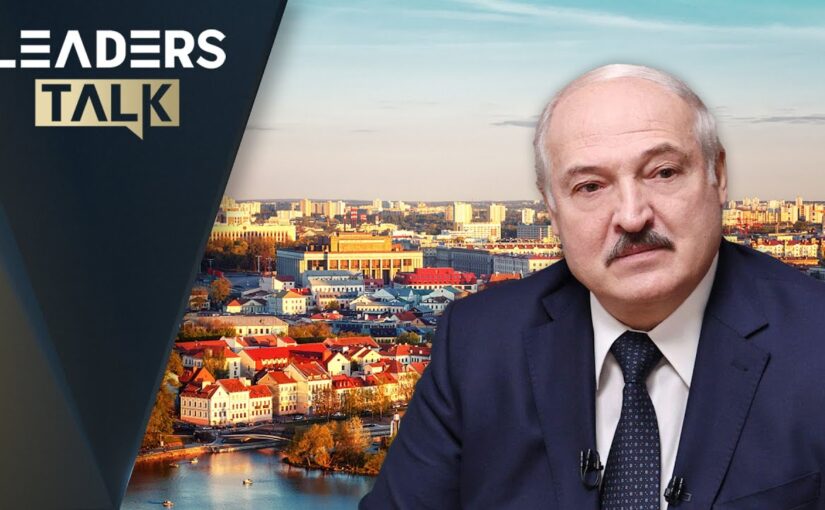
Belarus President Alexander Lukashenko paid a state visit to China from February 28 to March 2. Just prior to the visit, he gave an exclusive interview to Li Tongtong of CGTN in his capital Minsk as part of the Chinese channel’s impressive Leaders Talk series. 

Their extensive discussion began with the conflict between Russia and Ukraine and its impact on Belarus. President Lukashenko said that he fully agreed with President Putin that the root cause of the problem is not to be found in Russia. He recalls the 2014-15 diplomatic process in the Belarus capital, which had culminated in the signing of the Minsk Protocol. However, former German Chancellor Angela Merkel and former French President François Hollande had both now admitted that they had engaged in this process in order to give Ukraine more time to prepare for war. It is therefore clear who wanted conflict.

Belarus, Lukashenko insisted, is a peace-loving country. Its people know what war means. Belarus lost one third of its population in World War II. Belarusians do not want war with anyone, but especially not with Ukraine, whose people are their kin. President Lukashenko noted that his own forebears hailed from Ukraine. Despite all this, the western powers are trying to drag Belarus into the conflict. As Belarus has long frontiers with both Poland and Lithuania, this would mean that the country would be directly facing NATO, which would force it to disperse its forces and therefore become more vulnerable to attack. The President insisted that whilst his country did not want war, it was ready to defend its sovereignty and independence. 

In the ongoing conflict, it is the United States and the western powers that are obstructing peace talks. Russia proposed negotiations from the very beginning and they were held in Gomel, the second largest city of Belarus, right back in February 2022.

Lukashenko praised President Xi Jinping’s Global Security Initiative (GSI), noting that only peace can lead to prosperity for humanity whilst war leads to catastrophe. Extolling his personal and political friendship with the Chinese leader, he said that he and his family were very excited by Xi’s re-election at last October’s 20th National Congress of the Communist Party of China. He praised Xi’s ability to draw on the experience of his predecessors while injecting new meaning into it. 

The program also highlighted the development of the Great Stone Industrial Park, the key focus for Belarus-China cooperation, which President Xi had visited when he travelled to Belarus in 2015. The park has developed rapidly is now one third of the size of Minsk. Lukashenko stressed the importance of synergizing the work of the Belt and Road Initiative (BRI) with that of the Eurasian Economic Union (EEU), whose full members currently comprise Armenia, Belarus, Kazakhstan, Kyrgyzstan and Russia. He further stressed that the friendship between Belarus and China would last not just for his tenure in office but for ever. He described this belief as having become deeply ingrained in the hearts of the people of Belarus. Especially during the period of sanctions imposed by the West, the people of Belarus had become very clear as to who were their enemies and who were their friends. 

Towards the end of the interview, he highlighted education, culture and sports as among the areas where he would like to see even more cooperation and exchange with China and noted that his youngest son is currently studying at university in Beijing.

President Lukashenko also touched on a number of other issues, including the US shooting down of an unmanned Chinese airship, its instigation of ‘color revolutions’ not only in Belarus but in the Arab countries, and the relations between the European countries, the United States and China.

The full interview is embedded below.

Alexander Lukashenko’s state visit to China

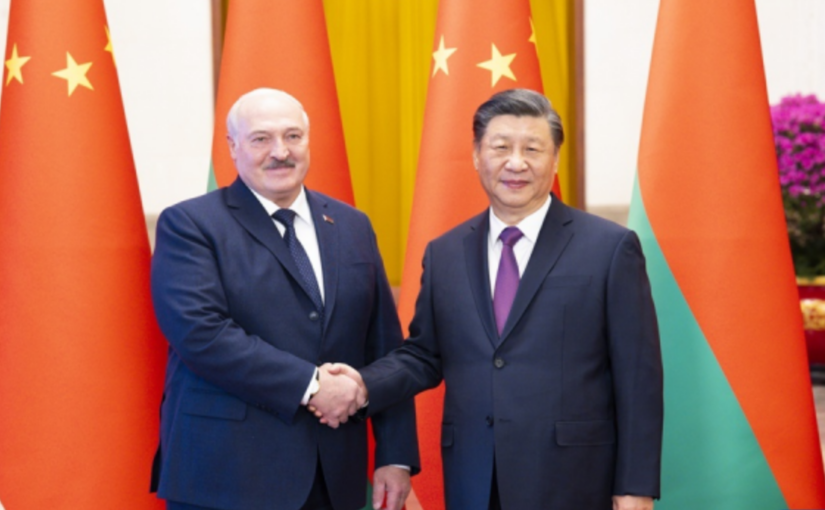
President of Belarus Alexander Lukashenko paid a state visit to China from February 28 to March 2 at the invitation of his Chinese counterpart Xi Jinping. The two leaders last met in September at the summit meeting of the Shanghai Cooperaration Organization (SCO), held in the Uzbek city of Samarkand. At that meeting, they jointly announced the upgrading of their bilateral relationship to an all-weather comprehensive strategic partnership. 

Meeting again on March 1, Xi Jinping emphasized that the China-Belarus friendship is unbreakable, and the two sides should constantly enhance political mutual trust and remain each other’s true friends and good partners.

Congratulating China once again on the success of the 20th CPC National Congress, Lukashenko expressed great admiration for President Xi, noting that he is a leader much loved by the Chinese people and enjoying high prestige in the world. He said that he firmly believes that under the strong leadership of President Xi, China will continue to make new and glorious achievements, and that the hearts of the Belarusian people are always with the Chinese people, and Belarus will stand firmly with China at all times. He said that China is a mainstay in safeguarding world peace, and that Belarus is ready to strengthen coordination with China on major international and regional issues, and jointly strive for the maintenance of international and regional security and stability. 

The two presidents also exchanged views on the Ukraine crisis and other issues. Xi Jinping pointed out that China’s position on the Ukraine crisis is consistent and clear, and China has released a position paper on the political settlement of the Ukraine crisis. Xi noted that the core of China’s position on this issue is promoting talks for peace. All parties should stay committed to its political settlement, abandon the Cold War mentality, respect the legitimate security concerns of all countries, and work to forge a balanced, effective, and sustainable European security architecture. Relevant countries should stop politicizing and instrumentalizing the world economy and take effective actions to bring about a ceasefire and an end to the conflict and peacefully resolve the crisis. Lukashenko said that Belarus fully agrees with and supports China’s position on the political settlement of the Ukraine crisis, and this is of great significance to its resolution.

Lukashenko’s programme also included meetings with Premier Li Keqiang and Chairman of the National People’s Congress Standing Committee Li Zhanshu.

The two heads of state signed a detailed joint statement covering a broad range of political, economic and other issues and featuring not least a strong commitment to further develop the China-Belarus Industrial Park, situated outside the Belarussian capital Minsk, which is both a mainstay of bilateral cooperation as well as a flagship project of the Belt and Road Initiative (BRI).  According to the statement, China supports Belarus in becoming a member of the Shanghai Cooperation Organization as soon as possible. It presently has observer status. 

The below article on the meeting between the two presidents was originally published on the website of the Chinese Foreign Ministry. We also publish the full text of the Joint Statement, which is a machine translation from the Chinese language text carried in People’s Daily, and which has been lightly edited by us.

Xi Jinping Holds Talks with President of Belarus Aleksandr Lukashenko

Ministry of Foreign Affairs of the People’s Republic of China, 1 March 2023

On March 1, 2023, at the Great Hall of the People, President Xi Jinping held talks with President of Belarus Aleksandr Lukashenko  who is on a state visit to China.

Xi Jinping pointed out that in Samarkand last September, he and President Lukashenko jointly announced the upgrading of China-Belarus relations to an all-weather comprehensive strategic partnership, thus injecting strong impetus into cooperation between the two countries in various fields. Xi noted that this year is the first year to fully implement the important decisions made at the 20th National Congress of the Communist Party of China (CPC), and China’s high-quality development and modernization drive will bring new opportunities to Belarus and other countries in the world. Faced with an international situation fraught with instability and uncertainty, China is ready to work with Belarus to promote the sound and steady development of bilateral relations at a high level.

Continue reading Alexander Lukashenko’s state visit to China

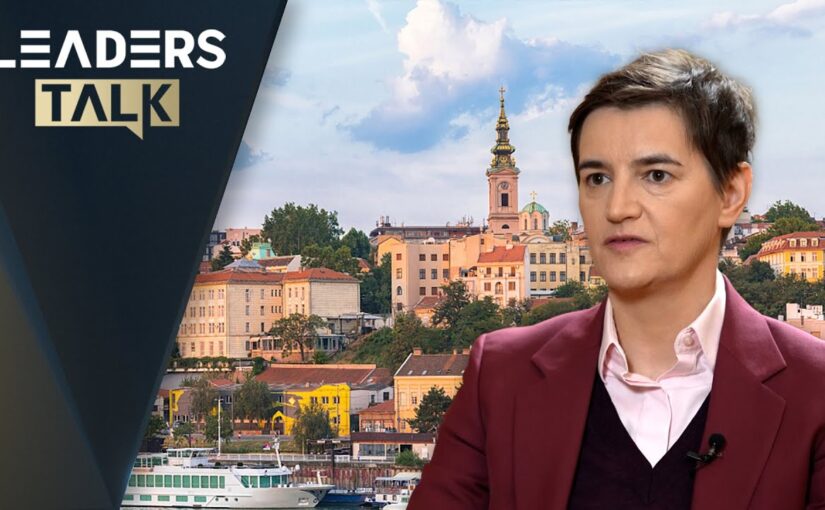
CGTN interview with Serbian PM Ana Brnabić

In this episode of the CGTN series Leaders Talk, Zou Yun travels to Belgrade to interview Ana Brnabić, Serbia’s first woman Prime Minister, who has held office since June 2017.

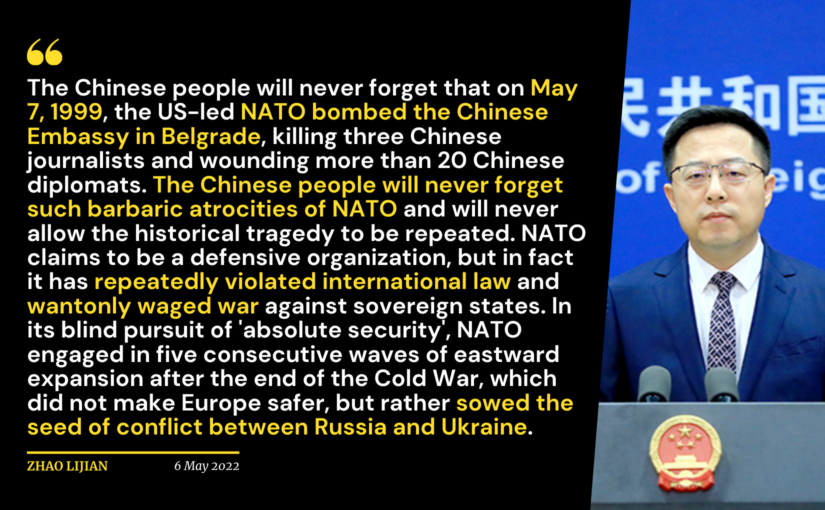
According to Brnabić, the friendship between Serbia and China can be described as steel-like or ironclad in both the political and economic fields. She recalls the 1999 bombing of Serbia – and Montenegro – by US-led NATO, without any United Nations authorisation, which killed and injured thousands and displaced millions, noting that it is therefore very difficult for western countries to accuse anyone else of aggression. Brnabić was living in the UK at the time and found it very difficult not to be in her country but away from family and friends. The bombing of the Chinese Embassy, in which three Chinese journalists were killed, will, she said, never be forgotten by the people of either country and had created a very special emotional bond between them. During his state visit to Serbia in 2016, President Xi Jinping inaugurated an impressive Chinese Cultural Centre on the site of the former embassy.

Explaining Serbia’s attempts to pursue a balanced foreign policy, including with China, Russia and the European Union, Brnabić notes that China has proven to be a true friend, especially in the most difficult moments of crisis. Trade with China has boomed and she is looking forward to the conclusion of a Free Trade Agreement between the two countries. Recalling her visit to China’s Shanghai Import Expo in 2019, she strongly refutes the allegations that China practices protectionism. Serbia’s experience proves the opposite.

Congratulating China on the success of the Communist Party’s 20th National Congress, Prime Minister Brnabić describes General Secretary Xi Jinping’s election to a third term of office as good news for the entire world. Serbia, she says, is keen to replicate some of China’s development initiatives.

The full interview is embedded below.

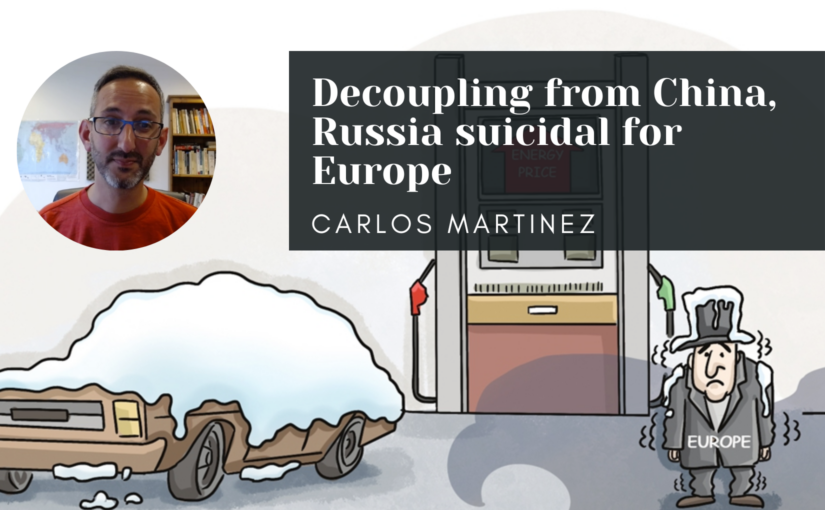
Decoupling from China, Russia suicidal for Europe

This article by Friends of Socialist China co-editor Carlos Martinez, originally published in Global Times, discusses the record of the Biden administration in ramping up Cold War hostilities against China and Russia, and its attempts to get Europe on board with its strategy for protecting US hegemony. Carlos points out that “Anti-Russia and anti-China positions are harming the people of Europe”: sanctions on China’s semiconductor and solar energy industries are utterly self-defeating, and sanctions on Russian energy are feeding directly into a very serious cost of living crisis. He concludes that “the countries of Europe would be well advised to exercise foreign policy independence and to make decisions based on the needs of their own populations, which are calling out for peace, prosperity and a sustainable future.”

When Joe Biden was elected in November 2020, many around the world were hoping for a change of course in the US’ reckless new Cold War.

US-China relations have always been complex and difficult; yet from the early 1970s onward, the trajectory had been toward deepening economic cooperation and a nuanced handling of the contradictions immanent in the relationship. Even with the Obama-Clinton “Pivot to Asia,” which signaled the US’ shift in geostrategic focus toward China containment, there was still significant and productive cooperation between the two countries – most notably in the drafting of the Paris Agreement.

Donald Trump came to power with a promise to stop China “raping” the US economy. Blaming China soon became the new magic wand for explaining away the problems of US capitalism without having to deal with any of the real underlying causes of American decline. Singaporean academic and former diplomat Kishore Mahbubani noted that, rather than blaming China for everything, living standards in the US might improve if America stopped fighting unnecessary foreign wars and used its resources to improve the well-being of its people.

The Trump team initiated a trade war, imposed a ban on Huawei, and sought to ban TikTok and WeChat. They aimed to generate mass anti-China sentiment by engaging in flagrant racism, most infamously blaming the coronavirus pandemic on China. They introduced sanctions and issued disgraceful slanders. So it was assumed that surely, things would only get better under Biden.

Continue reading Decoupling from China, Russia suicidal for Europe

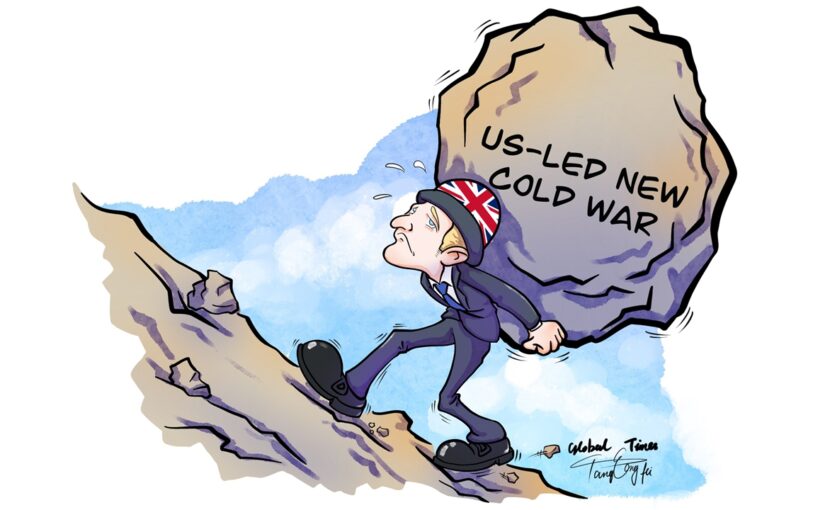
Britain’s participation in US-led New Cold War is shortsighted

In this article for the Global Times, FoSC co-editor Carlos Martinez discusses the change of occupancy in 10 Downing Street and assesses whether Liz Truss is likely to contribute to an improvement of Britain-China relations. Noting that Truss is widely regarded as a “China hawk”, and that she has promised to classify China as a “threat to British national security” for the first time, Carlos concludes that the British ruling class has (for the foreseeable future) settled on an idiotic and self-defeating anti-China policy. This policy will bring no benefit to the British people, and is being carried out for the purpose of demonstrating loyalty to the US in its pursuit of a New Cold War.

It seems a long time ago now that George Osborne and Boris Johnson – then British chancellor and London mayor respectively – spent a week in China on a “charm offensive” to promote strong economic ties between the two countries. Announcing in October 2013 that a Chinese company would help refurbish the Port of London Authority building and that China would be working on Britain’s nuclear energy programme, Johnson commented: “If that isn’t openness to China, I don’t know what is.”

Two years later, Prime Minister David Cameron and President Xi Jinping were photographed relaxing in a pub in South Buckinghamshire, eating fish and chips, drinking pale ale and talking with locals. The mood music was all very uplifting and optimistic, and the scene was set for the development of an increasingly close, symbiotic relationship.

Of course from the British point of view, the motivation for pursuing good relations with China had very little to do with international solidarity or a hitherto-suppressed fondness for Socialism with Chinese Characteristics; rather, the impetus was naked self-interest and economic common sense. Chinese investment, markets and manufacturing prowess were – and are – tremendously important for the British business, which is why Carolyn Fairbairn, former director-general of the Confederation of British Industry, stated in 2020 that in order to protect “future British jobs and prosperity”, Britain “cannot afford to self-isolate from China.”

Continue reading Britain’s participation in US-led New Cold War is shortsighted

Serbia and China honor Chinese martyrs killed in NATO bombing

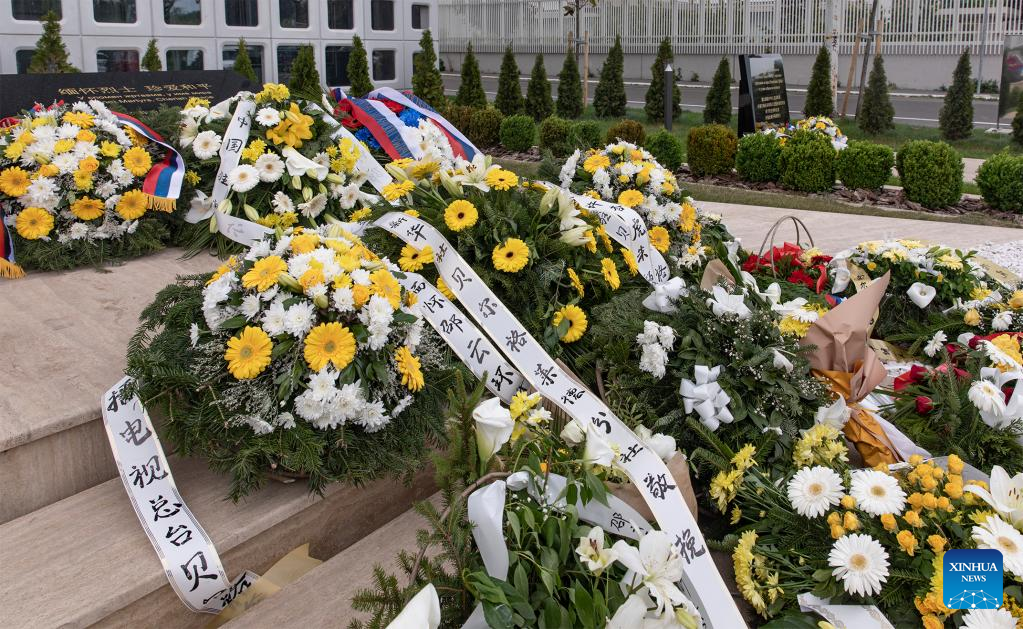
The three Chinese journalists who were murdered when the US-led NATO forces bombed the Chinese embassy in Belgrade, in violation of all norms of international law, during the vicious war against Yugoslavia in 1999, were remembered by Serbian and Chinese officials on May 7th.

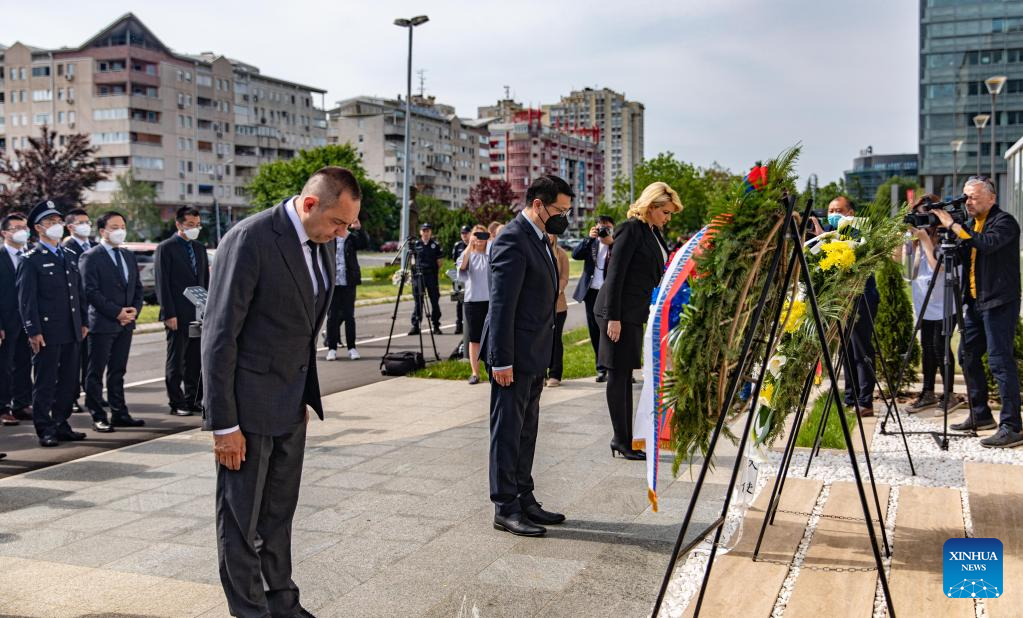
Speaking at the ceremony, Serbian Interior Minister Aleksandar Vulin, said: “Chinese citizens that laid their lives here, didn’t even need to be here, but they chose to do so, in order to share the most difficult and saddest moments with us… Serbia will never stop asking for responsibility for crimes conducted by NATO during their aggression… Those (Western powers) which now ask from us to align with their policies should remember their statements from 1999.”

The following report was originally published by Xinhua.

Laying wreaths at memorial plaques here dedicated to the three Chinese journalists killed in the NATO bombing of the former Chinese embassy in the Federal Republic of Yugoslavia in 1999, representatives of Serbia and China on Saturday commemorated the Chinese martyrs and condemned NATO’s “barbaric act.”

Among the officials present at the commemoration were Serbian Interior Minister Aleksandar Vulin, Minister of Labor, Employment, Veteran and Social Affairs Darija Kisic Tepavcevic, and Tian Yishu, Charge d’affaires of the Chinese embassy in Serbia.

“Chinese citizens that laid their lives here, didn’t even need to be here, but they chose to do so, in order to share the most difficult and saddest moments with us,” Vulin said.

“Serbia will never stop asking for responsibility for crimes conducted by NATO during their aggression,” Vulin said. “Those (Western powers) which now ask from us to align with their policies should remember their statements from 1999.”

He noted that Serbia and China “have a friendship made of steel, forged in the most difficult of times.”

Tian said that “China-Serbia friendship of steel is now playing a vital role in the peace and economic recovery of this region.”

“We wish to continue comprehensive cooperation with all peace-loving countries, both in fields of economic cooperation and security,” he said.

Svetozar Parezanin, a retired colonel of the Serbian Army who came here with a local citizen association, held a banner with photographs of the three killed journalists — Shao Yunhuan of Xinhua News Agency, and Xu Xinghu and his wife Zhu Ying of the Guangming Daily newspaper.

“We remember that day very well, and we will never forget it. We come here every year to show our feeling of respect towards brotherly Chinese people,” Parezanin said.

Wreaths are seen at memorial plaques dedicated to the three Chinese journalists killed in the NATO bombing of the former Chinese embassy in the Federal Republic of Yugoslavia in 1999, in Belgrade, Serbia, May 7, 2022.(Photo by Wang Wei/Xinhua)
Serbian Interior Minister Aleksandar Vulin (L, front), Minister of Labor, Employment, Veteran and Social Affairs Darija Kisic Tepavcevic (R, front), and Tian Yishu (C, front), Charge d’affaires of the Chinese embassy in Serbia, mourn at memorial plaques dedicated to the three Chinese journalists killed in the NATO bombing of the former Chinese embassy in the Federal Republic of Yugoslavia in 1999, in Belgrade, Serbia, May 7, 2022.(Photo by Wang Wei/Xinhua)