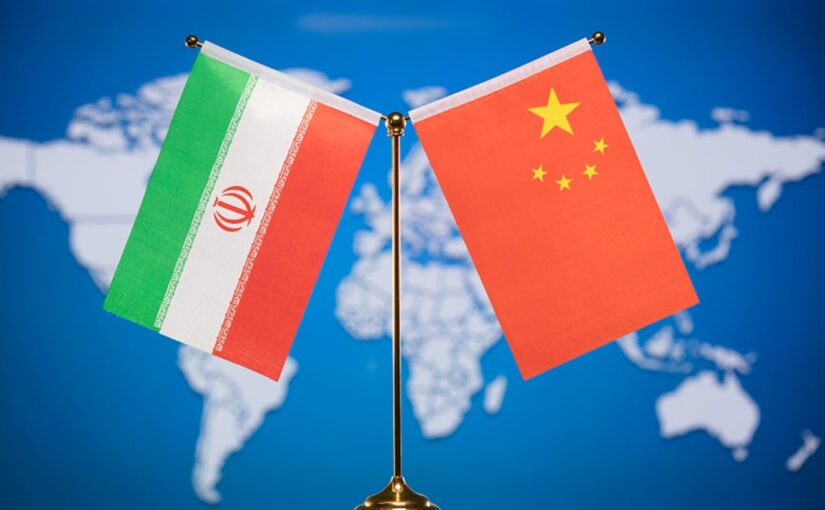
Chinese Foreign Minister Wang Yi has repeated his country’s condemnation of the US-Israeli aggression against Iran and stressed that China stands for peace in a number of diplomatic exchanges.
Following his March 1 phone conversation with his Russian counterpart Sergei Lavrov, the following day Wang spoke with the foreign ministers of Iran, Oman and France.
Iranian Foreign Minister Seyed Abbas Araghchi briefed Wang Yi on the latest developments of the situation of Iran, noting that the US has launched war against Iran for the second time during their ongoing negotiations. Though the two sides have made positive progress in the latest round of negotiations, the US action violates all international laws and treads and even crosses the red line of Iran. The Iranian side has no choice but to defend itself at all costs. China has made public its voice for fairness and justice, and Iran hopes that China will continue playing a proactive role in preventing the escalation of tensions in the region.
Wang Yi noted that China values the traditional friendship between China and Iran and supports Iran in safeguarding its sovereignty, security, territorial integrity and national dignity and in upholding its legitimate and lawful rights and interests. He said that China has urged the US and Israel to immediately cease military actions to avoid further escalation of tensions and prevent the conflict from expanding and spreading to the entire Middle East region. China believes that under the current grave and complex situation, Iran will maintain its national and social stability, take seriously the legitimate concerns of neighbouring countries, and ensure the safety of Chinese citizens and institutions in Iran. (At least one Chinese citizen has so far been killed as a result of US-Israeli aggression.)
In his conversation with his Chinese counterpart, Omani Foreign Minister Sayyid Badr bin Hamad bin Hamood Albusaidi noted that under Oman’s mediation, Iran-US negotiations made unprecedented progress, yet regrettably, the US and Israel have cast aside the existing outcomes of the talks and launched a war. If the war continues, it will lead to more casualties and property losses. All parties should work together for an early ceasefire.
Wang Yi said that China appreciates Oman’s active mediation in advancing the negotiations between Iran and the US and its tremendous efforts for safeguarding regional peace. Despite progress in the talks, the US and Israel deliberately provoked a war against Iran, which clearly violates the purposes and principles of the UN Charter.
Regarding the spillover of the conflict to states in the Persian Gulf that harbour aggressive US military bases, Wang Yi pointedly noted that China expects that Gulf states will enhance their independence, oppose external interference, develop good neighbourliness, and strengthen solidarity and coordination, so as to truly hold their future firmly in their own hands.
In his call with Wang Yi, French Minister for Europe and Foreign Affairs Jean-Noël Barrot shared his country’s perspective on the current situation in the Middle East, underscoring that France and China, both permanent members of the UN Security Council, have special responsibility for upholding international peace and security. The US and Israel did not seek the opinions from the UN Security Council regarding their military action against Iran, nor did they obtain authorisation from the Council. All parties should work together to de-escalate the tensions and resolve such issues as the Iranian nuclear issue through negotiation. China has maintained good relations with both Iran and other Gulf states. France looks forward to joining hands with China to proactively ease the situation in the region.
Wang Yi reiterated China’s principled position, stressing that the international community should reject any act that violates international law and refrain from applying double standards. Major countries must not be allowed to attack others at will with their military might, nor should the world revert to the law of the jungle. China hopes that France will uphold an objective and just position, remain calm and rational, and work with China to de-escalate the situation, jointly safeguarding the basic norms of international relations.
On March 3, Wang Yi spoke with the foreign minister of the Zionist entity Gideon Sa’ar.
Wang pointed out that recent negotiations between Iran and the US had been making notable progress, which also took into account Israel’s security concerns. Regrettably, this process has been disrupted by military strikes. China opposes such strikes launched by Israel and the US against Iran. The use of force cannot truly solve problems. China calls for immediate cessation of military actions to prevent the conflict from further escalating and spiraling out of control. Wang further called on Israel to take concrete measures to ensure the safety and security of Chinese personnel and institutions.
Also, on March 3, the prestigious online publication Palestine Chronicle carried a staff article, which characterised the content of Wang Yi’s remarks to the foreign minister of the Zionist entity as representing a hardening of China’s position against the aggression.
It noted: “China escalated its diplomatic opposition to the US-Israeli war on Iran on Tuesday, with Foreign Minister Wang Yi telling Israeli Foreign Minister Gideon Sa’ar that the military strikes ‘must end,’ according to a readout carried by Reuters.”
It added: “Beijing’s position was reinforced through official statements from China’s Foreign Ministry, including language that framed the war as a direct violation of sovereignty and international norms.
“In a regular press briefing published by the Foreign Ministry, spokesperson Mao Ning said: ‘The attack and killing of Iran’s supreme leader is a grave violation of Iran’s sovereignty and security.’ She added that it ‘tramples on the purposes and principles of the UN Charter and basic norms in international relations,’ and said: “China firmly opposes and strongly condemns it.’”
The previous day, Palestine Chronicle had published an article by its editors posing the question: Is the US–Israeli War on Iran a Strategic Move Against China?
It noted that China’s response to the US-Israeli aggression “reflects more than solidarity with Iran. It signals concern that Washington’s latest military intervention could destabilise energy routes and political alignments central to Beijing’s long-term strategic planning.”
It goes on to report that Jean-Luc Mélenchon, leader of France’s left-wing party La France Insoumise, had accused Washington of igniting wars to preserve its global dominance — and specifically to block China’s access to energy.
Speaking at a rally in Perpignan ahead of municipal elections, Mélenchon argued that the war on Iran is part of a broader US strategy aimed at “cutting oil supply lines to China.”
According to Mélenchon, the United States has lost its uncontested global leadership and is now methodically preparing for confrontation with Beijing by weaponising energy corridors and strategic chokepoints.
He linked the current war to a wider pattern of what he described as imperial overreach: threats to retake control of the Panama Canal, pressure on Canada over Arctic security, proposals to acquire Greenland, and escalating tensions over maritime trade routes.
“In this reading,” Palestine Chronicle notes, “Iran is not simply a regional adversary. It is part of the larger map of US–China rivalry.”
The article goes on to note that this is not new: “The 2003 invasion of Iraq was widely justified through weapons-of-mass-destruction claims, but strategic analysts at the time openly discussed energy dominance and denying emerging powers secure access to Gulf oil. The assumption was simple: control the oil, shape global power.
“That assumption proved flawed. China did not retreat from the region. It expanded. Beijing deepened energy partnerships, invested in infrastructure under the Belt and Road Initiative, and strengthened diplomatic ties with Gulf states — including US allies.
“Rather than isolating China, US military entanglement created space for Beijing’s quieter, investment-driven strategy. Today, the pattern appears to be repeating itself.”
The article explains that the United States operates through forward deployment, military alliances, sanctions regimes, and coercive pressure. “Its readiness for war is constant. Its readiness for stability is less evident.”
But China’s model is different: “Beijing rarely deploys troops abroad. It does not anchor its strategy in regime change or air campaigns. Instead, it builds ports, funds railways, signs long-term energy contracts, and avoids overt political interference. Its power accumulates through infrastructure and economic interdependence rather than shock-and-awe interventions.”
Noting that this distinction matters, the editors of Palestine Chronicle continue: “China is the largest importer of Gulf energy. If the US goal is to pressure Beijing by destabilising Iranian influence, the calculation assumes Washington can control escalation and maintain dominance over energy flows.
“History suggests otherwise. The United States has struggled to control outcomes in Iraq, Afghanistan, Syria, and Libya. Military superiority has not translated into political mastery. Each intervention has produced unintended consequences. Each has eroded US authority while pushing regional actors to diversify partnerships — often toward China… China’s influence grows not because it conquers territory, but because it offers trade, infrastructure, and non-interference to states weary of war. And the longer instability defines American engagement, the more appealing that alternative becomes.”
The following articles were originally published on the website of the Chinese Foreign Ministry and by Palestine Chronicle.
Wang Yi Has a Phone Call with Iranian Foreign Minister Seyed Abbas Araghchi
March 2 (MFA) – On March 2, 2026, Member of the Political Bureau of the CPC Central Committee and Foreign Minister Wang Yi had a phone call with Iranian Foreign Minister Seyed Abbas Araghchi upon request.
Seyed Abbas Araghchi briefed Wang Yi on the latest developments of the situation of Iran, noting that the U.S. has launched war against Iran for the second time during their ongoing negotiations. Though the two sides have made positive progress in the latest round of negotiations, the U.S. action violates all international laws and treads and even crosses the red line of Iran. The Iranian side has no choice but to defend itself at all costs. China has made public its voice for fairness and justice, and Iran hopes that China will continue playing an proactive role in preventing the escalation of tensions in the region.
Wang Yi reiterated China’s principled position on the current situation in Iran. He noted that China values the traditional friendship between China and Iran and supports Iran in safeguarding its sovereignty, security, territorial integrity and national dignity and in upholding its legitimate and lawful rights and interests.
Wang Yi said that China has urged the U.S. and Israel to immediately cease military actions to avoid further escalation of tensions and prevent the conflict from expanding and spreading to the entire Middle East region. China believes that under the current grave and complex situation, Iran will maintain its national and social stability, take seriously the legitimate concerns of neighboring countries, and ensure the safety of Chinese citizens and institutions in Iran. Seyed Abbas Araghchi noted that the Iranian side will do its utmost to guarantee the safety and security of Chinese personnel and institutions.
Wang Yi Has a Phone Call with Omani Foreign Minister Sayyid Badr bin Hamad bin Hamood Albusaidi
March 2 (MFA) – On March 2, 2026, Member of the Political Bureau of the CPC Central Committee and Minister of Foreign Affairs Wang Yi had a phone call with Omani Foreign Minister Sayyid Badr bin Hamad bin Hamood Albusaidi.
Sayyid Badr bin Hamad bin Hamood Albusaidi noted that under Oman’s mediation, Iran-U.S. negotiations made unprecedented progress, yet regrettably, the U.S. and Israel have cast aside the existing outcomes of the talks and launched a war. If the war continues, it will lead to more casualties and property losses. All parties should work together for an early ceasefire. As a permanent member of the U.N. Security Council, China always abides by the purposes and principles of the U.N. Charter and is a positive force to be relied upon. Oman hopes that China will play an important role under the current sensitive and complex circumstances. Oman will do its utmost to safeguard the safety of Chinese citizens and institutions in Oman.
Wang Yi said that China appreciates Oman’s active mediation in advancing the negotiations between Iran and the U.S. and its tremendous efforts for safeguarding regional peace. Despite progress in the talks, the U.S. and Israel deliberately provoked a war against Iran, which clearly violates the purposes and principles of the U.N. Charter. China believes that the pressing task now is to immediately cease military actions to prevent further spillover of the conflict and avert an irreversible deterioration. China urges all parties to make joint efforts to this end and support Oman in staying true to its original aspiration and continuing its mediation efforts. China also stands ready to play a constructive role, including upholding fairness and justice at the U.N. Security Council and striving for peace and stopping the war.
Wang Yi said that China values the legitimate appeals of Gulf states and supports them in upholding their sovereignty and national security. Spillover of the war does not serve the fundamental and long-term interests of Gulf states. China expects that Gulf states will enhance their independence, oppose external interference, develop good neighborliness, and strengthen solidarity and coordination, so as to truly hold their future firmly in their own hands.
Wang Yi Has a Phone Call with French Minister for Europe and Foreign Affairs Jean-Noël Barrot
March 2 (MFA) – On March 2, 2026, Member of the Political Bureau of the CPC Central Committee and Minister of Foreign Affairs Wang Yi had a phone call with French Minister for Europe and Foreign Affairs Jean-Noël Barrot.
Jean-Noël Barrot shared the French perspective on the current situation in the Middle East, underscoring that France and China, both permanent members of the U.N. Security Council, have special responsibility for upholding international peace and security. The U.S and Israel did not seek the opinions from the U.N. Security Council regarding their military action against Iran, nor did they obtain authorization from the Council. All parties should work together to de-escalate the tensions and resolve such issues as the Iranian nuclear issue through negotiation. China has maintained good relations with both Iran and other Gulf states. France looks forward to joining hands with China to proactively ease the situation in the region.
Wang Yi reiterated China’s principled position, stressing that the international community should reject any act that violates international law and refrain from applying double standards. Major countries must not be allowed to attack others at will with their military might, nor should the world revert to the law of the jungle. The Iranian nuclear issue should eventually return to the track of political and diplomatic settlement. China hopes that France will uphold an objective and just position, remain calm and rational, and work with China to de-escalate the situation, jointly safeguarding the basic norms of international relations.
Wang Yi Has a Phone Call with Israeli Foreign Minister Gideon Sa’ar
March 3 (MFA) – On March 3, 2026, Member of the Political Bureau of the CPC Central Committee and Foreign Minister Wang Yi had a phone call with Israeli Foreign Minister Gideon Sa’ar upon request.
After listening to Gideon Sa’ar’s briefing on Israel’s views on the current situation, Wang Yi noted that China consistently advocates the settlement of international and regional hotspot issues through dialogue and consultation. All parties should abide by the purposes and principles of the U.N. Charter, and refrain from using or threatening to use force in international relations. This also serves the fundamental interests of all parties, including Israel. Over the years, China has been committed to advancing the political settlement of the Iranian nuclear issue. The recent negotiations between Iran and the U.S. had been making notable progress, which also took into account Israel’s security concerns. Regrettably, this process has been disrupted by military strikes. China opposes such strikes launched by Israel and the U.S. against Iran. The use of force cannot truly solve problems. Instead, it will create new ones and leave severe aftereffects. The real value of military might lies not on the battlefield, but in the prevention of war. China calls for immediate cessation of military actions to prevent the conflict from further escalating and spiraling out of control. On the Middle East issue, China always upholds a just position and will continue playing a constructive role in de-escalating the situation. Wang Yi called on Israel to take concrete measures to ensure the safety and security of Chinese personnel and institutions. Sa’ar noted that Israel attaches great importance to this and will do so.
China Hardens Position Against US-Israeli War on Iran, Missile Talks Continue
March 3 (Palestine Chronicle) – China escalated its diplomatic opposition to the US-Israeli war on Iran on Tuesday, with Foreign Minister Wang Yi telling Israeli Foreign Minister Gideon Sa’ar that the military strikes “must end,” according to a readout carried by Reuters.
In the call, Wang warned against relying on military force, saying: “Force cannot truly solve problems; instead, it often creates new ones and leaves serious long-term consequences,” according to the quoted remarks.
Reuters also reported Wang urged disputes to be addressed through dialogue and negotiation and said China would play what it described as a constructive role in de-escalation.
The remarks came as Israel and the United States continued air operations against Iran and as regional spillover intensified, including renewed strikes in Lebanon and escalating cross-border exchanges.
‘Strongly Condemns’
Beijing’s position was reinforced through official statements from China’s Foreign Ministry, including language that framed the war as a direct violation of sovereignty and international norms.
In a regular press briefing published by the Foreign Ministry, spokesperson Mao Ning said: “The attack and killing of Iran’s supreme leader is a grave violation of Iran’s sovereignty and security.” She added that it “tramples on the purposes and principles of the UN Charter and basic norms in international relations,” and said: “China firmly opposes and strongly condemns it.”
Mao also called for an immediate stop to military operations, urging “no further escalation” and “joint effort to maintain peace and stability in the Middle East and the world at large,” according to the published transcript.
The statements were issued as Iran’s retaliation expanded across the region, with repeated concerns raised internationally about the widening impact on civilian infrastructure, state institutions, and regional security.
Straits of Hormuz
China also issued a direct public call related to the Strait of Hormuz, the key maritime route for global energy shipments, as conflict conditions disrupted shipping and pushed costs higher.
Asked about reported Chinese efforts to prevent disruptions to Gulf energy shipments, Mao Ning said: “Energy security is very important for the world economy. All parties have the responsibility to ensure stable and unimpeded energy supply.” She added: “China urges all parties to stop the military operations at once, avoid further escalation, keep the shipping routes in the Strait of Hormuz safe, and prevent further impact on the global economy.”
The Guardian reported China called for vessels transiting Hormuz to be protected amid sharply rising shipping costs, as maritime traffic slowed and insurers tightened or withdrew coverage in the region.
Reuters separately reported the conflict’s impact on trade flows, noting that disrupted shipping through Hormuz affected Chinese steel exports to the Middle East as freight rates climbed and insurers pulled coverage, prompting exporters to suspend new offers in some cases.
China-Iran Missile Talks
As China’s diplomatic language hardened, separate reporting placed renewed attention on the possibility of expanded Chinese weapons sales to Iran.
Reuters reported on Feb. 24 that Iran is nearing a deal with China to purchase anti-ship cruise missiles, citing six people with knowledge of the negotiations. The report described the missiles as supersonic anti-ship systems and said talks were unfolding as the United States deployed naval forces near Iran ahead of possible strikes.
A separate IranWatch summary of the Reuters reporting said the missiles under discussion were Chinese-made CM-302 supersonic anti-ship cruise missiles and noted that China’s Foreign Ministry said it was unaware of the reported talks.
The reported negotiations drew added attention as the war elevated risks in the Persian Gulf and as Iran’s deterrence posture became central to regional security calculations tied to shipping lanes and military deployments.
In parallel with Beijing’s public calls for a ceasefire and safe maritime passage, the reported missile talks underscored the extent to which diplomatic positions and military-industrial relationships are being closely watched across the region as the war continues.
Is the US–Israeli War on Iran a Strategic Move Against China? – Analysis
March 2 (Palestine Chronicle) – China has “strongly condemned” the killing of Iran’s Supreme Leader Ayatollah Ali Khamenei in US–Israeli airstrikes, calling it “a grave violation of Iran’s sovereignty and security.”
In an official statement, Beijing urged “an immediate stop to military operations” and warned against further escalation in the Middle East. The language was deliberate: sovereignty, stability, de-escalation. China framed the assassination not merely as a regional incident, but as a destabilizing act with global consequences.
The statement comes at a sensitive diplomatic moment. US President Donald Trump is scheduled to meet Chinese President Xi Jinping later this month in Beijing — a meeting now overshadowed by a rapidly expanding regional war.
China’s response reflects more than solidarity with Iran. It signals concern that Washington’s latest military intervention could destabilize energy routes and political alignments central to Beijing’s long-term strategic planning.
A French Warning: “Trump Hits Iran to Choke China”
The geopolitical framing was sharpened further in Europe.
Jean-Luc Mélenchon, leader of France’s left-wing party La France Insoumise, accused Washington of igniting wars to preserve its global dominance — and specifically to block China’s access to energy.
Speaking at a rally in Perpignan ahead of municipal elections, Mélenchon argued that the war on Iran is part of a broader US strategy aimed at “cutting oil supply lines to China.”
According to Mélenchon, the United States has lost its uncontested global leadership and is now methodically preparing for confrontation with Beijing by weaponizing energy corridors and strategic chokepoints.
He linked the current war to a wider pattern of what he described as imperial overreach: threats to retake control of the Panama Canal, pressure on Canada over Arctic security, proposals to acquire Greenland, and escalating tensions over maritime trade routes.
In this reading, Iran is not simply a regional adversary. It is part of the larger map of US–China rivalry.
China at the Center of US Policy
Whether openly acknowledged or not, much of Washington’s Middle East policy can be understood through the prism of competition with China.
This is not new.
The 2003 invasion of Iraq was widely justified through weapons-of-mass-destruction claims, but strategic analysts at the time openly discussed energy dominance and denying emerging powers secure access to Gulf oil. The assumption was simple: control the oil, shape global power.
That assumption proved flawed.
China did not retreat from the region. It expanded. Beijing deepened energy partnerships, invested in infrastructure under the Belt and Road Initiative, and strengthened diplomatic ties with Gulf states — including US allies.
Rather than isolating China, US military entanglement created space for Beijing’s quieter, investment-driven strategy.
Today, the pattern appears to be repeating itself.
War Versus Stability
The United States operates through forward deployment, military alliances, sanctions regimes, and coercive pressure. Its readiness for war is constant. Its readiness for stability is less evident.
China’s model is different.
Beijing rarely deploys troops abroad. It does not anchor its strategy in regime change or air campaigns. Instead, it builds ports, funds railways, signs long-term energy contracts, and avoids overt political interference. Its power accumulates through infrastructure and economic interdependence rather than shock-and-awe interventions.
This distinction matters.
When Washington escalates militarily in the Middle East, it disrupts energy markets, destabilizes governments, and creates uncertainty. China, by contrast, positions itself as the actor calling for calm, sovereignty, and non-interference.
The more instability spreads, the more China appears as the stable alternative.
Fighting Israel’s War?
Another layer complicates Washington’s posture.
Critics argue that the United States is not only confronting Iran as a geopolitical rival but also advancing Israel’s regional objective of dominance.
Israel’s strategic doctrine prioritizes overwhelming military superiority and the neutralization of perceived threats. Its emphasis is deterrence through force, not necessarily regional economic integration or political stability.
If Washington aligns itself fully with this doctrine, it risks being drawn into perpetual confrontation rather than long-term stabilization.
And prolonged instability does not weaken China — it weakens American credibility.
The Energy Equation
Iran sits at one of the world’s most critical energy corridors: the Strait of Hormuz. Roughly a fifth of the global oil supply transits this narrow waterway.
China is the largest importer of Gulf energy.
If the US goal is to pressure Beijing by destabilizing Iranian influence, the calculation assumes Washington can control escalation and maintain dominance over energy flows.
History suggests otherwise.
The United States has struggled to control outcomes in Iraq, Afghanistan, Syria, and Libya. Military superiority has not translated into political mastery.
Each intervention has produced unintended consequences.
Each has eroded US authority while pushing regional actors to diversify partnerships — often toward China.
The Paradox of American Power
There is a deeper paradox at play.
The United States remains unmatched in conventional military power. But its repeated reliance on force has often accelerated the very shifts it seeks to prevent.
China does not need to win wars in the Middle East. It needs only to avoid losing stability.
While Washington invests in aircraft carriers and air campaigns, Beijing signs energy contracts and builds ports in the Gulf.
The US is perpetually prepared for war. China is perpetually preparing for the post-war order.
Will This Strategy Succeed?
Mélenchon’s accusation — that Washington is striking Iran to suffocate China’s energy lifelines — may overstate coordination, but it captures an underlying truth: every major US move in the Middle East now unfolds against the backdrop of US–China rivalry.
Yet history offers a cautionary lesson.
The United States has repeatedly attempted to reshape the Middle East through force. Each time, it underestimated local dynamics, overestimated its capacity to dictate outcomes, and inadvertently strengthened alternative powers.
If the goal is to weaken China’s strategic position, escalation may instead accelerate Beijing’s rise.
China’s influence grows not because it conquers territory, but because it offers trade, infrastructure, and non-interference to states weary of war.
And the longer instability defines American engagement, the more appealing that alternative becomes.
A Broader Contest
The war on Iran is not only a regional confrontation.
It is part of a broader contest over how power is exercised in the 21st century: through coercion or connectivity, through dominance or development.
Washington believes it can shape the Middle East through decisive force.
Beijing believes it can shape it through patient integration.
If history is any guide, attempts to control the flow of history in the region through war have consistently failed.
And in trying once again, the United States may find that its greatest strategic competitor is empowered not by victory, but by American overreach itself.