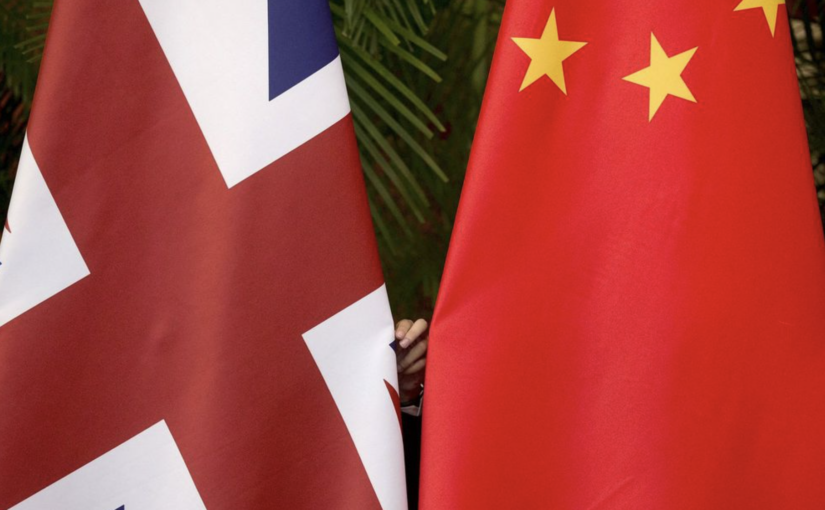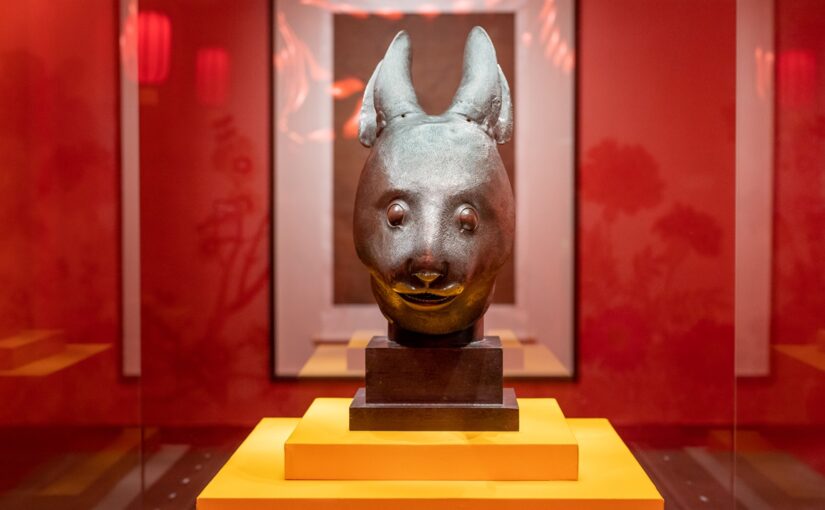
In the two articles we reproduce below – the first an editorial followed by a news item – the influential Chinese newspaper Global Times responds to the recent news that some 2,000 artifacts have been found to be missing, believed stolen, from the British Museum, to demand the return of treasures, artifacts and cultural icons to China and other countries that were once the victims of colonial pillage by British imperialism. The paper estimates that the museum holds 23,000 cultural relics from China.
In its editorial, Global Times states: “We formally request the British Museum to return all Chinese cultural relics acquired through improper channels,” adding, “We also support the claims for the restitution of cultural relics made by other countries that have been looted by Britain, such as India, Nigeria and South Africa. We urge the British government to cooperate in the legal and other procedures to facilitate the process, which will be a test and verification of Britain’s sincerity in clearing the colonial stain and making amends for its historical sins.”
According to Global Times:
“The vast majority of the British Museum’s huge collection of up to 8 million items came from countries other than the UK, and a significant portion of it was acquired through improper channels, even dirty and sinful means. As a result, the British Museum has earned the name of the world’s largest ‘receiver of stolen goods’.”
Faced with growing demands over the years for the return of looted items by countries from Greece to Nigeria, the British Museum and the British government have fallen back on the frankly racist argument that the countries concerned are, unlike apparently the UK, incapable of taking care of their own property. The revelation of mass theft from the museum’s collections has blown that argument, such as it was, out of the water, and Global Times notes:
“The huge loopholes in the management and security of cultural objects in the British Museum exposed by this scandal have led to the collapse of a long-standing and widely circulated claim that ‘foreign cultural objects are better protected in the British Museum.'”
The editorial notes: “The UK, which has a bloody, ugly, and shameful colonial history, has always had a strong sense of moral superiority over others… We really do not know where their sense of moral superiority comes from.”
It also refers to Greece’s long-running campaign for the return of the so-called ‘Elgin Marbles’:
“Recently, Greece once again called for the return of sculptures taken from the Parthenon Temple by Britain in the past, only to be accused by British politicians of ‘blatant opportunism.’ This once again reveals the ‘traditions’ of imperialism and colonialism.”
In one of several news items recently carried by Global Times on this issue, the paper points out that: “It is estimated that 10 million artifacts were stolen from China from the first Opium War (1840-42) to the War of Resistance against Japanese Aggression (1931-45).”
It also cites Abba Isa Tijani, director general of Nigeria’s National Commission for Museums and Monuments, on his country’s demand for the return of the Benin Bronzes, and Zahi Hawass, Egypt’s former minister of state for antiquities affairs, on his country’s campaign for the return of the Rosetta Stone.
And it notes comments made to the Guardian newspaper by Bell Ribeiro-Addy, the left Labour MP for Streatham in south London, that: “What makes it more awful is that they’ve been so lax about the [suspected] theft of other people’s items that they haven’t even bothered to assess what it is that they have.”
British Museum must return Chinese cultural relics for free
Global Times, 28 August 2023
As a Chinese media, we formally request the British Museum to return all Chinese cultural relics acquired through improper channels to China free of charge, and to refrain from adopting a resistant, protracted and perfunctory attitude. First of all, a public commitment should be made to the world for the return of the relics and this long overdue work should begin as soon as possible. We also support the claims for the restitution of cultural relics made by other countries that have been looted by Britain, such as India, Nigeria and South Africa. We urge the British government to cooperate in the legal and other procedures to facilitate the process, which will be a test and verification of Britain’s sincerity in clearing the colonial stain and making amends for its historical sins.
The recent revelation that some 2,000 artifacts from the British Museum’s collection inexplicably went missing has shocked not only the UK, but also all other countries that have collections in the British Museum. The huge number of missing artifacts, the long duration of the case, and the seriousness of the suspected internal thief have made it impossible to connect it with the British Museum, one of the largest museums in the world. People have questioned why the British police and the museum have delayed releasing photos and detailed descriptions of the stolen artifacts. The failure to release photos may indicate that the British Museum still has not been able to find out exactly how much of its vast collection has been lost, probably more than 2,000 pieces.
Continue reading British Museum must return Chinese cultural relics