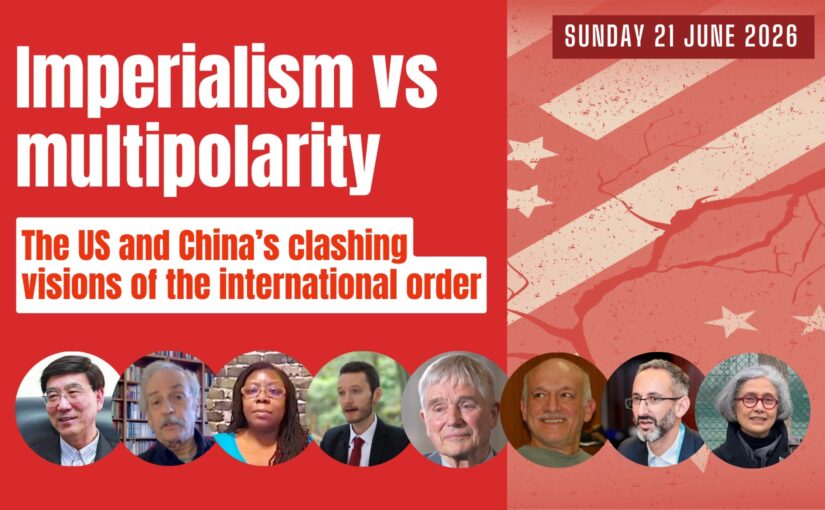
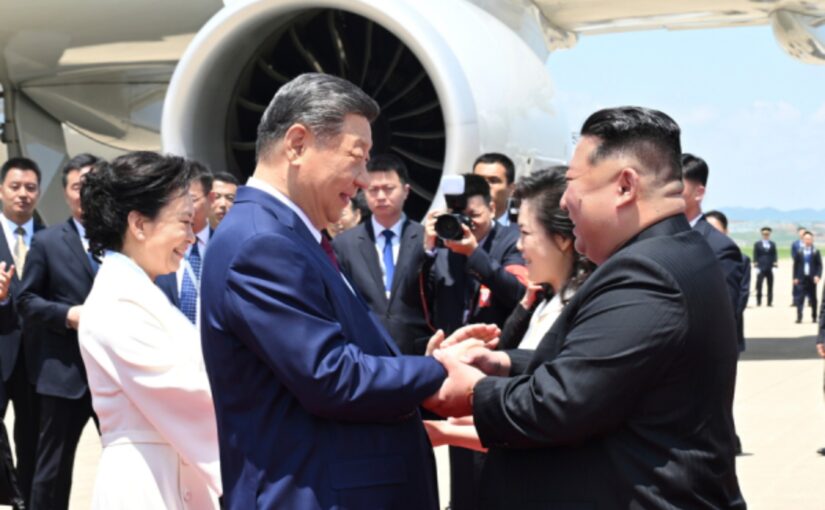
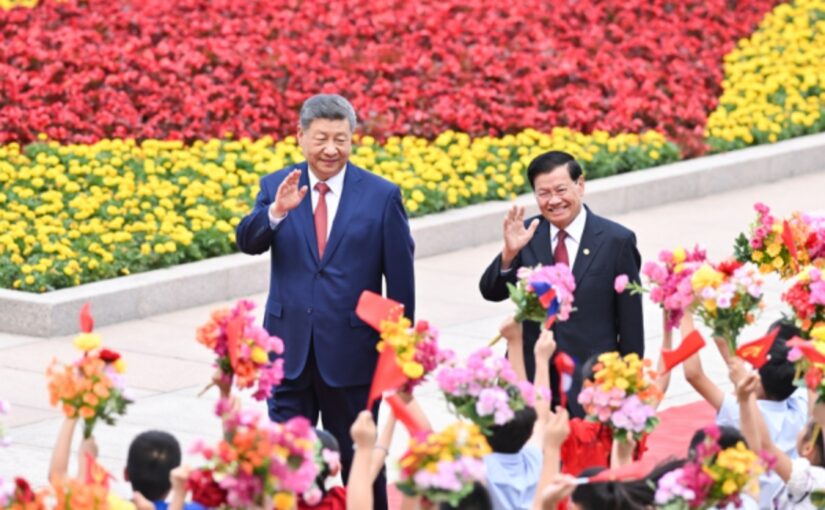
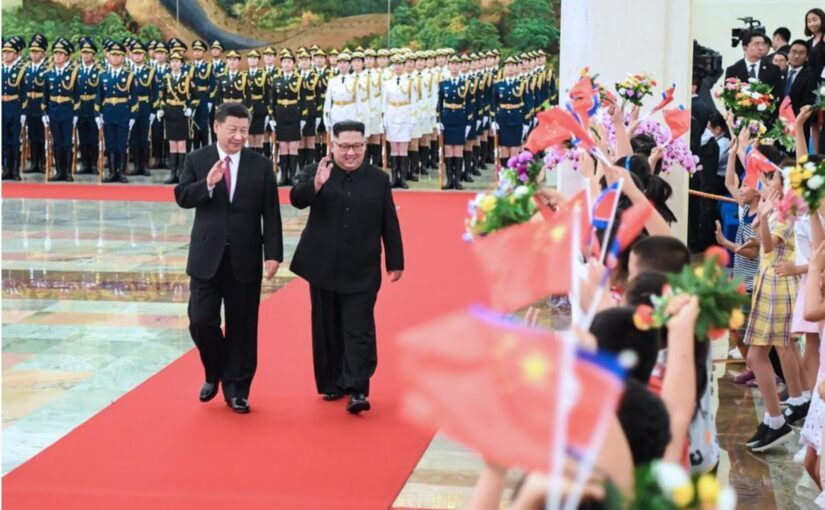
In the following article, republished from Dissident Voice, Gary Olson argues that the much-discussed “China threat” is not based on military or security considerations, but is ideological in nature: China’s existence as a thriving, socialist, non-Western development model challenges the global dominance of neoliberal capitalism.
Drawing on Sven Beckert’s Capitalism: A Global History, Gary notes that ever since the Russian Revolution, capitalist ideologists have existed in a state of constant fear of the systemic alternative offered by socialism. While the collapse of the Soviet Union and the European people’s democracies injected oxygen into the dominant anticommunist narrative, China’s extraordinary – and increasingly undeniable – progress means that the socialist spectre is once again haunting Western capitals.
The author highlights the Chinese innovation of the socialist market economy, which has enabled decades of rapid growth while maintaining the political control of the working class alongside state ownership of the commanding heights of the economy. Although Beckert treats China largely as part of global capitalism, Gary criticises him for failing to seriously engage with the argument that China’s state remains an instrument of socialist transformation rather than capitalist accumulation.
The article frames modern Chinese history as three phases of socialist development, culminating in the current “Socialism 3.0” under President Xi Jinping. This phase endures ongoing contradictions – inequality, private wealth and integration into global value chains – but the author insists these reflect a necessary and transitional stage rather than any abandonment of socialist objectives. He opines that China’s push toward qualitative development, expanded social welfare and socialist modernisation represents a credible alternative path – one that unsettles Western elites precisely because it suggests capitalism is not the only route to prosperity.
The article concludes:
The “China threat” is the existence of an alternative model, a people-centred, non-Western model of how social progress might be achieved. Is it plausible to suggest that not only are people across the Global South seeking to engage with and emulate China, but that ordinary European and American citizens will begin asking themselves if they’ve been well served by actually existing capitalism?
“Chinese-style modernization presents itself as a possible alternative path to the Western capitalist model, especially important for Global South countries that are seeking to break free from the shackles of colonization and imperialism.
– The Editors, Monthly Review[i]
China will join hands with all countries to explore ways to reform and improved global governance, working together to forge a bright future of peace, prosperity and progress.”
– President Xi Jinping announcing China’s Global Governance Initiative (GGI) on September 1, 2025[ii]
“The Chinese threat is that it exists. China exists; it will not follow U.S. orders… China can’t be intimidated, unlike others.”
– Noam Chomsky, Democracy Now![iii]
In his recent monumental narrative, Capitalism: A Global History, which spans 1,000 years in 1807 pages, plus 155 pages of Notes, Harvard historian Sven Beckert recounts that on October 25, 1917, Lenin proclaimed, “In Russia we must now set about building a proletarian socialist state.” For the first time in its 1,000-year history, a “society explicitly declared itself a socialist society and dedicated itself to destroying capitalism.” From that point onward, “… a fear of the Russian Revolution and all forms of socialism would become the polestar of politics in capitalist societies all the way to 1991.”[iv] Then, suddenly, the communist world imploded in what became known as neoliberal “shock therapy” and “crony capitalism.” As another astute analyst wrote, the USSR and Eastern Europe made “a great leap backward,” and since 1917, revolutionary struggles have been limited to the Global South — and brutally repressed.[v]
What about China? Concurrently, a transformation was occurring in Beijing. Neoliberal reforms were rejected, but the market was given a larger role, albeit under state control. As Deng Xiaoping said in 1984, “Developing a market economy does not mean practicing capitalism. While maintaining a planned economy can be the mainstream of our economic system, we are also introducing a market economy. But it is a socialist market economy.”
China’s approach generated a spectacular growth rate of 10 percent per year over two decades, and Beckert notes that while “observers disagreed about whether this was a way station on the path to communism or a form of capitalism or perhaps both, it was clear that China was a political economy radically at odds with the neoliberal experiment unfolding elsewhere.”[vi]
I might be wrong, but after careful reading and watching several interviews with Beckert, it’s my sense that he does not accord China the same explicit commitment to transcending capitalism or to being a similar “threat” to capitalism as he did for the Russian Revolution. In a footnote, he writes that China’s economic development “follows a logic of governance that is distinct from neoliberalism.”[vii] However, in keeping with his overall thesis, he situates today’s China as a site of global capitalism and on the global trajectory of capitalism. (Some on the left maintain that the CPC has abandoned socialism and the “capitalist roaders” are in charge).
Beckert’s book is also a political history that stresses the conjunction between state power and capitalism. Capitalism is state-centric and “is conceptually unimaginable without the state.” Further, he asserts that capitalism’s future will be determined by political forces. However, he offers no parallel attempt to engage the argument that the state in China is the driver of socialism. I found this a disappointing shortcoming in Beckert’s otherwise magisterial, bold, and highly readable chronicling of 1,000 years of global capitalism. In the brief comments that follow, I’ll suggest that a strong case can be made that China is indeed on the path toward socialism.
The history of modern China can best be understood by dividing it into three major stages, sometimes referred to as the “three miracles.”
Socialism 1.0 (1949 – 1976/80): Marked by the liberation struggle, the initial shaping of the socialist path, the ‘Great Leap Forward,’ and the Cultural Revolution. Socialism 2.0 (1978 – 2012/14): Shaped by Deng Xiaoping’s reforms and opening to the outside as a source of investment and technology. As Ken Hammond has noted, the Communist Party of China (CPC) made a gamble in 1978 that the state could manage the economy in such a way that the country would not slip back into neocolonial status.[viii]
Socialism 3.0 (2012 – to the present): Characterized by renewed but unavoidable contradictions; expansion of the social system, and the end of the first phase of socialist construction. By 2035, China will have achieved basic modernization. The evidence suggests that in 2049, with a population of 1.3 billion, China will rank among the “top countries” and at the forefront of the world economic system.[ix]
Here, it must be asked whether mistakes were made during these three phases. Without question, others will occur in the future. Do social inequalities, wealth disparities, market mechanisms, foreign investors, corrupt party officials, and billionaires exist in China? Yes. But this does not mean that China is “state capitalist” or a capitalist country. What it means is that Phase 3.0 is a transitional stage. How could it be otherwise when the “third miracle” remains incomplete and contradictions remain.
What needs to be understood is that the CPC is open about the need to resolve the primary contradiction in Chinese society: the gap between growing aspirations for a better life and the realities of unbalanced, insufficient development. I’m suggesting that the key question should be whether the state is consciously acting as an “instrument of socialist relations.” Does the CPC retain centralized control over all strategic sectors of the economy?
What about foreign investments? Perhaps because of their failure to engage in basic due diligence or simply their hubris, foreign investors refused to believe that the CPC’s welcome to the outside was always within the context of the party’s commitment to using markets on behalf of deeply held socialist objectives. They harbored the comforting illusion that China would surely adopt a capitalist system and a Western liberal-style government.[x] As such, foreign firms and even domestic ones have been stunned by anti-espionage investigations, detention of staff, and tech sector CEOs vanishing from sight or fleeing the country, perhaps to locales like Seattle.
In September 2025, a Shanghai court sentenced Luo Baoning, former Party Chief of the island province of Hainan, to 15 years in prison and fined him more than 113 million yuan ($16 million). During his nearly three-decade career in various party positions, he accepted bribes worth more than 113 million yuan. Luo,73, joined the party in 1971. According to the court, he used his position to help individuals and corporations obtain government contracts, bank loans, and business deals.
I specifically highlight the island province of Hainan because in December 2025, China declared it the “world’s largest free trade zone, a move consonant with Xi Jinping’s New Era policy. This time, at least one prospective foreign investor/consultant was suspicious, saying that Hainan has a “strong whiff of bait and switch.”[xi]
Further evidence of state-centric control began in 2017, when the CDC began acquiring “special management shares” or “golden shares” in the internet news sector, and subsequently extended the practice to major tech firms. These shares can be as small as 1% and give the state special veto rights over decisions, hiring, and control over the corporation’s strategic direction. Notably, Tencent and Alibaba have “voluntarily” pledged multibillion-dollar sums on behalf of Xi’s “common prosperity” goal for China.
Another promising turn is that Xi has made boosting domestic consumption a political priority and has said that, “The most fundamental way to expand consumption is to promote employment, improve social security, optimize the distribution structure and expand the middle-income group.” It’s sometimes forgotten that prior to COVID, consumption accounted for 64% of China’s GDP growth. Families have accumulated massive sums of savings but lack confidence, and this suggests that when confidence slowly returns, a considerable spending rebound is there for the world’s fastest-growing consumer market.[xii]
Finally, one highly influential examination of Xi Jinping’s New Era concludes that the political and economic strategy of the CPC remains to gradually overcome capitalist elements and create a modern, developed socialist mode of production. This process is explicitly characterized by a shift from a “quantitative” development strategy to a “qualitative” one, corresponding to a higher stage of socialist development. Thus, socialist principles and a non-Western path to modernization will be evident in increased investment in education, health, and other sectors vital to lifting human capital. This means significant progress toward socialist modernization by 2035 and building a ‘modern socialist society’ by the 100th anniversary of the People’s Republic.[xiii]
I’ll conclude by noting that our mainstream media constantly regales us with disparaging commentaries about China, often replete with at least implicit messages about the “Chinese threat” to our “national security.” In truth, the “threat” is the existence of an alternative model, a people-centered, non-Western model of how social progress might be achieved.[xiv] Is it plausible to suggest that not only are people across the Global South seeking to engage with and emulate China, but that ordinary European and American citizens will begin asking themselves if they’ve been well served by actually existing capitalism?
ENDNOTES:
[i] The Editors, “Chinese-style Modernization: Revolution and the Worker Peasant Alliances,” Monthly Review, Vol. 76, No.09 (February 2025). ↩︎
[ii] Haris Bilal Malik, “Issue Brief on ‘Global Governance Initiative (GGI): Strengthening Global Governance,” October 21, 2025. The GGI has been endorsed by 150 countries and organizations. ↩︎
[iii] Noam Chomsky, Interview with Omid Memarian, DAWN, January 6, 2022. ↩︎
[iv] Sven Beckert, Capitalism: A Global History (New York: Penguin, 2025), p.74. ↩︎
[v] Bernard D’Mello, “The Great Struggle to Escape Capitalism,” Monthly Review, Vol.69, No 03 (July-August 2017). ↩︎
[vi] Beckert, p. 1028-29. ↩︎
[vii] Beckert, p.1246, n202. ↩︎
[viii] Ken Hammond, China’s Revolution and the Quest for a Socialist Future. (New York: 1804 Books, 2023), pp. X-XI. ↩︎
[ix] Extensive discussion of all three stages are found in “On Socialism in China,” KRITIKPUNKET, Dec. 22, 2025; Also, Cheng Enfu, “Seventy-Five Years of Socialist Economic Construction in the New China,” Science & Society, Vol.89, No.4 (October 2025); Gary Olson, “The Proof is in the Pudding: A Few Comments on Socialism with Chinese Characteristics,” Dissident Voice, December 22, 2025. ↩︎
[x] Verna Yu, “‘We Were Blinded,’: China Crackdown on Business Has Maoist Roots,” The Guardian, May 21, 2023. ↩︎
[xi] Richard McGregor of Australia’s Lowy Institute, quoted in Andrew Higgins, China Promotes Duty-Free Island, Amid $1 Trillion Trade Surplus,” NYTimes, January 10, 2026. ↩︎
[xii] Andy Rothman, “The Return of the Chinese Consumer,” SINICA, Jan 9, 2025. ↩︎
[xiii] KRITIKPUNKET; Enfu, Olson; and Youping Cui, “The Leadership of the Communist Party of China in Modernization: Capabilities and Lessons,” Science & Society, October 2025. ↩︎
[xiv] For an extensive analysis of Chinese modernization, including striking visuals about the Belt and Road Initiative, see “Path of Prosperity,” a 10-part documentary on CGTV, 2015. ↩︎