We are republishing this lovely article from Beijing Review highlighting the life and contributions of Rewi Alley, the New Zealand-born writer, social reformer and educator who spent 60 years of his life working in China.
The life path of many an international figure has crossed with that of the Communist Party of China (CPC) over the past 100 years. As China witnessed tremendous progress and change, their stories, too, have been remembered. Rewi Alley (1897-1987) was one of those international friends, who shared long-term ties with the CPC dating all the way back to the earliest of days when the Party was embracing the struggle to save the nation from peril.
The New Zealand-born writer, social reformer and educator spent 60 years of his life working in China. He arrived in Shanghai on April 21, 1927, and later decided to align himself with China’s working class after witnessing their trials and tribulations.
During the Chinese People’s War of Resistance Against Japanese Aggression (1931-1945), Alley and a handful of his both Chinese and foreign associates, including American journalist Edgar Snow and his wife, initiated and organized the Gung Ho movement, short for the Chinese Industrial Cooperatives movement, in 1938, mobilizing mass production to support the war effort. By 1942, they had set up about 2,000 such cooperatives.
“The movement made important contributions to the Chinese people’s victory against the invaders and the success in China’s new democratic revolution,” Lin Songtian, President of the Chinese People’s Association for Friendship With Foreign Countries (CPAFFC), a national organization engaged in people-to-people diplomacy, told Beijing Review.
Additionally, from the mid-1940s to the early 1950s, Alley founded the Shandan Bailie Schools in the northwestern county of Shandan in Gansu Province. Through the creation of a work-study program, students would use their brains as well as brawn. The school ended up generating a host of young technical staffs ready to support the country’s economic construction.
“After the founding of the People’s Republic of China (PRC) in 1949, Alley spared no efforts in supporting China’s development, promoting the people-to-people friendship between China and other countries, and safeguarding world peace,” Lin added.
Alley passed away in Beijing on December 27, 1987.
On July 10, the former residence of Alley in Beijing was reopened after having been renovated in memory of his years in China.
A friendly p(a)lace
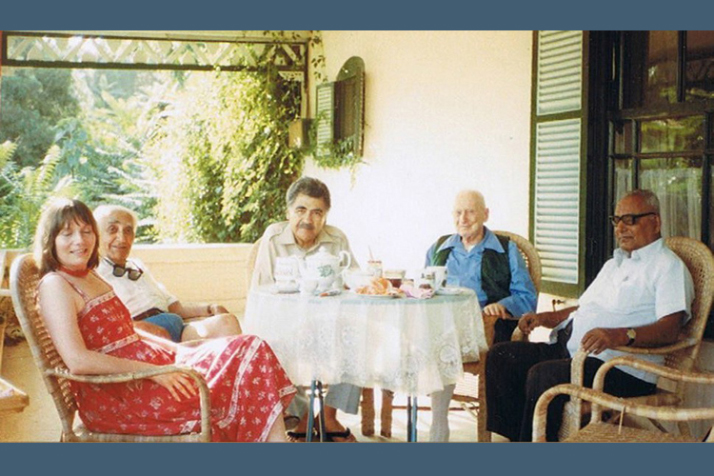
Located in the CPAFFC compound, the house is also known as the Friendship Palace. However, strictly speaking, it did not just belong to Alley as four other expats also took up residence there at one time or another, according to Lin.
Many people must have heard about Chairman Mao Zedong’s assertion that “all reactionaries are paper tigers.” It owes its publicity to an American journalist by the name of Anna Louise Strong, who once lived in the house. During her fifth trip to China in 1946, Strong interviewed Mao in Yan’an, the headquarters of the CPC Central Committee from 1935 to 1948. She then had the chance to listen to this famous thesis and went on to include the term “paper tiger” in her book.
In 1958, Strong, then 73, visited China for the sixth time. This time around, she decided to not return to her old home and instead adopted China as her new haven where she would live out the rest of her days. On March 30, 1970, this American writer with a profound passion for China passed away from illness in the country that she considered her “ideal resting place.”
Other residents included Chilean painter Jose Venturelli, the first well-known Latin American artist to visit China after the founding of the PRC. Venturelli, who died in Beijing in 1988, always expressed a deep concern for those living and working at the grassroots throughout his body of work. Then there was American activist Robert F. Williams, who stood at the forefront in the fight for African American rights, and Japanese politician Kinkazu Saionji, who was active in promoting good relations between Japan and China following his move to Beijing in the late 1950s.
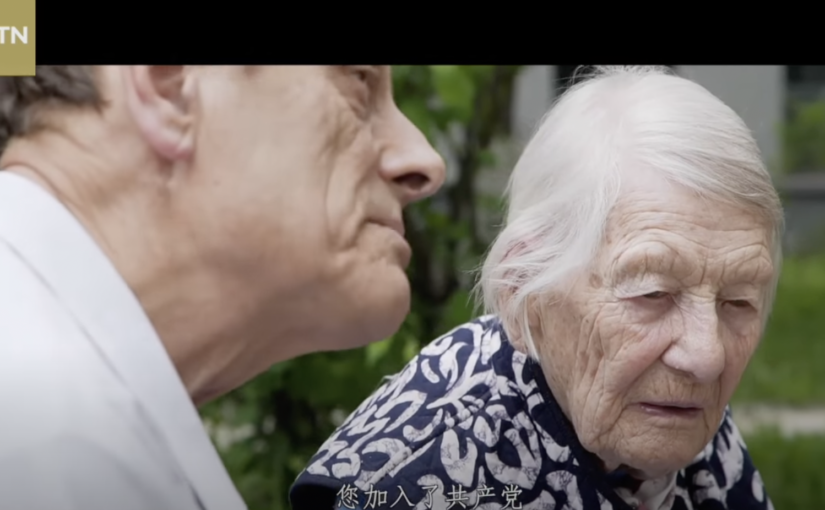
Michael Crook, Chairman of the International Committee for the Promotion of Chinese Industrial Cooperatives (ICCIC), established in 1939 based on the Gung Ho movement, attended the ceremony together with his mother, 106-year-old Isabel Crook, who has spent most of her life in China, teaching English and training students.
Aside from those who actually lived here, many more made their choice to come and stay in China and support the cause of peace and justice, including Korean composer Zheng Lucheng, who joined China’s fight against Japanese aggression, according to Michael Crook.
New chapters
Lebanese-American doctor George Hatem, known as Ma Haide in China, was the first foreigner to join the CPC, in 1937, and the first expat to obtain Chinese citizenship after the founding of the PRC, in 1950. Alley used to live with Hatem in a cave house in Yan’an back in early 1939, according to Zhou Youma, Hatem’s son.
Zhou scattered both Alley’s and his father’s ashes across the places dearest to them in China. “With my own hand, I sent them, two dear friends who forged a friendship through thick and thin, back to the land where they had devoted their lives to the Chinese people,” he said.
Zhou added that he and the descendants of Alley and other international friends of China are also part of the endeavor to realize the great rejuvenation for the Chinese nation. “We will keep putting our best foot forward,” Zhou said.
“Today, under the leadership of the CPC, we have realized the first centenary goal of building a moderately prosperous society in all respects and brought about a historic resolution to the problem of absolute poverty in China,” Lin said. “I believe our international friends can be satisfied with the CPC’s achievements, and proud of the contributions they themselves have made.”
Michael Crook said if Alley and the other residents who used to live in the house had known they would serve as an inspiration to so many Chinese and foreigners in the pursuit of peace and development, they would have been absolutely thrilled.
In 2017, Chinese President Xi Jinping called on the ICCIC to continue its international cultural exchanges and make new contributions to world peace and development in a letter responding to the ICCIC and Beijing Bailie University, one of the Bailie schools.
Beijing Bailie University has managed to uphold the notion of vocational education as championed by its founding and former presidents, and over the course of its history has cultivated a large talent pool for China’s modernization.
The ICCIC, on its part, has played a role in helping to lift people out of absolute poverty, proving an enduring inspiration to all international friends, according to Michael Crook. “We are continuing Alley’s legacy,” he said. “Let’s try and answer Xi’s call for Gung Ho and start writing some new chapters in international friendship.”