We are very pleased to republish this important article by Efe Can Gürcan, Associate Professor at Türkiye’s Istinye University, which originally appeared in Volume 3 Issue 3 of the BRIQ (Belt & Road Initiative Quarterly).
The author argues that China has already developed a firm understanding of its environmental problems and their severity to the extent that it now frames them as a “matter of survival” and has brought these issues to the center of its revised national security strategy. China’s strategy is predicated on an alternative proposal for “ecological civilization”, which may potentially lead to the reversal of “ecological imperialism”. China is in the early stages of building an ecological civilization and requires a lot of work to reach a high level of ecological development.
China’s key achievements on the path towards ecological civilization involve a series of three unfolding and mutually conditioning revolutionary processes that also lead the way in international environmental cooperation. They include a clean energy revolution, a sustainable agricultural revolution, and a green urban revolution.
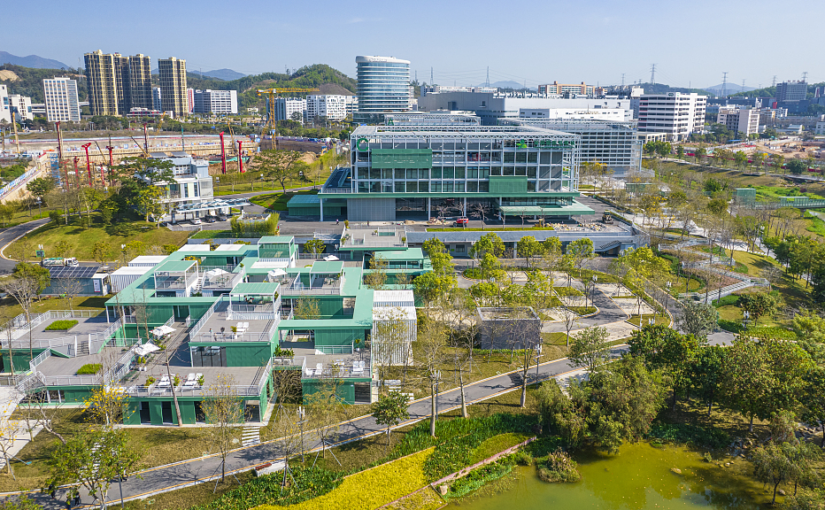
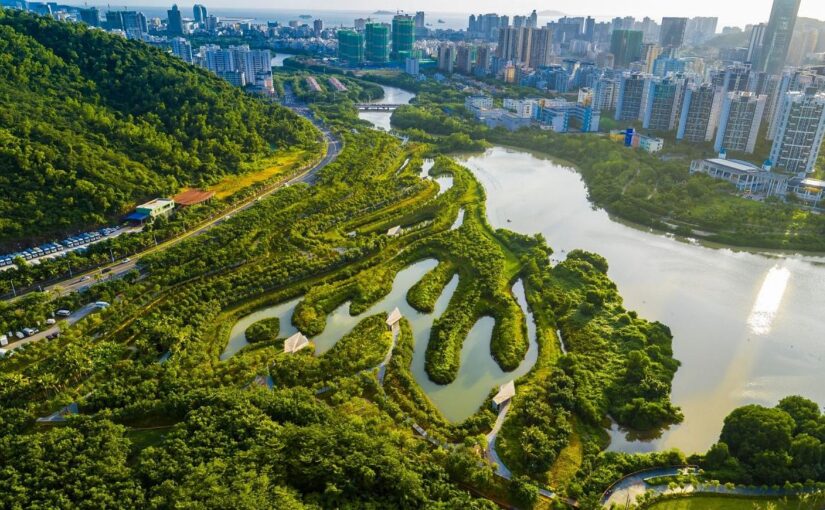
China has already become a global leader in green finance. It leads the eco-city movement, with over 43 percent of the world’s eco-cities being Chinese, and is the second leader in sustainable architecture, next to Canada. Many Chinese cities have dropped down or out of the list of the most polluted cities, leaving India and Pakistan at the top. China’s cities have also joined the ranks of those with the strongest sewage treatment capacity in the world. In addition, China has the most electric vehicles, bikes, and efficient public transportation. China is considered to be not only the world’s centre of electric bus production and consumption but also as having cities with the world’s longest subway systems.
From 2013 onwards, the share of coal in China’s total energy consumption has seen a noticeable decline, accompanied by the increasing share of renewable resources in total energy consumption as a result of conscious efforts at a clean energy revolution.
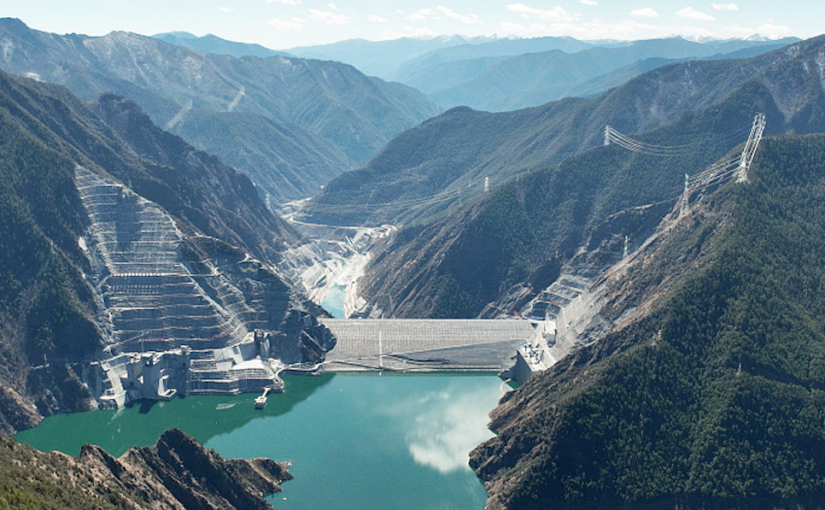
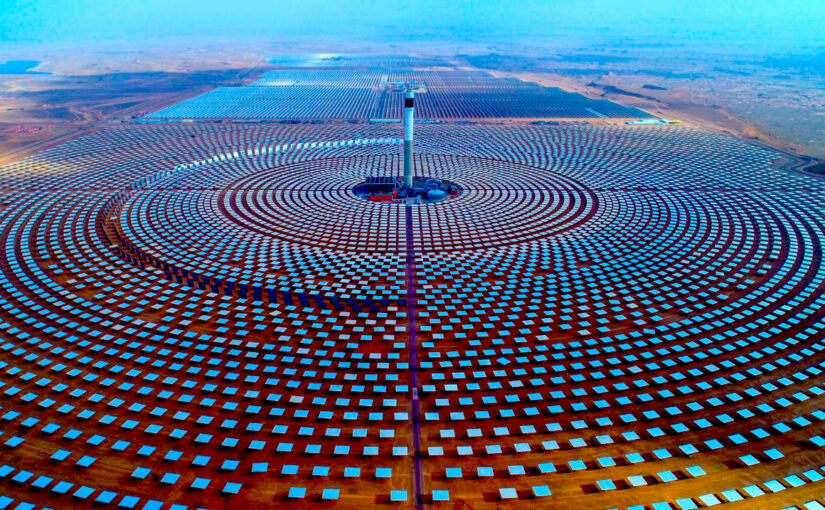
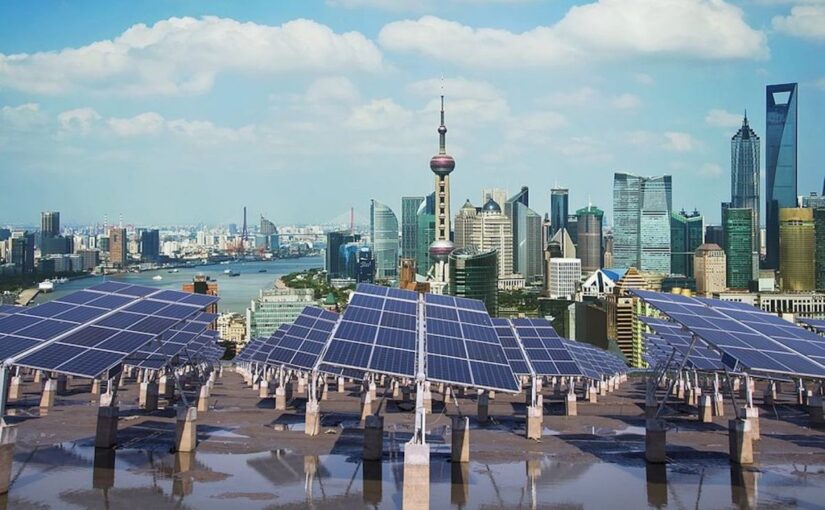
Key to this revolution in the making is China’s strong reputation as the world’s top investor in clean energy. As such, it has succeeded in creating the world’s largest wind, solar, and hydroelectric systems for power generation.
Finally, concerning China’s unfolding revolution in sustainable agriculture, one should acknowledge, not only its adoption of green food standards and the expansion of its agricultural area under certified organic farming, but especially the fact that, as a world leader in green agriculture, it now ranks third in the list of countries with the largest agricultural area under organic farming.
China is the world’s largest country by population size and fourth largest by surface area. Combined with its excessive demographic and geographic size is the continued legacy of Western imperialism in China as a former semi-colony, whose negative effects are amplified by current Western efforts in geopolitical and geo-economic containment. This adds to China’s resource scarcity which acts as another structural adversity constraining its development potential. China possesses only 7% of the world’s arable land and freshwater resources and 8% of the world’s natural resources, even though its population represents 22% of the world’s population. Furthermore, only 19% of its surface area is suitable for human habitation and 65% of its surface area is rugged, which severely cripples China’s farming capabilities and facilitates ethnic heterogeneity as a potential impediment to political cohesion (Morton, 2006; Naughton, 2018).
Despite such adversities, China has come to develop an exemplary model of economic development that inspires much of the developing world. The 1979-2018 period testified to an average growth rate of 9.4% in the lead of the Communist Party of China (CPC), which made China the world’s second-largest economy, top producer, and the leading exporter of technological goods (Hu, 2020). By 2015, China came to assume the global production of 40% of washing machines, 50% of textiles, 60% of buttons, 70% of shoes, 80% of televisions, and 90% of toys. Recently, China has made significant progress in the production of added higher-value products in computer, aviation, and medical technology sectors, among others. Besides its historic success in economic growth, industrial production and technological development, the Chinese economic miracle is credited for 70% of global poverty eradication between 1990 and 2015 (Gardner, 2018).
The huge ecological cost of such a fast-paced and dramatic development –unprecedented in the history of human civilization– is nothing but expected. According to 2009 estimates, the annual economic cost of environmental pollution amounts to 3.8% of China’s Gross Domestic Product (GDP) (Zhang, 2014:32-48). Over 80% of China’s underground and river water resources are no longer fit for human use due to pollution (Jie, 2016). Land pollution and soil erosion are also part of China’s major environmental problems. It is common knowledge that excessive use of pesticides and industrial pollution constitute a major source of land pollution, prompting the loss of organic matter and soil erosion. 2013 estimates suggest that close to 20% of China’s cultivated farmland suffers from contamination and 38% of the soil is subjected to erosion-related loss of nutrients and organic matter (Scott et al., 2018:26; Gardner, 2018:9). Indeed, the contraction of arable land is a natural result of soil contamination and erosion. This also explains China’s over 4% loss of arable land between 1990 and 2018, from 124,481,000 to 119,488,700 hectares (FAO, 2021; Figure 1).
China being the world’s largest pesticide producer and consumer exacerbates this tendency. In the 1990- 2018 period alone, China’s pesticide use rose by 129% (FAO, 2021; see Figure 2). Furthermore, 70% of the world’s electronic waste is recycled in China at the expense of environmental and public health. Industrial pollution, environmentally detrimental recycling practices, and industrial agriculture combined to create China’s “cancer villages” (Gardner, 2018). Map 1 provides a more detailed outline of China’s major environmental problems (Sanjuan, 2018).
Continue reading On the development of China’s environmental policies towards an ecological civilization