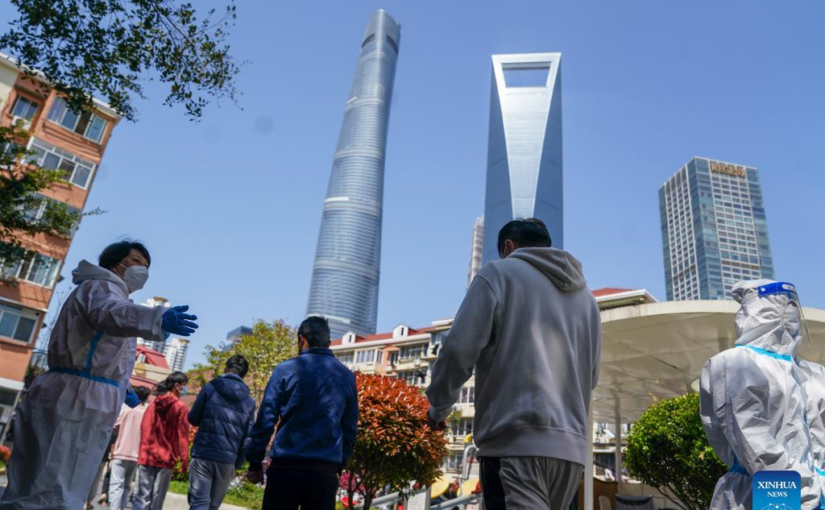
Ian Goodrum: Shanghai’s situation is grim, but Omicron is not ‘unstoppable’

We are pleased to republish this insightful article by Ian Goodrum in China Daily discussing the recent Covid-19 outbreak in Shanghai and questioning the logic and motives of those in the West claiming that China’s dynamic Zero Covid strategy is unsustainable.

There’s no denying Shanghai is going through hard times.

As a local COVID-19 outbreak has grown there, so have the measures to keep it in check. Residents in some areas have been in lockdown for weeks, and the whole city has been at a standstill since the beginning of the month. Daily case counts there have eclipsed the peaks in Wuhan at the start of the pandemic, and the city has yet to see a drop for several days. At present, tens of thousands of new cases are being reported every 24 hours. We can only hope those figures start to change and the city can overcome this dark moment together.

But along with these troubling numbers come familiar refrains from a chorus we know all too well. Just as they did in previous waves, corporate media outlets are practically foaming at the mouth in their rush to declare the end of China’s zero-COVID policy. We heard this with last year’s Delta variant, we heard it as Omicron began its reign as the dominant strain, we’ve heard it since the enormity of the US and Europe’s epidemic control failure was impossible to ignore. They’ve been singing the same tune for so long the record’s not just broken, it’s fused to the phonograph.

As always, these people are either willfully ignorant or pushing an agenda, and that’s a distinction without a difference these days. Yes, the situation in Shanghai is dire, but China is a big country. There are plenty of cities that have had their own Omicron outbreaks but made it through with minimal consequences. Shenzhen, for example — an international hub in its own right and a massive population center — nipped Omicron in the bud with an early lockdown and a mass mobilization of personnel to handle testing and supply delivery. Qingdao, Tianjin, Dongguan and many other places have been able to tamp down this supposedly unavoidable variant with relative ease.

Meanwhile, virologists and epidemiologists based in the West are on the verge of tearing their hair out. Despite their warnings, an apparent mass delusion is taking hold of populations there, spurred by governments, corporations and media that want a return to business as usual. Now that danger to the wealthy has dropped to practically nil, and those most vulnerable to infection have been pushed back to work in face-to-face service jobs by the expiration of pandemic benefits, it’s been decided oh-so-conveniently that COVID is over.
Continue reading Ian Goodrum: Shanghai’s situation is grim, but Omicron is not ‘unstoppable’

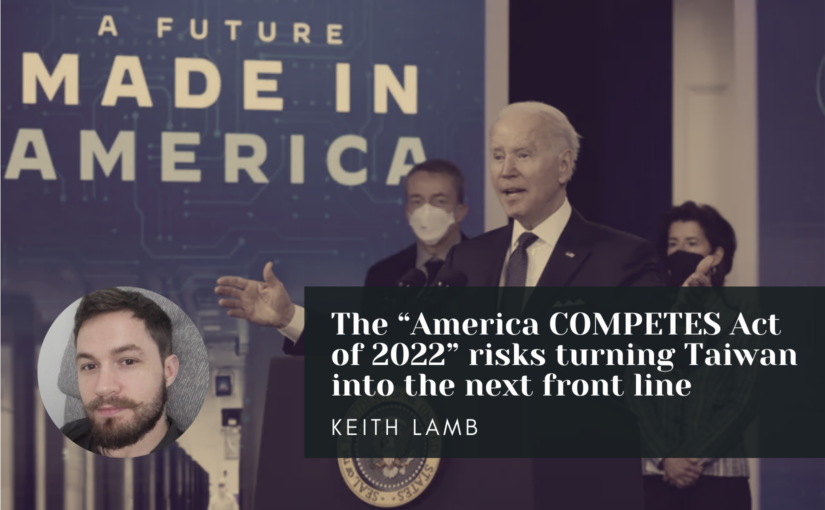
The “America COMPETES Act of 2022” risks turning Taiwan into the next front line

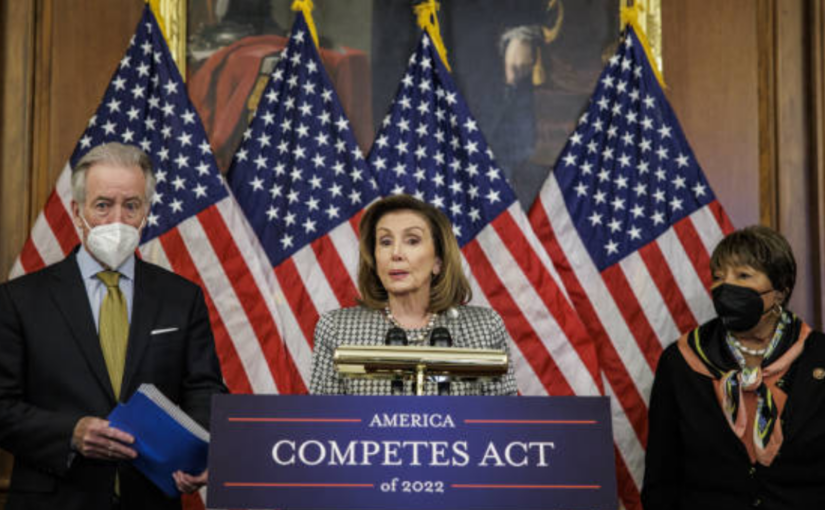
Keith Lamb explains how one of the many dangers in the America COMPETES Act, which now just awaits presidential ratification, is that it effectively writes into US law a repudiation of the ‘one China’ policy, thereby potentially opening the door to a catastrophic confrontation.

The America Creating Opportunities to Meaningfully Promote Excellence in Technology, Education and Science (COMPETES) Act of 2022 only needs to be passed by the President and it will become law. The bill sounds innocuous but the contents of it are not. While the bill is partly about promoting US science and technology it is just as much about preventing the rise of China’s 1.5 billion as well as the Global South who have democratically partnered with China to build a new world through the Belt and Road Initiative.

In attempting to prevent China’s rise the bill pays special attention to preventing cross straits reunification with the country’s Taiwan province, which could lead to chaos on both ends of Eurasia while the US gains. Already, in the west, the Ukrainian front has been opened at the expense of Europeans who are now forced to buy US gas all the while, as reported in the Global Times, the US has increased its purchase of Russian crude oil by 43 percent. In the east a similar strategy is at play. Taiwanese and European tech companies have been forced to limit their sales to mainland China while the US has made special tech provisions to continue selling.

If the America COMPETES Act of 2022 is passed stoking tensions with China and playing the Taiwan card will become US law! If a war can also be sparked in the east then the US will, as in Ukraine, seek to profit geopolitically and economically by fuelling tensions through weapons sales and “sitting it out” while others are sacrificed in a proxy war.

Continue reading The “America COMPETES Act of 2022” risks turning Taiwan into the next front line

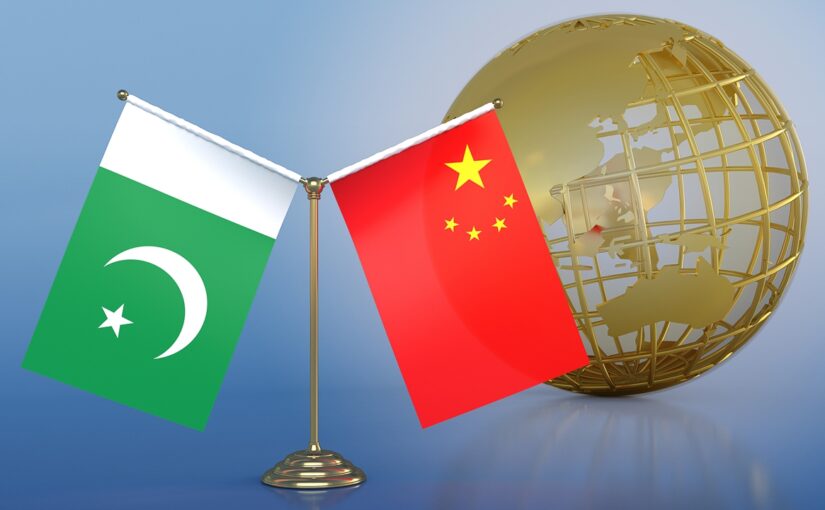
Political crisis in Pakistan won’t affect friendship with China

The current political crisis in Pakistan, which, at time of writing, has seen Prime Minister Imran Khan forced to relinquish office following his loss of a parliamentary vote of no confidence, a vote he had attempted to derail by dissolving parliament, only to have the dissolution overruled by the Supreme Court, has led to considerable speculation in some anti-imperialist circles, focused not least on the nature and extent of the US role in the crisis and the prospects for China/Pakistan relations.

In an attempt to provide some clarity on these matters we are pleased to republish two important and thoughtful articles from China’s Global Times, both published on April 10. They deserve to be carefully read in full, but we highlight here some salient points by way of introduction. 

An OpEd piece bylined simply as Observer and entitled Futile for US to sow discords between Pakistan and China, states:

“[Imran] Khan implied that the US was behind the motion against him. Chinese scholars argue that even if the US was playing tricks from behind the scene, it cannot sow discord between China and Pakistan.” 

It goes on to quote Qian Feng, director of the research department at the National Strategy Institute at Beijing’s Tsinghua University, as saying:

“There is no difference between Pakistan’s major political parties in their friendship and the all-weather strategic cooperative partnership with China. If there’s a difference, it would lie in which party will uphold such relations better.”

Qian further notes that, “In China-Pakistan relations, the Pakistani military has played the role of a stabilizer and ballast stone in building a closer China-Pakistan community with a shared future”, adding that, “no matter which party is in power in Pakistan in the future, it should not be labeled as pro-US.”

In similar  vein, the article Pakistan’s political change ‘won’t affect solid friendship with China’ written by senior journalists Yang Sheng and Liu Caiyu, notes:

“The potential successor of Khan is from the Sharif family which has been promoting China-Pakistan ties for a long time, and cooperation between the two countries could be even better than under Khan.”

This article also quotes Qian Feng as noting: “The latest political change in Pakistan is mainly caused by political party struggles and issues with the economy and people’s livelihoods,” adding that “due to the impact from the COVID-19 pandemic, many people in the country believe that Khan’s administration has failed to stop the economic situation from worsening… In general, current internal problems in Pakistan have nothing to do with its solid ties with China, so there will not be a significant impact on China-Pakistan cooperation.  Khan is from a newly rising political party – the Pakistan Movement for Justice, and when traditional major political parties like the Pakistan Muslim League (Nawaz) or the Pakistan People’s Party (PPP) return to power, China-Pakistan cooperation could be even better because these traditional major parties have much closer and deeper ties with China.” 

“When [Shehbaz] Sharif [candidate for Prime Minister] was regional leader of the eastern province of the Punjab, he struck many BRI cooperation deals with China directly to improve local infrastructure and economic development, and his family have maintained long-standing ties with China as his brother Nawaz Sharif is a three-time former prime minister and the leader who kicked off the CPEC project,” the paper quoted unnamed experts as saying.

Neither article seeks to deny that the US is interfering in Pakistan and attempting to create discord both internally and in the country’s relations with China. However the newspaper quotes Rana Ali Qaisar Khan, executive member of the Central Standing Committee of the Pakistan National Party, one of the country’s historic left-wing parties, with its main base in Balochistan Province, as saying, “the US has always tried to influence many countries’ domestic affairs, including Pakistan’s, but its role should not be exaggerated and the current political situation in Pakistan is mainly caused by internal reasons.”

Continue reading Political crisis in Pakistan won’t affect friendship with China

Mushahid Hussain: China’s entry into the Muslim world

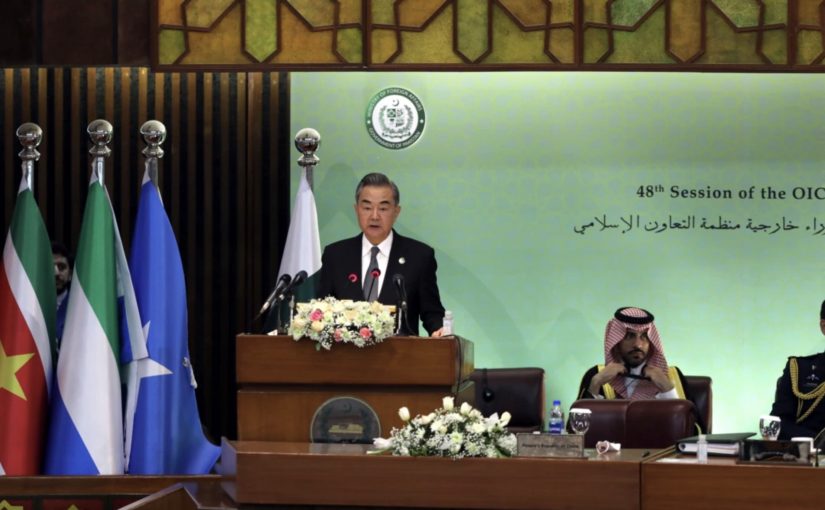
We are very pleased to republish this important article by Senator Mushahid Hussain, Chairman of the Pakistan-China Institute and a member of our advisory group, originally published by Wall Street International and also republished by the Inter Press Service (IPS) news agency. Taking the recent ‘historic first’ of Foreign Minister Wang Yi’s address to the Organisation of Islamic Cooperation (OIC) meeting in Islamabad as his starting point, Senator Hussain notes that the connection between the Chinese and Muslim civilisations dates back to the very earliest days of the Islamic faith and has been a consistent cornerstone of New China’s diplomacy since the founding of the People’s Republic to the present. Key early examples given by the Senator include China’s key role in the 1955 Bandung Conference in Indonesia and its pioneering recognition of the Palestine Liberation Organisation (PLO).

The retrenchment of American power in the Middle East and the larger Muslim world, coupled with the war in Ukraine, has provided a geopolitical breather for China. Beijing is effectively deploying this to make strategic inroads into the region, given this vacuum and focus on Europe. The recent invitation to Chinese Foreign Minister Wang Yi to address the Organisation of Islamic Cooperation (OIC) conference in Islamabad is a ‘historic first,’ and a significant breakthrough for Chinese diplomacy. For the first time, the foreign minister of the Peoples Republic of China was invited to address the most representative platform of the 57 member body representing the 1.5 billion Muslims. During his speech at the OIC conference in Islamabad on the 22nd March 2022, Foreign Minister Wang Yi talked about the “long standing relationship between China and the Muslim world” and reaffirmed that China would continue supporting Muslim countries in their quest for political independence and economic development.

Historically, China has always been etched in the Muslim consciousness as a country with a great civilisation based on knowledge, learning and development. For example, there is a famous saying of the Holy Prophet Mohammad (Peace Be Upon Him), 1,400 years ago, which urged Muslims to “seek knowledge, even if you have to go to China,” implying that although China was physically far away from Arabia, it was a land of learning. Soon after the end of the Cold War in the 1990s, a professor of the prestigious American university Harvard, Prof. Samuel Huntington, talked of a ‘clash of civilisations’ in which he implied that Western civilization would be at odds with both the Islamic and the Confucian civilisations. Interestingly, he also talked of a united front of the Islamic and Confucian civilisations.

Continue reading Mushahid Hussain: China’s entry into the Muslim world

China votes against Russia’s suspension from the UN Human Rights Council

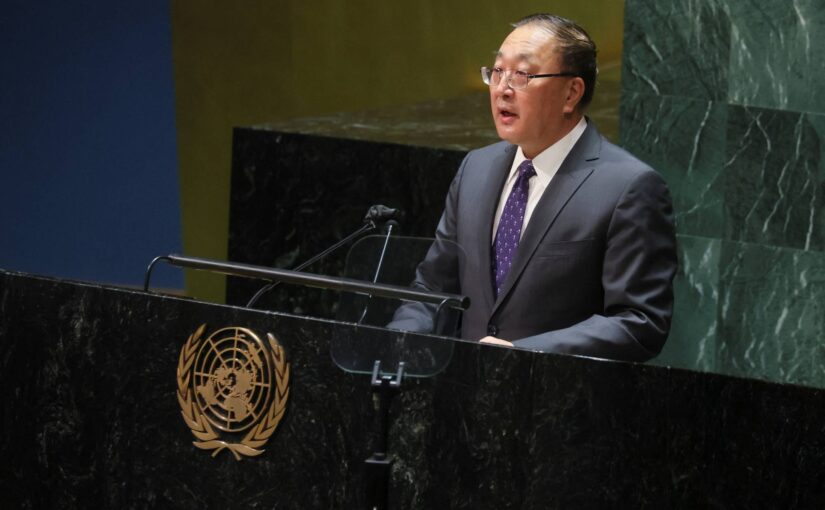
We publish here the text of the statement made by Chinese Ambassador Zhang Jun at the Emergency Special Session of the United Nations General Assembly, held on April 7th, where the Russian Federation’s membership of the UN Human Rights Council was suspended. In explaining his country’s negative vote, Ambassador Zhang reiterated China’s respect for international humanitarian law and called on all parties to the conflict in Ukraine to protect civilians, especially women, children and other vulnerable groups. Noting that dialogue and negotiation are the only way out, he further noted that the people of the world, especially of the developing countries, are paying a price, for example in soaring food and oil prices, although they are not parties to the conflict.

Consistent with US pressure, the resolution was passed with 93 votes. However 24 countries (including all the socialist countries) voted against, 58 abstained and 18 did not participate in the vote. As only negative votes were counted in this way, the resolution was deemed to have passed with the required two thirds majority. It is, however, a noteworthy fact that a small majority of UN members actually failed to vote in favour of the resolution.

Mr. President,

On the Ukraine issue, China always believes that the sovereignty and territorial integrity of all countries, including Ukraine, should be respected, that the purposes and principles of the UN Charter should be upheld, that the legitimate security concerns of all countries should be taken seriously, and that all efforts conducive to a peaceful settlement of the crisis should be supported. Putting an early end to the fight is the urgent expectation of the international community. It is also what China is striving for. China supports all initiatives and measures that will help ease the humanitarian crisis in Ukraine. We call on the parties concerned to respect international humanitarian law, and take concrete actions to ensure the safety of civilians, and protect the basic rights and humanitarian needs of women, children and other vulnerable groups. The reports and images of civilian deaths in Bucha are disturbing. The relevant circumstances and specific causes of the incident must be verified and established. Any accusations should be based on facts. Before the full picture is clear, all sides should exercise restraint and avoid unfounded accusations.

Continue reading China votes against Russia’s suspension from the UN Human Rights Council

China-Korea friendship from one century into the next

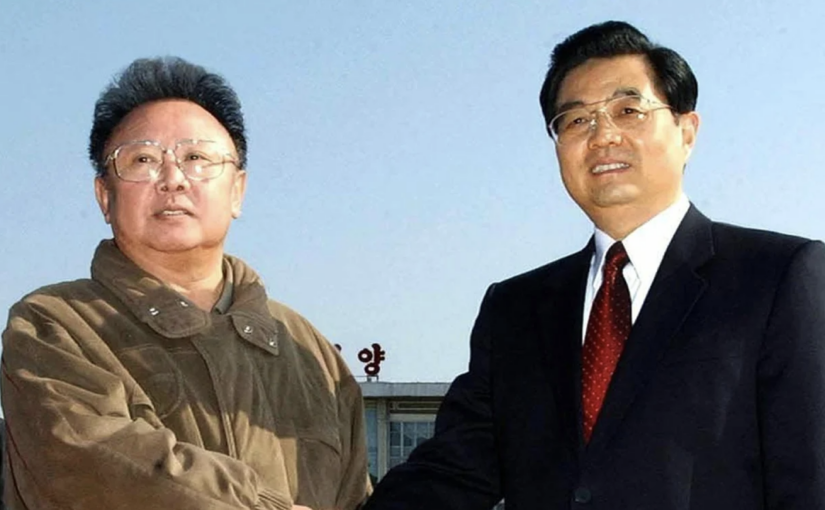
February 16 marked the 80th birthday of Kim Jong Il, the late leader of the Democratic People’s Republic of Korea (DPRK). Marking this occasion, the DPRK published a special commemorative photo album depicting his contributions to strengthening and developing the traditional friendly relations between the two socialist nations of China and Korea. The contents of this significant historical record were subsequently reproduced in video format. We are pleased to make it available here. It vividly depicts the great importance that Kim Jong Il attached to the relationship with China until the end of his life.

https://www.youtube.com/watch?v=Cr6H4-UYqfQ

America COMPETES Act of 2022: A manifesto for a New Cold War

In this article, originally carried by CGTN, Keith Lamb argues that the America COMPETES Act of 2022, in which China is mentioned a staggering 666 times, and which now only awaits presidential approval following its passage in the House and Senate, amounts to a formal declaration of the New Cold War, not only against China but against the entire Global South.

The America Creating Opportunities to Meaningfully Promote Excellence in Technology, Education and Science (COMPETES) Act of 2022 has passed in the House and the Senate. It now only needs presidential approval to become law. If it is passed, it will mark the official start of a new Cold War against China and the Global South.

Importantly, the “America COMPETES Act of 2022” is actually the “United States Innovation and Competition Act of 2021.” This is because, on March 28, the Senate voted to use the more belligerent text of the 2021 Act for the 2022 Act.

The United States Innovation and Competition Act of 2021, originally known under the imperial sounding “Endless Frontier Act,” was drawn up by those conditioned by the ideology of neoliberal imperialism, namely Senator Todd Young and Chuck Schumer. Schumer was a supporter of the illegal occupation of Iraq, and Young, an ex-naval officer with an MBA from the University of Chicago, one of the centers of neoliberal ideology, worked at the anti-China think tank “The Heritage Foundation.”

Continue reading America COMPETES Act of 2022: A manifesto for a New Cold War

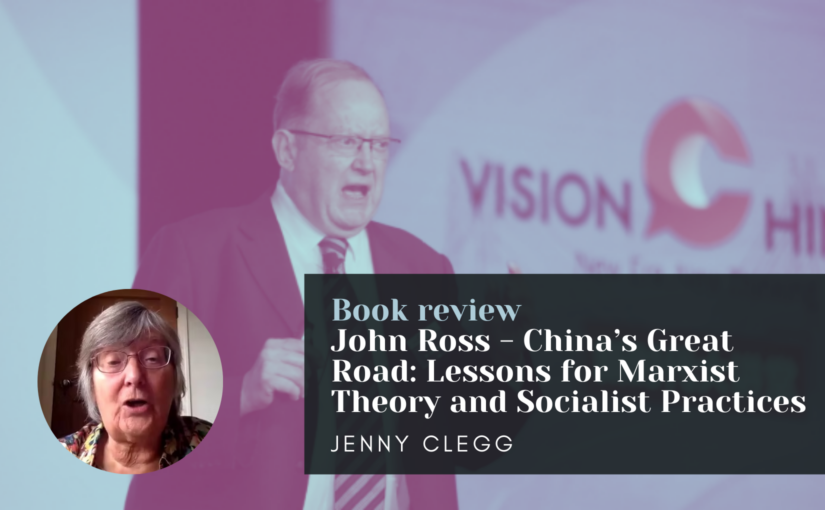
Book review: China’s Great Road – Lessons for Marxist Theory and Socialist Practices

By John Ross, Praxis Press, 2021
Reviewed by Dr Jenny Clegg

Updated 09 April 2022: John Ross contacted us to note that the review incorrectly quoted him as describing Deng Xiaoping as “the greatest Marxist of all time”. This should have been “the world’s greatest economist.”

John Ross has, for some years now, been one of the most forceful advocates of the present Chinese road to socialism on the Western left. His ‘China’s Great Road’ (for which we held an online launch) presents his key arguments. In this detailed review, Dr Jenny Clegg, writer, China specialist, peace campaigner and Friends of Socialist China advisory group member, acknowledges Ross’s useful contribution to the debate, but also draws attention to what she considers its flaws, regarding both the complexities of China’s recent trajectory and the historical record of socialism under Stalin and Mao.

Introduction

Literature on China’s supposed ‘reversion to capitalism’, whether of the neoliberal or state-led kind, abounds. It has been argued over again that China’s success over the last four decades came as a result of its abandoning ideology for pragmatism so as to follow policies of ‘reform and opening up’.  Either that or the wholesale embrace of markets unleashing the creativity of its individual capitalist entrepreneurs.  John Ross, a Senior Fellow at the Chongyang Institute for Financial Studies at Beijing’s Renmin University, swims hard against this tide in his book, China’s Great Road, arguing the exact opposite:that China’s remarkable achievements are the result, not of a reversal of Marxism, but in fact a return to basic Marxist tenets.

The book comprises a collection of recent articles, some originally published in Chinese, others in English, which makes for some repetition, but leaves no doubt as to the arguments.  Ross’s aim is to persuade others on the international left to look seriously at China’s socialism and see what can be learnt from its success.

The book presents two key propositions.

The first, that China has achieved far more than any other country in history in improving the well-being of its people, is set out with the help of easy-to-read graphs.  The evidence, as Ross shows, is all there in World Bank figures: China has lifted over 900 million people out of poverty, raising livelihoods and life expectancy at unprecedented rates, whilst exceeding every other economy in output, wage growth and household consumption over the last 30 years. 

Continue reading Book review: China’s Great Road – Lessons for Marxist Theory and Socialist Practices

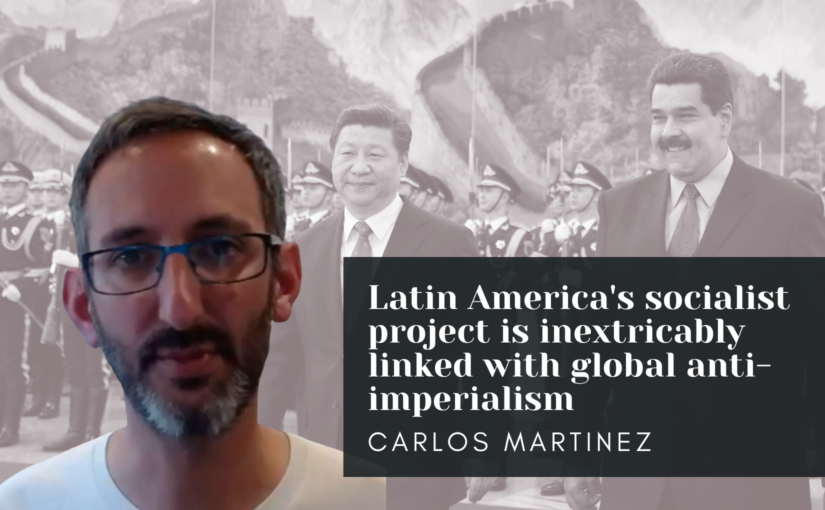
Carlos Martinez: Latin America’s socialist project is inextricably linked with global anti-imperialism

Below is the video and text of a speech by Carlos Martinez, co-editor of Friends of Socialist China, introducing our recent event 21st Century Socialism: China and Latin America on the Frontline. Carlos explains the motivation for organising a webinar focused on socialist processes in China and Latin America: that both China and progressive Latin America are building a vision of 21st century socialism, and this is of immense importance and interest for Marxists around the world.

On behalf of Friends of Socialist China, I’d like to thank you all for joining today’s webinar.

I’m not going to speak for long, but I wanted to quickly say something about the motivation for putting on this event. Why China and Latin America?

Of course our platform focuses on China in particular. Not because of our special appreciation for jasmine tea or Ming dynasty pottery, but because, as the largest socialist country, and the largest developing country, and as a rising power, China has a critically important role in terms of the global transition both towards a multipolar framework of international relations, and towards socialism.

And if we’re talking about socialism in the 21st century, it’s obvious we need to discuss China. Having achieved its historic goal of eliminating extreme poverty by 2021, China’s now building systematically towards its Second Centenary Goal: to build “a great modern socialist country in all respects.”

Continue reading Carlos Martinez: Latin America’s socialist project is inextricably linked with global anti-imperialism

Russia-Ukraine conflict highlights racist double standard in the West

In this hard-hitting piece, originally carried on China’s People’s Daily Online, Wu Chaolan exposes the racist double standards inherent in the West’s attitude to conflict in Ukraine compared to those in Iraq, Afghanistan and elsewhere.

The ongoing Russia-Ukraine conflict has garnered widespread attention across the globe. The wall-to-wall coverage and outpouring of reactions to the Russia-Ukraine conflict from the West has raised eyebrows at its double standard toward other humanitarian crises, which has unsheathed flagrant racist and biased attitudes toward the value of non-white lives that also matter.

CBS News senior correspondent in Kyiv Charlie D’Agata, for instance, has faced a widespread backlash due to his discriminatory comments on the Ukraine crisis: “This isn’t a place, with all due respect, like Iraq or Afghanistan that has seen conflict raging for decades. This is a relatively civilized, relatively European – I have to choose those words carefully, too – city where you wouldn’t expect that, or hope that it’s going to happen,” he said.

The seasoned correspondent was forced to apologize later, saying he spoke “in a way I regret.” However, his remarks are not part of an isolated incident. Ukraine’s former deputy general prosecutor David Sakvarelidze spoke to the BBC, suggesting that it is harder for him to watch white people fleeing the conflict.

Continue reading Russia-Ukraine conflict highlights racist double standard in the West

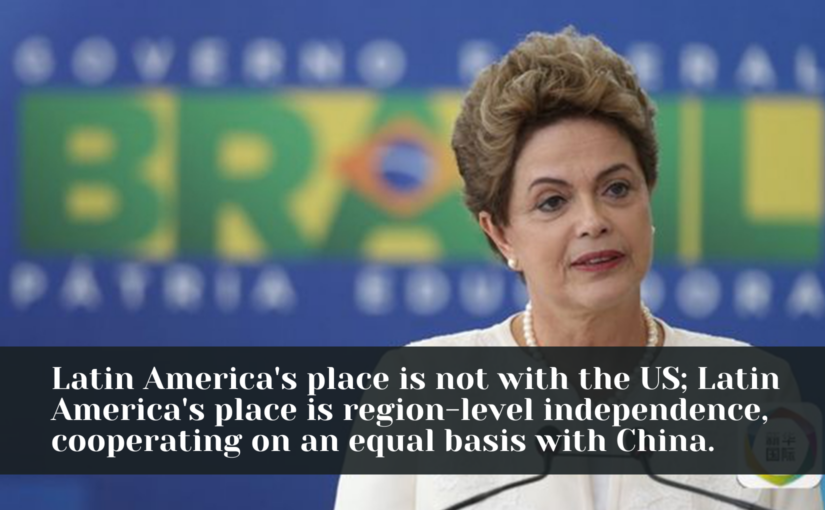
Former Brazilian president compares US neoliberalism with China’s people-centered development

We are pleased to republish this summary of former Brazilian president Dilma Rousseff’s keynote speech at our event 21st Century Socialism: China and Latin America on the Frontline. The article is written by Carlos Martinez and first appeared in Global Times. President Rousseff’s speech can be read in full here.

Friends of Socialist China held a webinar on March 19 themed “21st Century Socialism: China and Latin America on the Frontline”, with a keynote speech from former Brazilian president Dilma Rousseff.

Rousseff, a trained economist, gave a detailed analysis of rising tensions between the US and China, starting with Obama’s “Pivot to Asia” in 2011. She noted that, while the Trump administration was responsible for the sharpest escalation of anti-China hostility, the Biden administration has thus far failed to meaningfully improve the situation.

Rousseff compared the US and China’s performance in a number of key areas, starting with the Covid-19 pandemic. The US “has failed to reduce the deadly effects of the disease in the country”, whereas China has been able to get the virus under control and provide enormous numbers of vaccine doses to Africa, Latin America, the Middle East and Asia.

Continue reading Former Brazilian president compares US neoliberalism with China’s people-centered development

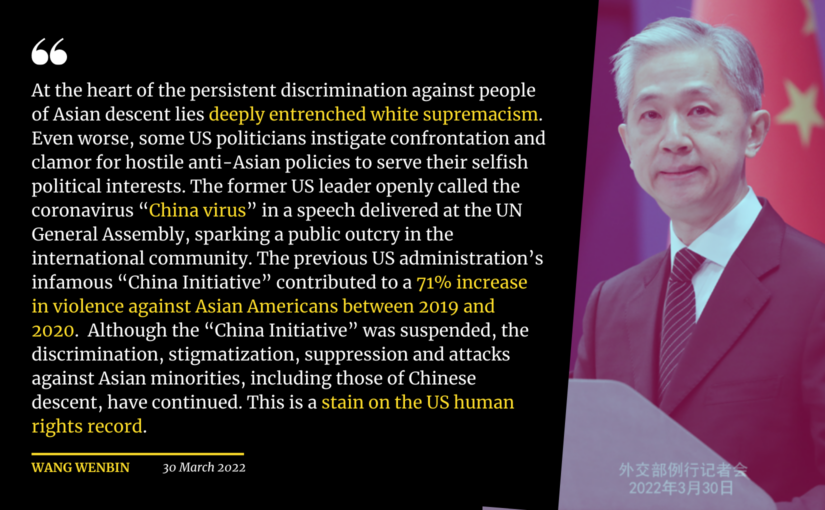
Wang Wenbin: deeply-entrenched white supremacism at the heart of US anti-Asian racism

We reproduce below an important statement made by Chinese Foreign Ministry Spokesperson Wang Wenbin in his March 30th press conference, responding to a question from a Beijing Daily correspondent, who noted that 75% of Asian seniors in New York City are afraid to leave their homes due to the threat of anti-Asian violence. Wang outlines the contributions made by the Asian communities to US economy and society. Despite this, he notes, they still face systemic racial discrimination. This is due to deep-seated white supremacism, which is still stirred by US politicians. According to Wang, the US needs to give up being a textbook example of double standards of human rights.

I have seen relevant reports and am concerned about the discrimination against Asian Americans and hate crimes in the US.

Ethnic minorities of Asian descent have made important contributions to the economic and social development in the US. For example, it is reported that Chinese Americans contributed over $300 billion to US GDP in 2019 through consumer spending, supporting 3 million jobs. As of 2017, there are over 160,000 Chinese American-owned businesses in the US, generating approximately $240 billion in revenue and supporting 1.3 million jobs. Chinese Americans have also made important contributions to public health and social welfare in the US through active involvement in non-profits, volunteering and philanthropy. Since March 2020, more than 690 Chinese American grassroots organizations have raised over $18 million and delivered millions of items of personal protective equipment (PPE) and meals to agencies in the fight against the COVID-19 pandemic. However, such hard work and important contributions brought them no respect or protection they so richly deserve, but unabated discrimination and injustice. After COVID-19 broke out, several doctors of Asian descent said that the patients are more afraid of them than the virus. On March 16 last year, a shooting spree in Atlanta targeting women of Asian descent have resulted in the death of six Asian female. The case later triggered fear and anger among Asian Americans nationwide as the US law-enforcement authorities refused to label it as an incident of hate crime. A report published by the Center for the Study of Hate and Extremism at California State University San Bernardino revealed that anti-Asian hate crime increased by 339% in 2021 compared to the year before. Besides hate crime, Asian Americans are also subjected to various discrimination in employment, education, income, social welfare and cultural rights. According to a recent study published in the Journal of the American Board of Family Medicine, only 54% of Asian American older adults surveyed said they were satisfied with their lives, significantly lower than respondents of other races and ethnicities.

It takes more than one cold day for the river to freeze three feet deep. At the heart of the persistent discrimination and xenophobic words and deeds against people of Asian descent lies the deeply entrenched white supremacism. Even worse, some US politicians instigate antagonism and confrontation and clamor for hostile anti-Asian policies to serve their selfish political interests, only to make things more difficult for Asian Americans. Former US leader openly called the coronavirus as “China virus” in a speech delivered at the UN General Assembly, sparking a public outcry in the international community. Six Republican congressmen in the US, who are also veteran anti-China politicians, voted against an anti-Asian hate crime bill. They even openly stigmatize and attack people of Asian descent by associating the coronavirus with them. The previous US administration’s infamous “China Initiative” fueled racial discrimination against Asians, especially Chinese Americans, and contributed to a 71% increase in violence against Asian Americans between 2019 and 2020. 

Although the “China Initiative” was suspended at request, the discrimination, stigmatization, suppression and attacks against Asian minorities, including those of Chinese descent, have continued. This is a stain on the US human rights record, an irony to the US’ reputation as melting pot of ethnic groups, and an affront to the US value of “freedom and equality”. UN Special Rapporteur Fernand de Varennes said the US human rights system is leading to growing inequality. Stephen Walt, a professor at Harvard University, said “Americans must first fix what has gone wrong at home and rethink how they deal with the rest of the world.” At the 48th session of the United Nations Human Rights Council, many countries blasted the United States for being the “biggest destroyer” of human rights in the world and urged the country to address its own severe human rights violations. We urge the US government to heed these appeals from the international community and stop being a textbook example of double standard of human rights. 

Changes since 2012 impact China and beyond

The following China Daily op-ed, written by Friends of Socialist China co-editor Carlos Martinez, reflects on the last decade of dramatic change in China, particularly in relation to poverty alleviation, environmental protection, foreign policy, and the pursuit of common prosperity.

In the past decade, the People’s Republic of China has grown enormously in economic strength and global stature.

At the 18th National Congress of the Communist Party of China in 2012, Xi Jinping, general secretary of the CPC Central Committee, put forward the “two centenary goals”. The goals mean building a moderately well-off society in all respects by 2020, just before the centenary year of the CPC in 2021, and a great modern socialist country that is prosperous, strong, democratic, culturally advanced, harmonious and beautiful by the middle of this century, while the People’s Republic’s 100th anniversary is 2049.

The Party and the leadership mobilized tens of millions of people to achieve the first goal, the key component of which was the eradication of extreme poverty, which was achieved in 2020.

At the start of the targeted poverty alleviation program in 2013, a little less than 100 million people were identified as living below the poverty line. Seven years later, the figure was zero. As Xi said, “thanks to the sustained efforts of the Chinese people from generation to generation, those who once lived in poverty no longer have to worry about food or clothing or access to education, housing and medical insurance”.

Continue reading Changes since 2012 impact China and beyond

Elias Jabbour: Understanding the possibilities the Chinese socialist experience offers for humanity

Below is the video and text of a speech by Elias Jabbour, economics professor and author of Socialist Economic Development in the 21st Century: A Century after the Bolshevik Revolution, at our recent event 21st Century Socialism: China and Latin America on the Frontline. Elias discusses how China’s model of socialism and its engagement with global markets is creating an invaluable space for the countries of Latin America to assert their sovereignty and more forward on the long road towards socialism.

I am immensely grateful for the opportunity to be with friends gathered in this group. In fact, one of the great honors I’ve had in my life has been speaking to comrades who have political clarity about how things work in the real world.

In Brazil and Latin America, we are still a long way from a level of political consciousness on the left to be capable of perceiving the centrality of China and the possibilities that the Chinese socialist experience offers for humanity.

I used to say that China has been noted for building the most advanced social and human engineering of our time. It’s in that country, although still embryonic and taking its first steps, that socialism presents itself as a clearer historical form.

Furthermore, I have said that the current historical form in which socialism presents itself is still far from abstract concepts, among them – for example – the abolition of private property.

Continue reading Elias Jabbour: Understanding the possibilities the Chinese socialist experience offers for humanity

Dilma Rousseff’s keynote speech on US-China relations and their impact on Latin America

We are pleased and honored to present the English translation of Dilma Rousseff’s keynote speech at our recent webinar, 21st Century Socialism: China and Latin America on the Frontline. Dilma Rousseff, former President of Brazil, provides a detailed analysis of the New Cold War and the current state of US-China relations, comparing and contrasting the US neoliberal model with China’s people-centered model of Socialism with Chinese Characteristics. President Dilma reiterates the need for Brazil to integrate with the rest of Latin America, to break its dependency on the US, to develop a truly sovereign foreign policy, and work closely with China – a country which is increasingly leading in new technology and which is willing to work with other countries on the basis of equality.

Brazil during the Workers Party governments always had a position of absolute independence with regard to its relations with all other countries. And it prioritized its strategic relation with the BRICS countries: Brazil, Russia, India, China and South Africa. Now we find ourselves in an international framework of conflict.

Since the financial crisis in 2008, friction between China and the United States has grown. Such frictions, which emerged during the Obama administration with the Trans Pacific Partnership (which was an attempt to counter China), became more aggressive during the Trump administration. After the Biden administration took office, China-US relations, while more “diplomatic” in appearance, became even more conflictual.

When comparing China and the US in their COVID response, economic recovery, education, science and technology, domestic governance and global governance, it seems fair to say that the balanceof competition is increasingly tilting towards China.

In the response to COVID, the disappointing result in the US contrasts sharply with the situation in China, which has had greater control over the spread of the virus, reducing the number of infections and deaths. The US government, on the other hand, has failed to reduce the deadly effects of the disease in the country. China has also actively participated in international cooperation, supporting the COVAX Facility and the World Health Organization (WHO), proposing to make COVID vaccines a global public good, and providing vaccines and PPE to other countries. These movements evidenced China’s growing “soft power”.

Continue reading Dilma Rousseff’s keynote speech on US-China relations and their impact on Latin America

Arnold August: Revolutionary democracy in China and Cuba has resulted in huge advances in human rights

Embedded below is a clip of Canadian author and political scientist Arnold August, speaking at a virtual conference – Human Rights Today: Universal and Global? – organized by Central South University, Changsha, China, on February 27, 2022. Arnold addresses the accusations that China and Cuba are ‘undemocratic’, exposes how this label is weaponized by the US against its political enemies, and explains how the Chinese and Cuban revolutions (in 1949 and 1959) created a type of popular democracy which gives expression to the needs and aspirations of ordinary people.

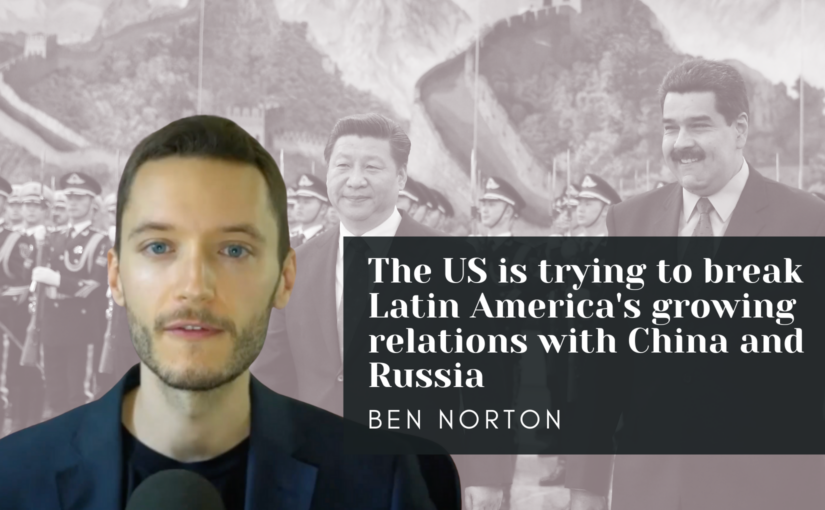
Ben Norton: The US is trying to break Latin America’s growing relations with China and Russia

We’re pleased to republish this article by Ben Norton, originally carried in Multipolarista, which summarizes the remarks he made to our recent webinar, 21st Century Socialism: China and Latin America on the Frontline. Ben highlights the various ways in which the US-led New Cold War is playing out in Latin America, particularly in terms of successive US administrations attempting to disrupt the growing links between the countries of Latin America and the Caribbean, on the one hand, and China and Russia on the other.

The United States has turned Latin America and the Caribbean into a key battlefield in its new cold war on China and Russia.

Washington’s hybrid war on Beijing and Moscow took shape in 2018, when the Pentagon published a National Defense Strategy identifying the two Eurasian powers as the biggest “threats” to US national security.

Following the attacks on September 11, 2001, the US government had shaped its foreign policy around a so-called “war on terror.” But Defense Secretary James Mattis announced in January 2018 that the Pentagon had changed its priorities, and “great power competition, not terrorism, is now the primary focus of U.S. national security.”

The US director of national intelligence, Avril Haines, echoed this perspective in a Senate Intelligence Committee hearing this March. Summarizing the US intelligence community’s 2022 Annual Threat Assessment report, Haines said China and Russia constitute the top “threats” to Washington, and she emphasized that Beijing in particular “remains an unparalleled priority for the intelligence community.”

In this Cold War Two, Latin America has been caught in Washington’s crosshairs.

After Russia invaded Western ally Ukraine on February 24, the US military responded by threatening China and Venezuela.

On February 26, the US Navy sent a guided-missile destroyer warship through the narrow Taiwan Strait, in a move that the Chinese government condemned as an “adventurist” and “provocative action” seeking “to bolster the ‘Taiwan independence’ forces.”

Continue reading Ben Norton: The US is trying to break Latin America’s growing relations with China and Russia

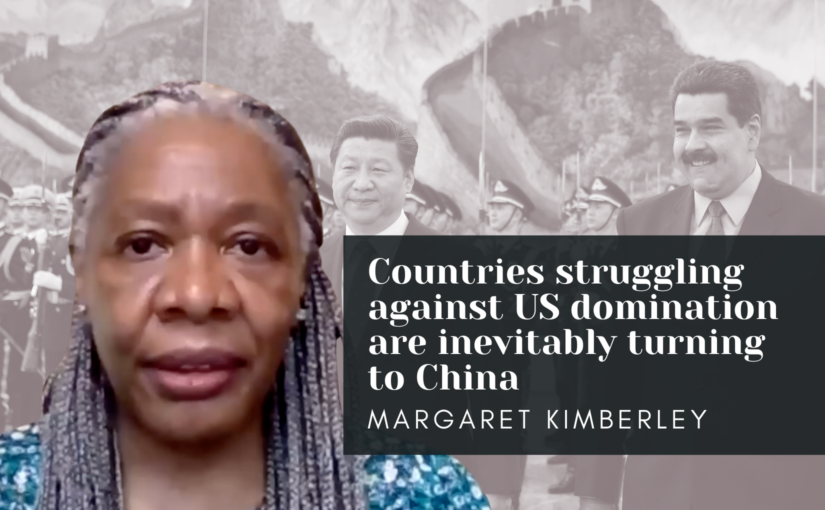
Margaret Kimberley: Countries struggling against US domination are inevitably turning to China

Below is the video and text of a speech by Margaret Kimberley, Executive Editor of Black Agenda Report, at our recent event 21st Century Socialism: China and Latin America on the Frontline. Margaret draws on her recent participation in delegations to Nicaragua to highlight the growing links of cooperation and solidarity between China and progressive Latin America, and she contextualizes this within an emerging multipolar system of international relations which stands in stark contrast to US unipolarity and hegemony.

Greetings everyone. Of course I want to start by thanking Friends of Socialist China for inviting me to participate in this meeting today. When I received the invitation in early February I didn’t know, I don’t think anyone knew, that the world would change irrevocably just a few weeks later. But here we are and I’ll discuss a little bit how the conflict in Ukraine is connected to the subject of today’s discussion.

Only people in the United States were unaware that the unipolar world was ending but the rest of the world was very much aware. China’s economic ascendancy is a direct challenge to US power and is being felt and embraced in Latin America.

I saw this for myself on my first trip to Nicaragua in November 2021. I was invited to be an electoral companion, an acompanante, during that nation’s election and I attended as a member of a Black Alliance for Peace delegation.

Continue reading Margaret Kimberley: Countries struggling against US domination are inevitably turning to China

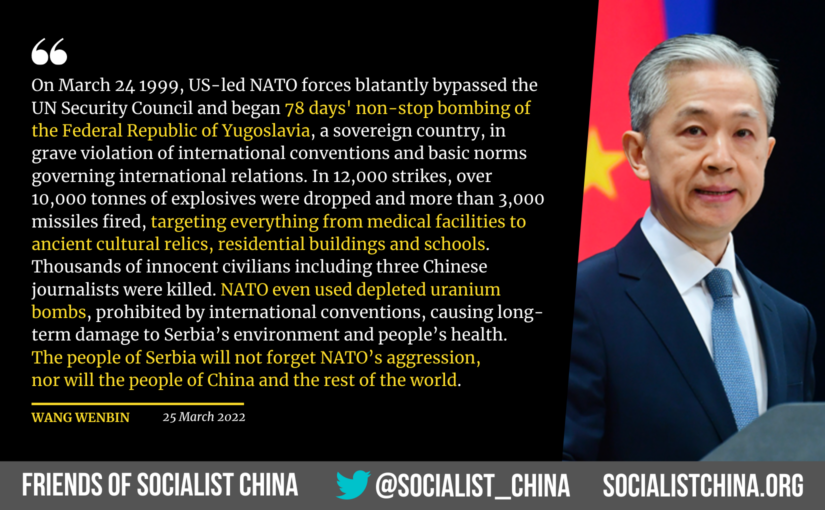
Wang Wenbin: NATO serves no other purpose than war

Speaking at the Ministry of Foreign Affair’s press conference on March 25, 2022, Spokesperson Wang Wenbin commented on NATO’s attack on Yugoslavia (which was launched 23 years ago) and NATO’s record as an aggressive alliance and product of Cold War.

On March 24 1999, US-led NATO forces blatantly bypassed the UN Security Council and began the 78-day incessant bombing of the Federal Republic of Yugoslavia, a sovereign country, in grave violation of relevant international conventions and basic norms governing international relations. In 12,000 strikes, over 10,000 tonnes of explosives were dropped and more than 3,000 missiles fired, targeting everything from medical facilities to ancient cultural relics, residential buildings and schools. Thousands of innocent civilians including three Chinese journalists were killed. During the bombing campaign, NATO even used depleted uranium bombs prohibited by international conventions, causing long-term damage to Serbia’s environment and people’s health. The people of Serbia will not forget NATO’s aggression, nor will the people of China and the rest of the world.

NATO is convening a summit on Ukraine on the 23rd anniversary of its bombing of the Federal Republic of Yugoslavia. I wonder if the US and other NATO members have asked themselves: What is the root cause of the Ukraine crisis? What responsibility should the US and NATO assume? Before reflecting on their crimes against the people in countries like Serbia, Iraq and Afghanistan, the US and NATO have neither right nor authority to judge others. Born out of the Cold War, NATO serves no other purpose than war. It has never contributed to peace and security of our world and will never do so. All those who truly love peace and are committed to advancing peace will resolutely reject NATO’s continued expansion. 

When will China become a high-income country?

We are pleased to reprint this important speech, recently delivered at Peking University, by Dr. Justin Yifu Lin, one of China’s leading economists and a former Vice President of the World Bank, which addresses the speed of economic growth in China this year; the relationship between economic growth and innovation; how to achieve common prosperity; and when will China become a high-income country.

Dr. Lin concludes: “Up to now, the population living in high-income countries only accounts for 16% of the world’s population. If China also becomes a high-income country, the world’s population living in high-income countries will double, from 16% to 34%. I believe that we will have the opportunity to witness this history.”

The speech was published in English by Asia Times and originally in Chinese on guancha.cn

This article is compiled from a speech by former World Bank Vice-President Justin Yifu Lin at the Peking University National School of Development’s “China Economic Watch No 60: Interpretation of the Two Sessions and China’s Economic Prospects” event. This article has not been reviewed by the speaker himself.

Good afternoon, everyone, online and offline. As a member of the Chinese People’s Political Consultative Conference (CPPCC), I am glad to have this opportunity to talk to you about some of the hot issues that were of concern to the delegates and members of the CPPCC during the two sessions.

I will mainly talk about three points. First, the speed of economic growth this year; second, economic growth should be innovative; third, how to achieve common prosperity? When will China become a high-income country?

First of all, for China, the economic growth rate is the biggest big picture, because we want to build a new development pattern mainly based on a large domestic circulation. In fact, the larger China’s economy is and the higher the share of the service sector is, the greater the share of the domestic circulation is bound to be.

So, how to make the economy bigger and increase the share of service industry? Of course, we need to raise income levels and economic growth.

Second, we need to have two big pictures in mind. One is the overall strategic picture of the great rejuvenation of the Chinese nation, which includes politics, culture, and many other aspects, but the economy is the foundation.

To achieve the great rejuvenation of the Chinese nation, the goal is to set China’s GDP per capita at 50 percent of that of the United States at purchasing power parity (PPP) – about the level of South Korea in 2002 – a requirement that should be in place. But China’s GDP per capita at PPP is currently just over 20% of the US. To go from just over 20% to 50%, and to achieve it by 2049, would require a relatively high rate of economic growth.

Another big picture is that we are now facing a major global change that has not been seen in a century. How should we manage this big change? Only if China’s GDP per capita at purchasing power parity reaches 50% of the US, the U.S. will accept China as the number one economy by then, because by then, the US will probably have no means to jam our necks.

Continue reading When will China become a high-income country?