We’re pleased to republish this thought-provoking opinion piece from Wang Jiamei in the Global Times. Wang notes that the unilateral sanctions being imposed by the major Western countries are causing significant economic harm around the world, driving up energy and food prices, along with inflation. Furthermore, the extreme financial sanctions (such as removing Russia from the SWIFT system) may affect the ability of developing countries to trade with Russia, and serve as a reminder that the developing countries need to deepen their coordination in order to insulate themselves from the negative effects of the decisions taken by the imperialist countries.
It seems that a gradual embargo on Russian oil has become the focus of the latest round of US-led economic sanctions against Russia, which may lead to further volatility throughout the world economy.
Leaders of the Group of Seven (G7) nations committed on Sunday to “phasing out or banning the import of the Russian oil” in an aim to remove reliance on Russian energy supplies, according to a joint statement.
The G7 decision came just days after Ursula von der Leyen, president of the European Commission, announced a plan last week to phase out Russian crude oil within six months and refined products by the end of the year.
We are pleased to republish below this comprehensive and thoroughly-researched report by China’s Ministry of Foreign Affairs about the National Endowment for Democracy (NED). The report exposes the NED’s origins and rationale – as essentially an extension of the CIA, funded and controlled by the US government. It goes into detail, uncovering the NED’s extensive operations on behalf of US imperialism throughout the world, both in China (backing pro-independence and anti-China groups in Xinjiang, Tibet and Hong Kong) and in other countries that refuse to go along with US diktat (including Bolivia, Venezuela, Cuba, Nicaragua, Belarus, Libya, Syria, Algeria, and more). The report is well worth reading in full.
Foreword
The United States has long used democracy as a tool and a weapon to undermine democracy in the name of democracy, to incite division and confrontation, and to meddle in other countries’ internal affairs, causing catastrophic consequences.
The National Endowment for Democracy (NED), as one of the US government’s main “foot soldiers”, “white gloves” and “democracy crusaders”, has subverted lawful governments and cultivated pro-US puppet forces around the world under the pretext of promoting democracy. Its disgraceful record has aroused strong discontent in the international community.
In today’s world, peace and development is the theme of the times, and the trend towards greater democracy in international relations is unstoppable. Any attempt to interfere in other countries’ internal affairs in the name of democracy is unpopular and is doomed to failure.
This article by Friends of Socialist China co-editor Carlos Martinez explores the hysterical and hypocritical reaction by the US and Australia to the recently-announced security agreement between China and the Solomon Islands. Carlos observes that the Western imperialist powers are attempting to construct – via AUKUS and other means – a Monroe Doctrine in the Pacific, imposing US hegemony over the region as part of their long-term strategy of China containment. The article also deals with the contention that China itself is acting in an imperialist manner in the Pacific.
The Anglo ruling classes have gone into a state of frenzy over a recently-signed security agreement between the People’s Republic of China and the Solomon Islands. Various people who had barely heard of the Solomon Islands just a few weeks ago are now expressing grave concern that this small sovereign nation could be used as a pawn by an aggressive and expansionist China in its bid for world domination.
The deal itself appears to be entirely ordinary, allowing for China to “make ship visits to, carry out logistical replenishment in, and have stopover and transition in the Solomon Islands,” in addition to providing the Solomon Islands police with training and – on invitation – support. Indeed, the Solomon Islands already has similar security cooperation arrangements with Australia, Papua New Guinea, New Zealand and Fiji; as such, the deal with China simply represents a desire to “seek greater security partnership with other partners and neighbours.”
Responding to criticism of the deal by Australian and US politicians, Solomon Islands Prime Minister Manasseh Sogavare assured that it was signed “with our eyes wide open, guided by our national interests”, and that it has been developed not as a means of power projection but of addressing the island nation’s security needs.
Nonetheless, Western politicians and media have reacted with an anxiety bordering on the hysterical. Indeed the Australian government made repeated attempts to prevent the deal being signed in the first place, and its failure has prompted bitter recrimination. Allan Gyngell from the Australian Institute of International Affairs commented to BBC News that “the objective had to be to stop something like this happening. You can’t read it any other way – this is a failure of Australian diplomacy.” Meanwhile, opposition leader Anthony Albanese described Australia’s failure to prevent the agreement going through as “a massive foreign policy failure” and “a Pacific stuff-up”. The Australian Labor Party is now promising that it will “restore Australia’s place as the partner of choice in the Pacific” if it is successful in the coming federal elections.
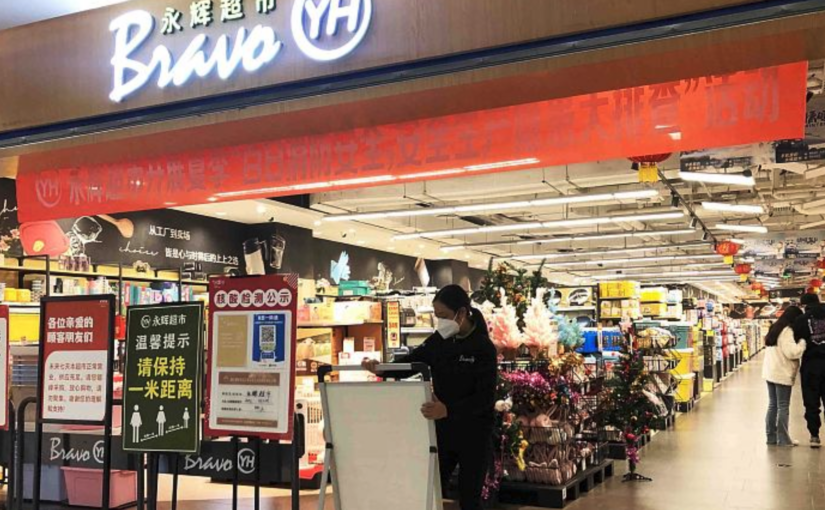
The following article from Global Times provides valuable insight into China’s strategy for suppressing the Covid-19 pandemic. Liang Wiannan, a renowned epidemiologist and one of the architects of the Zero Covid approach, outlines the expected consequences of the alternative “lying flat” or “living with the virus” strategy, which relies on gradually building passive/herd immunity. Although China’s overall vaccination rate is high, there is significant variation between regions and age groups. To “live with the virus” at this moment would result in severely stretched medical resources, and would pose a serious threat to patients with underlying diseases, children, seniors, and pregnant women. However, the article makes clear that, as understanding of the virus develops, health authorities are able to restrict the negative side-effects of the suppression strategy with the extensive use of nucleic acid testing.
Why won’t China adopt a “lying flat” strategy in face of Omicron like some Western countries do? Liang Wannian, head of the expert group in China’s epidemic response and disposal leading group, said that to passively respond to Omicron is not China’s option as the country still faces unbalanced medical resources.
Adopting the dynamic zero-COVID strategy could be seen as “purchasing an insurance for 1.4 billion of Chinese people,” Liang said, noting that it helps avoiding large-scale transmissions and outbreaks, protecting people’s lives, effectively diminishing the loss of life expectancy per capita.
In countries like the US, life expectancy declined dramatically in 2020 after being hit by the COVID-19 outbreak and continued to decline in 2021, these tragic data are seen as historically unusual drops for the US.
Some countries chose the so-called “lying flat” strategy by living with the virus to gain herd immunity while China is getting immunity by vaccination, Liang said, noting that although 90 percent of population have been vaccinated, there have been unequal results in different ages and regions.
At a webinar of the International Manifesto Group on the theme of Anti-imperialism and the Western Left, Friends of Socialist China co-editor Carlos Martinez gave this talk about the Western left’s failure to meaningfully engage with Chinese socialism.
The focus of my presentation is: why doesn’t more of the Western left support the People’s Republic of China? Why doesn’t more of the Western left engage in a serious way with Chinese socialism?
There are lots of things about modern China that seem worthy of support, from a socialist point of view.
Poverty alleviation. Reducing poverty is a decidedly leftist objective. If there was no poverty under capitalism – if there were no homeless, no people without sufficient food to eat, without access to education and healthcare, without work or the possibility of earning an income – most people on the left would probably find something better to do with their time than struggling for a new society.
So the fact that China has achieved so much in the realm of poverty alleviation should obviously be something that we study and celebrate.
Not everyone trusts the Chinese government’s statistics, not everyone is convinced by the claim that China in 2020 eliminated extreme poverty. Fine. But it is absolutely beyond question that, in the period from 1949, when the People’s Republic of China was proclaimed, the Chinese people have experienced an unprecedented and extraordinary improvement in their living standards and their level of human development.
In this recent presentation to the International Manifesto Group webinar, The Case Against NATO, Dr Jenny Clegg traces the makings of an Asian NATO via such mechanisms as AUKUS and the Quad whose fundamental purposes are to contain and confront a rising China. She further draws attention to the extension of NATO influence into the Asia Pacific through its Partnerships for Peace for example with Japan, South Korea and Australia; and also considers the impact of the Ukraine crisis in relation to these developments with the increase of tensions, divisions and militarisation in the region
NATO serves as the nuclear-armed fortress that helps to elevate the West above the ‘Rest’; it anchors Europe to its western orientation, severing it from its Eurasian geography.
But NATO members are also Pacific powers – the US, Canada, but also France and Britain, which maintain possession of a few islands and hence some considerable maritime territory.
In this Pacific presence can be seen the makings of an Asian NATO as a counter to the growing Eurasian dimension.
Whilst the world’s focus is on Russia in the Ukraine, for the US, China is the ‘pacing challenge’, and from this perspective, the Ukraine crisis can be seen as the first phase in the US’s last-ditch battle to retain its world supremacy, a battle pitting ‘democracies against autocracies’ in which NATO is to serve as the armed vanguard against the so-called Russia-China alliance.
The world before NATO was to be a new world of the UN Charter which, in the coordination of the wartime allies – the US, UK, Soviet Union and China – and in its commitment to national sovereignty, held the promise of a multipolar world.
It was this new world of the equality of nations that the US set out to smash in driving the first Cold War.
From Cold War to thaw back to Cold War in the Asia Pacific
The Cold War in the Pacific divided China and Korea and involved two hot wars – in Korea and Indochina – at the cost of countless lives and countless war crimes.
The US sought to set up an Asian NATO – however Australia lacked trust in Japan after WW2; Japan’s military was constrained under Article 9 of its constitution; and many South East Asian states, having fought to gain independence, chose non-alignment over subordination in a military alliance.
SEATO – Southeast Asia Treaty Organization – was set up in 1955 to block the ‘communist domino effect’ but it lacked unity and folded in 1977. The US instead relied on bilateral alliances and a spread of some 400 military bases to encircle China.
The Cold War never ended in the Pacific – China and Korea remain divided. Nevertheless, a degree of thaw in the 1990s allowed China to improve its relations in the region whilst ASEAN extended membership to the three communist-aligned Indochinese nations along with Myanmar. Regional economic growth entered a new phase.
But then, sending things into reverse, Obama embarked on his Asian pivot launching the freedom of navigation operations in the South China Sea. Following this, Trump declared China a strategic competitor, initiating the Quad to draw India into a new network with Australia, Japan and the US.
2020 saw the counter-hegemonic trend gather momentum with agreement on RCEP – the Regional Comprehensive Economic Partnership, embracing large parts of East Asia and Oceania; the EU was also about to sign a major investment deal with China – these two developments recalling the coalition of Germany all the way across to China which Brzezinski foresaw in 1997, claiming this would be hostile to the US.
The US then prepared to strike back, launching the New Cold War, followed in September 2021 by AUKUS – a mini–Asian NATO, an intervention by the outside Anglosphere which started to sow disunity within the region, undermining its resolve for Asians to deal with Asian affairs.
NATO in the Pacific
NATO itself has been expanding into Asia since 2012 with its Partnerships for Peace programme drawing in Australia, Japan, New Zealand, Pakistan, and the Philippines.
By 2014, an equation was already being drawn between Russia and the Ukraine and China in the South China Sea.
At the 2019 NATO summit, Pompeo raised the issue of the China threat and, in 2021, the NATO 2030 document widened its focus to include the ‘IndoPacific’, making very clear a strategy of: Russia first then China.
Biden has advanced on Trump’s anti-China approach in two key ways, elevating the Quad and bringing the Taiwan issue more into view. But the Quad lacks military muscle – hence the announcement of AUKUS.
The US and UK are to equip Australia with nuclear-powered submarines, not only violating the nuclear Non-Proliferation Treaty but also subverting the nuclear weapons free zones of South East Asia and the South Pacific – both important advances of regional independence in the 1980s. These submarines will extend Australia’s naval reach much further into the South and East China Seas.
Australia is to be transformed into a forward base for the US military, providing the core of a regional ‘hybrid warfare’ network, with looser links bringing nations into various regional networks under US direction, covering diplomacy, intelligence sharing, media narratives, supply chains and so on.
The pact also represents a new level of cooperation in military technologies – in quantum computing and digital technologies – as exemplified in the recent announcement on the development of hypersonic weaponry.
Accompanying the promotion of arms sales and the implementation of sanctions, AUKUS then is designed to secure US dominance over East Asia’s future growth in its support of US competition at the cutting edge of new technologies.
The impact of the Ukraine crisis
Amidst the Ukraine crisis, fears have been raised of a Chinese military takeover of Taiwan – in a completely false parallel between Ukraine, a sovereign state and Taiwan, recognised by the UN as a part of China.
As in Europe, militarisation in East Asia is accelerating: Japan has just increased its military budget by $50bn; Australia has estimated the cost of AUKUS at an eye-watering $250bn. With the newly elected conservative president in South Korea, a North East Asian arc with Japan and the US, comes into view, and with both Japan and South Korea strengthening military links with Australia, there are possible ties here into AUKUS in the South.
AUKUS only received a lukewarm reception amongst regional powers with Indonesia and Malaysia most openly expressing their reservations. Again, as in Europe, pressure is being brought to bear to erode the long held stabilising positions of Japan’s peace clause and ASEAN’s non-aligned inclinations, using the threat of sanctions to splinter and subordinate the organisation so as to clear the obstacles to militarisation.
Rather than Ukraine-Taiwan, Ukraine-the South China Sea may offer a better parallel: whilst Russia insists on Ukraine’s neutrality, China has been seeking the neutrality of the South China Sea in negotiations on a code of conduct which limits permission for outside powers to set up naval bases.
The marker of the Cold War battle line of ‘democracies versus autocracies’ is being drawn by the US around the so-called democratic right of nations to choose their allies. This is also the meaning behind the ‘free and open IndoPacific’ – that is freedom to join in the making of an Asian NATO.
Why is it that the US is blocking peace negotiations on Ukraine’s neutrality? Why can’t it accept the legitimacy of Russia’s security concerns? Not least, because this would set a precedent for China over Taiwan and the South China Sea. And it is China that is seen as the real, comprehensive challenger.
Amidst false allegations that China is supplying arms to Russia and propping Russia up, NATO is strengthening its links with the Pacific 4 – Australia, Japan, South Korea and New Zealand. The upcoming summit this June will set the stage for an attempt to legitimise NATO’s increasing penetration into the IndoPacific region as the necessary opposition to the so-called ‘Russia-China alliance’.
In conclusion
NATO expansion is the root cause of the war in Europe; through its links into the Asia Pacific, it is equally intent to divide and destabilise a region now forecast to overtake Europe as the centre of the world economy by 2030.
Russia first, China next, NATO is bringing on a new world order – it’s called the jungle.
If China has not criticised Russia, at least one reason is because it looks to the long term – to a new security plan not just for Europe but one which restores its Eurasian orientation, a new Eurasian Security Order
China, in taking its stand on the indivisibility of security, on security for all – not of one at the expense of another – is keeping alive the spirit of the UN Charter.
Co-Editor of Friends of Socialist China Danny Haiphong analyzed the hypocrisy of the West’s hysterical opposition toward the recent security pact reached between the Solomon Islands and China on his weekly podcast, Cold War Brew. Haiphong observes that the US and its allies, particularly Australia, have no issue with Ukraine possibly joining NATO but have threatened regime change on the Solomon Islands for working bilaterally with China to meet its security needs. He goes on to explain the root causes of this contradiction.
The Cold War Brew podcast can be listened to live each Sunday at 11:30 AM US Eastern on the Callin app, which can be downloaded on Android and Apple devices as well as on Spotify after the episode publishes.
In this article, originally published by Countercurrents, women’s historian Linda Ford analyzes and condemns the misogynist and racist animus directed by US imperialism towards two outstanding teenage woman athletes, Gu Ailing (Eileen Gu) of China and Kamila Valieva of Russia, in the service of the new Cold War.
As Ford rightly concludes:
“Here is hegemonic politics, and ruthless patriarchy and racism, coming together. And here are two remarkably strong and level-headed young women athletes who are braving the results of being who they are. In its overwhelming power, the US Empire has made evil all things Chinese and Russian, and women athletes have not been spared the weaponizing of that hate.”
As one who has followed Olympic women’s figure skating, especially since Michelle Kwan (ironically a Chinese-American), I was—as an egalitarian feminist when it comes to sports—excited to learn that there was a 15-year-old Russian woman skater, Kamila Valieva, who could do effortless quad jumps. Waiting in anticipation of her first Olympic performance, I listened to commentators and former US skaters Tara Lipinsky and Johnny Weir rave about her spectacular talent. They told the audience that we were about to see “the best skating in the world”…that “a talent like this comes around once in a lifetime.” They found her first performance in the short skate “incredible… flawless… perfect in every way.” It was, they said, a rare privilege to watch her perform: “she will have an amazing legacy.” Days later they would say nothing watching her perform.
Responding to a question from a Bloomberg journalist, Wang Wenbin comprehensively rejected accusations made by Australian Prime Minister Scott Morrison that China was planning to build a military base on the Solomon Islands. Wang Wenbin further highlighted the hypocritical nature of US and Australian commentary and behavior, noting that the two are attempting to construct a new Monroe Doctrine in the Pacific.
The security cooperation between China and Solomon Islands is based on equality and mutual benefits. It is within the sovereignty of our two countries and consistent with the international law and international customary practice. The cooperation is open, transparent, legitimate, lawful and irreproachable. The speculation that China will build a military base in Solomon Islands is pure disinformation fabricated by a handful of people who harbor ulterior motives.
I have noted that the US and Australian accuse the framework agreement on security cooperation between China and Solomon Islands of not being transparent. However, it is the AUKUS security partnership that is neither open nor transparent. When will the US and Australia invite South Pacific island countries and other regional countries to review AUKUS cooperation? The US claims that China’s military presence will cause grave concerns. If we follow this logic, the nearly 800 military bases in 80 countries and regions across the world run by the US have long been of major concern for the world. When will the US shut down those bases?
Island countries in the South Pacific are independent and sovereign states, not a backyard of the US or Australia. Their attempt to revive the Monroe Doctrine in the South Pacific region will get no support and lead to nowhere.
In the following video, Vietnamese blogger and broadcaster Luna Oi, who spoke at our Summit for Socialist Democracy in December, showcases Hanoi’s new metro system, which opened to the public in January this year. Luna shows how efficient and convenient the metro is, and notes that, since it is subsidized by the Vietnamese government, it is also very affordable. The Hanoi metro is a good example of China-Vietnam cooperation: built by China Railway Sixth Group, its operation is 100 percent in the hands of the Vietnamese metro company.
China’s Ambassador to the US, Qin Gang, is making persistent efforts to explain to the American public his country’s real position regarding the conflict in Ukraine and to counter disinformation. Below is his article, published on April 18 by The National Interest, a leading US conservative bimonthly International Relations magazine, founded in 1985.
Ambassador Qin notes that: “To end this unwanted conflict as soon as possible is more important than anything else.” He notes that Europe is the focus of the current crisis and the continent needs not only an end to the fighting but also a fundamental answer to the question of securing lasting peace and stability and a balanced and effective security architecture.
Qin Gang contrasts the eastward expansion of NATO, which contributed in no small measure to today’s tragic situation, with the development of the Shanghai Cooperation Organization, in which framework China has amicably settled all its historic border disputes with Russia and the countries of Central Asia, both of which may be traced to 1996, and notes: “Different choices lead to different outcomes.”
The Ukraine crisis is agonizing. One more minute the conflict lasts means one more hardship for the 43 million Ukrainian people. To end this unwanted conflict as soon as possible is more important than everything else.
China loves peace and opposes war. It advocates upholding international law and universally recognized norms governing international relations and respecting the sovereignty and territorial integrity of all countries, including Ukraine. China supports all efforts that can deliver a ceasefire and relieve the humanitarian crisis on the ground, and will continue to play a constructive role toward this end.
Lessons must be learned. While working to end this conflict, we must also give some serious thought to the changes brought by the crisis and the path forward in its aftermath.
The postwar international system is coming under the heaviest pressure since the Cold War. The once-in-a-century pandemic, the Ukraine crisis and the unparalleled sanctions, the spiraling inflation and a looming recession, all these have sounded the alarm for the “boiler” of the international system. It is high time for us to reduce the pressure, not the other way round, for our shared world.
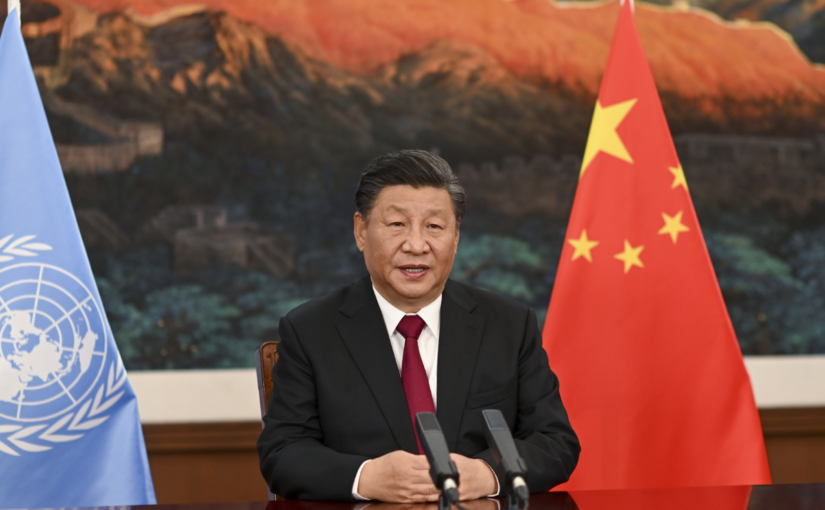
We are very pleased to publish the full text of President Xi Jinping’s important speech delivered via video to the opening session of this year’s Boao Forum for Asia on the morning of April 21. Often referred to as the ‘Asian Davos’, this year’s forum was joined virtually by several regional leaders, including the presidents of the Philippines, Mongolia and Nepal and the Prime Ministers of Laos and Kazakhstan.
In his comprehensive speech, President Xi made a number of important calls to the Asian and wider international community, stressing the need to unite together to win final victory over the Covid-19 pandemic; to promote economic recovery and to overcome uneven and inadequate development through the Global Development Initiative; and to work together to promote peace and stability in the world.
The Cold War mentality, President Xi explained, would only wreck the global peace framework, hegemonism and power politics would only endanger world peace, and bloc confrontation would only exacerbate security challenges in the 21st century.
China would therefore like to propose a Global Security Initiative – to stay committed to the vision of common, comprehensive, cooperative and sustainable security, and work together to maintain world peace and security; stay committed to respecting the sovereignty and territorial integrity of all countries, uphold non-interference in internal affairs, and respect the independent choices of development paths and social systems made by people in different countries; stay committed to abiding by the purposes and principles of the UN Charter, reject the Cold War mentality, oppose unilateralism, and say no to group politics and bloc confrontation; stay committed to taking the legitimate security concerns of all countries seriously, uphold the principle of indivisible security, build a balanced, effective and sustainable security architecture, and oppose the pursuit of one’s own security at the cost of others’ security; stay committed to peacefully resolving differences and disputes between countries through dialogue and consultation, support all efforts conducive to the peaceful settlement of crises, reject double standards, and oppose the wanton use of unilateral sanctions and long-arm jurisdiction; stay committed to maintaining security in both traditional and non-traditional domains, and work together on regional disputes and global challenges such as terrorism, climate change, cybersecurity and biosecurity.
Specifically turning to Asian issues, the Chinese president noted that: “The Five Principles of Peaceful Coexistence and the Bandung Spirit, first advocated by Asia, are all the more relevant today. We should honor such principles as mutual respect, equality, mutual benefit and peaceful coexistence, follow a policy of good-neighborliness and friendship, and make sure that we always keep our future in our own hands.”
The entry into force of the Regional Comprehensive Economic Partnership (RCEP), and specifically the opening to traffic of the China-Laos Railway, were cited by Xi as key examples of Asian cooperation.
At this International Manifesto Group webinar on Sunday 24 April 2022, our co-editor Carlos Martinez will be speaking about the failure of much of the Western left to seriously engage with Chinese socialism.
Date: Sunday 24 April 2022 Time: 12pm US Eastern, 9am US Pacific, 5pm Britain Location: Zoom and YouTube Registration: Eventbrite
About this event
An anti-imperialist left is emerging in the West. However, they are derided by both liberals and leftists alike. The left’s failure to grasp the central importance of imperialism in today’s divisive geopolitical landscape leads to support for wars of aggression, uncritical regurgitation of unfounded or spurious propaganda claims, and support for far right currents in other countries that claim to stand for ‘democracy’.
The conditions are ripe for socialist organizing and agitation, but class struggle rages within the left when it should be waged by the left. The left is thus now at a crossroads. That section of the Western left which is proving unable to understand the role of imperialism in shaping today’s conflicts not only places itself on the verge of historical irrelevance but becomes a real threat to the advance of socialist and workers’ struggles.
The cause of the most urgent problems facing humanity – war, colonialism, mass poverty, racial and gender oppression, ecological destruction, and pandemics, have to be debated out in the framework of a clear understanding that they are products of imperialism: their solution has to be debated out in the framework of an equally clear understanding that they cannot be solved without a thorough-going defeat of imperialist aspirations and actions.
This event will provide a space for the emerging anti-imperialist left to set out its case openly, compare experiences in different countries, and develop its proposals for dealing with the issues confronting today’s world within the atmosphere of mutual respect and tolerance which today’s anti-imperialist framework is fostering.
Speakers
Ajamu Baraka is the national organizer of the Black Alliance for Peace and was the 2016 candidate for vice president on the Green Party ticket. Baraka serves on the Executive Committee of the U.S. Peace Council and leadership body of the United National Anti-War Coalition (UNAC). He is an editor and contributing columnist for the Black Agenda Report and contributing columnist for Counterpunch. He was recently awarded the US Peace Memorial 2019 Peace Prize and the Serena Shim award for uncompromised integrity in journalism.
Carlos Martinez is an independent researcher and political activist from London, Britain. His first book, ‘The End of the Beginning: Lessons of the Soviet Collapse’, was published in 2019 by LeftWord Books. His main area of research is the construction of socialist societies, past and present. He is a co-editor of Friends of Socialist China and co-founder of No Cold War.
Mariá Páez Victor, PhD is a sociologist, born in Venezuela, now retired from university teaching who is dedicated to writing. As well, she is a frequent commentator on issues related to Latin American history and politics and she has participated in numerous events on TV, radio and in public meetings. In addition she has her own weekly radio program about Venezuela in the Spanish language community radio of Toronto.
Q. Anthony Omene is an award-nominated writer, whose columns appear in Maclean’s and The Globe and Mail, and host of the Unredacted podcast with Glenn Greenwald. In addition, he is a board member of the Canadian Association of Black Journalists. He is on Twitter @qaomene.
Alan Freeman is the co-director, with Radhika Desai, of the Geopolitical Economy Research Group (GERG) at the University of Manitoba. He was an economist at the Greater London Authority between 2000 and 2011, where he held the brief for the Creative Industries and the Living Wage. He wrote The Benn Heresy, a biography of British politician Tony Benn, and co-edited three books on value theory. He is honorary life vice-president of the UK-based Association for Heterodox Economics and a Vice-Chair of the World Association for Political Economy.
Benjamin Norton is a journalist, writer, and filmmaker, he is the founder and editor of the independent media outlet, Multipolarista, where he reports in both English and Spanish. His journalism focuses primarily on US foreign policy and geopolitics. He has reported from many countries around the world and is currently based in Latin America.
Moderator – Brandon Love is an activist from Ottawa, Canada. Wherever he lives, he has always participated in class struggle, including labour organizing, tenants rights and international solidarity initiatives, including the Foodsters United union drive in Toronto and the unsuccessful University of Waterloo BDS referendum to sever ties with Israeli academic institutions.
This thoughtful piece by Palestinian journalist and author Ramzy Baroud, originally carried in Counterpunch, examines the growing ties of solidarity and cooperation between China and Russia, and contextualizes these within the complex global struggle between US hegemony and multipolarity. Baroud writes that what Beijing and Moscow are working to achieve is “a long term political strategy that they hope would ultimately lead to a multipolar world.”
The meeting between Russian Foreign Minister Sergey Lavrov and Chinese Foreign Minister Wang Yi, in the Chinese eastern city of Huangshan on March 30, is likely to go down in history as a decisive meeting in the relations between the two Asian giants.
The meeting was not only important due to its timing or the fact that it reaffirmed the growing ties between Moscow and Beijing, but because of the resolute political discourse articulated by the two top diplomats.
In Huangshan, there was no place for ambiguity. Lavrov spoke of a new ‘world order’, arguing that the world is now “living through a very serious stage in the history of international relations” in reference to the escalating Russia-Ukraine/NATO conflict.
We are very pleased to republish this interview given by our Co-Editor Danny Haiphong to Global Times. In his interview Danny compares the very different approaches to human rights in China and the US. He notes how the US constantly raises generally spurious charges regarding the state of human rights in other countries, especially in China, in an attempt to distract attention from its own abhorrent human rights record. This can especially be seen in the contrasting approaches around Covid-19. In China, people and saving human lives come first whereas in the richest country on earth millions are without health care.
To help understand China’s progress in the past decade, the Global Times (GT) has launched a weekly series of interviews with scholars from home and abroad, presenting a holistic view of China’s governance philosophy. The following is an interview with Danny Haiphong (Haiphong), an independent journalist in the US and co-editor of Friends of Socialist China as well as a founding member of the No Cold War international campaign, on how China has made human rights protection a priority and how it has taken human rights moral high grounds.
GT: The US Department of State issued the 2021 Country Reports on Human Rights Practices on April 12, of which 90 pages are used to criticize China’s human rights conditions. At the same time, 2021 was considered to be the US’ most fatal year in history with more than 460,000 Americans killed by the coronavirus last year. Why does the US care more about human rights of China and other countries than its own record?
Haiphong: The US has politicized human rights for several reasons, none of which have anything to do with genuine concerns about the wellbeing of people. Constant speculation about human rights elsewhere provides a distraction from the shortcomings of the US’ own political and economic system. The US possesses an abhorrent human rights record. An average of three Americans per day are killed by US law enforcement. Nearly one million Americans have died of COVID-19. US wars abroad have taken the lives of millions and destabilized entire regions.
Human rights are also an integral component of US foreign policy. Any nation deemed a threat to US hegemony is condemned for human rights violations. Often, the allegations are unfounded. This is certainly the case in relation to China. The US has spread insidious lies about the so-called human rights violations in China’s Xinjiang Uygur Autonomous Region and Hong Kong Special Administration Region (HKSAR) to justify sanctions and military encirclement. The US’ politicization of human rights is not only hypocritical, but a true danger to humanity.
In this article, originally published on CGTN and coinciding with the Boao Forum on Asia, Keith Lamb addresses humanity’s looming climate catastrophe and how it is exacerbated by such factors as imperialism’s profit from war. In contrast, through cooperation with the Global South and by promoting global development alongside the sustainable preservation of humanity and the biosphere, China is pointing the way towards an ecological civilization. “China’s people-centred approach means markets and capital must stay subservient to society as a whole,” the author notes.
The annual conference of the Boao Forum for Asia (BFA), which brings together Asia-Pacific businesses and governments to promote economic and social development, is upon us. One of the pressing matters for this year’s forum is the climate catastrophe.
Plenty of discussion and even more action is needed if we are to meet the Sustainable Development Goals to limit global warming to 1.5 degrees Celsius above pre-industrial levels. To achieve this goal, as set out by the Paris Climate Agreement, global carbon emissions need to be reduced by 45 percent by 2030, from 2010 levels, and net-zero emissions must be reached by 2050. The agreement also requests each country to outline and communicate their post-2020 climate actions, known as their nationally determined contributions.
Unfortunately, as reported in the UN’s The Sustainable Development Goals Report 2021, despite a slight downtrend in carbon emissions, due to COVID-19, by December 2020, emissions fully rebounded. Indeed, carbon emissions were 2 percent higher than in December 2019, leading the report to say “the climate crisis continues largely unabated.”
In this latest piece, originally published on his Chronicles of Haiphong, our Co-Editor Danny Haiphong unpicks the western media’s propaganda onslaught regarding the current Omicron outbreak in Shanghai and the resultant lockdown. Whilst acknowledging the hardships and frustrations of the current situation, Danny points out that, when condemning China’s zero-Covid strategy, the western media ignores the solidarity and sacrifice of ordinary people. When it comes to tackling Covid, as in other areas, he notes that the real criminals infringing human rights are to be found in the imperialist countries of North America and Europe.
The city of Shanghai is currently battling an outbreak of COVID-19’s Omicron variant, tallying upwards of 350,000 new cases in a matter of weeks. Much of the city has been placed under some form of lockdown to contain the spread of the virus. Case numbers continue to rise. In predictable fashion, Western media has used the occasion to condemn China’s dynamic zero-COVID strategy. Videos of frustrated residents went viral across the West as an example of the “evils” of China’s communist party-led government.
Indeed, China’s latest battle with COVID-19 has not been without hardship. Logistical issues with food and medical deliveries have been a source of frustration. Tragedy struck when a grassroots healthcare worker died by an apparent suicide, raising concerns about the mounting levels of stress for grassroots volunteers and cadres battling the virus around the clock. The central government has taken rapid measures to alleviate pressure on the local government. Thousands of doctors and volunteers have traveled from other cities and provinces to improve the delivery of food and medications.
As has been the case throughout the pandemic, Western observers have used the latest outbreak in Shanghai to demonize China’s dynamic zero-COVID strategy. The rapid spread of COVID-19 in Shanghai appears to validate Western media claims that China’s zero-COVID strategy does more harm than good. Western countries, led by the United States, have taken a “live with the virus” approach to justify the roll back of all mitigation measures and social welfare protections. The massive death toll to COVID-19 incurred in the West is viewed as merely the cost of doing business. Fatigue over rampant misinformation and inconsistent COVID-19 policy is almost as high as the mistrust that majorities of people in the West possess in their governments.
We’re pleased to republish this piece about several generations of foreigners that have supported, or contributed to, China’s development. The article, originally published in Xinhua in June 2021 (in the run-up to the CPC’s centenary celebrations), mentions historic friends of China such as Edgar Snow, Isabel Crook, George Hatem, Israel Epstein and Hans Muller, as well as contemporary friends such as British academic Martin Jacques and Sudanese journalist Yahya Mustafa.
“Never leave China,” Dr. Hans Muller repeatedly told his wife before he passed away in 1994.
In 1939, World War II broke out. Muller, a young German with a medical degree from Switzerland, arrived in Yan’an in northwest China and fought side by side with the Communist Party of China (CPC) and the Chinese people in the War of Resistance Against Japanese Aggression, and later in the War of Liberation. He devoted himself to China’s socialist construction after the founding of the New China in 1949.
Since its founding in 1921, the CPC has attracted many foreign friends like Muller during different periods of revolution, construction and reform. Their interactions with Chinese Communists over the past century have opened a window through which the world can better understand the CPC.
Today, the CPC is the world’s largest political party with more than 90 million members. The CPC has over the past century led the Chinese people to achieve national independence, bid farewell to a humiliating history of being arbitrarily exploited by foreign powers, and transform China from an impoverished country into the world’s second-largest economy, which enjoys all-round moderate prosperity.
We are pleased to present the following fact sheet about China’s position on the situation in Ukraine, sent to us by the International Department of the Communist Party of China.
The fact sheet debunks the US State Department’s allegations and insinuations that China is fomenting or taking sides in the Ukraine crisis. China consistently works toward peace and stands for negotiated solutions to problems between countries. Furthermore, as the largest trading partner of Russia, Ukraine and the European Union, China’s basic interests demand peace.
China has refused to support the US-led unilateral sanctions against Russia, on the basis that these sanctions are illegal and only serve to increase tensions and prolong the conflict. Meanwhile they are having a serious economic impact on countries around the world, particularly in the Global South, where the rise in prices for food and energy is seriously impacting wellbeing.
The fact sheet points out: “An enduring solution would be for major countries to respect each other, reject the Cold War mentality, refrain from bloc confrontation, and build step by step a balanced, effective and sustainable security architecture for the region and for the world. China has been doing its best for peace and will continue to play a constructive role.”
Marking the 110th birth anniversary of Comrade Kim Il Sung, the founding leader of the Democratic People’s Republic of Korea (DPRK) and the Workers’ Party of Korea (WPK), which fell on April 15 2022, the DPRK’s Foreign Languages Publishing House has released a special commemorative book, ‘Immortal History of DPRK-PRC Friendship’, depicting his contribution to building and strengthening the special relations of friendship and solidarity between the two neighbouring socialist countries. President Kim Il Sung was a true internationalist, something that found concentrated expression in his lifelong friendship and collaboration with the communists and people of China. Noting in its preamble that this dates right from the beginning of the President’s long revolutionary career in the 1920s, the book depicts Kim Il Sung’s many visits to the People’s Republic from 1953 to the 1990s and his meetings with such Chinese leaders as Mao Zedong, Zhou Enlai, Song Qingling, Liu Shaoqi, Deng Xiaoping, Hu Yaobang, Jiang Zemin, Li Peng, Deng Yingchao and others, as well as visits to industrial, agricultural, scenic, cultural and revolutionary sites in many parts of China. In a photo from the 10th anniversary celebrations of the People’s Republic in 1959, Mao Zedong, Zhou Enlai and Kim Il Sung are also joined by the Vietnamese leader Ho Chi Minh. The visits to the DPRK by many Chinese leaders including Zhou Enlai, Liu Shaoqi, Hua Guofeng, Deng Yingchao, Hu Yaobang, Yang Shangkun, Li Xiannian and Jiang Zemin are also depicted. In all, with many rare photographs, the book constitutes a valuable record and historical depiction of proletarian internationalism.