Xi Jinping says China and South Africa are comrades and brothers, and affirms unbreakable friendship with Cambodia

Whilst international media coverage understandably focused on President Xi Jinping’s March 18 telephone conversation with US President Biden, the Chinese leader also held two other important conversations that day with leaders of countries that have particularly friendly relations with China. 

Speaking with South African President Cyril Ramaphosa, Xi said that their two countries “share a special friendly relationship of comrades and brothers”. This phrase is particularly significant – whilst it has been used several times by the Chinese leadership to describe their ties with South Africa, it is highly unusual, if not unique, for China to describe its state relations with a non-socialist country as embracing comradeship. In this context, it is worth noting that the friendship between the Communist Party of China and the African National Congress of South Africa date back to at least 1953, when Nelson Mandela sent ANC Secretary General Walter Sisulu to China to gain support for the steadily building anti-apartheid struggle, following Sisulu’s participation in the fourth World Festival of Youth and Students in Romania. China consistently supported the South African people’s struggle against apartheid and for national liberation.

President Xi further said that the relationship with South Africa is of great significance both for China/Africa relations as well as solidarity and cooperation among developing countries. The two leaders also exchanged views on the development of the BRICS grouping, which links Brazil, Russia, India, China and South Africa, and which China chairs this year. They noted that their two countries share a very close position on the conflict in Ukraine, standing for dialogue and negotiation. There have been a number of suggestions that South Africa could play an important role in this regard. Clearly alluding to the US pressures that both countries are facing, the two leaders agreed that sovereign countries are entitled to independently decide on their own positions.

The same day, President Xi also spoke with Cambodian Prime Minister Samdech Techo Hun Sen, with a key focus being their bilateral Belt and Road Cooperation. Xi stressed that China would pay particular attention to developing roads and education in Cambodia’s rural areas so as to help develop agriculture and lift farmers out of poverty. Noting that next year will see the 65th anniversary of their diplomatic relations, President Xi said that their ties had become even more unbreakable whilst Prime Minister Hun Sen described the two countries as true ironclad brothers. Discussion also centred on the prospects for the Regional Comprehensive Economic Partnership (RCEP), to which both belong, and relations between China and ASEAN, a ten-country bloc of South East Asian nations that Cambodia chairs this year.

China ready to move ties with South Africa to deeper level

Originally published in Xinhua.

China stands ready to work with South Africa to move their ties forward toward a deeper level with higher quality and broader scope, Chinese President Xi Jinping said on Friday afternoon.

Continue reading Xi Jinping says China and South Africa are comrades and brothers, and affirms unbreakable friendship with Cambodia

Ambassador Qin Gang: Where China stands regarding Ukraine

In this important article, originally published as an op-ed piece in the Washington Post, Qin Gang, China’s Ambassador to the US and one of his country’s most skilled and experienced diplomats, sets out Beijing’s principled position on the conflict between Russia and Ukraine for the American public and refutes a number of misconceptions being spread in that regard. Most importantly, he makes it crystal clear that:

Assertions that China knew about, acquiesced to or tacitly supported this war are purely disinformation. All these claims serve only the purpose of shifting blame to and slinging mud at China. There were more than 6,000 Chinese citizens in Ukraine. China is the biggest trading partner of both Russia and Ukraine, and the largest importer of crude oil and natural gas in the world. Conflict between Russia and Ukraine does no good for China. Had China known about the imminent crisis, we would have tried our best to prevent it.

Many Americans are understandably trying to understand where China stands as the crisis in Ukraine unfolds, so I want to take this opportunity to explain fully and dispel any misunderstandings and rumors.

There have been claims that China had prior knowledge of Russia’s military action and demanded Russia delay it until the Winter Olympics concluded. Recent rumors further claimed that Russia was seeking military assistance from China. Let me say this responsibly: Assertions that China knew about, acquiesced to or tacitly supported this war are purely disinformation. All these claims serve only the purpose of shifting blame to and slinging mud at China. There were more than 6,000 Chinese citizens in Ukraine. China is the biggest trading partner of both Russia and Ukraine, and the largest importer of crude oil and natural gas in the world. Conflict between Russia and Ukraine does no good for China. Had China known about the imminent crisis, we would have tried our best to prevent it.

Continue reading Ambassador Qin Gang: Where China stands regarding Ukraine

Wang Yi’s press conference provides global snapshot of China’s foreign policy

The following transcript of Foreign Minister Wang Yi’s press conference on 7 March 2022, held on the sidelines of the Fifth Session of the 13th National People’s Congress, provides an instructive and valuable global snapshot of China’s foreign policy. Touching on Ukraine, Russia, Korea, Japan, Indonesia, the South Pacific, China-Africa cooperation, China-Latin America cooperation, Taiwan, the Global Development Initiative, the Belt and Road Initiative, the New Cold War and more, the constant theme is China’s unwavering commitment to peace, global development, conflict resolution through dialogue, solidarity and cooperation; in summary, the building of a community with a shared future for mankind. Wang reiterates China’s unambiguous opposition to the New Cold War, to unilateralism and bloc politics, and calls for safeguarding the UN-based system of international law, based on the UN Charter.

Wang Yi: Friends from the media, good afternoon. I am very pleased to meet you again. For the world, the year ahead continues to be full of challenges. The world has not completely defeated COVID-19, and yet it is now facing the Ukraine crisis. An international situation already rife with uncertainties is becoming more complex and fluid. At such a critical moment, countries need solidarity, not division; dialogue, not confrontation. As a responsible major country, China will continue to hold high the banner of multilateralism. We will work with all peace-loving and development-seeking countries to strengthen solidarity and cooperation, jointly meet challenges, and continue to promote the building of a community with a shared future for mankind. We will strive together for a brighter and better future for the world. With these words, I’m ready to take your questions.

China Central Television: The Beijing Olympic Winter Games has been a great success, which was not easy under the current international circumstances. Some foreigners say that China has more confidence and strength than it staged the Olympic Games in 2008. What is your view?

Wang Yi: With the joint efforts of China and the international community, the Beijing Olympic Winter Games has achieved a full success. We have presented to the world a streamlined, safe and splendid Games, and a more confident, self-reliant, open and inclusive China. Around 170 official representatives from close to 70 countries and international organizations were at the Opening Ceremony, supporting China with concrete actions. Here, I would like to express my sincere appreciation to friends from all countries that have participated in and supported Beijing 2022.

Beijing 2022 is not only a success for China, but also a success for the world. It represents not just the triumph of sport but, more importantly, the triumph of solidarity. The Games was held amid the spread of Omicron and rising tensions over regional hot-spots. It also faced politically-motivated attempts of disruption and sabotage by a handful of countries. Under such circumstances, it was inspiring to see that the overwhelming majority of countries and people chose to unite under the Olympic spirit, bringing hope to people beset by the pandemic and confidence to a world overshadowed by instability.

As we speak, athletes from around the world are giving their best performance on the winter Paralympic field of play. I am confident that the light of unity and cooperation created by the Olympic and Paralympic Games will shine through mist and rain, and illuminate the path for humanity to jointly forge ahead into the future.

Continue reading Wang Yi’s press conference provides global snapshot of China’s foreign policy

From the Cold War to the New Cold War: an ongoing project of imperialist domination

The video embedded below is a speech given by Friends of Socialist China co-editor Carlos Martinez on 6 March 2022 at an online panel discussion entitled ‘Demystifying modern, socialist China: From Belt and Road to Xinjiang’, jointly organised by the Bedfordshire and Northamptonshire Morning Star Readers & Supporters groups. Carlos discusses the imperialist nature of the original Cold War; its relation to the current state of international relations (particularly the escalating tensions between the US and China); and the importance for progressive, socialist and anti-war forces of struggling against this New Cold War.

Explaining China’s abstention on the UN General Assembly resolution regarding Ukraine

What follows is an explanation by Zhang Jun, Permanent Representative of China to the United Nations, of China’s abstention on the UN General Assembly resolution regarding Ukraine on 1 March.

This explanation was supplemented by Wang Wenbin, at the Ministry of Foreign Affairs press conference on 3 March 2022, who noted the escalating sanctions regime being installed by the US and its allies against Russia, observing that the US also had an important hand in creating the crisis: “International media lately mentioned many times that George Kennan, former US ambassador to the Soviet Union, suggested to the US government in 1990s that expanding NATO up to Russia’s borders would be the most fateful error. Regrettably, the US government turned a deaf ear to this. Tulsi Gabbard, former member of the House of Representatives, said that the crisis could have been ended and the war easily avoided if President Biden had simply promised not to accept Ukraine’s becoming a member of NATO. But they chose not to do so. Those who created the problem should be the ones to undo it. We hope the culprits of the crisis can take real action to ease the situation and resolve the problem instead of shifting the blame to others.”

Mr. President,

There continues to be dramatic changes of the situation in Ukraine. What is now unfolding is indeed heart-wrenching. China’s basic position on the Ukraine issue is consistent and unequivocal. We always believe that all countries’ sovereignty and territorial integrity should be respected, and that international disputes should be resolved peacefully in accordance with the purposes and principles of the UN Charter. The top priority right now is to ease the situation on the ground as much as possible, and prevent the situation from escalating or even getting out of control. Russia and Ukraine have already held their first round of negotiations. Despite their differences, both sides have shown their willingness to continue the negotiations. China welcomes this. Faced with the highly complex and sensitive situation, China once again calls on the international community to stick to the overall direction of political settlement and foster an enabling atmosphere and conditions for direct dialogues and negotiations between the parties concerned.

Continue reading Explaining China’s abstention on the UN General Assembly resolution regarding Ukraine

Chinese Ambassador to UN calls for diplomatic solution to Ukraine crisis

In the speech below, Zhang Jun, China’s permanent representative to the United Nations, explains China’s decision to abstain on the UN Security Council draft resolution demanding Russia’s immediate withdrawal from Ukraine. Zhang stated that “any action should be truly conducive to defusing the crisis, rather than adding fuel to fire.”

Hua Chunying on US double standards regarding issues of sovereignty and territorial integrity

Many people are asking the US: Did the US respect the sovereignty and territorial integrity of the Federal Republic of Yugoslavia when US-led NATO bombed Belgrade? Did the US respect the sovereignty and territorial integrity of Iraq when it launched military strikes on Baghdad on unwarranted charges? Did the US respect the sovereignty and territorial integrity of Afghanistan when US drones wantonly killed innocent people in Kabul and other places? Did the US respect the sovereignty and territorial integrity of other countries when it instigated color revolutions and meddled in their internal affairs all around the world?

Foreign Ministry Spokesperson Hua Chunying’s Regular Press Conference on February 23, 2022

China and Mexico celebrate 50 years of bilateral relations

The following report is republished from the Ministry of Foreign Affairs of the People’s Republic of China.

On February 14, 2022, President Xi Jinping exchanged congratulatory messages with Mexican President Andres Manuel Lopez Obrador to celebrate the 50th anniversary of the establishment of diplomatic ties between the two countries.

Xi Jinping pointed out, both China and Mexico are countries with time-honored civilizations and history, and the friendly exchanges between the two peoples date back to ancient times. Since China and Mexico established diplomatic ties half a century ago, especially since the two countries established a comprehensive strategic partnership in 2013, bilateral relations have been developing on a fast track. The two countries have deepened political mutual trust and enhanced friendly exchanges and cooperation in various fields. In the face of the once-in-a-century pandemic, China and Mexico have stood together through thick and thin and extended a helping hand to each other, setting a good example of international solidarity in fighting the pandemic. The tree of China-Mexico friendship has flourished and borne bountiful fruits, bringing tangible benefits to the people of the two countries.

Continue reading China and Mexico celebrate 50 years of bilateral relations

Argentina’s ambassador to China reflects on 50 years of China-Argentina relations

In this article for CGTN marking 50 years of diplomatic relations between China and Argentina, ambassador Sabino Vaca Narvaja details the deepening of the relationship over the last two decades in particular, starting with the Strategic Partnership announced by Hu Jintao and Néstor Kirchner in 2004. Most recently, Argentina has joined the Belt and Road Initiative, and the two countries are cooperating closely in an array of areas, including renewable energy, transport, housing and telecommunications. Vaca particularly notes China’s indispensable support during the Covid-19 pandemic: China supplied vast quantities of medical supplies, and has to date provided over 30 million vaccine doses. Sinopharm is now working with Sinergium Biotech to produce vaccines in Argentina.

Argentina and China are “comprehensive strategic partners,” the highest level of diplomatic relations, and this year we celebrate 50 years of diplomatic relations. Here I invite you to join me in a brief review of the evolution of this relationship.

Since the beginning of the new century, the bilateral relationship has deepened. It was precisely in 2004 that the government of Néstor Kirchner signed the “Strategic Partnership between Argentina and China” with the then Chinese President Hu Jintao. An important figure in this event was the then chief of the cabinet of ministers and now president of the nation, Dr. Alberto Fernández. In 2014, the relationship was raised even higher to the level of Comprehensive Strategic Partnership, with Cristina Fernández de Kirchner and Xi Jinping being presidents at that moment. Now the vice president is Cristina Fernández de Kirchner and the president is Alberto Fernández, who has just concluded a successful official visit to Beijing and signed the accession to the Belt and Road Initiative (BRI), deepening bilateral relations even more.

The nature of the comprehensive strategic partnership subscribed in 2014 by both governments implies a mandate to deepen cooperation in all areas, identifying and implementing projects that best meet the interests of both peoples. The potentialities of cooperation are incalculable since all areas are open to cooperation. In this aspect, we are working hard to consolidate and expand bilateral cooperation. An example of this is the Strategic Dialogue for Economic Coordination and Cooperation (DECCE). This mechanism is also in charge of implementing the Integrated Five-Year Plan which lists priority projects between both countries, such as photovoltaic parks, wind farms, gas pipelines, thermal power plants, transmission lines, dams and so on. There are also important projects related to strengthening our railway network, both in cargo and passenger transport and strengthening the connectivity of the Pacific through bi-oceanic corridors from east to west and the border crossings with Chile. Likewise, bridges, aqueducts, water treatment plants and residential buildings are being planned.

Continue reading Argentina’s ambassador to China reflects on 50 years of China-Argentina relations

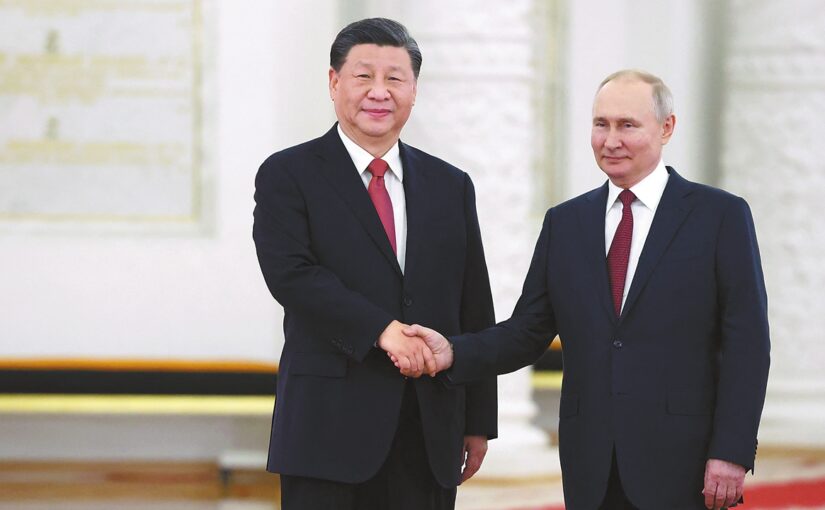
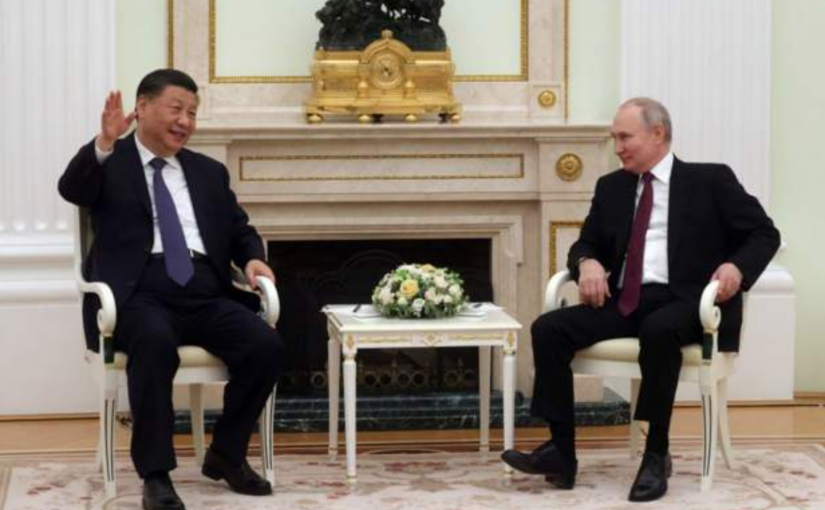
China and Russia declare ‘new era’ of multipolarity, challenging US interventionism

We are pleased to republish the following article from Ben Norton, originally published on Multipolarista, in which he summarises the key points in the more than 5,000 word joint statement of the Chinese and Russian governments, released following the meeting between Presidents Xi Jinping and Vladimir Putin on the sidelines of the Beijing Winter Olympics. One of the most important documents in the recent history of diplomacy and international relations, Ben is surely correct in his opening assertion that, “February 4 2022 may very well be remembered in history textbooks as an important date in the shift of global politics.”

February 4, 2022 may very well be remembered in history textbooks as an important date in the shift of global politics.

That day was not only the inauguration of the XXIV Olympic Winter Games in Beijing; it also saw a historic meeting between the presidents of China and Russia.

Xi Jinping and Vladimir Putin signed a series of important economic and political agreements, deepening the integration of the two Eurasian superpowers.

Among these was a major 30-year deal in which Russia will supply gas to China via a new pipeline, with both sides of the energy transfers managed by state-owned companies. And in a sign of their mutual efforts to challenge the dominance of the US dollar, they decided to settle the sales in euros.

Continue reading China and Russia declare ‘new era’ of multipolarity, challenging US interventionism

Wang Wenbin: US theft of Afghan assets is no different from the conduct of bandits

Without the consent of the Afghan people, the US willfully disposes of assets that belong to the Afghan people, even keeping them as its own. This is no different from the conduct of bandits. This latest example has once again laid bare that the “rules-based order” the US claims to champion is not the kind of rules and order to defend the weak and uphold justice, but to maintain its own hegemony. As the culprit of the Afghan crisis, the US should not exacerbate the suffering of the Afghan people. It should unfreeze their assets, lift unilateral sanctions on Afghanistan as soon as possible, and assume its due responsibility to ease the humanitarian crisis in the country.

Foreign Ministry Spokesperson Wang Wenbin’s Regular Press Conference on February 15, 2022

Olympic opening ceremony a true celebration of international friendship

The following brief comment was submitted by Friends of Socialist China co-editor Carlos Martinez in response to a request from People’s Daily. It was quoted in a report in the Chinese edition on 5 February 2022.

The opening ceremony was spectacular and inspiring, a true celebration of international friendship and the Olympic spirit. Even in Britain and the US – countries that have imposed a so-called diplomatic boycott on these games – television commentators were obviously highly impressed with the technical and aesthetic excellence of the ceremony, as well as the overall atmosphere of excitement and solidarity.

It was fascinating to see the Bird’s Nest transformed from 2008. The stadium now seems perfectly suited to the Winter Olympics, and its reuse reminds us that the organisers have been very mindful of the need to make these Olympics the greenest in history, at a time when the global struggle against climate breakdown has become widely recognised as one of the most serious threats facing humanity. All the venues are powered exclusively by renewable energy and, of the seven venues, five are legacy venues that been repurposed for these games. Furthermore, the vehicles transporting participants, staff, officials and spectators run on zero- or low-carbon energy. Such innovations serve to showcase China’s increasing leadership on environmental issues.

Continue reading Olympic opening ceremony a true celebration of international friendship

Syria joins China’s Belt and Road Initiative

In this January 27th episode of CGTN America’s The Heat, a distinguished panel, including Chinese international relations expert Victor Gao, US Professor Joshua Landis, Bassam Abu Abdullah, the head of the Syrian Baath’s Party School, and independent analyst Adnan Nasser debate the significance of Syria’s signing up to the Belt and Road Initiative (BRI). Victor Gao says that China regards the people of Syria as brothers and sisters and treats the country as a political and strategic equal. Beijing, he further explains, rejects the sanctions imposed by imperialist powers.

President Isaias Afwerki on China-Eritrea friendship

Eritrea and China enjoy a deep bond and a strategic partnership, based on mutual respect and interests, and a healthy space for hashing out differing opinions and working towards common understandings. This friendship goes back to 1965 when China welcomed Eritrean freedom fighters and was the first foreign country to support the struggle with arms. China’s position at the time, even when it was not yet the powerhouse that it is today, was clear and had a notable appreciation for the Eritrean people’s struggle for freedom. It is important to keep in mind that this partnership did not develop because of China’s current standing in the world or for our own narrow interests. It is rather a longstanding relationship based on mutual interest and respect, one which highlights each country’s contributions and creates a platform for engagement in all strategic areas.

Eritrea: Interview of President Isaias Afwerki

Argentina’s President Fernández to visit Chairman Mao Memorial Hall while attending Beijing Olympics

The Beijing Winter Olympics will open in a few days and, despite the pathetic attempts of a handful of imperialist countries to instigate a so-called boycott – and the practical difficulties caused by the global pandemic – dozens of heads of state and government and senior officials from governments and international organisations, particularly from the Global South, will descend on the Chinese capital to welcome this festival of sporting excellence, peace and friendship. One such leader will be Argentine President Alberto Fernandez. As Argentine Ambassador to China Sabino Vaca Narvaja explains in this interview with Global Times, that we are pleased to publish below, his President will have a hectic schedule in Beijing, with a highlight being a visit to the Chairman Mao Memorial Hall. The Ambassador explains that Argentina’s historic nationalist and anti-imperialist leader Juan Peron, to whose political tradition President Fernandez belongs, maintained a friendship and correspondence with Chairman Mao. “It was because of this historical connection that President Fernandez was invited to be one of the foreign leaders to address the ‘CPC and World Political Parties Summit’ last year, when the CPC celebrated its centennial,” the Ambassador remarked.

Argentine President Alberto Fernandez will visit Chairman Mao Memorial Hall during his visit to China for the opening ceremony of Olympic Winter Games Beijing 2022, Argentine Ambassador to China Sabino Vaca Narvaja told the Global Times in a recent exclusive interview.

“For both Argentina and the rest of the world, Mao is a very crucial state leader,” Narvaja explained. 

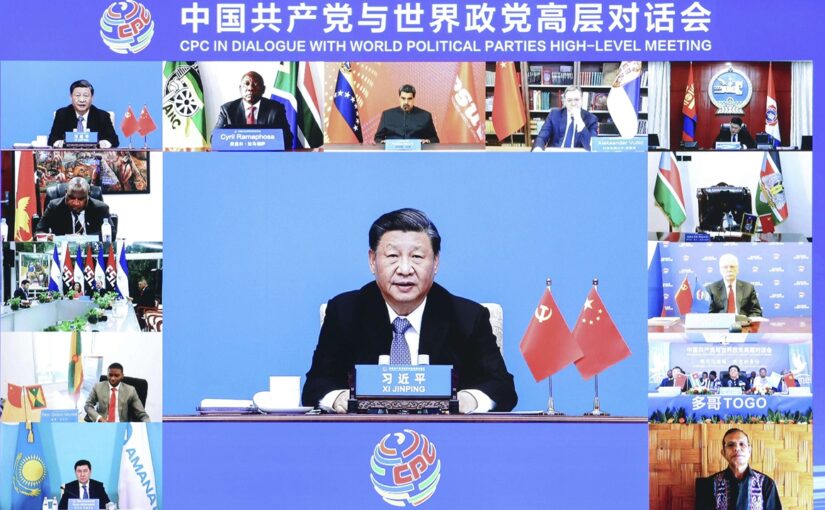
President Fernandez is also president of Argentina’s Partido Justicialista Party, which has “very important historical ties” with the Communist Party of China (CPC), the ambassador said. “Former Argentine president Juan Peron even maintained friendship and correspondence with Chairman Mao,” said the ambassador. “It was because of this historical connection that President Fernandez was invited to be one of the foreign leaders to address the ‘CPC and World Political Parties Summit’ last year, when the CPC celebrated its centennial.”

Continue reading Argentina’s President Fernández to visit Chairman Mao Memorial Hall while attending Beijing Olympics

Beijing Winter Olympics boycott is the product of imperial jealousy

In this article, first published on CGTN, Danny Haiphong traces the motivation of the ‘diplomatic boycott’ of the Beijing Winter Olympics being carried out by the US and a handful of its allies. Danny observes that the boycott – like the overall New Cold War of which it is a part – is intended to further to central objectives: to undermine China’s accomplishments and to deflect from the shortcomings of the political and economic system prevailing in the major capitalist countries.

In a few weeks, athletes from across the globe will compete in the Winter Olympic Games in Beijing. The Games come amid a challenging period for the world. COVID-19 continues to contribute to greater economic and social instability. Militarism and climate change threaten the future of humanity. Instead of facing these challenges head on, some countries such as the United States have chosen to politicize the upcoming Winter Olympics in Beijing.

The politicization of the Olympics has taken many forms but the most significant is the U.S.-led “diplomatic boycott” of the Games announced early last month, which was justified on the basis of fraudulent and unproven claims of human rights violations in China. Organizations such as the World Uygur Congress and Students for a Free Tibet, both of which receive funding from the National Endowment for Democracy linked with the Central Intelligence Agency, are leading forces in the boycott campaign. The effort has also received bipartisan support in the U.S. Congress, with several Western countries following Joe Biden’s lead. In a blatant act of hypocrisy, 18 U.S. officials applied for visas with plans to visit Beijing during the Games shortly after the announced “diplomatic boycott.”

Continue reading Beijing Winter Olympics boycott is the product of imperial jealousy

China’s solidarity with Tonga and the islands of the Pacific

The eruption of an underwater volcano off the South Pacific island nation of Tonga has triggered a humanitarian crisis, cutting the country off from the outside world and damaging vital connectivity and infrastructure. This once again demonstrates the vulnerability of small island states in particular, faced with the challenges of overcoming centuries of colonial rule, developing their national economies and facing the existential threat of climate change. This useful article, which we reproduce from Global Times, notes that China has pledged all possible support and assistance to Tonga, both now and in the future. China, it further notes, is prepared to cooperate with all other countries in this endeavour and does not wish to see the South Pacific as an arena for any new Cold War. The island nations, it notes, “are not the backyard of the US and its allies”.

The massive eruption of an underwater volcano off Tonga, which triggered tsunami waves to hit the Pacific island nation and other locations in the Pacific, has become a focus of global headlines. 

Tonga is in need of emergency aid, and China said it is willing to help. On Sunday, Chinese Foreign Ministry said that China is ready to provide every possible support and assistance to Tonga. 

We hope those who see Tonga as a battlefield with China, such as the US and its allies, could work together with China to provide help to the Pacific island nation.

While the danger of the Tongan volcano erupting again remaining largely unknown, videos posted on social media and various news reports so far suggest that the eruption has caused serious damages to the island nation. For instance, Tonga’s submarine cable connectivity to the outside world has been offline since Saturday due to the earthquake caused by the volcanic eruption.

Continue reading China’s solidarity with Tonga and the islands of the Pacific

China and Iran united on the path of peace and multipolarity

The following article by Hossein Amir-Abdollahian, Iran’s foreign minister, first appeared in the Global Times on 13 January 2022. The article provides an outline of China and Iran’s ongoing cooperation on a number of key issues, and highlights the shared purpose of the two countries in pursuing global peace, development and multipolarity.

Iran and China, the two great civilizations in West and East Asia, have enjoyed good, stable and strong relations during history.

Confucius, a famous educator in ancient China, said: It is always a pleasure to greet a friend from afar. 

With the best wishes of the Iranian people to the Chinese friends, I am visiting China on the occasion of the beginning of 2022 and on the eve of the Chinese New Year of the Tiger and 1401 solar year. 

Our two countries will celebrate the 51st anniversary of the establishment of diplomatic relations and will enter the second half of the century of bilateral exchange, which opens a new page of our relationship. Especially coinciding with the Chinese Communist Party entering the journey of its second 100 years, the visit will be a promising new horizon for our promotion and development of cooperation in various domains.

Continue reading China and Iran united on the path of peace and multipolarity

Xi Jinping’s address to the 2022 World Economic Forum

The following speech was delivered by President Xi Jinping on Monday 17 January by video link to the 2022 World Economic Forum virtual session.

In his special address, the Chinese President addressed a broad range of critical issues currently facing the global economy and human society, whilst also detailing his country’s domestic situation and goals. He remarked:

“The world today is undergoing major changes unseen in a century. These changes, not limited to a particular moment, event, country or region, represent the profound and sweeping changes of our times. As changes of the times combine with the once-in-a-century pandemic, the world finds itself in a new period of turbulence and transformation. How to beat the pandemic and how to build the post-COVID world? These are major issues of common concern to people around the world. They are also major, urgent questions we must give answers to.”

The first task, he noted, was to embrace cooperation and jointly defeat the pandemic rather than holding one another back or shifting blame. China, he reported, has already sent over two billion doses of vaccine  to more than 120 countries and international organisations.

Further, President Xi remarked, steps have to be taken in a coordinated way to promote steady recovery of the world economy, to bridge the development divide, realise global development, and tackle climate change, based on a people-centred philosophy.

All this means, the Chinese President continued, that “we need to discard Cold War mentality and seek peaceful coexistence and win-win outcomes. Our world today is far from being tranquil; rhetoric that stokes hatred and prejudice abound. Acts of containment, suppression or confrontation arising thereof do all harm, not the least good, to world peace and security… Even worse are the practices of hegemony and bullying, which run counter to the tide of history.”

Professor Klaus Schwab, 
Ladies and Gentlemen, 
Friends, 

Greetings to you all! It is my pleasure to attend this virtual session of the World Economic Forum. 

In two weeks’ time, China will celebrate the advent of spring in the lunar new year, the Year of the Tiger. In Chinese culture, tiger symbolizes bravery and strength, as the Chinese people often refer to spirited dragon and dynamic tiger, or soaring dragon and leaping tiger. To meet the severe challenges facing humanity, we must “add wings to the tiger” and act with the courage and strength of the tiger to overcome all obstacles on our way forward. We must do everything necessary to clear the shadow of the pandemic and boost economic and social recovery and development, so that the sunshine of hope may light up the future of humanity. 

The world today is undergoing major changes unseen in a century. These changes, not limited to a particular moment, event, country or region, represent the profound and sweeping changes of our times. As changes of the times combine with the once-in-a-century pandemic, the world finds itself in a new period of turbulence and transformation. How to beat the pandemic and how to build the post-COVID world? These are major issues of common concern to people around the world. They are also major, urgent questions we must give answers to. 

As a Chinese saying goes, “The momentum of the world either flourishes or declines; the state of the world either progresses or regresses.” The world is always developing through the movement of contradictions; without contradiction, nothing would exist. The history of humanity is a history of achieving growth by meeting various tests and of developing by overcoming various crises. We need to move forward by following the logic of historical progress, and develop by riding the tide of development of our times. 

Notwithstanding all vicissitudes, humanity will move on. We need to learn from comparing long history cycles, and see the change in things through the subtle and minute. We need to foster new opportunities amidst crises, open up new horizons on a shifting landscape, and pool great strength to go through difficulties and challenges. 

First, we need to embrace cooperation and jointly defeat the pandemic. Confronted by the once-in-a-century pandemic, which will affect the future of humanity, the international community has fought a tenacious battle. Facts have shown once again that amidst the raging torrents of a global crisis, countries are not riding separately in some 190 small boats, but are rather all in a giant ship on which our shared destiny hinges. Small boats may not survive a storm, but a giant ship is strong enough to brave a storm. Thanks to the concerted efforts of the international community, major progress has been made in the global fight against the pandemic. That said, the pandemic is proving a protracted one, resurging with more variants and spreading faster than before. It poses a serious threat to people’s safety and health, and exerts a profound impact on the global economy. 

Strong confidence and cooperation represent the only right way to defeat the pandemic. Holding each other back or shifting blame would only cause needless delay in response and distract us from the overall objective. Countries need to strengthen international cooperation against COVID-19, carry out active cooperation on research and development of medicines, jointly build multiple lines of defense against the coronavirus, and speed up efforts to build a global community of health for all. Of particular importance is to fully leverage vaccines as a powerful weapon, ensure their equitable distribution, quicken vaccination and close the global immunization gap, so as to truly safeguard people’s lives, health and livelihoods. 

China is a country that delivers on its promises. China has already sent over two billion doses of vaccines to more than 120 countries and international organizations. Still, China will provide another one billion doses to African countries, including 600 million doses as donation, and will also donate 150 million doses to ASEAN countries. 

Second, we need to resolve various risks and promote steady recovery of the world economy. The world economy is emerging from the depths, yet it still faces many constraints. The global industrial and supply chains have been disrupted. Commodity prices continue to rise. Energy supply remains tight. These risks compound one another and heighten the uncertainty about economic recovery. The global low inflation environment has notably changed, and the risks of inflation driven by multiple factors are surfacing. If major economies slam on the brakes or take a U-turn in their monetary policies, there would be serious negative spillovers. They would present challenges to global economic and financial stability, and developing countries would bear the brunt of it. In the context of ongoing COVID-19 response, we need to explore new drivers of economic growth, new modes of social life and new pathways for people-to-people exchange, in a bid to facilitate cross-border trade, keep industrial and supply chains secure and smooth, and promote steady and solid progress in global economic recovery. 

Economic globalization is the trend of the times. Though countercurrents are sure to exist in a river, none could stop it from flowing to the sea. Driving forces bolster the river’s momentum, and resistance may yet enhance its flow. Despite the countercurrents and dangerous shoals along the way, economic globalization has never and will not veer off course. Countries around the world should uphold true multilateralism. We should remove barriers, not erect walls. We should open up, not close off. We should seek integration, not decoupling. This is the way to build an open world economy. We should guide reforms of the global governance system with the principle of fairness and justice, and uphold the multilateral trading system with the World Trade Organization at its center. We should make generally acceptable and effective rules for artificial intelligence and digital economy on the basis of full consultation, and create an open, just and non-discriminatory environment for scientific and technological innovation. This is the way to make economic globalization more open, inclusive, balanced and beneficial for all, and to fully unleash the vitality of the world economy. 

A common understanding among us is that to turn the world economy from crisis to recovery, it is imperative to strengthen macro-policy coordination. Major economies should see the world as one community, think in a more systematic way, increase policy transparency and information sharing, and coordinate the objectives, intensity and pace of fiscal and monetary policies, so as to prevent the world economy from plummeting again. Major developed countries should adopt responsible economic policies, manage policy spillovers, and avoid severe impacts on developing countries. International economic and financial institutions should play their constructive role to pool global consensus, enhance policy synergy and prevent systemic risks. 

Third, we need to bridge the development divide and revitalize global development. The process of global development is suffering from severe disruption, entailing more outstanding problems like a widening North-South gap, divergent recovery trajectories, development fault-lines and a technological divide. The Human Development Index has declined for the first time in 30 years. The world’s poor population has increased by more than 100 million. Nearly 800 million people live in hunger. Difficulties are mounting in food security, education, employment, medicine, health and other areas important to people’s livelihoods. Some developing countries have fallen back into poverty and instability due to the pandemic. Many in developed countries are also living through a hard time. 

No matter what difficulties may come our way, we must adhere to a people-centered philosophy of development, place development and livelihoods front and center in global macro-policies, realize the UN’s 2030 Agenda for Sustainable Development, and build greater synergy among existing mechanisms of development cooperation to promote balanced development worldwide. We need to uphold the principle of common but differentiated responsibilities, promote international cooperation on climate change in the context of development, and implement the outcomes of COP26 to the United Nations Framework Convention on Climate Change. Developed economies should take the lead in honoring their emissions reduction responsibilities, deliver on their commitment of financial and technological support, and create the necessary conditions for developing countries to address climate change and achieve sustainable development. 

Last year, I put forward a Global Development Initiative at the UN General Assembly to draw international attention to the pressing challenges faced by developing countries. The Initiative is a public good open to the whole world, which aims to form synergy with the 2030 Agenda for Sustainable Development and boost common development across the world. China stands ready to work with all partners to jointly translate the Initiative into concrete actions and make sure that no country is left behind in this process. 

Fourth, we need to discard Cold War mentality and seek peaceful coexistence and win-win outcomes. Our world today is far from being tranquil; rhetoric that stokes hatred and prejudice abound. Acts of containment, suppression or confrontation arising thereof do all harm, not the least good, to world peace and security. History has proved time and again that confrontation does not solve problems; it only invites catastrophic consequences. Protectionism and unilateralism can protect no one; they ultimately hurt the interests of others as well as one’s own. Even worse are the practices of hegemony and bullying, which run counter to the tide of history. Naturally, countries have divergences and disagreements between them. Yet a zero-sum approach that enlarges one’s own gain at the expense of others will not help. Acts of single-mindedly building “exclusive yards with high walls” or “parallel systems,” of enthusiastically putting together exclusive small circles or blocs that polarize the world, of overstretching the concept of national security to hold back economic and technological advances of other countries, and of fanning ideological antagonism and politicizing or weaponizing economic, scientific and technological issues, will gravely undercut international efforts to tackle common challenges. 

The right way forward for humanity is peaceful development and win-win cooperation. Different countries and civilizations may prosper together on the basis of respect for each other, and seek common ground and win-win outcomes by setting aside differences. 

We should follow the trend of history, work for a stable international order, advocate common values of humanity, and build a community with a shared future for mankind. We should choose dialogue over confrontation, inclusiveness over exclusion, and stand against all forms of unilateralism, protectionism, hegemony or power politics. 

Ladies and Gentlemen, 
Friends, 

Last year, the Communist Party of China (CPC) celebrated the 100th anniversary of its founding. Through a century of tenacious struggle, the CPC has rallied and led the Chinese people in accomplishing remarkable achievements in the advancement of the nation and betterment of people’s lives. We have realized a moderately prosperous society in all respects and won the battle against poverty, both according to plan, and found a historic solution to ending absolute poverty. Now, China is marching on a new journey of building a modern socialist country in all respects. 

– China will stay committed to pursuing high-quality development. The Chinese economy enjoys a good momentum overall. Last year, our GDP grew by around eight percent, achieving the dual target of fairly high growth and relatively low inflation. Shifts in the domestic and international economic environment have brought tremendous pressure, but the fundamentals of the Chinese economy, characterized by strong resilience, enormous potential and long-term sustainability, remain unchanged. We have every confidence in the future of China’s economy. 

“The wealth of a country is measured by the abundance of its people.” Thanks to considerable economic growth, the Chinese people are living much better lives. Nonetheless, we are soberly aware that to meet the people’s aspiration for an even better life, we still have much hard work to do in the long run. China has made it clear that we strive for more visible and substantive progress in the well-rounded development of individuals and the common prosperity of the entire population. We are working hard on all fronts to deliver this goal. The common prosperity we desire is not egalitarianism. To use an analogy, we will first make the pie bigger, and then divide it properly through reasonable institutional arrangements. As a rising tide lifts all boats, everyone will get a fair share from development, and development gains will benefit all our people in a more substantial and equitable way. 

– China will stay committed to reform and opening-up. For China, reform and opening-up is always a work in process. Whatever change in the international landscape, China will always hold high the banner of reform and opening-up. China will continue to let the market play a decisive role in resource allocation, and see to it that the government better plays its role. We will be steadfast in consolidating and developing the public sector, just as we are steadfast in encouraging, supporting and guiding the development of the non-public sector. We will build a unified, open, competitive and orderly market system, where all businesses enjoy equal status before the law and have equal opportunities in the marketplace. All types of capital are welcome to operate in China in compliance with laws and regulations, and play a positive role for the development of the country. China will continue to expand high-standard opening-up, steadily advance institutional opening-up that covers rules, management and standards, deliver national treatment for foreign businesses, and promote high-quality Belt and Road cooperation. With the entry into force of the Regional Comprehensive Economic Partnership Agreement (RCEP) on 1 January this year, China will faithfully fulfill its obligations and deepen economic and trade ties with other RCEP parties. China will also continue to work for the joining of the Comprehensive and Progressive Agreement for Trans-Pacific Partnership (CPTPP) and the Digital Economy Partnership Agreement (DEPA), with a view to further integrating into the regional and global economy and achieving mutual benefit and win-win results. 

– China will stay committed to promoting ecological conservation. As I have said many times, we should never grow the economy at the cost of resource depletion and environmental degradation, which is like draining a pond to get fish; nor should we sacrifice growth to protect the environment, which is like climbing a tree to catch fish. Guided by our philosophy that lucid waters and lush mountains are invaluable assets, China has carried out holistic conservation and systematic governance of its mountains, rivers, forests, farmlands, lakes, grasslands and deserts. We do everything we can to conserve the ecological system, intensify pollution prevention and control, and improve the living and working environment for our people. China is now putting in place the world’s largest national parks system. Last year, we successfully hosted COP15 to the Convention on Biological Diversity, contributing China’s share to a clean and beautiful world. 

Achieving carbon peak and carbon neutrality are the intrinsic requirements of China’s own high-quality development and a solemn pledge to the international community. China will honor its word and keep working toward its goal. We have unveiled an Action Plan for Carbon Dioxide Peaking Before 2030, to be followed by implementation plans for specific sectors such as energy, industry and construction. China now has the world’s biggest carbon market and biggest clean power generation system: the installed capacity of renewable energy has exceeded one billion kilowatts, and the construction of wind and photovoltaic power stations with a total installed capacity of 100 million kilowatts is well under way. Carbon peak and carbon neutrality cannot be realized overnight. Through solid and steady steps, China will pursue an orderly phase-down of traditional energy in the course of finding reliable substitution in new energy. This approach, which combines phasing out the old and bringing in the new, will ensure steady economic and social development. China will also actively engage in international cooperation on climate and jointly work for a complete transition to a greener economy and society. 

Ladies and Gentlemen, 
Friends, 

Davos is known as a heaven for winter sports. The Beijing Olympic and Paralympic Winter Games will open soon. We are confident that China will present a streamlined, safe and splendid Games to the world. The official motto for Beijing 2022 is “Together for a Shared Future.” Indeed, let us join hands with full confidence, and work together for a shared future. 

Thank you.

China’s loans and projects transformed Malta’s economy

This year sees the 50th anniversary of the establishment of diplomatic relations between China and Malta. China is a large country in East Asia with a population of some 1.4 billion people. Malta is a small European country in the Mediterranean with a population of less than half a million. Yet the two countries share a deep and profound friendship.

With the Golden Jubilee of diplomatic relations approaching, on January 10, President Xi Jinping had a telephone conversation with his Maltese counterpart George Vella. According to the official read out from the Chinese Foreign Ministry:

“Xi Jinping pointed out, China and Malta are old and good friends that have withstood the test of time. Half a century ago, the elder generation of Chinese and Maltese leaders, with great vision and foresight, jointly forged friendly relations between China and Malta. Over the past 50 years, no matter how the international situation changes, China-Malta relations have been developing in a sound and steady manner, with deepening friendship and fruitful cooperation in various fields. In the face of challenges such as the international financial crisis and the COVID-19 pandemic, the two sides have always helped and supported each other.”

For his part, President Vella responded: “Bilateral relations have become more mature and made remarkable achievements, setting a good example of state-to-state relations. Malta is firmly committed to further developing its friendly relations with China and is ready to strengthen high-level exchanges and deepen practical cooperation with China in various fields. Malta cherishes the precious opportunities brought by Belt and Road cooperation and is ready to continue to advance relevant cooperation with China. I hope that Malta-China relations will develop even better in the next 50 years and bring more benefits to the two peoples. Malta firmly adheres to the one-China principle and firmly supports multilateralism. Malta is ready to play a positive role in promoting the development of EU-China relations. Malta highly appreciates China’s vaccine aid for the international community’s fight against the COVID-19 pandemic and its positive contribution to the global response to climate change, and looks forward to closer cooperation with China.”

Although Malta won its independence from a century and a half of British colonial rule in 1964, it remained a neo-colony under the military and economic domination of British imperialism. All that was set to change with the election of a Labour government under the Prime Ministership of Dom Mintoff in 1971. Under his visionary leadership, Malta was transformed from a British neo-colony into a bastion of anti-imperialism and a mainstay of the Non-Aligned Movement. He also expanded the state and public sector of the economy, with extensive nationalisation, established a comprehensive welfare state, and enacted key social reforms, including equal pay for men and women and the decriminalisation of homosexuality. All this required the forging of international alliances and Mintoff assiduously developed close friendships with such outstanding revolutionary leaders of the developing world as Mao Zedong, Kim Il Sung, Muammar Gadaffi and Nicolae Ceausescu, among others. Above all, it was Mintoff’s deep and genuine friendship with Socialist China that enabled Malta to expel the British military bases and to stand up in the world. This writer vividly remembers the consternation of the British TV newsreader reporting Mintoff’s crossing back into the then British colony of Hong Kong, sporting a large badge of Chairman Mao on his suit jacket lapel following a meeting in Beijing with the Chinese leader.

Naturally all this earned Mintoff the undying hatred of the British ruling class. Particular and sustained vitriol was poured by the Daily Mail, a right wing British daily which had supported the British Union of Fascists in the 1930s, who dubbed him “desperate Dom”. Their hatred became positively apoplectic when his daughter Yana, then a student in London, and a key activist in the Troops Out Movement (TOM), campaigning for Irish independence and reunification, hurled horse dung on MPs from the public gallery of the House of Commons in solidarity with the ‘dirty protest’ waged by Irish Republican prisoners in the north of Ireland. (The ‘dirty protest’ was to culminate in the 1981 hunger strike in which 10 young Volunteers from the Irish Republican Army and the Irish National Liberation Army were to heroically lay down their lives.)

Without the British military bases, Malta would have faced economic ruin. That is why, in 1975, China built Dock Number Six in the harbour of the Maltese capital Valetta. Far better known as the Red China Dock, this engineering feat remains the largest dry dock in the Mediterranean. At that time, China was still a poor country and its economy was reeling from the turmoil of the Cultural Revolution. On a per capita basis, Malta was clearly a more prosperous country. But Chairman Mao and Premier Zhou Enlai saw it as their solemn internationalist duty to help Malta take the road of independence and the building of a new society.

Visiting the Red China Dock on 7th September 2021, China’s Ambassador to Malta Yu Dunhai noted that it is, “a significant symbol of China-Malta friendship and remains as a monument in the heart of the people devoting themselves to China-Malta friendship. More than 40 years ago, China overcame its economic and technological limits, provided 100 million RMB interest-free loan and sent about 800 technicians to Malta to construct the dry dock, which showcases the sincere friendship between our two countries. Two Chinese engineers, Mr. Xu Huizhong and Mr. Gu Zhaoyan, lost their lives during the construction. Their great effort and sacrifice laid solid foundation for China-Malta ongoing friendship.”

We are therefore very pleased to reproduce from Shine News, the online platform of the prestigious Shanghai Daily, the following interview with Dr Alex Sceberras Trigona, Foreign Minister of Malta from 1981-87. In this period, Dr Trigona worked closely with Deng Xiaoping to carry forward and develop the friendship established with the preceding generation of Chinese leaders.

(Introduction by Friends of Socialist China co-editor Keith Bennett).

Dr Alex Sceberras Trigona recalls the big moment when he had to arrange a meeting between Malta Prime Minister Dom Mintoff and Chinese leader Deng Xiaoping in 1982 when he served as Malta’s minister for foreign affairs.

China and Malta established diplomatic ties in 1972, and Sceberras Trigona was instrumental in strengthening the relationship between the two countries during his tenure as foreign minister from 1981 to 1987. He has lost track of the number of times he has visited China but thinks “it could be 30 to 40 times” at least.

He has experienced the “hospitality and big heart” of China and was involved in the documentation and negotiations of projects that China helped build in Malta. He had negotiated and concluded Malta’s Neutrality Agreements in the worst years of the Cold War and has met generations of the Chinese people, from leaders to young students. He opened Malta’s embassy in Beijing.

Continue reading China’s loans and projects transformed Malta’s economy