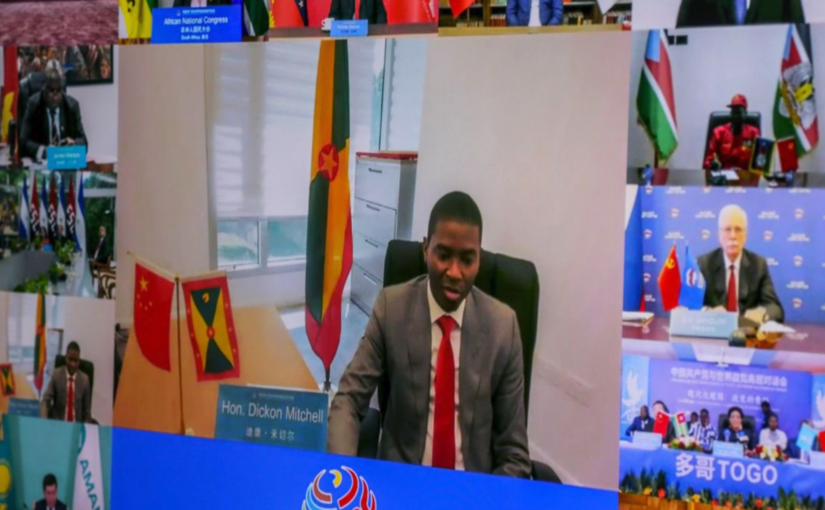
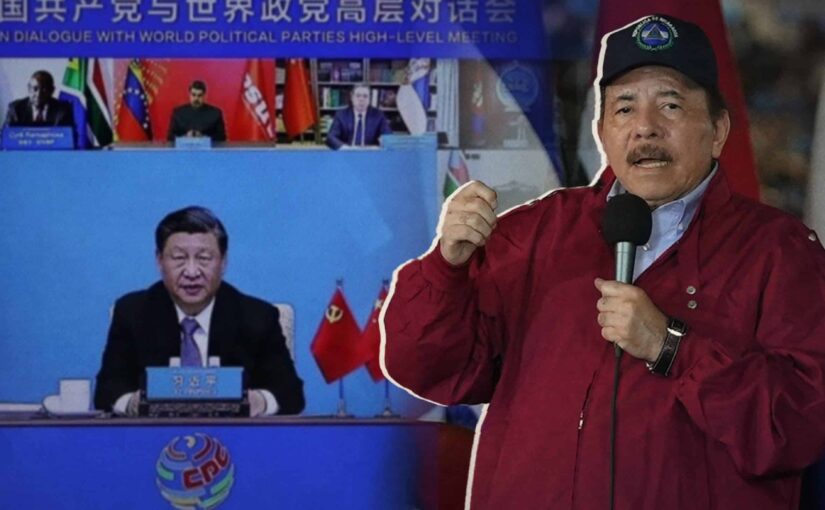
We are pleased to republish the speech given by Cyril Ramaphosa, the President of the African National Congress (ANC) of South Africa, as well as of the Republic of South Africa, at the CPC in Dialogue with World Political Parties High-level Meeting, which was organized by the Communist Party of China on 15 March. It was originally carried on the website of the CPC’s International Department.
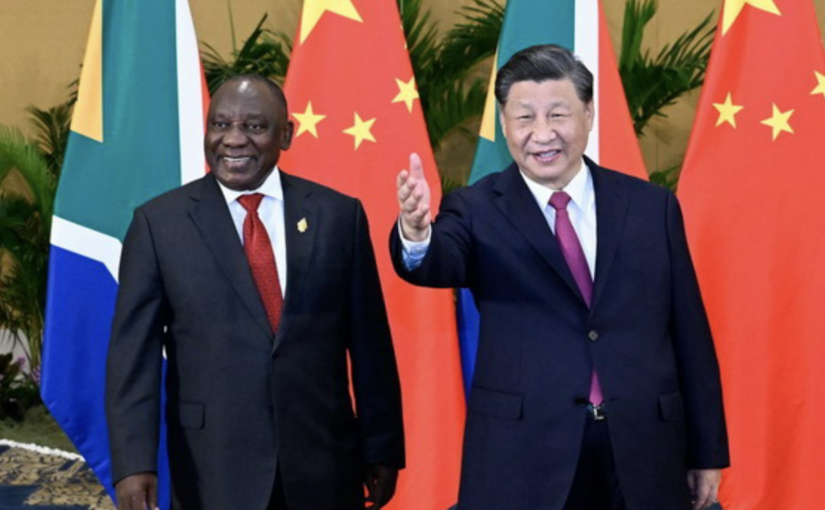
Speaking directly after the keynote address by President Xi Jinping, President Ramaphosa congratulated his Chinese counterpart on his re-election and looked forward, “as the ANC , to deepening the bonds of cooperation that you yourself have always championed.”
Echoing Xi’s call for a Global Civilization Initiative (GCI), first made on this occasion, Ramaphosa said that, as a “liberation movement steeped in the traditions of revolutionary progress”, the ANC seeks to advance the best in human civilization and believes that dialogue is always to be preferred to violence.
Supporting Xi’s call for dialogue and cooperation, Ramaphosa drew attention to such global problems as climate change, pandemics, terrorism, conflict, rising geopolitical tension, poverty, hunger, unemployment, illiteracy, and inequality within and between nations. He expressed gratitude for China’s support to the countries of Africa in dealing with Covid-19.
Stressing his opposition to a unipolar world, and his support for a multipolar global order, the South African leader called for the, “forging of a progressive global movement”, underlining that, “progressive internationalism requires building alliances and solidarity amongst like-minded parties in both the South and North.”
General Secretary of the Communist Party of China, President Xi Jinping, Members of the Central Committee of the CPC,
Leaders from political parties,
Comrades and friends,
It is indeed an honour and privilege to represent the African National Congress of South Africa in this dialogue with world political parties.
President Xi, allow me to extend congratulations and best wishes to you on your unanimous election as President by the National People’s Congress. We look forward, as the ANC, to deepening the bonds of cooperation that you yourself have always championed.
The African National Congress is a liberation movement that is steeped in the traditions of revolutionary progress. Central to our mission is to defend humanity against all social and economic ills.
We therefore seek to advance the best in human civilisation.
We negotiated an end to apartheid as South Africans and forged a democratic consensus through dialogue with our enemies. From this experience, we learned the profound lesson that continues to inform our principled position on many global issues: that dialogue is always to be preferred to violence.
Our history of conflict has instilled in our people a great appreciation of the value of social cohesion, of unity in diversity, and of tolerance and respect.
We therefore readily align ourselves with the Four Calling-ons articulated by President Xi, which call on all countries to respect the diversity of human civilisations and perspectives while advancing the common values of humanity.
We support the call by President Xi for dialogue and cooperation; that all peoples should join hands in advancing the development and progress of human civilisation.
This approach is becoming ever more important as the world confronts challenges that have the potential for great devastation. Today we are faced with the effects of climate change, global pandemics, terrorism, conflict and rising geopolitical tension.
At the same time, we are called upon to end poverty, hunger, unemployment, illiteracy and the inequality that exists within and between nations.
The recent COVID-19 pandemic has demonstrated both the extent of global inequality and the power of solidarity and cooperation. As countries of Africa, we are grateful for China’s support for our continental response to COVID-19 and for those within the international community that stood by the countries of the Global South as they confronted this devastating disease and its consequences.
Our commitment to the best values and practices in human civilisation necessarily places us on the side of the oppressed and poor of the world.
South Africa applauds China’s principled foreign policy posture as it is based on the principles of non-interference and mutual benefit. We are keen that these principles are strengthened and directed at developmental initiatives that are critical for our collective success as nations of the South.
The ANC continues to respect the United Nations and its Charter as the basis for international law. We continue to call for the reform of international institutions, including the UN Security Council and global financial institutions, to foster peace, stability, inclusive economic growth and a development path that leaves no one behind.
We are opposed to a unipolar world order driven by unilateralism and continue to strive for a multipolar global order based on mutual respect and the creation of win- win partnerships.
The idea that there should be harmony between humanity and nature is an ancient value that we need as we reverse the effects of climate change threats while building a human community with a shared future.
Comrades and friends, we live in difficult times.
The global economy is under pressure, multilateralism is severely challenged, and there are great threats to the peaceful world order. As nations of the South, we cannot accept the increasing burden of global inequality and poverty.
Yet, we are not powerless in the face of such difficulties.
Progressive internationalism requires building alliances and solidarity amongst like- minded parties in both the South and North. It requires bold advocacy for the fundamental transformation of the global balance of forces, a radical restructuring of global governance and the forging of a progressive global movement
Through engagements of this nature, I believe that we can continue our cooperation toward a peaceful, prosperous and equitable world order.
I thank you for this opportunity. The ANC of South Africa is pleased to participate in this Dialogue.